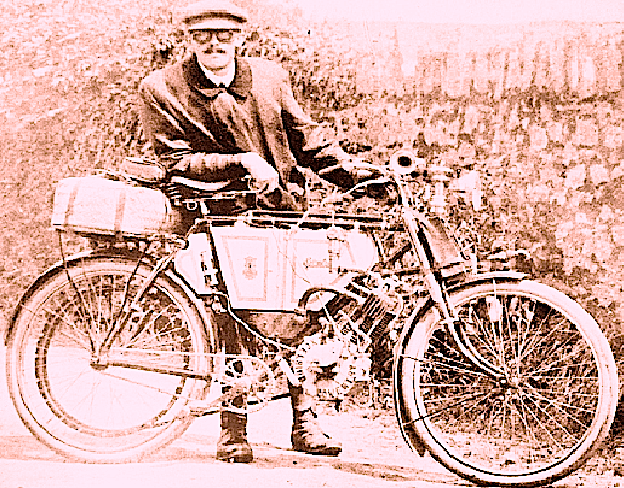
Just added to the Cartoons/Humour page: a dozen French illustrations which are well worth a dekko.
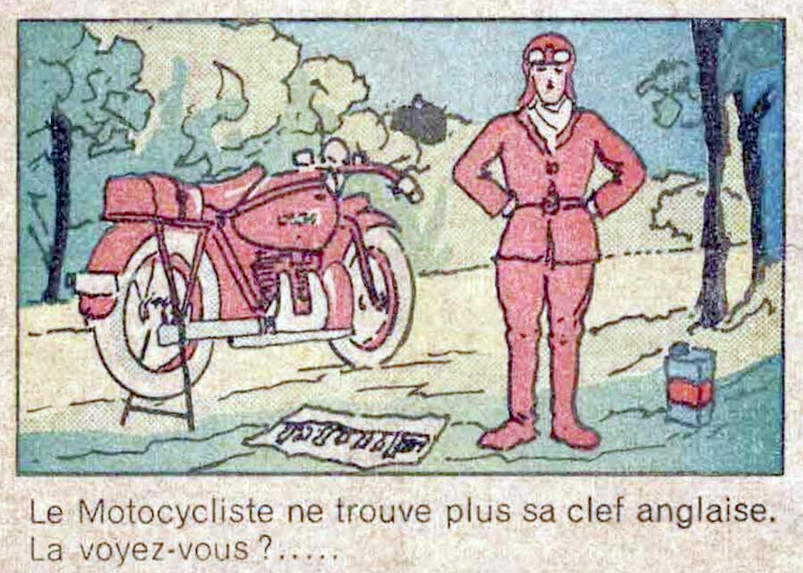
Just added to the Cartoons/Humour page: a dozen French illustrations which are well worth a dekko.
I’ve been looking further into the early days of the Coupe Internationale which, as well as heralding the start of international roadracing, indirectly led to the TT. The 1905 report now includes the FICM rules, which included a promise that squaddies and cops would patrol the course following the chaos at the 1904 race. And the Coupe report is followed by the story of the British trials which were staged on the Isle of Man. There’s even a link with Sherlock Holmes. Wordsearch ‘coupe’ in 1904, 1905 and 1906 to read the story.

As you might have seen in the End-to-End review (in the 1911 features list), in 1910 Harold Cox rode his 1½hp Singer Moto-Velo from John o’ Groats to Land’s End in 57hr 26min (he went on to finish 3rd in the 1912 Junior TT). This year Harold’s grandson rode his 100hp Honda VFR750 from Land’s End to John o’ Groats and took in the North Coast 500 for good measure, so it seemed apropriate to update the End-to-End story.
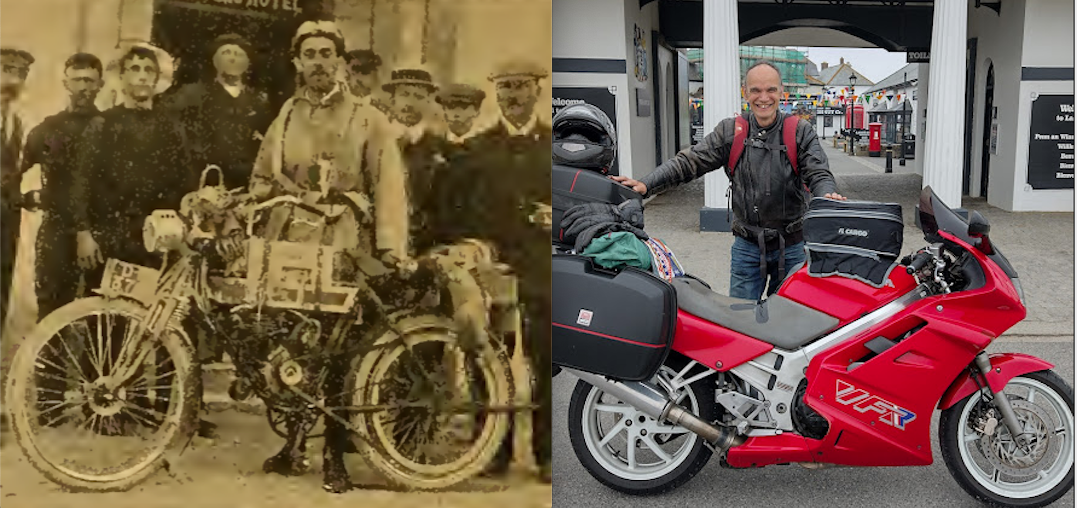
As well as pushing on into the mid 1920s and uploading more pics to the Melange (merci encore, Fanfan) I’ve been pottering about, adding a selection of titbits for your delectation. Among which are (in 1904) a colour image of a Rex to brighten up the show report and an action shot of Griffon Ace Demester taking a sharp right during the Coupe International; (in 1906) a fine study of Zenith Gradua inventor Fredie Barnes “un noveau champion de la motorcyclette” on the cover of La Vie au Grand Air (you’ll also find a La Vie cover depicting the gorgeous Gordon Bennett trophy); and (in 1911) a couple of extra Senior TT pics including Hary Collier crossing the line behind those damned Indians and, because it was a particularly dramatic race, the full Senior results list. Also, I just remembered, there’s a pic of Rollie Free in his swimming trunks. You know it makes sense.

With a 50kg weight limit Continental racing motor cycles ran without fripperies such as brakes. In response to this a French magazine staged the Quarter-Litre Criterium at the Parx des Princes velodrome. My French pal Fanfan recently came up with an excerpt from the contemporary report and a clutch of pics; you’ll find them in 1903 (wordsearch ‘Criterium’)…and be ready to make allowances for my translation of the French report—Désolé pour ça, Fanfan.

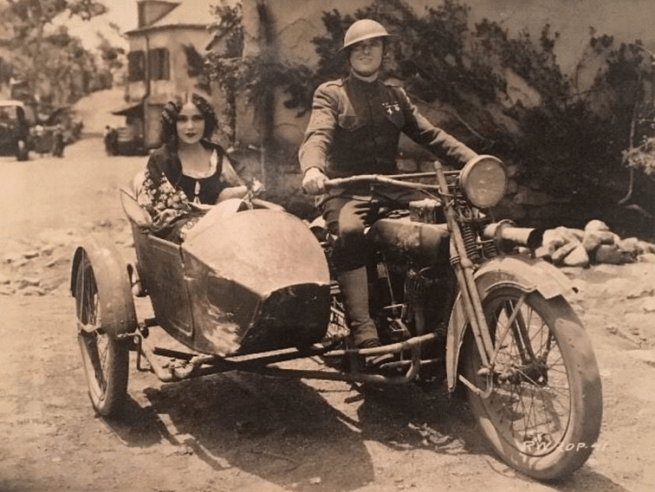
As well as working my way through 1926 I’ve added dozens more pics to the Melange, courtesy of my chum Fanfan; many of them are images of motor cyclists doing their bit in the Great War.
Many of you will already be familiar with the site A-Z of Motorcycles which is a serious attempt to list every motor cycle marque. Its author, Murray Barnard, has also produced timelines of some of his favourite bikes ranging from 1910 to the 1980s and I’m delighted to report that Murray has allowed me to reproduce them here. You’ll find them via Murray’s Timelines in the main menu. I’ve also updated the Introduction and added a Contents section explaining what you’ll find behind the headings.
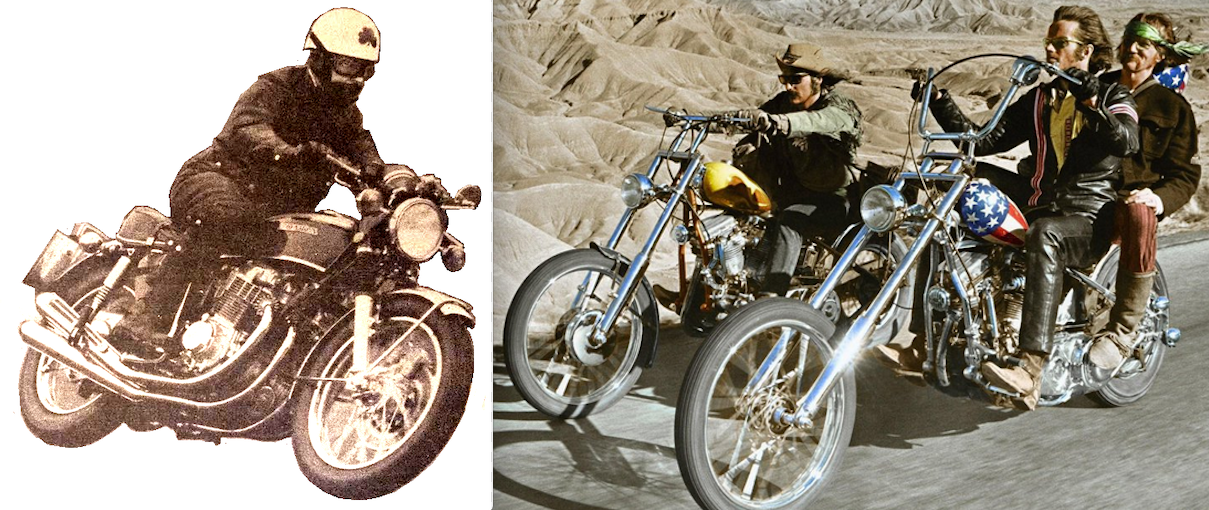
Having brought the timeline up to the mid twenties I’ve leapt ahead to review 1969 because that was the year I bought a motor cycle and changed my life, totally and forever. It was a pivotal year for motor cycling. The Honda CB750 set a new standard for road going motor cycles; the film Easy Rider reflected a sea change in the image of motor cycling. It was a good year to buy a bike, though of course every year is a good year to buy a bike. OK, I’ve had my fun; time to get back to 1926 when electric starts and 140mph roadsters were as unknown as Z-bars and ‘Frisco-mounted gas tanks.
Regular readers of these notes will know that the timeline is reasonably complete up to 1925 (although more stories and pictures will be added as I come across them and find time to upload them). A change being as good as a rest I’m currently working my way through 1969, that being the year I wobbled onto the road aboard a 1959 Ambassador. But a story published in 1969 by Motor Cycle (which by now had dropped the The) belonged in 1962, so that’s where you’ll find it. This prototype Ariel looks distinctly Leaderish, but you’re looking at an in-line four, complete with luggage equipment, fairing and tidy leading links. No doubt it’s a case of convergent evolution, but you’d almost think the designer of the BMW K100RT had spent some time in Selley Oak. It might have been a final flourish from a great marque; instead we got the Ariel 3. Funny old world, innit?

Lots more stories and pics have been uploaded from 1969. Amid the serious race reports and bike launches you’ll find James Bond, as portrayed by George Lazeby, who bought the first Rocket 3 and Trident, only to be banned from riding them by Cubby Brocolli; and there’s the tale of a teenage works rider defying a racing ban from his mum and dad.

 Motorcycle Timeline