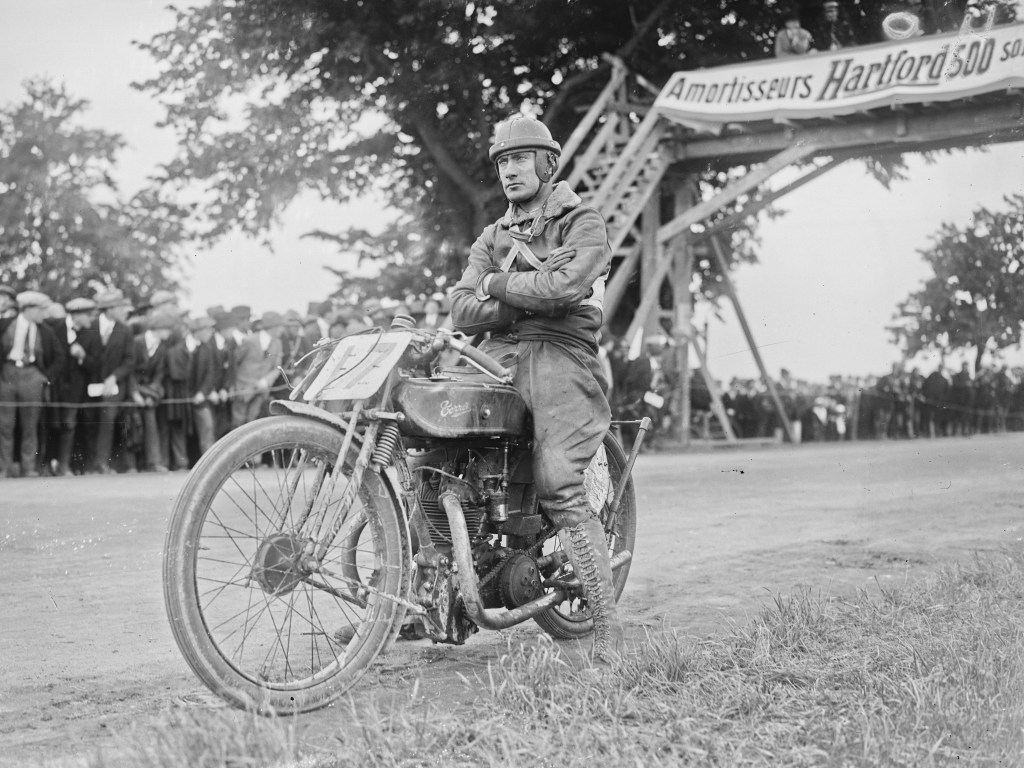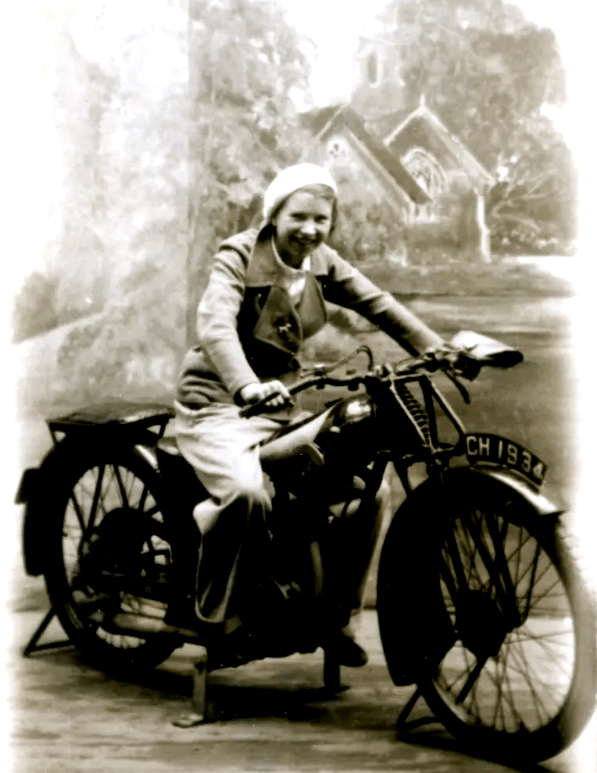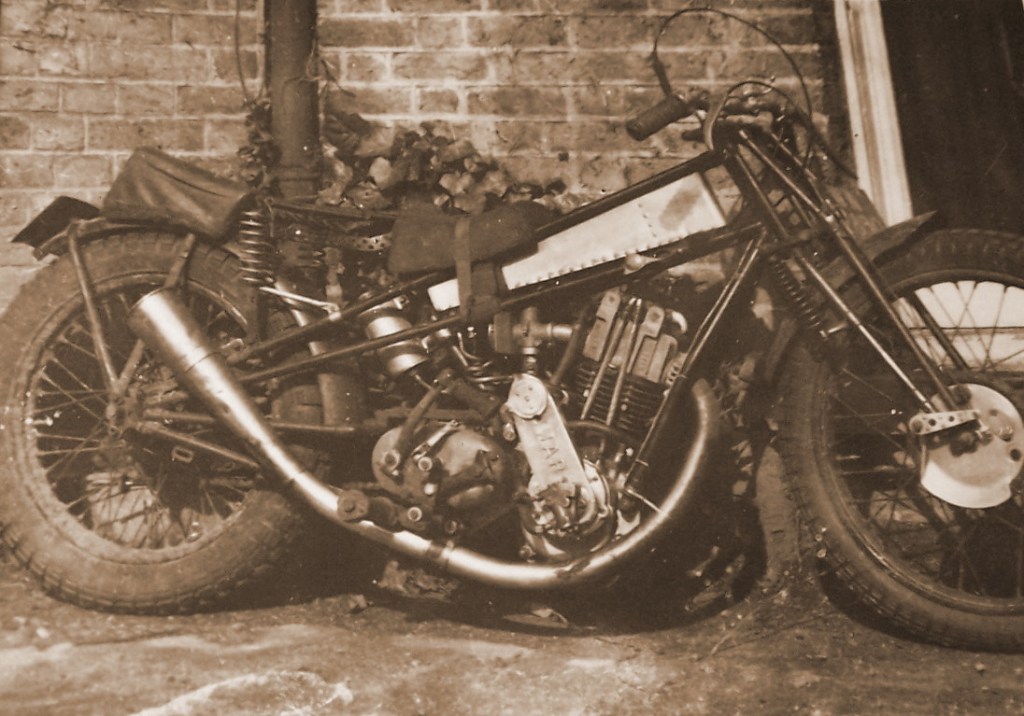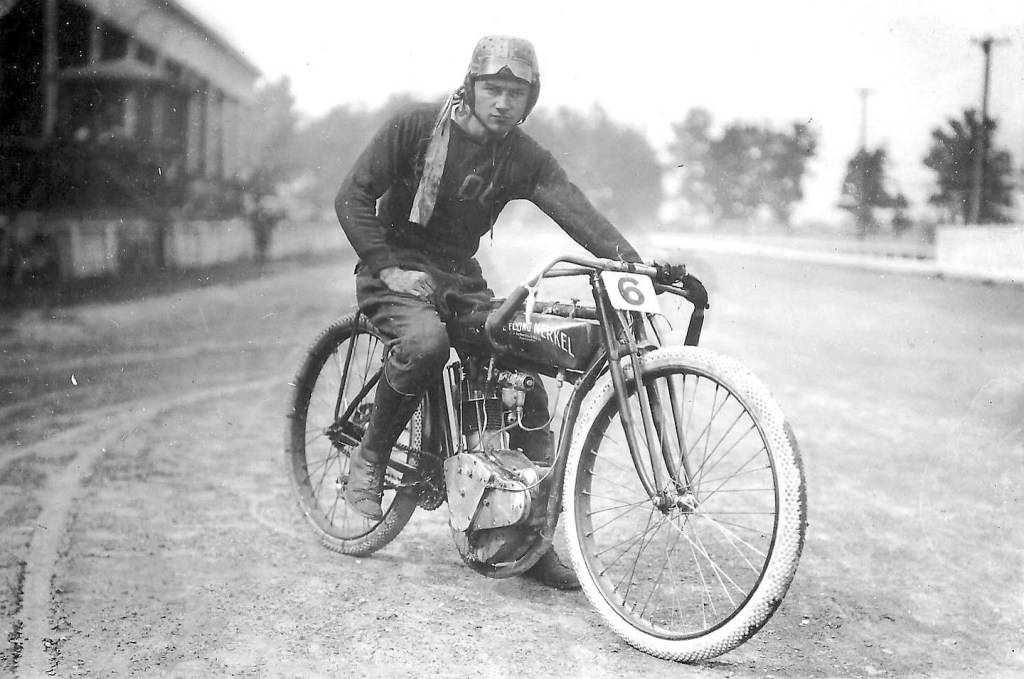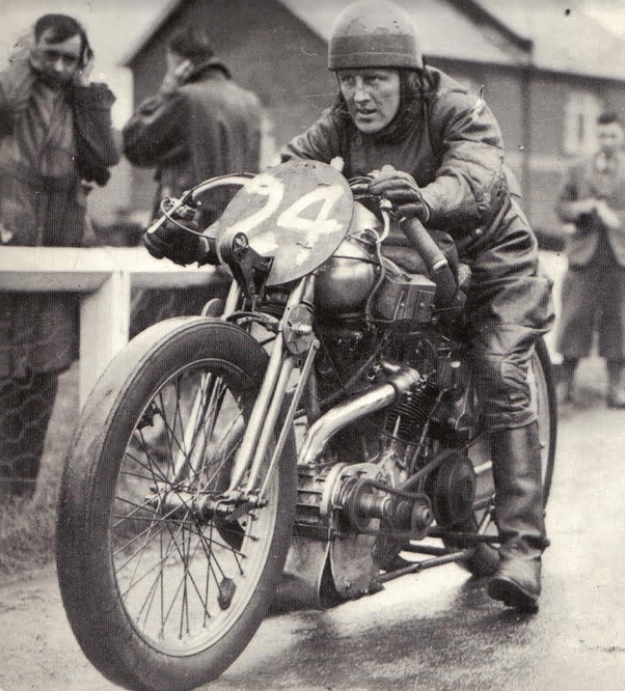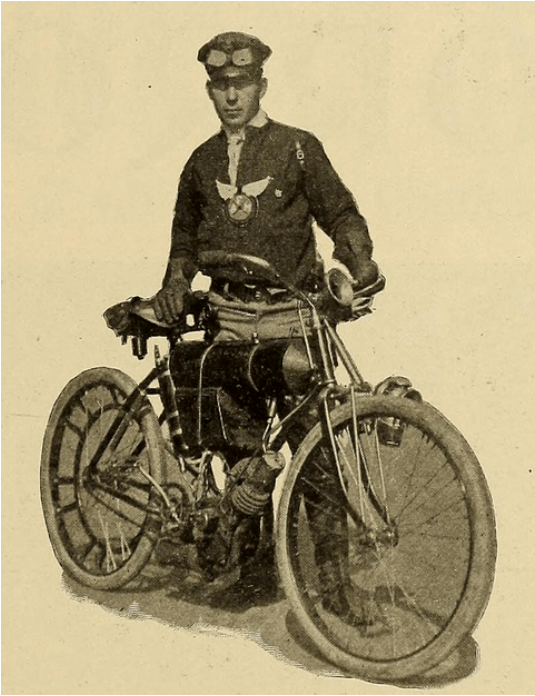
I’ve been having fun with my new Deauville combo but it’s time to get back to business, attacking the backlog of cool pics courtesy of my amigo Fanfan. To this end if you’d fare to turn to Melange the first you’ll find oodles of additions to the American section. Most, inevitably, are Harleys and Indians, but there are also Hendersons, Emblems, Thors and, as reflected here, a rather fine Merkel.
This cool geezer bears the memorable moniker Cleo Francis Pineau.
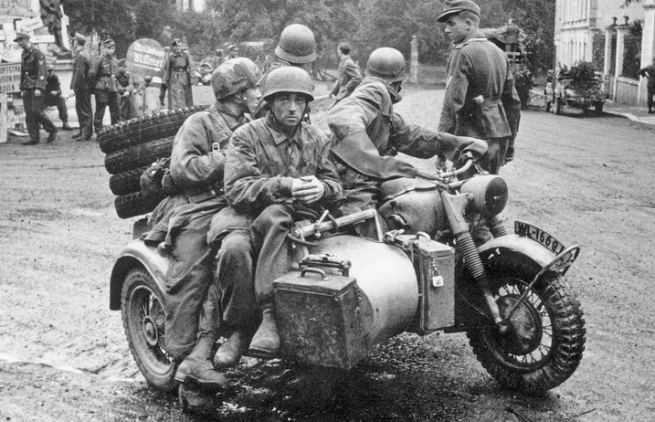
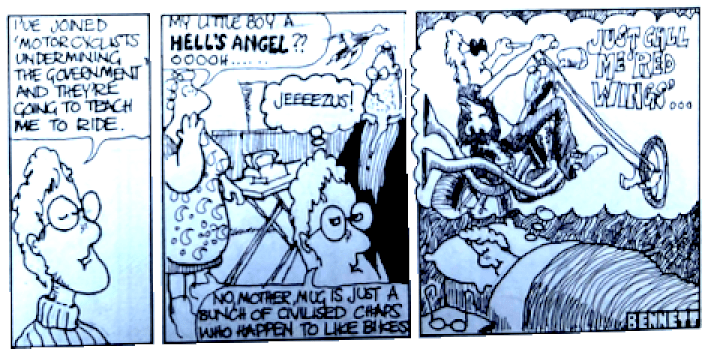
Busy busy…before getting stuck into the 1950s I’ve been ploughing through the ‘pending’ folders which, as usual, are overflowing with images from mon ami Francois’ astonishing archives. So if you’d care to take a gander at the WW2 page you’ll find more than 200, yes, 200 newly published wartime pics of men (and woman) and their motor cycles, from the Home Front to the Eastern Front by way of Normandy and North Africa. About 20 more poems have been added, ranging from not bad to delightful. There are now three picture galleries; Melange 3 already has more than 100 assorted images with more to be added on a daily basis—with a backlog of some 2,000 images look out for Melange 4 in due course. And if you’d care to open the ‘ARTWORK/HUMOUR’ page you’ll find in its entirety the 1970s Motor Cycle Weekly cartoon strip Felix, Fanny & Co, courtesy of its creator, Roger Beale. It is truly bonkers. Here are some tasters:
ODE TO A MOTORCYCLE ENGINE: I have breathed life into this thing of oil and fine ground steel Held the pieces in my hand, this nut, this spring, that wheel, I have nurtured every piece that makes this iron heart Yet tho’ I try my best, the flamin’ thing won’t start!
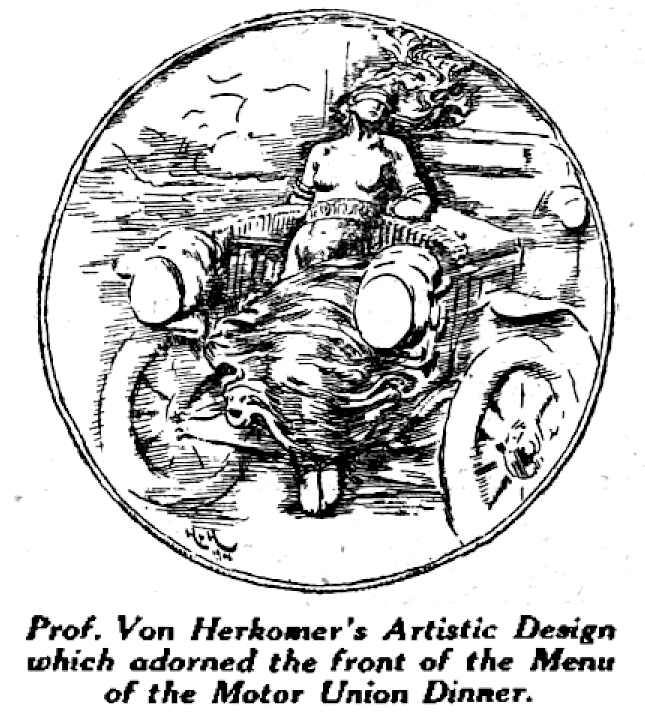
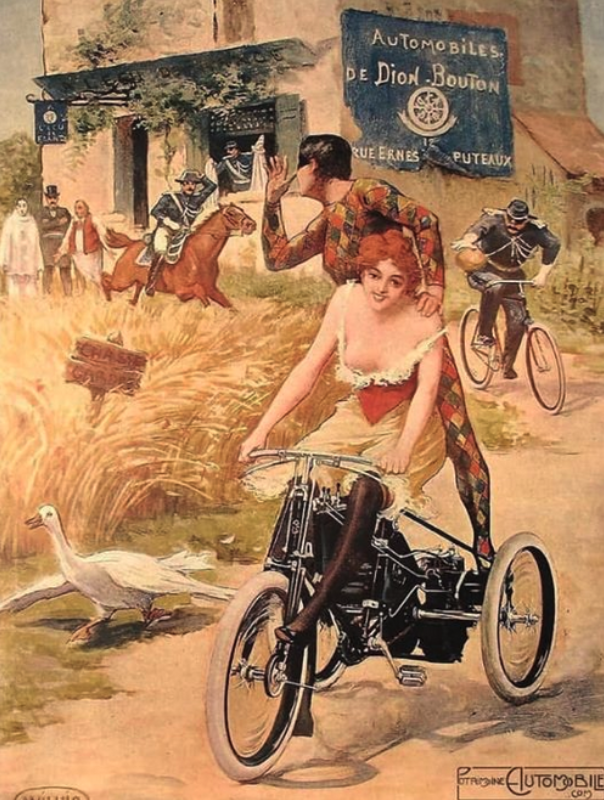
Having spent an enjoyable few weeks mining a newly discovered source of motor cycling yarns from 1904/5/6 it’s time to get back to work on 1950. If you’re inclined to take a look at the revamped coverage of 1906 be ready for a shock: there are some stories of motor cars and, in one case, balloons that were too good to leave out. I’ve also been uploading another batch of pics to the melange and some lovely advertising posters to the artwork/humour page (thanks, as usual, to mon ami Francois for so many glorious images).
Motor Cycling, although absorbed by The Motor, still covered the motor cycling world and I’ve just this minute finished reading every single issue to bring you a comprehensive report of the debutantes at the Stanley Show, the first motor cycle race on the Isle of Man (even if it did serve as a selection trial for the great French International road race)—and the race itself…don’t miss Bicycling World’s report of the second ride across the USA: “WC Chadeayne’s ride across the continent on a 3 horsepower [440cc] Thomas motor bicycle marks the successful consummation of one of the pluckiest and most enduring performances in the annals of any sport.” A proper ripping yarn. Look there are nigh on 65,000 words and shedloads of pics waiting for you. I will; now take a little time out in the garage before doing it all over again in 1906—the Triton is nearly running. Wish me luck, watch this space.
William C Chadeayne, Captain of the Buffalo Motorcycle Club and a director of the Thomas Auto-Bi Company, rode one of the company’s bikes across the United States. It wasn’t easy.
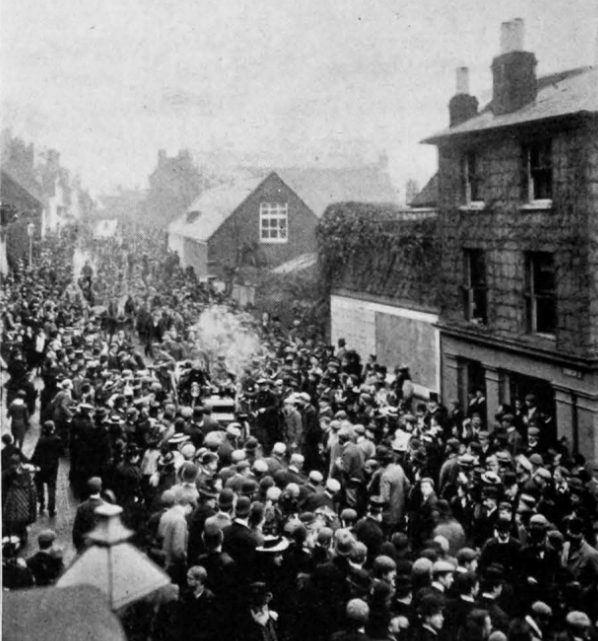
You’ll find a shedload of additional stories in 1895 and 1896. Foremost of these is a comprehensive report on the unshackling of British road transport. As The Autocar put it: “To-day, November I4th, 1896, is a red-letter day, not only in the history of automobilism, but in that of England itself, for it marks the throwing open of the highways and byeways of our beautiful country to those who elect to travel thereupon in carriages propelled by motors, instead of in horse-drawn vehicles or upon bicycles.” Engines are noisy so you’ll also find: “Beneath the motor is a box, into which the exhaust passes and expands before escaping into the air. In this way the noise arising from the exhaust is suppressed.” And as well as making a petrol-engined trike (and a horribly effect machine gun) Hiram Maxim took to the air, briefly, in a biplane with a crew of three and two stream engines powering 18ft props, nine years before Orville and Wilbur did their thing at Kittyhawk.
Having uploaded a wide range of stories from 1895 I’ve moved on to 1896 when the law that strangled British vehicle evolution was finally dumped. There’s a lot more material to be unearthed from ’96 but in the meantime, enjoy this quote from The Autocar: “While the tricycles are making such headway it is perhaps not surprising that so little should be seen of the petroleum and steam bicycles which were believed at one time to be on the point of achieving a great deal of popularity. As a matter of fact, the motor bicycle has never had any big chance of proving a rival to the three-wheeled machine, to which it is inferior for the application of mechanism in every respect.”
All the material I have for 1949 is now published; the TT was a real humdinger and you’ll find a review of the first World Championship series. And a 4½-litre Polish V-twin combo with room for eight. And a clutch of show reports (say hello to a vertical-twindian). And a gruelling ride through Turkey on a 250. And the arrival of the Craven luggage gear which my generation grew up with. And Vic Willoughby’s tales from the Continental Circus. And roadtests including the legendary Stroud Panther and the Beeza Star Twin. And motor scooters. And Brits putting the colonials in their place at Daytona. And tales of the Motor Maids. And the Pioneer Run. And the Wooler flat four. And…you get the picture. At which point I would normally tell you I’m beavering away on 1950; but I’ve come across a gold mine of material from the turn of the century (20th century that is, and earlier). So I’m getting back to our roots; I’ll keep you posted but you’ll already find details of the first British vehicle show in 1895.
Behold, the Wooler. Yes sonny, a British flat four decades before the Gold Wing was a twinkle in Soichiro’s eye.
Two more years are on-site for your delectation including loads of good stuff from the 1948 Earls Court show, which featured a cornucopia of vertical twins. You’ll also find the most famous motor cycling pic ever taken, comprehensive coverage of the TTs and ISDTs and…shedloads more. And for a change of pace about 300 striking images have been added to the advertising sections from 1924-48 and to the artwork page where, as well as some fab coloured ads, you’ll find cartoons, and illustrations to gladden your eye.
There are now more than 100,000 words, and one or two pics, crammed into 1946. Yarns include reports on the new-fangled telescopic forks that were springing up in front of British bikes, including the air-sprung Dowties on the Panthers (there’s also a test of the Panther M100)…the innovations uncovered by the “British Intelligence Objectives Sub-Committee’s Report on the German motor cycle industry”…a Belgian electric motor cycle which went into series production and a petrol-powered Belgian with an odd front end…a busy programme of sporting events—despite the continued petrol rationing that had the motor cycling fraternity at its wits’ end…and…go take a gander. As 1947’s already as complete as any year is in the timeline (though I have just added some remarks by Soichiro Honda’s first engineer) I’ll get back to 1948. Meanwhile more pics are being added to the melanges all the time, and in 1913 you’ll find harrowing tales of American desert racing. Enjoy.
I’m adding yarns and pics to 1946 on a daily basis. Latest tiotbits include the first great post-war trial (it was a mudbath, but two-stroke tiddlers were making their mark among the big four-strokes); a 9cc, yes 9cc-powered bicycle that combined a 15mph cruising speed with consumption of 1,280mpg; head-banging street racing in Rome; and some exquisite drawings from a Jap prison camp.
“A water-cooled straight Four with unit construction, shaft drive, two carburettors and plunger rear springing.”