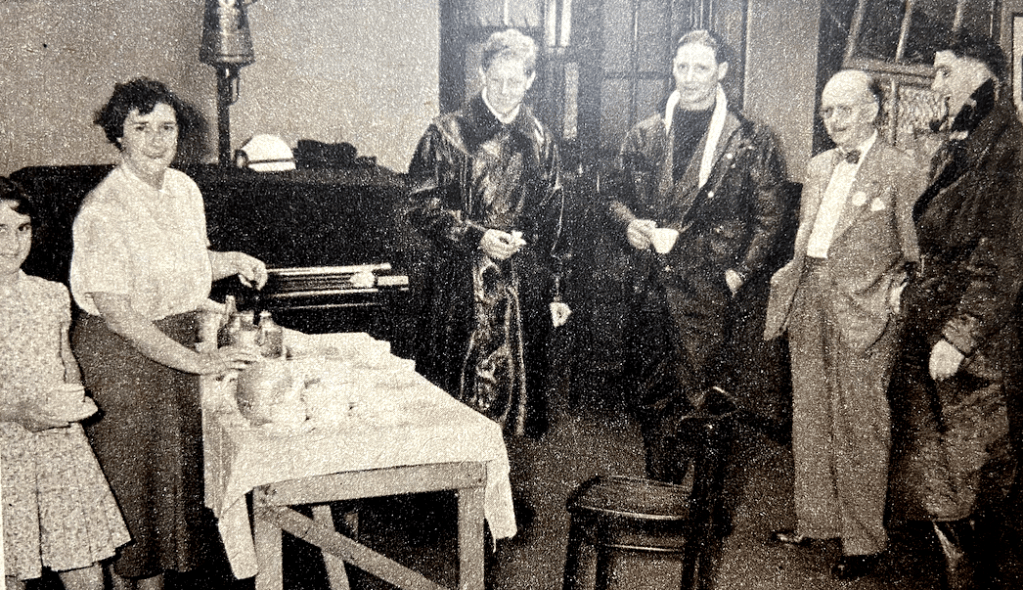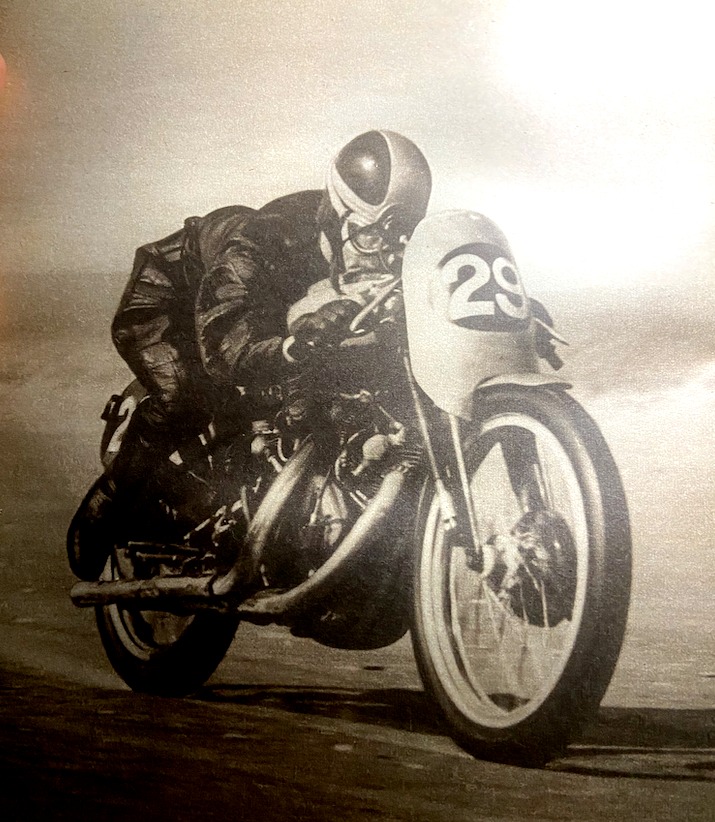
Well it was a long time coming but the timeline has entered the 1950s.Amid the 90,000-plus words and oodles of period pics you’ll find a great introduction to the decade by Bob Currie; a comprehensive TT report (spoiler: Norton scored a double hat-trick) a comprehensive ISDT report (spoiler: the Brits scored a Trophy/Vase double); roadtests, including the Black Shadow (spoiler: it was too damned fast for the Blue ‘Un to find its top speed); and…go find out for yourself. and, enjoy.
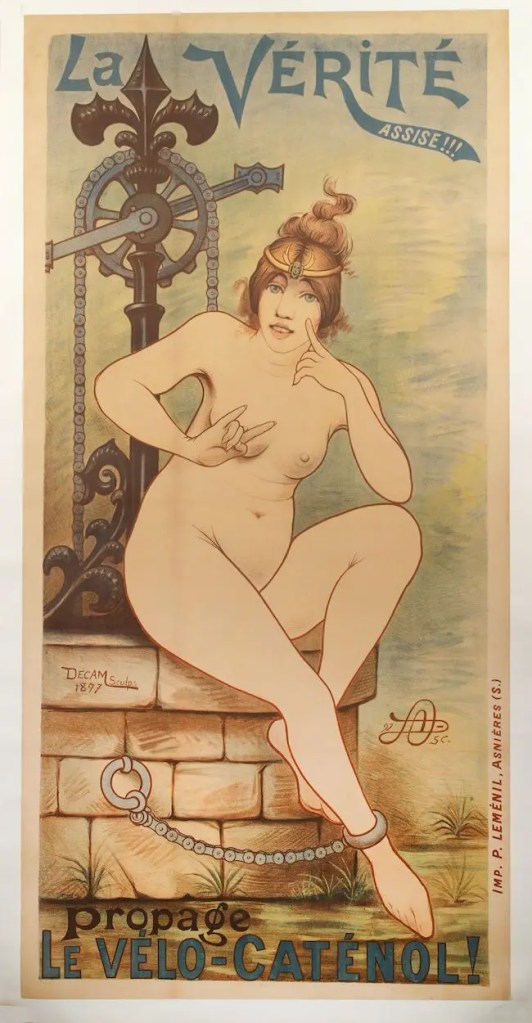
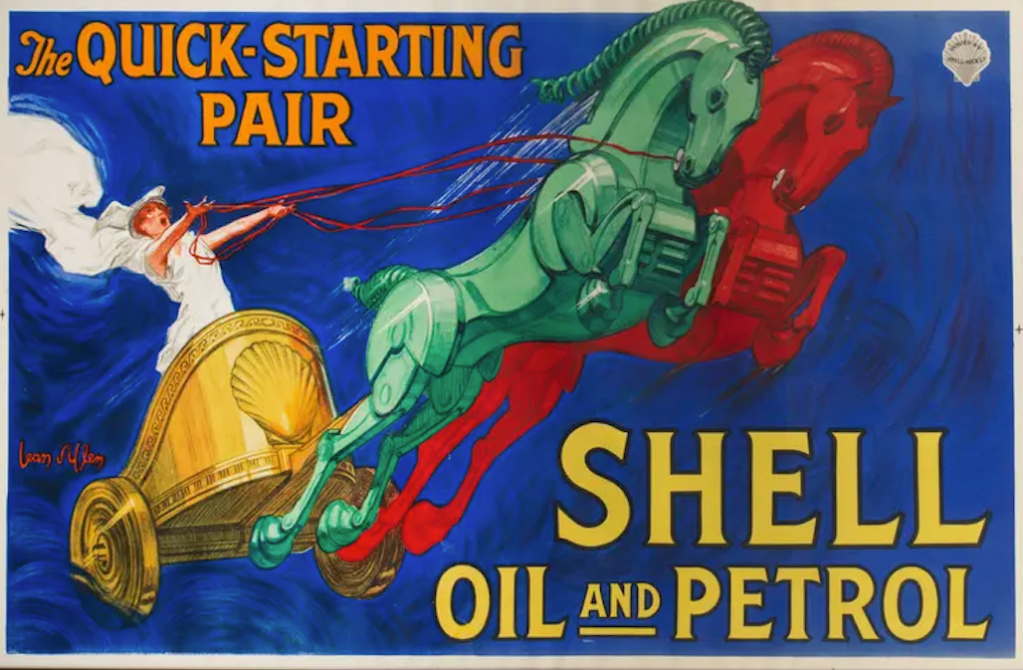
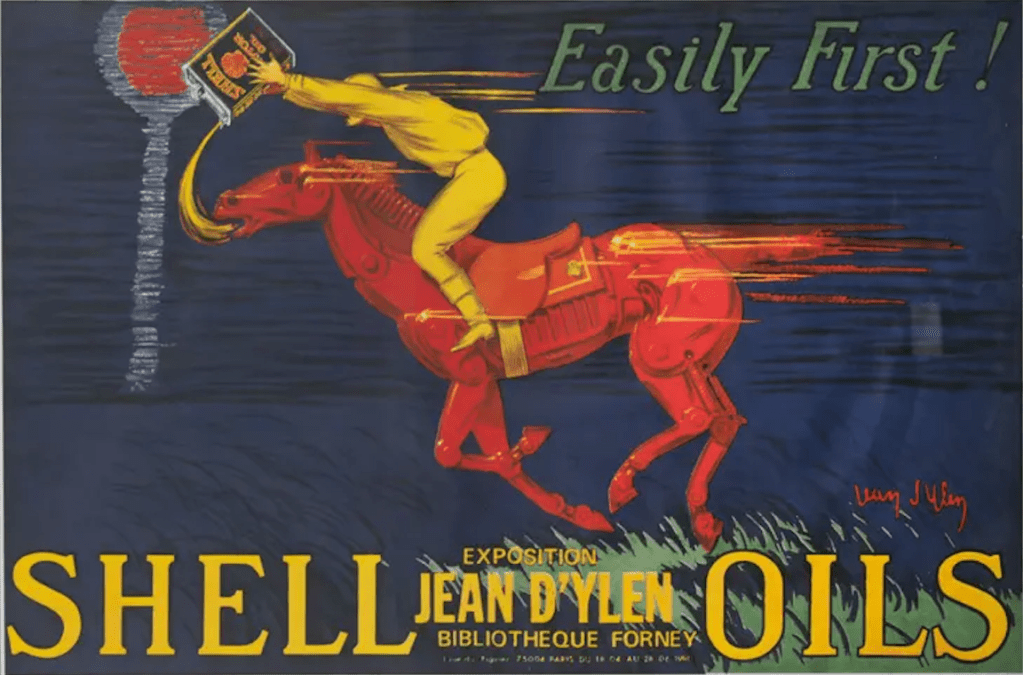
Just for a change, let this ad represent the year. No explanation needed.
More than 100 pics have been added to the melange picture galleries, including the first batch in a fourth collection. And at least as many again have been dropped into years from the 1890s to the 1940s and a couple of dozen have been uploaded to the Artwork/humour page. Several hundred images are still waiting in the pending file but they’ll have to wait as I’m finally getting back to work on the main timeline, which means 1950. Feel free to watch this space.
The nights are drawing in, both my combos have lost their front sidecar lights at the same time, strange but true, and instead of sorting them I’m keeping busy on the photo front. Dated pics are being moved from les melanges to their respective years in the main timeline. An obvious move, in hindsight. At the same time dated pics from the huge backlog (merci, Francois, mon ami) are being uploaded, sometimes entailing some caption research. The earliest additions can be found in the 1890s; as I write this I’m taking a break from 1926. On which subject, I was adding a couple of snaps from the 1926 Paris-Nice rally when I noticed that an existing caption pointed readers at the extensive Paris-Nice report in Images of Yesteryear (part 5), authored by my oh-so-valued collaborator Francois and published by kind permission of him and the Leicester Phoenix MCC (wotcha Ben). Readers are recommended to check out the club’s excellent rally/touring site lpmcc.net without delay. The point being (yes, there is one) that I’d forgotten how bloody good Images of Yesteryear is. If you haven’t visited it (via the main menu) you’re in for a treat. The themed essays and photo galleries are les bolleaux de chien. I just had to pull myself away—this is also a problem with Murray’s electronic Tragatsch (https://ozebook.com/), the Grace’s Guide to industrial history (https://www.gracesguide.co.uk/) and Sheldon’s Emu (https://cybermotorcycle.com/) which is packed with marque histories, specialised articles and so much more. Be warned—all three sites are addictive. Murray, whose work rate puts me to shame, has even compiled a PDF version of the main body of this timeline laid out as an electronic book which is a bloody delight. Nuff said, back to 1926.
Rolland looking determined on his 350 Terrot at the UMF’s S1926 trasbourg grand prix.
You’ll find a charming intro to 1908 courtesy, inevitably, of the Blue ‘Un, followed by an equally charming letter from one ‘Bougie’ recounting a run of 235 miles in 12 hours. Also from 1908 but tucked away in poetry corner is, repetitive but true, a charming poem which strikes a chrord with any enthusiast who’s resorted to random doggerel to numb the misery of a winter run. It starts thus: It is rather entertaining, When it’s cold and wet and raining, And the language you’re restraining Is becoming hard to hear, When with clothes all wet and wringing To your handles you are clinging, With your motor ever dinging Out its rhythm in your ear, Just to take its cheery meter For to make the journey sweeter And to render time the fleeter ‘Tis a very good idea, And to rhyme all out of season, Say good-bye to every reason, Tell the weather it can freeze on If it likes, as you don’t care… And then its ascends to pure gibberish. Nearly forgot, more assorted pics courtesy of Francois await you at the end of Melange trois, and racing Harleys and an Indian have swollen the American collection in premier Mélange.
Following an extended break (there’s no point living on the Isle of Wight if you spend the summer slaving over a hot website) I’ve been catching up with my picture posting. Lots of ageing Harleys, a batch of pinups, an assortment of ageing memories…I’m currently working through a rather fine touring yarn culled from a 1908 copy of the Blue ‘Un after which I’ll get stuck into the pending file, after which it’s back top the grindstone which means getting stuck into the 1950s. And I’m still neglecting the four (count ’em) ancient Brits in need of final fettling in time for winter. No of course I didn’t plan it that way. In any case, watch this space. Or not, it’s all good.
I’ve been having fun with my new Deauville combo but it’s time to get back to business, attacking the backlog of cool pics courtesy of my amigo Fanfan. To this end if you’d fare to turn to Melange the first you’ll find oodles of additions to the American section. Most, inevitably, are Harleys and Indians, but there are also Hendersons, Emblems, Thors and, as reflected here, a rather fine Merkel.
This cool geezer bears the memorable moniker Cleo Francis Pineau.
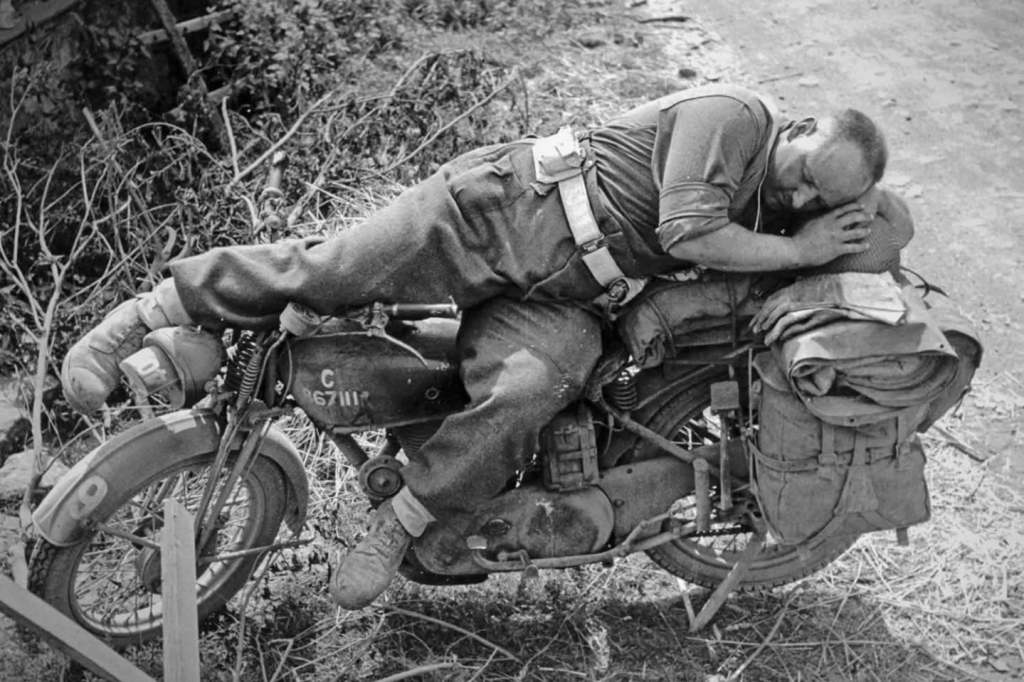
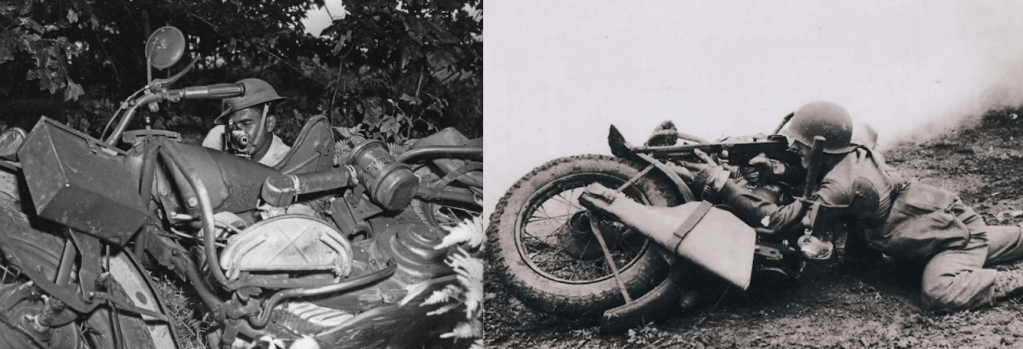
Busy busy…before getting stuck into the 1950s I’ve been ploughing through the ‘pending’ folders which, as usual, are overflowing with images from mon ami Francois’ astonishing archives. So if you’d care to take a gander at the WW2 page you’ll find more than 200, yes, 200 newly published wartime pics of men (and woman) and their motor cycles, from the Home Front to the Eastern Front by way of Normandy and North Africa. About 20 more poems have been added, ranging from not bad to delightful. There are now three picture galleries; Melange 3 already has more than 100 assorted images with more to be added on a daily basis—with a backlog of some 2,000 images look out for Melange 4 in due course. And if you’d care to open the ‘ARTWORK/HUMOUR’ page you’ll find in its entirety the 1970s Motor Cycle Weekly cartoon strip Felix, Fanny & Co, courtesy of its creator, Roger Beale. It is truly bonkers. Here are some tasters:
ODE TO A MOTORCYCLE ENGINE: I have breathed life into this thing of oil and fine ground steel Held the pieces in my hand, this nut, this spring, that wheel, I have nurtured every piece that makes this iron heart Yet tho’ I try my best, the flamin’ thing won’t start!
Having spent an enjoyable few weeks mining a newly discovered source of motor cycling yarns from 1904/5/6 it’s time to get back to work on 1950. If you’re inclined to take a look at the revamped coverage of 1906 be ready for a shock: there are some stories of motor cars and, in one case, balloons that were too good to leave out. I’ve also been uploading another batch of pics to the melange and some lovely advertising posters to the artwork/humour page (thanks, as usual, to mon ami Francois for so many glorious images).
Motor Cycling, although absorbed by The Motor, still covered the motor cycling world and I’ve just this minute finished reading every single issue to bring you a comprehensive report of the debutantes at the Stanley Show, the first motor cycle race on the Isle of Man (even if it did serve as a selection trial for the great French International road race)—and the race itself…don’t miss Bicycling World’s report of the second ride across the USA: “WC Chadeayne’s ride across the continent on a 3 horsepower [440cc] Thomas motor bicycle marks the successful consummation of one of the pluckiest and most enduring performances in the annals of any sport.” A proper ripping yarn. Look there are nigh on 65,000 words and shedloads of pics waiting for you. I will; now take a little time out in the garage before doing it all over again in 1906—the Triton is nearly running. Wish me luck, watch this space.
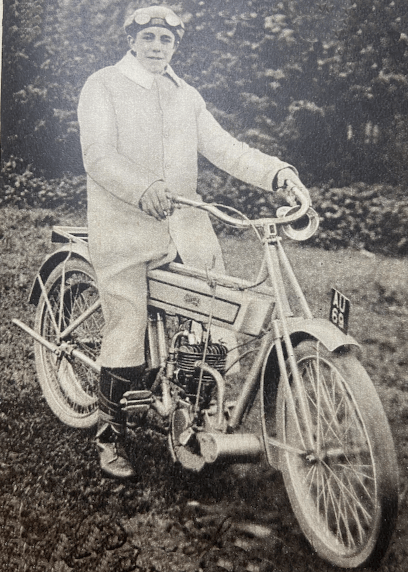
William C Chadeayne, Captain of the Buffalo Motorcycle Club and a director of the Thomas Auto-Bi Company, rode one of the company’s bikes across the United States. It wasn’t easy.
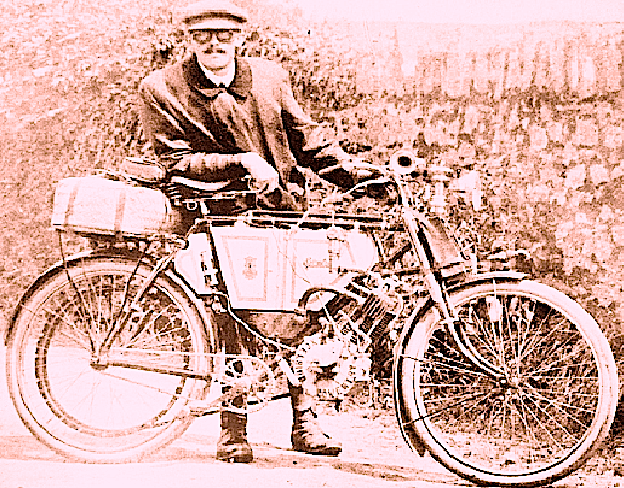
You’ll find a shedload of additional stories in 1895 and 1896. Foremost of these is a comprehensive report on the unshackling of British road transport. As The Autocar put it: “To-day, November I4th, 1896, is a red-letter day, not only in the history of automobilism, but in that of England itself, for it marks the throwing open of the highways and byeways of our beautiful country to those who elect to travel thereupon in carriages propelled by motors, instead of in horse-drawn vehicles or upon bicycles.” Engines are noisy so you’ll also find: “Beneath the motor is a box, into which the exhaust passes and expands before escaping into the air. In this way the noise arising from the exhaust is suppressed.” And as well as making a petrol-engined trike (and a horribly effect machine gun) Hiram Maxim took to the air, briefly, in a biplane with a crew of three and two stream engines powering 18ft props, nine years before Orville and Wilbur did their thing at Kittyhawk.