From Big Bang to suck-squeeze-bang-blow and beyond
World War 2 gallery
Most of the images in this gallery have been supplied by my chum Francois who has assembled an extraordinary archive of motor cycling pictures; readers are advised to check out his collection of photo-essays (‘Images of Yesteryear’ in the main menu).
1937
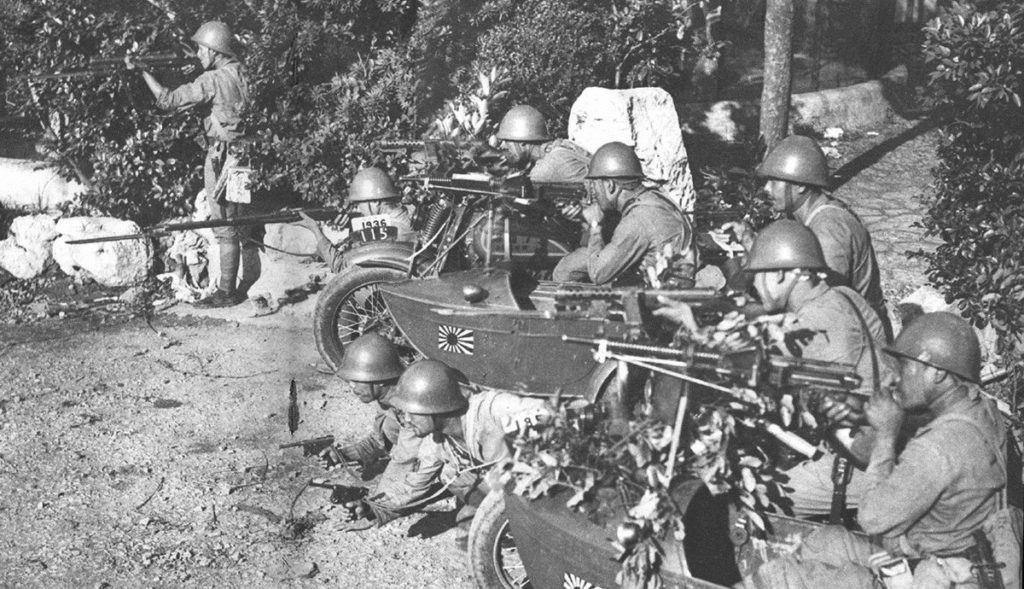
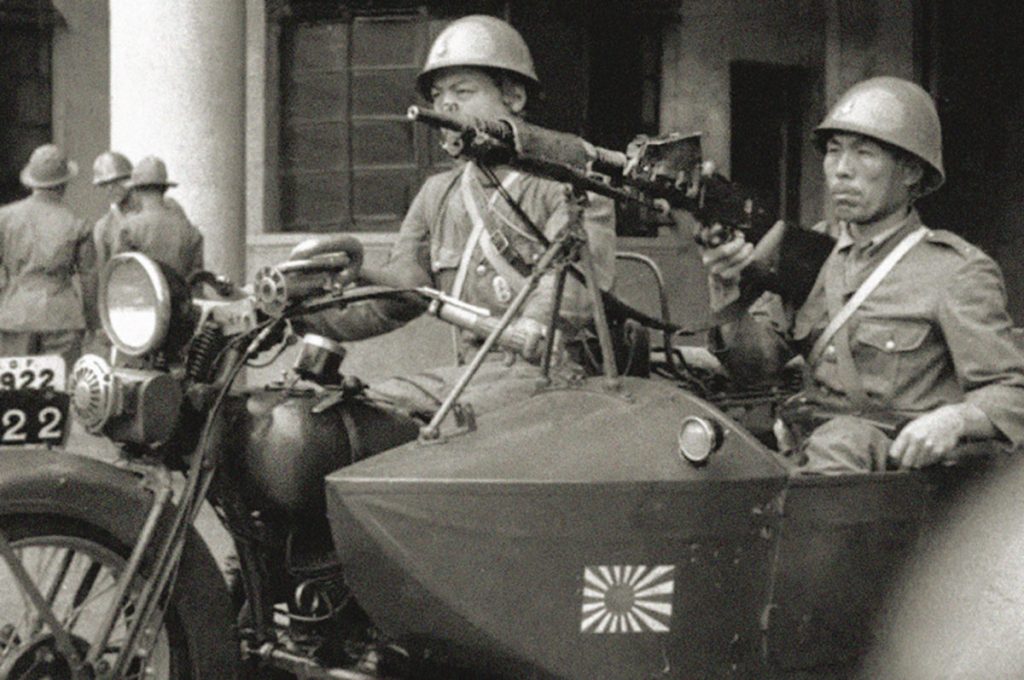
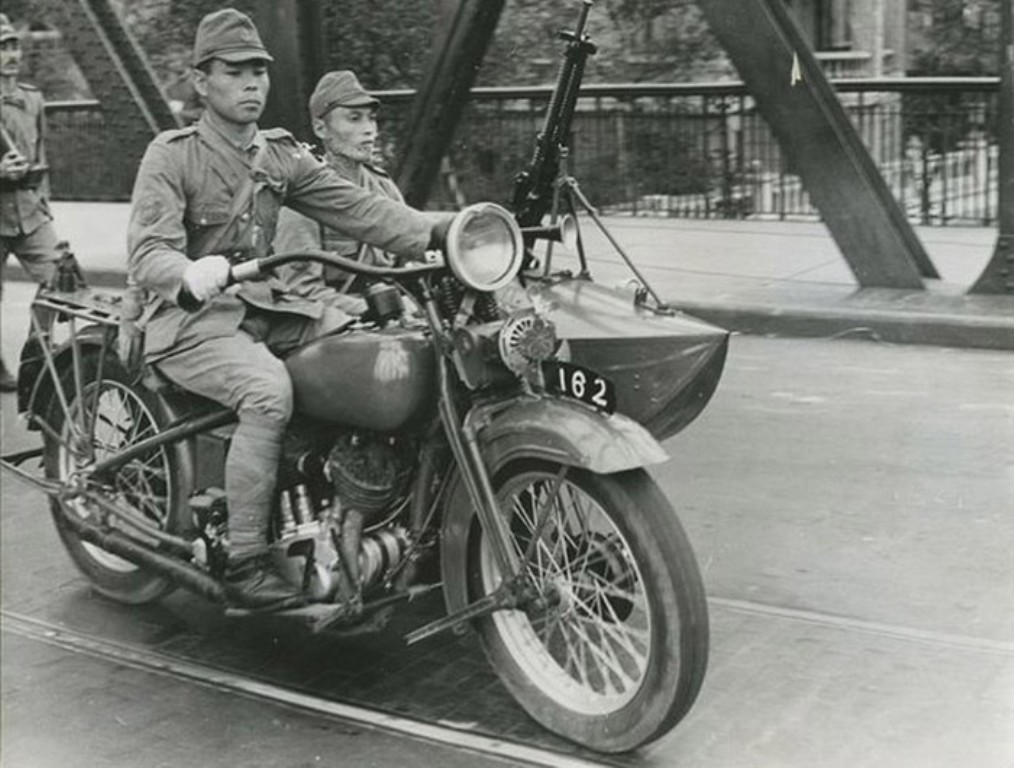
Yes, 1937. The huge and horrible battle of Shanghai is often cited as the opening act of World War 2.
1939
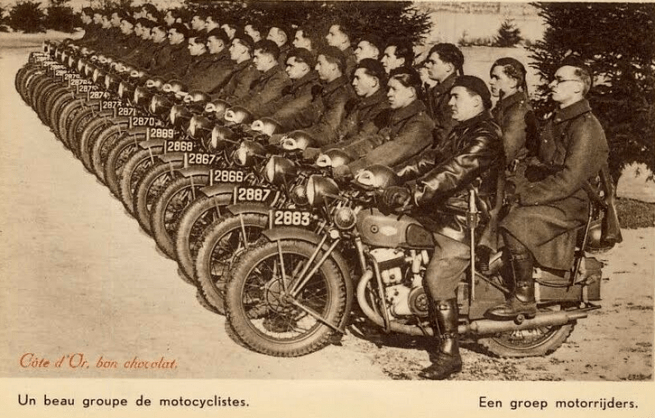
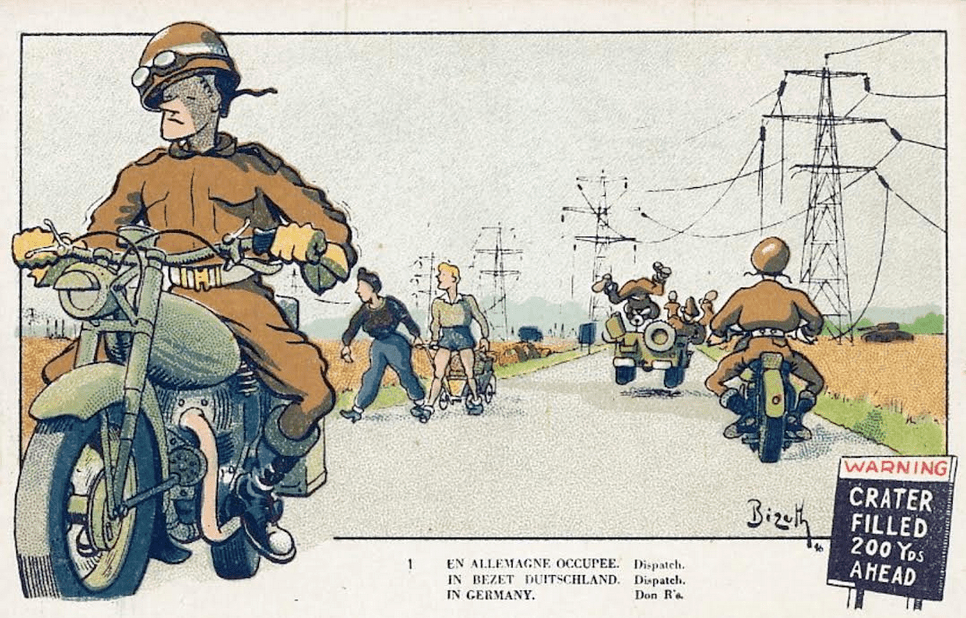
With a bilingual caption in French and Flemish this card depicts a squad of Belgians.
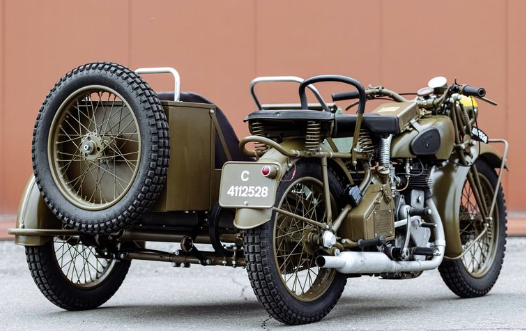
This restored survivor is a Norton Big 4 WD outfit with sidecar-wheel drive.
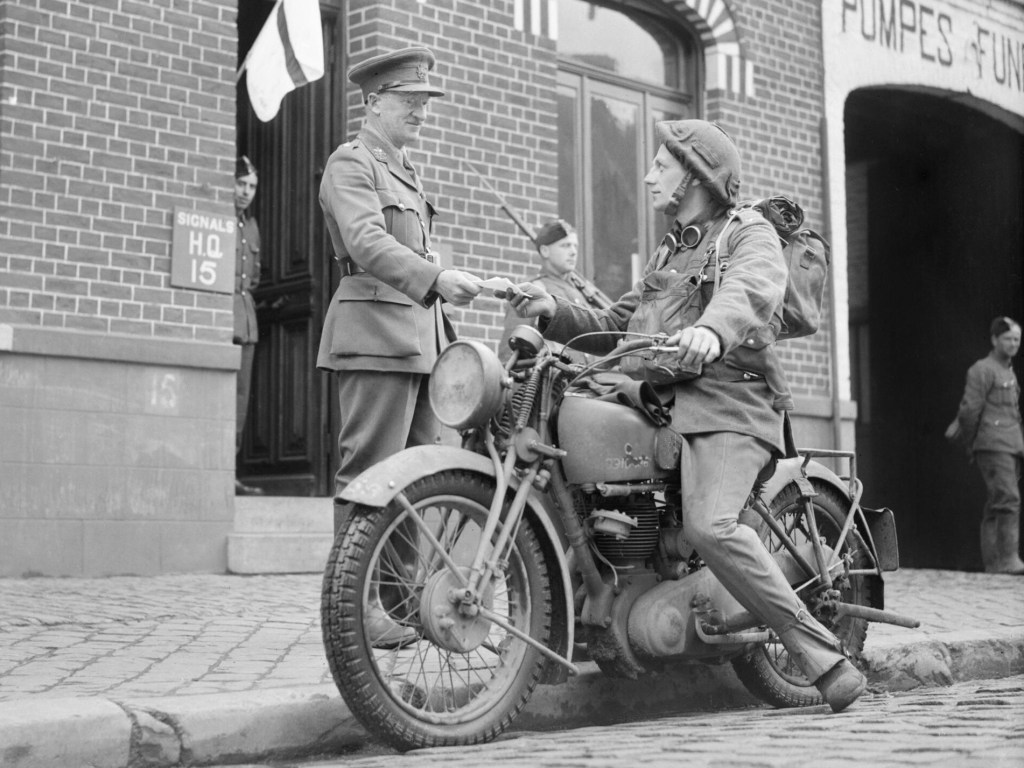
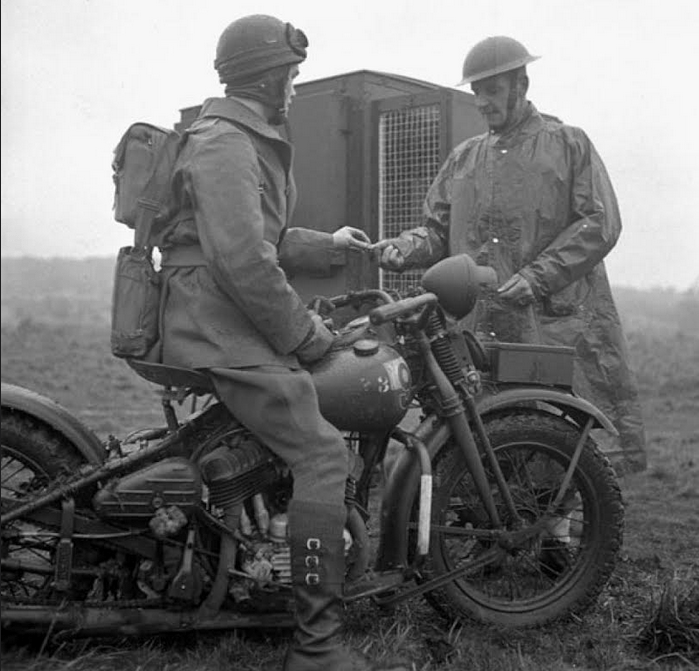
“A motorcycle despatch rider delivers a message to the signals office of 1st Border Regiment at Orchies, France, 13 October 1939.”
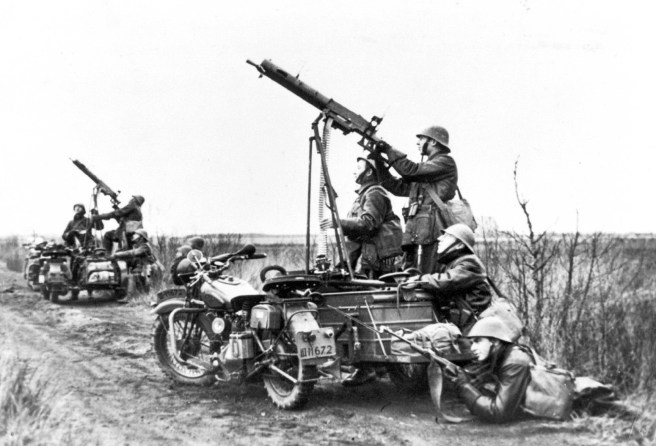
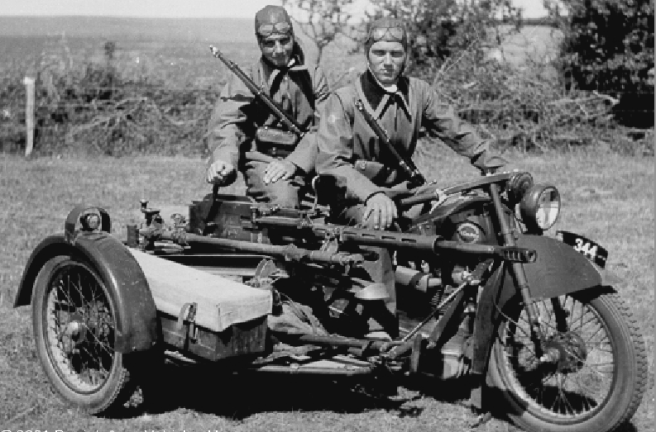
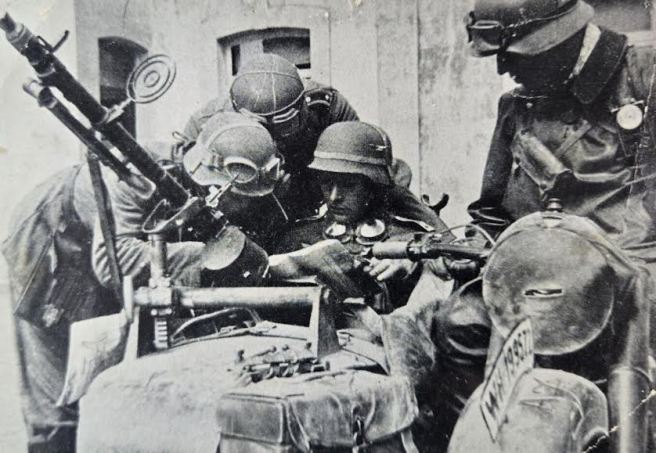
BSA G14 outfits, supplied to the Dutch army and set up for anti-aircraft duty.
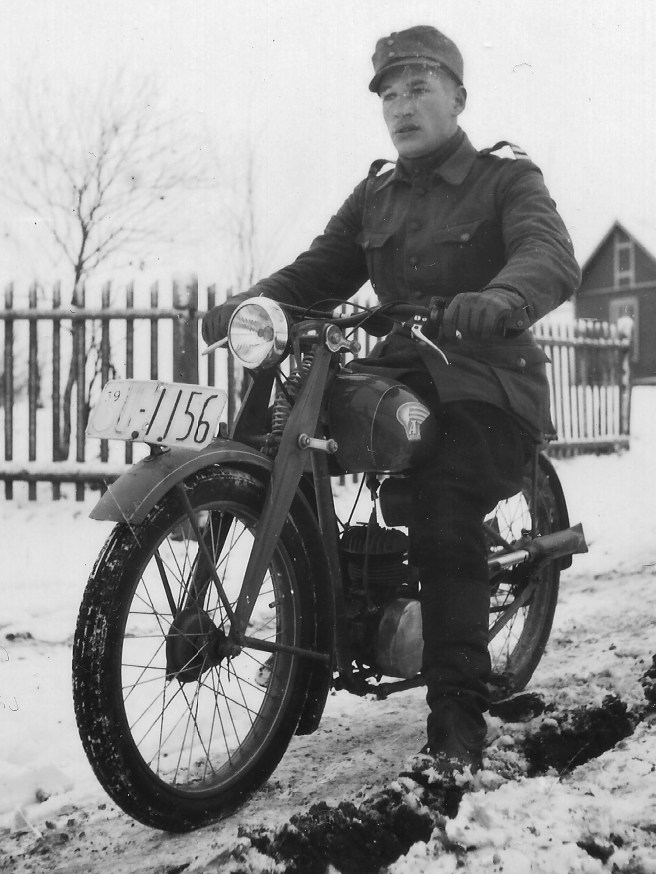
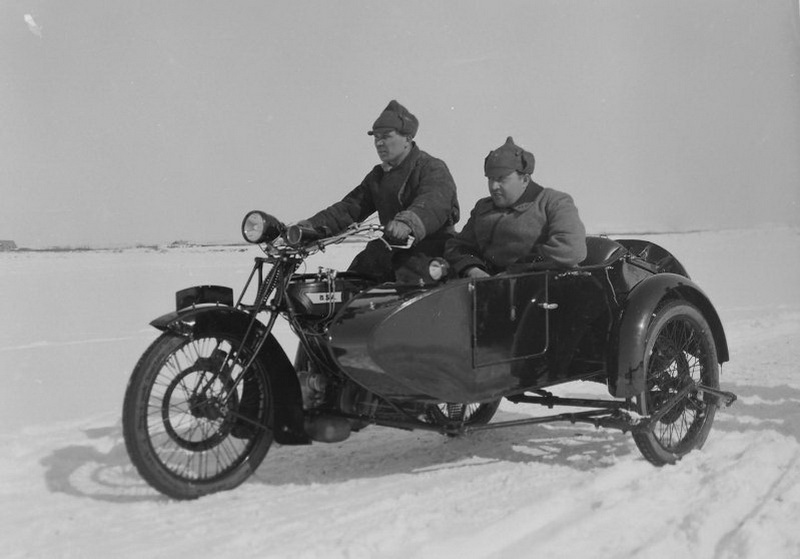
This Finnish squaddie is mounted on a German-made Ardie S125 during the Winter War against Russia.
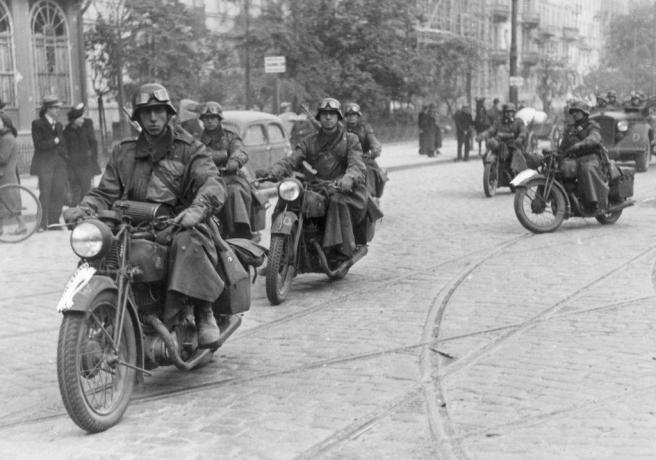
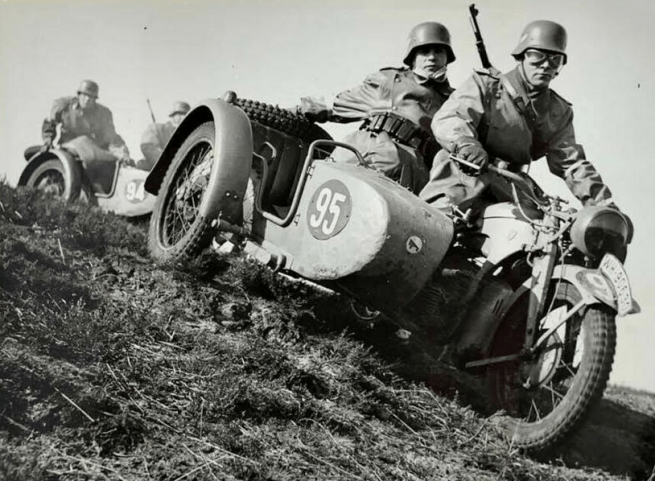
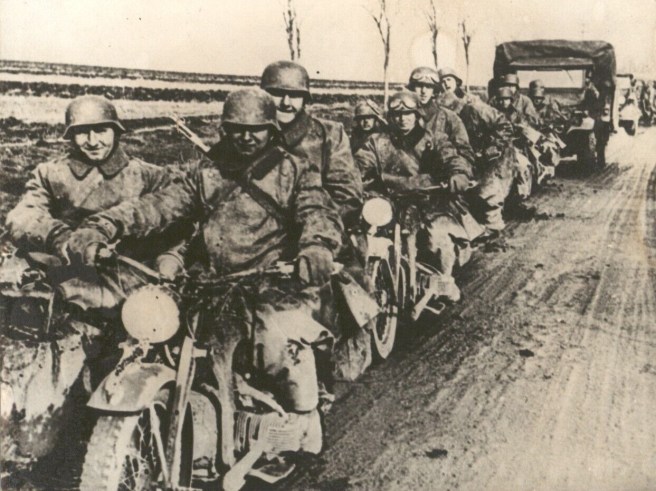
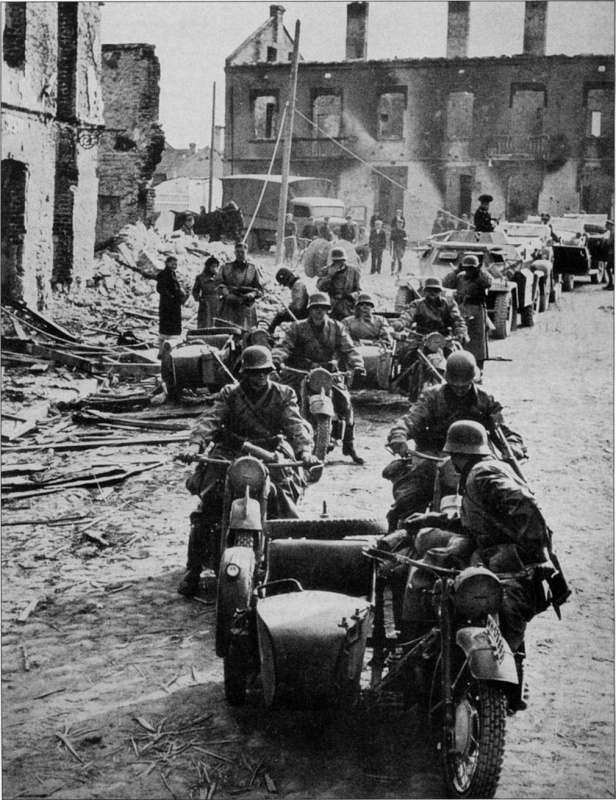
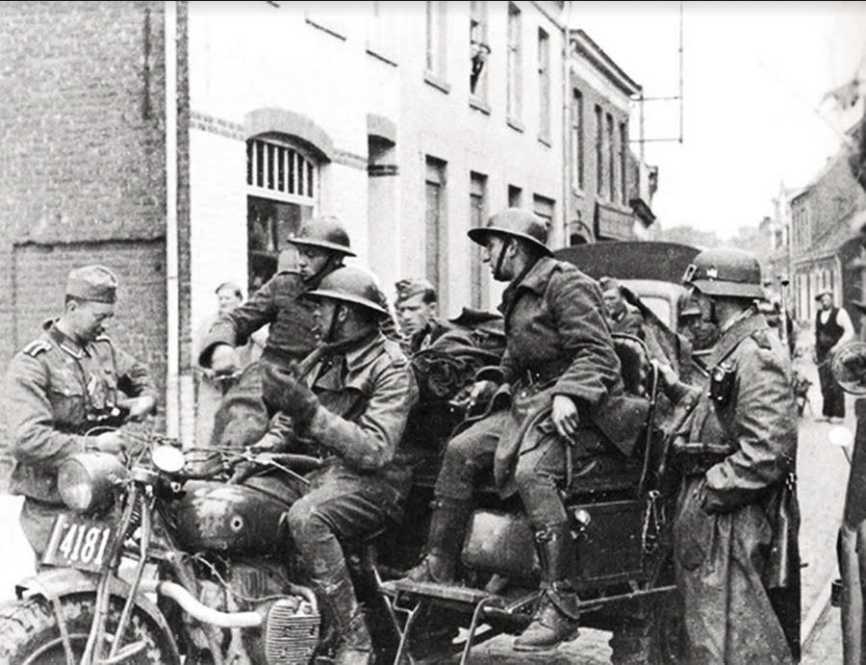
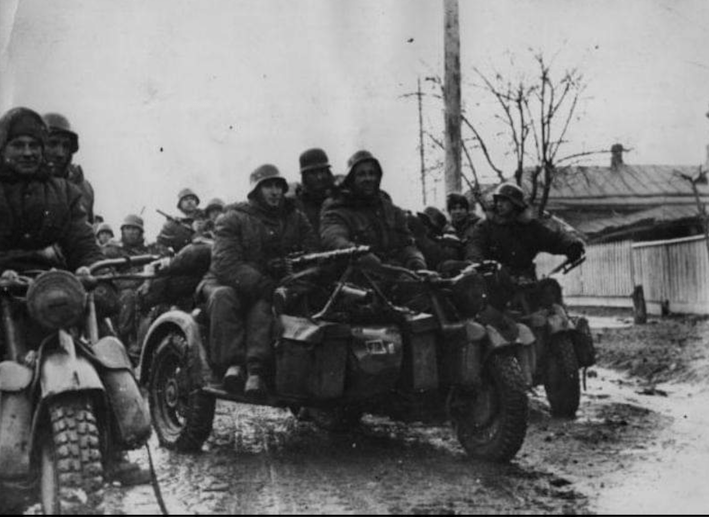
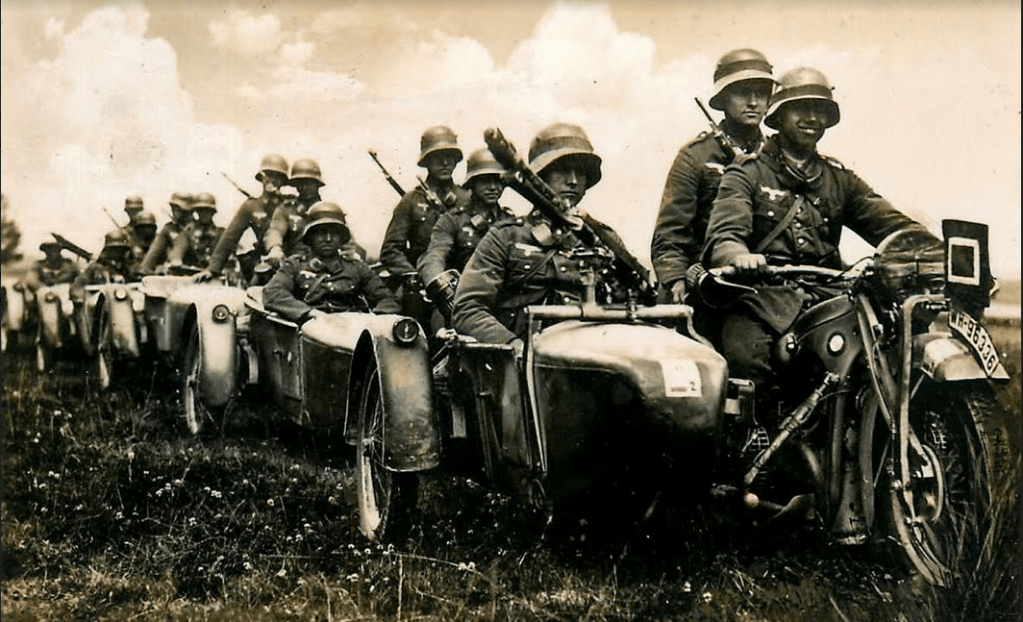
German Kradschützen (motor cycle infantry) roll into Warsaw, circa 1 October.
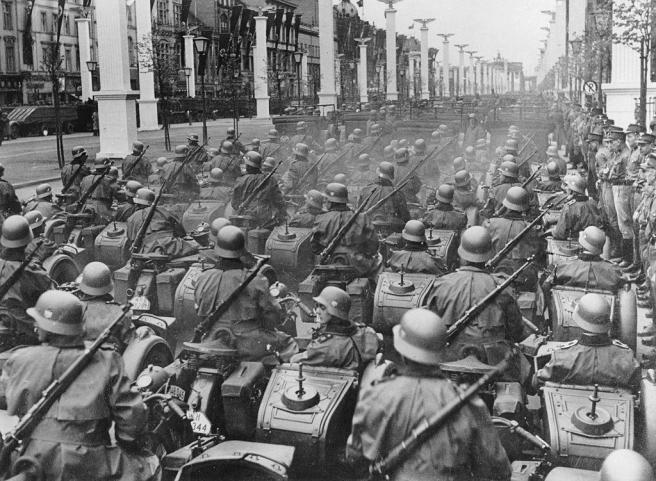
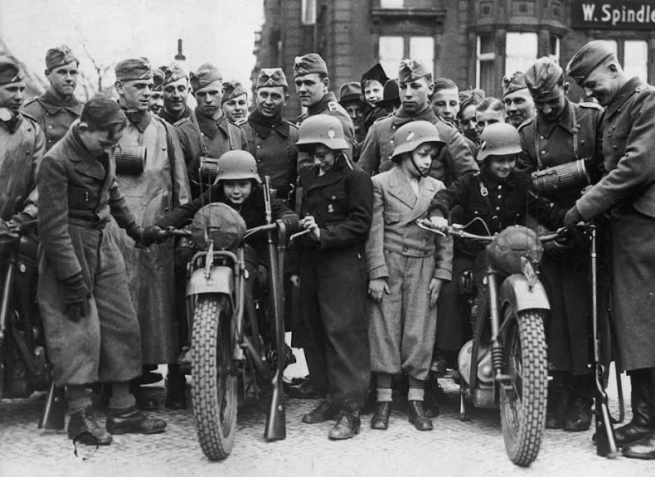
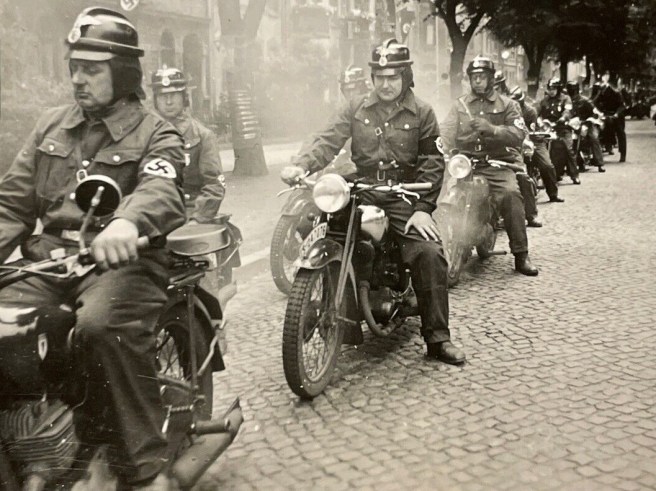
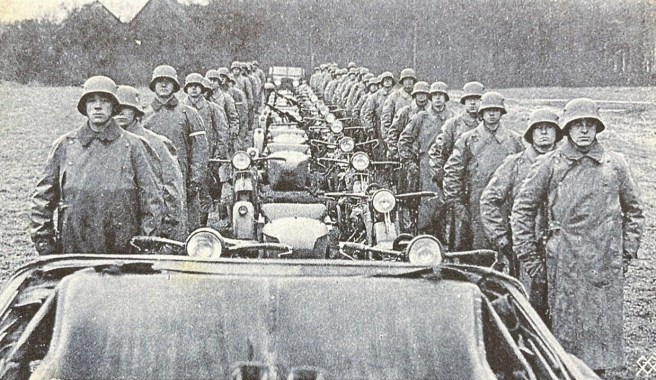
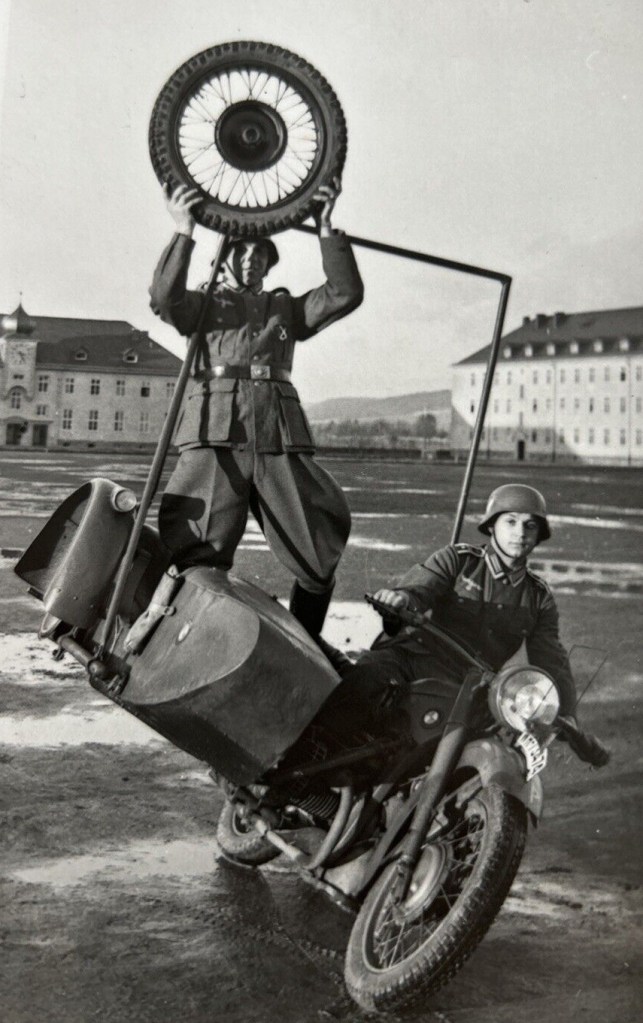
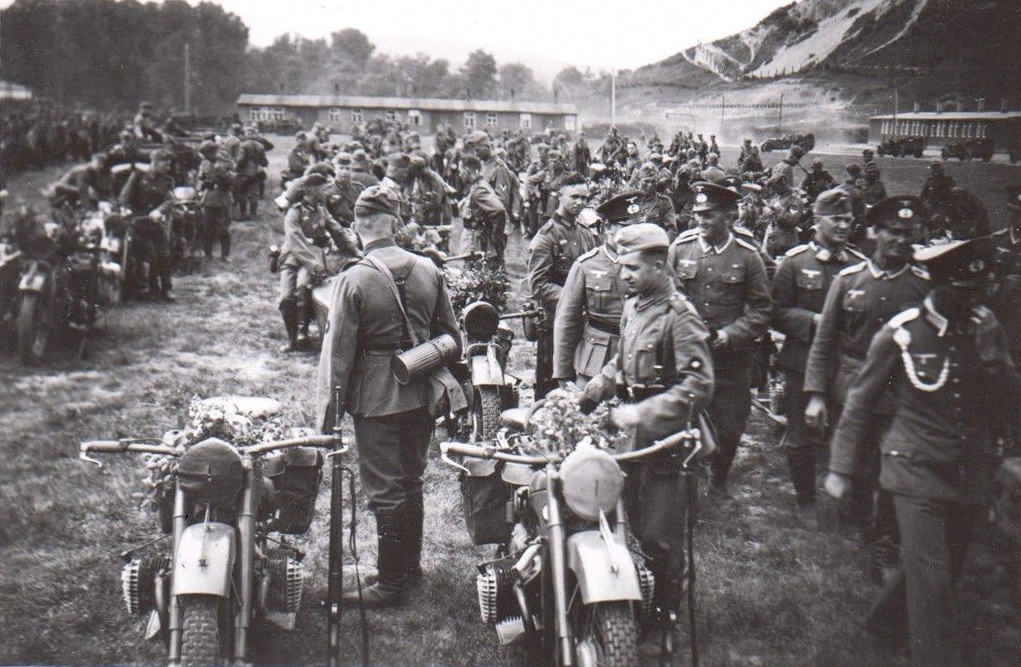
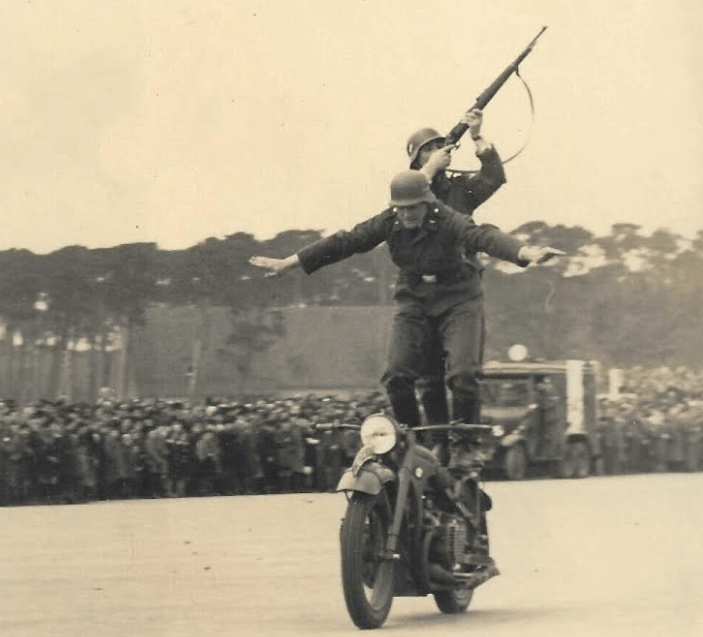
Parading in Berlin to celebrate Hitler’s 50th birthday.
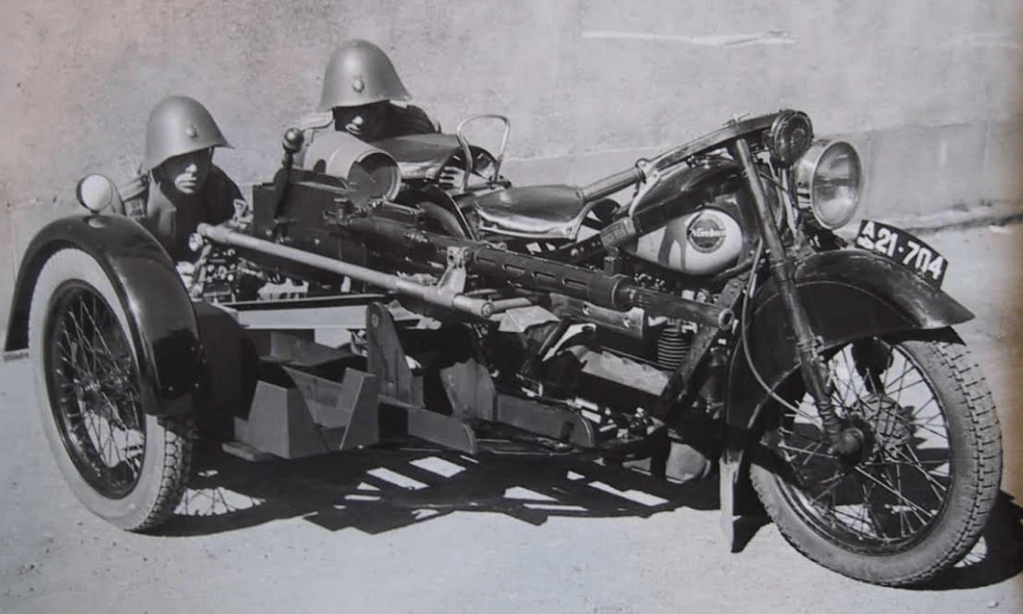
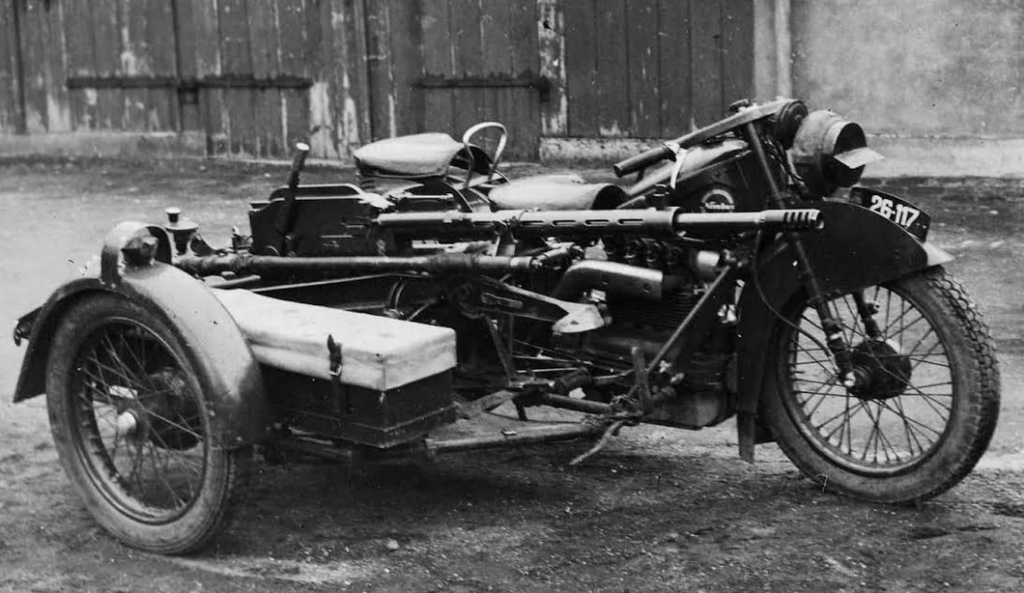
This Danish Nimbus outfit packs a 20mm punch.
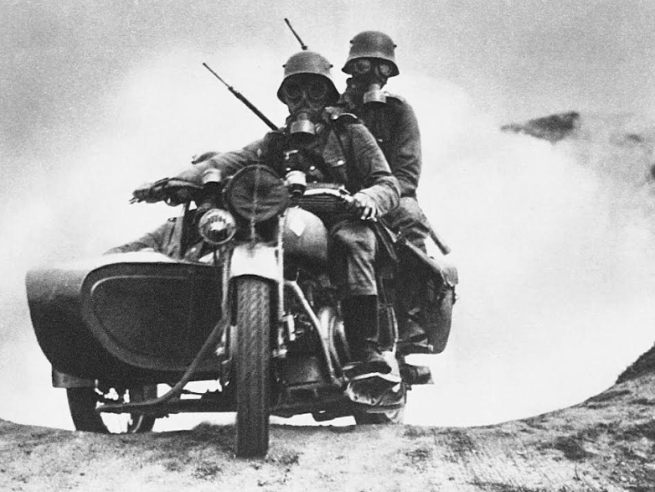
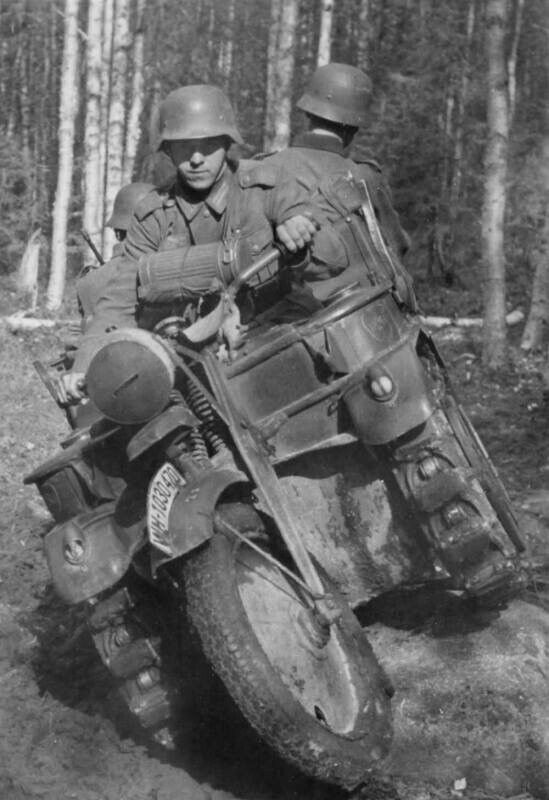
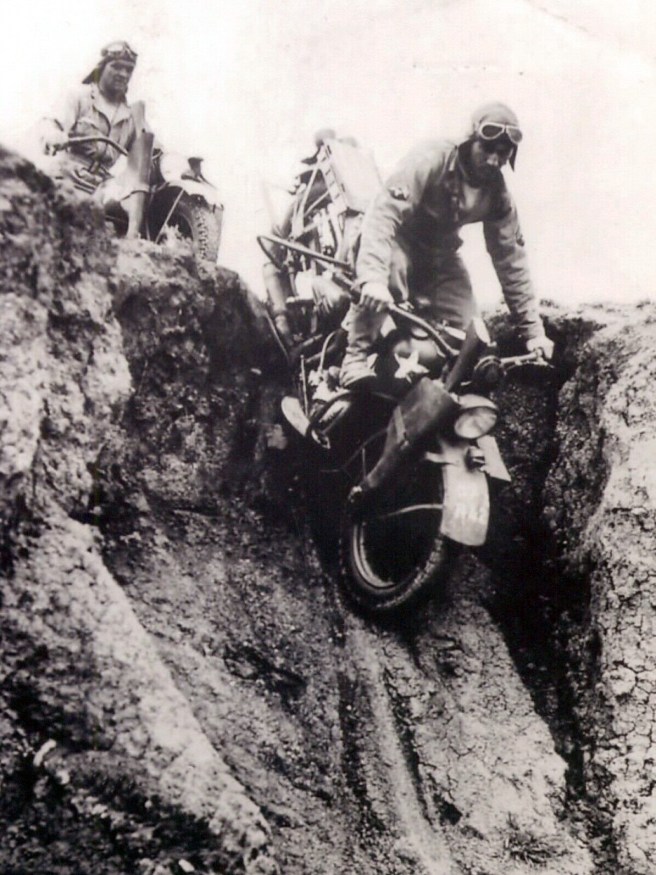
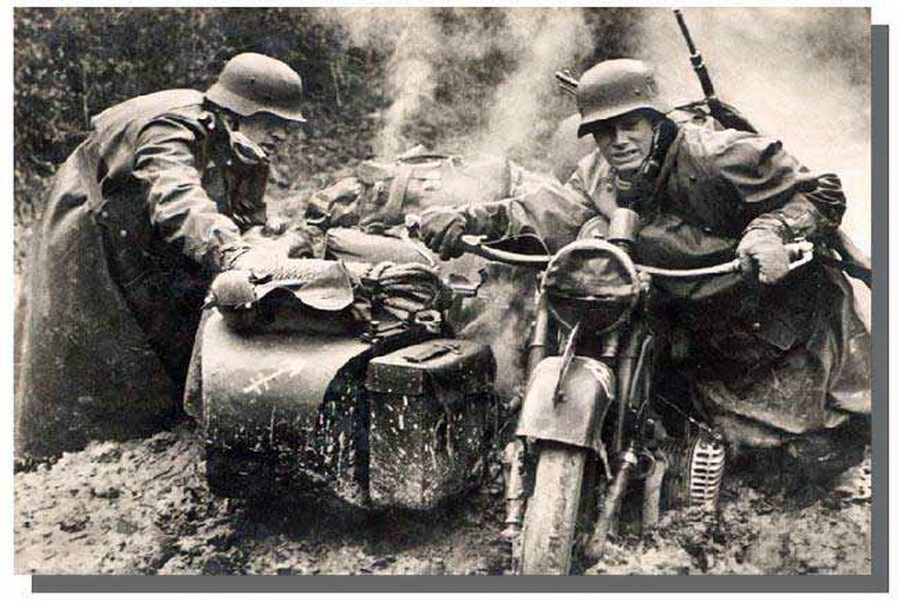
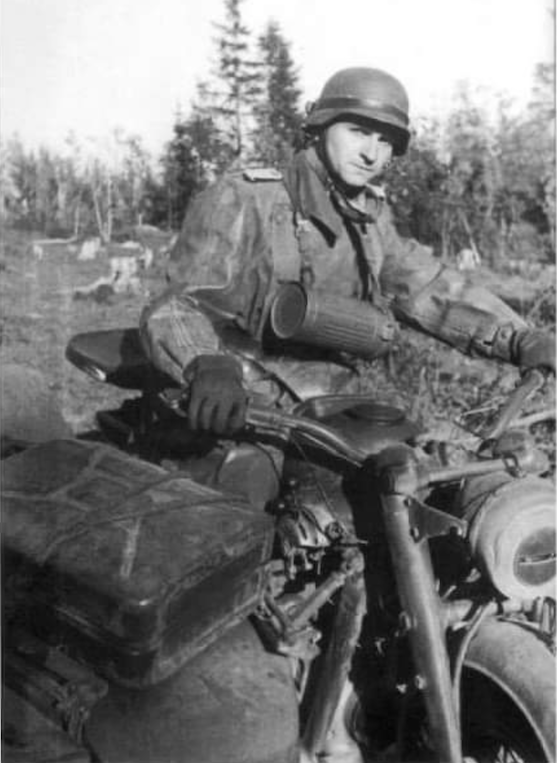
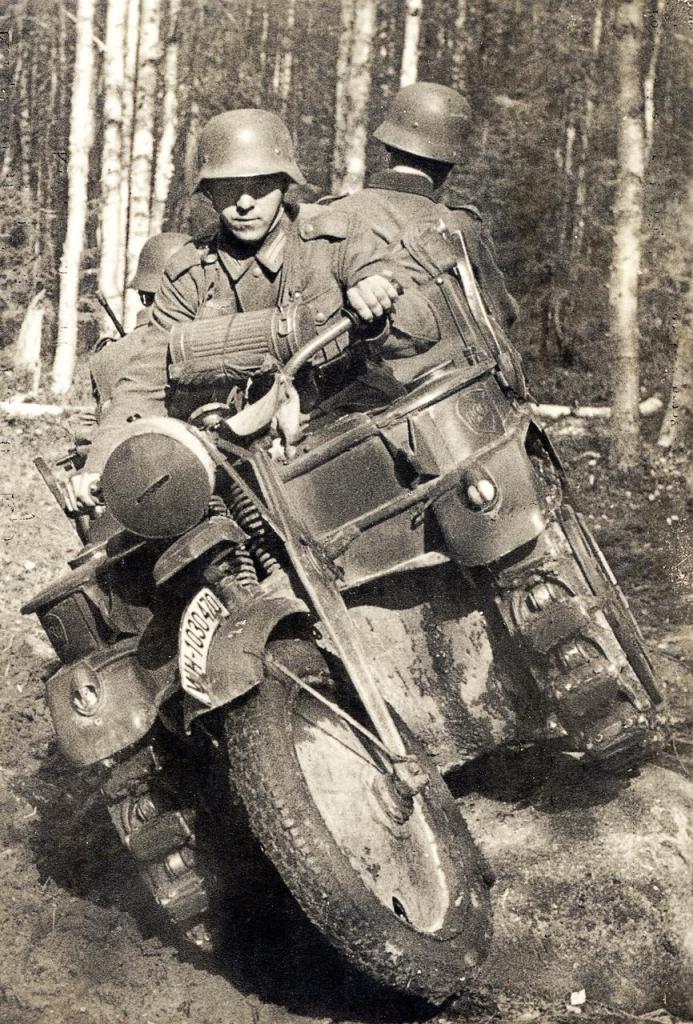
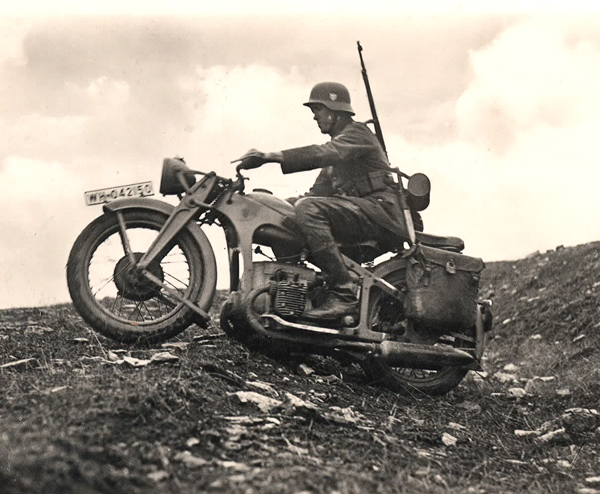
On the rough with a Zündapp KS750 ‘Green Elephant’.
1940
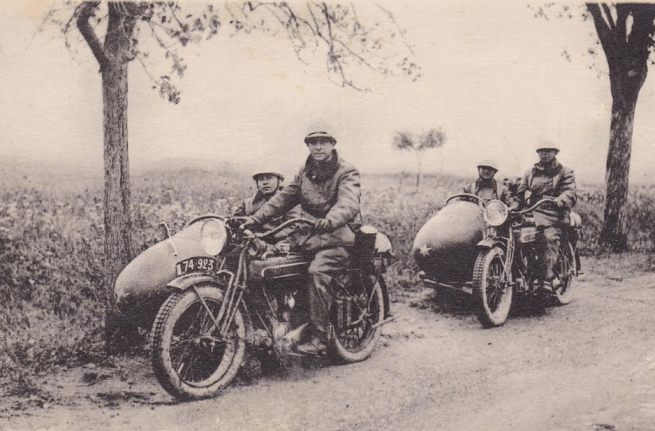
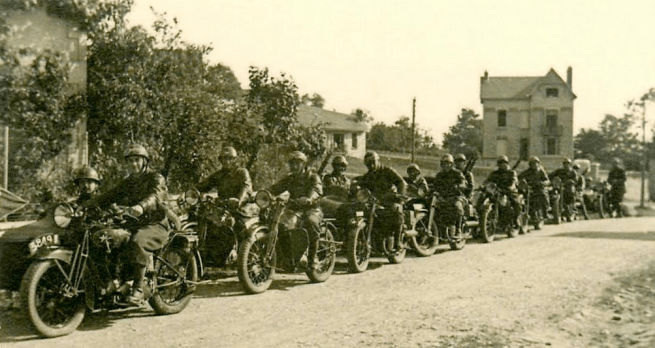
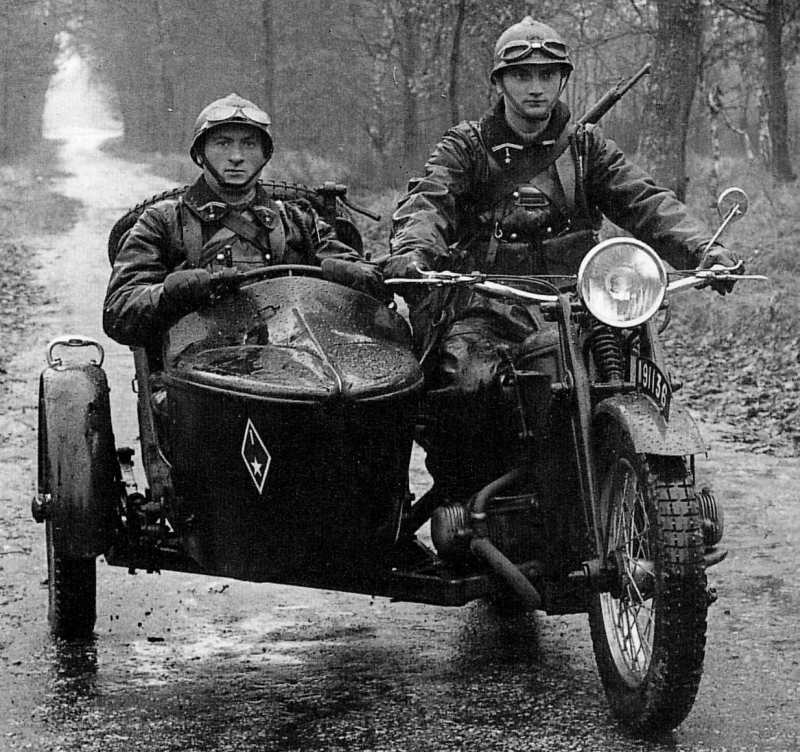
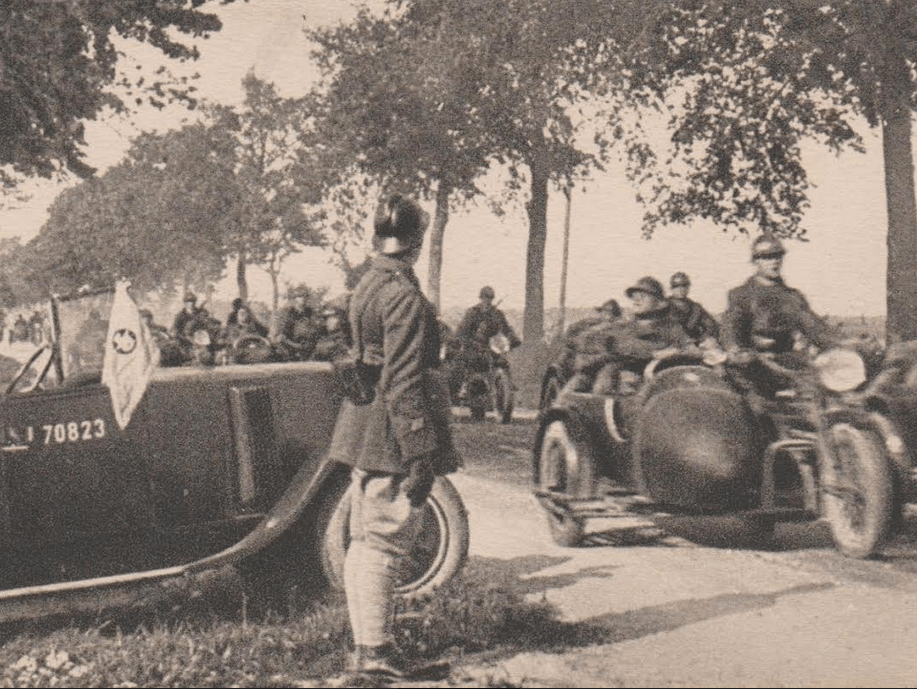
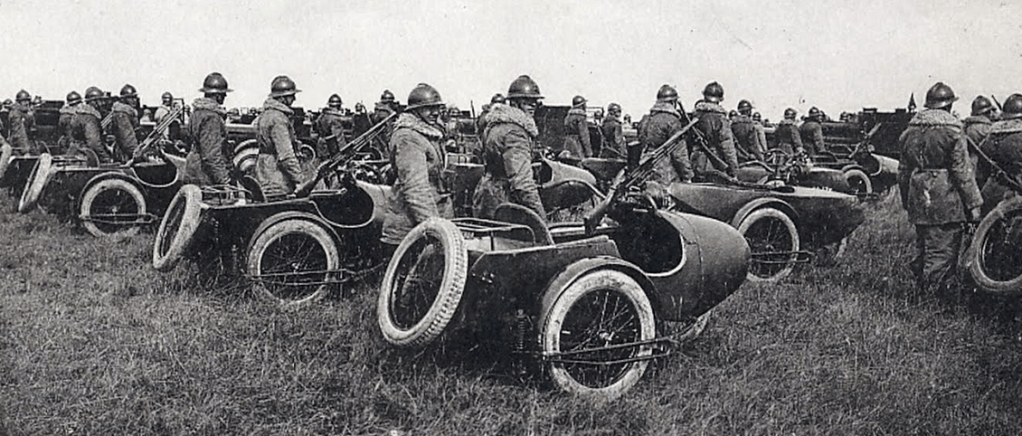
These outfits are French…
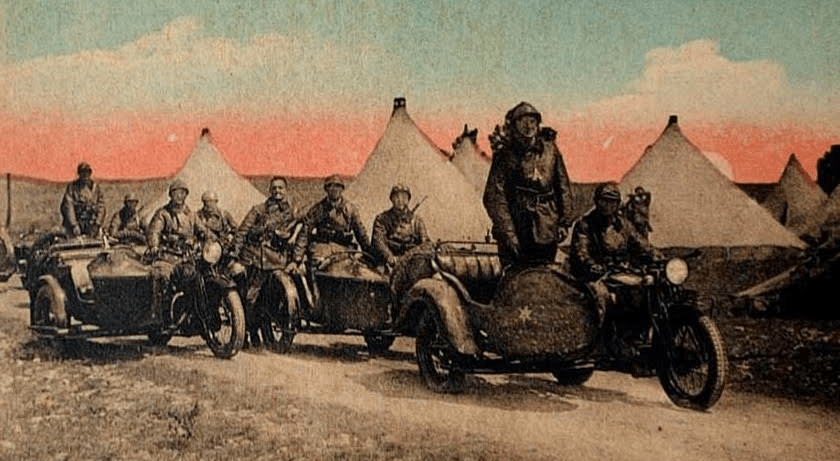
…as are these…
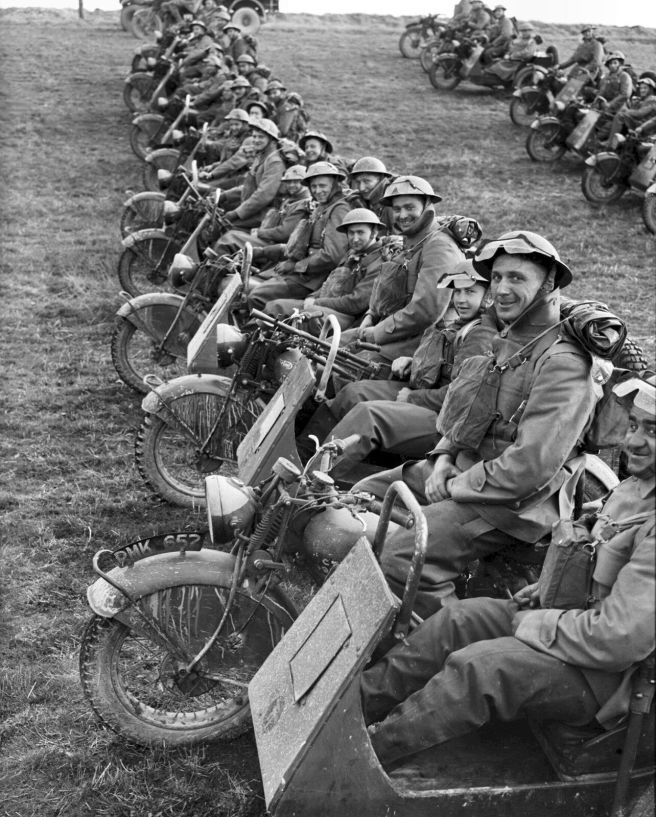
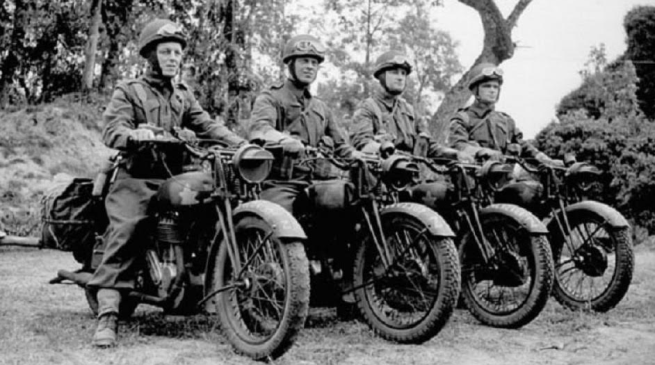
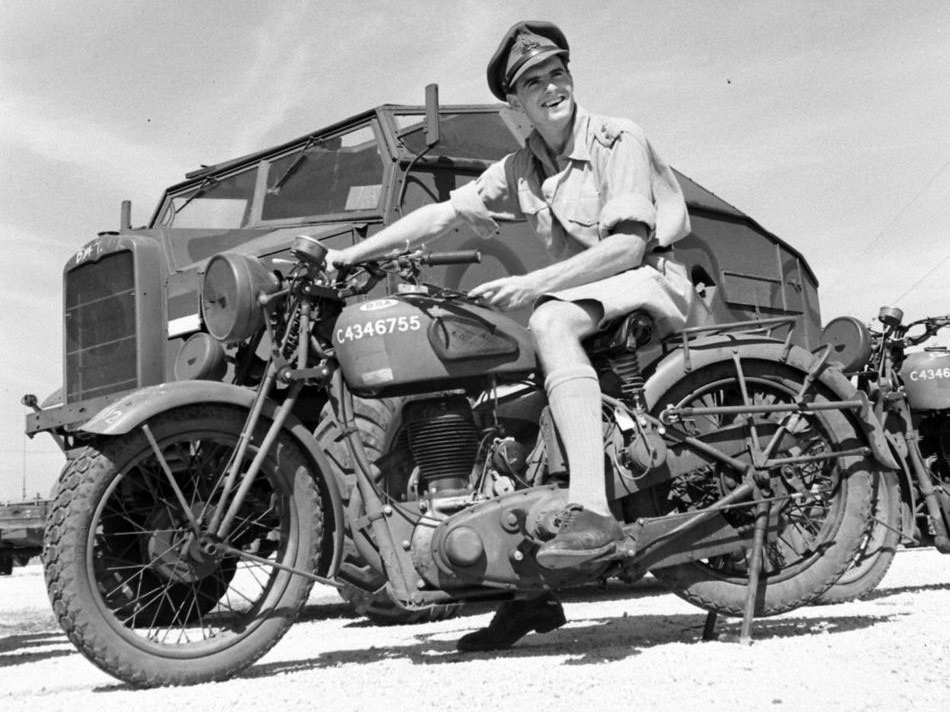
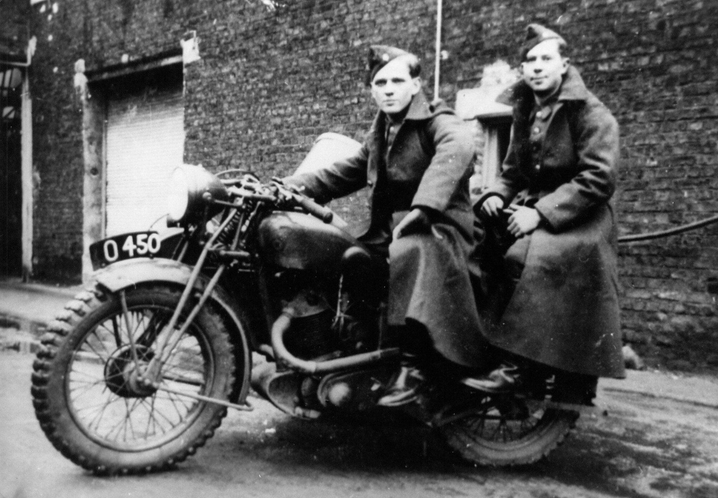
…and here are the Tommies.
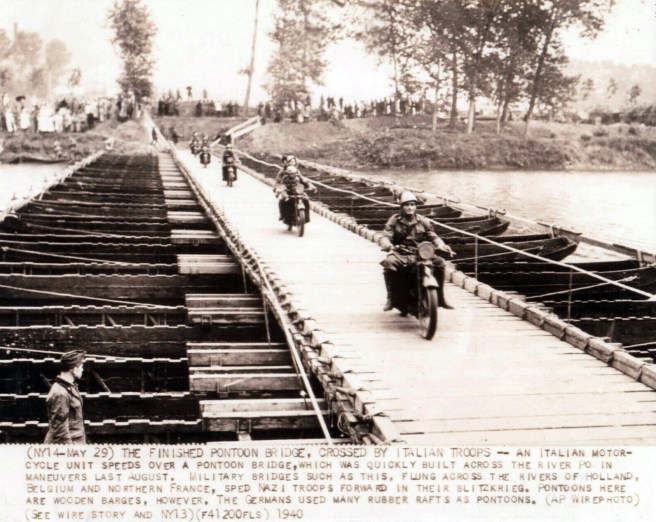
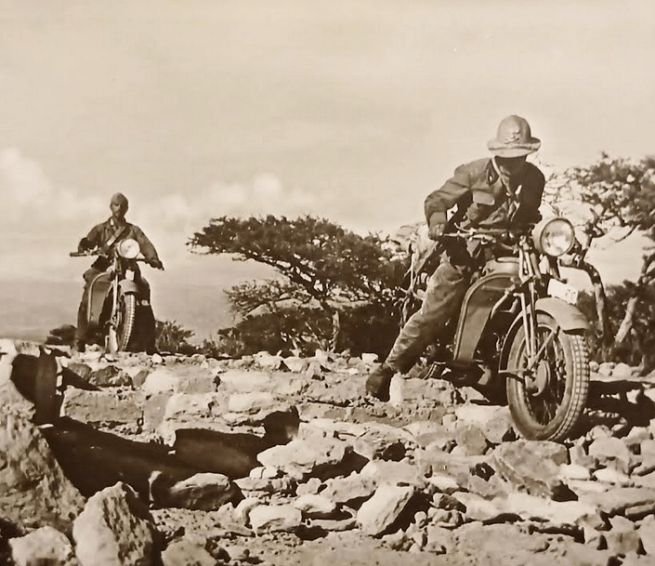
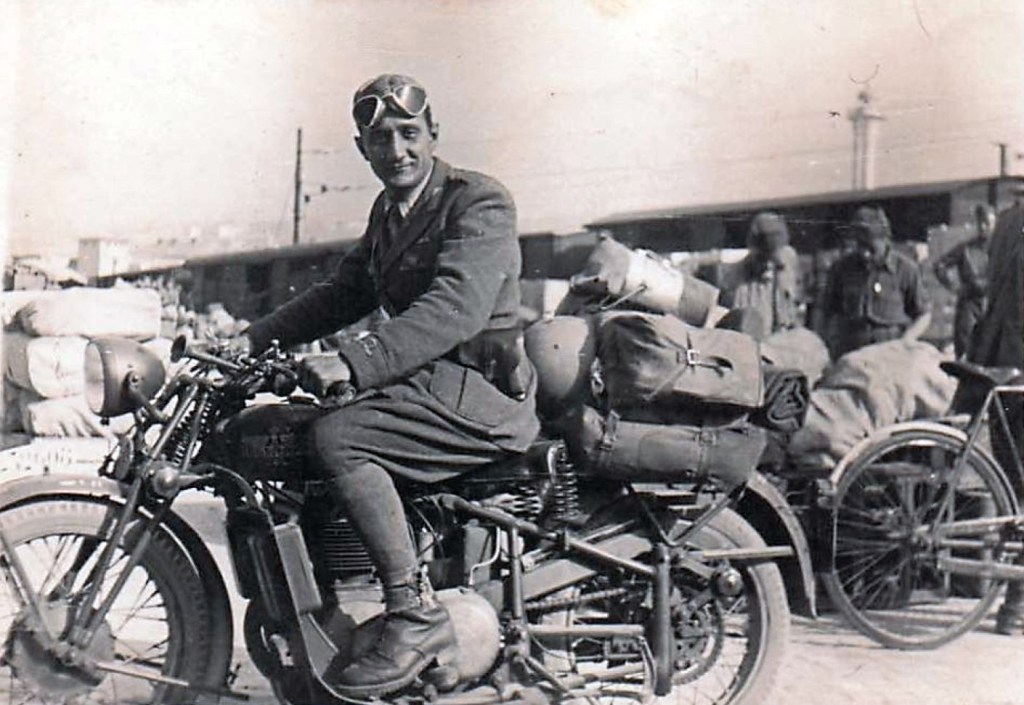
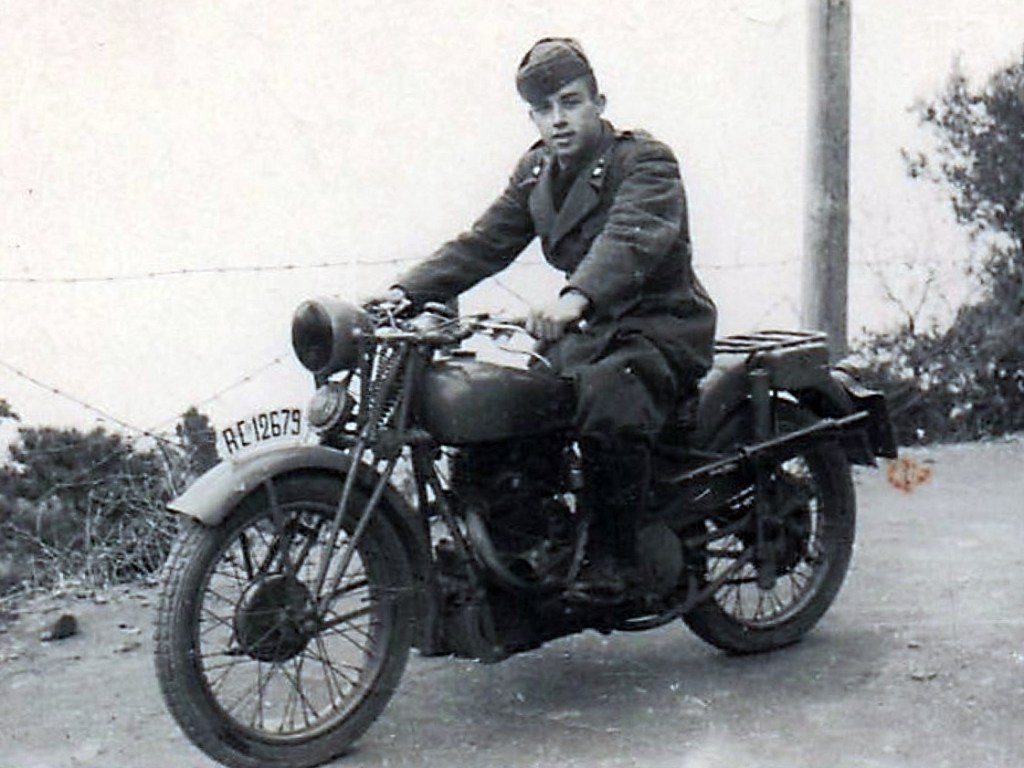
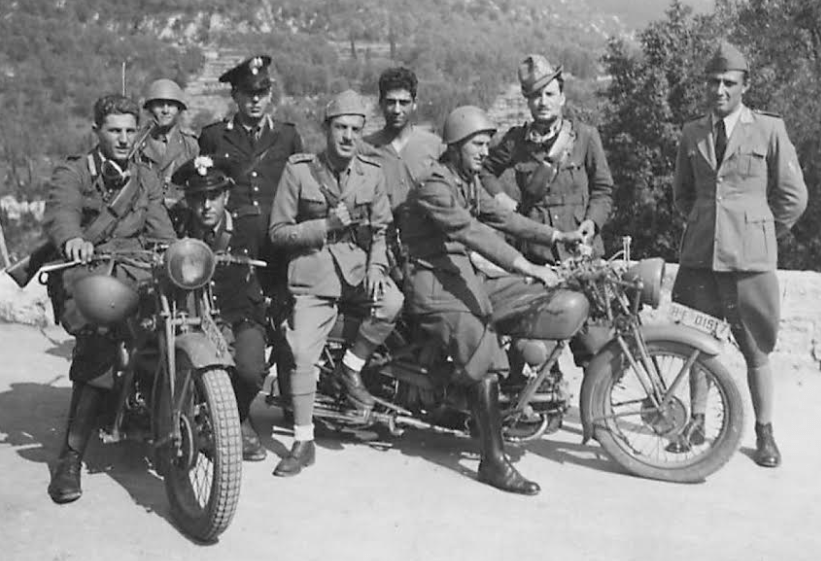
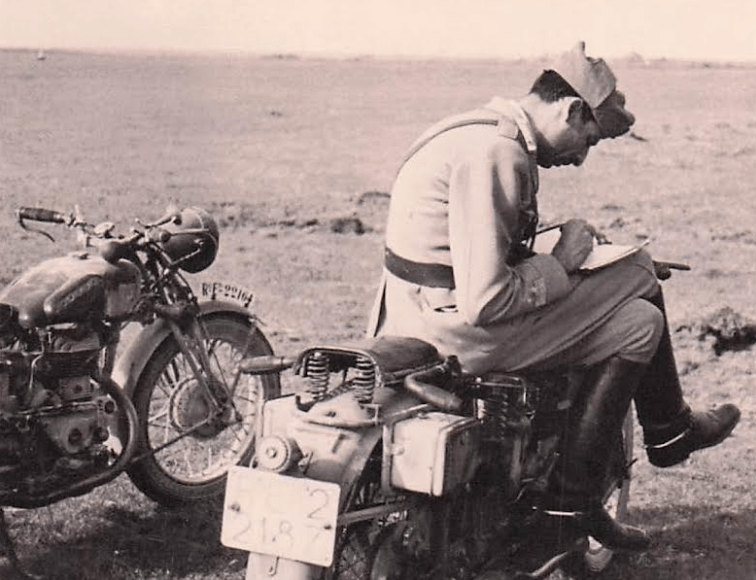
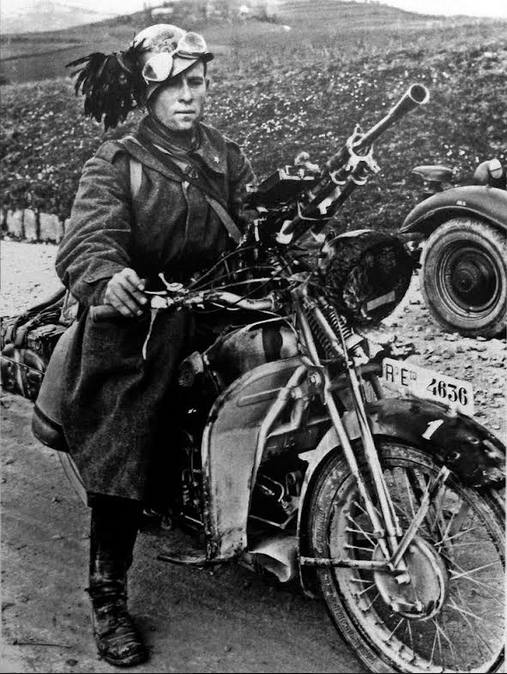
These riders are Italian.
as, of course, is this Bianchi.
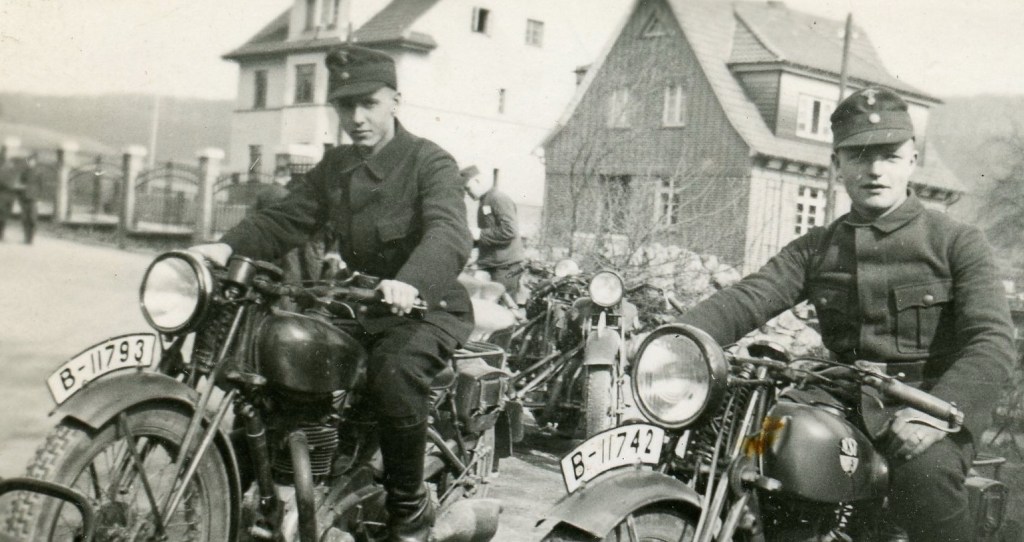
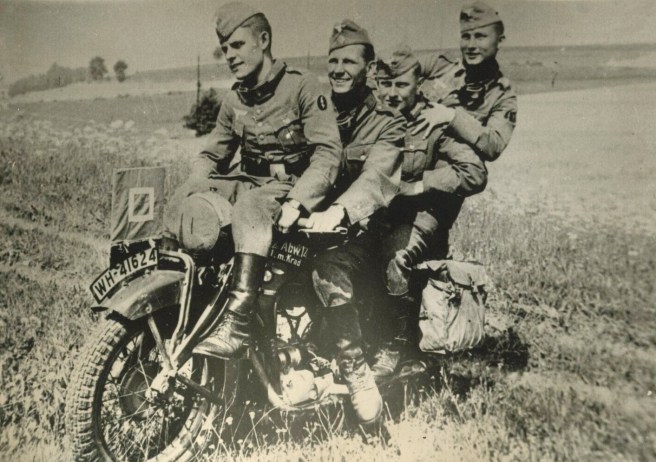
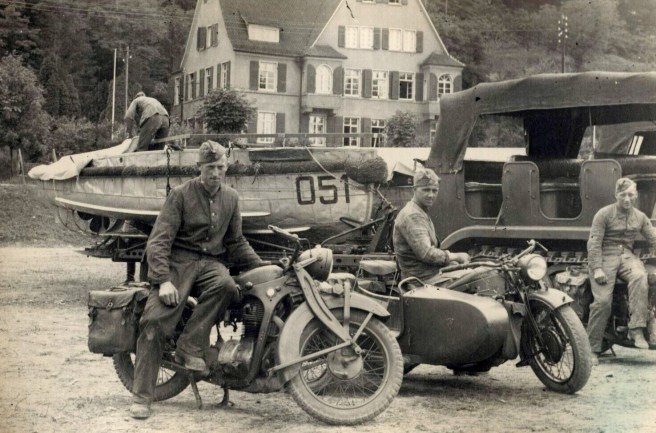
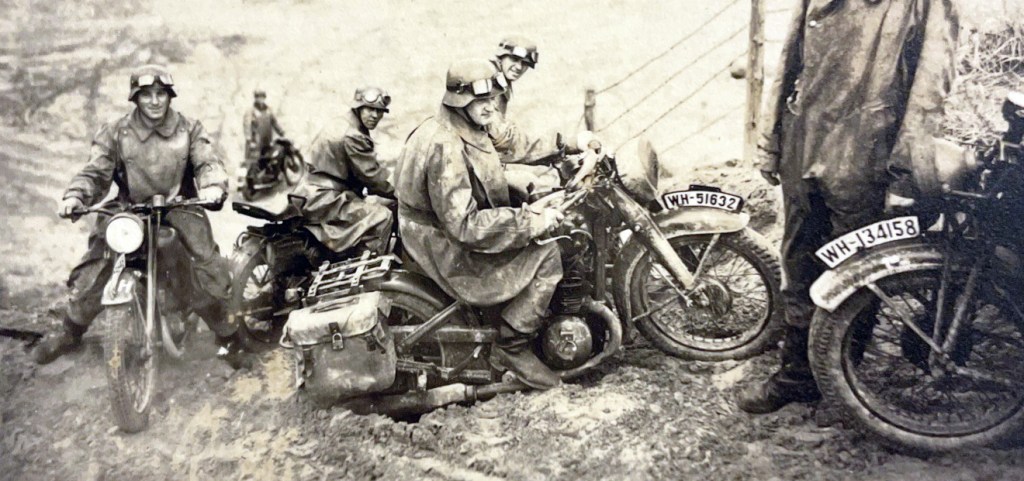
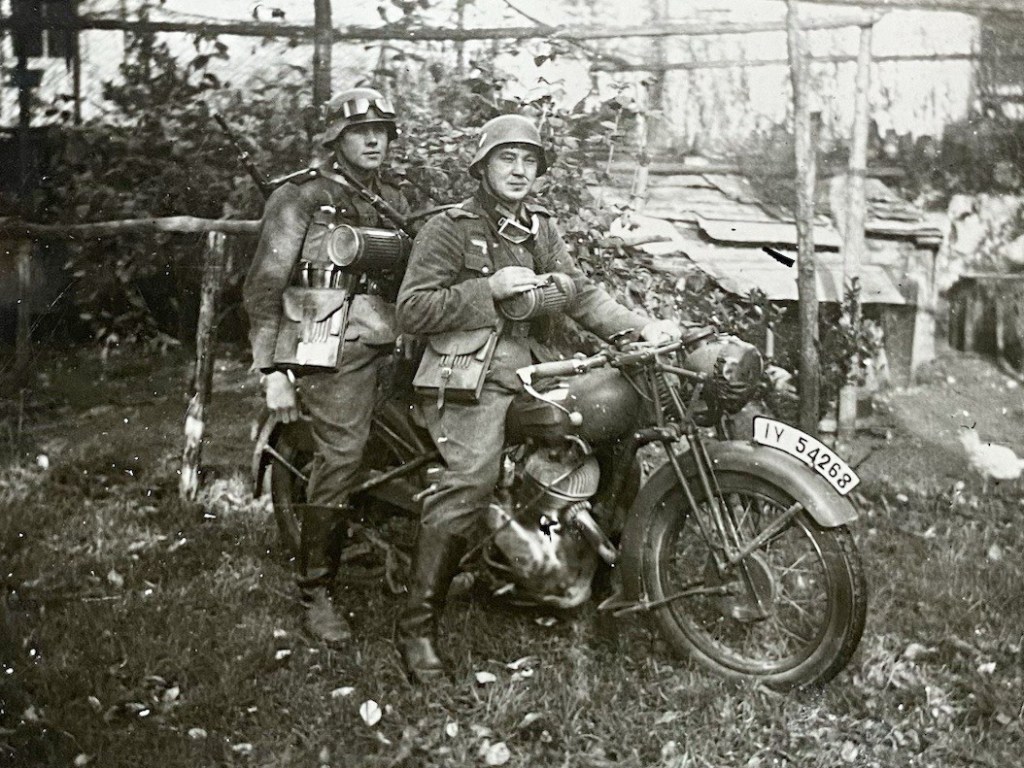
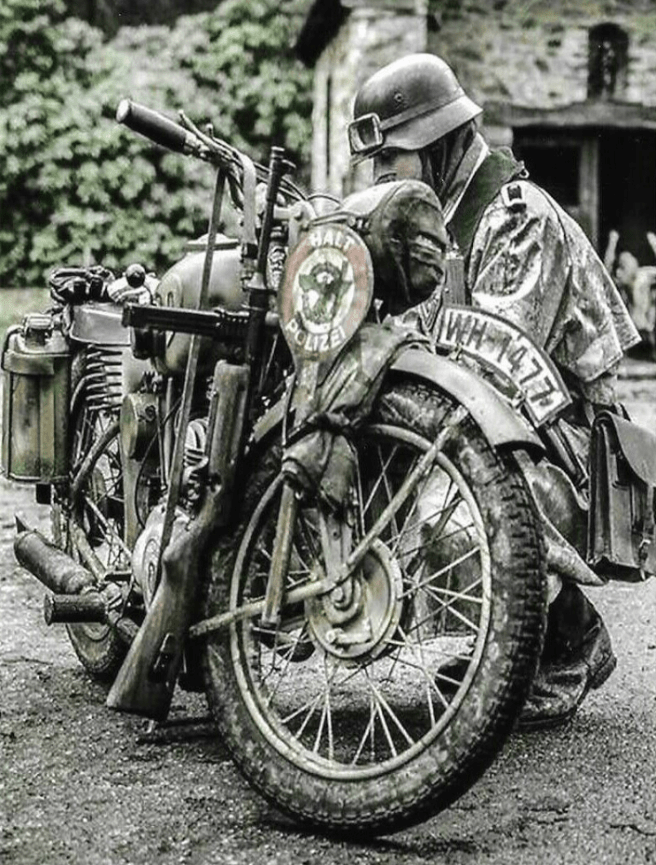
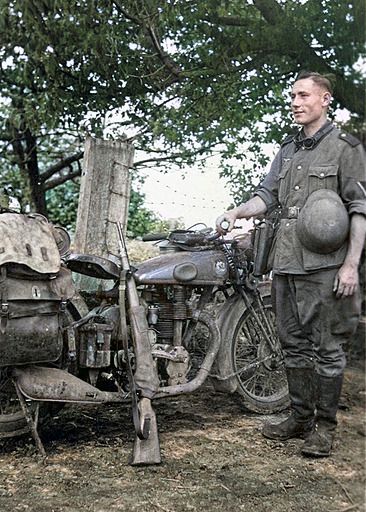
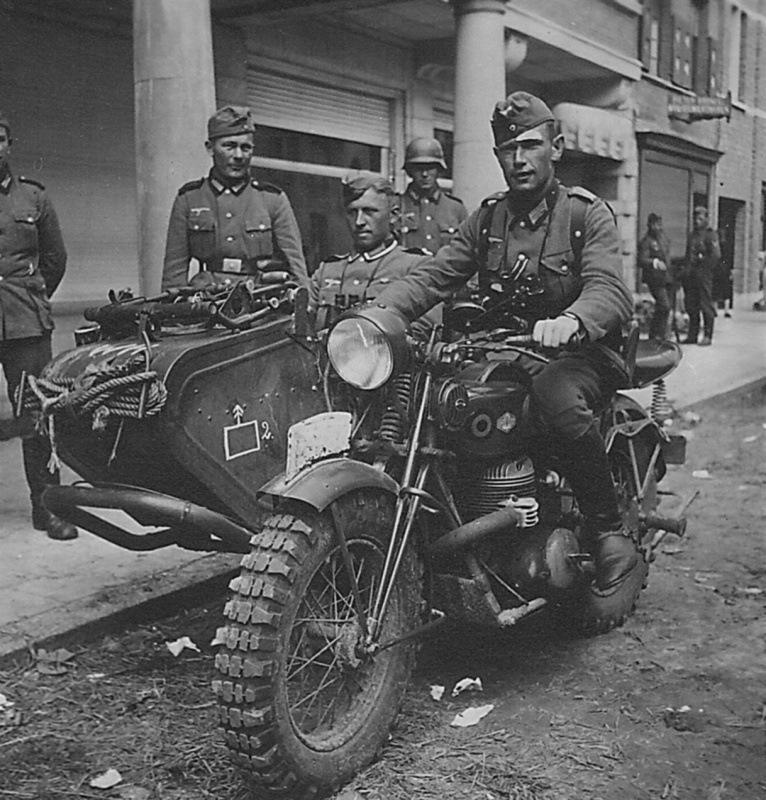
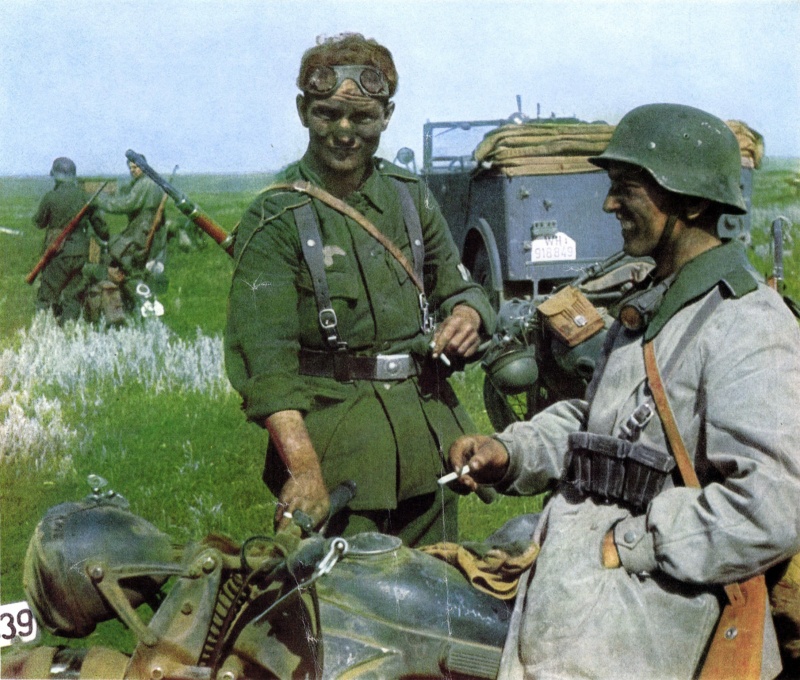
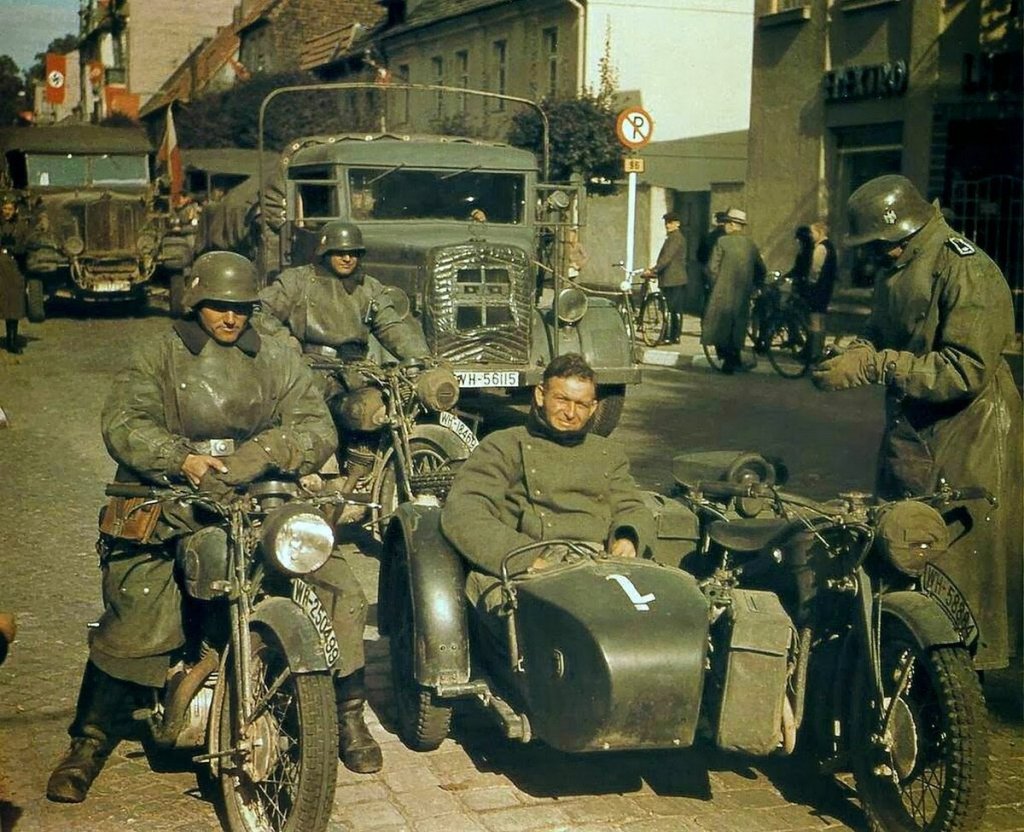
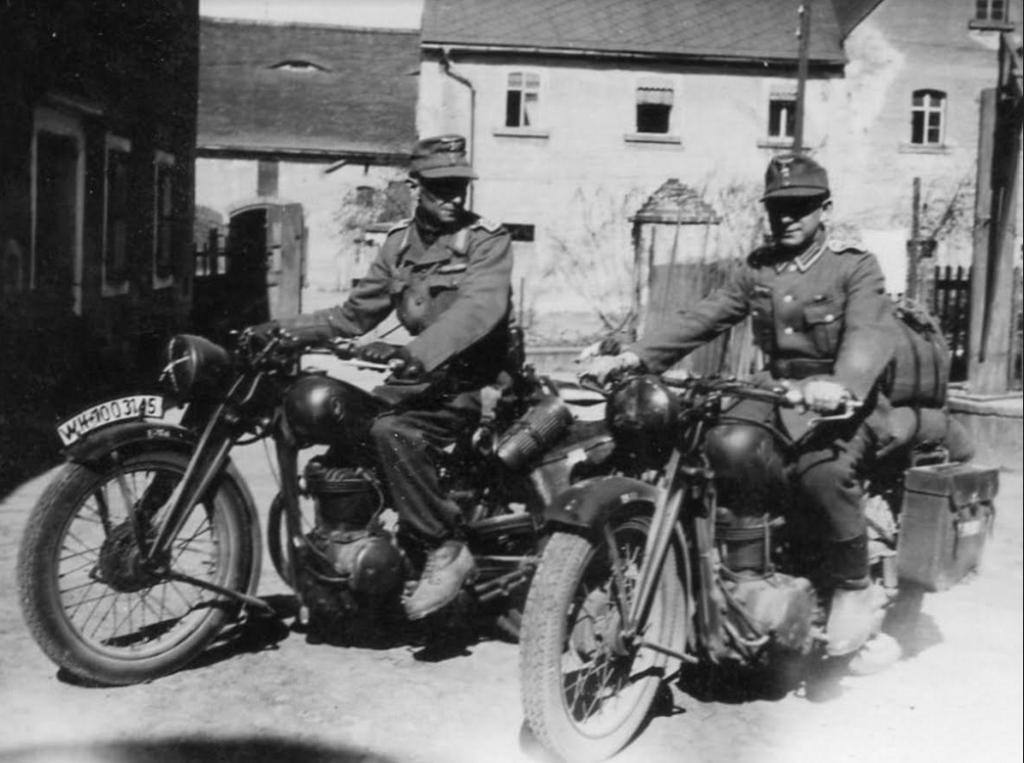
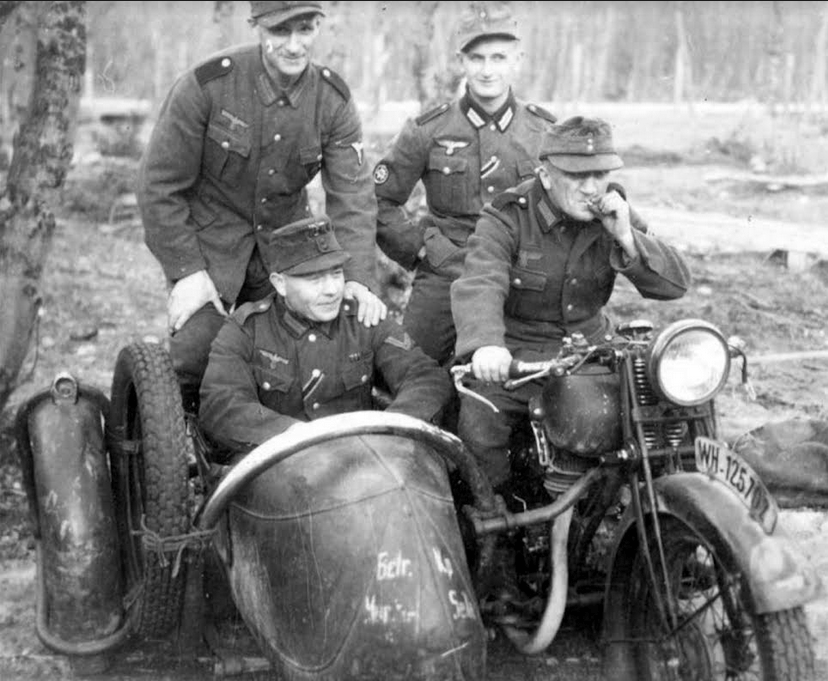
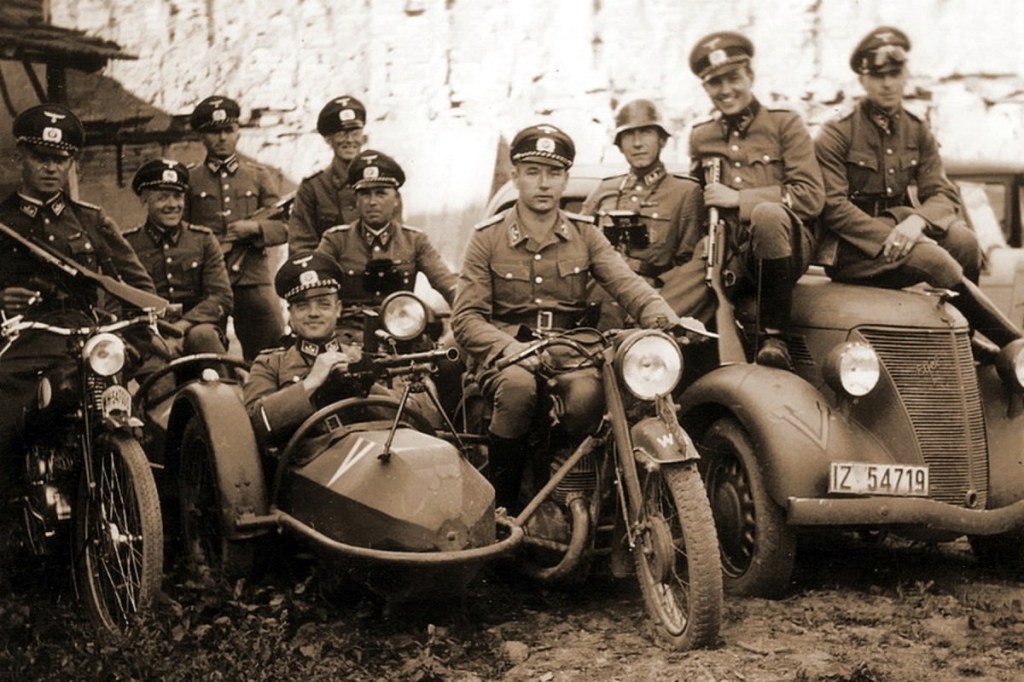
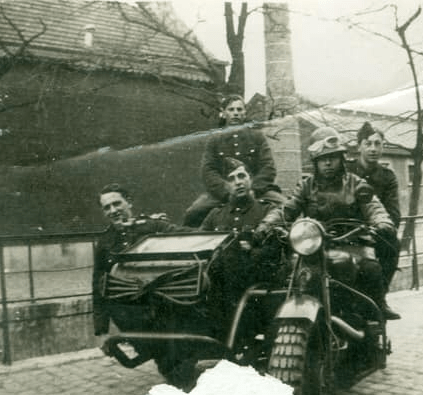
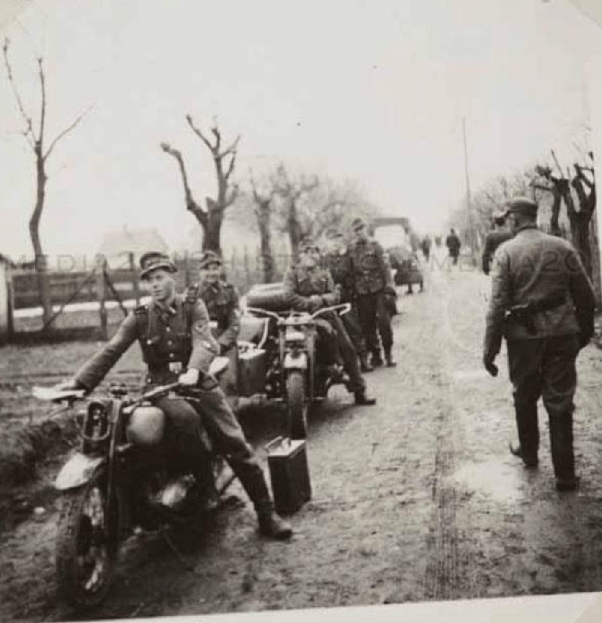
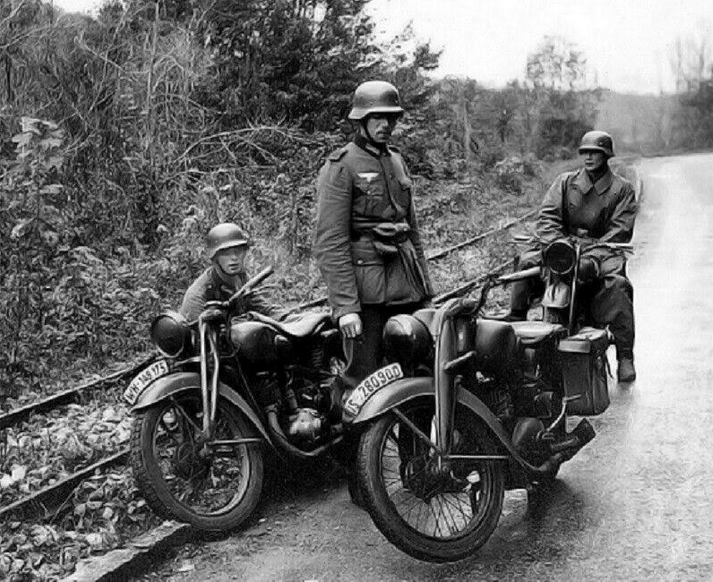
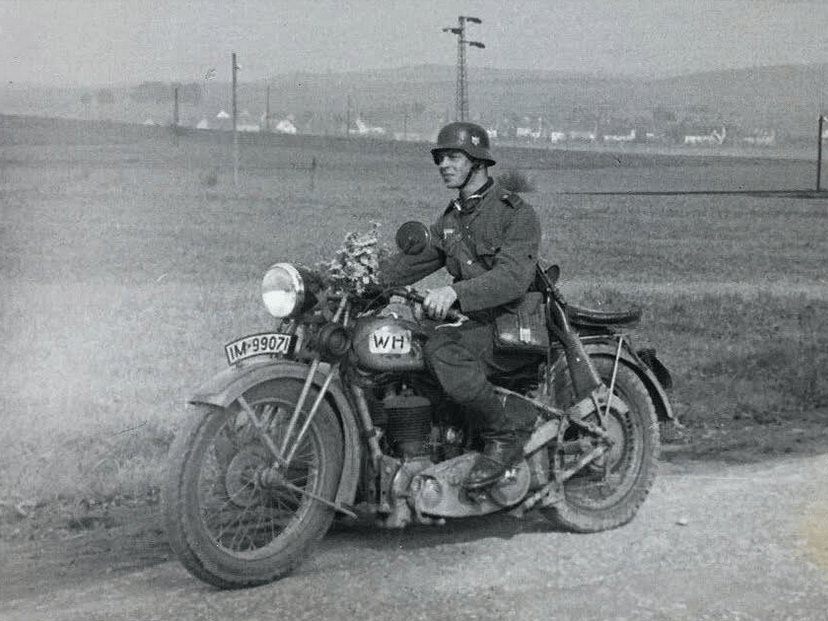
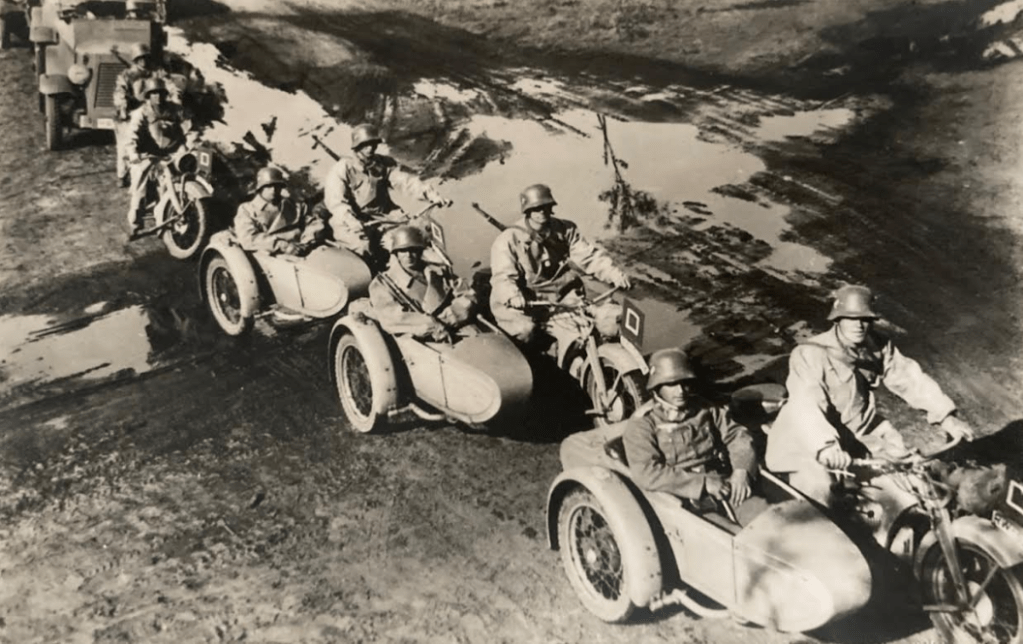
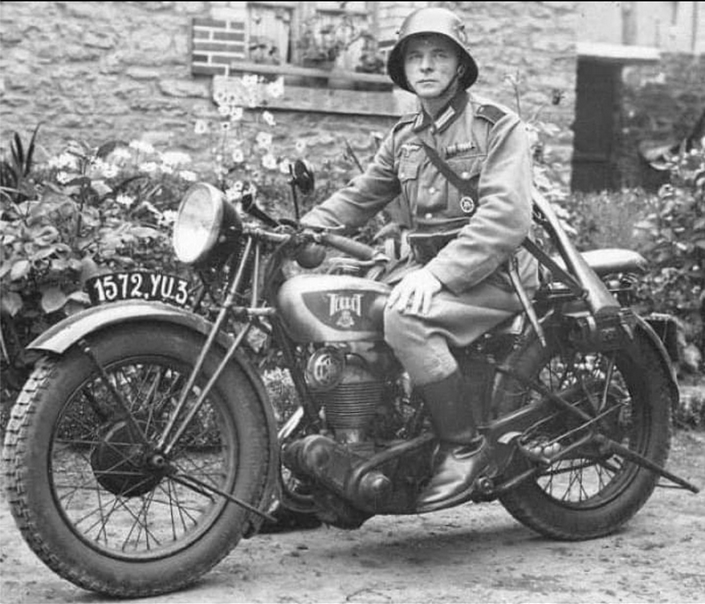
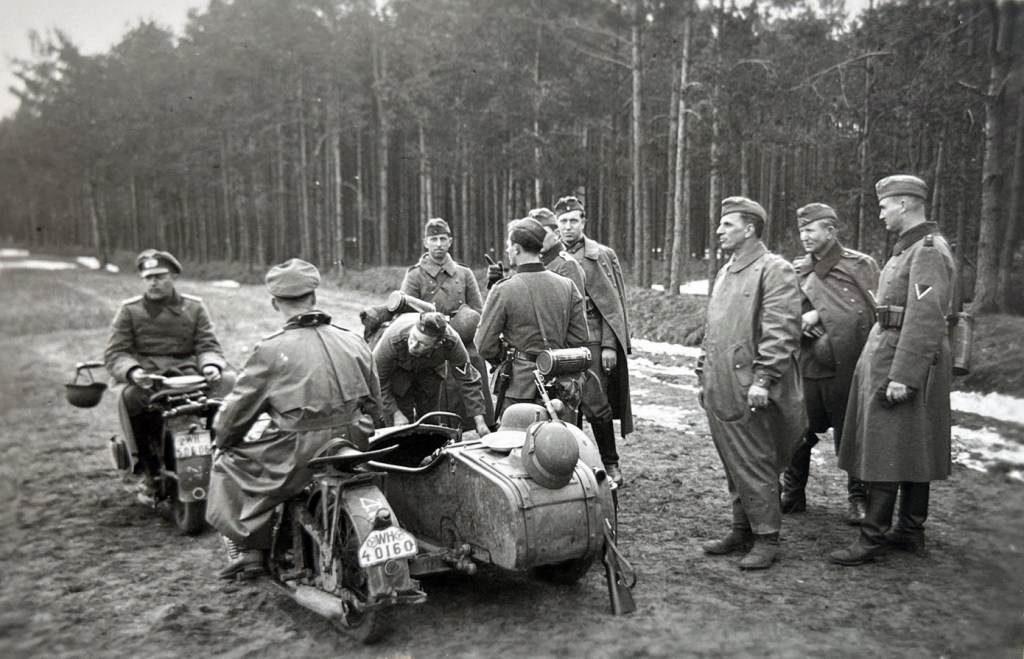
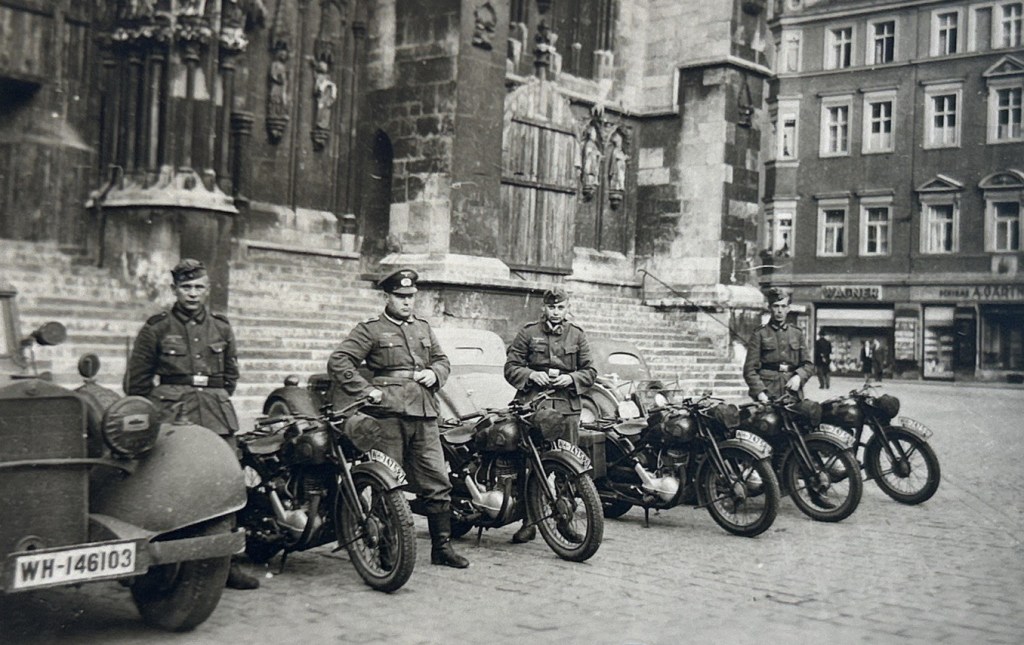
German riders at home…
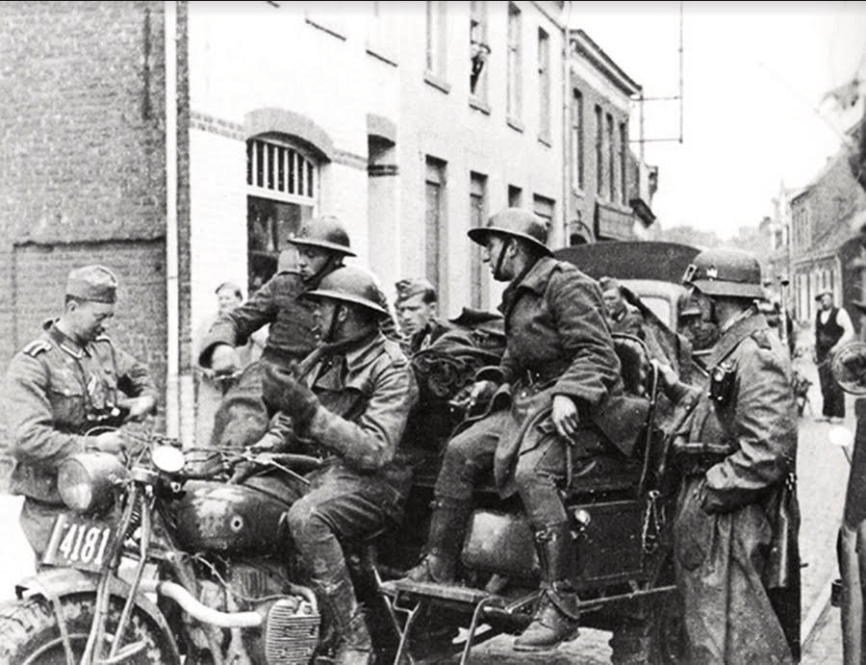
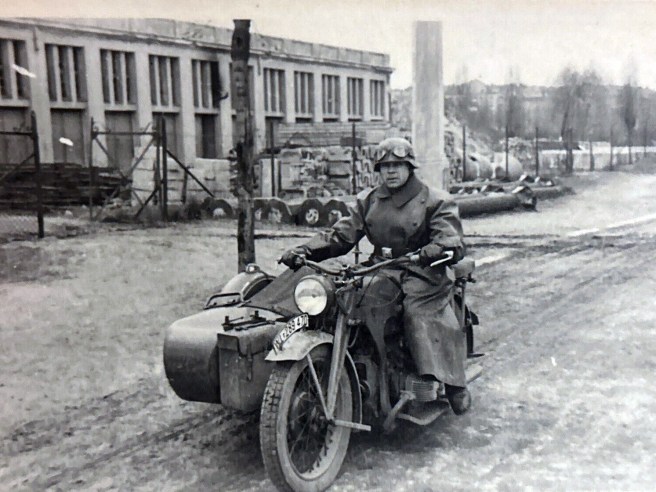
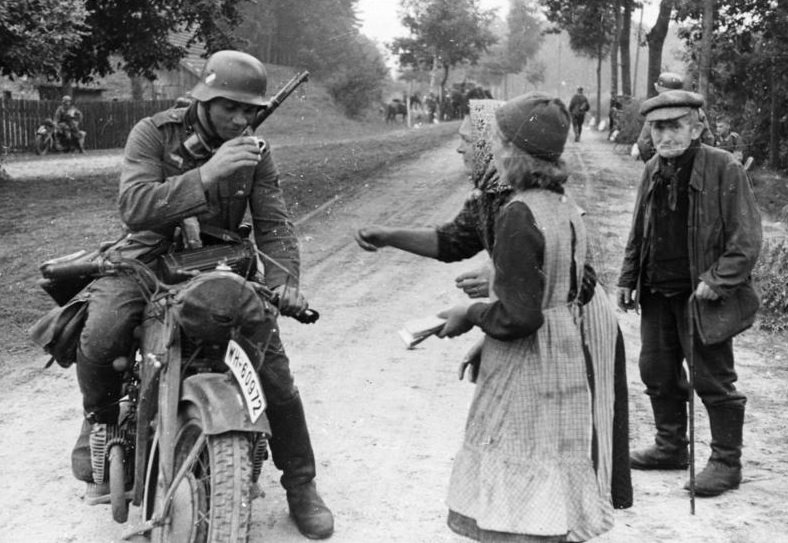
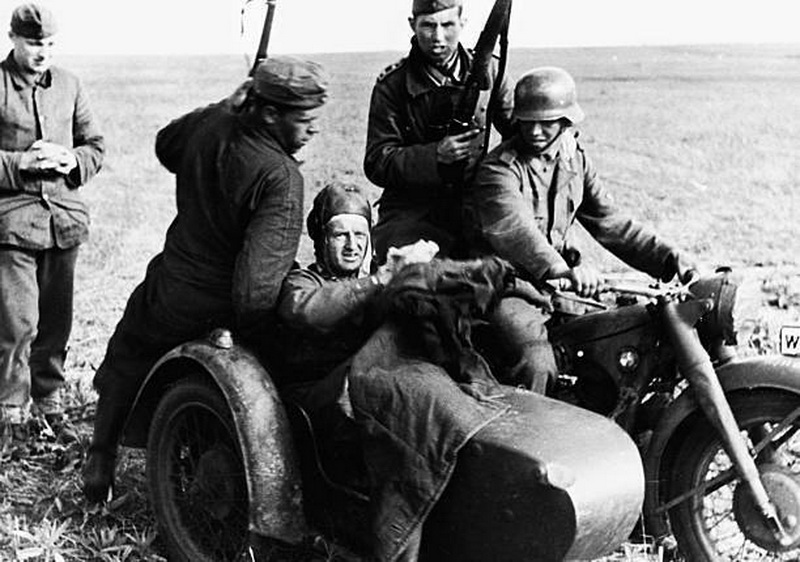
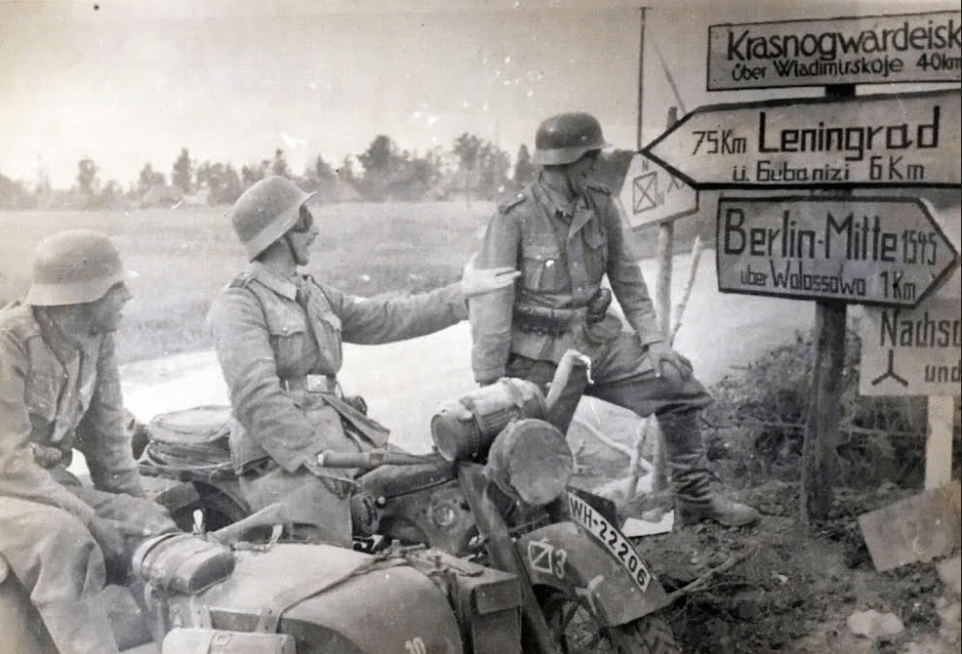
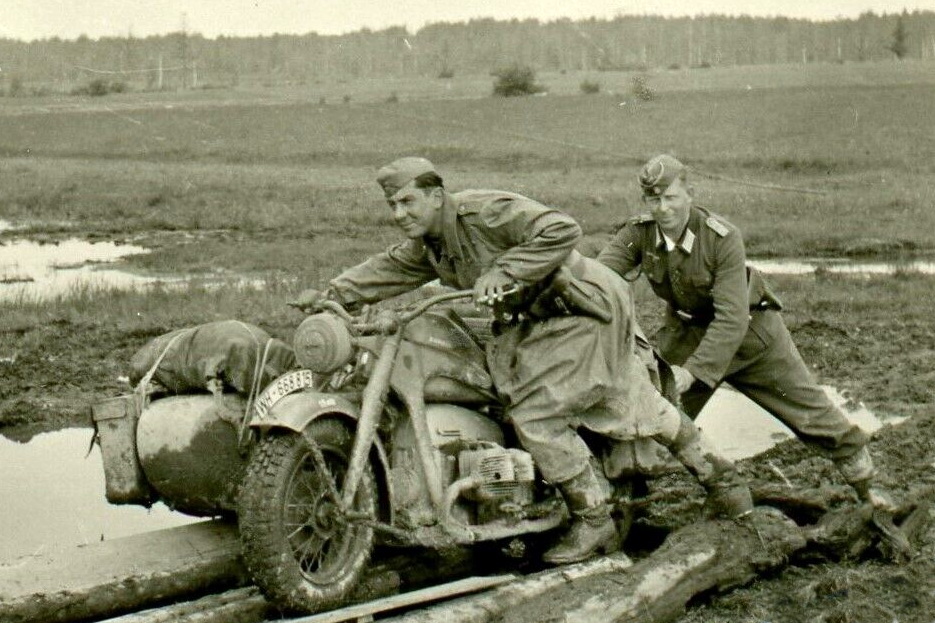
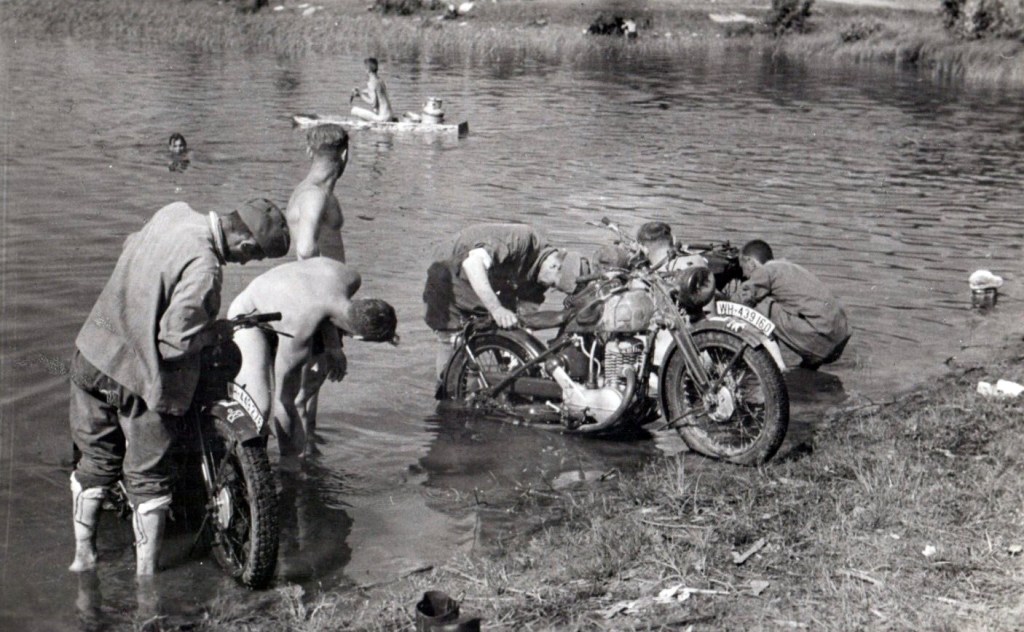
…and away.
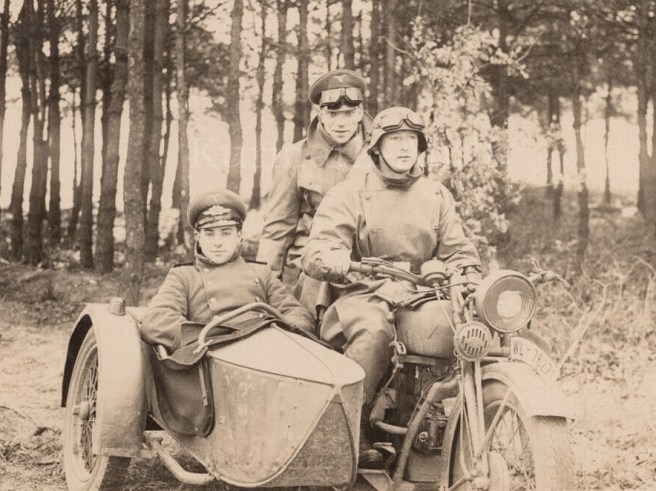
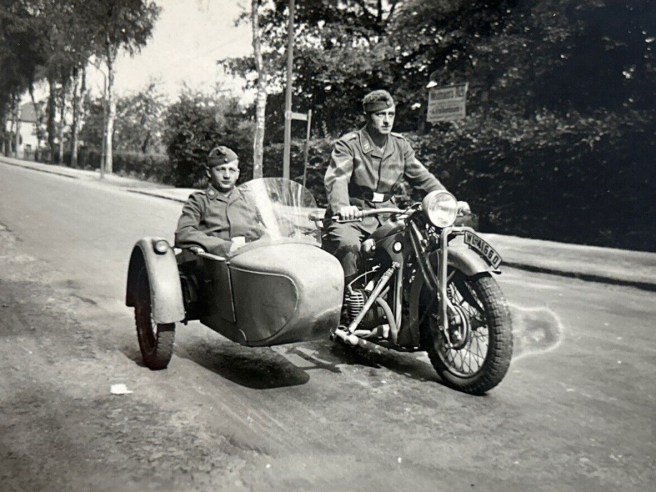
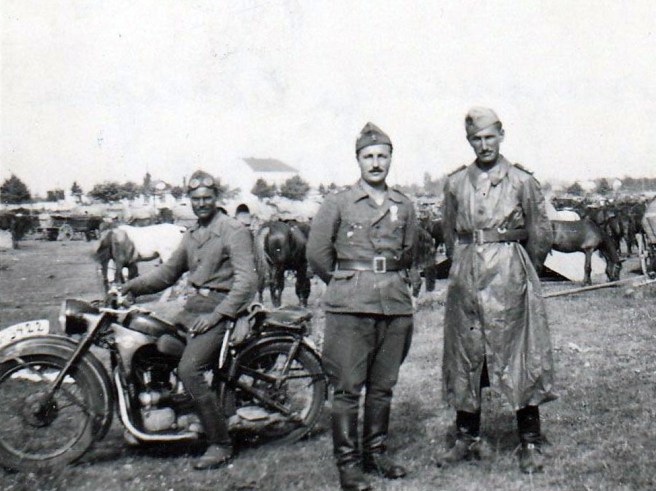
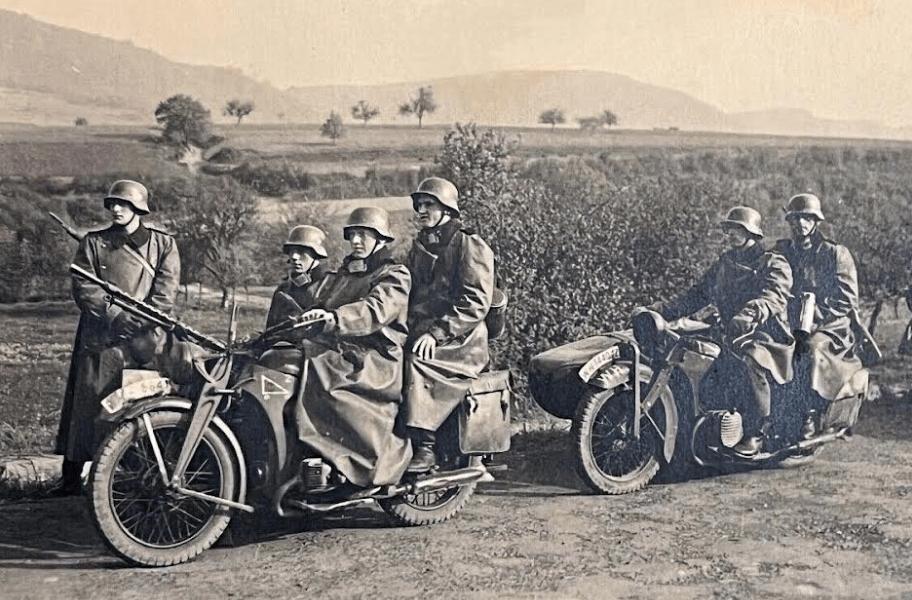
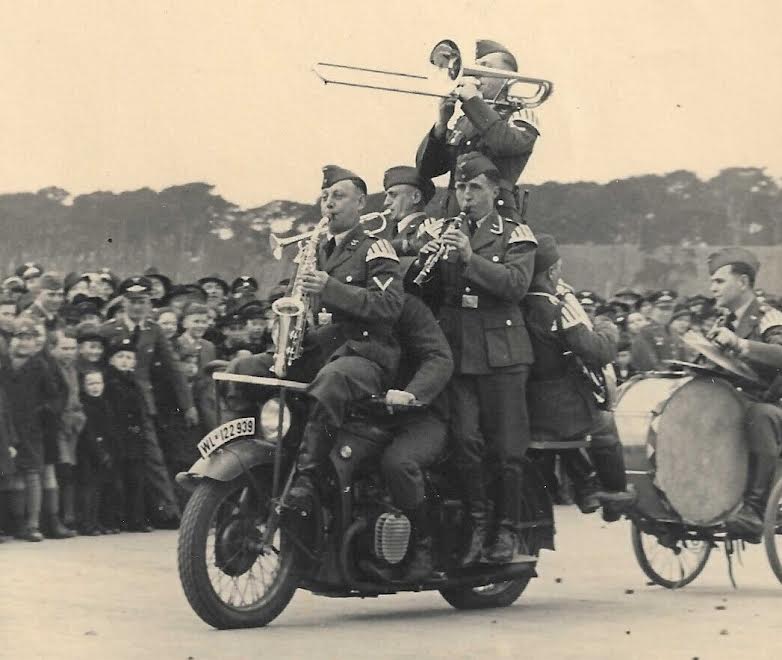
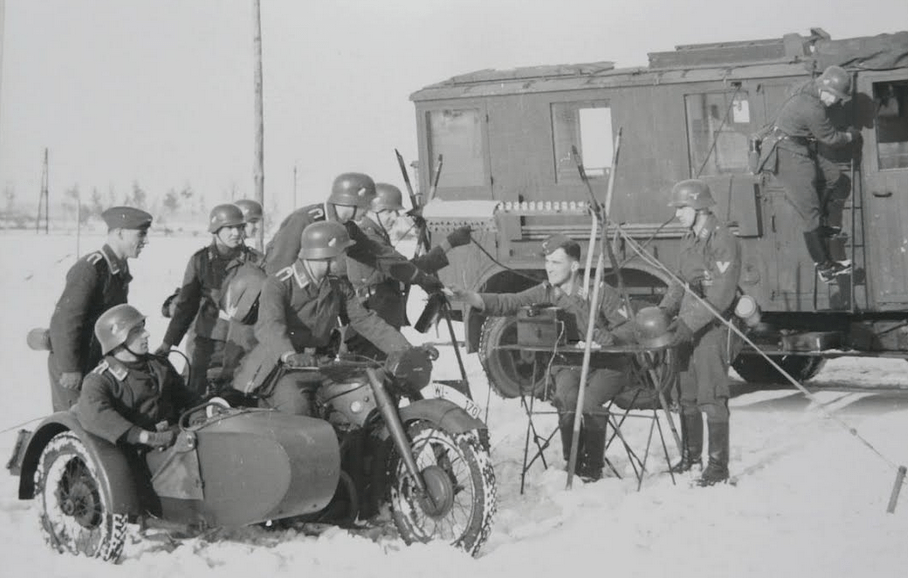
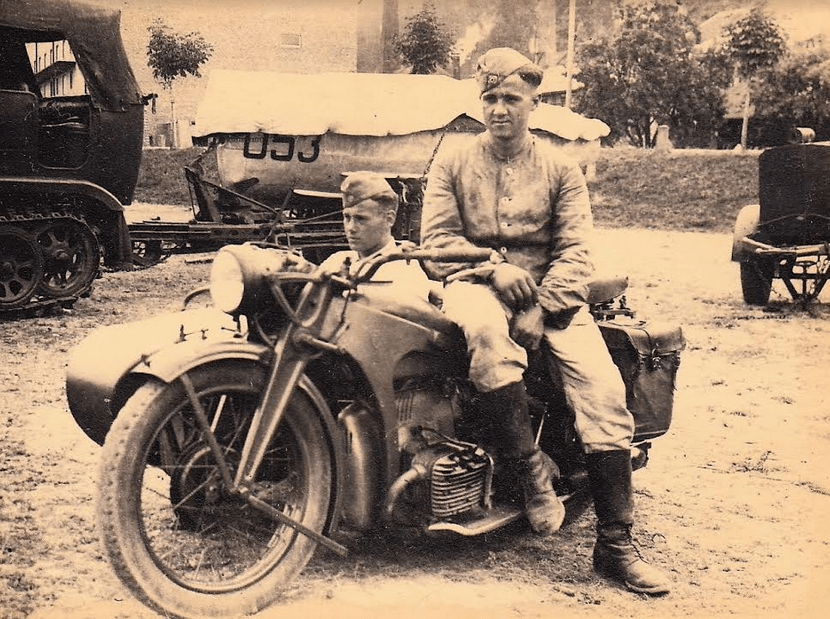
These riders are with the Luftwaffe.
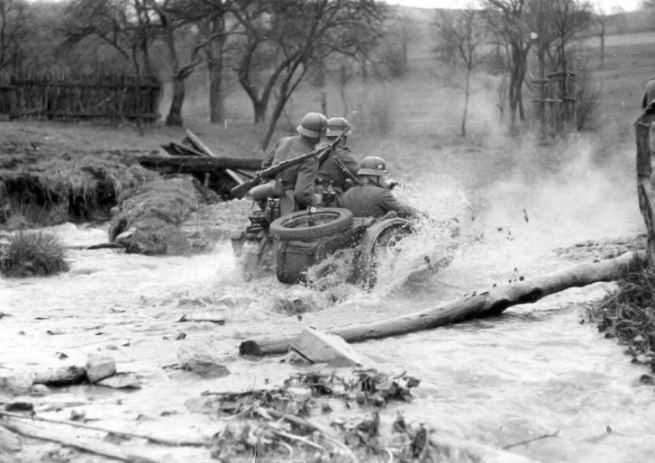
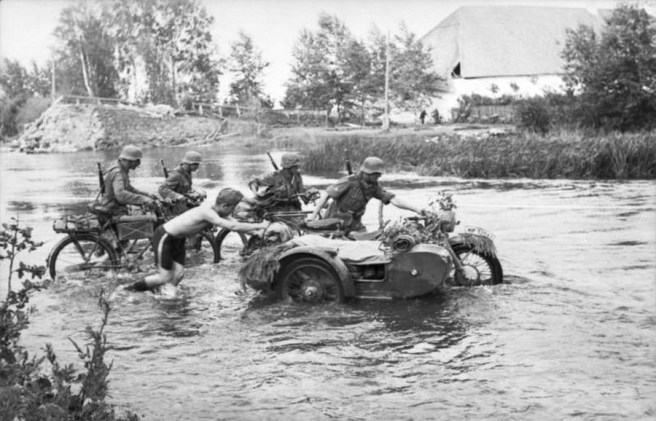
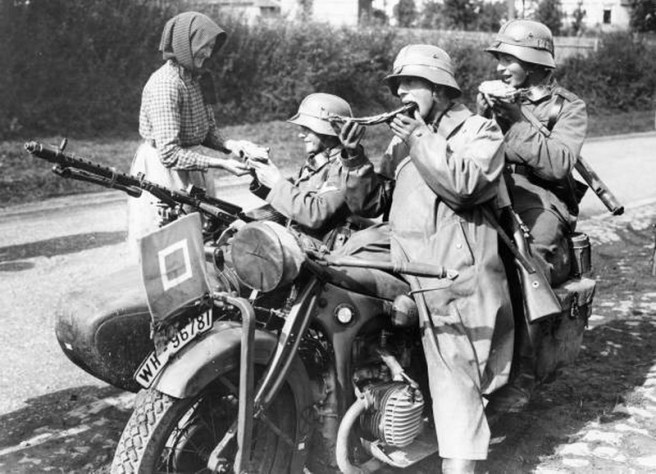
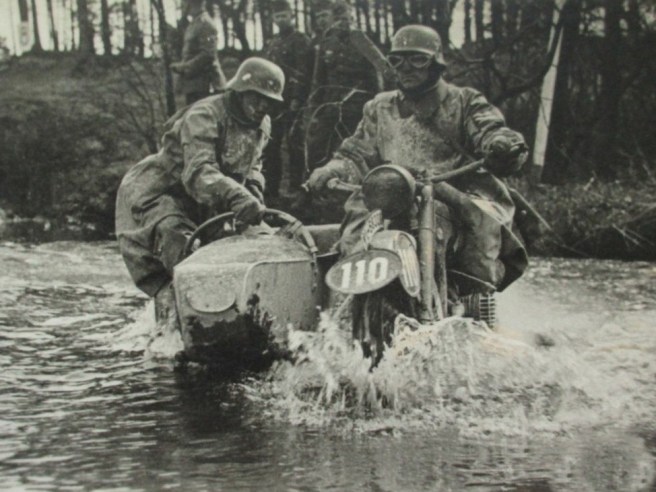
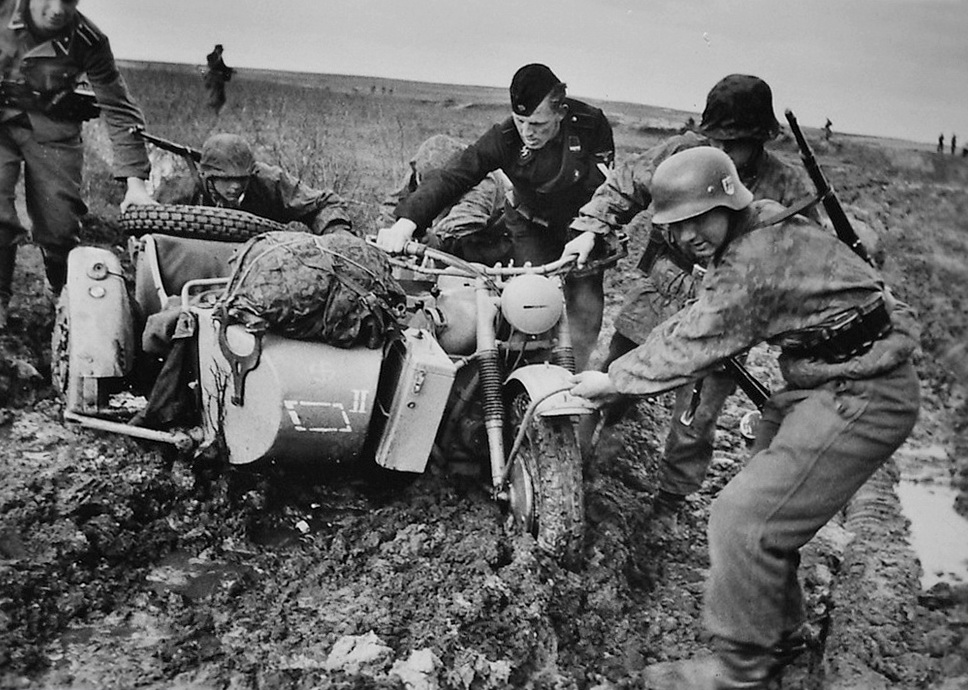
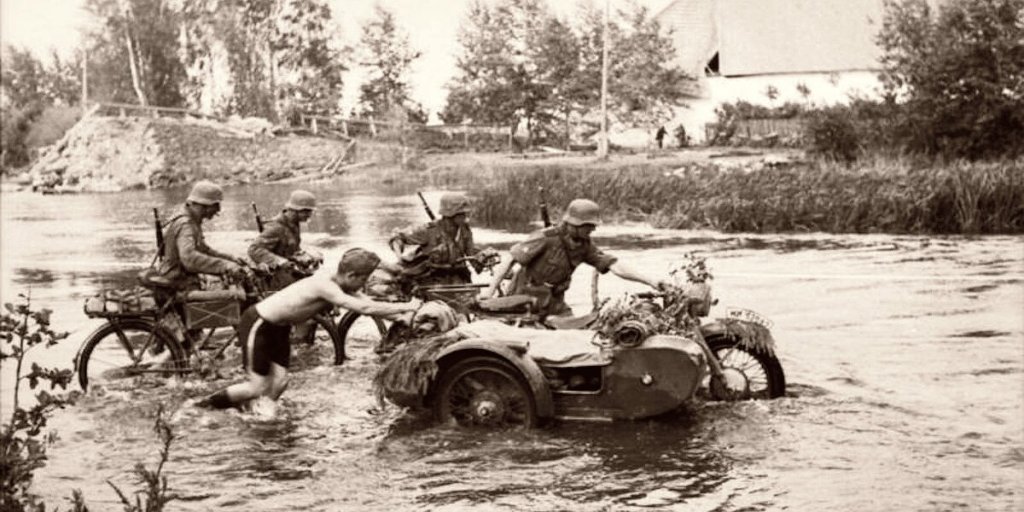
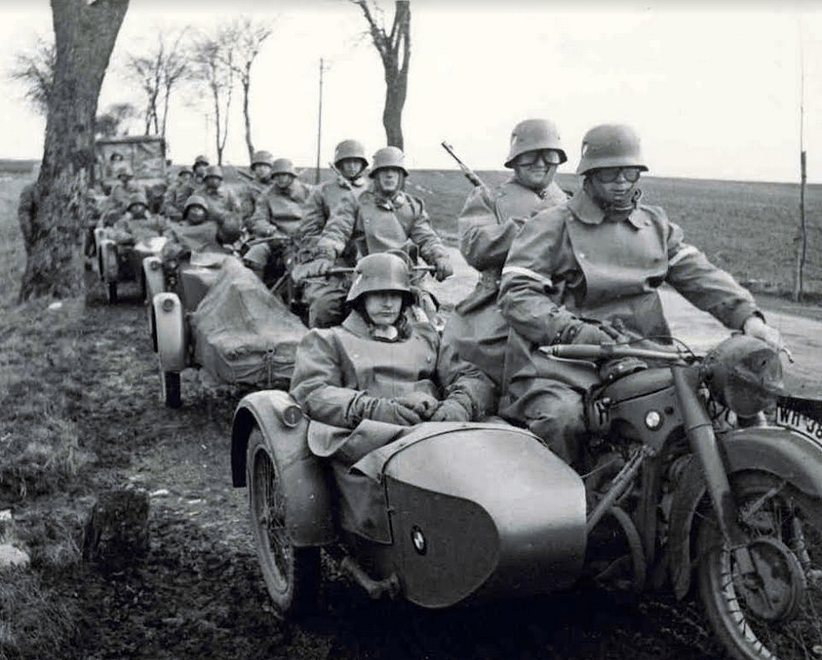
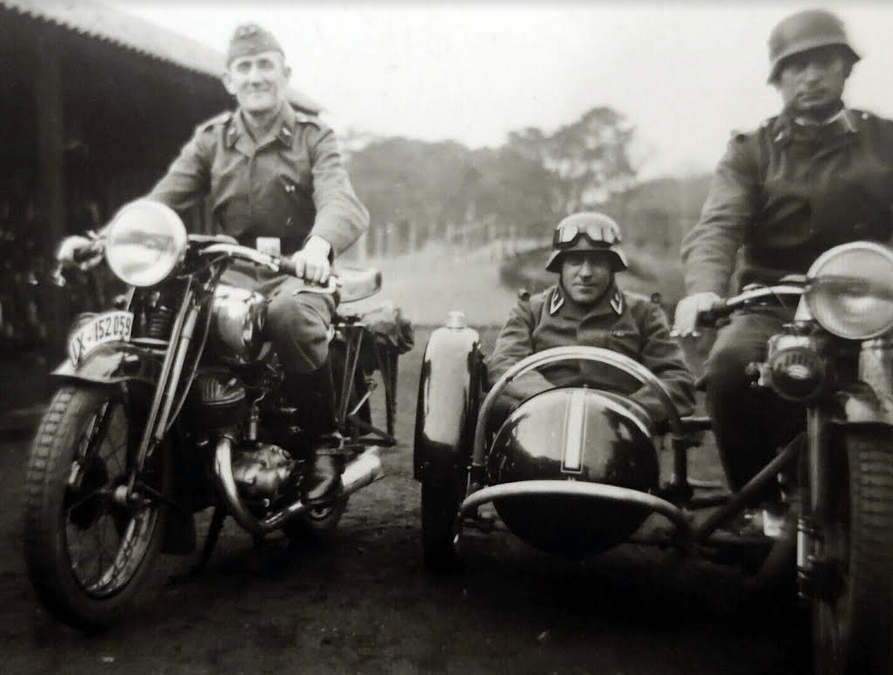
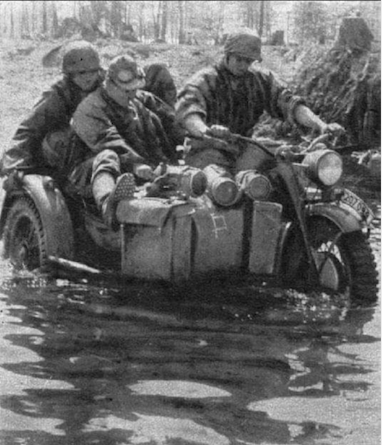
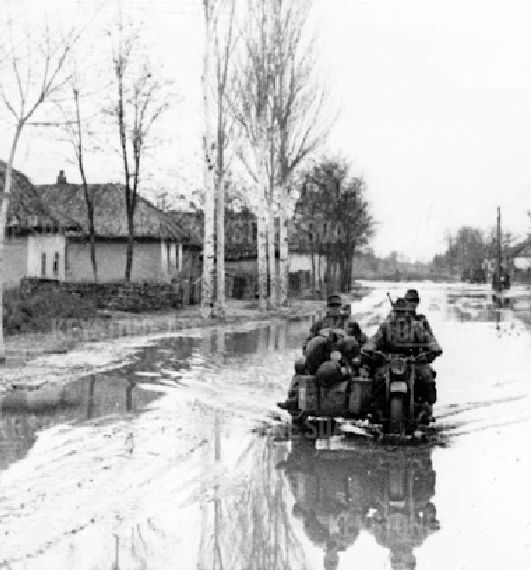
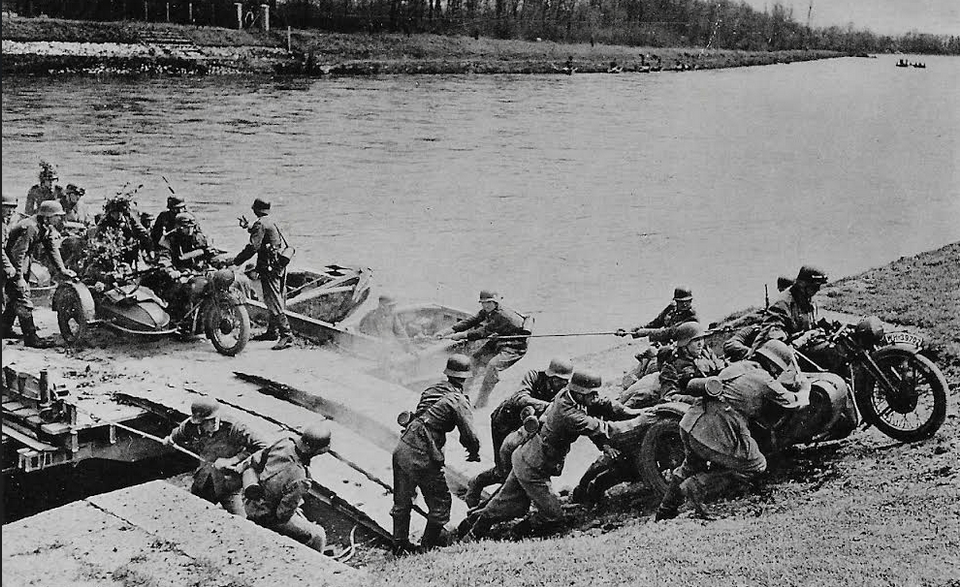
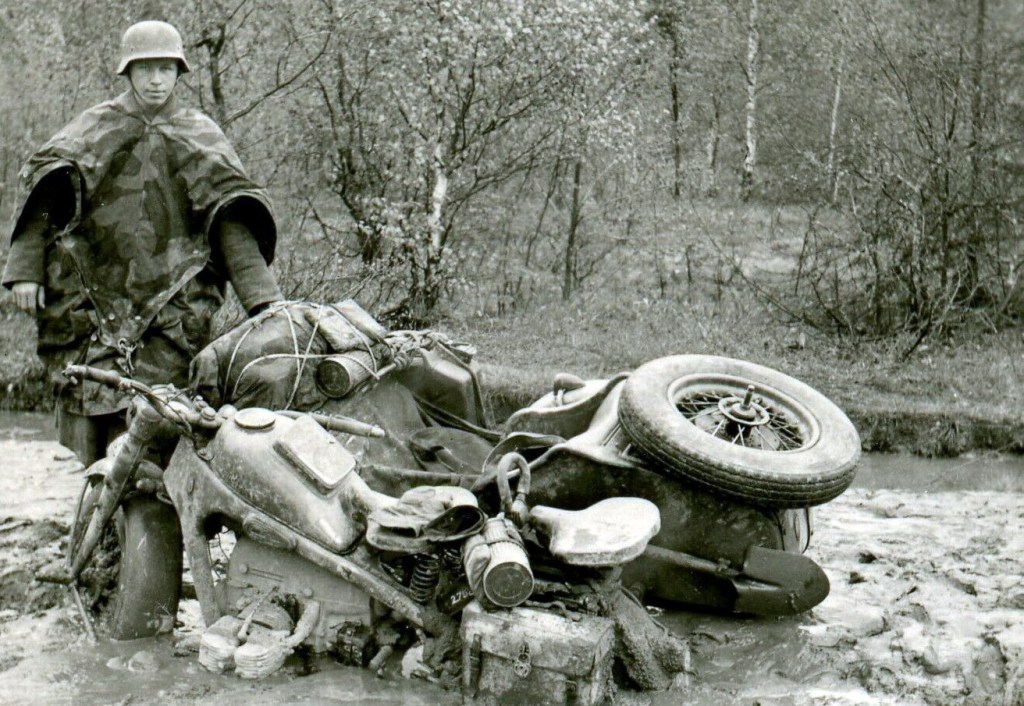
A BMW R12 combo makes light of carrying three squaddies through a river.
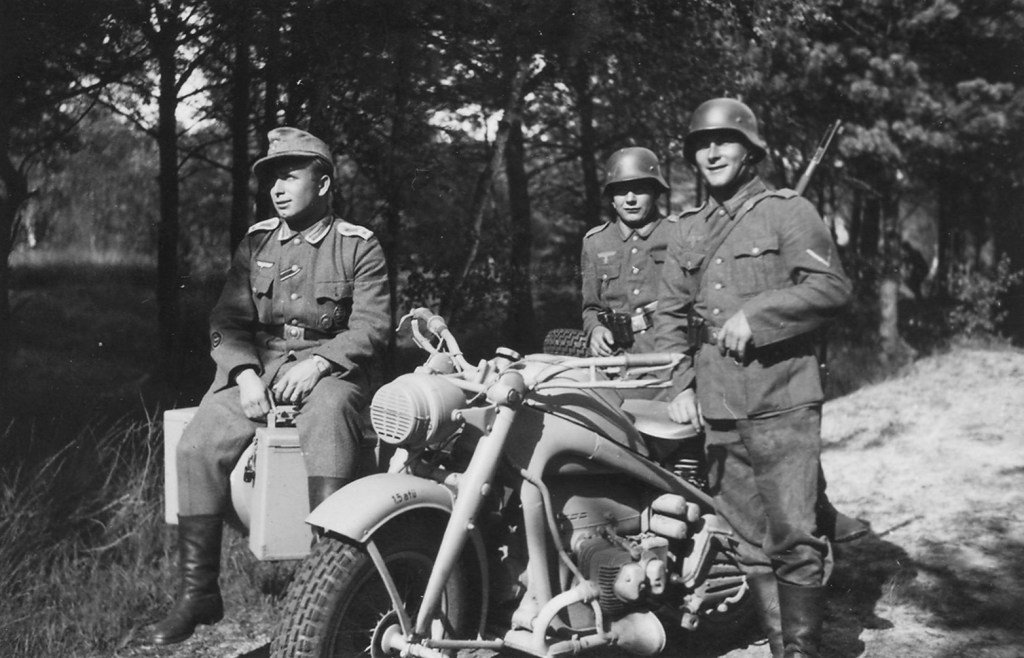
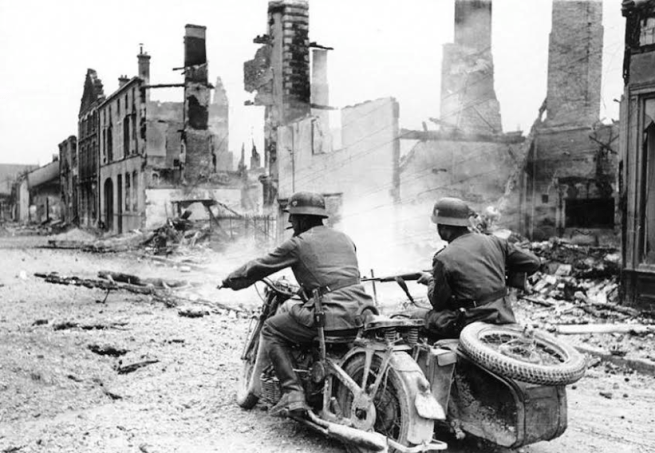
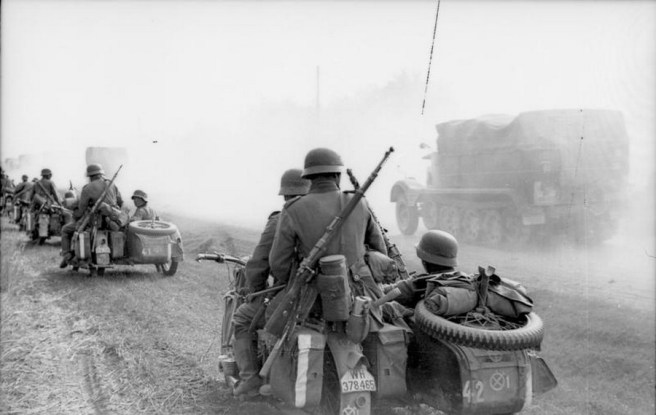
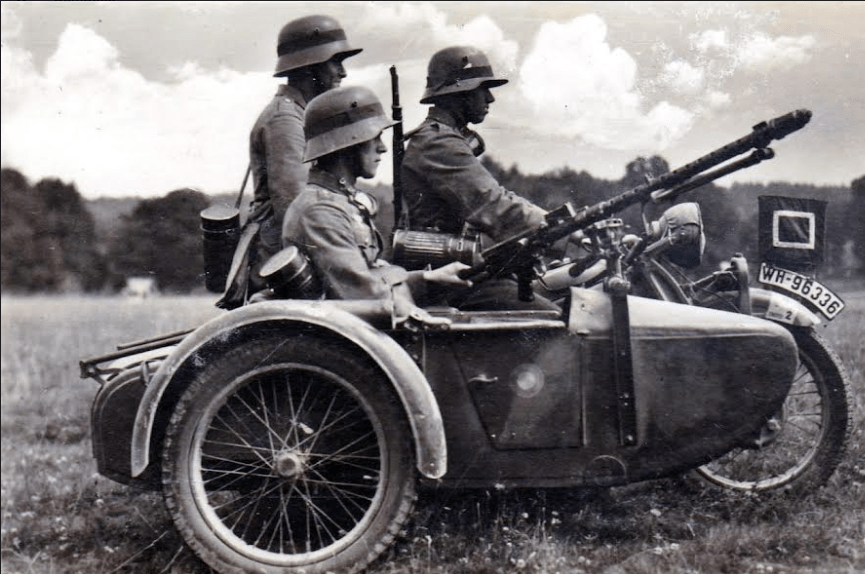
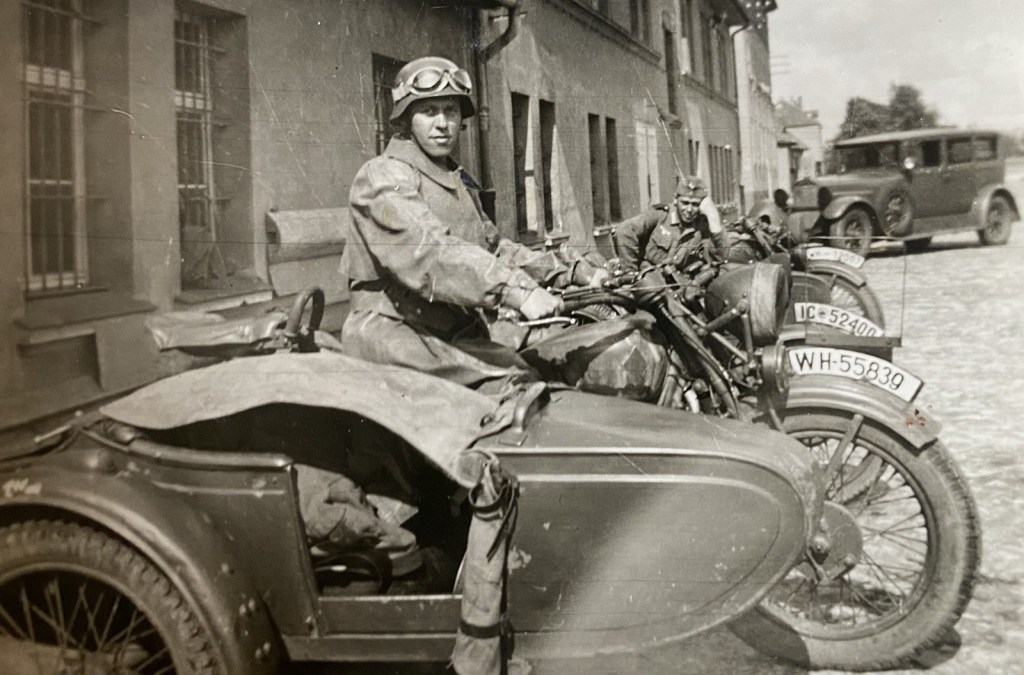
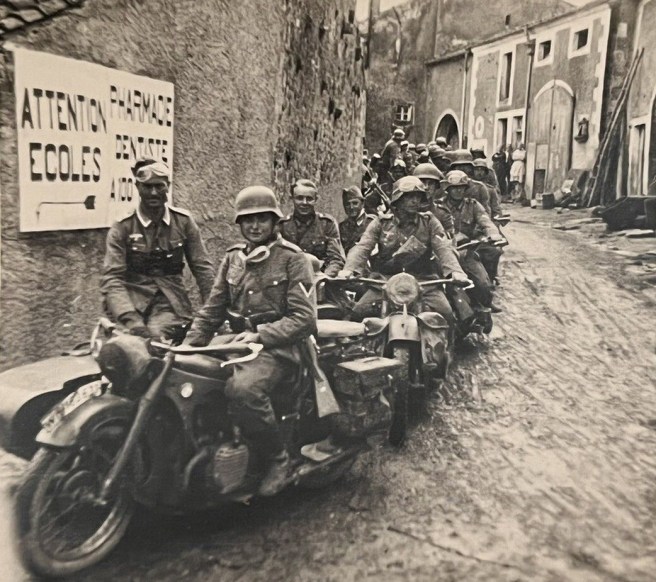
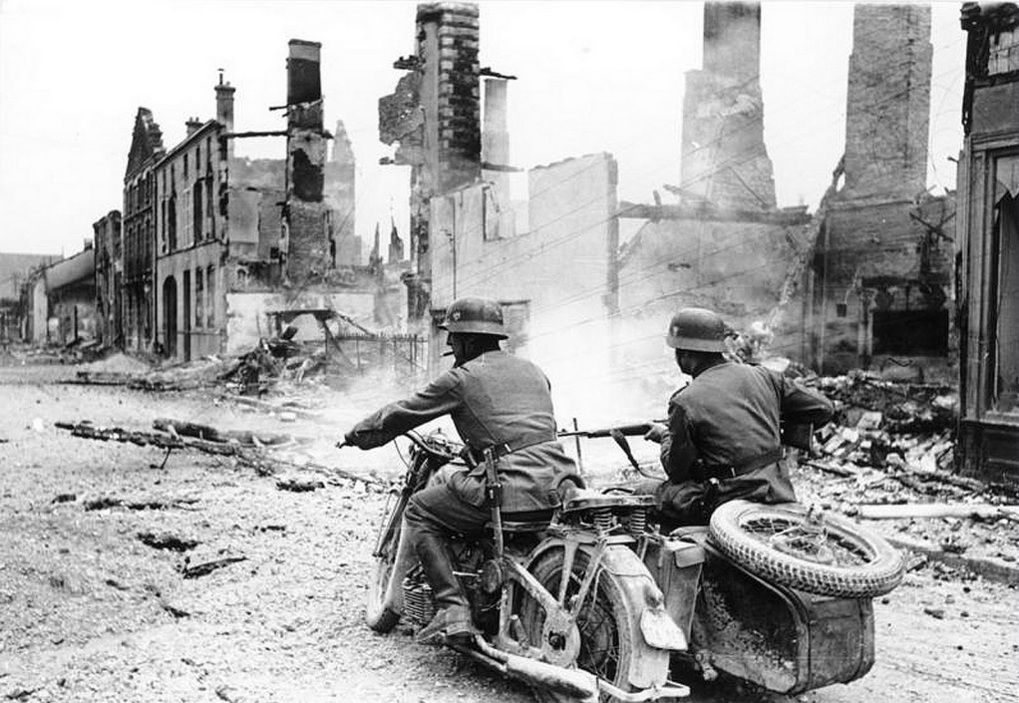
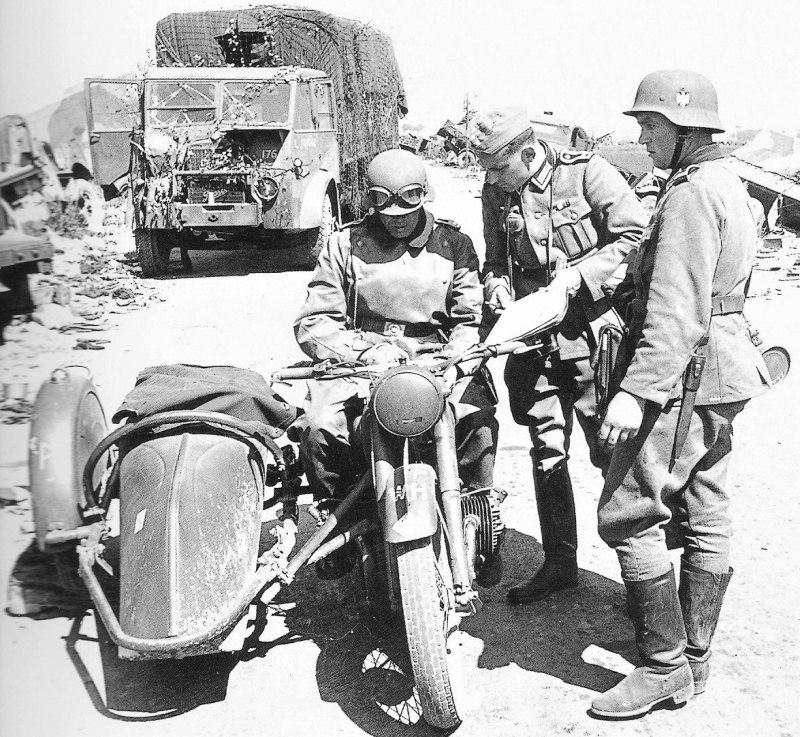
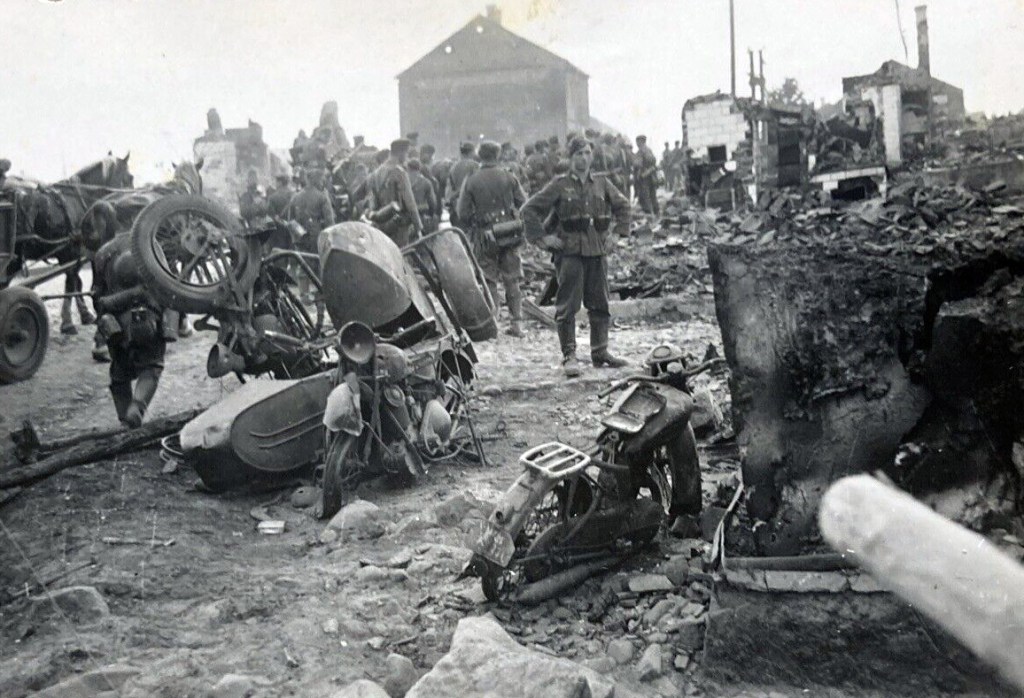
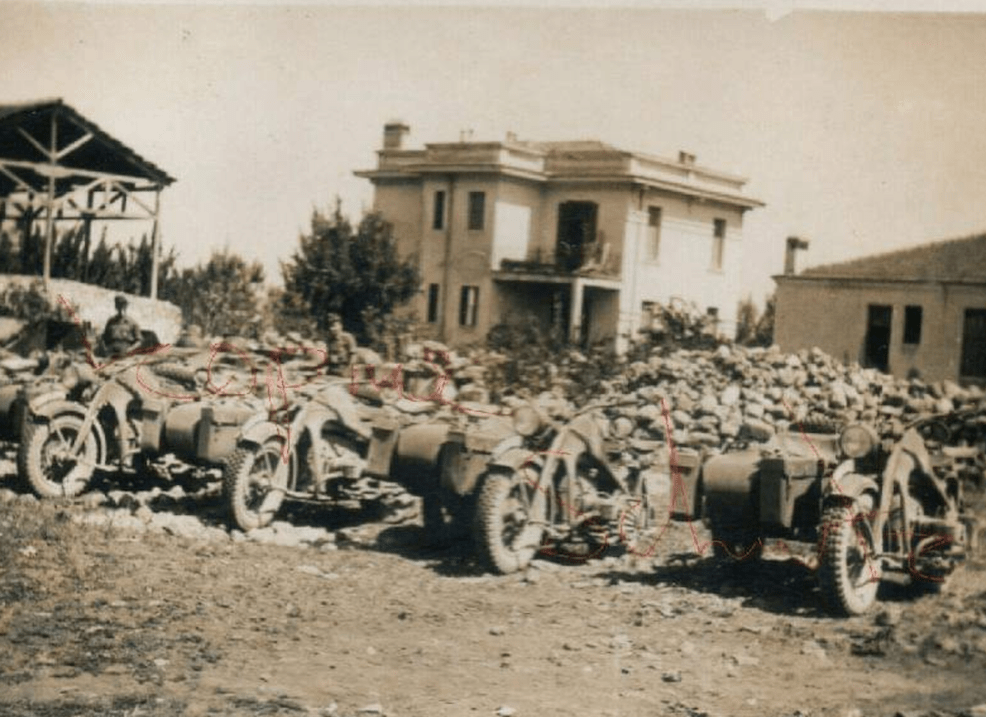
The Wermacht’s other combo of choice, a Zündapp, passes through the remains of a French town. This example is a flat-four K800-W.
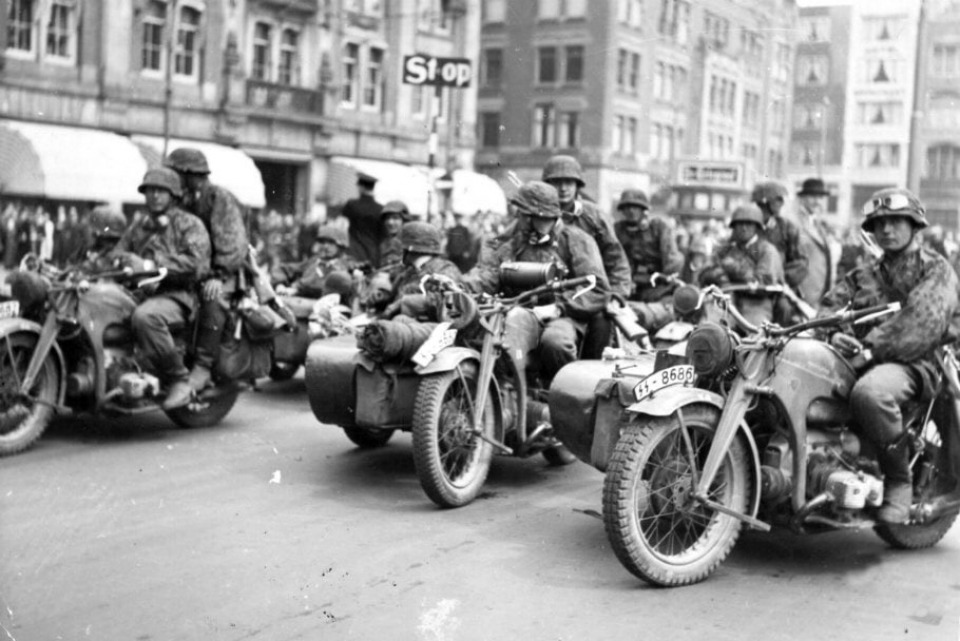
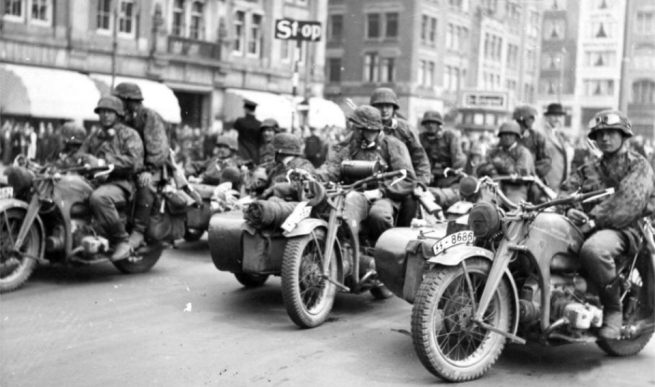
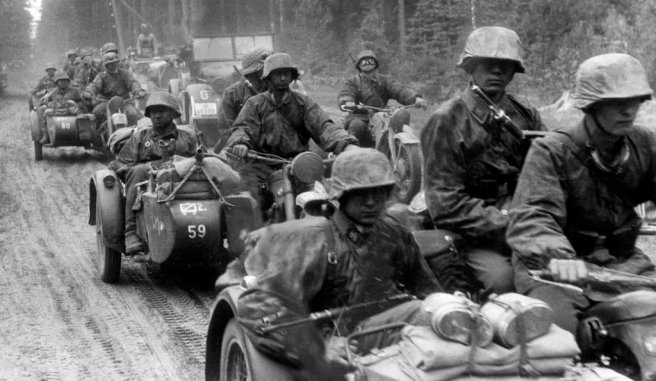
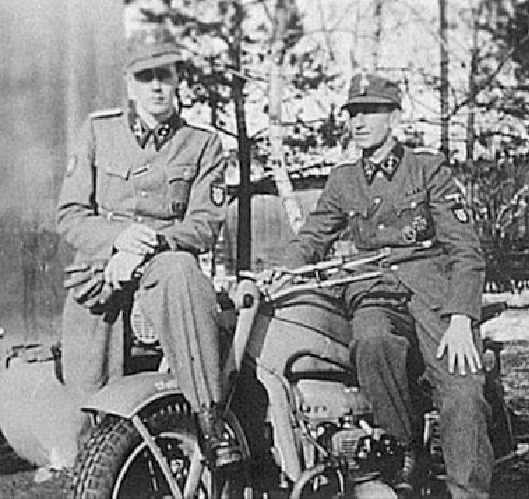
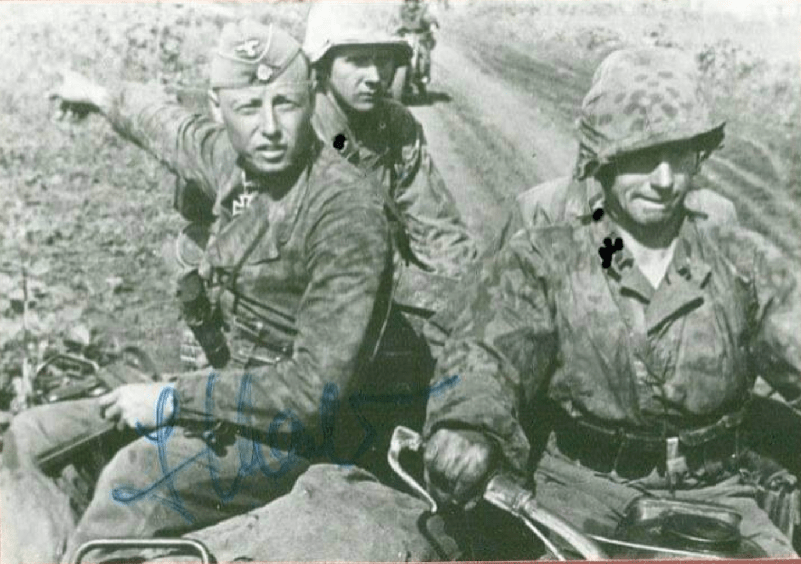
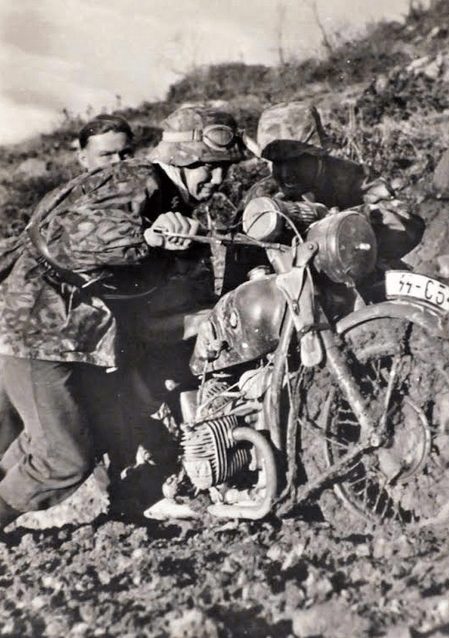
Another day, another city. These SS Panzergrenadiers are riding through Amsterdam on Zündapp KS750 twins.
1941
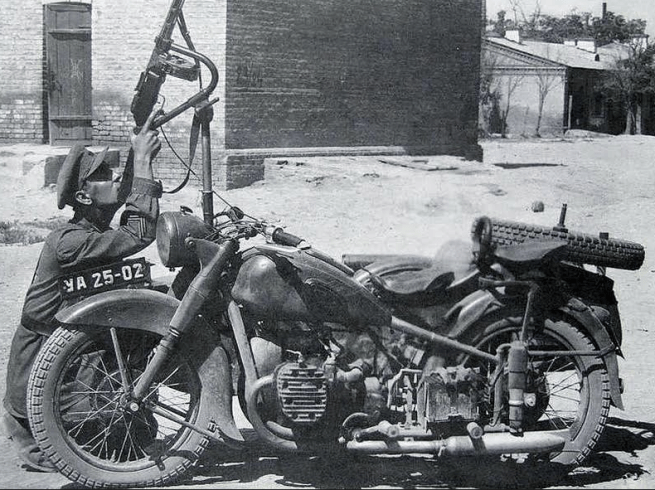
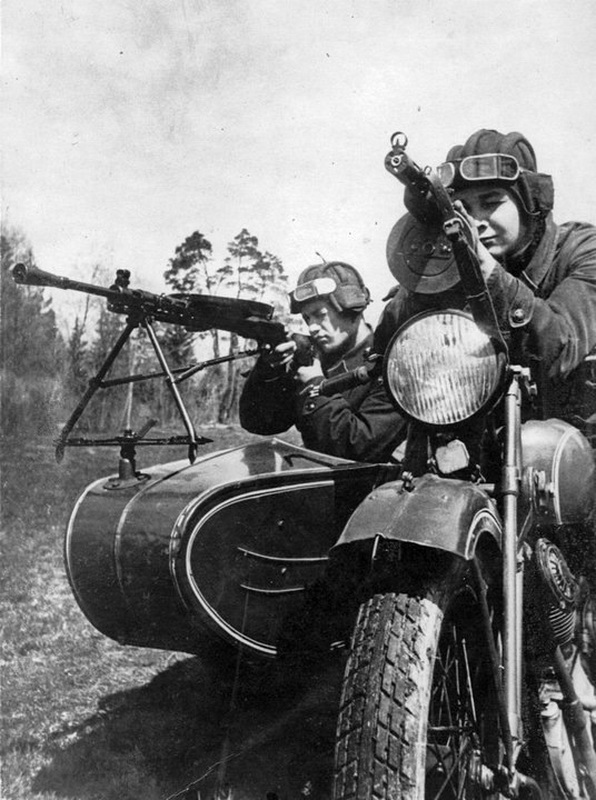
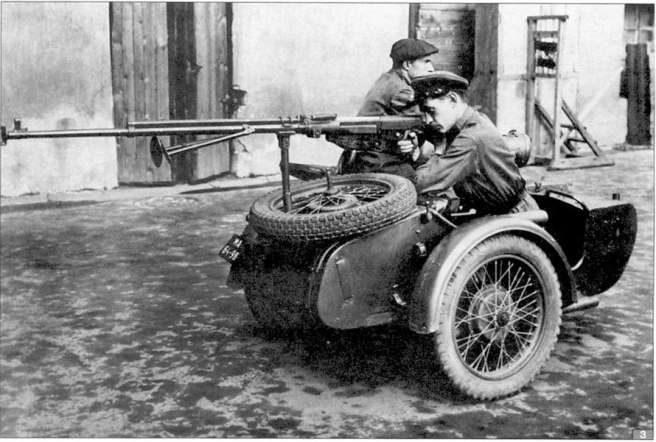
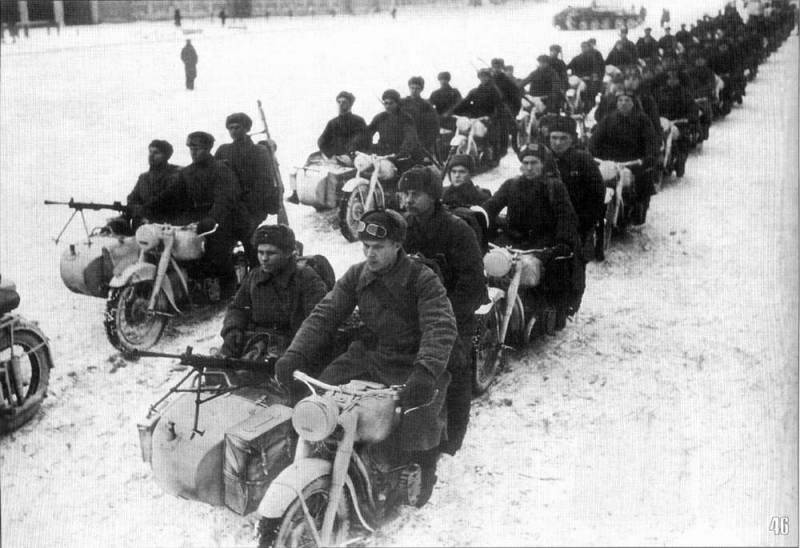
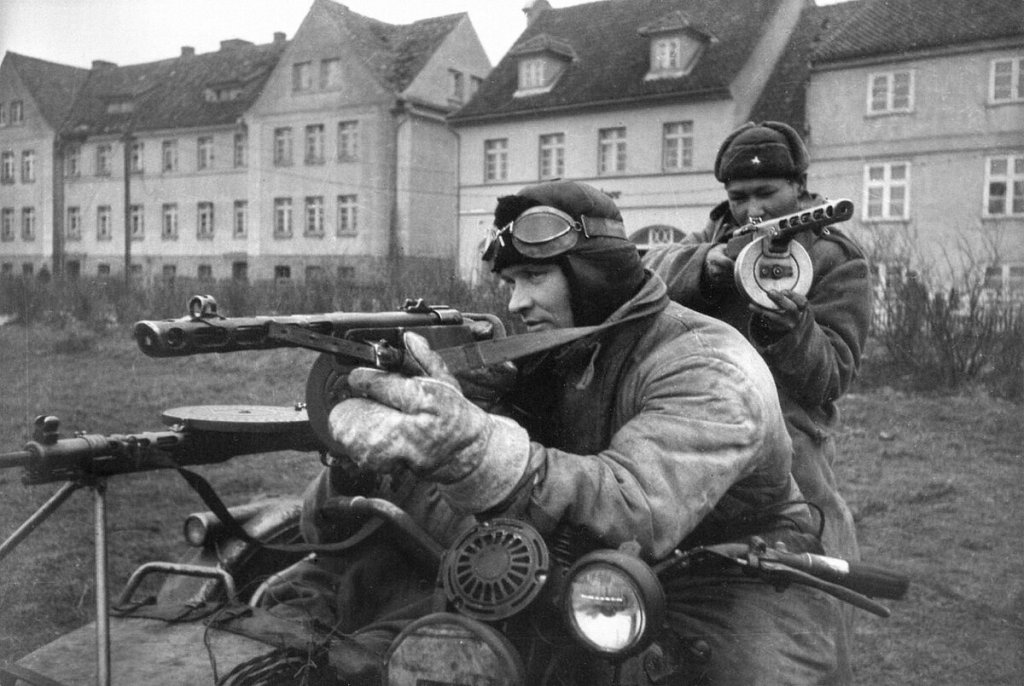
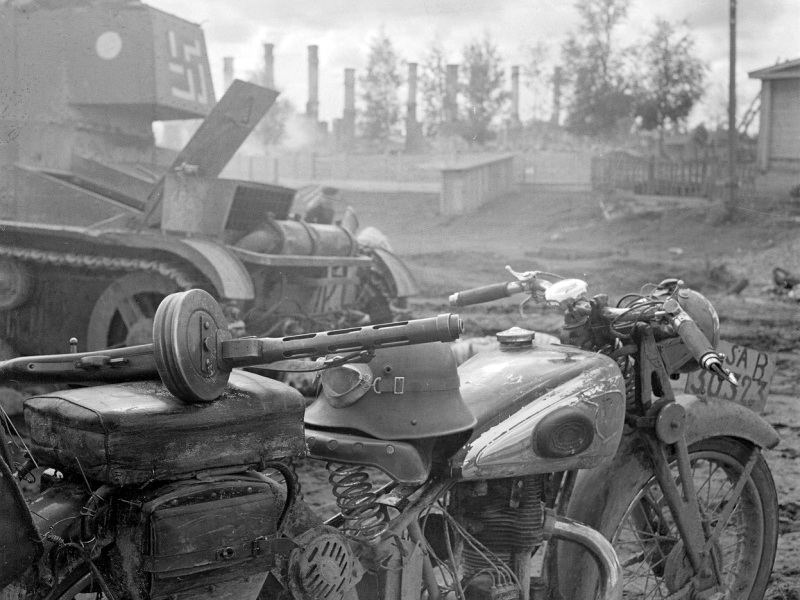
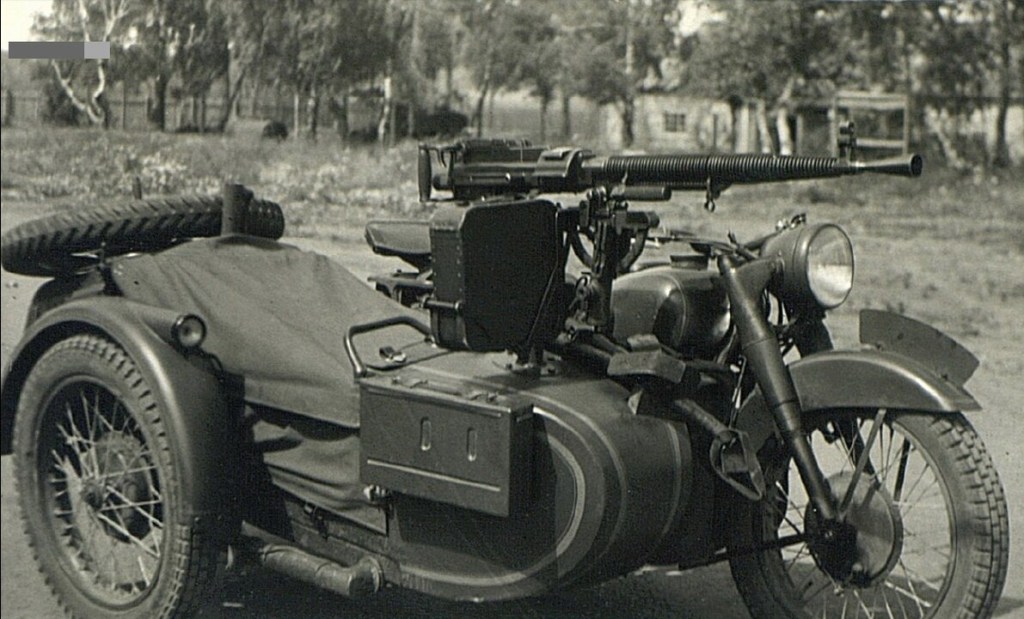
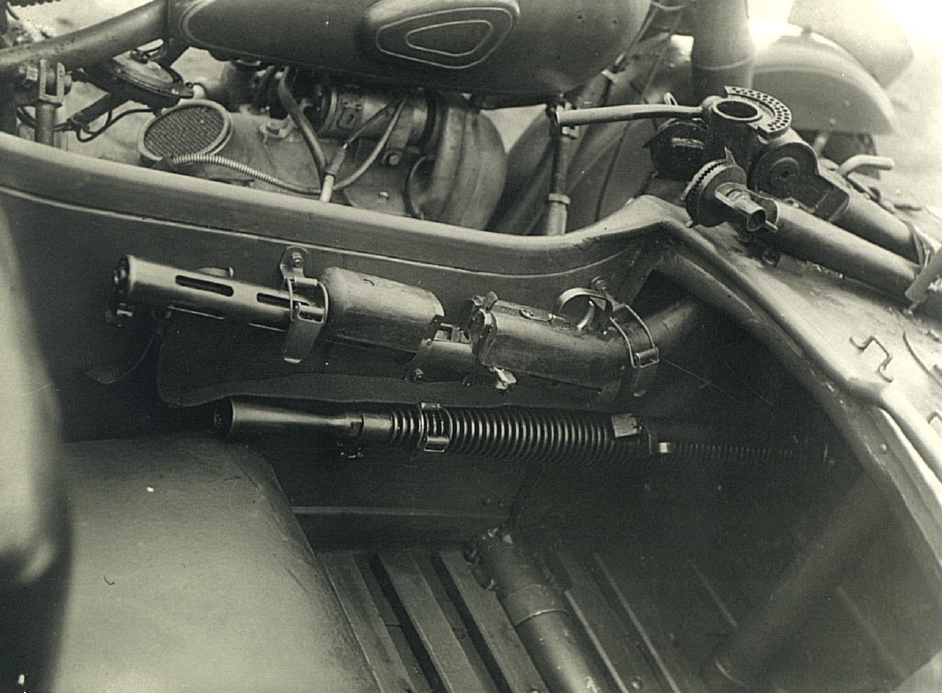
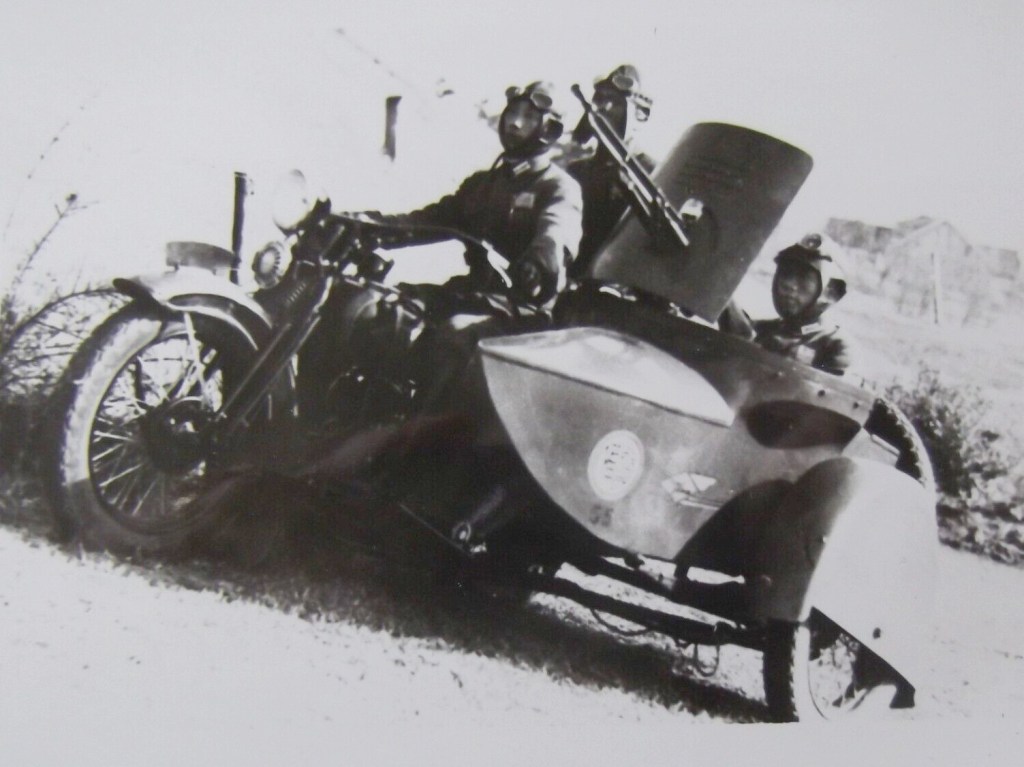
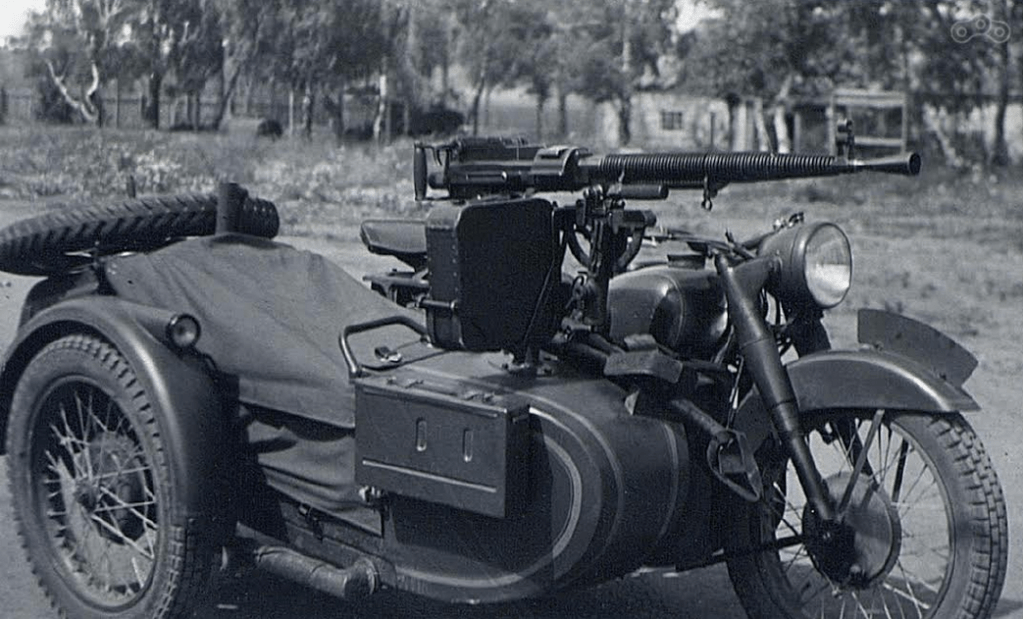
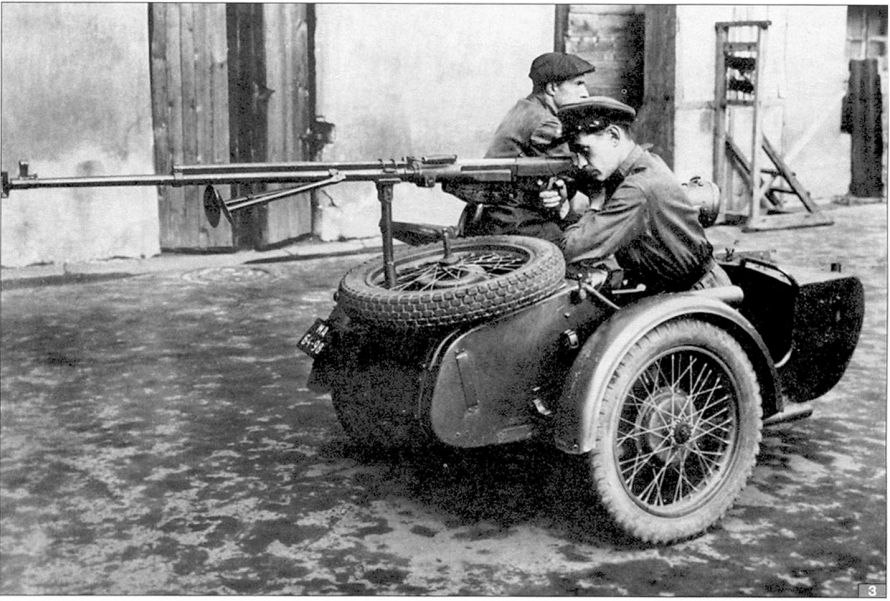
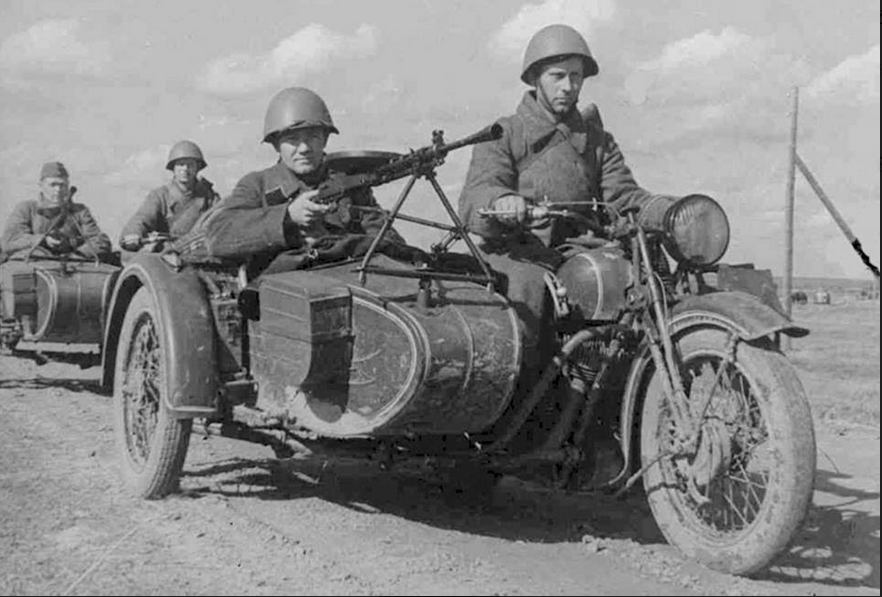
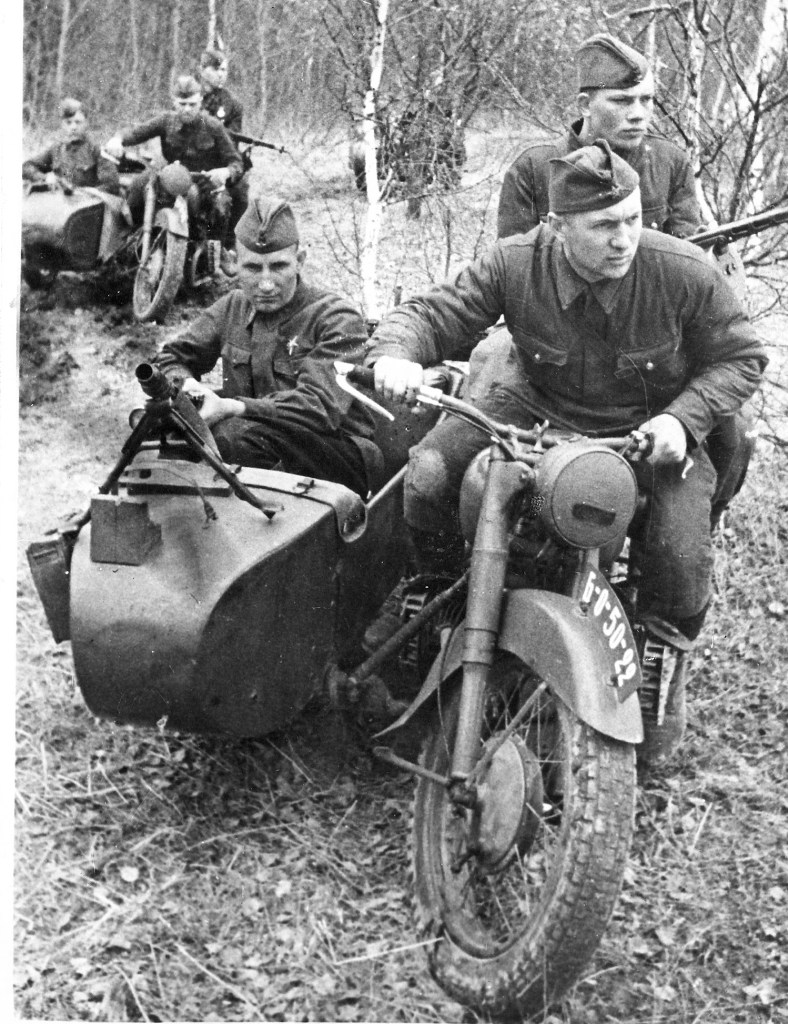
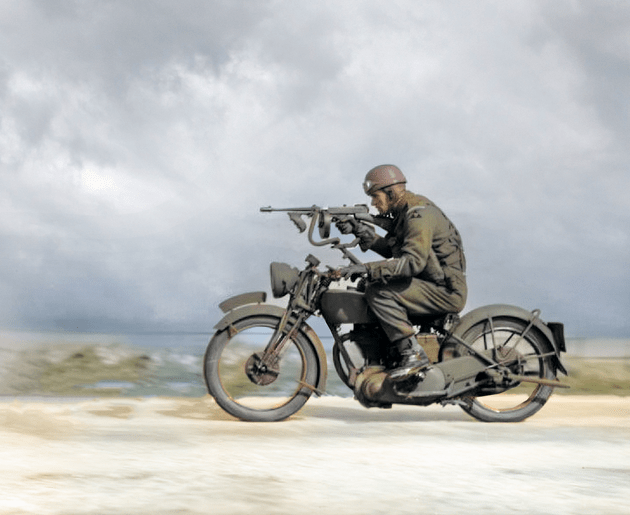
The Dnepr M72 superseded the TIZ AM600 and PMZ A750 which had performed poorly in the Winter War invasion of Finland. But pressing a PPSh41 submachine gun into service on an AA mount seems a tad over optimistic.
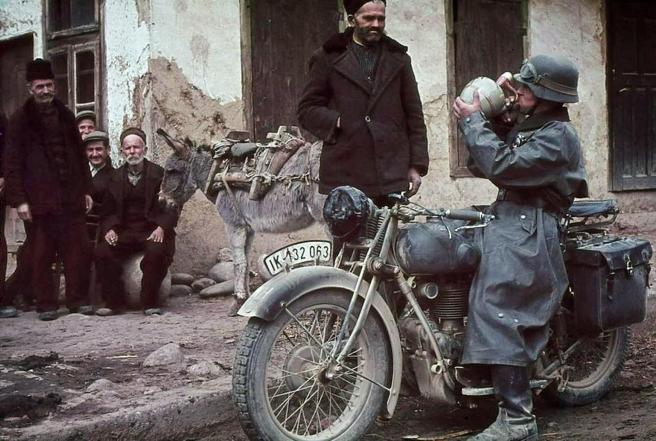
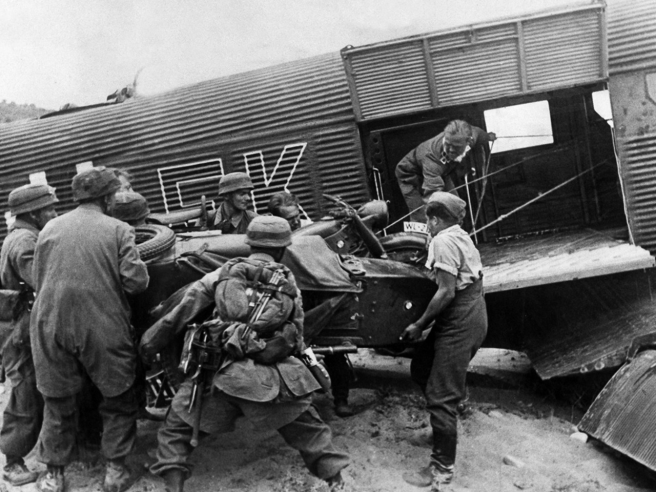
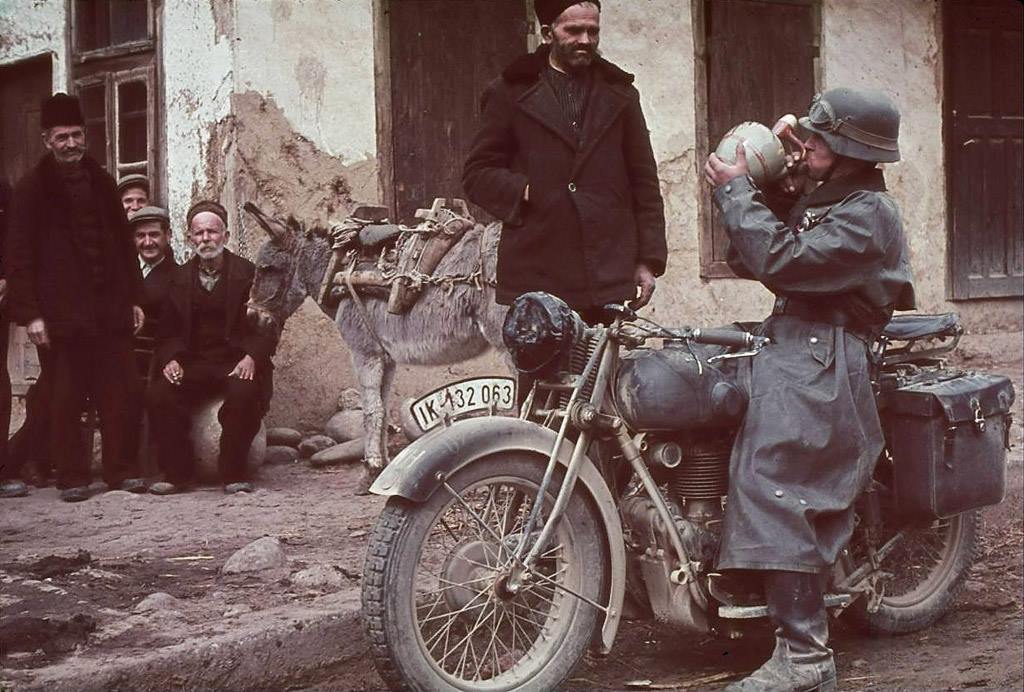
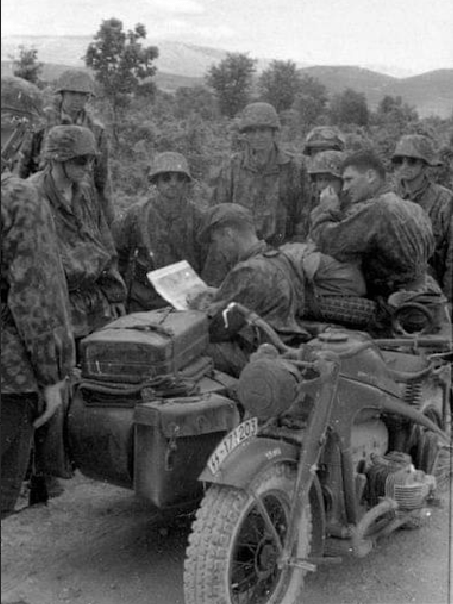
April, Germans in Greece.
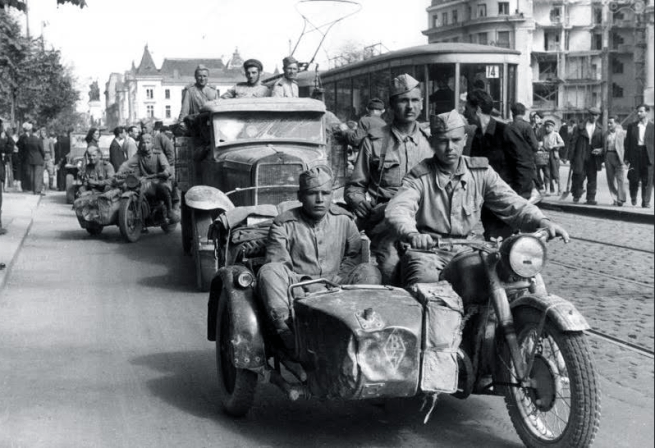
April: Germans in Bulgaria. A ‘liaison soldier’ on an NSU 601TS.
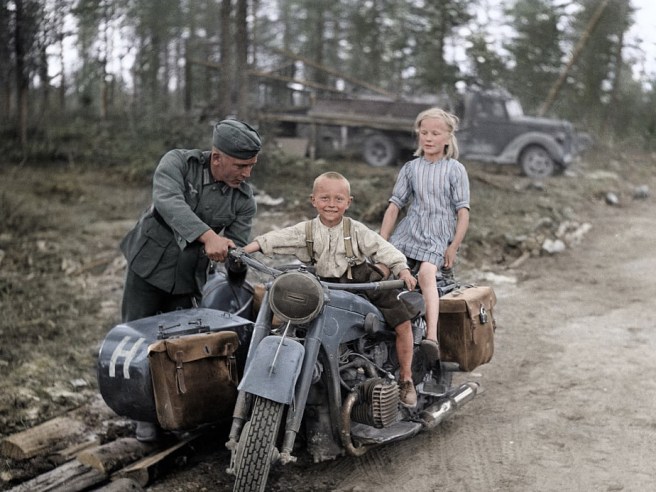
July, Germans in Finland (on the Raate Road, Suomussalmi) with an R12 outfit.
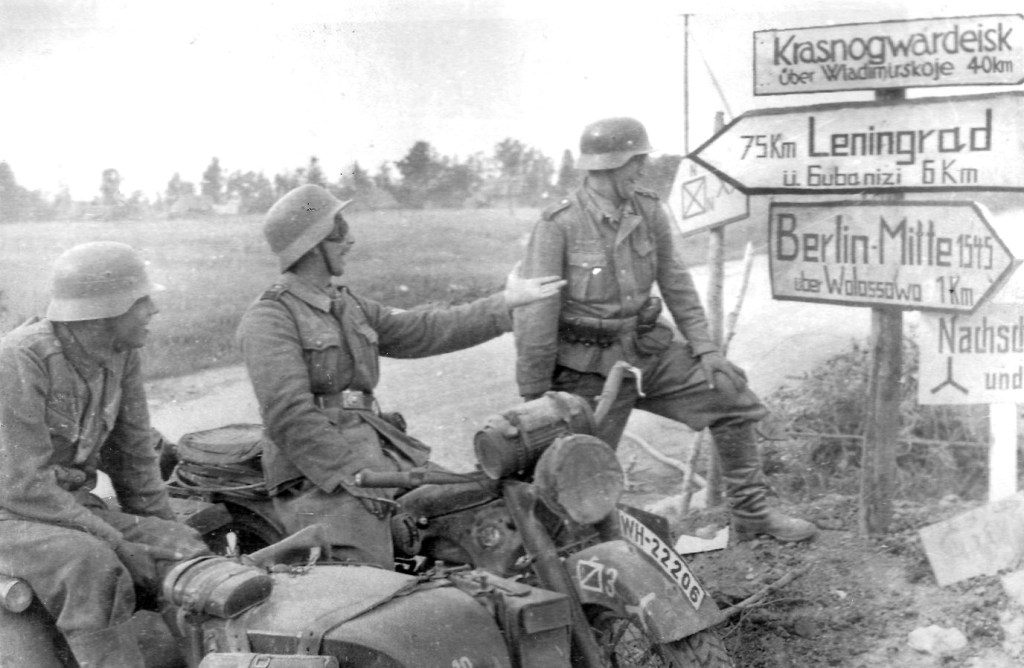
July, Germans in Latvia.
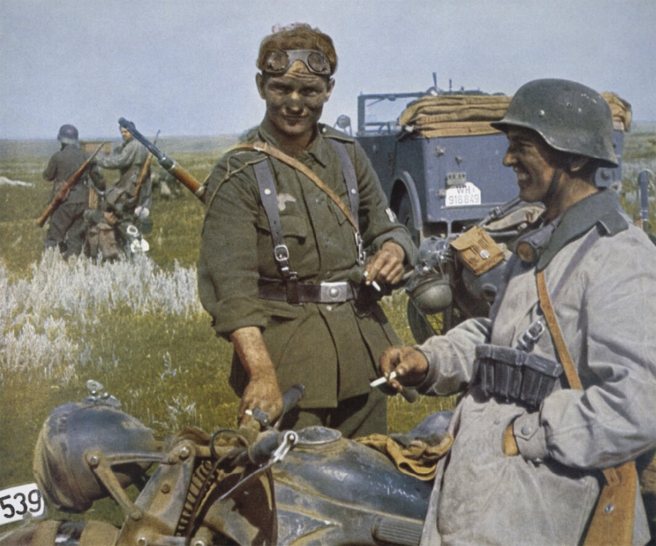
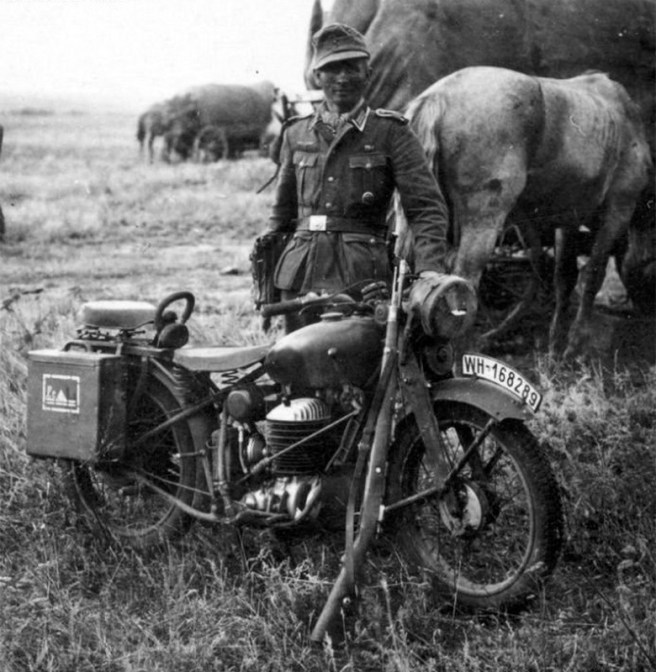
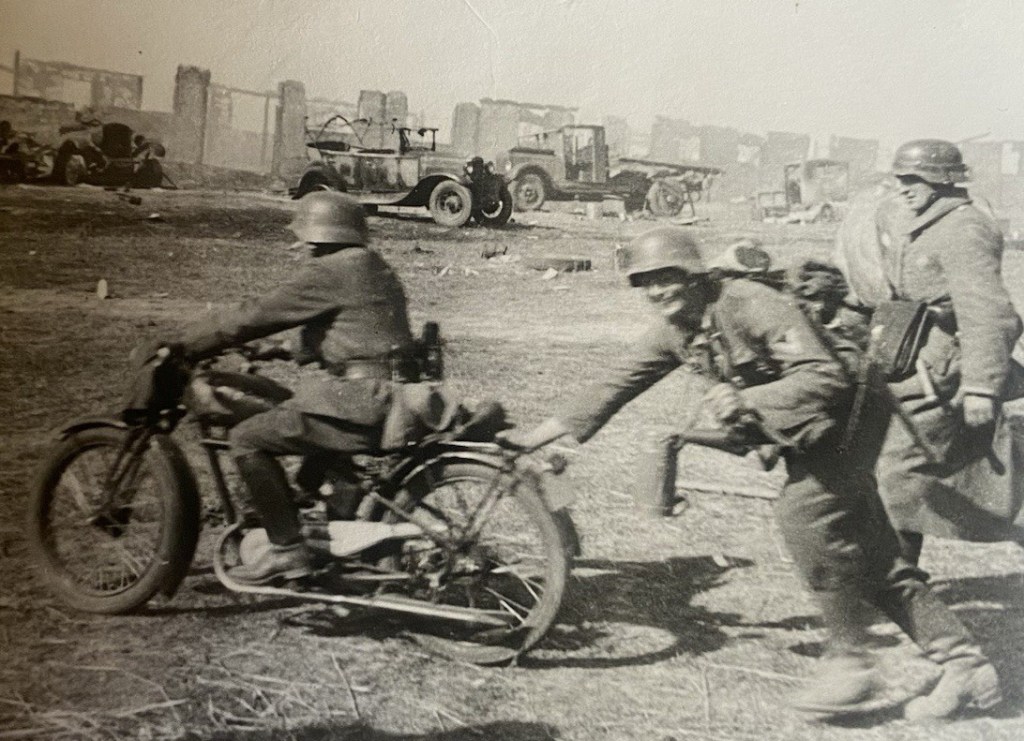
September, Germans in the Crimea.
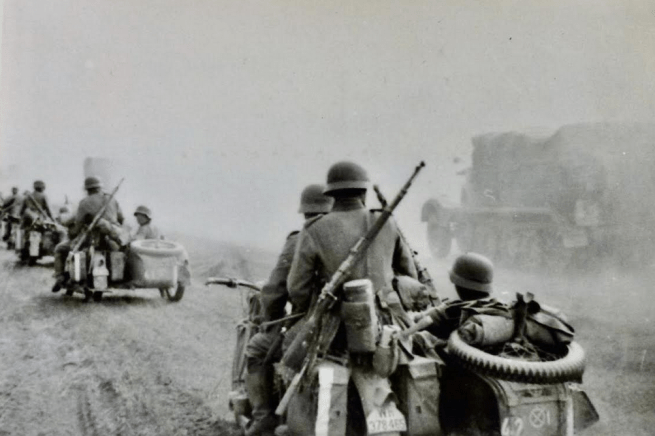
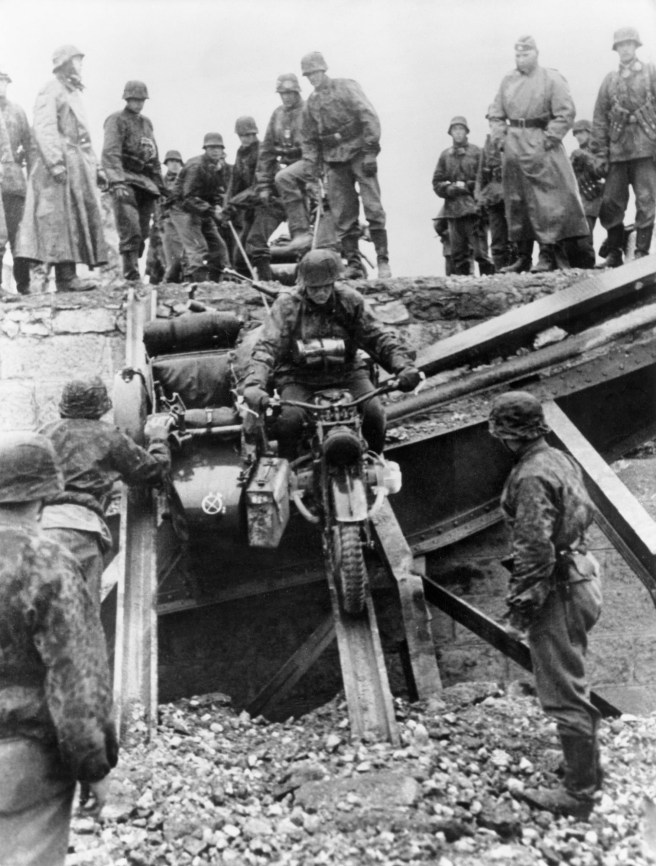
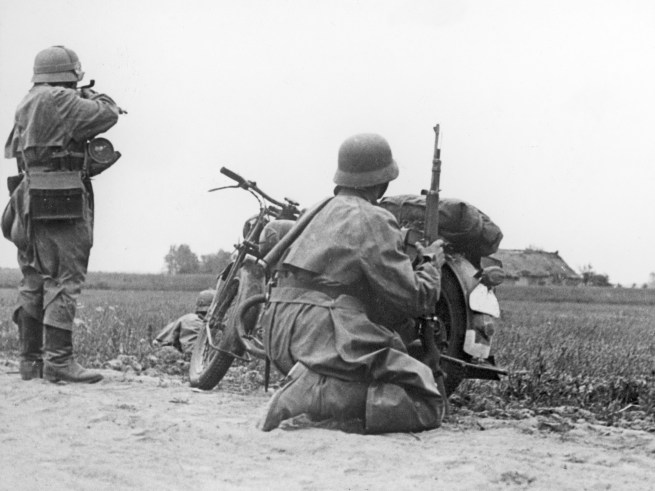
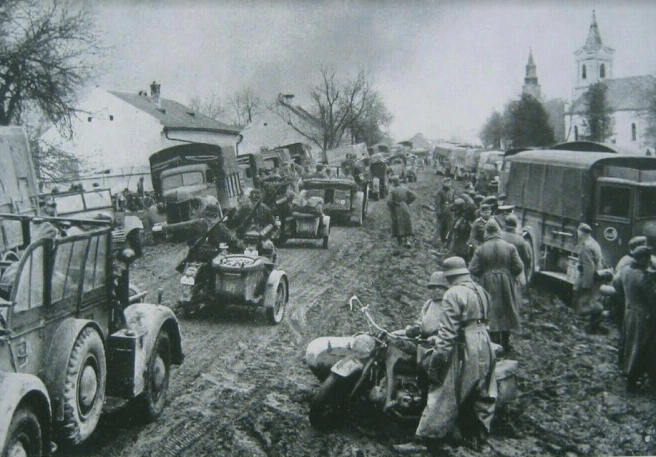
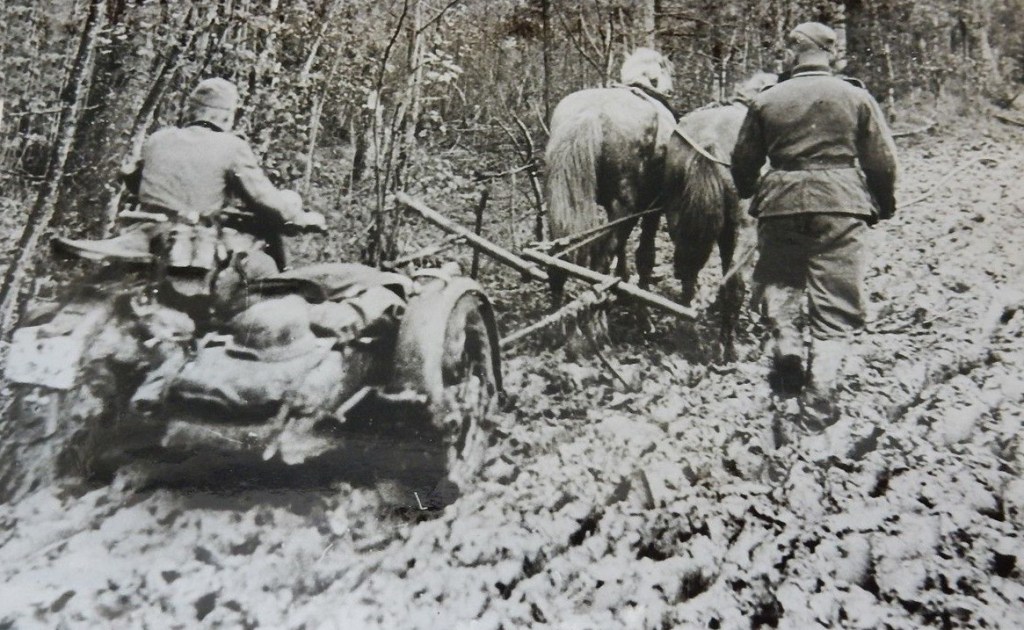
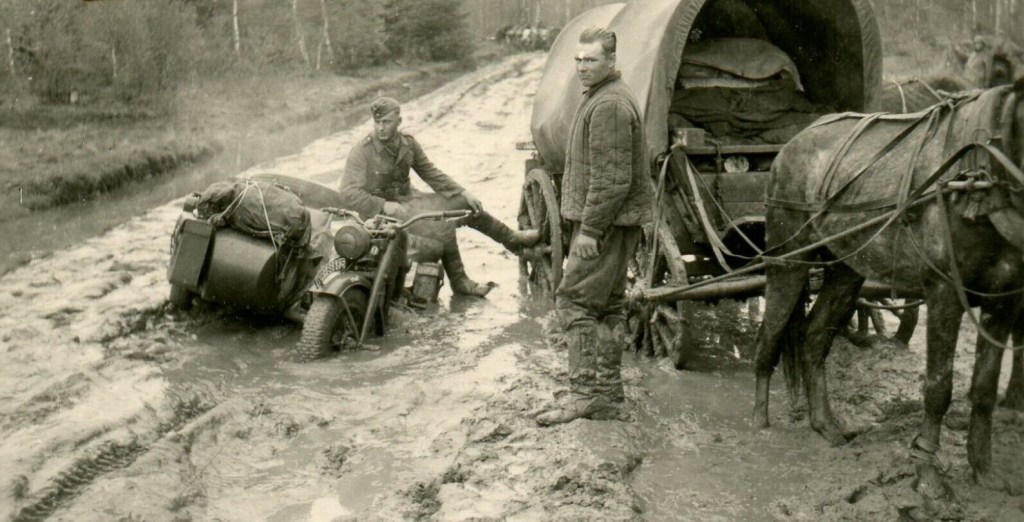
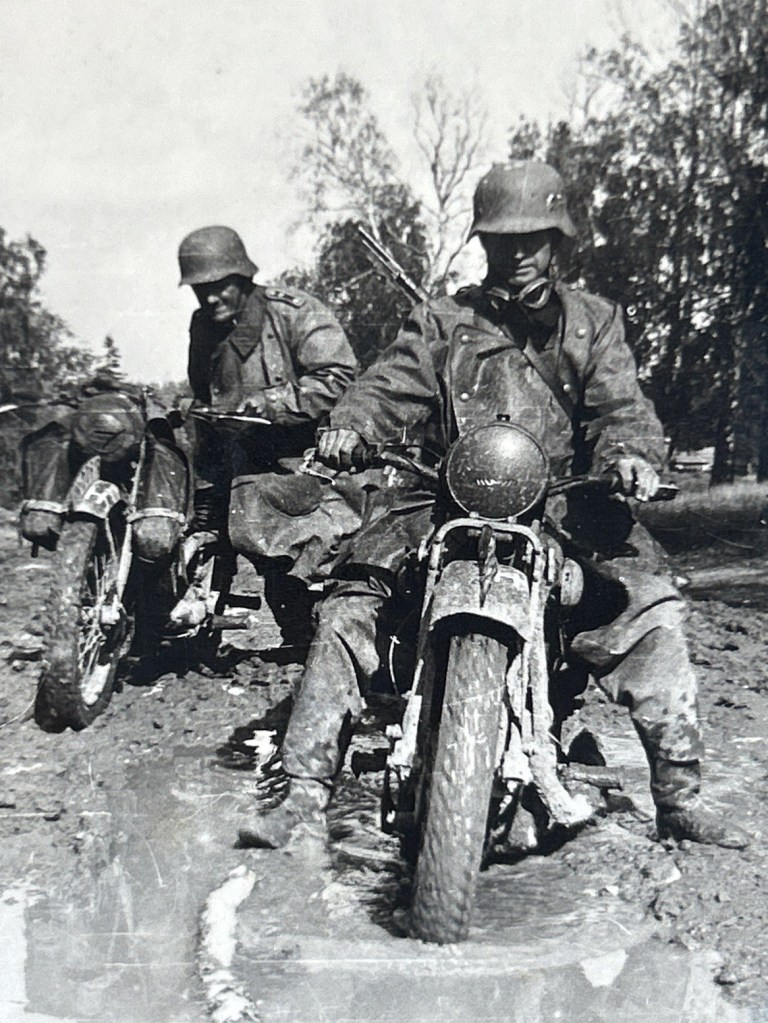
October, Germans in Russia, the ‘Vyazma Pocket’.
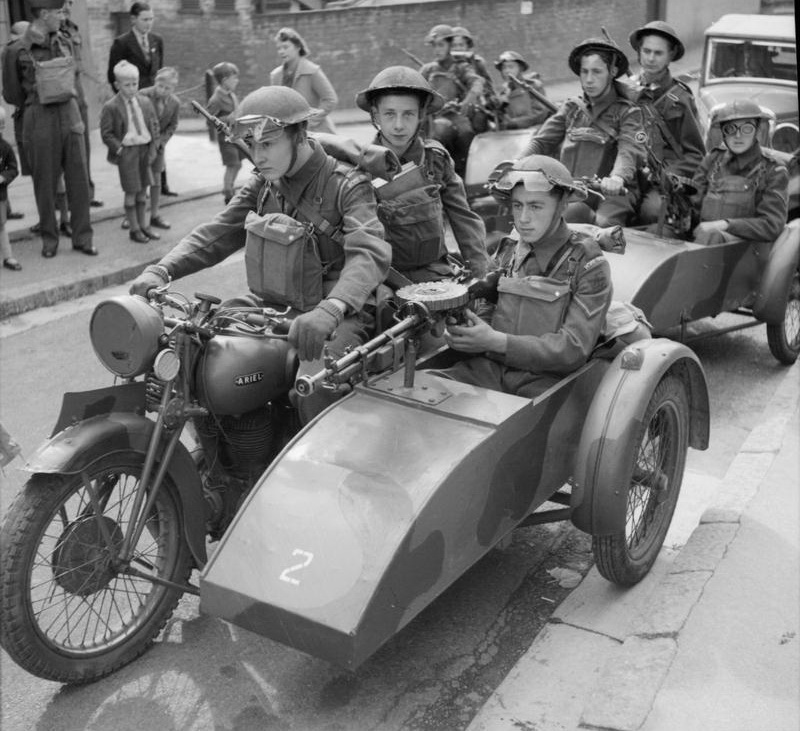
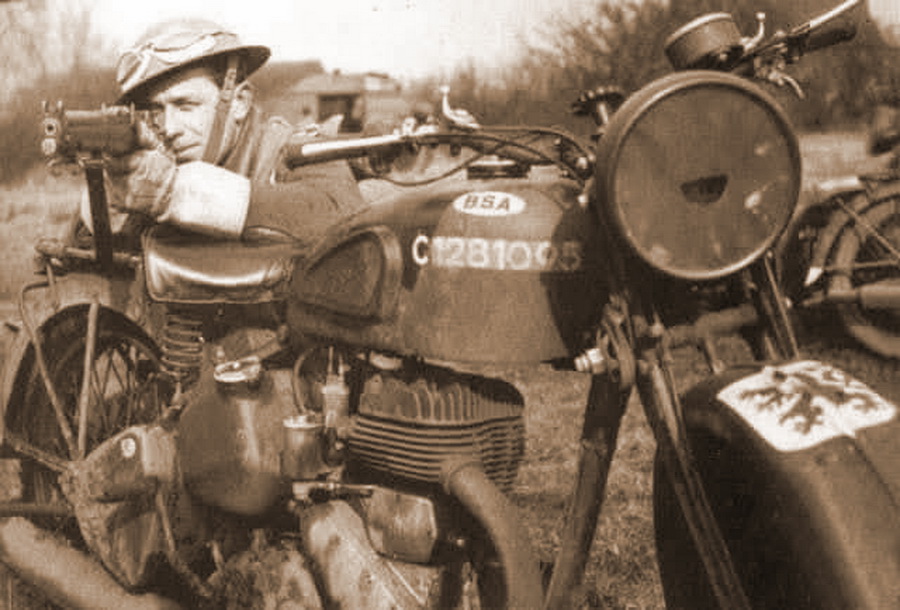
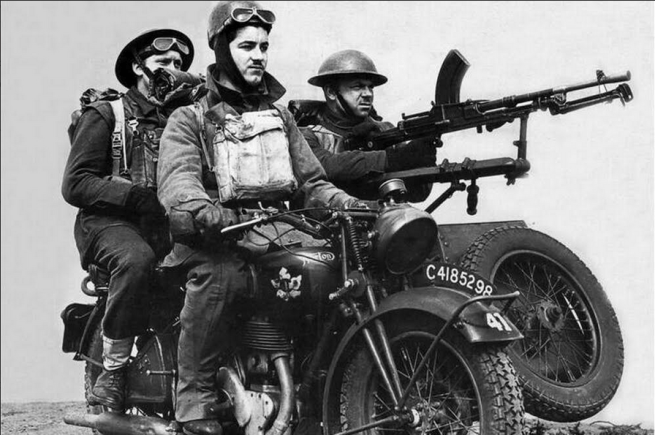
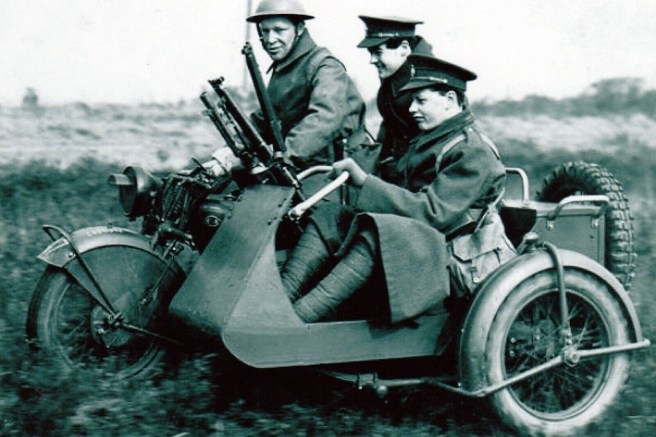
August, Home Guard near Exeter, with venerable Lewis guns on their chairs.
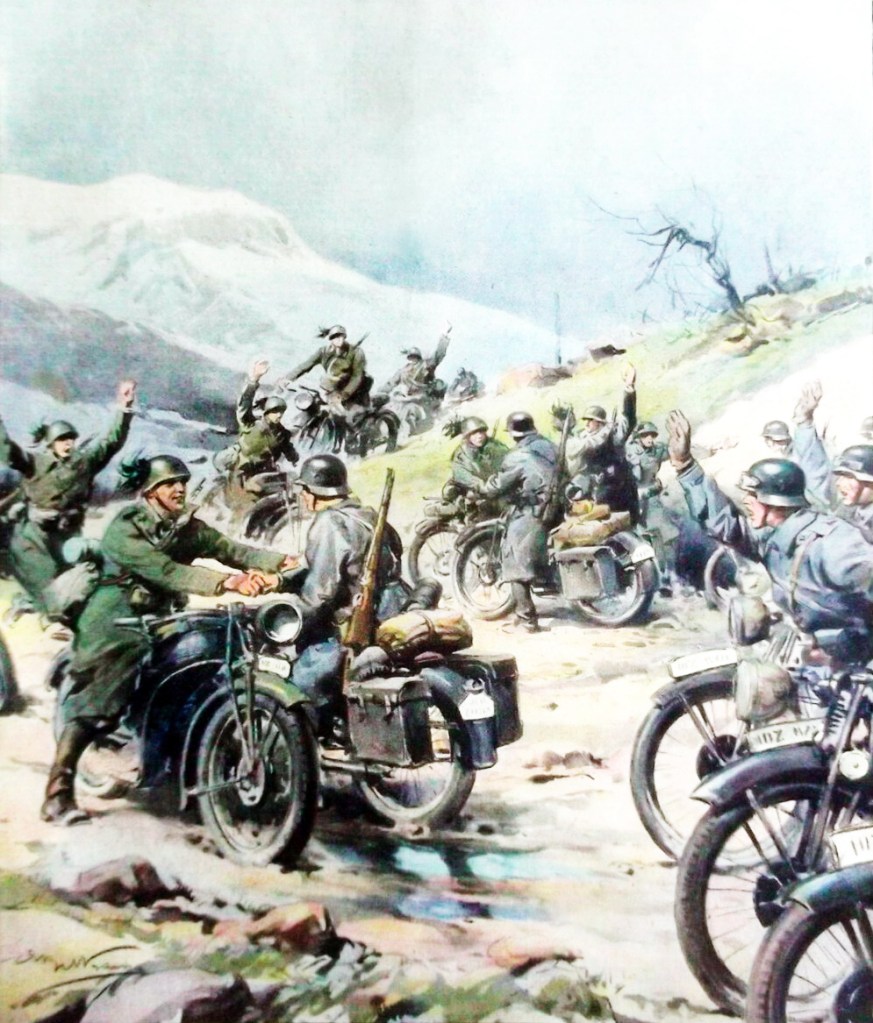
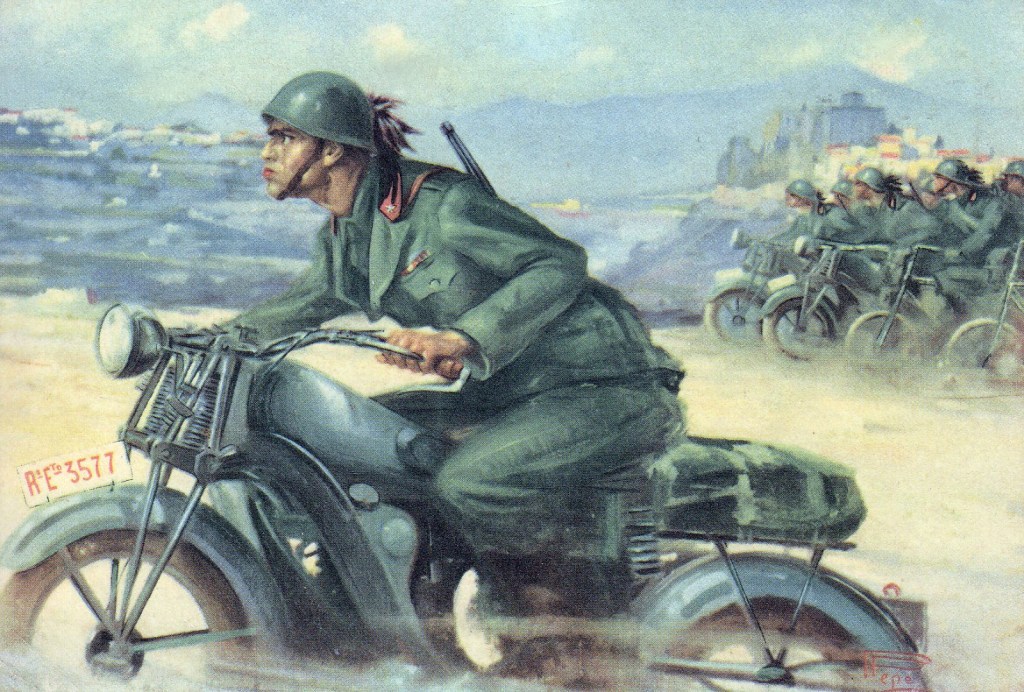
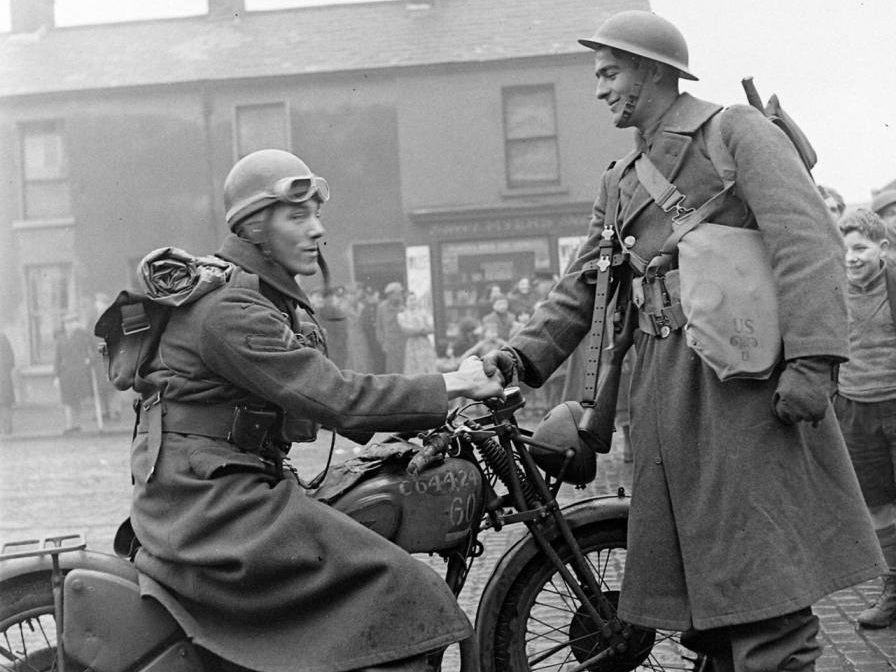
From the cover of La Domenica del Corriere (with apologies to Italian readers for the schoolboy translation): “A historic moment in the Balkans: a vanguard battalion of Italian motor-cyclist Bersaglieri, having penetrated Yugoslavian soil from Albania, spots German scouts coming from the Bulgarian border. The soldiers of the two allied nations run towards eachother and embrace amidst shouts of jubilation.”
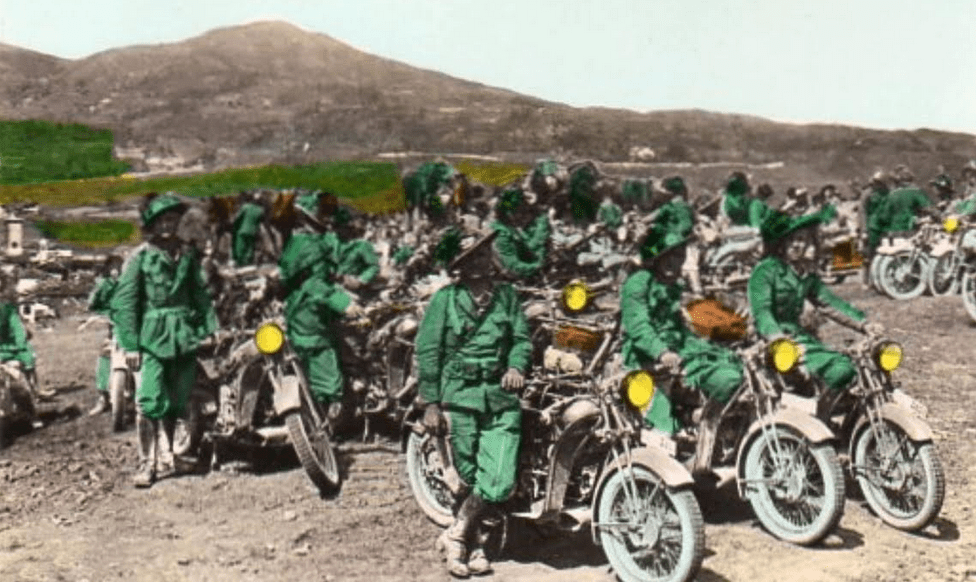
There was an outbreak of Bersaglieri in Albania.
1942
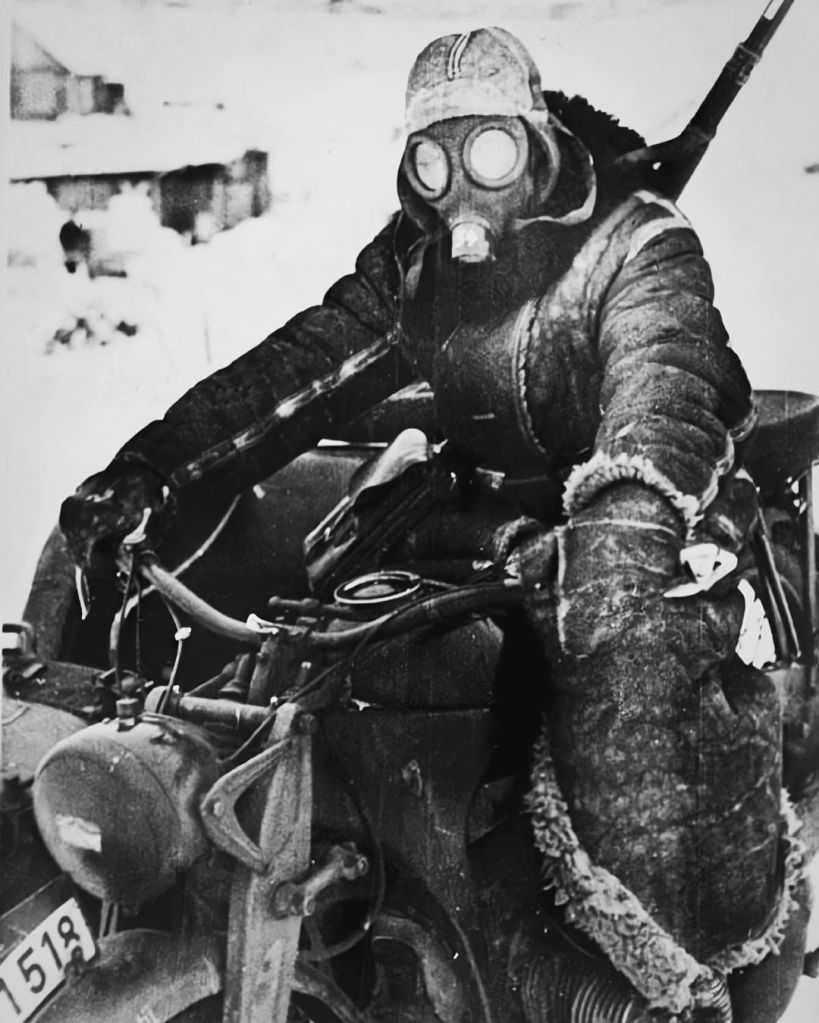
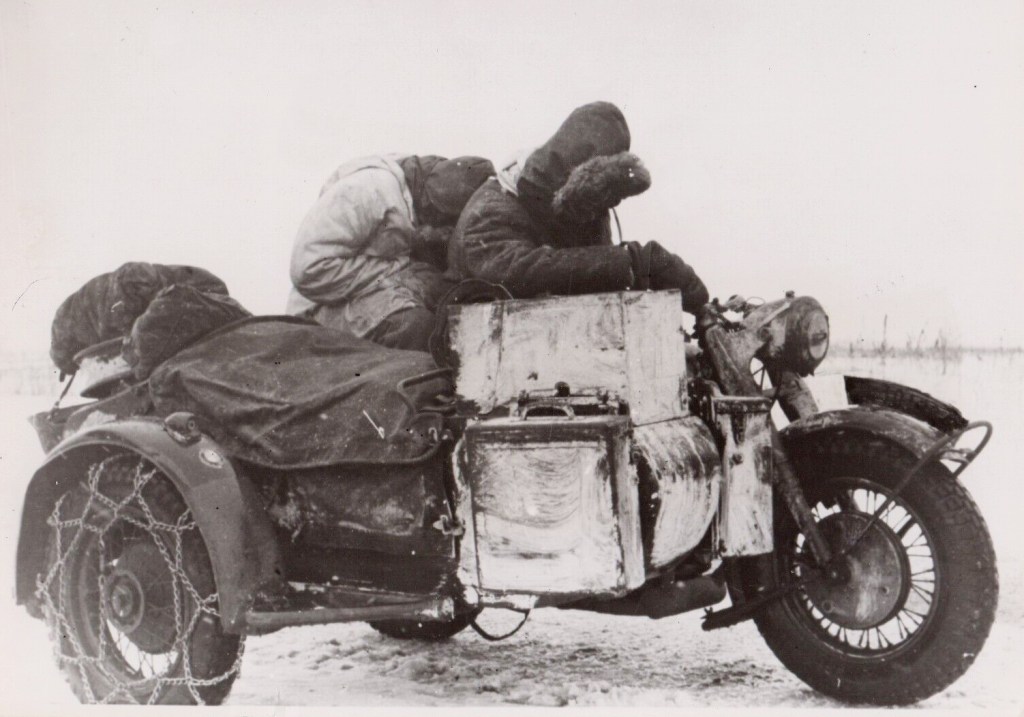
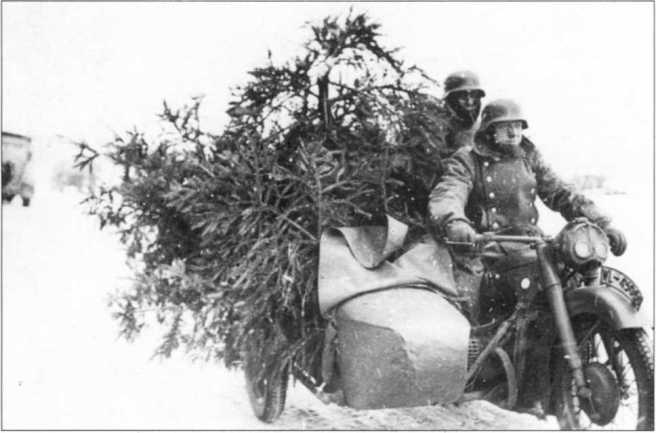
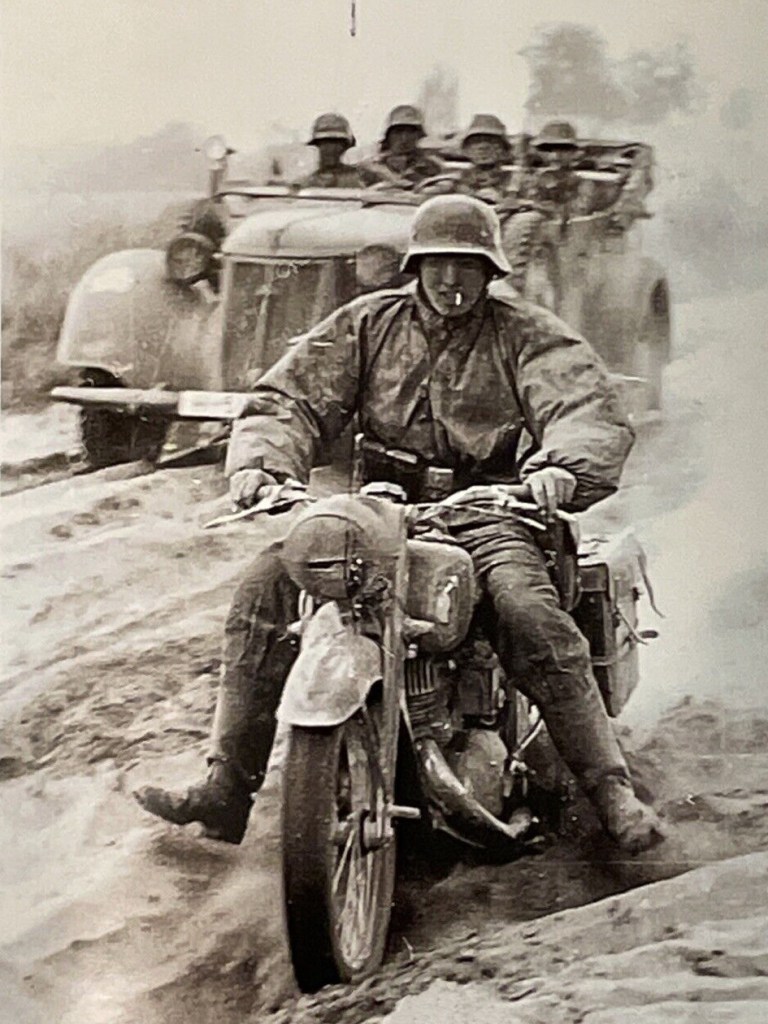
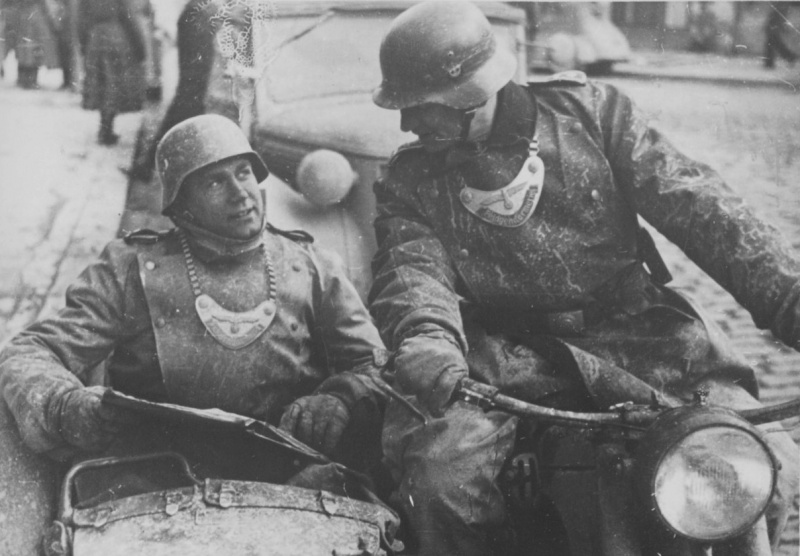
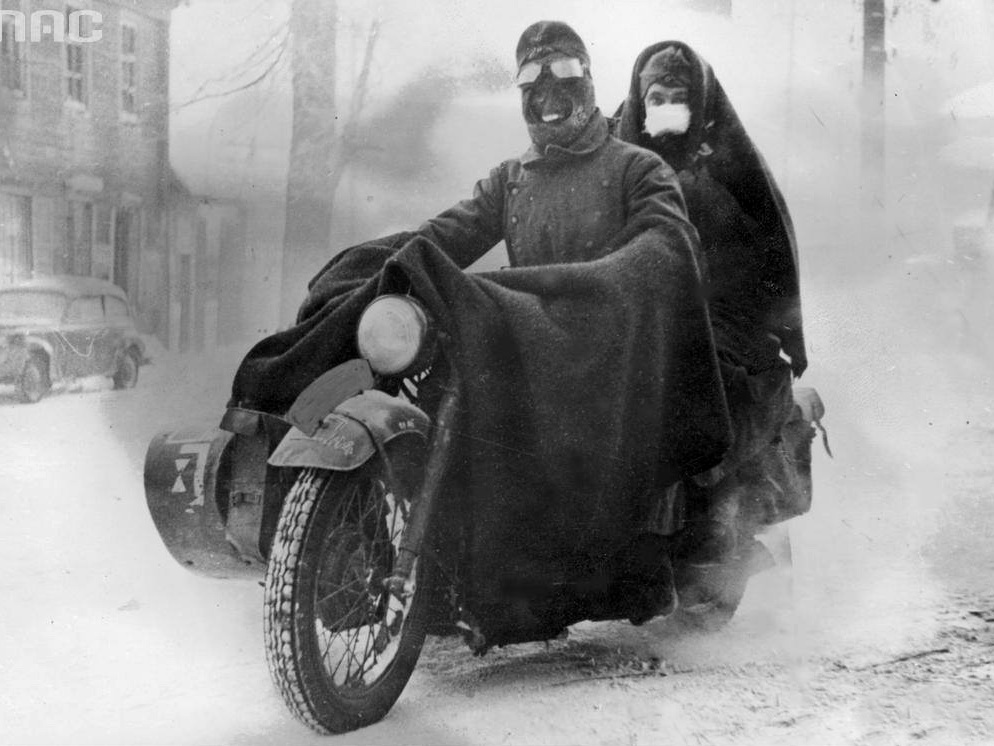
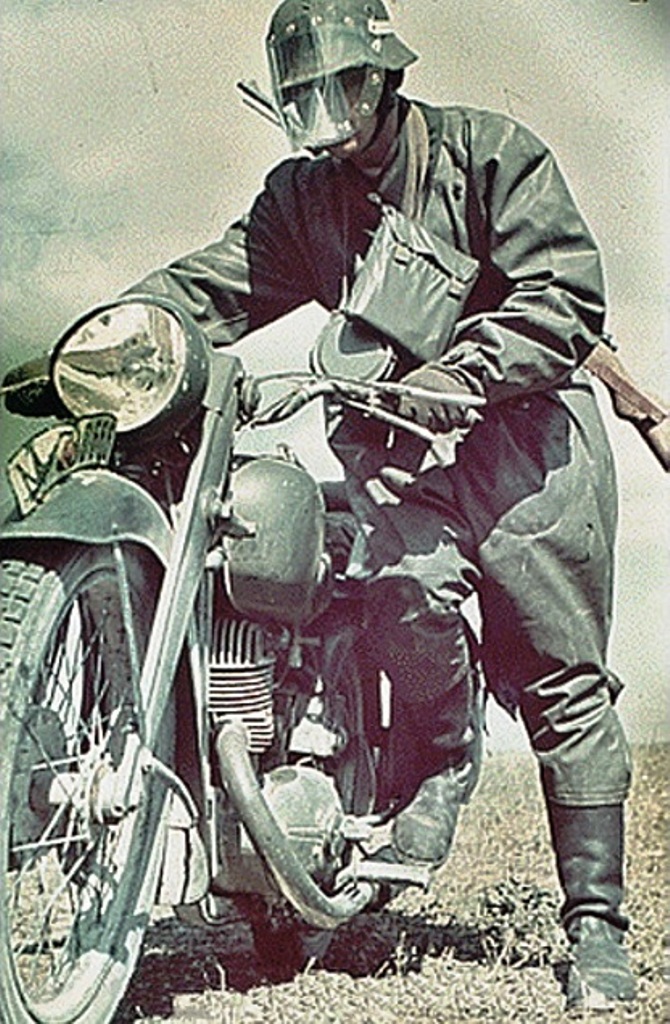
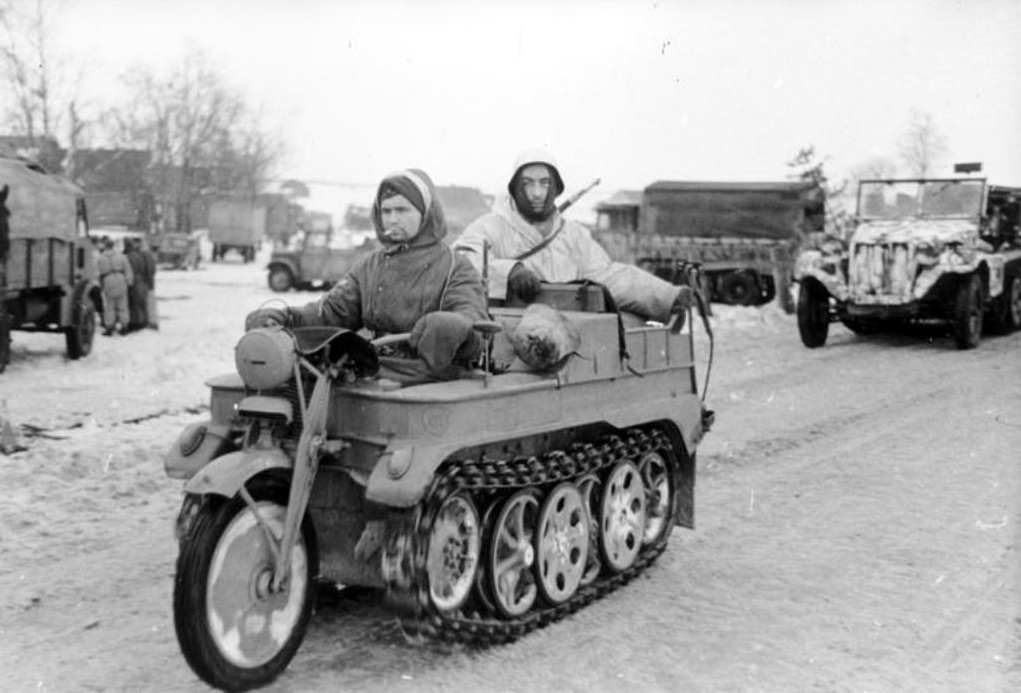
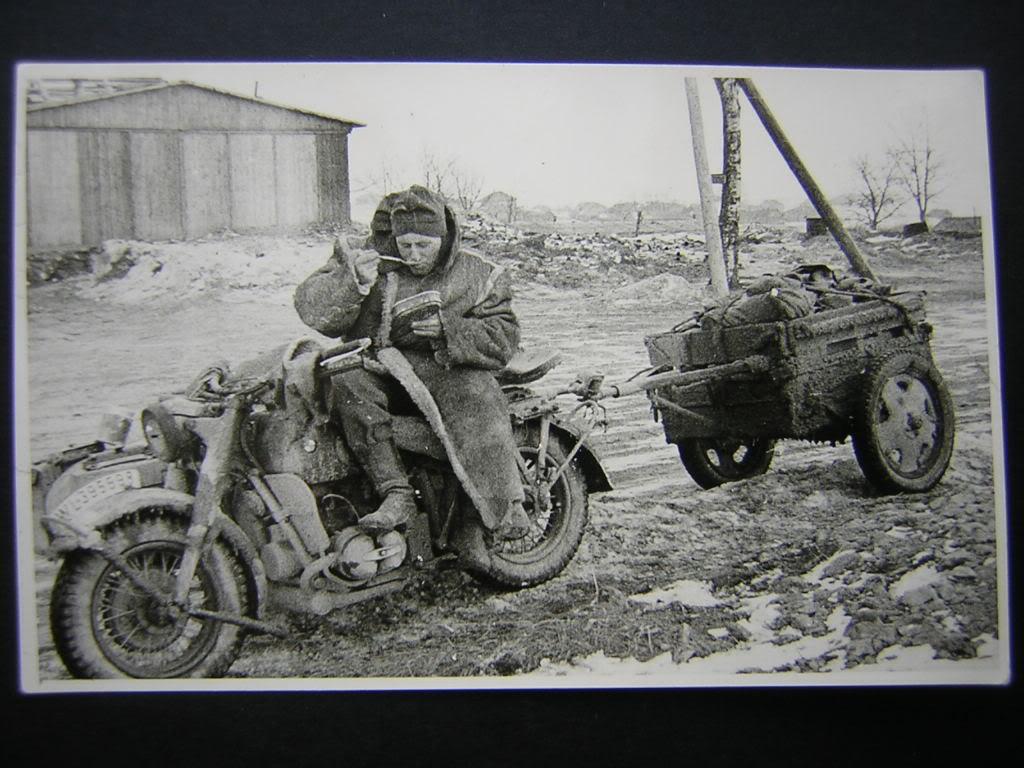
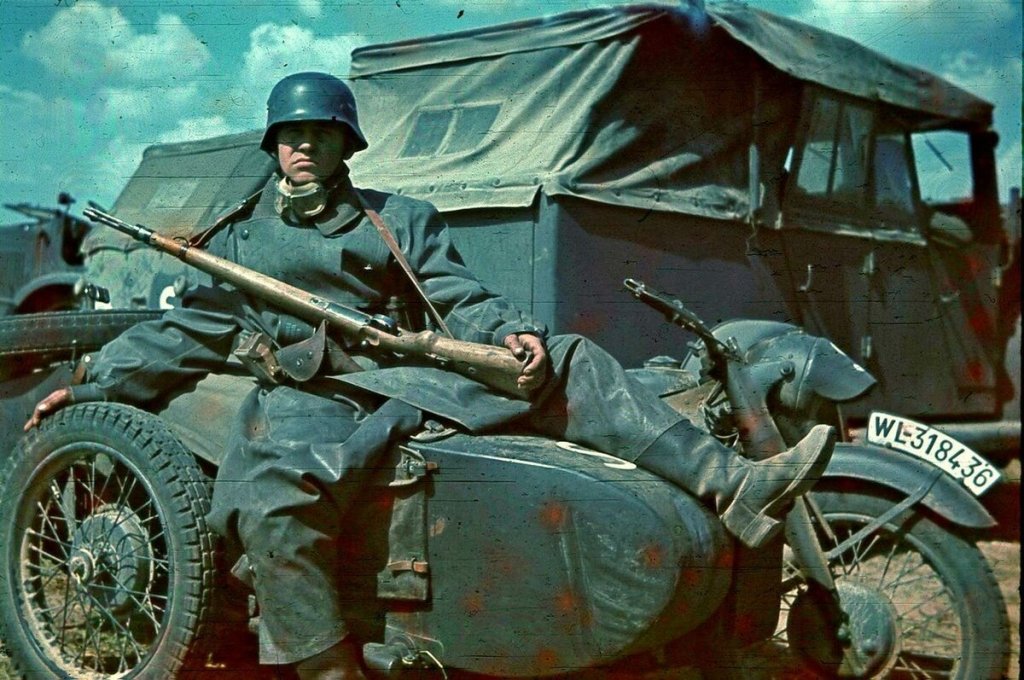
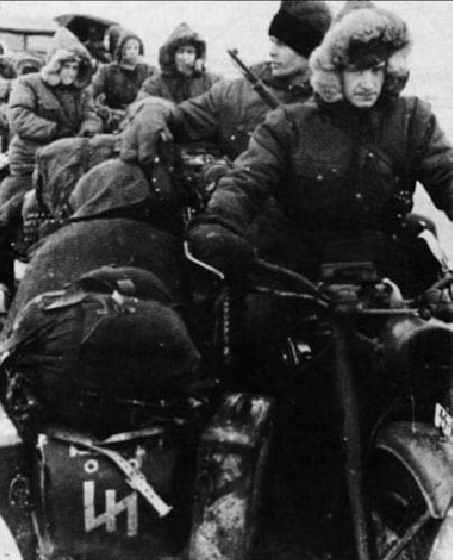
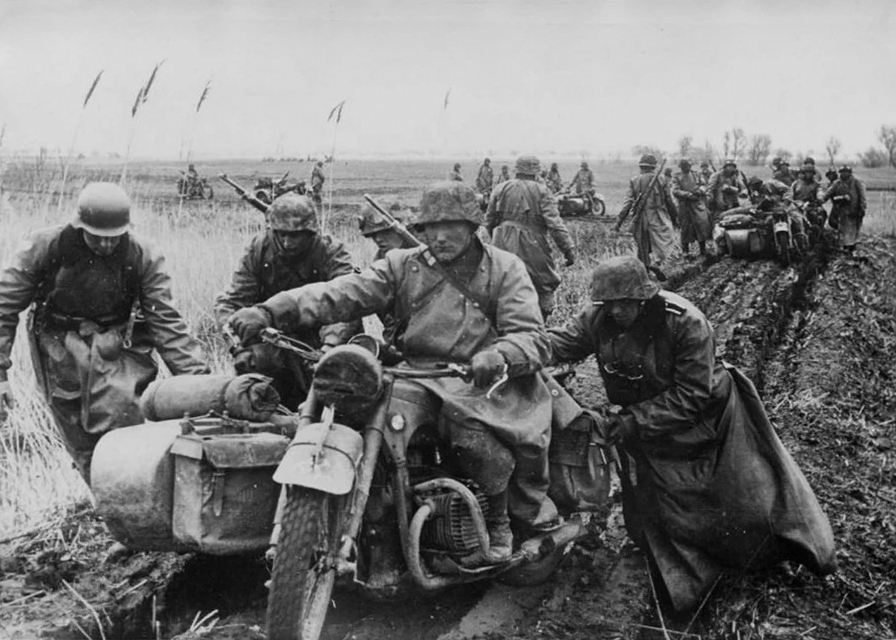
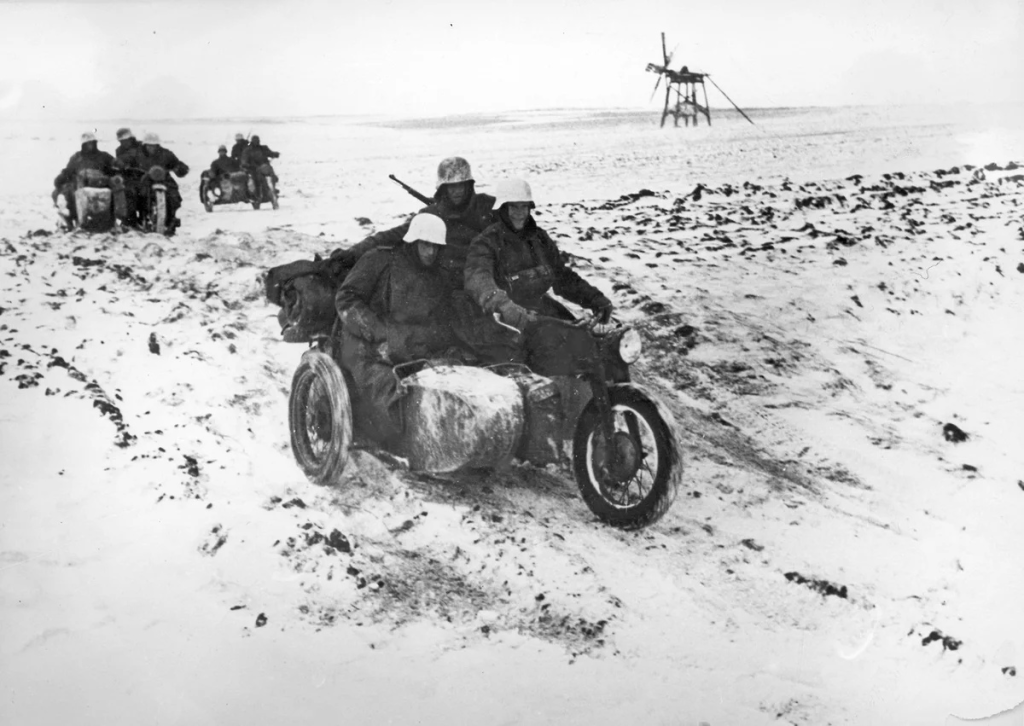
Well wrapped up on the Eastern Front.
1943
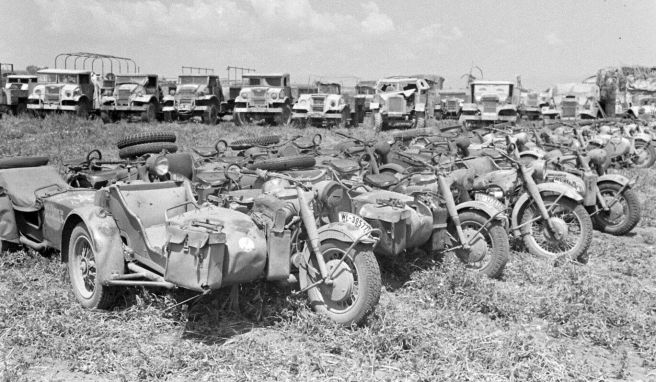
Captured in Tunisia.
On the Russian front.
Yugoslovakia.
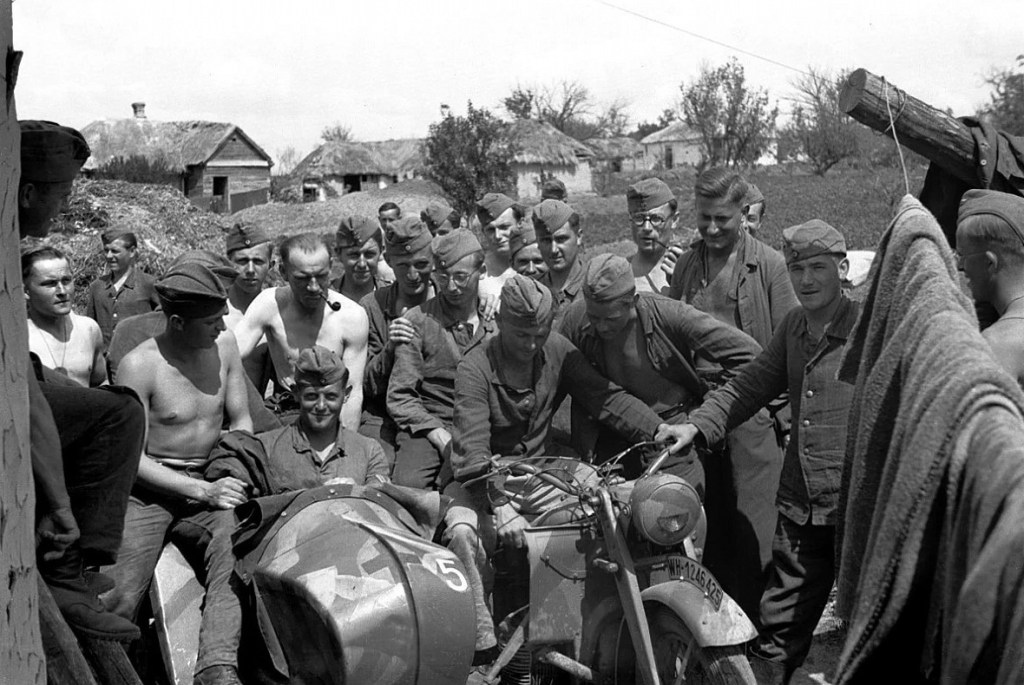
Jerries pose with a captured French Gnome et Rhône AX2 combo, taken from the Russians during the battle of Belgorod.
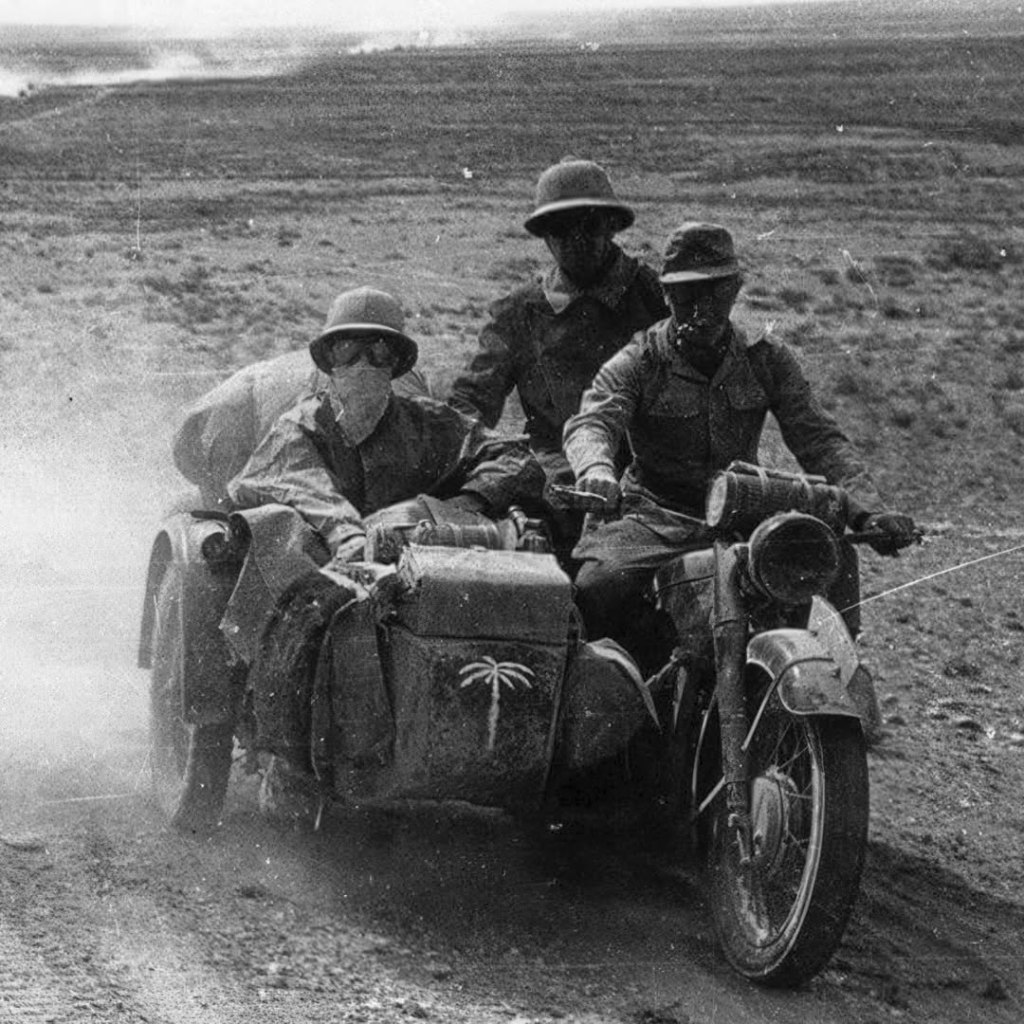
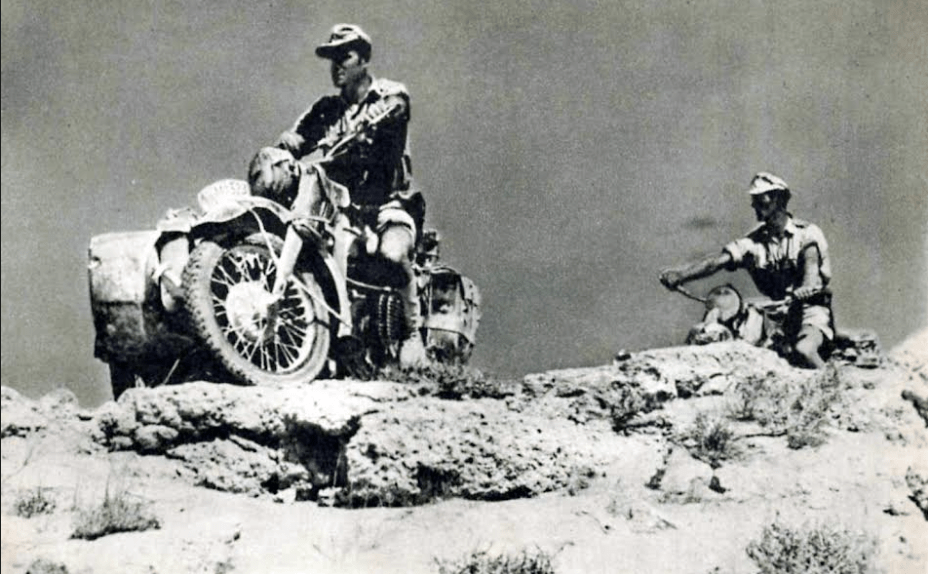
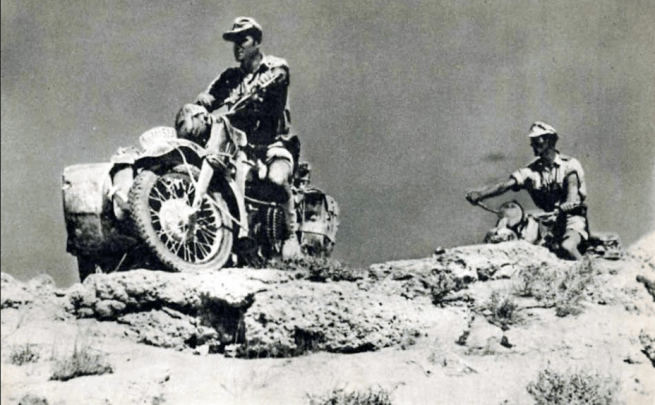
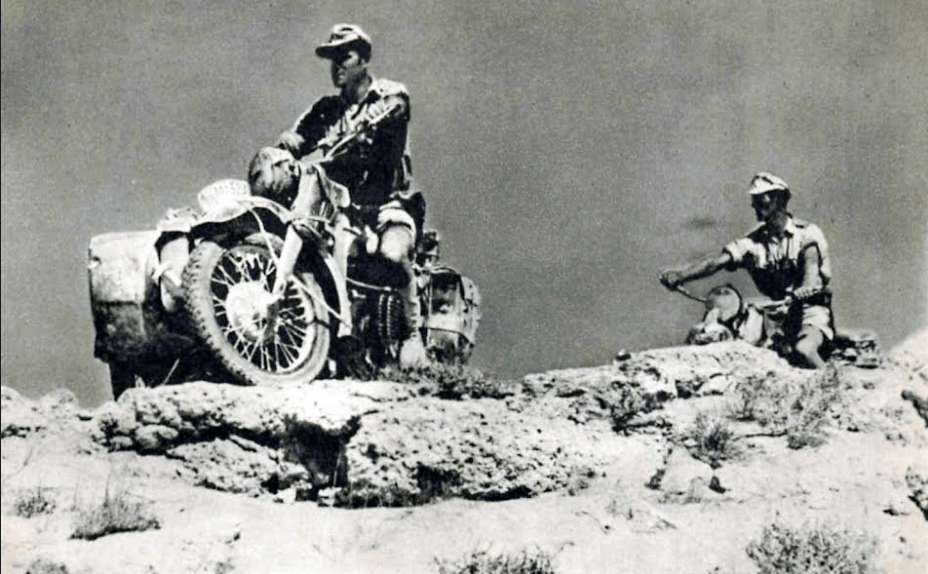
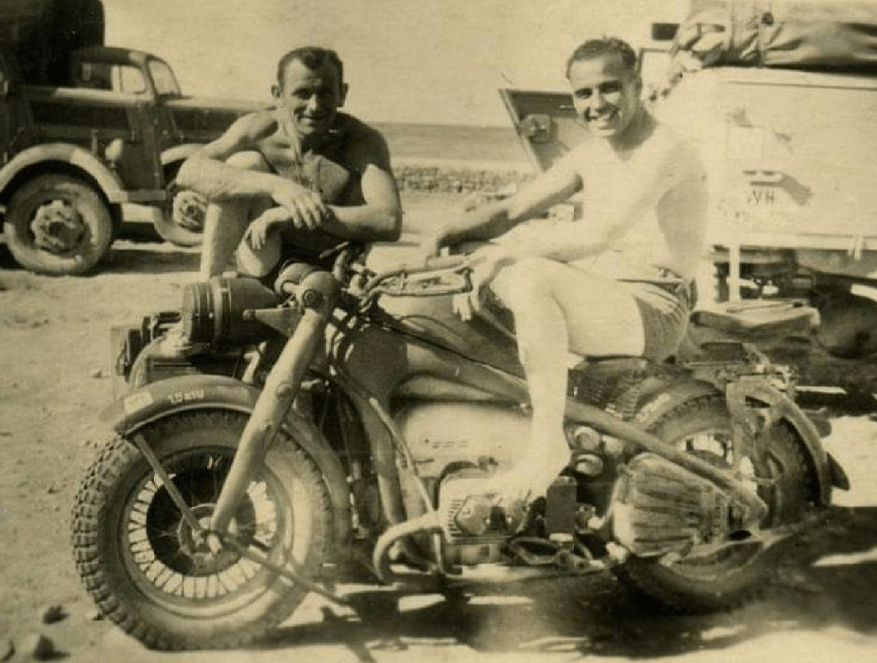
Afrika Korps in southern Tunisia.
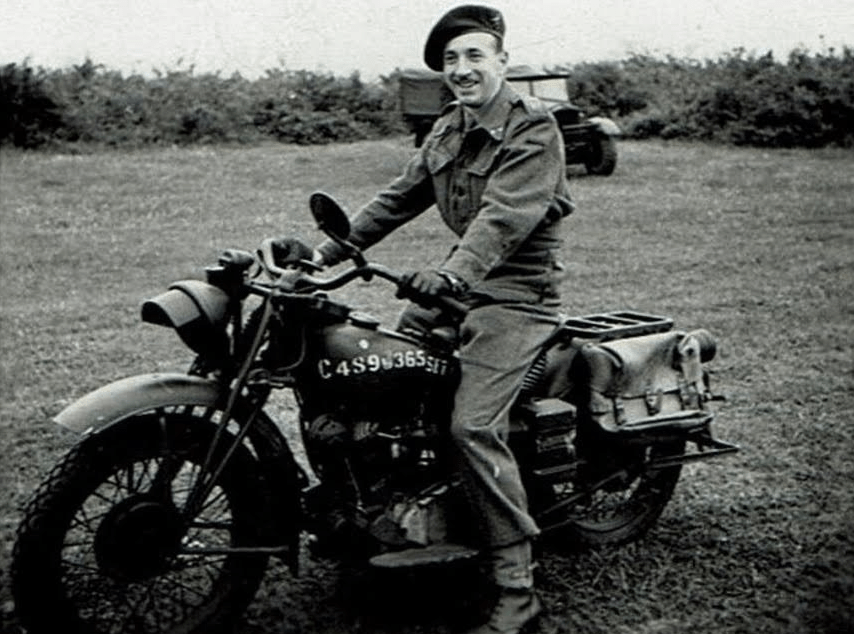
Nice to put names to faces. During training in England Private JW King takes a pigeon message from Corporal J Hanley; both served with the Royal Canadian Corps Of Signals. King’s bike, of course, is a Harley 45.
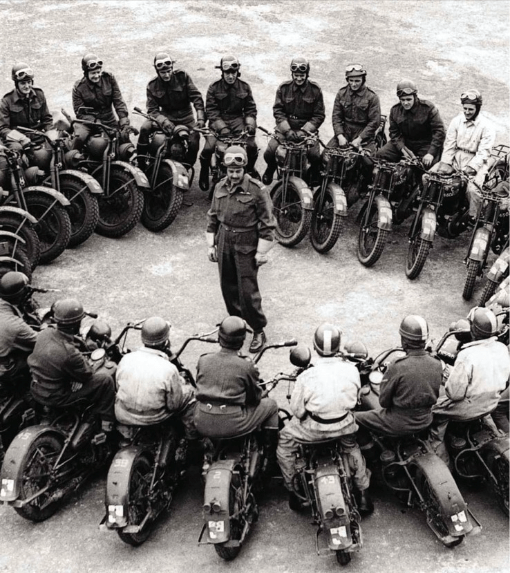
Bikes across the sea: briefing DRs on 45s and M20s.
1944
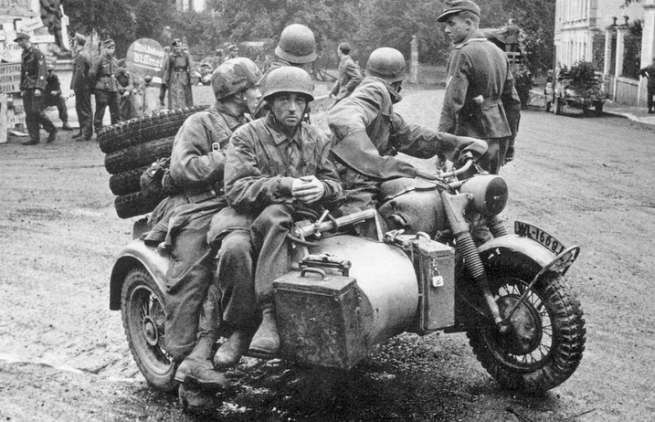
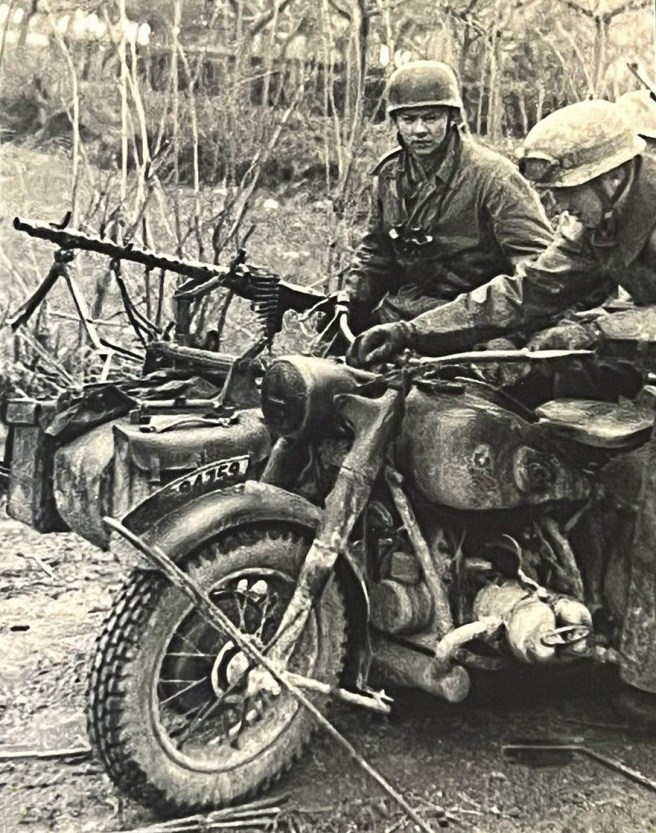
German paras on a heavily laden BMW outfit.
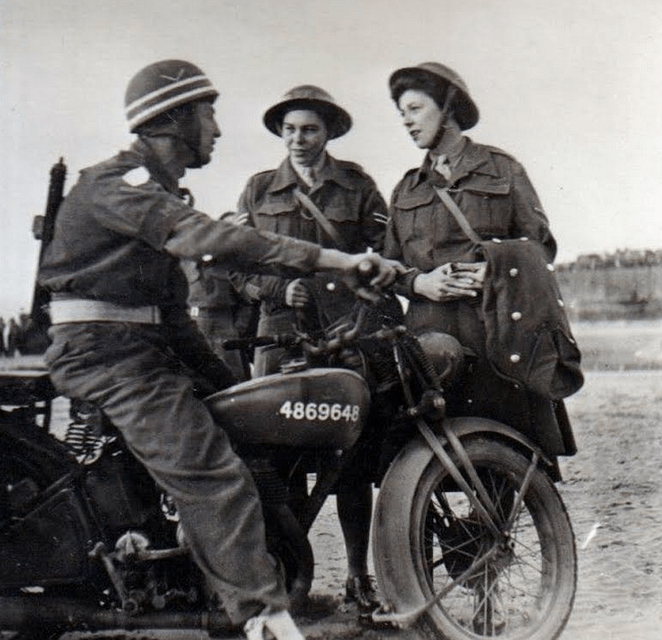
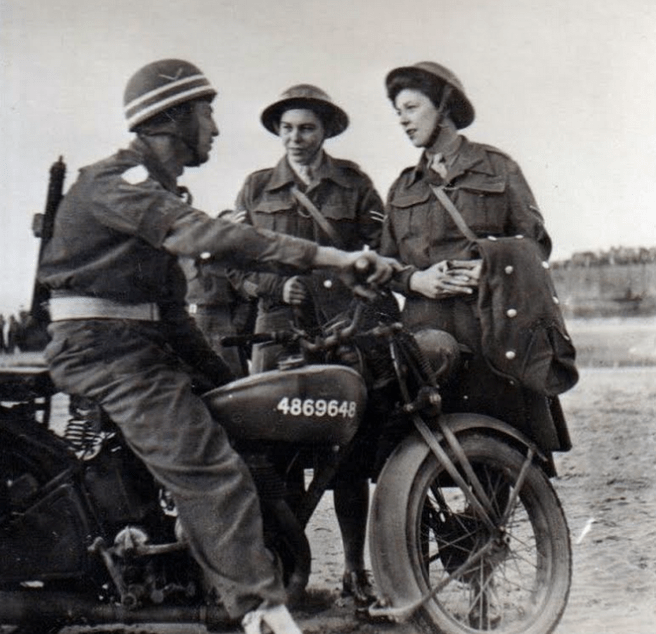
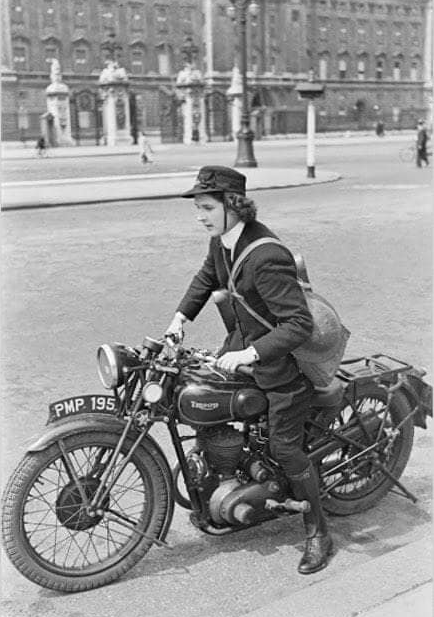
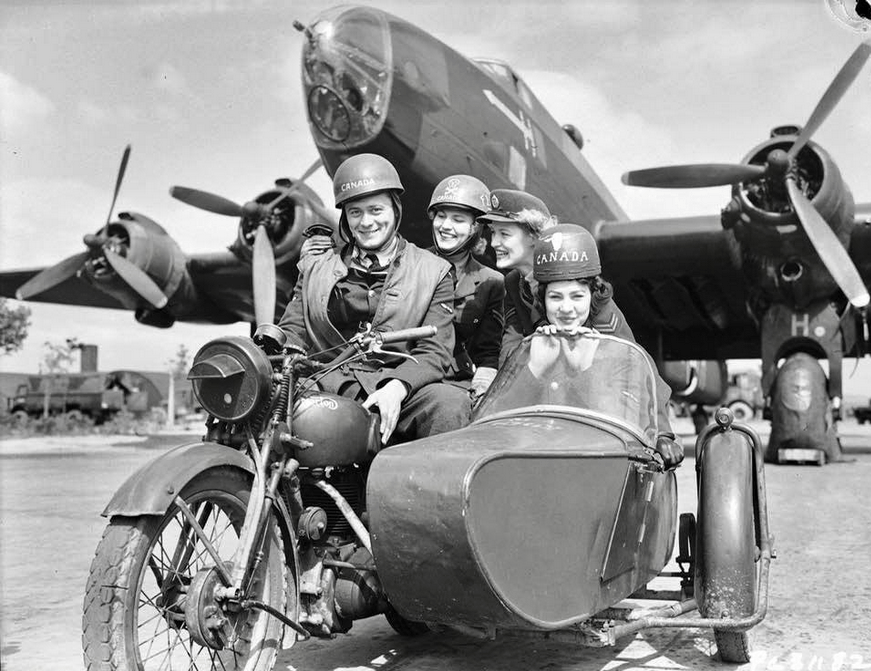
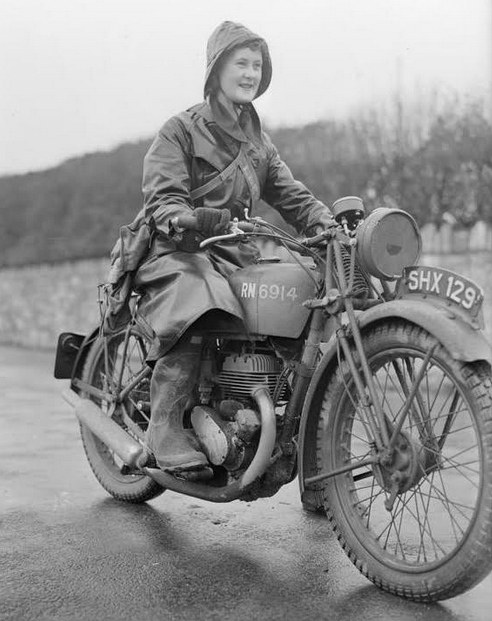
The ATS in Normandy.
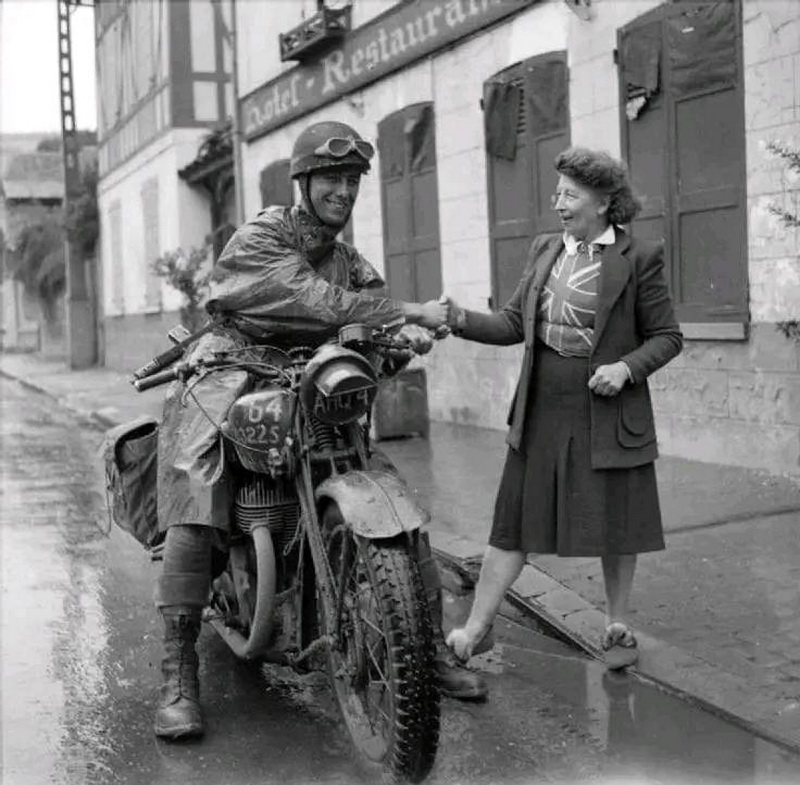
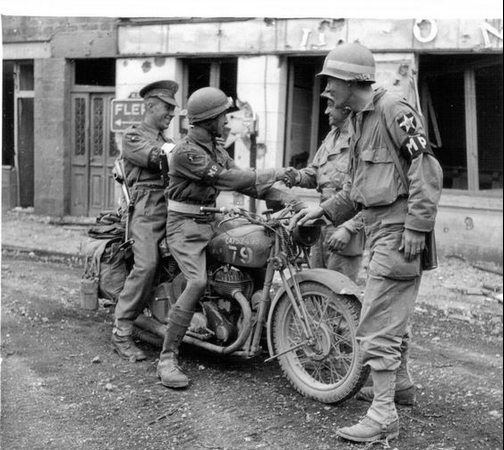
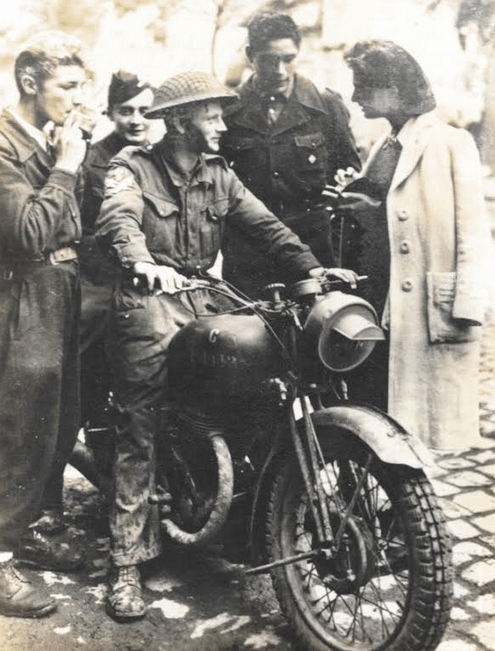
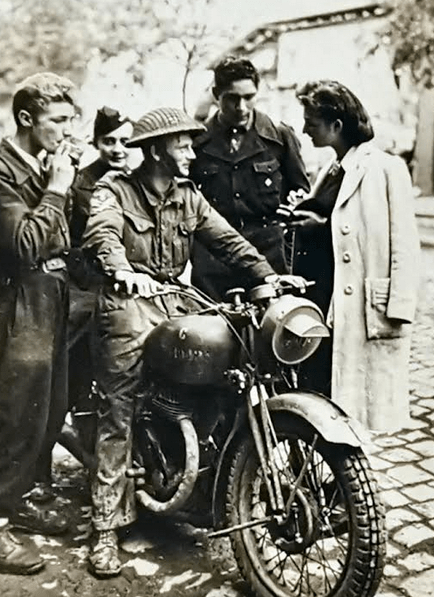
“A motorcycle despatch rider greets Madame Scarlette an Englishwoman who runs the Hotel des Fleurs in the village of Les Andelys (France), 31 August 1944.”
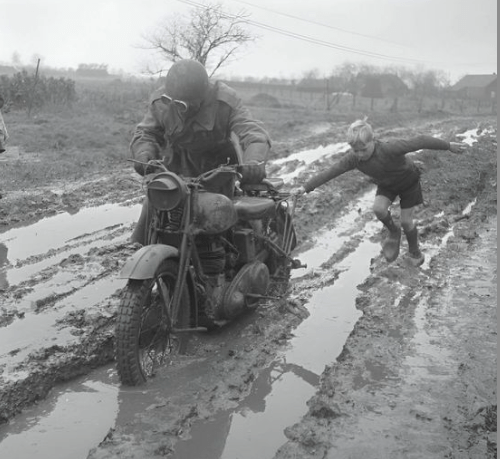
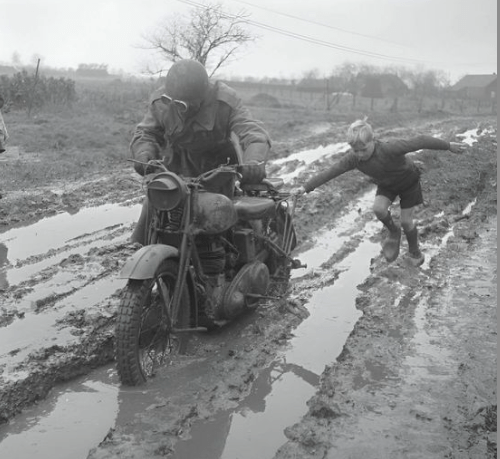
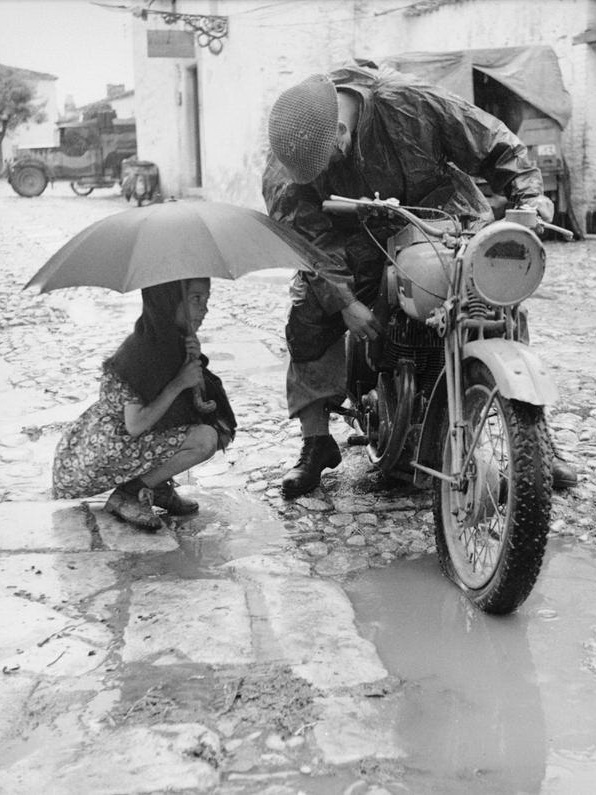
A Dutch nipper does his bit to keep a Don R on in the move.
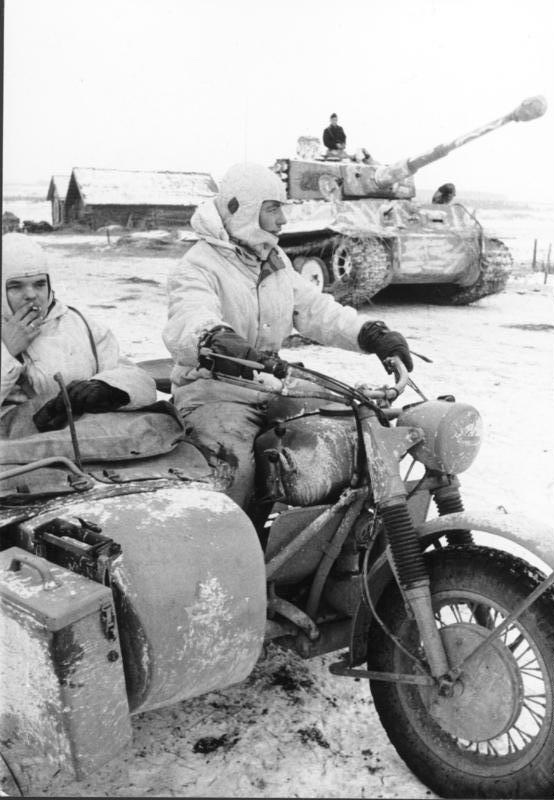
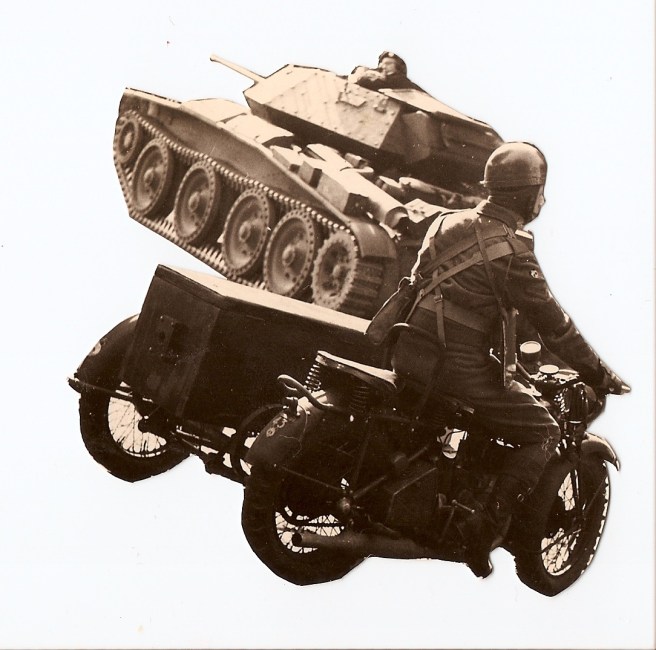
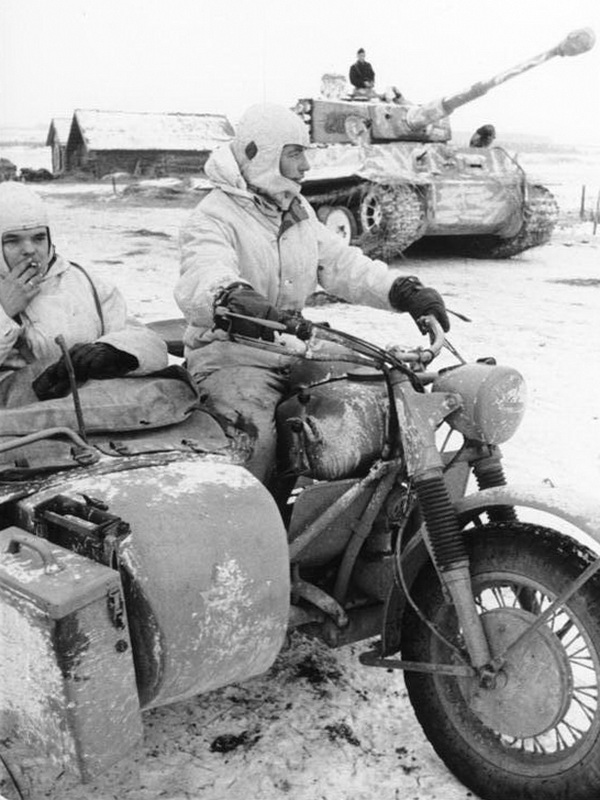
March, somewhere in Russia, a Wermacht Beemer combo and a Tiger.
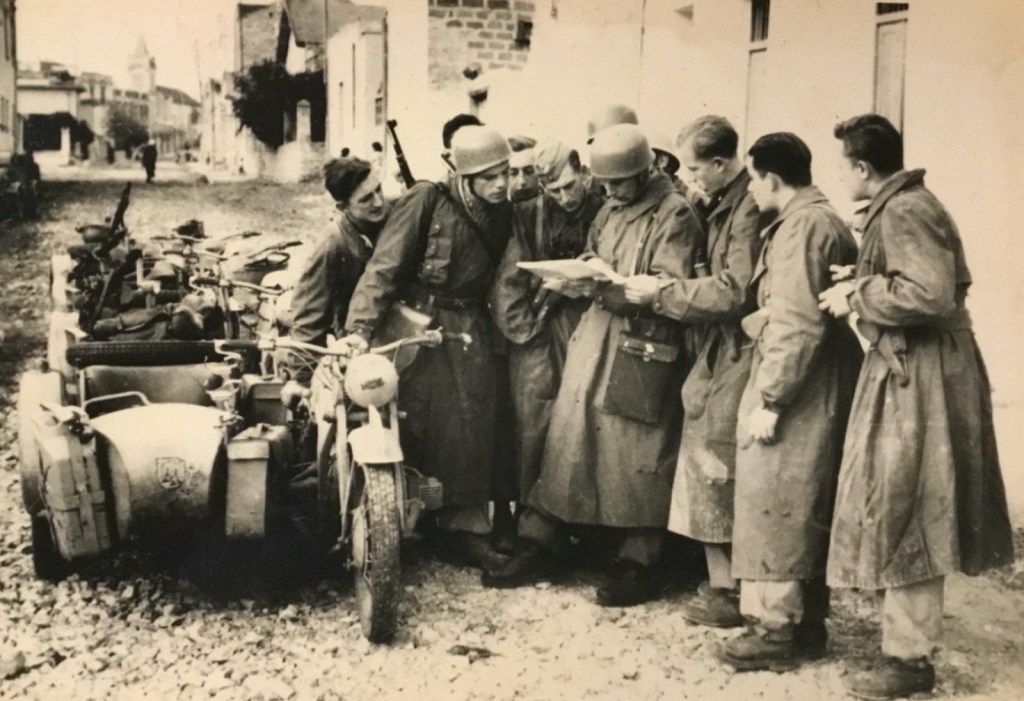
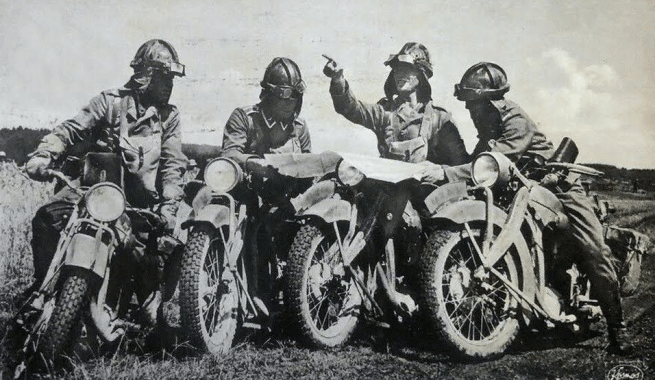
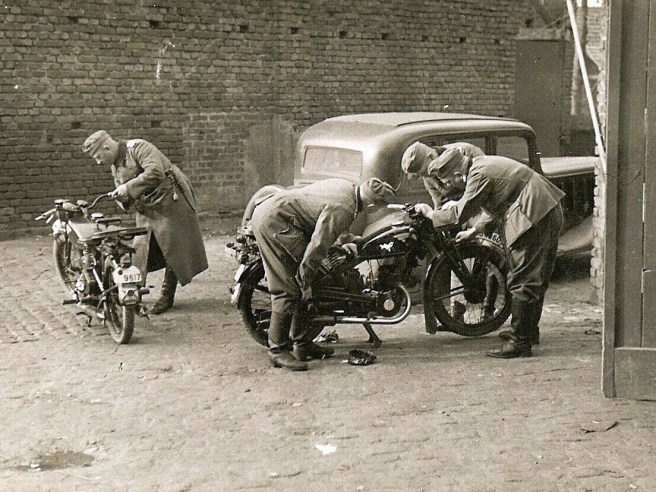
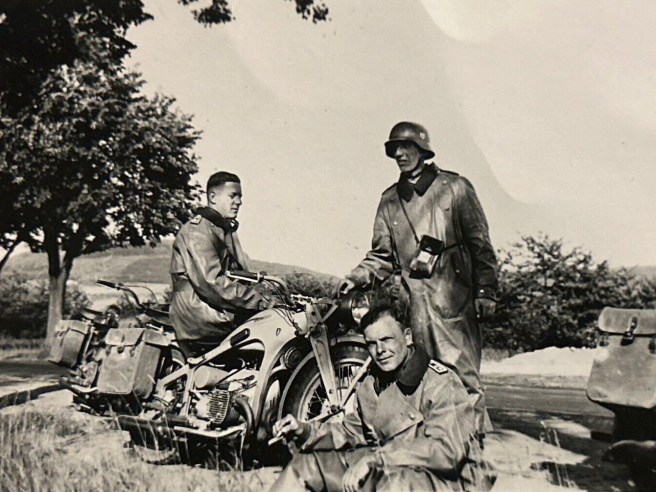
Wermacht DRs compare notes.
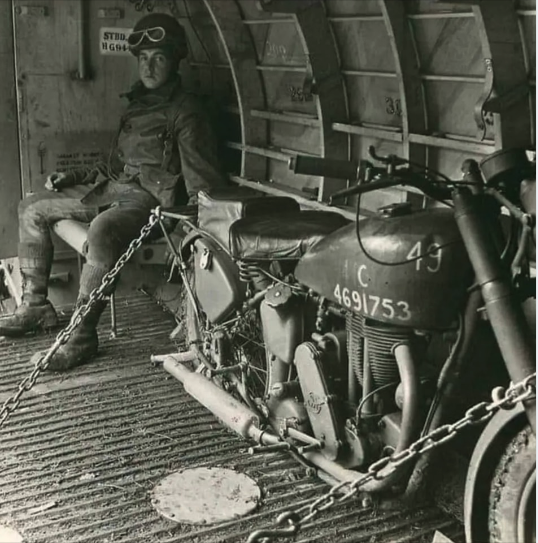
June—a 249 Company Royal Engineers Don R and his G3L aboard a glider en route to France.
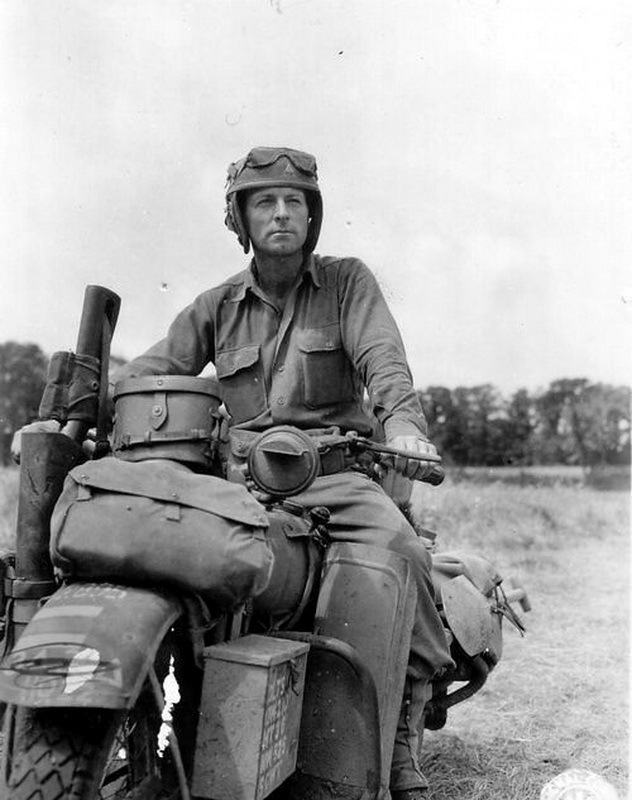
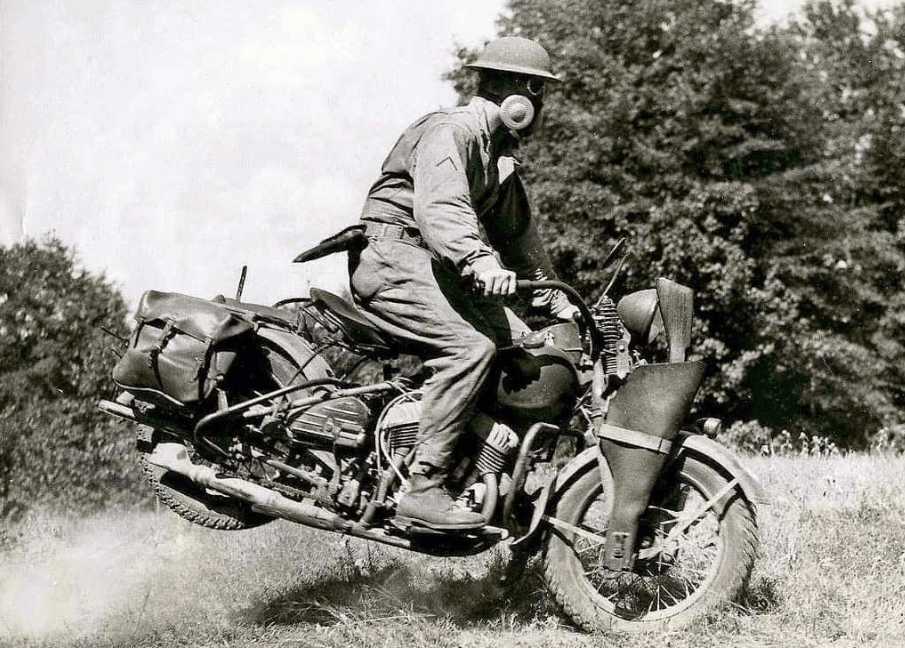
Somewhere in France, a US Army 3rd Division DR with a well-laden Harley 45 WLA.
Carpiquet, 6km west of Caen, Sgt/Mjr RM Cooper of the 9th Canadian Brigade.
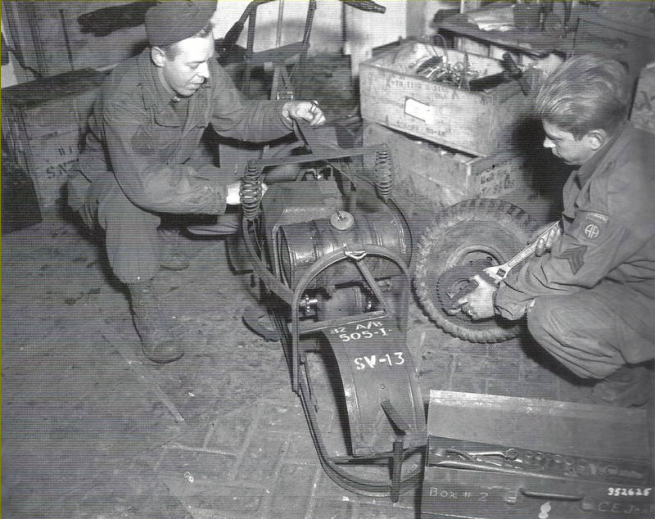
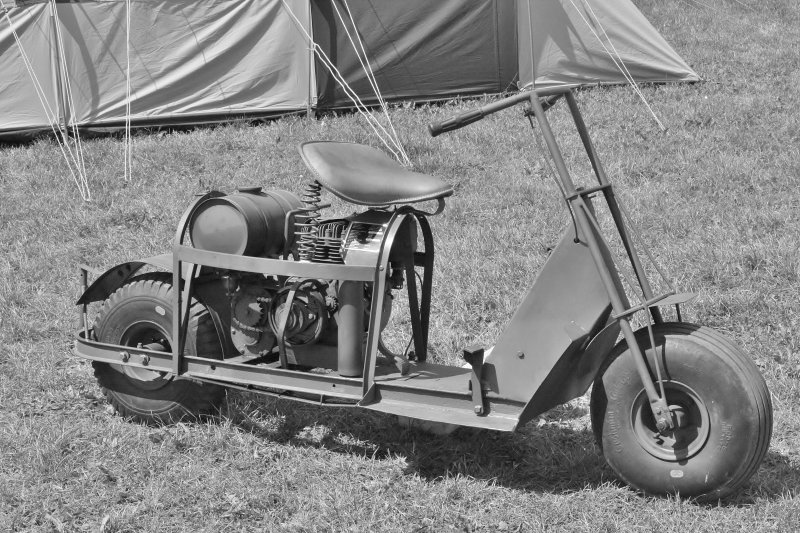
The US forces used Cushman scooters.
Also near Caen, DRs of the Cameron Highlanders of Ottowa.
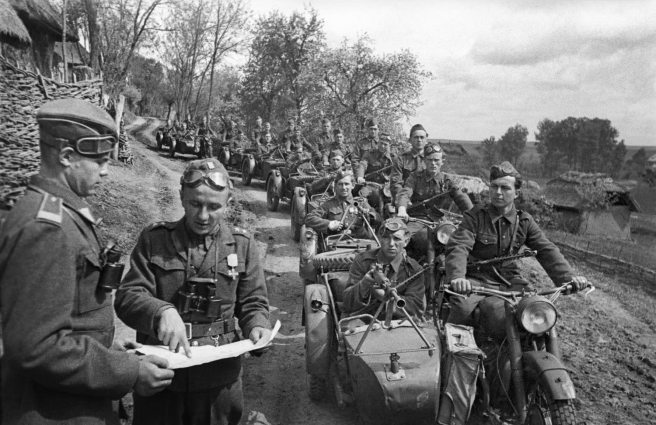
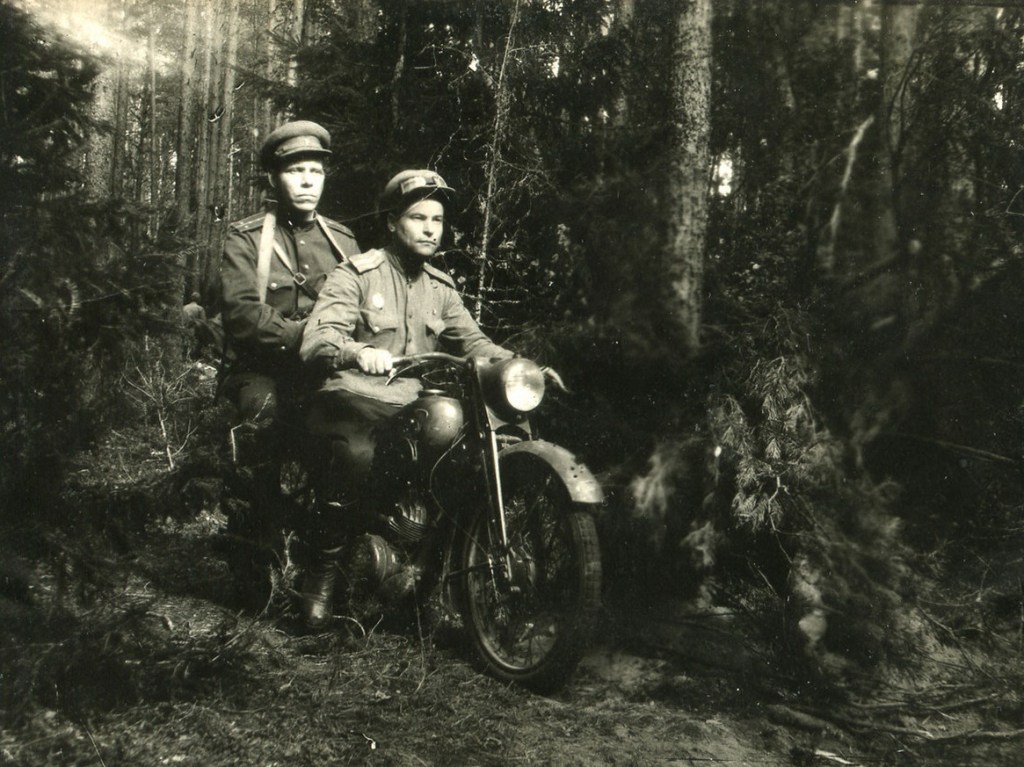
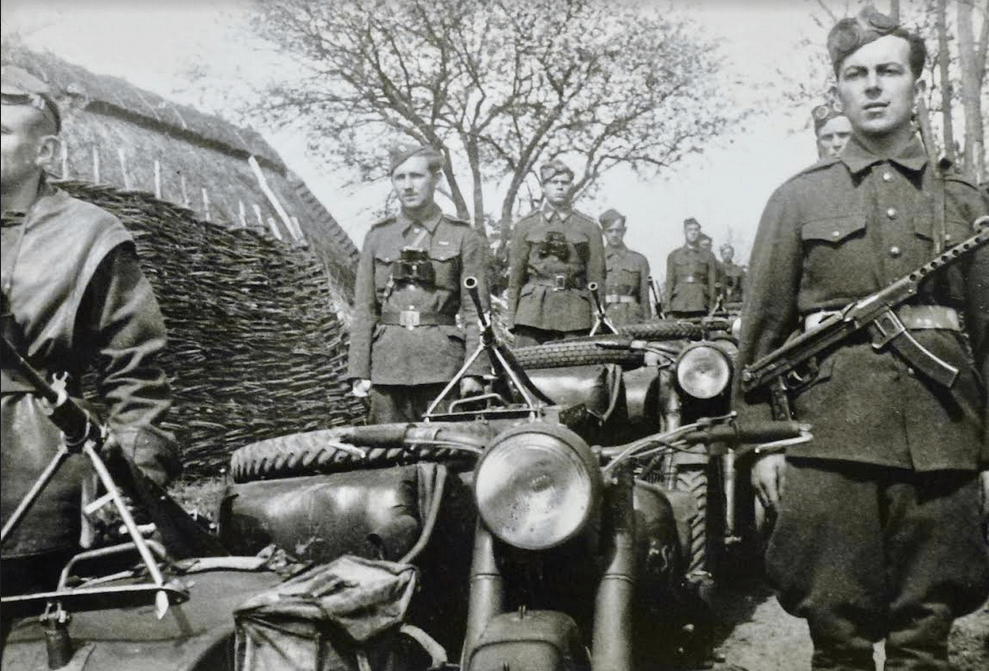
A patrol of the 1st Czechoslovak Corps on Soviet M-72 combos on a village street in the Carpathian Mountains.
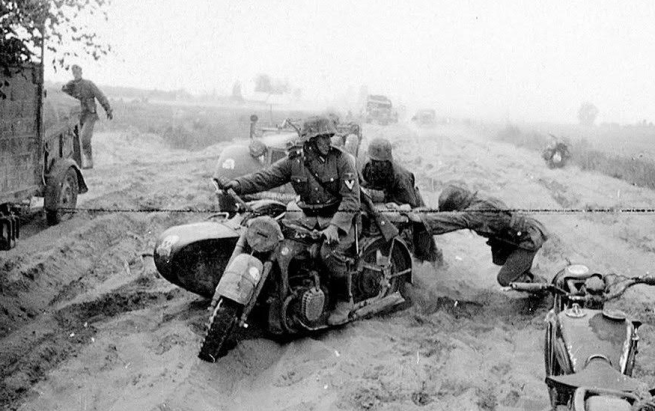
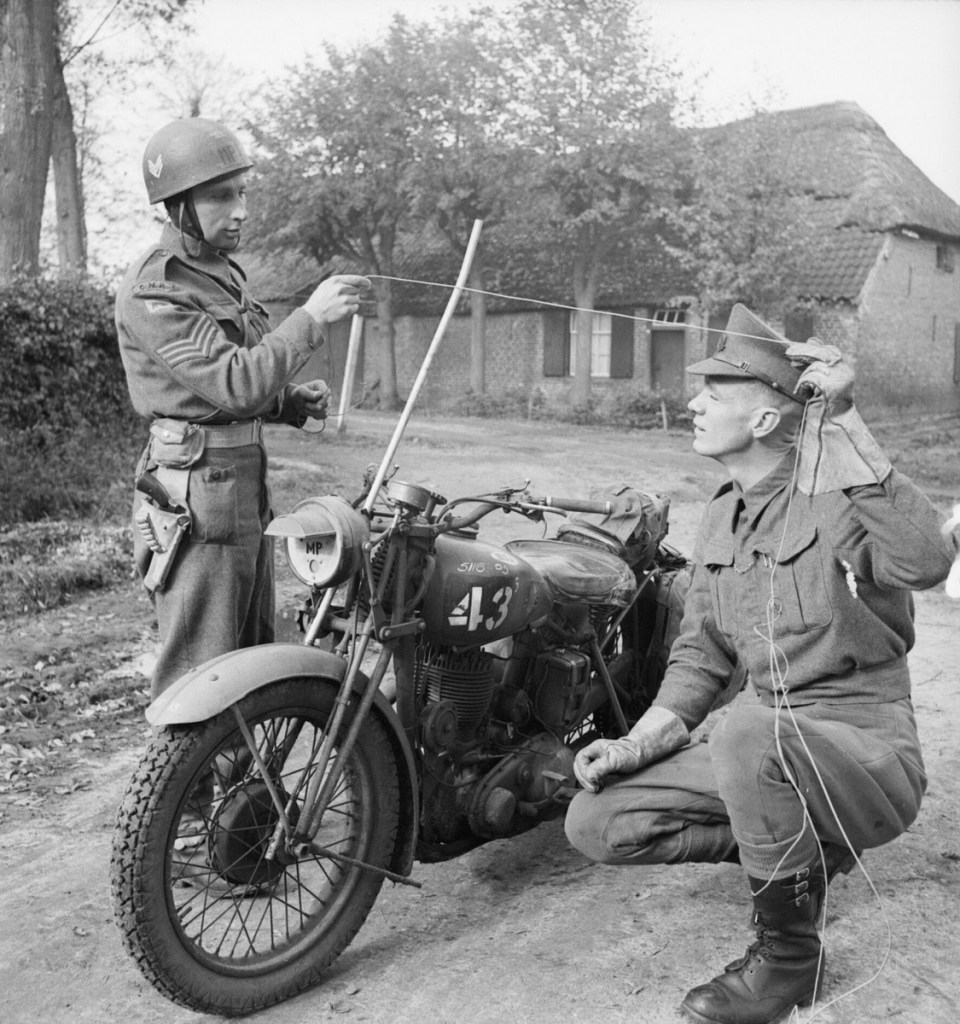
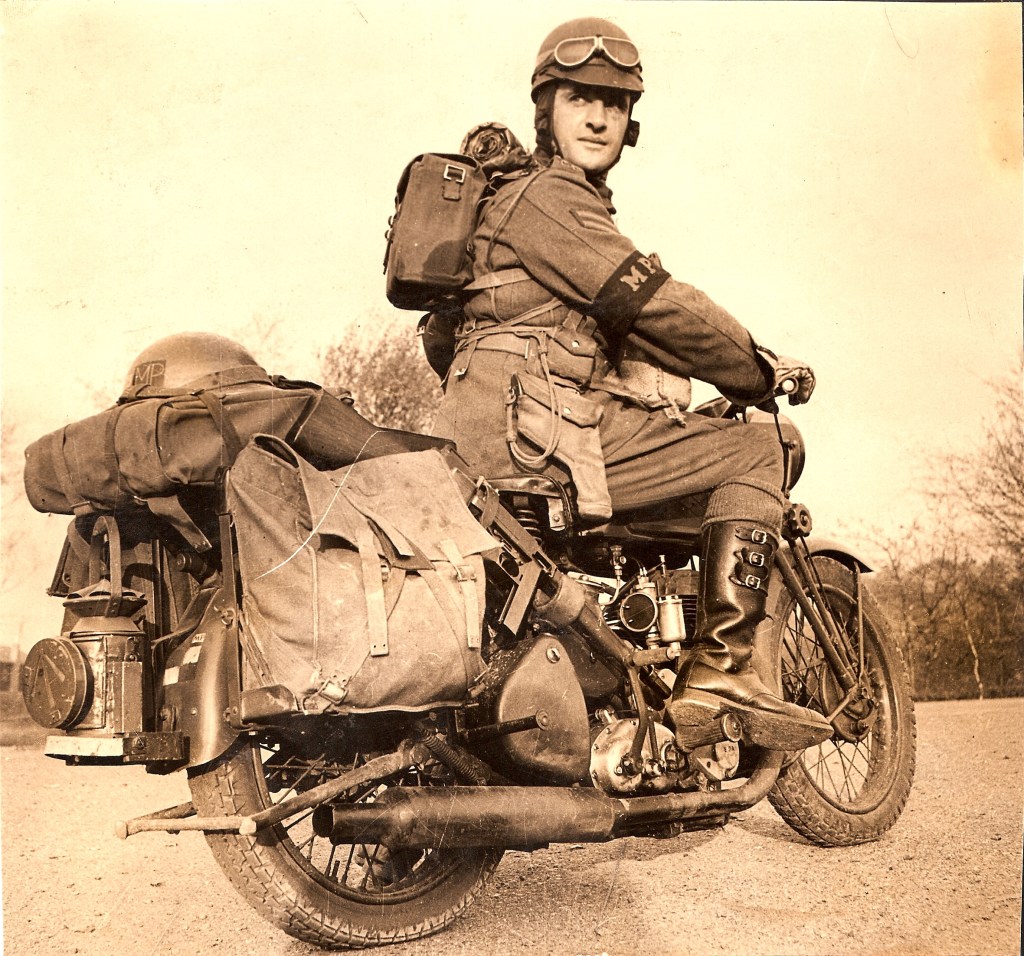
“Military Police motorcyclists demonstrate how a metal rod fitted to a motorcycle can prevent the rider from being killed by a wire stretched across the road.”
1945
A Canadian para in Germany.
Kranenburg.
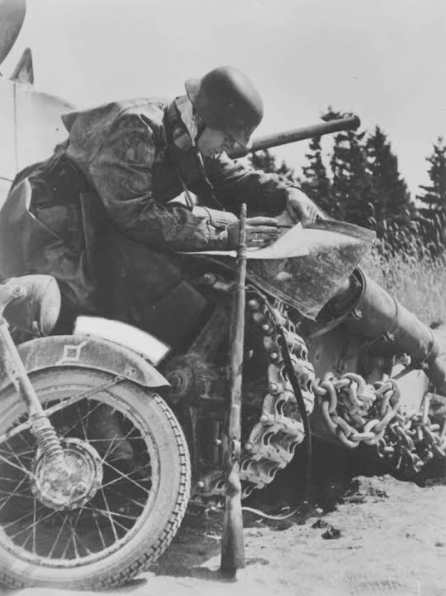
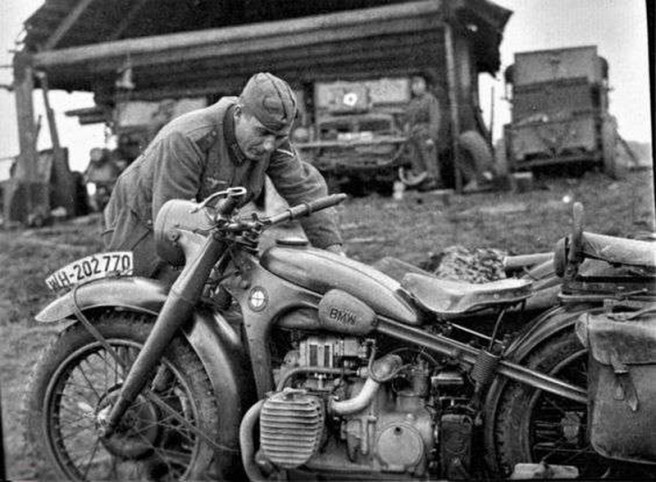
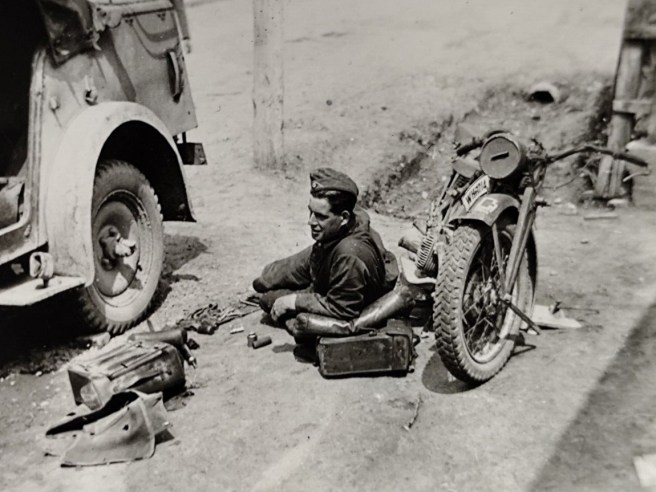
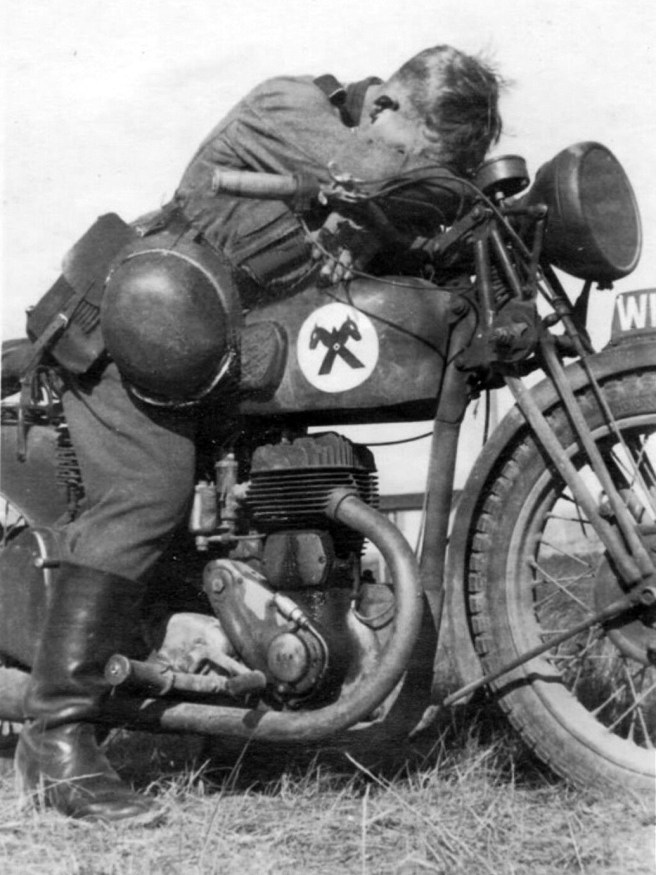
Reichswald: a DR checks his forks.
Undated
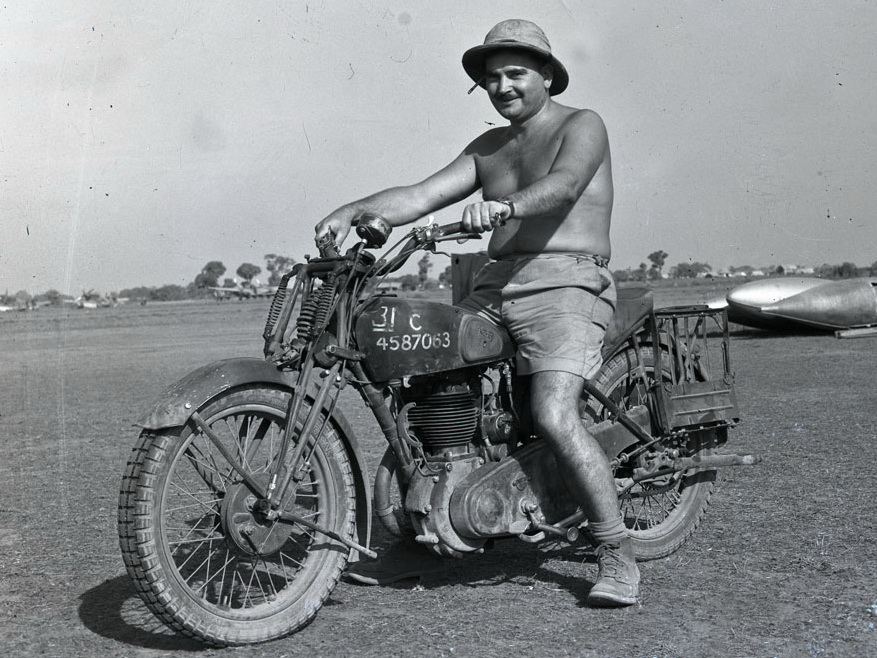
This happy chap from the 40th Photo Reconnaiscence Squadron enjoying a 16H salvaged from a British dump on Akyab Island, Burma.
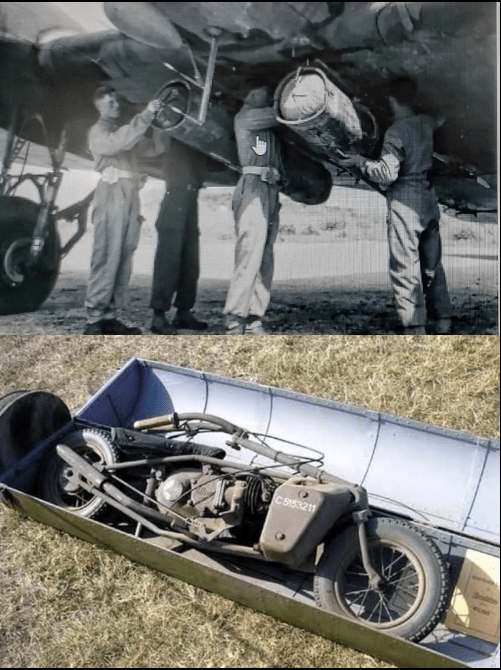
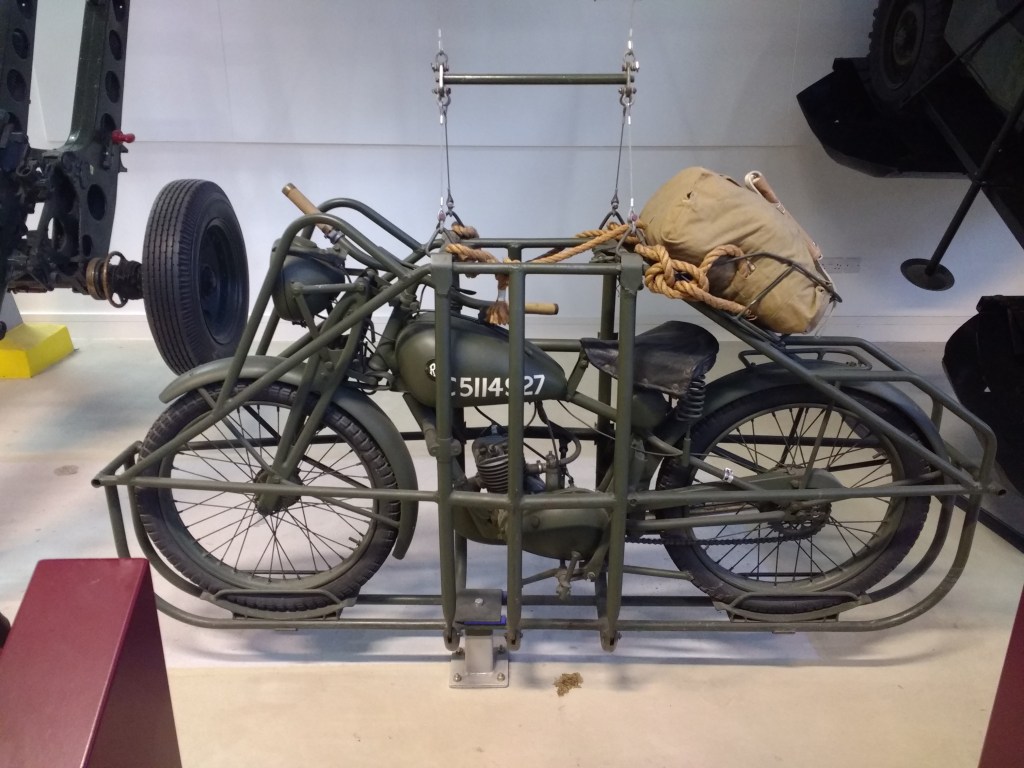
The 98cc Welbike was designed to be dropped with paratroops; there’s some interesting film of a para unpacking and starting a Welbike on Youtube.
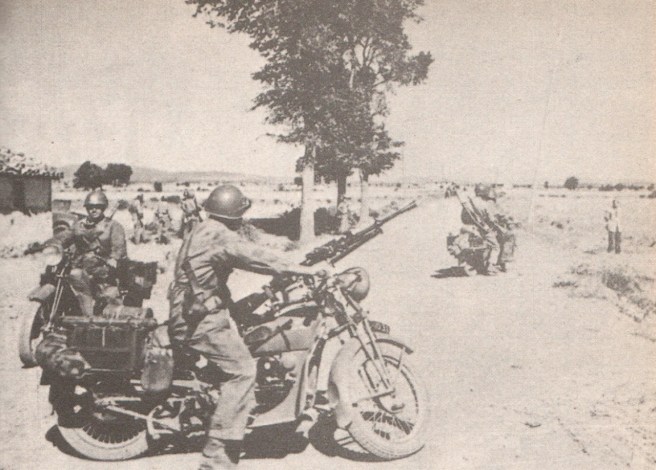
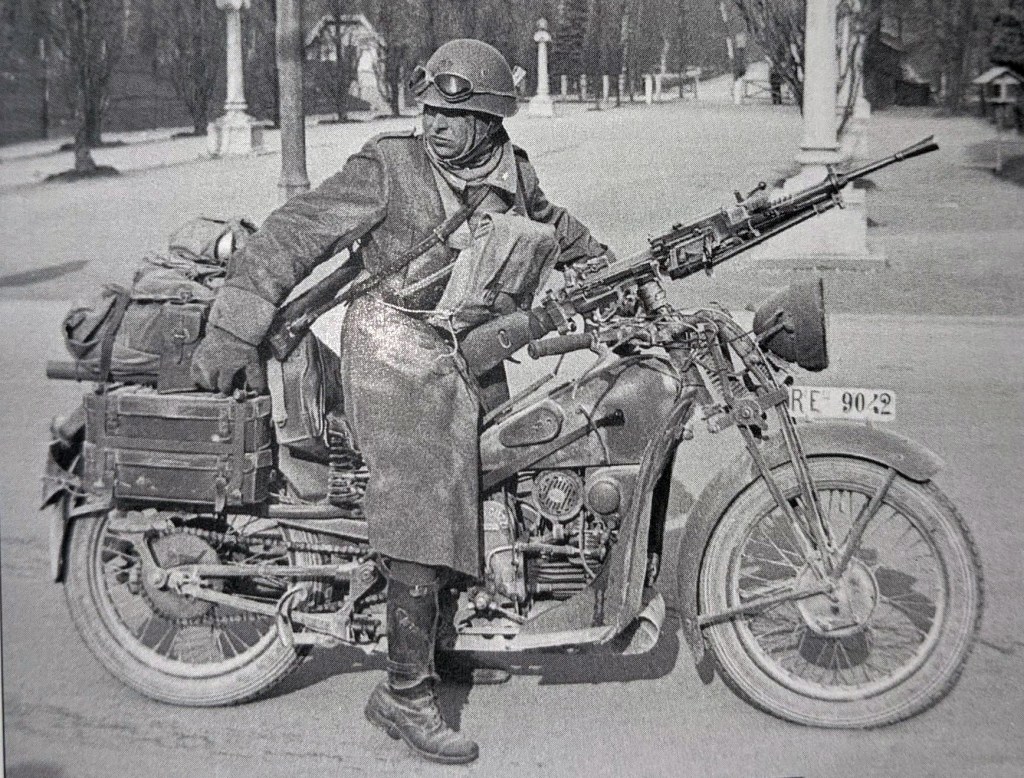
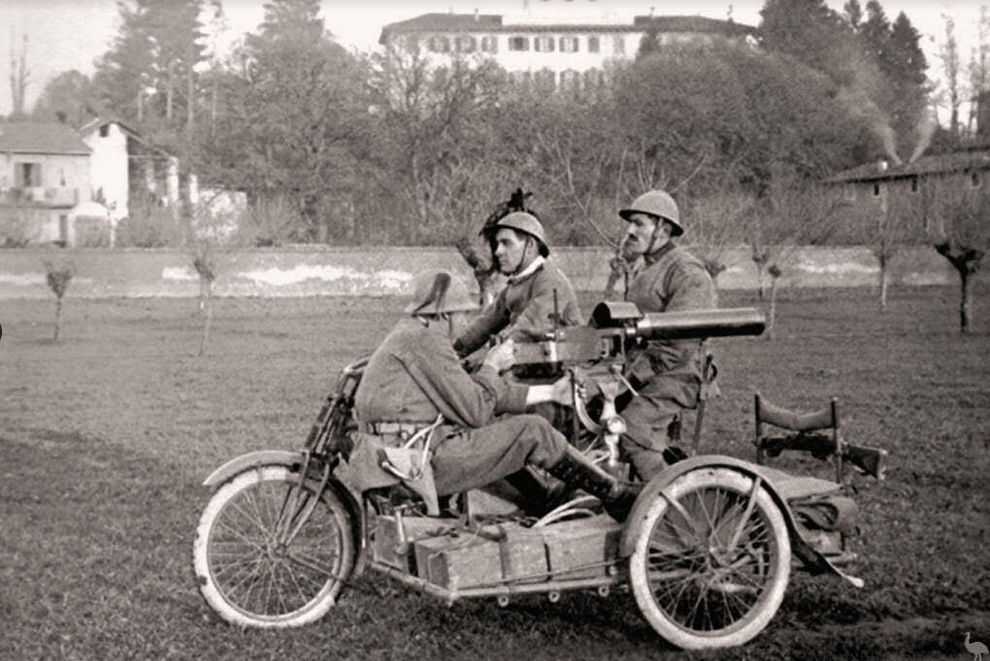
I wonder what happened if that Guzzi rider fired his Breda MG on the move?
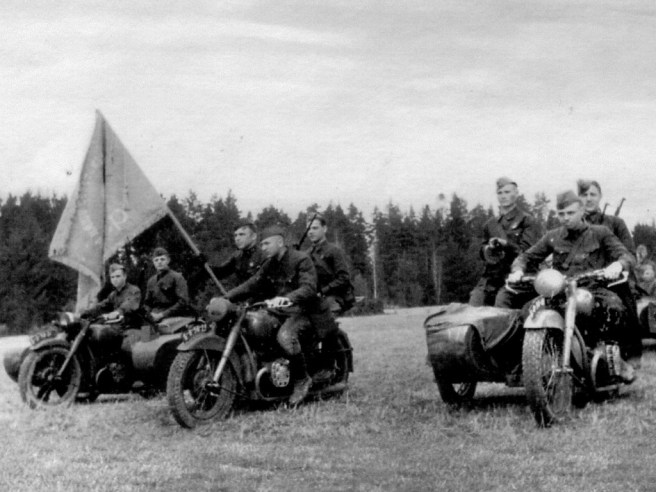
A nice propaganda shot of the Red Army flying the red flag.
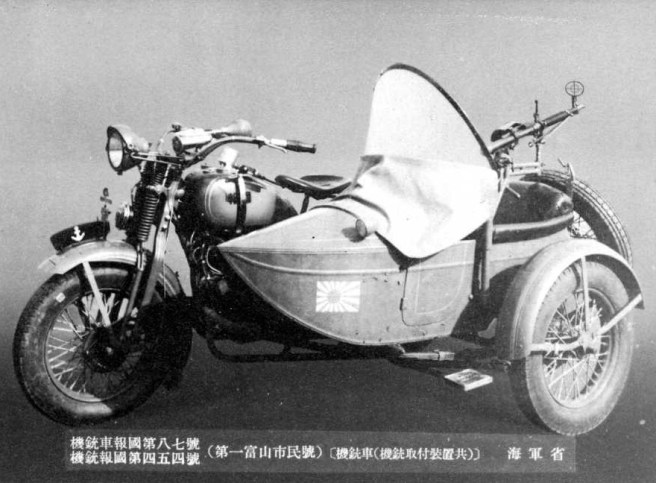
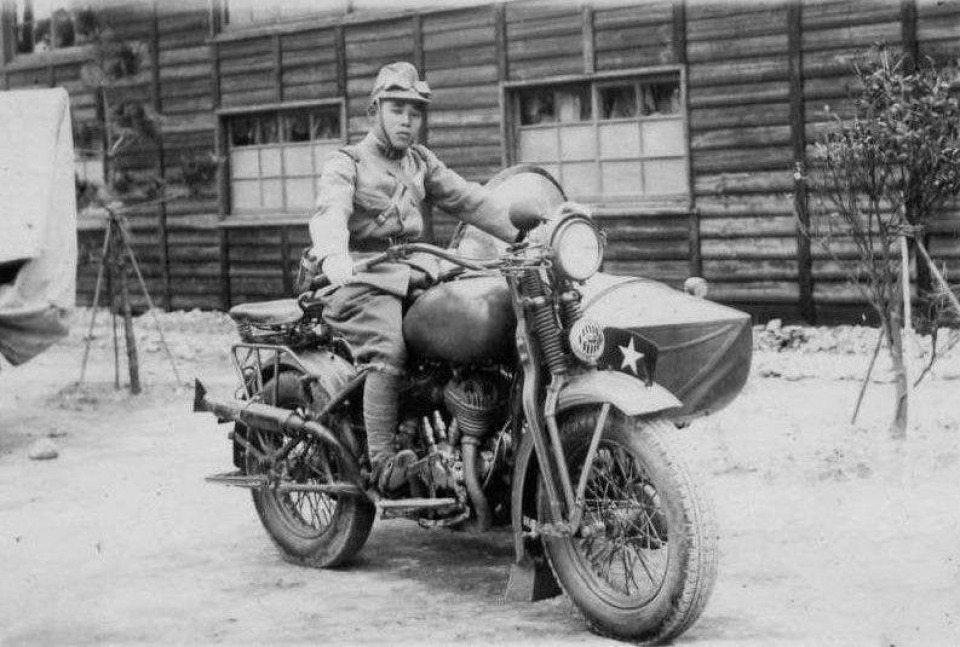
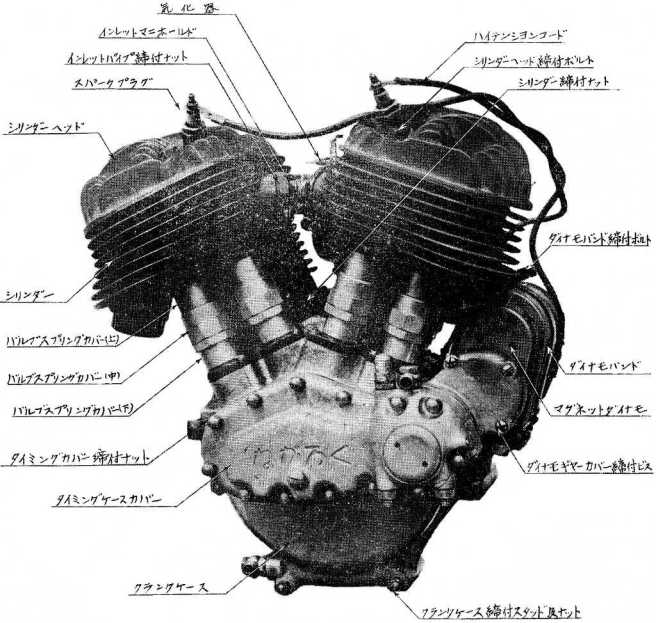
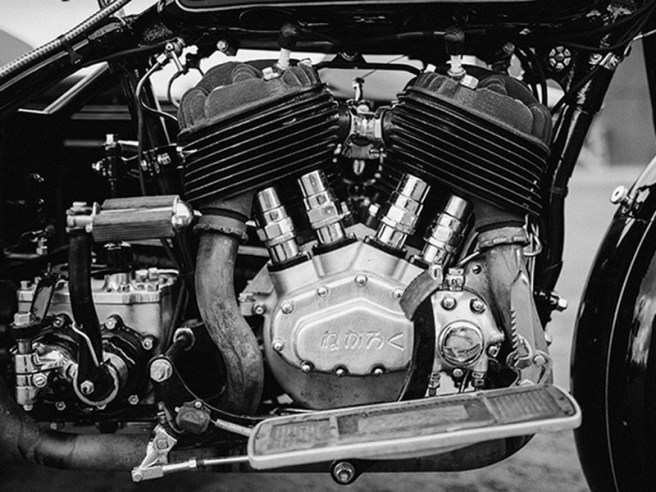
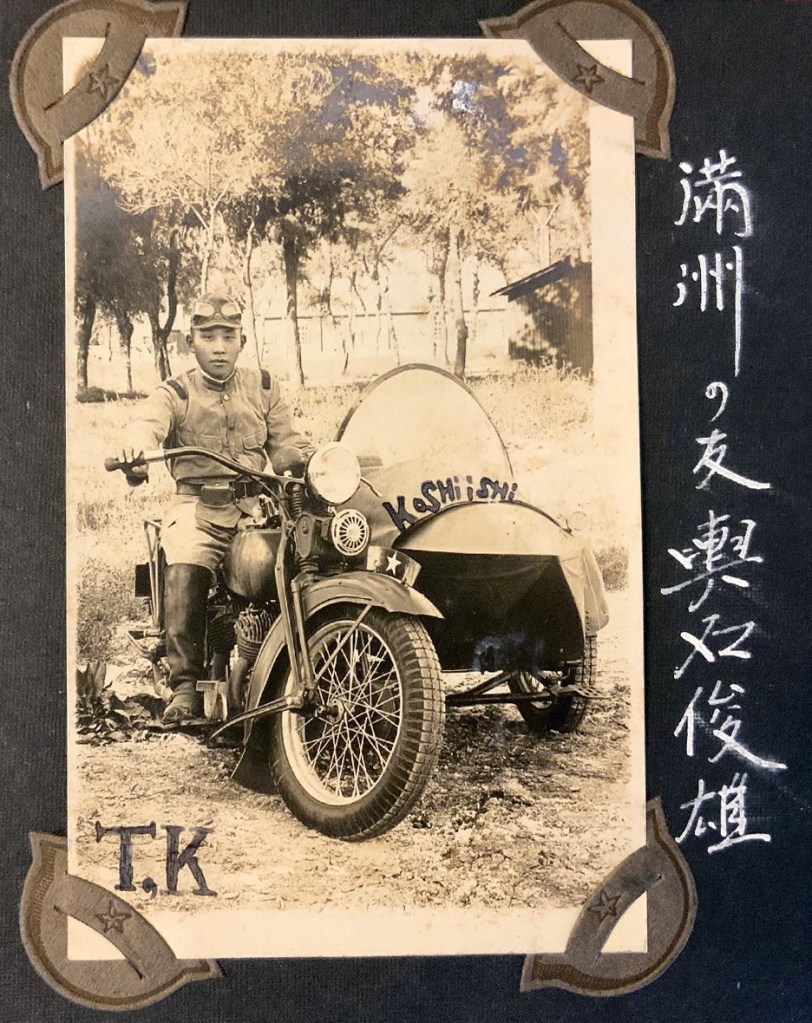
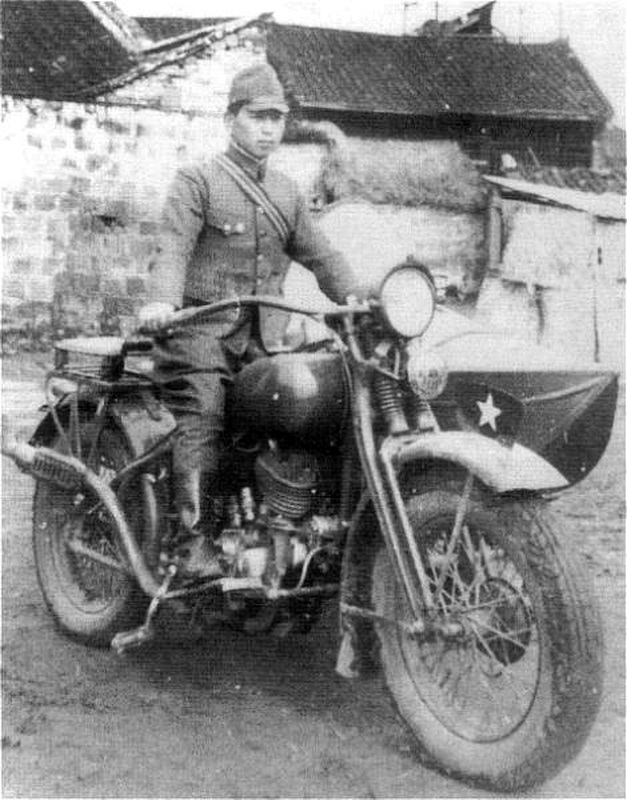
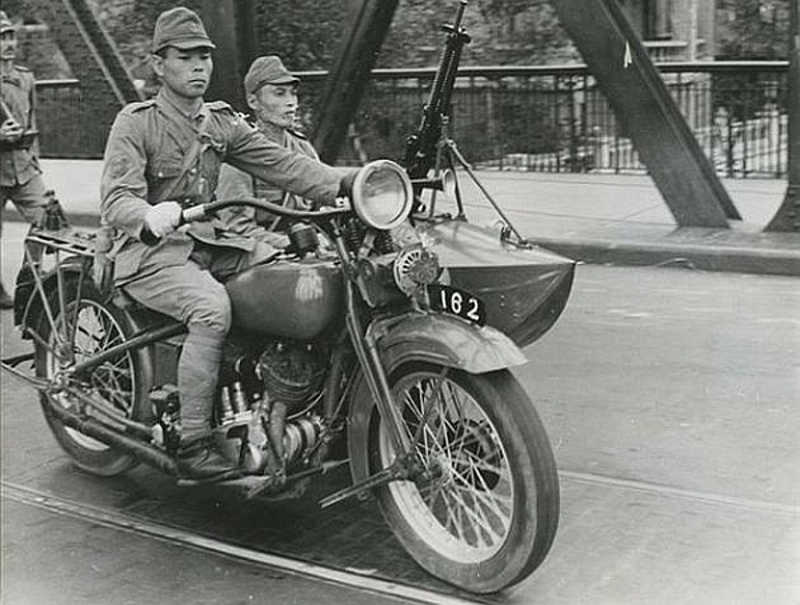
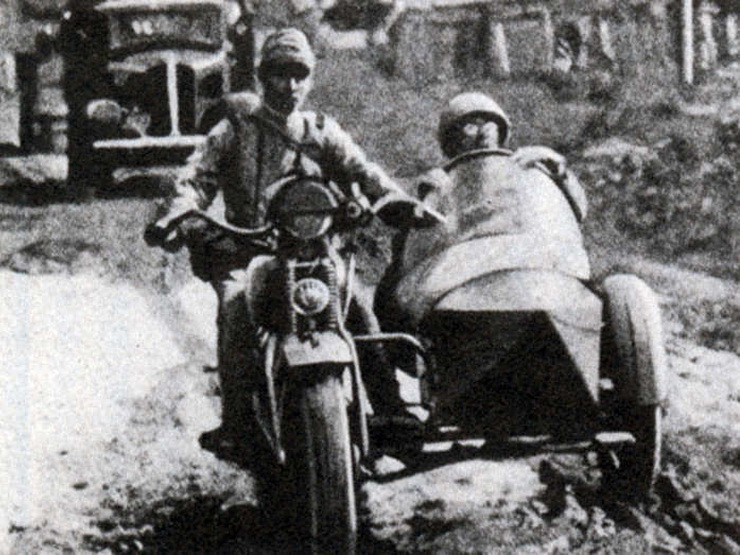
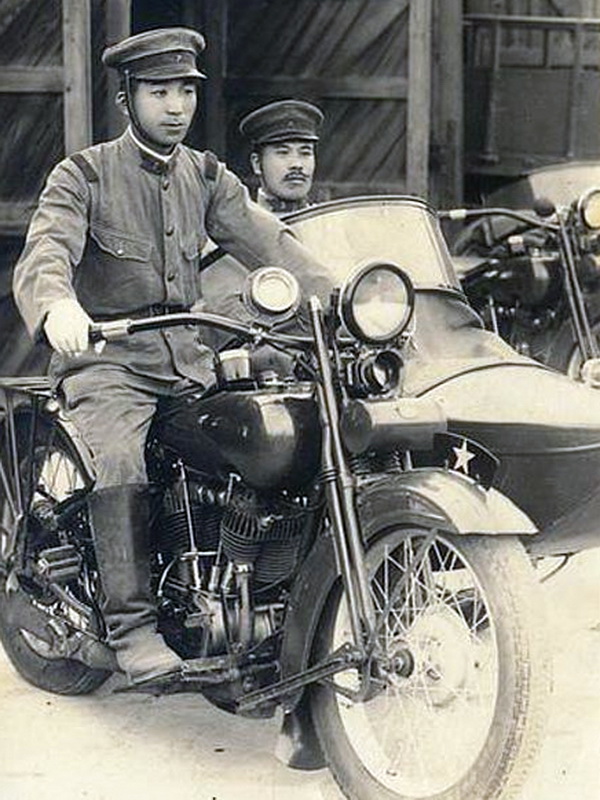
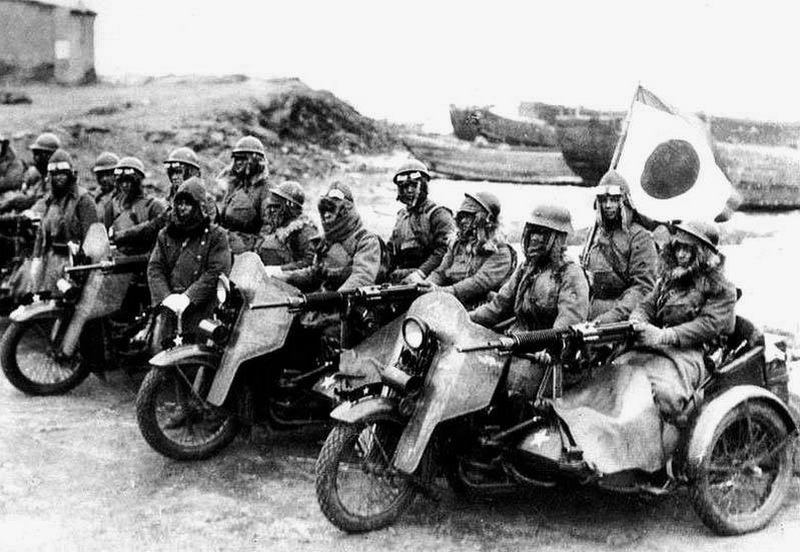
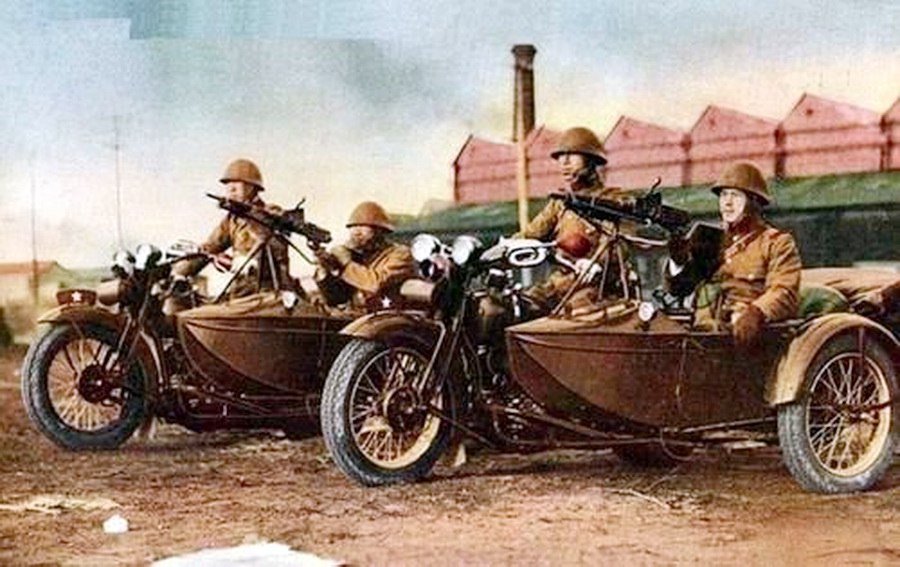
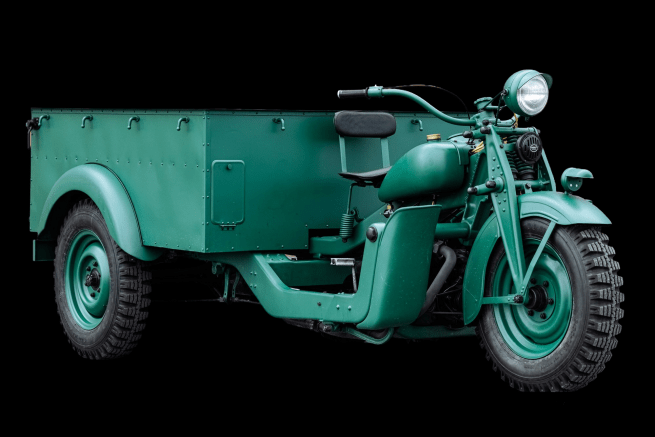
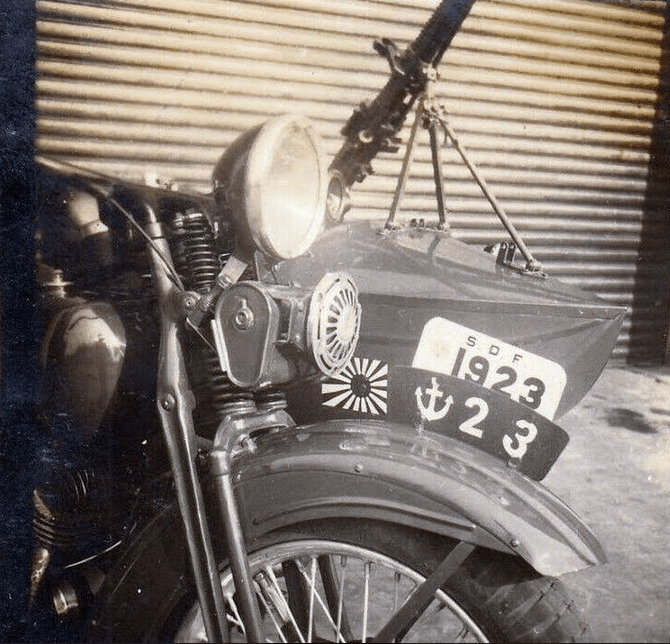
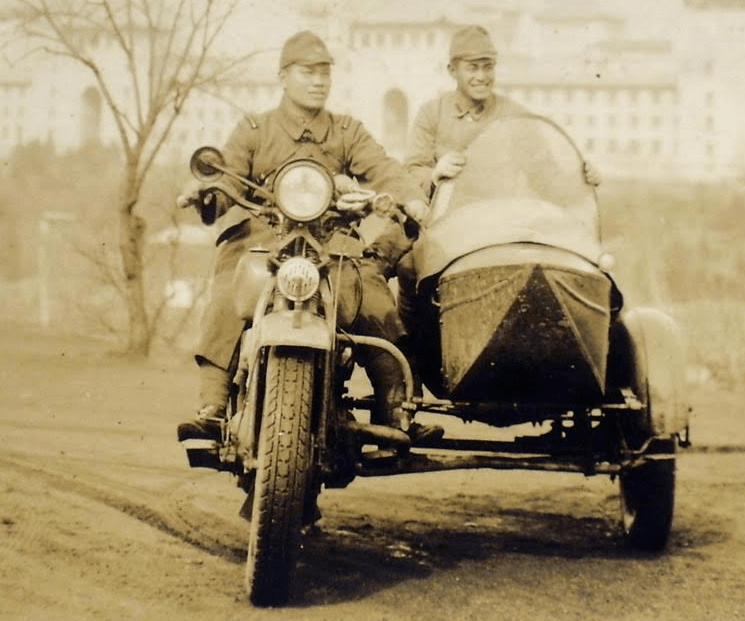
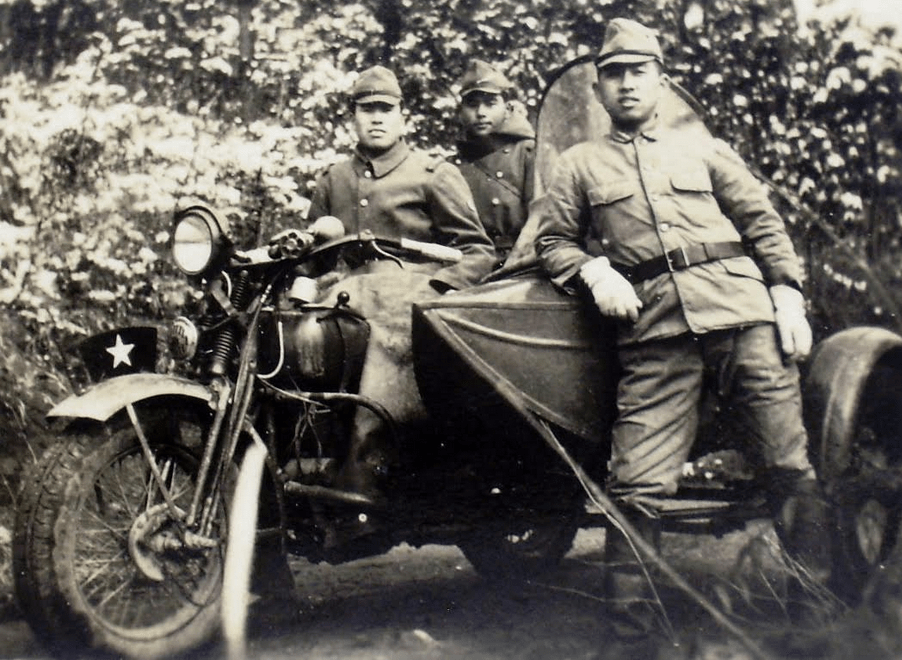
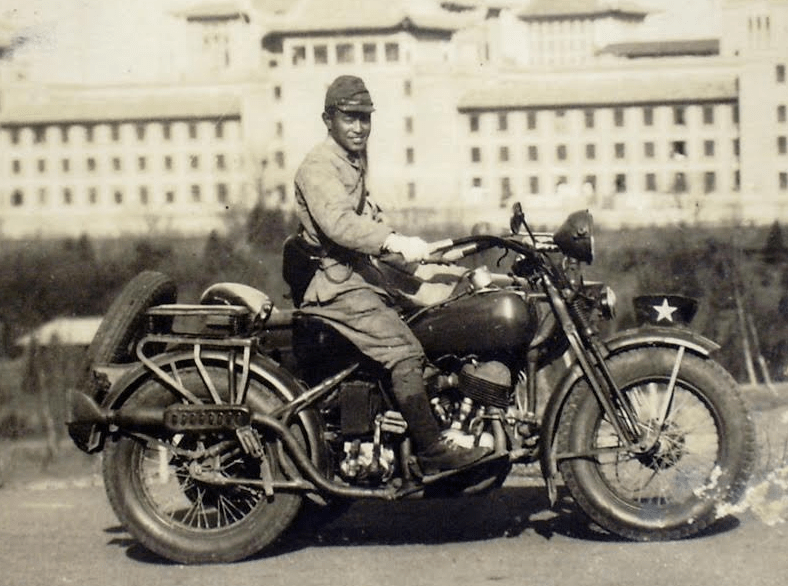
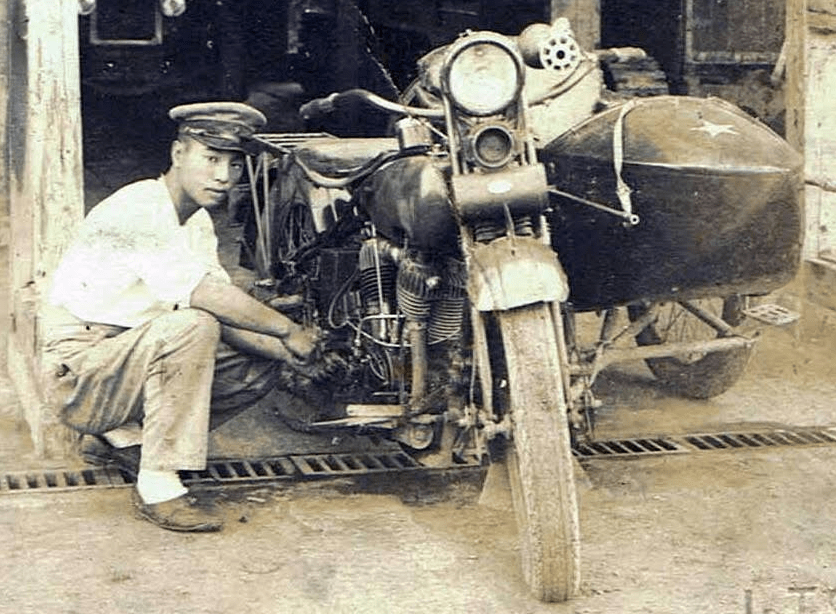
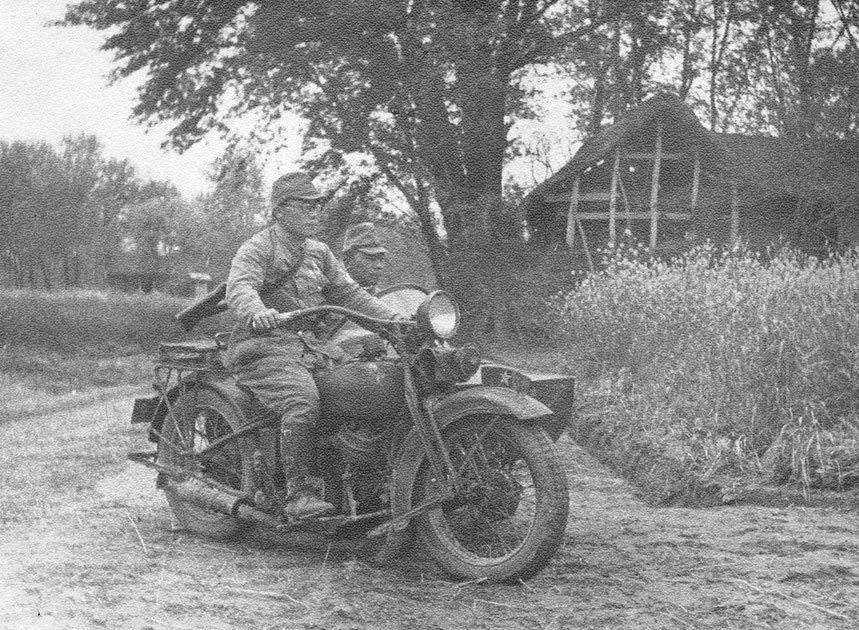
The Kurogane Type 95 was a 1,260cc side-valve V-twin designed and made by Nihon Nainenki for the Japanese army during World War II. Based on the Harleys that had been built in Japan under licence, the 95 was produced as a three-wheel-drive outfit which saw service in China, Burma and the Philippines; about 4,700 were made between 1936 and 1944.
These lads are Chinese.
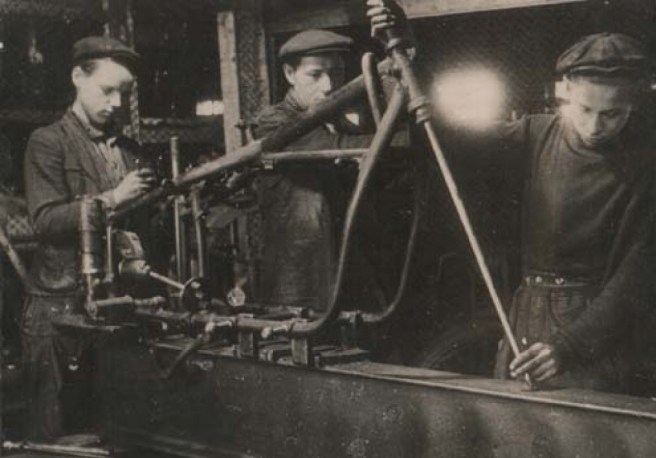
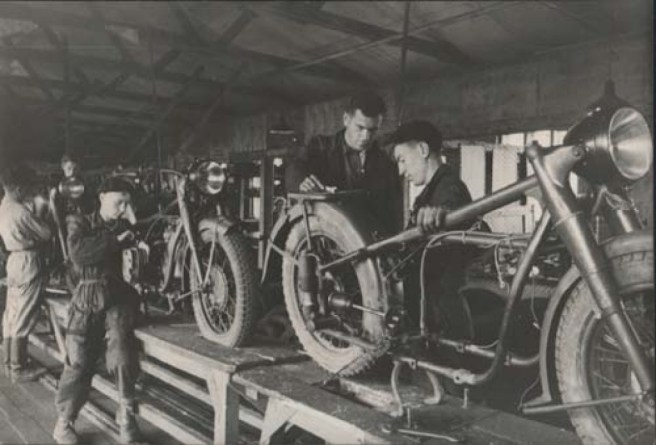
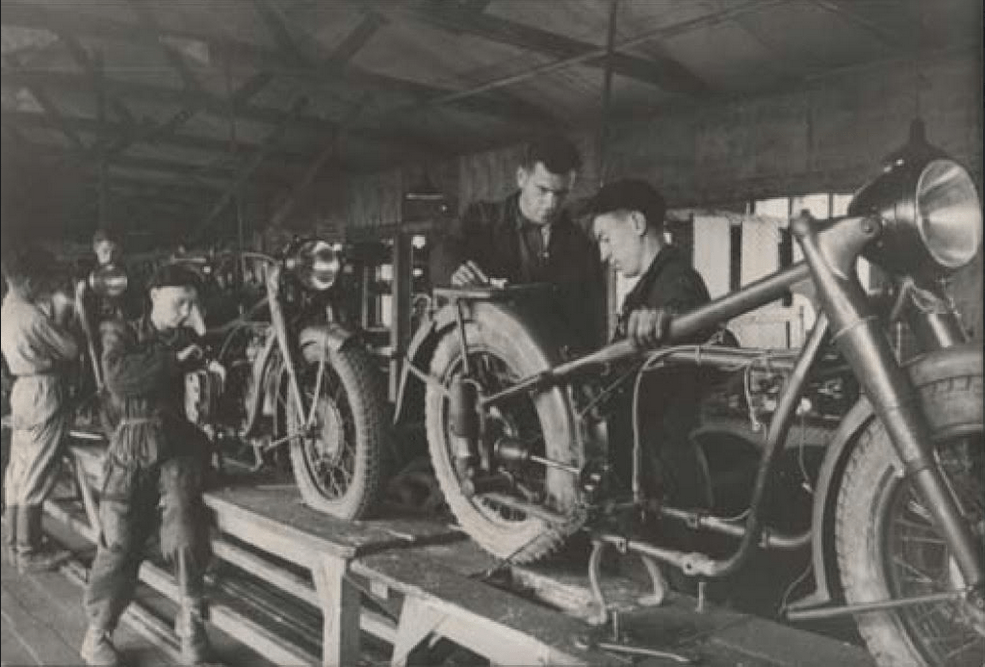
Russian boys and girls did their bit assembling bikes for the Red Army.
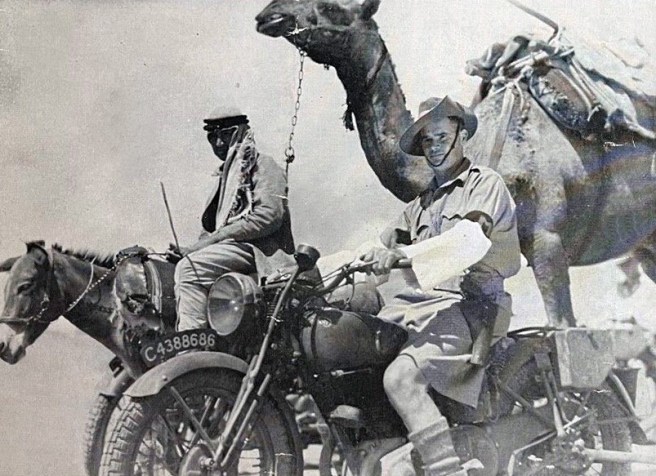
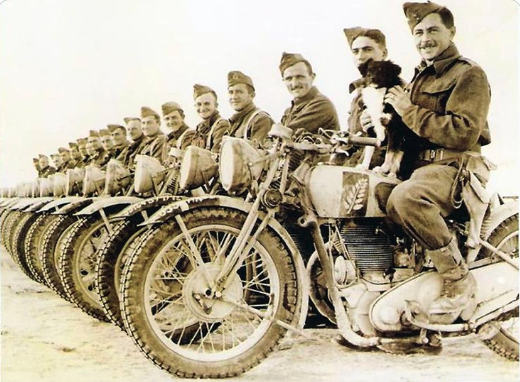
These Kiwis, pictured in North Africa, are mounted on Matchless G3s.
Bulgarian officers near Novi Sad which (as I didn’t know but Wikipaedia did) “is the second largest city in Serbia after the capital Belgrade and the capital of the autonomous province of Vojvodina. It is located in the southern portion of the Pannonian Plain on the border of the Bačka and Syrmia geographical regions. Lying on the banks of the Danube river, the city faces the northern slopes of Fruška Gora.”
The next two images present an interesting contrast in many ways.
“Volksdeutsche serve their liberators a fresh drink”.
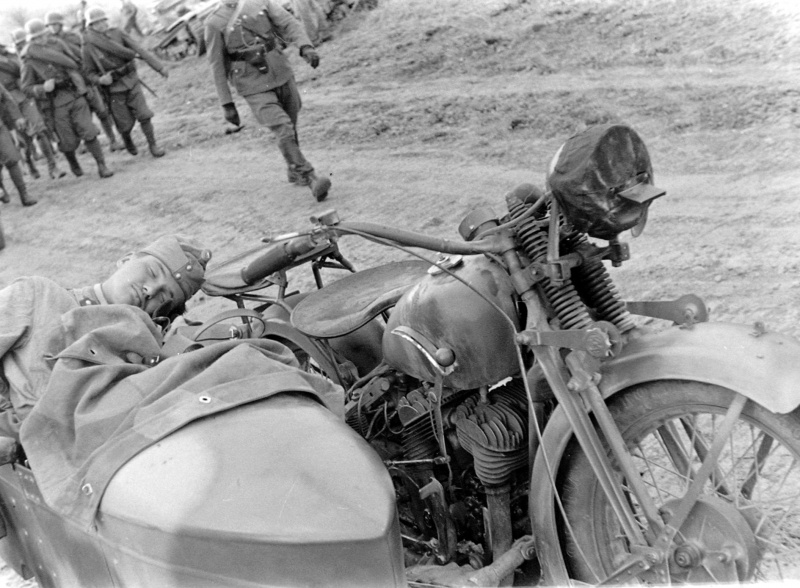
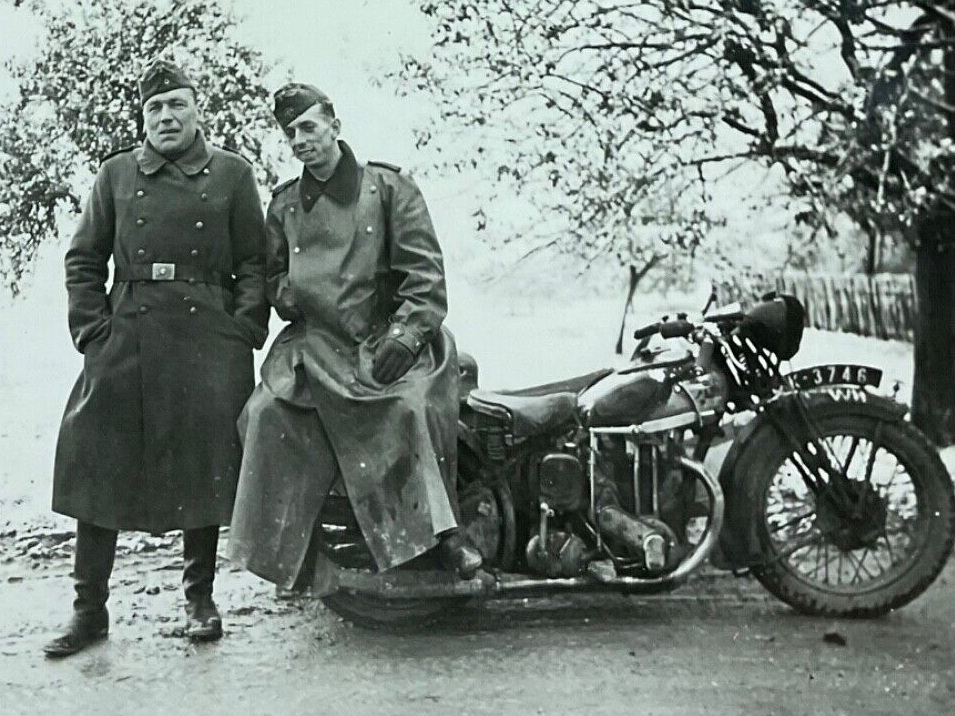
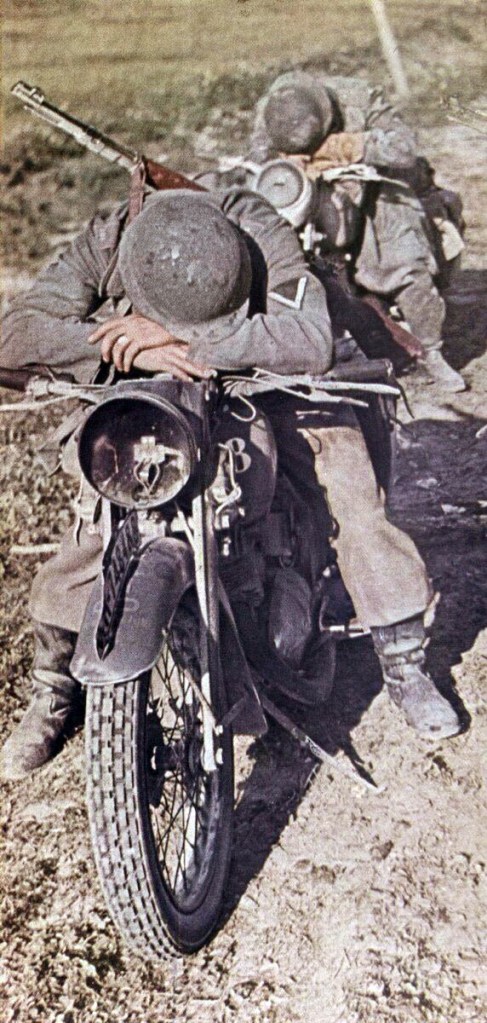
Yes, that exhausted rider is a Jerry; yes, his bike is an M20, which found itself a long way from Brummagen.
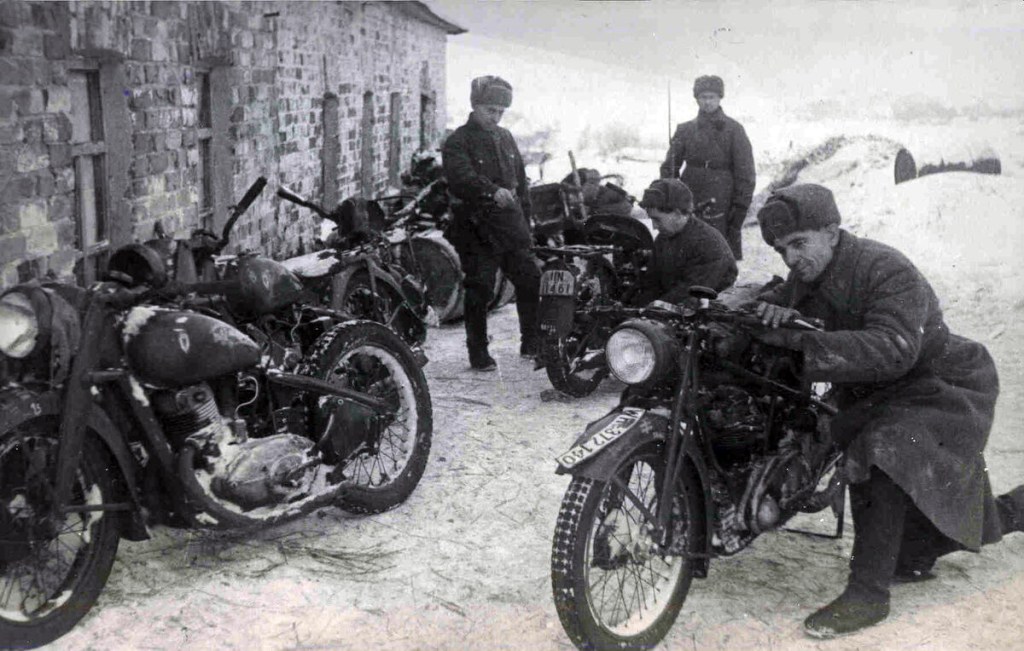
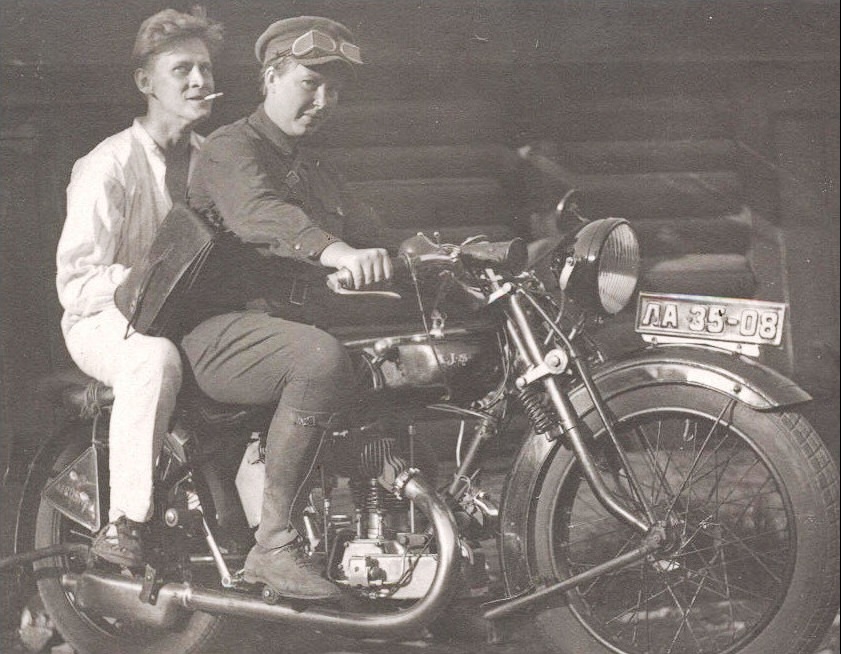
…this civvy Ariel ended up a long way from Redditch, товарищ…
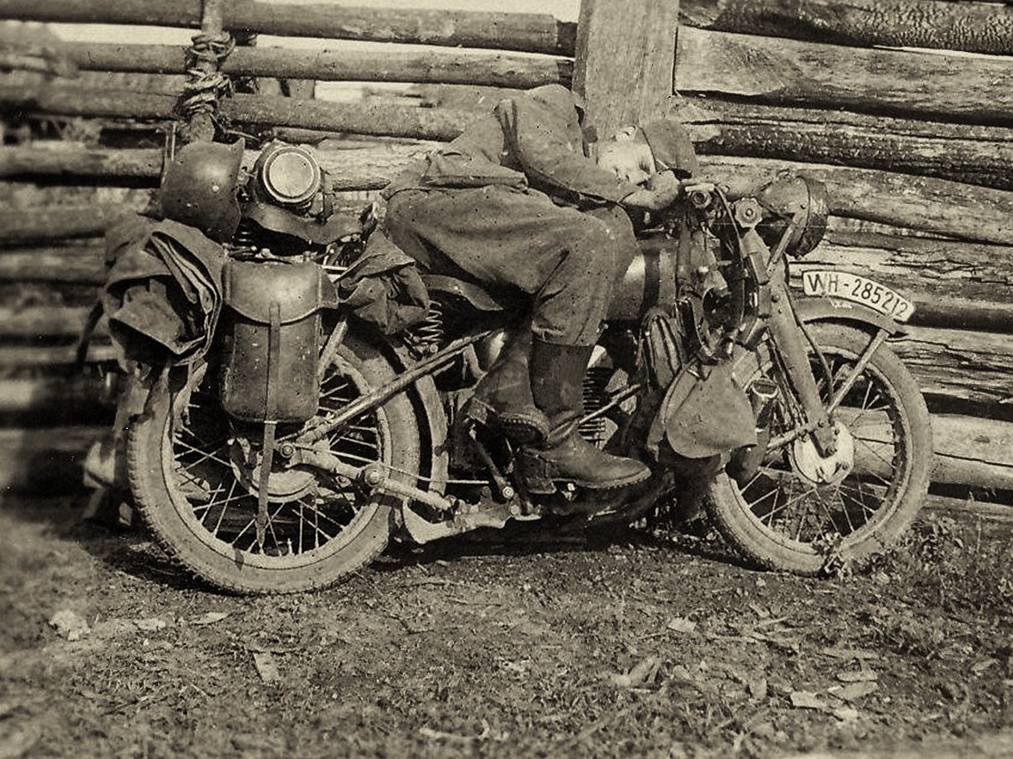
…how this 1927 Ajay found its way from Wolverhampton to the Eastern Front remains a mystery. But I have a shrewd idea what the geezer on the flapper bracket is thinking. Watch ‘im, missus…
…you have to hope that this flat-tank Beeza V-twin was kept out of harm’s way.
Italian DRs near Makalle in Ethiopia.
Belgians surrender aboard an FN tricar.
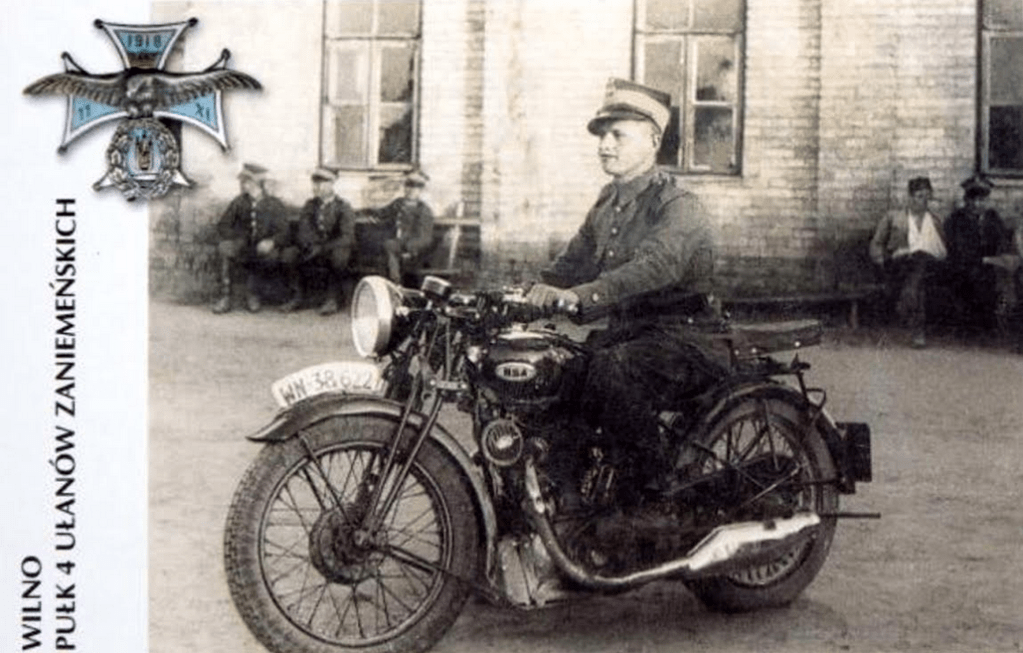
A Pole onna Beeza.
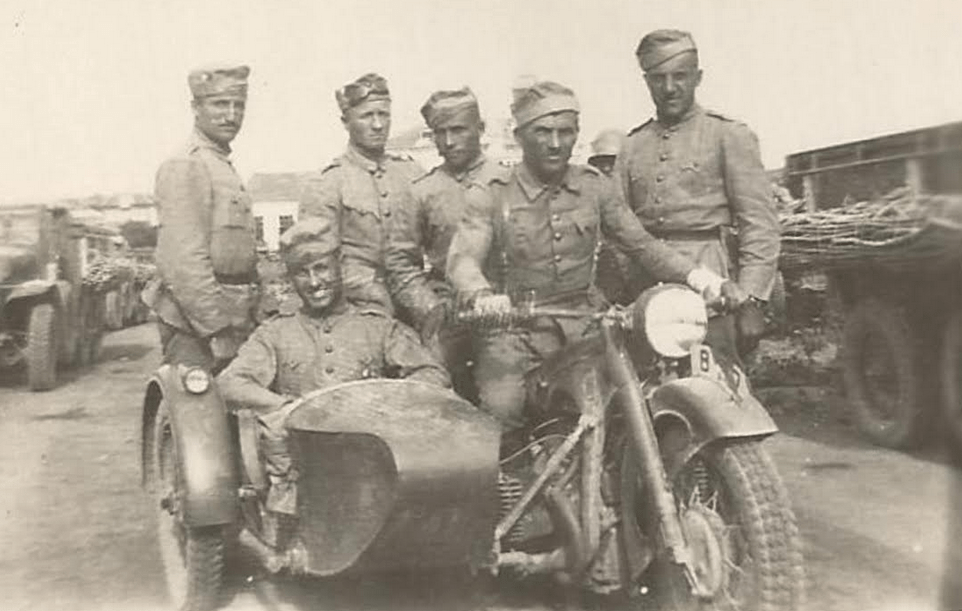
Bulgarians.
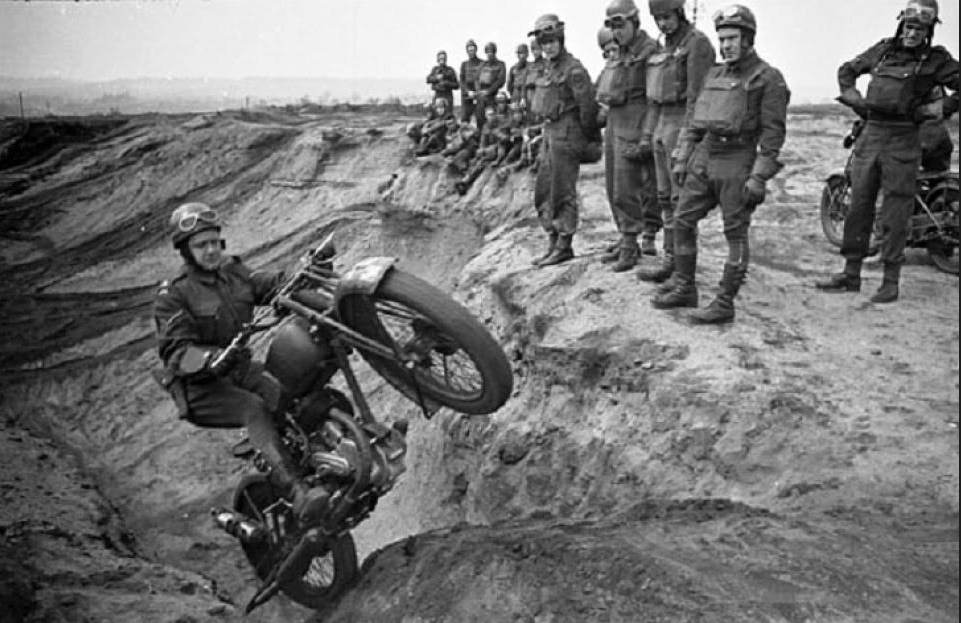
Canadians at Bordon, Hants—and how he did that with a 16H beats me.
These lads are Canadians…
…these lads are Chinese.
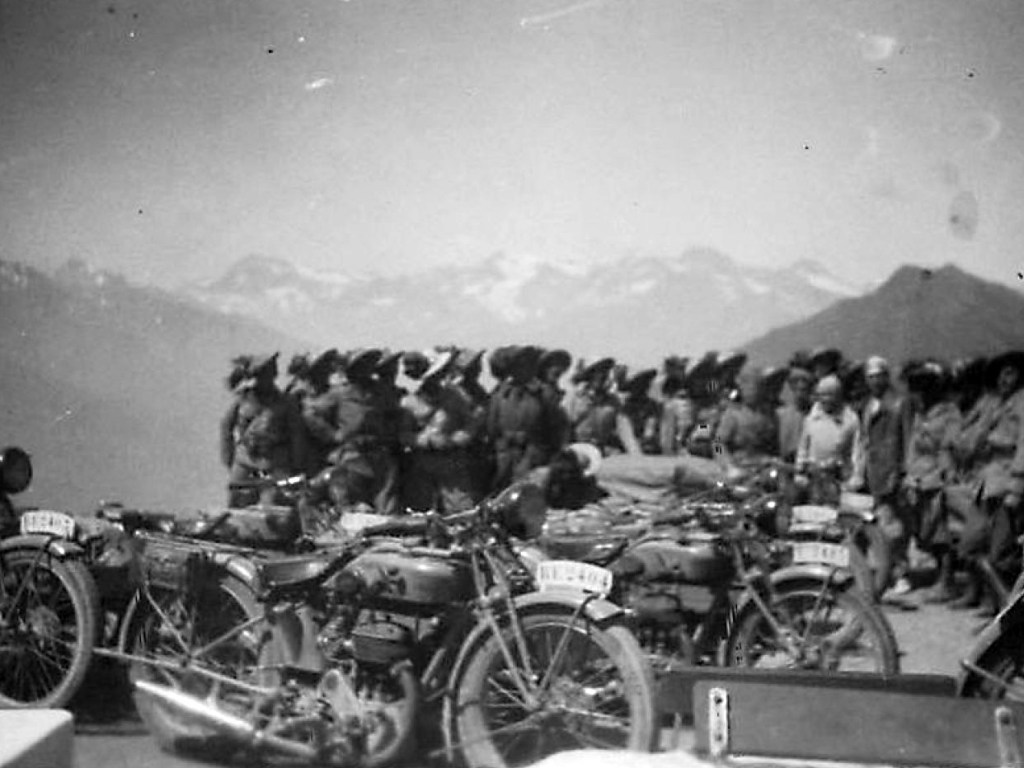
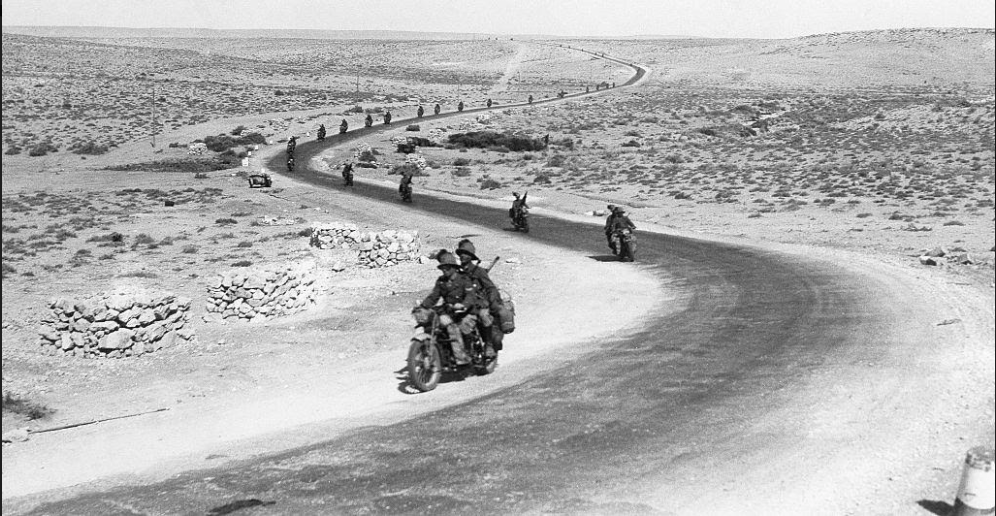
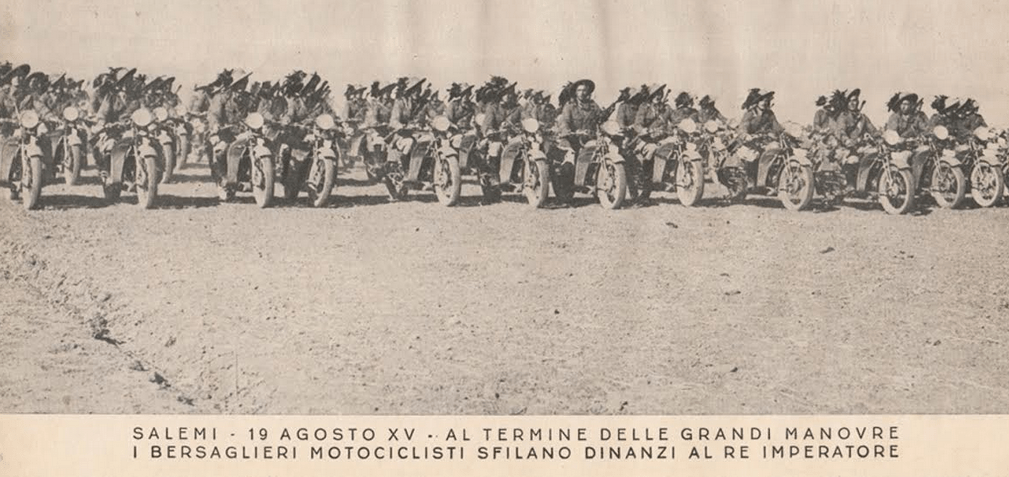
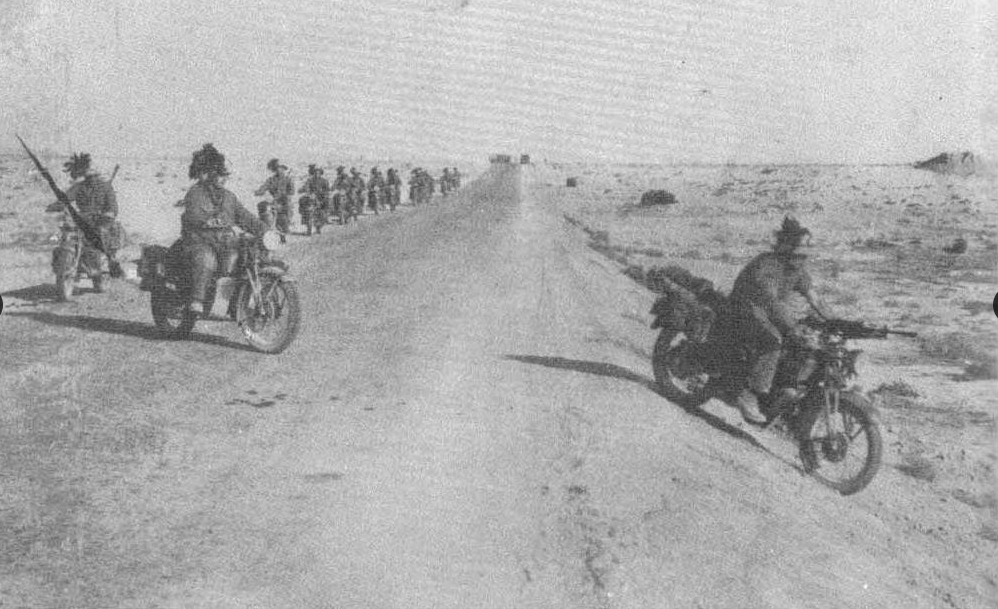
Italian Bersaglieri troops head to the front in Egypt.
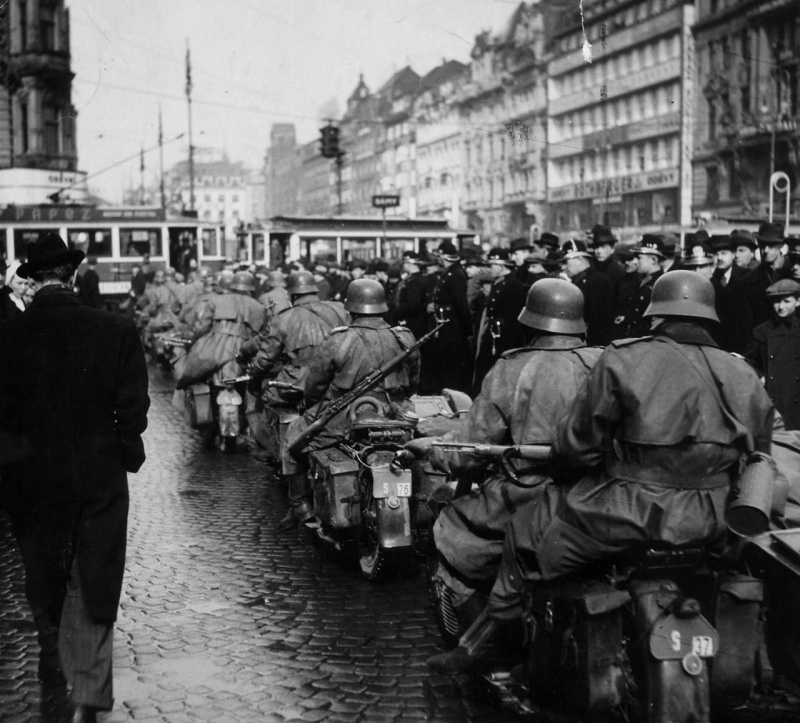
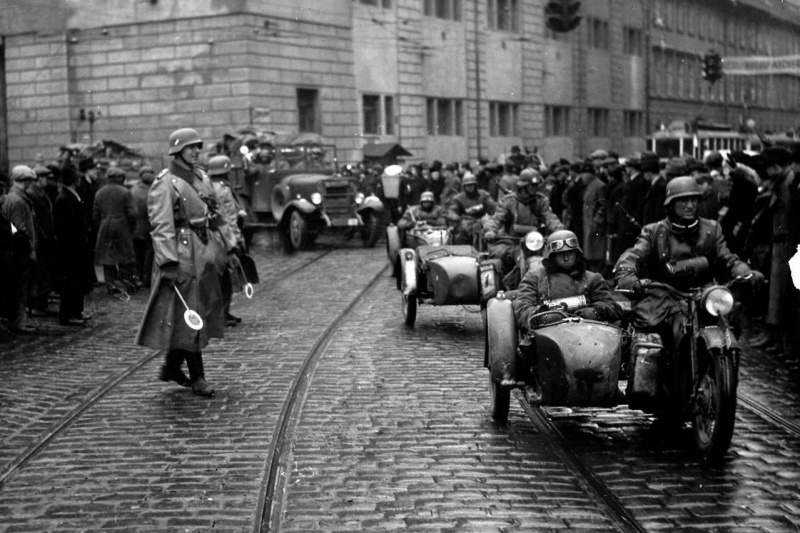
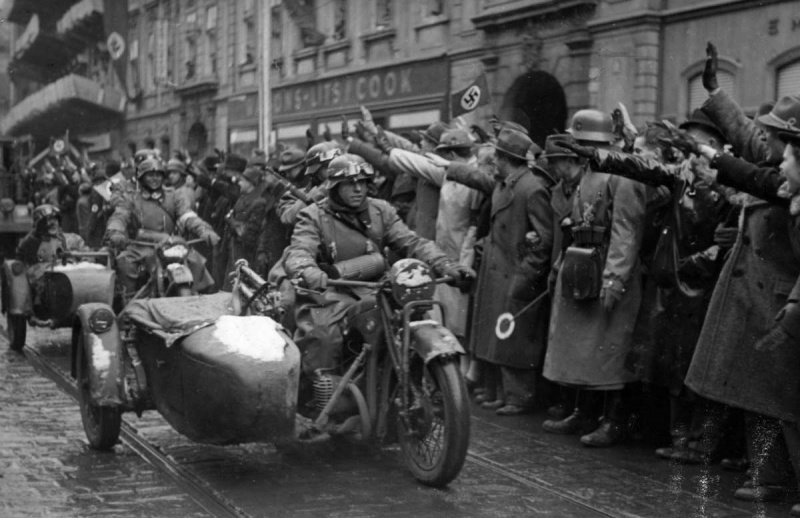
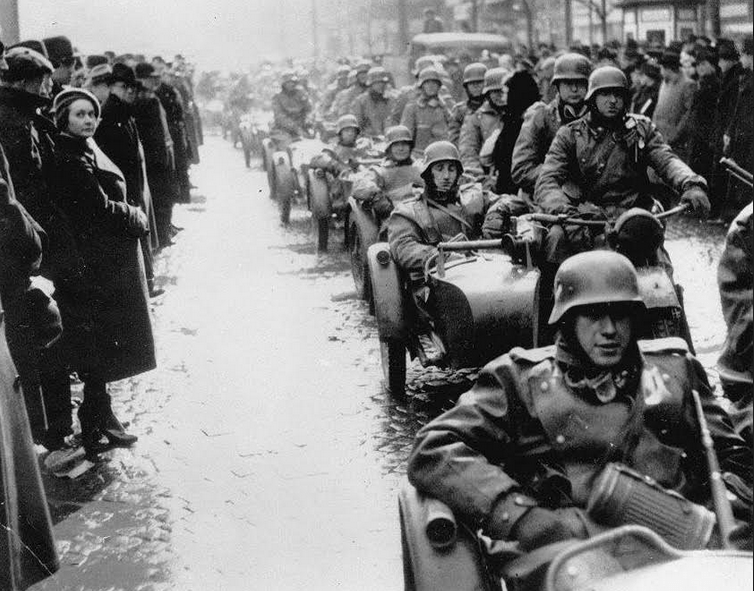
The Jerries roll into Prague and, somewhat later…
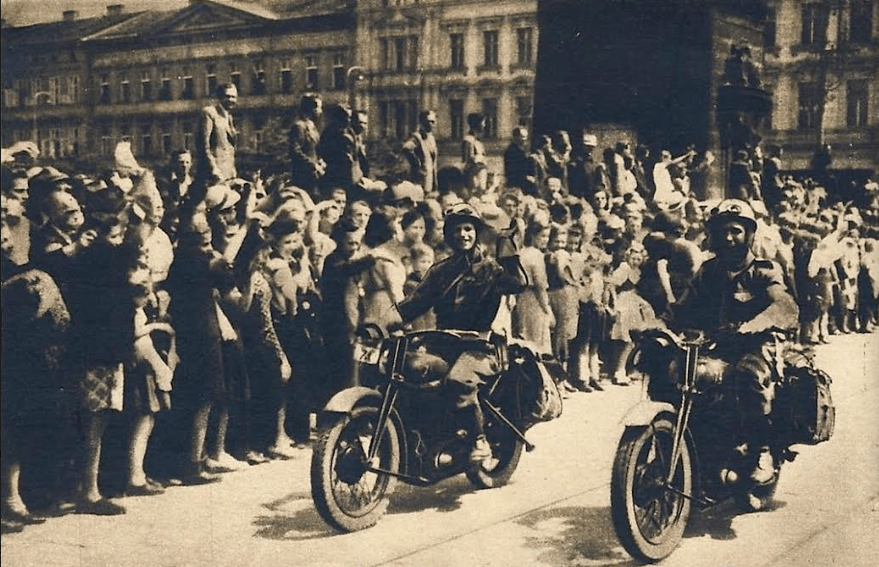
the Brits did likewise.
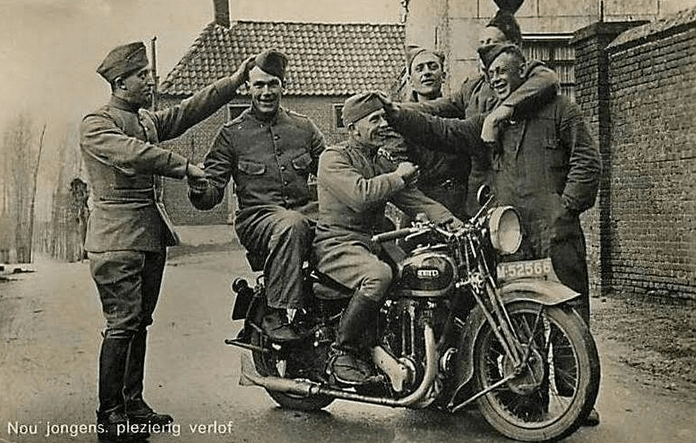
“Well boys, enjoy your leave.” Happy Dutchmen with an Ariel.
A Flying Flea in its parachute frame.
Il Duce struts his stuff in front of some young fascisti.
Kiwis on G3s.
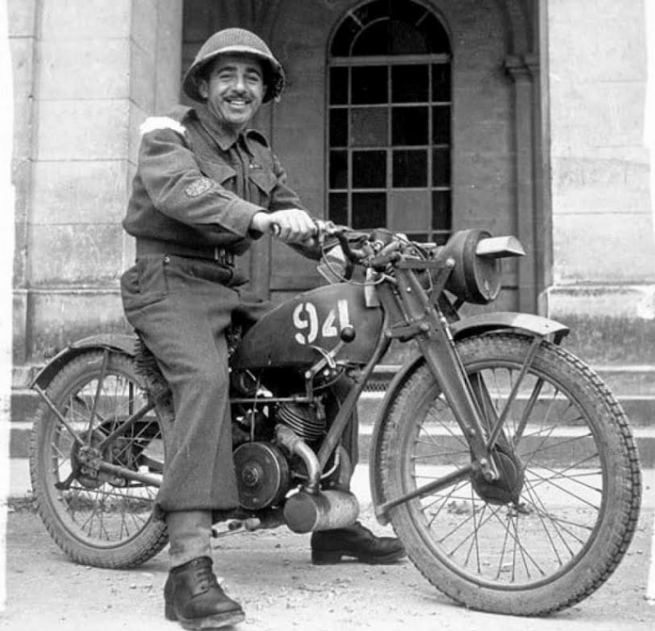
A Don R in Paris.
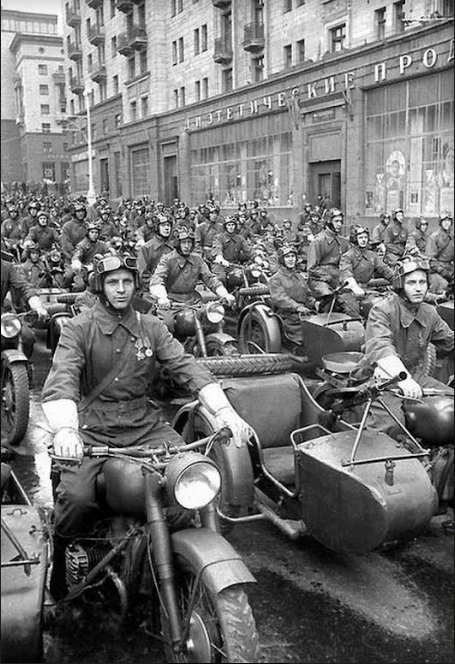
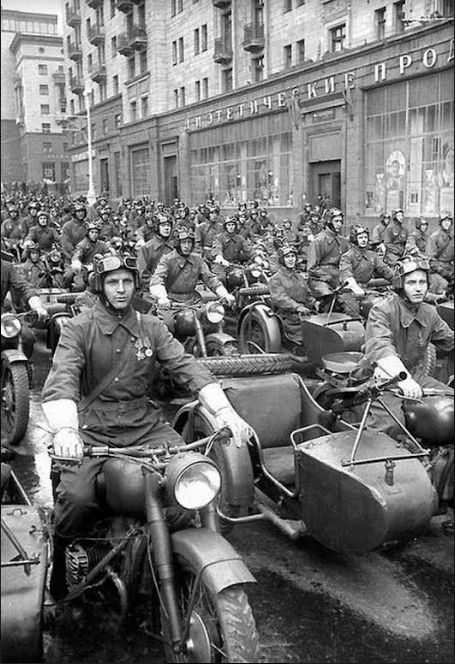
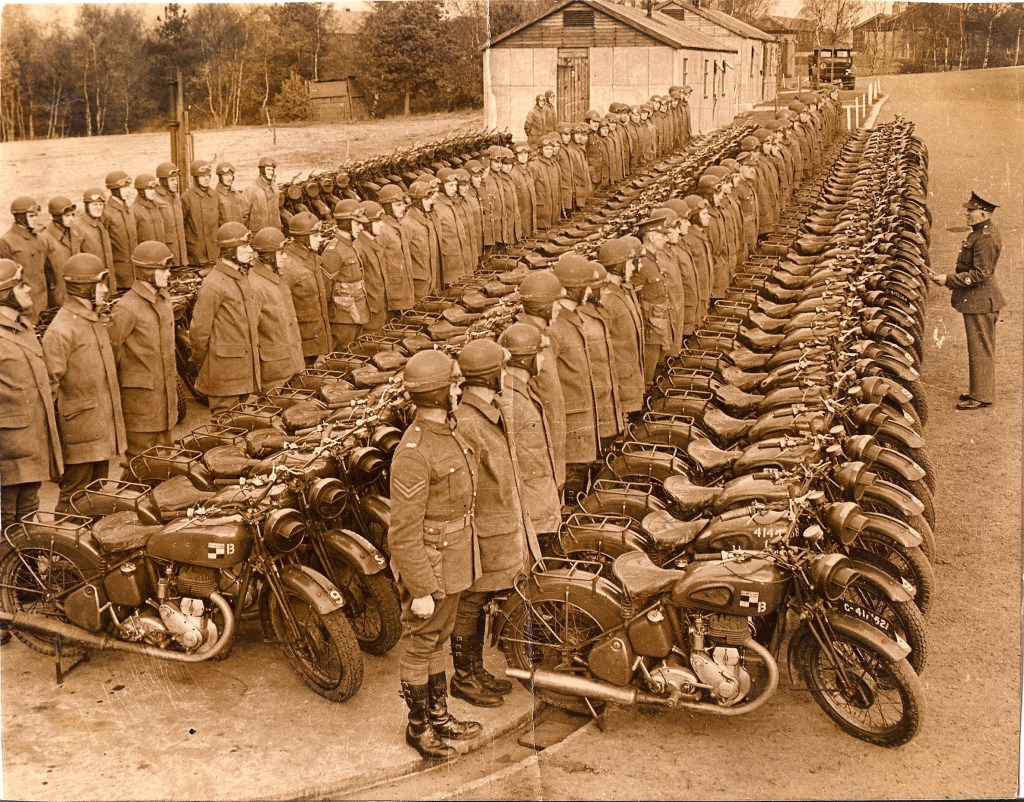
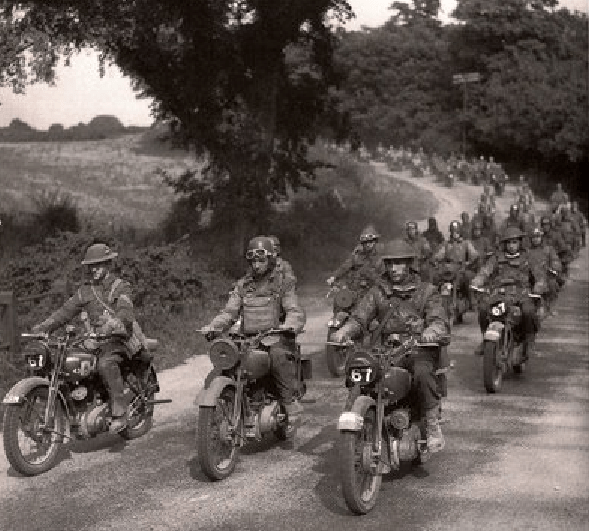
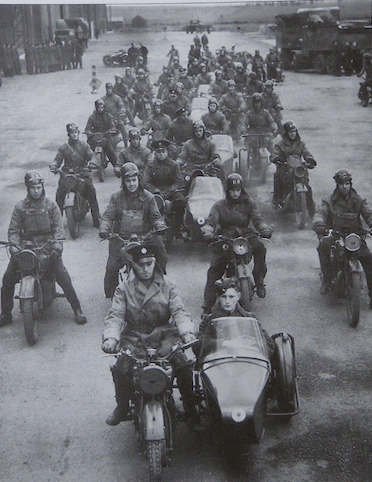
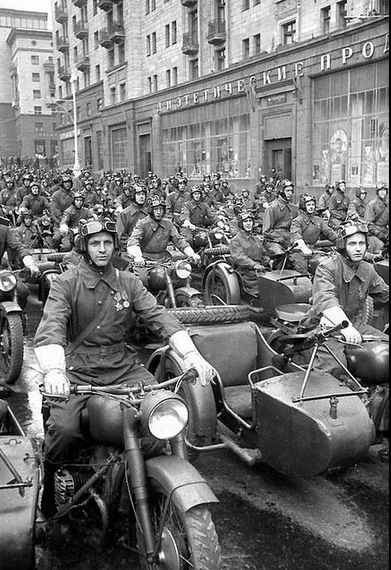
M20s on parade.
16Hs on the march.
RAF DRs had to make do without Panthers.
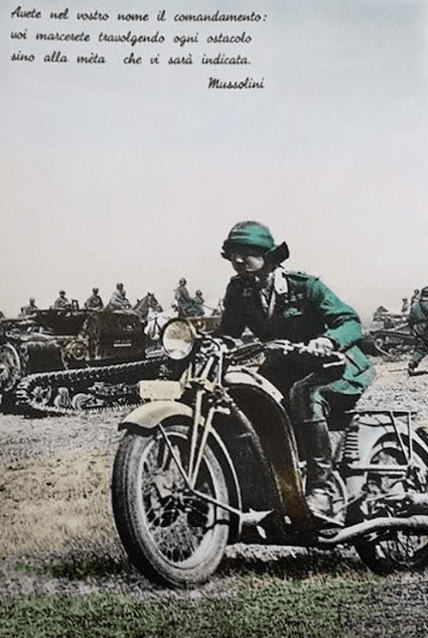
“You have in your name the commandment: thou shalt march, overcoming every obstacle until the goal which shall be indicated to you.”—Mussolini
Danish squaddies packed some serious firepower on their Nimbus.
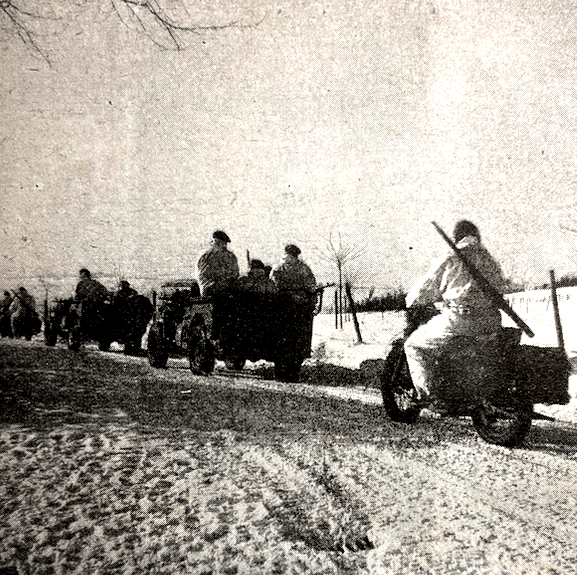
“Men of the British 6th Airborne Division on snow patrol in the Ardennes. This picture was taken when the ‘Red Devils’, as the Germans nicknamed them in North Africa, were penetrating into enemy-held country. Note that even when in snow suits and on motor cycles they wear their maroon berets. The motor cycles are Matchlesses.”
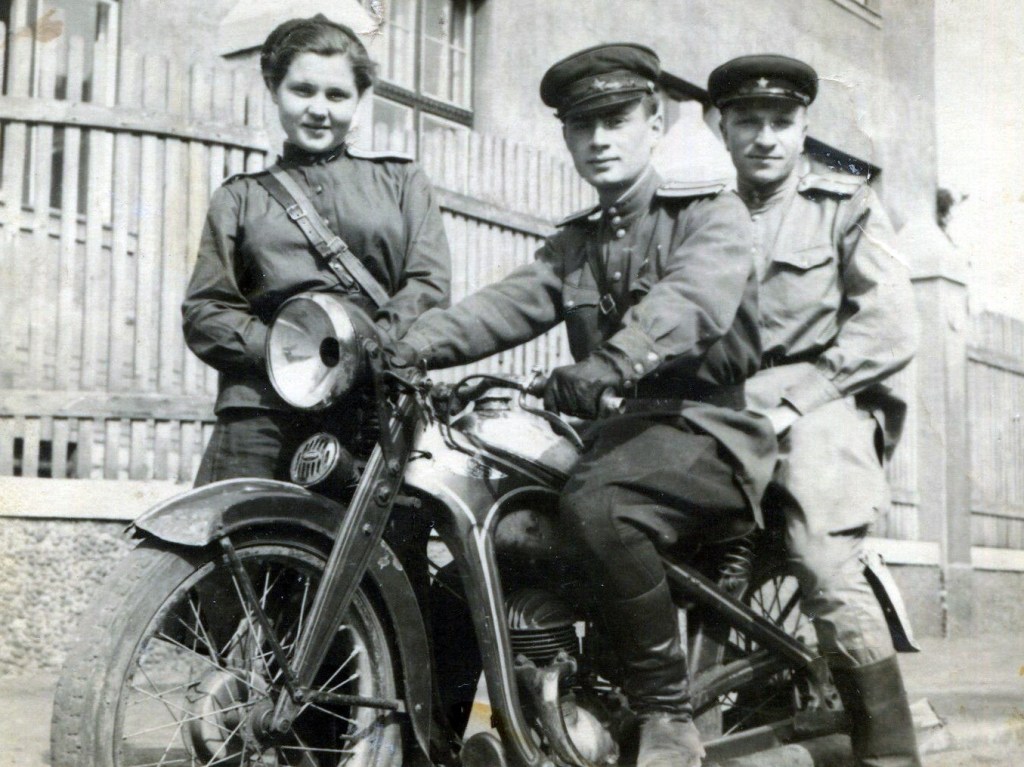
“Red Army soldiers inspecting DKW RT350 ancestor of the IZh-350.”
“M72 DShK MG.”
A Sarolea warhorse.
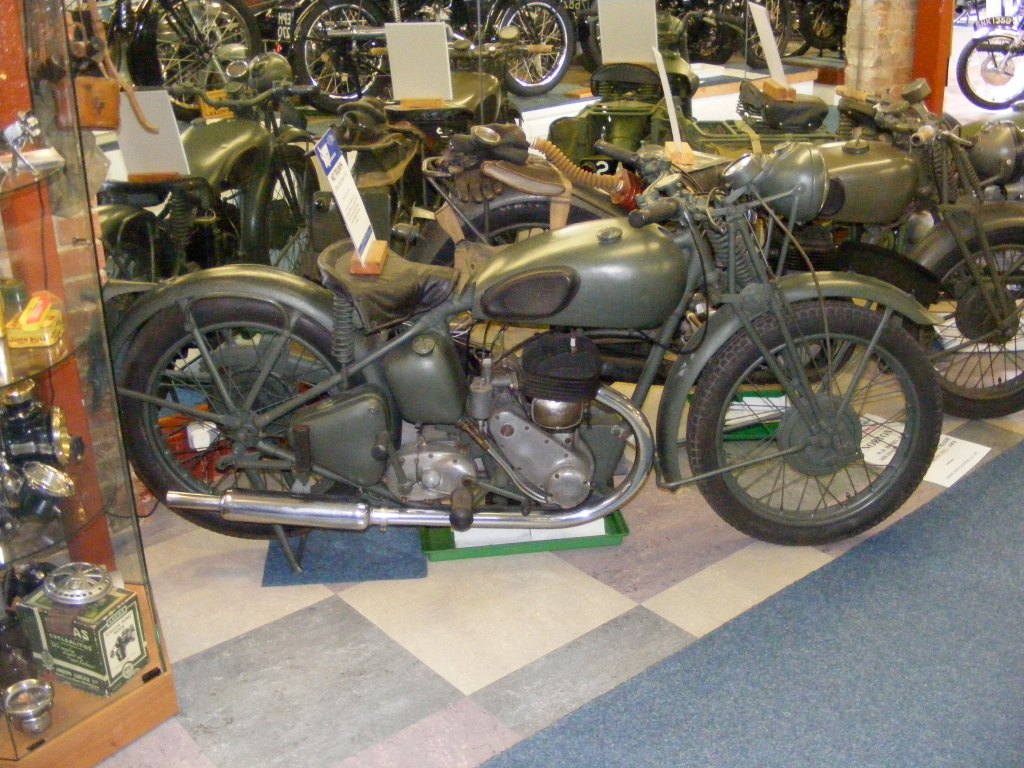
Sammy Miller’s superb museum includes some WD models. This 500cc ex-RAF Triumph is said to be “a very rare model as a ship carrying 3,000 which was bound for the Far East was sunk in the Irish Sea by German bombers after leaving Liverpool”.
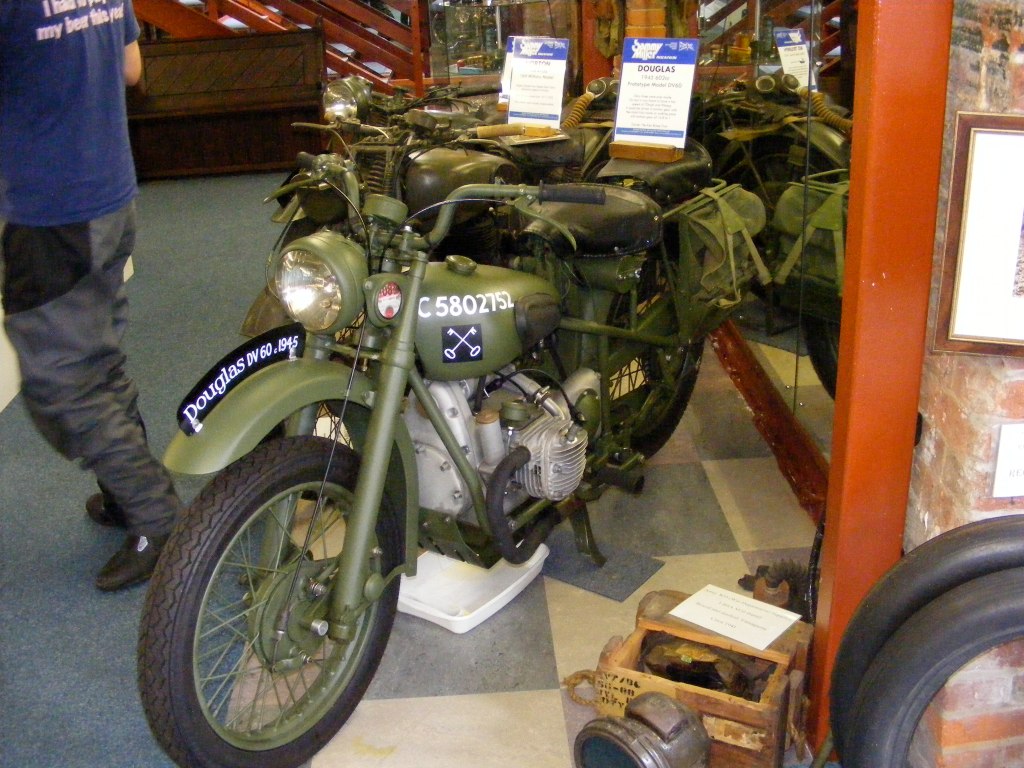
Also spotted at Sammy Miller’s: “Douglas 1945 602cc prototype Model DV60. Only three were ever made. On test it was found to have a top speed of 70mph and 90mpg.”
Velocette went to war with the 350cc ohv MAF (based on the MAC); 947 were produced. Development was handled by Phil Irving before his move to Vincent.
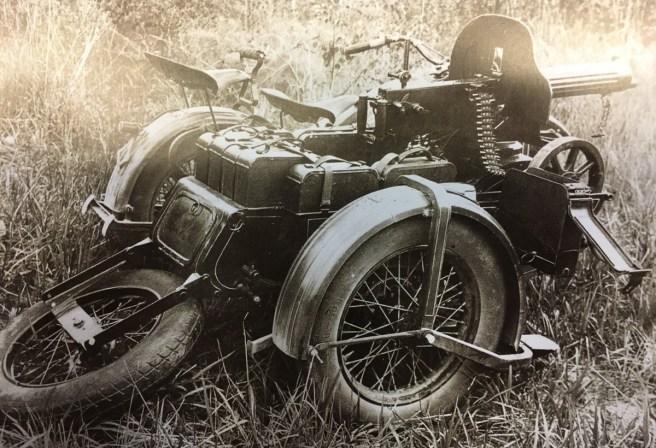
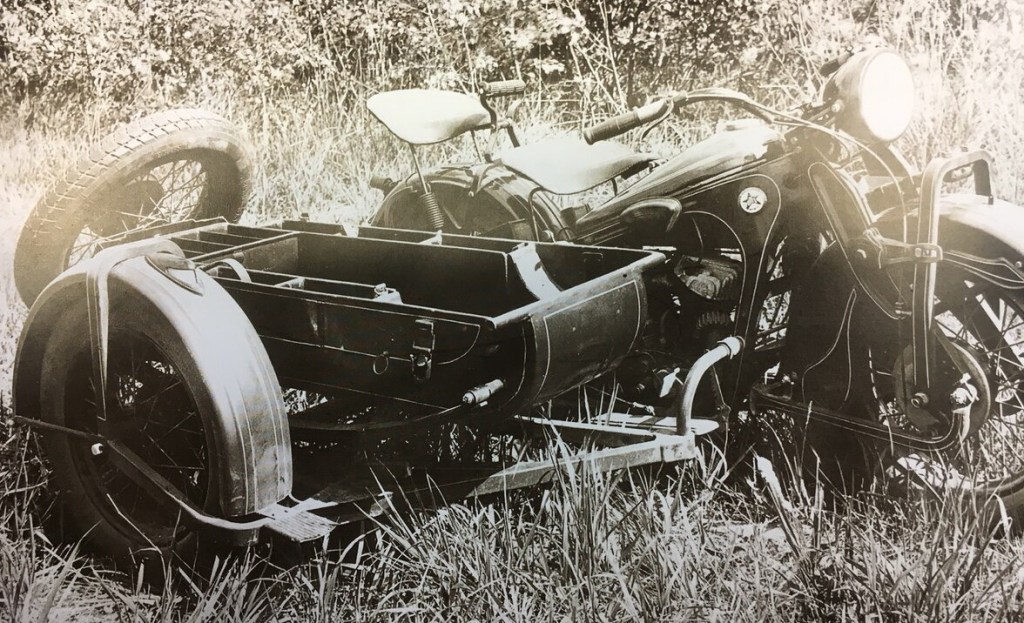
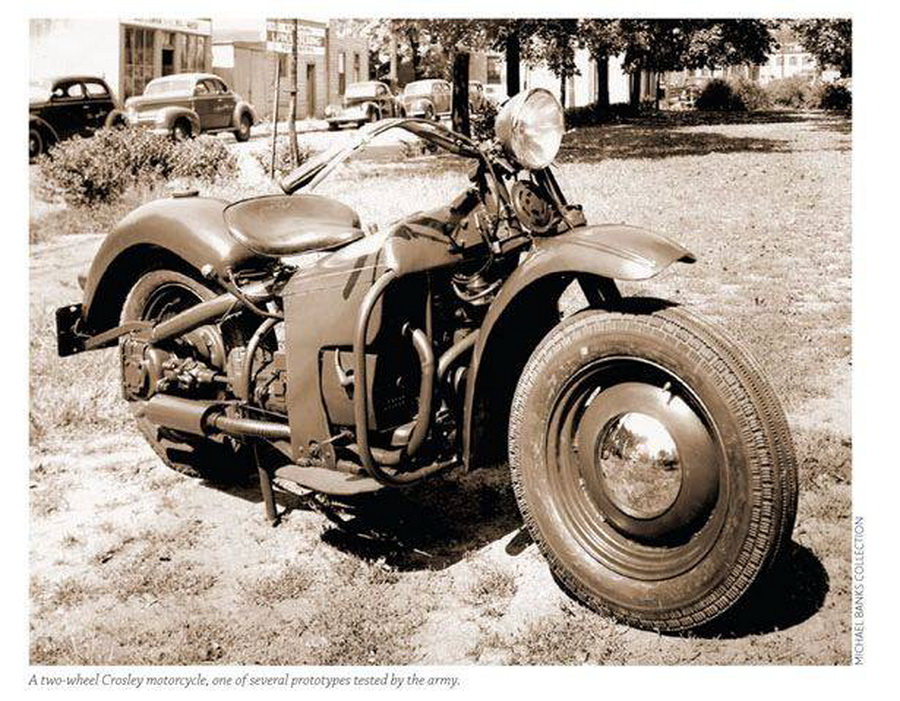
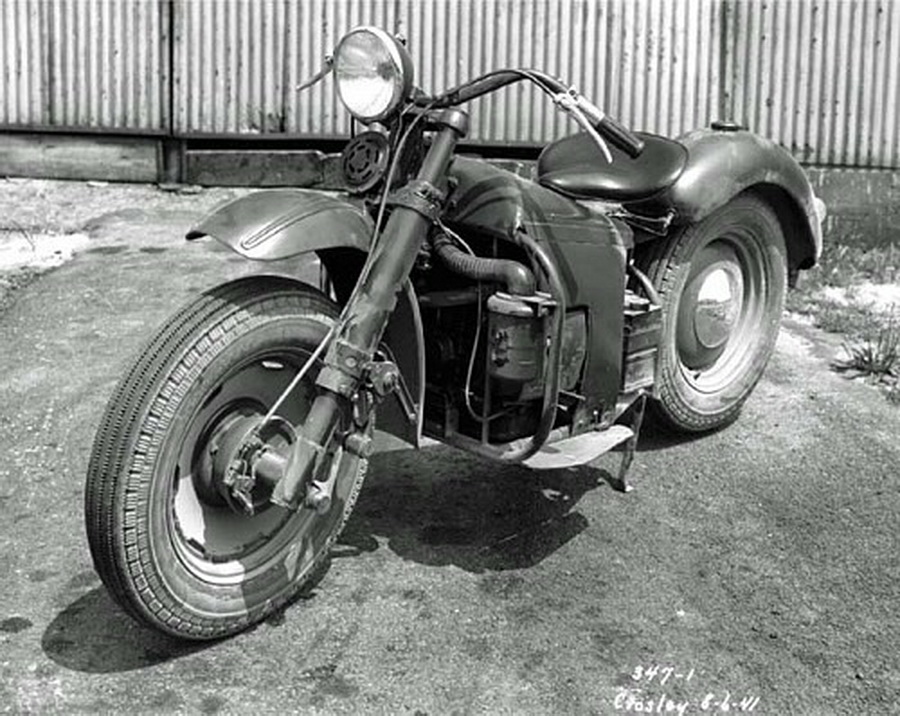
Prototype Crossley motor cycle produced for the US army during WW2—the boxer engine also powered Crossley trikes and four-wheel-drive vehicles including tracked and amphibians.




















 Motorcycle Timeline