From Big Bang to suck-squeeze-bang-blow and beyond
Artwork/Humour
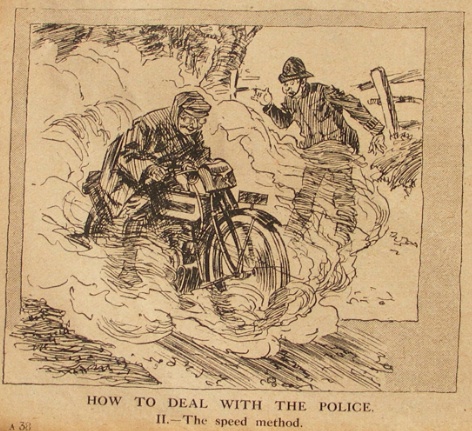
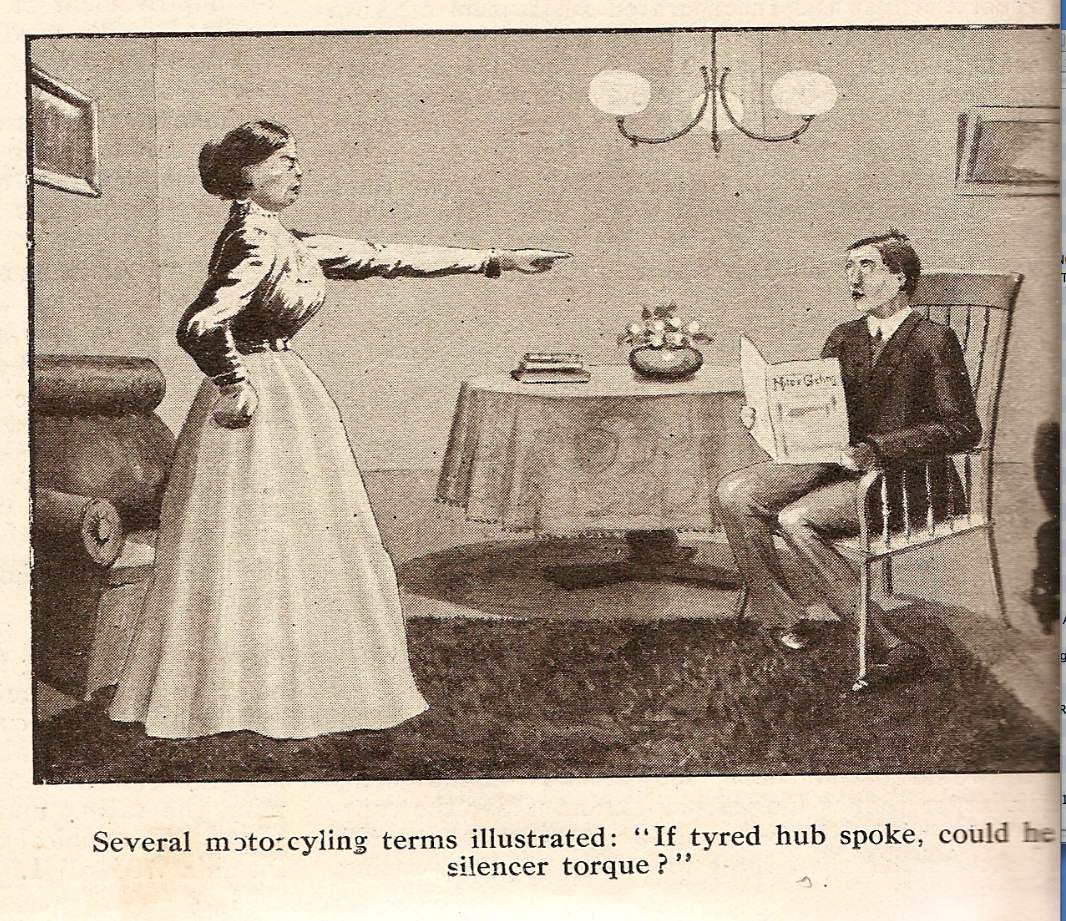
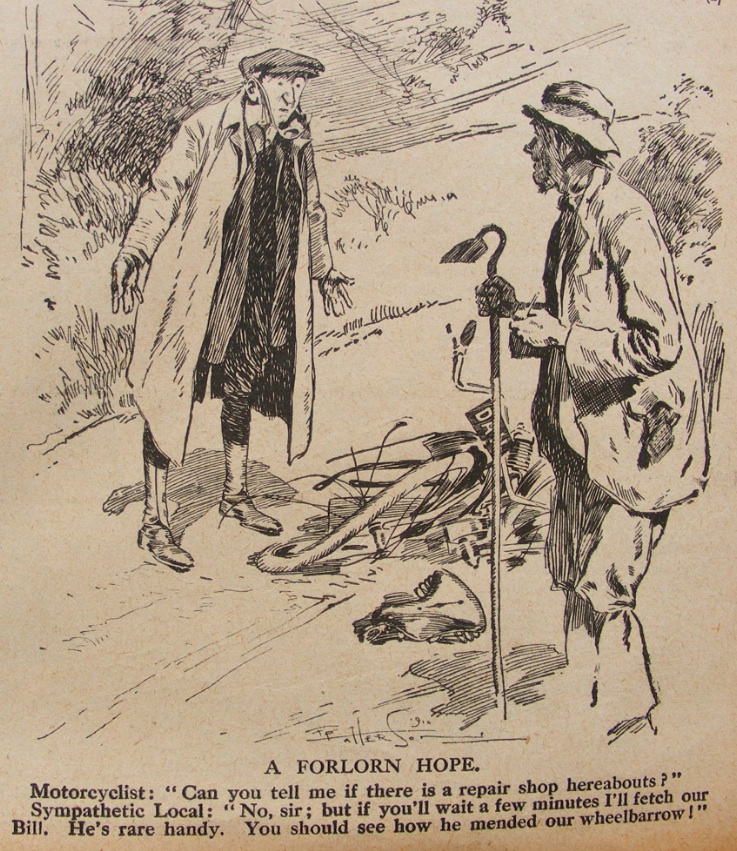
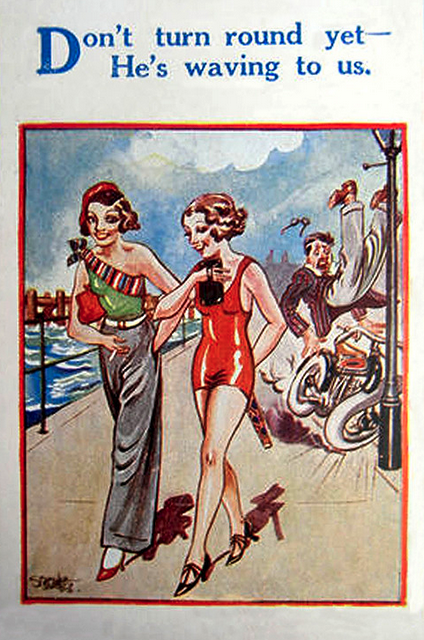
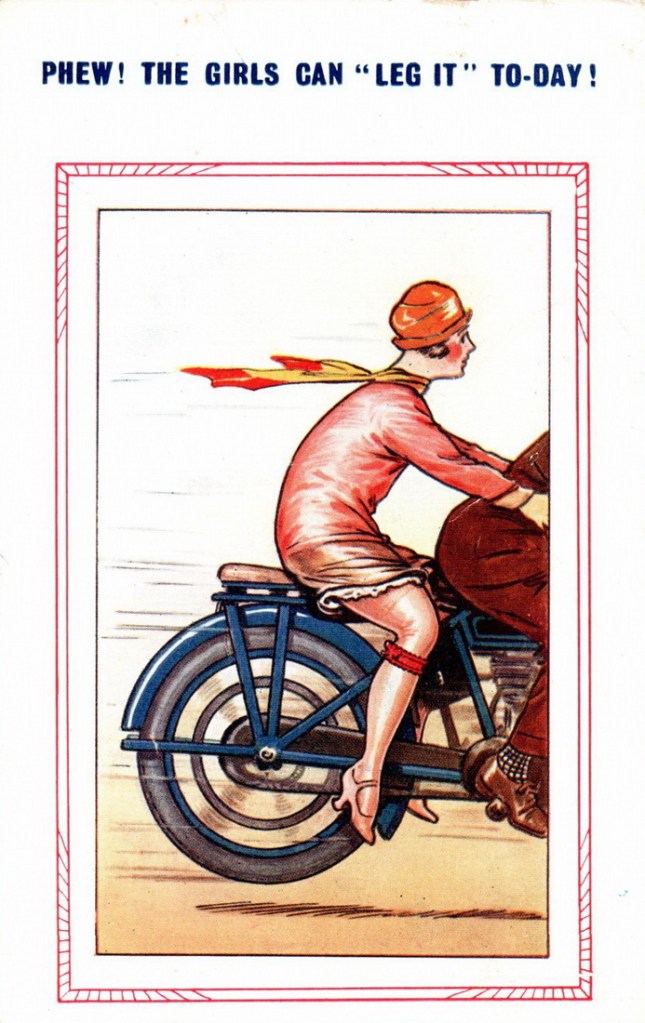
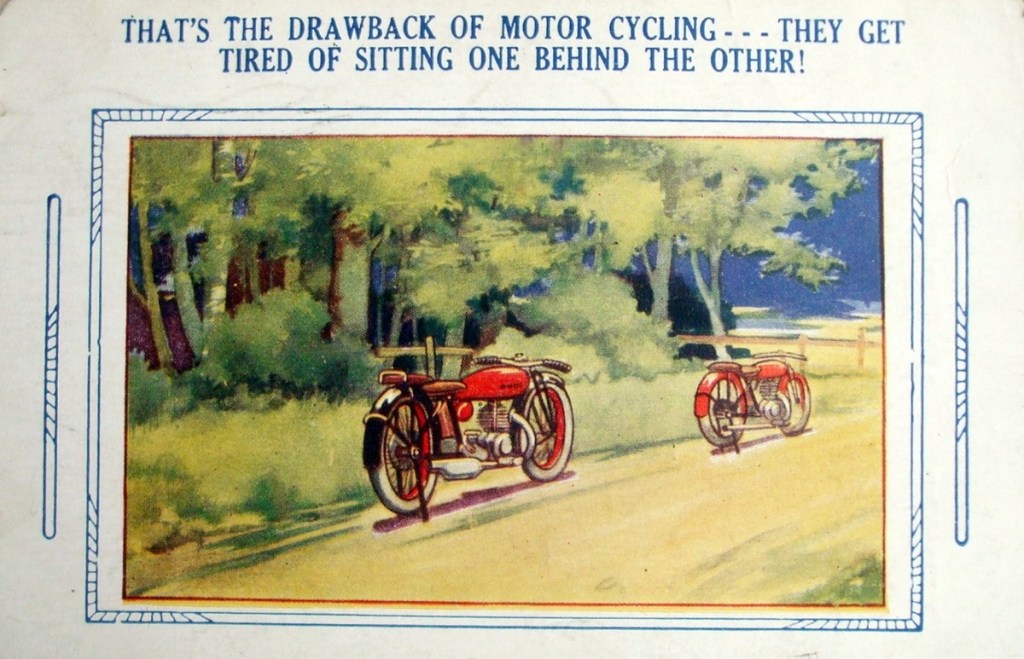
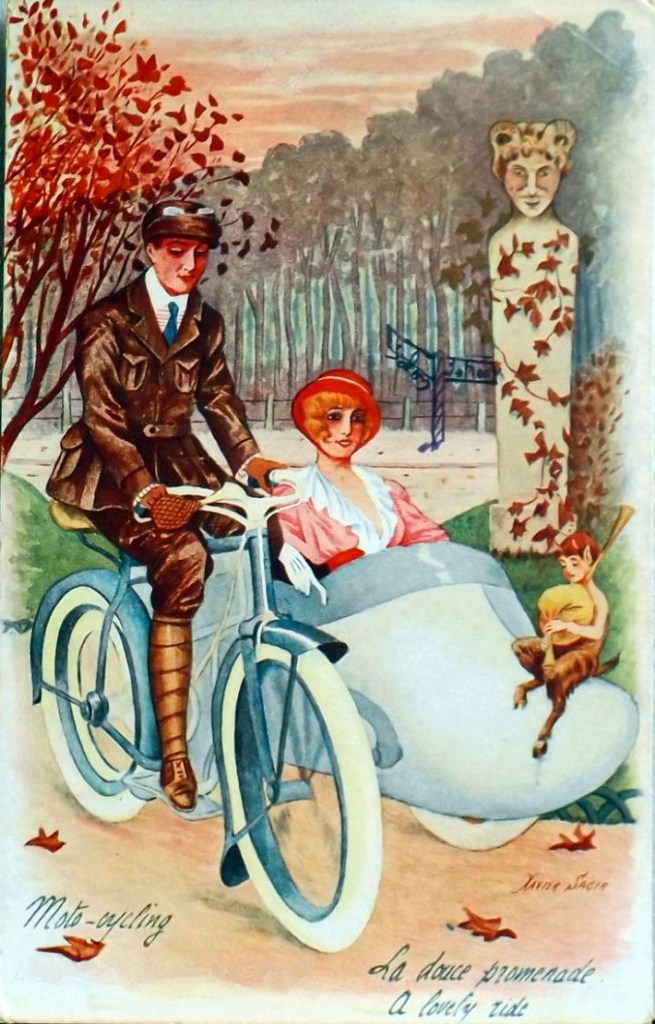
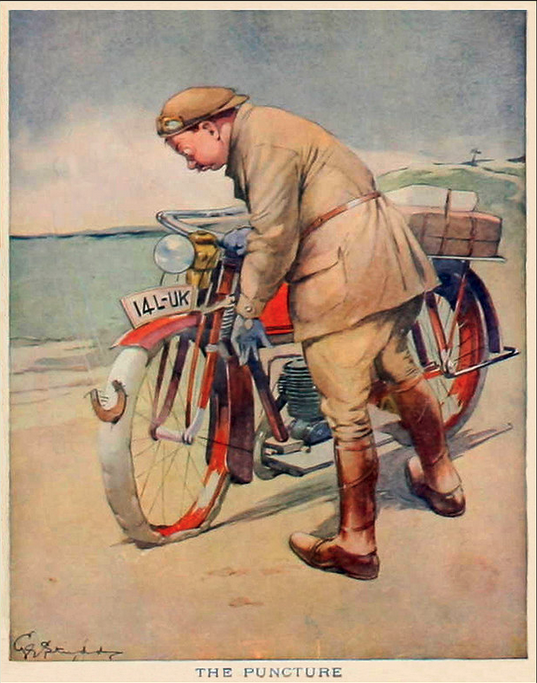
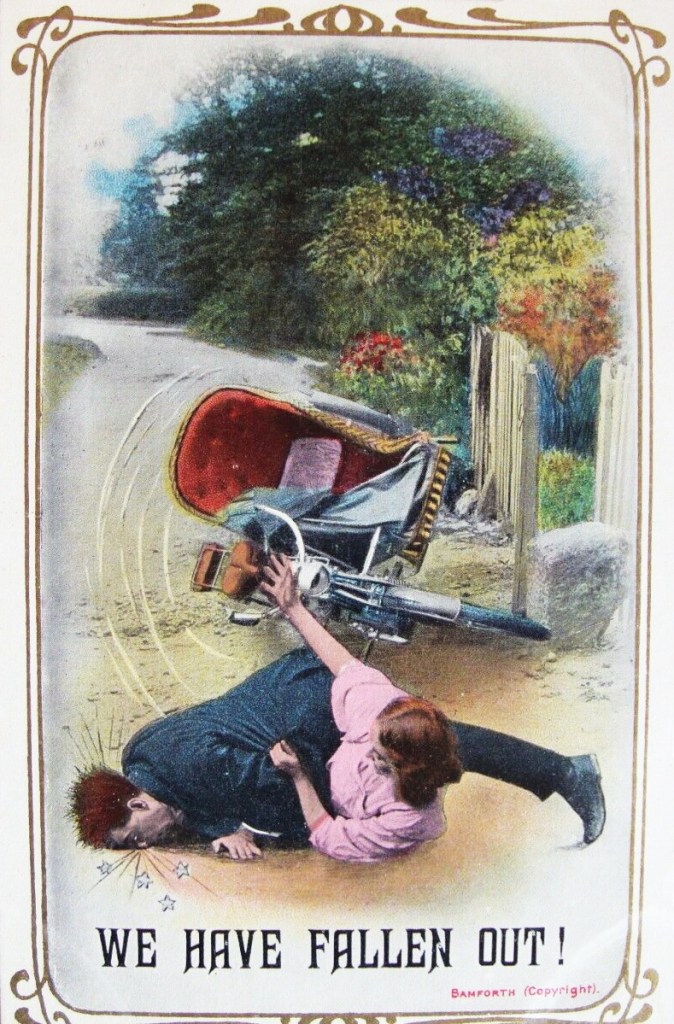
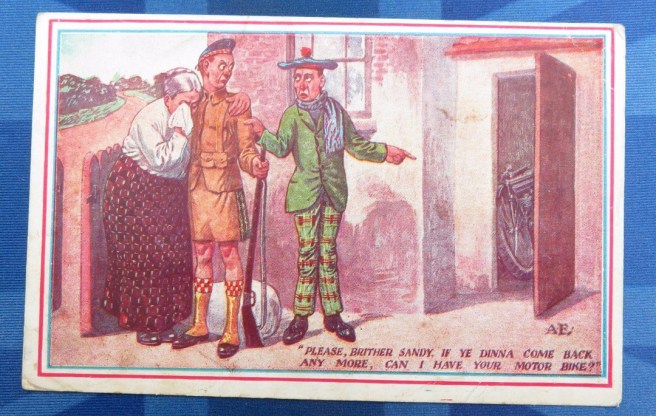
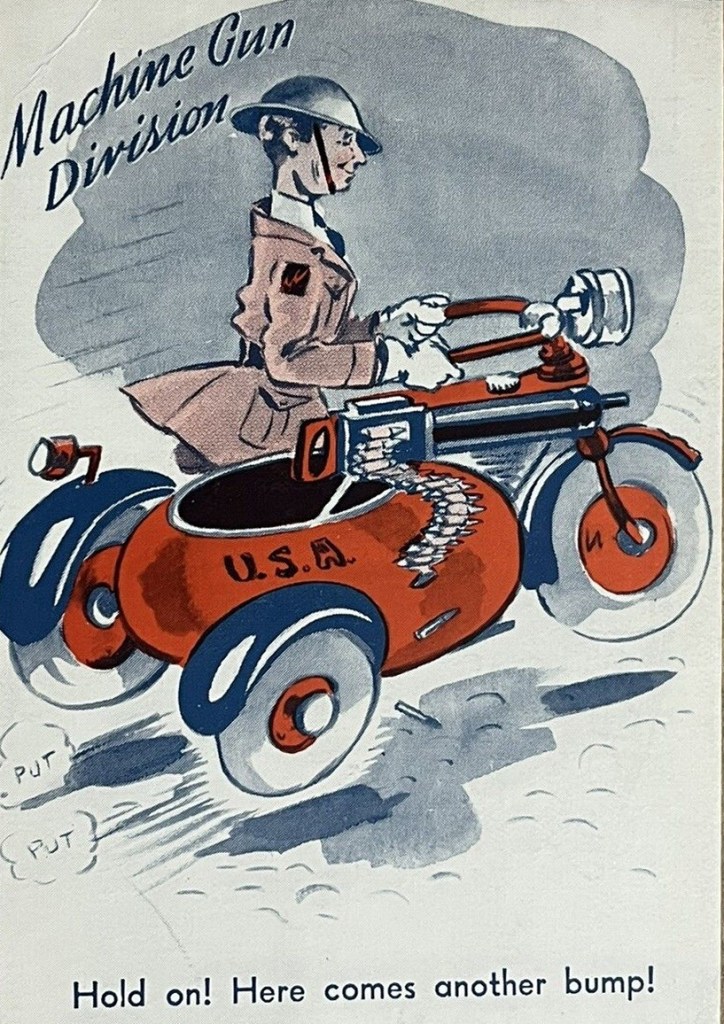
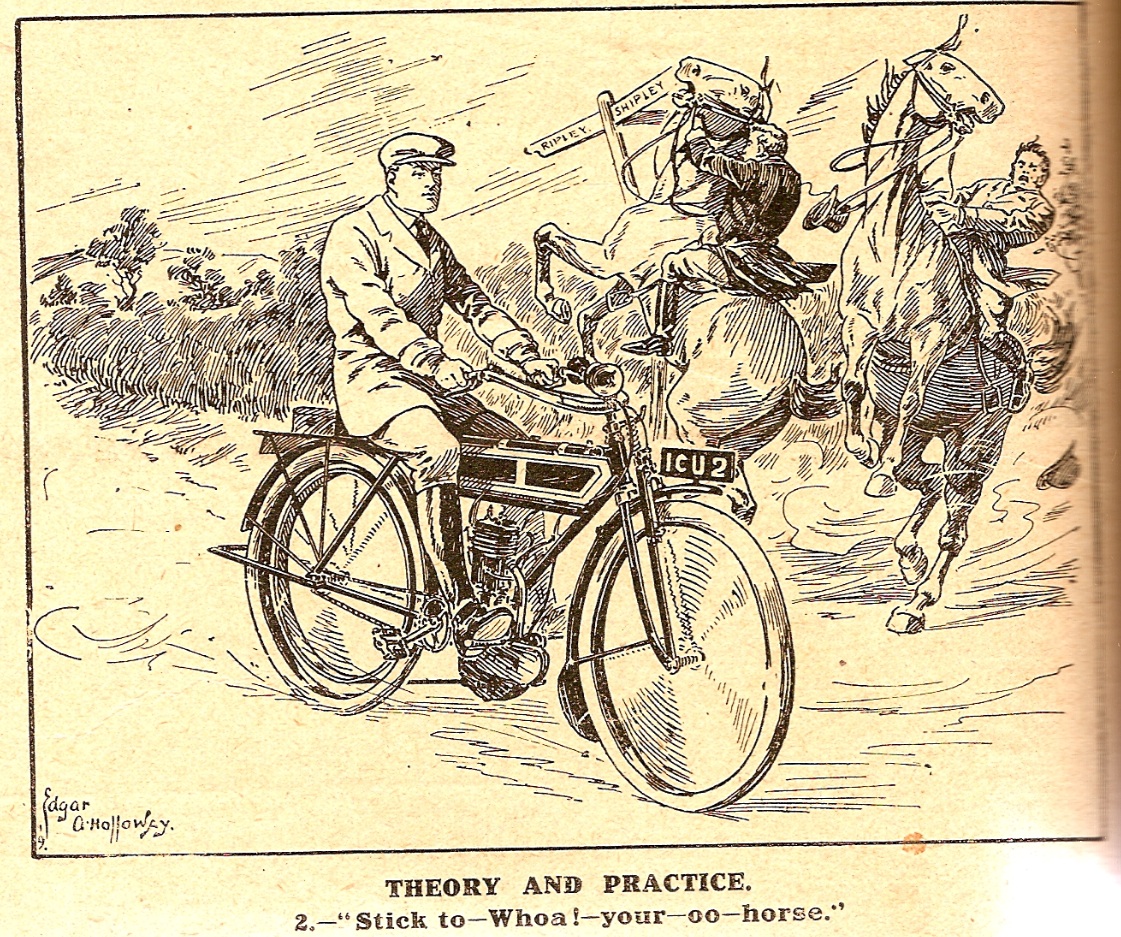
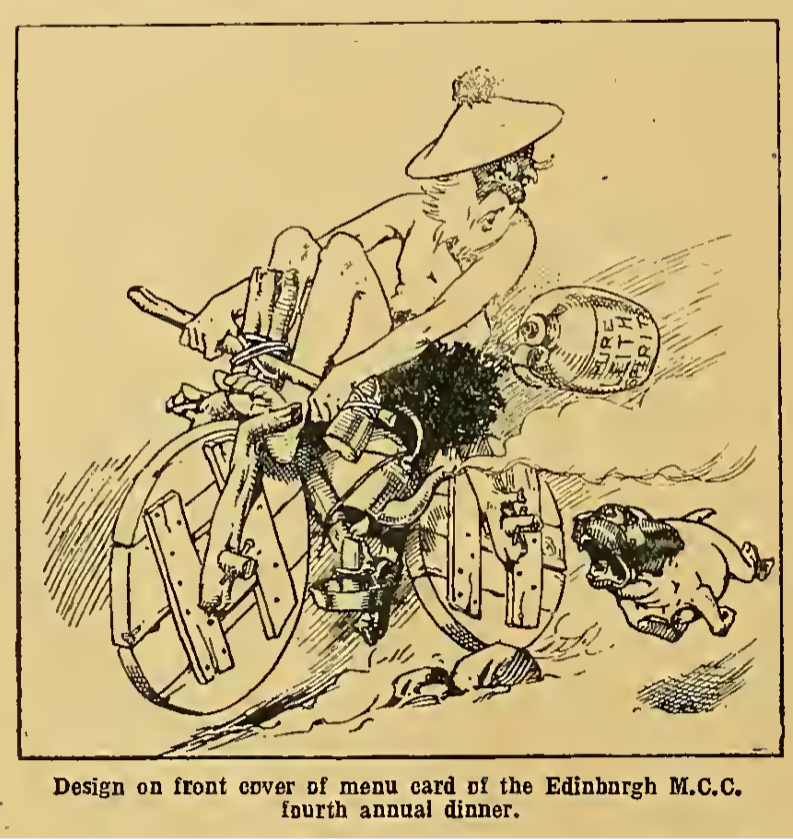
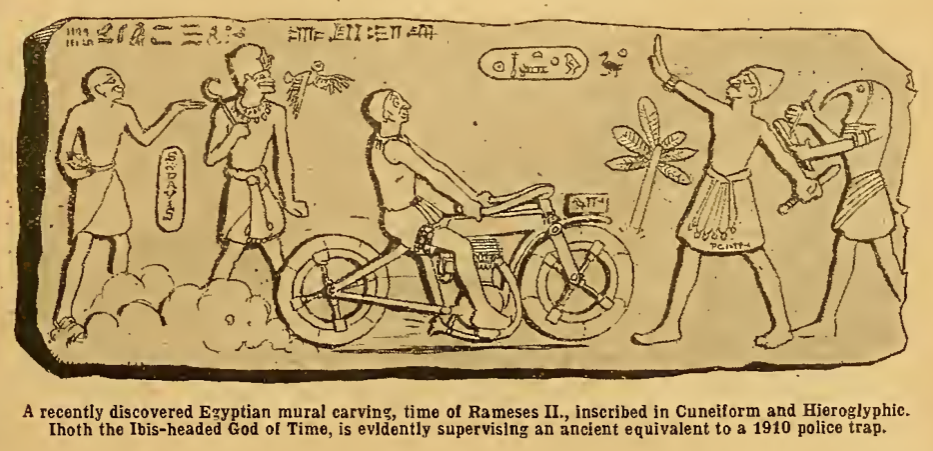
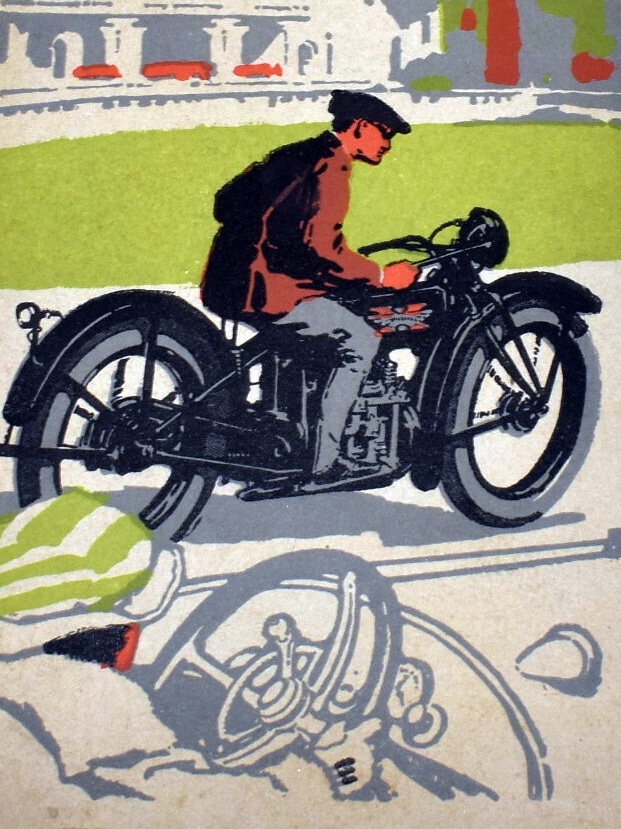
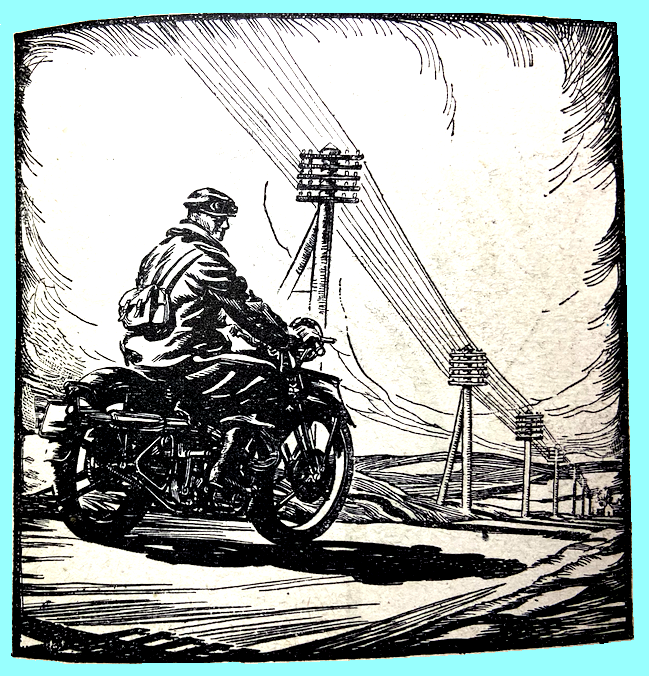
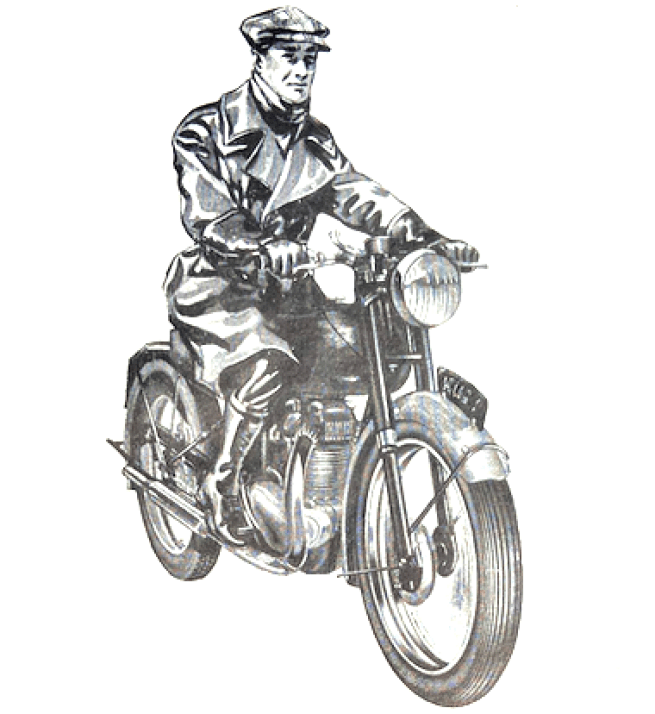
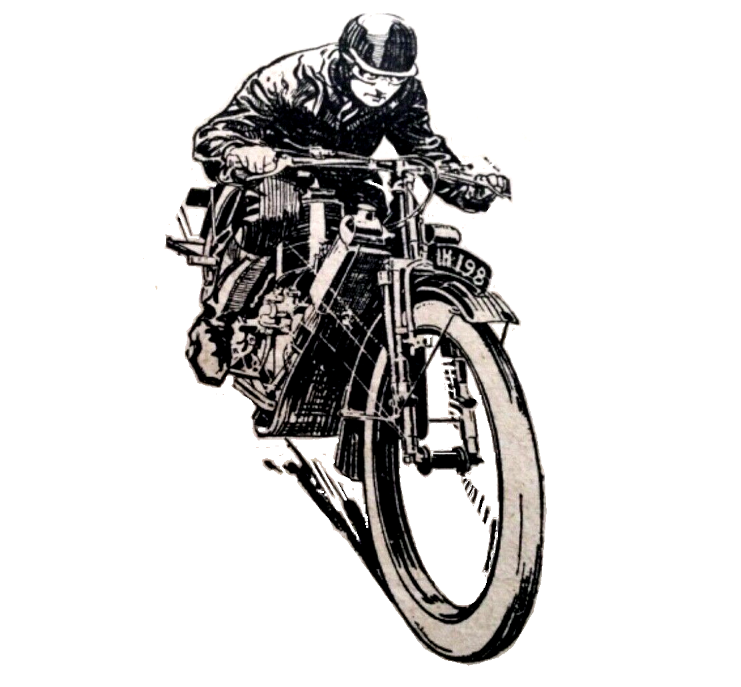
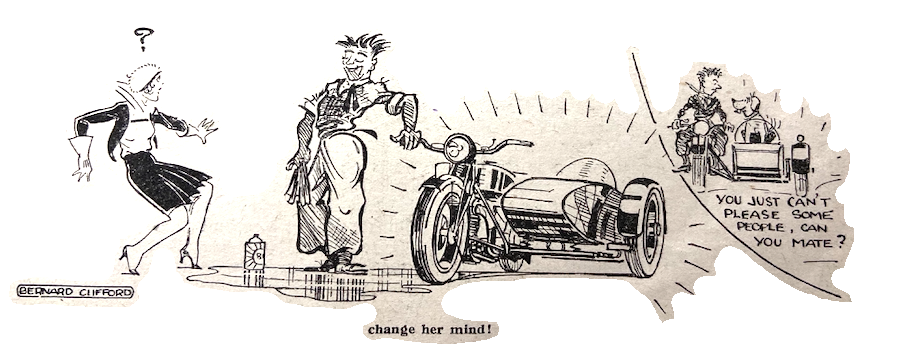
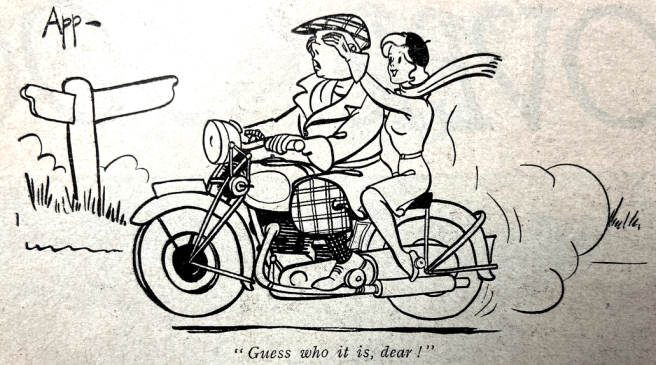
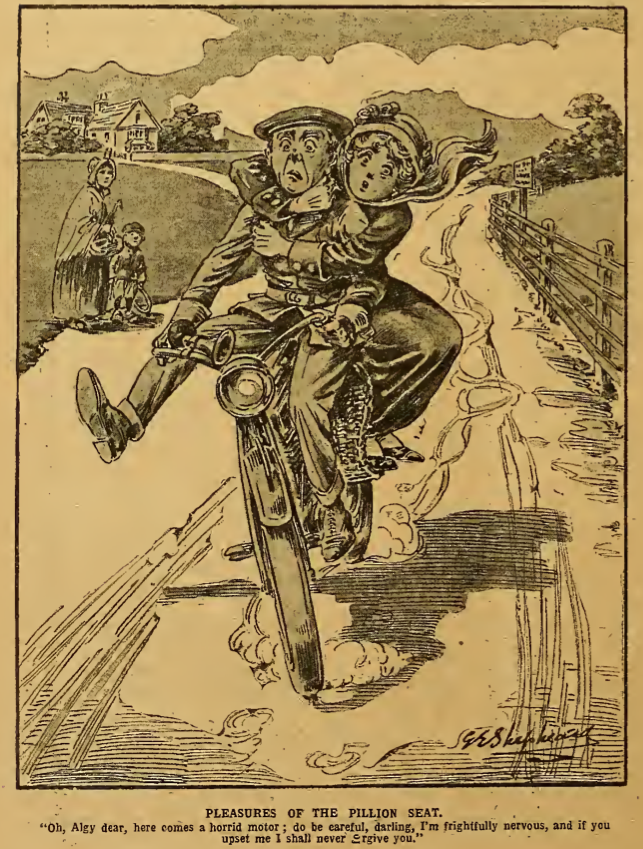
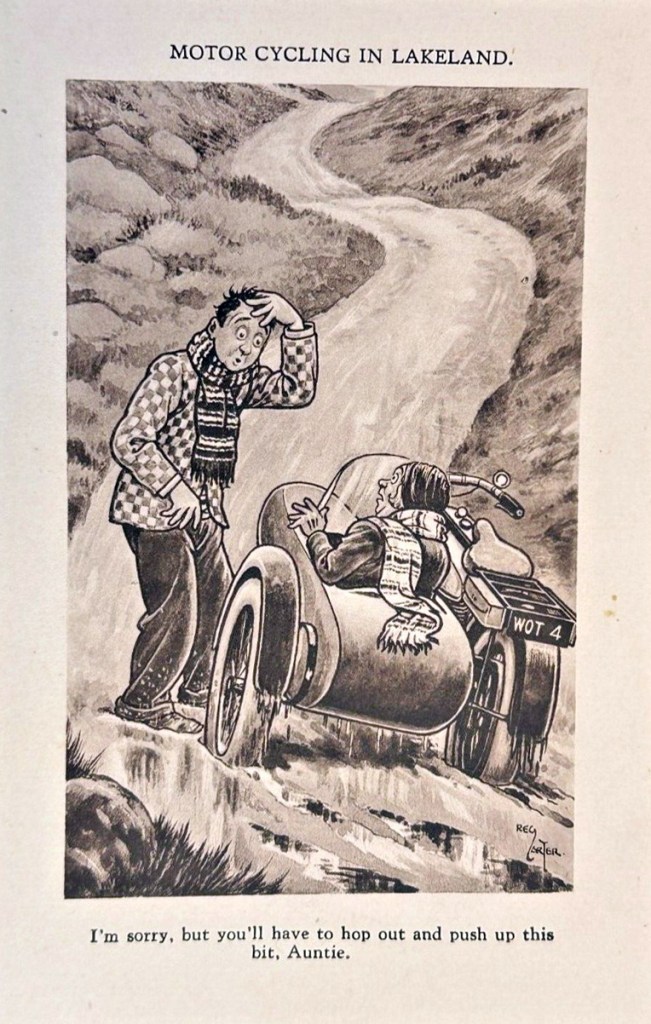
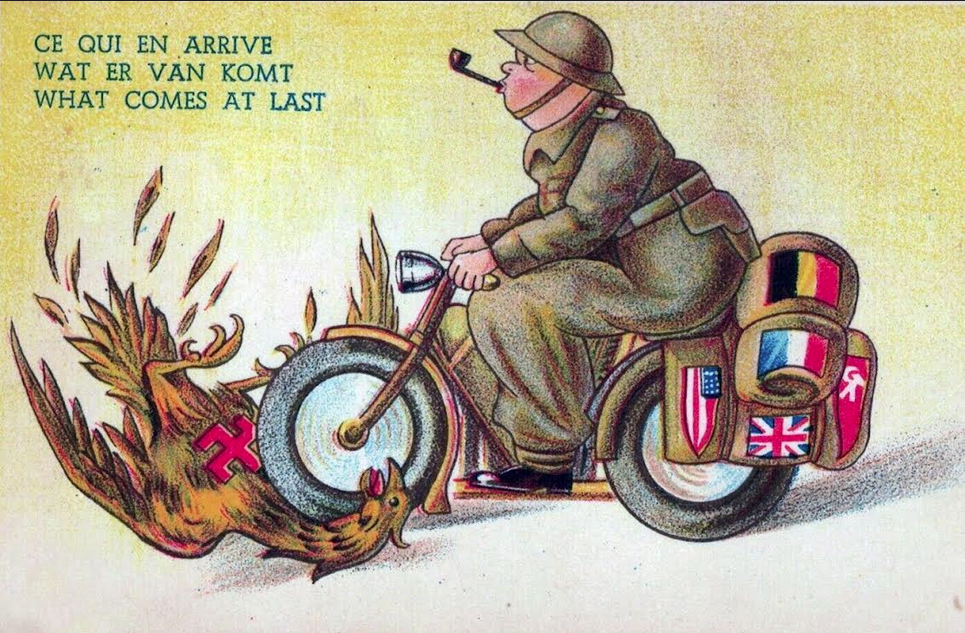
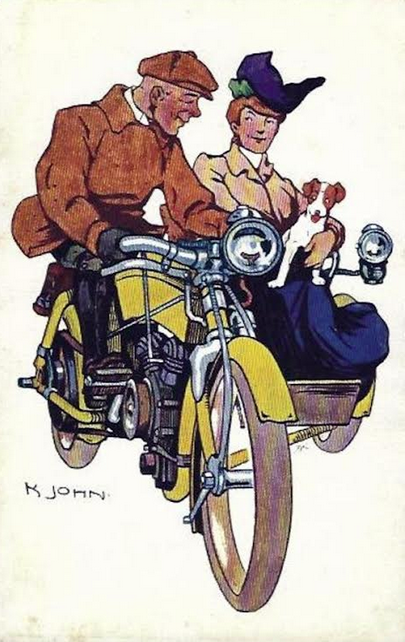
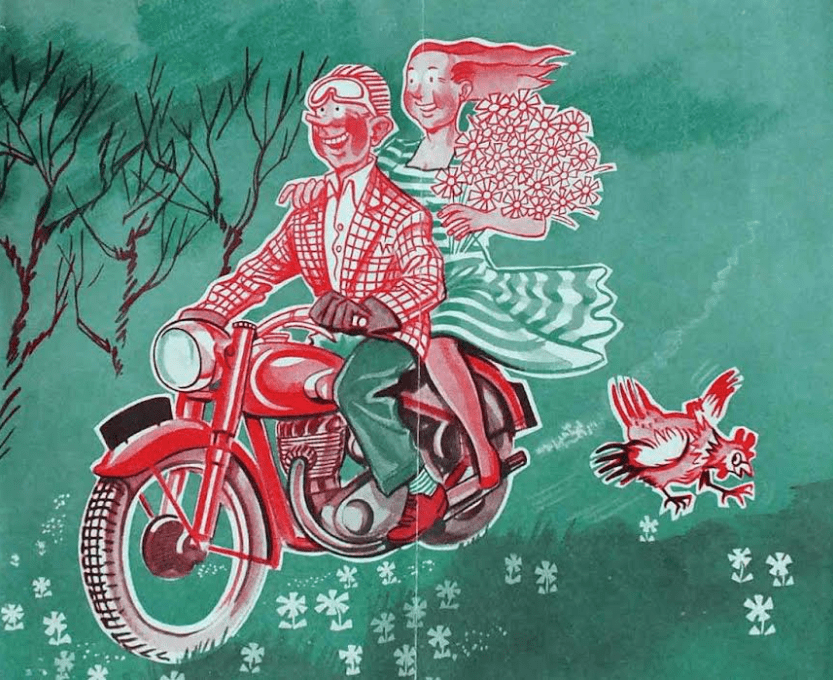
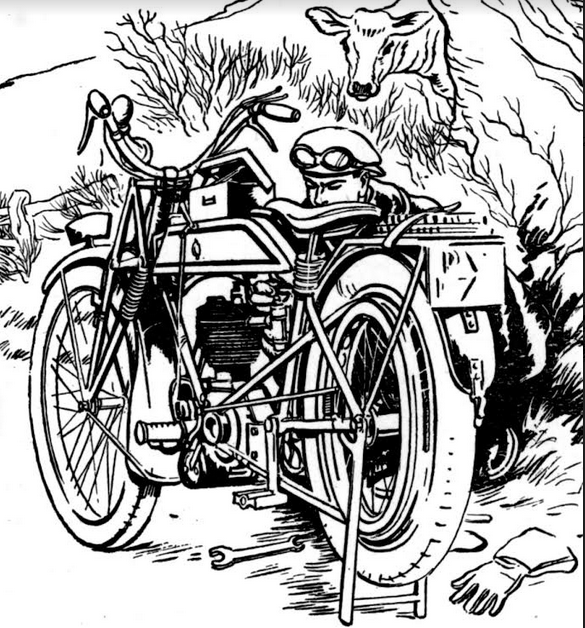
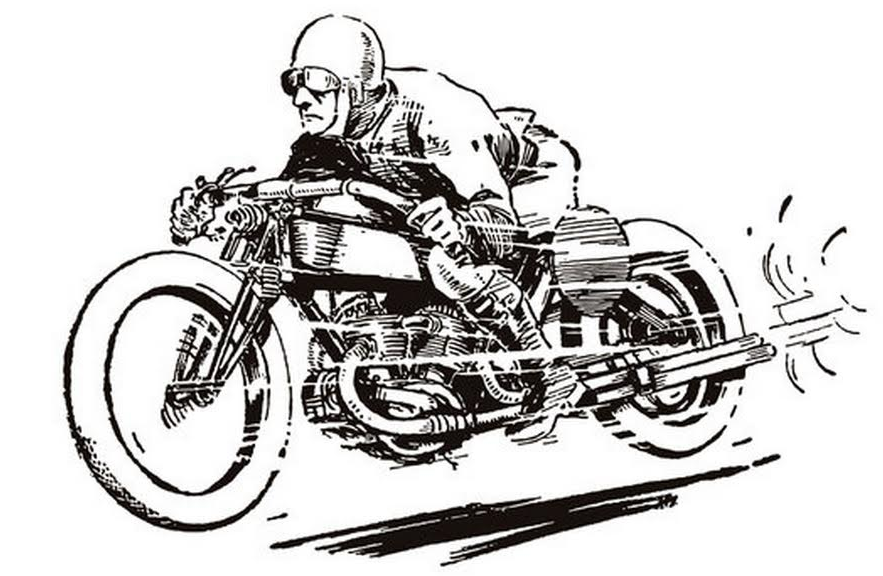
Just as it says on the packet, some of the cartoons that made the pioneers chuckle, or maybe wince. Also unearthed are some illustrations that have more to do with whimsy than humour and others that are simply lovely illustrations. In any case, like the poems, they offer an insight into those early days on the road. You’ll also find cigarette cards, adverts, posters, badges and postcards (including, thanks to my chum Francois, some French cards that are tres joli). Enjoy.
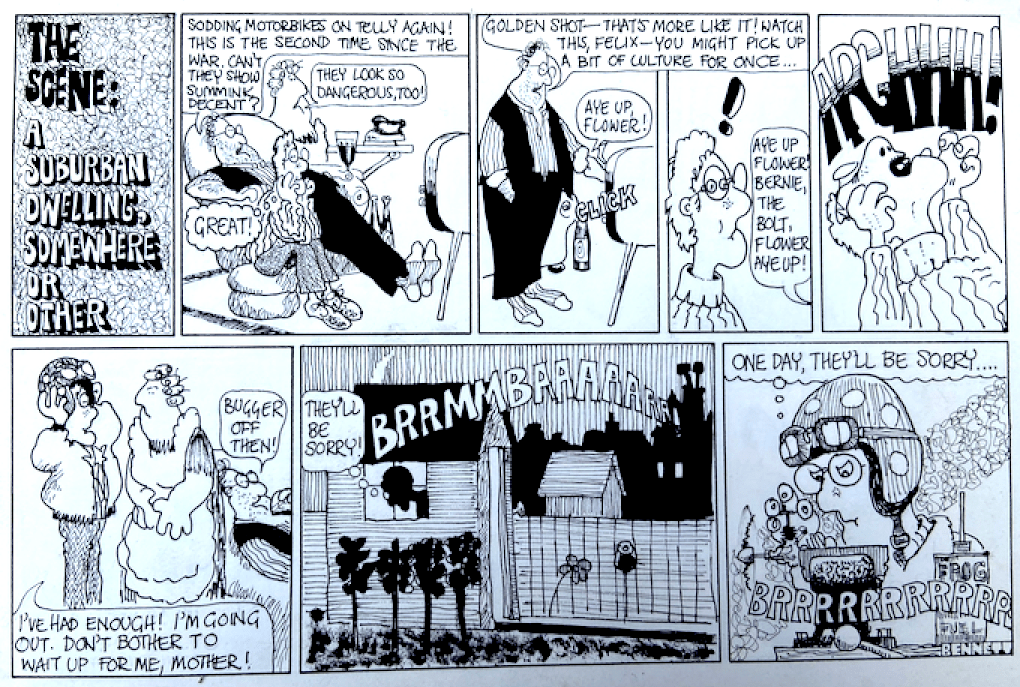
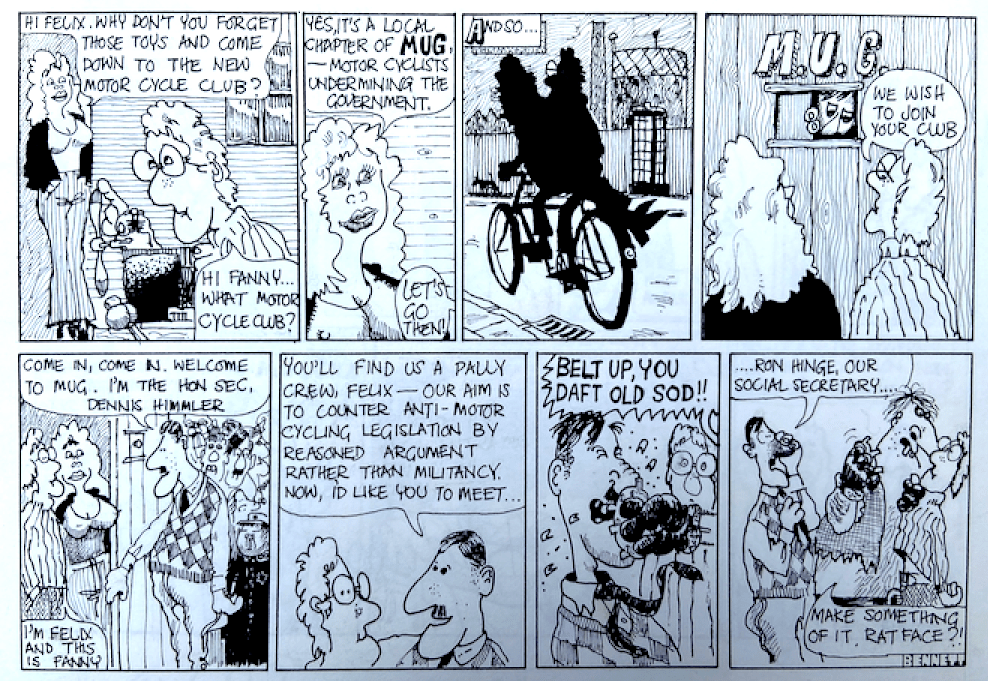
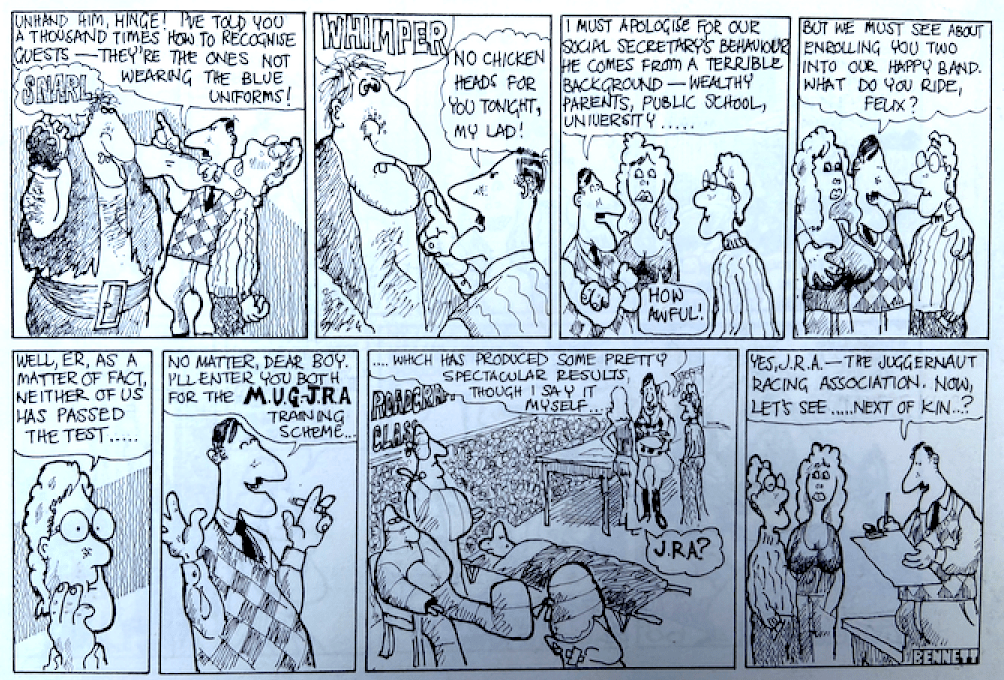
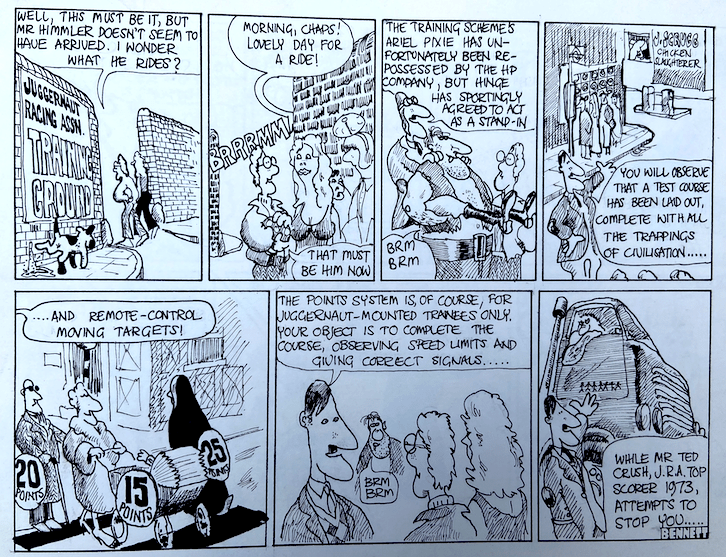
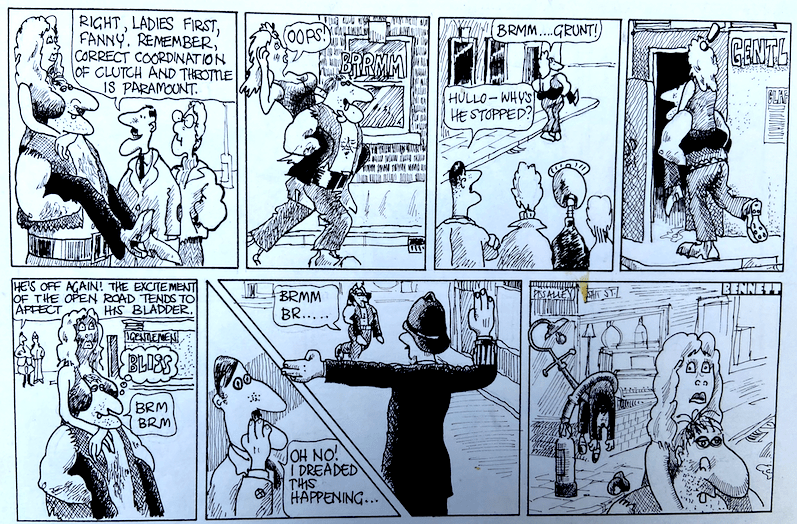
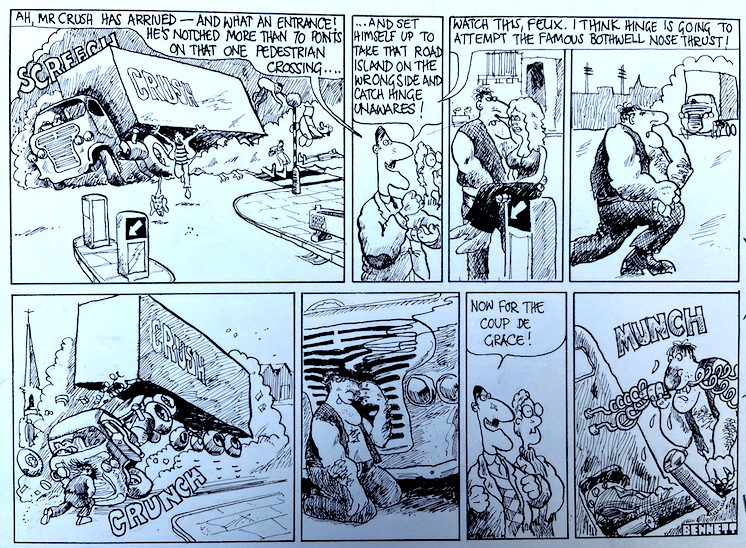
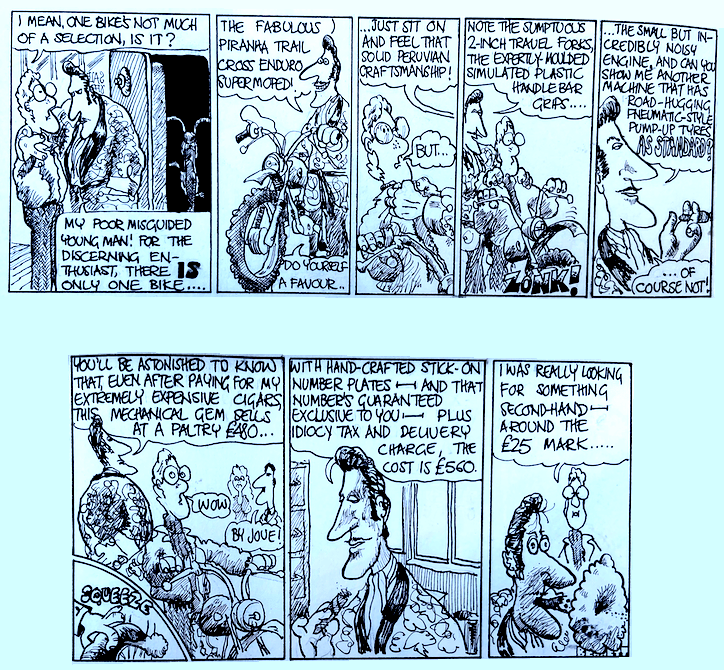
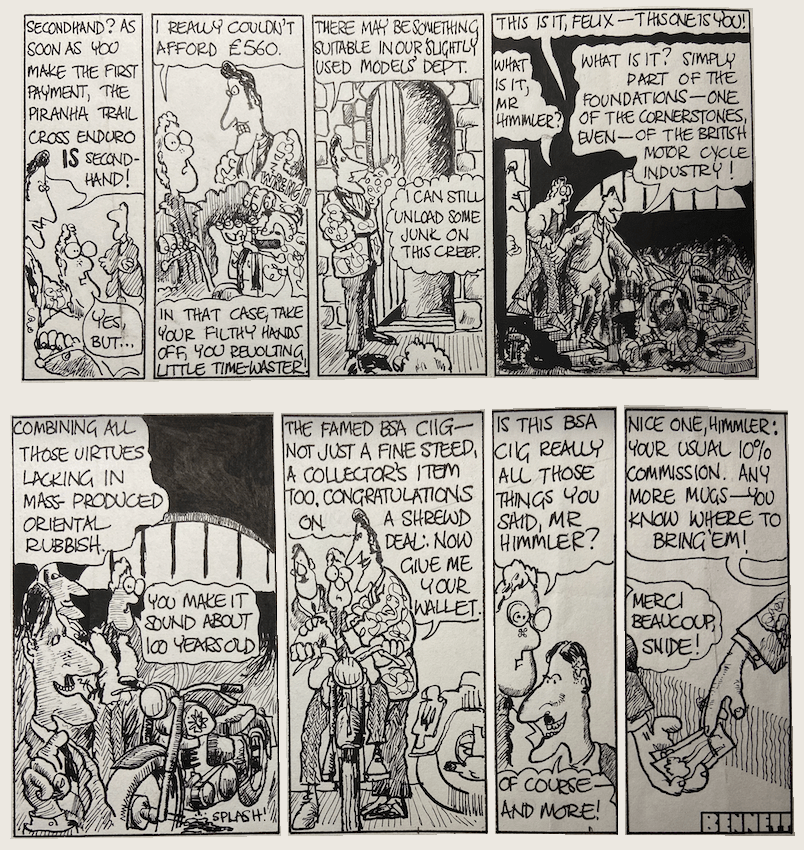
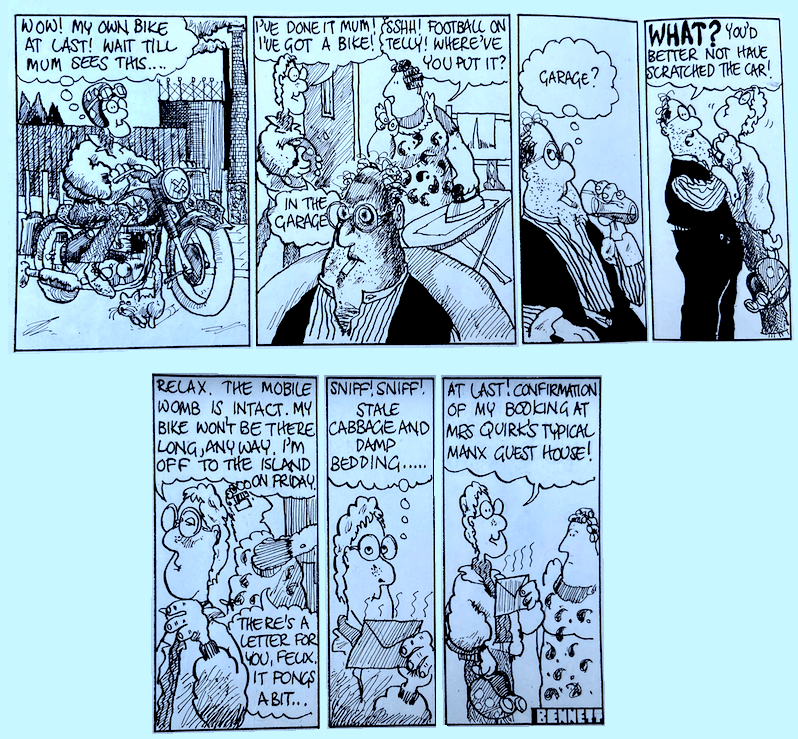
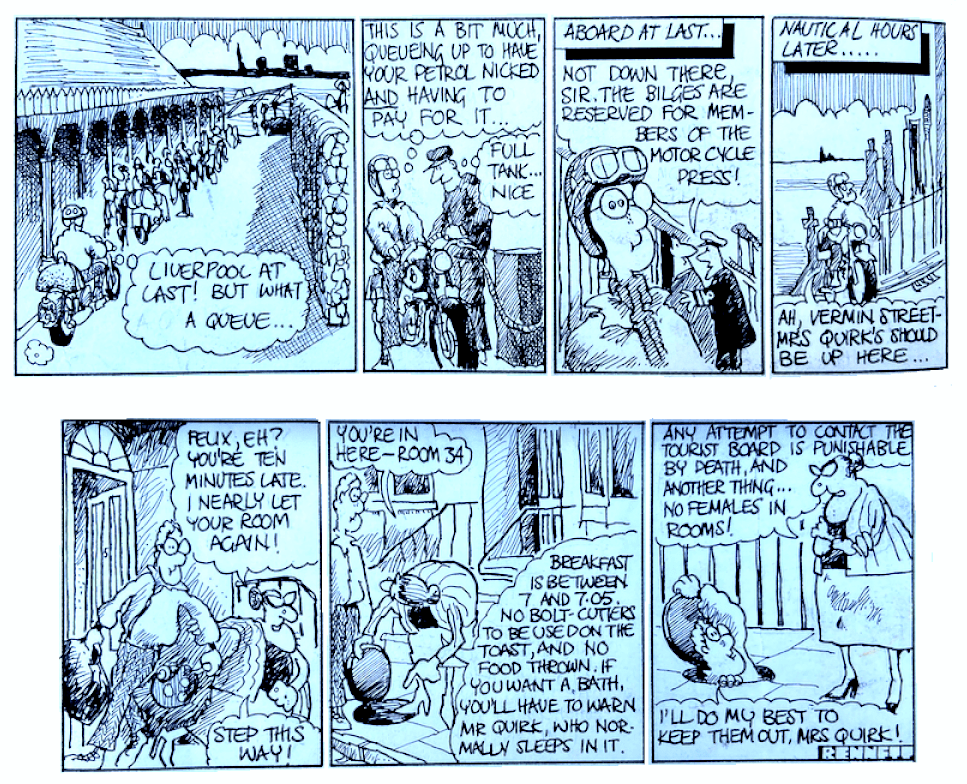
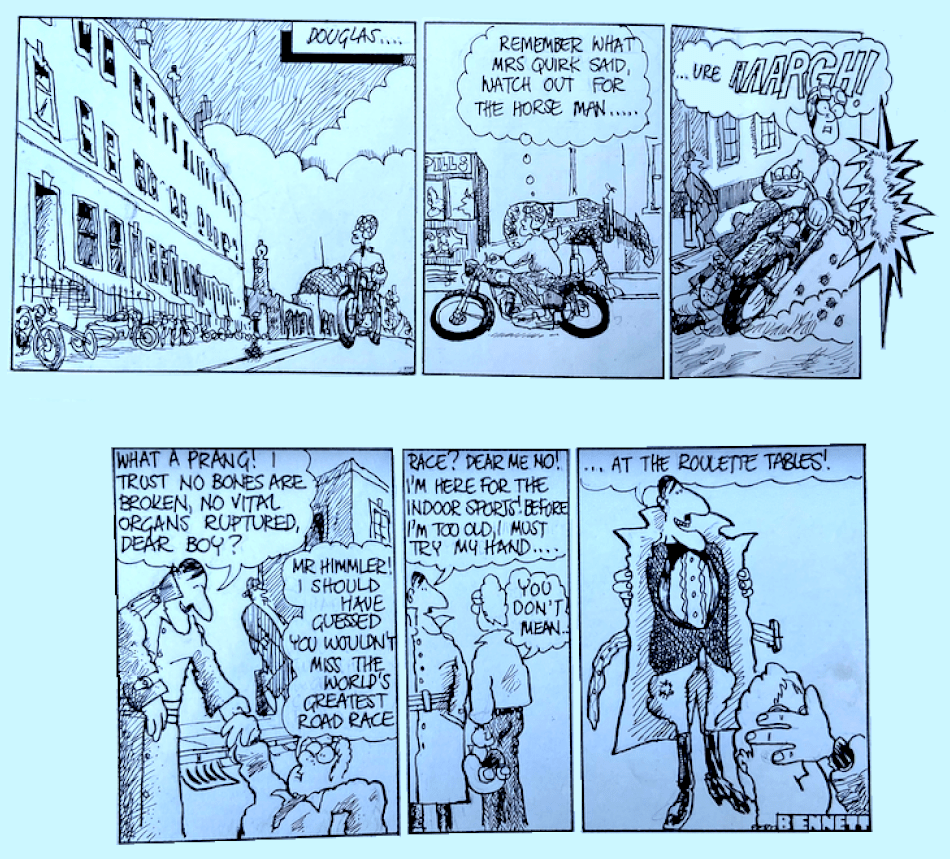
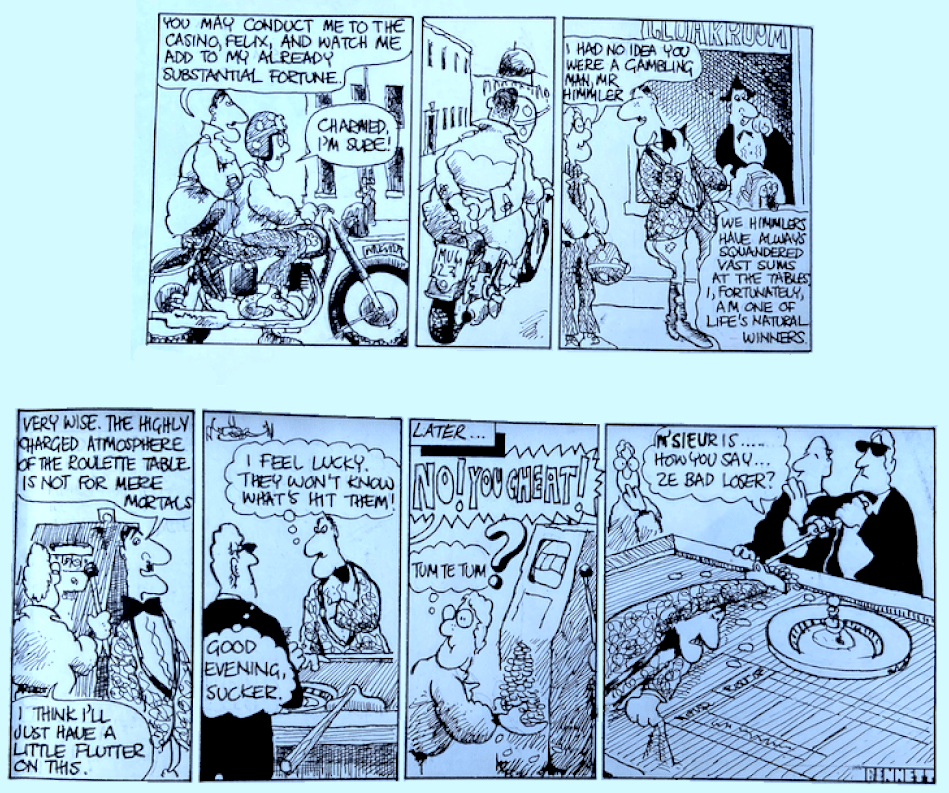
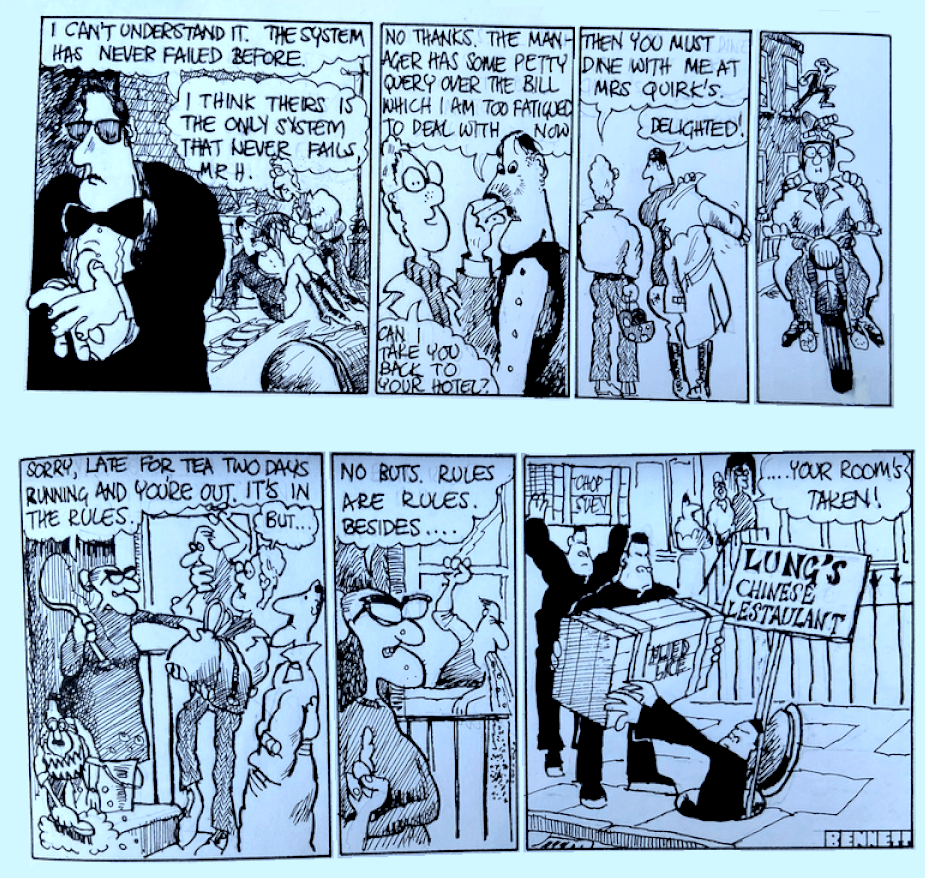
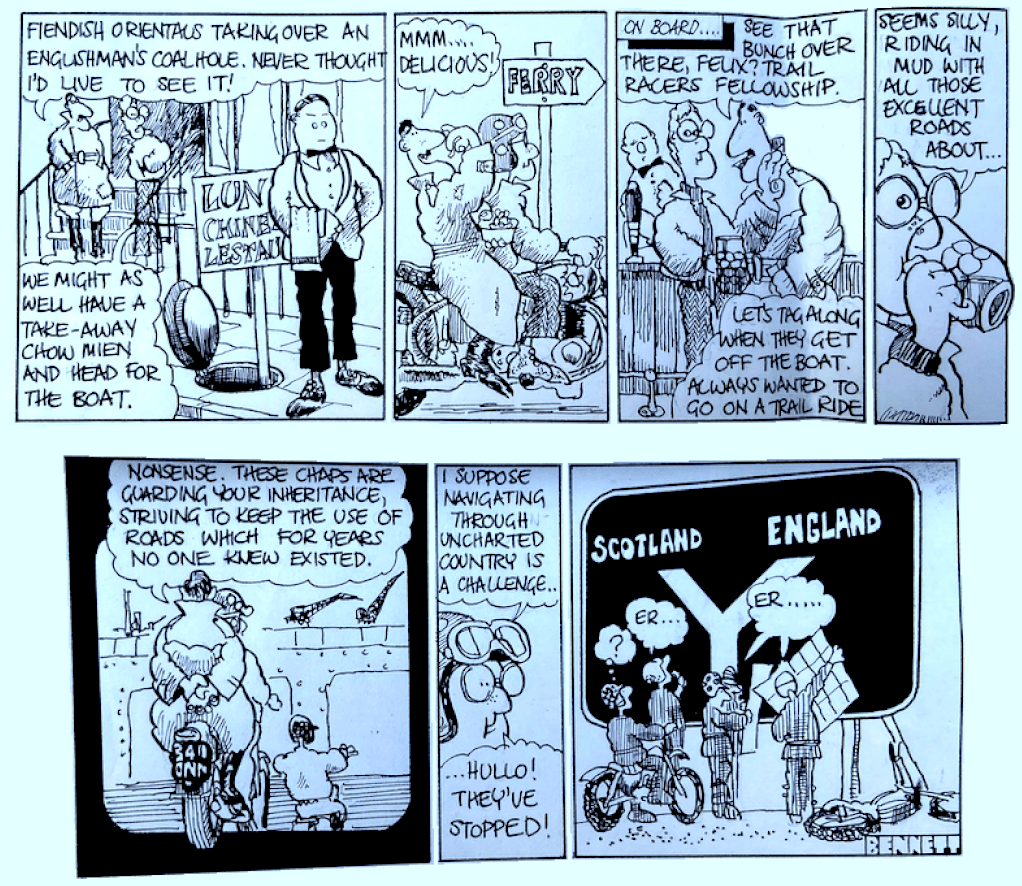
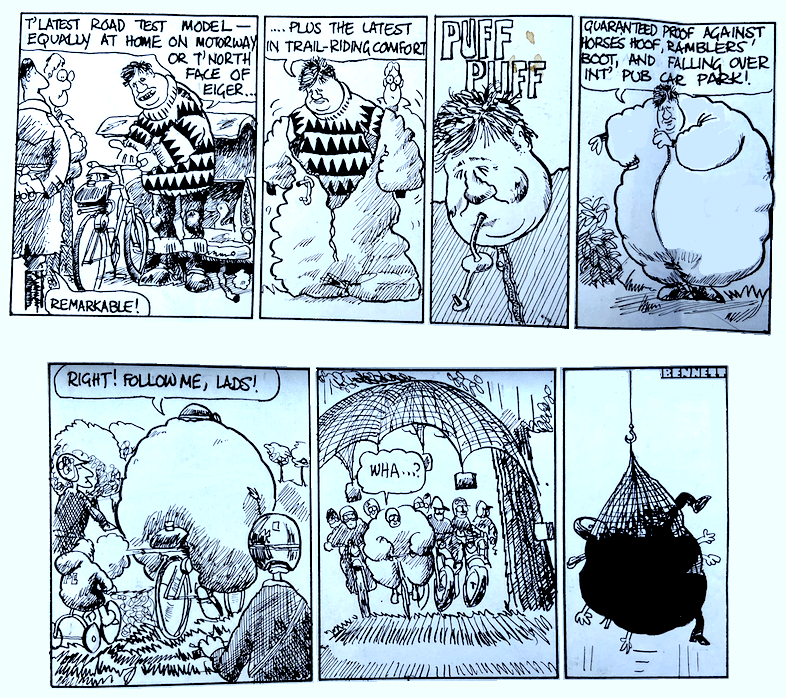
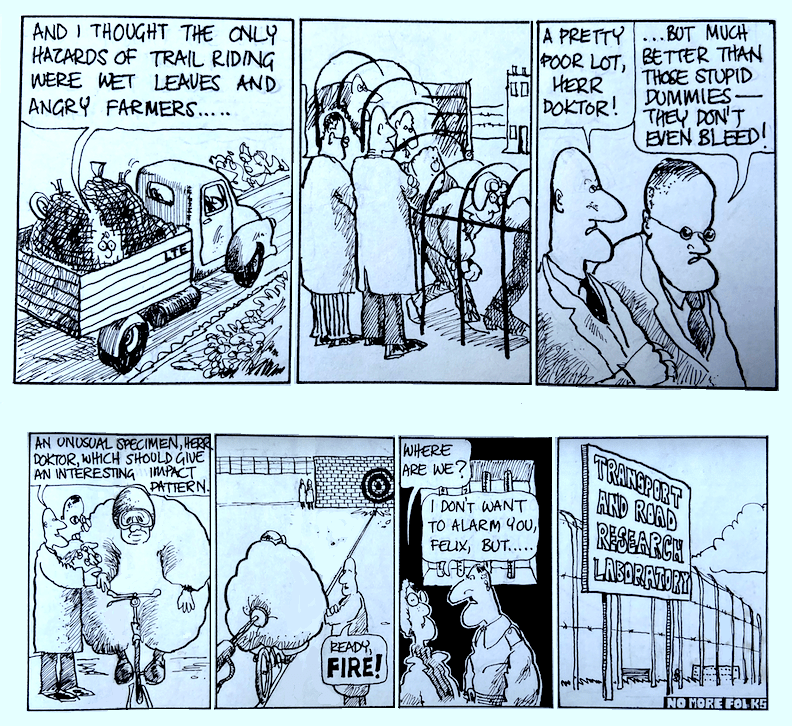
A NEW START! Well, a new start to this page…when I were a nipper filing photos for Motor Cycle Weekly, before editor Mick Woollett let me anywhere near a typewriter, MCW was enlivened by what I believe to be the best cartoon strip to grace the pages of a motor cycle magazine, courtesy of a gentleman motor cycle journalist named Roger Beale. OK, yes, I love Ogri too and Paul Sample is a bloody genius and yes, I have a complete set of the Ogri collections. But for sheer silliness combined with a dab of surrealism Beale’s all-too-short-lived look at the adventures of a gormless recruit to the wonderful world of motor cycles is…well, judge for yourselves. Here, for the first time (drum roll please, maestro) I am proud to present the complete run of…
Historical note: Yes, of course Dennis Himmler is Motorcycle Action Group founder Dennis Howard. Dennis, a fine motor cycle journalist and author, was a regular visitor to MCW; I’m proud to recall that I held Dennis’s MZ while he made an impromptu speech outside the House of Commons on the night they voted in the compulsory helmer law.—Ed
You’re looking at images of the original artwork with Roger was kind enough to gift me; I assume the text change was inserted on the subs’ desk. The original is clearly funnier—Ed.
Another inside joke; John Everest is Motor Cycle/MCW staffer John Ebberell, who was kind to me when I was working for the classified ad dept and had cause to venture into the hallowed editorial offices. A real gentleman and something of a forgotten hero, John was a founder of the Trail Riders Fellowship who was instrumental in finding the site for the first Dragon Rally.—Ed
…that’s all folks. Did Everest survive his impact with the test wall? Did Felix and Mr Himmler escape the TRRL’s clutches? Alas, we’ll never know. PS When FF&Co were having theor adventures The TRRL was developing safety aids including wrap-round crash bars guaranteed to pin the rider to the bike in the event of a crash and a tank-mounted sprung loaded T-bar designed to stop a rider going head first into an obstacle. As a female member of staff remarked, clearly none of the TRRL types had boobs…Happy days.—Ed.
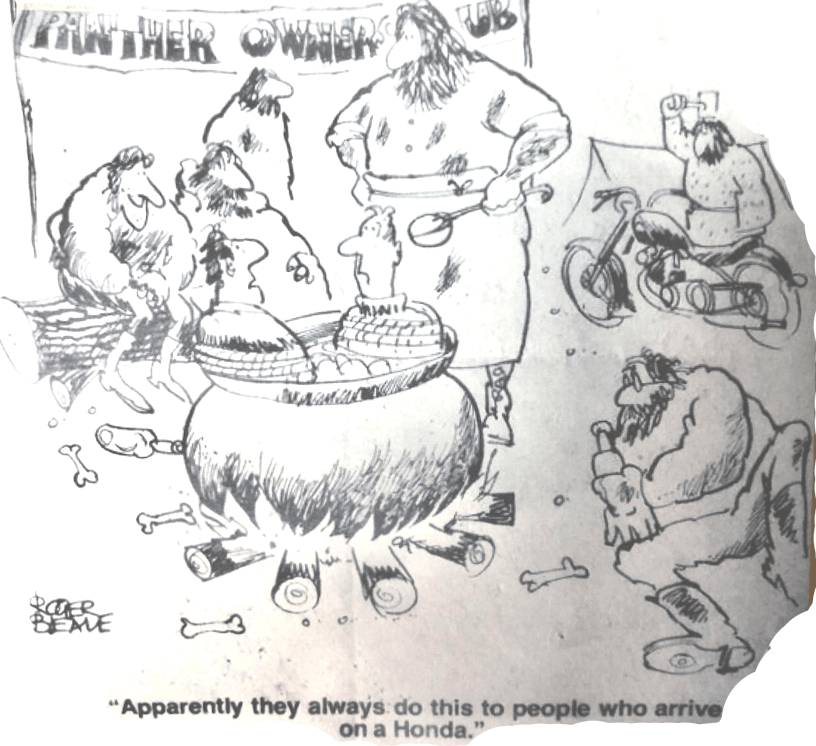
A lovely example of Beale’s work that still makes me smile nearly 50 years on.
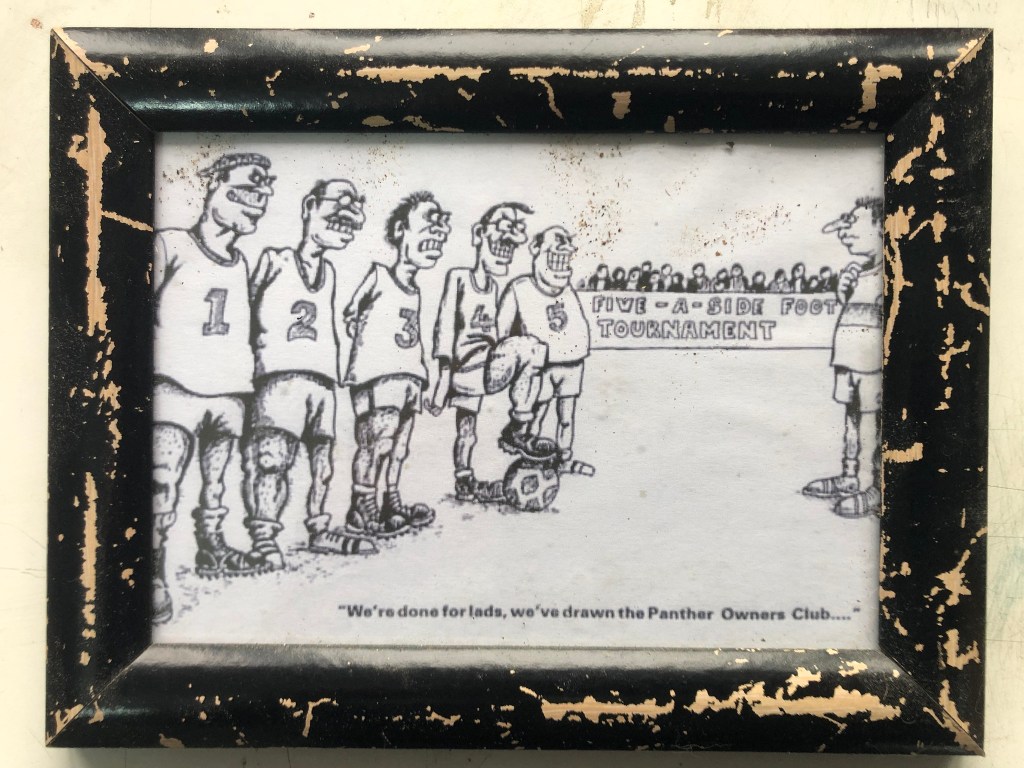
I was a member of the mighty Panther Owners Club so I take credit for inspiring Roger’s POC phase…
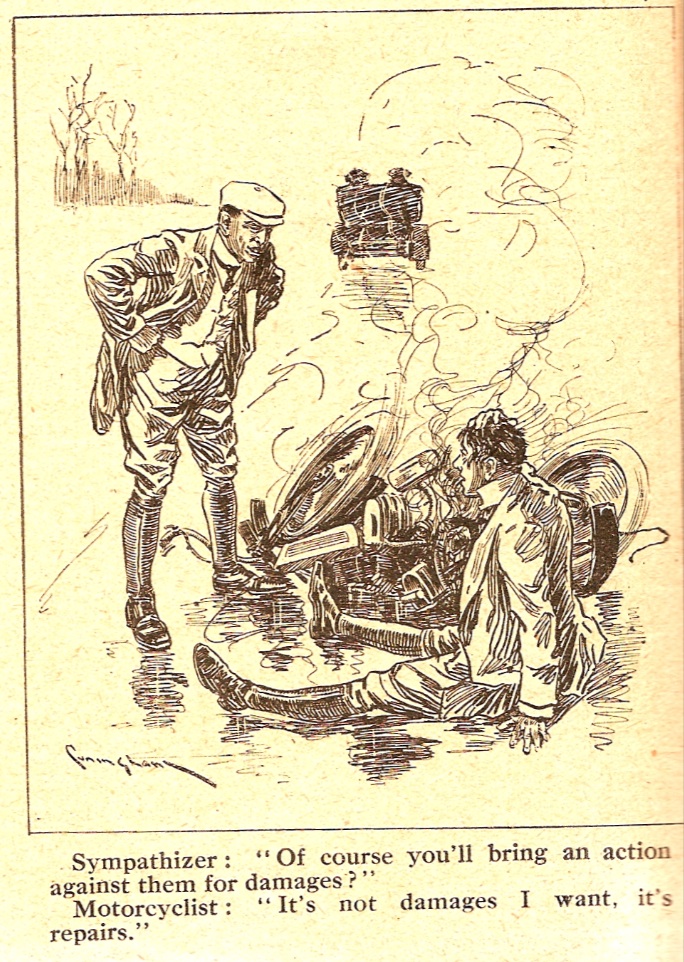
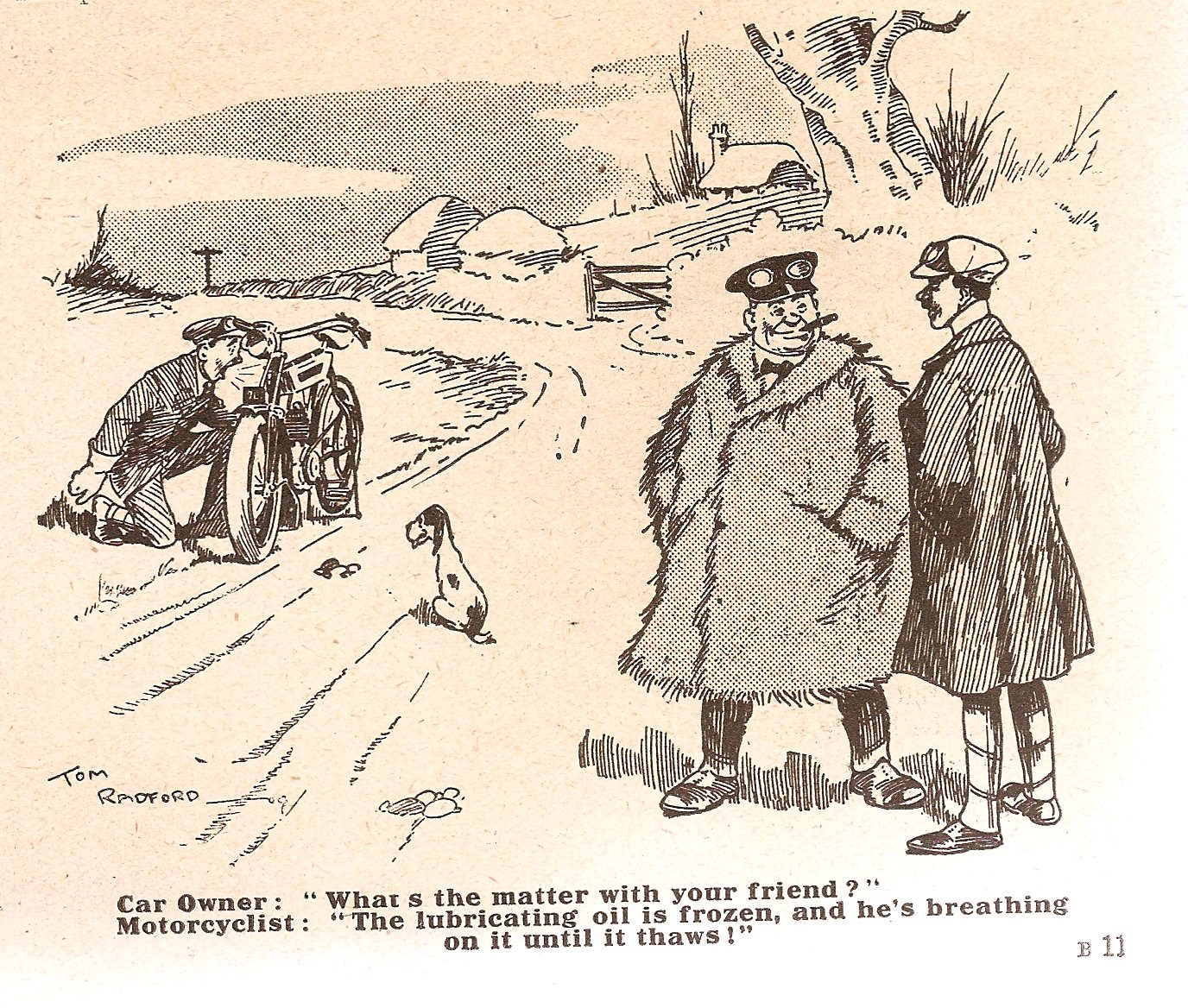
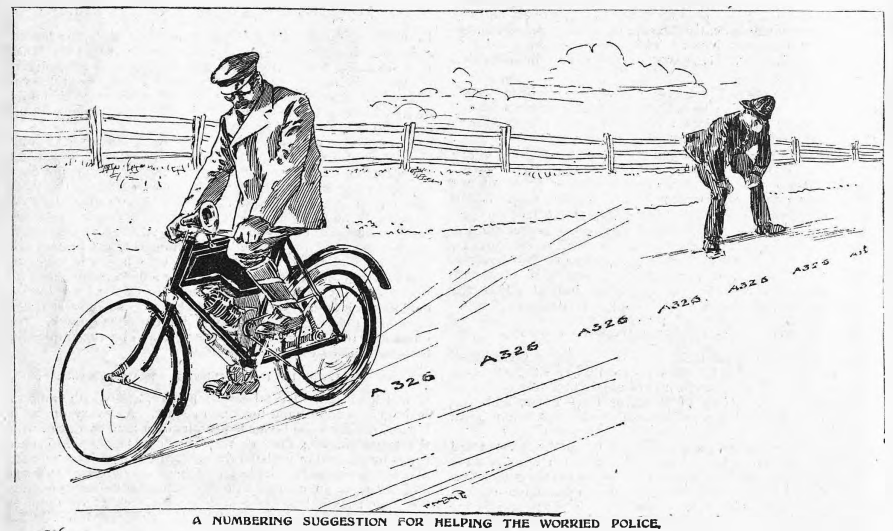
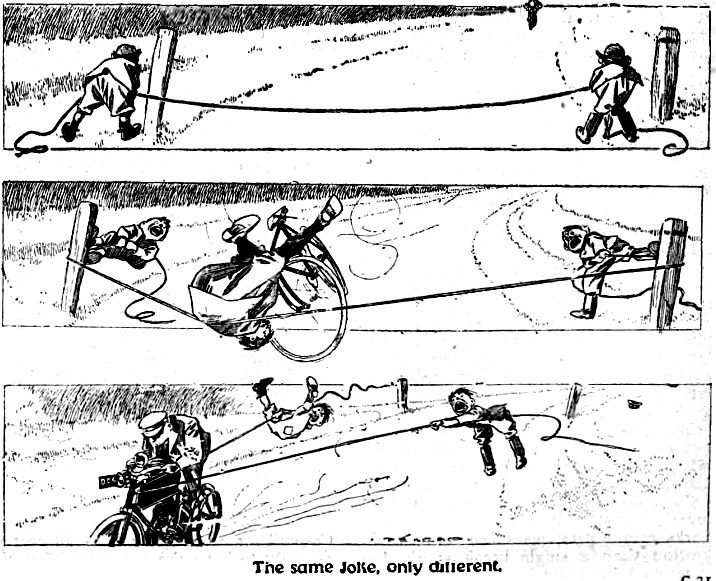
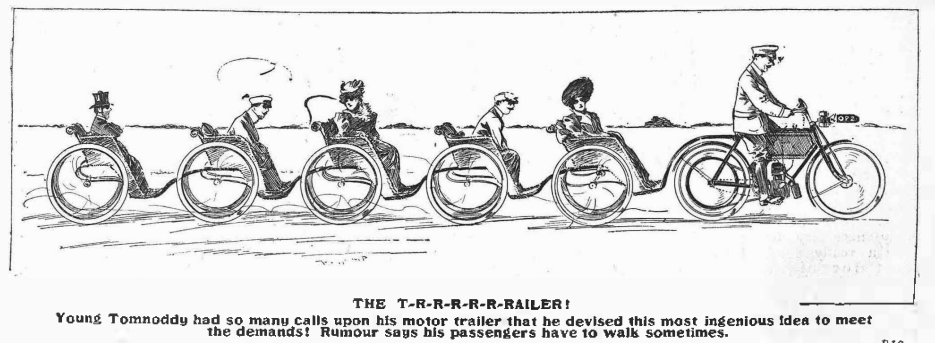
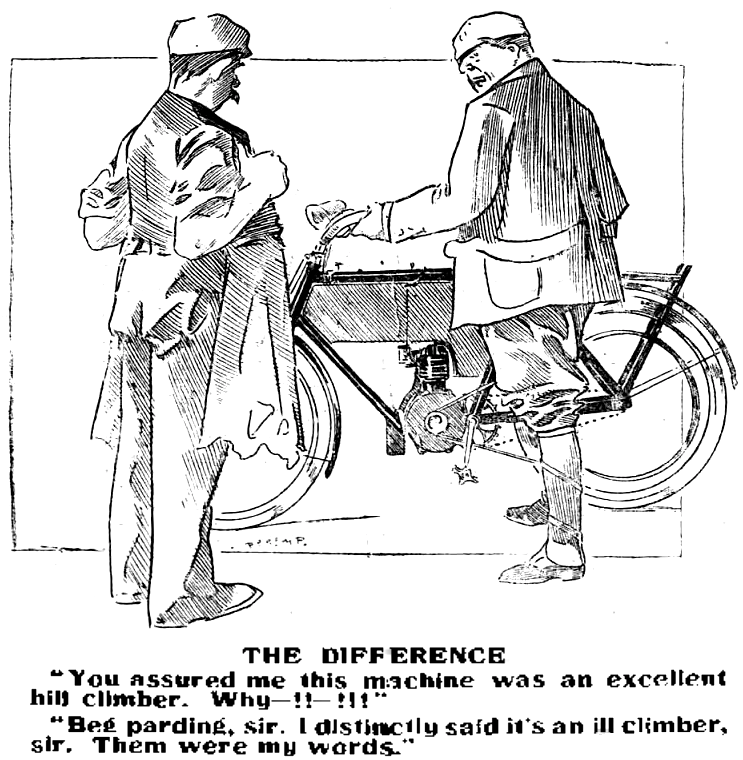
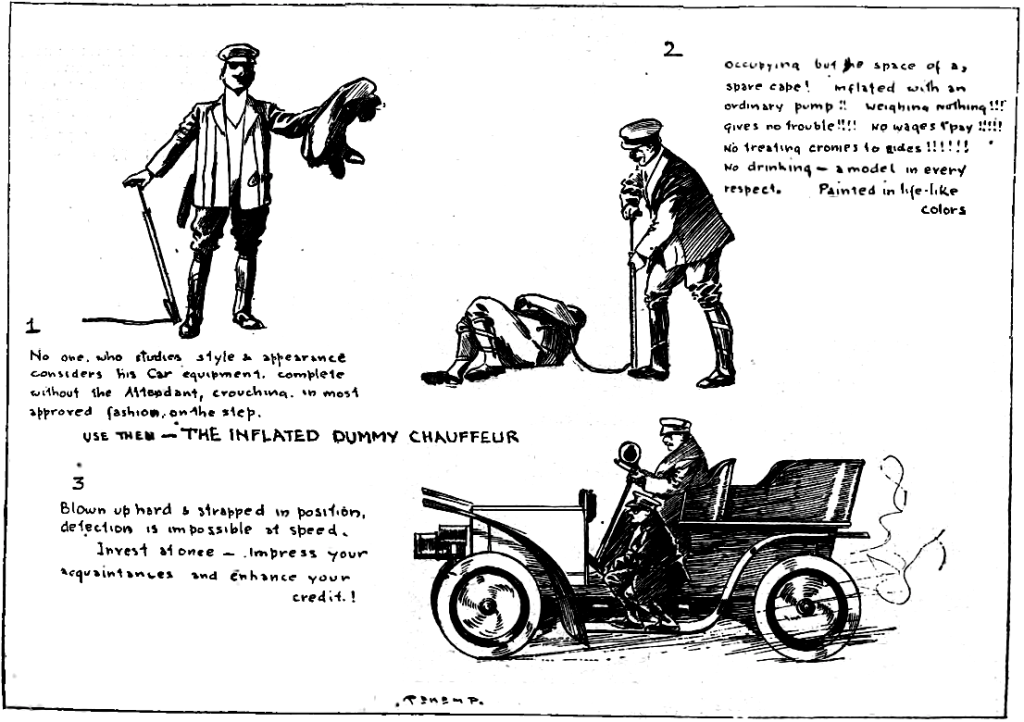
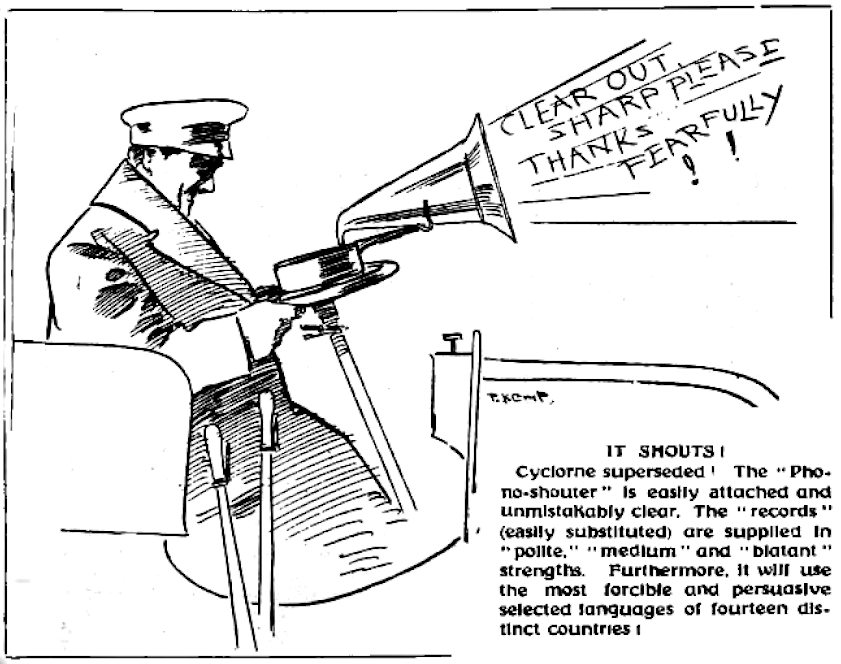
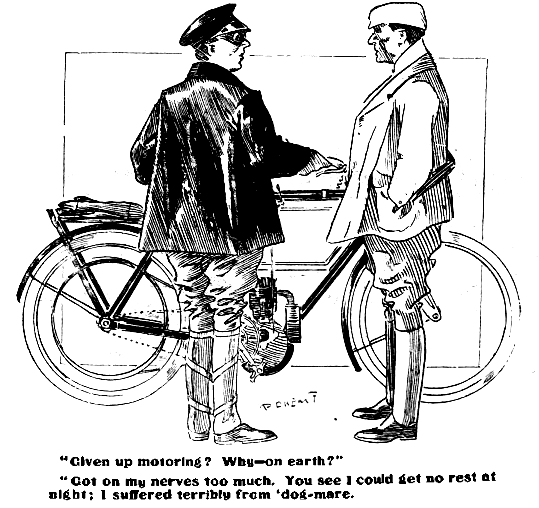
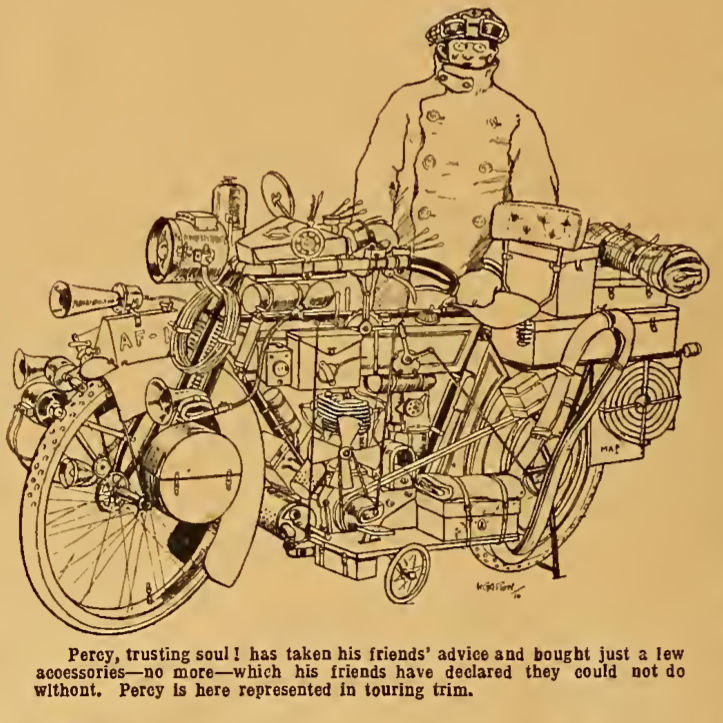
From The Motor, 1904, as are the next few gems.
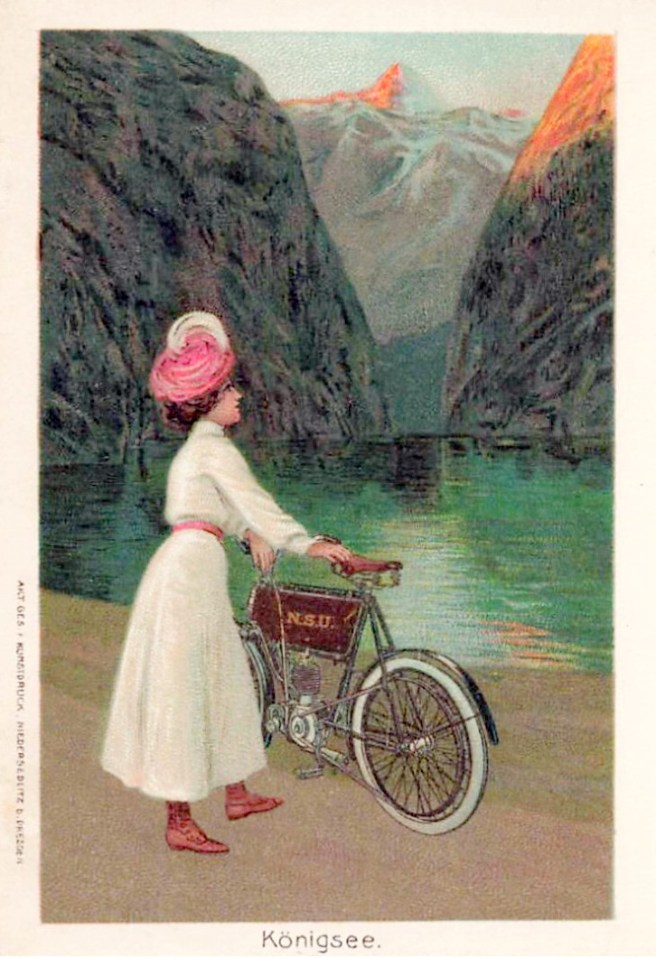
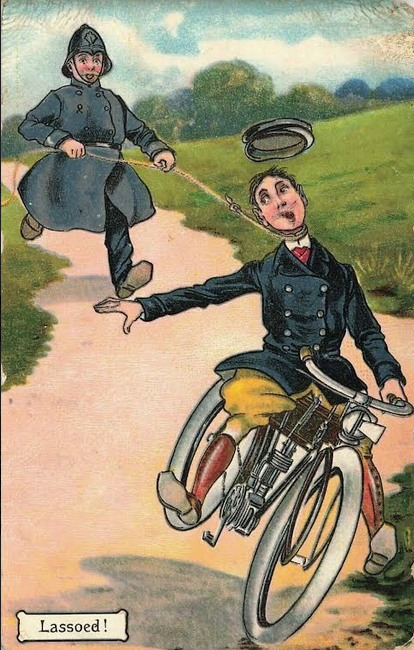
When riders were on tour they wanted to send postcards home, particularly if the postcards had bikes on.
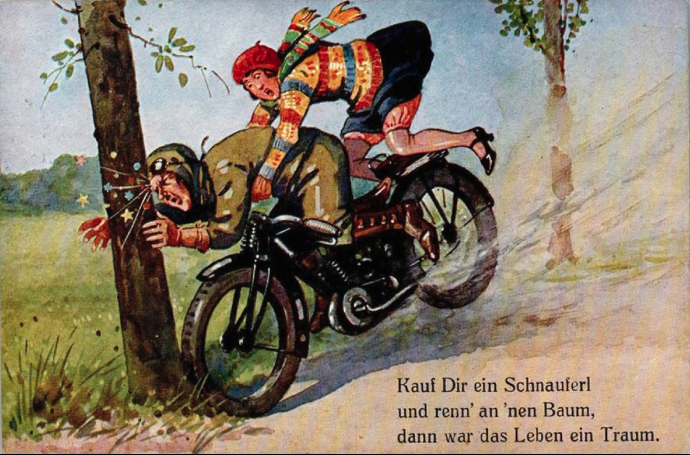
“Buy Yourself a Motorbike and run to a Tree, then Life was a Fantasy.”
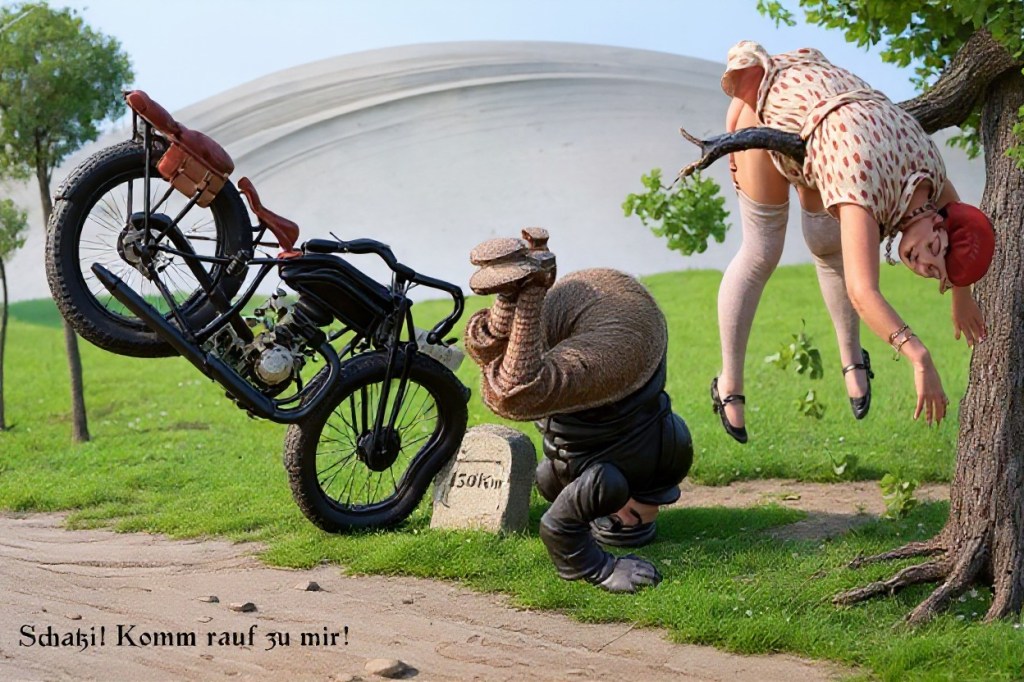
“Darling! Come up here to me!”
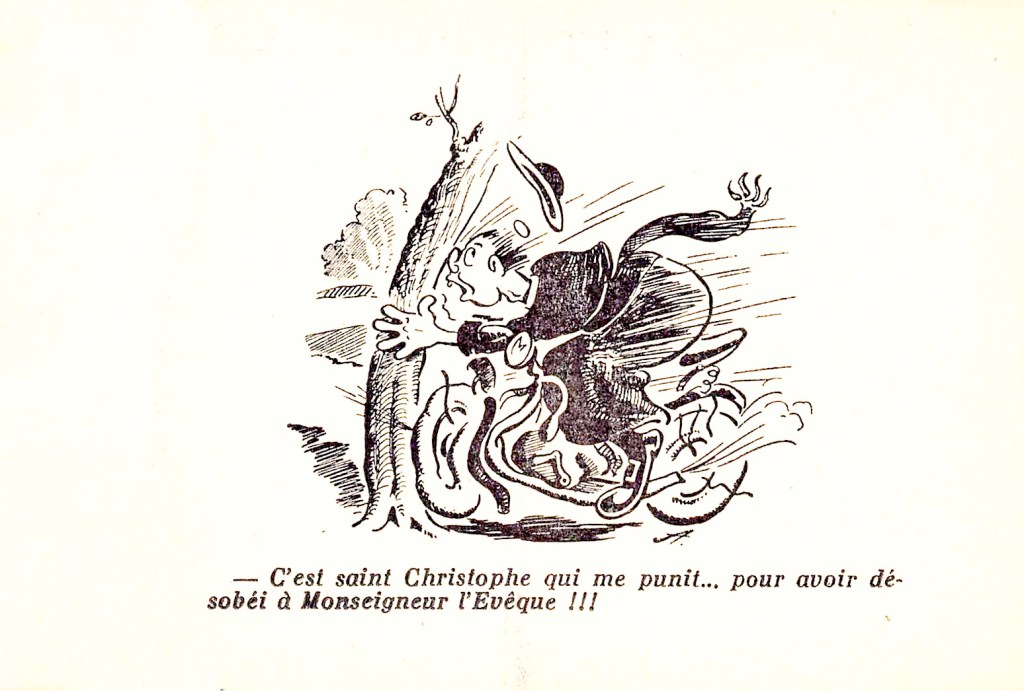
—It is Saint Christopher who is punishing me…for disobeying the Bishop!!!
“The new motorbike’s going fast, blimey, we’re going a hundred times as fast as that boat over there.”
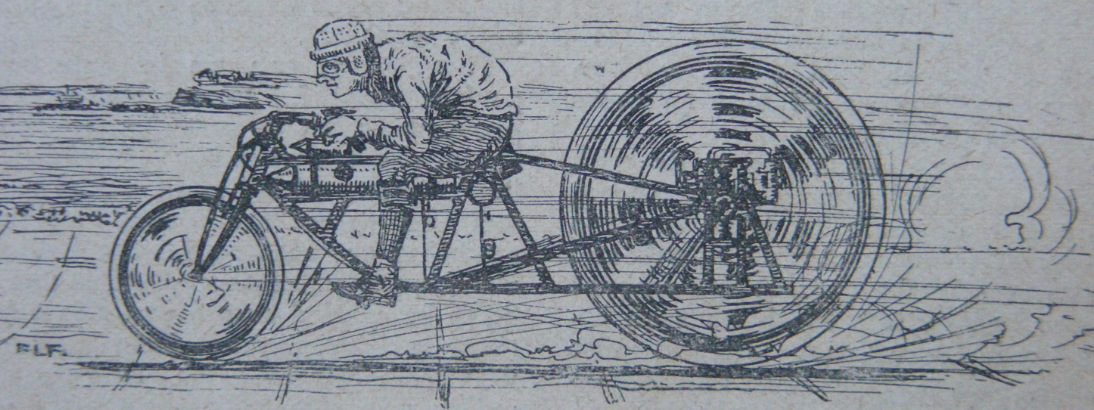
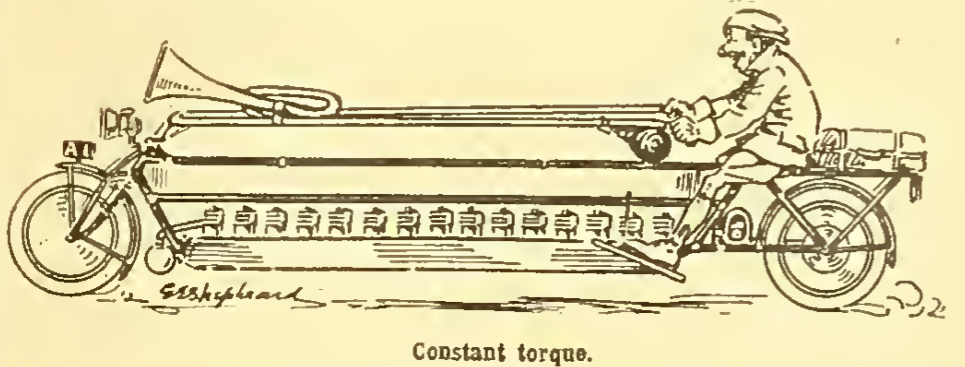
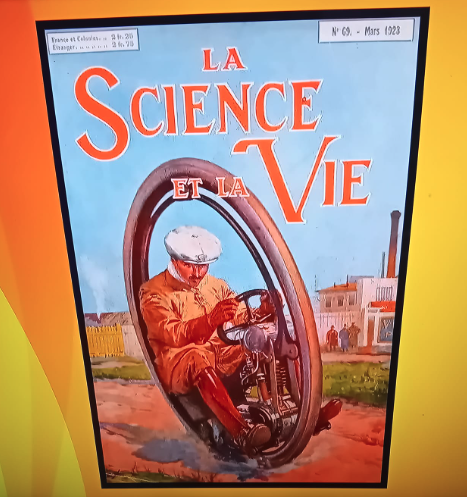
Another whimsical bike, circa 1909. The period caption ran: “What speed could it attain with this seven-cylinder rotary engine?”
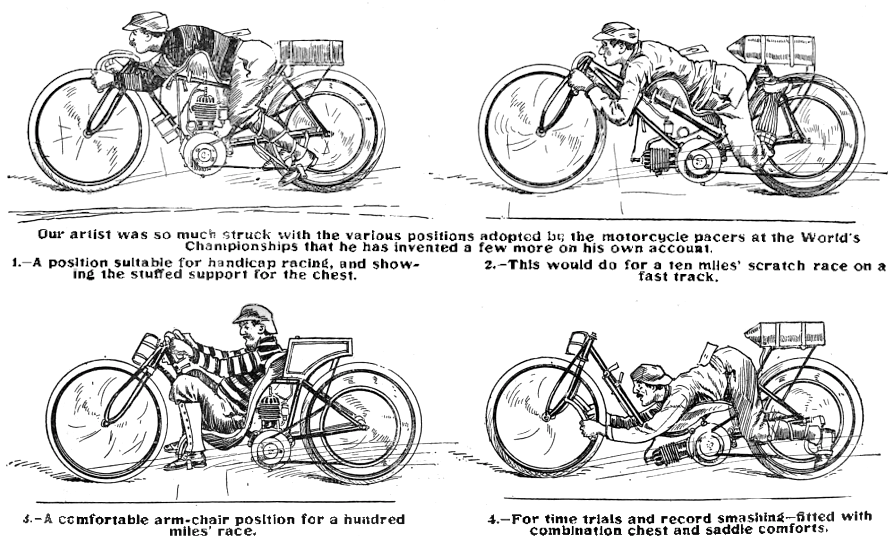
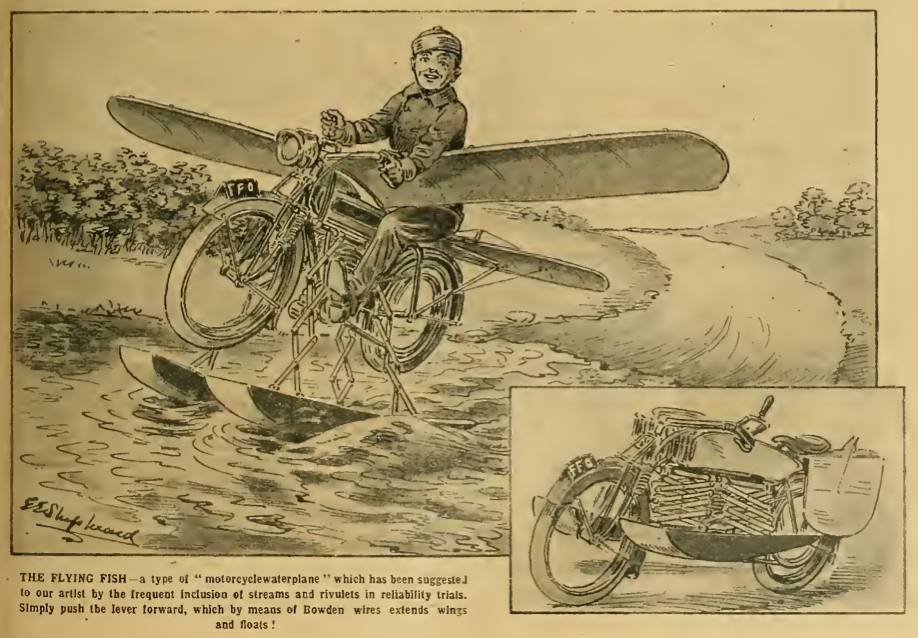
Ride the bike, fly the bike…
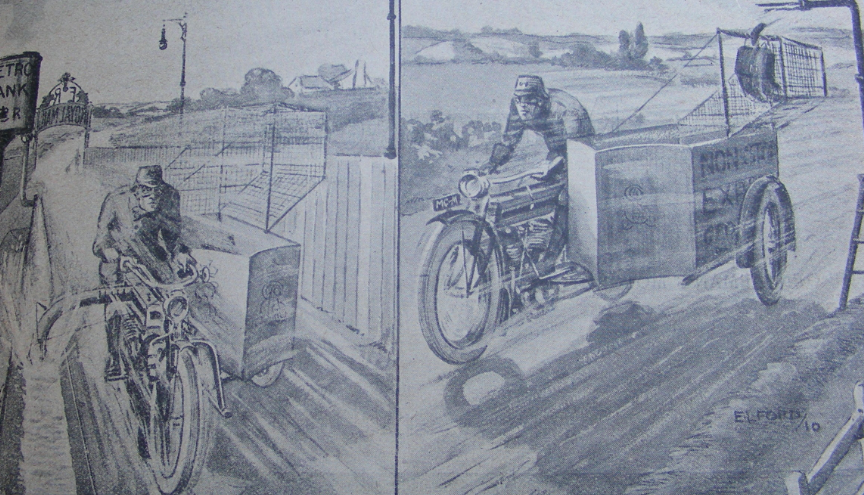
It’s-a-long-shot-but-it-might-just-work dept: “The Post Office are setting a lead in the commercial use of the motor-bicycle, and motorcycling postal services are proving very efficient. Knowing the great speed capacity of the modern machine, may we not one day see a motor-bicycle non-stop postal service? Our artist’s suggestion provides for taking up petrol and post without stopping.”
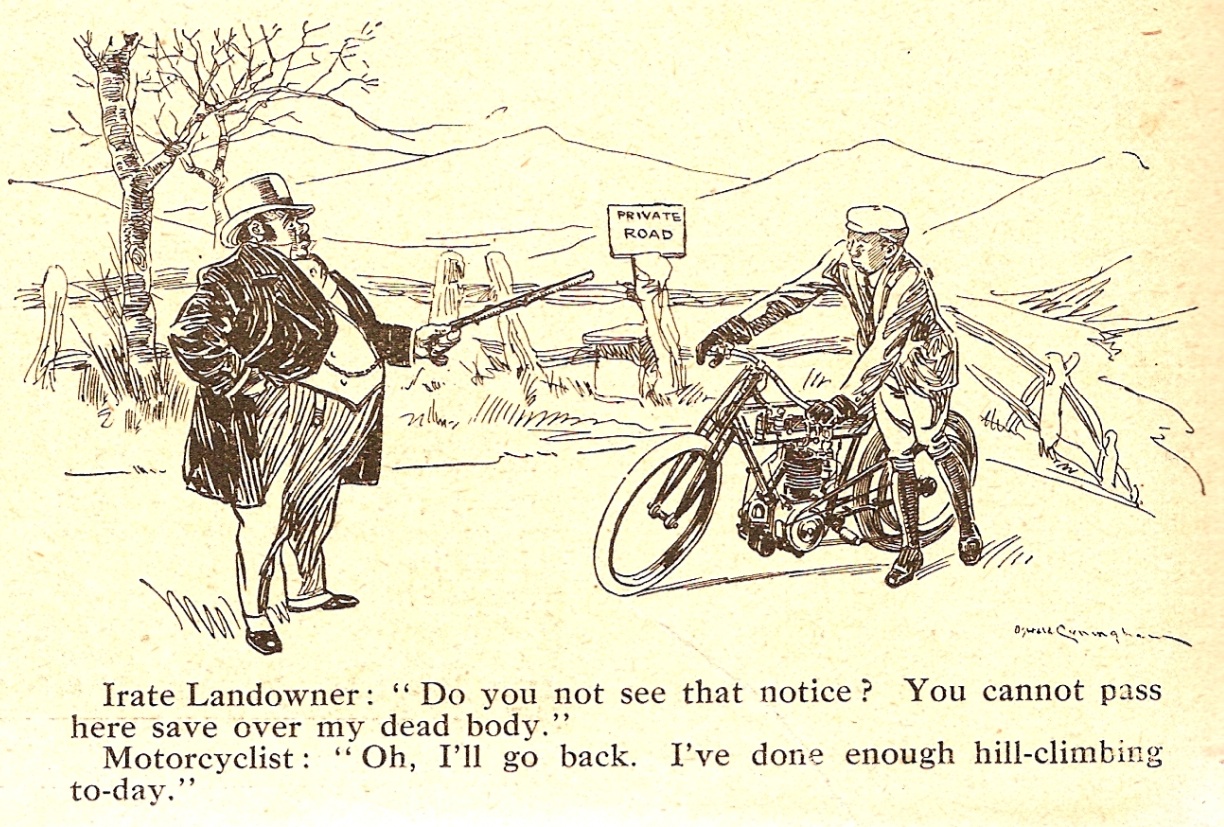
This rub tickler also dates from 1909: “I hear poor Scorcher ran into a wall and broke his jaw. How’s he getting on?” “Oh! he cannot complain.” Go on, laugh.
This is from the Green ‘Un and was published in 1902.
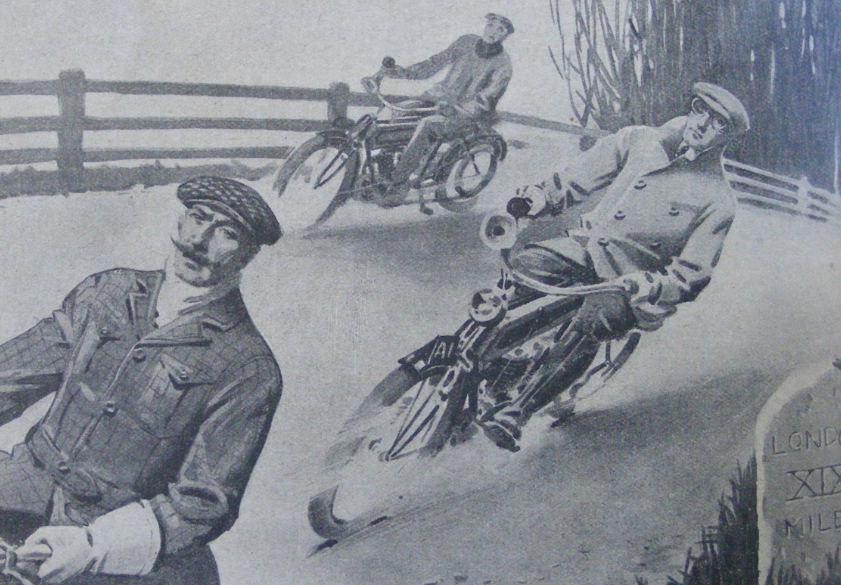
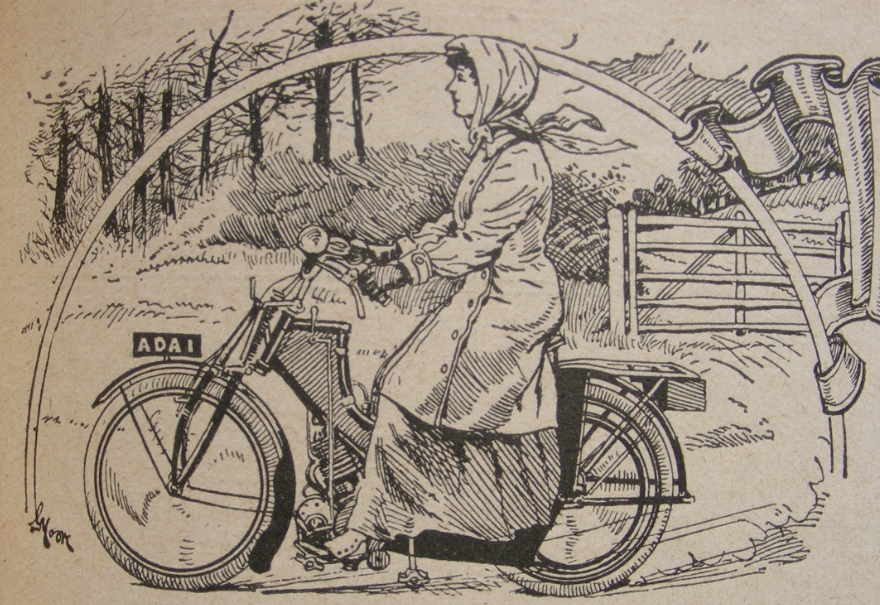
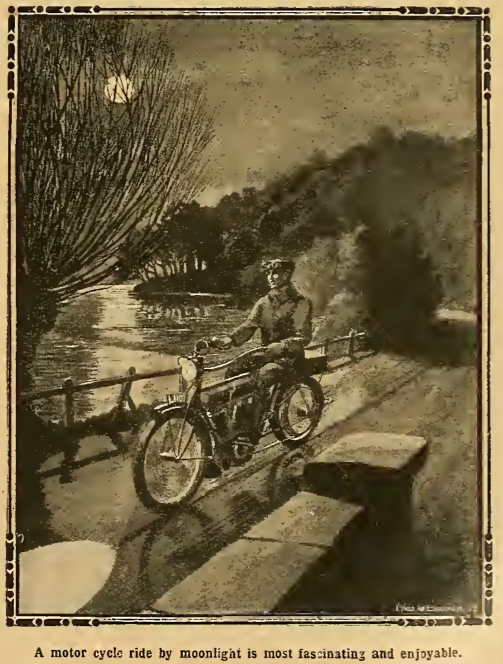
As the caption writer put it in 1910: “The joy of the open road! What can compare with the pleasure of the motor cyclist when weather is fine and engine runs well.”
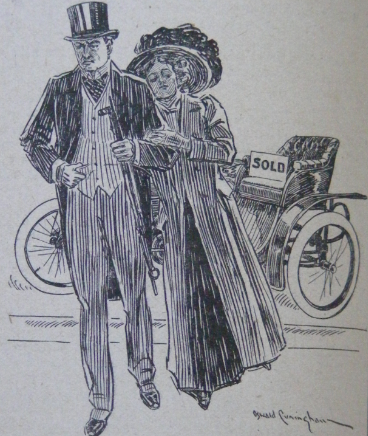
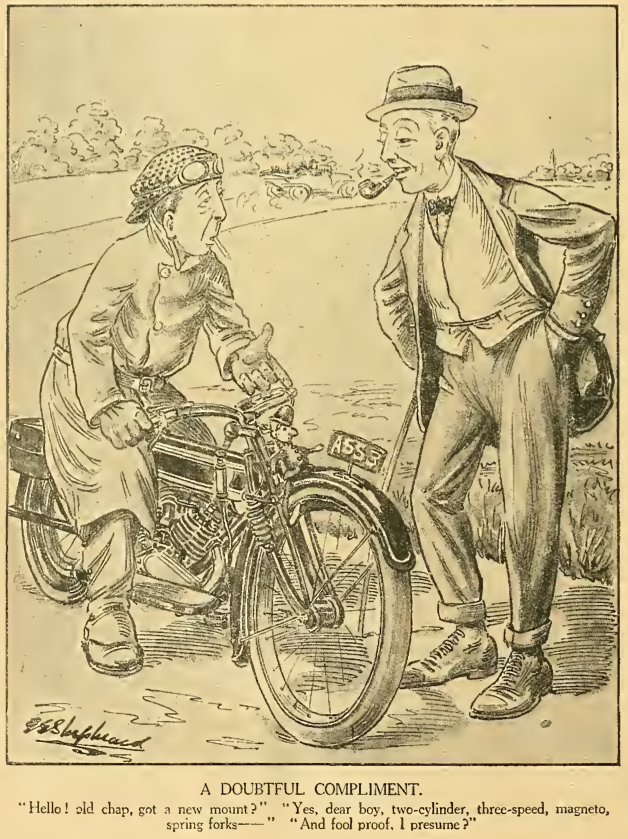
“Pixby, after earnest entreaty from Mrs P, has purchased a twin two-speed machine with sidecar at the show (instead of the high-power single-cylinder solo he had in view) and wonders whether the placard is applicable.” Plus ça change, plus c’est la même chose, innit?
1910 caption…She: “Do motor cyclists often lose their lives?” He: “Not more than once.” Yes, this joke is THAT old.
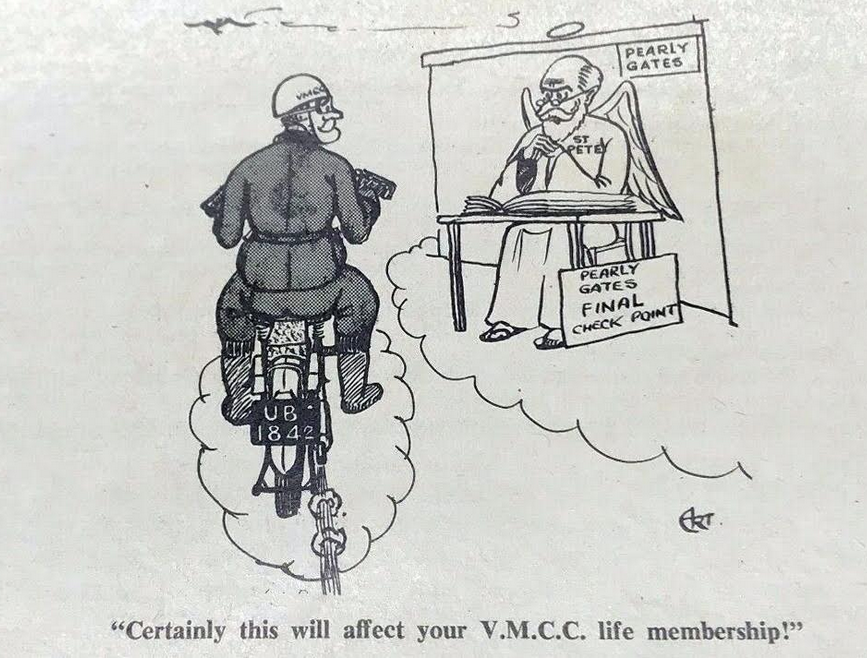
The next couple of cartoons appeared in the Blue ‘Un in 1939.
“Confound it—now it’s stopped!”
And here are a couple from 1953…
Here’s the politically incorrect caption… Mick: “Goodness, Pat, and phwat is that?” Pat: “Shure now, and the wicked motor cyclist must have run over a perambulator and can’t get disentangled at all, at all.”
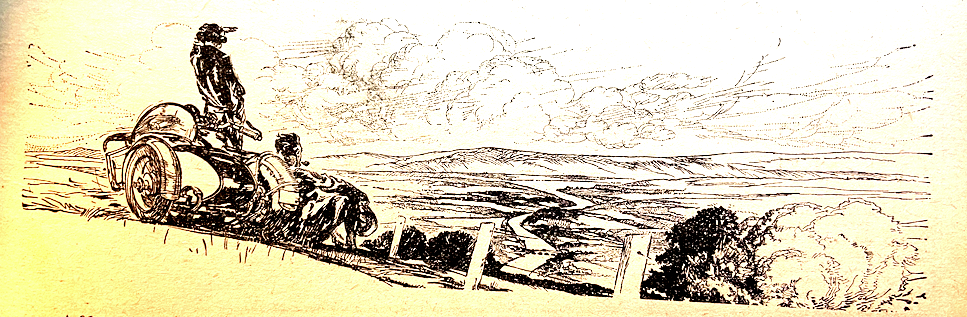
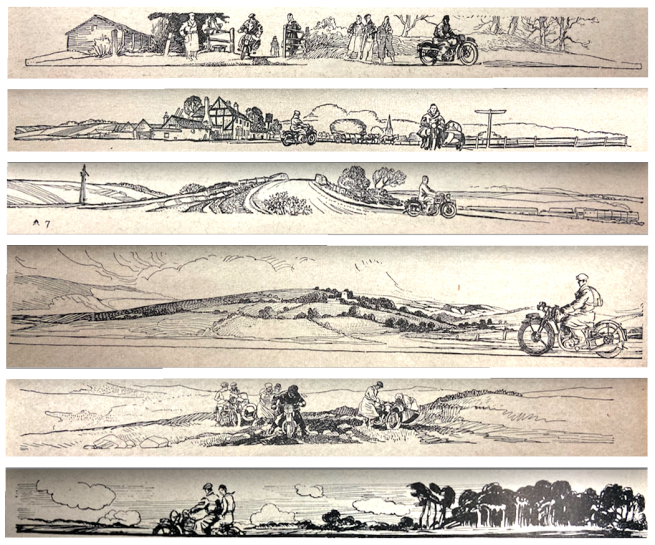
Here are some of the charming sketches that the Blue ‘Un used as tail pieces on touring features…
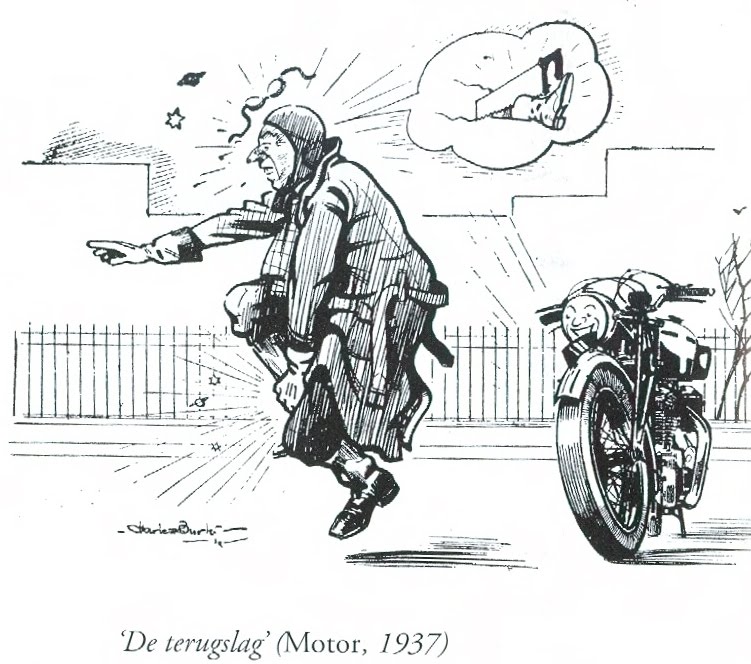
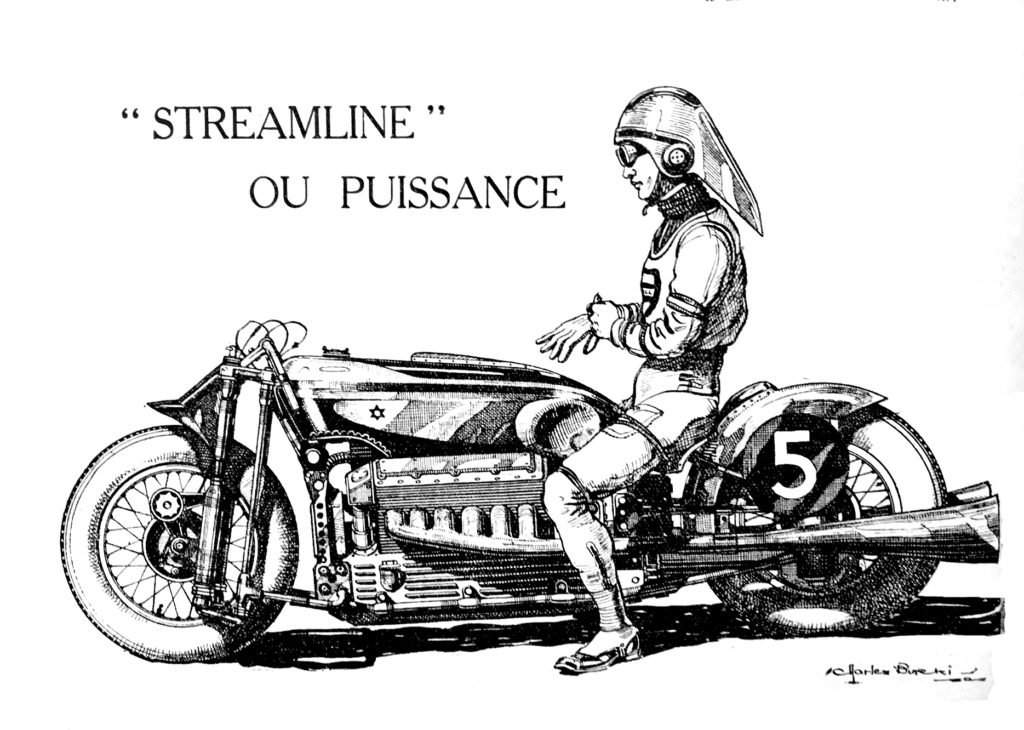
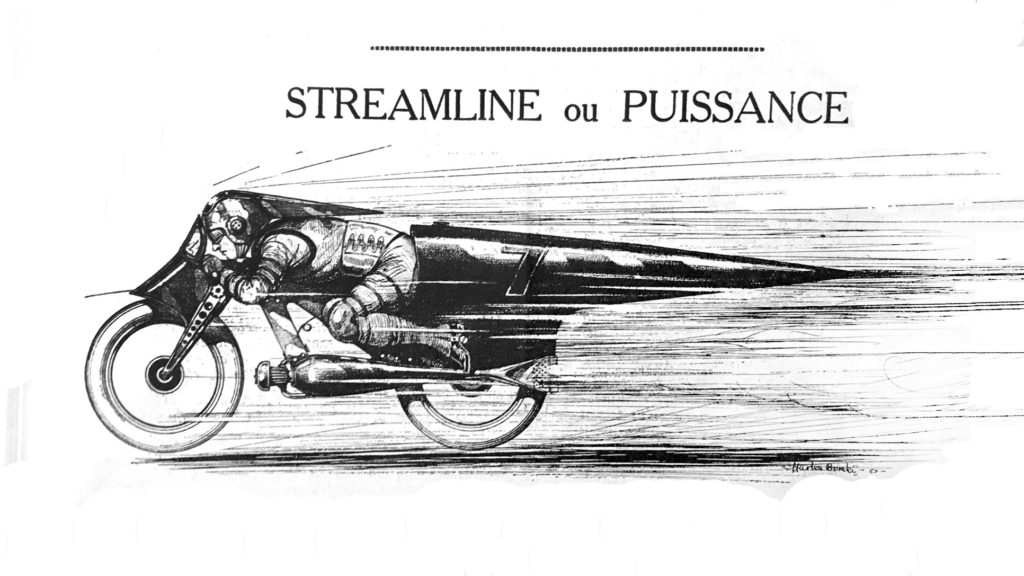
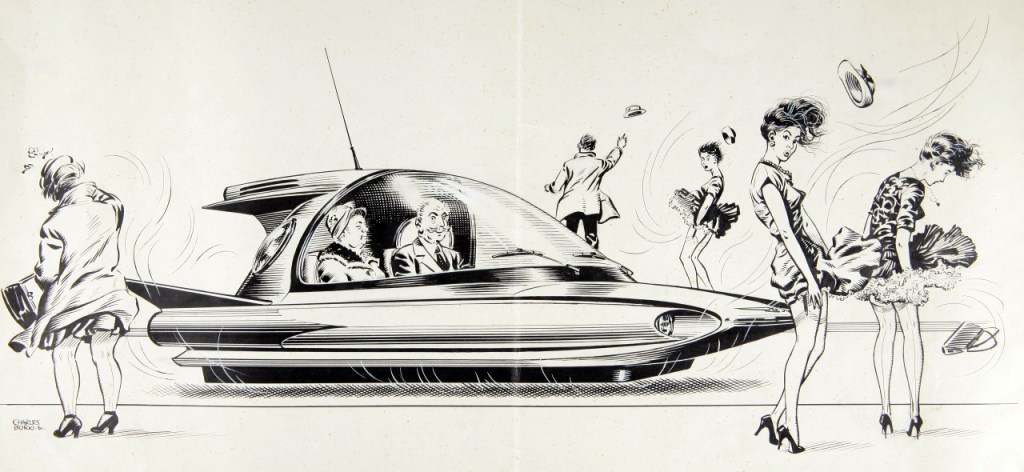
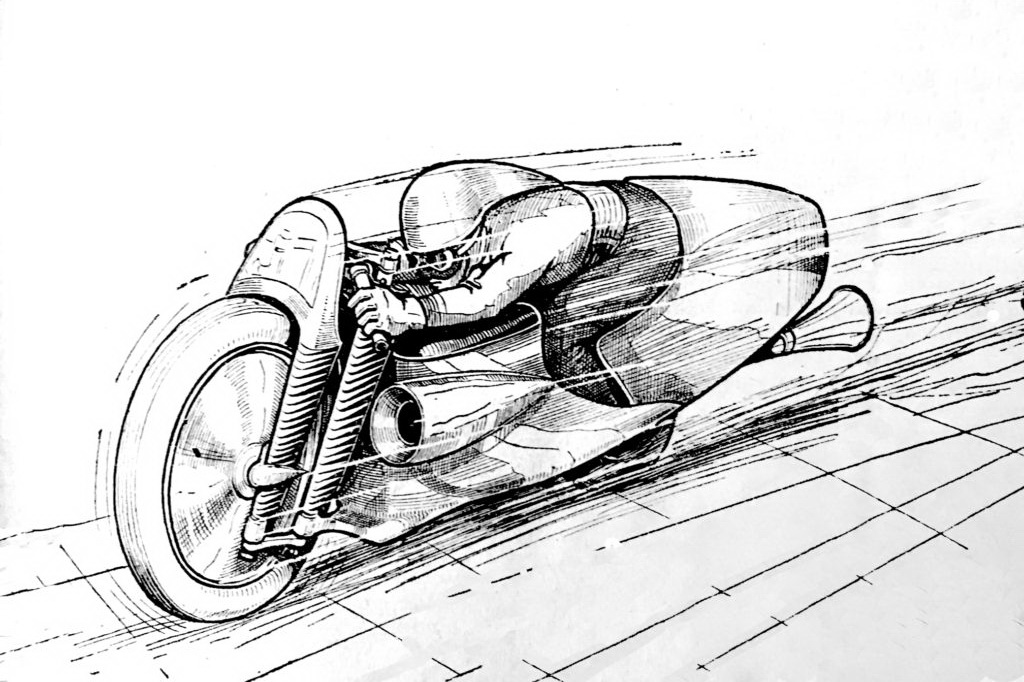
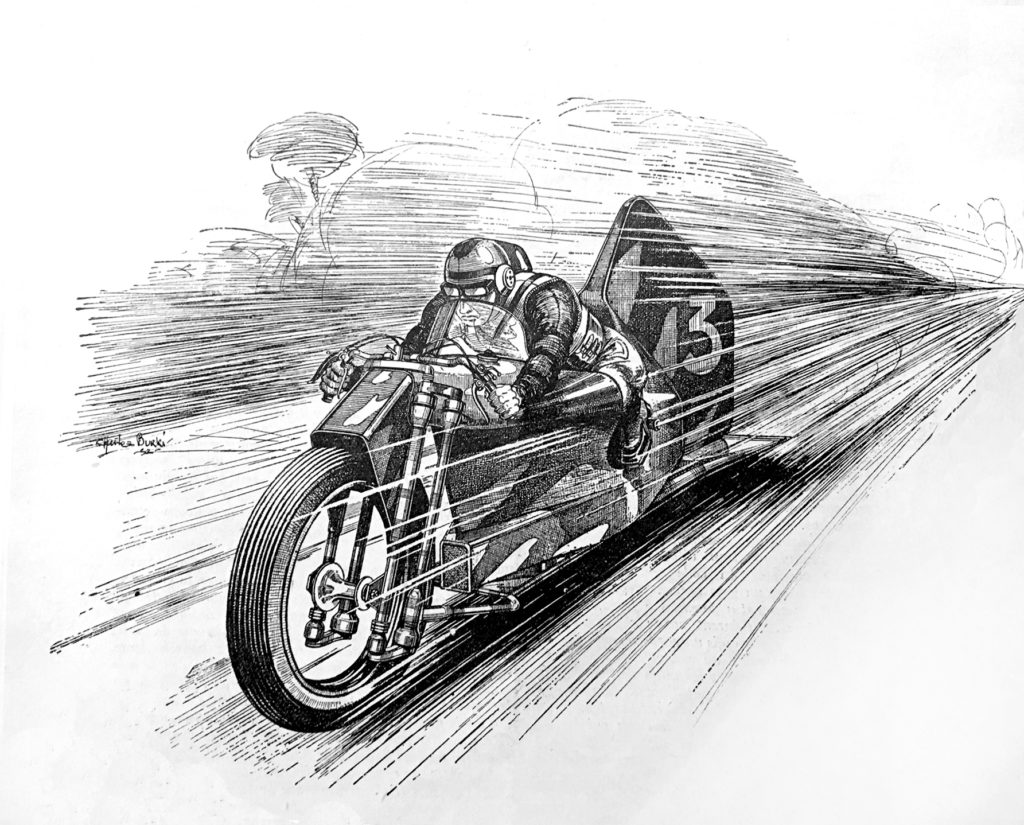
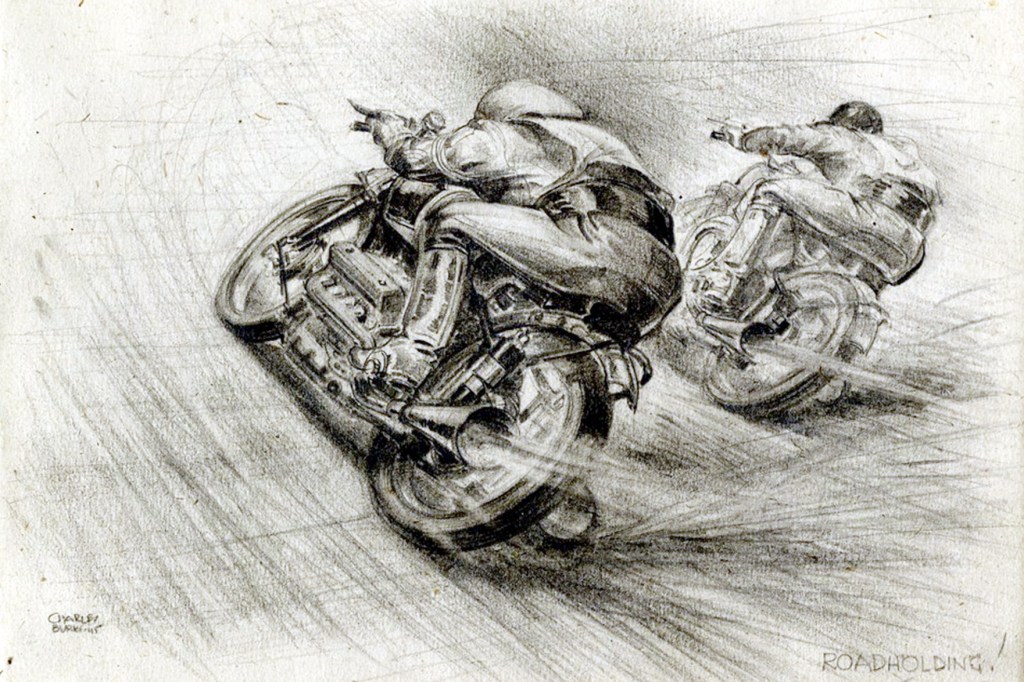
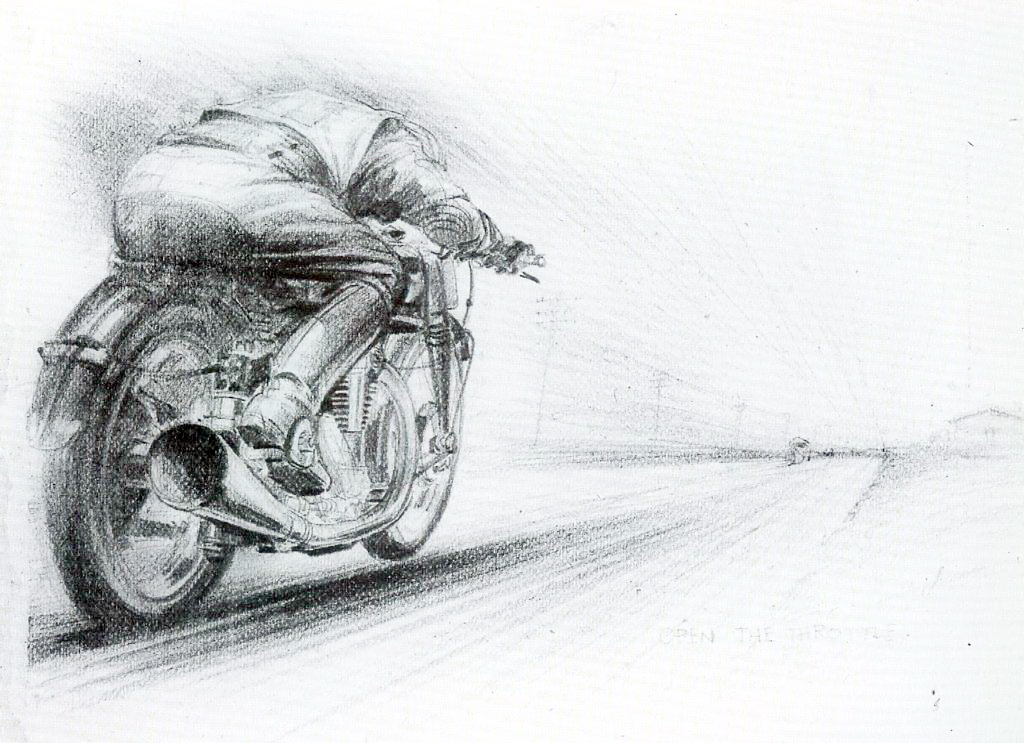
Charles Burki was a world-class Dutch illustrator; here’s a small selection of his work:
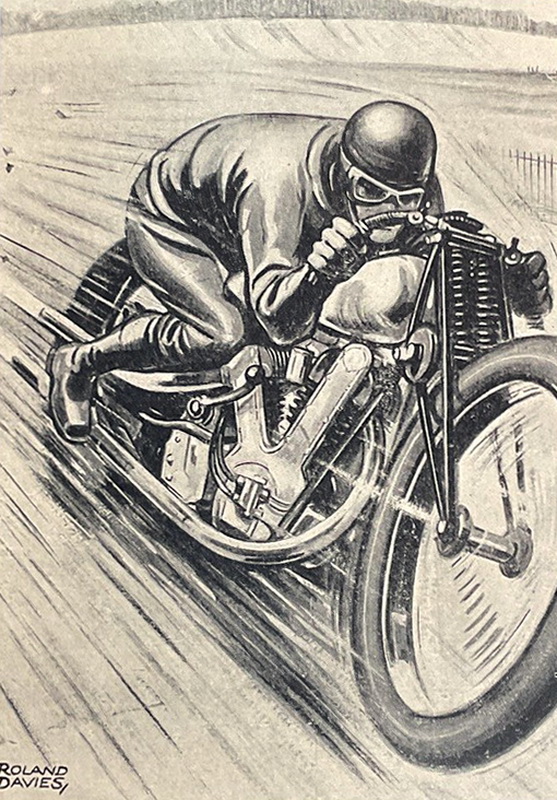
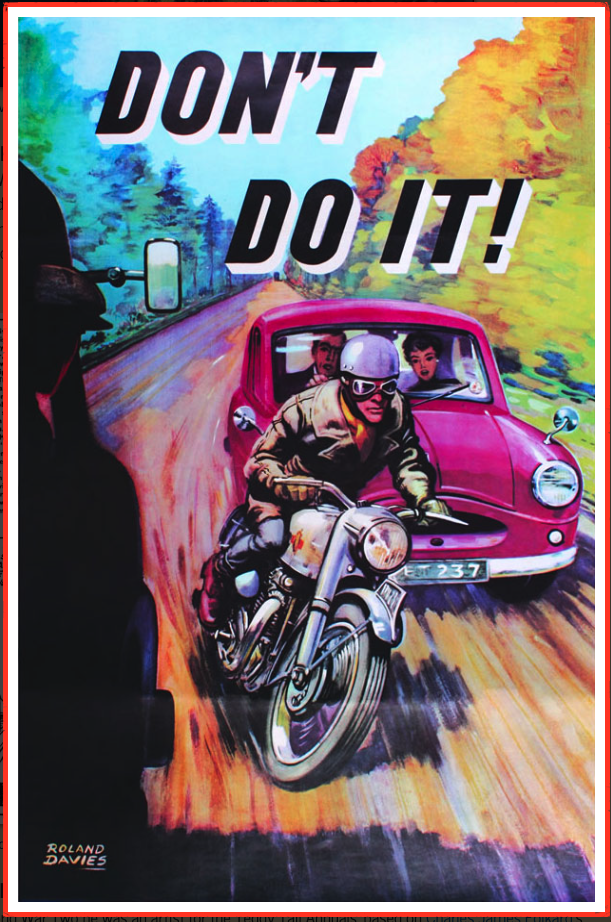
And here are two more examples of Roland Davies’ work—he had an extraordinary career.
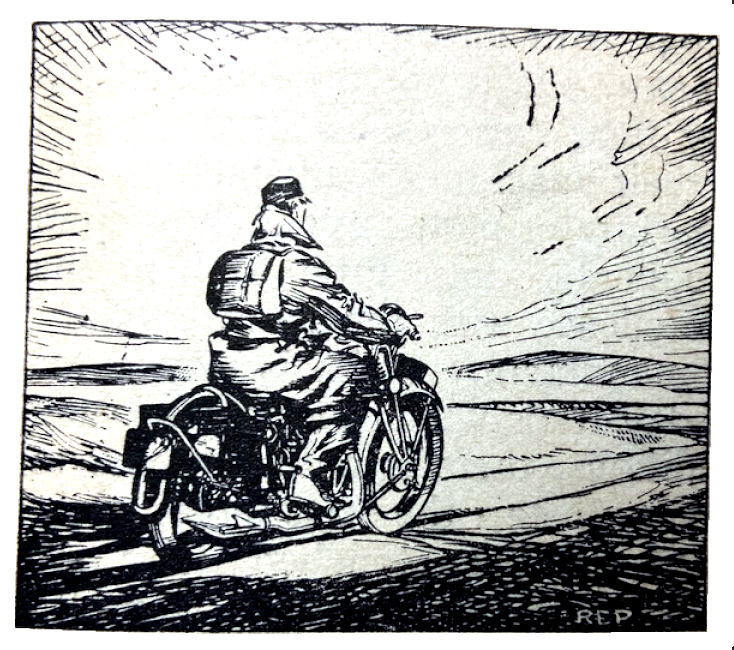
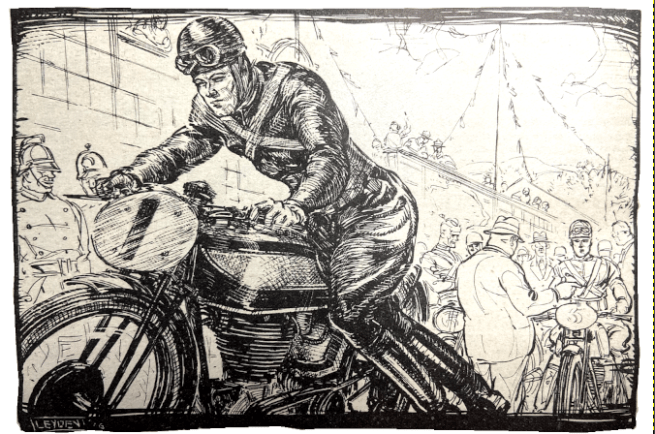
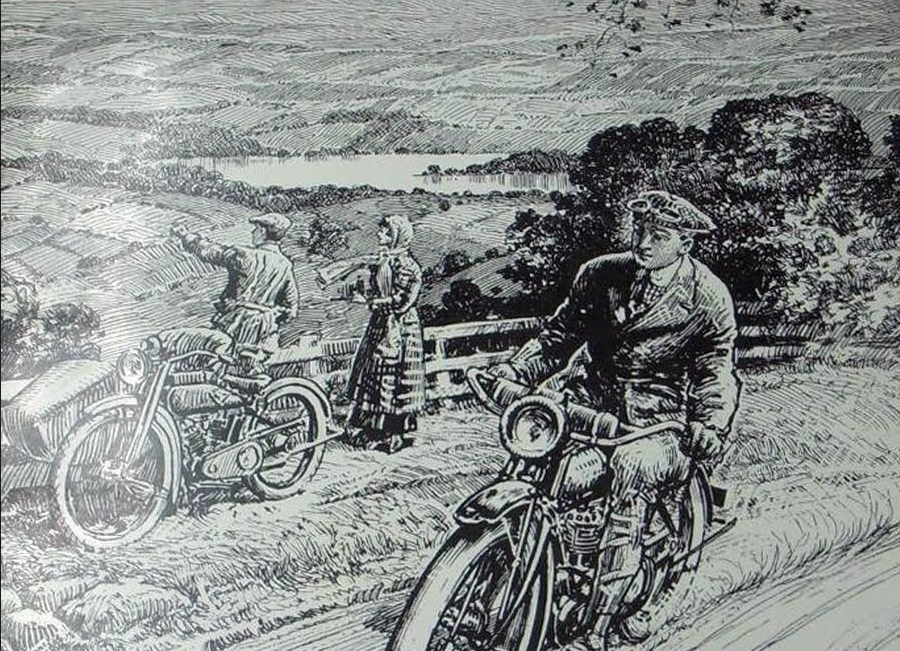
Published in the Green ‘Un, in 1911, captioned “Far from the madding crowd”. A fine piece of art by any standards.
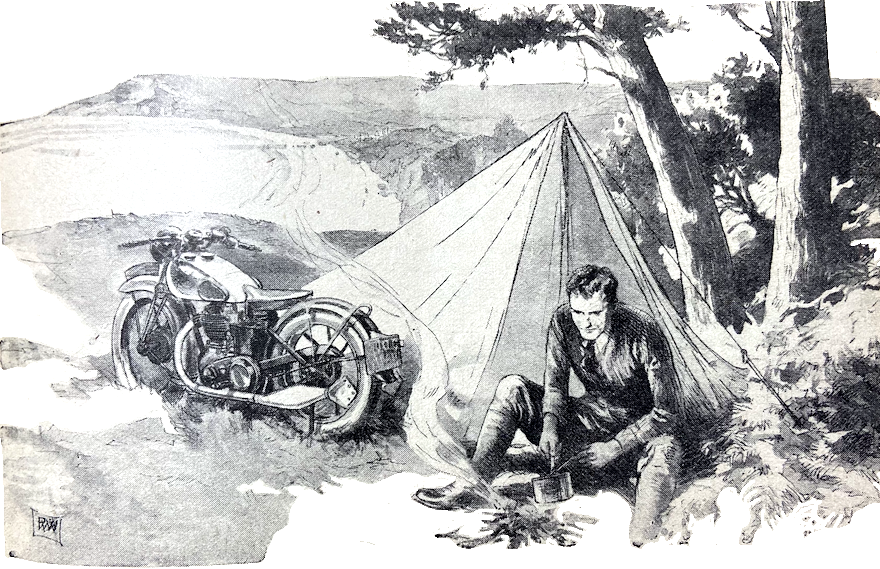
This one’s from a 1936 ‘how to’ feature on camp cooking. Remember chaps, when roughing it in the wilderness you should still wear a tie.
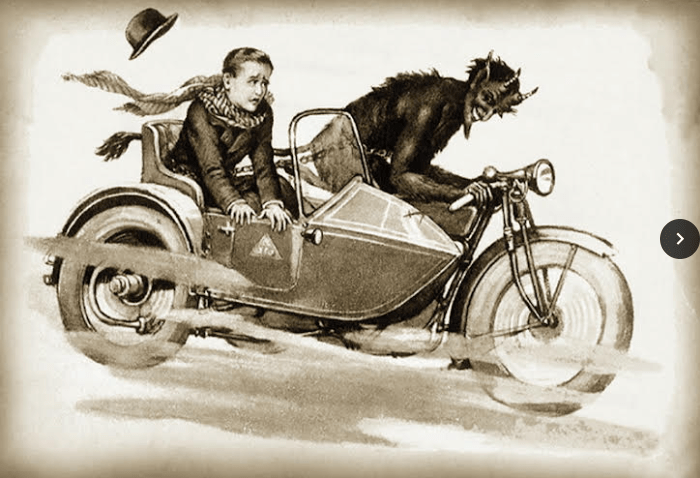
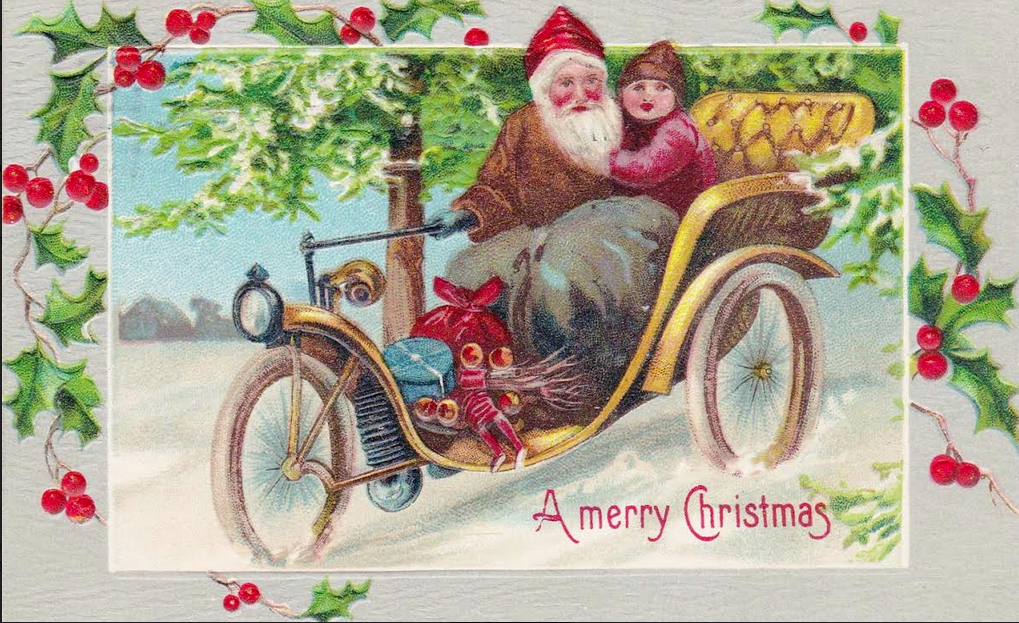
This illustration appeared with a 1946 Christmas story. The story was nothing special; the pic’s rather fine, don’t you think?
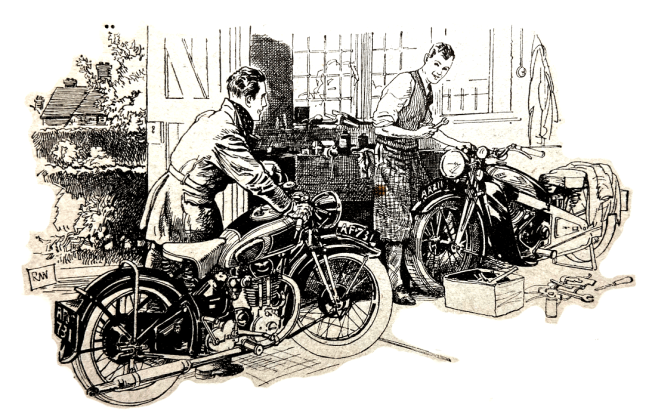
…and this smashing artwork appeared in Motor Cycling in 1938 as the logo on a technical advice column.
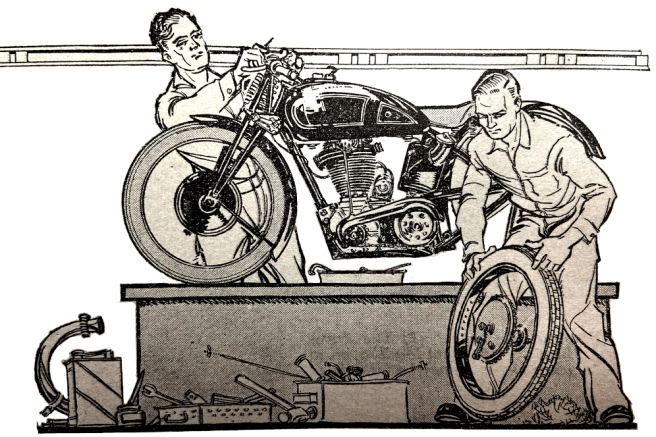
This one illustrated a ‘make and mend’ feature published in the Blue ‘Un in 1945.
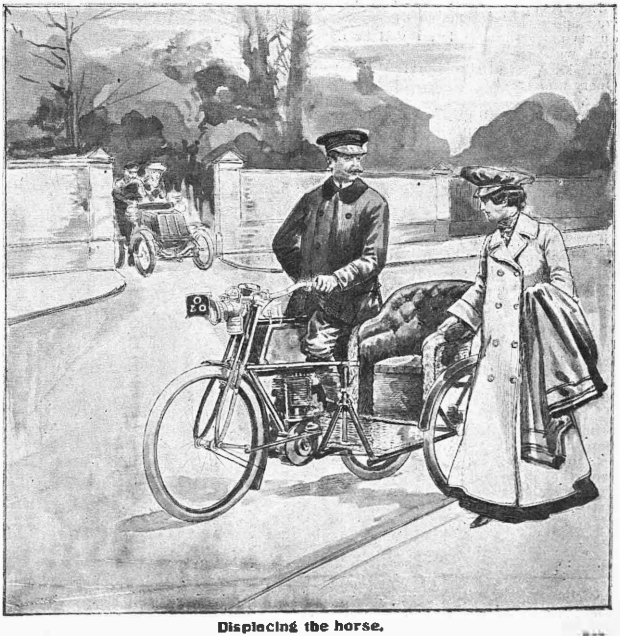
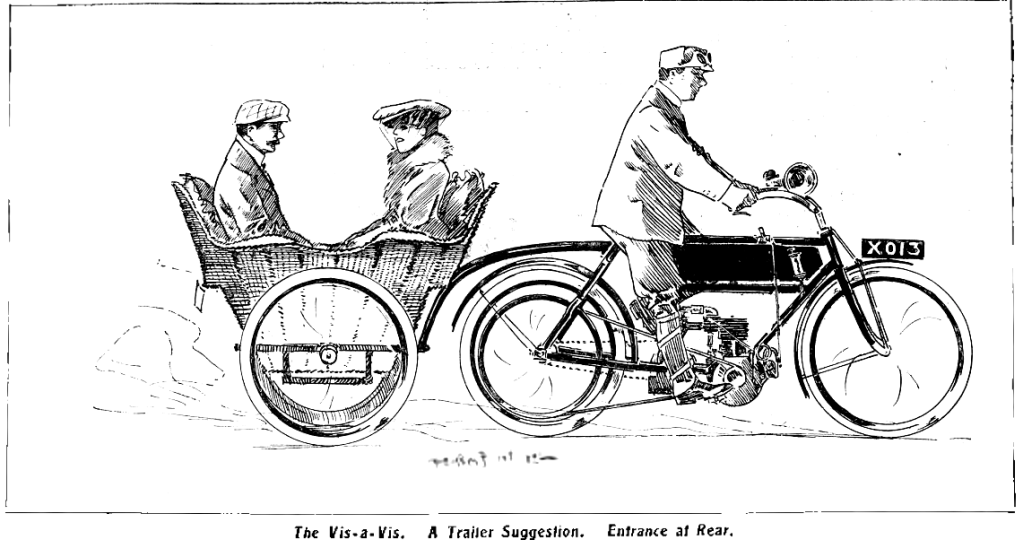
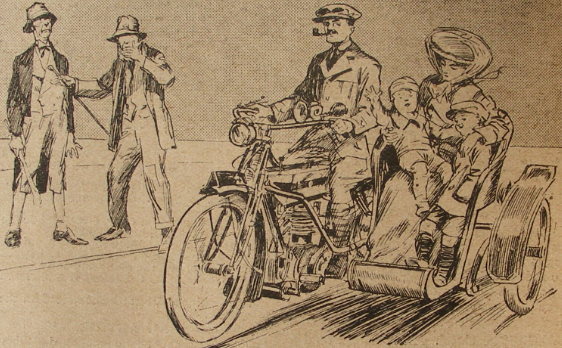
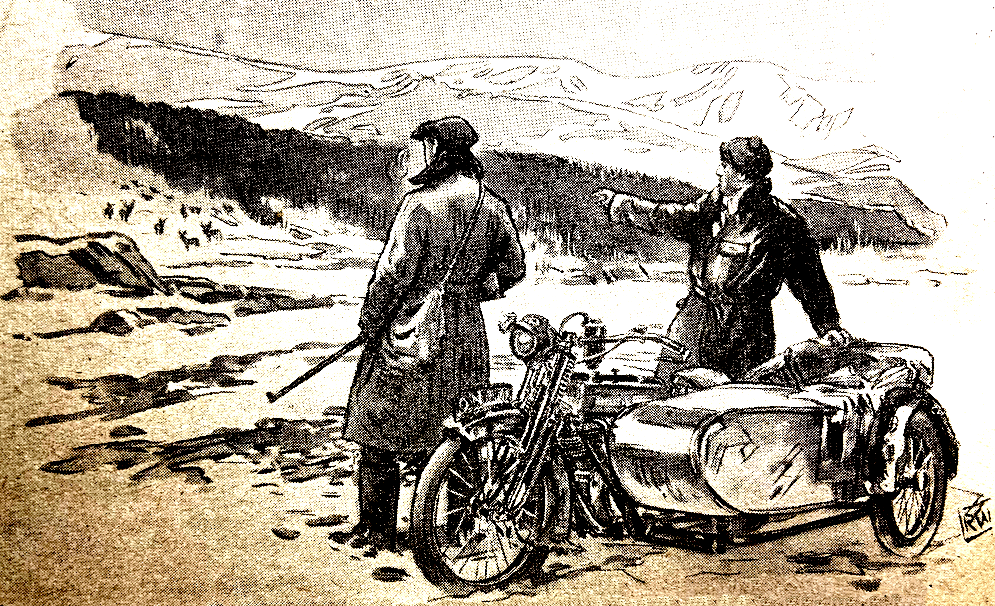
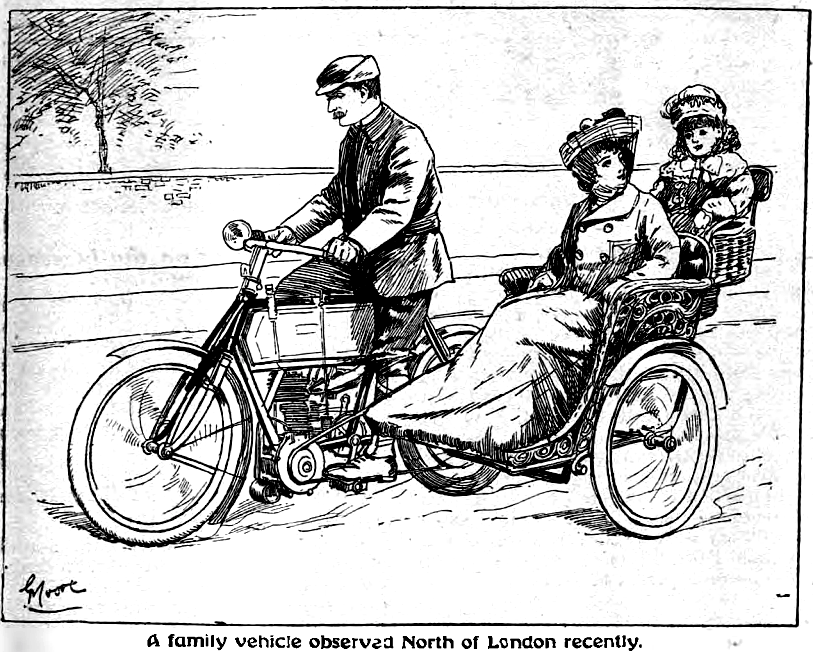
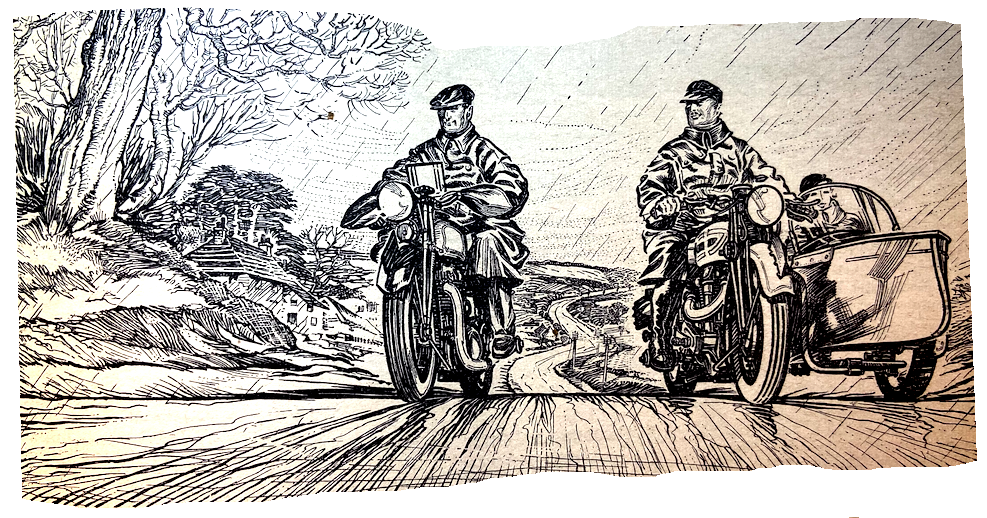
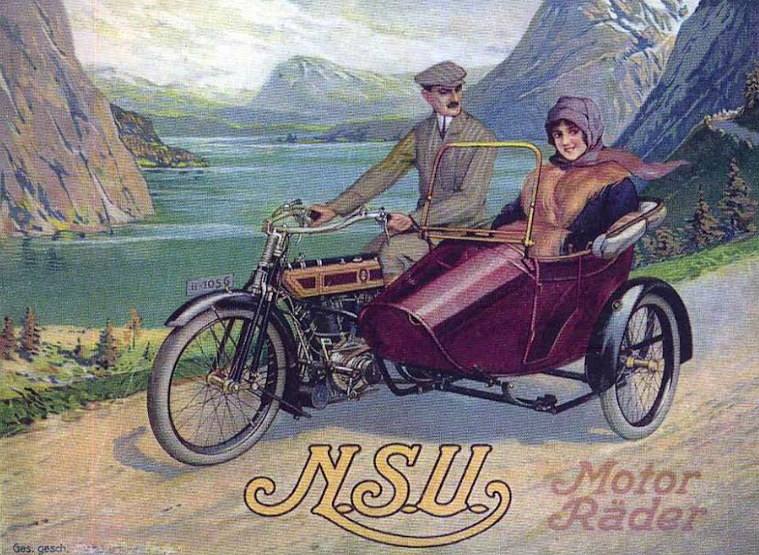
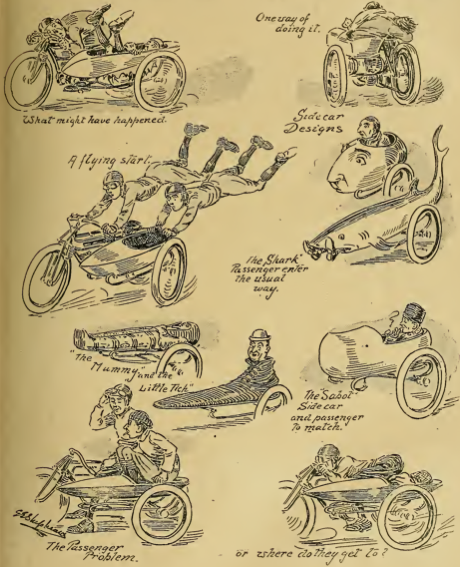
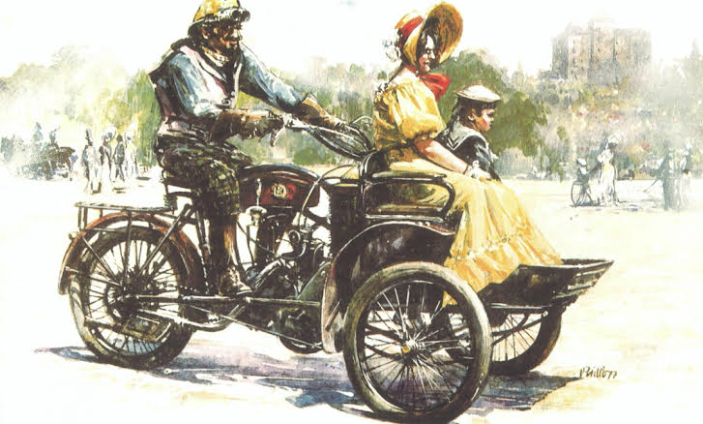
This dates from 1904, when sidecars were a novelty.
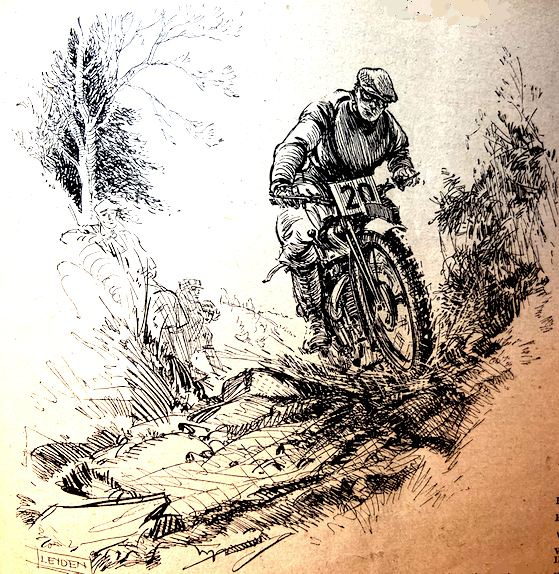
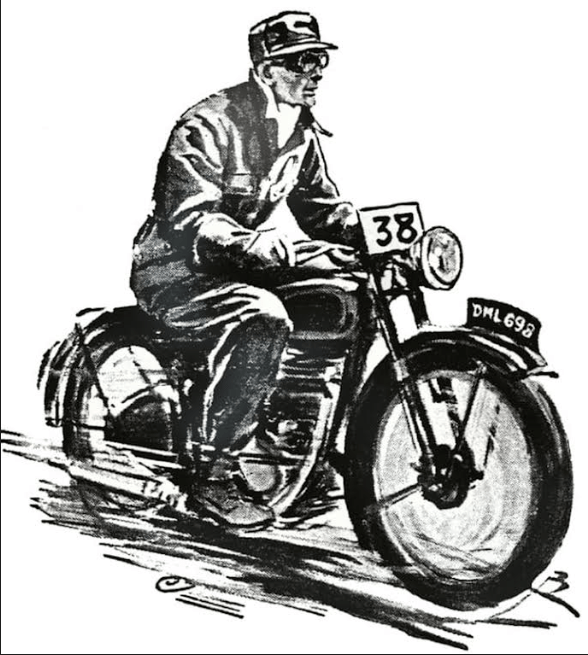
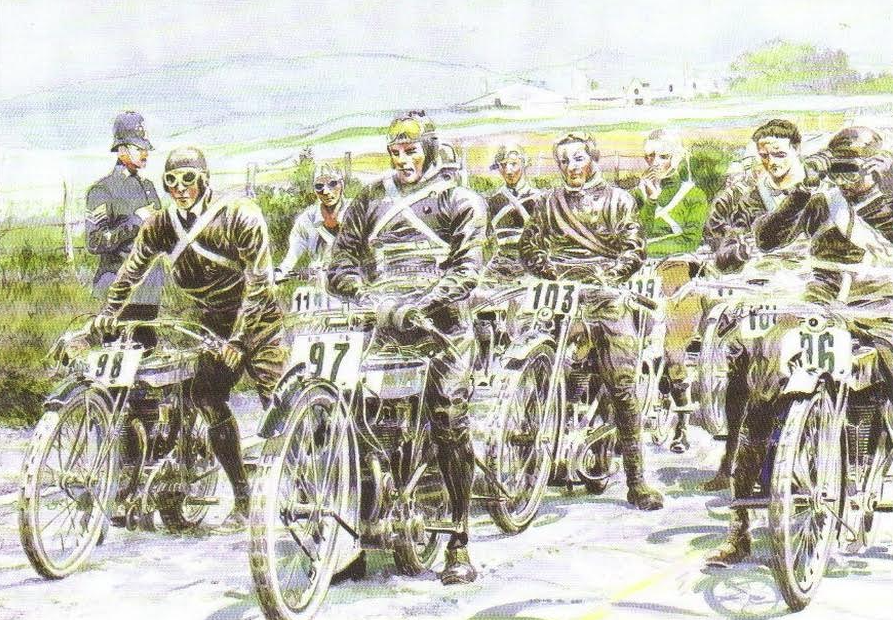
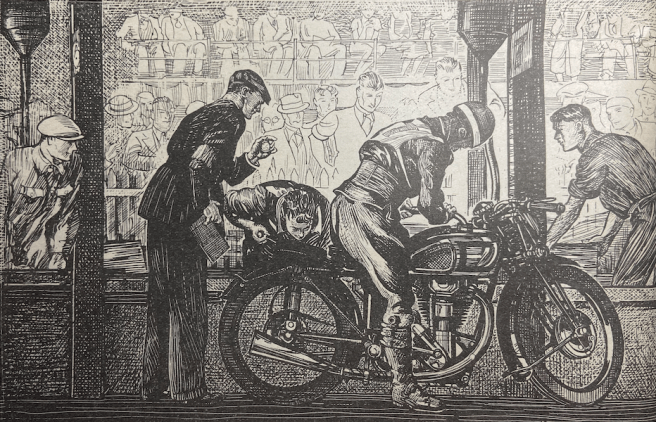
1939: The Doverhay checkpoint, during the final Landsend Trial before war stopped play.
1939: The blackout…
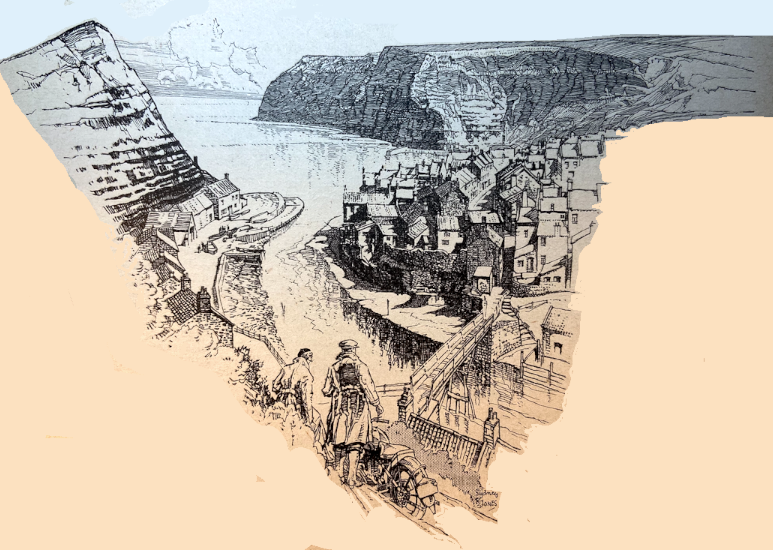
Staithes, Yorks, circa 1937.
This rather fine illustration appeared in an Avon tyre manual owned from new by my neighbour’s father.
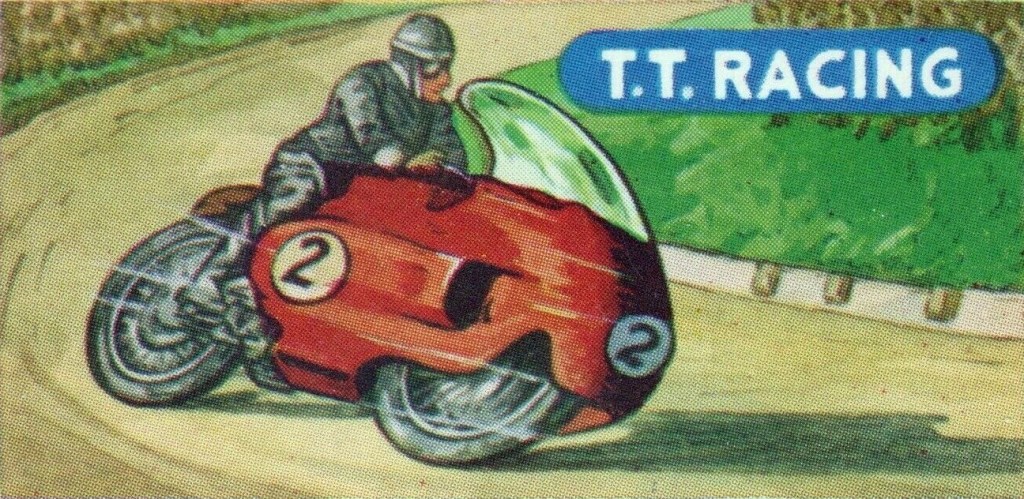
From a 1950 ad for the TT.
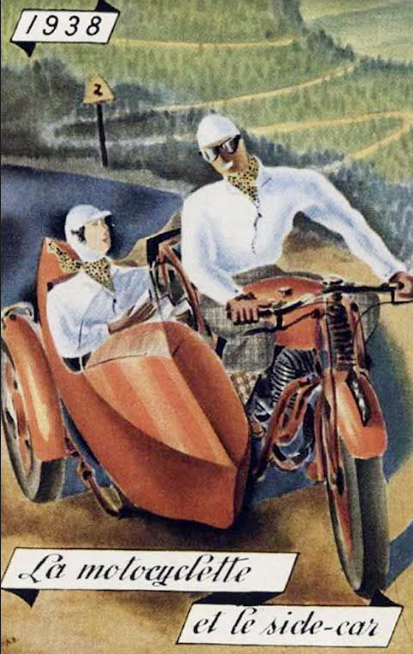
This fairing was distinctly futuristic in 1938.
This dates from 1952.
1929.
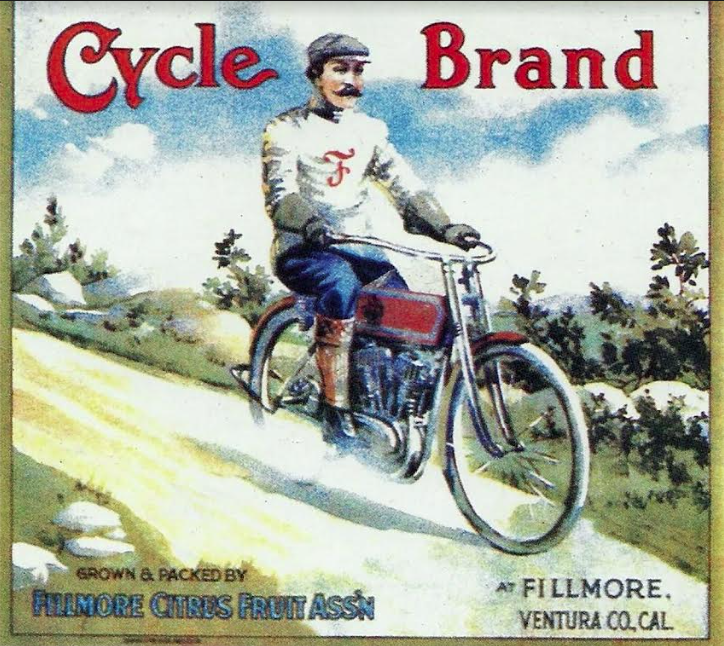
This colourful illustration, which has a Stateside look to it, dates from 1910.
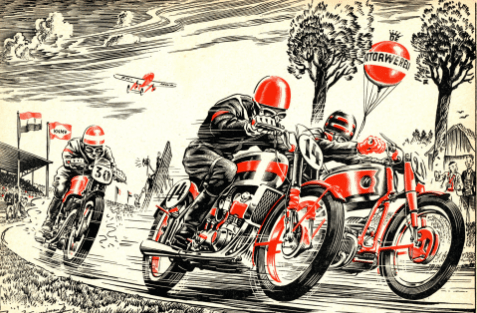
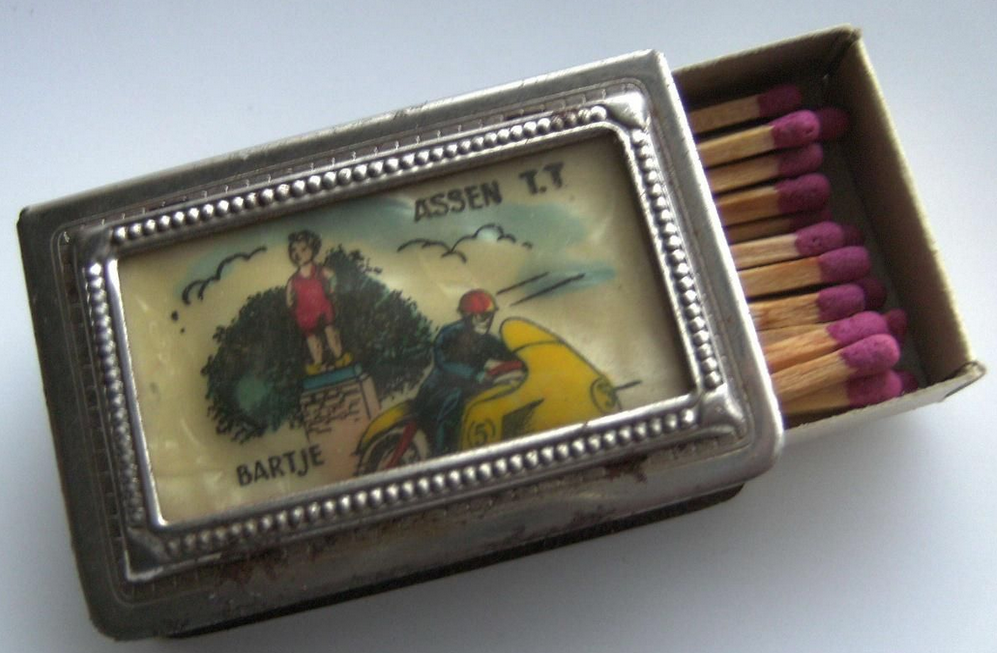
Dutch TT
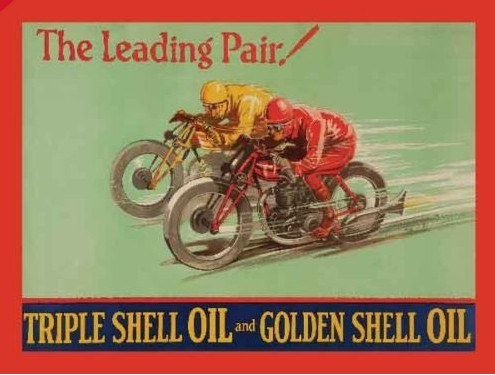
From a Castrol ad.
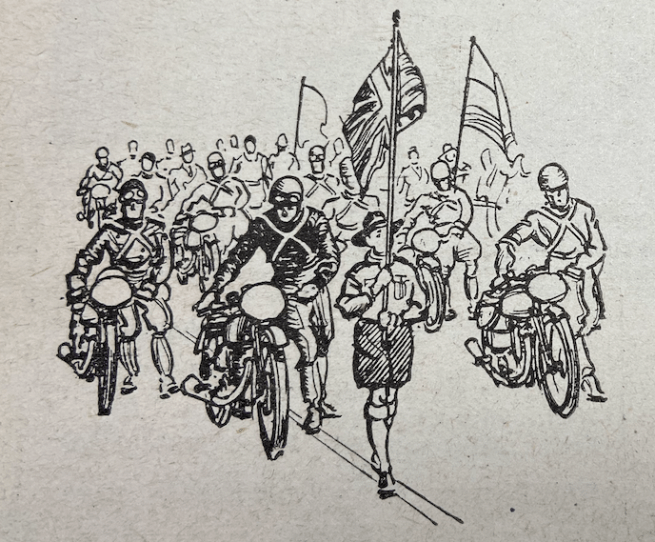
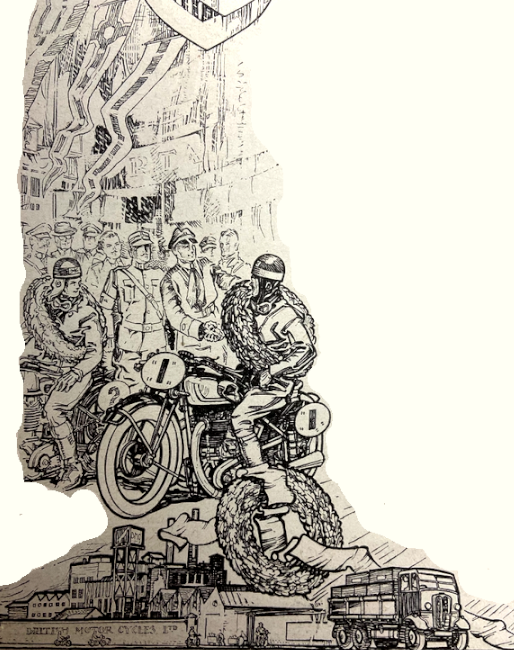
This rather striking artwork was appeared in the ‘British Achievements Number’ of 1937; the following two illustrations also date from 1937..
1941
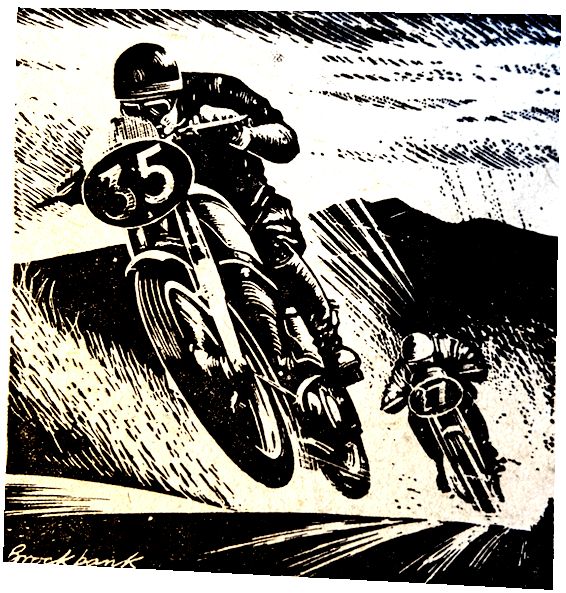
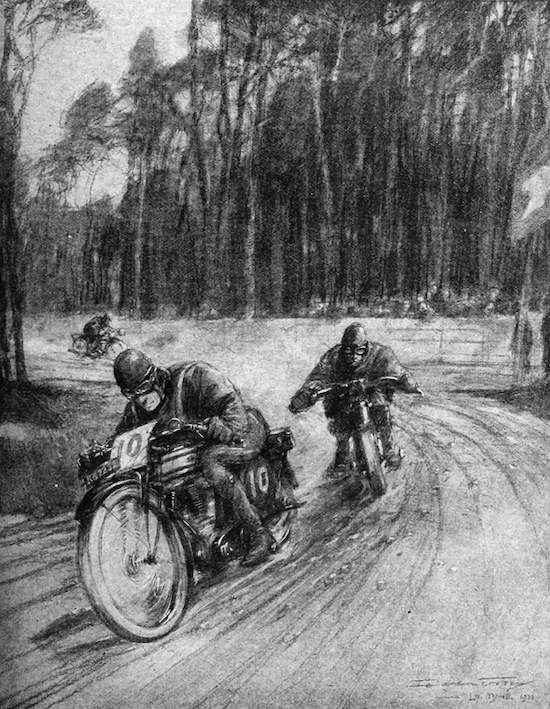
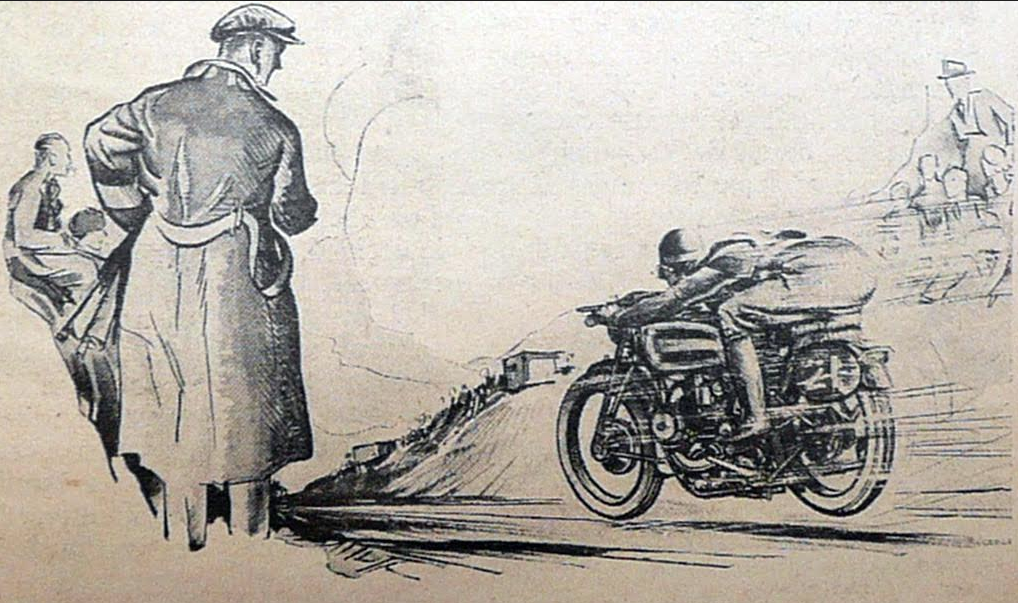
This thrilling illustration of a duel during the Tourist Trophy races appeared in a 1927 book for adventurous boys.
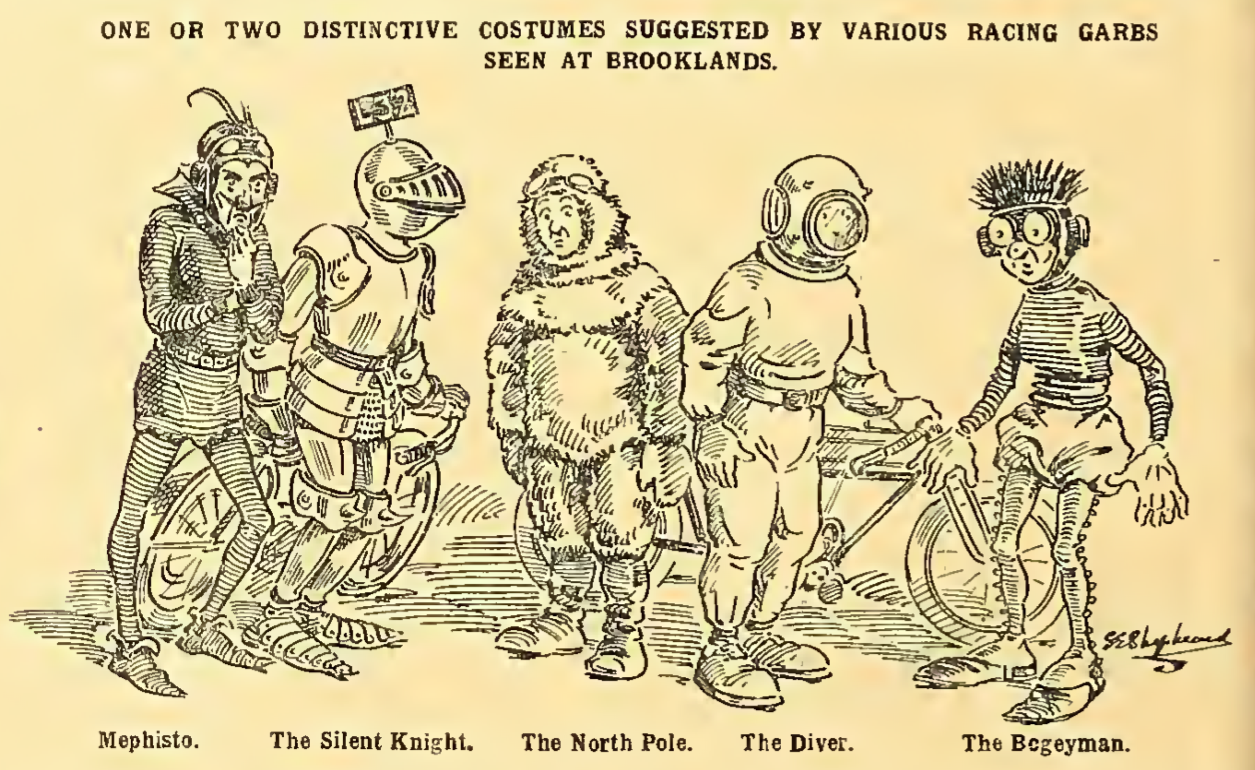
Inspired by Brooklands circa 1908…
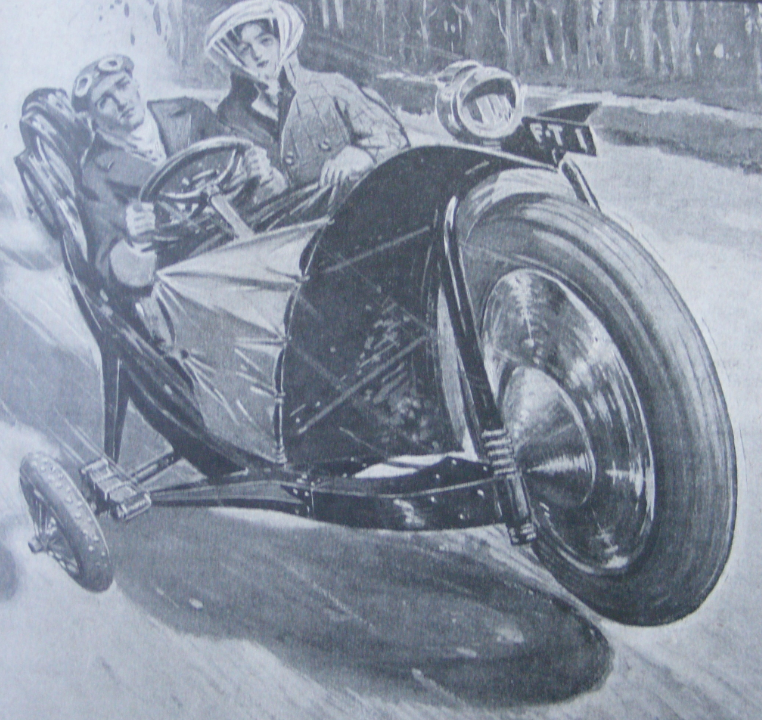
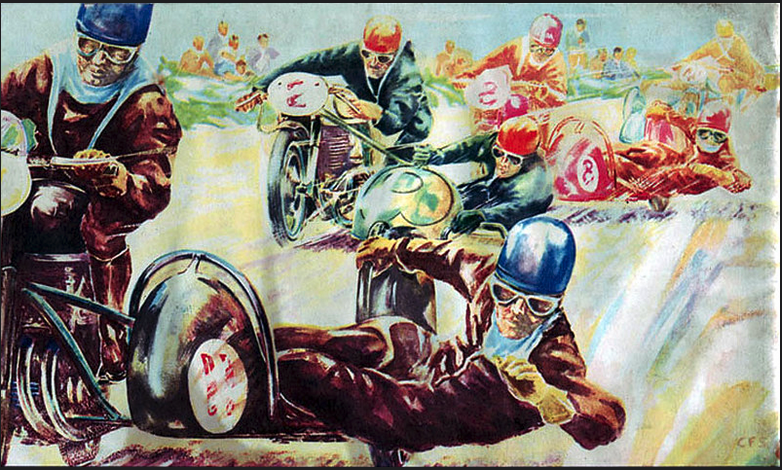
Inspired by Brooklands circa 1913: “The racing sidecar becomes more an object of interest every day: our artist who attended the last Brooklands meeting has put on paper his impressions of existing conditions, and ideas of possible future developments in racing sidecar design.”
This strip cartoon dates from 1931 but the final pic and punchline seems somehow more 1970s.
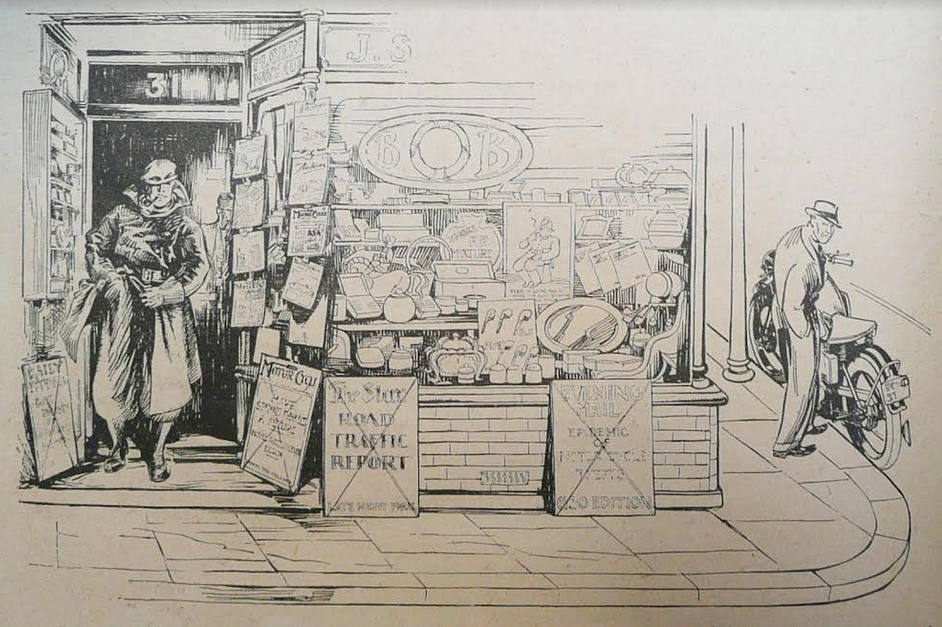
“While riding along Farringdon Road the other afternoon we noticed that the proprietor of one of the stalls there had added motor cycle accessories to his stock-in-trade. A sign of the times!”
From the Christmas 1911 edition of the Blue ‘Un.
Trials were getting tougher by the year; this whimsy dates from 1913.
From 1914, and rather charming…
Pavee can be rough…the caption on this one translates as: “Only three teeth left! At your age, that’s extraordinary!”
“I rode a big motor cycle on badly surfaced roads…”
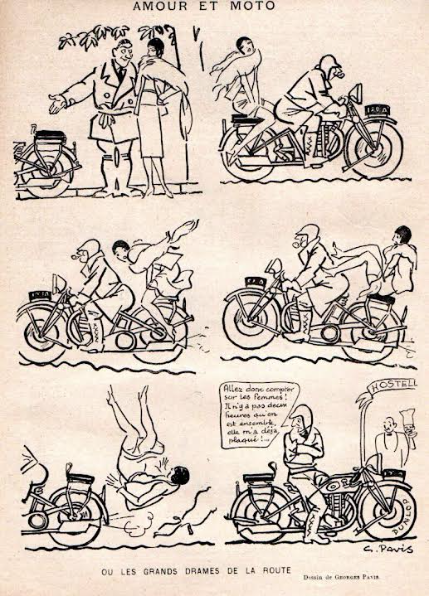
French humour, circa 1930: “You can’t trust women! It’s not two hours since we’ve been together and she’s already dumped me!”
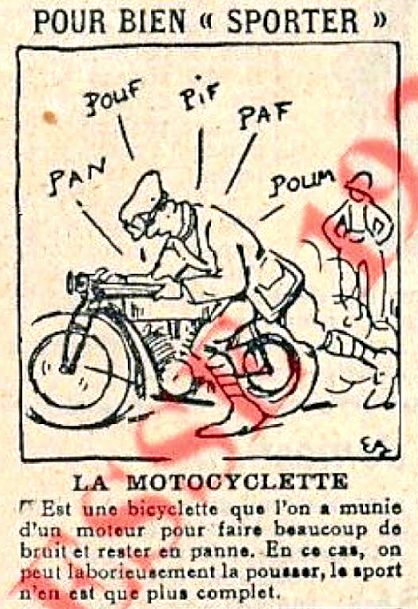
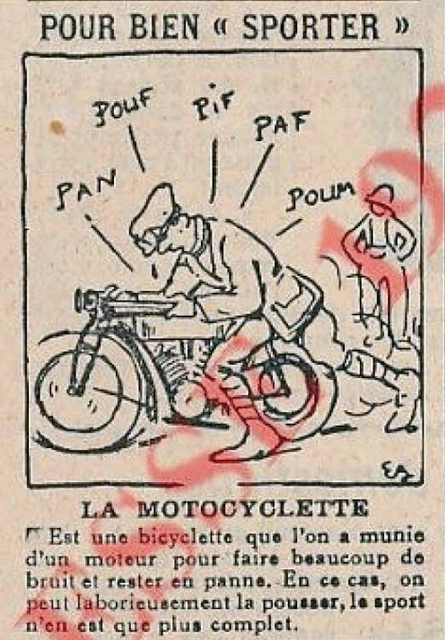
From a French calendar: “For a good ‘workout’. A motorcycle is a bicycle that has been fitted with an engine to make a lot of noise and keep it running. In this case it can be pushed along laboriously, making the sport all the more enjoyable.”
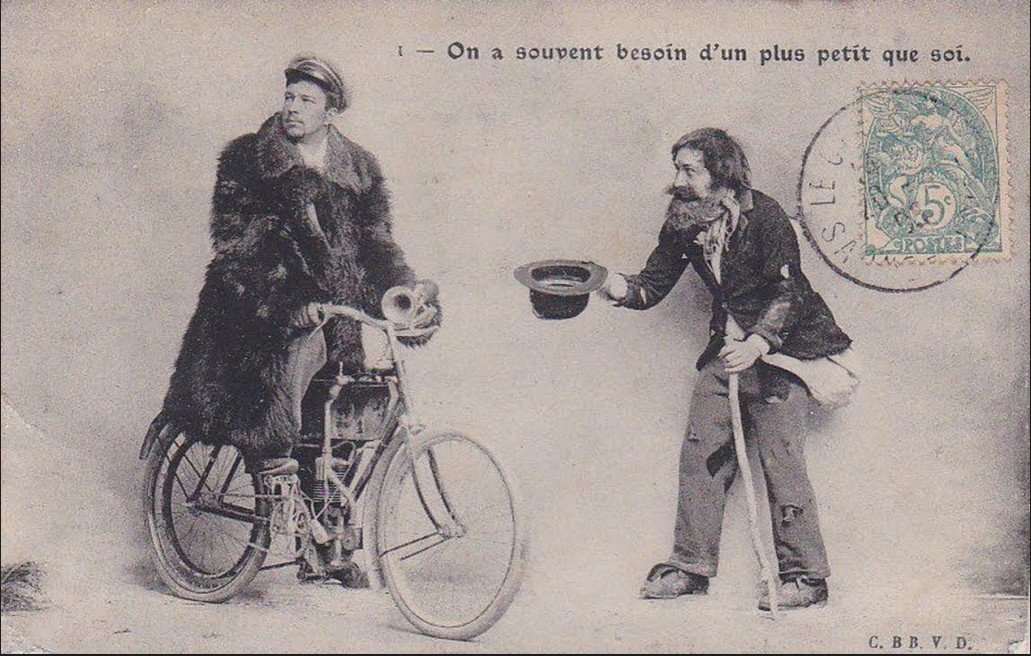
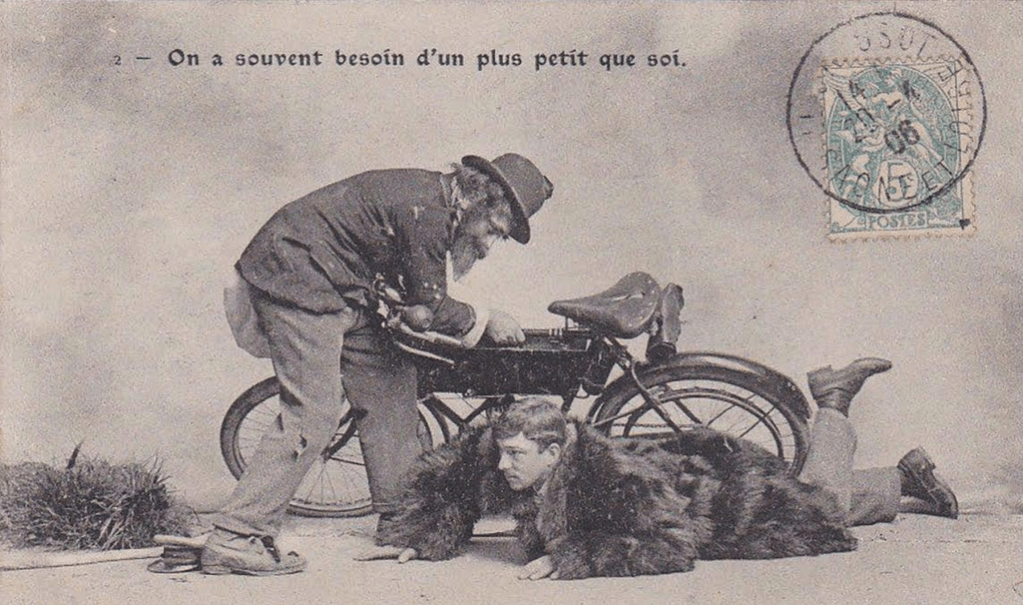
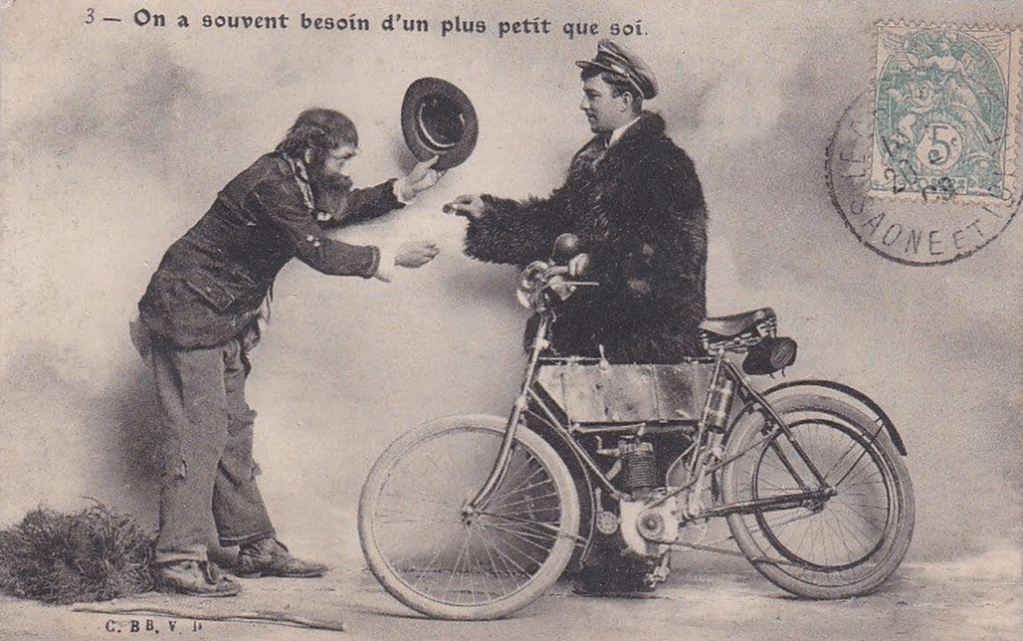
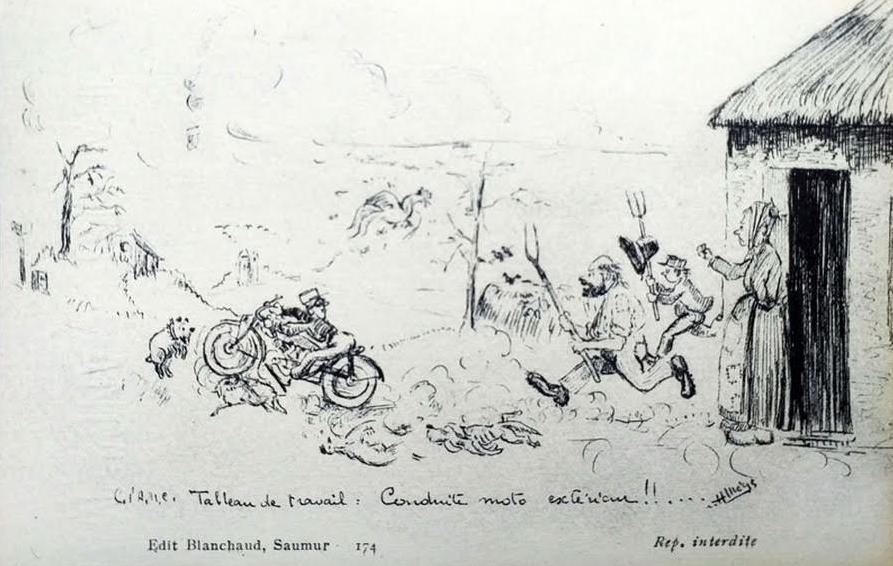
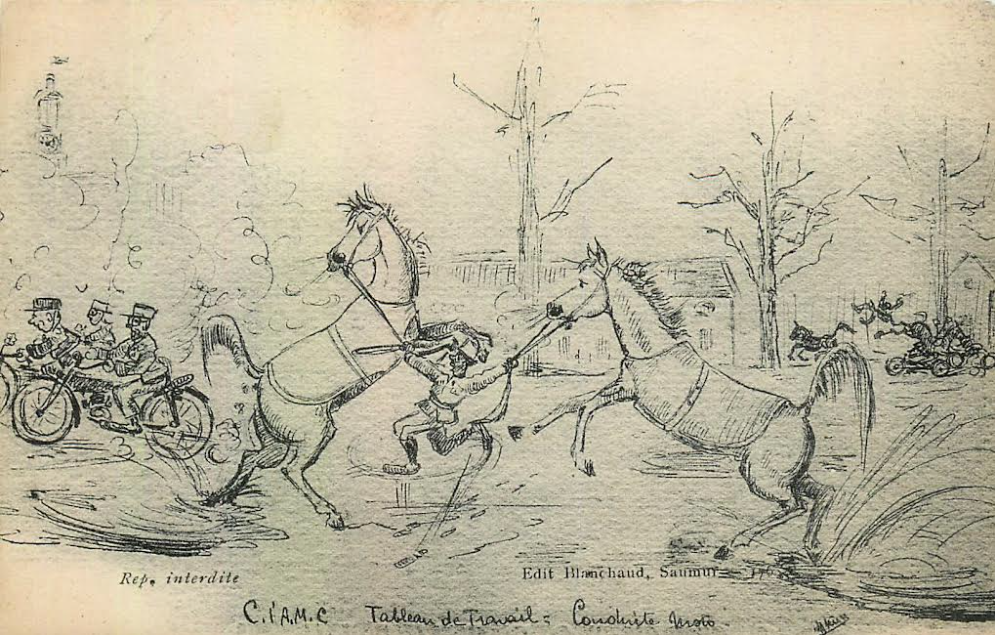
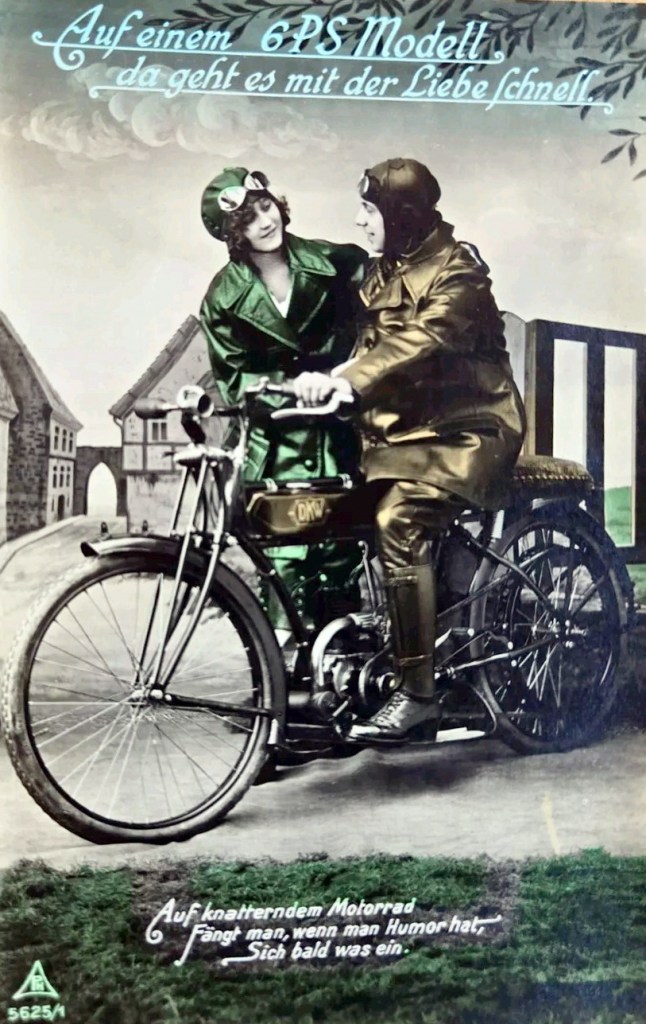
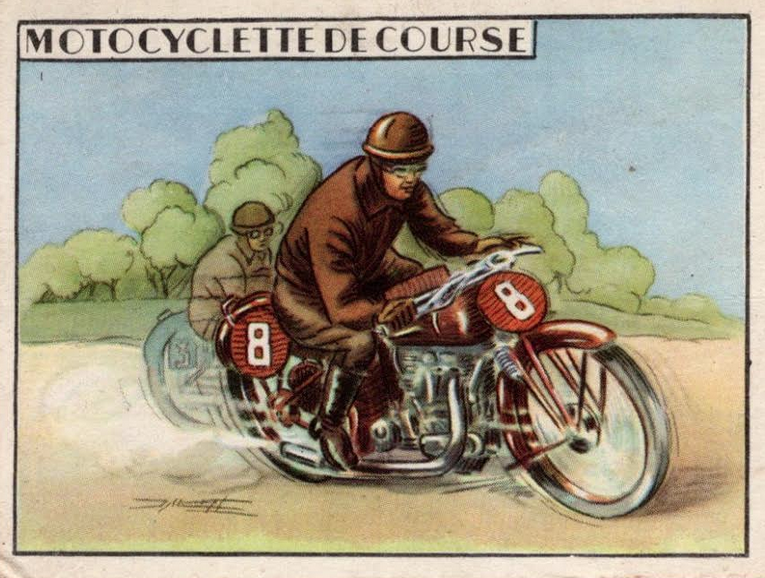
Here’s a charming trio of postcards from La Belle France. The caption they each carry tells the story: “We often need someone smaller than ourselves”.
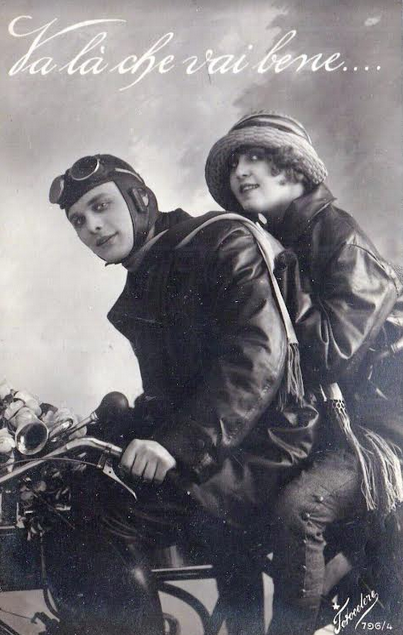
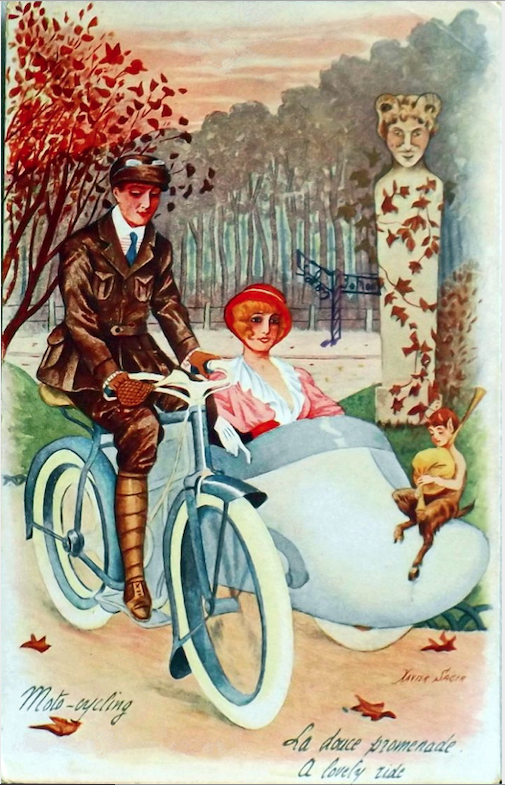
The sentiment on this card, depicting a French DR and his best girl, will strike a chord with many of us whose first romance was sparked by our first motor cycle: “And to see this gaze that bewitched me sooner, I’ll burn along the road.”
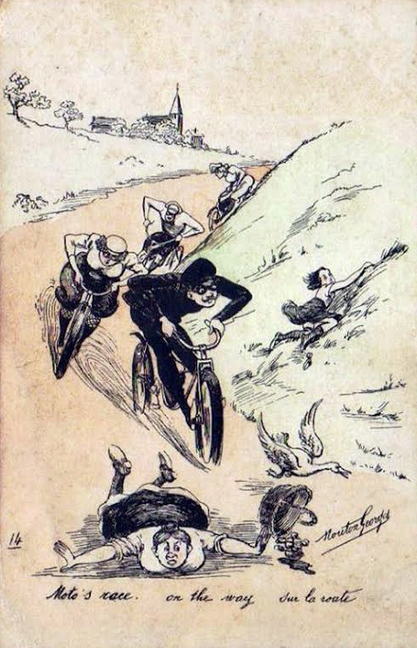
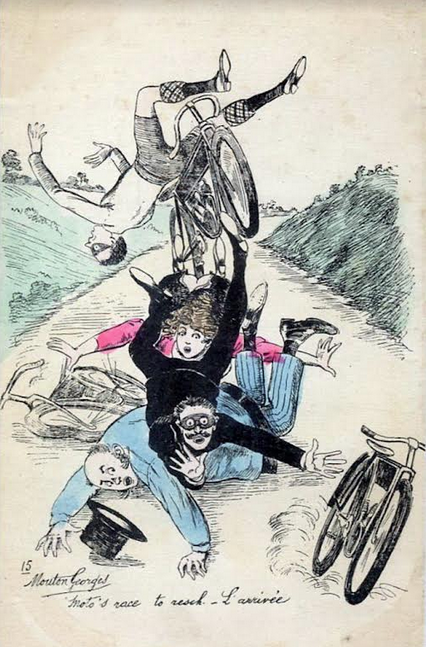
This one (and the illustration that follows it) are by Georges Mouton who was a highly regarded French illustrator. They appear here courtesy of my chum Francois. Merci, mon ami.
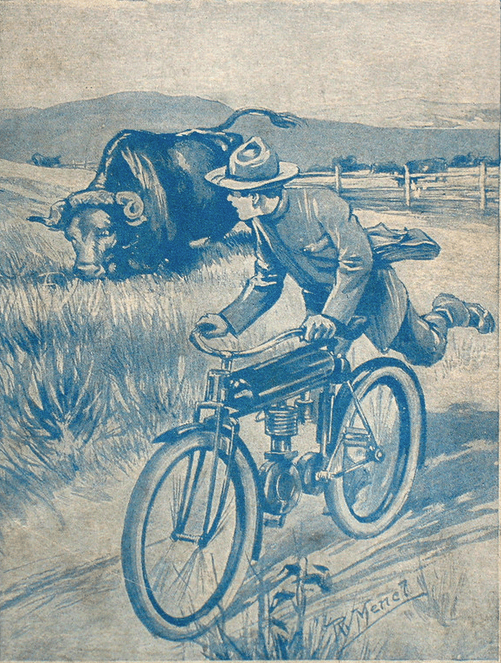
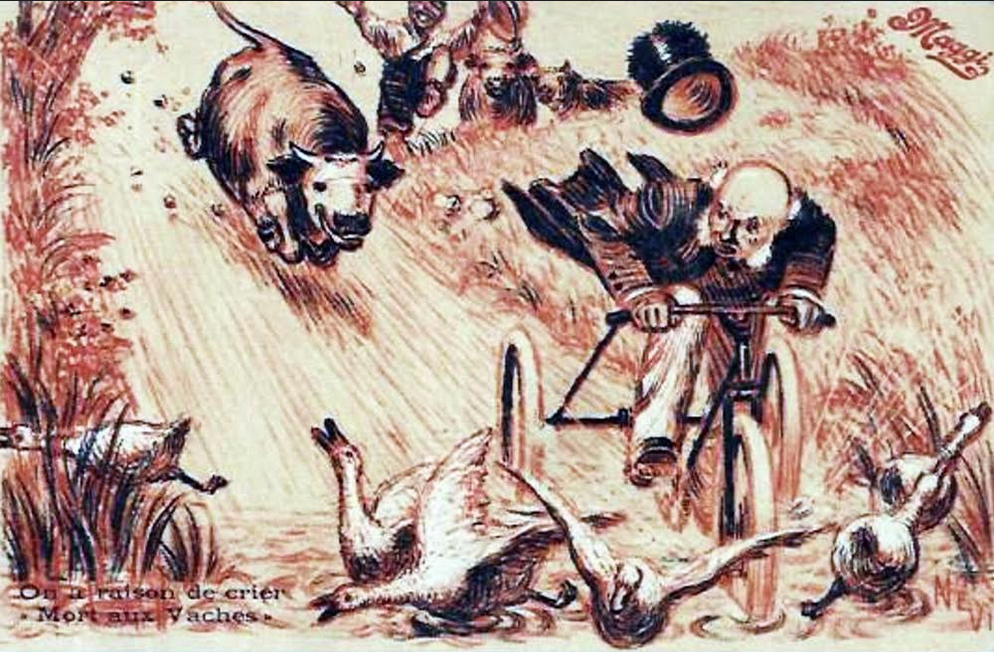
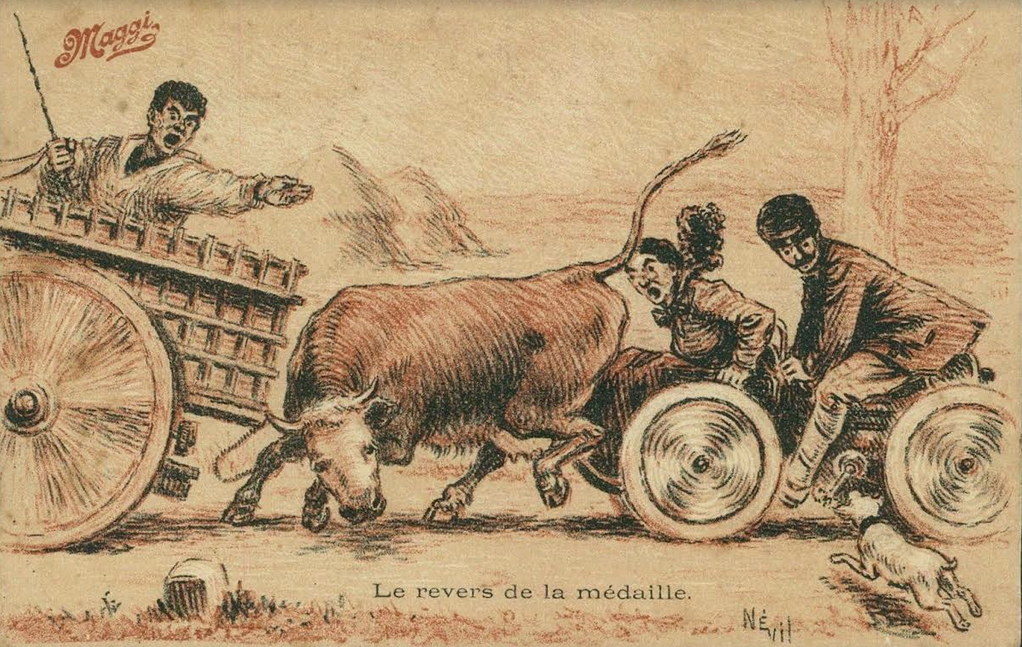
Judging by the next two images, bulls were a recurring nightmare for French motorists…
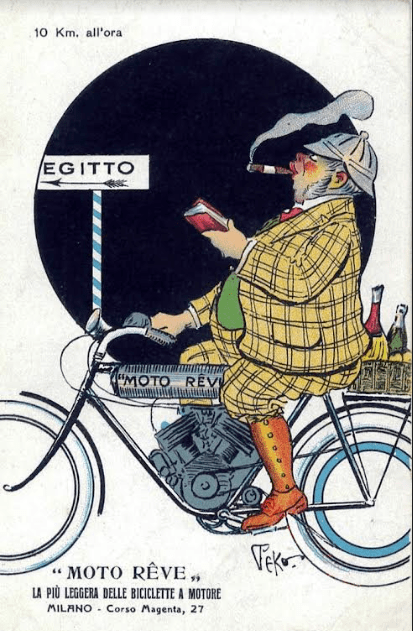
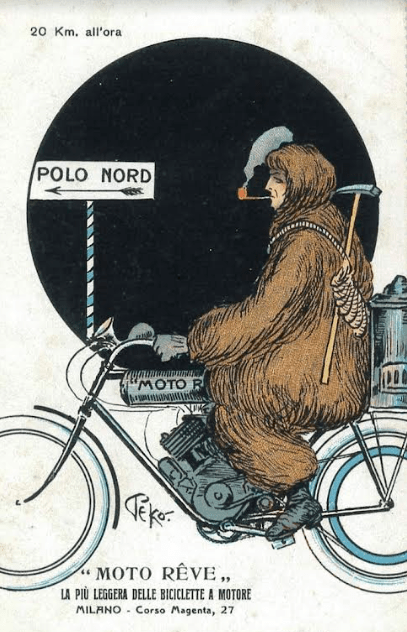
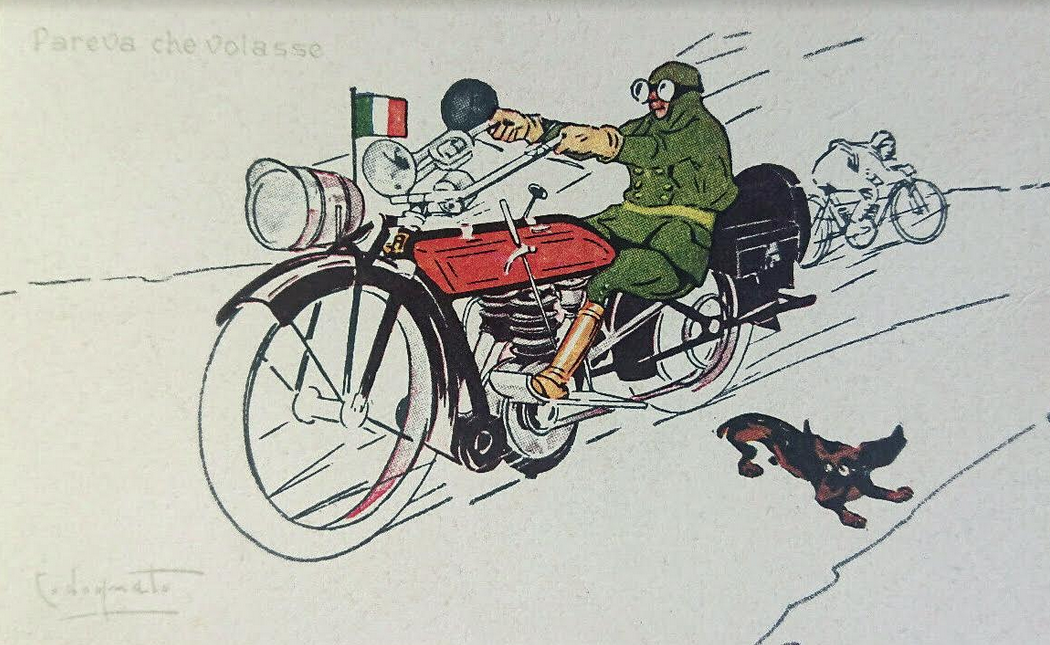
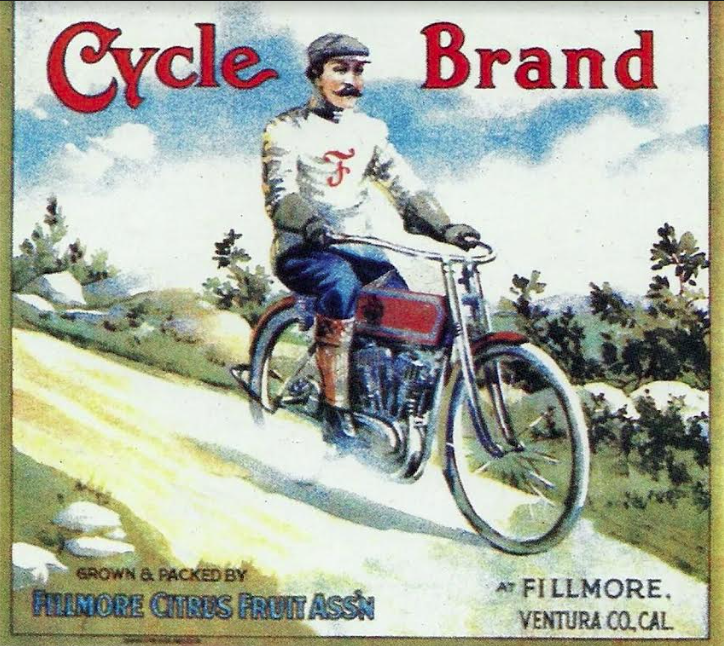
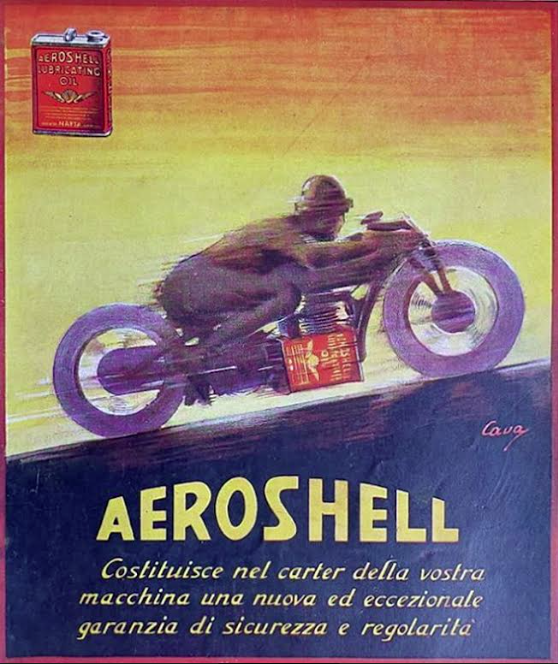
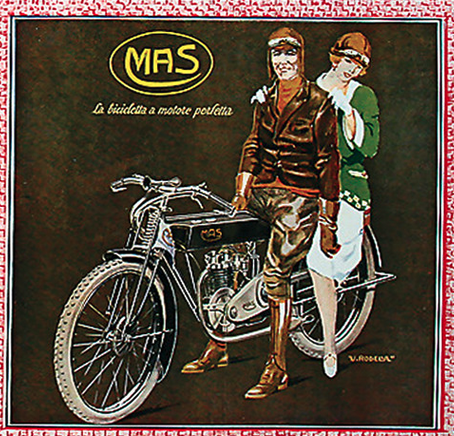
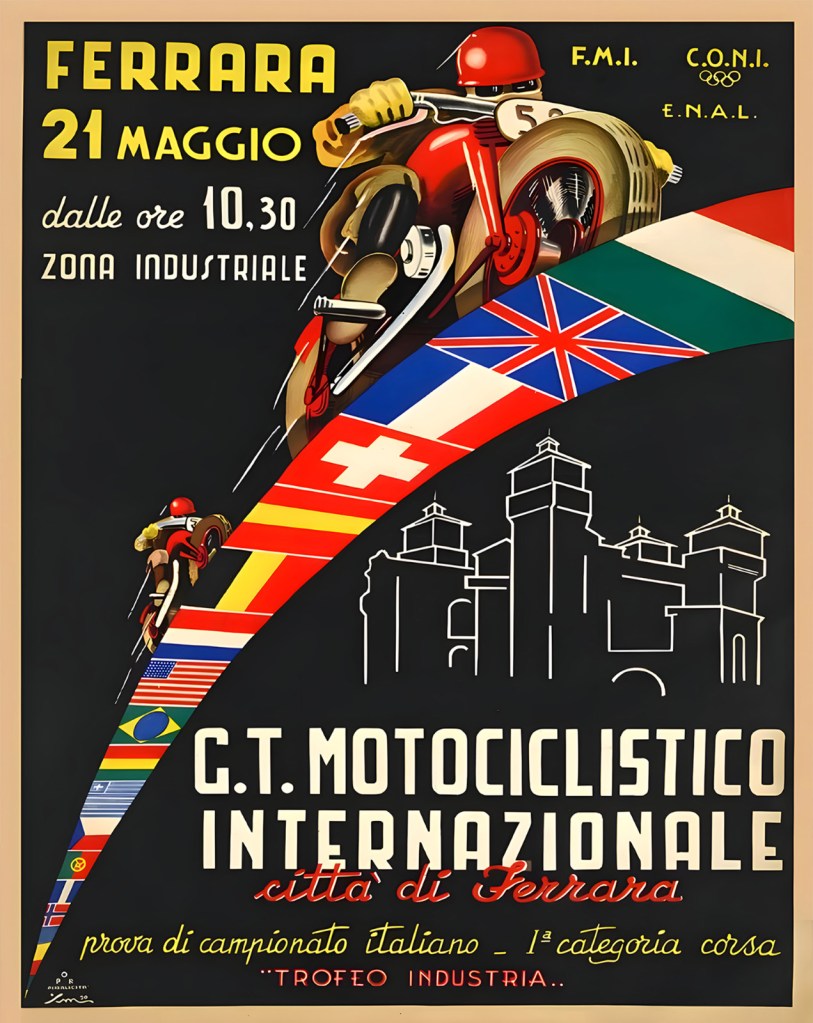
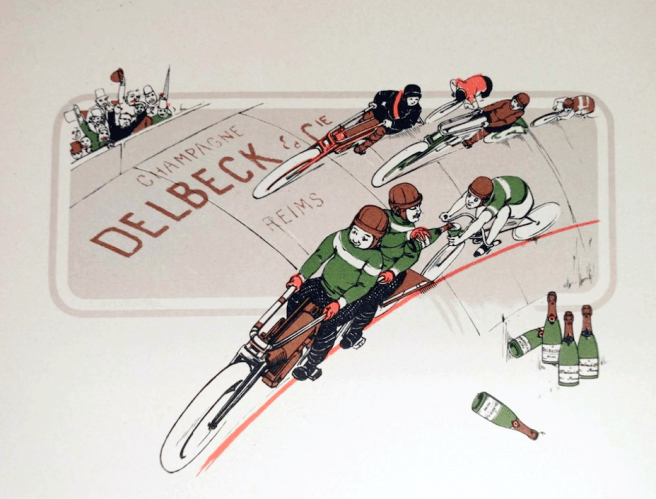
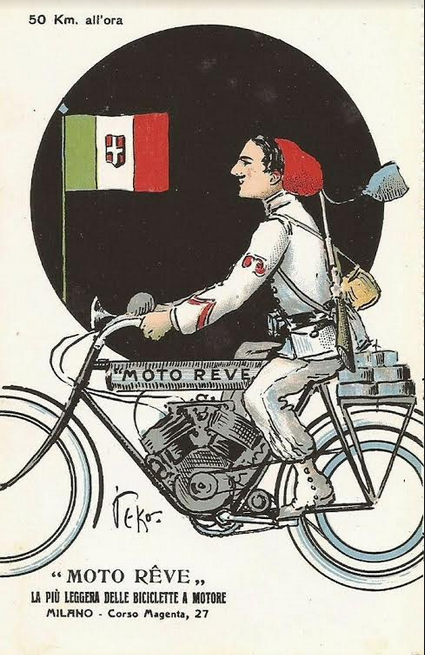
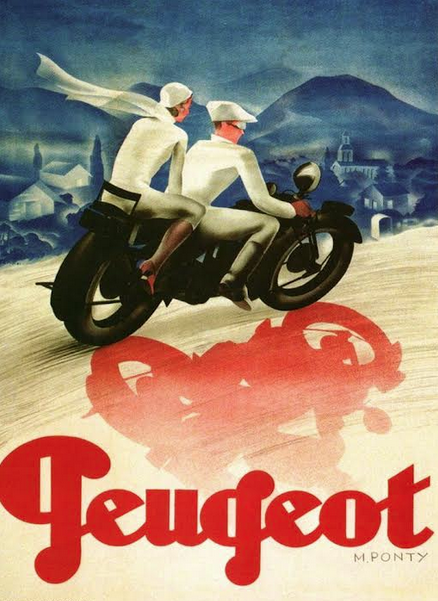
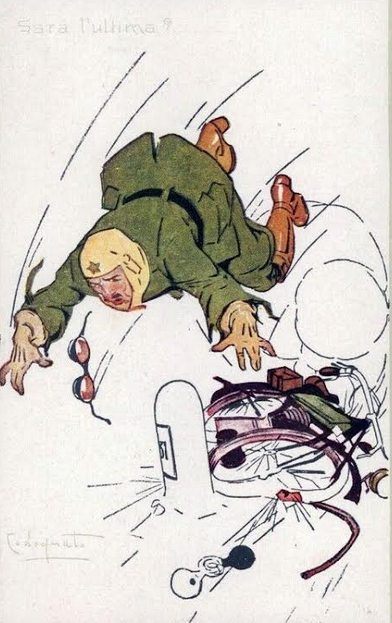
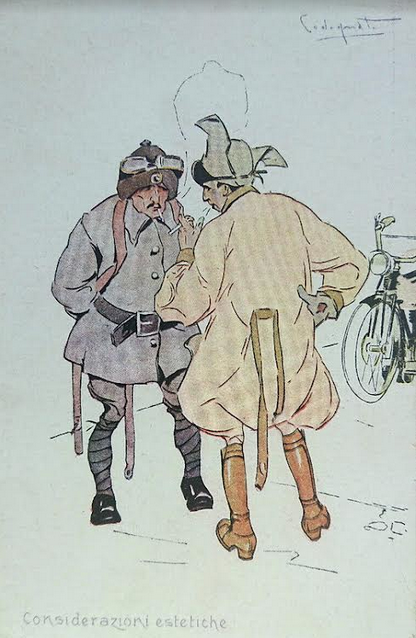
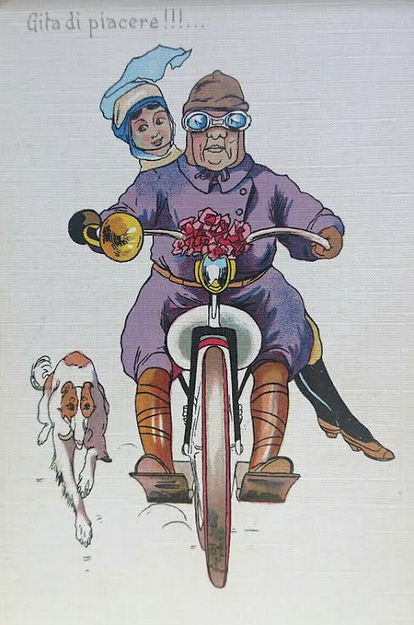
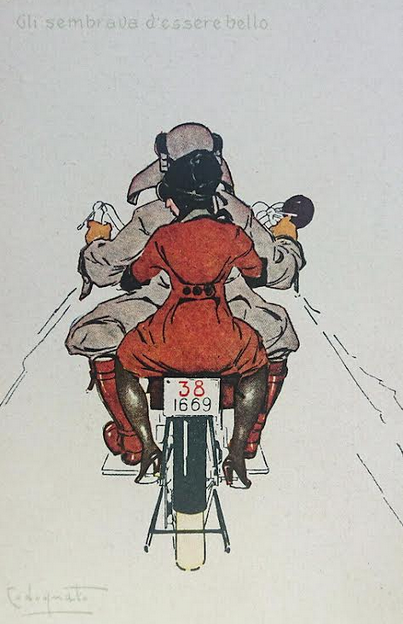
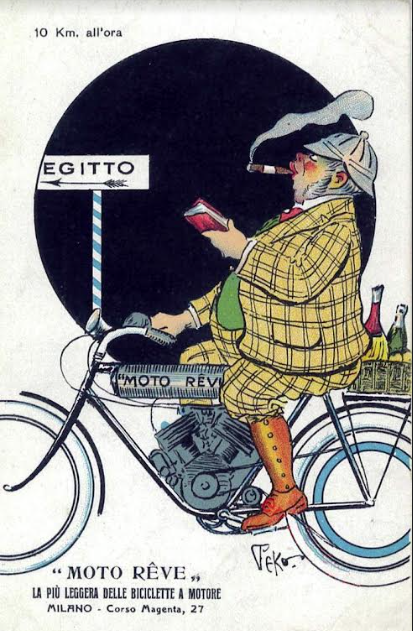
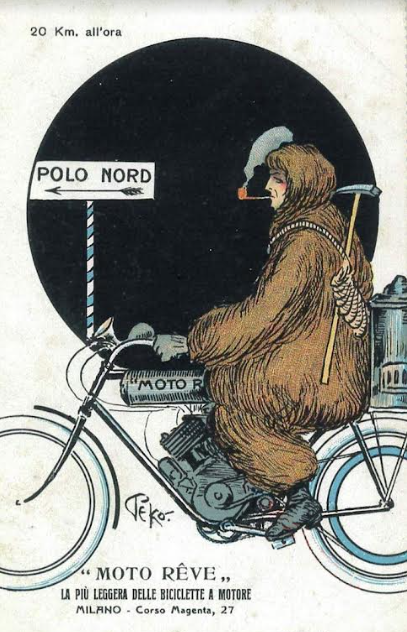
The Italians have a style all their own…
1903
1920
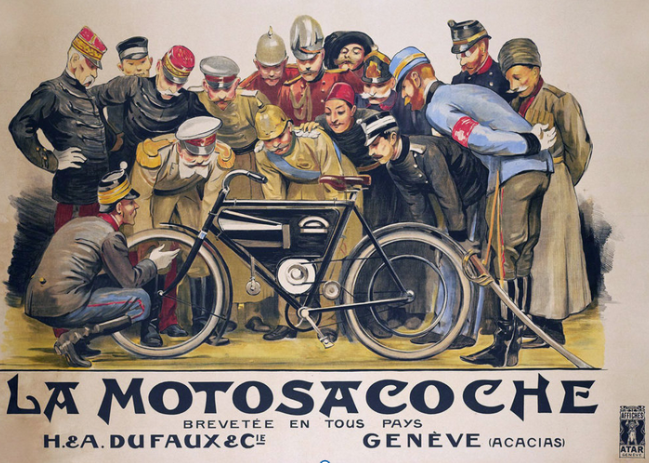
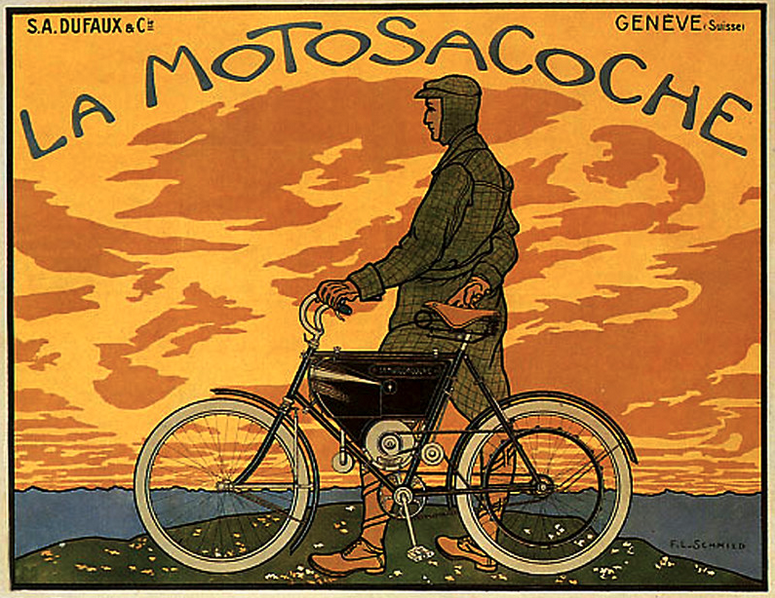
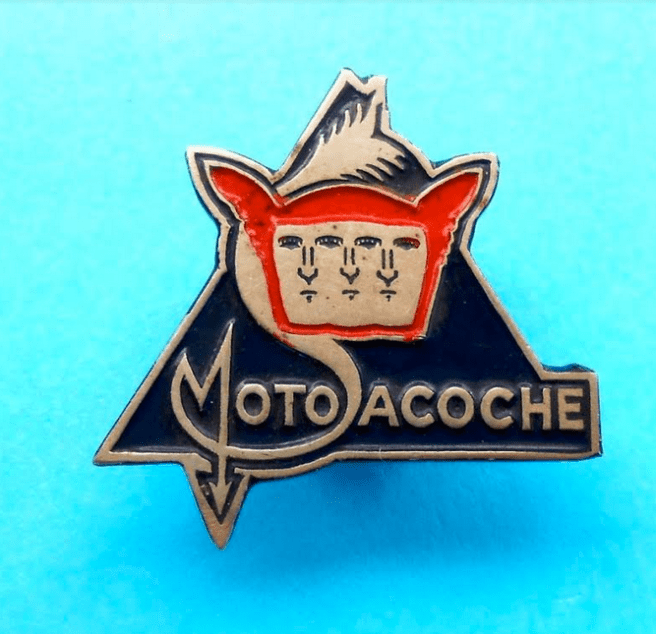
From a Motosacoche ad.
1925
1910
1913
1928
1946
This illustration, presumably from an adventure story, dates from 1916.
This one is clearly an illustration from a humorous yarn.
From an adventure story, 1924.
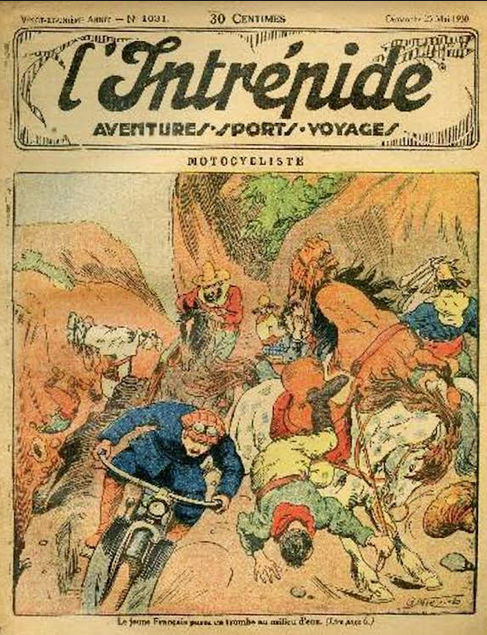
1930
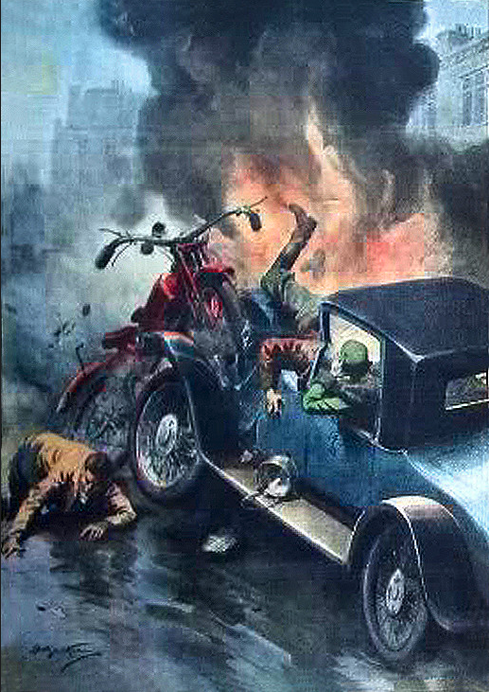
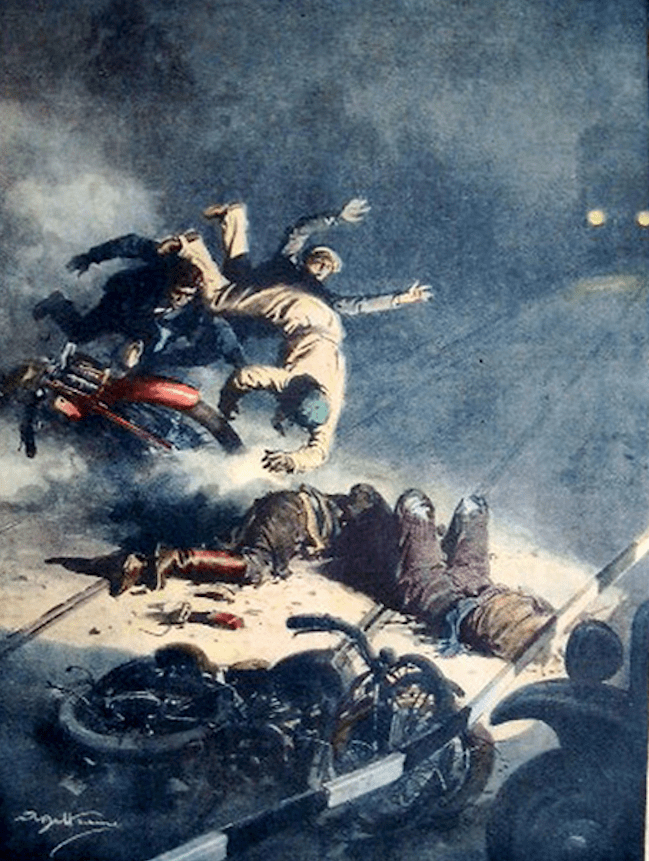
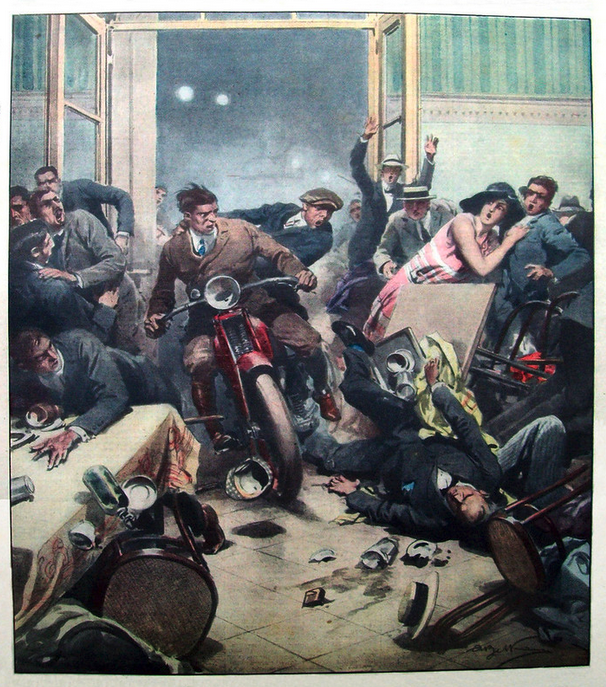
…also 1930, Italian pulp fiction illustration…
…ditto
…ditto, 1931.
This striking image appeared in a 1930 issue of Popular Science.
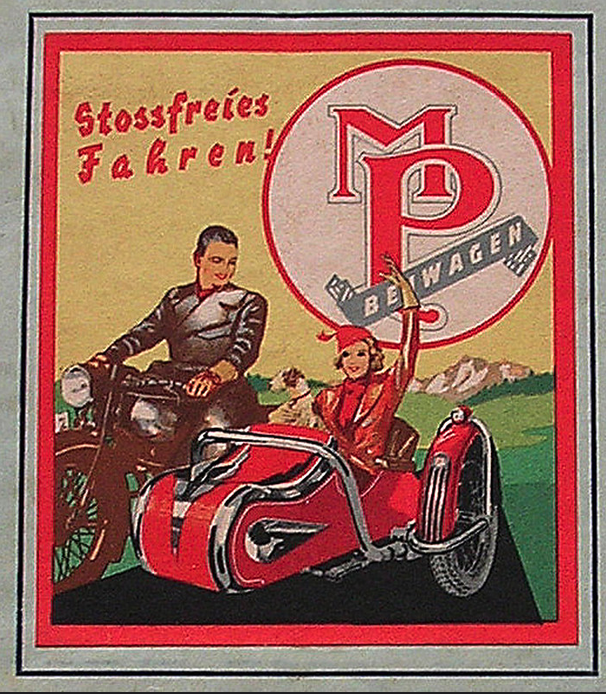
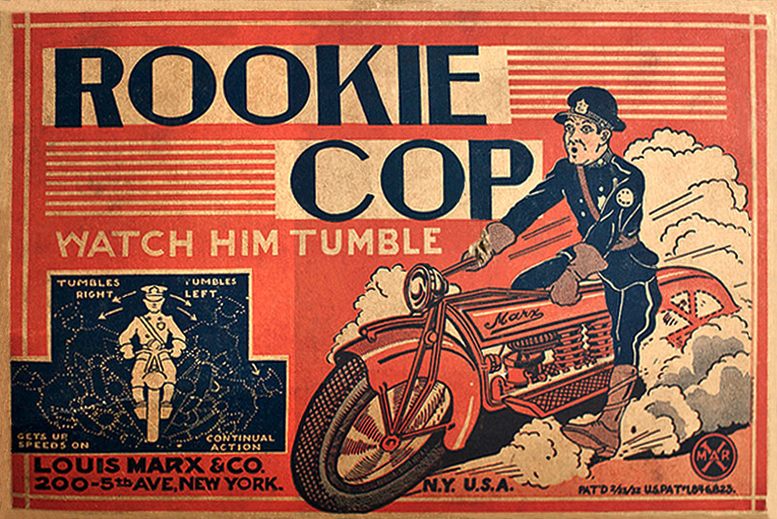
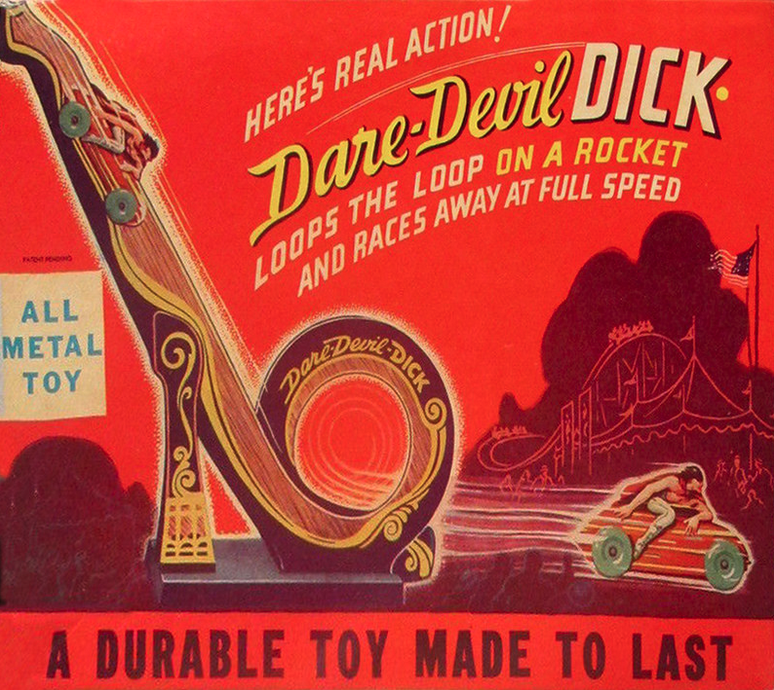
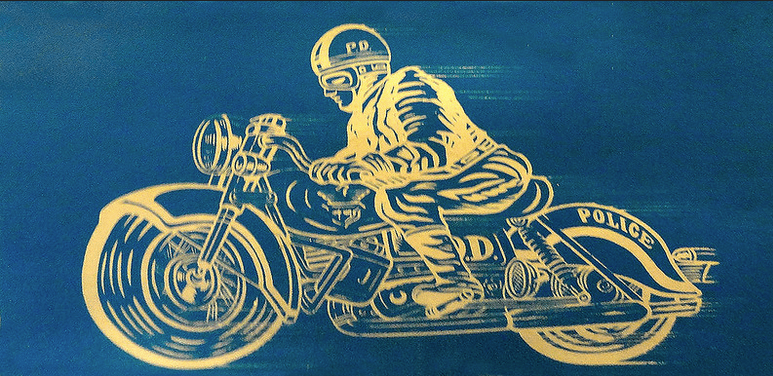
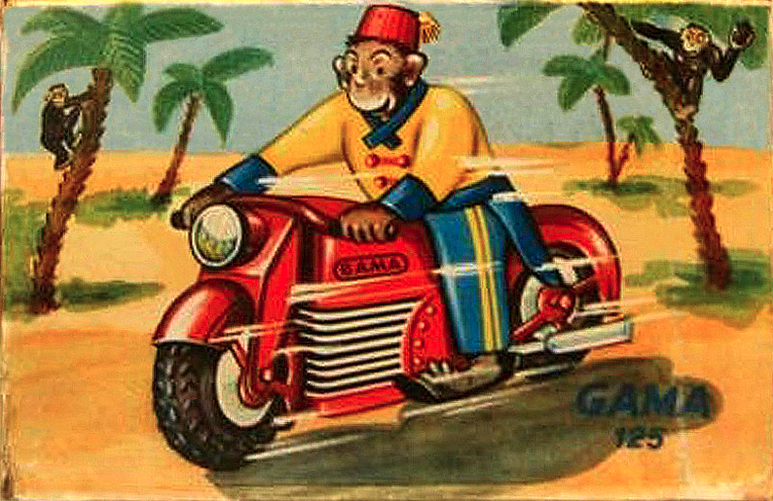
Here are four images from motor cycle toy packaging…
Here are a couple that are clearly English…
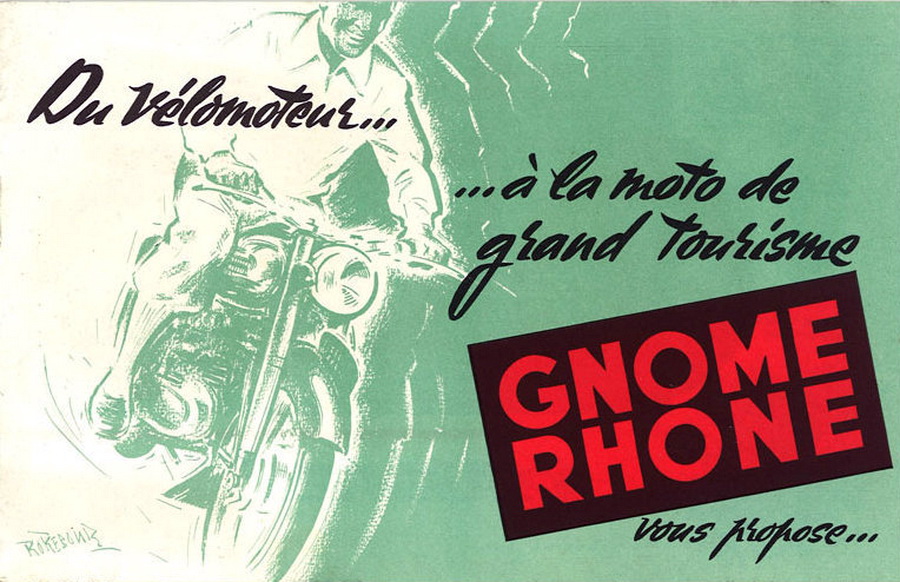
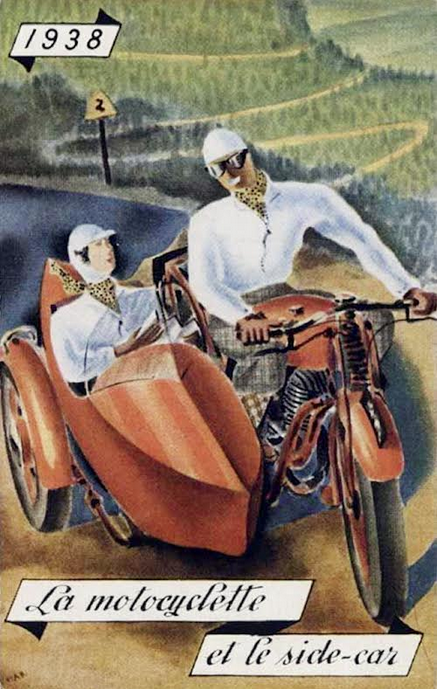
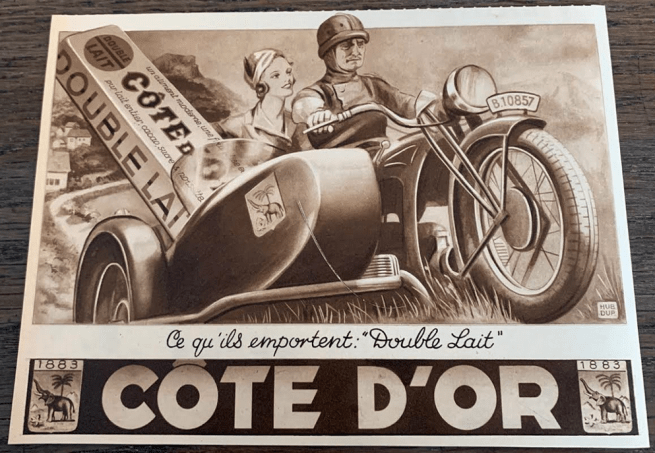
Meanwhile, de l’autre côté de La Manche…
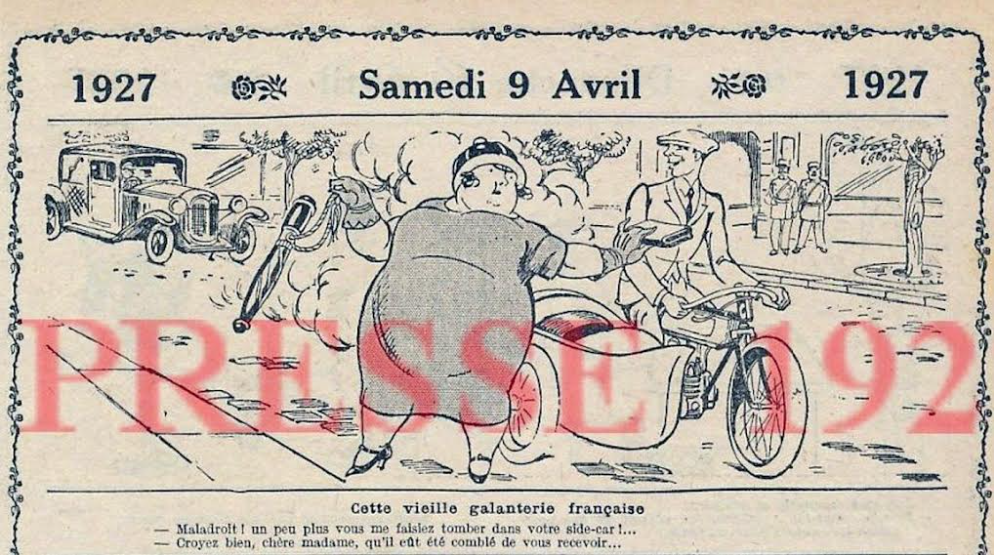
“That old French gallantry. ‘Clumsy!You nearly made me fall into your side-car!’
‘Believe me, dear lady, it would have been a pleasure to accommodate you…'”
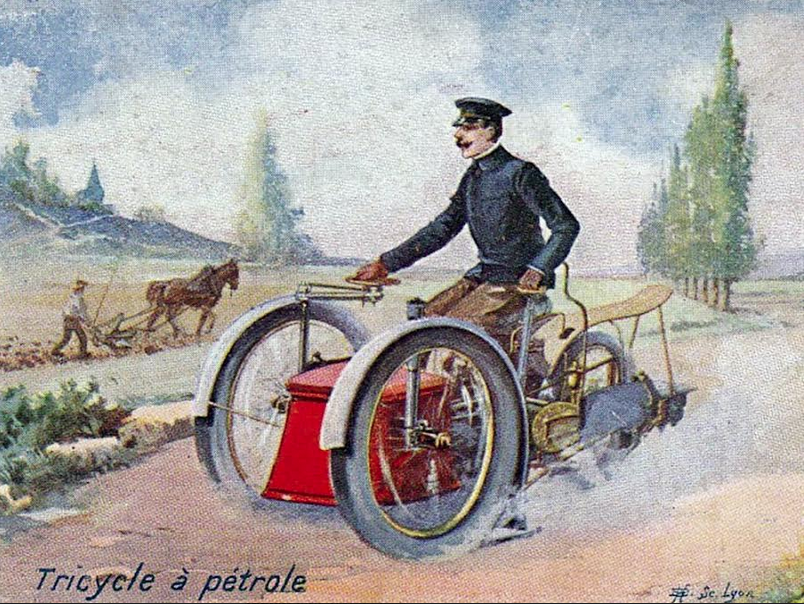
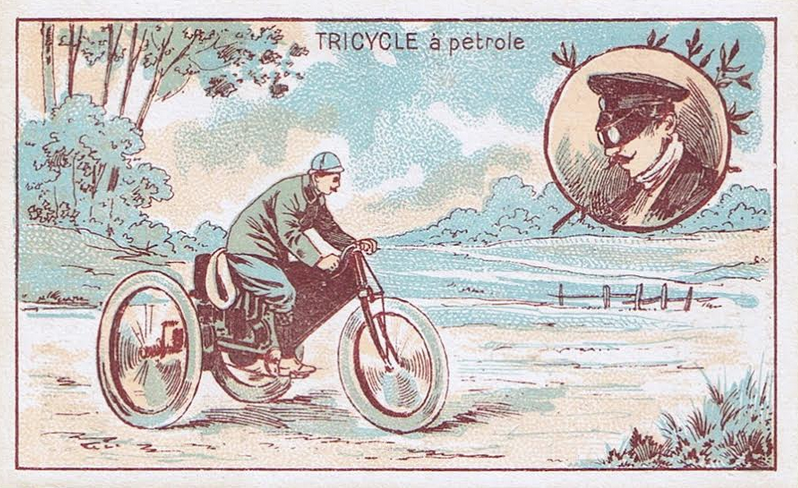
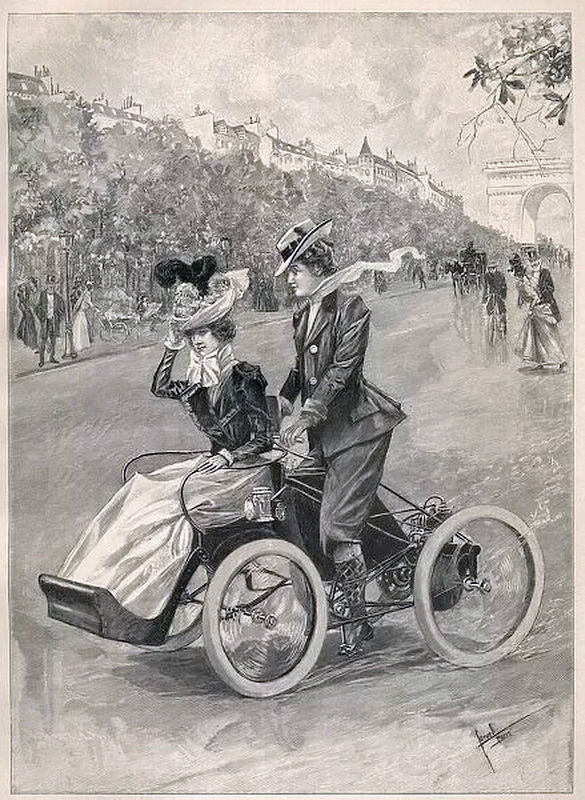
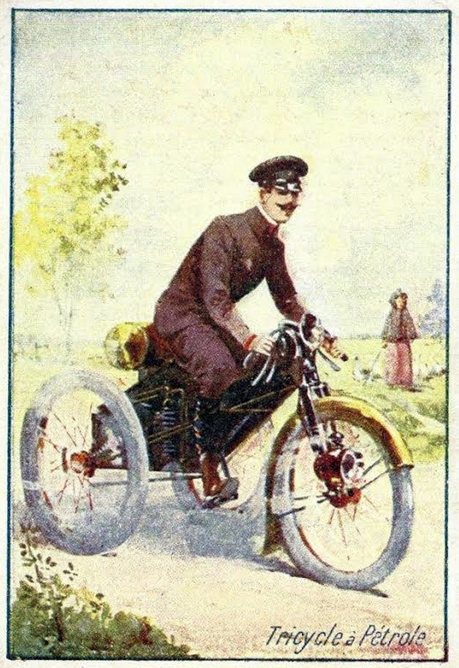
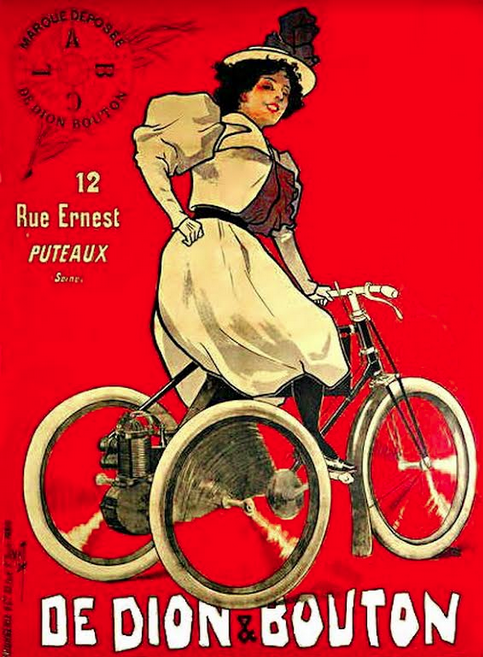
“Locomotion across the ages: The petrol tricycle—the bane of pedestrians who are too slow to get out of its way—is one of the most distasteful means of locomotion. Its unpleasant smell, the nervous fatigue suffered by the rider, have done much to slow down the vogue of the petrol tricycle, which is gradually being replaced by light carts or automobiles powered by electricity or mineral spirits.”
“Here is the fast but noisy petrol tricycle. It passes by, with a pace that is too often haphazard, crushing here and there the legs of dogs that are too indiscreet, jostling the passer-by who does not park quickly enough, raising a whirlwind of dust that fills the air-and our smells-with the unpleasant fumes of its oil. When it is stopped, it is there blowing, spitting, panting, shaking, like an apocalyptic monster, a fantastic animal that one finds hard to believe was born by progress. But the petrol tricycle is fading away, gradually replaced by the light carts or the automobiles, the powerful motors, powered by electricity or mineral spirits. Judging by the improvements which these last vehicles are receiving at every moment, the petroleum tricycle, with its nervous exhaustion for those who ride it, will soon have passed away and will be relegated to the pages of history, in the same way as the ancient wooden velocipede or the penny-farthing.”
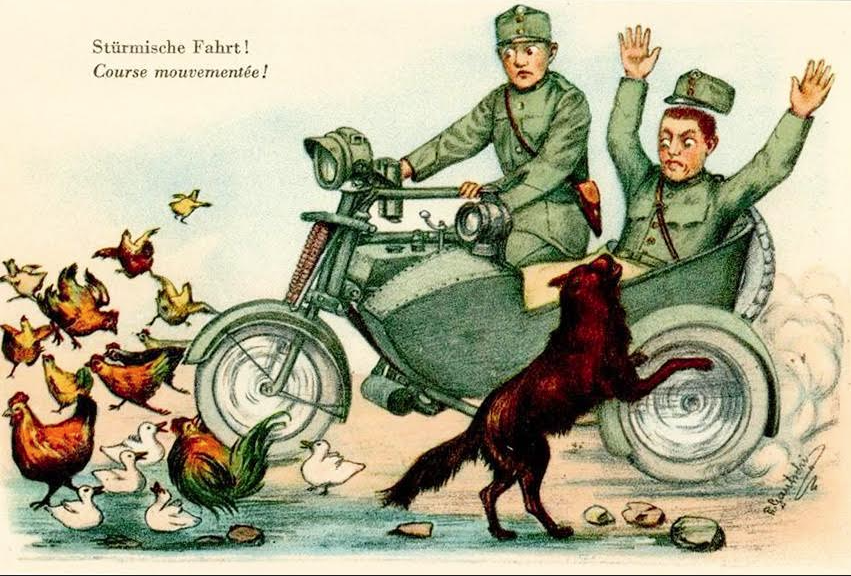
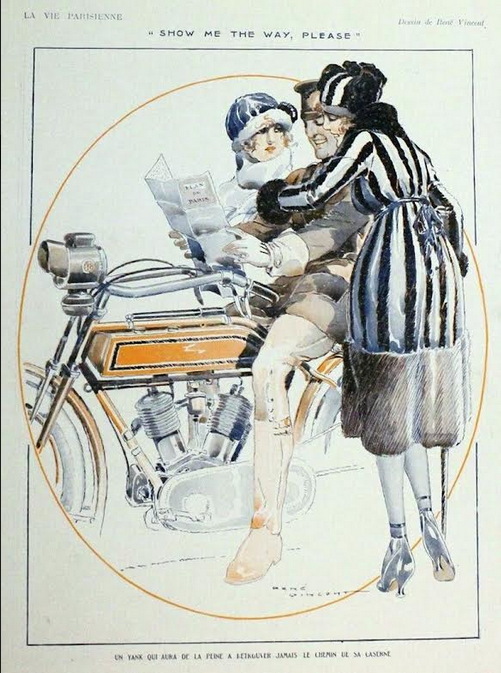
This delightful illustration of a Great War DR and two demoselles comes from Le Vie Parisienne.
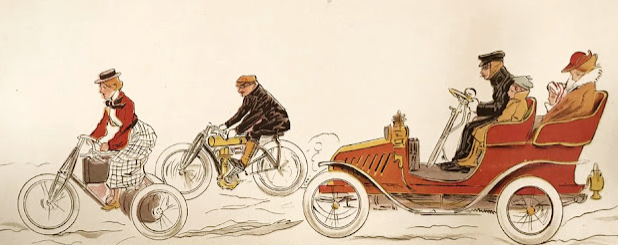
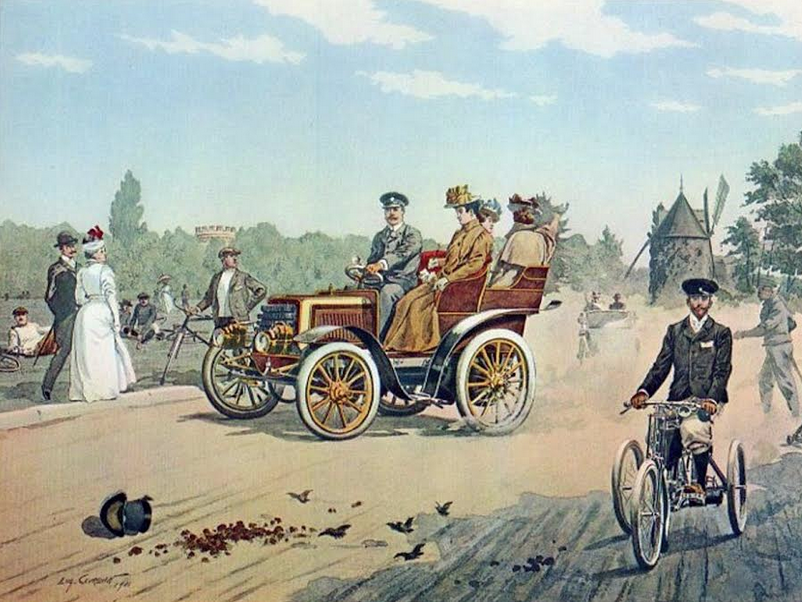
It’s 1898 on the Champs-Élysées; motoring in the Belle Epoch.
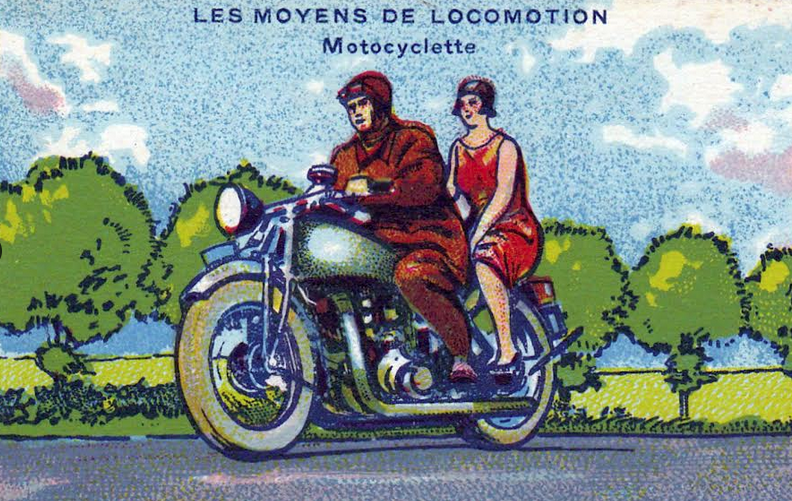
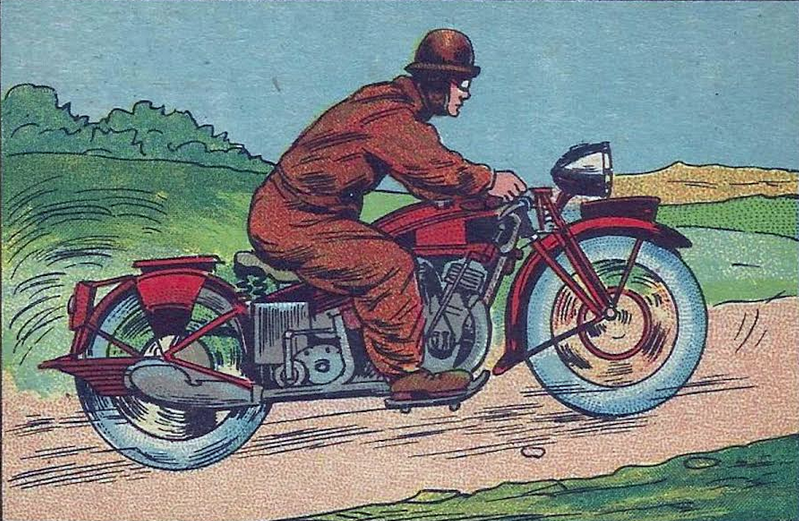
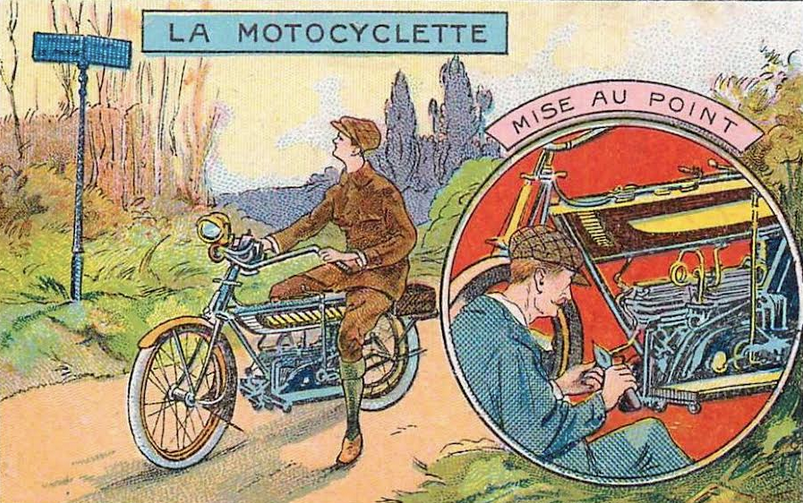
“The motor cycle is very common today and matches the speeds reached by cars, with low consumption and great manoeuvrability. With internal combustion engines of 2, 3 or 5hp they easily carry two people, at 40-50km/h; they are often fitted with a third wheel, a light body equipped with a comfortable seat. This is the sidecar.”
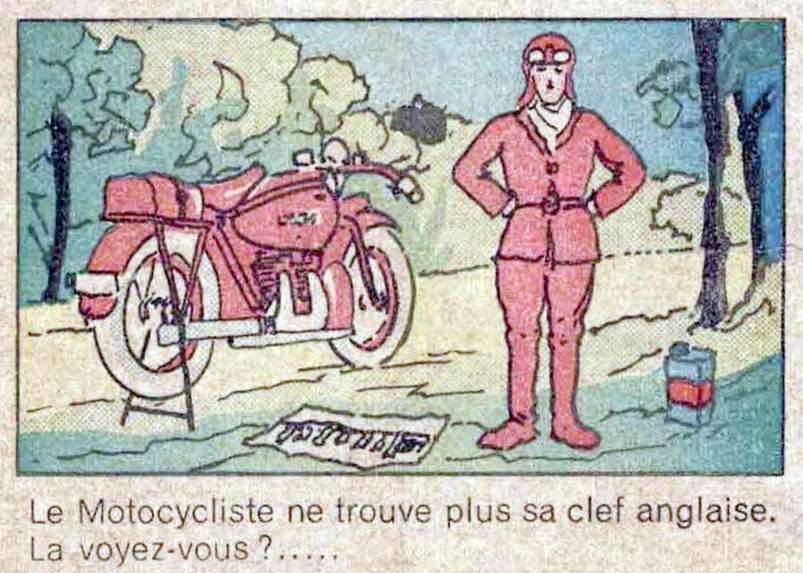
“The motor cyclist has lost his monkey wrench. Can you see it?”
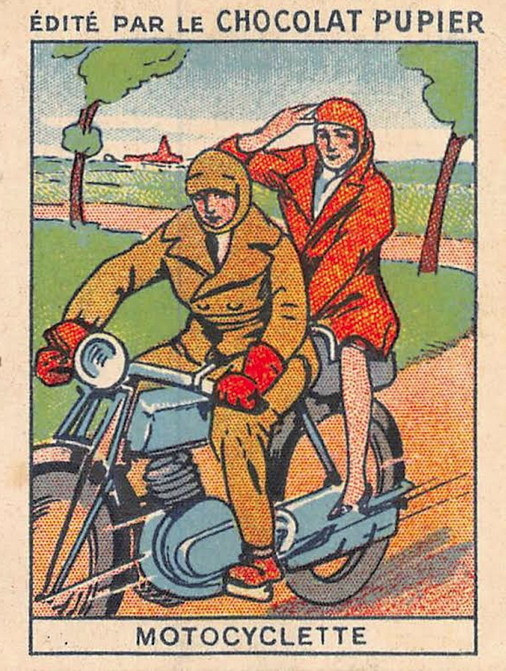
“The motor cycle has become very popular since it has been turned into a real sports machine. A rear seat allows to take a passenger, which also increases the stability of the vehicle, the motor cycle is very manoeuvrable and the cost of its maintenance is extremely low.”
This French illustration dates from 1951.
Just arrived, the latest batch of illustrations from the seemingly bottomless archive of my buddy Fanfan. I enjoyed them, I think you will too.
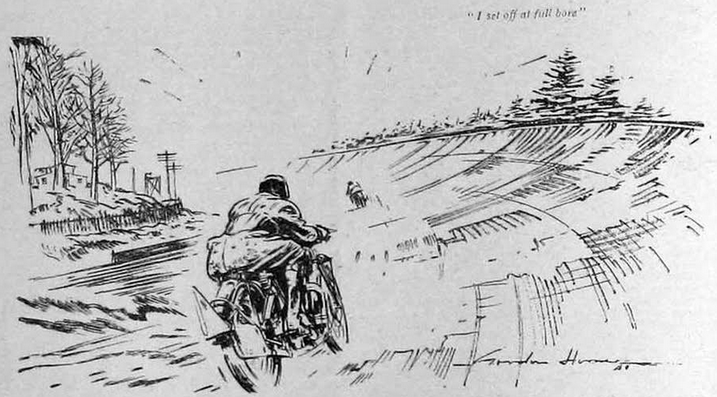
This illustration could only depict Brooklands. The original caption, in case you can’t make it out, reads: “I set off at full bore”.
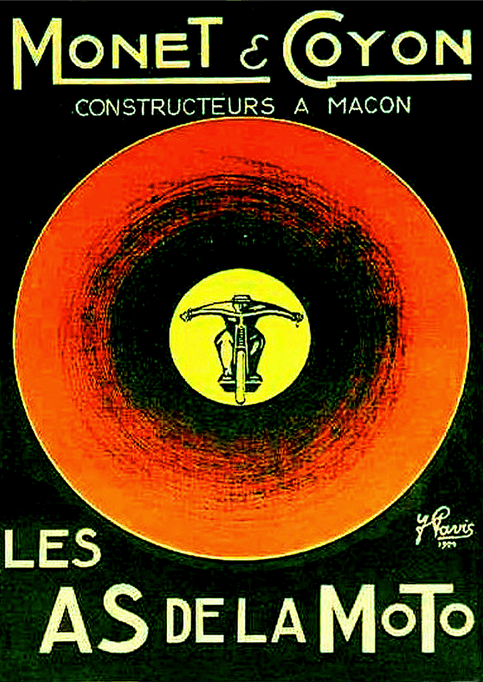
This stylish illustration depicts a 1929 Monet Goyon that won the Grand prix de France at Le Mans in 1929.
“Oh! these cars that crowd us! You are always afraid… let it be! If you are in a sidecar, just let yourself be carried along gently…it is wonderful!…”
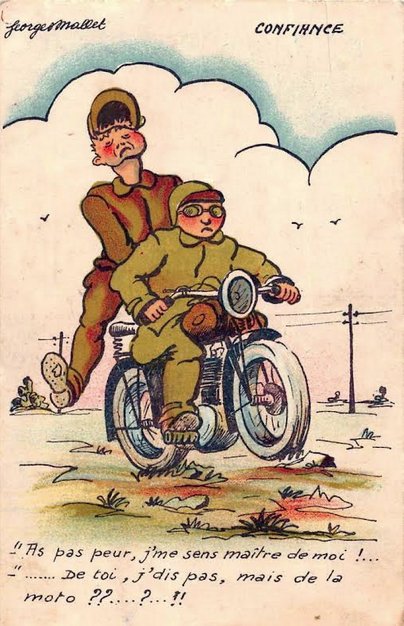
“Don’t be afraid, I feel in control of myself!” “I don’t mind you, but what about the bike?”
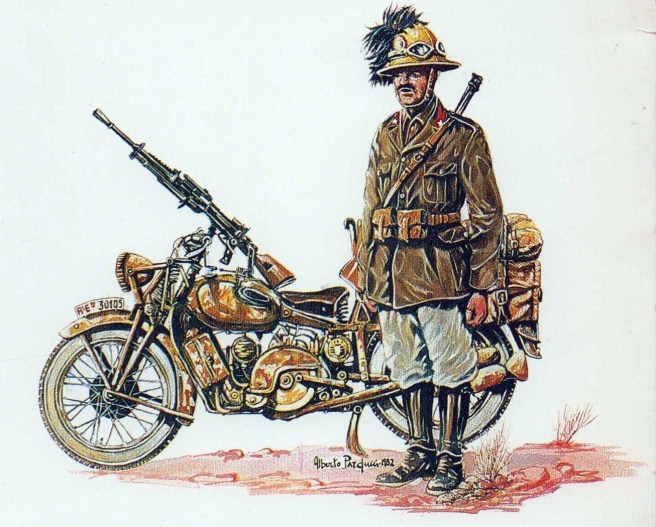
Bersagliere Motociclista.
Yes, time was when bike thieves wore a suit and tie. But a scumbag is still a scumbag.
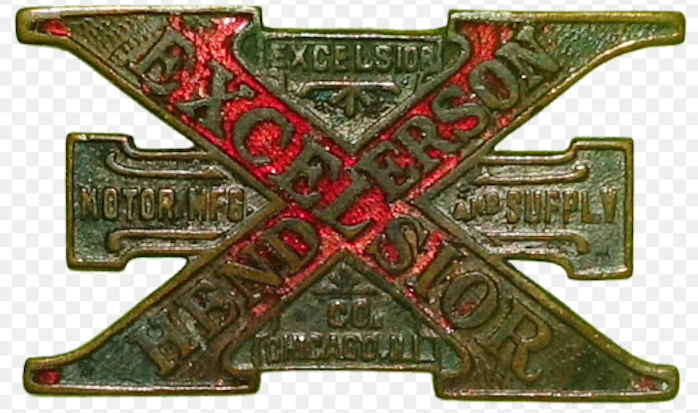
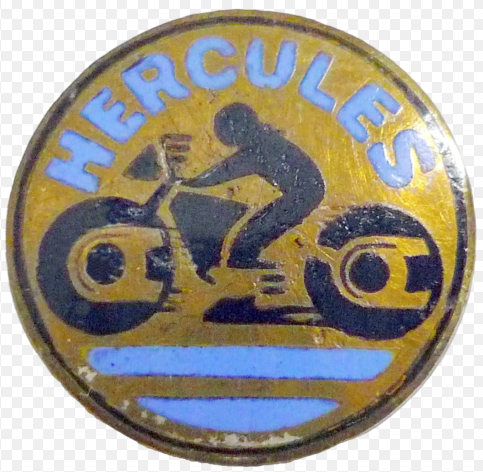
Not every badge tells a story, but this one does. In 1917, when this badge was made, the Henderson marque passed into the hands of Ignaz Schwinn, who owned Excelsior. The Excelsior name was already used in England and Germany so export models were marketed as the American-X.
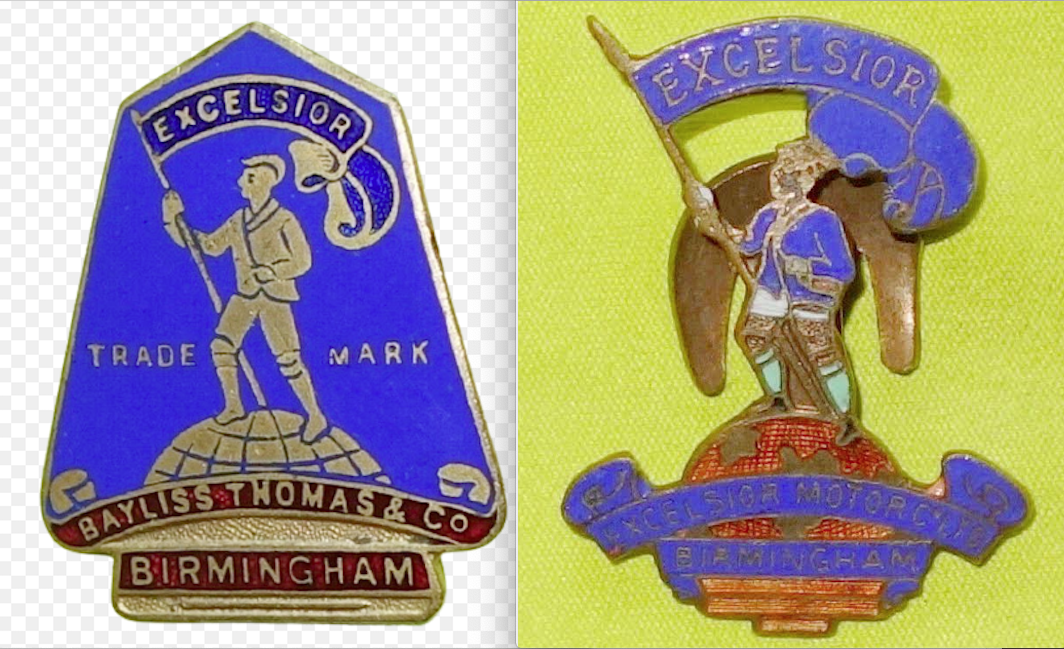
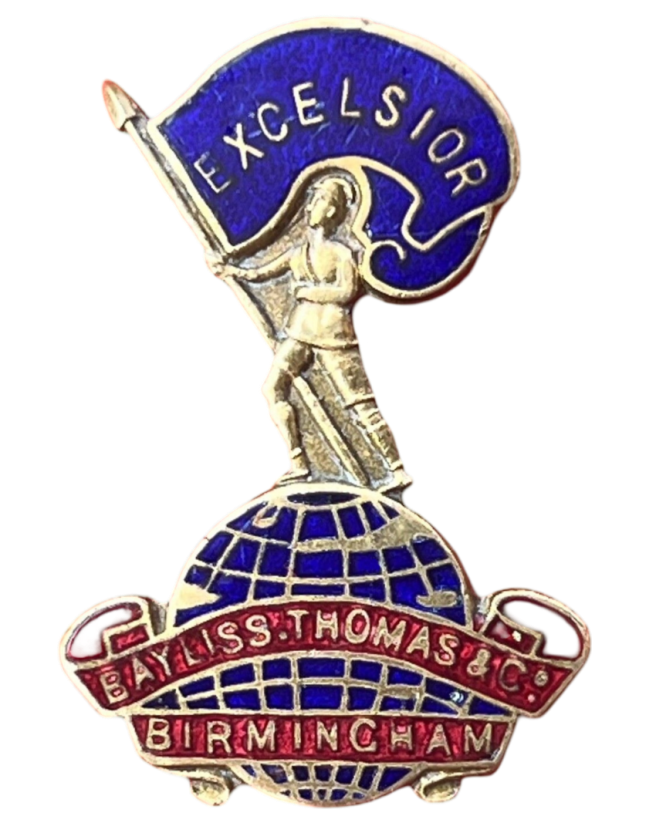
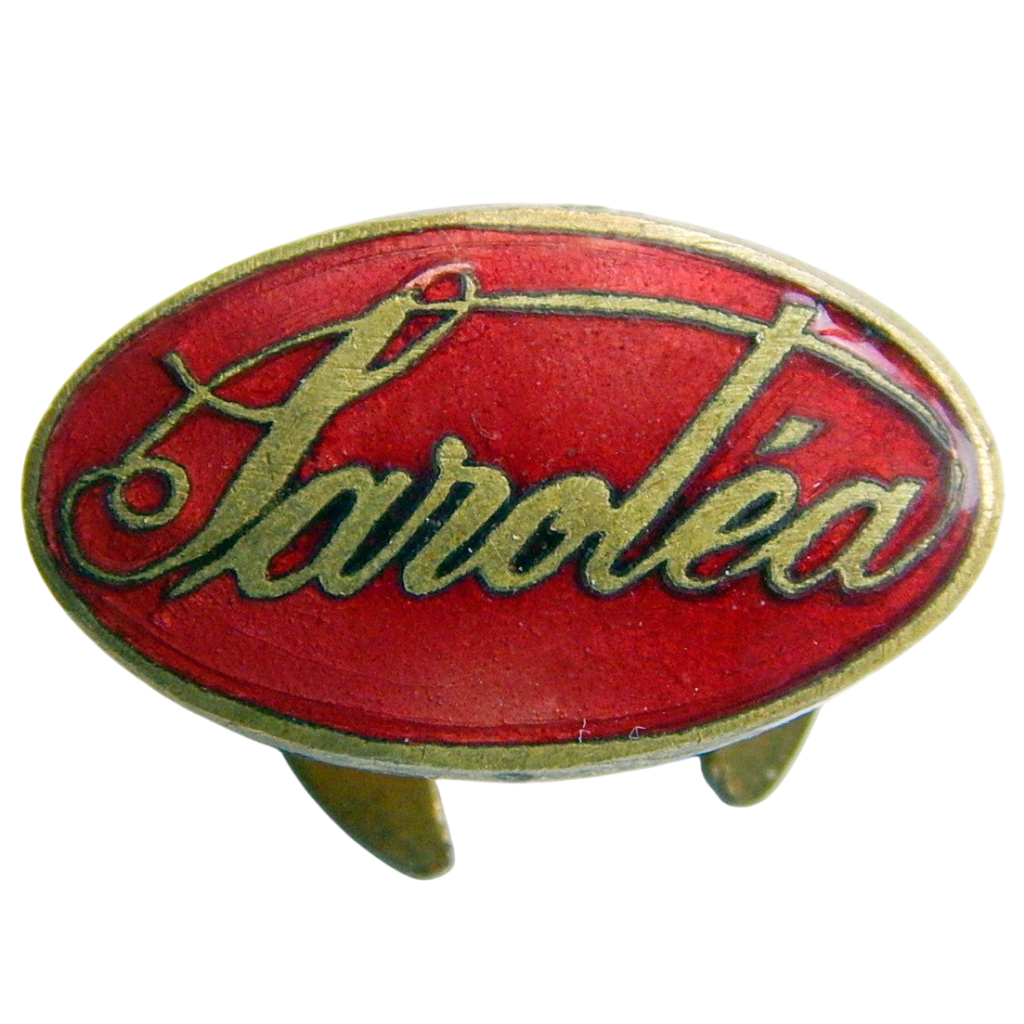
These two badges are Excelsior too, but the proper Excelsior, made in Brummagen.
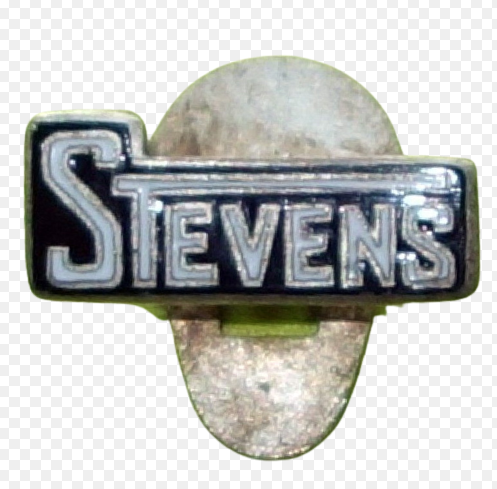
Another badge with a story. When AJS went into voluntary liquidation in 1931the Stevens brothers set up a shoestring operation and, over the next seven years, produced about 1,000 excellent 250, 350 and 500cc singles under the Stevens marque. This is their badge.
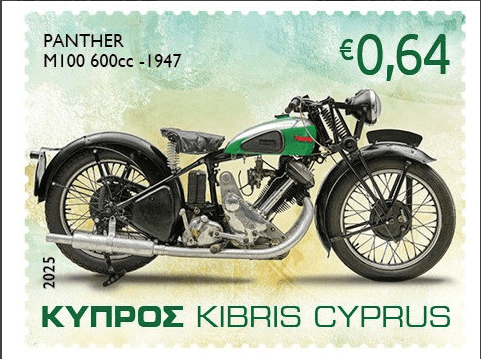
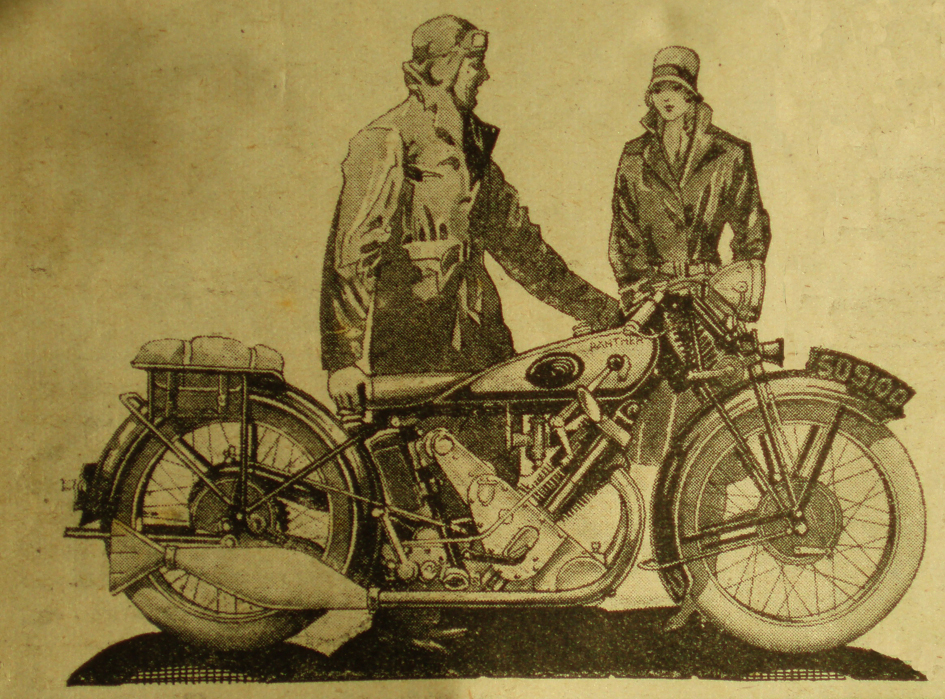
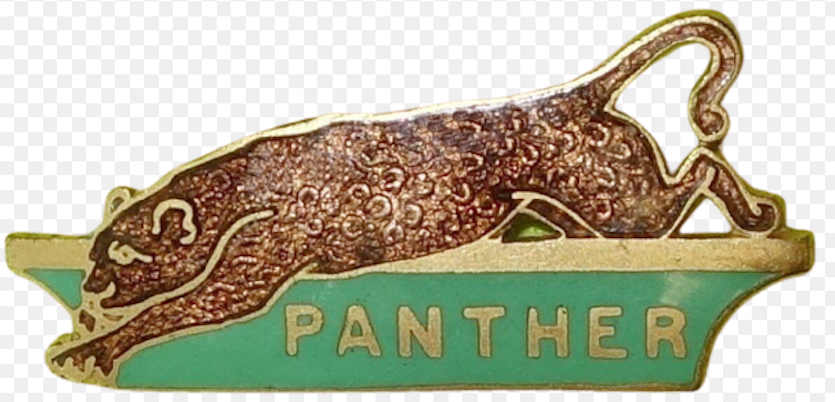
No story here; but this (probably 1950s) Panther badge is rather fine.
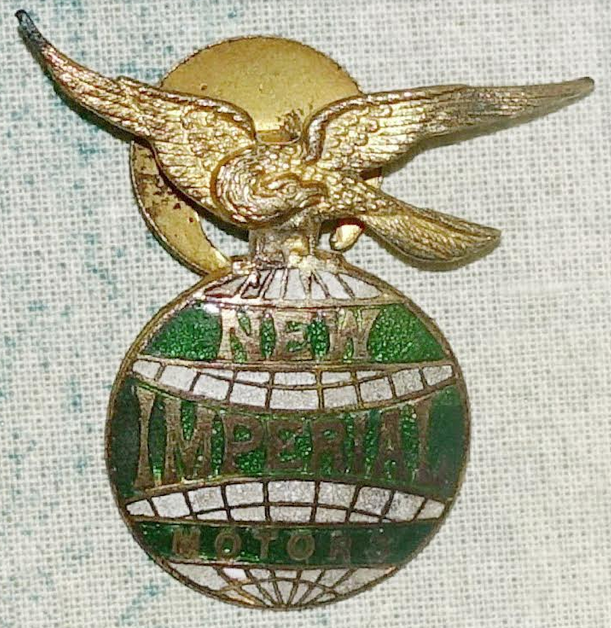
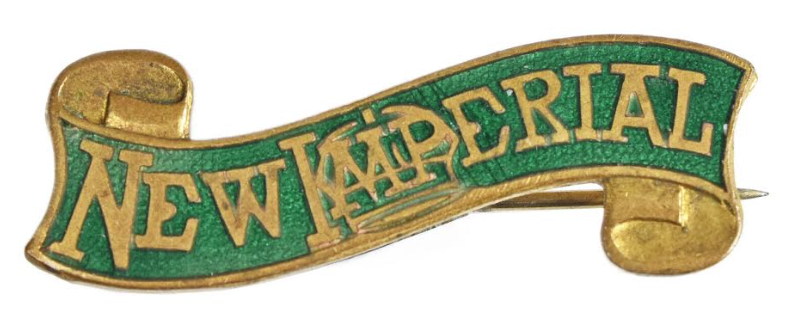
New Imperial was one of the great pioneer manufacturers, and they made a pretty badge too.
circa 1908.
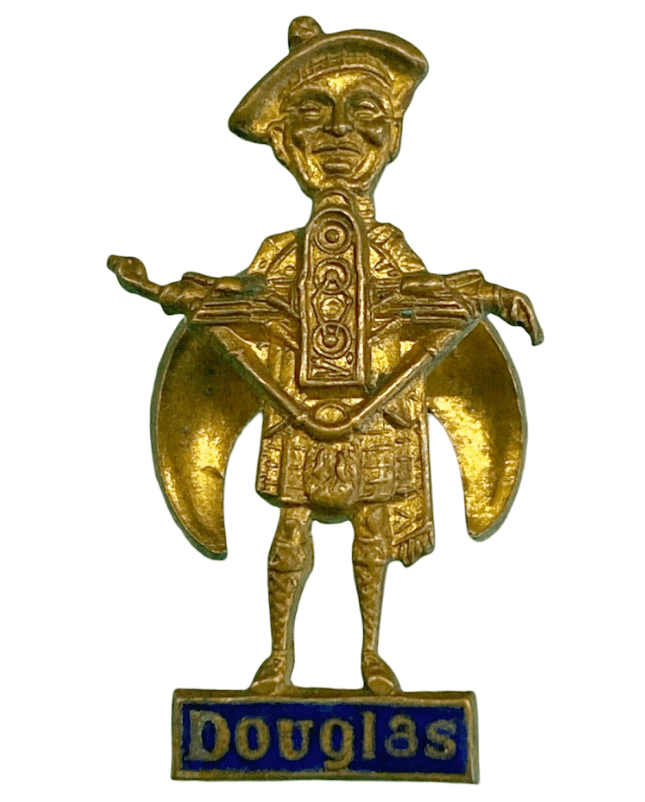
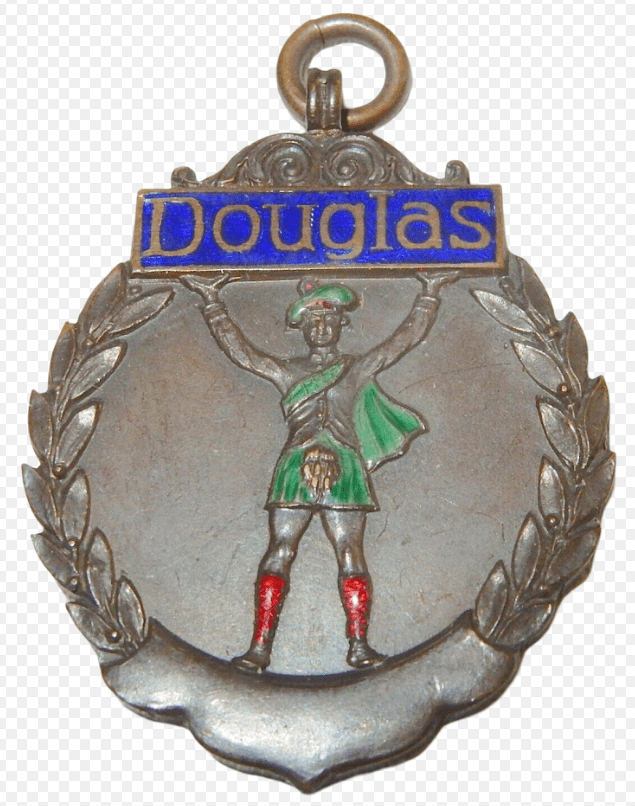
Like most of these excellent images of badges, this rare Douglas example comes courtesy of mon ami Francois.
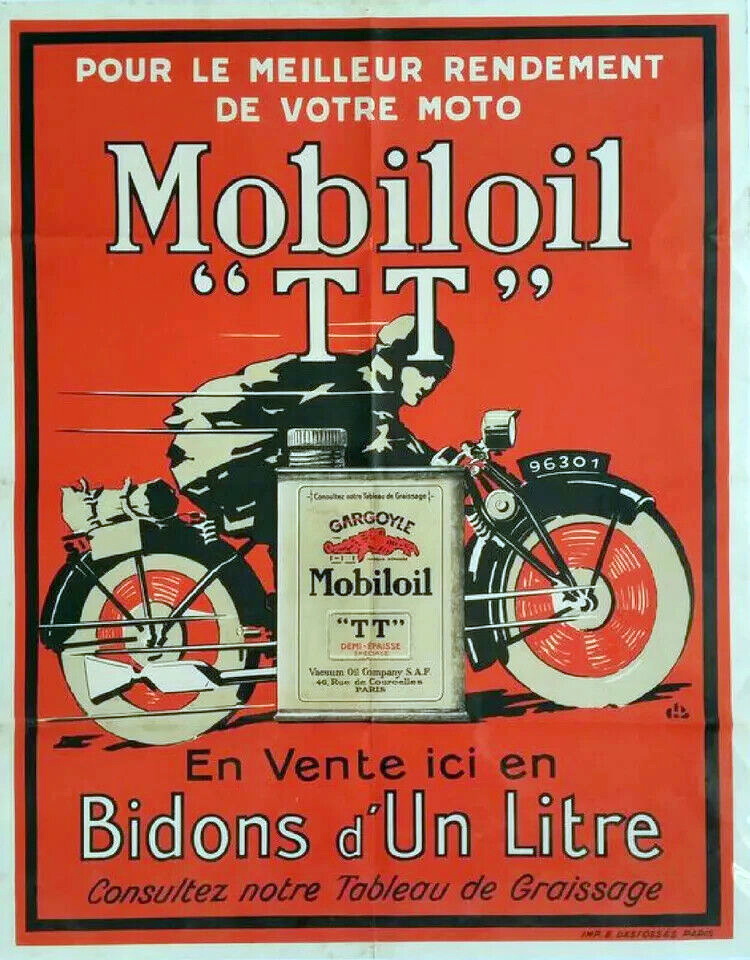
You wouldn’t think the reatreat from Moscow would be an obvious subject for a French oil ad…”A motorised Grande Armee such as the emperor would undoubtedly have created if he had known about motorcycle and the new Kervoline”.
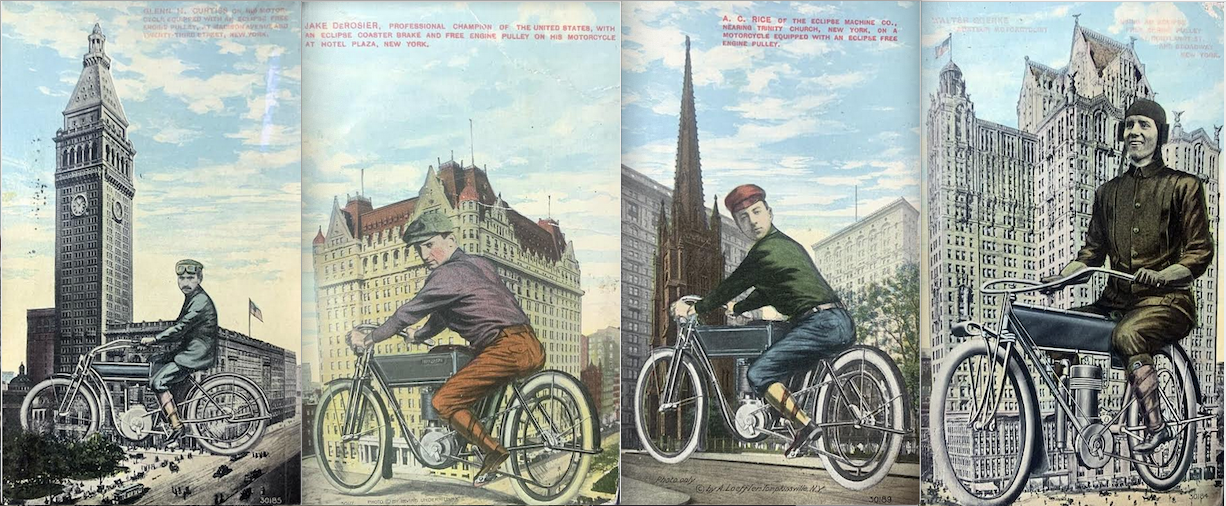
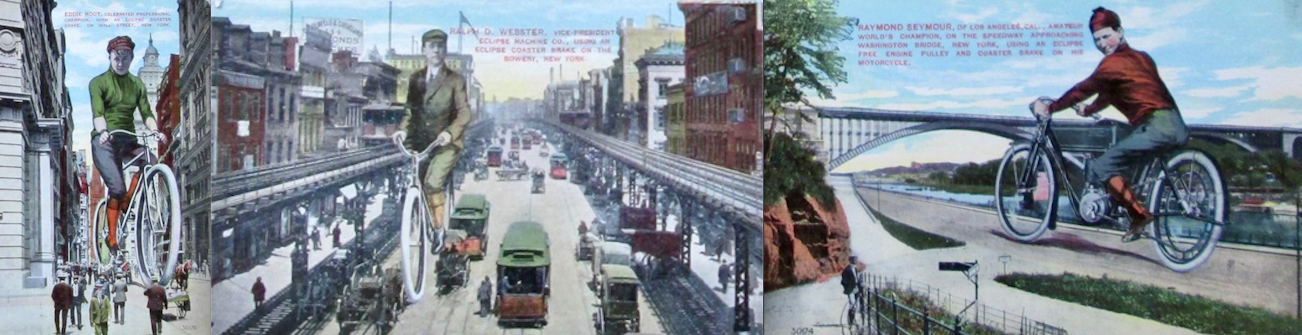
The Eclipse company, which supplied ‘free engine pulleys’, produced a series of a dozen striking promotional cards depicting leading American riders, high-profile Eclipse customers and employees against New York landmarks. L-R: Glenn Curtiss, Jake De Rosier, Eclipse employee AC Rice and amateur cyclist Walter Goerke.
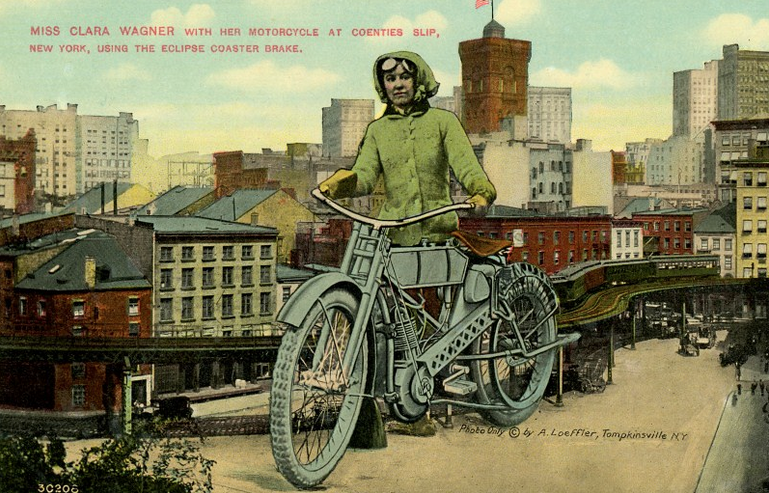
This one depicts Clara Wagner with one of the Wagner motor cycles her dad George made.
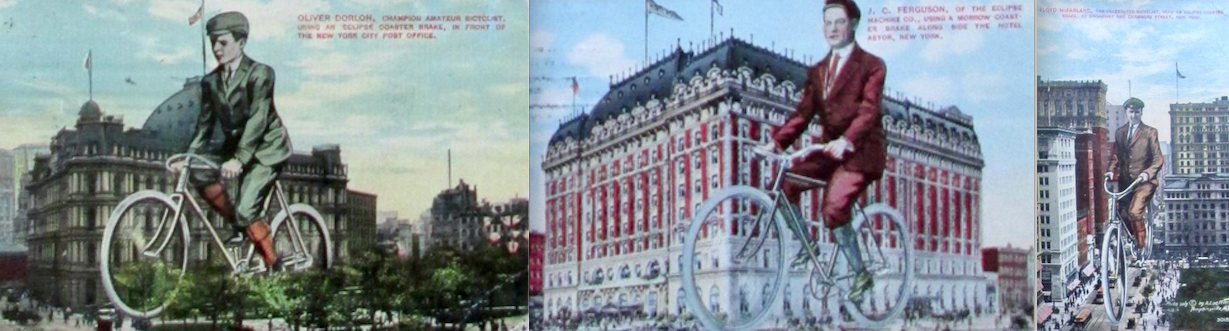
L-R: Amateur champion cyclist Oliver Dorlon, Eclipse employee JC Ferguson and professional cyclist Floyd McFarland.
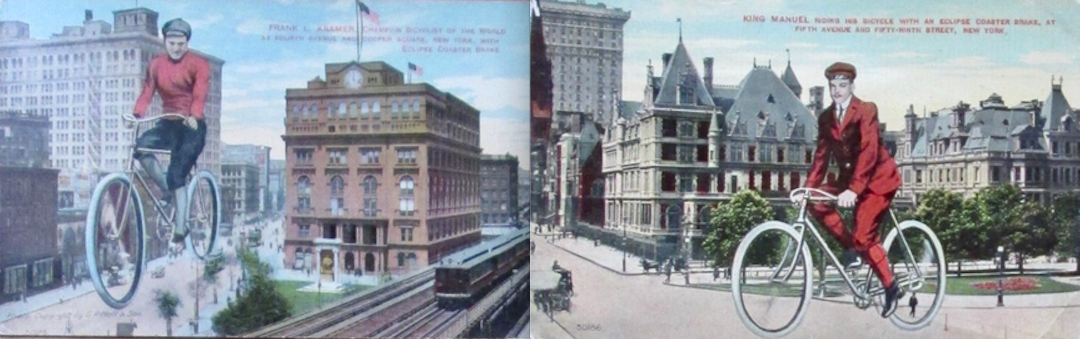
L-R: world champion cyclist Frank Kramer and King Manuel of Portugal
L-R: Professional cyclist Eddie Root, Eclipse vice-president Ralph D Webster and champion motorcyclist Raymond Seymour.
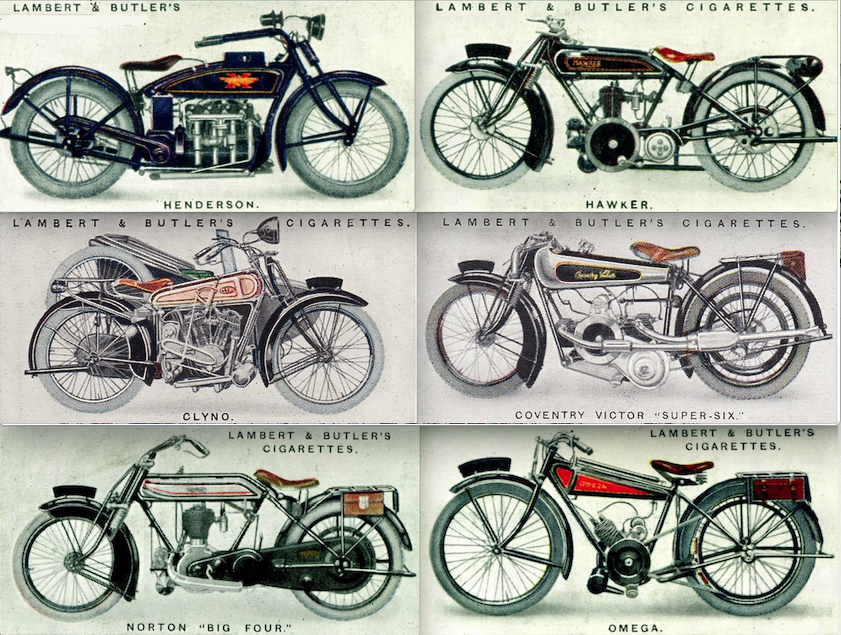
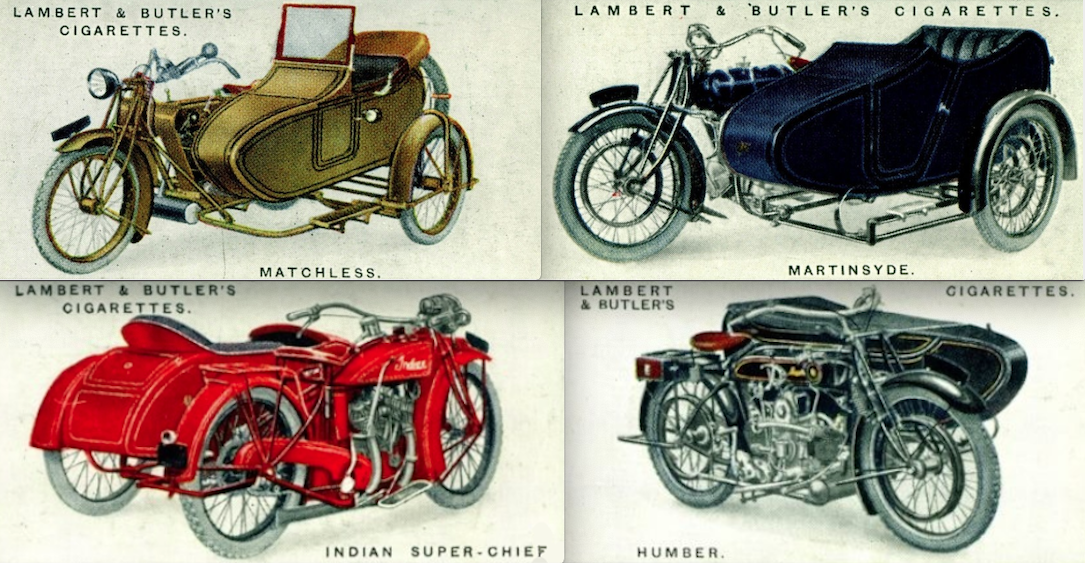
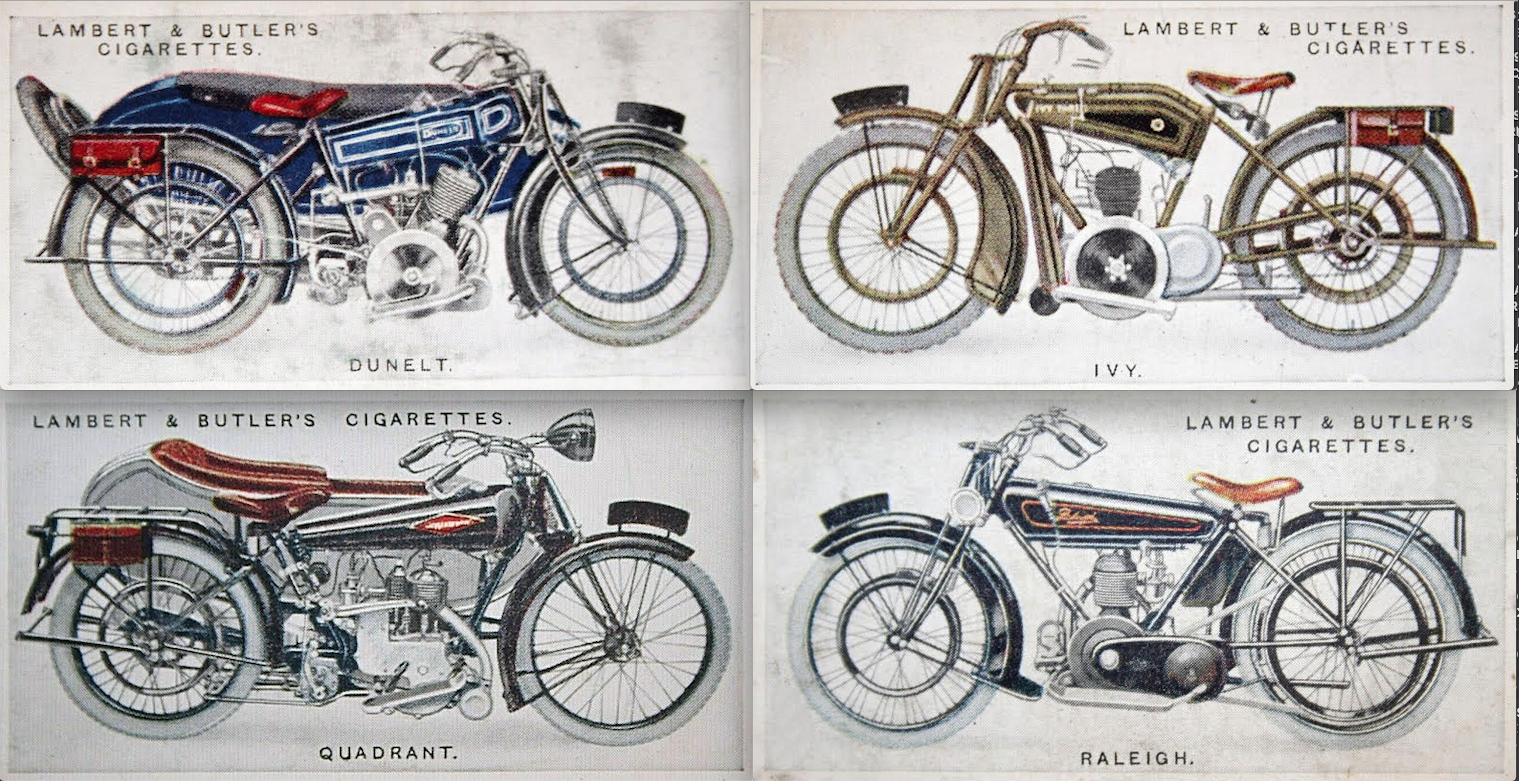
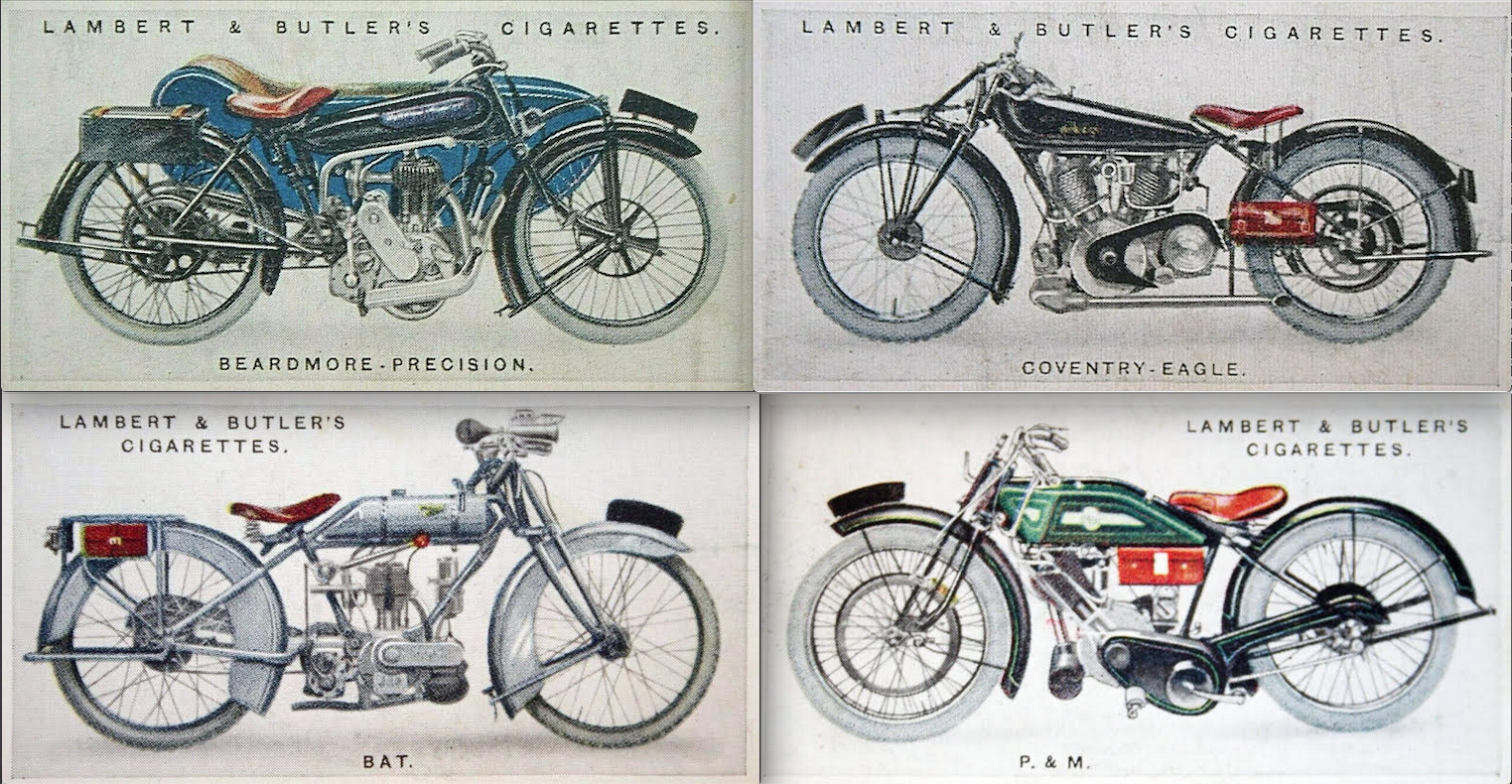
Back in the 1920s, when doctors offered fags to nervous patients, Lambert & Butler issued a couple of series of cards depicting some of the finest motor cycles of the day; here’s a selection.
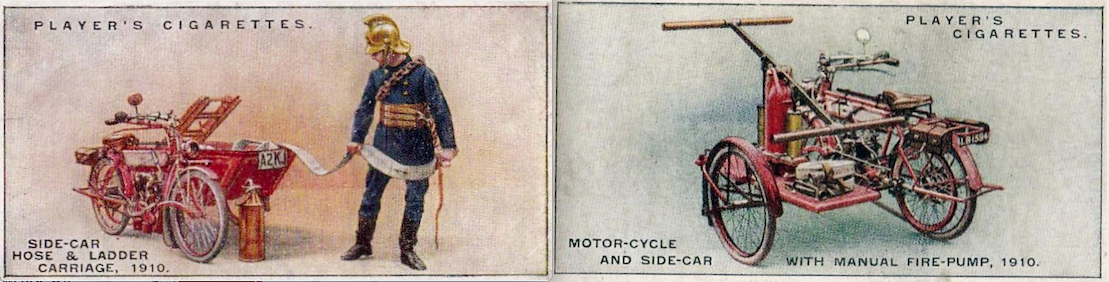
Both these fire-fighting sidecars were made by Merryweather; the sidecar on the left carried a hose, ladder, fire-extinguishers and first aid kit; t’other carried a demountable pump to be powered by two or four firefighters.
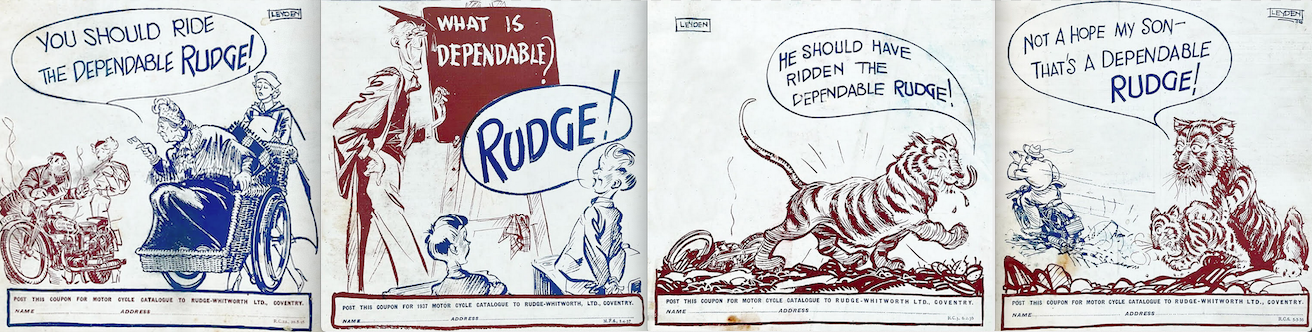
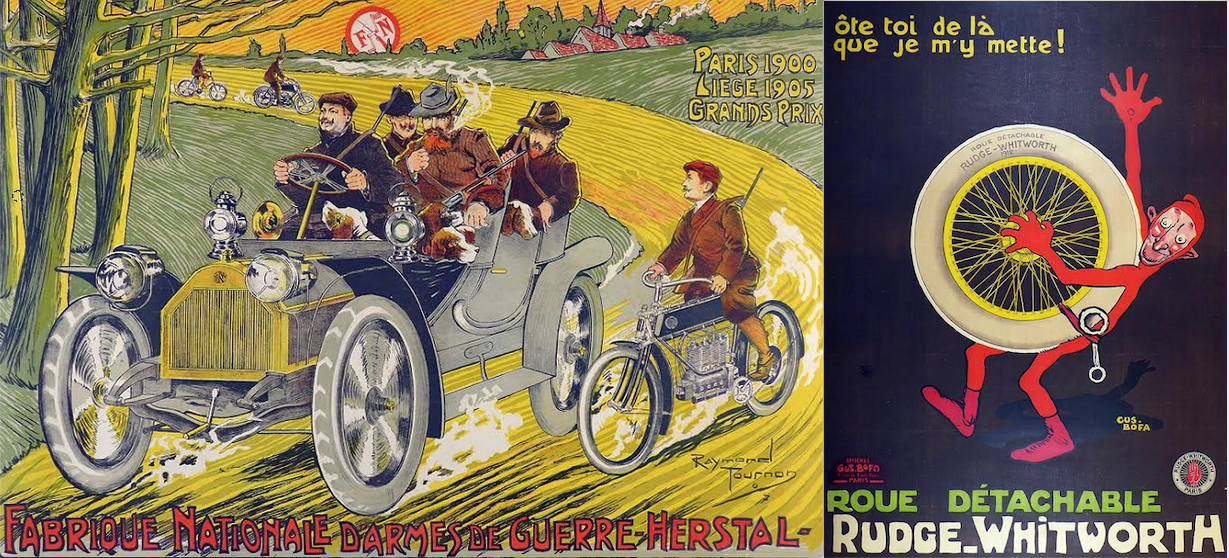
The slogan on the French Rudge ad (for QD wheels) translates as: “Get out of the way so I can get on with it!”
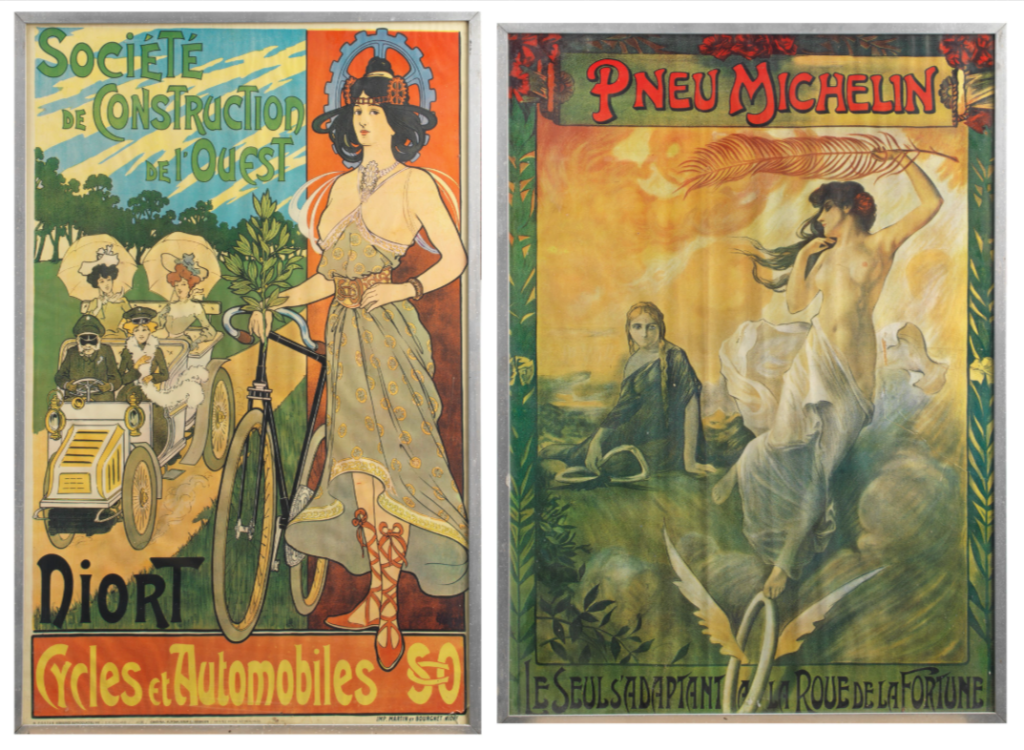
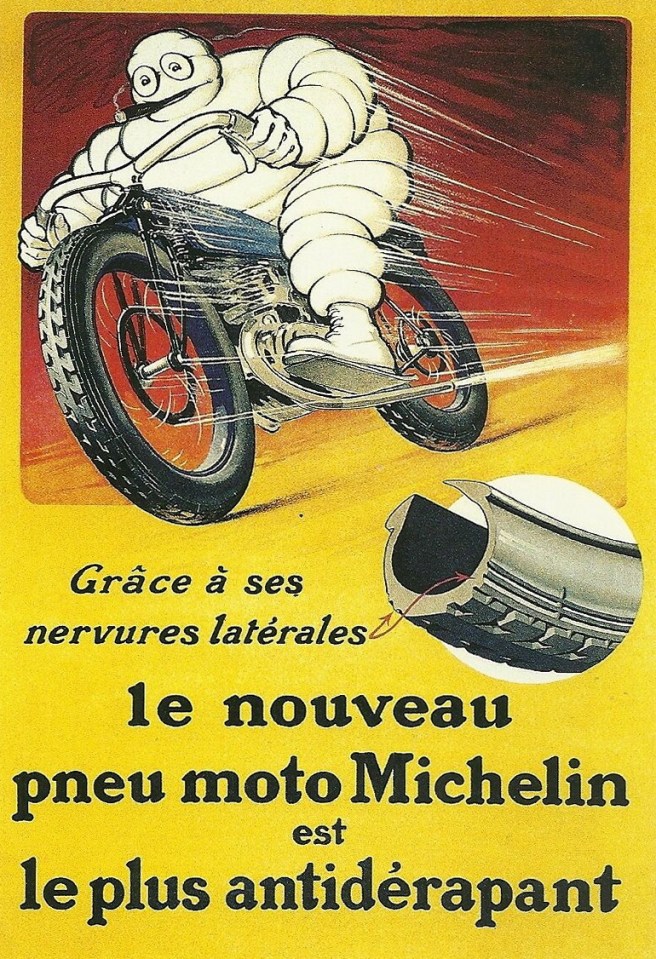
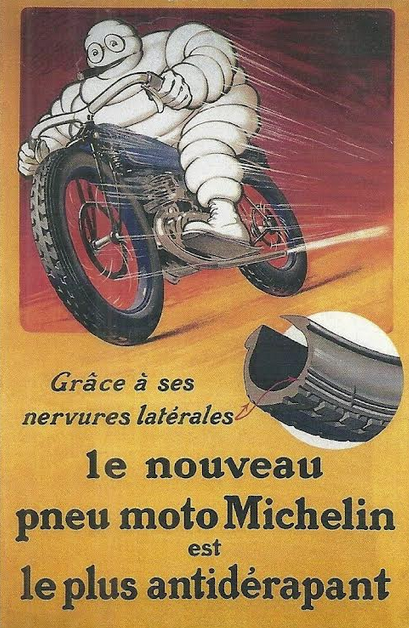
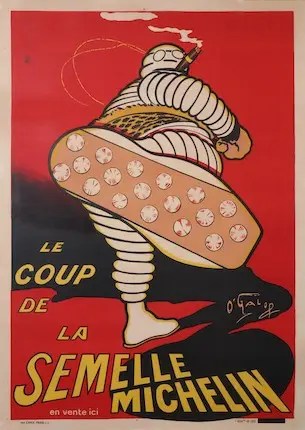
Bibendum rides! “Thanks to its side ribs the new Michelin motocycle tyre is the most skid resistant.”
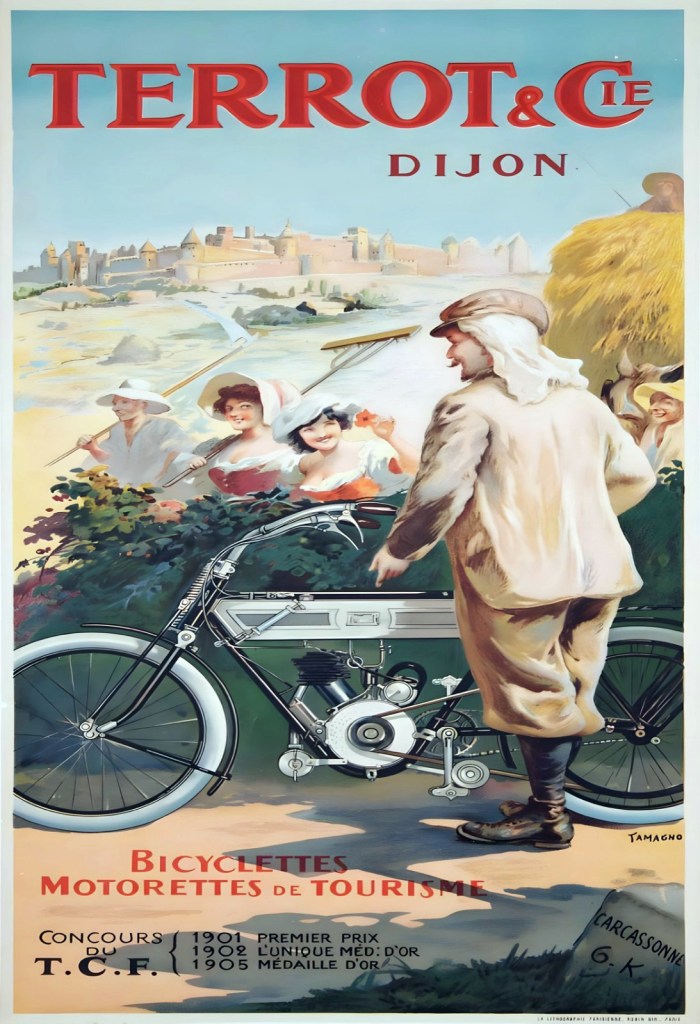
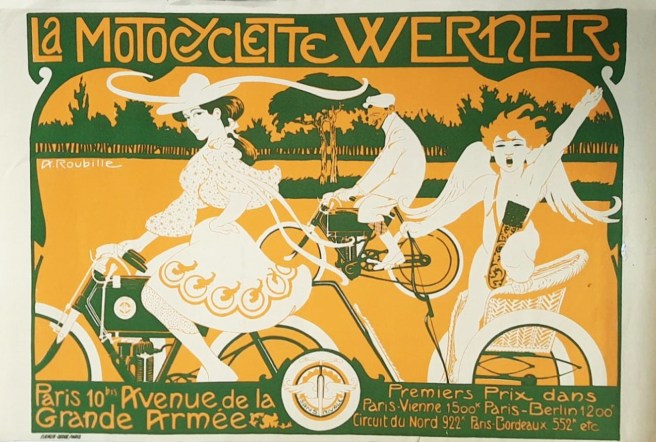
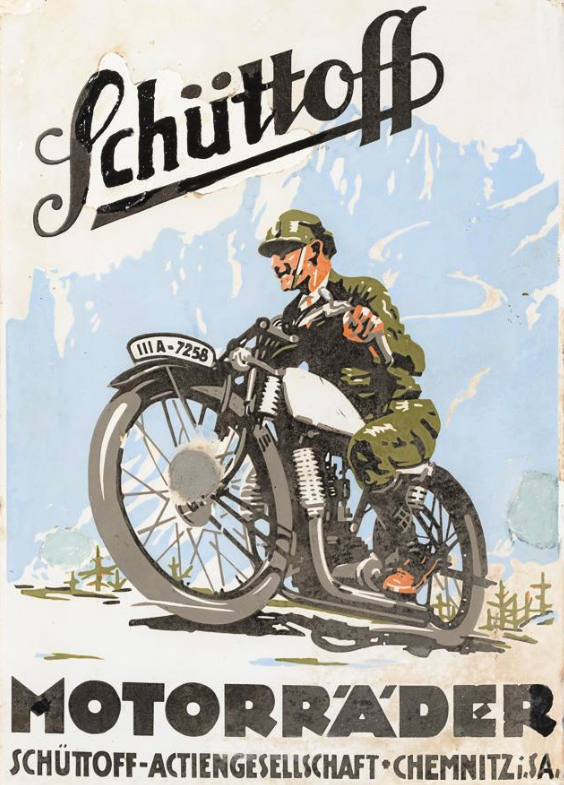
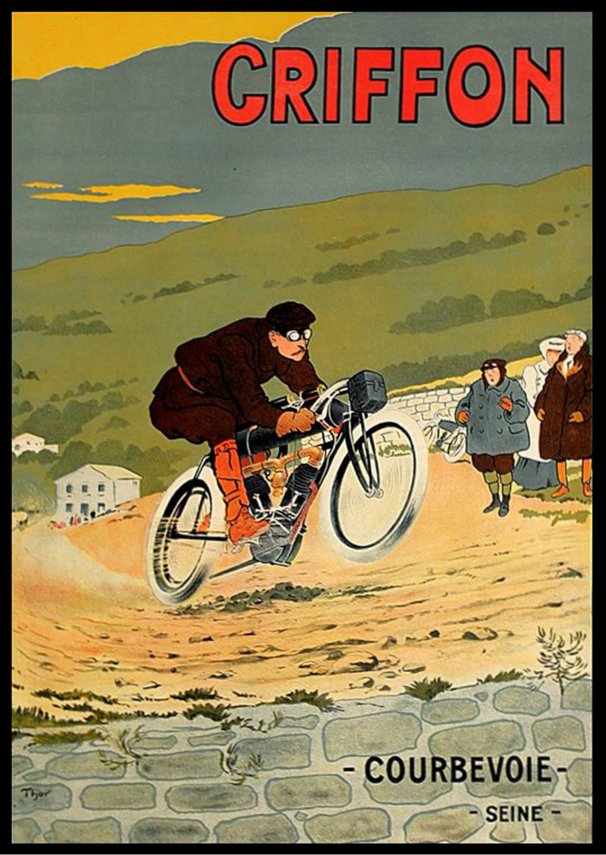
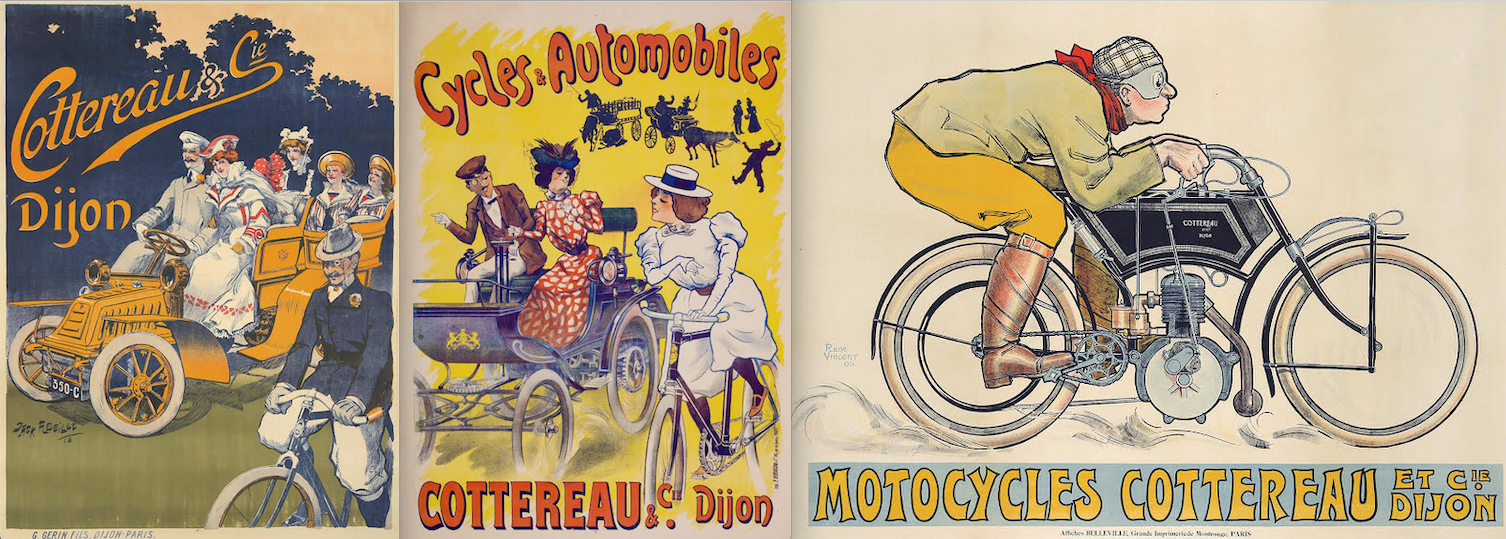
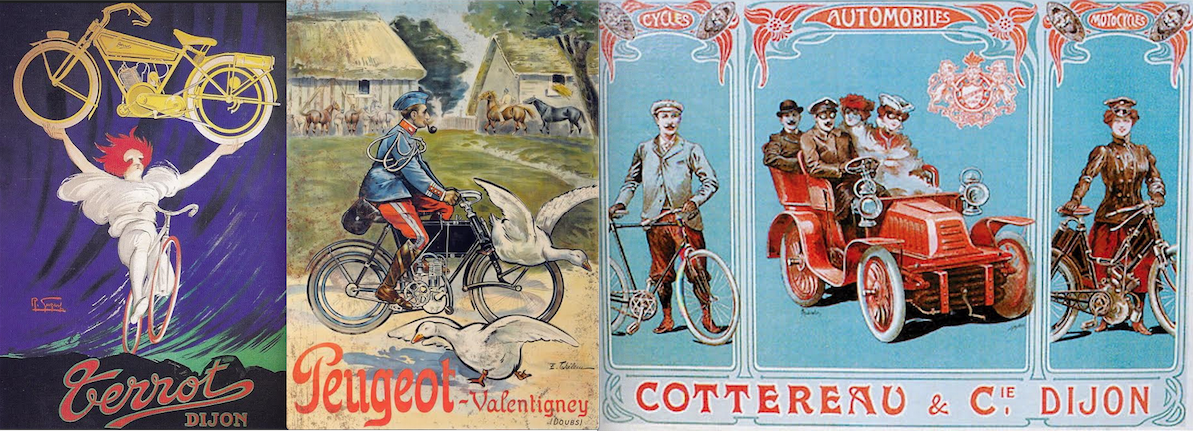
These Cotterau posters date from 1902-5. Tres jolie, n’est ce pas?
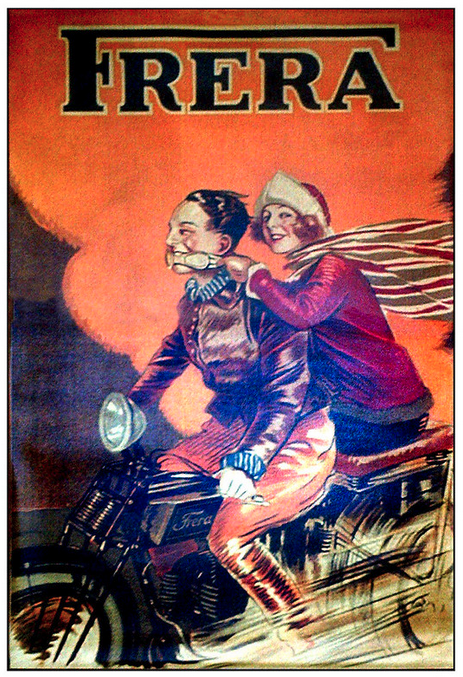
The Bersaglieri are an elite unit of the Italian army dating back to 1836. Their dress uniform includes wide-brimmed hats decorated with black capercaillie feathers; these feathers are also applied to their combat helmets. Frera, as a supplier of motor cycles to the Italian army, depicted the Bersaglieri in some striking ads. Right: This fine illustration depicts a real event: “A motorcyclist on a forward scouting mission, who was under intense fire from the advancing enemy, persisted in his reconnaissance task until he and his comrade were severely hit. He fell to his death soon afterwards, but only mentioned his comrade’s wound so that he would be given priority in his care. A magnificent example of dedication to duty, military spirit and comradeship, to the point of supreme sacrifice. Pokrowskoje, Russian front, 11 August 1941.”
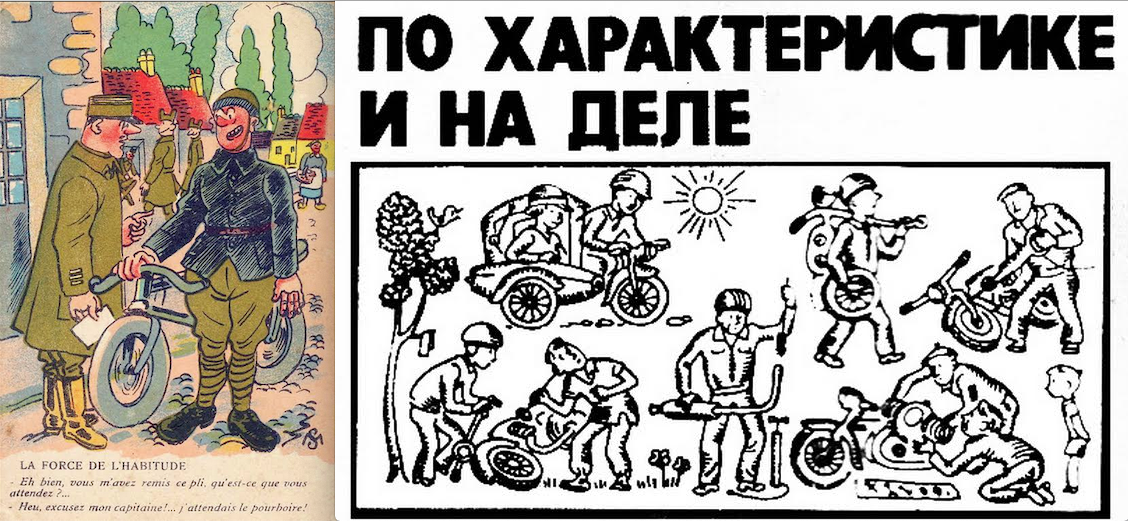
The caption on the Great War postcard translates as: The force of habit: “Well, you gave me this envelope, what are you waiting for?” “Excuse me, Captain! I was waiting for the tip!” The card on the right, I’m told, hails from Slovenia. If a Slovenian reader happens to see this, I’d be glad to translate that tag line.
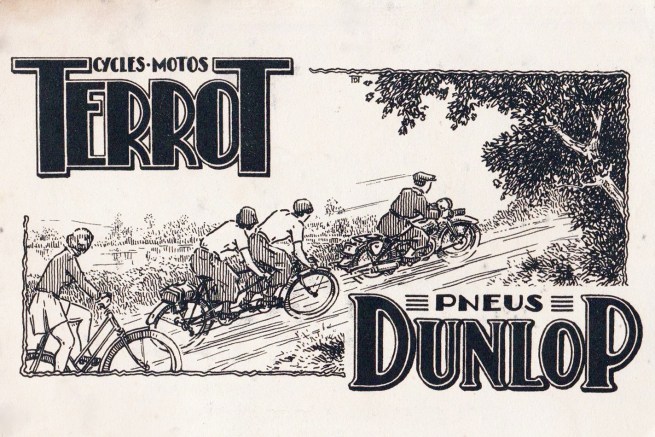
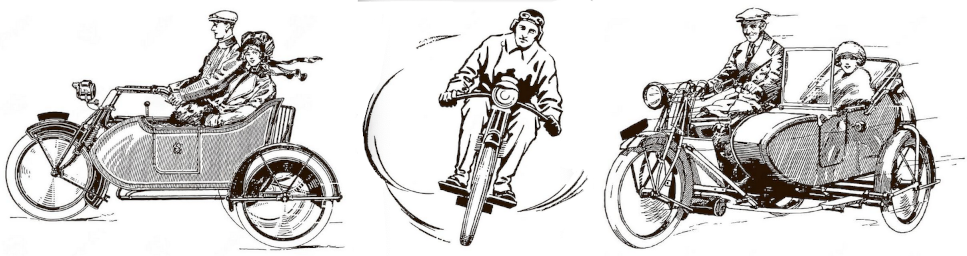
The line drawings probably originated in adverts. Charming, don’t you think?
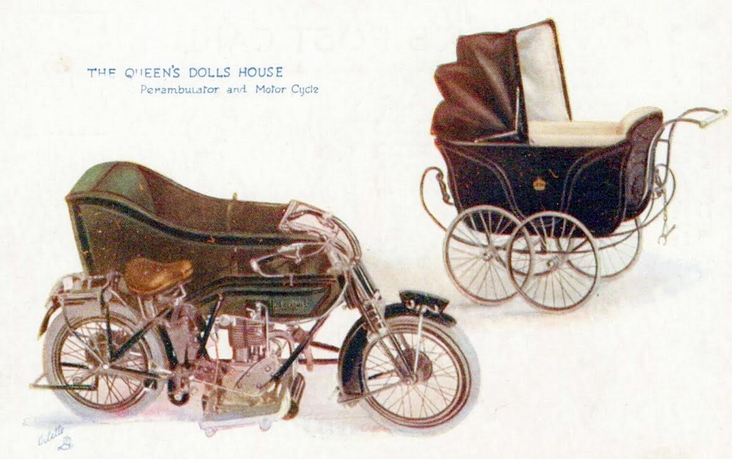
As the legend on the postcard reveals, the exquisite model combo and pram were made for a royal dolls house. There’s posh.
This illustration, by E Degert, dates from 1919.
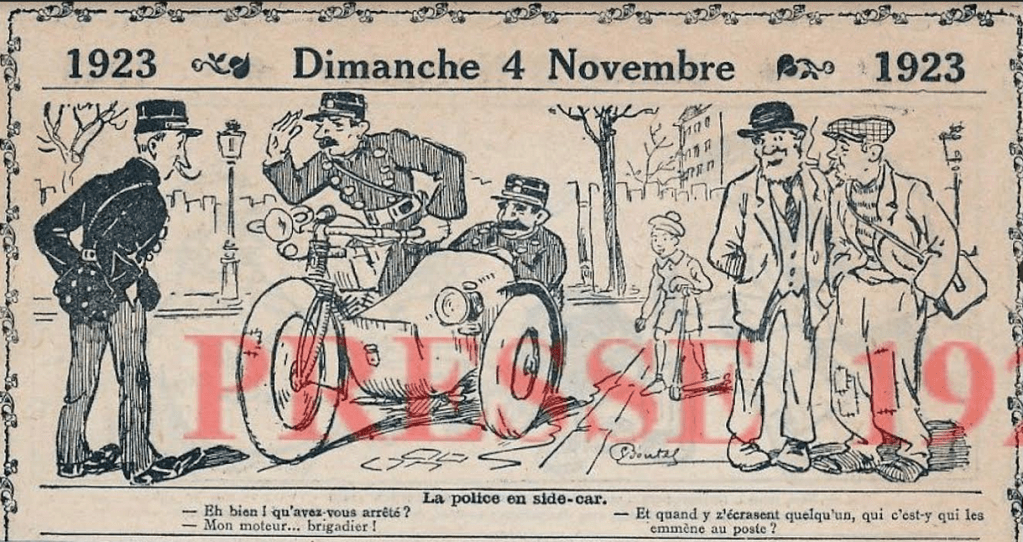
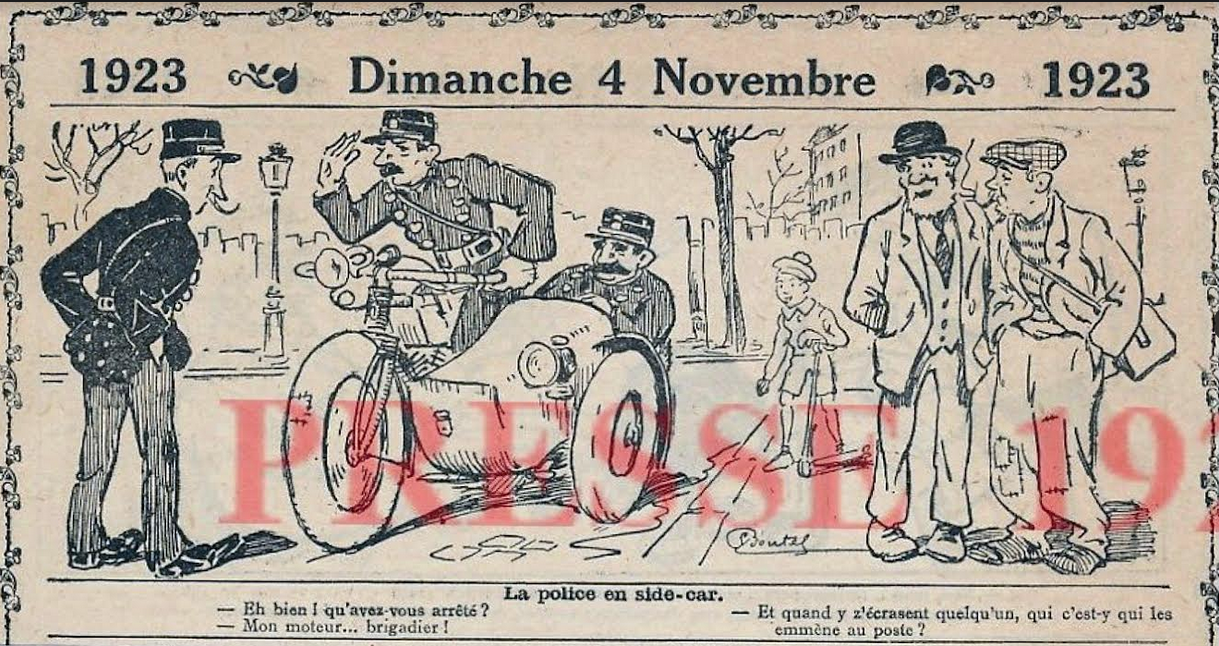
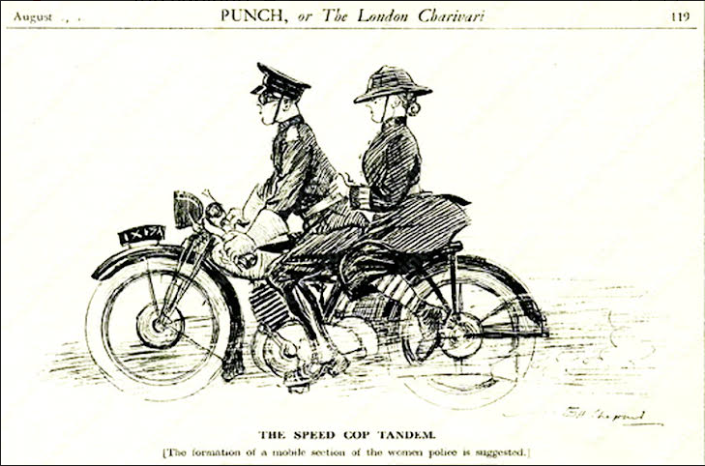
English speakers have probably managed to translate “La police en side-car” for themselves. Caption on the left: “Well, what have you arrested?” “My motorcyclist…Sergeant!” Caption on the right: “And when they run someone over, who takes them to the station?” Hohoho.
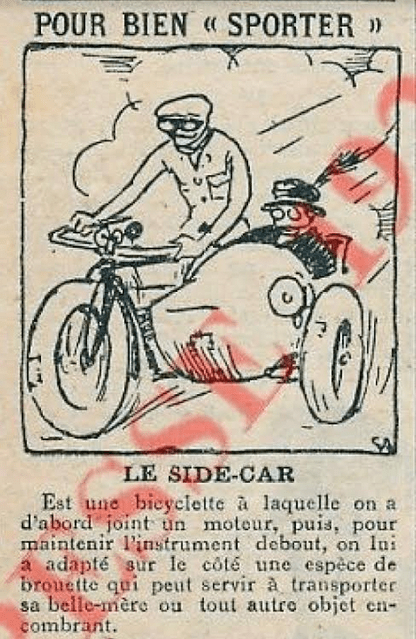
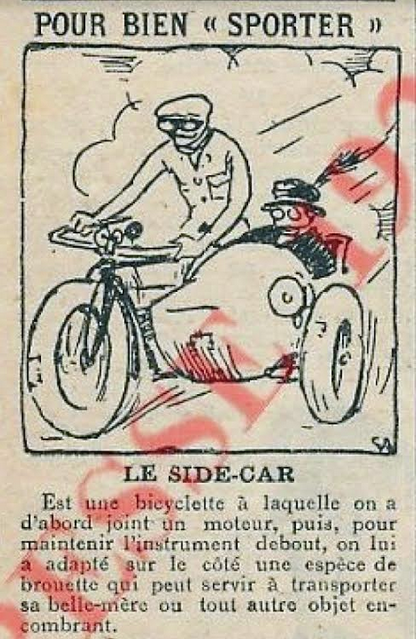
“For good ‘sport’—The sidecar…Is a bicycle to which an engine has been added, then, to keep it upright, a sort of wheelbarrow has been fitted to the side, which can be used to carry your mother-in-law or any other bulky object.”
“The motorcycle is a bicycle that has been fitted with a motor to make a lot of noise or to keep it running. In this case, it can be pushed laboriously, making the sport all the more enjoyable.”
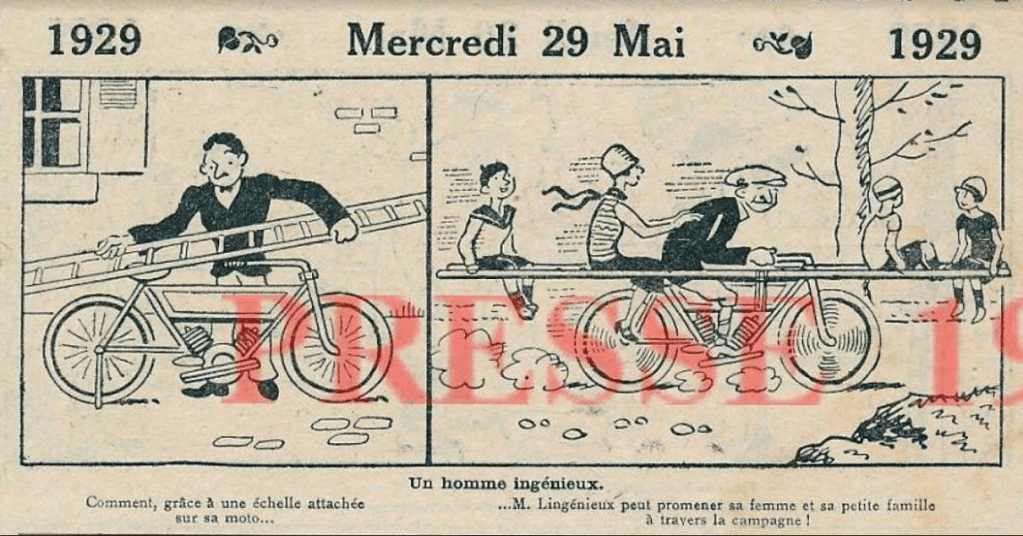
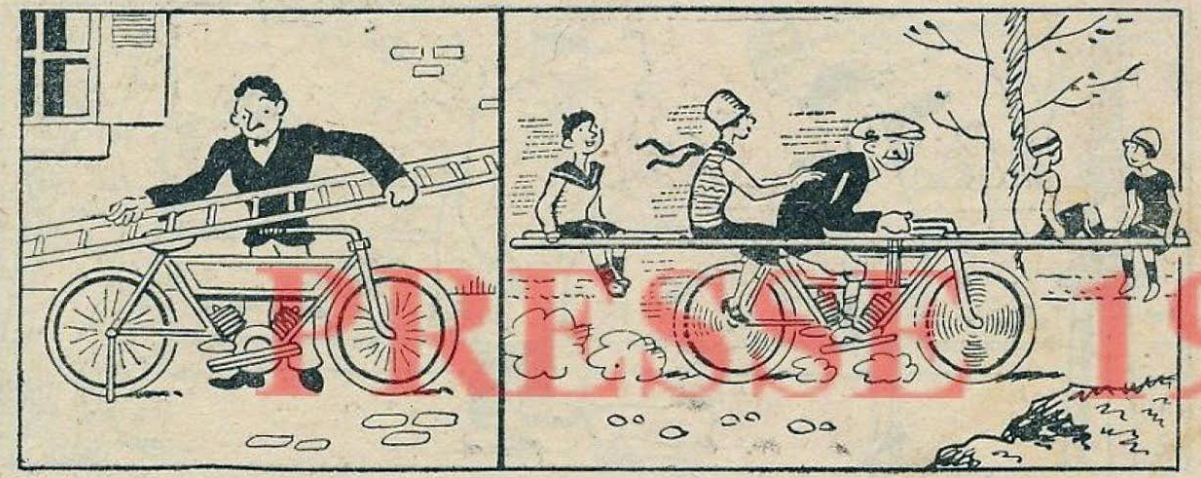
An ingenious man. How, thanks to a ladder attached to his motorbike…Mr Lingenieux can take his wife and little family for a ride through the countryside!
This Geiger cartoon was simply captioned “MC Hooligans”.
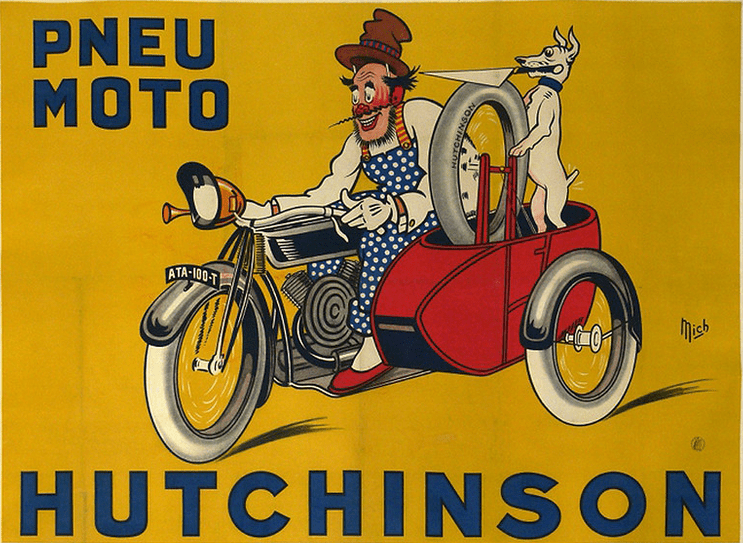
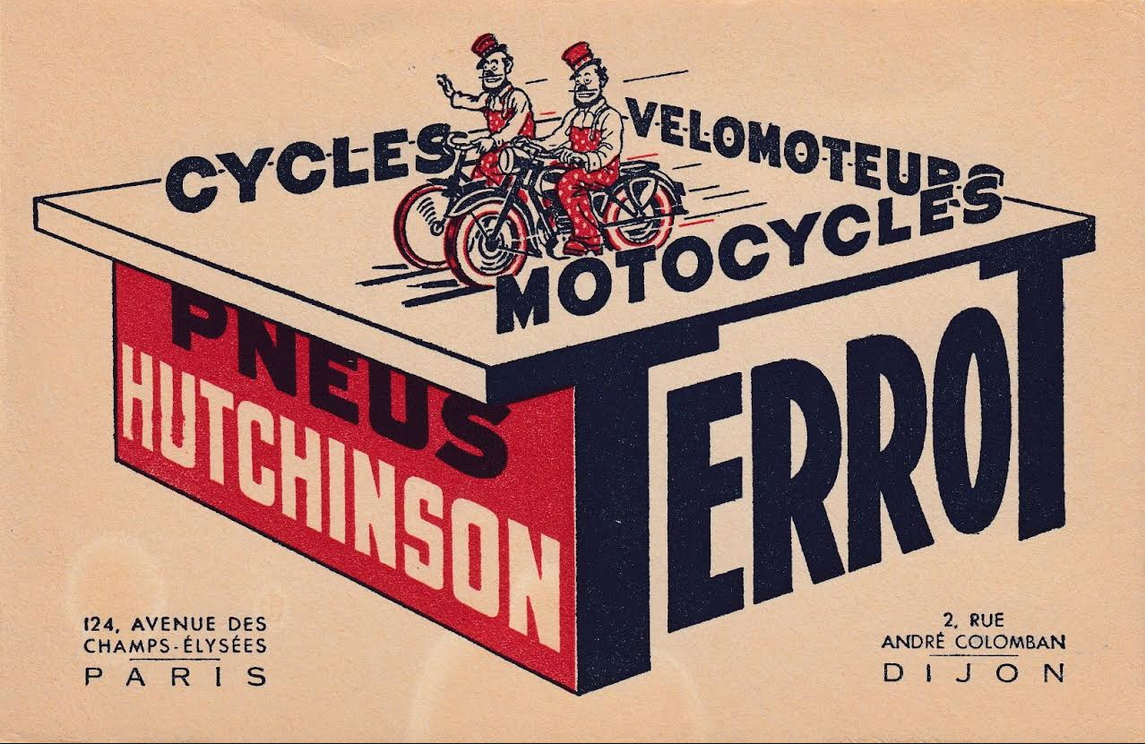
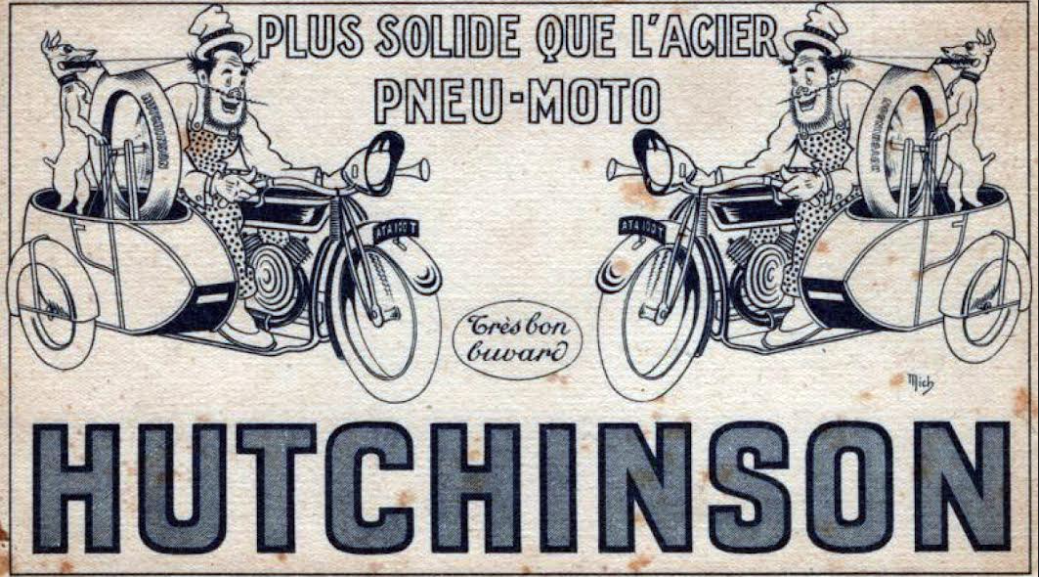
The tagline for the ad for Hutchinson motor cycle tyres translates as “solid as steel”.
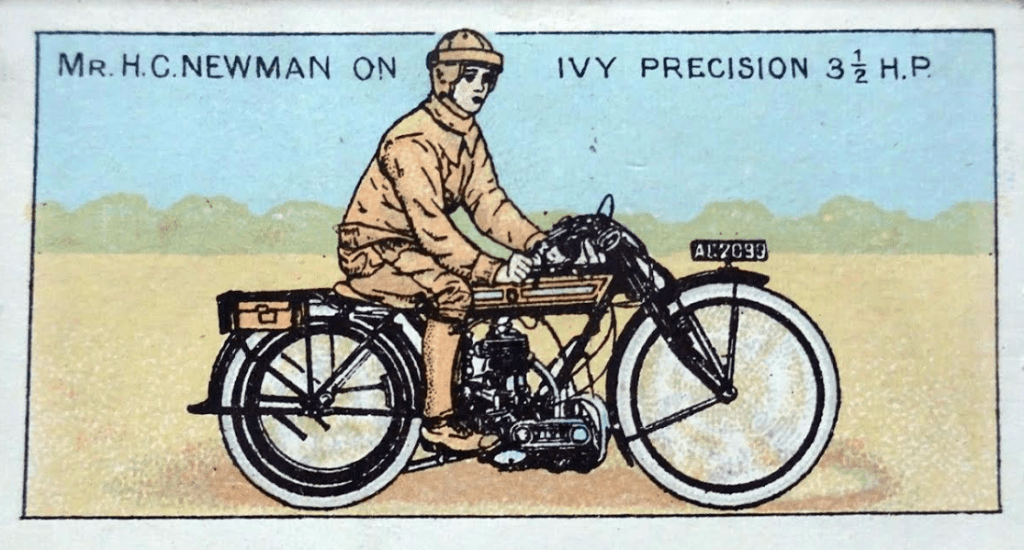
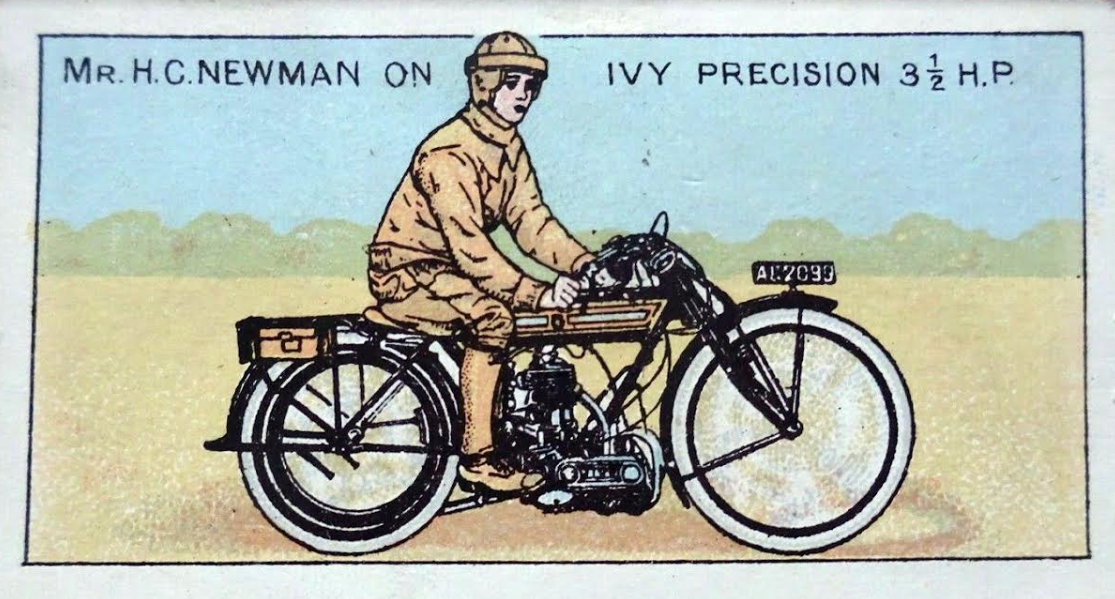
Ivy Precisions were made by the Newman brothers; this is one of them.
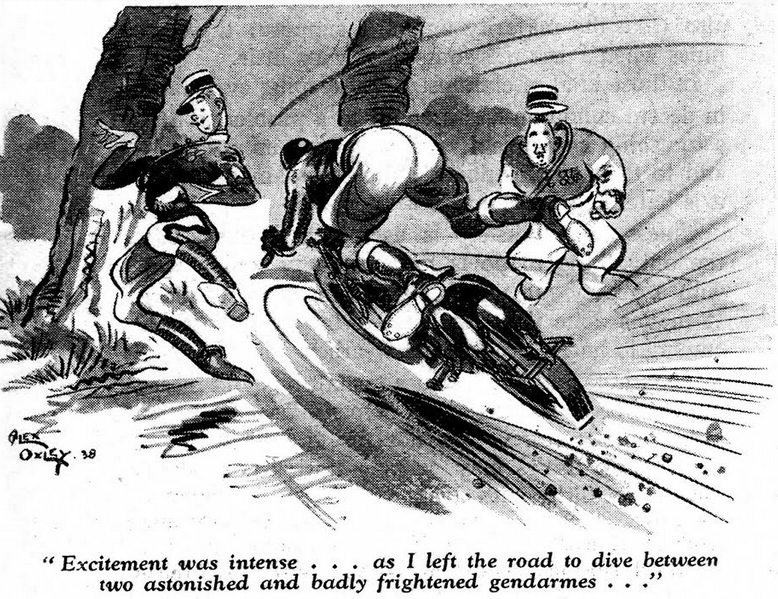
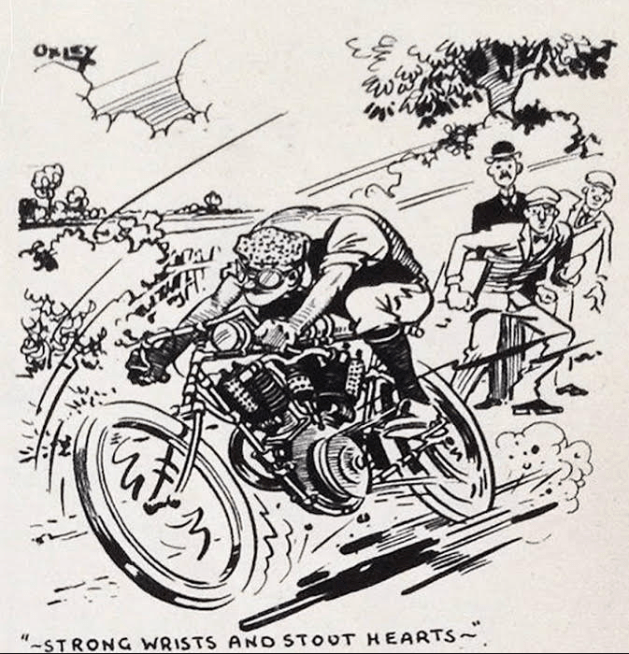
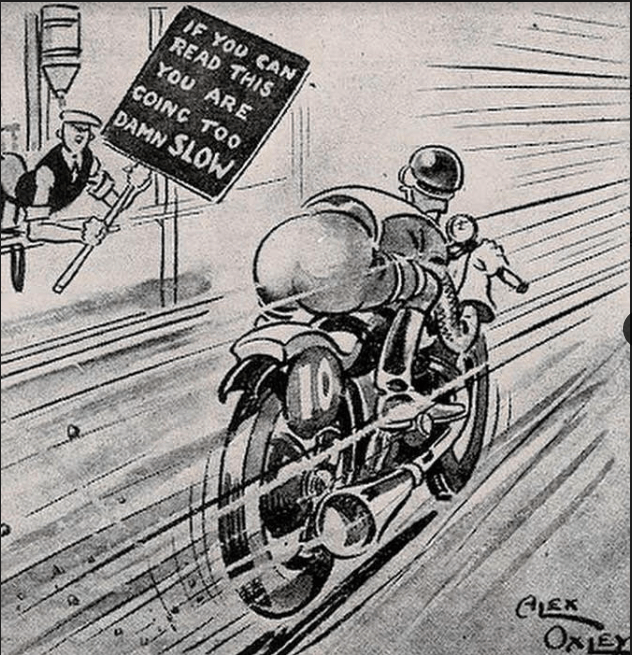
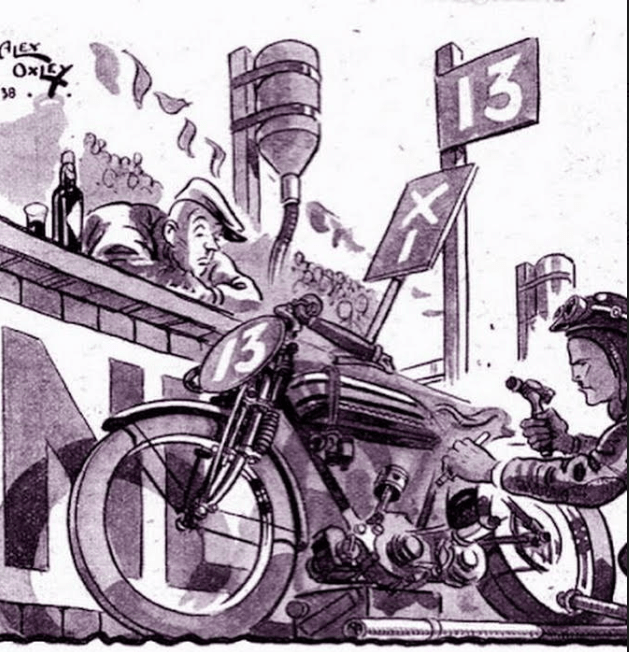
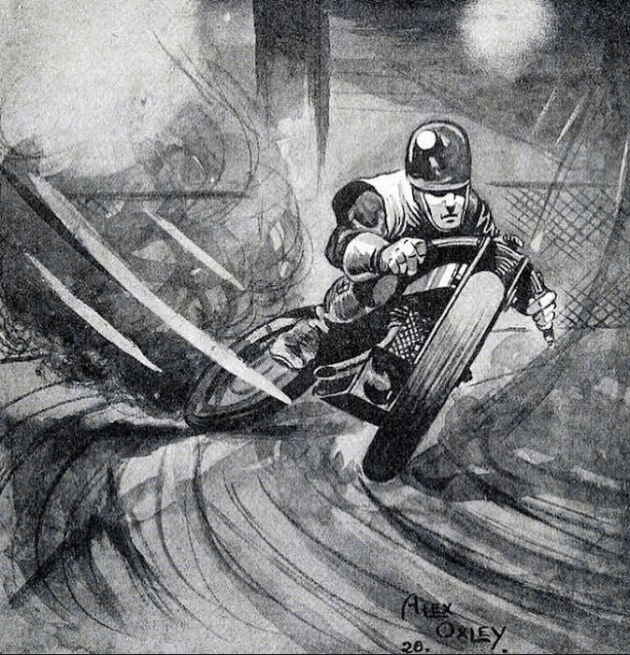
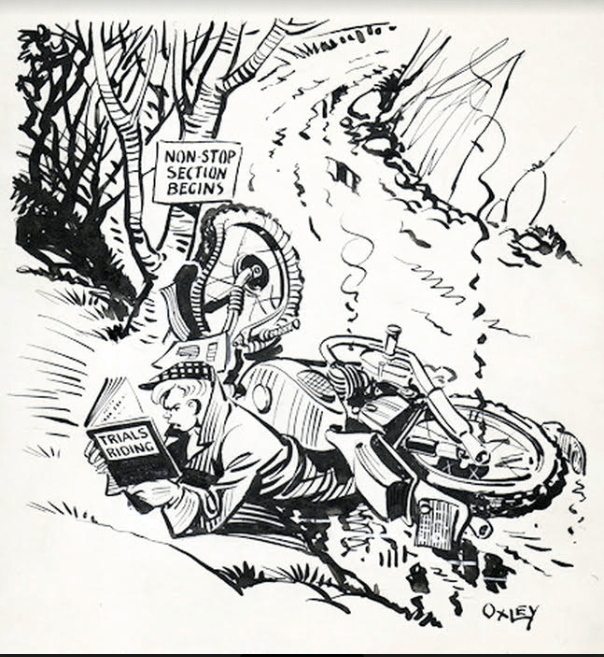
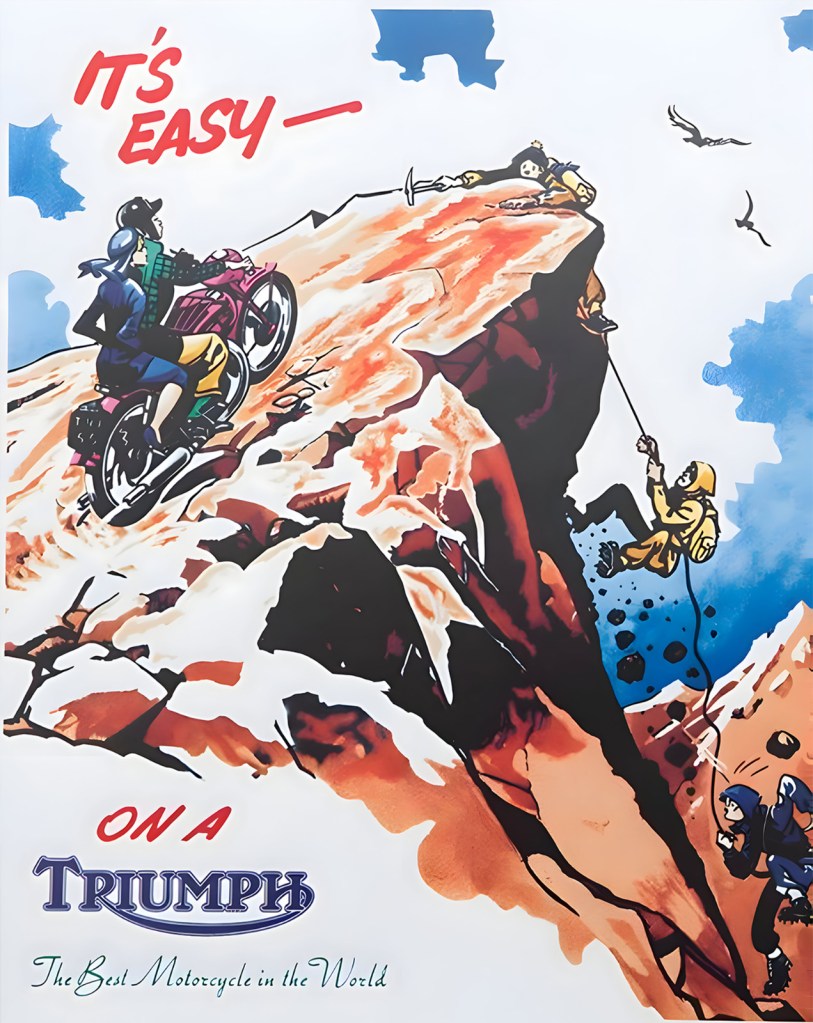
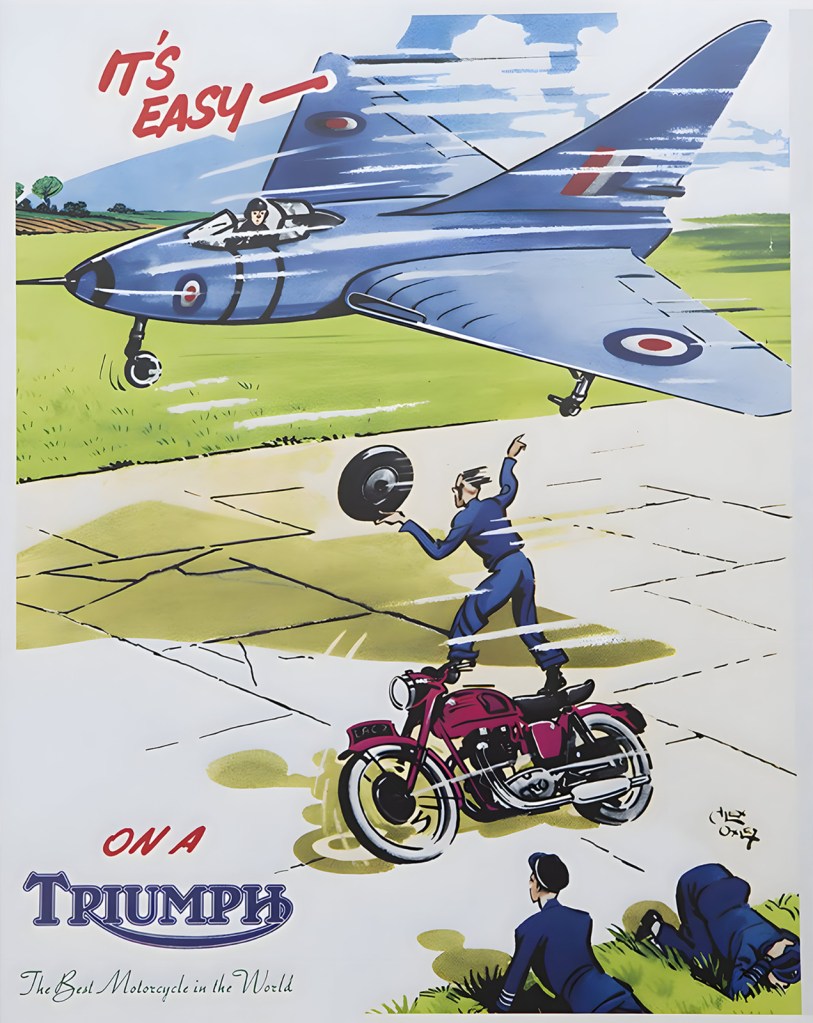
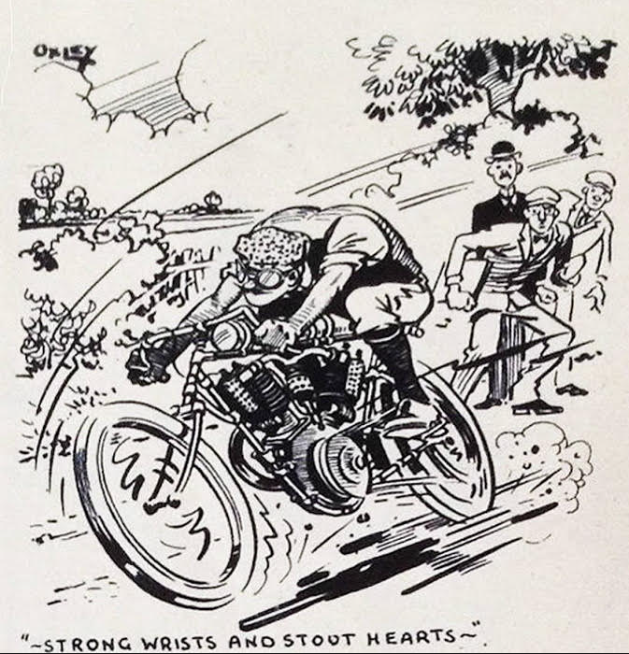
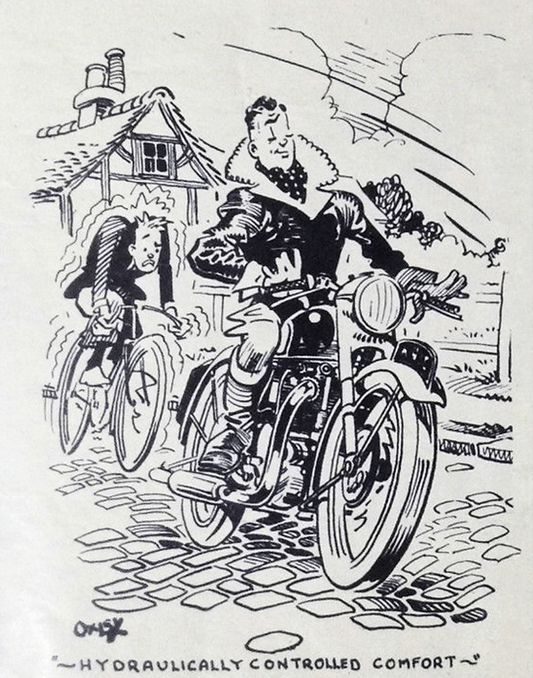
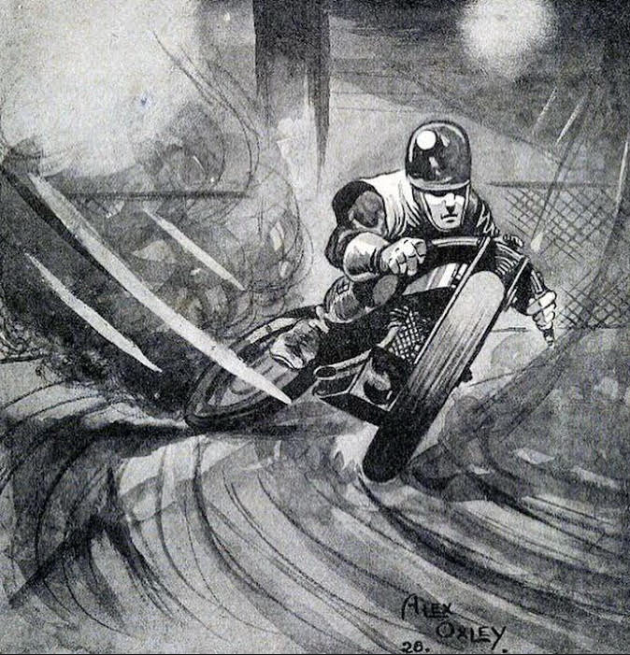
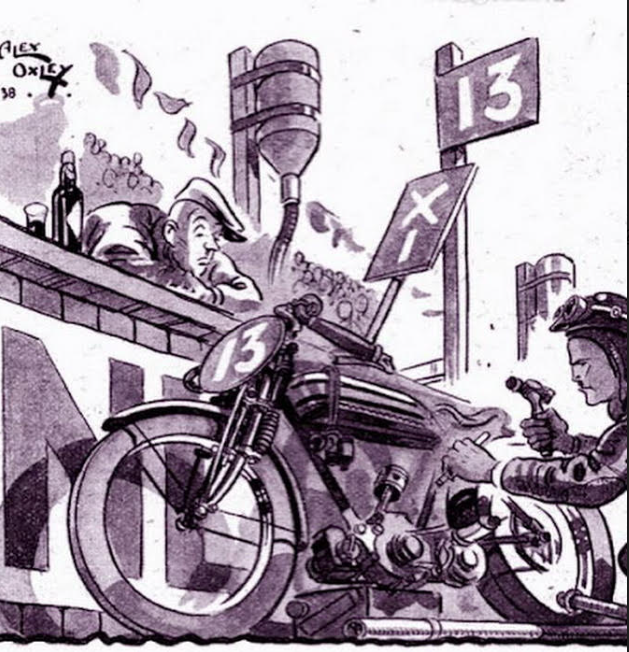
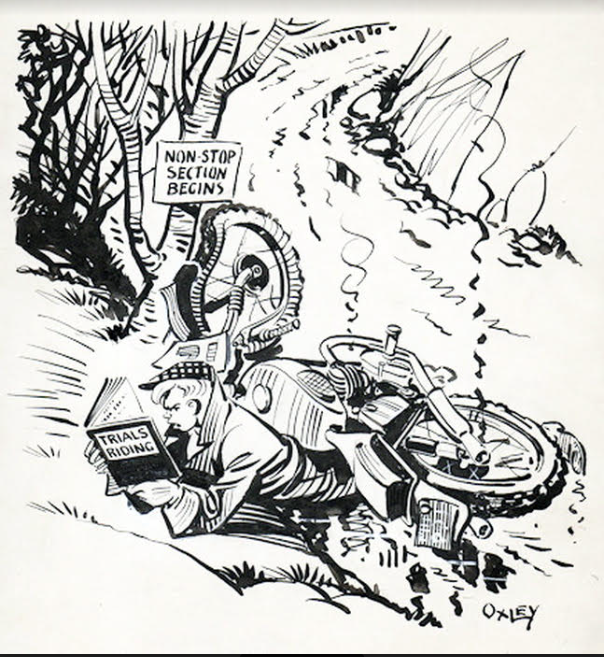
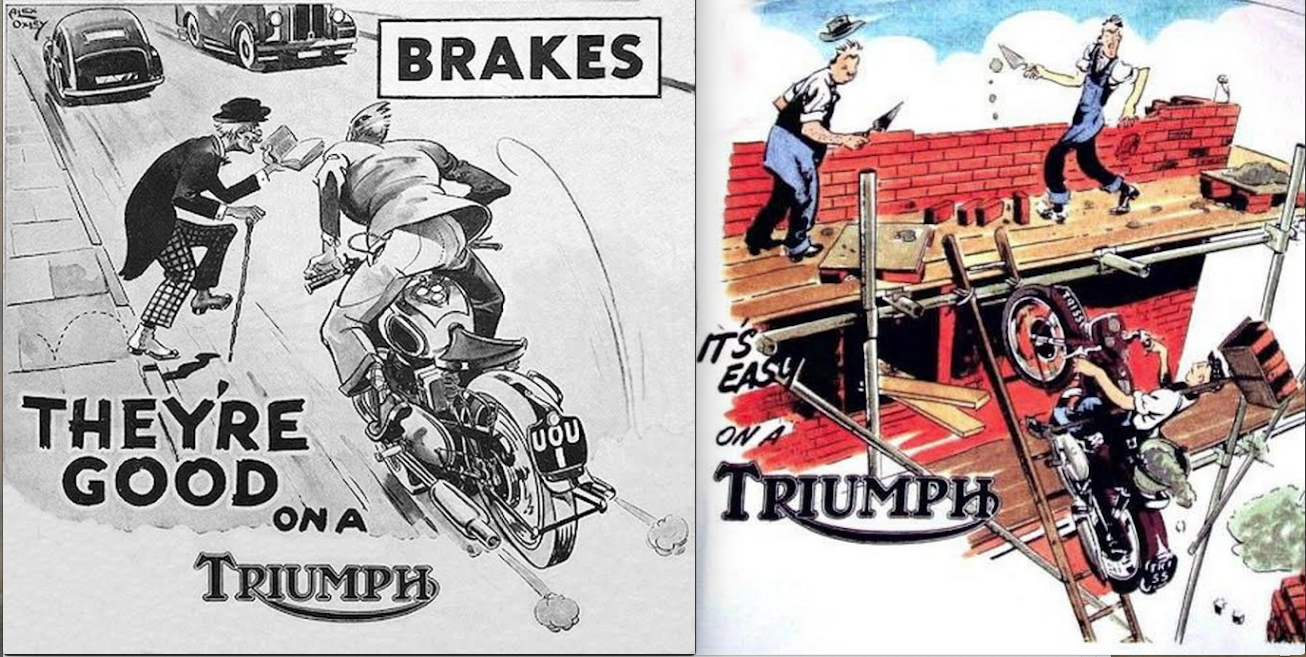
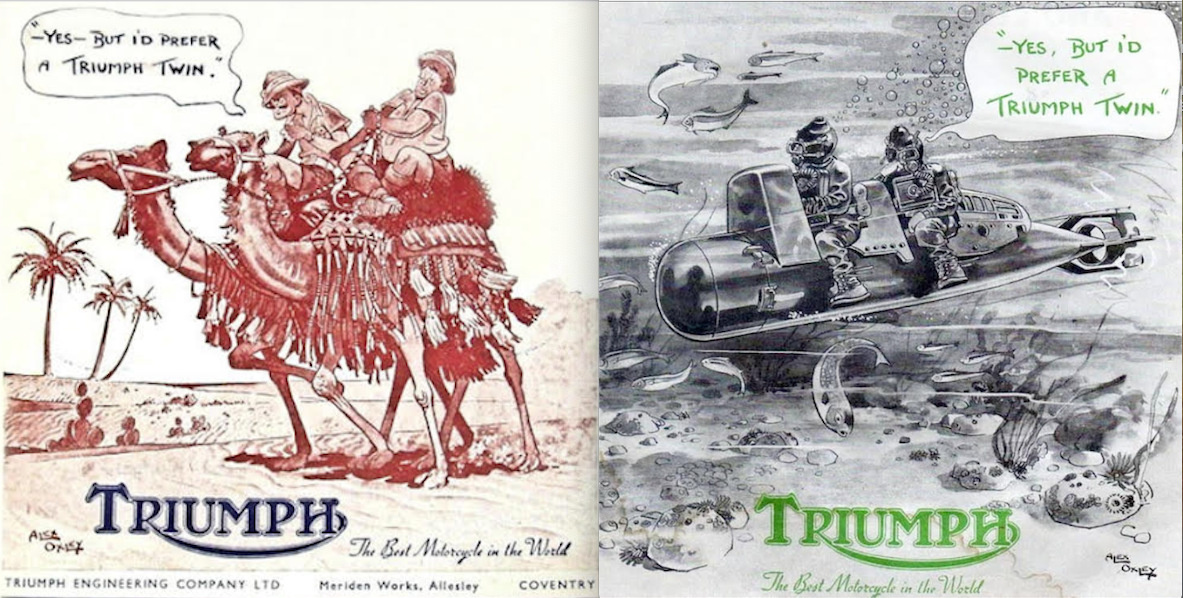
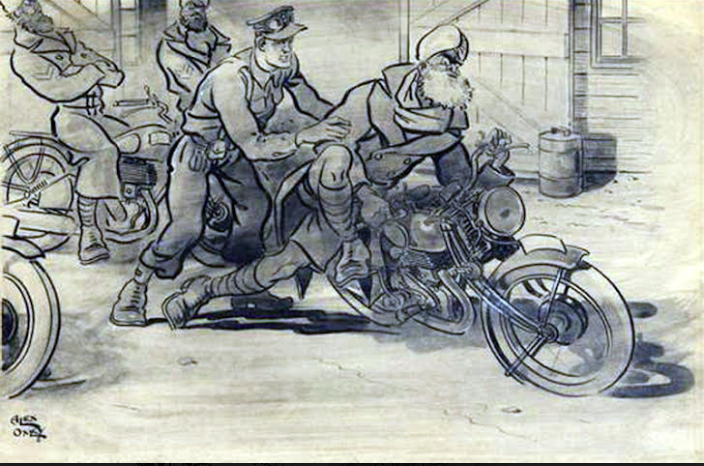
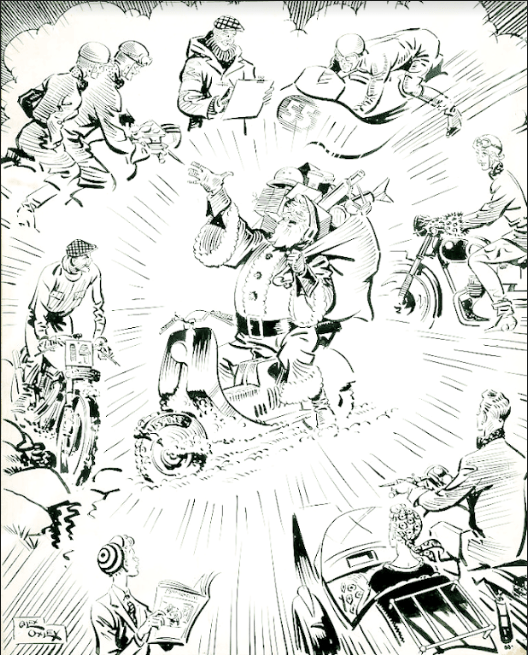
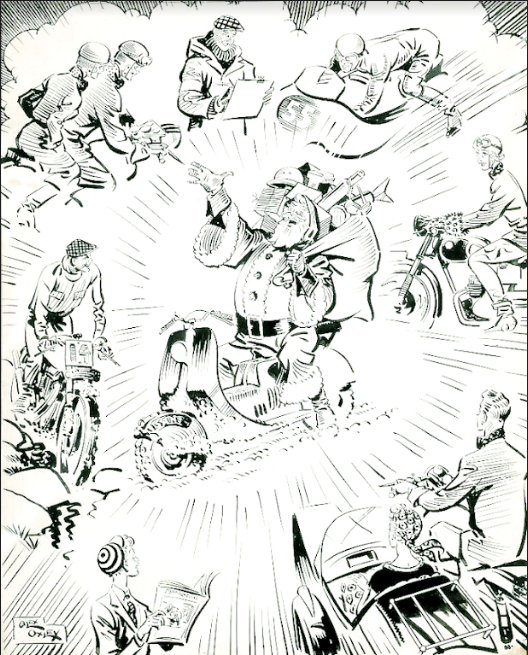
For many years Alex Oxley’s cartoons were a regular feature in The Motor Cycle; he also worked for other lesser magazines but a chap has to earn a living, and Triumph made good use of his talent in a series of adverts. Here’s a delightful selection of Oxley’s work.
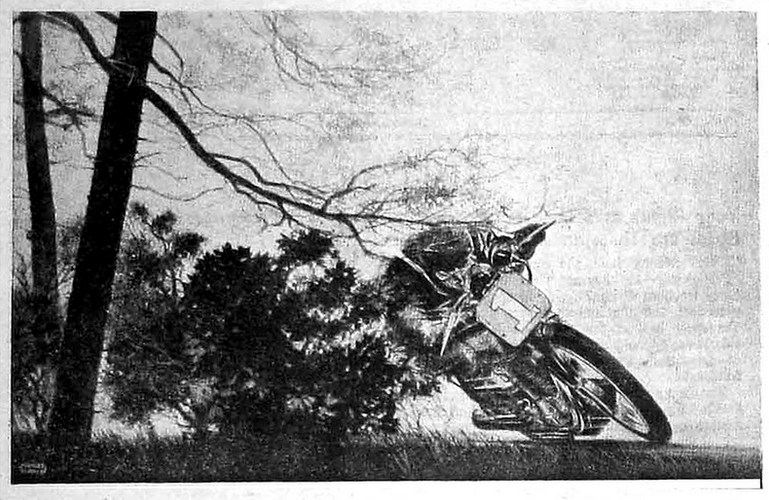
This smashing illustration is set at the 1934 TT.
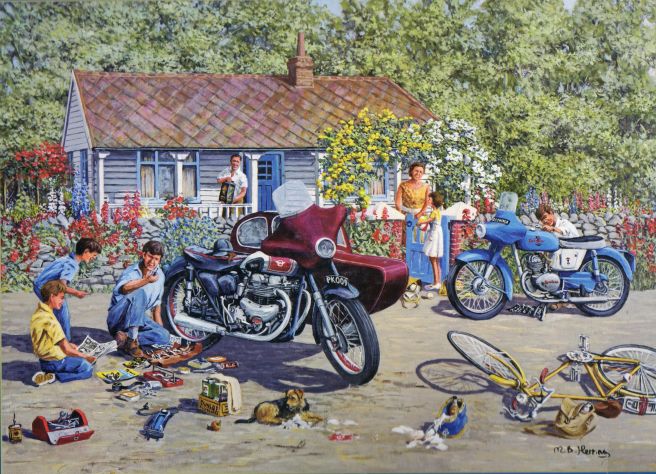
Another charming image from the Island. My old mate Bill lives in this dream cottage which, he tells me, is a Swedish-made kit house from 1928. It inspired a local artist to paint it, and the painting inspired a jigsaw company to use the image in a puzzle.


















































































 Motorcycle Timeline