At the time of writing (October 2023) I’m working my way through 1934. It will be months if not years before the timeline reaches the 1970s. But having covered 1969, that being the year I got my L-plates and a 250cc Villiers 2-powered Ambassador (£50 and I overpaid) , I was delighted when my old mate Pete put together these notes from 1971. While I was trying to find my way round old British bikes Pete was working in a busy bike shop and got to ride a good selection of the Japanese bikes that were giving the British industry a painful lesson in performance and reliability, if not handling. Pete, over to you…
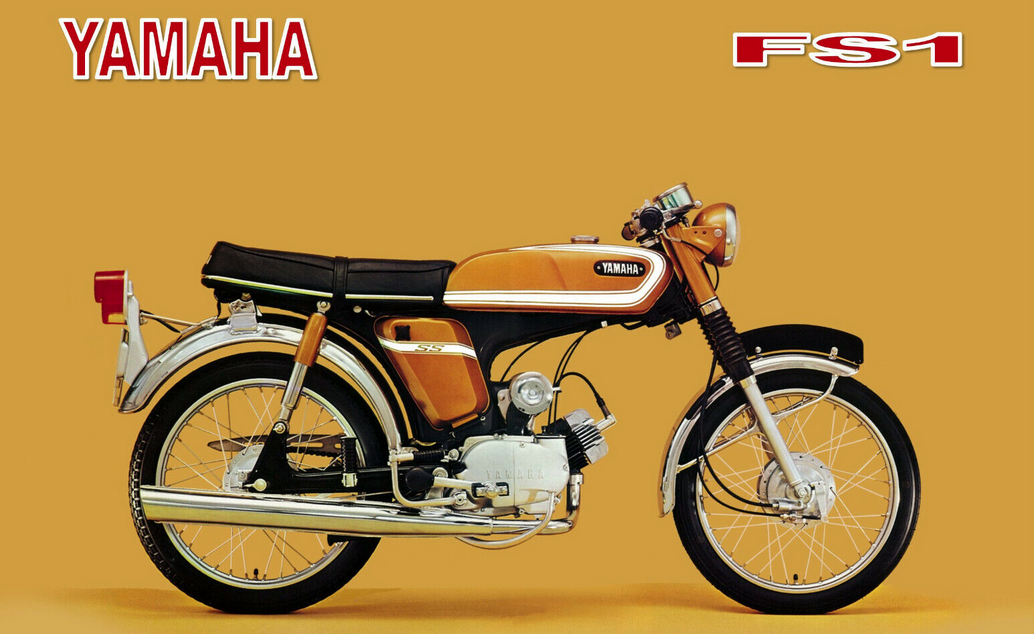
THE GOVERNMENT INTRODUCED a piece of legislation that became known as the sixteener law which stopped 16 year olds from being able to ride a 250cc bike instead restricting them to 50cc machines which were required to have bicycle pedals as a form of propulsion this produced a flurry of activity from manufacturers predominantly Honda Suzuki and most famously Yamaha with the FS1E although the Italians jumped on the bandwagon with Gilera and Fantic producing some amazing sixteener specials.
ROYAL ENFIELD HAD OPENED Enfield of India in 1955 , based in Chennai. It started assembling Bullet motorcycles with imported components from the UK. The original Redditch, Worcs-based company dissolved in 1971, but Enfield of India continued and bought the rights to use the Royal Enfield name.
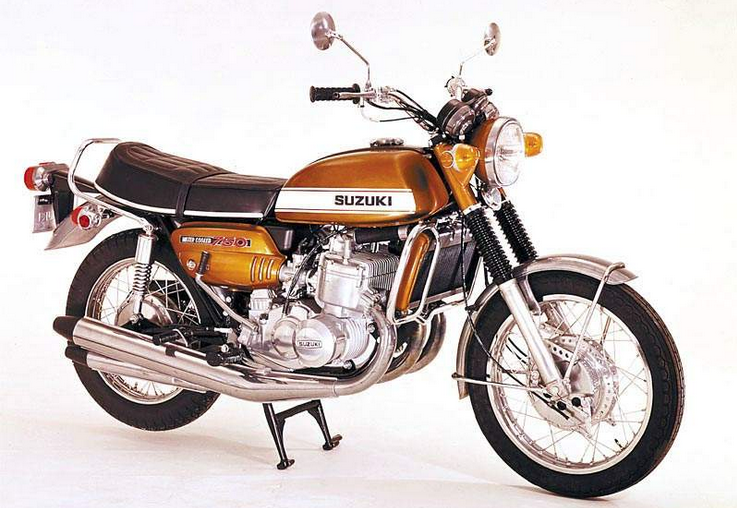
SUZUKI MARKETED THE GT750 water-cooled triple that became known in Britain as the ‘kettle’, in the USA as ‘water buffalo’ and in Australia as ‘water bottle’. It was Suzuki’s first foray into the superbike market. The first supplies arrived on the UK market in early 1971 and it cost £766.50 which was higher than its rivals, the Kawasaki H2 triple was £758, the Honda CB750 £761, the British Triumph Trident was only £655 but of course you had to push it home!
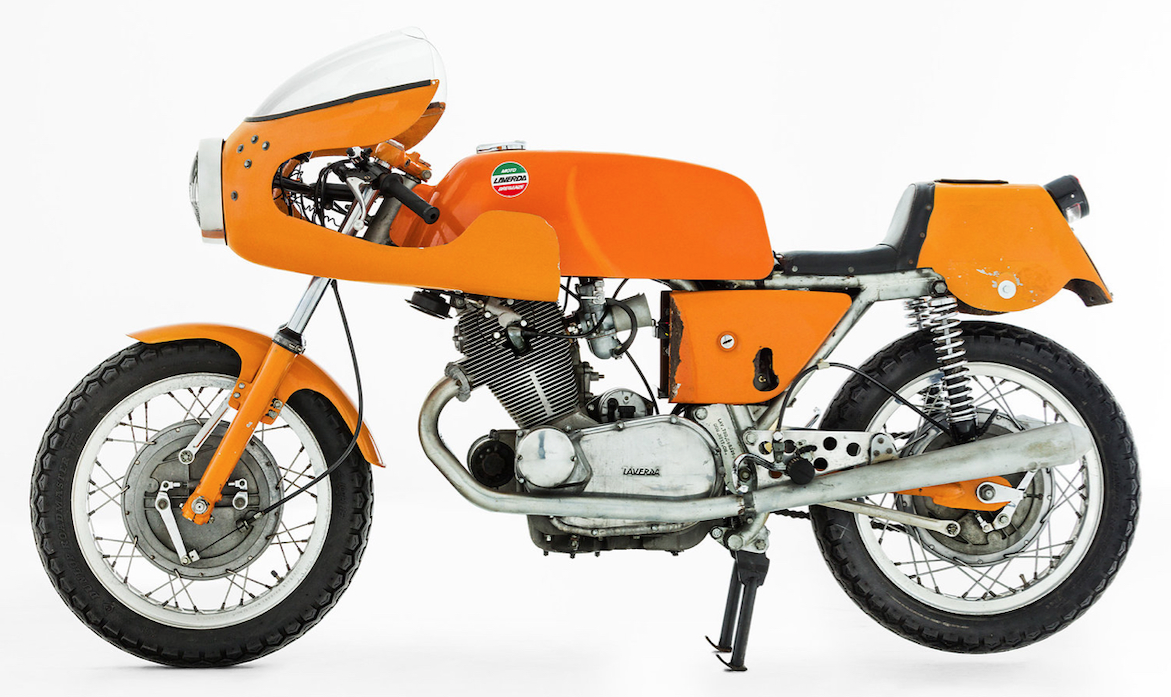
“IT WENT LIKE HELL,” Roger Slater recalled but it had some handling problems that we worked on for some time…” He was talking about the very first 750 SFC Laverda production racer to arrive in the UK. Roger and his brother Richard were the UK’s Laverda importer and they soon took to the track on the 70bhp beast. Indeed, this SFC earned itself the nickname ‘Leaping Lena’ for its entertaining attributes in the handling department. Once fettled, however, the 130mph 750 parallel-twin was a winner. The SFC stole the world endurance racing season in 1971, taking six prestigious wins and missing the top slot at Le Mans by a sniff, and dominated circuits on the Continent for the rest of the decade. Even when it didn’t win races, the SFC proved itself to be durable and reliable at sustained high speeds—particularly impressive given that Laverda had only introduced their large capacity twin a few years before. It retailed at £1,000.
THE KAWASAKI H2 250 TRIPLE was introduced. Unlike the 750 Suzuki this was an all-out performance bike with a somewhat vicious power band, extremely unpredictable handling mad was aimed at the macho style of rider. It was notoriously dangerous, being prone to up-and-over wheelies and speed wobbles. The handling characteristics arising from its mediocre frame design caused it to be nicknamed the ‘widowmaker’. Following a roadtest Roland Brown reported that in these times of safety-conciousness and environmental awareness the legendary two-stroke triple would seem like a bike from another planet Fast. loud, smoky, vibratory, thirsty and evil-handling, the H2 and its predecessor the Mach IV were outrageously antisocial even by the somewhat lax standards of the early seventies. Kawasaki pulled no punches in setting out to establish the snarling stroker’s performance credentials. The first paragraph of their brochure read: “The Kawasaki 750 Mach IV has only one purpose in life: to give you the most exciting and exhilarating performance. Its so quick it demands the razor-sharp reactions of an experienced rider. It’s a machine you must take seriously.” They weren’t joking. The original air-cooled 748cc motor put out 74bhp, which was enough to send the triple screaming to 120mph while spewing clouds of oily blue smoke from its exhausts. Light weight and a short wheelbase meant fearsome acceleration and plenty of wheelies. Awful fuel consumption—around 22mpg was common—necessitated frequent fill-ups, but the upright riding position and tingling engine vibration meant the rider was often relieved to stop. And sometimes relieved to be alive, for the triple’s handling was even more notorious than its engine performance. Note from Pete: “While I was working at a Kawasaki dealership in Chelmsford, Essex in the mid-1980s we had come into stock a 750 H2. I decided that I would borrow this and take my mate Phil to the BMF Rally in Peterborough. He was a big chap but we decided this wouldn’t affect the handling as it didn’t have any. It was one of the most uncomfortable and scary rides we ever had. The vibration was so bad that Phil couldn’t hold onto the rear grab rail and it wasn’t much better up front. Every roundabout and every corner was an ordeal. We reached just past Dunmow and we decided we’d had enough and turned hack, vowing never to swing a leg over one of the things ever again.

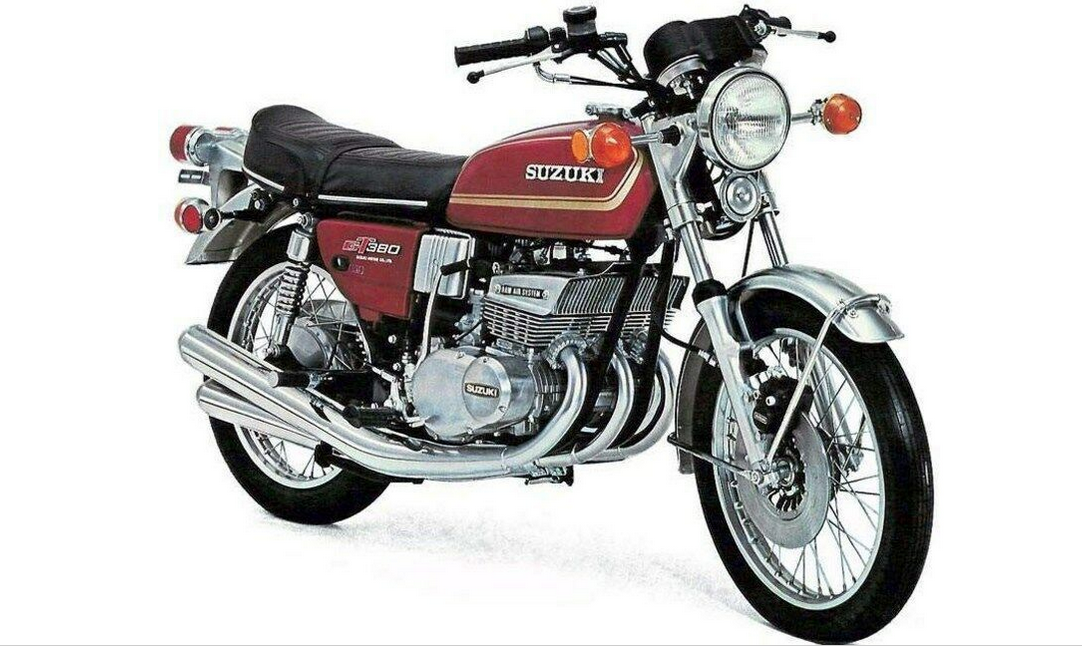
SUZUKI INTRODUCED THE GT550 and GT380 air-cooled two-stroke triples. 1 owned a GT550 in the early 1970s and then again in the 1990s. It was a completely different bike to the Kawasaki having a really nice, smooth useable engine and was a great tourer. Mind you the early J models had a double-sided twin-leading-shoe drum brake, which was great as a stopper but didn’t work if the bike rolled backwards—a feature you had to be aware of especially on Isle of Wight hill starts!
 Motorcycle Timeline