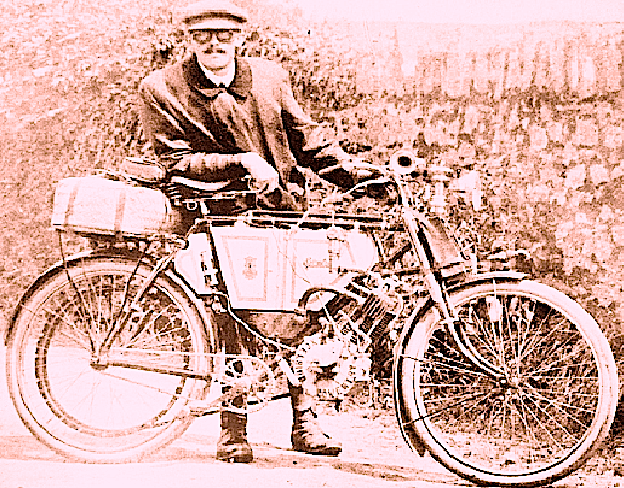
Before we dive into the new decade, here’s a treat—a brief overview from The Motor Cycle’s master historian (and wartime DR and all round good guy) Bob Currie. You’ll find the complete article in his superb book, Great British Motor Cycles of the Fifties. Like the rest of Bob’s books, it’s a joy to read, as is this short excerpt…
“‘BIKES OF TODAY are all very well,’ complain the traditionalists, ‘but they have no character—Yamahas and Suzukis, and shaft drive, and self-starters, and winkers; they cannot be called real motor cycles. Now, take an old B31 Beesa…Each enthusiast has his own reasons for looking back to the 1950s with a particular kind of affection. Japanese competition was then no more than a speck on the horizon, Germany and Italy were turning out some attractive machines, but above all it was the traditional British single and vertical twin which dominated the motor cycle scene, both at home and abroad. However, during the early 1950s, buying a new machine was not so simple as all that. The demand was certainly there and, on the face of it, Britain’s manufacturers should have been raking in fat profits. But those who are forever carping that British industry should have been investing more heavily in new equipment during this period, would be advised to take a closer look at the country’s economic situation. The struggles of the Second World War had left the nation in a sorry state, and the immediate need was to build up reserves of foreign currency. For that reason, factories both big and small were constantly being urged to export more and more of their production. Metals were in short supply, and stocks were only obtainable by flourishing a government permit—and, usually, such permits were granted only if the firm concerned could produce an order from an overseas customer. Nor were export markets easy to find, because often other countries would either refuse entry to British products or (as in the case of the USA) place a heavy import duty on them. There were quotas and trade agreements to be negotiated and honoured, and it was not really surprising that our factories should find their major overseas markets in the countries of the Commonwealth. Indeed, in 1950, the first year of this decade, Britain’s biggest customer for motor cycles was Australia. However, the American market was just beginning to move, thanks in some measure to the efforts of Edward Turner and the Triumph company. Over a very long period, American riders had grown accustomed to the oversize, overweight V-twins of their own industry, but wartime experience had shown them that bigness is not necessarily a virtue, and that there was a deal of enjoyment to be had from a relatively light, and vastly more manoeuvrable British machine. Nevertheless, the vast distances of the United States permitted bikes to run at higher sustained speeds than was possible in Britain’s crowded land, and it was this factor which led British factories to introduce such models as the 650cc Triumph Thunderbird, and the BSA Golden Flash of the same capacity. It might appear that every factory worthy of the name felt honour-bound to follow Triumph’s lead and include a vertical twin in its post-war range, but that is not strictly true because there were some firms striking out along individual lines—Douglas, for instance, with a 350cc transverse flat twin and torsion-bar springing, Sunbeam with an in-line, ohc twin and shaft final drive, and Velocette, casting aside its pre-war traditions and staking everything on a little water-cooled, side-valve twin in a pressed-steel frame. In the industry as a whole, there was a tendency towards grouping. Ariel and Triumph had long been linked under Jack Sangster’s banner, and now the giant BSA firm joined in, taking Sunbeam with it. The London-based AMC group, already makers of AJS and Matchless, added Francis-Barnett, then James. What with material shortages, international tariff problems. labour difficulties, and the continual demand for more bikes than they were able to produce, the factories just had not the resources available to cope. That is why, with the inevitable disruption a London Show would have caused, there was no major Earls Court Show in 1950… More and more firms were adopting rear springing, albeit plunger type instead of the full pivoted rear fork (although Triumph managed to get extra mileage out of their old rigid frames by adding a rear wheel which encompassed rudimentary springing within the hub). The traditional hearth-brazed lug frame was being ousted by the all-welded frame, due to advancements in steel-tube technology through wartime experience. In trials and scrambles, the big four-stroke single was pre-eminent, but whereas in earlier days competing machines were mainly roadsters stripped of lighting and equipped with suitably knobbly tyres, purpose-built competition bikes were now emerging…The time-honoured Magdyno, a combined magneto and dynamo that had originated in the early 1920s, was on its way out and, instead, the alternator (the rotor of which could be mounted directly on the engine shaft, so avoiding the necessity of providing a separate drive) was making headway. It was not all big stuff, of course. There had long existed a demand for a simple, ride-to-work lightweight, and in the course of any trip by (steam) train, nearly every signalbox along the way would be seen to have a small two-stroke, usually an Excelsior or a James, propped up against the outside stairway. Mostly these were much of a muchness, powered by reliable if none too exciting Villiers two-stroke units, but in 1948 the BSA Bantam had come upon the scene, initially for export only but later for general sale; the Bantam was a frank copy of the pre-war German DKW (as was the 125cc Royal Enfield ‘Flying Flea’, used initially by the Airborne Forces but continued into civilian production as the Model RE)…At the start of 1950, the British motor cyclist was still bedevilled by fuel rationing, but in June of that year came the welcome news that restrictions on private motoring were being lifted at last. True, branded fuel had yet to return, and all that the pumps contained was the dreaded 75-octane ‘Pool’, but at least coupons were to be torn up and the enthusiast could make the most of the summer — always bearing in mind that at 3s (I5p) a gallon, it paid to check the carburettor for economy!”
Now Bob’s set the scene, here’s another treat—Torrens’ review of his year’s favourite bikes . OK, he rode them in 1949 but it was published in the first issue of 1950 and pedantry can be taken to far. In any case, it’s a damned good read. So, Torrens (nom de plume of The Motor Cycle’s editor Arthur Bourne), you have the floor.

“TURKEY, PLUM PUDDING, a riotous walk with the children, for their good and mine—then twenty minutes of purely personal heaven: yes, my 1950 mount had arrived. Norman Vanhouse, from the factory, who had been putting in road miles on it, delivered it on trade number plates on the Thursday afternoon before Christmas. The next day the insurance cover note was obtained; on the following one, Christmas Eve, I presented myself at the local licensing office and on Christinas Day I was ready to take to the road—as soon as a father’s duties were o’er. Did I have just a little run on the machine beforehand—round the garden or out a tone gate and in at the other? No Didn’t I start the engine just to listen to it and to dream? No! I hate starting up an engine unless it is going to warm up properly. In any case, why nibble away one’s pleasure—why not a proper bite, such as a run round a neighbouring 8-mile triangle would give me? But this article is not about a single machine. During 1949 the number of motor cycles I have been fortunate enough to ride has been large—so many that here I can only dwell on ten or a dozen. Some, as usual, cannot be dwelt upon, in that they were one-off experimental mounts which may or may not reach the market. No doubt it is a sign of the times, hut. the majority of these were of small engine capacity. In the year that has just passed there was not a single water-cooled
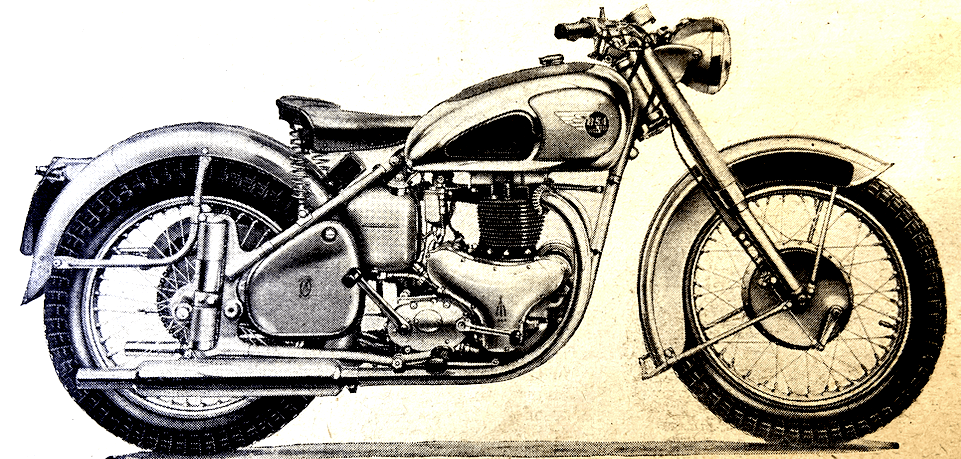
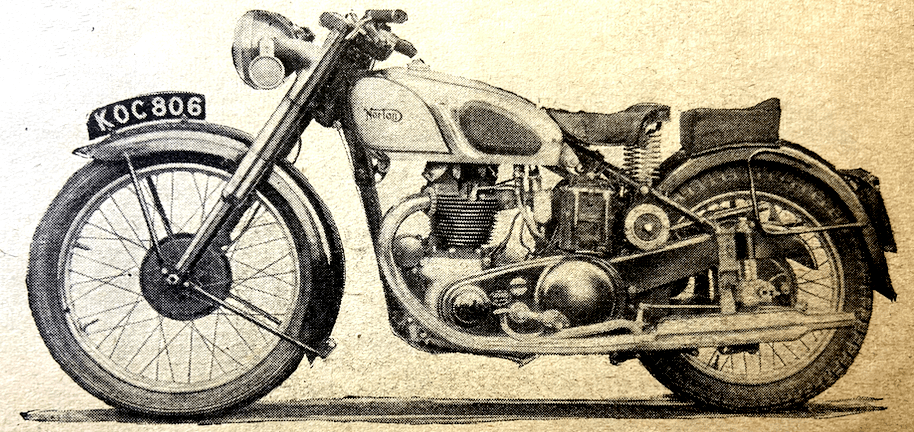
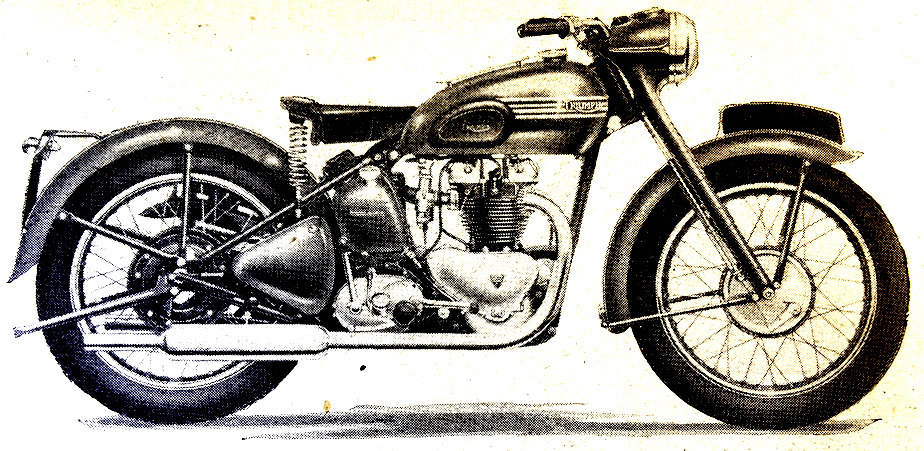
four, nor a three, nor any specially thrilling prototype other than the two new 650cc vertical twins, the BSA and the Triumph. Shall we start with these? In each case the machine I rode was a prototype—in other words, a pre-production mount. The Triumph was ridden many months ago: before the TT, as a matter of fact, and I wonder how many of those who visited the Isle of Man spotted that there was anything unusual about the machine a member of the Triumph staff was using. Some people, I know, were a little taken aback by the effortless speed of the machine, and especially by the acceleration, but apparently dismissed the matter with the thought, ‘A works’ man, a works’ mount!’ My visit to Meriden to try the machine was on a day of lashing rain. Roads were awash, and the thin leather gloves I put on for the test, in order to have maximum feel, were wet through in minutes. Hence the conditions were just those calculated to damp one’s enthusiasm. I was enthralled by the performance of the machine. It seemed unbelievable that the capacity of the engine was-merely 150cc more than that of the Speed Twin and the Tiger 100, and therefore not quite a third greater. This machine had what I have always missed with the 500cc twins—lusty power at low revolutions and fuss-less running at high speeds. There was a beefy sort of performance: the machine seemed to hunch itself under one as the twistgrip was opened and gathered gait in very much the manner of a really good big-twin. And it was not that the engine was on a 500cc type of gear ratio. One of the things I had been asked to ponder was the gearing. I came back from my first run with the remark, ‘The conditions are not such that one can be certain, but the impression I have gained is that you can gear appreciably higher.’ I went on to touch upon the machine being destined for use, among other things, on fast, straight highways and upon the joy of a machine tick-tocking along in the seventies and eighties. Tyrell Smith and his experimental staff managed to find a spare 25T engine sprocket—one left over from a Grand Prix model, I believe—and in a very few minutes had it in place and the machine ready for the road again. Twenty miles or more were covered. Although top gear was now around 4.3 to 1, the machine was still flexible, the acceleration was still a thrill, and there was even more effortless mile-eating, or so it seemed to me under the conditions of wind and rain. Mr Turner thought that, for home at least, a gear half way between the two would probably be best. He and members of his staff would take the machine out under better conditions which would give a fairer test. As you know, the 25T sprocket was used for the Montlhéry tests in which the three 650s averaged over 92mph for 500 miles and is, I gather, available, though the slightly lower gear is standard for this country. I know which set of ratios I would prefer, but then I have no objection to using the gear box, which brings me to the fact that the new gear box is one that very definitely invites use. Good though, folk maintain, the gear change has been in the past, this is far better. My main theme before setting off for London and home was, ‘If they are anything like this prototype, the machines are going to be the most popular Triumphs ever.’ It is not just a case of the new model having a little something that the others in the range have not got; there is a whale of a difference. There are many extra horses, the low-speed torque is magnificent, and the weight of the machine is within a pound or two of that of the five-hundreds. Eulogistic? It is supposed to be a bad thing for a journalist to discuss two very similar machines, each from a different factory, in the same article, but here, were I worried about it or not, there is no option. The new BSA is, of course, also of 650cc. It is new in looks, in its power unit and in its gear box. The gear ratio pulled is in the region of 4.3 to 1. The impression the machine gave me was that, if anything, it was undergeared, such are the pulling powers of the engine. I have ridden many BSAs, but never one I have liked so much as this newcomer. What were those figures Mr Hopwood gave—17bhp at 2,500rpm and some 34bhp at 4,700rpm. I ambled out of Birmingham using the flexibility to the full, dropping down at times to 12-14mph in top and then gently opening up. That it was possible to use such low top-gear speeds, particularly in view of the ratio being so high, was interesting.
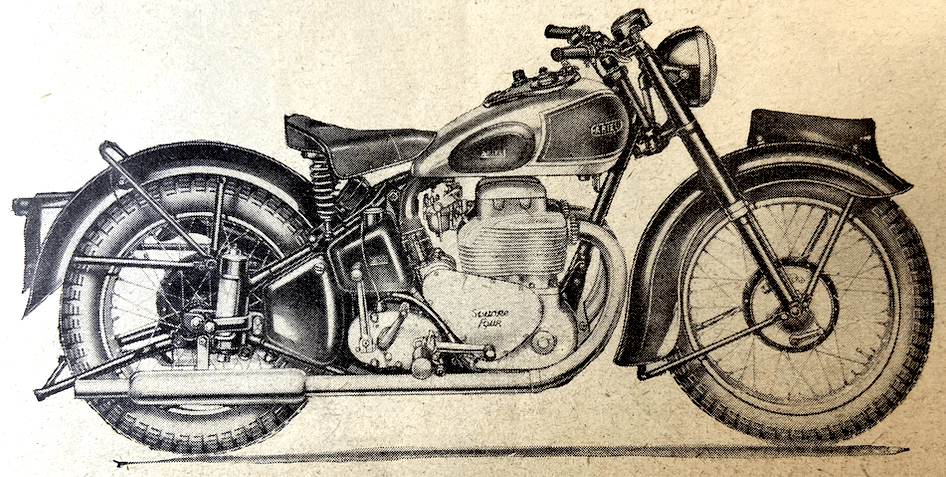
Good traffic manners, I always feel, count for much. Naturally, the opening up had to be velvety, but at anything above about 20mph the grip could be flicked open—the results were satisfying, very. At 60 and 70mph the power still came in with a zestful rush. With this new model, BSAs have an ultra-fast machine with superb road manners. One can spend nearly all the time in top gear, drive like the perfect little gentleman, and yet have what the average being would regard as a super-sports performance. If, however, in the mood for something in the form of hyper-sports, then one has only to make use of the new gear box, the gear change of which I can best liken to that of a close-ratio box on a TT winner. On the stopping side there is a new, large front brake. The riding position is really good, and I liked the handling of this taut-feeling, spring-frame mount. The weight of the machine, I was told, is not more than some 7lb greater than that of the 500cc twin. Thus one has a 650 with very much the cornering characteristics of a 500. According to my impressions of this prototype, here is a machine to thrill and to delight, a joy to the sporting rider and a godsend to the sidecar enthusiast—a very fine motor cycle. You will note that in neither case, that of the new Triumphs or the now BSA, have I made any criticism. The fact is that on my return to the respective factories I had no major criticism to offer. The machines proved far better than I dared to hope, and both appeal to me immensely as potential mounts for my own use. All the points I raised were of a minor character, and two at least were of types to concern the individual machine. While at the factory I had a ride on a spring-frame 125cc BSA Bantam that was undergoing mileage test. It confirmed a view I have held for some time: that rear-springing is very well worth while on an ultra-lightweight. It eliminates back-wheel hammer. Cast your mind back to the last time you saw a rigid-frame 125 on cobblestones; do you remember how the back wheel went along in a patter, spending, it seemed, half the time in the air? This jarring, surely, is the main reason why these little machines become tiring to ride on a long journey? As a rule, I start to get stiff after 40 or 50 miles and to yearn to stretch my legs, yet on bigger machines my practice is to cover the first 100 or 120 miles non-stop and, unless the riding position be a poor one, the thought never occurs that there could be any stiffness. With the Bantam’s rear-springing, this lolloping of the back wheel was noticeably absent—yes, on Birmingham’s roads. In brief, the suspension turns the machine into a really comfortable long-distance roadster. For this I would willingly pay much more than the extra £5 that is demanded—£6 7s in this country, with its Purchase Tax. Harking back to the new 650cc twins, why, if I was so pleased with the Triumph I rode way back in April and had a shrewd idea that the BSA was framing well, did I place an order for a 1950 model 1,000cc Ariel Four? The answer lies in the performance characteristics of a good four-cylinder machine—the droning, zooming power and the greater responsiveness to throttle movement that results from one’s having four cylinders instead of two. I always feel that it is easier to ride neatly with a multi, and that handling such a machine calls for less effort and is less tiring. Today, with the high power/weight ratios of the new 650s, there cannot be a lot of difference in the manner in which hills are gobbled up or in the way the trio dart forward when the throttle is twirled, but having covered roughly 100,000 miles on fours, I like them and prefer them! I was not looking forward to riding the new Ariel with quite the thrilling anticipation you might expect. My old one, HPG 601, has given me 50,000 magnificent miles, and I felt that the new upstart could hardly better the faithful service of the old stager. Moreover, there was every reason to anticipate that the latter would continue to give this year
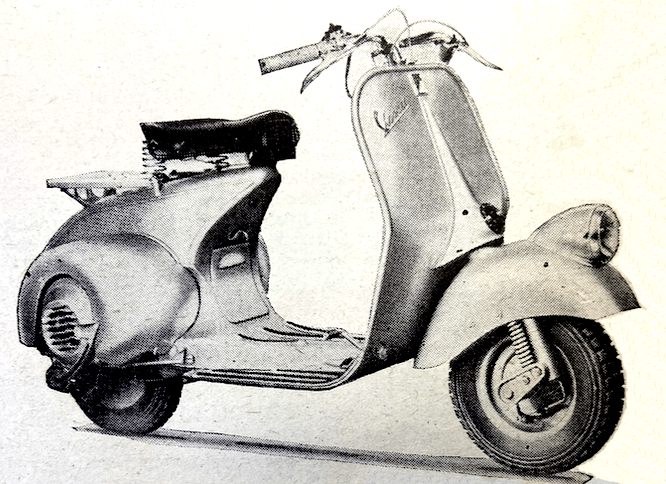
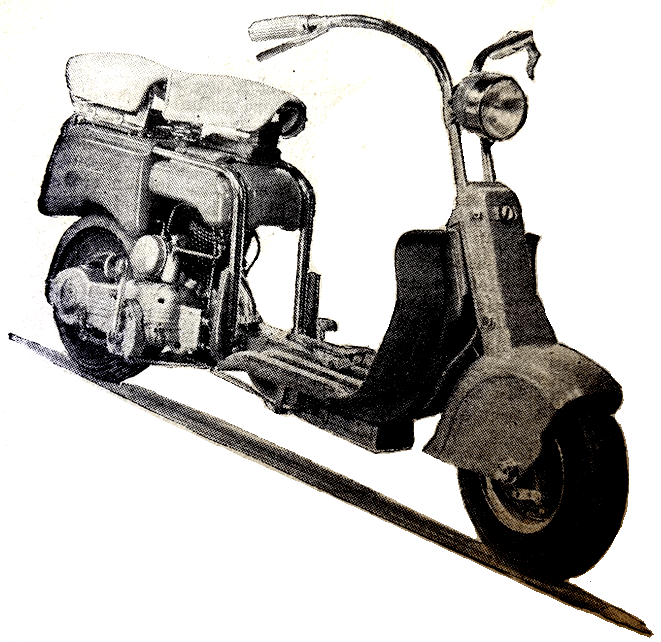
in, and year out reliability. Also, would the new mount do its 60mpg at batting speeds and even 70 at quite a fair gait—yes, and 52mpg when averaging a full 40mph with sidecar! I like the reduced weight of the new model compared with the old one, which weighs some 500lb. The light-alloy cylinder block and head casting, with the changes on the ignition and lighting side, have saved some 40 or 50lb, and make the machine much more handleable. First impressions are good. At the time I write this I have covered only about 60 miles, and the majority of those have been in traffic. However, before this article is published, all being well, the total will be around 500, since I am about to setoff for the Exeter Trial. That, with the roadwork put in by the factory, will bring the mileage to over 1,000. Already I feel, very definitely, that I am making a change for the better and I am looking forward to the ‘Exeter’ with thrilled anticipation. If, as I trust, there are no hints of snow and ice, such as has been the Exeterites lot on so many occasions, my sidecar will not be hitched on and I shall waft to and from the West Country in solo blessedness. However, more of the new pet anon. Let us now hark back to May, when I visited Italy. There I rode a 250cc Airone Guzzi, such as we tested on English roads a week or two ago. I had the machine on the twisting, roughish highways near the Guzzi factory. I was much impressed by the TT-machine-like handling of this spring-frame mount—the clean-cut cornering and the manner in which the suspension smoothed out the Italian hummocky highways. The gear change on the machine I rode was apparently better than that of the mount we have just tested; it was very good indeed, and I gave many marks to a riding position that in the old days we should have referred to as ‘semi-TT’. The machine made me wonder whether we over here are altogether wise in not doing more with ohv 250s. The Airone was a lusty performer, with liveliness and speed capabilities fully equal to the needs of many of the sporting-rider class in this country, and it does not give a small-machine feel. Over in Italy I also rode a Vespa. I had tried a Lambretta earlier and, as it happens, have ridden one again only a few months ago. I can well understand the Italians’ liking for these two machines. The general rule in Italy is for them to be used as potter-buses—in the case of the Vespa there may be father at the handlebars, and mother, plus at least one offspring, on the back. In the last International Six Days’ Trial in Italy the machines were batted at astounding speeds, but the populace, even though they are to be seen touring the mountains, seldom travel fast. The state of the roads is one reason. Comfort sets the pace—comfort and steering qualities. Here we are luckier with our road conditions, and I think such mounts will make an appeal for pottering. Larger-diameter wheels would be a big improvement, but that would mean larger machines, greater weight and, maybe, quite wholesale departures from the present conception. Over the next year or two, developments in the so-called scooter field should be interesting, and they may have their effect on the trend of motor cycle design. It has been my good fortune, too, to try various German productions. How I wish that the new 500cc transverse-twin, shaft-drive BMW could have been numbered among them! Perhaps in 1950…What I do know is that my
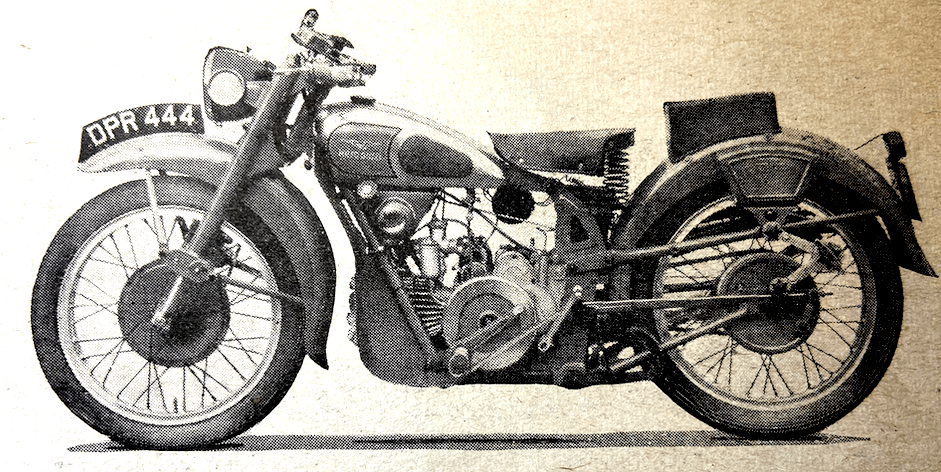

chief criticism of past BMWs has been eliminated: the gear change has been greatly improved. I tend to harp on gear changes, because I believe we had lost our standards—had ceased to realise what a good gear change is. Now, thank goodness, there are signs of a return to gear boxes which you can flick from one gear to another without a fraction’s pause, without sound—yes, without- the need for any skill in mating engine revs with road speed. You could not go wrong with the old Sturmey-Archer gear boxes (not as regards gear engagement), the Norton four-speed box which the late Arthur Carroll designed, the three-speed box fitted to the 550cc SD Triumph, and a small host of others. Our gear changes were the envy at all and until now they have mostly become worse and worse, unknown to and unrealised by the majority of riders of to-day. Believe it or not, on the day when the Norton directors and Major Barnsdale, who was on the Sturmey-Archer board. were discussing whether Sturmeys would supply Nortons with the Carroll box or the then new Sturmey one, and I, happening to arrive at Nortons that day, was asked to test one against the other, I used the hand changes of the four-speed boxes like pump handles, leaving the poor Norton Big Fours on full throttle and the clutch severely alone. Even with this vile form of test—one thought unto destruction—the gears in-variably slid into mesh. Of course, Germany over the past few years—indeed, until very recently—has been forced to concentrate upon small machines, nearly all of them two-strokes. There have been scores, if, not hundreds, of races for such machines. A result of this concentration, to judge from models I have ridden, is that a lot of knowledge has been gained. Pre-war there were no small two-stroke engines to equal those of the DKW made under the then Schnürle patents—the world apparently agrees having regard to the many two-strokes that now have this form of porting—but today still better results are being achieved by some factories if samples I have ridden are a fair criterion. Good for them! One over-the-water machine I tried recently was an almost brand-new Indian twin of 440cc. This is a vertical-twin much on the general lines of those made in Great Britain, but with light-alloy cylinder and head castings and other engine features which seem to smack
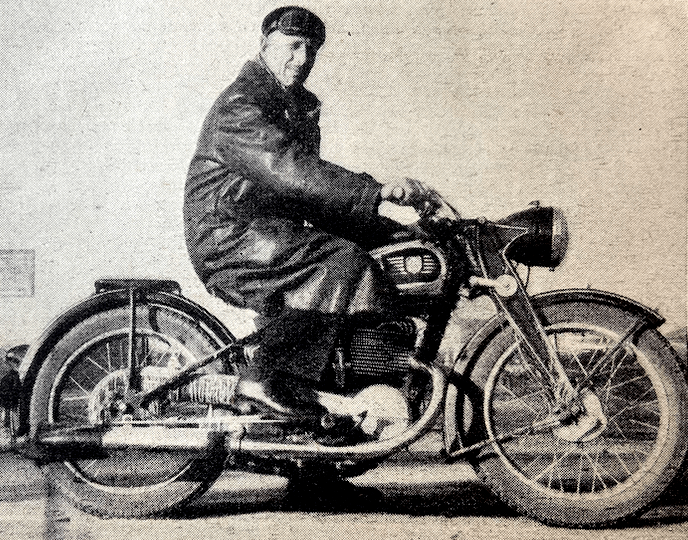
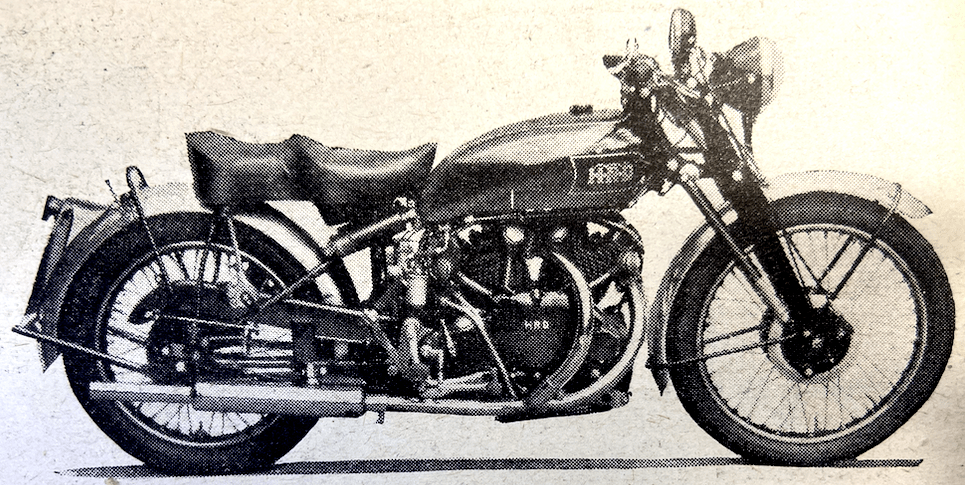
more of the aircraft than the motor cycle industry. Owing largely, no doubt, to the light alloy. in the upper half, the engine was noisier mechanically than is usual with a vertical-twin. The engine, however, developed excellent power for its cc. Because of our poor-quality petrol it was necessary to use the gear box a lot in order to keep pinking within bounds—it was hardly designed for ‘pool’! The gear change proved so-so, but I found that the handling of the machine from the bicycle angle was good—a lithe, lively mount. Now to a very different machine, the latest 1,000cc Vincent Black Shadow, the Series C. I took out the machine we had for road test in order to try the Girdraulic front fork and the hydraulically damped rear-springing. A year ago—as a result of a Black Shadow produced before these improvements came into being—I was critical of the suspension; it might be quite all right on British roads, but could be a limiting factor elsewhere. I was delighted, therefore, to find the vast improvement effected; it puts a very remarkable machine still more firmly on a plane of its own. The vertical-twin Norton I rode early in the year was a pre-production prototype, a good machine which proved reliable and thoroughly sound, but not sensational. Well, we have just had a road test of one of the Dominators that have emerged from the then chrysalis; need I say more? I am not to state that the machine is in a class of its own, because nowadays there is a number of good 500cc vertical-twins, but I do maintain it will be very difficult to find a better mount of its type. And so I near the end of probably the least critical of any ‘What I Rode’ article I have ever written. Of their types, all the machines I have touched upon have been really good—a far, far better series of mounts than I have had in any previous year. That is not to suggest that we can all sit back with the pleasant thought that everything in the garden is lovely. As an idealist I know that the majority of designers have still a long way to go in developing suspension, that it is high time the seating side was the subject of a few brainwaves, that transmission shock-absorbers are too frequently inefficient, and that if some makes have hairline steering at all speeds, it should be possible for all to be endowed with it…but I do say that my many happy miles over the past year suggest that there has been some very worthwhile progress.”

“UNDER THE NEW REGULATIONS at present being drafted, all drivers of vehicles will have precedence over pedestrians at crossings where traffic lights or a policeman’s signals are in favour of vehicular traffic. This is welcome news. On the other hand, why has the Ministry delayed so long in drafting a simple amendment to a somewhat ambiguous law?”
“THAT TRIALS RIDING makes a good road rider better is an axiom which is worth closer consideration than it receives. At present, only a tiny percentage of Great Britain’s 600,000 motor cyclists gains the added skill that results from tackling rough terrain under competitive conditions. Any suggestion of additional events to cater for the road man with an ordinary motor cycle can bring the retort that there are already too many trials and that these trials, particularly in the south, have been attracting an almost impossibly large entry. We would, however, underline the recent statements that trials are in their own particular rut. How many people fully appreciate the vicious circle that began around 1929—that special machines were developed to defeat the wiles of trials organisers, the latter turned the tables, and machines, in due course, were expressly marketed for trials with features and attributes designed to render the ‘impossible’ easy? It is true that, in between times, trials organisers’ hands were strengthened by the ban on competition tyres, though this was largely fortuitous and arose from the fact that either the trials world allegedly set its house in order or trials would be outlawed in the same way that racing on the public highway had been banned. To-day, except for MCC events, the majority of trials place a high premium on ownership of a special trials mount. A few clubs organise events for novices, but hardly any club committees think in terms of trials that give the ordinary-rider of an ordinary motor cycle an afternoon’s fun on some local rough ground well within the compass of such a mount.”
MANY RIDERS WILL AGREE that, notwithstanding the theoretical impossibility of balancing the simple single-cylinder engine, there are to-day many motor cycle engines of this type which are extraordinarily free from vibration at all normally used revolutions. The so-called vertical-twin, comprising two single-cylinder engines with a common crankshaft, is generally even smoother in operation. The horizontally opposed twin has perfect balance except for the small couple resulting from the offset of the cylinders. In short, the old bogy of engine vibration has, by and large, been killed. The qualification is included in the last sentence be-cause in some classes of engine there is a big difference between the best balanced units and certain of the others. There are even cases where engines are not better balanced than in pre-war days, but worse. It is well to realise how high the standards are with the best engines. The achievements of one designer should be within the range of all.”

“A FEW DAYS AGO I had the pleasure of a ride on an LE Velocette. I have now an entirely new conception of motor cycling. This machine sets a standard by which all others should be assessed. The engine started effortlessly by a hand lever, ticked over silently, and took up the load in bottom gear sweetly and smoothly. The gears operated easily, and the machine floated over Liverpool roads with no reminder of the cobbles and rails. Hands-off steering is safe and true, and at 30mph in top I proceeded without noticeable sound. The machine is a demonstration LE at Victor Horsmans. By now it has been ridden by dozens of prospective buyers. The brake and clutch cables required adjustment, and the footboard could have been three inches longer for the convenience of a pillion rider—but these are trifling points. The LE Velocette is a remarkable motor cycle.
WILF JONES, Little Nelson, Wirral.”
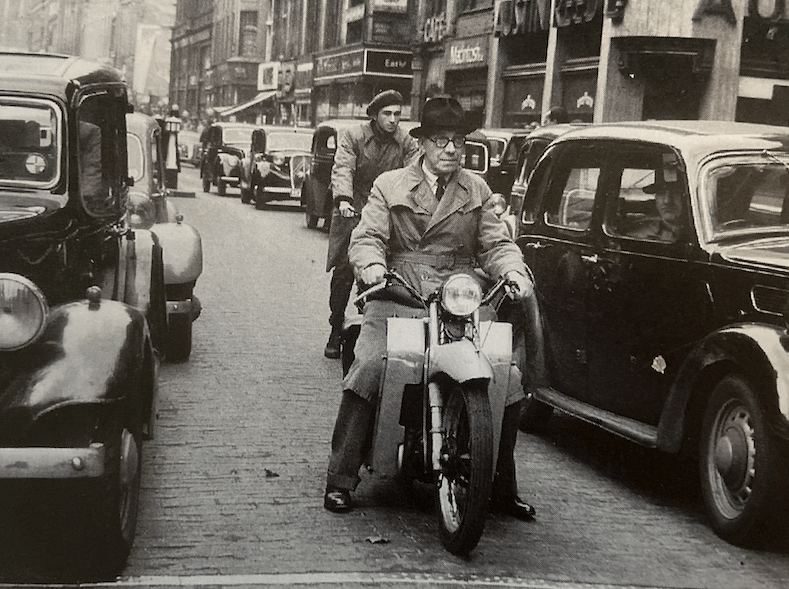
“AN INAUGURAL RALLY with the object of starting a club for owners of LE Velocettes will be held on May 14 at Newlands Corner, near Guildford, Surrey. The meeting time is 3pm, and all owners of LEs are cordially invited.”
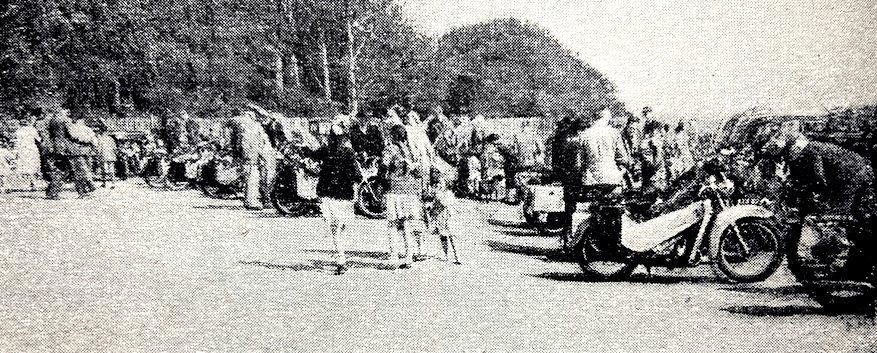
“OUR LEADING ARTICLE of December 8 drew much-needed attention to the defects of too many mudguard layouts. One reader snorted when I showed it to him in proof. ‘A car gets just as dirty,’ he declaimed; ‘look at a Rolls after a dirty run! Its flanks will be plastered to a height of a couple of feet, and you could plant seedlings on its stem far higher up than that!’ True! But we must separate the allied problems of machine-cleanliness’ and ‘rider-cleanliness’. The Rolls may need a long wash, but its occupants can step out spotless. With standard mudguarding a motor cyclist after a dirty run over mixed roads will usually be mud-plastered about knee-high on his legs, and almost neck-high on his back. His nether portions can be kept clean by adding legshields and perhaps some form of footboard (note the LE Velocette). His back could be kept clean, but few standard guards will effect this. No method of keeping the machine clean is known—or even dreamt of. Blow-back off the front guard; mud-fling off the front tyre; suck-back due to the vacuum behind the rider’s body; mud-fling from the rear tyre: guards can reduce these, but nothing can eliminate them. Finally, the side-fling from every vehicle which he passes at short range will foul both his model and his person, no matter how efficient design might become. For he sits low in relation to the road…little research has been definitely focused on this mud nuisance. Even the best standard guards could probably be improved by intelligent and vigorous designing effort without cluttering up the model overmuch. Ease of cleaning is a more promising ideal than averting all the mud from the model. No rider will ever be able to step off a model fit for a ballroom or a fashionable restaurant, so special clothing will always be a ‘must’ in bad weather (unless we accept a Roe monocar with a convertible lid—which we shan’t). But it is one thing to get moderately dirty and quite another to collect an appreciable amount of damp filth distributed over legs and back. Finally, any solution should surely be applied to the lightweights, whose buyers desire protection far more than the roadburners.”—Ixion
“THERE are signs of a definite demand for the ‘integral ” type of sidecar. This means more than a sidecar which is mechanically non-detachable by reason of brazed connections. As soon as a designer decides that on a given model the sidecar need never be detached, a small bevy of novelties instantly leap to mind. The first is that the usual chair snout has suddenly become ridiculous. Why should ‘she’ have her feet snugly ensconced, while ‘his’ legs are left at the mercy of all the winds that blow and all the mud that is flung? So something approaching a dashboard 5ft wide begins to replace the abandoned snout. Next, the designer concludes that a third brake is desirable to bring the stoppers up to car standards. Then he begins to worry about accessibility—it may be necessary to render the sidecar swiftly detachable from its chassis so that the -owner may reach that side of the engine. Finally, he finds himself saddled with something looking as odd as the Scott Crab. I have chatted with sundry folk engaged on the design of ‘integral’ sidecars; they remain loyal to their ideal, but they spend a bob a week on headache powders. (Don’t mention suspension’ to any of them!)”—Ixion
“ON DECEMBER 2 the Guzzi factory achieved a feat so far out of the ordinary that it deserves prominence here. It will interest those lads who handle 250cc sidecar outfits. They supercharged and streamlined one of their 250cc racers, fixed a sidecar to it. and sent it out on the Milan autostrada for speed trials with Cavanna at the helm. Unluckily, the electric timing gear gave incessant trouble, so I doubt whether they are claiming records at the moment. But the best speed registered while the clocks clicked was 209kph over the flying kilometre. This means approximately 130mph. Footnote: Some of our best engineers used to consider it a waste of time to blow a single-cylinder.”—Ixion

SUNBEAM S8
WHEN THE FIRST thrilling post war Sunbeam was announced it was acclaimed as a mount embodying most of the features demanded by the cognocenti. With its in-line parallel twin-cylinder engine and gear box in unit, shaft drive, coil ignition, unique appearance and many ingenious features it, represented a complete breakaway from current motor cycle design. The Model S8, of course, is the lightened version of the original design, It is a machine which has so many praiseworthy attributes that it is hardly possible to single out any one of them and say of it that therein lies the model’s attraction. But if there is one feature that leaves an outstanding impression after experience with the S8 it is the smoothness of the engine and transmission, especially when the engine is revving in the higher ranges. The end of every run during the test, irrespective of length, and under all but the very worst of weather conditions, was reached with regret. There was no pace above 30mph which could be said with certainty to be the machine’s happiest cruising speed. The engine gave the impression that it was working as well within its limits at 75-80mph as it was at 45-50mph. It thrived on hard work and was a glutton for high revs. A pronounced tendency to pinking on pool fuel was noted when the machine was being accelerated hard in top or in third gears. Therefore, on the occasions when it was wanted to reach B from A just as quickly as the machine could be urged, the engine had to be revved very hard in the indirect ratios. Peak rpm in bottom and second gears, and almost as high rpm as were available in third were frequently used—with the most pleasing results. Steering and road-holding were so good that the rider was encouraged to swing the bends with joie de vivre. No oil leaks became apparent in the 600-odd miles of the test. The exhaust pipes did not even slightly discolour. Nothing vibrated loose. The toolkit was only removed from its box on one occasion—and that was out
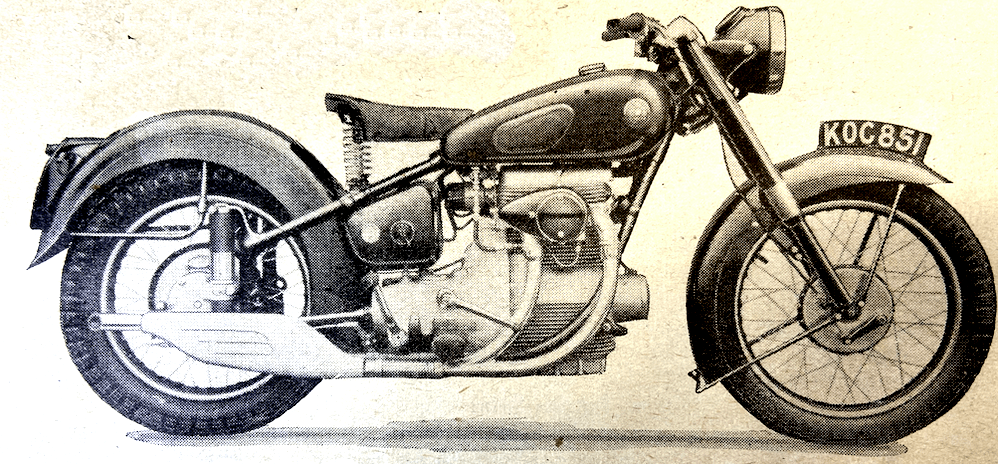
of sheer curiosity. Mechanical noise was no more apparent at the end of a hard ride than it was at the beginning. Except on the odd occasions when grit found its way into the jet block, engine idling was slow and certain. When the engine was running at idling speed or only slightly faster it rocked perceptibly on its rubber mounting. This rocking was transmitted to the handlebars in the form of slight vibration and was apparent up to speeds of just over 30mph in top gear. Above, say, 33mph, there was complete smoothness Even when the engine was peaking in the indirect ratios the machine was smooth to a degree never hitherto experienced with motor cycles. The harder the engine was revved the smoother and more dynamo-like the machine apparently became. Only the inordinate exhaust noise tended to restrict the use of really high rpm; the exhaust noise, it should perhaps be added, was never obtrusive to the rider. Starting the engine from cold during the recent icy spell. or when it was already hot, was so easy that a child could do it. When the engine was cold it was necessary to close the carburettor air-slide by depressing the easily accessible spring-loaded plunger on top of the carburettor and lightly flood the carburettor; then, with the ignition switched off, to depress the kick-starter twice; switch on the ignition, and the engine would tick-tock quietly into life at the first kick. The air-slide could be opened almost immediately after a cold start. Because of the combination of well-chosen kick-start gearing and relatively low compression ratio, so little physical effort is required to operate the kick-starter that it can be depressed easily by hand pressure. If there was ever such a thing as tickle-starting, the Sunbeam most certainly has it. An outstandingly high standard of mechanical quietness was yet another of the Sunbeam’s qualities. Only the pistons were audible after a cold start. As near as could he ascertained, the valve-gear was noiseless. Low-speed torque was very good, and the engine would pull away quite happily in top gear from 19-20mph. From idling to full throttle the carburation was clean and the pick-up without any trace of hesitation. Acceleration was all that could be expected from a machine which falls into a ‘luxury fast-touring’ rather than a ‘sports’ classification. When the mood was there, however, and the full engine performance was used in the indirect ratios, acceleration was markedly brisk. Pressure required to operate the gear change was so light that the pedal could barely be felt under a bewadered foot. The range of movement of the pedal was delightfully short and allowed upward or downward gear changes to be made merely by pivoting the right foot on the footrest. Clean, delightful gear changing could be effortlessly achieved. Between bottom
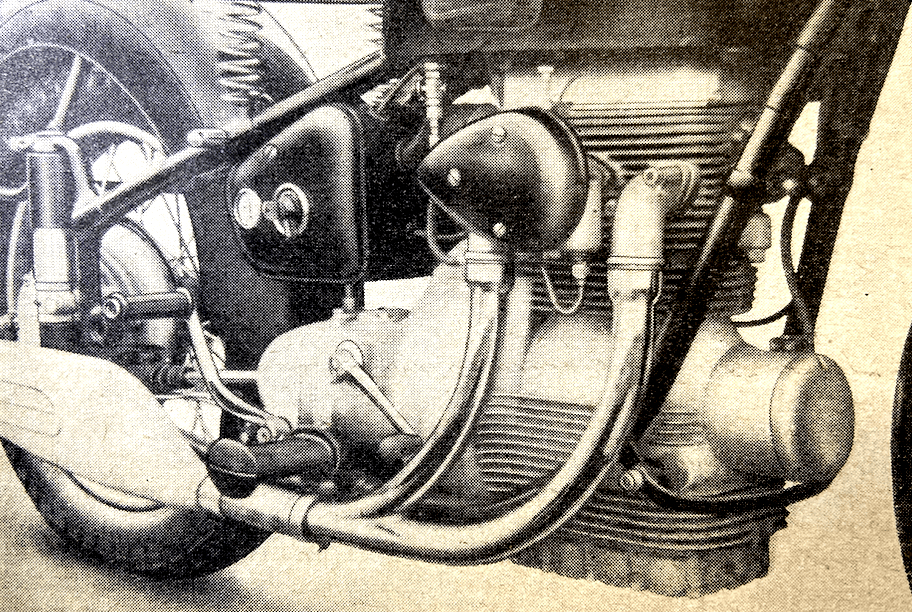
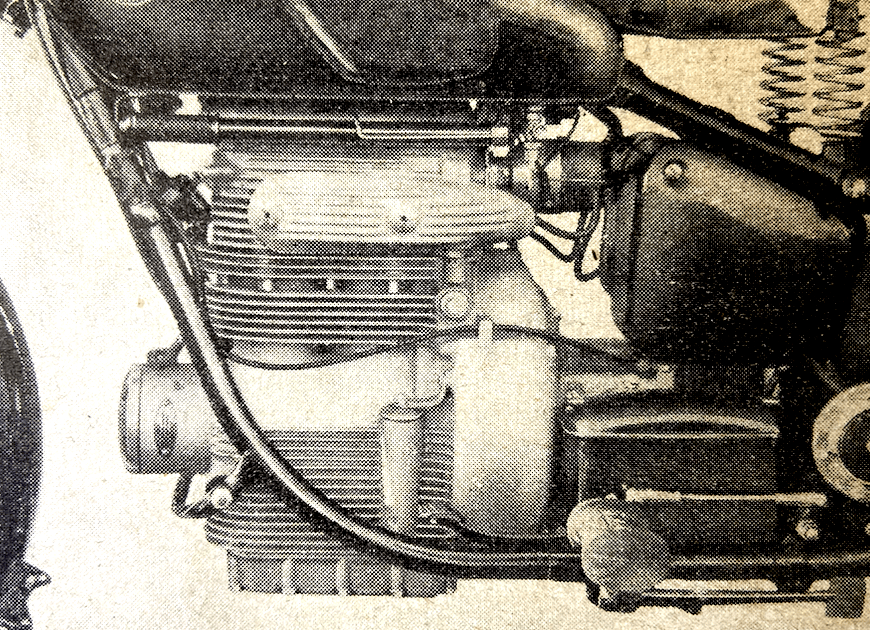
and second and second and third gears the pedal required a slow, deliberate movement. Between third and top gears the change was all that could be wished for—light and instantaneous. The clutch, too, was light in operation and smooth and positive in its take-up of the drive. It freed perfectly and continued to do so even after six standing-start ‘quarters’. It required no adjustment during the course of the test. For riders of all but unusually tall or short statures, a better riding position than that provided by the S8 could not be imagined. Saddle height is 30in. The footrests can be ideally situated (they are adjustable through 360°) so that they provide a comfortable knee angle. Even at their lowest position of adjustment they are sufficiently high not to foul the road when the model is banked well over on sharp corners or fast bends, or when it is being turned round in the width of narrow lanes. The wrist angle provided by the handlebars was extremely comfortable. Handling was at all times beyond criticism. There was no trace of whip from the duplex frame or of lack of lateral rigidity from the plunger-type rear suspension. With plunger-type suspension spring characteristics normally have to be rather ‘hard’. Total movement was approximately 1¼in. The degree of cushioning is therefore not large. The hydraulically damped telescopic front fork was very light round static load and behaved perfectly under all conditions. Both brakes provided first-class stopping power. They were light to operate and smooth and progressive in action. They did not fade under conditions of abuse, never required adjustment during the test, and were not adversely affected when the machine was driven hard through heavy rain and snow. The standard of mudguarding was very good. A long, road-width beam was provided by the 8in head lamp. Full lamp load was balanced by the 60-watt pancake generator at 30mph. in top gear. Numerous detail features of the machine make it easy to clean and maintain. The ignition coil, voltage control regulator, ammeter and combined ignition and lighting switch are housed in a metal container below the saddle. Opposite to it the battery is housed in a lead-lined box of similar proportion and design. Both front and rear wheels are quickly detachable, the rear especially so. Ignition and oil warning lights are located in the head lamp, one on each side of the speedometer. The speedometer in this position was easily read when the rider was in a normally seated position. The instrument registered approximately 7% fast and ceased to function at 589 miles. Finish of the test machine was black and chromium and the quality fully in keeping with the high engineering standards used on the machine.”
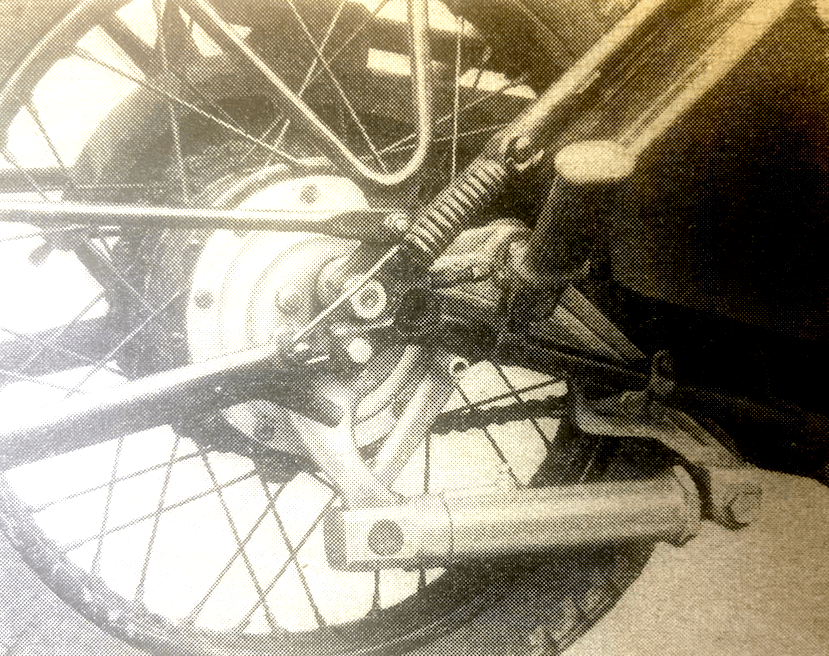
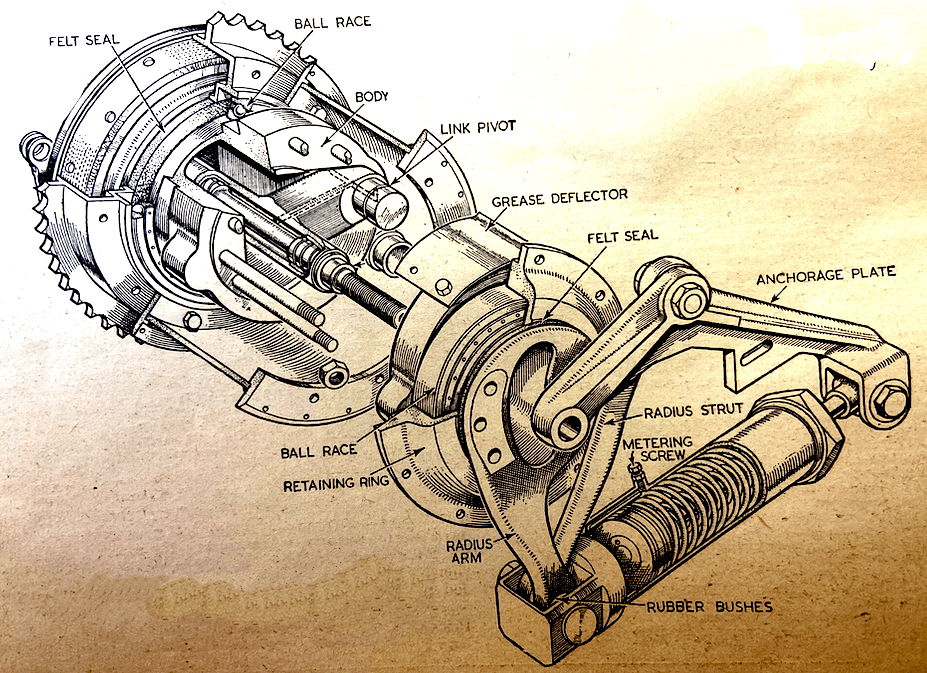
“READERS WILL RECALL an ingenious spring hub designed by Mr AT Clark…the suspension is now available as a proprietary unit. A light steel hub approximately 8in in diameter is spoked into the wheel in the orthodox manner. Bolted to the left-hand side is the brake drum which carries the sprocket; on the right side is a light-alloy flange. Within the hub shell is a two-piece light-alloy body mounted on ball races of 5¼in external diameter; thus the body can move relative to the hub shell…Brake size is 7in diameter with ¾in wide linings. The shoe-plate is a light-alloy casting and a long torque arm is fitted; provision is made for the slight movement of the shoe-plate relative to the hub when the suspension is operating. Two inches of rear-wheel movement is permitted, and the variation in chain tension is negligible. The weight of the suspension system complete with brake and wheel is 39lb, or approximately 10lb above the average wheel and brake fitted to a standard machine. The suspension is sold as a conversion unit which includes the hub complete with all mechanism, the brake, sprocket and wheel; in other words, the standard wheel and brake is removed and the sprung wheel is fitted. Among the attractions is the fact that a purchaser can retain the standard wheel and refit it on selling his machine, with the idea of employing the Clamil wheel with his new model. There are two further noteworthy points. The pillion passenger enjoys the full advantages of the suspension and the mechanism does not hamper the fitting of panniers or other luggage-carrying equipment. Stronger springs are available for heavy-duty sidecar work. Experience on the road showed that this type of spring hub has much to commend it. All heavy road shocks are eliminated and the springing characteristics are particularly well suited to high speeds over bumpy surfaces. There is no pitching—not even on the type of concrete highway with regularly spaced expansions strips. During fast cornering the rear wheel remains in contact with corrugated-type surfaces and there is no tendency for the wheel to chop out. The springing is rigid laterally. Especially noteworthy is the extent to which rear-wheel braking is improved. The brake supplied as part of the conversion unit is progressive and powerful in operation. That apart, however, the greatest improvement lies in the manner in which the rear wheel, under the influence of the springing system, adheres to the road surface during heavy braking. Standard springs were fitted. These are of a strength calculated to be suitable either for a solo rider or for a rider plus a heavy pillion passenger. My impression was that the springing was on the hard side to give maximum comfort at low speeds over minor bumps and that at slightly higher, though not fast, speeds, wheel movement was inclined to be too lively…An experimental type of piston was fitted which provided no depression damping under impact loading as is the-case with the standard piston. Price of the Clamil spring hub complete is £29 10s. Manufacturers are Millars Motors, 363, London Rd, Mitcham, Surrey, under licence from Clamil Suspension.”
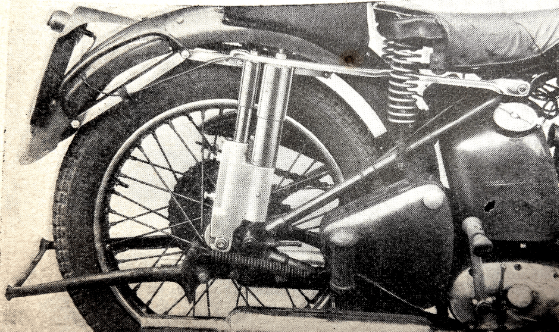
THE SIDDAWAY SPRING HEEL conversion for AJS and Matchless machines [has been available since] 1948. Mr Geoffrey Siddaway has now designed a similar conversion set to fit Triumph 3T, 5T and T100 models. Of the plunger type, the springing has a total movement of 2¾in and is provided with adjustable two-way hydraulic damping. Both compression and rebound damping actions are separately adjustable by means of four accessible metering screws provided with lock-nuts. In tests carried out with a.1946 Speed Twin equipped with this springing, it was found that the damping adjustment can readily be set to suit different static loads and various riding conditions. With two ³⁄₁₆in spanners alteration of the setting took approximately 20 seconds. Half a turn on the metering screws was found to be sufficient for the load difference between solo riding and riding with a pillion passenger. For normal riding between home and office, a screw setting of one turn out from the fully closed position gave soft springing, both responsive to the lesser road shocks and absorbent of the large bumps. In other words, a thoroughly comfortable ride was given over varying surfaces, including South London’s notorious three-ply tram-tracks with their frequent, upstanding inspection covers.”
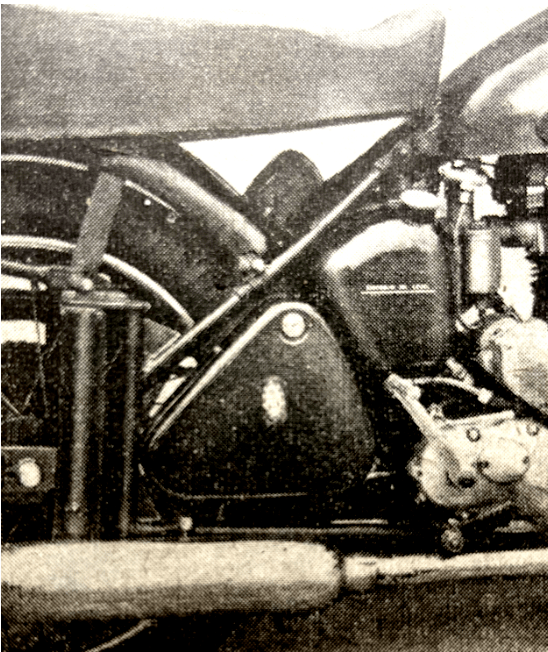
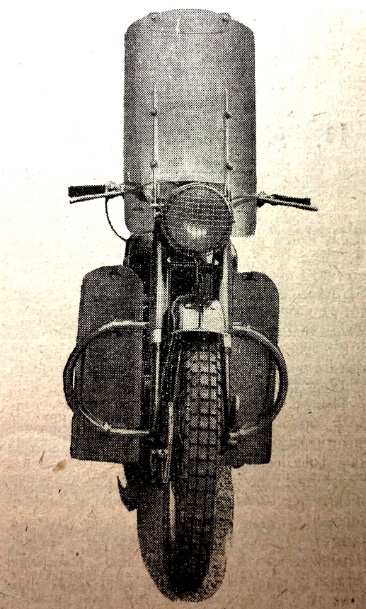
“PLUNGER-TYPE REAR-SPRINGING is shortly to be marketed by Feridax, the well-known accessory manufacturers. The total movement is 2½in. Springs are used on compression, and the rebound is hydraulically controlled. The springing will be suitable for converting any rigid-frame machine. Though the price is not yet fixed, it is said that it will come out at ‘well under £20’. New-type legshields announced by Feridax are for fitting to the Feridax crash-bar. The shields are of steel, chromium-plated, and are of smart appearance They measure 23½in long, and taper from 7½in wide at the bottom to 7in at the top. The price is 35s (the Feridax crash-bar costs 37s 6d).”
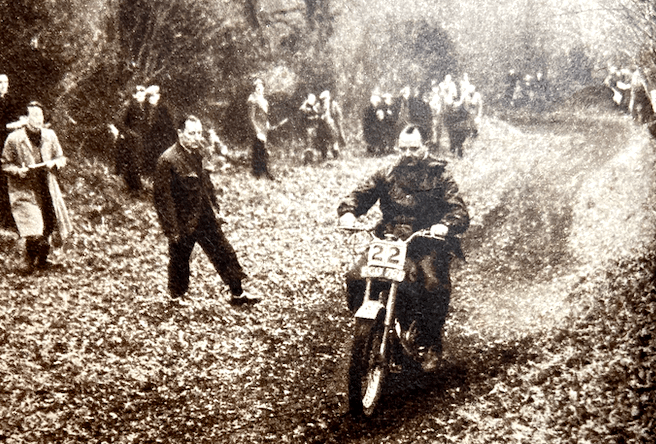
“WHEN PETROL AND, THEREFORE, mileage cease to be rationed, no doubt the MCC’s famous winter run, the Exeter Trial, will revert to type: then will be the long trek through the night—a tiring, rigorous and, sometimes, adventurous prelude to quite a stiff trial course. If there is no snow—shades of the 1927 event which had to be postponed because the route was impassable—but the more usual cold rain or mist or sleet, the trial will still be different. The reason is farm mechanisation. Those who were so fortunate as to have the petrol to run down to last Saturday’s Exeter Trial over one of the usual Exeter Trial routes will need no explanation of the words ‘farm mechanisation’. They saw the mud, the slime and the great lumps of earth which the wheels of the now hordes of tractors had deposited on the highways. Maybe it is impossible for farmers to avoid this (we will not enter into that subject again!) but the fact remains that on the night run there will be a fresh hazard. Although the ‘Exeter’ this time had to be an abbreviated version, it still had character and was great fun. Some competitors had ridden down overnight. All looked forward to tackling famous old hills in their wintry guise, and, as usual, these hills—in winter—were a match for the majority. Instead of the 359 entries for the last full-blooded ‘Exeter’, that of 1939, the total was 96—17 more than in the first event, London-Exeter-London, in 1910. The start was from the city of Exeter, and the course of some 60 miles, which ended at the Peamore Garage and Restaurant, a mile or two outside Exeter, included Windout, Fingle Bridge (the hill of many hairpins), Stonelands (stop-and-restart test), Simms, and a trio of hills in the Ideford-Teignmouth area—The Retreat, Kennel and Coombe. As a trials course, this route sounds easy. It was not very difficult, but the MCC trials have always been events in which a man (and, nowadays, women) can take an ordinary motor cycle or car and, assuming skilful riding or driving, have a reasonable chance of
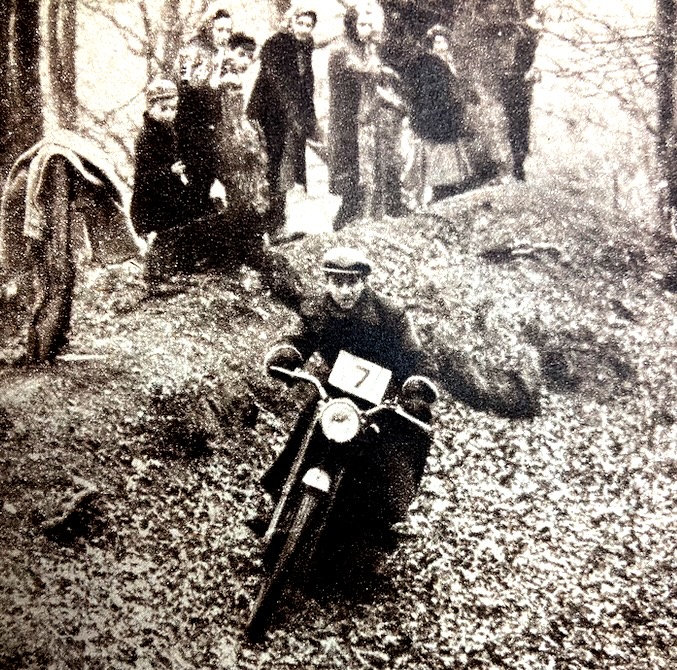
success. They are grand events in which to start competition riding, and far more difficult than the noses-in-the-air are apt to suggest. The awards’ list on this occasion answers this last point…the motor cyclists in the passenger class and a high proportion of the solo motor cyclists failed to bring home the bacon in the form of a first-class award. Those who travelled to Exeter on the Friday from any distance east had a surprise. Early in the day there may have been frost and ice, but down at Exeter it was almost mild and muggy. It was still quite mild when the trial started at 9am on the Saturday. A very few miles, however, and competitors were climbing up the road towards Moretonhampstead and Dartmoor. Hardly had they begun to climb when they were in cloud. The valleys were clear, but, once out of a combe, there was damp mist again. Then into lanes and down a grass-grown track to the watersplash that precedes Windout, a zig-zagging climb of about 1 in 5 which continues for perhaps a third of a mile. Windout is no coined name—coined because of the desirability of low tyre pressures; there is a farm of that name nearby. The first part of the roughish hill had water flowing down gullies between leaves, rocks and leaf mould. Higher up, there were dry leaves hiding stones, water-worn ruts and, occasionally, some patches of loose shale-cum-gravel. The splash at the foot was only inches deep and, as usual, the MCC concentrated on observing the hill, hundreds of yards of it. No 1 rider a was a trials rider of some 30 years’ experience, G Patrick, on a 125cc Royal Enfield. Using specially low gearing (no doubt with Simms Hill in mind) he hobbled up the hill, his back wheel lolloping over the stones and gullies. Then came a lucky lad, EJ Bores (348cc BSA)— lucky in that he slewed round, nearly cannoned, first, the left bank and, then, the right-hand one and got away with it. ‘Jimmy Green’ (an ACU-registered nom-de-guerre) saw the muddy going just round the first bend, made a lightning dart for the clutch lever of his 497cc Ariel and then, all being well, more leisurely wrapped his fingers round the handlebar.
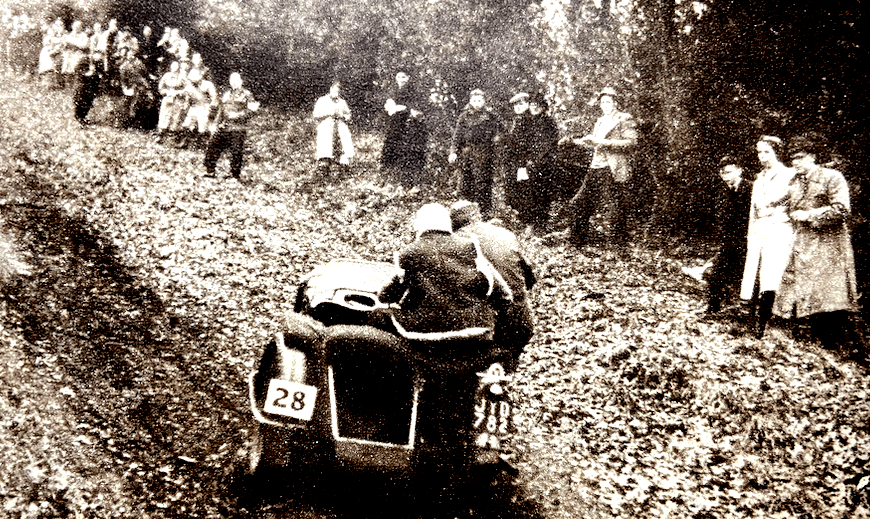
AW Jeffery (347cc AJS) toured up the hill in a most genteel fashion. Then came Mrs Anning (347cc James), secretary of the West of England Motor Club. Just round the bend, she apparently had an attack of stage-fright—it was the first observed hill—for on seeing that she was heading towards some mud, she began to lift her right foot from the footrest to give a dab; but back her foot went. Then a fast ascent, complete with power slide (not so good) by DS Ham (490cc trials Norton). The next man, FW House—entered on a Triumph—was smiling to himself, though the rigidity of his rear view after he had rounded the first bend suggested that his mien became more serious. This however, may not be fair, because on Fingle, too, he had the same smile. FC Bray (490cc Triumph) was fast, somewhat furious and, perhaps, a trifle lucky. So to Fingle Bridge which, as recorded a year ago, is a hill which looks very different now that the woods have been cut down for timber. Further, the timber hacking has altered the hill’s surface to some extent. The latter is now composed largely of loose earth and stones. For a solo, especially a lightweight, the hill is far from easy. For instance, Patrick came unstuck here with his 125, yet later conquered the towering grade that is Simms in spite of its having a slimy, slithery surface. On the latter and worse part of Fingle, the portion where the hairpin bends are both steep and specially loose, DW Jones (348cc BSA), let his speed get to little more than that required for steering way. His engine pinked, there was a nasty gully ahead and he wobbled towards the bank; then it was a case of feet and next, a full stop. GH Burnell, on a BSA of similar size, made amends with a thoroughly workmanlike climb. The next man, W Bray, on a 346cc spring-frame Royal Enfield, seemed to have a sudden attack of nerves just before the gully, but it may be that he, too, was travelling barely fast enough to have steering way. Anyhow, he also stopped, and so did AJ Nichol (Tiger 100 Triumph), but in the latter case the trouble was that Nichol went too wide at a bend and bumped his front wheel over a tree root which protruded from the bank. FT Hosking (498cc Scott) made a good showing at the bend where The Motor Cycle representative was situated, and so did AC Hosking on a Triumph Trophy model, but probably the three best to be seen here were WA White (498cc Matchless), EJ Hain (347cc AJS) and HS Harding (499cc Royal Enfield). Next on the list of hills was Simms, which, although only some 200 yards in length, has an average gradient of 1 in 3½ and a maximum gradient of 1 in 2¾—and a sharp, right-hand bend at the foot. It is thus a hill which cannot be
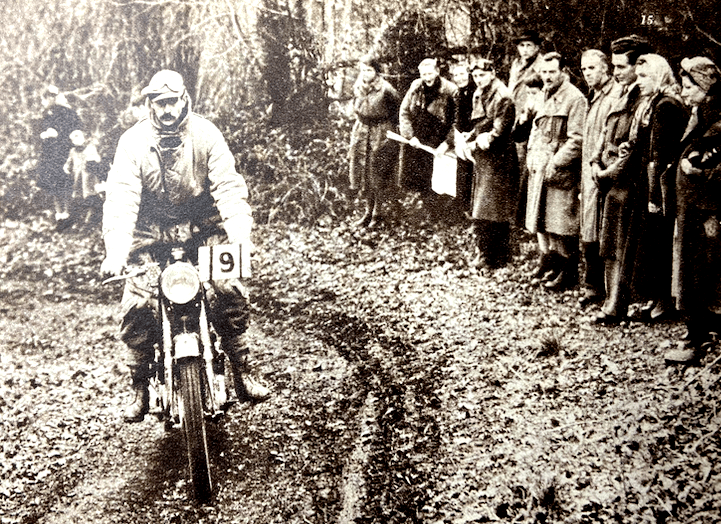
rushed, and last Saturday it was very slippery, particularly the last third—from the rocky hump-cum-cross-gully onward. All the same, there were some fine climbs by solo motor cyclists. JHS Smith (197cc James) made a particularly good one. He shot up the hill at a speed surprisingly high for his engine capacity and, arriving at the specially slimy part, throttled back, mating the power to the available wheelgrip. WF Martin (249cc BSA) toured up neatly, making good use of the suitable characteristics of his engine. Then another clean climb by HS Harding (Royal Enfield), who skated a little near the summit, but never allowed the skating to attain the figure variety. Sidecars followed. First of the sidecarists was that old hand, SH Goddard (197cc Ambassador). For the restart at the foot he wisely arranged his machine at an angle across the road, sidecar above machine, so as to obtain maximum wheelgrip. He clambered up the first part, displaying remarkable power and speed, but, at the gully-cum-hump, wheelspin set in and the tow-rope had to be used. JW Smith (490cc Norton sc) got but a yard higher. The revs of his engine were so high at the hair-pin bend at the foot that the valves were floating madly. All the sidecars failed, and so did WE Wonnacott’s two-rear-wheel Morgan, though it did get appreciably higher up the hill than any of the other passenger motor cycles. With Simms defeated (or undefeated, as the case might be) there remained a not-too-difficult trio in the Retreat, Kennel and Coombe. However, there was trouble en route. Mrs Anning retired—conveniently within about half a mile of her own home!—owing, she thought, to condenser trouble. Farther on, JW Smith’s passenger was seen searching the countryside for wire with which to fix the Norton’s exhaust pipe. RESULTS First-class Awards—EJ Bores (348cc BSA), AW Jeffery (347cc AJS), ‘Jimmy Green’ (497cc Ariel), DS Ham* (490cc Norton), FC Bray (493cc Triumph), EJ Hain (347cc AJS), WF Martin (249cc BSA). Second-class Awards—G Patrick (125cc Royal Enfield), FW House (349c Triumph), DW Jones (348cc BSA), AC Hoskins (498cc Triumph), WA White (498cc Matchless), WJ Peake (349cc BSA), HS Harding (499cc Royal Enfield), JH Smith (197cc James), AE Cornell (348cc Martin), WE Wonnacott (990cc Morgan). Team Award—DS Ham (490cc Norton), FW House (349cc Triumph), FC Bray (490cc Triumph). *Winner of a Triple Award for gaining a ‘first-class’ in all three events—the 1949 Land’s End, Edinburgh and Exeter trials—the sole ‘Triple’ to be gained in the motor cycle classes.”
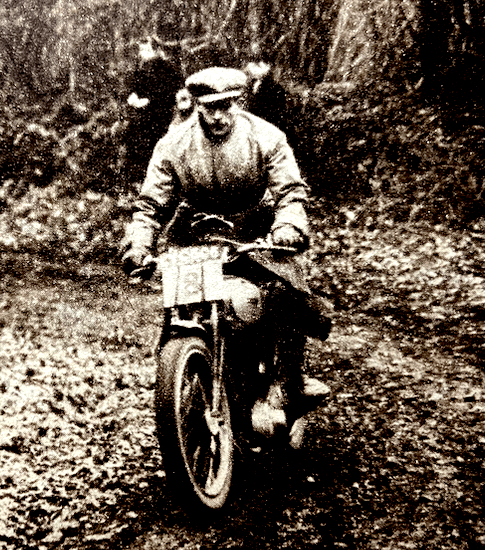
‘TORRENS’ DESCRIBES SOME pleasant days on a journalists’s life: ‘Friday morning, Dorset House; Friday, 6pm, Exeter; Saturday, Exeter Trial; Sunday, return to London, plus writing; Monday, office, press day; Tuesday, office, trip to the West, a call, a dinner; Wednesday, noon, back in office—thus might run the diary, if I kept one, but, in place of some 40 words 4,000 would be necessary to give much more than the bare bones of what could be a misleading story. Take the case of Harry Louis—his trip over the few days previous to my writing this. Extracts from his diary might read: Thursday morning, London Airport; Thursday afternoon, Brussels; Friday and Saturday, Brussels Show, plus writing, plus meeting Belgian officials; Sunday evening, office; Monday, office, press day. In the one case, 700 miles on roads and by-roads in five days, a trial, a dinner, a visit to a factory; in the other, 3½ days, a couple of flips by air, a foreign country visited, examination of a big Continental show. These are ingredients of the life of a motor cycle journalist—the whole life according to the thoughts of many. They are the jam: sticky jam sometimes, in view of the need for conjuring oneself
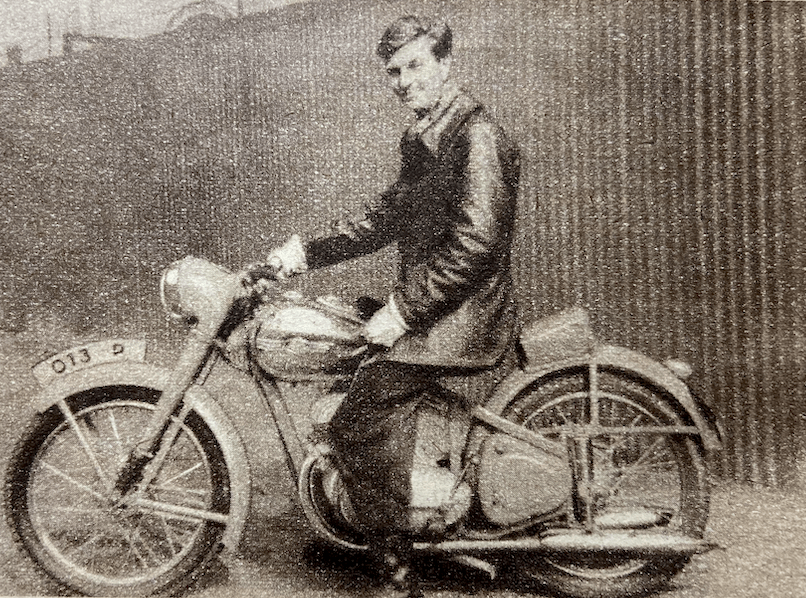
and, finally, the ‘copy’, to the right place at the right time. Except for the ‘jam’—the trips, the trials, the races, and trying this and that—life, of course, is mainly of the chairborne variety. There is the paper to be devised, made up and ‘put to bed’, week by week; the whole time letters are pouring in, and every office-hour spent away means an hour’s back-log. Last year the total number of letters answered by our technical information department ran well into five figures. Goodness knows what the grand total for the staff as a whole would be if all of us kept count. However, today we are dwelling—in my case, lovingly—on some of the jam: 700 miles in mid-winter on a brand-new motor cycle and no rain. There was the new Four to be tried. It had covered some 520 miles in the hands of the works’ folk, had no doubt had some preliminary running-in on the engine test bench and had been ridden 60 or 70 miles, mostly in traffic, by me. Thus the engine had had an opportunity of bedding down to a useful degree. There was no need to treat it with the care normally bestowed on a new-born babe. On the other hand, I still believe that there is a lot to be said in favour of a little restraint during the early point of an engine’s life…the first thing was to ready the mount for the miles in store. How many times have I read the words, ‘When you gloat over your new mount, do so with a spanner in your hand’? All I did in the time available was to check over the safety aspects, top up the oil-tank, see to the tyre pressures, and arrange a lead for my electrically heated gloves. Oh, yes! I also lowered the footrests so that I could poise on them. If on the machine striking a pot-hole or other bump, one automatically rises on the footrests, one rides the machine—there is no bang on one’s spine via the saddle and no tired feeling at the end of a longish run. At least, this is my belief. Seeing to the ‘safety aspects’ comprised checking the tightness of wheel-spindle nuts, all mudguard fixings, and sundry other nuts, bolts and screws which hold things together. Mudguard fixings are a fad of mine; there is a nick out of my nose caused by a front guard that fractured and locked the wheel. Tyre valves were checked for angle at the time each tyre pressure was adjusted. There was not time to reset the control levers by the trifles that I deemed desirable. The factory had remembered that I consider the place for the hornpush is the left handlebar…So up to the office, where the Art Editor was grisling, as he had expected me there the instant the office had opened and was holding up the annual ‘What I Rode’ article in the hope that I would caption the pictures. Freedom came after an earlyish lunch…'”
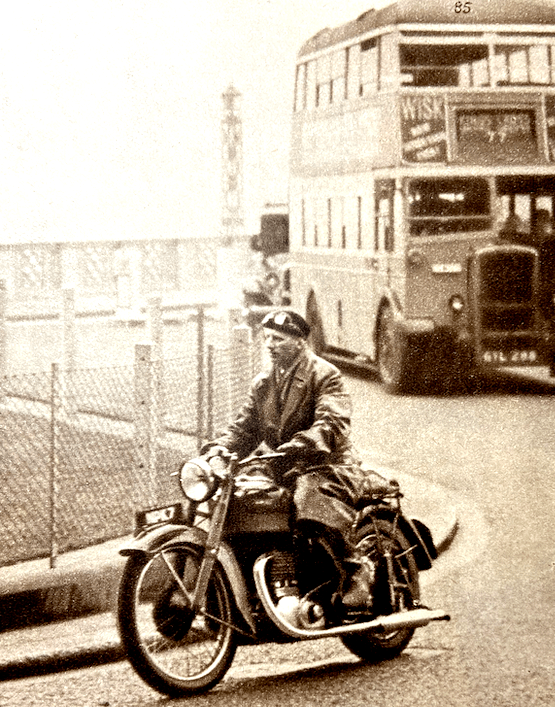
Before Ken Craven gave his name to the ground-breaking fibre-glass luggage gear that became ubiquitous (a pair of Craven panniers adorn the Watsonian QM2 sidecar that’s attached to my beloved GS850; the matching Craven rack and topbox are on the back of my pal Ken’s M21) he and his wife Molly were well known for a series of European tours aboard a series of Matchless singles. Here’s part of his report on a trip through the post-war iron curtain.
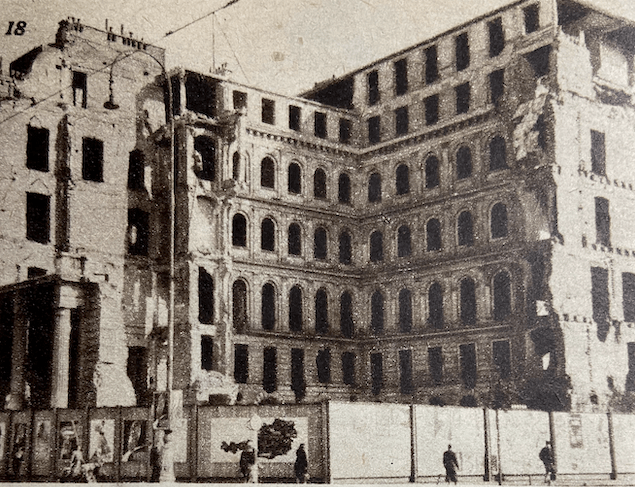
“I DO NOT DOUBT that Vienna was once a very charming city with much to commend it, but now the formal, massively Teutonic facades of the buildings are shabby, and the shrapnel holes have not yet been filled in. For every two blocks which stand structurally intact there is probably one empty shell; looking up through the apertures which were once windows, one sees only the sky beyond. Each is a grim cemetery, for undoubtedly under the rubble the dead still lie, so the grisly reminders of war are still fresh to every visitor. The weather, I will admit, probably had a lot to do with our melancholy impressions. The sky was remorseless, and we had to negotiate wet cobbles and tramlines. After two futile hours’ search for an hotel bedroom we had to hasten round the Ring to visit the British Military authorities. There we filled in a quantity of official forms applying for permission to proceed further through Austria, and to cross the Russian zone to the Czech frontiers. Vienna itself is in the Russian zone, but the central part within the Ring is international territory much as in Berlin and one sees military uniforms of all the Allied nations mingling in the streets. As we left the Military building, we paused on the top of a flight of wet steps to ruminate rather mournfully that the Cravens must be a couple of dim-wits to leave a comfortable home in order to challenge the world—and the weather!—on a motor cycle in search of enlightenment and experience. We noticed poor Hetty III parked across the road, rain-saturated and mud-bespattered, and beside her (as usual, in a Continental country) stood an admirer. This time, however, instead of moving away at our approach, the enthusiast seized us both by the hand and informed us in perfect English that he was a regular reader of The Motor Cycle and knew all about the adventures of Hetty and her predecessors. (She wears a very modest name-plate among her travel badges, and the veteran motor cyclist observers, who inspect a machine from nose to tail, sometimes spot this and recognise it.) This chance encounter made our existence altogether more cheerful, and despite the dampness of my undergarments (for we had travelled through a downpour since dawn that morning), and a pool inside my right boot, I warmed up appreciably. Our acquaintance led us to a nearby café, where the coffee was genuine, and where the cakes were as delicious as they appeared. Being a Viennese himself, he was able to tell us much about the layout of his city, and he made a number of useful suggestions about finding accommodation. He told us that there was the annual Fair in progress, hence the practical impossibility of finding an hotel bedroom. We parted with mutual good wishes, feeling warmer and more confident. Following his advice, we crossed the Danube Canal, leaving the fashionable Ring district behind us, and succeeded in finding a bedroom in a private flat. It was a typical working-class block in a.badly bomb-damaged street near the canal; we climbed several flights of stone stairs to reach it. Hetty was parked among the rubble in the inner courtyard below. Our host and hostess were most hospitable.
Although fatigued, we spent half the night chatting with them. The fact that they knew no English and that our German is singularly primitive was awkward, but it is amazing how much ground one can cover with the aid of a pocket dictionary and some descriptive gestures! Contrary to the gloomy warnings from British officials on both sides of the Channel to the effect that the Russians would keep us waiting several days in Vienna for our transit permits, our passes came through within 24 hours. After a good night’s sleep in a miraculously ornate bed we packed our kit, persuaded our hosts to accept a very modest charge when they seemed unwilling to touch a shilling, and finally waved them goodbye. The Danube proper is only touched by the outlying fringes of Vienna, and, having crossed over the spans of the long bridge we ambled onward over flattish country, where the well-tilled fields appeared, quite oddly, to be almost devoid of peasantry. Nor was there any other traffic on the smooth surface of the highway except for an occasional ox-cart with the driver sound asleep. The villages seemed drowsy on a September day which was, happily, clear and pleasant. Far from other habitations, we came to the frontier barrier; a couple of gates interrupted the unchanging strip of road. We had to knock at the door of the guardroom to receive attention, for the officials inside were engrossed in a game of chess. Although affable enough they were glad to despatch us promptly so as to cause the minimum distraction from their earnest struggle of wits. The reception at the Czech immigration offices on the other side of no-man’s-land was altogether different, for we were soon to discover that we were in a country where nearly every citizen from the age of about four upward is a keen motor cycle enthusiast; and this will serve as a part-explanation of our many delightful experiences during the two weeks which we spent exploring the Republic. On this occasion, the arrival of a couple of visitors at the frontier with an English motor cycle, of a design which they had not previously encountered, caused a lot of jovial interest. The four officials, with obvious good will, questioned us simultaneously in their Slav language which, even if spoken very slowly by one person, is to us completely incomprehensible. Although there is no defined natural frontier between the two countries, there is an immediate and striking contrast in the village life. Whereas Austrian villages are compact, the ornate steeple of the church protruding from a central cluster of buildings, the communities we saw now were mostly of one-storeyed dwellings of white or colour wash, extending ribbon-wise along each side of the road. Every settlement has its pond or small lake fringed with reeds and willows and forming an attractive part of the landscape, whether glittering. in the sun or dark with shadows. We noticed after entering Czechoslovakia that the roads began to be more populated, mostly by motor cycles. As we neared Prague at mid-day the swarms of motor cycles became quite dense and the hum and popping of two-strokes could be heard down every side-turning. It was a Saturday, and the population was airing itself on Jawas, CZs and Manets. Many of the riders went into a mild wobble of excitement on being overtaken by a British machine—a sight which these enthusiasts rarely see. Modern Prague, that is the city which has grown up since the turn of the century, and where the bulk of the population live and work, is almost uniformly grey and of a somewhat heavy style of architecture. The industrial suburbs are very smoky and the cobbled roads treacherously full of tramlines, over which we, and the swarming Jawas, slithered helplessly. The next day was a Sunday, and we decided to pass our time profitably with a visit to the Prague International Fair. The crowds were dense in the motor cycle section, where the manufacturers had certainly shown imagination in the display of their well-proven, but nevertheless limited, range of models. One of the stands served as a demonstration Service Department where, by appointment, any rider could bring his model in for repair, and, whether it involved electrics or a big-end, the charge was only for the cost of the new components. The manager of the section spoke English, and he pleaded with me to bring the Matchless to the back of his pavilion for inspection. It so happened that when I brought the machine to the door the spring of the prop-stand came adrift. This is a minor, recurring failure which can be remedied within thirty seconds with the aid of a pair of pliers. On this occasion, however, it was a heaven-sent opportunity for the Service Department! Ignoring my protests, they happily wheeled in the model and there, before the multitude, it was heaved on to the repair bench. Whisked up from nowhere, a Press photographer promptly appeared, complete with flash-bulbs, and Mollie and I found ourselves looking into the lens of the camera. We smirked, adjusted our scarves, and twiddled self-consciously with our clothing—only to be put firmly aside with a friendly shove or two, while our place was taken by three mechanics armed with an array of tools! So, when the flash-bulbs recorded the scene, our maligned Hetty was receiving the skilled attention of admiring mechanics, with a back-ground of enthralled spectators. This introduction led to various social engagements with the hospitable Czechs which lasted until late at night. On Monday we visited the Autoklub to claim the post which had been locked up there for us, and found a surprise letter from the Assistant Editor of Motocykl, whose office is in the same building. Hanus, who became our guardian angel on a lavish scale, had come to England as a boy when Hitler invaded his country. We met him at his desk—in shirt-sleeves, hair awry, and surrounded by piles of manuscripts, maps and photographs, together with six used coffee-cups. He made most helpful arrangements for our visit to the Jawa motor cycle factory, fixed up a test-ride on a new machine, and made available for our use a Jawa and a CZ if we should require them. ‘And lunch will be waiting for us in the Club dining-room in half
an hour,’ he concluded. The visit to Jawas disclosed that they are not going to sleep on their existing range. I was shown a well-worn sidecar outfit which was one of five versions undergoing a prolonged test. This particular one was an overhead-camshaft 500cc vertical-twin; there was no external indication of the means of transmission to the camshaft. None of the secrets was explained to me, though I could see that the machine was full of interesting points. The power unit conformed to established Jawa practice, with only the cylinders protruding above the neat, egg-shaped crankcase. One of the standard 350cc twins which had just been run-in was wheeled out of the plant, and I was asked to take it out on the road and give my impressions. Despite the fact that I did not feel entirely confident (owing to the foot brake and gear lever being in reversed positions to those on English machines) I found her road-handling to be perfect and the turbine-like power was a revelation. With the engine pulling, the silky exhaust note was most restful, but on deceleration a cackle developed from four-stroking, and I found this unaccustomed sound disturbing. Also, I considered that there should be more movement in the front fork; but apart from these minor criticisms, I had no fault to find with the trim and handy little machine. Since my praise for the model obviously pleased the engineers, my few criticisms were accepted in good part. I was sold the story of how the current 250cc Jawa came to be developed. This, in its way, is one of the great Resistance stories of the Occupation. A handful of enthusiasts met in secret and drew up a tentative design for an ideal two-stroke machine. Partly in defiance of the Germans, and partly to bolster up their own confidence that ultimately the invader would be expelled, they devised a plan to produce a number of prototypes so that a fully tested model would be available for full production when the time was ripe. Most of the Jawa works were producing munitions under Nazi control, but there was one shop given over to major repairs on German DR machines. Here, despite the presence of Nazi overseers, the components were secretly produced, and, one at a time, the models were assembled in the least conspicuous comer of the work-room. In all, five prototypes were built in this way. They were disguised as much as possible with khaki paint and DKW emblems and gadgets. They were smuggled out to different parts of the country, where they were given exhaustive tests (at the peril of their riders’ lives) and returned from time to time for modification. What courage and organisation! The work of those heroes has influenced lightweight design throughout the world.”
“LAST AUGUST I FITTED a 50cc engine to an old, but sound, lightweight bicycle frame that had seen many years road racing before becoming a hack machine. It had 15swg spokes and a coaster brake. The rear tyre was a new ‘War Grade’ 26×1.25in Tandem. We travelled by ship to Dieppe, and my wife, with about 20lb of luggage, proceeded to ride across France to Switzerland. Our son and I, on a racing tandem, endeavoured to keep pace. This was easily managed on the level, but gradients showed that 50cc are more than the equal of a fit man, and, on the long climb to La Cure at the Swiss border, and again over the Col de Pillon, we were left far behind while the missus with light pedal assistance (it had to be light, as only one lung is working properly) pottered merrily along to wait for us at the various summits. On the sweeping downgrades the engine was used as an additional brake. An enjoyable holiday was spent which would have been impossible without that 4hp assistance. The only mechanical incidents were a choked jet and the silencer knocked off. This did not seem to matter abroad, but I must confess to some uneasiness as we came into London late at night. Fortunately, however, there were no complications. Since then the machine has made several trips to the coast at averages of better than 20mph, and I now use it for visiting out-of-the-way country places in the course of my work, which ranges from Devon to Northumberland. On the longer journeys I go to the base by train, and so for I have only paid cycle rates for carriage. Tyre wear is not excessive, after over 2,000 there is still tread on the tyre and there have been no punctures yet. Sitting still, doing 22-25mph, is very boring; I would rather cycle at 18-20mph or motor cycle at 45-50mph…I am thinking of springing both wheels. For the utility rider, the 50cc engine would appear to be an inestimable boon. One great advantage is that in the rain one can wrap up and sit still. On a pedal-cycle, movement keeps the wet outer garments flapping back, exposing the legs in particular, and the physical effort means, as often as not, that one is as wet or wetter from perspiration as from the actual rain. Full motor cycle kit is necessary for comfort, but one feels self-conscious dressed like a man from Mars on 50cc. Hill-climbing is adequate, and 1 in 9 and even 1 in 8 ascents have been climbed with pedal assistance. Some form of gearing would more than outweigh the extra cost.
HAROLD FB CARTER, London, SE6.”
“IN VARIOUS ARTICLES and letters to The Motor Cycle people have advocated enclosure for neatness and ease of cleaning. Surely this is like sweeping the dirt under the mat, and makes life more difficult and maintenance loathsome? As a motor mechanic I have first hand knowledge of the polished exteriors that hide filthy and forgotten working units (out of sight, out of mind)…enclosure does not mean cleanliness in the correct place, Anyway, why the timidity towards a hose for washing down? My present 5T Triumph and previous Norton have never been any trouble to clean, because I always use a good paraffin wash and a final pressure hosing. Providing discretion is used (you naturally avoid pushing a high-pressure water jet straight into the mouth of the carburettor and into other vulnerable parts), the indirect spray doesn’t cause any trouble as most bikes are storm-proof. One can usually ride off from the wash-place without first tearing the model to pieces to dry it out. The most I’ve ever had to do is to wipe the plug porcelain—a very small amount of trouble to pay for a quick and easy clean-up; and I do mean clean.
TMF969, Cowley, Middlesex.”
“YOUR CORRESPONDENT Mr G. Wilkinson has evidently no personal experience of motor cycling in the middle ’20s, or he would not be so dogmatic regarding motor cycle deficiencies in those days. To say that a no-trouble run of 100 miles in those days was something of an achievement is, in Mr. Wilkinson’s own terms, the ‘piffle’ in this expression of opinions. I regularly covered such distances, and greater ones, between 1922 and 1929, and I should like to assure Mr. Wilkinson that, as an ‘average’ rider, I not only invariably arrived in good time, but fully relied on doing so. May I quote, by way of example, a .journey of 345 miles in 1927, completed in 11½ hours, including all stops, at an average speed of 30mph on a 500cc sidecar outfit? And a twin, Mr Wilkinson! Could a modern equivalent outfit substantially improve on this performance, which I will, if required, substantiate with full details? (But don’t let’s start an average speed competition.) Yes, the Scotts, James, Douglas machines, and many others of those days, were good machines with almost the reliability of the modern ones. In my opinion, the improvements leading to slightly greater reliability over the past 25 years have been in the adoption of the better metals available to motor cycle design—metals now resistant to fatigue, failure and shock fracture, with consequent lowered risk of a major failure on the road. There seems to me to have been relatively little advance in important details, such as clutch and throttle cables, which detract from any increased reliability of the modern machine compared with those of 25 years ago. This absence of progress in important detail was a surprise to me on resuming motor cycling after a lapse of 18 years; and may I remind the ‘piffle’ purveyor that Velocettes still win races on girder forks? Fundamental improvements there have undoubtedly. been, and all have welcomed them, but do not 1et us decry the performance and abilities of the early and middle ’20s machines, which may truly be described as ‘vintage’
MET, Newcastle.”
“SPEED WIZARD in the earliest days of motor cycles, and designer, manufacturer and rider, Harry Martin, whose experience in the trade dates back to 1896 and 1897, has joined Excelsiors and will be acting as Liaison Officer visiting dealers in North London, Middlesex, Hertfordshire and Essex. Harry is now in his 74th year and rides an Autobyk daily.”
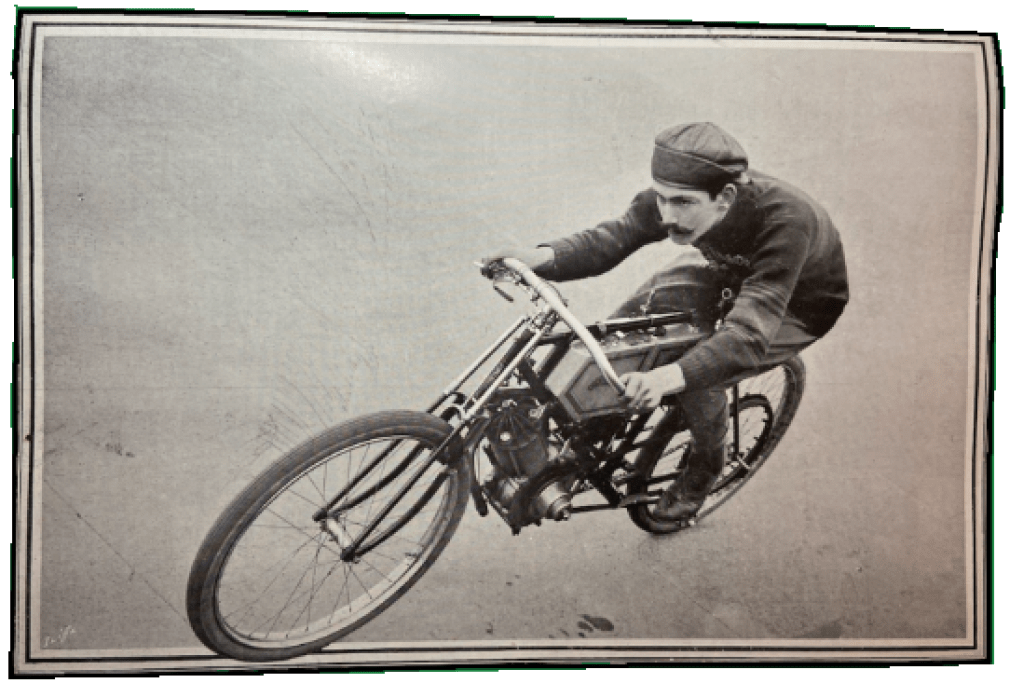
“HARRY HINTON, the famous Australian racing man, who made such a hit in British and Continental races last year riding Norton machines, won both Senior and Junior Races in the Australian TT and made fastest lap in both. He was Norton mounted in the races.”
I can only guess that more than one Aussie road race was known as the Australian TT, because within a few weeks the Blue’ Un reported on another Australian TT. And in this case I did a little research (OK I Googled it) and came across some fab pics and the full event programme courtesy of the State Library of Western Australia. What’s more my Aussie mate Murray (editor of the superlative A-Z ‘electronic Tragatsch’ that I refer to on a daily basis) has added colour to some of the race pics. I’ve included a couple pf the pics and a great historical essay from the programme here but recommend checking out the page at http://www.speedwayandroadracehistory.com/bunbury-australian-motorcycle-tt-1950.html
Meanwhile, here’s The Motor Cycle report…
“TWENTY-YEAR-OLD Morrie Quincey warranted his selection as one of Victoria’s official representatives in the 1950 Australian Junior and Senior TTs by winning both races! Quincey has experienced considerable success as a road rider and a successful future is assured for him. The Auto Cycle Council of Australia allocates the Australian TT to States in rotation, and this year the Western Australian Motor Cycle Association chose Bunbury, a seaside town 120 miles south of Perth, as a venue for the races. The start was in the main street and the course passed through the shopping area, out into the residential section at the back of the town, and along the main straight of 11¼ miles which runs parallel to the Indian Ocean. The 3.8-mile circuit has a sealed surface, but was narrow and bumpy in parts, with sand encroaching on sections of the beach-front straight. The programme consisted of three races —Junior, Senior and Sidecar; it was the first time a Lightweight TT was not held, as entries were expected to be insufficient. Riders on Easter Saturday and Monday were treated to fine, sunny weather, and a record crowd of 30,000 were spread out around the course. All races were massed start, and there were no restrictions as regards type of fuel used. Practising was held on the morning of each day of the races.”
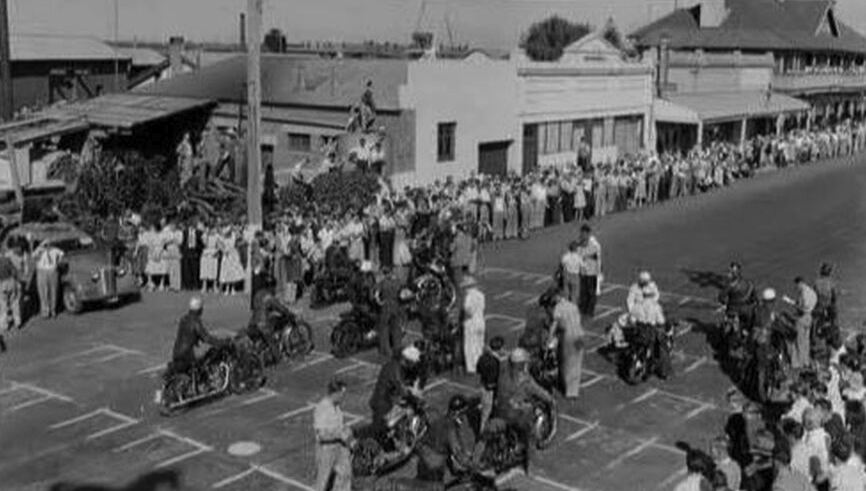

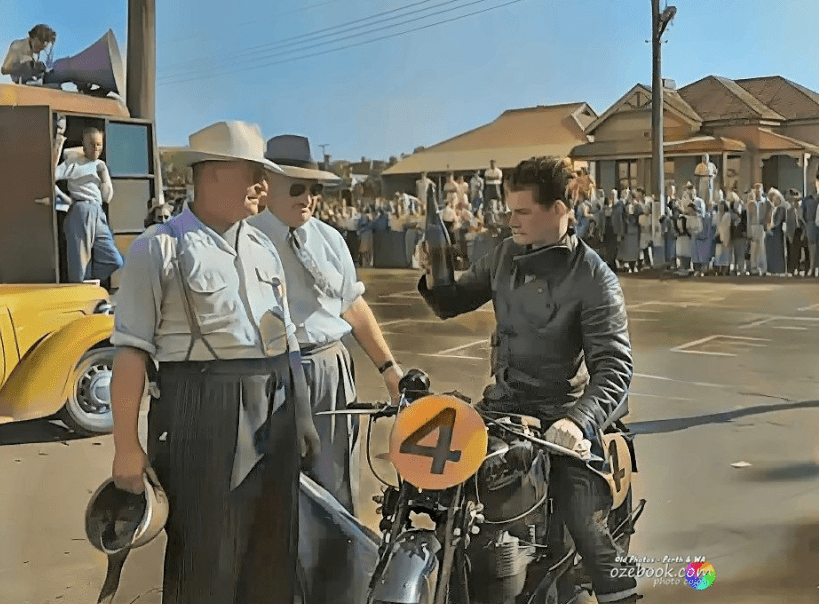
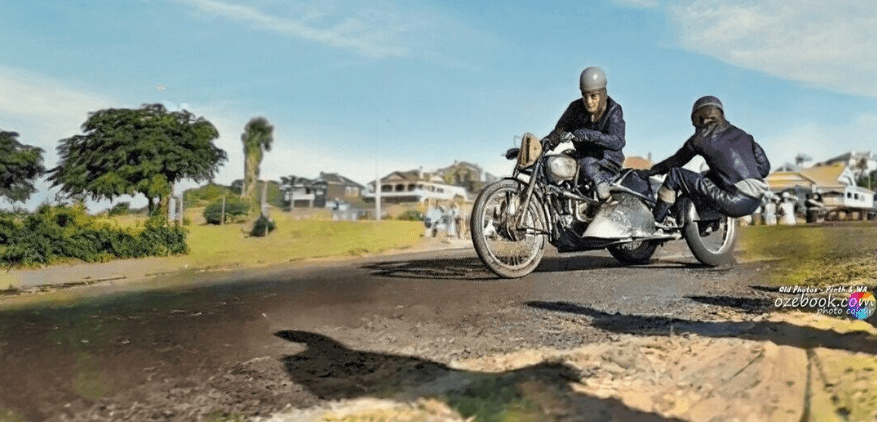
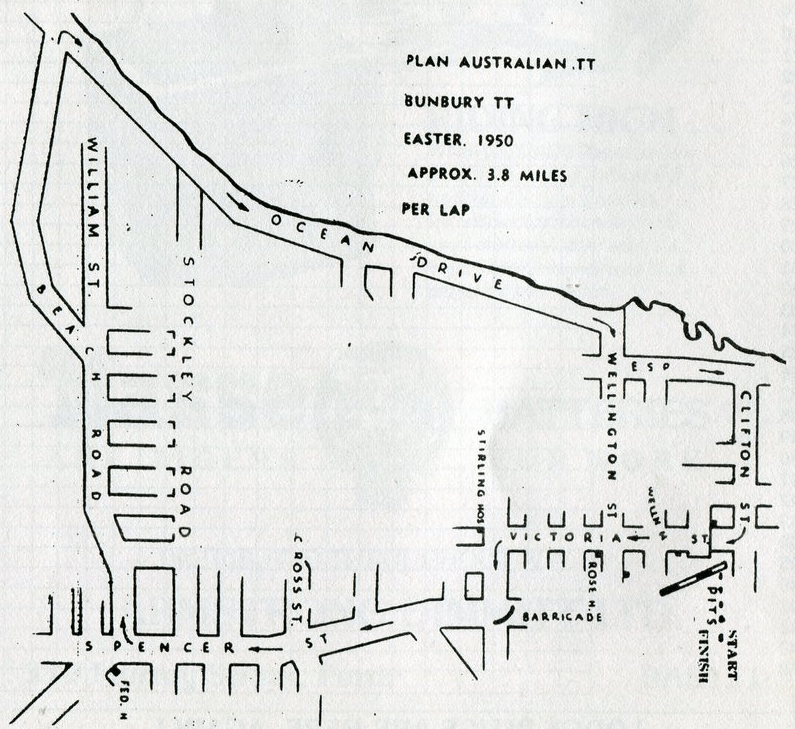
The TT aqlso included a great potted history of Aussie motor cycle racing…
“I REMEMBER (BY AUB MELROSE). I remember the motor cycle club of West Australia’s first road race of 1915 when 28 starters, solo and side-car, rode like mad around a 150 mile Tourist Trophy course consisting of deep gravel, pot holes, cart tracks and sand tracks through the scrub and forest of our hills area. When that great pioneer Charlie Lewis gained fastest time at 45mph average and Len Perry, a school master, riding a Rudge Multi won the solo handicap and Bill Franz with his fiancee in the chair, won the sidecar class. Yes! 1915! and those boys rode hard with sidevalve engines and belt drive and also vee-block brake equipment and almost pushbike size tyre equipment of 26×2.5 inches. I remember, as a boy, watching perhaps the greatest pioneer of them all, the late PW Armstrong, preparing to start as scratch man in Northam to Perth Tourist Trophy in 1918. I gazed in awe at his huge 8-valve Indian and was nearly deafened when he took off, as his enormous Indian was the loudest motorcycle I have ever heard. The giants and pioneers of the 1915-1920 era of motor cycle road racing frame, too numerous to mention, but never forgotten, were all my boyhood heroes, on the bush tracks and also the salt lakes of Perkalili and the grass tracks of Clarmont, Subiaco, Leederville and Lotons Park, on motor cycles long since forgotten by most but still remembered by few. They laid a solid foundation for Western Australian motor cycling as we know it in this state today and were famous for the daring and skill which today is inherited by the youth of the 1950 Bunbury Tourist Trophy races. I started my motor cycling in 1916 and as a competition rider with the coastal club in 1923. The 1920- 1930 years have been remembered as the Golden Age of motor cycling. It was confined as a sport to grass track racing, road record breaking (until the Commonwealth Government brought in an act of Parliament to prevent it in 1927), reliability trials, hill climbs, and later cinder track broadsiding and scrambles were in the vogue…Roy Charman became the first Westralian to journey to England to try his luck over on the Isle of Man in the world famous TT races in 1926 He crashes badly in the practice and broke his rist riding the now extinct Wallis-JAP 350 but rode well to earn for West Australian its first International Six Days Gold Metal (three only have been won by Australians, I believe) Len Stewart followed me when I joined my friend Charman in England, Stewart to ride for Nortons and myself for Sunbeam in the TT. Len Stewart, our really marvellous West Australian all-rounder, was forced out of the second lap of the Senior with a smashed rear wheel when showing extraordinary promise. Shortly afterwards he broke his leg badly at Brooklands. I was lucky enough to finish at all after two lurid crashes at high speed in the sixth lap, to become the first Australian ever to finish the TT. I remember Len and I were warned by the ACU officials for our unorthodox riding on the practice. One morning at the 33rd Len fell on the mountain, wrote the model off and lost his pants, and another time we ran through a flock of fowls and Len’s Norton had a deposit of broken eggs aboard…on account of a bruised base of the spine incurred in a previous crash, George Dance, a famous TT rider, fitted a leather encased piece of sorbo rubber on the rear mudguard of my TT Sunbeam. I found it most comfortable and proceeded to do all my riding sitting on the mudguard. I managed to get a couple of laps in on this particular morning of practice before I was grounded by the marshalls for dangerous procedure. After demonstrating how easy it was to ride this way, I was allowed to use this method on the pain of being disqualified if the machine looked out of control. It may be claimed that this incident started the universal riding style now adapted all over the world and as you are witnessing it today in the Australian Tourist Trophy races for 1950 at Bunbury. (Mr Melrose refers to the Pad which permits the rider to adopt what is now known as the racing crouch. He later informed me the reason for the rear Pad was not for comfort but so as the face would be behind the engine when it blew up thus throwing the metal round the countenance of the rider.)…It was not until 1934 that West Australia saw its first road race in real Isle of Man fashion. This was in September at the North Beach 2.2 miles circuit and 20 laps for the race. This pioneer event run by the WAMCA was so successful and exciting that it became the start of a long succession of splendid road race events which have been so efficiently and safely conducted in the leading towns of our State throughout the years.”
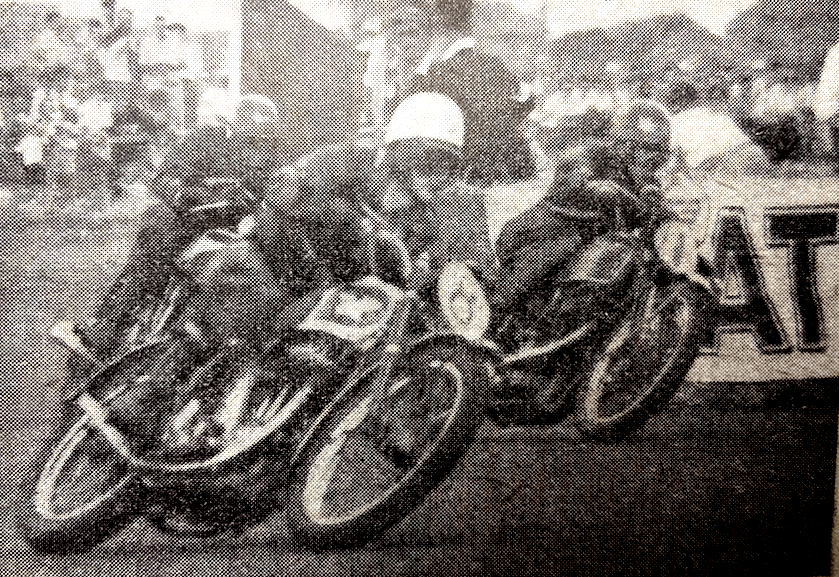
“OFTEN ONE READS articles and news items which quote phenomenal maximum speeds for birds and animals. For instance, I have seen 80mph given as the ‘maximum cruising’ of a wild goose. Such statements are often wide of the mark, I imagine, but the other day I was able to make a personal and unpremeditated check of one set of figures. While dawdling along a suburban road at 15mph, I had just discovered a signpost for which I had been searching when I realised I was not alone. Trotting on the pavement alongside was a (literally) man-size Alsatian dog—in fact, I’ve seen smaller men! Not being particularly happy with the thought that about 150lb of muscle and bone might suddenly decide to converge on me, I accelerated to 30mph, only to find the animal still going my way and clearing about four paving stones per bound. Another five miles to the hour still had no effect, and I had just decided to drop into third and really revolve that twistgrip when a ‘halt’ sign met me. Two wheel and four paw brakes were applied as we both complied with the sign. Next, the playful pup, apparently dissatisfied with this enforced inactivity, whoffled over to me, barked, and then lightheartedly seized my front tyre in a No 8 jaw! Dog-lover though I am, the firm administration of a flying-booted foot was necessary before I could move on.”—Nitor
AT THE START of the year West Germany decided to end petrol rationing. The Motor Cycle reported that its readers were “amazed…how was it (they asked) that the Germans, vanquished in the war, could have petrol ad lib, whereas they, the victors, were allowed only a beggarly 1 or 2 gallons a month according to the size of their engines? Some went further and commented on the money this country has been called upon to pour out to relieve and rehabilitate their late enemies.” The Blue ‘Un reminded its readers that German riders were paying the equivalent of 4/6d a gallon, which was twice the cost of petrol in Blighty, but added: “So far, the petrol imported into Germany—225,000 tons a year at 45 dollars a ton—has been in the nature of a gift. Whence are the necessary dollars to be obtained?”

JAMES CADET
LARGE-CAPACITY MACHINE dimensions are, of course, a popular feature of James lightweights. The 122cc Cadet is no exception. Non-motor cyclists examining the machine express surprise when they learn that the capacity of the engine is a mere 122cc. And well they may. Saddle height of the machine is 28in, and the positioning of the handlebar and footrests is such that riders of all but quite exceptionally big stature can be comfortably accommodated. It is a riding position which, during the test, engendered complete confidence no matter how tricky the riding conditions might be. It proved to be extremely comfortable over long distances. There are other features of the machine which contributed to its riding comfort. Hand and foot operated controls were excellently positioned and light in operation. The road-holding was of a standard above that usually associated with small-capacity, rigid-frame machines shod with small-section tyres. Rear-wheel hop was, of course, apparent, but only in cases when bumpy cobbles and the like were taken at fair speed. At normal town speeds the standard of comfort provided on uneven surfaces was good. On the open road the cruising speed could be all the machine had to offer without the rider being noticeably fatigued by body-jarring shocks. Steering, the complement of good road-holding, was also very good. There was no chopping or drifting when open bends were taken at speed. The machine could be heeled well over without any trace of frame whip or snaking and without the slightest fear of the footrests or the feet of the centre stand grounding. Low-speed steering was light and positive, and allowed the machine to be ridden effortlessly feet-up at the slowest imaginable crawl. Handling on greasy surfaces was very good; so good, in fact, that an immediate reaction was that with the fitting of only (say) a larger-section rear tyre, the machine would make an attractive trials mount. Yet another feature aiding the machine’s ease of control at low speeds was the carburation. Whether the engine was pulling or running light it would respond satisfactorily to the slightest movement at the twistgrip. The pick-up was clean and brisk throughout the entire throttle
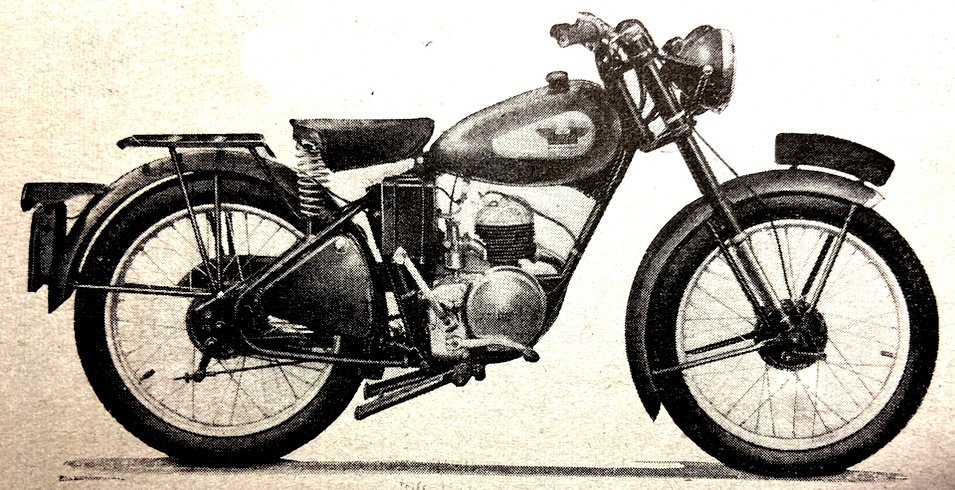
range. Engine starting was at all times easy. When the engine was cold it was only necessary to close the strangler (incorporated in the air cleaner), flood the carburettor slightly, and open the throttle about a quarter of its full travel before depressing the kick-starter. Only slight physical effort was required, and the engine would usually respond at the second kick. ‘Light depression’, actually, is a better expression than ‘kick’, for it was possible to start the engine without the rider’s raising himself from the saddle. The engine would usually fire when the kick-starter had covered only the first third of its operative arc. The strangler could be opened almost immediately after a cold start had been made. When hot, the engine would start on just a whiff of throttle at the first kick-starter depression. So easy was starting, in fact, that during the course of the test the machine was used regularly for such tasks as visiting neighbours living only a few hundred yards away, posting letters at a nearby letter box, and acting as a, general runabout. When the engine was started from cold, considerable piston slap was apparent; when the engine was hot, this disappeared under most conditions but recurred when the engine was pulling on hills or when the machine was being accelerated hard. In all other cases the power unit was pleasingly quiet mechanically. When the engine was idling after its normal working temperature had been reached, induction hiss was predominant over the mechanical whir. The exhaust was pleasantly subdued and the note low-pitched. Except when the engine was firing irregularly, as, of course, when idling or running light it was apparent only as a pleasant purr. From 20mph upward in top gear on the level the engine two-stroked regularly and evenly. When the engine was idling, which it did slowly and with reliability, it four-stroked regularly. Cruising speed could be anything up to 40-45mph. Engine balance was good and vibration was apparent only when, for the purposes of experiment, the engine was grossly over-revved. Hard revving and general maltreatment had no apparent ill-effects on the engine, which remained oil-tight. It ran so coolly that at the end of some 30 miles on near-full-throttle a hand could be placed on the cylinder fins. The exhaust pipe did not even slightly discolour. Economy was good without being exceptional. The fuel consumption at a maintained 30mph was 100mpg, and it was 92mpg at 40mph. For 1950 the Cadet is fitted with 5in-diameter brakes front and rear. In the early stages of the test both brakes were rather poor. They improved, and continued to improve, with use; at the conclusion of the test they were quite in keeping with the machine’s performance. The clutch was smooth and sweet in its take-up of the drive and finger-light
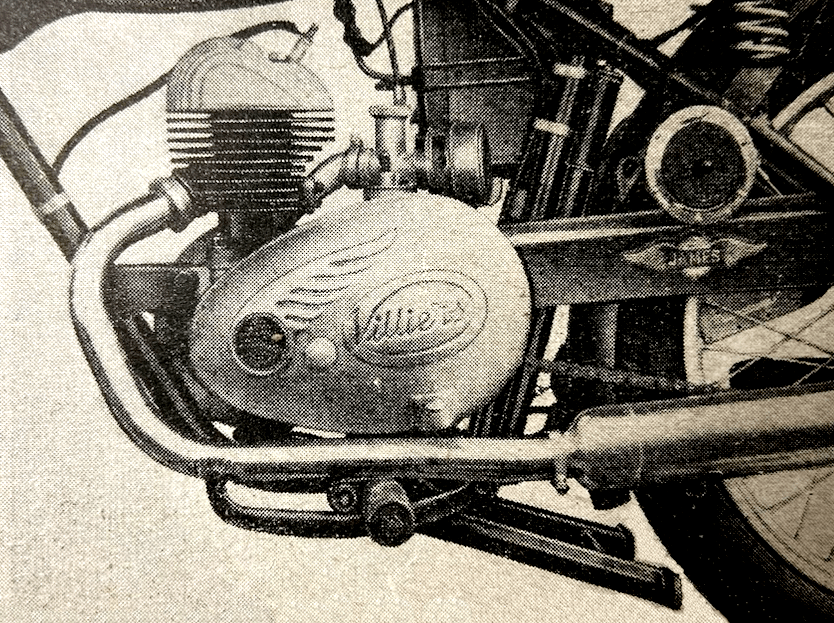
in operation. Bottom gear could always he engaged silently when the machine was stationary with the engine idling. In the early stages of the test the gear-change was rather heavy. It became lighter as the miles mounted, and at the end of 250 miles it was light enough to be beyond criticism. Neutral could be selected from either bottom or second gears without ‘fumbling’. Well placed for easy toe operation, the gear pedal had a pleasantly short travel. Gear changing was positive and easy provided that the pedal was moved with a decisive and not-too-hurried movement of the right foot. Mounted on the fork bridge, the speedometer was easily read from a normally seated position. It recorded approximately 6% fast. Lighting is by battery and rectifier, and an electric horn is fitted. The horn note was rather too weak. The driving beam provided was excellent and allowed daylight cruising speeds to be maintained after dark. No matter how high the speed after dark, the ammeter never showed that the full lamp load was being balanced. There are numerous detail features of the James worthy of special praise. For instance, the filler cap in the petroil tank remained liquid-tight even when the tank was filled to the brim. The centre stand is sturdy and easily operated, and allows either wheel to be raised clear of the ground merely by placing, say, a riding coat on either the handlebar or carrier. A carrier, incidentally, is part of the standard equipment. The tool-box is of sensible proportions and easily accommodates all that a tool-box should. Mounted in their split clamps, the handlebars are widely adjustable for height and fore-and-aft position and for angle of the grips. Footrests are adjustable through 360°. So that the silencer can be easily dismantled for cleaning, the tail pipe, complete with baffles, can be readily removed. When the kick-starter is not in use it folds neatly in and so remains out of the way. The mudguards afforded more-than-average protection in bad weather. The finish is in the colours of the famous Airborne Divisions—maroon, with a blue tank panel. Wheel rims and spokes have an argenised finish, and the exhaust pipe, handlebars, controls and head-lamp rim are chromium-plated.”
“‘HOUSE’ JOURNALS, like parish magazines, are mainly occupied with family affairs. Most of them chronicle staff romances, output, promotions, the annual wayzgoose, visits from VIP and foreign agents, and the doings of all the factory sports clubs. Some go further and occasionally print articles of far wider interest. Among such ranks Revs, the beautifully printed organ of the Royal Enfield factory. Its winter number includes a marvellous article on big-end bearings by that genial giant, RA Wilson-Jones. He has a wonderful knack of presenting abstruse technical topics with absolute clarity in simple words. Aristotle once said that the function of tragedy was to stir men to pity and fear, and Wilson-Jones presents the roller type of big-end bearing as the victim of almost unalloyed tragedy. It rotates about a point nearly 2in out of centre with itself. The intermittent load can exceed two tons at tdc in a 500cc engine. The rotation is not at a steady speed, but continuously accelerates and decelerates during each revolution. One gathers the general impression that the rollers—so popular two decades ago—feel, rather like the crowd trying to enter the Arsenal Stadium at a Cup Tie. One could almost weep to think of their sufferings.” Ixion.
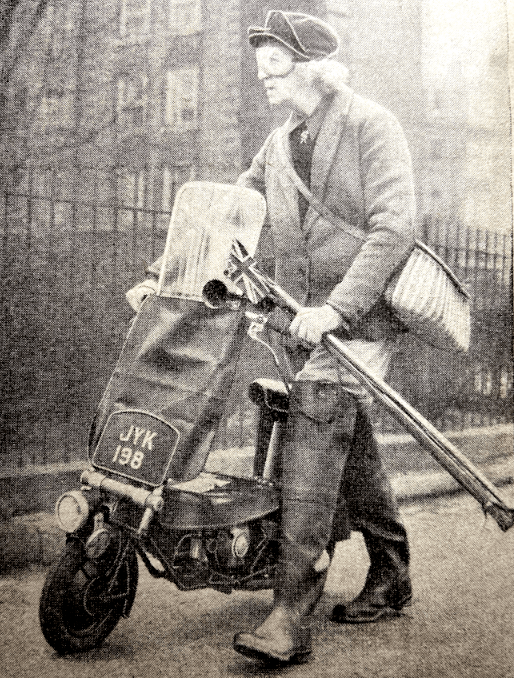
“THE DEBUT OF THE NEW 400bhp, 200mph BRM racer moved the technical Press to analyse in public the technical conditions which supply maximum urge in racing motors. These data, of course, were already familiar to the men who design our Nortons, AJSs, Vincents, Velocettes, and so on. The urge depends on three main factors—piston speed, piston area, and mean effective pressure (mep) on the piston, the last being already dependent on supercharging. The practical limit has already been attained in piston speed. Piston area demands an ever-increasing number of pistons; in the car world, sixteen seems to be the present minimum, and I suppose that by 1955 24 will be required. Two-stage blowing is already essential in the car world. Confront the motor cycle position with these car ideals. Already the single-cylinder racing motor cycle is semi-obsolescent. In the 500cc class, the AJS twin has the legs of everything except, perhaps, the Italian four-cylinder Gilera. If Norton, Velocette, and any others wish to hold their own, they must switch in the near future to the twin-cylinder engine. By the time that the twins are ripe (it has taken AJS three years to mature their twin), the four-cylinder will be upon us—that is, if they do not skip the twin and go straight to fours. As the BRM car has 93cc cylinders, the multi-cylinder principle will be applicable right down to the 250cc class. A very costly pilgrimage confronts all racing enthusiasts, whether firms or individuals. The FIM should consider a rational economy campaign. So far, it has banned blowers. It may yet have to limit the number of classes, and to limit multiplication of cylinders. Otherwise, only a very few of the very richest factories will stay in the racing game. That circle would prove vicious, because it would not pay survivors to survive any more, when competition shrank below a certain minimum.”
BOB BERRY, “AN ASPIRANT to world’s maximum speed honours”, offered a fascinating insight into the cutting edge of motor cycle engine technology and his chances of becoming the fastest motor cyclist on earth:”The world record should—nay, must—be regained by an unblown Thousand. Perhaps the experience I have gained during my unsuccessful attempts to beat the BMW may be quoted as the basis of a discussion on the possibility of breaking the record with ‘existing material’. First, it is my considered opinion that no Thousand, blown or unblown, will exceed the 173mph required without streamlining. My reasons for this are that at least 130bhp is required to propel what is most definitely the worst aerodynamic object possible—a motor cycle—at that speed. I am fortunate in possessing the fastest unblown engine in the world today. This engine develops 92bhp at 6,500rpm. Stirling Moss has used a similar engine (the dry-sump job) with outstanding success in his Cooper car. I believe the maximum speed is about 137mph. My engine is slightly better, and in the Brough frame clocked 155.9mph on the return run in second gear at Jabbeke [in Belgium—Ed] in September. We were too high geared for the road, and, as top gear would not allow over 5,100rpm (equal to 151.3mph), I kept her in second at 6,600rpm (equal to 155.9mph). With suitable gearing the top-gear speed would probably have reached 163mph. Whether the Jabbeke road is capable of handling that speed is another matter. Personally, I don’t think so, as I had the worst two trips on that 25ft-wide stretch it is possible to imagine. But more of that anon. While at Jabbeke, Mr Shorrocks, who made the blower for Goldie Gardner’s MG, discussed the fitting of a blower to the JAP and some very interesting facts were disclosed. By adding a Shorrocks supercharger, the increase in bhp would be about 20 or 25, bringing the power output up to 117 or 120 with some engine tuning. The extra 25bhp would only give, in Shorrocks’s opinion, another 10mph. The increase in power required to give even a slight increase in speed at anything above I60mph is terrific. The wind pressure is colossal. I can speak from first-hand experience, having once raised my head above the windscreen at Pendine at 150 plus. Result, crash helmet and goggles torn off and my face plastered flat. On the other hand, as several of those present with Goldie Gardner assured me, efficient streamlining will give another 25mph or so with the existing 92bhp. In other words, a blower might give us the record, streamlining will. The great thing is that the streamlining must be narrow and the shell must not be high; my shell (almost completed) is 19in at the widest, and the highest point is 8in above the handlebars. This has been attained by adopting the prone position (which gave an increase of 15mph) and shaping the shell round the bike with myself built into it. I regard a tail fin as a definite menace.
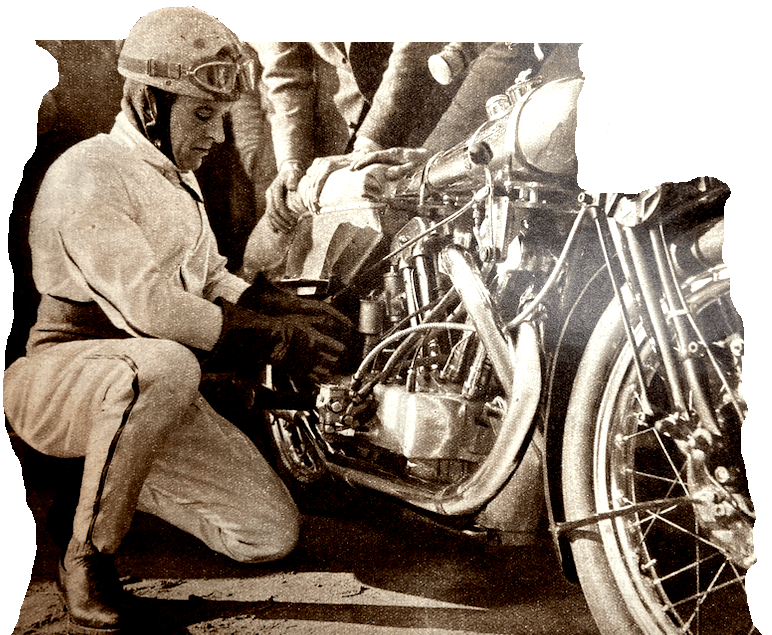
Many opinions have been expressed regarding the bhp developed by Henne’s 493cc BMW, so it might be interesting to reveal that the FIM officials in Belgium told me that they knew the figure to be 78bhp. According to my reckoning, I believe this figure to be correct. With the streamlining, which was of good design, Henne beat Fernihough’s figures—Fernihough having a blown 1,000 with streamlining inferior to that of Henna’s 500. Henne also improved on his own 750cc supercharged, but not streamlined, speeds by 14mph. It is reasonable to assume that if he had 100bhp on tap, Henne, with the BMW should have reached approximately 190mph. It is my firm conviction that if the wonderful AJS Porcupine twin was developed, supercharged, and streamlined, and then taken to the same road in Germany, then the record would be ours. Utah would be unsuitable for a 500, as the Salt Flats are 2,000ft above sea-level; the altitude would reduce the effective bhp by about 7%, which could spoil the attempt. The Jabbeke road is far too narrow and, at anything above 120mph, far too bumpy. The width of the road is most important—100ft is not too wide. I was blown five feet off the road at Jabbeke at 150 for over 300 yards, and it must be realised that I50mph means 220 feet per second or 22 feet in one-tenth of a second. There is no room to manoeuvre on a 25ft wide road—you are off the road before you know it. While the idea of a six- or eight-cylinder 1,000 is a fascinating one, the cost of designing, building, and developing such an engine (which would not be of any commercial value whatsoever) would be enormous—far more, I think, than any British firm would undertake at the present or, indeed, a future date. The attempt would have to be a success if backed by a manufacturer. He would have to go to the Continent to make his tests, perhaps several times before he could be certain, and the cost of these trips is pretty stiff. Another point is that a rider with the necessary experience of the high speeds required would have to be carefully brought up. It is not just a question of stepping off, say, a TT 500, climbing aboard a 160mph-plus job, and turning everything up and hanging on. A little at a time is the idea until every angle is known and allowed for. A lot depends upon frontal area; careful tests would have to be made. While it sounds nice to have a model in a wind tunnel and to let the backroom boys stick their little bits of cotton on it and get nice long lists of
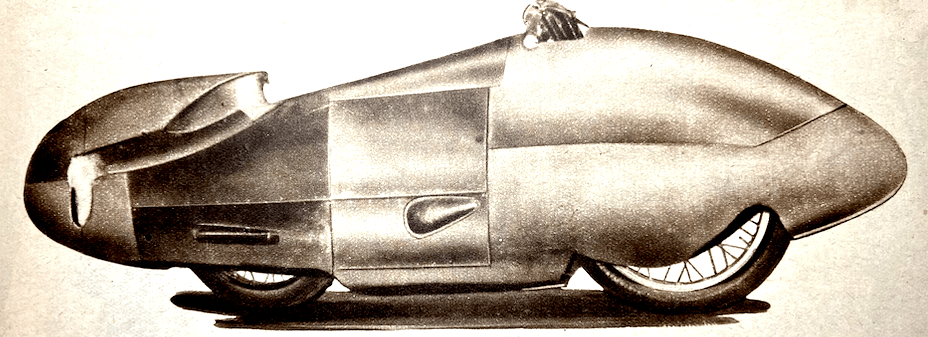
figures to sort out, I prefer to take my shell down to Pendine and to do a few trips along the seven miles of sand, first at 100mph and gradually faster on each run until at the end of, say, ten or a dozen runs it is apparent that the model performs either dead right or not. If it won’t, then it is better to find out before going to the autobahnen and perhaps meeting with a sticky finish. Also, because in this country of ours there is nowhere to try the machine except at Pendine, let me say that it is the ideal spot for a testing ground when the sands are right. These high speeds are not far a casual enthusiast with a hot motor. I have been studying the problem for 12 years. This past year I put a lot of my theories to the test in a practical manner and, although the record still eludes me, I have gathered so much useful data that I am confident of eventual success. The vastness of Pendine Sands is most deceptive. One has no conception of the speed at which one is travelling even when the rev-counter needle is way up the clock; but when doing the same revs on an autobahn the sensation is heart-stopping. The road genuinely assumes the appearance of a tape, and when there are bridges across it, as at Jabbeke, then it becomes definitely full of fun—you instinctively duck your head as you shoot through them! JAPs, the finest big-twin manufacturers in the world, have produced a new series of big-twins. This engine could take the record almost as it stands sans blower; with a blower it should be capable of exceeding 200mph, which I regard as the next step after the record is broken. To achieve this with a production type of engine, as distinct from a specially conceived layout built for the job, would be an achievement of which the trade could justly be proud, even though of 1,000cc capacity. After all, in the car racing world an unblown engine of 4,500cc is allowed to compete on equal terms with a blown 1,500cc job; a difference in size of 3,000cc is reckoned to equal the advantage of a supercharger. However, should we break the record with the big engine, I still think that as a matter of British supremacy we ought to try to beat the BMW with a British 500. The obvious choice, of course, is a 500 twin. We have TT twins which on pool fuel must be developing 55bhp; so, if we take the 78bhp of the BMW as a datum line, what are the possibilities? A Shorrocks supercharger blowing at about 24lb pressure an engine running on alcohol fuel should put the power above the 80 mark; and with streamlining round a prone rider we should get a frontal area of fantastically small proportions. The prone position is a must. It gives excellent control, perfect visibility, no cramp of the neck muscles, and permits the shell to be kept low and narrow.”
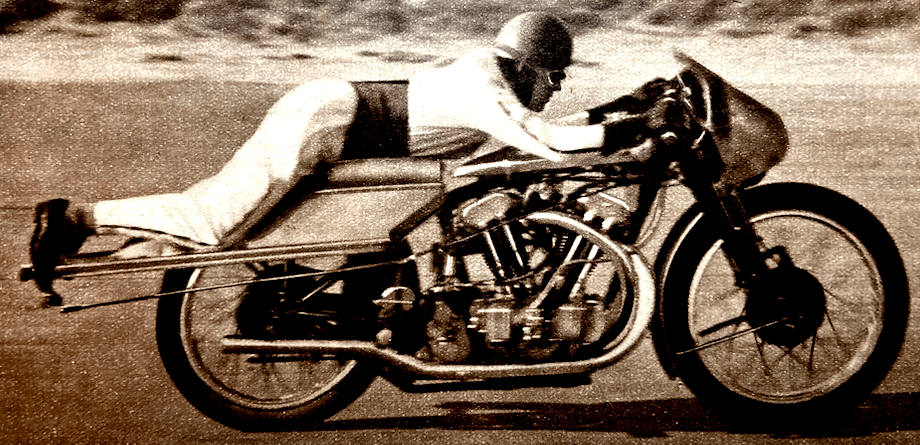
“IT HAS BEEN REPORTED to my Council that, following a motor cycle scramble held in the village of Raydon, East Anglia, at which a crowd estimated to be over 6,000 attended, there was a high degree of pollution of public water supply, and all consumers were warned to boil water before using. It appears that, although temporary latrines had been sited well away from the actual water course, they were within the probable collecting area. This Society requests all organisers of such scrambles to consult the local Sewage Committee and Water Engineer together with the owners of the ground before erecting latrines or causing large crowds to collect, so as to ensure that proper drainage facilities are provided that will not cause pollution of the public water supply. We wish to call the attention of all motorists attending these meetings to the importance of keeping rivers pure, thus avoiding any discomfort to the people who have to rely on these waters for domestic purposes.
TS ANTHONY, Secretary, The Pure Rivers Society, Twickenham, Middlesex.”
“THE FIRST MOTOR CYCLE football match was played at the Richmond (Yorks) Meet on Good Friday, March 30, 1923. The Richmond Meet was in those days an old-established event in the motor cycle calendar. There was an ACU Cup for the club having the best attendance, taking mileage and members into account. In the year mentioned, the Yorkshire Centre of the ACU had decided not to support the event. This decision served as a spur to the Middlesbrough Club, and they were looking for new ideas to keep the Meet alive. The ever inventive mind of Freddie Dixon, who was in those days a member of the committee, suggested that a motor cycle football match would prove an attraction; and so this form of sport was born. Incidentally, as I write, I have just been talking to Freddie. He is paying a visit to the Middlesbrough Club’s headquarters, and we have been refreshing our minds on incidents of the old days. I have in my scrap-book newspaper cuttings describing the original match, and caricatures of some of the people who took part, one of whom was George Butt Craig, who wore riding breeches, stockings, a jersey with a red and black vee-shaped stripe on the upper portion, and a bowler hat from which the crown had been removed and on which:the rim was worn upside down. The Middlesbrough Club went from strength to strength and took part in the Camberley Rodeo mentioned by your correspondent, which, according to my records, was held on Monday, August 5, 1924. We have in the possession of the Club the Camberley Cup which was won on that occasion. The sport took on, and we issued a set of rules and received applications from many parts of the British Empire for copies. The ACU gave a cup and the Knock-out Competition was promoted. The. Middlesbrough Club succumbed in the final to the Coventry Ace team on the Headingley Ground at Leeds in 1927, after the match had been abandoned at the Crystal Palace, London. I was not at the Camberley Rodeo, but I recollect our members referring to the jump made by Bonzo Heath on his Henderson.
AV BUTTRESS, Hon. Sec, The Middlesbrough and DMC, Linthorpe, Middlesbrough.”
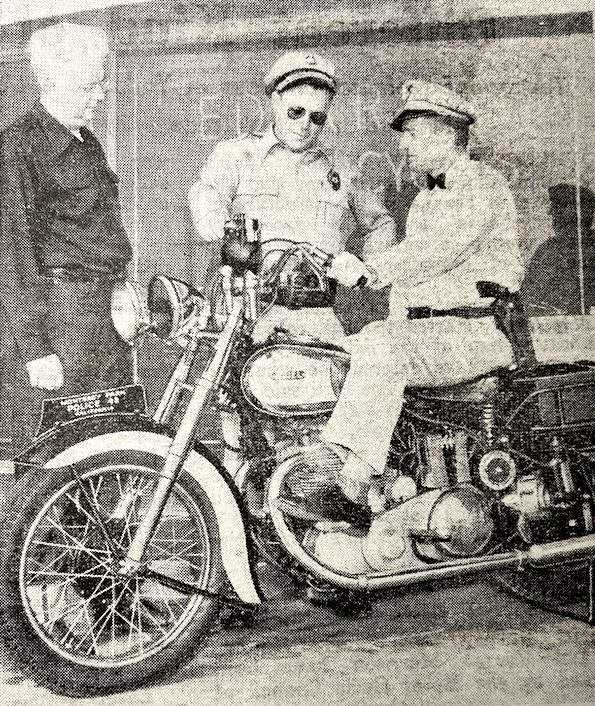
“ON RETURN FROM a tour in Italy a Bromley, Kent, reader speaks highly of a welcome he and his wife received at the Guzzi works. They were staying at a spot on Lake Como and called at Mandello without an introduction. Dr Enrico Parodi arranged for them to be shown round the factory, and they were assured that any other British visitors would have the same facilities extended to them. A note from Mandello confirms this and says, ‘We shall always welcome gladly any British tourist presenting himself at our factory.’ Mandello is right on the shores of Lake Como—popular tourists’ area.”
“WHO WOULD HAVE IMAGINED that the race-tested AMC spring-frame, now available for both single-cylinder and twin-cylinder AJS and Matchless machines might have emerged as a fabricated, part-pressed, part-tubular frame incorporating some very attractive features relating to tank, seat and air filter mountings and to the housing of electrical equipment and tools? In fact, in that constant striving for progress for which the really ‘live’ manufacturer is notable, a prototype was made and extensively tested at the Woolwich works, and the design is protected by Patent No 631,946 in the names of Associated Motor Cycles and Mr PA Walker. Application date was July 23, 1946, and the complete specification, just published, was accepted on November 14, 1949. A box-section sheet metal beam, at its forward end attached to the steering head, extends to the rear and takes the place of the top tube in a conventional frame. The tail of this beam fits between the side members of a sheet-metal ‘saddle’ which replaces the orthodox seat tube. Various methods of securing the components of the beam and ‘saddle’ are provided for in the patent, and it is even suggested that they might be formed integrally. The material might be sheet steel, though Duralumin is stated to be preferable. The beam is straddled by the fuel tank, which, resting on a soft insulating material, is held in place by one long bolt passing through the beam and screwing into an inset nut in the crown of the tank tunnel; an alternative method of attachment provides for a bolt through a bridge-piece across the base of the tunnel, abutting on the underside of the beam and keeping a tank projection in register with a seating in the upper face of the beam. Across the two rails, formed at the top of the ‘saddle’ is a duplex seat of the type now fitted as standard on the Matchless Super Clubman Twin. Rear ends of the rails form the attachment for the telescopic legs of the suspension. The fork carrying the rear wheel pivots in lugs which are attached to the side-members of the ‘saddle’ and which may be cast or built up. To these lugs are attached the cradle tubes of the frame. Transversely mounted across the side-members is the oil-tank; this forms an additional bracing member. A passage through the oil-tank registers with the carburettor air intake. This passage communicates with a semicircular duct leading up to a filter mounted between the rails of the ‘saddle’. On this point the patent specification says, ‘The object of the passage and duct is to provide an easy path of flow for air into the engine and a confined space immediately in alignment with the carburettor venturi passage, so that liquid fuel which is normally ejected at certain engine speeds by blowback resulting from valve-opening overlap may be trapped and contained in an air column that is subsequently drawn into the engine. A certain degree of fuel economy is thus assured.’ Obviously the side panels of the ‘saddle’ could be fitted with doors giving access to containers. The patent specification envisages one container to house the battery and small electrical equipment, and the other for tools. This design gives food for thought. A frame made up of tubes and sheet metal is by no means new in conception—some Italian designers have favoured this type for many years—but when the light-alloy sheet is applied as in the AMC patent it should result in great strength with weight-saving and give a cleaner external appearance to the machine.”
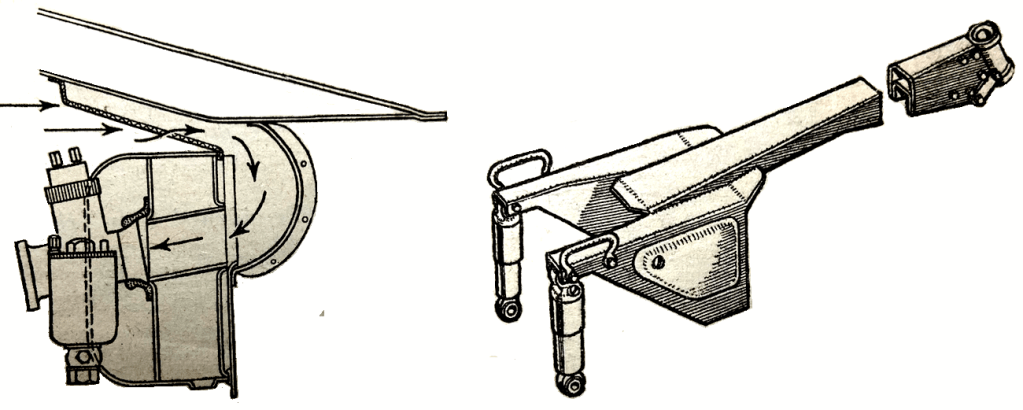
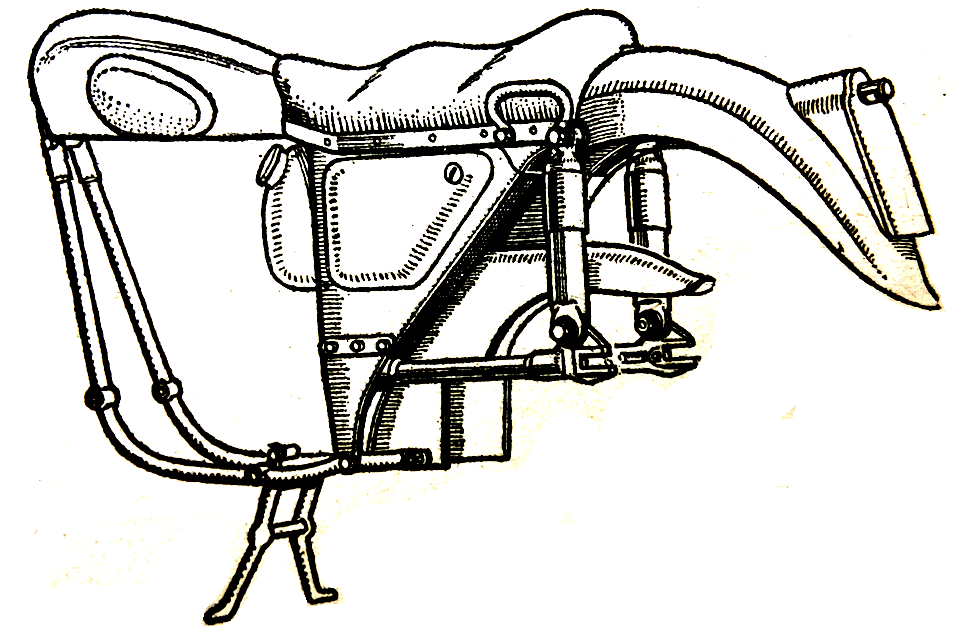
“ON A STATISTICAL BASIS, sidecar machines are less popular to-day than before the war. In 1938, no fewer than 106,000 of the 462,000 motor cycles were sidecar outfits. The latest relative figures, those for 1948, are 87,000 and 559,000. Thus the number of sidecars decreased by roughly 20,000, although the total for all motor cycles registered increased by nearly 100,000. Lack of new sidecars, high prices and the fact that the motor cycle industry as a whole has been too busy to worry overmuch about sidecar aspects are among the main reasons for the apparent decrease in the popularity of sidecar mounts. Conditions to-day, however, suggest that such machines can become even more popular than in the past. There are difficulties as, for example, the, fact that sidecars are not to any great extent an export commodity and the call is for exports rather than the diversion of material to the home market. Even so. the time has come, we suggest, for manufacturers to ponder matters afresh. It is folly to overlook the fact that before the war sidecars numbered more than 1 in 5 of all motor cycles—in a period when the market was glutted with inexpensive light cars.”
“IT IS AN AXIOM that the power of a lever is connected with its length. The handlebar of any motor cycle is a lever. Readers have been arguing in our Correspondence columns the pros and cons of several types of lever, ranging from the elongated American sit-up-and-beg type down to the short, straight, Vincent type. Are disagreements based merely on personal fancies, or is it a fact that a weak rider may feel happier with the more powerful types of lever? I could understand their discrepancies more easily if some of them had sidecars in mind.”—Ixion
“THE TENDENCY of certain two-stroke engines to run backwards on occasion crops up in our columns periodically. The last mention of this winsome Scott habit has brought me the usual kit of stories. The trick seems almost-endemic with some readers, though I cannot recall its occurrence more than once in an experience covering half-a-dozen Scotts, and many thousands of miles. Here are some items on the curiosity. It is usually due to excessive ignition advance—rare with an engine in delivery tune, but prone to occur if an owner plays about with his sparking gear. With an over-early spark, it may happen when the engine is running slowly, as in a traffic hold-up, or when the kick-starter is used, especially with a hot engine. There is no very obvious aural clue as to which way the engine is running, though if there is an ammeter needle this may afford an answer on reverse. One enterprising owner cherishes ideas of rigging up an ignition which can be grossly over-advanced at will, for use with sidecar. The upper portion of its scale will be controlled by a separate lever marked ‘R’, which will be used to reverse the engine when he wishes to turn about in a narrow space or overshoots a planned stop.”—Ixion
“ONE READER OBJECTS to my proposal for the banning of almost all spare parts on machines entered for Six-Day Trials. He admits that it is rather shameful to see spare cables and push-rods taped in situ ready for coupling up. But he is an amateur who saves up to figure in such events. He never has much cash to spare over and above necessary expense, and asks if I know what it can cost to salvage a model from remote moors? I do, indeed. In my youth I had a model die on me umpteen miles from a Highland rail-head, and I still shudder at the memory of the cost. But that plea could be met by allowing some latitude to private-owner entries. What shocks me—and many others—is the tacit confession by great factories that they cannot trust a professionally tuned 1949 model, handled by a crack professional rider, to squeeze through a thousand miles without control trouble. If existing controls are so fickle, it is high time that their design was improved. I do not feel willing to admit any exception to the ‘ spare-less’ rule except in respect of tyre trouble, which remains a lottery. But as I am not on the organising committee, they will probably continue to allow those ‘taped on’ spares to disfigure the machines of British teams for years to come. I blush for them.” Ixion
HAVING CHARTERED a 26-seater Dakota to fly members to TT, the Dutch TT and the Ulster Grand Prix in 1949, the Birmingham MCC booked two aircraft for the 1950 TT.
“THERE MUST BE many fathers who have introduced and welcomed their sons to the motor cycle fraternity, but how many sons have induced their fathers to take up the sport? Four months ago my father showed considerable interest in my BSA M20 sidecar outfit, which I was considering selling, and inquired as to the possibility of his learning to ride it. I replied ‘Why not?’ and set forth to teach him. I may add that my father had never before ridden anything other than a pedal cycle, and did not know the difference between a clutch and a big-end. However, he picked it up easily, and evidently decided he had been missing something, because he promptly bought my sidecar outfit. My mother was a bit worried about him at first, because she considered him a bit too old to take up this so-called young man’s sport, but this week he discarded his ‘L’ plates. He had passed his driving test the first time with flying colours! You can bet we are all proud of the old man now, because we consider it a bit of a record. He is 61!
G WITCHER, Poole, Dorset.”
“THE 1950 AUSTRALIAN road-racing season opened at Victoria Park, Ballarat, with the meeting organised by the Ballarat MCC. Nine races were run in quick succession before a crowd of 25,000. The major portion of the circuit, which is nearly 2¼ miles to the lap, passes through one of Ballarat’s picturesque parklands and emerges along two roads forming the southern and western boundaries of the Park. Spectators began to arrive from first signs of day-light.”
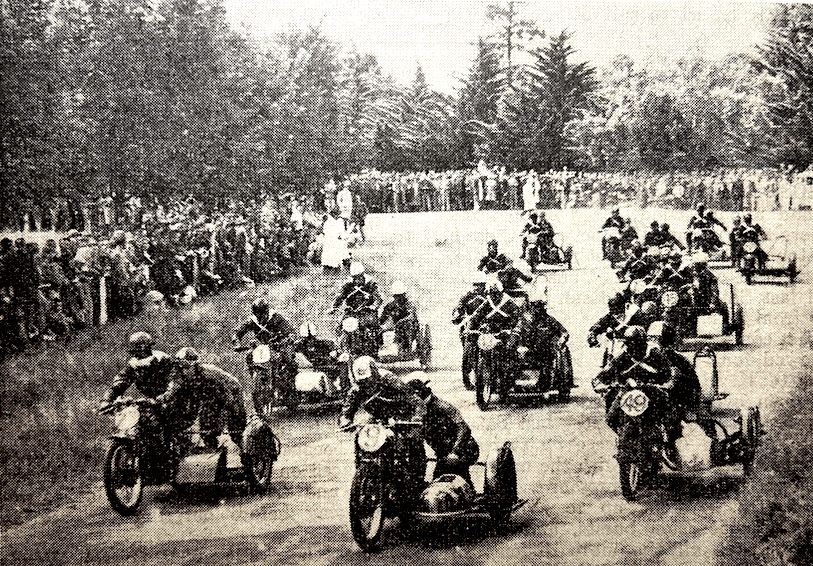
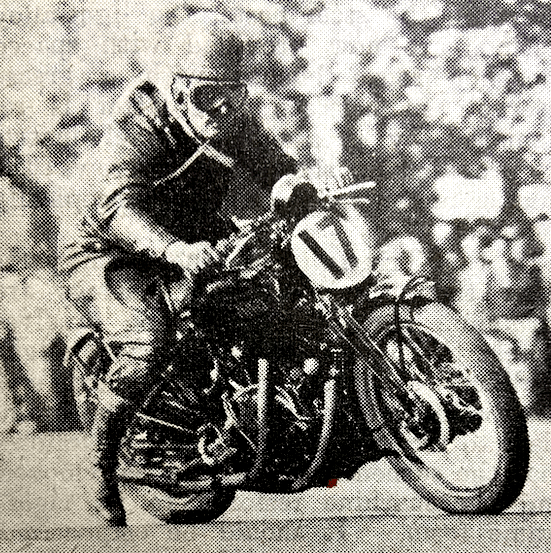
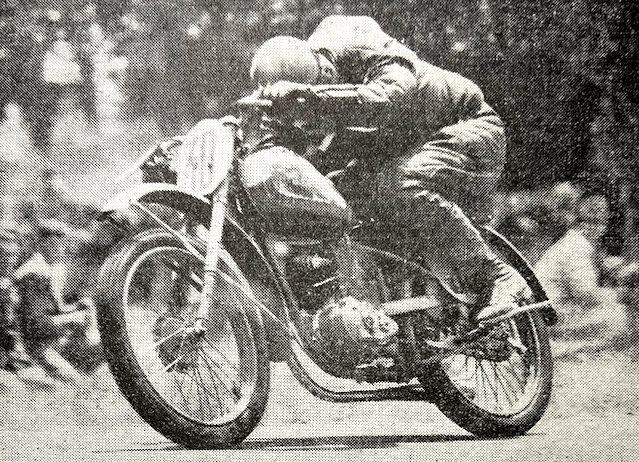
“BEFORE I RODE my first motor cycle in 1943 for duty in the Metropolitan Police Force, I was susceptible to colds to the extent of contracting one every six weeks with disturbing regularity. I have since owned about 20 motor cycles, and I average 200 miles weekly. I caught my second cold in 1949, through laying up the machine for three days over Christmas.
L CHARTERIS, Edgware, Middlesex.”
“MY DISTRICT HAS MORE than its fair share of dogs, of which the majority appear to be allergic to motor cycles. One particular Alsatian, however, has very different ideas. On several occasions recently I have been chased by one of the more aggressive animals, when this old Alsatian has promptly attacked the offender and sent it squealing in another direction. Surely this is a most sporting gesture!
IM SCOTT, Leeds, 6.”

BSA M33
“STRAIGHTFORWARD, ROBUST DESIGN and construction are, of course, characteristic of all the M group BSAs. The 499cc ohv model M33 is typical and provides the sort of performance which makes it an admirable general-purpose mount for solo or sidecar work. The machine under test was tried in both forms. It was taken over fitted with a BSA sidecar (and sidecar gearing) and run for some 400 miles. Then the sidecar was removed and, without change of engine sprocket, a second set of performance figures was taken and a further 300 miles covered. In each case the all-round performance was such that it equalled and, indeed, in solo form, far surpassed the standard which had been anticipated, bearing in mind that the model is an inexpensive-type touring mount. Cold or hot, the engine started very easily. When the weather was cold, even with temperatures well below freezing point, no especially precise control setting was necessary in order to achieve a cold start. Moreover, with use of the exhaust-valve lifter, the muscular effort required to operate the kick-starter was less than that called for to start many a modern multi. All that was required when making a cold start was to close the handlebar-mounted air lever, retard the ignition about one fifth, and flood the carburettor. Assuming the throttle were only a fraction open, the engine would fire at the third kick. Immediately after a cold start the air lever could be opened fully and ignored for the remainder of that day. When hot, the engine was a certain ‘first dab’ starter. The standard of mechanical quietness was moderately good Piston and valve-gear noises could be identified ,just after a cold start; they because less audible when the engine was hot. To the rider in a normally seated position on the machine, mechanical noise was not obtrusive and in top gear it was drowned almost completely by the
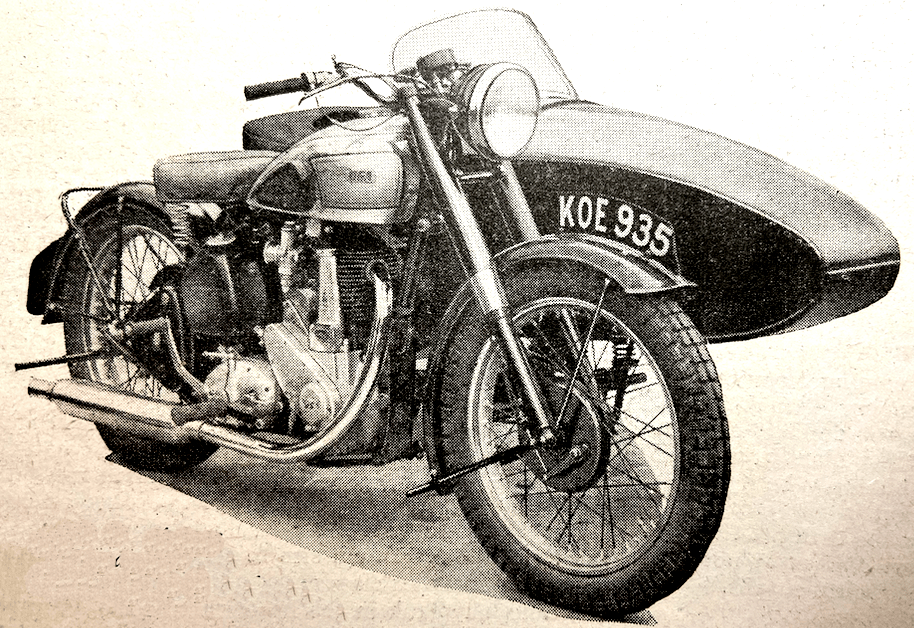
crackling exhaust note at any speed over 40mph. The exhaust, it should be added, was distinctly ‘healthy’ and may be criticised on the score that it tended to restrict the use of maximum acceleration in built-up areas. The tickover of the test engine was not 100% reliable unless the carburettor was set to give rather too fast idling on anything except nearly full ignition retard. Throughout the remainder of the throttle range the carburation was entirely clean, and the pick-up, from idling to full throttle, brisk and certain. The gear ratios were well matched to engine performance…acceleration was almost on a par with that of a 350cc solo. The positiveness of the gear change, too, was an aid to acceleration. If desired, snap changes could be made between third and top. The ratios between first and second and second and third were rather wider and a slight pause was necessary when making upward changes. Downward changes could be quickly and effortlessly accomplished between any pair of gears. Gear-pedal movement was pleasantly short and ‘taut’, and the lever excellently positioned for ease of operation. During the greater part of the test the clutch freed perfectly and was smooth and sweet in its take-up of the drive. In delivery tune there was hardly sufficient tension on the springs, and there was slip and consequent overheating when the sidecar speed figures were being taken. With the spring pressure increased, however, there was no recurrence of the bother. Lightness of the clutch operation was not noticeably impaired because of the increased spring pressure. .Highest comfortable cruising speed of the outfit was 50-55mph with a 10-stone passenger in the sidecar. While, relatively speaking, this may not be excitingly fast, 40mph averages were commonplace. Factors largely contributing to good averages were, of course, the machine’s good acceleration and excellent handling. Machine and sidecar were perfectly aligned. Normal left- and right-hand turns could be negotiated without appreciable lowering of the speed. The engine was unusually quick in the response to the throttle—a feature which made the BSA a very easy machine to drive. A pronounced tendency to pinking on hills, or when the throttle was snapped open quickly, was easily curbed by intelligent use of the ignition control; to which, incidentally, the engine was extremely sensitive. With the exception of the dip-switch (mounted on the clutch lever clamp block) all controls were well positioned for ease and speed of operation. When the ignition lever was in the full advance position, dip-switch operation was awkward since the two were too close together. The riding position was felt to be among the best of the present day. Excellent comfort, too, was provided by the BSA telescopic fork, which has just the right spring loading to suit most conditions. Rear-wheel hammer, when the machine was used with the sidecar, was hardly noticeable. In the early stages of the test, both brakes were rather too spongy. They improved with use, but
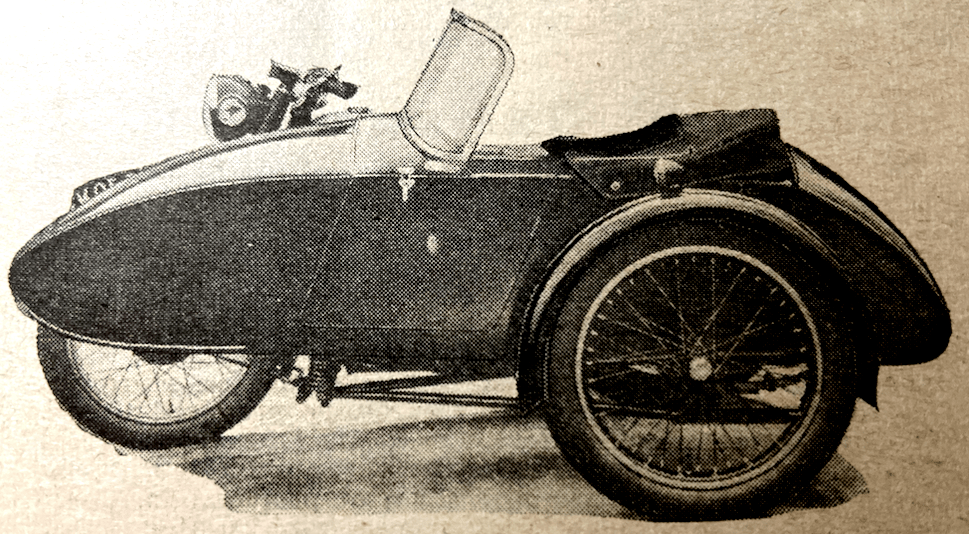
the rear brake never quite came up to desired efficiency. The sidecar earned full marks in all respects, except that the screen offered insufficient protection. In all conditions the suspension was very good and provided excellent comfort over all but the very worst going. The seat and squab are placed at comfortable angles to one another. When the hood was raised the interior was cosy and unusually free from draughts. The hood is of the folding type on a pivoting frame. It can be quickly and easily erected and, when not in use, stows away neatly into a twill ‘envelope’. The lines of the sidecar are such that it looks equally smart with the hood raised or lowered. Finish was all-black. Removing the sidecar (or refitting it) was the work of a few minutes only. As a solo the M33 was especially impressive. It handled extremely well under all conditions. On greasy cobbles or tramlines and on icy roads it imparted complete confidence. At low speeds the general handling of the model was first-class. At speed on the open road, straight-ahead steering was beyond criticism. There was, of course, more rear-wheel hop than there had been when the sidecar was fitted, but it was not unduly bad, unless the surface was of the B-class road variety taken at real speed. There appeared to be no obvious limit to the angle to which the model could be heeled over. Only at reckless speeds was there any trace of snaking on corners. The steering-damper was required after the sidecar was removed only when the machine was in the seventies. On bad surfaces the fork occasionally ‘bottomed’ on rebound. Solo acceleration (with the sidecar gearing) was markedly brisk and made traffic work and hill-climbing sheer joy. Cruising speed could be 70-75mph and the maximum speed obtained was 80mph. Economy was not apparently affected by the low gearing, the fuel consumption working out at 106mpg at a maintained 40mph. In fact, except that bottom gear was rather low, there was no impression at all that the gearing was other than standard. Two oil leaks were apparent at the end of the test. One was at the top posh-rod cover tube coupling, and the other was from the oil-tank filler cap. The exhaust pipe discoloured slightly near the port. The BSA has many features of interest to the enthusiast who carries out his own routine maintenance. Only a lengthy list would encompass them all, but one example is that tappet adjustment is provided at the base of the push-rods and the adjusters are reached merely by removing four screws. The float chamber and main needle jet can be easily removed without hindrance to spanner movement. The oil tank drain plug is accessible and so placed that oil draining out falls clear of the gear box. Cable adjusters on the throttle and air cables are placed near the handlebar levers. A cam-type chain adjuster is fitted to the rear-wheel spindle. In its position on top of the fork bridge the speedometer was easily read and did not interfere with the accessibility of the head-lamp switch. The tool-kit provided is excellent—but the tool-box is not large enough to accommodate also a tyre repair outfit, spare plug, bulbs, etc. An excellent driving light was provided by the head lamp. The filaments of two plot bulbs were fractured, apparently by vibration at peak revs when the performance figures were taken. Protection afforded by the wide-section mudguards was better than average. The standard of the finish is very good.
“IT IS A MORE-OR-LESS open secret that, immediately following the war, some manufacturers had in mind the possibility of producing simple machines of medium capacity. The idea was that there should be on the stocks an inexpensive model in case there was a slump and the market collapsed owing to the public’s lack of purchasing power. But with manufacturers working to capacity, or to the limit of their supplies of material and components, thoughts of such machines soon receded. Is the time ripe to revive the idea? All know that fashion plays a large part in motor cycle sales. Are motor cyclists prepared to accept somewhat stark utility as opposed to luxury? There was an interesting sidelight on this during the war. We published, first, an article describing a very light 350cc twin-cylinder machine with a three-speed gear box and a strictly utilitarian specification that included direct lighting and enamel instead of plating. This motor cycle, which was designed for Army use, had an extremely good all-round performance and, according to its maker, could be produced at a price lower than that of the Army-model 350cc single-cylinder side-valve machine from the same factory. Immediately the article was published there were letters from readers maintaining that this was the machine they wanted when peace reigned again—a machine exactly as reviewed. However, when we followed up with an article comparing the machine with the sleek, four-speed civilian model that had been due for announcement the week war broke out—an article entitled ‘Which Do You Prefer?’—there was a remarkable change in attitude. A question manufacturers necessarily ask themselves is whether the outlook of motor cyclists is any different today. The fate of past simple, inexpensive designs does not encourage fresh ventures in this sphere. Per contra, machines of small engine capacity have the largest sale in Great Britain today. In part, this results from the supply position, the oversea demand for some of the larger machines resulting in shortages on the home market. But it is only in part, and there is full realisation, both here and on the Continent, that the time is fast approaching when price becomes a main factor in sales. Already some motor cyclists are revealing by their purchase of lightweights that they are prepared to ‘make do’.”
“WITHIN A MEASURABLE FUTURE Germany, the most formidable of our rivals, will be back in the fold, and will be thirsting to regain lost laurels. For the moment the threat from that quarter is limited. Arthur Bourne reports that the Gilera people agree with most of our home experts—the TT course wants far too much knowing to attract Continental riders; especially is this so when the 500cc class is concerned. Meier’s 1939 win did not torpedo that dogma—his blower made many mph faster than our best. But even the TT will not remain eternally sacrosanct. Our ‘small tracks’ are breeding young stars. There will be insufficient room for all the upcoming youngsters in the Norton, AJS and Velocette stables. By 1951-2 some of these boys may be offered opportunities to ride 500cc 4-cyl jobs of top-drawer rating in the Senior TT—Continental machines of either Italian or German manufacture. It is not merely our supremacy which may shortly be at stake. There could be some risk of our being outclassed. If we must accept the old adage, confirmed by AJS experience, that at least two years are needed to render a new design race-worthy under all the handicaps which hedge speed in Britain, preparations for our counter-thrusts cannot safely be delayed. In the past some of our aces—eg, Bob Foster and Stanley Woods—have succumbed to foreign invitations, just as the crack US stars ride ‘limey’ models to victory at Daytona. Nobody knows how far speed victories actually influence export trade. But alike from the sporting and commercial angles our supremacy has never been so seriously threatened as it is today. The pace is growing hotter and hotter. Delay and complacency might prove very serious indeed.”—Ixion
“DON’T BE CYNICAL and say that [motor cyclists] present relationships [with the cops] are largely ascribable to the police being shorthanded, so that they cannot chase us as hard as once they did. You would be horrified if I printed the annual number of road prosecutions. But the majority relate to purely technical offences (no tail lamps, licence expired, and so on) and prosecutions for major road crimes are mostly well deserved today. At least there is no outcry against police methods and police fairness, as used to be the case. But copping of motorists is quite another affair in USA where they are very far from having whittled their road accidents down to what statisticians call the ‘irreducible minimum’. In fact, American cops are rather at their wits’ end, and the pair of he-men mounted on big Indians or Harleys are not esteemed adequate. Two wholly novel methods are being tried out. One is the ‘radar’ prowl-car, though the radar is often beamed from a roadside window, or from within a parked tradesman’s van. I gather this questing beam is most efficient on a super highway, which perhaps has a legal limit of 50mph and tempts the hot-rod merchant to drive at 80. The radar beam is coupled up to a camera, which pictures the offender (complete with licence plates) and shows the speed recorded on the cop’s speedo. Its limitations are that, when powered from car accumulators, the effective range does not much exceed 200 yards. The second scientific attack is per cine camera, which furnishes rather similar evidence, provided the prowl car keeps even stations with the culprit. Both methods sound effective and reliable. In Britain we have never suffered from the ‘summary’ penalty, though a Swiss cop once tried it on me in his canton. Under that system the cop pops up, accuses you, hands you a ticket printed with the official fine for your fifty per (or whatever you were doing), and either collects your cash on the spot, or summons you for this day three weeks (or what not). In some countries the cop’s word goes in court and if answering the summons entails an expensive journey to court (maybe 1,000 miles or more in USA), you pay up. In such vast countries the summary penalty. is really a great convenience, assuming that the charge is just.
“THE EDITOR RECORDS his impressions on Italian and German machines ridden during his Continental travels” ‘Gilera, Zündapp, Ardie, NSU, ‘Renn Fox’, DKW— none of these machines comes on the ‘secret’ list, although four of the models ridden were pre-production or mileage-test mounts. First, a few paragraphs about the 125cc Gilera, which many have thought to be a two-stroke so neatly is the overhead-valve gear incorporated. Primary drive is by gears, and there is a three-speed, foot-change gear box. Top gear is 7.54 to 1. Rear springing is of the pivot action type with, on each side, a coil spring hitched to the upper side of the chainstay and to the member that runs rearward along the back mudguard. These springs are each tucked behind a pressing and thus hidden when one looks at the machine broadside on. Hand-adjustable friction dampers are provided. Front fork, as might be expected in view of the Gilera beliefs, is of parallel-ruler type. Tyres are 2.50x19in, and the weight of the machine is 1761b. The motor cycle I rode was brand-new. It had not even its battery in place. This means, I was told later, that it is necessary to push-start should one stop the engine. Such, however, had not been my experience, and I had halted more than once in connection with photographs. True, starting without any battery was not a question of a gentle, dig on the kickstarter pedal, but a thorough-going, swinging kick did the trick—spun the crankshaft sufficiently for the generator to provide adequate current for the coil. Carbutation at low engine speeds seemed to be lumpy, but quite likely this was more a matter of ignition than carburettor, and that there would have been a different tale had there been a battery—as, of course, there would have been but for an over-sight during the hurried handing-over of a machine. The engine itself had an impressive performance in spite of being new. If I had taken over the machine in the dark and not known the engine capacity, I feel sure that I would have rated the size as 175cc. The power unit was smooth in operation—pleasingly so—and reasonably quiet mechanically. The exhaust, as usual in Italy, was rather on the ‘healthy’ side. Gear change, with the wide-ratio touring box, was slow in the upward direction—that is, if the gear change was to be dead quiet. The brakes were excellent as stoppers, but the front brake was heavy to operate by British standards, a feature that I was told was not peculiar to the mount ridden. This is a point that
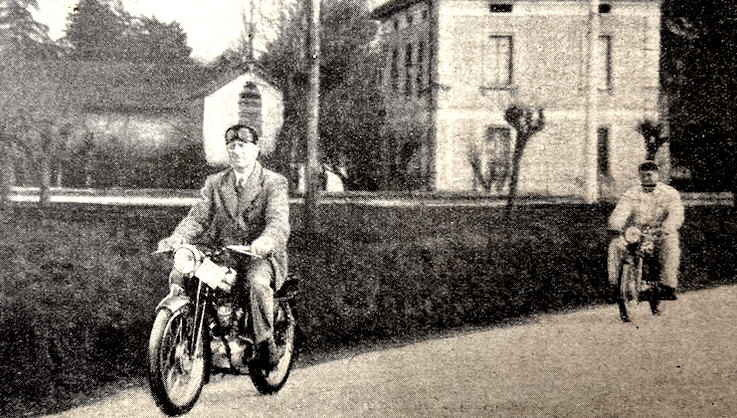
applies to numerous Continental models. What impressed me greatly was the comfort and excellent handling of the Gilera. The rear springing proved first-class on the hoppity-twitch Italian roads. In short, a very likeable mount, and I am not surprised that its popularity is such that Gileras have been busy extending their factory. Zündapps knew that I was hoping to visit their factory; they were aware, too, that I was looking forward to riding their new model. My face must have fallen many millimetres, however, when I was shown, in the experimental department, the unit I was to ride—the latest 200cc two-stroke, not the new 600cc transverse twin. I sought to explain. The 200, I pointed out, ‘was a machine I knew from the past—knew at least something about, although the porting had now been altered and there was a telescopic front fork. I had hoped to try the twin, I continued. “Ah you shall ride that later if you wish…” I
was reassured: there was prototype No 1 600 with sidecar in the shop. I was to have a flip on it—later. Meanwhile, Keitel, who rode a DKW in pre-war International Six Days’ Trials, would take me on a circular tour that embraced many types of going, he on one 200cc model and I on another. Ye gods. What pot-holed, teeth-loosening stretches he found, and what vilely dusty, ball-bearing surfaces! Seldom have I hopped and leapt more, or been better pleased than when we emerged from a village of car-width roads on to a main highway. The 200cc model continues with hand change for its three-speed gear box. The telescopic front fork I have just mentioned is of plain plunger type—in other words, as usual with small machines, there is no hydraulic damping. It has two compression springs in each leg, one light, which is designed to close up under heavy load, and the other, more powerful, which acts as the main spring. A rubber buffer takes care of matters at extreme deflections. In order to prevent distortion, the top four fins of the cylinder have a saw cut running vertically on the left- and right-hand sides and at the rear. Other features are an excellent ‘swing’ saddle, a handlebar of almost perfect bend (the majority of German machines have bars of really good shape) and a low-lift central stand which was the easiest to use of all those I encountered on German motor cycles, one of such low-lift that the machine leans slightly to one side or the other. Another point is a new filler cap which seems to keep the petroil where it should remain—unusual, even in these days. Unfortunately, this filler cap was not on the machine I rode, so it
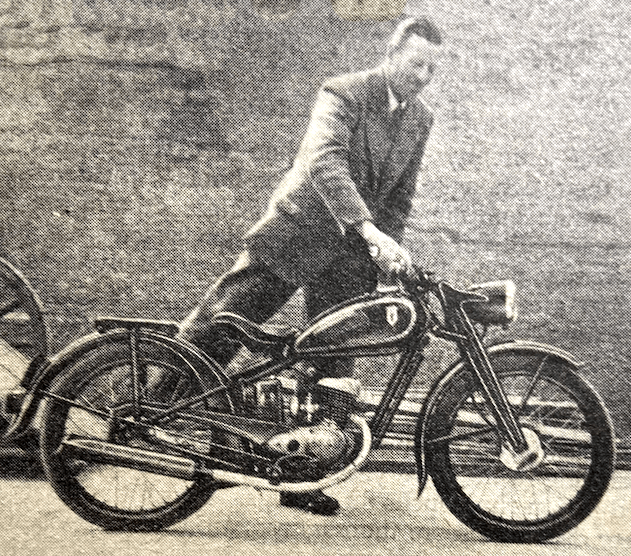
was necessary, in the interests of my garments, to keep my legs splayed-out The two-stroking of the engine was very much as usual in that the engine was prone to four-stroke when running light. The power output and general pulling ability, however, proved outstandingly good. It was very much sidecar power, if you understand my meaning, and I took pleasure in letting the engine slog smoothly, cart-horse style, up hills, which, with a four-stroke single, under equivalent conditions, would inevitably have demanded a change to a lower gear. I was reminded of the pulling powers of bigger, deflector-piston two-strokes of the past. The engine had just the characteristics needed by many of those who buy machines of this type. Once again, I was trying a new machine, and again I had brakes which had not bedded down. Indeed, I very soon found that it was possible to stand on the rear brake pedal. The front brake was better and could be assessed as ‘fair’. Gear change was a trifle ‘clonkish’ upward. Maybe I harp on gear changes, but the past has shown that it is possible to provide a perfect change even with very widely arranged gear ratios. I doubt whether any suspension system would have coped to perfection with some of the atrocious roads we traversed. As things were, I was thankful that I do not possess false teeth. The front fork, I feel, can be developed further. To sum up in a sentence, my impressions were: An honest-to-goodness, potent lightweight and a definite advance in power and speed on last year’s model. Prototype No 1, 601 Zündapp, was undergoing long-distance tests, I gathered. It was in sidecar form, with the sidecar on the right. This is a transverse, horizontally opposed twin—much sleeker than in the past—fitted with shaft drive, a four-speed gear box that incorporates sprockets and chains instead of pinions, and rear springing of plunger type with hydraulic dampers in the vertical members that lie immediately in front of the spring housings. My test of this machine was brief. Already it was late and I was, I suspected, keeping the experimental-shop folk nose-to, grindstone well after their rightful hour. Further, being accustomed to the sidecar on the left, I am not a dab hand at driving an outfit which is vice-versa and demands that one opens up for right-hand bends and shuts off for left-hand ones. Fork angles were being tried out, and there was a trail of rather more than 2½in I found my handling of the outfit far from clever and that I was apt to lurch about the highway. However, what 1 chiefly wanted to learn was how the latest 600cc Zündapp power unit performed. I have always had a very great respect for the Zündapp transverse twin—the prewar 600 and the larger unit which the German Army used during the war. Frequently I have beard the remark that the smaller twins were in a class of their own. Were I to state that the latest engine packs a very satisfying punch, probably my meaning would be
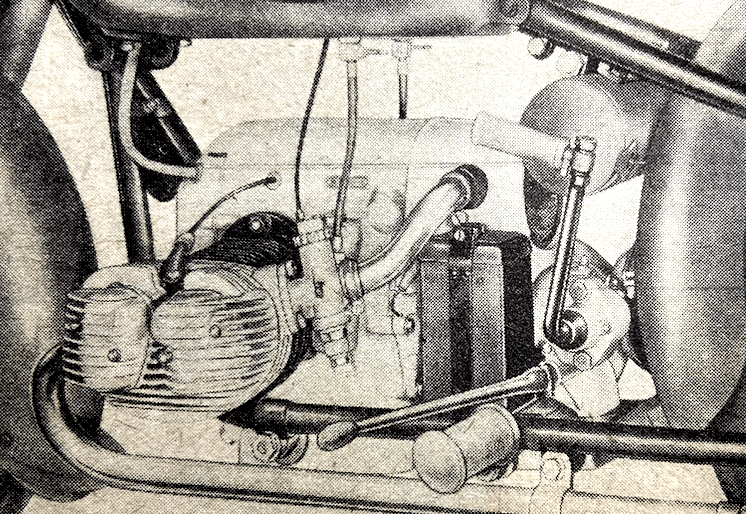
misconstrued. There is no roughness in behaviour, but there is remarkably good torque—the pulling power which one yearns for in the case of a sidecar mount. Incidentally, the remark was made to me that the engine is at its best hauling a sidecar. I will only add that it is a very good best and that I wish there were more units of this character available to sidecar enthusiasts to-day. Provided that one ‘waited for it’, or changed up at low engine speeds, the gear change was excellent. The rear suspension, too, seemed to be efficient. Flexibility, notwithstanding the shaft drive (or because of it?) was good, and one could make full use of the engine’s excellent torque. Again I had an impression of handling an engine of a capacity appreciably larger than its true cc. Mention was made of the 100cc ‘Renn Fox’ NSU in an earlier article, and how this little racing mount was to be built in small numbers and lent to likely road-racing men of the future—yes, and how its appearance at the Frankfurt Show had resulted in what was not envisaged, hundreds of orders. When NSUs guided me to Hockenheim, to watch the blown racers being tried out, one of these keen Foxes, a prototype, was undergoing test on the circuit. After I had watched Fleischman and Boehm displaying the paces of the almost frighteningly fast supercharged mounts—the 500 is stated to develop 98bhp. and the 350 almost exactly 70—it was suggested that I should take the Fox and have a look around the 7.7km (bare five miles) circuit. The chief differences between the standard Fox and the little racing mount are the tuned engine with its 8 to 1 compression ratio, the employment of a four-speed gear box in place of the standard three-speed box, and the use of light alloy for the tank, wheel rims and guards. Weight comes out at 144lb instead of 177. The works’ folk had remarked that they thought such a machine was the right type for the embryo road-racing man they had in mind. I agree, particularly because with a very light, small-engine machine one gets an impression of hurtling along, even if the actual speed be only 50 or 60mph. Indeed, such speeds can seem faster than 80 or 90 with a big mount. As for cornering, we ell know how a light machine can be whisked round corners; thus there can he just about all the necessary practice for the budding racing man. Hockenheim is a road circuit about 40 miles from the NSU factory. When a firm wants to make use of it, all they have to do is to ring up in order to arrange that men will be on duty guarding the entry roads. Closure is as simple as that! What a boon for a racing department! But in spite of the fact that I saw Heiner Fleischman hurtle round the course at 110mph on the 350 and Hermann Boehm, much aided by Karl Fuchs, his passenger, lap with the sidecar 500 at almost exactly 100mph, this is no billiards-table course. As I was to find on the Renn Fox, there are stretches which are very wavy indeed. The impression, no doubt, was heightened somewhat by the fact that they were experimenting with the machine’s rear suspension and were using the machine minus any damping. Even so, my admiration for the men handling the blown racers went up a lot. They, incidentally, were dealing with no feather-weight mounts—the 350 weighs over 4401b with full tanks, and the five-hundred, 4861b. A difficulty with these machines is tankage. The 500cc solo consumes a litre of alcohol fuel per kilometre, that is roughly 2.8mpg. To revert to the machine on which I explored the circuit, this gave all the feel of a really authoritative racing mount. Getting off the wettish grass on to the road, I found the back wheel spinning with urgeful zest. Racer in miniature it may be, but there is the same sort of punch that is afforded by the bigger engine of your 250 or 350 racing mount—the same sort of behaviour in almost every direction.
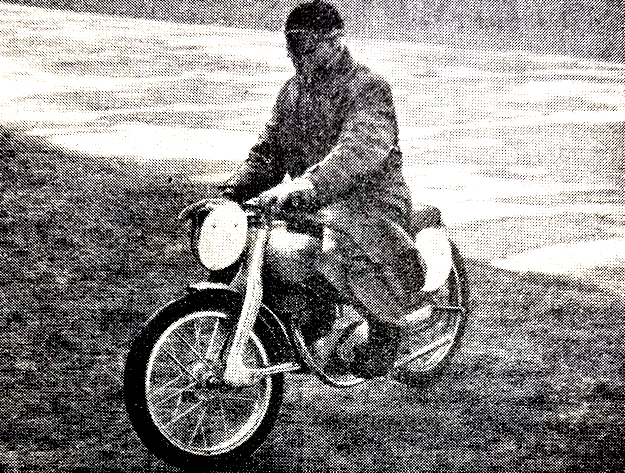
On this prototype model, there was even more than a fair share of engine vibration to add to the impression of dicing. No doubt this will be eliminated in the production racers. Whether it is or not, I give full marks to the whole scheme; it should very definitely result in new names coming to the fore. As they were remarking at the factories, the average age of the successful racing men in Germany to-day is high, just as it is in Great Britain. An altogether different type of machine is of course, the 125cc DKW. The weight, as it happens, is the same to a couple of pounds, ie, about 142. Various improvements have been made in this model. The wheelbase is longer, the tank is larger and incorporates the tool-box, a swing saddle is fitted and the front brake has been increased in size. The machine, I rode had covered rather more than 100 miles. I have had extensive experience with the 97.5cc DKW, which I regarded as the outstanding lightweight two-stroke of pre-war days. Indeed, it was a DKW of this size I used at the 1 Air-Landing Brigade demonstration that was followed by the adoption of ‘Flying Fleas’. Hence the ride on the latest RT 125 afforded interesting comparisons. The gear change on the new model was better than I recalled from the past, and one could use anything up to 40mph. in the middle of the three gears. This time there was foot change, and thus a quicker gear change was possible. While the 125cc engine had unusually little tendency to four-stroke and a 100% reliable tick-over, it could four-stroke, which is something the 97.5cc engine would not do. The small engine was also so smooth that one could term it ‘dynamo-like’, and with the larger unit there is some vibration high up the engine-speed range, though so high that one would seldom encounter it. When cruising around 40mph in top—which was easy in spite of a blustery wind—the engine was as sweet as the proverbial nut. Starting was delightfully easy, the brakes were excellent—yes, the DKW front brake calls for no heavy pressure on the lever—the clutch action proved to be first-class, and the general handling was very good indeed. About the only criticism of an exceptionally fine lightweight was that the rear chain guard clattered on rough roads—a more-or-less standard fault, it seemed, but easily remedied. Another of the non-secret machines was the new 250cc two-stroke Ardie, which is a mount with an aluminium cylinder and cylinder head, a frame of welded and bolted-up construction that incorporates sidecar lugs, a four-speed gear box, 3.25in tyres, a 50-watt Noris dynamo, a Pagusa swing saddle, a steering damper, and a neutral-indicator in the ferns of a lamp bulb. Maximum speed is 60mph or slightly more, but Dr. Venediger, managing director and famed designer, has not aimed at speed as such, but acceleration. Fuel consumption is given as approximately 95mpg. A similar machine of 350cc is being made. Girder or telescopic front forks are available. The machine I rode was a mileage-test 250 with the telescopic front fork. It was being worked on at the time of my arrival and had to be hurriedly built up. This was unfair to the machine and one can discount three faults that emerged during my trip: First, the engine cut out owing to the contact-breaker points having closed up; secondly, there was more than a ‘feel’ of transmission at 50mph—the rear chain was too tight—and, finally, a few hundred yards from the factory, on the homeward run, there was a shrieking noise from the rear of the engine-gear unit and the clutch ceased to function. However, in spite of its being a machine which the makers had been testing to destruction and of there having been no time properly to ready it for me, I learnt sufficient to be able to give a general impression of the model. Particularly for a 250cc single, the two-stroking was very good. The gear change, with the four-speed box, was easily the best of all the machines I rode on the 2,600 and more miles covered during my journeyings. Rear brake was excellent, but with the front brake it was necessary to use almost a vice-like grip of lever and handlebar to get much result. The plunger front fork did not give the impression of doing a lot. Very wide handlebars are fitted. These give a sensible angle for the wrists, but were a nuisance on full-lock turns; Both the acceleration and pulling power of the engine are extremely good, and the machine is sturdy and likeable. Finally, there was the 250cc two-piston two-stroke TWN. Like the 125cc engine I rode recently, the 250 two-strokes to a degree unknown to the average two-stroke owner, and, further, the tick-over proved to be 100% dependable. Another outstanding feature of the comparatively highly geared machine is the big-machine ‘feel’ it provides. Again it was a case of the brakes being good and not superlative. The machine would do about 100kph—62mph—with the rider sitting normally. As with other German speedometers I encountered, the needle tended to swing to and fro. With the engine’s excellent manners and the absence of any impression that one is handling a lightweight, the 250cc TWN struck me as a machine calculated to make a wide appeal. We can, I consider, do with more small cc machines that ride and handle in the manner of the big ones.'”
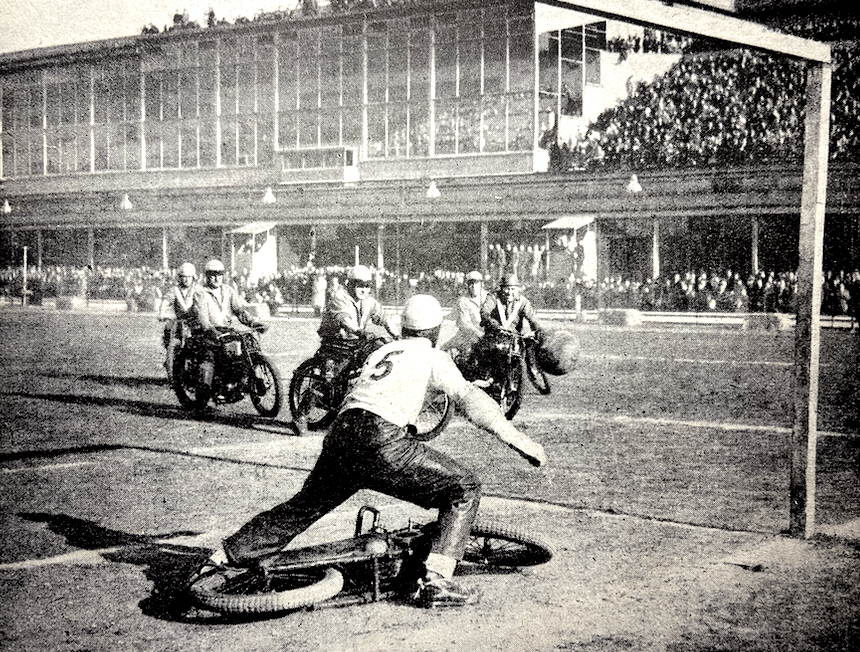
“WHEN I PURCHASED my ‘Inter’ Norton, it was in the hope that eventually I should be able to utilise it for racing, and, after thousands of miles on this machine, many of which haver been round a 3½ mile aerodrome circuit in Hants, I decided to have a go in the next suitable event. The next event turned out to be an ideal chance, one for Clubmen on standard machines, with the retention of lights, silencers, and full equipment. Presumably this was going to be my first chance to race against riders with near enough the same experience as myself. I hurriedly obtained the entrance form, scanned the regs, rushed down to Pall Mall to get a competition licence, and got the entry form in completed, together with the fee, on the last day of entry. I then contacted various people to borrow leathers, helmet and other things for the day, and, with the good luck and support of my Club and friends, and not without a little excitement, I sat back and waited. However, although the list for this particular Clubman’s 350cc race is now completed, with 37 accepted entries (the limit is 50) I shall not be racing. Why? Because my name is preceded by Miss. The regulations for this event, which I scanned so carefully, make no restriction in this direction, but of course the organisers reserve the right to refuse any entry. I do not wholly blame the organisers, and I got the utmost sympathy from their Secretary, but, somewhere in the motor cycling world, there are a lot of short-sighted, prehistoric, doddering ancients, who would do better to join a knitting club and drown their prejudices in a cup of milky, luke-warm tea. MARIE C KREJCAR, London, SW2.”
“IT IS NOTICEABLE that in all two-stroke engines (excepting the Scott) the method of lubrication is the same: ‘Petroil’. Now, it seems to me a pity that the ‘old-fashioned’ method of separate oil and petrol has been done away with. No doubt cost is the main factor involved, but I think two-stroke enthusiasts would welcome the return of separate lubrication for one reason alone—easy starting. My first two-stroke—a Sun Vitesse—had separate lubrication, and starting was easy. I think that this was due to the fact that the mixture was more easily fired. I cannot recollect having been let down with a dirty plug. So here’s hoping that some maker will produce a machine in the lightweight class with this benefit that favours the four-stroke.
JOHN G YOUNG, Dunfermline.”
“MEMORIES HAVE BEEN projected back more than ten years. Those who know the Scottish Six Days’ Trials of the pre-war period, have recorded another step, no doubt subconsciously, in the process of getting back to normal. For, once again, after a lapse of over 10 years, the ‘Scottish’ is starting from its traditional focal point, Edinburgh, capital city of Scotland and, in virtue of its picturesque situation and literary fame, some-times called the ‘modern Athens’. For the less experienced who are familiar with only the post-war events—those of 1947, 1948 and 1949—the opening weekend has seemed unfamiliar and a trifle strange. The reason is that these past three Trials have started 150 miles to the north, at Fort William…This revival of the practice of starting from Edinburgh has been made possible by a slightly increased ration of fuel, which means that, for the first time since 1939, the Trial will embrace a mileage of over 1,000…Fuel rationing means entry limitation, but in spite of this restriction, the entry list is a record. In all, there are 134 entries, of which 14 are sidecars…When the weigh-in had been completed, it was thought that yet another record had been established—for all 134 competitors reported! No non-starters is a rarity in any competitive event. During Friday and Saturday and Sunday morning, competitors were arriving from near and far—some, such as W von Millenkovich, of Austria, and C Kohlicek, K Rykr, and J Pudil, of Czechoslovakia, from very far…Almost all machines had the usual time-saving modifications for wheel removal, had compressed air bottles or large hand pumps, quickly accessible tools and duplicate control cables, and were equipped with a fair selection of such spares as footrests, control levers and spokes.
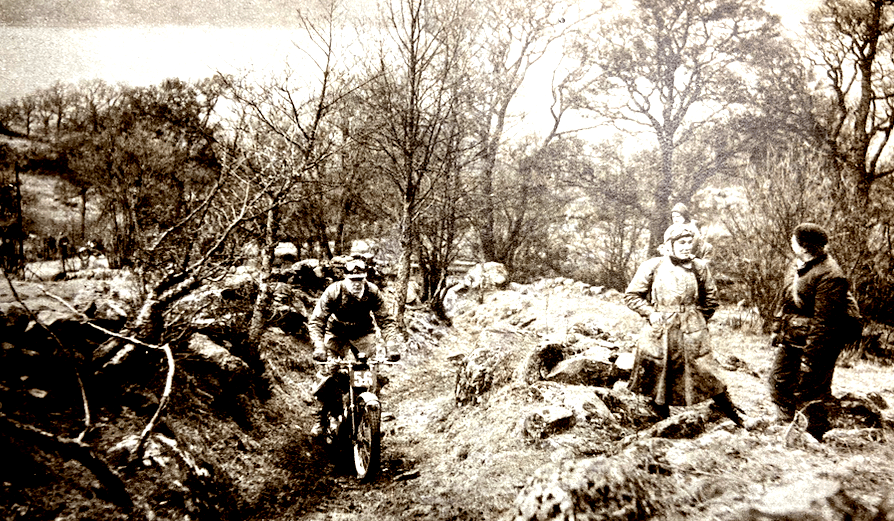
The reason is that, although in the Scottish there are observed hills on which marks are recorded against a competitor for footing or stopping, as in one-day sporting trials, an equally fruitful method of finding the winners is the penalisation of those who do not maintain time schedules…For the first time, arrangements have been made for bulk issue of fuel from lorries at specified points on the route, as for the International Six Days Trial…With terrain entirely new to the Scottish included on Tuesday, and the Auchindrain section, known only to those who rode in the events of the immediate pre-war years, on Friday, the course promised many rigours, as well as an irresistible and invigorating challenge. When, at 8am, the Lord Provost of Edinburgh, Sir Andrew Murray, 0BE, said ‘Right, off you go—good luck” to SB. Mums (498 Triumph), a benign sun was shining from a blue sky. Seldom have weather conditions mat the start of a ‘Scottish’ been more propitious R Clayton (490 Norton) and AE Clayton (498 Triumph) were despatched, and then the starting sequence fell into the order that be adhered to during the remainder of the week. That is, the under-500cc Machines, beginning with ID Macintyre (197 Norman), set off before the remainder. The smaller machines, running on a lower-schedule speed, will thus be overtaken each day by the large-capacity machines. Before a surprisingly large crowd, the riders swung out of the official garage at one-minute intervals and headed, in long procession, out through the suburbs of Edinburgh—north towards Linlithgow and also towards forbidding clouds piled up on the horizon. The route was by main road to that well-known titbit, Stoney Brae…However, in the Glen Devon area the course veered off metalled roads over a grass-grown, rutted track across open country. In parts, the ruts were very slippery and
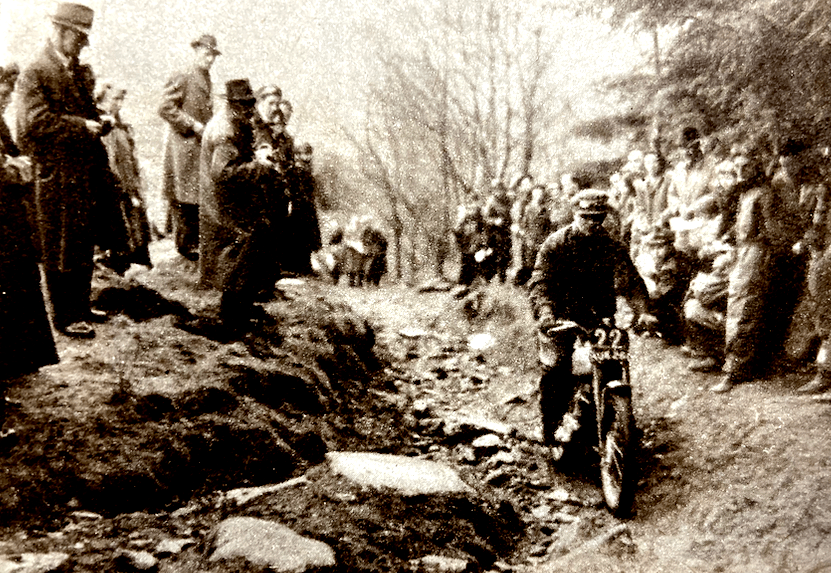
extraordinarily deep, and occasionally a subsidence of the surface would an a drop of three or four feet for the unwary who were not quick enough to steer round, or those who were going too fast; it was a good aperitif to get riders in the mood for the real rough stuff. Previous to reaching Stoney Brae, only one rider appeared to be in difficulties; he was N Palmer, whose 122cc James was repeatedly showing signs of a tight piston. On Stoney Brae’s steep, rocky gradient there were four observed sections…By the time the first man arrived light rain had set in and had given the rocks a coating of slime. The first three men through, Manns, Clayton and Gaymer, all managed the section without trouble, but as soon as the under-200cc brigade came along, marks were lost frequently. Of the total of 23 in this class, only J Pudil (150 CZ), RTM Viney (197 Excelsior) and M Riley (122 DMW) were clean…A surprising mishap was a foot by CM Ray (497 Ariel) and in the last sub-section, not considered unduly difficult, both RT Hill (499 BSA) and GE Duke (490 Norton) put down their feet and lost marks…The route led on through Amulree and Kenmore along the southern side of Loch Tay to Camushurich, the terror of pre-war days with its three-quarter-mile climb, numerous bends, and its boulder-strewn muddy surface. The last two hairpin bends were distinctly tricky, and, among the first 30 men through, there were only a few clean climbs. Particularly good were Ray, LA Ratcliffe (347 Matchless) and Duke. Alves nearly made it, but eventually had to dab, and JS Betting (197 Francis-Barnett) got through the worst only to be forced to stop when almost out of the section. The lunch stop was five miles farther on at Killin. By the time competitors were arriving, heavy rain had set in. The pelting rain continued for about two hours and the ride north-west from Killin to Tyndrurn and Glen Coe was a grim fight against windborne wetness. Snow freckled the peaks of the surrounding hills, some of which were shrouded in grey cloud…Near Kinlochleven was the last observed section of the day, Mamore Hill, traditional first-day
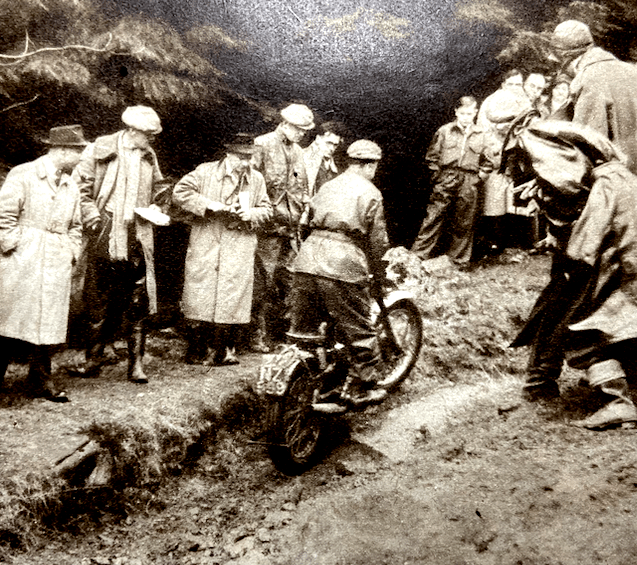
obstacle of the ‘Scottish’. This ultra-long steep hill, with its many corners and rock-and-boulder surface, can always be reckoned to take a big toll of marks…Many a competitor had his confidence shattered before he reached the loftier sub-sections. None of the lightweights was able to conquer the hill. The bigger machines seemed a good deal steadier, aside from their advantage of plenty of power, and among the first 20 of the ‘heavies’, seven clean climbs of the more difficult sub-sections that could be seen from one vantage point were noted; among them, AHL Archer (497 Ariel) and NS Holmes (346 Royal Enfield) were outstandingly good. Geoff Duke was unlucky in the second sub-section, which included the notorious Flook’s Corner. He negotiated the bend and then his Norton strayed over to the right; the edge of the track got nearer and nearer till the rear wheel slid over the edge and Duke was as near as nothing on his way to tumbling down the hill…But by far the best climbing feat was by the irrepressible W Nicholson (499 BSA), who, though his model slithered over to the brink on the right, remained as calm as ice and rode up with never a suggestion of nervousness. Quietest and most gentlemanly performance seen was by NJ Jarrett, riding one of the special 498cc side-valve military-type Triumph Twins…Last lap came with Mamore Road leading from the heights of the hill into Fort William. In its 11 miles, Mamore Road gives a variety of sporting going, including rock, cross-gullies, shallow watersplashes, mud and ruts. It is a sportsman’s paradise and was a fitting conclusion to the 180-mile opening day of the trial. Sidecars especially had a tough day, and none did any complete section clean except for FH Whittle (598 Panther sc), who managed the full length of Stoney Brae without penalisation. At midnight results were available. These showed that only L. A. Ratcliffe (347 Matchless) had retained a clean sheet. Runners-up with three marks lost (one foot) were BHM Viney (347 AJS), NS Holmes (346 Royal Enfield), D Tye (348 Douglas), and AHL Archer (497 Ariel)…Leading sidecar was Whittle (598 Panther sc), with 58 marks lost…Of the under-200cc class, the leaders were EW Smith (197 DMW) and C Kohlicek (150 CZ), with 20 marks lost. Leading manufacturer’s team, with a total of 19 marks lost, was Matchless (LA Ratcliffe, E Usher and DJ Ratcliffe).” So much for Day 1—the eventual winner was Artie Ratcliffe, who lost 12 marks. The sidecar class was won by Harold Tozer on a 499cc Beeza, who lost 36 marks.
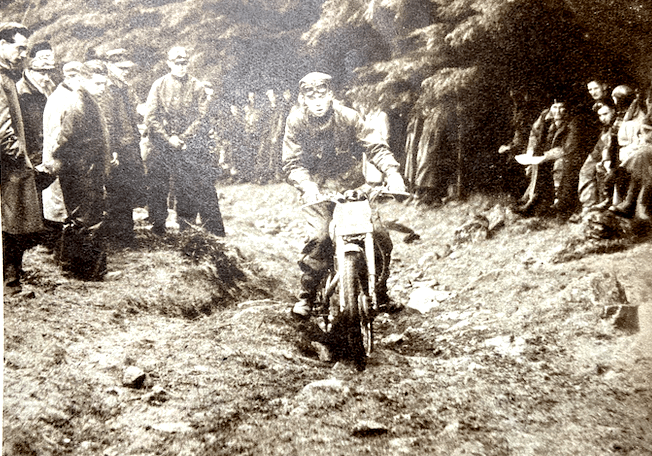
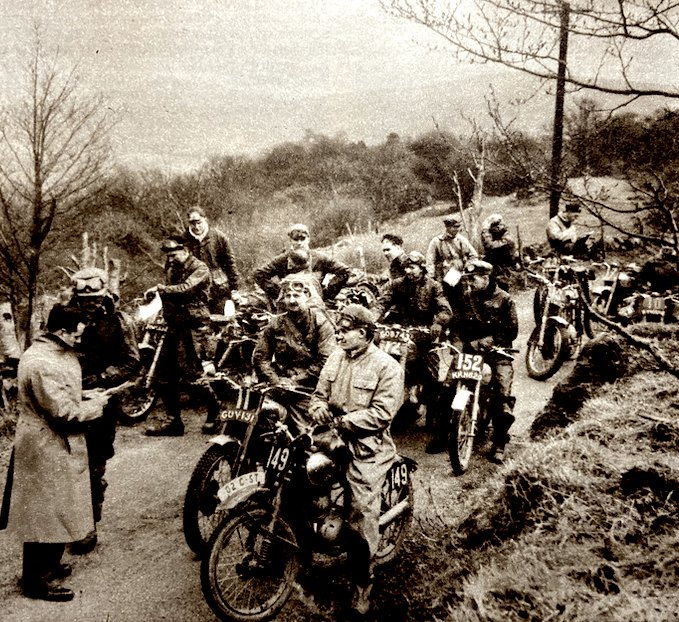
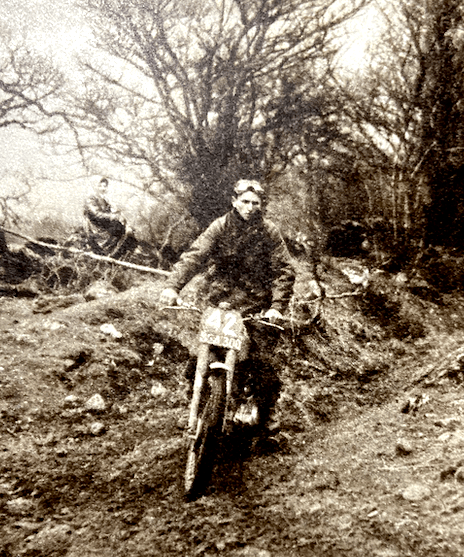
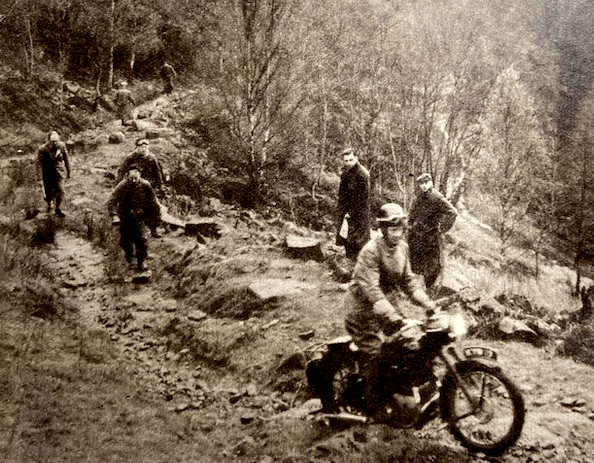
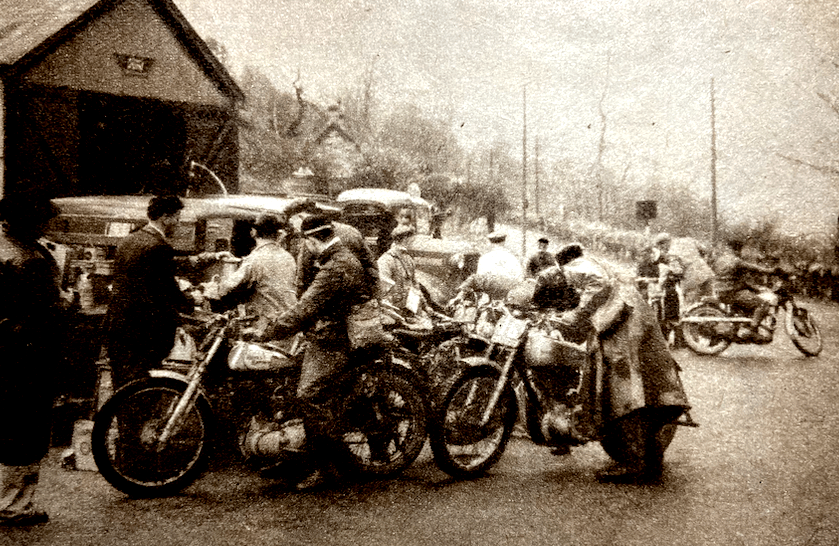

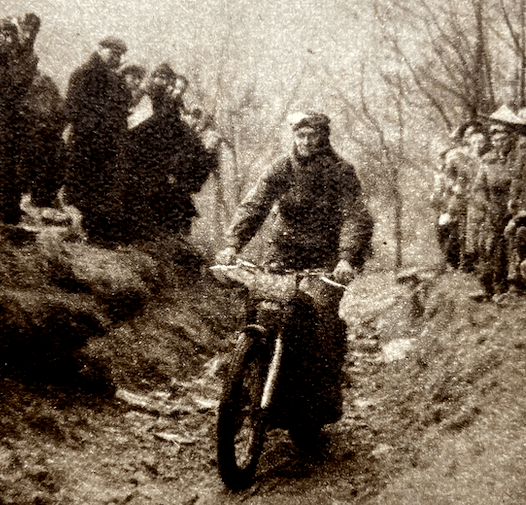
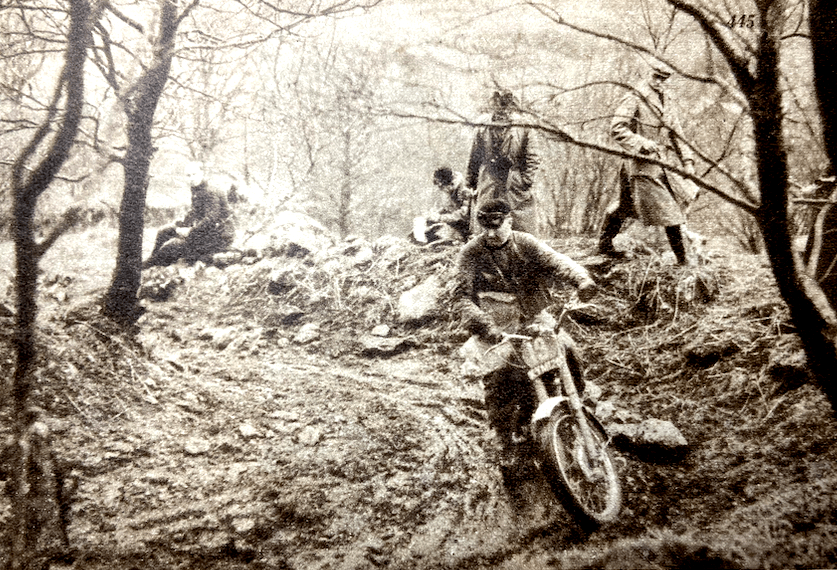
“A REVIEW OF THE 1950 SCOTTISH SIX DAYS TRIAL: SUGGESTIONS FOR NEXT YEAR’S EVENT—By HARRIS LOUIS
IN A REVIEW of the 1948 event an excerpt from my comments read, ‘I cannot see the ‘Scottish’ reverting to the longer (pre-war) course except for one possible consideration. It may be that, in the interests of training for the ‘International,’ and for providing more opportunity to spot good men to be considered for British teams, the longer ‘Scottish’ has its advantages…The petrol allocation has been increased and the mileage, this year, pushed up to over 1,000. As a result, the Scottish has changed. Most riders who competed in the three previous post-war events and compare them with the one just past are not, I feel certain, enthusiastic about the alterations…the 200-300 extra miles were consumed by riding on classified roads. Secondly, the time schedules were sometimes so tight that riding had to be fairly heavily laced with what road-racing men call ‘the frenzy’; this was especially so for the under-200cc solo and the sidecar classes, and really experienced six-day trial riders were complaining about the risks that had to be taken. Thirdly, a return was made to the pre-war practice of starting the trial from Edinburgh. A fourth uncontrollable factor obtruded. The heavy rains of the first two days of the trial made two long sections of rough-stuff impracticable; these sections had to be cut out. In consequence, the classified-road mileage on Tuesday and Friday, unenlivened by the cross-country diversions, seemed interminable. Having associated myself with those who felt that the events of 1947-49 Were each perhaps just a shade too near a series of one-day super-sporting trials, I cannot say that the 1950 edition is the type of modified six-day trial envisaged. If I understood the earlier suggestions correctly, the modifications in mind were the inclusion of more mileage on tracks of the type which, though not providing observed sections, would give machines a persistent hammering and, because of the time schedule, would make it necessary for riders to press on relentlessly but not dangerously. This added rough-stuff mileage was not to be at the expense of the observed sections which are an accepted part of the Scottish and distinguish it appropriately from the International Six Days’ Trial…these problems
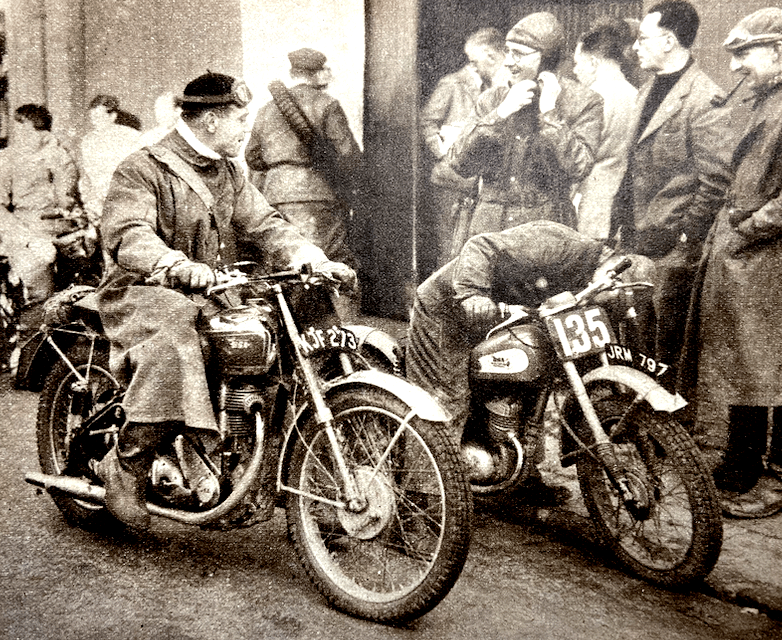
must be dealt with, because the Trial just concluded was a cross between the traditional Scottish and at International. It proved that the two types of trial are types which cannot be satisfactorily interwoven. The main reason is associated with machines. For the best results on the Scottish observed sections, solos need to have very low gears, very high ground clearance, the minimum of weight, engines with good low-speed torque, and all the usual features of an out-and-out trials mount; sidecar outfits need these sporting prerequisites, plus narrow, high sidecar chassis and minimum protuberances on the offside, whether handlebars or foot-rests. Machines of this type, both solo and sidecar, are most unsuitable for forceful road riding. There are few technical lessons to be learned from over-driving under-geared machines and there is no merit in inviting sidecar drivers to take risks—asking them to corner fast on twisty, metalled roads with narrow-track outfits. Machines prepared for the International reveal marked differences. Gearing is higher, most solos have rear-springing, sidecar outfits have wider chassis and handlebars. Engines are tuned for pep rather than plonk. The reversion to the Edinburgh start was not received too happily by the competitors. The disadvantages are that in a large city such as Edinburgh, officials, competitors and others are not so readily brought together as in the more confined, warmly welcoming burgh of Fort William; that the first-day move of hotels from Edinburgh to Fort William is an unnecessary inconvenience; that with Saturday and Sunday, before the Monday start, more or less free in Fort William, new-comers to the Trial can readily try a few famous observed sections and, as well as get warmed up for what is in store, obtain enough data to indicate, say, a sprocket change or a riding-position adjustment. This last facility is extremely valuable to a rider with no experience of the Scottish hills. There is little doubt that the scales are clearly tilted in favour of the Highlands, and the Edinburgh Club would, I feel sure, be well advised to decide to start next year’s event from Fort William. These various comments might possibly give the impression that much was wrong with the 1950 Trial. If so, that impression should be corrected. This year’s event was, as I have said, slightly hybrid and, as such, was less satisfactory and pleasurable than its predecessors in post-war years. Even so, it was still a first-rate trial and, in my view, far and away the outstanding sporting event in the British calendar. I enjoyed myself immensely, as I always do, because I know of no better sport than accepting the challenge of the Highland rockery on a suitable machine, because the environment of the trial, the countryside and friendly Fort William provide plenty of colour for weaving into the story, because after a good deal of slogging at the desk and a merry but arduous round of social duties during the winter months, a week in the Highland freshness is as good as a holiday. My suitable machine was a 499cc Competition BSA with light-alloy cylinder barrel and head, and spring-frame (not the Gold Star model). A Pressman’s requirements on the Scottish are rather exacting. He wants a machine that will surmount the sections, so a dyed-in-the-wool trials model is indicated. But he also wants to move smartly at times, either to meet up with booked telephone calls or to try to catch up on competitors after watching performances on a section. He wants a machine that demands no more than a minimum of attention. The answer is the mount that BSAs provided. It was ridden over much of the course, including all the worst observed sections; it was frequently pushed along on full bore over good roads. Total attention required amounted to adjusting the rear chain twice in over 1,000 miles of gruelling work. At the finish in Edinburgh, the BSA was fit to start again. Its most outstanding features were superlative steering at all times; precise line-holding on fast bends; a spring-frame which, though it did bottom on shock and reaction when one was in a hurry over cross-gullies and rocks, was a welcome addition to comfort under normal conditions; good brakes; a most effective silencer (which pleased me immensely); and a remarkably high performance. Gearing was lowish, there being a top ratio of 5.6 to 1. Yet the speedometer frequently recorded over 80mph and on occasions almost 90. Allowing for speedometer optimism, the true top speed a was certainly over 80mph, a figure I confirmed by an entertaining gallop with a famous make of twin of known performance. On the 5.6 to 1 top ratio the engine revs were thus around 6,000, yet the engine stood this happily, kept cool, and never flagged. The only indication of peak driving was a fairly liberal oil-mist discharge from the timing-case breather. In short, the BSA was, I decided, as near indestructible on the rough or on the o road as any two-wheeler could be.”
“SNOWDON, BEN NEVIS, SCAFELL PIKE, HELYVELLYN—the highest mountains in Wales, Scotland and England—Climbed by AW Jones and AL Parry, in defiance of those who said ‘You’ll never do it!'”
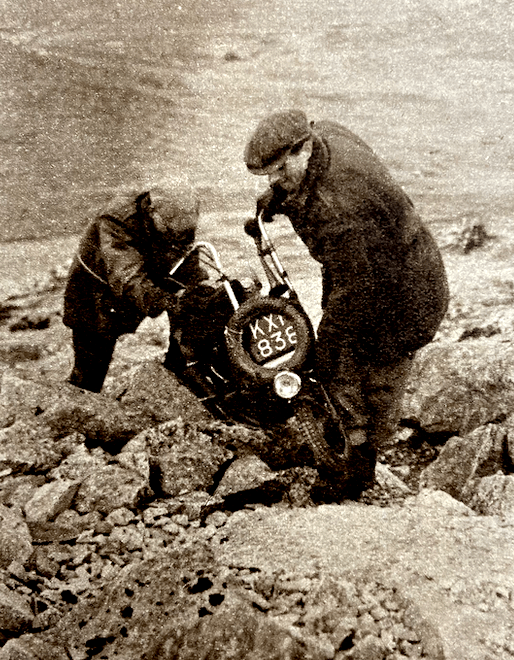
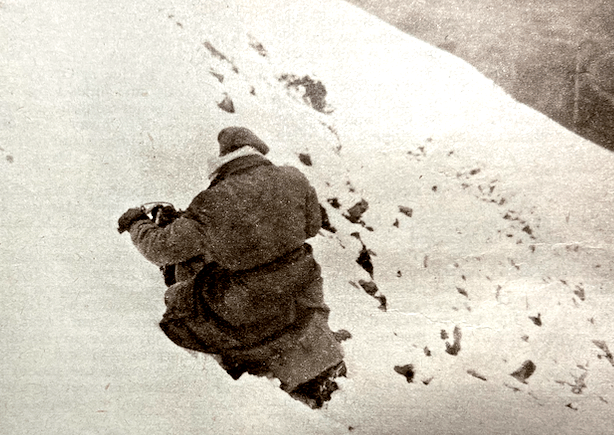
“MANXLAND AND MODERN MOTORCYCLING rediscovered by Fergus Anderson, who evolves A System for Riding the TT Circuit. “I suppose I should have my head examined. A week in the Isle of Man, even before Easter, is fairly expensive, but I decided to invest the cost hoping to show a small profit in June. But suppose, I thought, I am balloted out of the TT? I now know that I supposed right, because the ballot gave me only reserve positions. However, I am a firm believer in the old saying ‘If a thing is worth doing . . .’ so having signed the TT entry forms the obvious thing to do at that time was to borrow a suitable machine and go and do a little preliminary practice. Obviously I wanted a fast machine, but equally it was necessary to have a machine unobtrusively fast because they do say the police in the Isle of Man…! A phone call to Jock West elicited the information that AMC had no machine available, but that ‘Harry Louis has a Matchless twin; why don’t you ask him to let you have it?’ So one fine day in March, I found myself setting off from Dorset House done up like a deep-sea diver. I had borrowed suitable clothing from ‘man-mountain’ Ted Frost, so there was plenty of room for lots of sweaters underneath his coat! It was my firm intention to take train to Liverpool, but somehow somebody talked me into riding up on the pretext that the ‘Matchbox is a very pleasant machine to ride’. It was the first time I had ridden a vertical twin and for that matter, many many years since I had ridden any modern 500
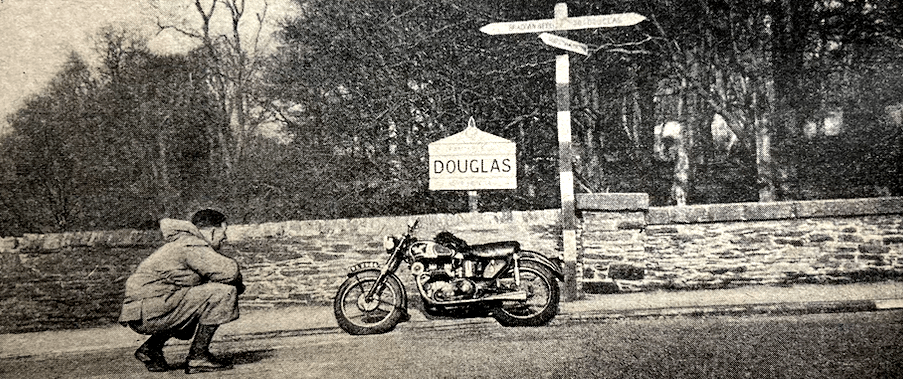
on a journey of more than a few miles…Up till a point,’I had been ambling along at a steady 65, because a little niche in my memory, where were stored records of 20 years ago, told me that this was the gait of a good machine. At this speed there was a trace of harshness—nothing unpleasant, but still it was there—but when I found myself 30 miles from Liverpool with the ship sailing in 45 minutes it did not take me long to discover that I bad been cruising the Matchless at far below its comfortable speed. I had to press on in no mean manner, and the fact that I got aboard with something to spare is due as much to the front brake as to the engine. I am a rather cautions type on the open roads, and I am never tired of telling people that ‘I don’t take any risks unless I am paid to do so’. If I had not had good stoppers, I should never have made it in competition with traffic bound for Aintree. The front brake is simply superb, and I can say with my hand on my heart that this is the very first time that I have ridden any touring machine with anything approaching perfection in this department…This excellent twin allowed me to do one circuit of the Island (just for fun) in 37 minutes without taking the slightest risk; the time includes burbling through the Glencutchery Road at the permitted ’30’ as well as negotiating Ramsey at 20mph. These slow interludes were to some extent counteracted by topping a century by some miles an hour on the descent to Brandish Corner. In addition to the Matchless, I took to the Island the little Castrol folder How to ride the TT Course: by Harold Daniell, and a bag of golf clubs. My wife would doubtless consider that I have put these two articles in the wrong order—but then women…The routine was to have been four laps each morning, then golf. After the first day, I reversed the order (sneering laughter from wife) because I got perished to the core after a lap and it
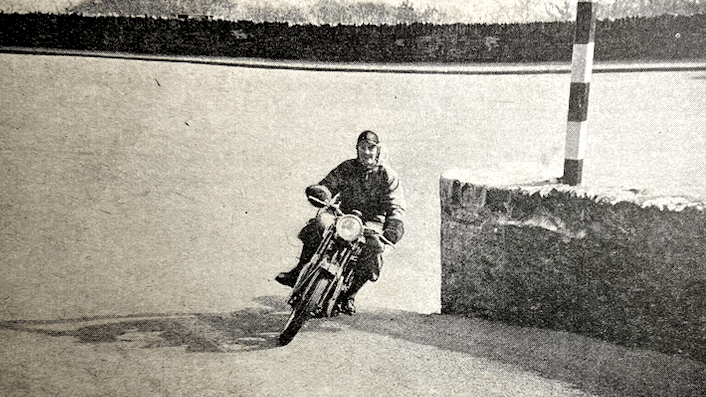
was, of course, less cold in the afternoon. During the course of the week, I made some astonishing discoveries: That you can see the sea while climbing out of Ramsey, and that Ramsey is on the east and not the west coast as I had thought! When I was at the TT in 1939, I was so engrossed in work that I reckon I learned less about the Isle of Man than anybody else has done in one year—though I don’t think I did badly at learning about the course. This time, the first few laps made me feel as though I were starting from scratch, for I was completely at sea from Union Mills to Ramsey, and even took the wrong road out of Ramsey Square. However, in a very few days I began to be having ideas about where the road went to, and it was then that I evolved my system. All road-racing may be divided into two sorts, the sort I call ‘visual riding’ where one can always see what is coming, and the sort I call ‘memory riding’. A good deal of the TT circuit is visual riding. ‘It is largely so from Ramsey to Quarter Bridge, but from the start to Ramsey it is nearly all memory riding, and very tough going at that, since there are so many blind bends and corners which look almost the same. I well remember, in 1939, nearly every morning going into a full-throttle top gear bend in second gear, and then going into a second-gear one flat out! Only DKWs know how many right-hand footrests I consumed during the practice period that year! Towards the end of my week I had pretty well established, by piecing together my memories, what Harold Daniell had to say, and what my eyes told me, which were going to be full-throttle bends on the 250cc Moto-Guzzi. I could identify each bend when I was on it, but I could not remember them when I was approaching them even at 85mph; so what chance should I have when approaching them in June at 100 and (I hoped) upwards? So one day I went out with a
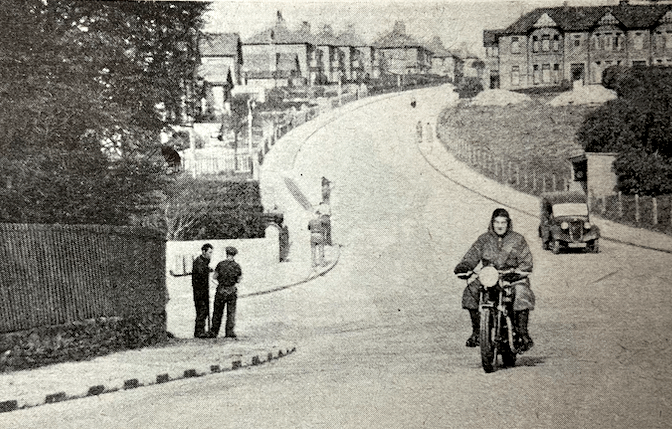
notebook to see if it would help me if I wrote them all down. It was while putting this scheme into practice that I made the discovery that a better method than identifying the parts which were not full throttle, was to identify the parts that were. From the moment I realised this, and drew up my little table, I could begin to feel that I was riding the circuit in its entirety, and not just piece by piece. Let’s see how this pans out. From the start to Union Mills is fairly plain sailing, and from Union Mills there is nothing of importance till Greeba Castle, nearly 3½ miles. There is then some trouble to Greeba Bridge, but a mile of full-bore thence to Ballacraine. Glen Helen is probably a nightmare however many times you have been round the island, but from the foot of Creg Willeys Hill there is two-and-a-half miles of full blast to the small S-bend (name not known). If you manage to keep out of the hedge in the said ‘S’ it is full-chat to the rather larger ‘S’ before Kirkmichael, another 1½ miles. From Kirkmichael to The White House (Birkin’s Corner) is a mile, and this is the only cut till Ballaugh, a further two miles away. Then follows another mile to the Quarries, and then a further mile-and-a-quarter to the end of the Sulby Straight. There is a mile from just past Ginger Hall to a left-right-left which I cannot name, and then two miles to Ramsey. From the Goose-neck to the Cutting is a mile, and from then to the Mountain Hut a mile-and-a-half. From Governor’s Bridge to Quarter Bridge is a mile-and-three-quarters. Addup all those stretches of full bore, and they some to just over 21 miles of the TT circuit that you know! Of course, as with good schemes, there is a snag, and the snag is that I have ridden in the Island before and that I have done a fair bit of road-racing. So, if you are in the Island for the first time don’t think that you can automatically go through the fast bends after Creg Willeys Hill without thinking about them. Having more or less eliminated half of the course, it appears on the face of it, that the thing to do would be to concentrate on what is left, section by section. It may be that that is the right idea, and perhaps I should have better spent my time by riding back and forth through Glen Helen, but it does seem to me that a better scheme is to develop a sort of minor rhythm of riding the circuit. That is what I tried to do. The Matchless would cruise all day, every day, at around 80, and of course nearly every road leading on to the TT road is a ‘Stop’ road so that one can ride very fast round the circuit without being a danger either to oneself or others. My plot was to allow myself one quarter of the width of the road on all blind or semi-blind corners and within reasonable limits go pretty hard inside those boundaries. I imagine that must give one a pretty fair comparison with a 250, for I think that where you can go at 80mph using a quarter of the

road you could get through at a century with the full width available. Anyway, I thought, we shall see, if not this year, then some other time. I have often found on other circuits that it pays to do a lap the reverse way round. I did not do a complete lap of the Island thus, because I cannot remember it all the right way even, but I did run through some places ‘backwards’— and how different they can look! For anybody troubled with running out of road on the right sweep climbing out of Glen Helen, my advice is to try coasting downhill—they will soon see the reason why! I did not keep a record of exactly how many laps of the Island I covered, though in five days I rang up 1,100 miles, but although, as I sit at home writing, I could not describe the course corner by corner I think I have laid sufficient groundwork for fairly smart motoring to be started right from the beginning of the practice. This is important because the circuit is such that if you are not riding briskly, you are not learning. I do not believe there is any use at all in touring round at 30mph. Undoubtedly the more difficult half is from Quarter Bridge to Ramsey, though it is not a section on which one should ever run into great difficulty, because one’s speed does not vary greatly, and there are very few places where one is below 80mph. As the road is wide, with a maximum of 100mph one has only to shut the throttle and drift and one should manage to stay in circulation even at the cost of a few seconds. The section that completely foxes me is that covering the left-hand bends from the Bungalow to Windy Corner; they all look exactly the same on the approach. I suppose I was sticking out my neck by hoping. to go to the Island, because last year I became for a time, quite famous as the silly ass who told Lorenzetti that a rider of his experience would not find the TT unduly difficult. Actually I was more right than I expected, for although I fully anticipated that Enrico would know the circuit well. enough to ‘stay with them’, I did not expect that he would actually make the fastest practice lap all on his own. However, you will never find me saying that it is easy for a first-yearer on a 500! I really intended going to the Island this year as a sort of training to ride a big ‘un in the year following. There will then have to he a serious revision of the list of stretches that are full throttle! As it is, I am now in rather a spot, because when I do get a ride in the TT, readers will doubtless be saying ‘Ah! here comes Anderson, he says he goes full throttle along this stretch.’ But I shall fox them. It is many years since I learnt from Tel Mellors that it is sometimes a good thing to leave the throttle open and just steady her up with a touch of the rear brake! I know one thing. If, on the next occasion I compete in a TT, I suddenly wake up in Ramsey Hospital, the first thing I shall think will be ‘there you are, the system is no good!'” Anderson didn’t get his start in 1950. In 1951 he started but DNF. But in 1952 he finally put all that practice to good effect by winning the Lightweight TT on the Guzzi 250, and he did it again in 1953.
“YEARS MAY PASS before there is another road race so thrilling as the final of the 350cc event at the ACU’s international meeting at Blandford last Saturday. This race, the first appearance of the new Works’ racing Norton—the 499cc model—and Geoff Duke’s riding of the Norton, were the principal highlights of the afternoon. But, unrealised by the vast majority of the spectators, officially announced as totalling 40,000, there were unhappily two fatalities, both at Engineers’ Corner; SH Ching crashed there in practice and later on, in a heat of the Junior, HW Veall also met his death there. The meeting was international in name. Ambrosini, the Italian, who was to ride 125 Morini and 250 Benelli machines, did not come to England, and the sole riders from the other side of the Channel were the Belgians, Auguste Goffin and Roger Laurent. AJSs, like Nortons, were giving their latest road-racing 500 an outing. Ted Frend was the rider. Unfortunately, a misfire developed in practice. It was not possible to state off-hand what was the cause and, with no further practice period, there was no chance of determining until the actual race, whether the ministrations had cured the trouble. Poor Frend finished seventh in his heat and toured in on Lap 1 of the final, which offers its own answer. What made the appearance of the latter machine especially interesting was the fact that there was a high wind, which was causing many riders considerable difficulty. Would the ‘tail’ add to the handling problem? Duke had a direct comparison, since he rode a
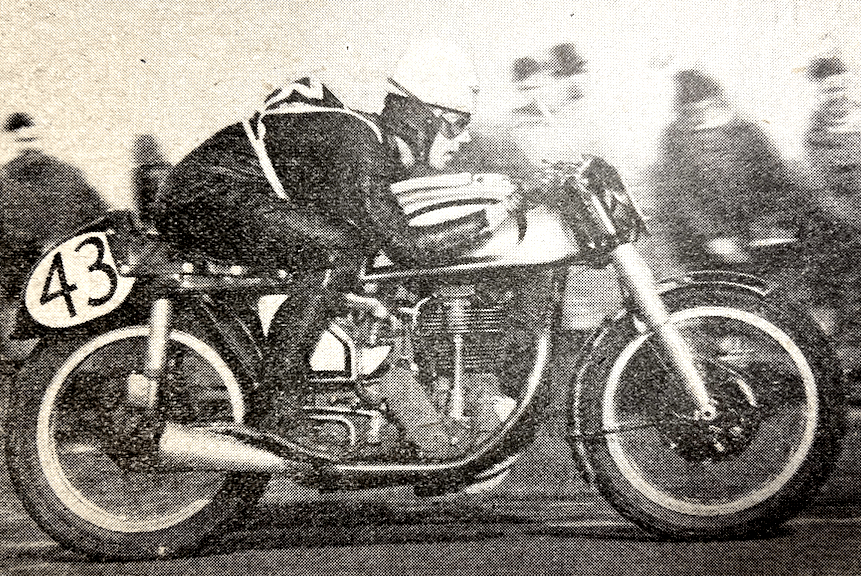
normal-frame Norton in the Junior race and the (much faster) new 499cc model in the Senior. The latter handled magnificently, he said, and there were no bothers at all owing to the faired rear end. His test was thorough, since, in spite of the high wind, he lapped the 3m 247yd course in 2min 7.2sec, 88.88mph, the highest speed of the day and a record for the course (the previous best was George Brown’s 88.46mph on a 998cc Vincent). Among the non-starters was Harold Daniell, holder of the Isle of Man lap record at 91mph. There was a query whether he had broken a bone in his hand as a result of the toss at Silverstone the previous week; an X-ray was awaiting analysis, it was stated. So many entries had been received for the Junior—350cc—race that it was necessary to have three heats and a final. These heats began the programme. In the first, Geoff Duke (Norton) won easily from ST Barnett (Norton). After lapping in 2min 29.6sec and getting right out on his own, he eased off. It was on lap 3 of this event that Veall crashed; from the starting point it appeared that he touched the grass at Monkton Corner on the previous lap. Oil on the road at ‘Engineers’ delayed for a while Heat 2, which CC Sandford (348 Velocette) won comfortably from Lockett, on a Beart-tuned Norton, and WA Lomas (Velocette). The -third heat was closer. It was a Bob Foster-David Whitworth race, with their two Velocettes seldom much more than 20 yards apart. Foster led throughout and averaged 78.53mph, which was over 2mph faster than Duke in the previous heat. An ohv mount, the 124cc Pankhurst Special with a New Imperial-like engine, won the
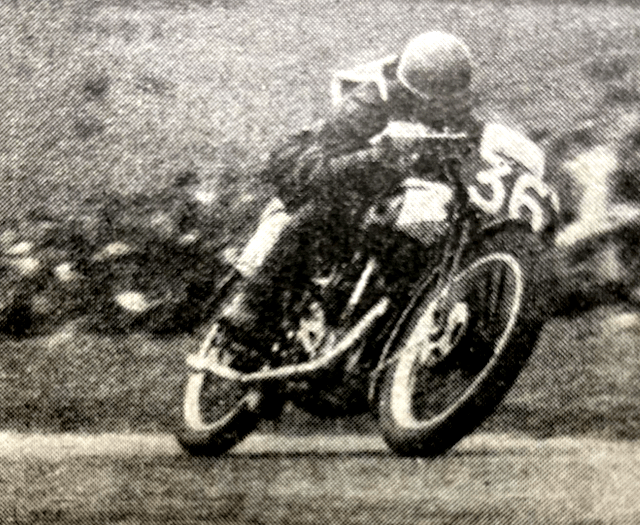
Ultra-Lightweight race by about a quarter of a mile—GJ Hardy up—from JA Hogan, on a BSA Bantam two-stroke. Then came the two heats of the Senior or 500cc race. Dale (499 Norton) won the first comfortably from CA Stevens (Triumph), with ST Barnett (499 Norton), third. Goffin, the Belgian, also on a Norton, was fifth, behind LR Archer (Norton). In Heat 2, Duke, on the new Norton, although he made a slow start, was leading at the end of Lap 1, and at the end of the five laps had probably a third of a mile in hand over TA Westfield (Triumph). Duke averaged 84.93mph, as against Dale’s previous heat speed of 81.83. Although there were no thrilling scraps for the respective leads, these two events provided the spectators with magnificent exhibitions of riding skill, especially of cornering. Reports came through that Duke was taking a different route round Engineers from that of the majority of riders and was emerging with something like half the road-width to spare. On the straight past the start-and-finish, he gave little impression of ultra-high speed, so effortless was his riding and so excellent the steering and roadholding of his machine, In the Lightweight (250cc) race, chief interest lay in Roland Pike, on his Rudge, and Maurice Cann (Moto-Guzzi). At the end of three of the eight laps. Pike was about 100 yards ahead of CC Sandford (Velocette) and Cann, whose engine had been misfiring, lay third. By Lap 5 Cann was in striking distance of Pike; the next time round, he was just behind and it was the same at the end of Lap 7. On the final lap Cann took the lead, to win by 15 or 20 yds at 72.07—roughly 1¾mph slower than the speed at which, later, he was to win the handicap. The Junior final was the event of the day. Bob Foster was in the fourth row on the starting grid, and Duke and Ted Frend, side by side, in the seventh—the next-to-last row. Right in front was Lockett. Duke appeared to be unable to weave his way through the massed start, and at the end of Lap 1 the order was: Lockett,
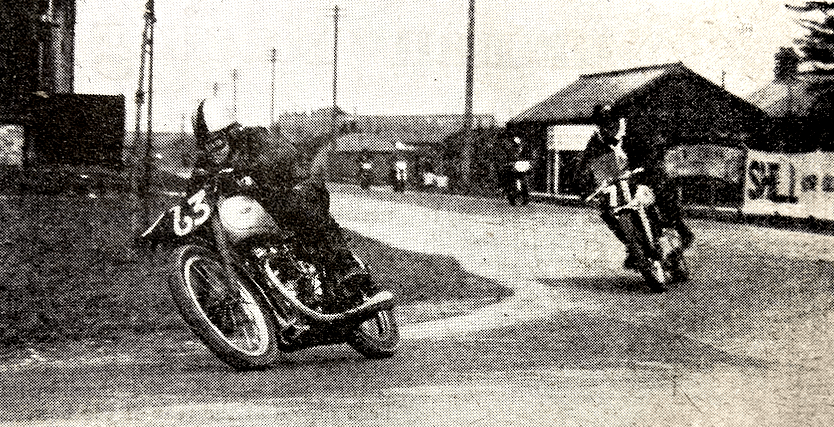
Sandford, Frend and Whitworth, with Duke lying seventh or thereabouts. Lap 2 saw Foster in the lead—just, because almost wheel-to-wheel with his Velocette was Frend’s AJS, Whitworth was third, Sandford fourth, and Duke fifth. Lockett was out; he pulled into the pits. Now the thrills really started. Frend passed Foster as they swooped down the finishing straight. Foster wrenched the lead back. Again Frend slipped ahead as they passed the timing point. At the end of Lap 5 they went through side by side. Meanwhile, Duke was doing his all to catch up with the leaders. Lap 6 saw him on Sandford’s tail. By Lap 7 he was third. The passing and re-passing by Foster and Frend continued. Frend appeared to have the greater speed—or was it a question of gearing? He was 20yds ahead at the at the end of Lap 7; only about six next time round. Lap 9—one to go—Foster leads! Frend draws level at the line. Duke is closing up on them. Oh, to be able to watch the trio all the way round…They swoop down from Monkton Corner to the finish—all three of them. Foster leads. Frend gains inch by inch. Who? Which? Frend—he slips past at the finishing line. Behind—two machine lengths or three? Duke. What a finish! Something similar could occur in the final of the Senior, too. This time, however, Duke was in the second row on the grid. Lap 1 found him 200yds ahead, and at the end of Lap 2 he was past the timing point
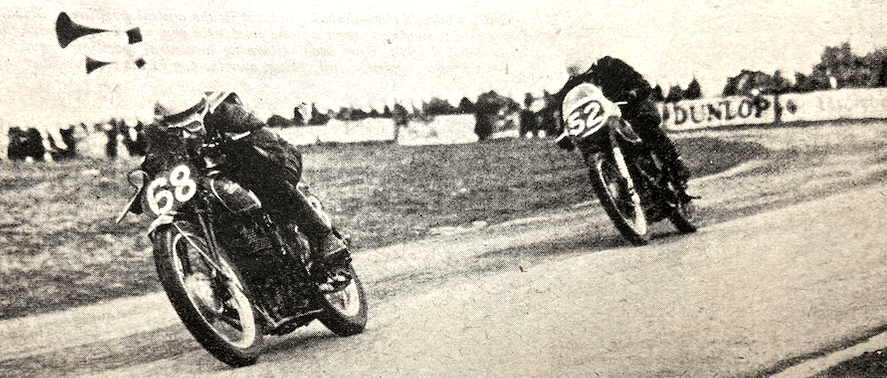
before another rider was in sight. Dale took second place on Lap 2 and remained there. Interest was sustained by some superb riding, and not least by the ding-dong tussle—more passing and re-passing—between Whitworth and TA Westfield, both on Triumph twins. At the finish, neither knew who had gained third place. Whitworth had, by about a wheel. Finally, there were the passenger and the handicap races. In the former, Jack Surtees’ Vincent was troubled with mis-firing and he toured into the pits. Tom Bryant, who was in the last of three rows on the grid—there was a 10sec-interval start—drove his Morgan through the small field and won at the useful speed of 67.70. The handicap event was a disappointment—no Duke and no Frend. Maurice Cann won easily from Whitworth (348 Velocette); Dale (499 Norton) was rather more than 100yds behind Whitworth. RESULTS Ultra-Lightweight: (100-125cc, 3 laps)—1, GJ Hardy (124 Pankhurst Special); 2, JA Hogan (123 BSA); 3, RW Marsh (124 M&F), 10min 6.6sec, 55.91mph. Lightweight (175-250cc, 8 laps)—1, Maurice Cann (248 Moto-Guzzi); 2, RH Pike (249 Pike-Rudge); 3, CC Sandford (248 Velocette), 20min 55sec, 72.07. Junior (250-350cc, 10 laps): 1, EJ Frend (348 AJS); 2, AR Foster (348 Velocette); 3, GE Duke (348 Norton), 23min 19.8sec, 80.77. Senior (350-500cc, 10 laps): 1, GE Duke (499 Norton); 2, RH Dale (499 Norton); 3, MD Whitworth (498 Triumph), 21min 26.6sec, 87.87. Passenger (up-to-1,200cc, 5 laps): 1, Tom Bryant (1,100 Morgan); 2, LW Taylor (596 Norton); 3, Cyril Smith (528 Norton), 13min 35sec, 67.70. Handicap (10 laps, Daily Express Trophy): 1, Maurice Cann (248 Moto-Guzzi); 2, MD Whitworth (348 Velocette); 3, RH Dale (494 Norton), 23min 31.2sec, 73.84.”
“MUCH EXCITEMENT WAS CAUSED at Blandford last Saturday by the appearance of a new and most interesting road-racing Norton, which, in the hands of Geoff Duke, dominated the two events in which it took part. The frame is entirely new. It is of welded construction and, tube being welded to tube is obviously light. From the bottom of the steering head, two tubes branch outward and then run horizontally to the rear of the tank, where they sweep down, provide a pivot mounting for the swinging-arm rear suspension and continue forward, along the bottom of the gear box and the crankcase, finally to reach the top of the steering head after acting as duplex front down tubes. These two tubes, each manipulated into roughly rectangular form, are linked by a series of tubular cross-members. There is one at a point about 6in behind the steering head, another at the front mounting of the racing seat, a third behind the gear box and one in front of the crankcase; in addition, there is the link provided by the pivoted rear chainstays. A specially interesting feature is that the portions of the tubes which constitute front down members run to the top of the steering head,
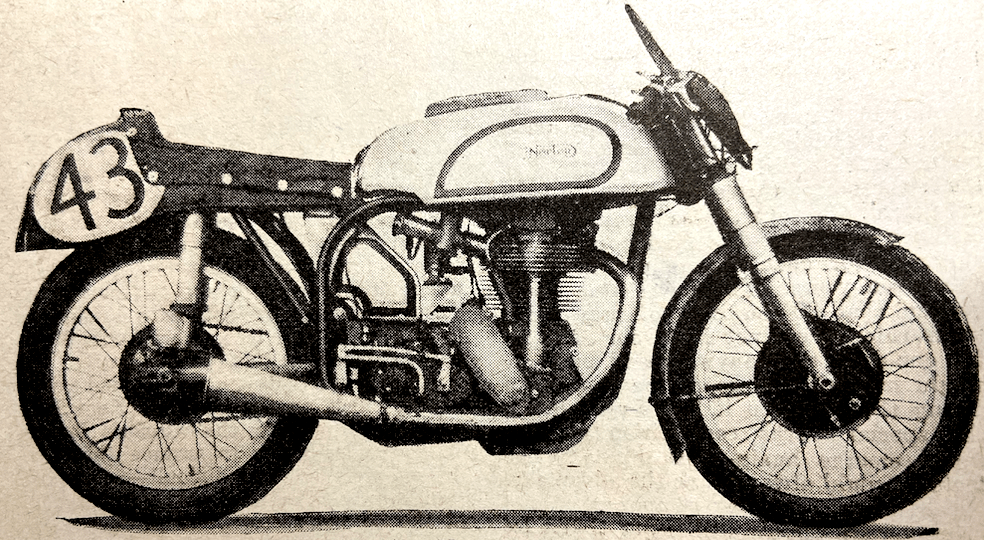
passing in between the parts which would normally be termed ‘top tubes’ (which are welded to the bottom of the head). For fixing the fuel tank to the platform formed by the upper portions of the frame tubes there is a long metal strap arranged along the tank top. Shape of the tank is such that the rider’s arms can lie along the curved sides, while his knees mate with recesses at the rear. A triangulated structure of small-diameter tubes fulfils the three-fold task of carrying the sheet-metal, faired tail and the racing seat, which the tail incorporates, and acting as the upper mountings for the hydraulically damped rear suspension units. In front of the steering head is fixed a semi-streamline cowl, which has a flat front surface for the racing number plate. Surmounting this is a gauze, fly- and stone-screen. Rims are of 19in diameter, and the front tyre of 3.00in section and the rear, 3.25; these, at least, were the sizes used at Blandford. Obviously, a very real endeavour has been made to reduce drag. Even the filler cap for the oil tank does not protrude, but is tucked away centrally in the crook behind the fuel tank. Further, although the front fork is basically similar to those used last year, there is now a flat alloy plate connecting the top of the steering-head stem with the stanchions, and the steering-damper is adjusted by a comparatively small wing-nut—there is no protruding knob.”
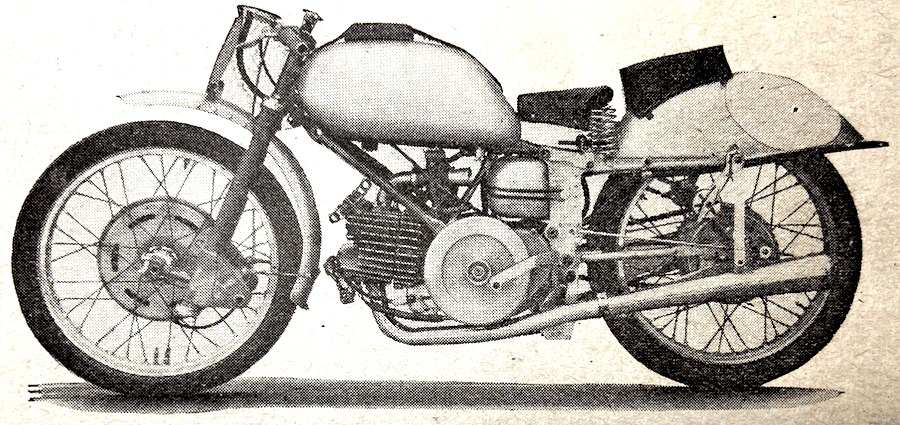
“UNLIKE THE RACING 350cc AJS, the twin-cylinder 500cc twin which EJ Frend rode at Blandford was not fitted with a sheet-metal tail. There was, however, a resilient racing seat with a raised back that sweeps rearward in smooth contours—a slightly different seat from that on the 350 which has not such a raised back. The fairing at the steering head was much the same on the two models. This is of polished light-alloy, is larger than that on the Norton, and
incorporates a small plastic windscreen and the usual flat front for the racing numberplate. other obvious features of the 500cc twin in its latest form are the new front brake, the deep, cast, light-alloy lug that links head stem and fork members, the oil pressure gauge tucked in beside the steering head, and the arrangement of the revmeter in front of the head with 6,800 (or thereabouts) at the top!”
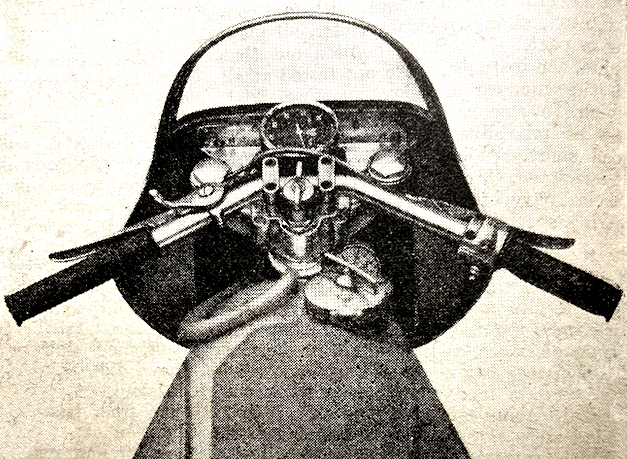
“RESULTS OF THE NEW ZEALAND Grand Prix held at Cust on Easter Monday are as follows: Junior Race—1, Rolland; 2, Coleman; 3, Fabian; all rode 348cc 7R AJS machines. Senior Race— 1, Haggitt; 2, Taylor; 3, Mudford; all rode Triumph GP models. In the Senior Race, Swarbrick (Triumph) was fifth, Holland on his 7R AJS was sixth and Fabian, also on his 7R, was eighth.”
“IN THE HOUSE OF COMMONS it was stated that the total number of people employed on petrol rationing at April 1, 1950, was 1,949. Cost of maintaining a petrol rationing staff in Great Britain for a year is £680,000. Accommodation, post-age and stationery cost (according to an estimation by the Minister of Fuel and Power) about £200,000. Maintenance of rationing costs altogether nearly one half-penny per gallon of petrol.”
“A SPECIAL INVITATION to British riders to enter the Rallye International de la FIM is extended by the KNMV, the Dutch national organisation. This Rally takes place during the same week-end (July 7-8) as the Dutch Grand Prix, and participants will see the racing from specially reserved seats in the grandstand.”
“HIGHLIGHT OF THE MILAN Show so far as the motor cycle section is concerned has been the new racing MV Augusta four-cylinder. A mock-up was being made in readiness when the Editor visited MV Augustas at the end of March. This machine, it will be recalled, has shaft-drive. Front and rear suspension are by torsion bars. Power output is given as 52bhp at 9,250rpm, maximum speed as over 130mph, and weight as 287lb. Another novelty is the ‘B’, which has been designed by one of the Benelli brothers working independently of the Benelli concern. This machine is somewhat reminiscent of the Imme in that it has a backbone frame and a rather similar mounting for the 98cc two-stroke engine. It has swinging-arm rear suspension controlled by horizontal leaf springs. Front fork is of the telescopic type. Other features are a three-speed gear box in unit with the engine and operated by the foot. Weight of the machine is approximately 140lb. Several new scooters are on display. Various British makes are displayed, namely, Ariel, BSA, Royal Enfield and Triumph. Italian dealers deserve a pat on the back; they continue to exhibit British motor cycles at the various shows in spite of the import difficulties making it a labour of love.”
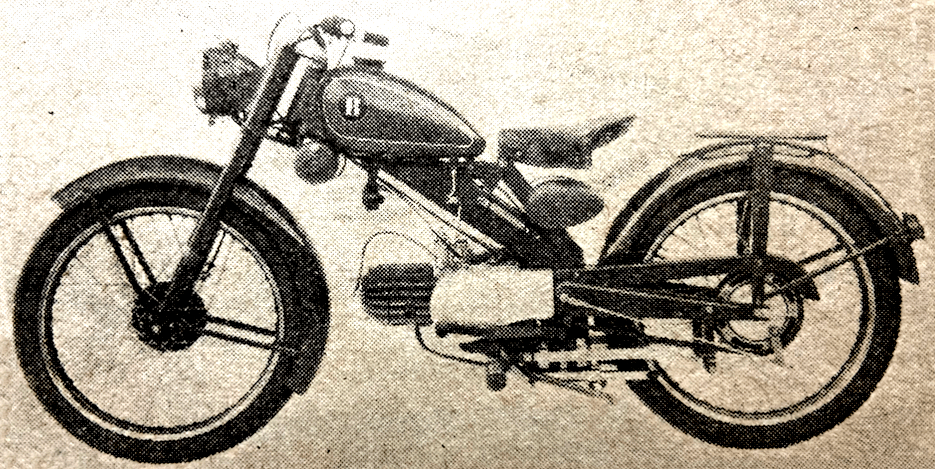
“EVERY MONTH for the past eight, the Ministry’s official figures have shown that under-150cc machines top the list of new-machine registrations. If the totals for the 150-250cc class are added, it is seen that today the lightweights, numerically, stand supreme. The precise figures for the last eight months available, counting solos and sidecars in each case, are 32,594 under-250cc machines and 25,147 over-250cc. These statistics are significant While it is correct that some models of medium or large engine capacity are not readily obtainable in Great Britain (they are earmarked for export and thus affect the ratio in some degree), there is no gainsaying the ever-increasing importance of the lightweight. In 1948, only some 24,000 new, under-250cc machines were registered; in 1949 the figure was nearly 43,000. For many years now, the manufacture of small, light machines has been the major preoccupation of Continental motor cycle factories. Today it is much the same with British manufacturers. There is a remarkably fine range of lightweights available.”
“DURING ITS SPRING CONGRESS held in Madrid last week, the Federation Internationale Motocycliste re-admitted Germany as a member-nation. This decision was expected in the light of the terms under which the application for readmission was rejected at the Autumn Congress in Paris last September. Since that time, a mission has visited Germany and the German governing organisation now recognised is the Oberste Motorradsport Kommission. Though there will be differences of opinion on the FIM step, there is no doubt that the decision is wise. Aside from the fact that the decision is in step with the diplomatic and economic arrangements between the western nations and the western zones of Germany, there is the compelling reason that motor cycle sport in Germany is already most active. Hence it is, better that the sport should develop and flourish under the banner of the FIM rather than independently…the immediate result will be that Western German riders may henceforth compete at International meetings in other countries but, until 1955, no German events can be accorded an International permit; this means that during this year, German meetings are not open to riders from other lands. A second important decision taken at Madrid was agreement on permitting limited forced induction for two-stroke engines. The rules to be applied should ensure that two-strokes are not supercharged in the accepted sense of the term; all that is implied is that such engines are put on a reasonably competitive basis with unsupercharged four strokes.”
“A RECRUDESCENCE of so-called testing of motor cycle brakes by the police is reported. We use the term ‘so-called’ because for a burly police officer to turn a wheel with the brake applied by pulling on the tyre or to move the machine a foot or two forward by heaving on it, is no proper test of braking, nor does it appear to line up in any way with what the law requires.”
“HALF A DOZEN motor attachments for pedal cycles are at present on the British market. Five are two-strokes and one is a four-stroke with overhead valves. Of the two-strokes, four have friction roller drive direct on to the tyre; two drive on the front tyre and two on the rear. The fifth two-stroke, which is provided with a clutch and mounted in the vicinity of the rear hub, has chain drive to a sprocket attached to the rear-wheel spokes. Clipped to the frame bottom-bracket and front down tube, the ohv four-stroke is built in unit with a two-speed gear and clutch, and drives to the rear wheel through the pedalling chain. In most cases the unit has been, or will be, fitted by the dealer, but there may be instances where the owner has to fend for himself…The machine must be equipped with a horn (a bicycle bell is not legal when a motor is attached), a licence holder, and front and rear number plates of definite dimensions. Further, when the machine is ridden at night the rear number plate must be illuminated to conform with a certain performance as to visibility…Thousands of Mini-Motor units are already in use. The unit is mounted over the rear wheel and drives direct on to the tyre by a 2in-diameter, serrated, steel roller. The earlier production models were held in contact with the tyre by spring pressure, an arrangement which permitted the unit to bounce on bumpy roads. Later units are held in positive contact by cable pull, operated by a pawl-controlled lever on the left handlebar. When the pawl is disengaged, and the lever thus released, the unit is raised clear of the tyre by spring pressure. Hence, tyre life is greatly increased. Incidentally, those with the older-type mounting can obtain a conversion outfit for 4s 6d. With hardened steel roller drive direct on to the top of the rear tyre, the Power Pak is a beautifully made unit which is mounted in rubber with the engine inverted, the cylinder and head pointing downward on the off side of the wheel. Ball and roller bearings are employed throughout, except for the connecting rod small end, which is bronze bushed. Positive contact between roller and tyre is achieved by means of a lever extending forward from the unit itself and engaging with notches in a plate attached to the forward-mounting on the seat stays. With the lever in the top notch the unit is raised from the tyre. The next notch provides the normal driving position. A little lower still is an emergency notch to provide extra pressure in the event of a soft tyre. At the back of the unit is a most useful lifting. handle…Mounted on rubber grommets to side plates which clamp to the front-fork blades, and enclosed within pressed-steel cowl, the Cymota drives through a carborundum-coated roll direct on to the front tyre. A notable feature is that electric lighting is provided from lighting coils in the Miller flywheel magneto. The head lamp built into the cowl. Cymo, have, of course, world-patent protection for their design. The roller is brought into contact with the tyre by depressing a conveniently placed lever. In no circumstances should this lever be employed as a clutch…Of French design and manufacture, the VAP is mounted to the near-side of the rear wheel at spindle level and drives through a roller chain to a large-diameter sprocket clamped to the rear-wheel spokes. Tyre life, therefore, should be almost as great as in the case of a motor-less cycle. Built in unit with the engine is a helical pinion primary drive and cone-type clutch. The unit is spigoted and bolted to a slotted platform and can be moved sideways for chain alignment. The platform is mounted on an eccentric (for adjustment of chain tension) which pivots about a sleeve nut employed in place of the usual wheel-spindle nut. Pivotal motion is controlled by two springs acting on an arm of the platform. Decompressor valve (with hairpin spring) and throttle are actuated by separate levers above and below the right handlebar. On the left handlebar is the clutch lever, which has a trigger device to hold the clutch out of engagement…Of Italian design and manufacture, the Cucciolo is a fascinating little ohv engine built-in unit with a two-speed pre-selector gear and 9-plate all-metal clutch running in oil. All shafts run on rollers, including the camshaft and those in the gear box. The unit is clamped to the cycle-frame bottom bracket and clipped to the front down tube. Drive to the rear wheel is through the normal cycle chain. Hence a freewheel model will freewheel in the usual way, regardless of gear position, when machine speed exceeds engine speed, such as when the machine is running downhill. Further, if the cycle is equipped with a three-speed hub, it becomes, in fact, a six-speed machine. Mounted behind the saddle, the petrol alloy and holds half a gallon.”
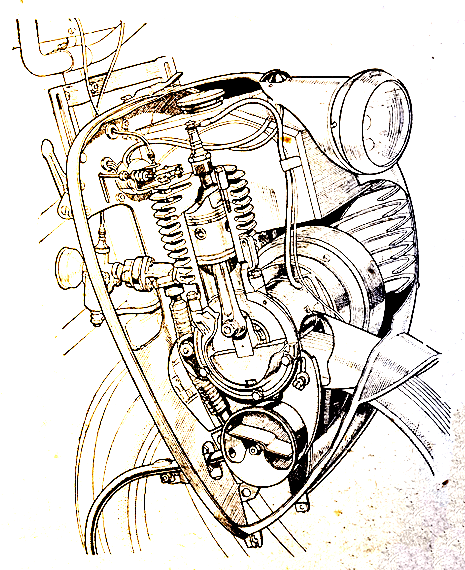
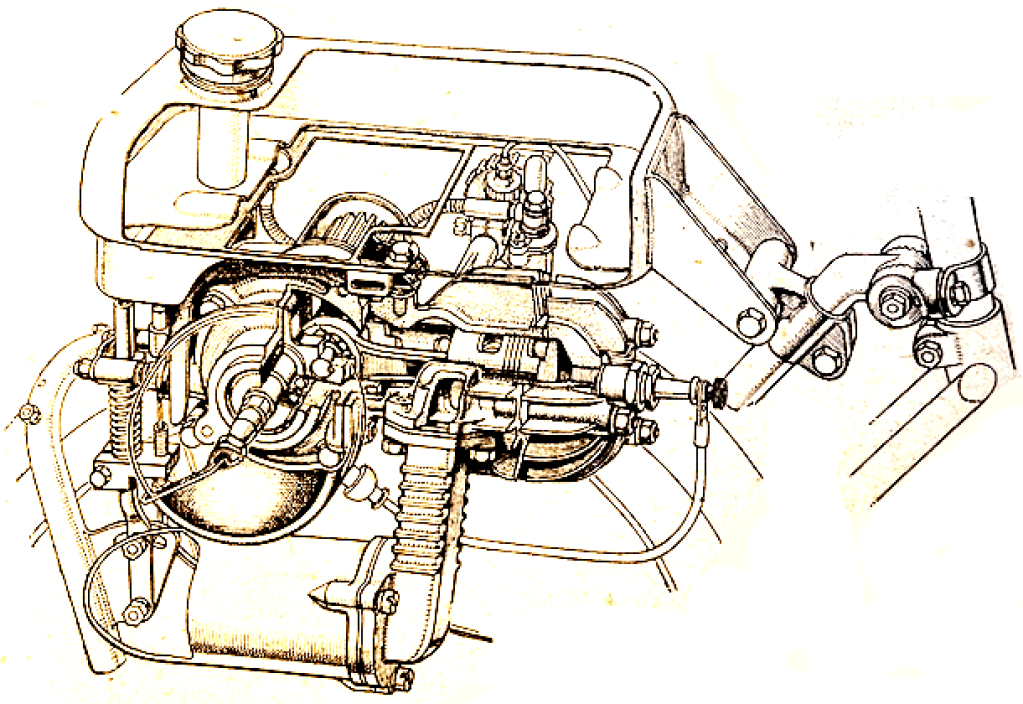
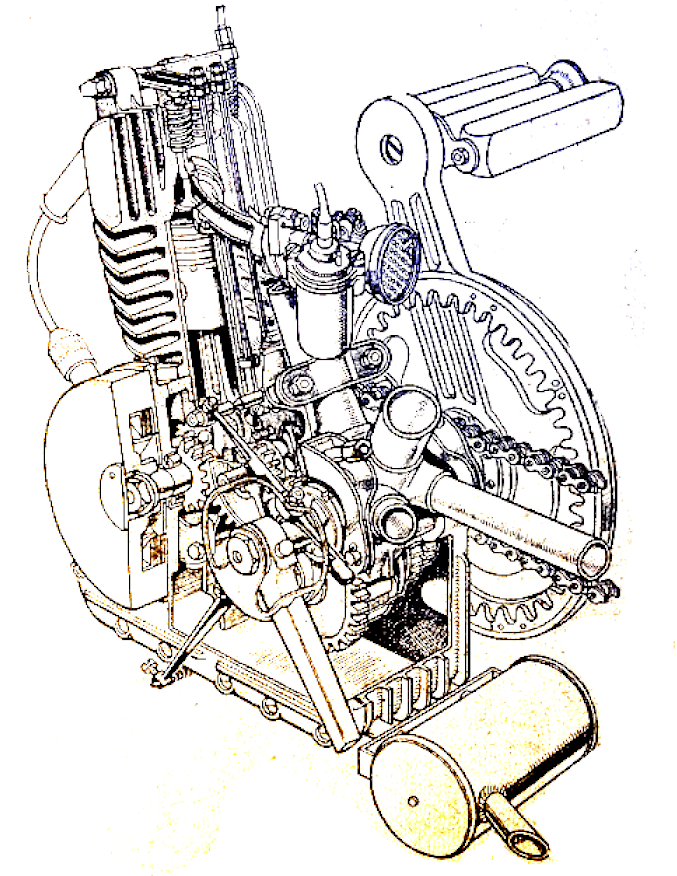
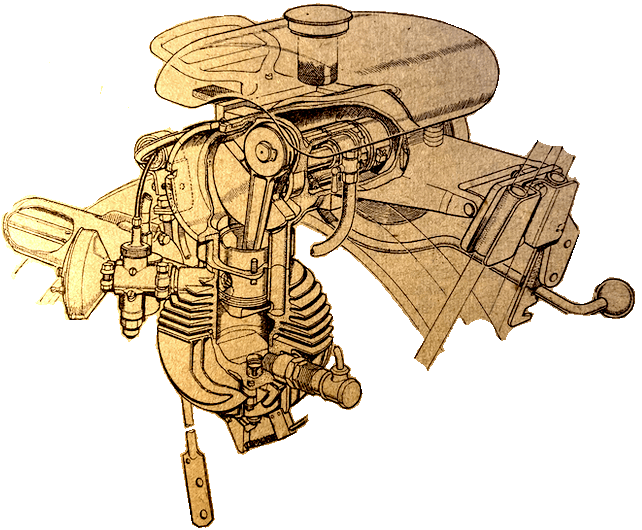
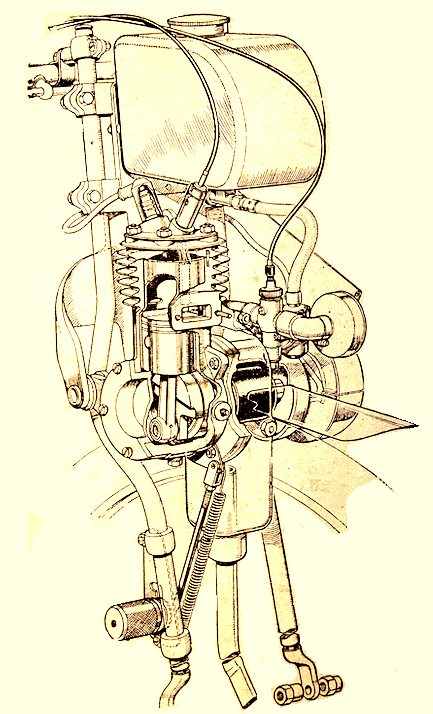
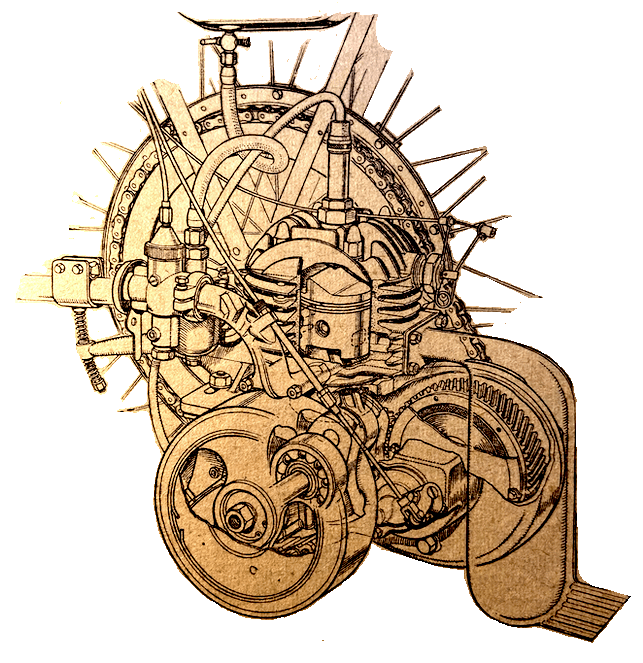
A 25CC TWO-STROKE ENGINE which drives by roller chain through a countershaft clutch, and which is built into the rear wheel, constitutes the latest motor attachment for cycles. Called the Cyclemaster, it is marketed by Cyclemaster, 26, Old Brompton Road, South Kensington. London SW7. The makers are EMI Factories of Hayes, Middlesex. Large-scale production is envisaged. The Cyclemaster is sold as a complete 26in cycle rear wheel. tyred and tubed, to replace the existing rear wheel. A 1½in 18-gauge rim and 13-gauge spokes are employed in pace of the more usual 20 and 15 gauges respectively. The spokes are laced to a large open-ended drum which substantially houses the engine-clutch unit. Periphery of the drum is provided with louvres to assist cooling. Riveted to the inside of the drum are the final-drive sprocket and the hub flange. Suspension of the power unit is by means of a bracket which, at its forward end, clips to the nearside chain stay of the cycle frame and, at the rear, locates on an eccentric on the hub spindle, to which the bracket is locked by a ¾in nut. Attachment of the engine to the bracket is by ⁵⁄₁₆ and ¼in bolts passing through steel-cored rubber bushes; hence the power unit has rubber suspension. To an upward extension of the same bracket is bolted the petroil tank. Attached by a single screw below the petroil tank is a cover that shields the carburettor, which is an Amal 308. The air-cleaner and choke, and also the petroil tap, project beyond this cover. A unique feature of the engine is that the induction port is not controlled by the piston but by a spring-loaded, steel rotary valve located between the near-side web of the crankshaft and the crankcase.”
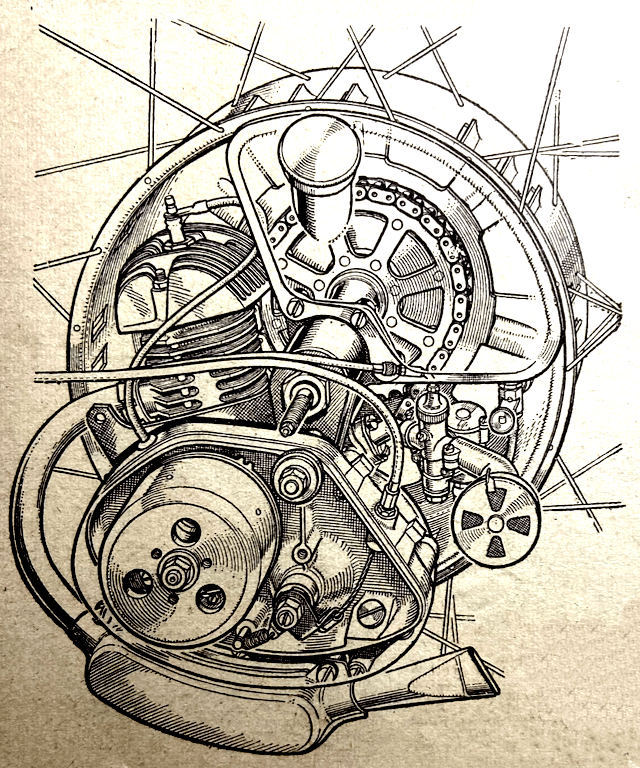
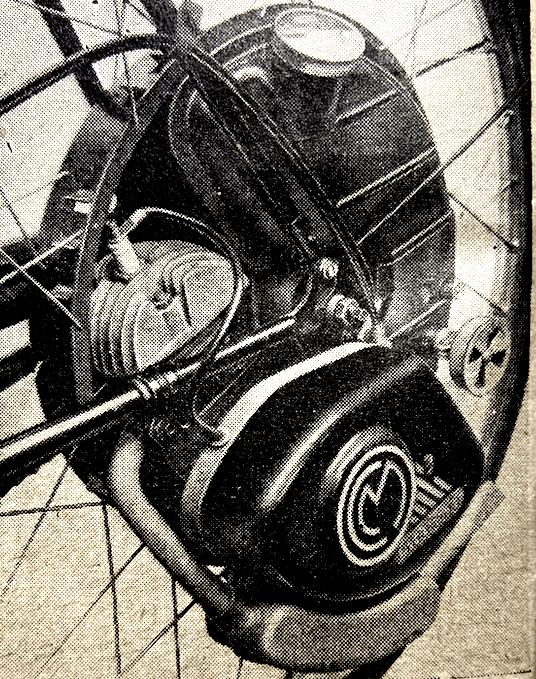
“A NEW MOTOR ATTACHMENT for cycles is the 31cc Cyclaid (32x35mm) two-stroke…it employs belt-drive to the rear wheel. The engine has an aluminium cylinder head and barrel, the latter with cast-iron liner. Light alloy is used for the crankcase, which also incorporates a countershaft housing. Supported on two ball bearings, the countershaft is driven at its offside through helical spur gears giving a reduction of 3.7 to 1, and carries a vee-belt pulley at its other end. Lubrication of the reduction gears and the countershaft bearings is by petroil. Three ball bearings support the crankshaft—one on the near-side, one between the crank web and the primary drive pinion, and the third between the pinion and flywheel magneto [which] is a Wico Pacy Bantamag. The hardened-steel connecting rod has a roller-bearing big-end and a phosphor-bronze bushed small end. The piston is deflectorless, but has a slightly domed crown. Compression ratio is 5.6 to 1. Mounted horizontally over the rear wheel, the unit is carried on front and rear engine plates. The former are bolted to a cast-in lug on the cylinder head and are provided at their forward ends with Silentbloc rubber bushes through which is passed a specially strengthened saddle-pillar pinch-bolt. The rear engine plates are attached by set-screws to a sliding block located at the top of an inverted U-shaped member; bottom ends of the legs of the member attach to special wheel-spindle nuts which have threaded tubular extensions. (The fact that they are tubular permits normal operation of, for example, a three-speed hub.) Movement of the sliding block is controlled by a coil spring. Thus the engine mountings pivot at the front and are sprung at the rear.”
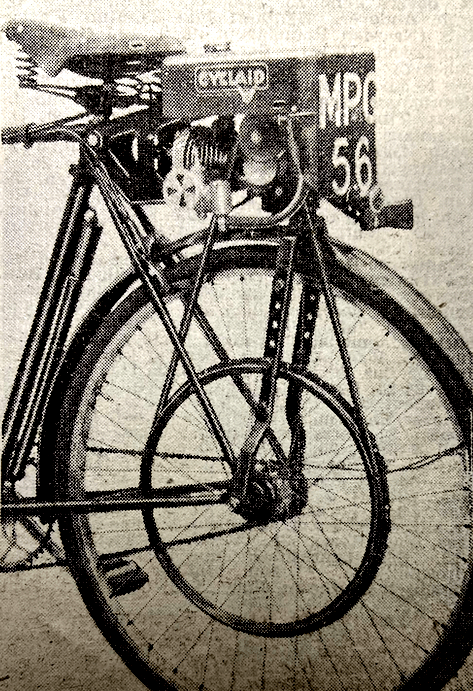
“AN AUTOMATIC, centrifugally operated clutch is an interesting feature of a de luxe version of the 49.9cc Motobécane Kaptein Mobylette, announced from the Continent. External refinements which distinguish the new model are large-diameter, internal-expanding brakes and a telescopic front fork which provides 2¼in of movement. The fork sliders operate in self-lubricating nylon bushes which are said to be provided with adjustment to compensate for wear. The centrifugal-type clutch is located on the left side of the power unit in such a way that the engine has a symmetrical appearance. Mounted on the engine crankshaft, the clutch drum has operating inside it a pulley which runs on a double-row, needle-roller bearing. Two spring-loaded segments inter-posed between the drum and the pulley take up the drive between the two when the speed of the bicycle is in the region of 5mph. Engagement of the drive depends not upon engine speed but upon the road speed of the machine. Stopping the model is accomplished merely by closing the throttle and braking. When the speed has dropped to that of a fast walking pace, the clutch, and thus the engine, is automatically freed. The inner pulley incorporated in the clutch mechanism carries the V-belt of the primary drive. A test run of the de luxe Mobylette, under-taken by the Netherlands correspondent of The Motor Cycle, showed the model to have excellent steering and road holding, and the processes of starting and coming to a stop were found to be quite effortless. The power unit developed excellent low-speed torque, and the performance against gradients and head-winds was most praiseworthy.”
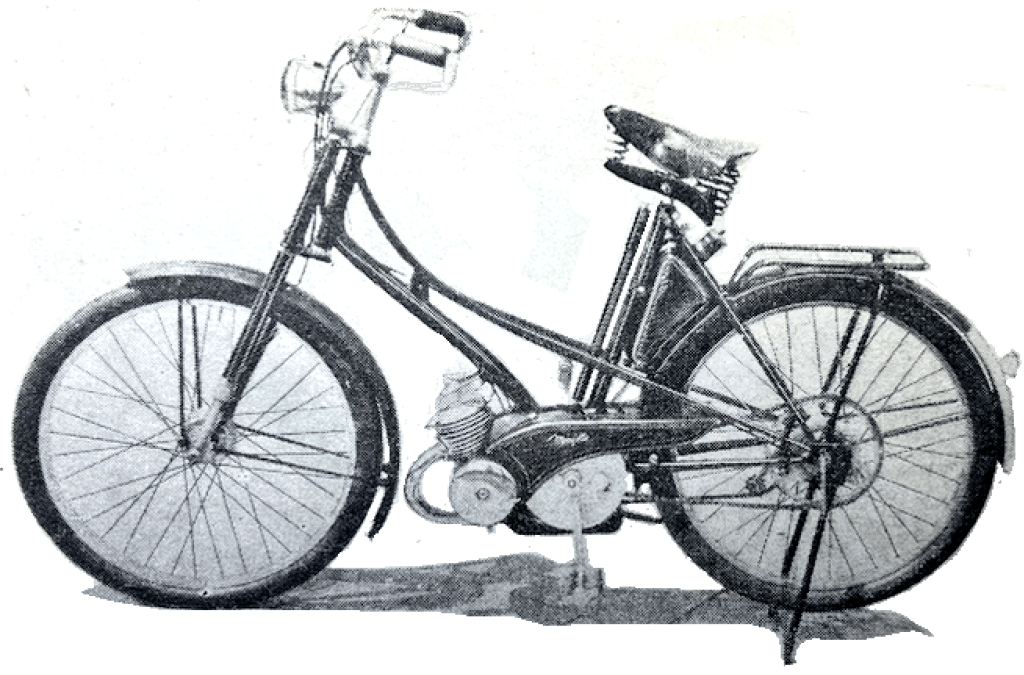
“LIGHTWEIGHT PROGRAMMES
Ambassador: Three Ambassador models are available; all have a similarity in that the Villiers 197cc engine-gear unit is employed. Variety is in the specifications which mean the difference between a low-price, functional model and one with luxury equipment. The basic model is the Series IV Popular, which is a business-like utility machine with a Webb link-type front fork, direct lighting and black-enamel finish except for the grey-finished tank and chromium plate for exhaust system, handlebars and other detail components. Other features are a loop frame, 5in-diameter brakes, Dunlop 3.00x19in tyres, and 2-gallon petroil tank. Similar to ‘the Series IV, the main differences for the Series III are lighting equipment, including a Westinghouse rectifier, a battery and a large head lamp, an electric horn, a carrier and more lavish use of chromium mating. The Series V model has the same specification as the Series III, but is equipped with a telescopic front fork. Bown: Unusually robust in construction, the Bown autocycle has a duplex cradle frame and a link-
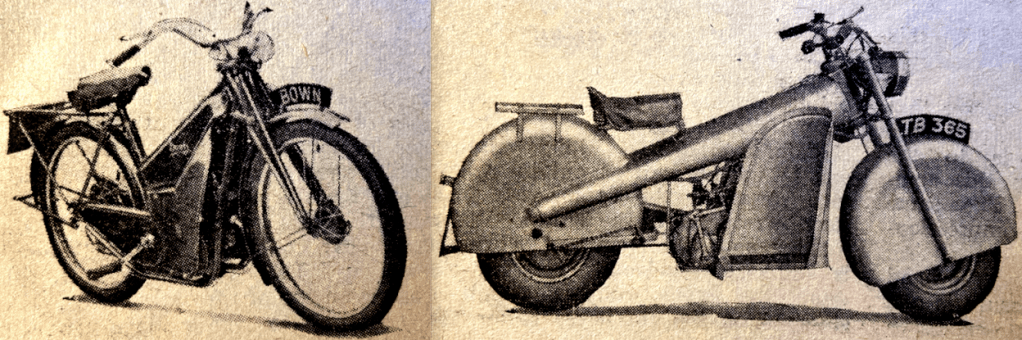
type pressed steel front fork. Effective shields conceal the engine (the Villiers 98cc Mark 2F) and ample shields are provided for the pedalling and driving chains. Both wheels have 2.25×21 tyres; petroil-tank capacity is1½ gallons. Bond Minibyke: Among the most unconventional machines ever marketed, the Bond Minibyke is made by a company associated with aircraft, and the design of the Minibyke shows the influence of aircraft practice. Built almost entirety of aluminium alloy castings and sheet panels on the stressed-skin principle, the frame has a ‘backbone’ extending from the steering head to the rear-wheel spindle. A tubular front fork is fitted and each leg is a single, straight tube without springing. The engine is the Villiers 98cc unit with integral two-speed gear operated by a handlebar control. Wheels are 8in diameter of the split-rim type for easy tyre removal, and the tyres are 4.5in in section. Both brakes are of 4in diameter. Tank capacity is 1½ gallons. Finish is in polychromatic blue with chromium plated handlebars and exhaust system. The: complete machine weighs under 1001b. BSA: Although it has been on the market for only two years, the 123cc BSA Bantam D1 two-stroke has become a very popular little machine, with an enviable reputation for high performance and fuel economy. It is available in three models—as a standard, no frills lightweight machine, with three-

speed gear box and direct lighting; as a competition machine with a specially large rear-wheel sprocket, unvalanced mudguards, raised saddle and adjustable footrests, and with a larger rear tyre (3.25in section); also as a luxury mount with plunger-type rear springing, battery-rectifier lighting, and coil ignition. Engine-gear units on all models are identical, except that the competition Bantam has a compression release valve in the cylinder head. Finish is in pale green and cream. In the lightweight field also are three 250cc four-stroke mounts—two with overhead valves and the other with side valves. These have dry-sump lubrication, coil ignition with car-type distributor, and three-speed gear boxes with positive-stop foot-change control. On the C1O side-valve machine, and the C11 standard ohv model, the tank is finished in silver and chromium plate. The C11 de Luxe has tank and wheel rims finished in blue and chrome. All these models—the two-strokes and the four-strokes—have telescopic front forks. Corgi: A completely redesigned version of the Parachute Regiment’s wartime ‘Welbike’, the Brockhouse Corgi, has made a post-war appeal to many former non-motor cyclists. Handlebars which fold back along the tank, together with a telescoping saddle pillar and small overall dimensions, make the Corgi an ever-handy means of transport even for those who have little or no garage space. It has a Spryt 98cc two-stroke engine with kickstarter and clutch, disc wheels and direct lighting from a flywheel lighting coil.
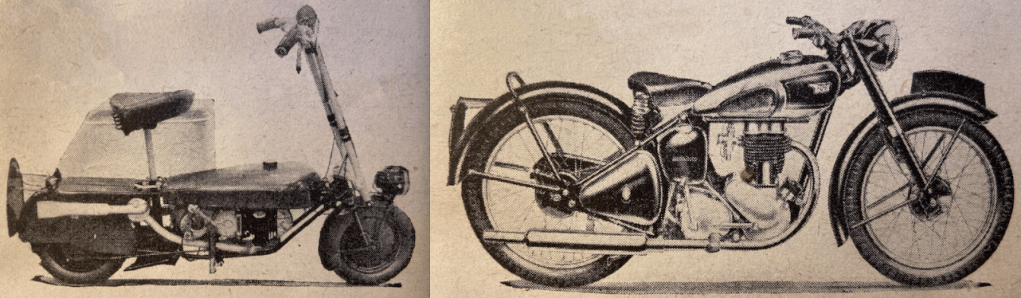
A two-speed gear box and a sprung front fork are available as extras.Cyc-Auto: An unusual feature of the Cyc-Auto autocycle is its primary drive, for, in place of the normal chain and countershaft is a worm shaft driving a bronze worm wheel concentric with the pedalling crank. A multi-plate clutch is also fitted and a transmission brake is operated by the clutch lever. When the engine is not running, lateral movement of the crank axle disengages a dog clutch and the machine may be pedalled without any drag from the power unit. This latter is a 98cc Scott two-stroke, with twin exhausts and crankshaft in line with frame. A girder fork with pressed-steel blades is standard on the autocycle. A tradesman’s carrier model is also available. Dot: Two models, both of 197cc capacity, are being produced by the old-established Dot concern. These Villiers-engined machines are the models 200/DS and 200/RS; both are identical except that the latter has a battery-rectifier lighting system. A loop frame of weldless, carbon-steel tubes, with aluminium-alloy engine mounting, is employed; front fork is the Webb link-action girder type with pressed steel blades. The tank is entirely chromium plated, as are the rear chain guard and chain wheel. Both mudguards have an ivory finish.DMW:
Although available only to oversew buyers, the new range of DMW lightweights has aroused interest among enthusiasts at home. Among the not-so-common features are saddles adjustable for height and fore-and-aft position, adjustable
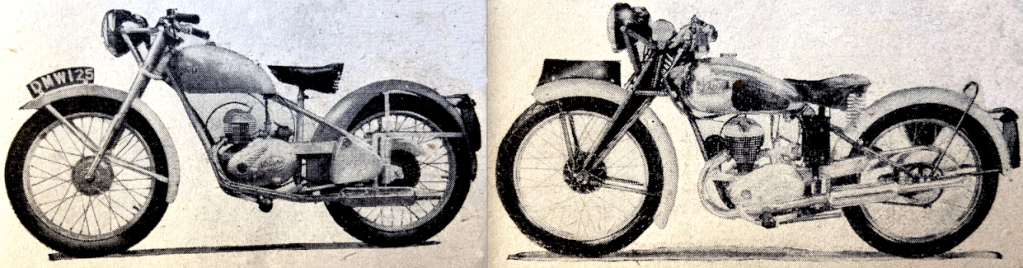
footrests and very sturdy, full-loop, all-welded frame construction. Villiers engine-gear units of 98cc, 122cc and 197cc are fitted, and plunger-type rear springing is available on the two larger models. All models have telescopic front forks. Finish is in blue and silver. Excelsior: Undoubtedly one of the most interesting lightweight motor cycles to make a debut at the 1949 London. Show was the 246cc Excelsior Talisman Twin. With its handsome lines and neat vertical, twin-cylinder two-stroke engine having a four-speed gear box in unit, it attracted many admirers. Specification includes a tubular loop-type frame; Wico-Pacy flywheel magneto with lighting coils; Excelsior telescopic front fork and plunger-type rear-springing—now standard on all the motor cycles in the Excelsior range. Single-cylinder Villiers engine-gear units are employed for the Ul Universal 122cc and R1 Roadmaster 197cc machines. Direct lighting is standard equipment on these two models, but machine fitted with battery-rectifier sets are also available—these are designated the U2 and R2. Two autocycles—the Autobyk S1 and Autobyk G2—are also in production: Both have 98cc Excelsior engines, and the G2 has a two-speed gear. Rubber suspension is employed in the clean, link-action front fork. The autocycles are finished in black, cream and chromium plating, and the motor cycles have frames enamelled in maroon, with maroon and cream tanks. Francis-Barnett: Francis-Barnett has long been a name connected with good-quality lightweight motor
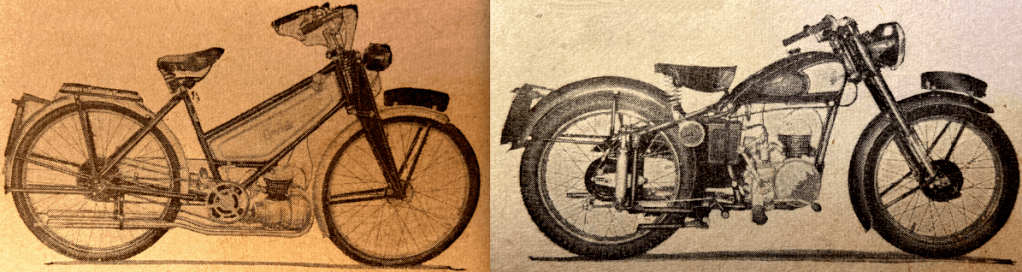
cycles, and the present range shows exceptional attention to detail. Four motor cycles and an autocycle are available. The- motor cycles are 122cc and 197cc Villiers-engined models—the Merlin 52 and 53, and Falcon 54 and 55. Merlin 53 and Falcon 55 have battery-rectifier lighting and electric horn; direct lighting is used on models 52 and 54. Adjustable saddles are standard equipment on all four motor cycles, as are 3-pint reserve oil tanks fitted to the nearside rear frame. Quickly detachable rear number plates which reveal a cutaway mudguard simplify rear-wheel removal. The frames are of welded and brazed construction; telescopic front forks have three-rate springs. Finish is in black enamel with gold-lined tank, and chromium plate. A 98cc Villiers engine is fitted to the Powerbike autocycle. This machine has a girder fork with rubber as the suspension medium, and a rear brake operated through the cycle pedals. Engine shields give full protection to the rider’s clothing. James: Largest range of lightweight machines is that of James, who market nine models, including one autocycle. The 98cc two-speed Comet Standard model is the lowest-priced motor cycle available on the home market to-day; it is of sturdy construction and is a fully fledged motor cycle. A very neat single-tube, link-action front fork is fitted to this model and the Superlux autocycle; the Dunlop rubber-suspension front, fork is fitted to
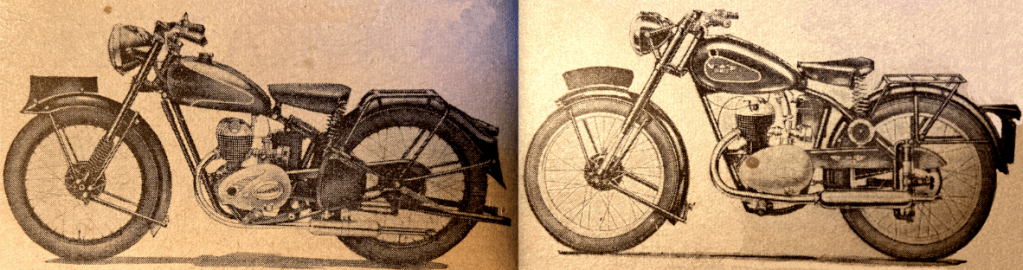
the other models in the range. All de Luxe machines have battery-rectifier lighting sets, and plunger-type rear suspension is available on all 122cc and 197cc machines. Light-alloy mudguards, direct lighting sets and lower gear ratios are standard on the two competition mounts. All engines are of Villiers manufacture.New Hudson:
This 98cc autocycle has a full cradle-type frame and robust, link-type front fork with pressed steel blades It is fitted with the famous Villiers engine specially evolved for autocycles. Tank and frame are finished in black enamel, the former having red and gold panels. The adequate engine shields are gold-lined. Norman: An autocycle and three lightweight motor cycles form the Norman range. The model C autocycle is a particularly smart-looking machine with a 98cc Villiers engine. Included in the specification is link-type front fork of single-tube construction; a centre stand is an unusual feature. Smallest motor cycle is the Model D, which has the Villiers 9cc two stroke engine with two-speed gear. The 122cc Model B1 and 197cc Model B2 machines are similar except for the engine-gear units. Frame is made up of straight tubes brazed into malleable iron lugs and the hydraulically damped front fork has a balancing chamber between the two legs. Roth B1 and B2 models are available in de luxe form with battery-rectifier lighting equipment.
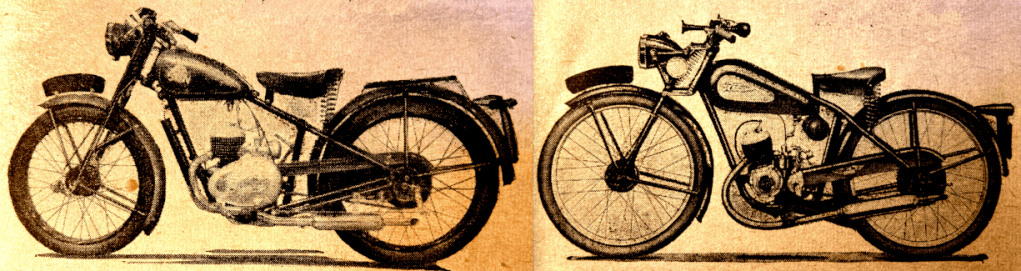
Finish is in black and maroon. OEC: Four Villiers-engined OEC models are now marketed—these are the Atlanta S1, S2, Cl and C2 machines. The S series are standard road machines of 122cc and 197cc respectively; the S1 has 2.75x19in tyres front and rear, and the S2, 3.00xl9in. Series C are competition models, in suitable trim and with alternative gear ratios offered. Panther: Phelon & Moore have been manufacturers of motor cycles from the earliest days of the industry, and thus the latest Panther models have a wealth of experience behind their design. Three 250cc machines with ohv engines of businesslike, robust design are marketed. These are: the model 65 with a three-speed Burman gear box, coil ignition, and a royal-blue and eggshell-blue tank finish; the model 65 de Luxe, which has a four-speed Burman gear box, and a chromium-plated tank and wheel rims—the former is cream panelled. The third model is the 250 Stroud competition mount. Supplied only to selected riders, this has included in its specification a quickly detachable head lamp, magneto ignition, aluminium-alloy mudguards and an upswept exhaust system. Extra-low gear ratios are standard. Raynal: The Raynal Auto is popular among its owners for its work-. manlike, functional design and the reliable service it gives. A feature that appeals to.many is the low riding position which allows the rider to put his feet

on the ground comfortably when stationary. A Villiers 98cc engine is fitted and the girder-type front fork has twin-tube blades. Finish is in black enamel. Royal Enfield: One of the most famous of lightweight motor cycles is the Model RE 125cc Royal Enfield. Basically this model is similar to the famous ‘Flying Fleas’ used by Airborne Forces during the war. A Royal Enfield two-stroke engine with three-speed, hand-change gear box in unit is fitted; this engine has earned a high reputation for its performance and fuel economy. A new design of telescopic fork, oil lubricated, is now standard on this machine. Finish is an attractive silver-grey with chromium-plated exhaust system, handlebar, wheel rims and other detail components. Sun: A machine to make its appearance comparatively recently is the 98cc Sun motor cycle which has a Villiers two-stroke engine with two-speed gear in unit. A girder-type front and fork with pressed steel blades is fitted. Finish is in maroon and black. Swallow Gadabout: The only British lightweight machine of a type which is very popular on the Continent is the Mark II Swallow Gadabout. This is designed on scooter lines and has a chassis formed from a single, large diameter tube with full width shield at the front end and flooring to protect the rider. At the rear is mounted an enclosed, fan-cooled 122cc Villiers engine which has a three-speed gear box in unit; the foot-
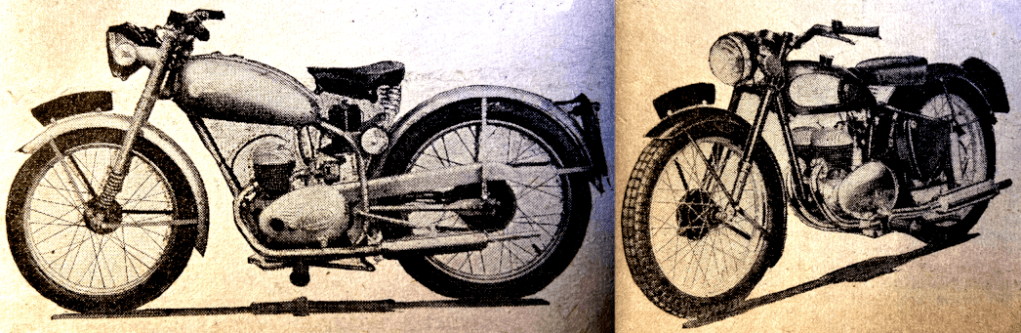
operated gear control is mounted just behind the front shield, as are the rear brake pedal and battery. Small-diameter wheels carrying 4.00x8in tyres are used, and front suspension is by means of a bottom link fork using rubber in torsion as a springing medium. A commercial version with welded-on side carrier is also available. Finishes obtainable are blue, cream, amaranth red, or black; the commercial Gadabout is available in primer coat. Tandon: Introduced at the 1949 London Show, the 122cc. de Luxe model Tandon aroused wide interest. Villiers-engined, this very handsome little machine features a simple but effective form of rear springing—a pivoting fork system employing a rubber cartridge to absorb deflection, shocks. A tank-top panel conceals the tool compartment and electrical junction block; battery-rectifier lighting is standard. Another 122cc model—the Milemaster—is also produced. This machine has a straight-tube
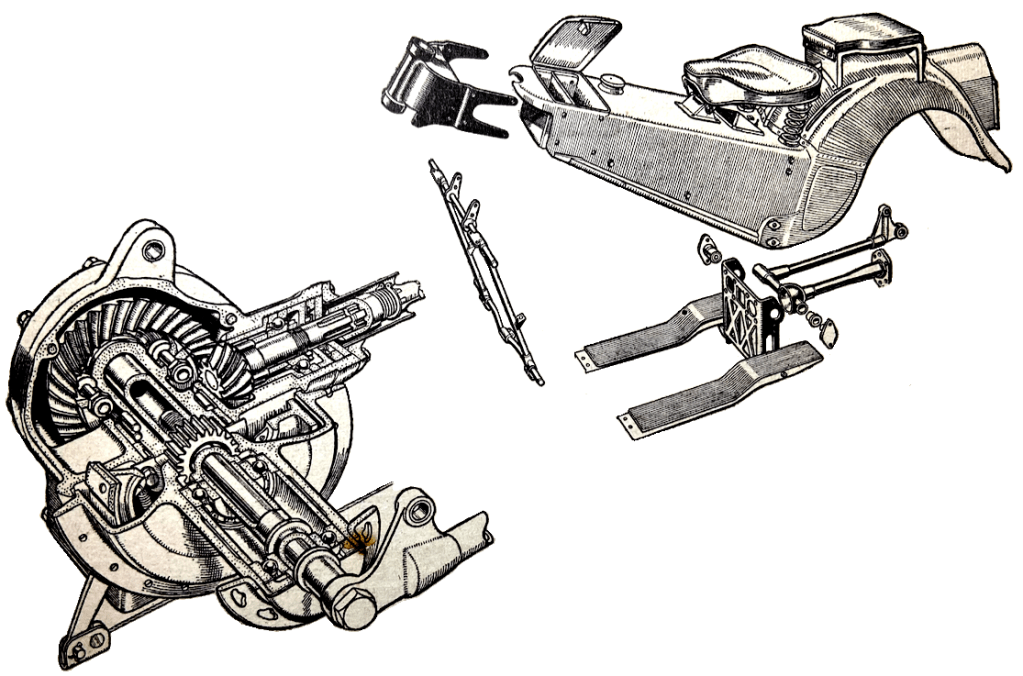
rigid frame, and extensive use is made of Elektron castings in its construction. Finishes are in polychromatic blue or black stove enamel. Velocette: Very few machines created as much interest on their introduction to the public as did the LE Velocette. Hailed as ‘revolutionary’, this amazingly quiet machine has many features hitherto unheard of in a model of 149cc capacity. A transversely mounted, horizontally opposed, twin-cylinder, water-cooled engine, with side valves, shaft drive, rear springing adjustable to load, hand starting—these are but a few of the more noteworthy features. The engine has coil ignition, with emergency starting if the battery is flat. A three-speed hand-change gear box is fitted. Finish is in silver-grey. VeloSolex: Rather more of a cycle with an engine than an autocycle, the French-designed VeloSolex is an exceptionally quiet, tractable and economical mount. It has an open frame, and the 45cc two-stroke power unit is mounted over the front wheel, which is driven by roller. The weight of the complete machine is only 551b.
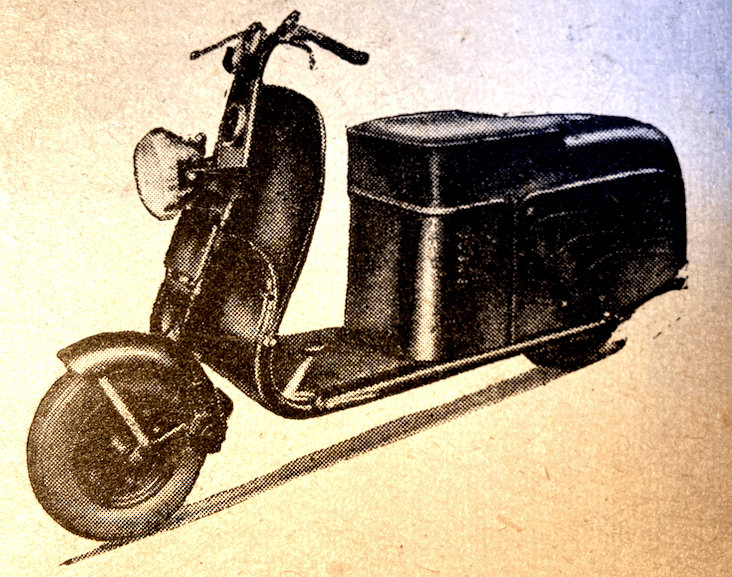

“AN ELEGANT SHEET-STEEL body is now available for fitting to Corgi machines. The body enshrouds the frame, engine and transmission, and also provides a weathershield and footboards. In the tall is a useful locker with a hinged lid. The conversion kit comprises the body, a new petroil tank (capacity slightly more than one gallon), a heel brake assembly, a modified kick-starter pedal, and all the necessary brackets and bolts. Fitting is a straightforward task and can be carried out by a competent mechanic in about two hours. When the body is fitted, the Corgi cannot of course, be ‘folded-up’ by telescoping the saddle pillar and swivelling back the long handlebars as is possible with standard models. On the left-hand side. a neat door gives access to the carburettor and the sparking plug, and the tank tap and clutch thrust-rod adjuster are accessible through holes in the panel. The plug can also be reached from below the weather-shield at the front. In fact the body in no way hinders adjustments and minor maintenance. A trial run on a converted machine (which was also fitted with the spring fork and two-speed gear) showed that the body brings advantages other than improved appearance. First. the machine seemed to handle better, possibly because of the ‘compact’ feeling the body gives; secondly, mechanical and carburettor polite are appreciably deadened; thirdly, the chance of the rider’s clothing getting soiled is virtually eliminated; and fourthly, a high degree of protection is provided by the weather-shield and footboards. Throughout the speed range there was no drumming from the body panels. Various colour schemes are available. The price of the conversion kit is £11 11s plus carriage and fitting charges, and the kit can obtained from local Corgi agents. Makers are Jack Olding and Co, 18, Providence Court, London, W1.”
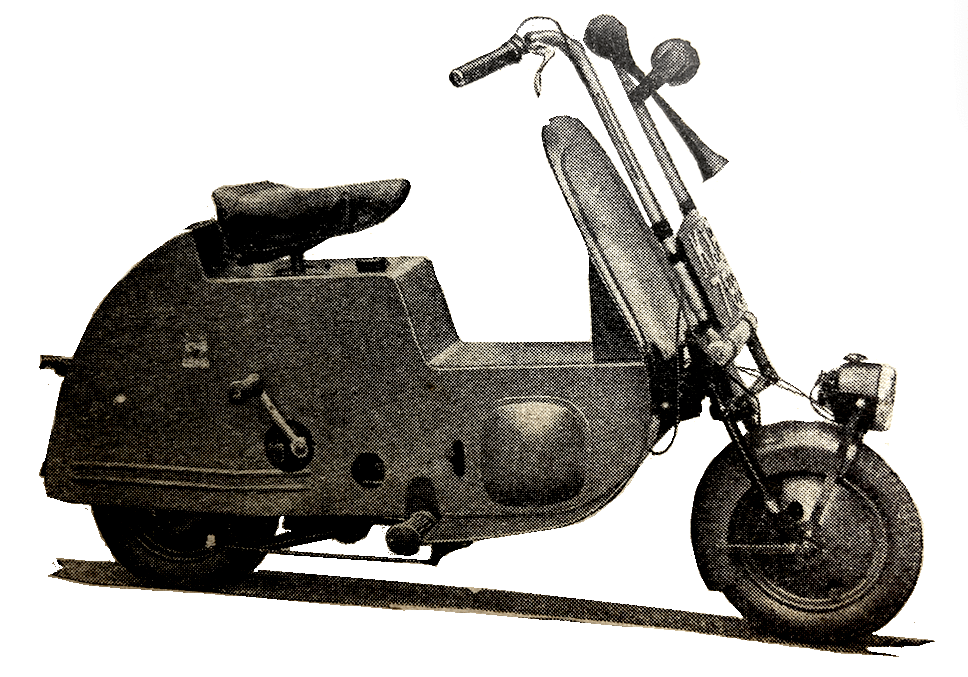
“A MOTOR SCOOTER, called the Scooter Cub, that folds into a unit size 15×18½x24in and weighs only 50lb, is being produced by the Argyle Manufacturing Co, Colchester, Illinois, USA. It is claimed that the machine is robust enough to carry two people. Petrol consumption is said to be 100mpg, and cruising speed 25mph. In a few seconds the machine can be unfolded and made ready for riding. Object of the manufacturers has been to produce a motor scooter that can be transported easily in an aircraft, car, lorry, or motor boat. Parking difficulties are largely solved because one can fold the machine up and carry it. A lightweight two-stroke, the power unit is described as an ‘aluminium, ball bearing motor’ with an ‘automatic clutch’.”
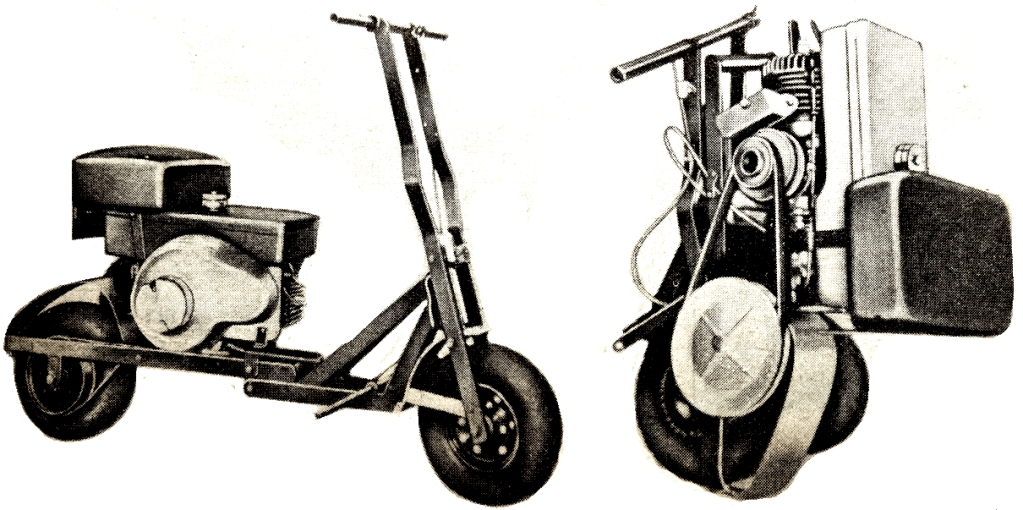
“EXACTLY AT 5PM last Friday three riders on Mini-Motor-equipped cycles swept in formation through the gates of the Mini-Motor factory. Thus ended a strenuous tour of 1,865 miles in 12 days. The first day’s run was from Croydon to Exeter, the next to Redruth and back to Bodmin; then, on successive days, to Gloucester, Lancaster, Stirling, Inverness, John o’ Groats, Inverness, Stirling, Carlisle, Newark and Croydon. There were two fine days. For the rest, it was a story of rain, thunderstorms, headwinds. Troubles? Two punctures in Scotland, which cut the tyres so badly that new ones were fitted (the third machine returned with its original back tyre), one roller guard partly demolished by a large stone, and one bridged plug gap. The riders were 14-stone Harold Williams of the Service Dept (who wanted to be away again by 6pm as he intended riding to Oxford that evening). 12½-stone Norman Hands (sales side), and 6ft 4in Leonard Hurford (Experimental Dept). The idea of the tour originated with the riders themselves.”
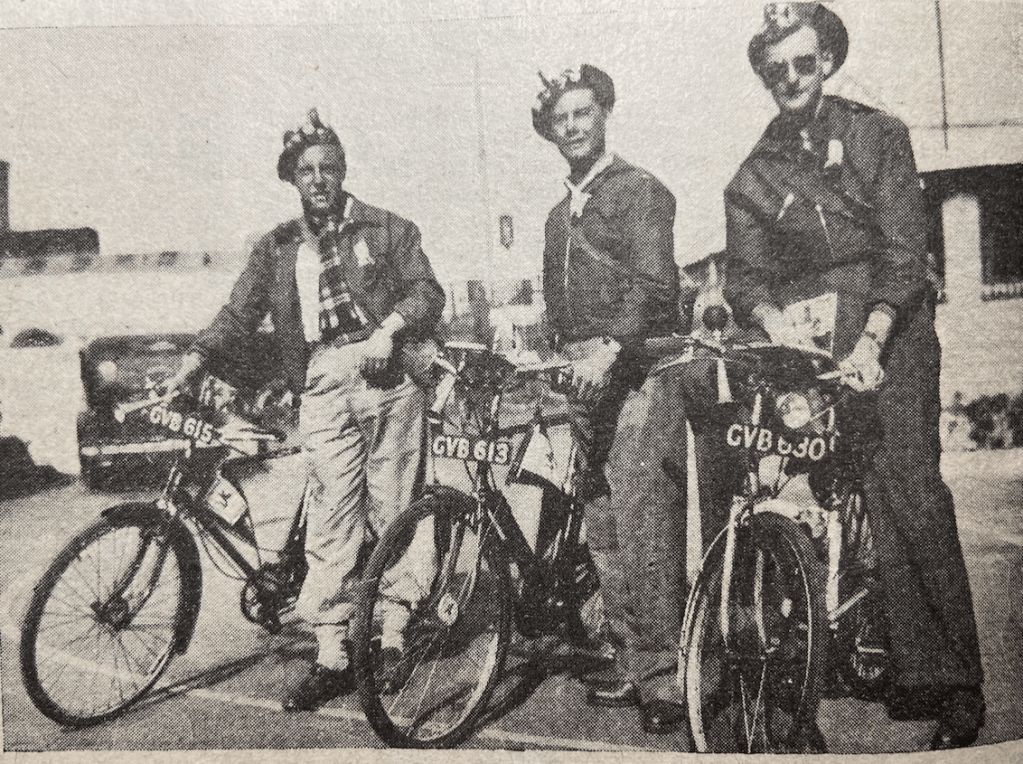
“ALTHOUGH NUMBERS OF VeloSolex machines are running in such far away countries as Bermuda, North and West Africa, Indo-China and Pakistan, one trip made by two private owners, M and Mme Villeminot, is unusually interesting. This couple followed a route starting and finishing at Tunis—which led them into the Libyan desert at midsummer. The first stage of the trip was from Tunis to Carthage and back; this was a preliminary sight-seeing excursion before undertaking the journey shown on the accompanying map. The whole distance was covered on the two VeloSolex models, except, of course, for the journey to the island of Djerba and back. Each rider carried 62lb of luggage, camping equipment, stove, two gallons of water, gallons petroil, etc. The machines each had leg-shields, sponge rubber saddle top, speedometer and stand. The journey was mostly done in stages of 70 to 100 miles at a time. Although the schedule envisaged riding between 4am and 11am, with a certain amount of travelling in the evening, on several occasions circumstances made it necessary to travel during the day, under the full blaze of the African summer sun; the sparse vegetation provided no shade for riders or engines. Except in and near the larger towns, roads are unmade, and they compare most unfavourably with a very rough and stony English
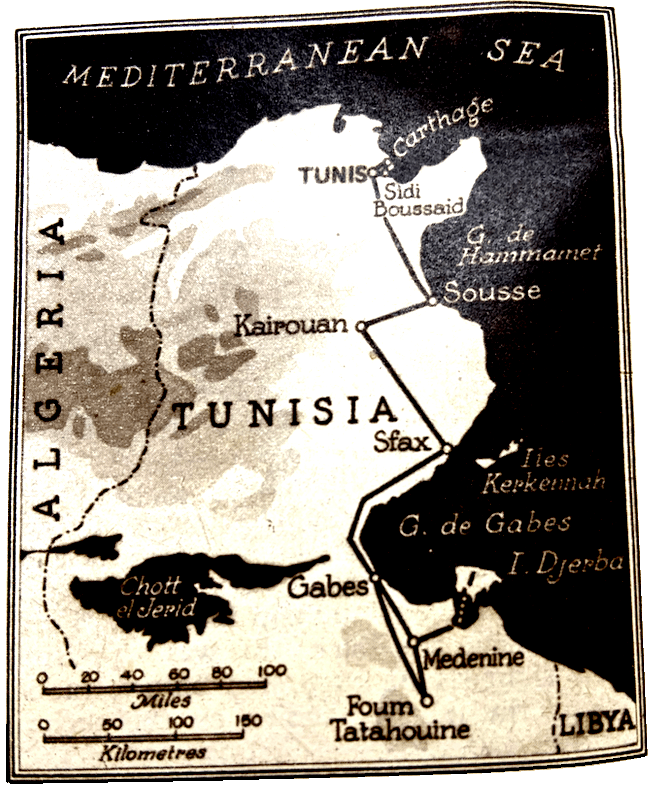
farm-track after a long drought. This makes such a journey tiring even for a car-driver; the exposed riders used solar topees and had to wear enough clothing to avoid severe sunburn, but nevertheless the two travellers found the journey enjoyable. The advantages of camping near the infrequent clumps of trees, to obtain a little shade from the blinding glare of the sun, were offset by this leading to riding in the full heat of the day to keep on schedule, but the respite was felt to be worth it. The same tyres were used over the whole journey, and slightly sub-normal pumping-up, combined with the heat, made them iron hard from expansion. Even though extremely rough roads were negotiated, M and Mme Villeminot suffered not one puncture from beginning to end of their journey through the lonely ‘countryside’ of Tunisia. As the day became hotter and hotter, the engines were rested for a few minutes every hour, during which time the riders pedalled easily along to avoid the possibility of overheating. There were no mechanical troubles during the whole trip. Servicing carried out at the end of each hop was confined to cleaning sand and dust off the driving roller, and out of the petrol pump, where it had been trapped by the filter gauzes. Overall petroil consumption worked out at 283mpg, even over the bad roads encountered, which meant much piloting of the ‘trials’ type. All nuts and bolts were gone over every so often to see if the bumpy roads had loosened anything, and carburettor jets were cleaned occasionally with the tyre pump as a precaution against blockage from dust and dirt.”
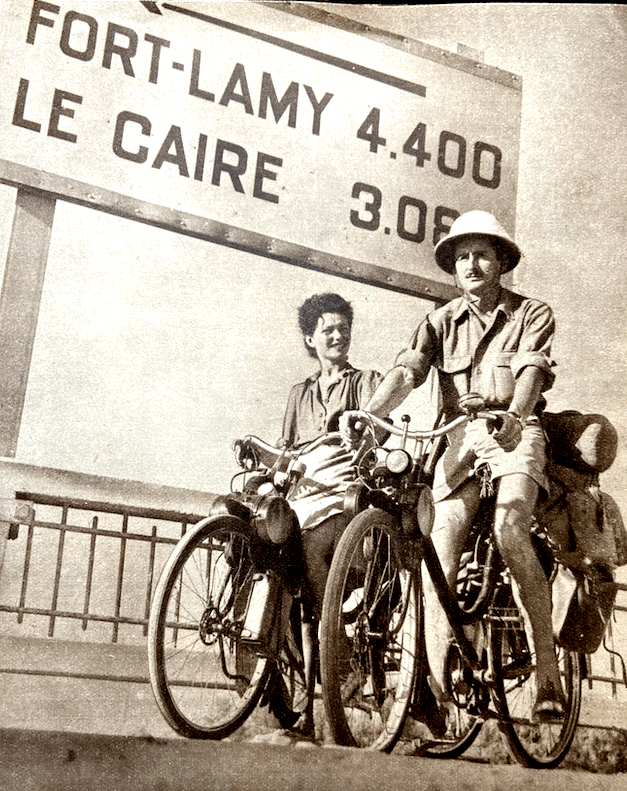
“NOT BEING BY NATURE over-energetic, I decided a long time ago that while a tandem was a very useful form of transport for my wife and I over long distances, it was definitely not ‘my piece of cake’. I really wanted a motor cycle, but this was beyond my purse. Some folks would have bought an old machine and put it in good order, but time and the necessary skill were lacking. However, to get to the point, it was with great interest that I saw in a cycle shop window a small engine for fitting to an ordinary pedal-cycle. I was informed that this auxiliary engine—the Mini-Motor, made by Trojans—was quite effective when fitted to a tandem. After further inquiries, I decided that the engine was worth buying at £21 (no Purchase Tax). The old tandem took on a new lease of life, proudly displaying HBY 231 and a couple of ‘L’ plates to the world in general. The 49cc two-stroke engine is of Italian design, and transmission is by a roller running on the back tyre—perhaps a crude form of transmission, but quite effective…Any snags? Well, I had one or two teething troubles—probably largely due to my own abysmal ignorance. The biggest snag was the magneto. Being so close to the cylinder, it got over-heated and the coil burnt out. However, Trojans replaced it for me, and I find that by running the engine without the magneto cover on, the magneto gets cooled by the airstream and all is well. As to performance, I think it is remarkably satisfactory. With two of us on the tandem, we average about 20mph on the flat and up slight gradients. On steeper hills, assisting the engine by pedalling, we do 12-15mph comfortably. Those who know the Eastbourne road will agree that 12mph with a little pedalling help is pretty good for 49cc on the steep climb out of Uckfield. Fuel consumption is almost ridiculously low. On the London to Eastbourne trip, the consumption averages 220mpg. This, of course, includes all the distances free-wheeled; on less hilly journeys more fuel would be used. Altogether, we have covered 2,000 miles in the Southern Counties on the tandem since fitting the Mini-Motor. I found the engine easy to strip for decarbonizing; it was in good condition, though the piston rings were gummed in. Well, there it is. I’m not saying that our form of transport is as comfortable or efficient as a motor cycle, but where economy is a necessity it is a very good next-best-thing!”
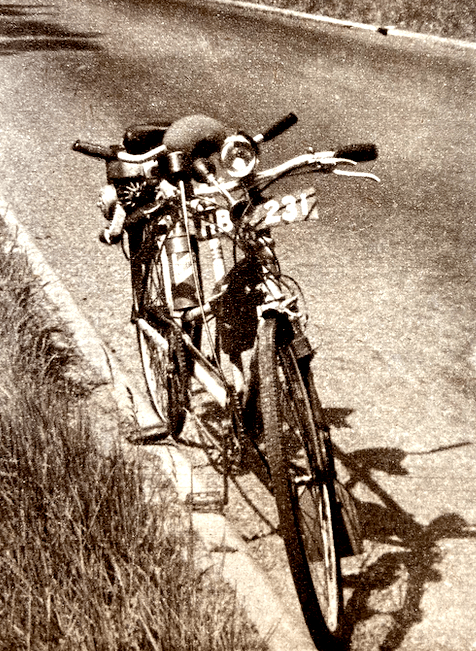
“RECORDS were again shattered in the North-West ‘200’ road race held last Saturday over the Portstewart-Coleraine-Portrush circuit, Northern Ireland, notwithstanding the tacky condition of some portions of the course; this was due to tar ‘bleeding’ caused by strong sun over three rather hot days. AJ Bell (499 Norton) was again the winner—his third successive victory—at an average speed of 85.723mph, and he established a record lap of 88.59mph. Second again, as last year, was J. Lockett (Norton), and third the Australian rider, Harry Hinton (Norton). Geoff Duke (348 Norton) won the 350cc class, and also set up a lap record of 7min 58sec (a speed of 83.40mph) for the class. His record average speed was 82.54mph. Duke had an easy victory. AF Wheeler (Velocette) was second, and AJ Glazebrook (AJS) had a late advance in the field to take third place. RA Mead, riding a modified KTT Velocette, took the Lightweight class, and set up a lap record of 74.24mph, with AE Shaw (Norton) second and the Belfast man, Joe McKimm, fully recovered from an illness and back on the Excelsior, in third place. There was a crowd of well over 25,000 round the 11-mile circuit. The morning haze far out on the water, and on the distant Derry hills, indicated a warm day ahead. In the three classes, the starters numbered eight in the 500cc class, 39 in the 350cc, and 10 in the 250cc; a total of 57. The timekeepers had little fears about keeping pace with the race this year; they had much in their favour, for they were raised on the top deck of a wooden building, and throughout the race were always up to. date with their records.”
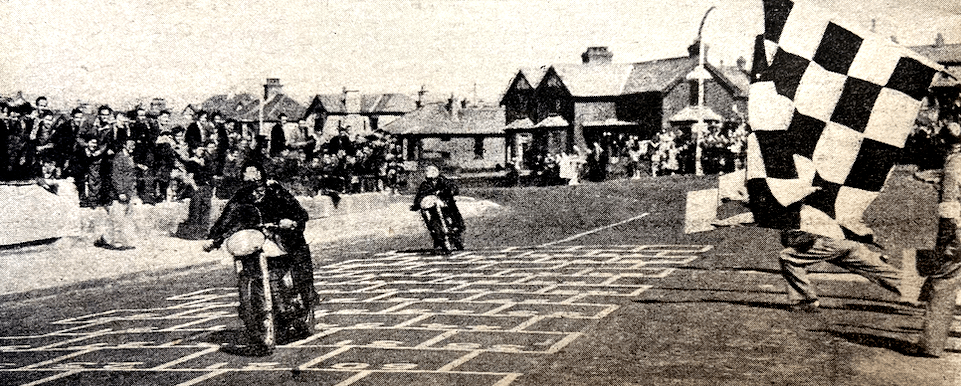
“NORTH VS SOUTH SCRAMBLE—The two teams started with ‘honours even’ in last Sunday’s first leg of the annual North vs South Scramble—now in its fifth year—and the Southerners obviously took full advantage of a course which must have seemed strange indeed to the lads from Lancashire and Yorsshire (where, as one of them wryly put it, ‘men are men, and mud is mud!’). So overwhelming, in fact, was the South’s success that they finished the day with an advantage or no fewer than 77 points—161 as against 64. In view of the absence of such scramble stars as Alves, Draper. Archer, Lines and Ray, this was a particularly meritorious performance on the part of the home team though, in fairness to the North, it should be mentioned that they were without Nicholson, Rist, Duke and Vanhouse). The Streatham club, organisers of this event, used a very sporting new circuit of 1.8 miles, the venue being Windmill Hill, near Deepcut—midway between the well-known scramble areas of Bagshot and Pirbright. Hills, trees, and deep sand abounded, but mud was conspicuous by its total absence: in short, a typical South-Eastern Centre course.”
“ASSETS OF THE OLD Scott concern have been purchased by Mr Miles G Burrows, managing director of Metaltreat, and a director of Bainbridge and Co, and Mr Noel H Kitchen, managing director of Anderton Springs. The aim, it is stated, is to maintain the old Scott tradition and to continue manufacturing the present Scott motor cycle, in addition to activities in other fields of precision engineering. The factory service side is continuing as in the past. A new company is to be formed, and the directors, in addition to Mr Burrows and Mr Kitchen, will include Mr JG Armitage, a director of Cawood, Wharton and Co, and chairman of Metaltreat, Bradford, and one well-known to many motor cyclists, Mr William Cull, a director of Anderton Springs, who until 1947 was a director and the chief engineer at Scotts.”
“AS FORESHADOWED in our description of the New York Show, the car spares-by-air scheme is to embrace motor cycle parts. To New York the rate is 8s 3d per kilo (2.2lb) for a minimum of 227kg, and to Montreal 9s 3d/kg (minimum 100kg). Manufacturers are thus able to replenish their North American stocks in an overnight journey.”
“THIS YEAR’S RALLY and Concours d’Elegance organised by the Grimsby Motor Club will be held on June 10 at Cleethorpes, Lincs. The events include a 25-mile trial suitable for veteran cars and vintage motor cycles.”
“ATTENDANCE AT ANY post-war London show would induce a casual observer to suppose that most of us are buying powerful machines listed at £200 and upward. Actually, since the end of 1945 we have exported some 250,000 machines, the bulk of which have been of the heavy and expensive roadster type. Meanwhile, there has been nothing approaching actual famine on the home market for such machines, though it has been difficult to buy some makes and, particularly, certain models of those makes. These two sets of facts, when correlated, create at least a suspicion that if or when the export demand eases, our factories will not be able to find buyers for an output of such models on the 1946-9 scale. Simultaneously, all Continental advices indicate that other countries are concentrating on the manufacture of midget types. Most existing British owners of post-war 350cc and 500cc models talk as if their present machines would have to last them for quite a while. It looks as though ere long manufacturers will have to produce another type of machine to retain good sales on the home market, and purchasers will have to make their personal wishes crystal clear.”
“I SHOULD LIKE to second ‘Sand Happy’s’ plea for more organised sand racing in the British Isles. In this zone, the Forces have built several speedway tracks with a sand surface (cinders are not obtainable), and although the nearest machines to the pukka job are ex-WD Norton side-valves stripped down and converted to overhead-valves by cutting the side off the cylinders and using Matchless heads, rocker boxes and valve gear, we have had many pleasurable meetings.
Cpl Elphick, MEAF 10.”
I’ve included this letter because of its reference to the way highly skilled and well equipped British Army spannermen tuned the hell out of their WD bikes after peace broke out. A former DR I drank with at a rally a lifetime ago reckoned M20s were being converted to ohv the North Africa in 1945 while bored Desert Rats were awaiting repatriation. I hope someone out there is researching what sounds liike a fascinating footnote of motor cycling history—Ed.

ROYAL ENFIELD BULLET
“BEFORE THE WAR there were several sports 350s the market. Their engines thrived on revs and could withstand full-throttle driving all day long; they had manual ignition control, full-blooded exhausts, and slick gear changes. The performance approached that available from a 500cc machine. In short, they were ‘enthusiasts’ mounts’, which paid dividends when handled by an expert rider. The Royal Enfield 346cc Bullet revives the spirit of the type and has the advantage over its predecessors of 10 years’ research. With its excellent telescopic front fork and pivot-action rear suspension, the machine is endowed with handling qualities that are second to none. At the bottom end of the scale, the engine will pull uncommonly well, with a degree of smoothness surpassing that of many a modern parallel twin. Minimum non-snatch speed of the Royal Enfield was a genuine 15-16mph in top gear. From this speed the machine would accelerate quite happily, assuming intelligent, co-ordinated handling of ignition lever and throttle. Above 20mph in top gear the ignition lever was required only if very hard acceleration was wanted. Above 25mp.in top the ignition control was not called for at all. It was next to impossible to make the engine pink. In restricted areas, on gradients that
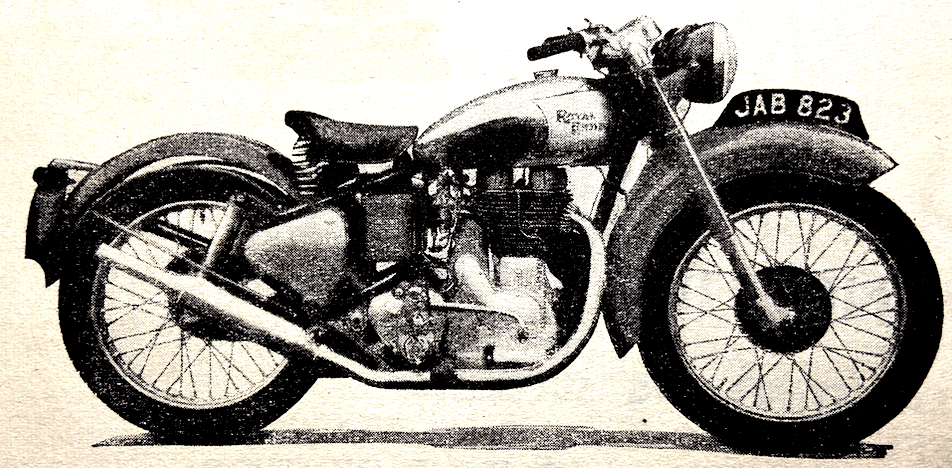
are sufficient of a drag to demand third gear from several 500 twins, the Bullet would climb effortlessly and smoothly in top gear, and it was even possible to shut off and open up again without the need to change down. Outstandingly good flexibility was one of the machine’s most endearing characteristics. At the opposite end of the range, there was no limit that need be imposed to save the engine from being overdriven. 50mph averages were obtained without fuss or bother. If desired, the model would cruise in the upper sixties, and it was apparently as happy and effortless at that gait as it was at 45mph. Engine characteristics were of the most pleasing kind. Use of small throttle openings and changing up at comparatively low revs gave a performance of the most gentlemanly character; the machine was then as docile as the most genteel tourer. In traffic, top gear was generally engaged at 22-25mph. Out of restricted areas, with the machine its head, the engine came into its own. Affection for the machine built up into high admiration. The power comes in with a surge when the engine is revving in the higher ranges. Full performance in the gears results in remarkably good acceleration. During fast road, work on the test machine, upward gear changes from second and third respectively were best made at about 48mph and 65mph. The exhaust was loud with this type of riding and, though having a note that was stirring to the enthusiast, was probably objection-able to non-motor cyclists. An aid to brisk acceleration was the excellent gear change. Upward or downward changes could be achieved by making an easy, short, light movement of the right foot. The change was entirely positive and it appeared to be impossible to ‘scrunch’ a change or to miss a gear. Starting from cold was generally accomplished at the third or fourth dig on the kick-starter, assuming a fairly accurate control setting and no flooding. It was necessary to close the air lever, set the ignition at three-quarters advance and open the throttle fractionally. The correct throttle setting was very important if an easy start was to be achieved with certainty. The Bullet is fitted with a special compression-release valve in place of the more usual exhaust-valve lifter. The valve has the same effect as an exhaust-lifter; the control was well placed for ease of operation. The same cannot be said of the front brake and clutch controls, which required considerably too great a hand reach. The clutch was
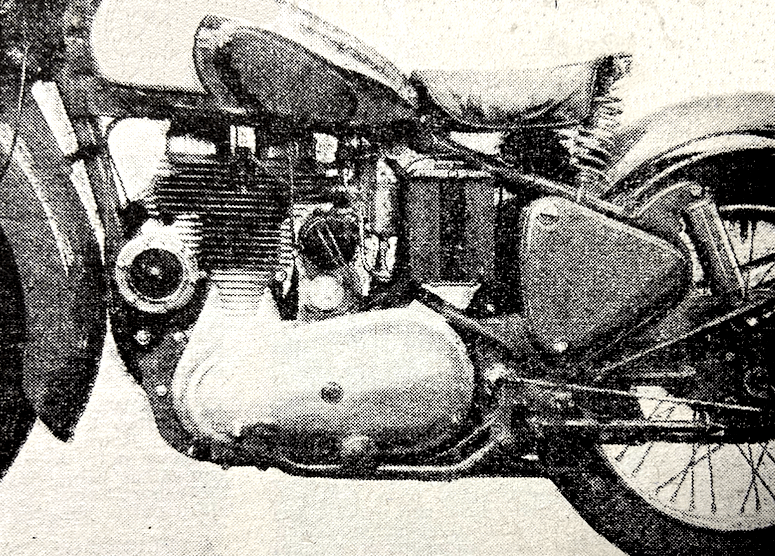
rather heavy in operation. It freed perfectly at all times and did not appear to be adversely affected by abuse. It was sweet and smooth in its take-up of the drive. Bottom gear could be effortlessly selected from neutral when the engine was running and the machine stationary. The Royal Enfield is, of course, fitted with a neutral selector. This is operated by a separate pedal on the end of the gear box. To select neutral from any gear except bottom it is only necessary to lift the clutch and depress the pedal to the limit of its travel. The engine was moderately quiet mechanically. There was a fair amount of noise from the valve gear. The piston was audible just after a cold start. Towards the end of the 600-mile test a slight oil-leak appeared at the cylinder-head joint and there was oil seepage from the oil-filler cap. Apart from this, the engine—and, indeed, the whole machine—remained remarkably clean. No praise is too high for the steering and road-holding. The telescopic fork has a long, easy movement that suits the characteristics of the pivot-action rear-springing—which itself provides a higher standard of comfort than the majority of spring-frames available today. Whether the machine was being ridden slowly or at high speeds, the suspension absorbed road shocks most satisfactorily. This excellent suspension has great advantages during bend-swinging or cornering at speed. Wavy- or bumpy-surfaced bends could be taken fast with the knowledge that the rear wheel would follow the front one with unerring accuracy. Excellent comfort was provided over cobbled, city streets. Low-speed steering was first-class, allowing the rider to raise his feet to the rests the instant the clutch began to bite and to keep them there at the slowest crawl without resort to body lean or other balancing tricks. Fitted as standard is a neat air cleaner. There are sturdy centre and prop stands, both of which are easy to use and both of which, when in use, ensure that the machine is absolutely safe from falling. The tool-box is of sensible proportions. The speedometer in its light-alloy -forged housing is neatly mounted and easily read. Pillion footrests are fitted as standard. Probably most outstanding of all is the machine’s smart appearance coupled with its complete ‘functionality’. Finish of the frame and mudguards is battleship grey; the tank is chrome and silver, and the usual parts are chromium-plated.”
“THE 1950 OPEN Dartmoor Scramble, held near Buckfastleigh, South Devon, was in several respects the most remarkable in the history of this event. Certainly so many stellar names had never before graced the programme, and yet, just as certainly, so many riders had never before fallen by the wayside. It was indeed a case of the survival of the fittest, not the fastest, which, in the opinion of many followers of the sport, is in the best traditions of scrambling. And what was this rugged moorland circuit which wrought such havoc among the stars? Truth to tell, a couple of mud patches and a sprinkling of rocks represented the main obstacles in a course measuring something between 2 and 2½ miles in length, and it is difficult to account for the fact that in the big race of the day (the Senior event, for the handsome Patchquick Trophy) only one-third of the 15 starters had the pleasure of receiving the chequered flag. True, the race was a long one, its 12 laps representing about 28 miles, and the pace was certainly hot, but recent dry weather had made conditions easier than in any post-war ‘Dartmoor’, and well over 50% of the retirements were due to burst tyres and inoperative gear boxes.”
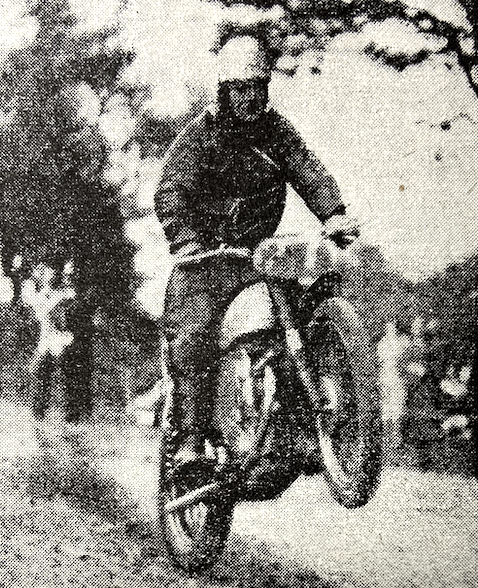
“IT IS NEVER a pleasure to get beaten, but I came close to it at Schaffhausen, when I finished a rather bad second to Claudio Mastellari and a very ‘home made’ Guzzi. There are, scattered around this wicked old world, a lot of amateur ‘tuners’ who make their machines only a very little slower than they were when they came out of the factory. One of the shining exceptions is Mastellari, who has always had 250cc Guzzis pretty well as fast as the works jobs; and, if I can share a little of his pleasure in the triumph of the Mastellari cam over the ‘genuine’ cam, I hope it is only this once, and not something to be repeated week by week.”
“MORE THAN ONCE I have written of the unutterable boredom which seems always to accompany car Grands Prix. I must say that for sheer monotony the San Remo motor cycle races closely rivalled any four-wheeler event I have seen. It is true that there was always something happening (one of the things always happening was the rain falling down!), but it was always something negative, for one leader after another seemed to fall out, and at one time there were only four of the 500cc class running. The FIM limitations on the number of riders permitted on a circuit are doubtless wise, but it is clear to me that 16 riders are not enough at San Remo, and that many more could be allowed with safety provided that they are riders of good quality. Difficult though it would be, I should like to see the FIM attempt to revise this rule, so as to take into cognisance the fact that while 20 Tom, Dick and Harrys may be a crowd, you could safely allow 30 Lorenzettis.”
“RACING FINANCE: The Customs agent’s bill to the Moto Club of Cataluna for the clearance through the frontier of the foreign riders for the Barcelona Grand Prix was 21,000 pesetas (roughly 100 pesetas to the £) which makes him the recipient of five times as much as the winner of the race.”
“NOTE FOR ERIC OLIVER: Swiss sidecar champion Hans Haldemann has nearing completion a remarkable sidecar outfit. It can hardly be called a sidecar outfit, since it is really a three-wheel vehicle; the frame of the ‘bicycle’ is made in a unit with that of the ‘sidecar’. I suppose all the other charioteers will be loudly asking, ‘Why didn’t I think of that?’ Hans predicts that the complete outfit will weigh around 120kg (264lb), which seems almost beyond belief.”
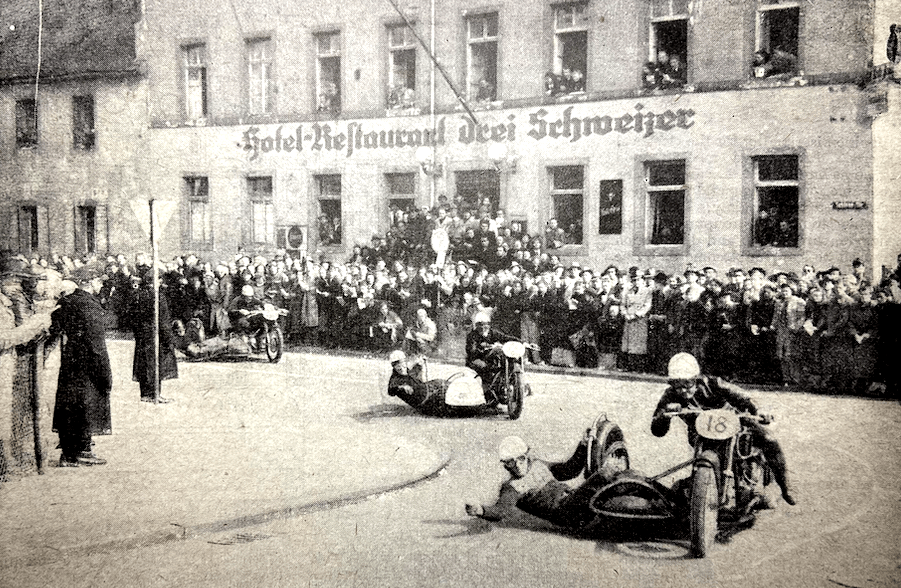
“A GREAT golfer, James Braid, is said to have liked to fee ‘a wee bit nervous’ before a match. I don’t like to feel nervous before a race, but I do—and not always only ‘a wee bit’. We were discussing this the other day, trying to analyse why one sometimes goes on the starting grid trembling like a leaf, and sometimes more or less calm. As far as I am concerned, I cannot locate any reason why I should be more nervous on some occasions than on others. On first sight, one would imagine that you would be more or less nervous according to how hard you expected to have to go, but this is not so. More than once I have been described in various newspapers as ‘a typical, phlegmatic Englishman’. I may look quite cool on the starting grid, but I, have usually ‘got the twitch’ the same as all the rest! One thing I have noticed is that after a hard race, especially on a circuit of fast bends, I cannot sleep properly for several nights.”
“IS MY FACE RED? I had been de-coking my AJS to the accompaniment of light conversation with Tommy Wood, who sat watching me. Just as I was about to pop the tank back on, he inquired,’Would it not be better to put that piston circlip back?'”
“THIS IS THE STORY of four carburettors, manufactured by Amal for the 250cc Moto-Guzzi TT machines. From Amals they go to Norton rider Geoff Duke, who takes them to the Blandford races and hands them to Ted Frost. Ted takes them across the Channel with him and I meet him at Boulogne and collect them. I take them to Roubaix, where Lorenzetti’s father-in-law has been waiting since the Mettet meeting—waiting for these carburettors. He gets on a sleeper to Chiasso, where he is met by a car from the Guzzi factory. By this means the carburettors can be on the test bench a few days after they are completed. Probably the TT will be over before the ‘paper work’ has caught up with them.”
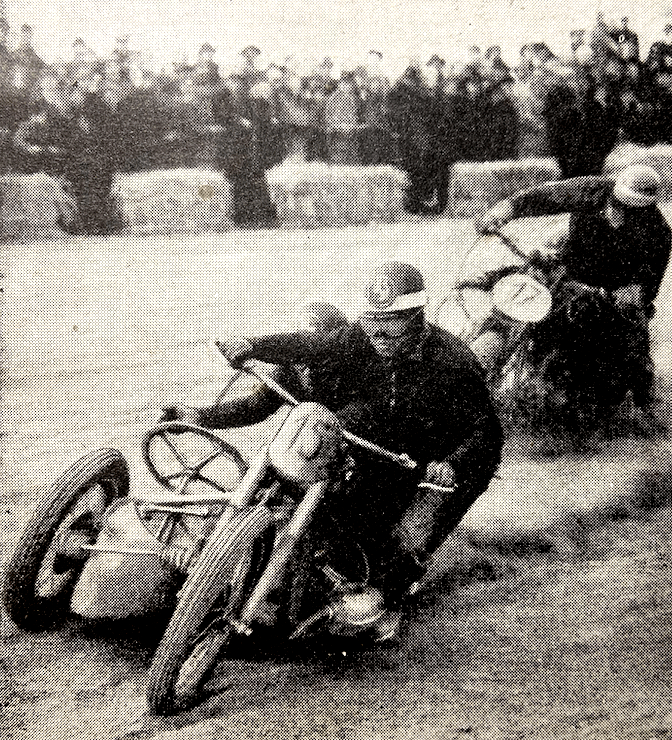
“AT LAST, AND AFTER more than 10 years of rationing, petrol can be bought at liberty. From last Saturday, the £1 million a year Government administration of rationing, the irritating worry of coupons and, most important, the restrictions on private motor cycling and motoring, were swept away. The announcement last Friday of the end of rationing made by Mr Noel Baker, Minister of Fuel and Power, came as a surprise and marked the successful conclusion of agreements with United States oil companies. The agreements mean that additional petrol supplied from US sources will be bought for sterling currency.”
“AMONG CLUBMEN will be found successful riders in trials, scrambles, road races and nearly all other motor cycle competitive events. Success in these sporting tests demands skill of a specialised nature, but that skill is largely founded on a sound command of the basic rules of roadmanship; indeed, most sporting riders have a wide and varied experience on the highways before embarking on competitive motor cycling. Above all, the environment of club riding means that a rider of limited experience has the opportunity of studying the methods of the more experienced. Some will benefit more quickly than others from this environment, but improvement is certain. And as far as road manners are concerned—behaviour which has no direct connection with pure riding skill—it is usual for clubs to insist on a high standard of conduct by members, not only on the road, but at all other times when a member is taking part in any club events.”
“MOTOR CYCLISTS THE WORLD OVER will join with The Motor Cycle in congratulating Freddie Frith, who was awarded the Order of the British Empire in last Thursday’s Birthday Honours List. The award is in recognition of his fine racing record, which culminated in his retirement after winning the 350cc class of the World Championships in 1949. There is widespread satisfaction that Frith’s prowess as a racing motor cyclist should be understood and acclaimed by an official and lasting honour. It is thought that this is the first time an award of this nature has been conferred by His Majesty the King as a result of success in motor cycle racing, and it makes a fitting conclusion to Frith’s career. The magnificent performances of racing motor cyclists do much for British prestige as a whole, aside from prestige among those interested in motor cycles. Further, it would not be out of place to stress again that in the realms of motor cycling, British successes are far more numerous and noteworthy than in any other competitive sport.”
“THERE ARE FAR too many ‘ifs’ in the outlook for any prophet to be bold in forecasting which types of motor cycle will prove the best-sellers in the next decade. The shrewdest brains in the industry take widely varying views. If we can assume that the cold war will never flame into a shooting war, and can further expect the purchasing value of the £ to jump substantially, the types which blossomed at the 1949 Show need undergo few major modifications. At the moment, many enthusiasts have abstained from buying post-war models either because they lacked the cash, or because they refused to spend approximately £200 while the fuel ration pegged them down to a meagre annual mileage. Carefully tended pre-war models will not satisfy the enthusiast indefinitely, nor will they run satisfactorily for ever. What will the cannier lads buy now that petrol is free, though the value of the £ still tends to shrink? That is the burning question of the moment—the headache of the designer and of the sates manager alike.”—Ixion
“IN A LONG CAREER as a motor cycle journalist I have received many rockets and some bouquets from my employers and from the public. The oddest bouquet cropped up this week. I was busily typing Comments while a perfect stranger—an electrician—was coping with a wiring diss in the room. Suddenly he straightened up and without any preface remarked with a beaming face, ‘Over the smouldering ashes we decided that the leakage must have been petrol—not water!’ I hadn’t the faintest idea what he was driving at. The sentence was a verbatim quotation from a book of mine, long out of print, and published perhaps 30 years ago*. He had penetrated my pseudonymity, and went on to remark that his mother had tramped up to his bedroom and taken away the hook because he was burning expensive light and laughing so much that his little sister couldn’t get to sleep.”—Ixion
*Ixion is, of course, referring to that glorious book Reminiscences of Motor Cycling. I’m lucky enough to have a well thumbed copy and you’ll find it in electronic form at the bottom of Tales from the Motor Cycle in the main menu (where you’ll also find Ixion’s excellent concise history of the early years of the motor cycling). In fact my advice is, take a break from the timeline, grab your favourite brew and go read Reminiscences which is indescribably wonderful. You’re welcome—Ed.

“TUESDAY MIDNIGHT found everybody dripping in suffocating, subtropical heat. But by breakfast-time on Wednesday the mercury had slumped and a thick grey mist with a cold drizzle blanketed the heights. The crowds streaming out to their favourite vantage points mostly wore trenchcoats, and looked a trifle shivery. The attendance nowhere reached ‘International’ pitch, but every he and she is a dyed-in-the-wool enthusiast—not so much for a particular make, but for ‘our’ Dick, Tom or Harry. It’s an intimate, pally, home-town, family sort of crowd. Riders felt a tiny trepidation at the prospect of kick-starting cold engines before a critical crowd in climatic conditions which suggested condensation. There will be plenty to watch. In the three morning events—the 1,000cc, the Senior and the Lightweight—12 of the the 116 entries have scratched, and with only four laps to cover (three in the Lightweight) the majority ought to keep going till the ceasefire. They start in fours at 20-second intervals, and the racket will be pretty deafening after the maroon explodes. At present, nothing but happy chatter is audible. Roads are fine. Visibility at the pits is half a mile, but on Snaefell the mist wreaths are shifty, and the announcer warns the riders to ‘mind their step’. Preliminaries are slickly completed. BANG! And we are off! THE 1,000cc RACE JL Watkin and WD Francis withdrew, leaving 11 of the 13 original Vincents. Eight kick-started their engines smartly into life, but Carr, Davis and Young had frantic struggles. The ‘met’ folk promised a steady improvement in the weather, and the telephone boxes announced adequate visibility barring a patch or two on the heights. The light drizzle was now no more than a tangible mist…[at the end of lap 1] S Alexander (29min 17sec) was first, 20sec ahead of A Phillip. Netherton was held up with engine trouble short of Ramsey. Organ and Taylor fell at the Bungalow. The eleven little indians are dwindling fast. All of them take petrol on board after two laps, Alexander is still leading, and still 20sec ahead of Phillip, but he has a plug stop at Quarter Bridge in Lap 3. At this stage, the fastest 500cc machine is about 1mph faster than Alexander’s 1,000cc. Alexander falls at Ramsey but proceeds. Visibility at the Bungalow shrinks to 100 yards. Howkins retires at Sulby with engine trouble. Seven little indians left, with Philip leading by lOmin 23sec owing to Alexander’s two mishaps. He can tour in to win, if his signaller passes the gen. We watch Phillip’s clock—they always seem to seize up when we focus on them. Yes, he’s at the Craig, where the mist has rather clamped down’ again. His red lamp switches on, and the Vincent rips past, revving silkily as ever. This bickering between 11 Vincent enthusiasts must be esteemed a very good show, as the big engines could never be given their heads in such varying and often brief visibility. Apparently S Alexander really had the legs of the field but his plug stop at Quarter Bridge on Lap 3 lost him much more than his lead; and in the subsequent chase he took a toss, but later recovered about five minutes. Phillip was 2.28mph faster over four laps than Lashmar’s winning 1949 speed over three
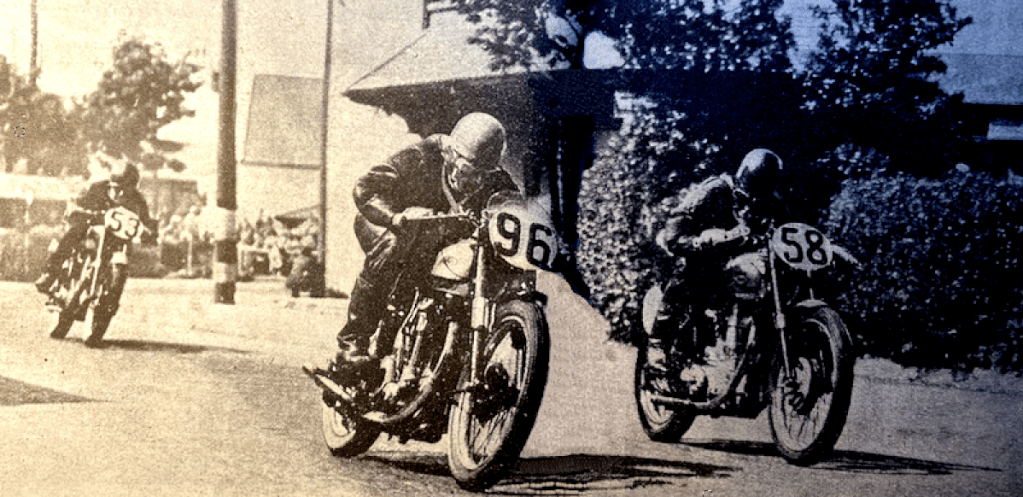
laps. Young rode a plucky, well-judged race into third place. Organ and Taylor were taken to hospital by ambulance after their spills near the Bungalow, but later reports are that neither man was at all seriously injured. FINISHING ORDER 1, A. Phillip, Vincent-HRD Club, 78.58mph; 2, S Alexander, Rhyl; 3, FJ Young, Luton; 4, G Lund, Southall; 5, L Carr, Wallsend; 6, JD0 Davis, Birmingham; 7, F Taylor, Vincent-H.R.D. All rode 998cc Vincents. THE 500cc SENIOR Race winner of the Senior Clubman’s was no higher than 11th at the end of Lap 1—not even on the Leader Board. Seldom has Fortune proved more fickle in an Isle of Man race. IB Wicksteed (498cc Triumph), firm favourite in view of his fine showing in practice, made one of the better getaways—not too good, but there was none of the morale-shattering ‘Kick-kick-KICK!’ and being then shepherded to the roadside to kick some more, which was the fate of many. Fifty-nine started in this 500cc event, and five makes were represented—five only—BSA, AJS, Norton, Triumph and Vincent. Unless the clocks deceived, Wicksteed (No 48) was soon overhauling the 20 and more men who started in front of him. Yes, all except four were overtaken by the end of Lap 1. But instead of hurtling past the grandstand, he slipped into his pit—apparently to top up with petrol (‘Pool’ in the Clubman’s races) so that there should be no need to stop at a later and perhaps more exacting period of the race. His time goes up—28min 55sec, a speed of 78.30mph—in spite of poor visibility, in spite of the kickstarter start and in spite of the time expended in slowing down for his pit-stop. He is almost a mile an hour faster than the speediest rider in the 1,000cc race. Second is HJD Boynton (490 Norton) in 29min 19sec; third, AS Herbert (490 Norton), 29min 57sec; fourth, A Hill (498 Triumph), 30min lsec; fifth, MS Featherstone (498 Triumph), 30min 2sec; sixth, JE Brookes (499 BSA), 30min 22sec. News starts to trickle through concerning retirements. There is universal sorrow at the announcement that NVF de Zylva (498 Triumph), all the way from Ceylon, is out with mechanical trouble. Wicksteed dominates all. Notwithstanding his pit-stop, he averages 78.12mph for the first two laps, He is flat down to it behind his gauze fly-shield—using neither of the two pairs of goggles with which he started. Poor Featherstone, fifth, is out at Ballacraine with a split tank. Boynton’s pointer sticks at K (Kirkmichael). Yes, he, the second man, another hot tip, is out—engine trouble. Angus Herbert becomes second, lmin 27sec behind Wicksteed. A Hill is third, H Plews (Norton), fourth and PH Carter (Norton), fifth. Carter has picked up six places. Now Herbert strikes trouble—two machines almost
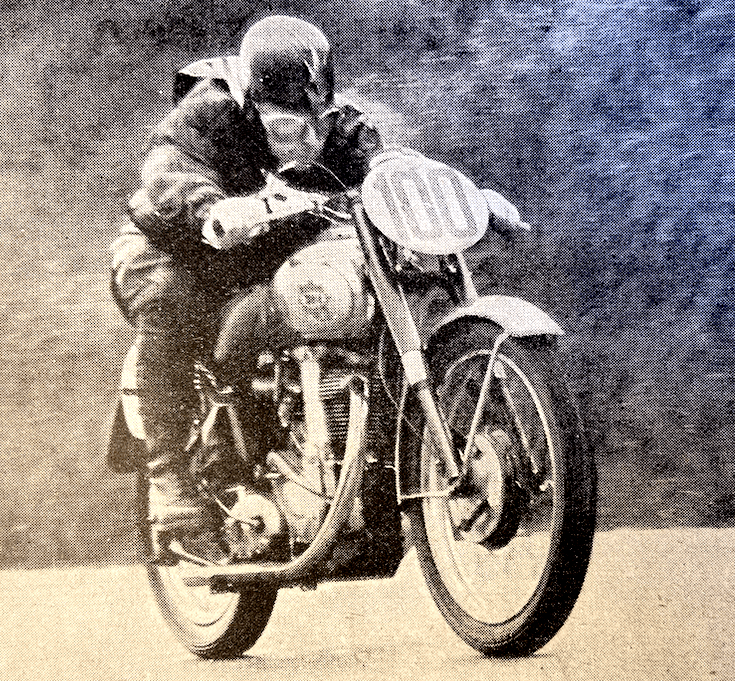
touch at Signpost Corner. Herbert comes off, is out, but all right. Wicksteed’s average speed goes up. Three laps covered, only one to go, and he has averaged 79.51mph. His engine sounds perfect. Plews heats Hill and, with Herbert retired, becomes second. Carter is fourth, IK Arber (Norton) fifth and HL Williams (Norton) sixth. Wicksteed has over three minutes in hand. His pointer seems to stick—he is a long time getting to Ballacraine. Surely, he, too, is not out? Plews is at Ballacraine before him, so is HL Williams. Fastest man on the course to-day, he is out, owing to a split fuel tank, just above Quarter Bridge, Plews leads, with 30sec over Hill, who, in turn, has 19sec in hand over Carter. The end is not yet. Plews’ and Hill’s pointers move steadily round the dials. Craig-ny-Baa is reached. Less than four miles to go. The loudspeaker circuit is switched to Cronk-ny-Mona, a mile and a half from the finish. Plews’ engine is misfiring badly. He is off his machine and pushing it. The engine has restarted…Thoughts immediately turn to petrol—lack of it. Has he run out? Yes, he is pushing in. Meanwhile, No 53, A Hill (Triumph), finishes. He has lapped in 30min 6sec and he began Lap 4 with 19sec over Carter, No 81. Just for full measure there is a final sensation. Carter achieves a magnificent last lap—29min 25.4sec—to snatch victory by nearly half a minute. Flews pushes in to finish ninth; Williams also pushes in to gain 10th.FINISHING ORDER 1, PH Carter (Norton), 75.60mph, Winsford; 2, A Hill (Triumph), Bradford; 3, K Olson (Norton); 4, IK Arber (Norton) Wellingborough; 5, RWC Kerr (Norton) Ayr; 6, F Passmore (Norton) Hayes. THE 250cc LIGHTWEIGHT RACE The Lightweight race, held concurrently with the 1,000cc and 500cc races was held over three laps (113.19 miles)—one lap fewer than was called for in the other classes. Only 17 entries were attracted. There were three non-starters. The field comprised four makes—seven Velocettes, two Excelsiors, four Triumphs and a lone Panther, the last ridden by GS Wakefield. Finally, the race became a mild fiasco—there were only five finishers! That last fact, however, in no way detracts from the merit of the win by F Fletcher, who rode a 249cc Excelsior Manxman. His speed was 66.89mph, which is about 1⅓mph slower than the winning speed last year. Fletcher snatched the lead at the beginning and was never
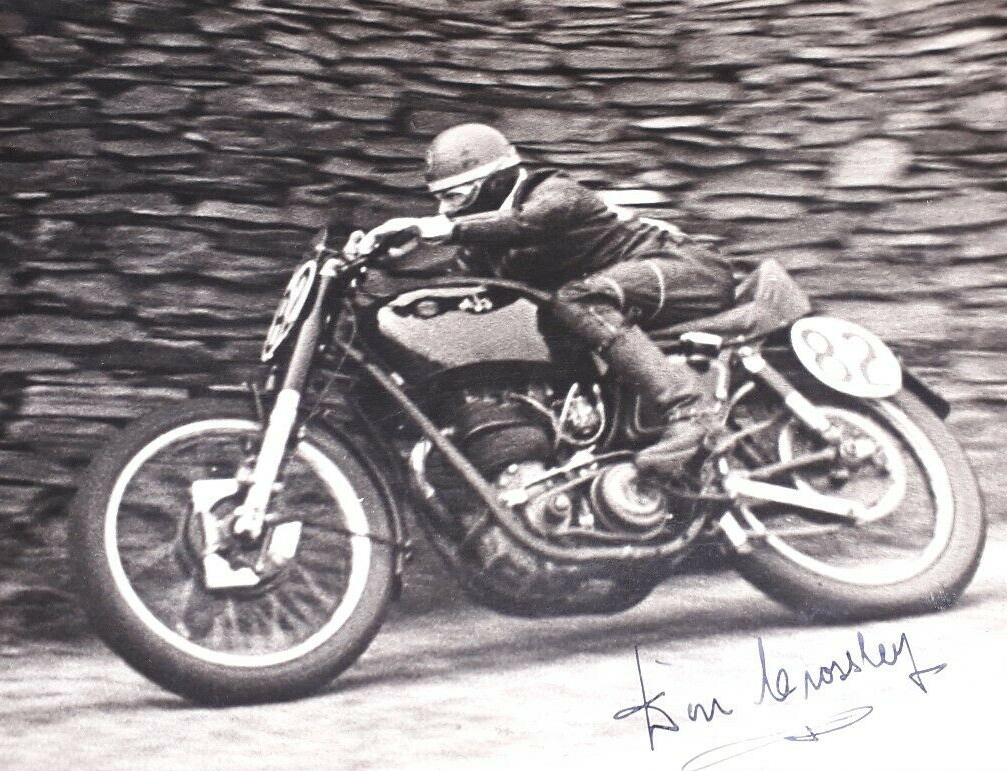
seriously challenged. His only real opposition came from AJ Wellsted, who was Triumph-mounted, and who will be remembered for his connection with IB Wicksteed at Brooklands before the war. The order of the rest of the field changed only because of retirements. DW Mustard (Velocette) was in third place at the end of the opening lap but he could not begin a second lap. His retirement let LC Bolshaw (Triumph) into third place, JR Dulson (Velocette) into fourth, LD Boult (Triumph) into fifth, and JP Barker (Velocette) into sixth place. The third and last lap began with only seven riders still circling. Fletcher’s Excelsior never faltered for a second, and he was described as riding beautifully at all parts of the lap. Wellsted appeared to be riding equally well but his mount was no match for the Excelsior.” FINISHING ORDER 1, F Fletcher (Excelsior), West Leeds, 66.89mph; 2, AJ Wellsted (Triumph), Pathfinders and Derby; 3, JR Dulson (Velocette), Liverpool; 4, LD Boult (Triumph), Leicester Query; 5, A Hutchinson (Velocette), East Lancs.” THE 350cc JUNIOR RACE AT 1.30PM ON WEDNESDAY, officials and Press had finished with the morning scoreboard. An army of carpenters and fitters swarmed upon it like bees, removed all traces of the 1,000cc, 500cc and 250cc events and installed the innumerable fittings required to convert it for the 350cc Race with 93 starters. Meanwhile, the weather report was broadcast. Much the same as this morning—drier at the pits, but shifting mist on the Mountain. Starts were done by fours at 20-second intervals—and two of the first four got mildly left at the post. (But later an entire four had to be ordered off the grid by a marshal). At one time, the left of the road was so packed with sweating, swearing, frantic kickers that the marshals had to shoo them along towards Bray Hill. Several were still leaping and plunging after No 101 had gone. Never can a yowling exhaust have sounded so sweet in human ears. In half an hour they are back again, some in clumps of two or three, fighting to overtake, others strung out alone. Quite a number have already retired, and others call at their pits. Gradually the race takes shape. BSA machines are 1, 2, 3, 4, with two more tying for sixth. A Douglas is fifth. The speed is approximately the same as in 1949. KRV James, of Ringwood, is leading. There are 12 retirements; one is in hospital, but only to have a cut hand stitched. James is 34sec ahead of the field while 70sec covers the next six. Three men tie for 9th place. On Lap 2, BA Jackson (BSA) broke Clark’s 1949 Junior Clubman record by 7sec. Owing to the large entry running each other close, there is some awkward crowding along the pits. As the times go up, Jackson is now only 16sec behind James, the leader. The speed has dropped below the 1949 figure. Difazio has forced his Norton into the leading six. Still 1, 2, 3, 4 for BSA! and four more BSAs in the leading dozen. The tension mounts.
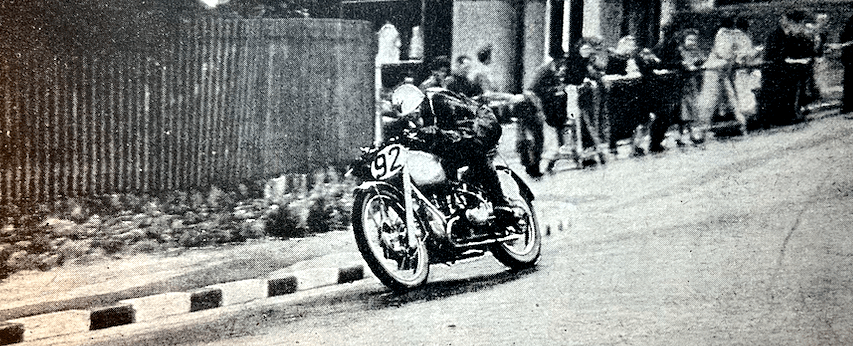
Round they come again on the third lap and Jackson is reported ahead of James on the Mountain. Nobody could desire better racing. The six leaders after three laps show three BSAs chased by Clark’s Douglas, and Brown and Simister on Nortons. As those figures go up, the leaders are half-way round their fourth and final lap. We wonder why the pace is down on the 1949 figure except for Jackson’s second lap! Now we can only watch the Jackson and James’ clocks. Looks like Jackson’s race! McGuffie can hardly catch him. Either James is down and out, or the signals are faulty? Jackson at the Bungalow, with James marked short of Kirkmichael. The race must be in his pocket, with McGuffie earmarked for second place, barring accidents. And now comes the news that James is out with engine trouble at Glen Helen, and Jackson brings his BSA home with the bacon. FINISHING ORDER 1, BA Jackson (BSA), Oswestry, 74.25mph; 2, I McGuffie (BSA), Galloway; 3, A0 Brown (Norton), Stewarts & Lloyds (Corby); 4, JR Clark (Douglas), Waterlooville; 5, CE Robinson (Douglas), Louth; 6, P Simister (Norton), Macclesfield.
As a change from the Blue ‘Un or Green ‘Un, here’s the Junior TT, as reported by the IOM Weekly Times
“NORTONS WON THE JUNIOR TT after a record-breaking race in which they led after the first lap when Les Graham on his AJS jumped into the lead with a breath-taking lap at over 86mph—a speed never previously attained in the Junior TT. Spectators hadn’t had time to appreciate the significance of this startling speed before Geoff Duke came within a second of Graham’s lap time, and Artie Bell, his fellow Norton team man, was only six seconds behind. It looked as if the Norton race plan would pay the expected dividends, and so it transpired. Bell, riding at the peak of his form, took the lead on the second lap with a new record circuit and held onto it grimly lap after lap with young Geoff Duke always lying handy if anything should happen to Bell. Nortons were leaving nothing to chance in achieving their first Junior TT victory since the late Jimmy Guthrie won in 1937. The cracking pace was bound to tell a tale on the leader board and Bell steadily drew away from the others, with Duke the only one within striking distance of him. So hot was the pace that the average speed of the first three men after half the race was greater than the old record lap, and the first five men were all faster than the record speed for the race put up by Jimmy Guthrie 13 years ago…The start, Monday. Blue skies, perfect road conditions, clear visibility coupled with an atmosphere of excitement which only the TT can imbue in the minds of the motor cycling public, and laymen alike greeted the 100 competitors for the Junior TT as they wheeled their machines down to the starting line. Their engines had lain dormant since the weighing-out on Saturday. In the interim competitors had spent their time resting and trying to fit themselves, mentally and physically, for the great race. They knew better than anyone else the hazards the TT course has to offer; they knew their progress would be watched by thousands round the course, and by countless hundreds of thousands all over the world who would listen to the BBC reports. The only foreign rider challenge came from ‘old timer’ SA Sorenson (Norton) and we were pleased to welcome riders from Ceylon, Australia and New Zealand. Lorenzetti (Moto-Guzzi) was a non-starter owing to an accident on the
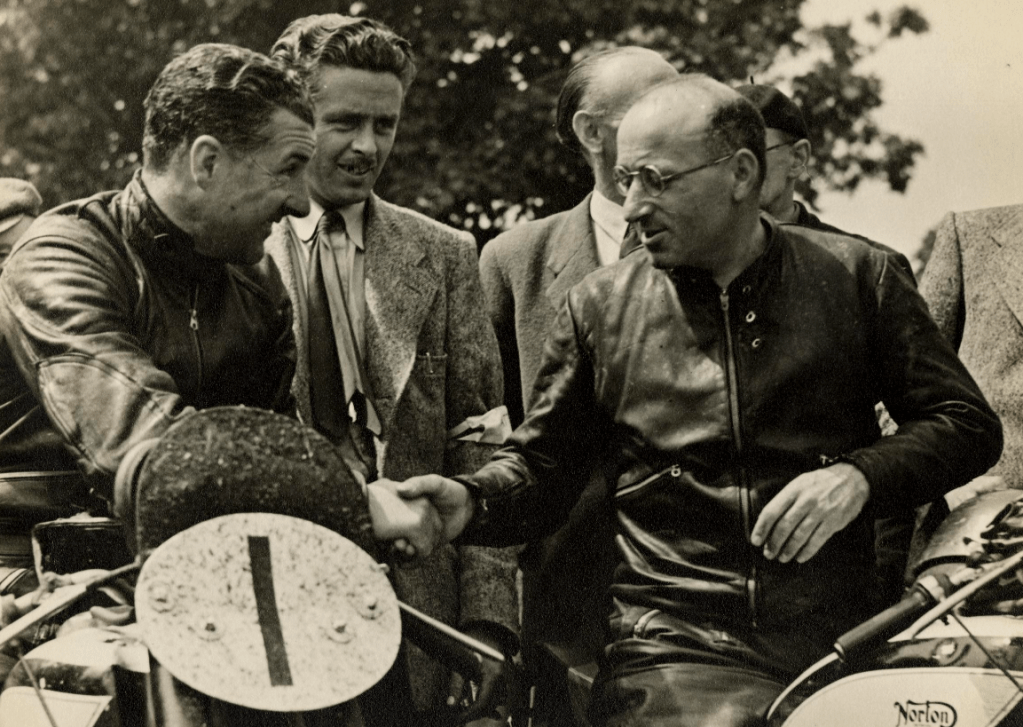
Continent. The Lieut-Governor, Air-Vice Marshal Sir Geoffrey Bromet, as usual, mingled with the competitors and spoke to many of them just before the signal fired to tell the people round the course that the Junior TT had started. RJ Hazlehurst (Velocette) led the way, but stopped at Sulby Bridge to make an adjustment. There was no spluttering of engines at the start. They all fired immediately and the men got away in fine style, with the exception of E Braine (AJS), who had to change a plug. Best of the lot, not even excepting Les Graham, was Geoff Duke. He sped towards Bray Hill like a flash of lightning, and the last the people on the packed grandstand saw of him was his flying figure, down over the handlebars, all set for a great race. First incident befell VH Willoughby, on a Velocette, who took a spill at Quarter Bridge, but remounted. It was hard to decide whether to watch the position clocks of Graham and Duke, or pay greater attention to the men finishing the first lap. The New Zealander, SH Jensen (AJS) was the first man to do so, but hard on his heels was AR Foster (Velocette). The position clock said that Duke had made up about two seconds on Graham by the time Ramsey had been reached. When they passed the start Foster gave the OK signal to his pit attendant, but Duke took no notice of anybody or anything. First retirement came when RJ Hazelhurst (Velocette) pulled into the pits, thus smashing the hopes of the BMCRC. First sensation came when AJ Bell (Norton) broke the 1938 lap record. His time was 26min 26sec, a speed of 85.06mph. The came news that Les Graham had clipped seven seconds off Bell’s performance. His time was 26min 19sec, a speed of 85.9mph, and Geoff Duke was travelling only one second behind Graham…only four seconds divided the first four men. Engine trouble had caused the retirement of quite a few competitors by 11.15, but none of them belonged to teams…Foster was the first man to finish the second lap and ‘here it is,’ said the announcer, ‘or perhaps it is only the start.’ Foster was the first man to better Stanley Woods’ official first lap set up in 1938 when he lapped in 26min 16sec, an average speed of 86.22mph. The first lap is the short one as the men start in front of the finishing line and their times are not accepted as official records…Then came Artie Bell (Norton) with a time of 25min 56sec, an average speed of 87.31, beating the record again, but this time with a regular wallop. Les Graham lapped in 26min, 22sec, and Duke in 26mins 16sec, and so Bell’s miraculous lap enabled him to snatch the lead from Duke by 14 seconds, with other men on the course whose one ambition it was to better their existing performances and so get on to the leader board. E McPherson, from Australia, on an AJS, was stopped for a considerable time at the pits and even after he pushed away he had difficulty in getting his engine to respond. First shock on the third lap came with the news that Foster, the first man officially to have lowered the record, had packed up at the Quarter Bridge. The rider was OK and had a word with his Excellency and Lady Bromet when he came back to the start. The clutch trouble which had slowed
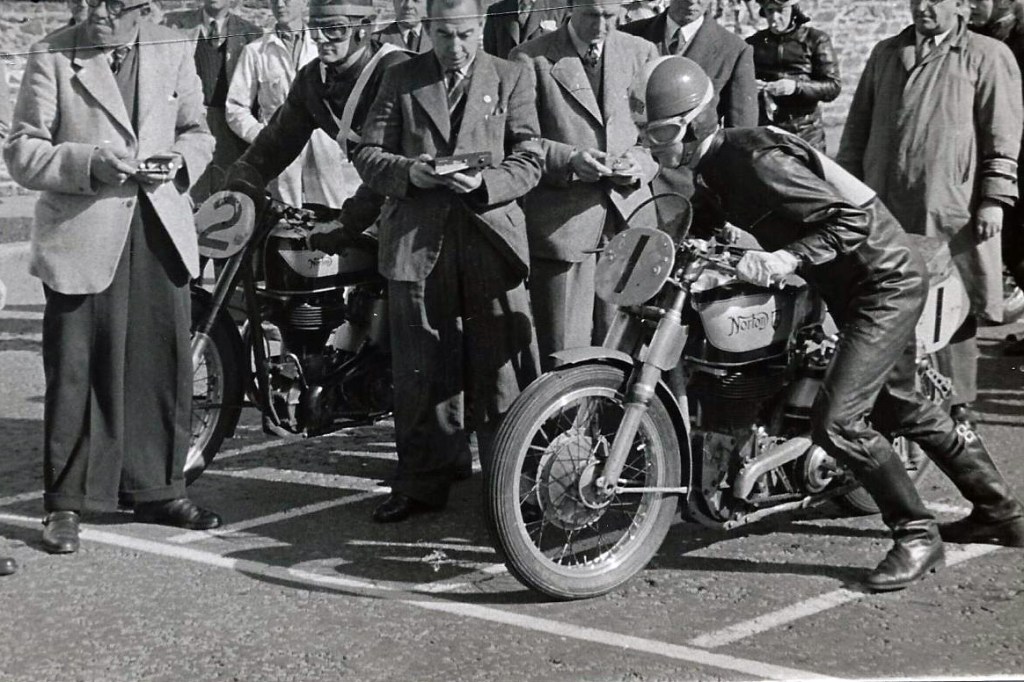
down McPherson would affect the chances of the AJS manufacturer’s team, whilst Foster’s retirement smashed the hopes of the Velocette team. It had been thought that the Nortons had something up their sleeve for Race Day. Certainly their drivers had something almost supernatural under them in the way of an engine. The Norton team was streaking round the course to some purpose. T McEwan (AJS), the only Manx competitor, retired at Kirk Michael on his third lap with engine trouble. Just before noon, HL Daniell (Norton) pulled in for replenishment. So did Artie Bell, who only took 19 seconds to take in fuel, while Les Graham seemed to clip a couple of seconds off that time. The record was not further lowered in this circuit, the individual lap times of the four leaders being: Bell, 25min 57sec; Duke, 26min 10sec; Graham, 26min 40sec; and Lockett, 26min 35secs. Fourth Lap: carburettor trouble had befallen Salt, who had been on the leader board for the first two laps, but he was still on the road. Duke on this lap was all out; by the time he had reached Governor’s Bridge it was thought he had pulled up quite a lot of time, although the timekeepers, with such a big field to check, were a bit slow in recording the aggregate times of the leaders. Two laps previously Lockett up pulled in to tighten the megaphone of his bike, and this had obviously slowed down his time…With the retirement of CA Stevens (AJS) the hopes of the Streatham &DMCC were dashed. Stevens had come off at the Crossags corner, but was OK. Two minutes 48 seconds now divided the first three men, and 40 seconds of that lead belonged to Artie Bell. Despite Geoff Duke’s excellent lap times we learnt that Norton Motors, who rarely give away any trade secrets, had delegated to Bell the task of showing his rivals’ jobs the way round the course. Bell was apparently riding to instructions. Steadily he was roaring round the course, going well, and it was noticed that the average speed was higher than the average speed of the 1938 record lap. Looking neither right nor left, Artie Bell went past the stand. He did not seem as fast as many, but
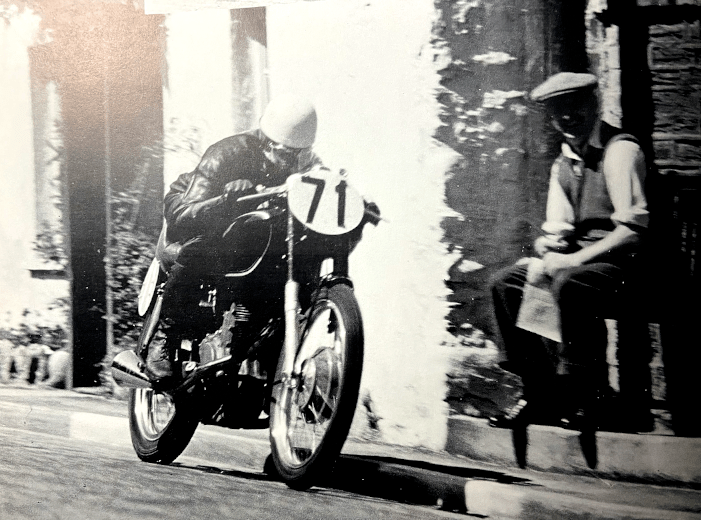
the performance and speed was obviously there. He was still leading the race. Duke was reported to be leading Graham at Cronk-ny-Mona…With the heat of the brilliant sun the roads must have got very sticky, but still Bell showed the field round the course. By 1pm 18 retirements had been announced, so with luck the percentage of finishers would be higher than for some years. One of the fastest men round Cronk-ny-Mona was Daniell, who passed a fellow competitor right on the corner. Bell came down from Brandish Corner like a bomb following Frend of the AJS camp. In what appeared to be only a matter of seconds Bell streaked past the stand to embark upon his final circuit and it was noticed that he got into top gear from Governor’s Bridge before the other competitors changed up. Bell was certainly prepared to take Bray Hill for the seventh time this morning all-out. At the time he passed the stand his runners-up, Duke and Graham, were coming down from the mountain…The Junior TT was almost over, with a win for Nortons. By 1.25pm Bell had passed Glen Helen. At that time Duke was on the way to Ballacraine, and so was Les Graham, whilst Daniell had passed Michael. It was obvious that Duke was doing all in his power to put up an even greater speed, but it seemed highly improbable that he could make up the time lag between his performance and that of Bell. First man to finish the race was Dale (AJS), and second was Daniell (Norton). McCandless, who had been lying sixth at the start of this lap, met with some sort of mechanical trouble coming down the mountain, but got going again. Artie Bell came through at 1.45pm to finish the course, and he was acclaimed the winner of the Junior TT, with Duke second and, surprisingly, Daniell third. We did not find out until after the race that Graham had overshot Ballacraine corner on this lap and took the slip road. This lost him valuable time. Sixty-four men finished the course. Artie Bell, winner of Monday’s race, is 37 years of age, comes from County Down, and has a motor-cycle business in Belfast. He is married with one child, and his wife was on the Grandstand to see his wonderful achievement. He has many racing successes to his credit, most notable of which was the winning of the Senior TT in 1948. This year he won the 500cc class in the North-West 200 by the narrowest of margins from Johnny Lockett, his Norton team mate. Nortons won the team prize with their No.1 team: AJ Bell, G Duke, and Johnny Lockett. FINISHING ORDER 1, Artie Bell (Norton), 86.33mph; 2, Geoff Duke (Norton); 3, Harold Daniell (Norton); 4, Les Graham (AJS); 5, Ted Frend (AJS); 6, Johnny Lockett (Norton).
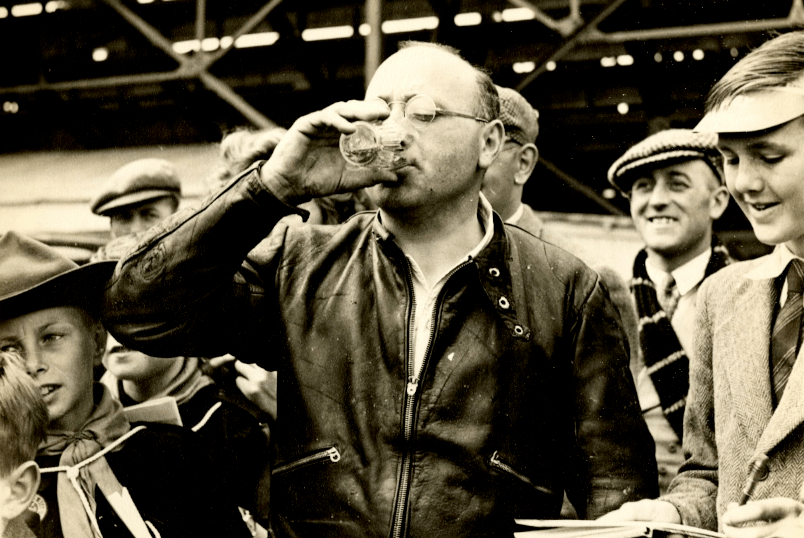
Back to The Motor Cycle for the Senior and Lightweight…
“THANKS TO THE LIGHTWEIGHT International (250cc) TT having a massed start, the thrilling nature of the climax to the race was plain to all. In this, alone of the week’s races, there was no need for mental arithmetic—for adding or subtracting starting intervals. Instead of the possibly boring wait while the 250cc race came to an end—it had started after the Senior TT men had been despatched and was held concurrently with the Senior—there was a superb climax to a magnificent week’s racing. A total of 25 riders came to the line. B Holden (CTS) was in the place of LG Martin, who had taken a toss when practising; WM Webster (Excelsior) replaced AE Shaw and No 101 was AW Jones (Guzzi) instead of W Lomas (Parilla). Favourites were Maurice Cann and Tommy Wood, with their Gambalunghino Guzzis; Cann was not using his own dohc arrangement. The dark horse was Ambrosini with the ohc Benelli. Did not Mellors win the 1939 Lightweight TT with a Benelli? The machine with its extra tankage did not look as smart as old-time models. Was there quite the same seriousness—the same determination—about the venture as in Mellors’ day? Both the Guzzis had seven-gallon tanks—one gallon per 37¾-mile lap. They might cover the 264 miles without a stop to refuel. With its multiple tanks the Benelli should cover the distance all right. The Guzzis had reverted to the curved induction pipe. With the downdraught arrangements and the big tanks, carburation was upset. The reversion meant loss of power. Among the private-venture British machines there was much of technical interest. Both Bayliss’ Ellbee Special and Beasley’s Excelsior had the Earles light alloy frames and tanks. Basically, the engine of the former is a single-cylinder Triumph. RE Geeson’s REG is a dohc vertical-twin—entirely new and, since it had arrived late, there had been time for little more than running-in. Then there was Harrowell’s interesting LEF, which started its 250cc life as a cut-down 3T Triumph, and the very smart New Imperial ridden by RJA Petty. Not least, there was that doughty challenger of the riders of foreign machines—RH Pike, on his Pike-Rudge. At 10.45am the flag dropped. There was a shuffle of feet. Those who had made the fastest laps in practice were in the front rank—Cann, Ambrosini, Tommy Wood and BA Mead, who was riding
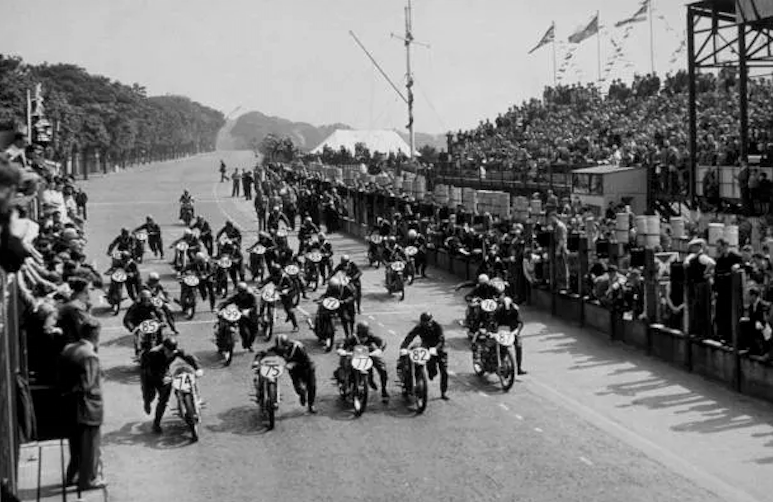
a sleeved-down KTT Velocette. Pike, in the second rank, was off first. Cann had some difficulty in getting going—he dropped from first row to last, it seemed. The field streamed down Bray Hill. Yes, the push-start had turned the ‘mass’ into something close to a stream. No thrills and spills were reported. At Quarter Bridge, the wide hairpin right turn approached downhill, the order was: Pike, Bayliss (Ellbee), Tommy Wood (Guzzi), Beasley (Excelsior), Harrowell (LEF), Ambrosini (Benelli), H Hartley (Rudge), C Tattersall (CTS). But if the scoring clocks on the board flicked in correct order, Maurice Cann was the first at Ramsay—had shot through the field—and Tommy Wood second. At Craig-ny-Baa it was the same. Then Cronk-ny-Mona came on the air. Cann was in front, 15 yards ahead of Wood. Instead of going through the start, both Cann and Wood went into the pits to top up their tanks—to make sure that there would be no need to refuel at a perhaps crucial period of the race. Third was Pike; then came Mead. Pike passed through while the Guzzis were still at their pits. Ambrosini was no higher than fifth, and had already lost a whole minute on Cann. Was it lack of speed or was the trouble that the machine was steering badly owing to all the top-hamper and to the weight of the streamlined tail, a subsidiary fuel tank? If the latter were the reason, the Benelli’s lap speeds would steadily increase. Speeds of the leading duet were low—75.90mph for Cann’s first lap against Barrington’s (Guzzi) 78.25 last year. Pike, however, is much faster than last year—he saves no fewer than 56 seconds. Lap 2 seems go according to plan. Cann leads, with Tommy Wood in close attendance. There is merely two or three yards between them at the end of the lap—so close are they that the timekeepers bracket them first. Pike is third, 30sec behind. Mead is almost on his tail; he has
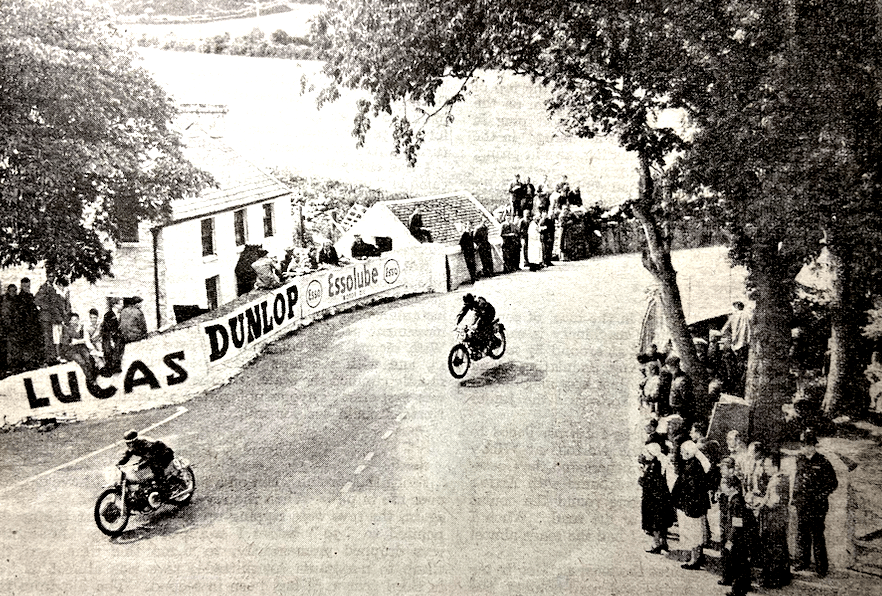
picked up 23sec. Ambrosini has lost still more time on Cann and Wood, and is now lmin 9sec in the rear in spite of the Guzzis’ pit-stops. Both Petty (New Imperial) and O’Rourke (0K Supreme) are out early on. The former only gets as far as the straight between Quarter Bridge and Braddan. On Lap 3 Ambrosini picks up two places, becoming third, behind the Guzzis. Mead is fourth and Pike fifth. The. Benelli, however, is doing little more than maintain station with the Guzzis. It is lmin 6sec to the bad, although speeds are about 2¾mph lower than last year. So far, however, the standard of reliability is proving high—all except three succeed in covering three laps, which says much for the excellent reparation by (in many cases) private entries. The picture changes. Wood’s pointer seems to tarry at ‘K’—Kirkmichael. Yes, it is still there when Cann is shown at the Mountain box ; yes, and Ambrosini, and Mead, and Pike. News from Cronk-ny-Mona is that Ambrosini is chasing Cann. On go the red lamps signalling riders at Governor’s Bridge. No Wood. The clock dial was correct. But whether Ambrosini is really chasing Cann or not, the latter is past the grandstand by the time Ambrosini is signalled at Governor’s. But undoubtedly Ambrosini is picking up. There are now only 37sec between them. And there are three more laps to go. Third is the valiant Mead; fourth, Pike; fifth, Bayliss (Ellbee); sixth, AW Jones (Guzzi); seventh, the Danish rider, Sorensen (Excelsior); and eighth, the 54-year-old sporting dealer, Frank Cope, on a cut-down AJS. Tommy Wood has got going and is 10th, behind Edwards (CTS). A non-standard throttle-needle fixing has failed him. Unrealised by many because nearly all eyes are on the record-breaking Senior Race, Ambrosini speeds up. Poor handling owing to the machine’s starting as a tanker was the cause of the trouble. Wood, too, is gaining. At the end of Lap 5, Ambrosini is only 28sec behind Cann. It is whispered that such is the speed of his machine, that were he on
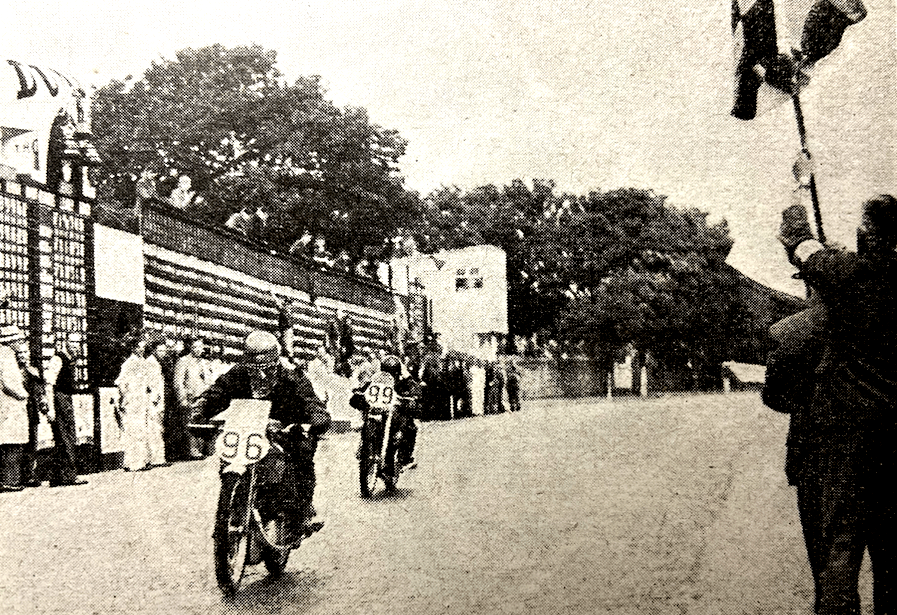
Cann’s tail at Governor’s Bridge on the last lap he could win comfortably. Certainly his engine sounds perfect. Wood goes up from 10th to seventh. The one big query is whether Ambrosini will be able to catch Cann. Provided that their machines stand up to the further two laps of this most gruelling course, the race is a certainty for one or the other. Many, however, are finding seven laps too much for their machines. Wilmot Evans is out with a broken inlet valve at Ginger Hall on Lap 4. Beasley has a split oil tank and is enjoying a meal at Sulby. Harrowell, who was lying 8th on Lap 3, is out owing to engine trouble. Definitely the chase is on. Ambrosini is only a few hundred yards behind Cann at the end of Lap 6. The times go up. Cann has 15sec in hand. It is a good margin on this course. But Ambrosini picked up no fewer than 13sec on his last lap. Can he do it—can he pull out still more? The loudspeakers trace the two men round the course. A shock occurs early. Ambrosini is announced at Ballacraine, but not Cann… It transpires that Cann was missed—he had gone through already! Glen Helen. Only seconds between them. Point after point. At Ramsey, the two numbers are announced almost consecutively. Gooseneck? Three seconds between them. Mountain Box—two seconds. Bungalow? Twenty yards. Ah! At Craig-ny-Baa Ambrosini is leading. At Cronk-ny-Mona he has 20 yards in hand. Both are striving their utmost. What a finish is in prospect! At Governor’s, Ambrosial hangs on to his lead. He makes no last-minute mistake. They accelerate out of the dip and along the Glencrutchery Road. Who ? Which? All in the stands rise, crane, yearn for periscopes. Ambrosini? Yes, Ambrosini—by about six yards. He has broken the lap record with his final, amazing lap in 27min 59sec (80.91mph), to beat the figures set up by RH Dale (Guzzi) and Tommy Wood (Guzzi) last year by 10 seconds. The others stream in. Third is Mead with his Velocette, a very creditable third, 6min 40sec behind the winner; fourth is Pike—74.14mph, against Jimmy Simpson’s Rudge win in the 1934 Lightweight at 70.81. Twelve of the 25 starters succeed in finishing. FINISHING ORDER 1, D Ambrosini (Benelli), 78.08mph; 2, M Cann (Guzzi); 3, RA Mead (Velocette); 4, RH Pike (Rudge); 5, LJ Bayliss (Ellbee Special); 6, AW Jones (Guzzi). Fastest Lap—D Ambrosini (Benelli), 27min 59sec, 80.91mph (record).”
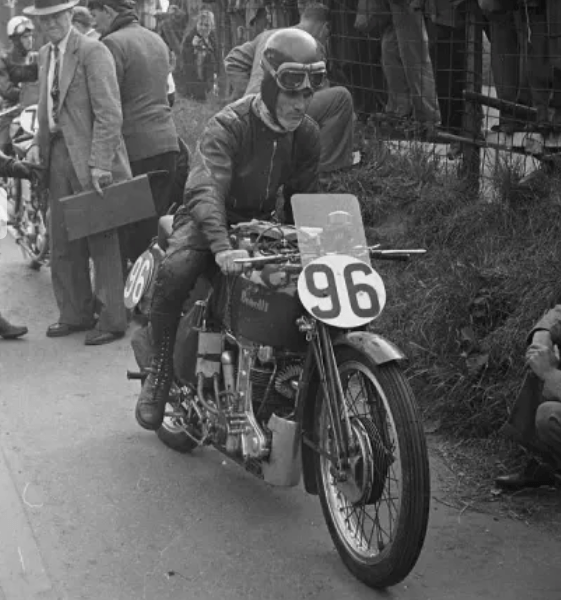
“THE 1950 SENIOR TT, contested under perfect conditions, proved another sweeping triumph for Nortons, and produced plenty of records. The winner was GE. Duke (499 Norton) in 2hr 51min 45.6sec at 92.27mph. (The previous record, set up by G Meier on a supercharged BMW in 1939, was 2hr 57min 19sec at 89.38mph). AJ Bell (499 Norton) was second in 2hr 54min 25.6sec at 90.86mph. J Lockett (499 Norton) was third in 2hr 55min 22.4sec at 90.37mph. The fourth man, RL Graham (498AJS) finished at 90.11mph. These four, with HL Daniell, who was fifth, all bettered Meier’s 1939 time. Duke beat Daniell’s 1938 time for the fastest lap in both his second and fifth laps, his final figure being 24min 16sec (93.33mph). Nortons also secured the Manufacturers’ team prize. The Club team prize was awarded to BMCRC (RH Dale, McCandless and Duke—again, all on Nortons). There were no serious accidents; one man injured a toe, and another sustained minor cuts. Of the 75 starters, 52 finished the seven laps. For Senior Day we all want dry roads and clear air for safety, plus sun for spectator comfort, and no wind for steady steamers. So we woke early on Friday morning and listened. It was a good awakening last Friday morning. No yowling gales. No tattoo of rain on the roofs. The faint light through the curtains was yellow—no grey—promising sunshine. On the curtains being drawn, the dun, bald humps of the Manx hills were silhouetted against a pearly sky of grey, blue and silver. Out in Douglas Bay a billion golden sequins twinkled on an azure sea. And so it continued all day long, though the wind had just a wee nip on the tops. Soon elephantine trumpeting from plump steamers rent the air. Ten thousand fans landed, but it was sad to hear that a thousand or more

were still marooned at Liverpool docks. Then came the new arrivals’ hunt for breakfast—plenty of eggs, kippers cured in real oak smoke, and sausages with real pork in them—and for a shave or a pace to titivate. And next the great trek up to the course. Douglas now owns a fine fleet of modern coaches and buses, but ‘two-up’ motor cycles were the favourite transport. Thousands of machines, tight-parked, nose-to-kerb, down both sides of the long streets, were soon kicked into life. The crowd was not colourful. The fellows wore drab riding coats, and most of the girls hid the bright primary colours of their frocks under macks. Wordy battles were raging anent past and future champions. The overnight buzz concerned Les Graham’s last-minute change of his gear box owing to a burred pinion. Nortons were naturally the popular tip, but dissenters said that Foster had been put out by an absurd mishap on Monday, while Graham was shaping like a winner when, on his second lap, 600 revs evaporated. By 10am the conditions were ideal, though the rather ‘floppy’ breeze felt cool in shaded places. It blew from a quarter which would help along the Sulby straight, but absorb a few horses up the Mountain. The roads could not have been better. Record crowds lined all the vantage points, touching their maximum at the Bungalow. The Governor, as always, reached the grandstand half an hour before the start. Special interest was shown in the debut of the Vincent machines, ridden by Bills, Barrington, Stevens, Hodgkin and Fairbairn, of whom at least two were expected to shine. Under the reserves’ rule, J Varlow (Norton), RH Dale
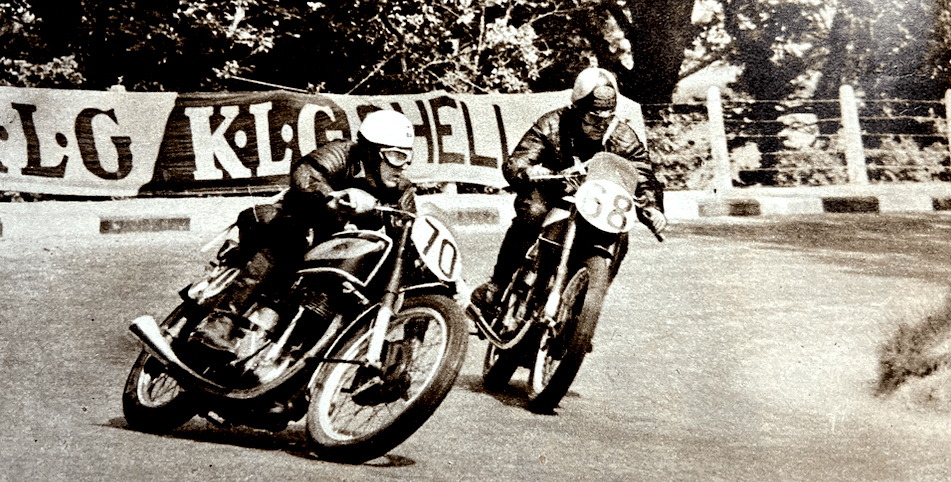
(Norton), J Simister (Triumph), EA Barrett (Norton), CF Salt (Velocette), AJ Glazebrook (Triumph), HB Myers (Norton) and J Harding (Norton), figured among the 75 starters. The total on the course was brought up to tot by that perennial nonstarter No 13 and 25 lightweights. The Seniors started singly at 10-second intervals, and the 250cc machines mass-started at the tail. Lorenzetti (Guzzi) and the three MV Augustas were lamented absentees. The entire entry left smartly, with the type of facility which one would expect from micro-motors. One or two super-experts wagged sage heads and promised us plenty of 90mph laps, with at least one 94mph lap. Nor were they very far out. Their forecast was endorsed when No 1 (Daniell) reappeared from a standing start lap at 89.63mph. McPherson, the Australian, was travelling extraordinarily well on his 358cc AJS, while Bell had thus early taken almost half a minute off Foster’s Guzzi. Bills’ Vincent was moving smoothly, but young Duke’s passage was a sensation. He had calmly swished round the island in 24min 47sec from a standing start, a speed of 91.38mph—no record, of course, for the starting grid is 70 yards inside the true terminus. It is unusual for the Guzzi to be outspeeded in the early stages. Already the race was starting to ‘take shape’, and Monday had impressed all beholders with Norton reliability, no less than with Norton speed. With 1, 2, 3 and 4, and five more in the leading dozen, they sat pretty. Indeed, folk began speculating about their riding orders. Duke already lay 29sec ahead of Harold Daniell; had the youngster permission to let off all his fireworks? Team managers have to rack their brains hard during the second lap of any Manx race. Their chief rivals have by now revealed their speed, and perhaps their tactics. There can be no delay in formulating a counterthrust, and issuing code signals to suit.
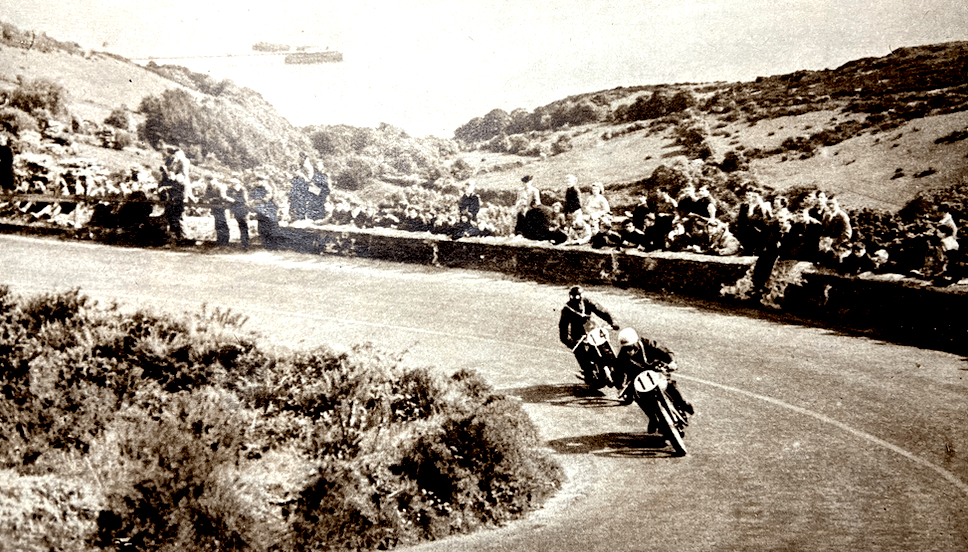
This year the Norton tactic was a combined rock-crusher which, in fact, admitted of no retort. We in the stands do not know what signals their rivals displayed, but the non-Norton riders could attempt no more than to hang on with their eyebrows. Duke, on his second lap, promptly administered a hefty right to the chin with a new record of 24min 21sec (93.01mph) which not so much broke as pulverised Daniell’s 1938 figure of 91mph. Bell also topped 91, and Daniell, Lockett and Graham were all over 90mph. (It was good to see Lockett justifying the high opinions held of him.) Some grey-headed observers wagged sage heads over Duke. ‘Foolhardy,’ they thought. ‘He’ll crack up or crash. After all, he’s less than a year out of the amateur class!’ Anyhow, nobody could harry the Nortons yet. Klein was reporting touring down off Snaefell. Heath’s throttle jammed wide open as he went into Quarter Bridge. Matthews met engine trouble, and Harrison slightly damaged a foot and disappeared to hospital. The leading dozen included two stalwart Australians in Hinton and Morrison, the very promising RH Dale, Cromie McCandless, a veteran in Brett, and the Velocette starlet, Armstrong. A third lap is seldom exciting, it being too soon for the ‘too fast’ men to blow up and too early for any crafty tortoises to forge ahead. Frequently pit-stops furnish its main excitements. This year was no exception. Daniell dropped two places, complaining mildly of his clutch. The typical first-class pit-stop occupied about 25 seconds. Almost everybody stopped—some wag said they ought to queue. When two were just restarting, and a third was judging his
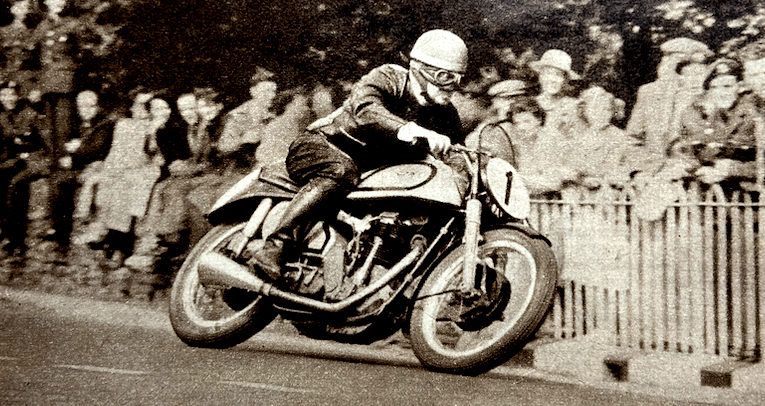
stop at a pit farther along the line, things looked momentarily nasty. Foster said his engine ‘wouldn’t take full throttle’, whatever that meant. Bell murmured something about his steering being ‘difficult’—so would most people’s steering be at 90 per. Fletcher retired at the pits with a split tank. Foster had a skid at Governor’s Bridge. Jensen fell out with a broken valve-spring—cruel luck, New Zealand! But even the pit-stops exerted miraculously little effect on lap times—there were still three men over 90 and two coquetting with that magic figure. Any radical change in the fortunes of the different makes already seemed a remote possibility. But Fortune is usually such a fickle jade in the Island that one is quite afraid of a man’s shining too brightly in the earlier laps. Reports from round the course showed that either. Duke is a perfect wizard at mastering a rebellious bicycle, or else the new Norton is more docile under controls than any known predecessor of any make. Certain it is that this irreverent young meteor is quite fearless; if he takes risks, he does not take one risk too many. The Irishman, Turner, falls out at the Highlander with engine trouble, and Kentish retires on the Mountain. An analysis of Daniell ‘s laps is interesting: 1st—standing start—25min 16sec; 2nd, 25min 4sec; 3rd (a little clutch worry), 25min 13sec; 4th (including fuel stop), 25min 48sec. It looks as if the standing-start spells a debit of about 10-15sec as compared with a flying lap, while a first-class pit stop costs its maker about 35sec. These figures relate to an average speed of approximately 90mph. Maddrick fell at Governor’s and is adjusting. Bills gets his Vincent into the leading dozen. Freud is apparently determined today to finish at all costs, and is riding a comparatively steady race, ie, about 84mph. Not so, young Duke. He did not seem incredibly fast in such company, but after he had streaked through, the announcer reported another fracture of the lap record. It fell short of the prophesied 94mph, but not by very much,
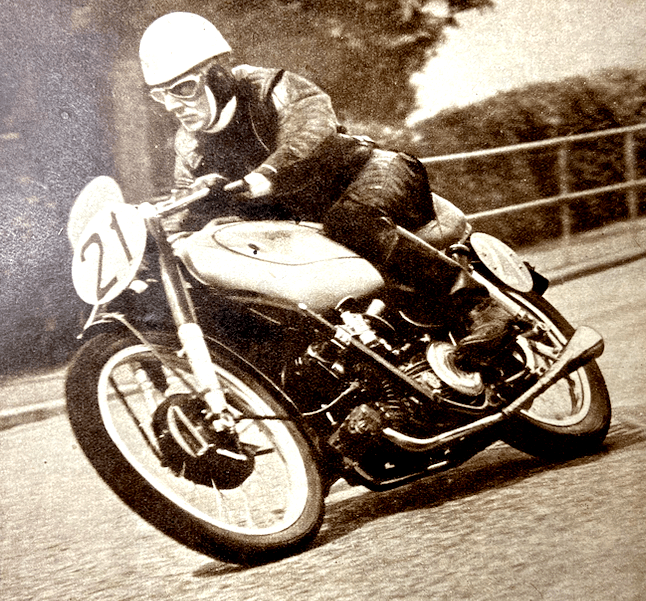
for his figure was 24min 16sec or 93.33mph. He must feel enormous confidence alike in himself and in his trusty engine to essay such velocities when Norton are perched on top of the world with 1, 2 3 and eight machines in the first dozen. Many scribes regretted that duty pegged them in the stands, where only straight speed is visible; they fell to envying watchers who saw ’90 per’ at fast and dangerous bends. Graham had lost a little time adjusting his front brake, but though beaten on absolute speed, he was riding superbly. It is hardly likely that Foster cherished any serious hopes of a wholesale Norton debacle; in any case, he was in trouble with his rear float chamber. Let the croakers take note that, so far, the sole casualty concerned poor Harrison’s big toe! The Senior entry, of course, consists largely of professionals and semi-professionals, who comprehend their limitations. Gallant Graham repasses Daniell on this lap. Petch retires at Windy Corner with engine trouble. It is to be hoped that the public in general noted the astonishing small percentage of retirements as the hours passed by. In many previous years the ominous letter ‘R’ has claimed about half the columns on the score-board at this stage. A little later, the list of retirements has often amounted to two-thirds or three-quarters of the entry, and at the finish many very lame ducks have crept in slowly to qualify as ‘F’. Of this 75 entry only about 10 machines are works’ ‘specials’, the remainder being ably tuned editions of ordinary purchases. Most finished, and finished running fast and well. Many were beginning to wonder whether Nortons would demand 1, 2, 3, FOUR! But Graham was lapping at over 91mph and going faster still. Glazebrook was reported touring through Ramsey with a flat rear tyre, a disaster which made us think of the confidence which men now place in their tyres; a burst—or even a puncture—at ‘120 per’ along Sulby straight with the wind astern could hardly be controllable. About this time Iffland fell at the Gooseneck, but mercifully only sustained a few superficial cuts. Hodgkin retired at the pits. Briggs toured in from Sulby. Foster lost a minute tinkering near Sulby, and misfired horribly through Ramsey. But nothing troubles the stalwarts fighting out the lead. One shudders to dream what the pace must have soared to if, say, Graham or Foster had been able to hustle the Norton aces. Their supremacy was so facile as to be almost contemptuous. Being widely spaced
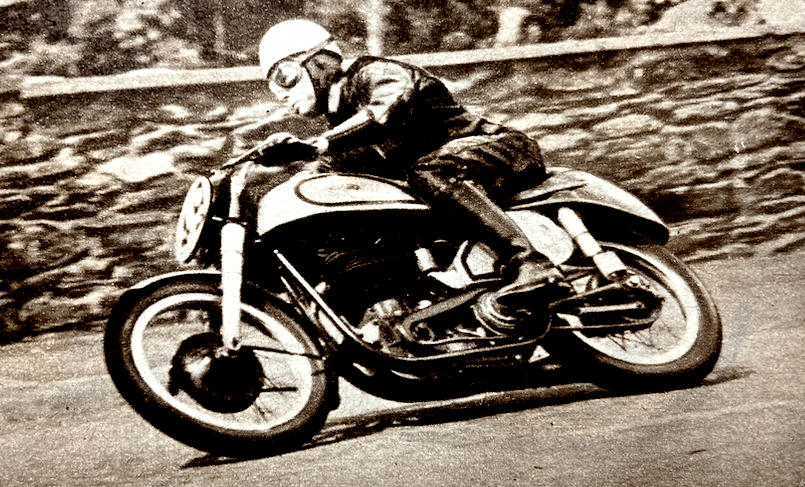
in the starting order, no duel rose to fever heat whenever one of them appeared. They slid through as separate individuals, riding as if on rails, crouched as flat as any wind-tunnel expert might desire, and with only two items to re-mind us how mightily they were conquering space and time—namely, the frightful noise which they made, and the brief tick of time which they required to debouch from Governor’s and vanish down Bray. At this stage, Duke, Bell and Lockett were all regularly beating 90, not only on individual laps, but as their average, inclusive of one standing-start lap and one fill-up lap—the last subject to a deduction of at least 45sec for the slow, the fill, and the restart. The speed was, indeed, almost fabulous, and Stanley Woods must have been musing on his pre-war dream of a 100mph lap, of which the Nazis probably deprived him. These high speeds rather blinded spectators to the achievements of the lesser men, but we should pause to note that Armstrong, on the Velocette, was averaging nearly 87, and behind him the Irishman McCandless, the Australians Hinton and Morrison, the veteran Brett, Ted Frend and young RH Dale were all well up in the 80s at speeds which would have won any Senior previous to 1938. Indeed, the smooth, consummate ease of the leaders made the race feel almost like an exhibition parade. There was an apparent element of the inevitable in the regularity of their lapping past the stands. So, at long last, they flitted past, one by one, to start Lap 7. What, if any, were the riding orders of the Norton team, in which Bell is presumably No 1? He had started 2min 40sec in front of Duke. At the start of Lap 6, Duke was 2min 13sec ahead of Bell on corrected time—ie, on the clock he was only 27sec behind Bell.
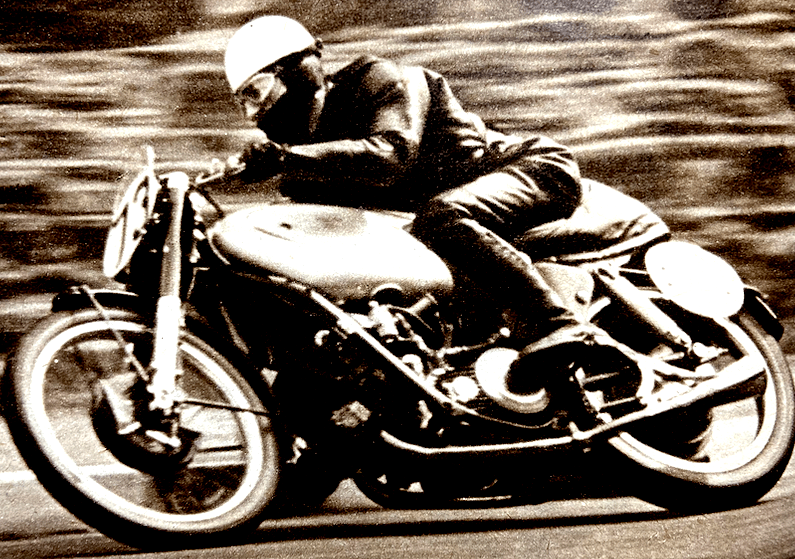
What signals were both men receiving? The loud-speakers entered into the fun, yelling from each point round the course ‘Bell PAST!’, and then, a few seconds later, ‘Duke PAST!’ Excitement waxed higher and higher, until at last Bell and Duke appeared practically side by side, grinning all over their faces, with Duke just a yard or two in the lead! Exhaust noise drowned the ovation which they had so richly earned, but they got it later when dismounted. And now none need any longer bemoan the licking Meier gave us with his supercharged BMW in 1939, for Duke, Bell, Lockett, Graham and Daniell, on atmospheric induction, all beat his record average speed. Incidentally, Graham joined the select coterie who have done an Isle of Man lap at over 95. McPherson, of Australia, accomplished a wonderful ride on his 358cc AJS to gain 14th place. In a sense, it is unfortunate that the five leaders were so exceptionally fleet, as their speed overshadows fine rides by many competent lads on more standard mounts. A superb race, superbly won. In Duke we have a potential world champion. A lad who can graduate from the Manx Grand Prix class to Senior TT winner in nine months is exceptional material. He could dominate world motor cycle racing for 10 years to come on three conditions—that he has good luck; that he keeps his health; and that he remains as modest and unassuming as he is today. Good luck to him in his draught of heady wine. The AJS emerges with real credit—11 entries, 11 finishers. And—let it be repeated—Graham, if he only finished fourth, beat the existing lap record. Nortons had, of course, un succes fou—1, 2, 3 in Senior and Junior; two manufacturers team prizes; and two lap records. FINISHING ORDER 1, GE Duke (Norton) 92.7mph; 2, AJ Bell (Norton); 3, Lockett (Norton); 4, L Graham (AJS); 5, HL Daniell (Norton); 6, HR Armstrong (Velocette); 7, RH Dale (Norton); 8, WAC McCandless (Norton); 9, J Brett (Norton); 10, H Hinton (Norton); 11, G Morrison (Norton); 12, K Bills (Vincent); 13, T McEwan (Triumph); 14, E McPherson (358 AJS); 15, EJ Frend (AJS); 16, ER Evans (Norton); 17, AE Mottle (Norton); 18, J Swarbrick (Norton); 19, MD Whitworth (Triumph); 20, S Lawton (358 AJS); 21, AL Parry (Norton); 22, SM Miller (Norton); 23, JW Beevers (Norton); 24, J Simister (Triumph); 25, VH Willoughby (Norton).” I have listed the first 25 finishers rather than the usual six for the excellent reason that in 25th place was one VH Willoughby—Vic Willoughby, who would become technical editor of The Motor Cycleand with whom I had the privilege to work as an office junior. Vic had a proud record in the TT; you’ll find a short biography in the Gallimaufry.—Ed.
PS: There’s a Shell documentary on the 1950 TT on Youtube: http://www.youtube.com/watch?v=2Xi5xwU0j8A
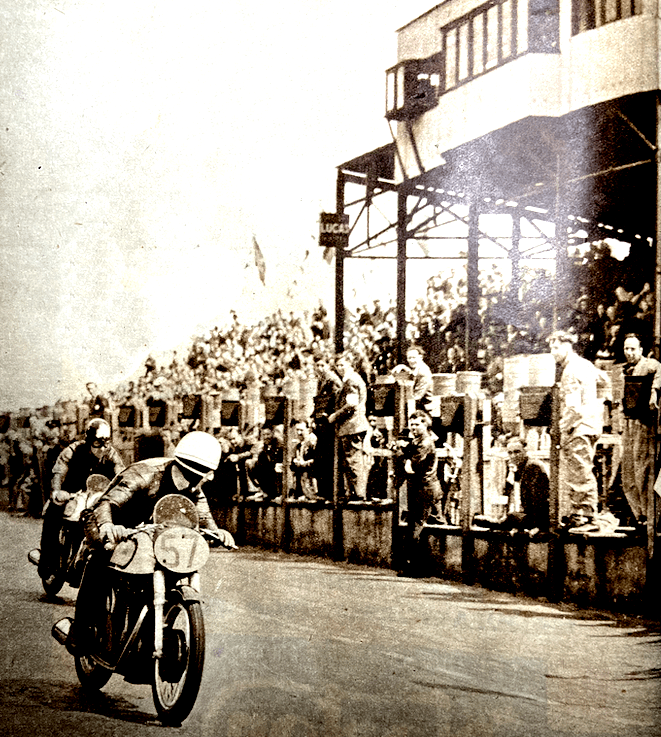
“ISLE OF MAN JOTTINGS
GEOFE DUKE was delighted to have achieved his greatest ambition. He said ‘It’s only when you get one of Joe Craig’s 500s that you realise how well the McCandless frame steers. I think Professor Craig issued me with a quick one.’ After the Senior Race he said that he had no idea that he had been lapping the Island so quickly, and that a 95mph lap should be easily possible on the new Senior Norton.WHEN PRESENTED with the Lightweight TT Trophy, Dario Ambrosini, who does not speak English, was persuaded to utter one word which, phonetically, was ‘veriarpi’ and which, being interpreted, is, of course, ‘Very happy.’ JUST AS A NURSE attending Bill Doran was about to remove some hospital apparatus, the Junior TT broadcast began. ‘Go away,’ roared Bill. ‘Don’t disturb me until this is over.’ The apparatus had to stay put for another three-quarters of an hour! NORTONS’ 1, 2, 3, IN BOTH Senior and Junior, the only two races in which they had entries, has been achieved once before—by Nortons in 1933.They have gone one better this time, gaining both team prizes, in addition to breaking the lap and course records in both events. THERE WAS A marked absence of starting troubles in the International races. To what extent was this due to the 80-octane petrol? By contrast, the number of kick-starter cold engine delayed starts on Pool in the Clubman’s races was disturbing to behold. IT IS DOUBTFUL whether a club team win has ever been more popular than that in the Junior Race. The New Zealanders who won the prize beat such teams as BMCRC (Daniell, Duke and Hazlehurst), Dublin (Barrington, Bell and Armstrong) and Streatham (Lockett, Frend and Stevens). The New Zealanders’ positions were SH Jensen, 16th; J Swarbrick, 36th; and JH Dale, 48th. THERE WAS A much more matey atmosphere this year between the organisers, on the one hand, and the entrants and riders, on the other—excellent! AN INTERESTING WEATHER phenomenon experienced on Clubman’s Day was that some people could select the climate required! Sunbathing was possible—and was practised—in the northern half of the IoM, while in the grandstands warm, damp-proof clothing was à la mode, for wet, chilly clouds blanketed the south. INTERESTED MOTOR CYCLISTS gathered round the Douglas Vespas, which made their appearance, complete with enormous windshields and spare wheels, in various part of the Island. POOR GEORGE MORRISON had things said about ‘mad Australian’s riding’ after the Junior. Words were eaten when it was found that George had been jockeying a broken frame round some very tricky bends. BOB FOSTER’S RETIREMENT in the Junior Race was due to a broken rear-brake cam lever. The fracture was new and clean and could not be explained. At the time the trouble occurred, at the beginning of Lap 3, Bob’s position was fourth, 33sec behind the leader Bell. It was expected that the Velocette Bob was riding would have to sacrifice a few seconds on the early laps owing to the heavy 7¾gal fuel load, aimed at enabling a non-stop run. But with no pit stop to make, the leeway might well have been more than overtaken…”

“IT WAS A VERY reluctant young man who, at the top of the Mountain Mile at approximately 5.30pm on the day after the Junior Race, refitted the soft plug in Geoff Duke’s 350 Norton and put a ‘bung’ in the megaphone. The second of two fascinating, awe-inspiring, utterly thrilling rides was at an end. In the early part of the morning I had ridden Artie Bell’s Junior-winning machine. On my return to the Norton stable, Joe Craig, technical director of Nortons, suggested that perhaps I should like to have a ride on Duke’s machine as well. Would I? Does a duck like water? The performance of the machines in the race, of course, speaks volumes. Only really super machinery is capable of lapping the Island for seven laps at around 87mph. And if you have never seen the writhing, undulating Island circuit, you can never hope to realise just how magnificent was the performance of the Works’ Nortons in the Junior Race. As usual with the TT-winning jobs I am privileged to have a whang on, I started with the Nortons at Windy Corner and played with them between there and the Gooseneck. At 10am—when I was thereabouts with Artie’s machine—rather too many were riding round the course and quite often on the wrong side of the road. When I returned later with Duke’s machine, I had the roads almost entirely to myself. Of all the machine’s new features the most striking to me were the perfection of the steering and road-holding, the colossal, ‘smooth power developed by an engine (I had to keep reminding myself) of under 350cc capacity, and the power and smoothness of the brakes. Joe Craig warned me at the start that 7,200rpm was ‘peak’, and that for best performance I would be advised to keep the engine turning over at between 6,800 and 7,000rpm. I was enthralled by the machine the instant the power came in ‘on the megaphone’ at 5,000rpm. It streaked away from my starting point just above the Guthrie Memorial with the revs climbing so quickly that I was sorely tempted to stop and, immediately and in ultra-rapid succession, smoke about three cigarettes! Not wishing to over-rev the engine, I slipped the gear into second at Joe Craig’s stipulated 6,800rpm. The gear change was about the best I have experienced—light, instantaneous, short-travel, utterly positive. A feathery movement of the right foot was all that was required. With second gear engaged the revs dropped to 6,000 or so, and with the taps wide open the rev-meter needle rapidly climbed the scale. Up the Mountain Mile visibility was first-class; anyone not riding a rapid line in Works’ Nortons could see for miles. Along this stretch when on a 500 I have clocked over 110mph. When the rev-meter showed 6,800 again the revs were zipping up so quickly that the needle pointed to ’70’ before I swapped the cog. Again revs dropped momentarily, to 6,200 this time, but the climb to maximum (permitted!) revs was almost as fast in third gear as it had been in second.
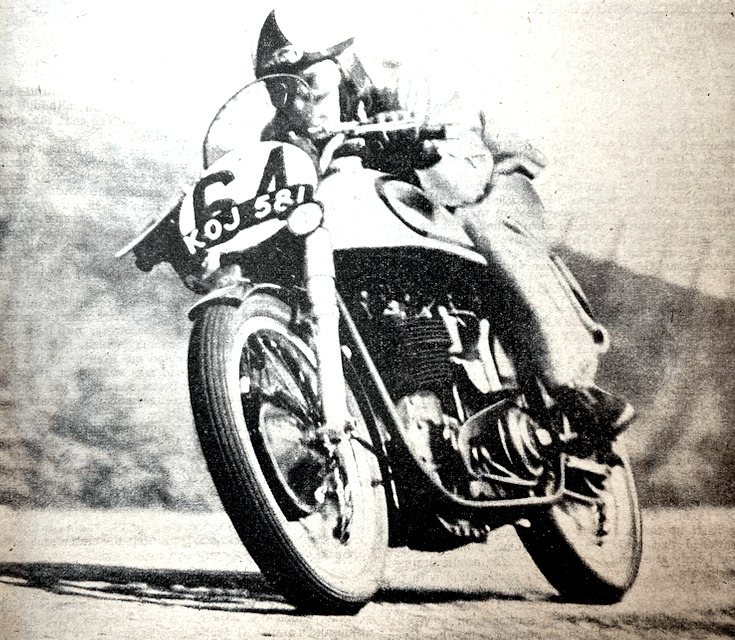
The din from the megaphone made my eardrums vibrate till I felt that they must surely collapse entirely. So many impressions flitted speedily through the Wilson brain that I can hardly write this coherently. The mumbo-jumbo of thought ran on the lines: ‘What a bus, what a life, what perfect suspension, what a perfect clutch, what a smooth engine, what a super riding position (though I’m getting a crick in my neck!), what a beautifully smooth, light throttle, I’d better get into top quickly—we’re doing ‘seven’ and that’s nearly peak!’ At 7,000 precisely in third, when I snicked the gear into top, I was well on the way to the lift at the Stonebreakers’ Hut and the speed was in the region of 100mph. I was round the gentle right with the taps still wide, doing, I should say, about 106mph before I closed the throttle and squeezed the brakes. I had no trouble at all in bringing the speed down. I stopped and sat down on the wall to think things over. This was some motor bicycle! Though I had been riding with the steering damper slackened right off, the steering was perfect. The suspension was doing its job so well that I felt I was on a billiards-table road. I wanted to learn more about the steering and roadholding, so I set off again, towards the Bungalow. I took the Verandah bends prudently at roughly (I should estimate) 75mph without bother, keeping on a cautious line all the way round and putting the wheels exactly where I wanted them to go. The machine literally steers to a hair. The level-crossing by the Bungalow went under the Norton’s wheels as though the rails just weren’t there. I pressed on, with the engine on full blast. Below 6,500rpm the engine was sheer velvet in its smoothness and perfection of balance. In the 6,800-7,000rpm region there was slight vibration—so slight as to be negligible even to the most severe of critics. The curves could be swept round with clean, easy sweeps in a manner I have never in my life experienced before. This was float-on-air suspension in the fullest sense. When Harold Daniell said that one could go to sleep on the new machines, he was only exaggerating in the sense that you have to look where you are going when you are rushing round the Island with something like 100 riders doing the same thing! The riding position, when I was down to it, was a revelation so far as racing machines are concerned. My chin was poised just above, or rested on, the front part of the tank pad. The rear part of the pad fitted snugly into my chest and between my arms in such a way that with the rise and fall of the machine there was little or no strain on my arms or legs. It goes without saying that the controls were placed to perfection, though strangely enough there appeared to be no difference in the riding positions of Artie’s and Geoff’s mounts in spite of wide variations in, their statures. And what a caning the clutch, on Geoff’s mount especially, took without, as it were, turning a hair. I made numerous standing starts, which meant that the clutch had to be slipped (until the engine came in on the megaphone) in a way that made me squirm. Brakes? That they were tremendously powerful is obvious. But what surprised me was the degree of fierce pressure that could be applied to either front or rear, without the slightest trace of a wheel locking. There was no sponginess, yet the brakes were perfect in the way that progressive application could be achieved. I turned at Windy Corner and went back to the Guthrie Memorial to repeat the treatment. Then I did the same again. Then I had fun and games between the Cutting and the Mountain Box. Now that I’ve written this I am sure that I have failed to give my true impressions. What I feel about the Junior Nortons simply cannot be expressed in words. The only adjective that springs to mind when I think of the machines is ‘Perfect’—or its fellow superlative; and since nothing can be better than perfect I might as well give up and go on to discuss Geoff Duke’s Senior Norton. If Tuesday morning’s capers, on the two all-conquering 350s had tickled me, Friday’s ride on the 500 was an even bigger thrill. I had the honour of being the first to try the machine after the Race, but because a tremendous crowd appeared as soon as I arrived with the Norton on the Mountain, I had perforce to confine my activities to the stretch of road between the 27th milestone and the first Mountain box. But that suited me, for there are few stretches of the Island lap that provide so long a straight or near straight. I felt right at home on the Norton from the beginning, and on my first run on it I had no hesitation in turning on all the available dynamite. The engine shrieked up the rpm scale like a flash of polished lightning. The power started
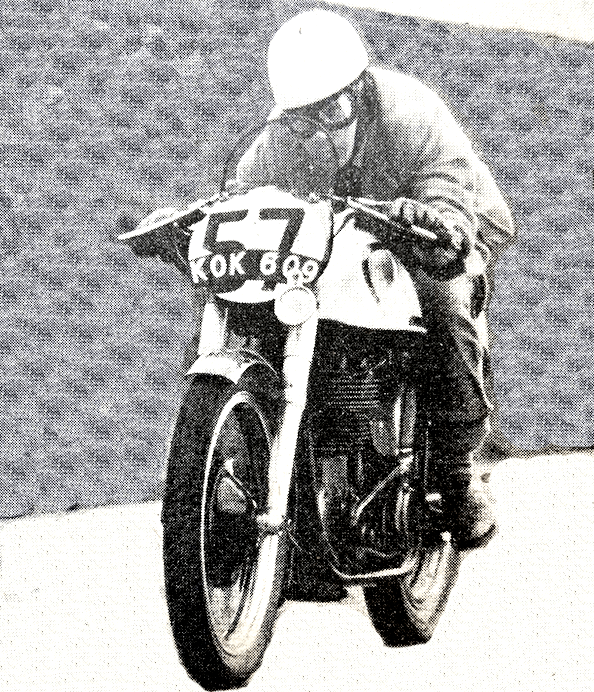
coming in on the megaphone at 4,600-4,700rpm. At 5,000rpm the engine was really gathering itself up for greater things. Though Joe Craig had mentioned that peak was 7,000rpm, I changed into second early at 6,400-6,5000rpm. The needle dropped back to about 5,500rpm, and the acceleration with the taps open in second was so tremendous that I was glad of the raised back of the racing seat. Up the Mile the machine handled like a 250 rather than a Works’ racing 500 capable of well over 120mph. Even at knottage in excess of 100mph, I could heel the machine over on the curves without conscious effort. With only a touch of the damper I found that the bellowing beastie, which only an hour or two earlier had been lapping the Island at 93-odd mph in the hands of Duke, could be placed to a hair. Up the Mountain Mile where Duke had achieved 6,400rpm in top (about 119mph), I contented myself with the equivalent revs in third gear (about l09mph). In the opposite direction, going the wrong way of the course, I had the throttle full open in top gear for about half a mile and, although too busy to glance at the rev-meter, I believe that the speed achieved was in excess of 120mph. And last of the winning mounts I rode, though by no means the least exciting, was the Lightweight Benelli, reputed to be the fastest 250 in Europe. At Floreffe last year the Benelli finished among the leading 350s, having started later than the bigger machines, and it has even been known to win 350cc races. That, as an example, gives the impression that the Benelli possesses 350 rather than 250cc performance, but if you are under that impression, I advise you to forget it. The performance is most definitely nearer that of a good 500. For a machine that was designed originally in 1933 (according to my good friend Dario Ambrosini), the top- end power is nothing short of shattering, but from any point of view there is a serious snag which, in an hour’s play with the machine, prevented me from using the performance unless the road ahead was straight or nearly so for about half a mile. I had better start from the moment I met Ambrosini by earlier arrangement, a few hours after the finish of the Lightweight Race. It was he who started the engine to warm it up, and he explained that thorough warming-up was essential in order to get the oil in the clutch housing to such a viscosity that the clutch would free. That explains why, during the race-warming-up period, Ambrosini either kept his machine stationary or walked alongside it with the gear in neutral. while other riders rode round the barrels in the orthodox manner. While he was warming-up the engine ready for my gallop, Ambrosini periodically felt the clutch and, after about seven minutes, expressed satisfaction. That appeared to we to be a hectic seven minutes for the engine, which was kept revving at 6-7,000rpm! I found out the reason for this as soon as Dario handed the machine over to me, explaining that the throttle must be kept more than halfway open, other-wise I would lose the prop. How right he was. Astride the machine, I ‘felt’ the engine by means of the twistgrip for a second or two before waving adieu. I let in the clutch—or rather let it bite momentarily—and withdrew it again! I was starting from a point in Douglas and with 6,000 or more rpm on the clock (a figure approaching peak on many racers) and the clutch home, the Benelli wanted to motor—and how! So my passage up to Windy Corner was a series of fits and starts. Fearful of abusing the clutch, I wanted to have it engaged on every possible occasion: not being accustomed to such colossal
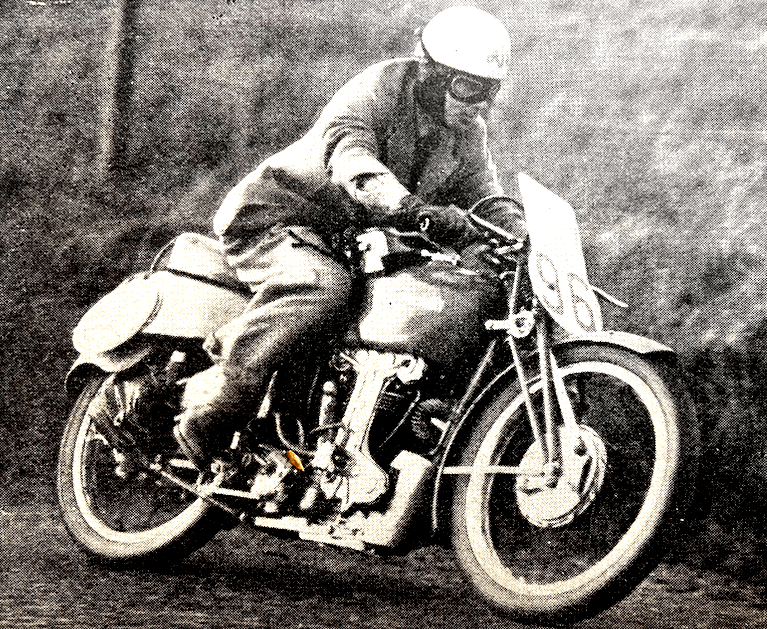
revs (and being rather suspicious of them from the point of view of the engine’s remaining en piece), I wanted to change up as soon as the clutch was home and the engine revving in the 6-7,000rpm region. But it was no good. Let the engine drop a few rpm below 6,000, and it faded out. It wouldn’t even keep running below that speed, so you can imagine that with my trying to keep the clutch in engagement as much as possible, and not wishing to lose the prop, it did not take me long to get to Windy Corner! I had a hot ‘candello’ in my pocket, and quickly fitted it. When trying to restart the engine I had to be given a push by an enthusiast who had stopped to watch the fun, because the clutch was still dragging slightly. We pushed off downhill to Windy Corner. The engine fired instantly and I leapt aboard, then about-turned, and headed towards the Bungalow. I opened the throttle, and let in the clutch. Into Windy Corner, in the reverse direction of the course, the engine had achieved nearly 9,000rpm, and I was into second gear just round the Corner. Up to 9,000rpm again, and into third. Clutch operation was rather heavier than that of some racers, but lighter than on several expensive standard machines I can think of. Came the three, full-bore lefts of Windy Corner. For me, of course, they were rights and the roads were open—very much so. I let the revs drop to 7,000 and changed down, expecting, or rather hoping, that I could get the machine round with the engine on the megaphone in second. The speed was too high for a safe line. So I changed down again and kept the revs at around 7,000 to the minute. And the speed was still too high. As I eased back the throttle, the engine showed signs of fading so I had to slip the clutch. For one who normally believes in treating an engine as he would a brother, the high revs were worrying me no end. On the straights I could manage very well and the performance impressed me as definitely in the 500cc category. I could appreciate why good riders on 500s were wont to ‘complain’ about being passed by Ambrosini. On corners that on other machines I have been able to get round in second gear with the engine on the megaphone, I had to take in bottom on the Benelli, and sometimes with the clutch slipping. Whereas, with the average racing machine, the engine will hit and miss below the revs at which the megaphone comes in, and the megaphone comes in over a rev range of about 300, with the Benelli, as I have said, the engine wouldn’t even run at below 6,000rpm; then suddenly, like a thunderbolt from Zeus, the engine was in on the megaphone and the revs building up so suddenly that they were all but uncontrollable. For me, unaccustomed to such characteristics, the experience was most illuminating, but rather discouraging. Though I played with the machine for the best part of an hour, at the finish I could not ride it and say that I was in complete command. There will be an even faster Benelli racer next year—it will probably make its debut at Monza next September. It is a 250cc transverse four-in-line based on the blown 250 which made its appearance just before the war and which was said to develop 52bhp. The new job has atmospheric induction, of course, and, according en Ambrosini, is very, very fast. Apart from the actual winning machines I was lucky enough to ride in the Island, I was also able to sample several others. Among them was the enthralling little LEF—a 250cc parallel twin with push-rod-operated valves, pivoting fork rear suspension, and handling qualities that filled me brimful with enthusiasm. The machine fitted me like a tailored glove. I felt that I could whistle it round the Island all day without fatigue. Total weight, by the way, is 2561b. This was the first 250cc twin racing machine I have ever ridden, and what impressed me most, apart, that is, from the handling
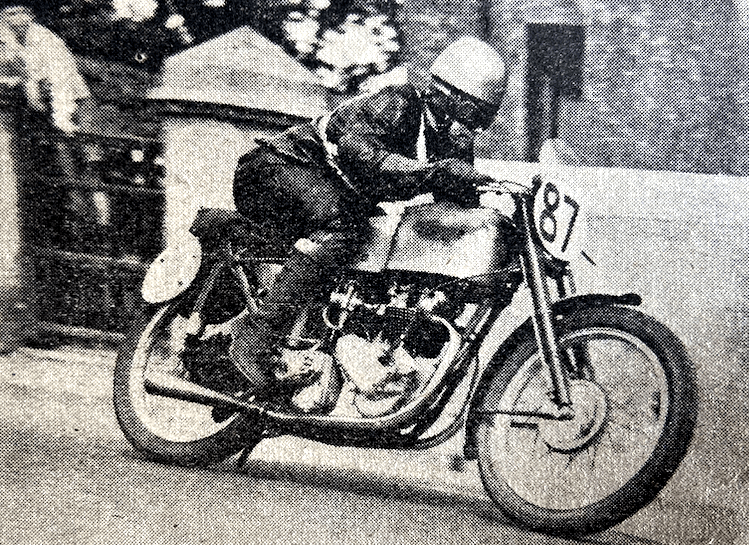
qualities, was the lack of megaphonitis. True, there was little below 5,000rpm, but the megaphone did not come in with such a rush as it does on the majority of singles. The technique of getting the best from the twin differed considerably from that necessary with a single. Since I rode the LEF the night before it was to be weighed-in, I had resolved to treat it in a decidedly gentlemanly fashion. I set off intending not to exceed 7,000-7,500rpm, although peak is considerably over 8, 000. Naturally, I decided that touring, rather than racing, upward gear changes would be the rule no that, should I miss a change, there would be no chance of a valve kissing a piston or, worse still, of a valve’s dropping in. Up to 7,000-7,200rpm in first and second, the little engine buzzed in the most exciting manner and there was not even the merest trace of vibration. Into third. The needle dropped back in the ’60’ and the engine started to miss. I returned to where the machine’s rider, John Harrowell, and Messrs Lewis and Foster (bearers of the first and last initials of the LEF) were waiting, and reported lack of ‘steam’ and erratic running. Harrowell and I swapped places and he sped off, to return later with the engine spinning with the smoothness of a turbine and buzzing happily. I tried again, after Harrowell explained that I should take the engine up to 8,000rpm at least before changing up, and that I should make racing changes in order to keep the revs around that figure. ‘The trustfulness of some people,’ I thought. After being definitely advised to open the taps, I felt that I could do so without compunction. This time there was no missing. Making racing-type changes kept the revs above the 7,000 mark, and the engine quickly and effortlessly built up on that figure. On one occasion, when I was pushing the engine hard in second gear way up to 8,400 a minute without valve float occurring and without the power falling off, I had the impression that the engine could easily he driven at 9,000 without trouble. The gear change with the Albion gear box was utterly delightful. I could heel the machine from one angle of bank to the other at around the 90-95mph mark without effort and with no trace of chopping from either the front wheel or rear. The wheels hugged the road in the most confidence-engendering and satisfying manner. As I streaked over the Mountain Mile towards the Mountain Box, and round the gentle right-hand bend before the second-gear left, with the machine on full noise and revving at 7,500 in third gear, the crowd watching said that the frontal area appeared to be no greater than that of the stem of a wineglass. To sum up, I cannot think of any racer, irrespective of make or capacity, that in its own way has given me greater satisfaction to ride.”

“1950 GOES DOWN IN TT HISTORY as Norton s Year. Never since racing began has any make scored so signal a triumph—the sheer apotheosis of lightning reliability linked with supreme ridership. We all hope that wherever the spirit of old ‘Pa’ Norton dwells today, he was permitted, if not to watch, at least to hear the glorious news. Even the ranks of Tuscany—as represented by AJS, Velocette and Guzzi—could not forbear to cheer; they were, in fact, the most generous admirers of their rivals’ overwhelming success. Reliability was, indeed and actually, the top note of the week, more impressive and more important even than fantastic speed. Take AJS, for example. Eleven men were riding machines of this make in the Senior. Every man jack of them finished, with one in fourth place, deprived of victory by no more than a small subdivision of time which is so utterly unimportant except in those arbitrary spheres of sport where man momentarily pretends that split seconds matter to anybody. The Senior and Lightweight finishes were immensely memorable for very different reasons. In the Lightweight, Ambrosini and Cann were only separable by a snippet of space which no chronometer could pretend to record with precision. All that after 260-odd, feverish miles of ‘dicing with space and time and death’. A similar interval with a profoundly different background parted Duke and Bell in the Senior. In sober fact, many experts were puzzling over the two Norton aces in their final lap. Duke had started 160 seconds behind Bell. After six laps he had abolished approximately 133 of those seconds. Had their manager dictated the order in which they were
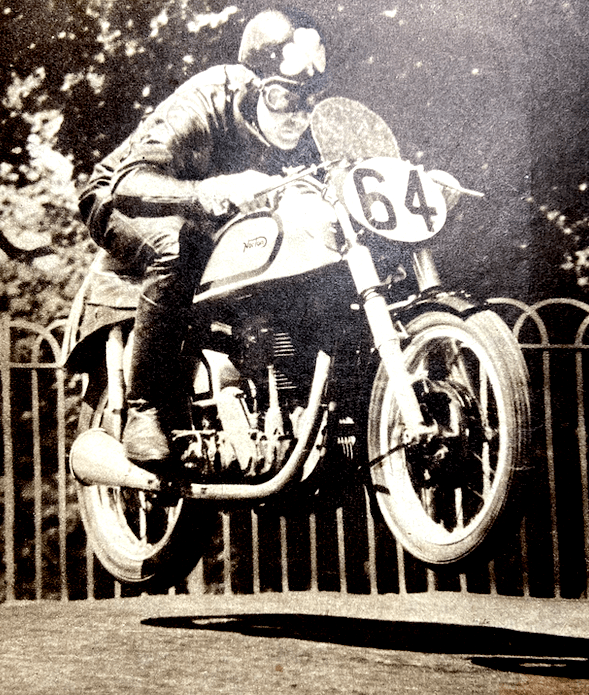
to finish? Would Duke slow down and allow Bell to stage a framed triumph? The phone reports from round the course suggested that Duke was resolute to wipe off the outstanding 27 seconds, and that Bell either couldn’t or wouldn’t hamper him. So grins as well as cheers marked the climax when the pair arrived mere feet apart, laughing at each other! The secret history behind this humorous solution seems to be that while Nortons may dictate the finishing order in certain Continental races (when and if conditions permit), they regard the Senior as the blue ribbon event of the whole year, issue no stringent instructions, and allow their men to ride their own race, merely advising each precisely where he stands lap by lap. No humane person could possibly disregard the casualty list—one of the most disturbing on record. Grossly exaggerated and misleading views on it have been published. Most sports—excepting ping-pong and tiddley winks—are potentially lethal. Nearly 100 men are annually killed in point-to-point horse races. About 500 people are drowned on our beaches every summer. The number of people who die annually through domestic mishaps in their homes—by falls, scalding, fiddling about with electrical gadgets, etc—exceeds the mournful toll of our road accidents. Motor racing in all its forms will always kill and injure a small percentage of its enthusiasts. The 1950 TT toll was not so very remarkable, with 400 riders taking part, of whom only a few were matured experts. The one practical question is whether any change in organisation could have protected the less expert. The Wednesday clubmen are in no sense experts, and they furnished a large share of the crashes. Can those clubman accidents be rationally ascribed to the psychological effects of sharing the week with more experienced men who are safe at speeds about 20% higher than clubman speeds? Nobody knows the answer to that. If this factor is relevant, the clubmen, in their own interests, ought to be shifted from June to a day in the September programme. We should all regret this. They put up a superb show on Wednesday. They adore the International week. Few of them can cross the sea twice in a year. They relish doing their stuff in front of the biggest crowds, and they relish watching the professionals and the works’ specials. But we have no right to jeopardise life and limb for entertainment. This point must be carefully weighed by the organisers this autumn.
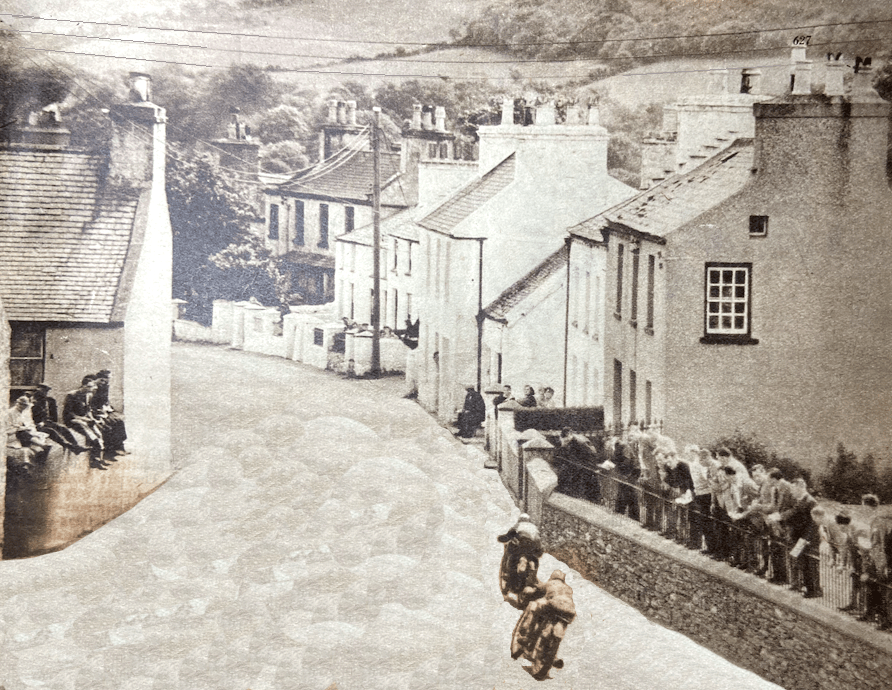
Incidentally, this point raises the whole question of the so-called ‘Third Programme’. The Manx authorities and the ACU premise a three-programme TT Week. Monday is sacred to the Junior, Friday to the Senior. Wednesday’s events have undergone many changes, and a slower race of semi-stock models has never been deemed 100% per cent satisfactory. What substitute could be found, if the ACU decide that the atmosphere is too stimulating for amateurs on semi-stock models? All sorts of suggestions are annually ventilated. So far none of them really appeals. The latest is that Wednesday should be allotted to the new 500cc four-wheeled carettes—the Cooper type, engined by JAP, Norton, Triumph, Vincent and other motor cycle engines. They would certainly furnish a marvellous spectacle. But are they yet equal to even a 4-lap event over the strenuous TT course? And is it wide enough? Other proposals are a valuable prize to attract more lightweights and so justify a separate race; or a revival of the sidecar race; or the introduction of a 125cc or a 150cc or even a 50cc event! Or a stock machine race (with all its famous headaches). Or a handicap. Or a special TT from which all past placed men should be barred. None of them except the Cooper-type idea sounds really attractive. A more fundamental revision is the suggested retention of the clubman events over a shorter course. It is conceivable that the clubman accidents are largely due to the impossibility memorising a 37¾-mile lap in very restricted practice. The clubmen would certainly kick at any such reform. They are burning to ride the full TT lap. That lap is dangerous—for the very same reason—to all oversea entrants. But the oversea entrants—men such as Lorenzetti, Jensen, Hinton and many others—arrive with enormous experience behind them. They are usually too new to the 37¾-mile lap to stand any chance of victory over it at their first attempt. But their experience withholds them from major blunders likely to produce crashes. The clubmen just lack that safeguarding experience. Some of them tackle danger points amiss…and
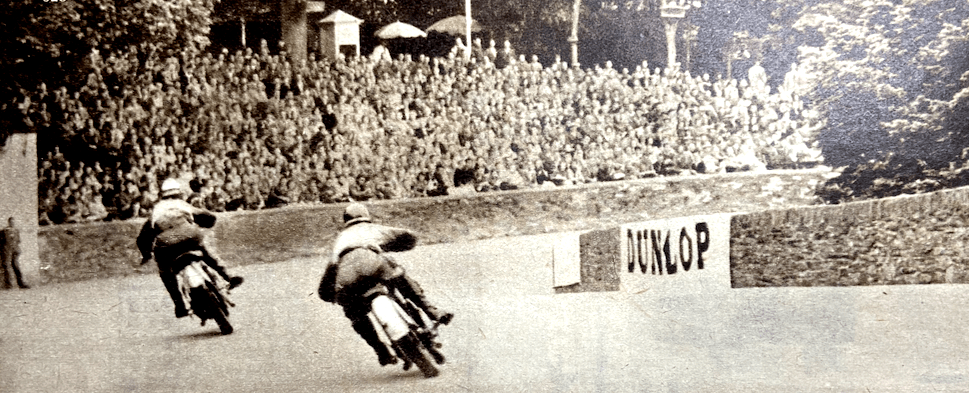
pay the penalty. The organising problem of using two separate courses in one week might well prove too much, even for the sage and ingenious officers of the ACU. Incidentally, no praise is too high for the organisers. I questioned Count ‘Johnny’ Lurani on that point—he has an encyclopaedic experience of race control in many lands. He thought the ACU pluperfect, and made just two remarks. The first related to the Press. He thought that foreign journalists would appreciate rather more spoon-feeding. Much of the broadcast announcing was only semi-intelligible, owing to exhaust noise with so huge an entry, while the handout of ‘flimsies’ was inadequate. Finally, he inquired whether we were degenerating into a ‘police state’. In Italy, he felt sure, no troops or carabineri could possibly prevent the crowds from surging on to the course as soon as the first three men in each race got home; but our docile people stayed meekly behind the fences until the official car came round to reopen the course! May I conclude by re-emphasising the exhibition of reliability in all the eight events? It has been my job in all the TT series to remain until the last finisher got home and Chronograph Villa could furnish me with his time and speed. So I have been familiar or years with the spectacle of the completed scoreboard. Until quite recent days the complete board has invariably shown few columns headed by the ‘F’, which betokens a man who completes seven laps before the course is closed, and a host of columns headed by the letter ‘R’, indicating that the rider could not finish at any price. This year the Effs exceeded the Arrs by a very handsome percentage—a tribute to design, to workmanship, to good preparation, and to good riding. Of these four factors, the first two contribute most substantially to the pleasure of the private owners of roadster models, and to the creation of a vast world-wide export demand. They are very healthy symptoms indeed. Nor must we miss one personal moral in the 1950 chronicle. In 1949, Geoff Duke was just a promising rider. Within 12 months he has made a meteoric climb to the status claimed by Tom Lawton in soccer or by Denis Compton in cricket. We shall all hope that neither mischance nor personal failure may hamper a career which all motor cyclists will watch with intense interest.”
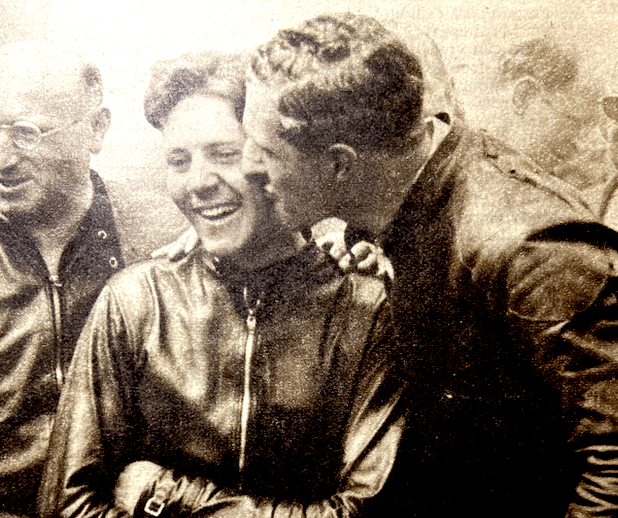
“MANY FACTORS COMBINE to distinguish the 1950 TT as marking the dawn of a new period in racing. For approximately 46.years racing engineers have been content to develop the single-cylinder engine with scant regard to forced induction, wind resistance, weight reduction, or the multiplication of cylinders. A peak has now been almost reached. We peep today into a fresh era, when blowing, streamlining, weight reduction, and a minimum of four cylinders threaten to rank as essentials. It is less clear what precise significance these four factors may rightly claim. A twin urgency flogs designers eternally onward. From the commercial angle, racing is the best—indeed, almost the sole—international publicity. From a technical viewpoint, a designer who is not permitted to conduct research is liable to seek different employment. For roadster motor cycles, we do not really require either supercharging or streamlining, though we welcome reduced weights and the special qualities of multi-cylinder engines. At a guess, the immense cost and concentrated labour involved in such new developments must limit innovations. Their arrival will be irresistible, limited by the expense, enforced by the popularity of racing as a spectacle and a hobby, by its sales influence, and by the resolution of men who yearn to exhaust the possibilities of their science. If slumps come, very few firms may persist in racing with four-cylinder engines, which may soon be as dominant in the 350cc class as they bid fair to become in the 500cc class. Here is one obvious oddity. The richest nation in the world, the United States, stands rather aloof. But three of the poorest—Britain, Italy and Germany—are all immensely active. Nor is export trade the main incentive.”—Ixion
“INGRATITUDE, THY NAME IS MAN! We old-timers recall an era when a new cover seldom lasted more than 1,500 miles, and its brief existence was chequered by frequent punctures. How we clamoured or detachable wheels! How we learnt the hard way to apply patches, so that they would stay put! How we swathed ourselves in butt-ended tubes for long tours or six-day trials! To-day punctures are so rare that many machines are now marketed without really suitable stands for tyre repair jobs. We no longer scream for detachable wheels, and a butt-ended tube is a museum piece—possibly there isn’t a single survivor anywhere on earth! At the TT we saw nearly 400 men cover a total of well over 50,000 miles with only a single case of a deflated tyre (which may or may not have been a road-inflicted puncture). And that at an average speed probably near 80mph! But nobody evinced the least surprise, and nobody ejaculated, ‘Thank God for inventor Dunlop!'”—Ixion
LIKE MANY JOURNALISTS, I normally book a private cabin for my return steamer trip from Douglas, and employ the four hours on my portable type-writer. If I finish the work in hand short of Liverpool, I invite guests from the tightly packed passengers on the crowded decks, who have been standing or seated on the lock edge of their suitcases. I hear many strange things from such casual acquaintances. This year a charming little man with grey hair was in a towering rage. He had selected Douglas for a rest cure in utter ignorance that his vacation was to coincide with the uproar of TT Week. What he thinks of motor cyclists is nobody’s business. I felt it was prudent not to let him know that motor cycling is my business!”—Ixion [More than three decades later I was enjoying an postprandial Blackbush-and-Guiness in the Sefton Hotel (the Blue ‘Un’s TT home-from-home throughout its existence) and overheard two formidable Liverpool ladies-of-a-certain-age, enjoying pints of Vodka and tonic as they puzzled over the swarms of motor cycles on the Island. Plus ça change…—Ed]
“AT DOUGLAS MANY spectators were puzzled that after Doran’s accident his Porcupine AJS was not transferred to the next best rider among those entered on AJS machines. To switch such a Works’ special to a rider unfamiliar with its little ways would be a hybrid between mania and murder. These 7,500rpm models with very light flywheels, capable of 90 per in second, are easily wrecked, quite apart from the special handling required to ‘keep them on the trumpet’. A single muffed gear change, permitting the engine to over-rev in its perceptible period of neutral, is liable to generate extremely expensive noises.”—Ixion
“DURING THE POST-WAR YEARS we have all heard glowing accounts of special suspension devised by the Irish rider, Rex McCandless. But the TT debut of the latest design reminds one of a Boys’ Own Paper story. After the best engineers in the industry had racked their brains on the thorny problems of spring heels, along comes a young man who provides Nortons with a suspension which is obviously super, and which won golden encomiums from all its users.”—Ixion
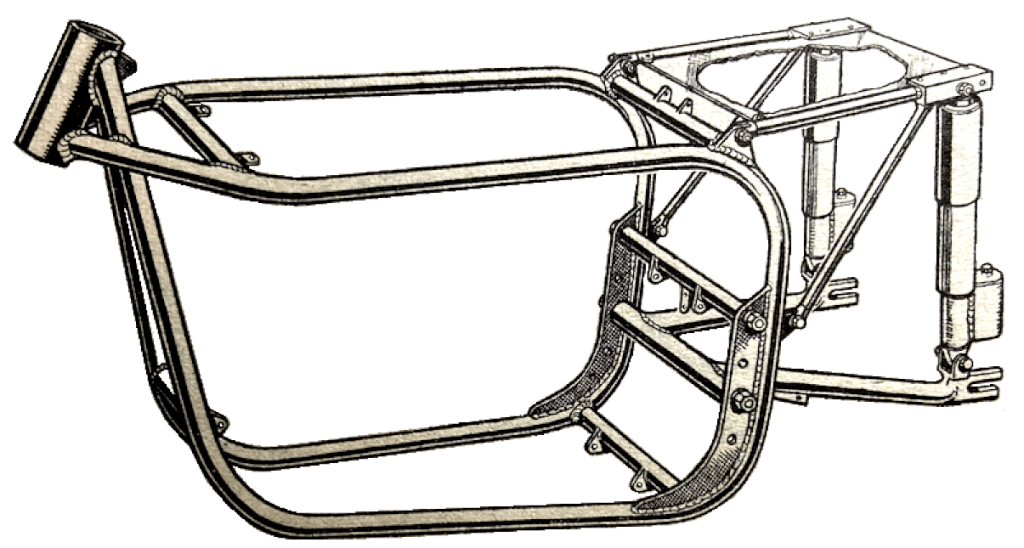
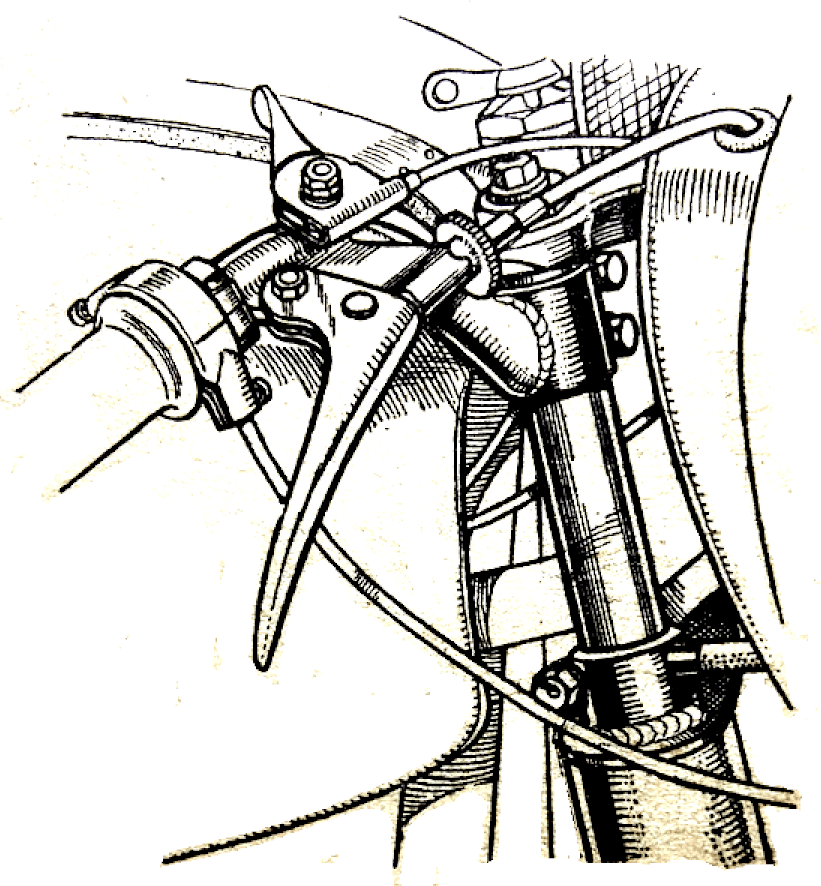
The McCandless frame, of course led to the Featherbed frame that would be the basis of a startling array of specials…and it seems Norton was also to blame for the clip-ons without which no café-racer would be complete.—Ed
“THE SUMMER RALLY of the Association of Pioneer Motor Cyclists, held last week-end, brought together many old-timers whose names were household words 30 years ago. The Rose and Crown Hotel at Tring was the venue for a luncheon presided over by Geoffrey Smith, the president. Among those who will be recalled by older readers are Mrs Muriel Lord, JWG Brooker, George Roberts, WH Wells. Frank Applebee, Ernest Bridgman, Ernest Bass, Major-General AE Davidson, H Johnson, FA McNab, Cecil Burney, Arthur J Salmon and HE Cohen. GH Wait, of Leicester, arrived on a 1906 Clyde with three-cylinder White and Poppe engine which proved a centre of interest. Only one, sadly enough, arrived by motor cycle, for most members are in their 60s or 70s. EA Adcock travelled the longest distance—from Norwich. Welcoming the pioneers, the president recalled the trials and tribulations of motor cyclists in the early days, and related how, by their experience and perseverance, the motor cycle industry, so valuable to our export trade to-day, was gradually built up. Secretary Bass announced the membership as about 200, and the annual dinner in London next October. A patron of the Association, Major HR Watling, told members that the Manufacturers’ Union had decided to allocate 50 guineas to help preserve the historical records and encourage the good work. Harold Karslake is the Hon. Librarian, and the Association works in liaison with the Vintage, Pioneer and Sunbeam Clubs, the last being represented at the luncheon by H0 Twitchen. An excellent film show by EC Lunniss followed.”
“HUGH VINEY (347 AJS) won the premier award in last Saturday’s St David’s Trial with the loss of only one mark. GC Bennett (497 Ariel sc) won the sidecar award with the loss of 174 marks. A tie for the 350cc award was decided by the brake test. NS Holmes (346 Royal Enfield) and LA Ratcliffe (347 Matchless) both lost eight marks and both took 10.6 seconds for the special test. Ratcliffe’s stopping distance over the line was, however, two feet shorter than that of Holmes. The 500s had to average 24mph; the 350s 23.2mph; the 250s and sidecar machines 22mph; and the 175cc class 20mph. There were 76 starters and 11 retirements. From its inception as an open trial in 1946, St. David’s has been a trial that is different. Last Saturday’s event was no exception. In addition to negotiating 12 observed sections, many of them sub-divided, competitors had to climb several mountains, including Mynydd March-Hywel (1,150ft), Henfynydd (1,250ft), Foel Penderyn (1,150ft), and Cefnmawr (1,600ft). Between each, the course came down to 300ft or less. In a circuit of 75 miles, there were fewer than 10 miles of tarred road. Many unobserved stretches of the course were almost as difficult as some of the observed sections. Consequently, there was no let-up, even for the experts, if time schedules were to be held. I was a trial to test physical as well as mechanical stamina.”
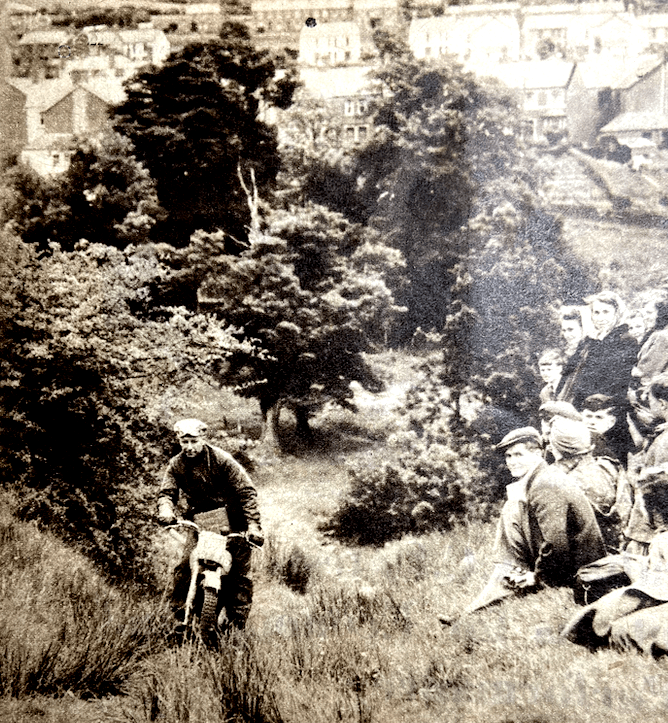
“YET ANOTHER READER—Ivor Davies arrived in Dijon late one evening amid stair-rod rain. A bearded inhabitant warned him off some of the costlier hotels and directed him to a cheap, central auberge, where the receptionist ignored the traveller’s filthy and sodden appearance. ‘Where can I garage the bike?’ ‘Oh, bring her into the kitchen!’ So Davies drove through the small palm court, down a passage, up a step, and straight into the kitchen, where the Speed Twin spent the night on its legs beside the stove. Where else could. this happen except in France?”—Ixion
“I HAVE BEEN at some pains to inquire why—as I recently revealed—some riders are disappointed with their first experience of two-seat pillion hassocks. The answer is, apparently, quite simple. The main factor seems to be the density of the latex used as a stuffing. Some latex is almost as board-hard as the cushions once fitted to cheap cars, which could reasonably be likened to seasoned oak. The right quality of latex yields sufficiently to locate and anchor the two derrières firmly in their respective positions so that they do not slide down into each other, either up or down hill. In some cases the hassock is ‘waisted’ in plan view, to assist such location. It is desirable that the hassock shall be adjustable at both ends for level, since some users prefer it to be flat, while others like a slight angle of tip either way. Finally, it should be adjustable in relation to the footrests, or the rests should be adjustable in relation to it. Given these desiderata, comfort is assured. But the latex density is really important; with too much density you bounce and slide, while inadequate density makes the seat feel exactly like a fiat tyre.”—Ixion
“DURING AN AFTERNOON of remarkably high-speed racing in the Belgian Grand Prix last Sunday, honours were won by Italy in the 500cc class and by Britain in the 350cc and sidecar classes. The modified Francorchamps-Malmédy-Stavelot circuit can now be claimed to be the fastest classic road-race course in Europe—a reputation of doubtful merit which has certainly not pleased riders and adds little, if anything, to the spectacle of the racing or to the development of machines. The famous triangular circuit, known and enjoyed for many years as a ‘riders’ course’, has been widened and resurfaced and, additionally, has been changed in character by a new road at Stavelot. This road is in the form of a long, sweeping curve which can be ridden on full throttle in third gear even with 500cc machines, and eliminates the former hairpin corner where speeds were in the region of only about 30mph. So much of the course can now be taken on full throttle in top gear that there are few opportunities for skill to earn its dividend. The pure speed capabilities of a machine count more than ever before. During Sunday morning vast crowds congregated round the nine-mile circuit and added a kaleidoscopic touch to the verdure of the densely wooded setting. Everyone (except the riders!) was in high-summer attire in honour of a brilliant sun gleaming from a hard, blue sky. Sun-suits for the ladies and shorts and shirts for the men were the popular garb: almost everyone goggled at his neighbour through dark glasses. Ice-cream and pop vendors did brisk trade. By noon, the sweltering heat was slightly relieved by a languorous breeze, and a little later a few clouds had the audacity to drift across the sky. Later still, after the meeting started, the clouds combined with a heat haze to blot out the sun occasionally, but relentlessly the thermometer kept high, yet in spite of the enervating weather there was no damping the tingles of excitement which the racing prospect provided. The programme included riders from 13 nations from as far apart as Sweden and New Zealand. For the first time the new, four-cylinder MV Augusta machines from Italy were challenging the established Gilera fours and AJS twins and the proud Nortons, which but three weeks earlier had provided sublime delight for the single-cylinder advocates by winning a record-breaking Senior TT in the Isle of Man. At five minutes before 1pm, the time for the start of the 350cc race over 11 laps (99 miles), engines were warmed up and then 50 starters took their places on the tarmac. Engines were silenced, and the crowd’s excited, speculative chatter became a diminuendo in readiness for the starter’s orders. All was quiet—then a buzz of incredulous and furious ejaculations. An aircraft, flying over the starting area, was dropping leaflets as part of a publicity stunt.
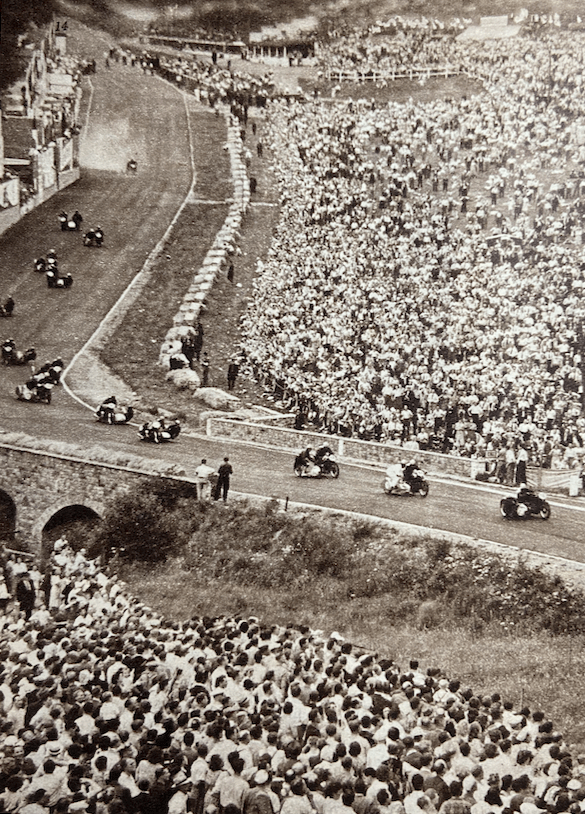
Tensed-up, ‘light-trigger’ riders had to suffer their agonies unheard while the starter waited for the paper to fall lazily to earth and be removed from the road. The red light gleamed. Then amber and, in 20 seconds, green; 50 megaphoned exhausts bellowed their war song. An all-star front line included RL Graham (AJS), HR Armstrong (Velocette), AR Foster (Velocette), and GE Duke and AJ Bell (Nortons), but it was the lithe Duke who gained a few feet in advantage and led them all through the S-bend and round the long, climbing sweep which leads towards Burnenville, 2½ miles from the start. In that short distance Foster overhauled Duke and by half-way round Bell and Graham did likewise. Not content, Bell also got a few yards ahead of Foster and at the end of the lap the order was Bell, Foster, Graham, Duke, with the first two already established 100 yards to the good. WA Lomas (Velocette) was fifth and EJ Frend (AJS) was sixth. Foster pushed ahead of Bell by about two yards on Lap 3, and Lomas overtook Duke. These changes caused a few raised eyebrows, especially Lomas’ sally, till, belatedly perhaps, it was realised that Graham was late. Some time passed before Graham was located, stopped by the roadside with a dead engine. Meanwhile, Salt had jumped places to come up to fifth, Daniell was sixth, Frend seventh, and, from 12th on Lap 1, MD Whitworth (Velocette) appeared in eighth place. Next time round Bell was in front with 50 yards to spare and there was a long gap—17 seconds in time—between Foster and the third man, Lomas. The race seemed to have settled down—but it hadn’t! Perhaps to celebrate the half distance, Foster pulled up the leeway and passed Bell. On Lap 7 he had a l0sec lead and, lap after lap, he pulled farther ahead, never to be seriously challenged again. With Foster set to win and Bell, though losing ground, safe in second place, a last-minute change of fortunes seemed unlikely. But Duke and Lomas were in close company, and it was not till the eighth lap that Duke was able to nose ahead and remain there. On the last lap he widened his advantage to 15sec—much more than at any other period of the race. Lomas and Salt came home in fourth and fifth places—both creditable performances by men new to Continental racing which must have pleased their respective entrants, RS Wilkins and RMN Spring. David Whitworth, who by the 10th lap had worked up to sixth place, crashed heavily on the last lap when about to pass other riders. Another mishap involved W Hall (Velocette) who fell during the first lap and was taken to
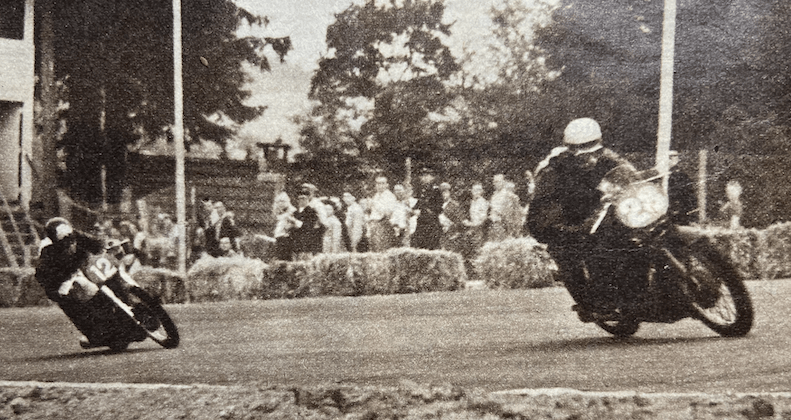
hospital. Foster’s win was vociferously popular. It set the tongues wagging about the Junior TT—for if a fractured brake cam lever had not eliminated him on the third lap, might he not have been very much in the picture at the end? RESULT 350cc Class—11 laps, 99 miles: 1, AR Foster (Velocette), 97.28mph; 2, AJ Bell (Norton); 3, GE Duke (Norton); 4 W Lomas (Velocette); 5, CF Salt (Velocette); 6, HL Daniell (Norton); 7, EJ Frend (AJS); 8, E McPherson (AJS); 9, VH Willoughby (Velocette); 10, TL Wood (Velocette); 11, H Hinton (Norton); 12, RH Dale (Velocette). Fastest Lap, AR Foster (Velocette), 98.35mph. Last year’s winner of the sidecar class, Eric Oliver (Norton), had the privilege of the solus position ahead of the grid, and was undoubtedly the favourite. Sixteen other outfits were in rows behind him, no fewer than nine of them with Belgian crews—much to the delight of the enthusiastic crowds. When the green light flashed Oliver made one of his usual slick starts to gain a 70-yard lead in the first mile. He remained out in front for the seven laps, to gain a deserved victory, but there were times when he was pushed very hard by both the Swiss Hans Haldemann (Norton) and by the Belgian champion Fritz Vanderschrick, also driving a Norton. By the end of Lap 4 Oliver had a lead of nearly 30sec. Vanderschrick and Haldemann had been joined for three-corner battle by E Frigerio (Gilera), of Italy. These three slid and crabbed their way round with only feet separating them. As they started the sixth lap, the order was Frigerio, Vanderschrick and Haldemann. On the long bend just after the start, Vanderschrick, who had on previous laps been raising the dust by placing his sidecar wheel (sidecar on the right) over the edge of the road metal, went too far and the outfit left the road. In a lurid crash that raised gasps of amazement from the crowd, the machine turned somersaults and was badly damaged, yet the crew suffered only superficial knocks. RESULT Sidecar Class—7 laps, 63 miles: 1, E Oliver (Norton), 82.65mph; 2, E Frigerio (Gilera); 3, H Haldermann (Norton); 4, F Aubert (Norton); 5, A Vervroegen (FN); 6, F Muhlemann (Triumph); 7, J Deronne (Norton); 8, M Masuy (BMW); 9, PV Harris (Norton); 10, A Marechal (BMW); 11, J Debotze (Norton). Fastest Lap: E. Oliver (Norton), 83.08mph. The line-up of 40 starters for the 500cc event over 14 laps held dynamic possibilities. Nortons ridden by AJ Bell, GE Duke and J Lockett; AJSs with RL Graham, EJ Frend and AR Foster riding; HR Armstrong, CF Salt and W Lomas on the big Velocettes; N Pagani, U Masetti and C Bandirola on the 4-cylinder Gileras; A Artesiani on the new four-cylinder MV Augusta (two others entered were scratched). Never has a result been more difficult to forecast. Some opined that the winner on the new ultra-fast circuit would, without qualification, be the man on the fastest machine; others thought the pace would be so hot that the stars would fall by the wayside, owing to mechanical bothers and spills, and let a steady second-string man come to the front towards the end. It transpired that the race was a drama as heart-stopping as ever likely to be witnessed in sport. N Pagani (Gilera) was first off the mark, but hotly chased by every man on the grid—not one suffered a sluggish engine. The reverberating boom of megaphoned singles, the light refrain from twins, the snarling whine from fours, produced an indescribable racket which insulted the ear-drums at first, but became music as the machines streaked away. The irrepressible Artie Bell was soon worrying Pagani, and Duke was almost alongside his team-mate. But it was the forceful Carlo Bandirola, on his Gilera, who headed the crocodile at the end of the lap. Bell was second; Pagani, third; Duke, fourth; Graham, fifth; Lockett, sixth. Two seconds only covered their passing; speed 99.3mph from a dead-engine start! Bandirola, in front,
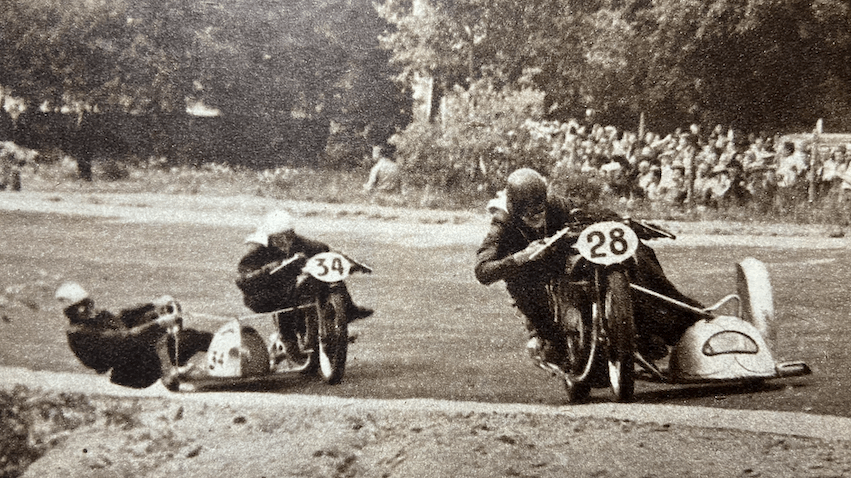
brought the average above 100mph for the two laps, unaware of the tragedy that occurred a foot or so behind his back wheel. On a corner about a mile from the end of the second lap he eased slightly, to the discomfiture of Graham inches away. Graham crash-braked and was thrown; Bell took to the bank to avoid the spinning AJS and was seriously injured; Duke managed, but only just, to miss the debacle and carried on. Graham was unhurt. Two super stars were out, Duke was second, hemmed in by three Gileras —Bandirola in front, Pagani at his side and Masetti a few feet in rear. Lockett was fifth, seconds away. Now a titanic battle ensued. Learning the position, Lockett put in a fantastic fifth lap and made the quartette a quintette of projectiles so close that they seemed as one. Frend, too, dug in his spurs and became sixth. The new MV was eighth, behind Harry Hinton (Norton), the Australian, who was riding magnificently. Tension became almost unbearable on Lap 6. Lockett failed to arrive. What news, please, Mr Announcer? No news came. The agony of waiting was broken when Lockett toured in with a piece of rear tyre tread missing. At seven laps, half distance, Pagani had the lead. But thereafter Duke, with the cool aplomb he displayed in the Isle of Man, took the front place. After eight laps he was 10 yards ahead; next lap 200 yards; next lap a whole half-minute—and that is a lot of distance at over 100mph. Behind him, and being outridden, were Pagani and Masetti, who would switch places from one lap to the next. Then came Frend, riding valiantly and ahead of Bandirola who was scrapping with Artesiani on the MV. Inevitably, those farther back passed almost unnoticed, so tense was the struggle up front. But behind the leading six came Hinton, then AR Foster, whose AJS had a misbehaving carburettor, then H. R. Armstrong (Velocette), then RH Dale, putting up a great show on a Manx-type Norton; in 11th place was the New Zealander, J Swarbrick (Norton), and 12th was another New Zealander, S Jensen, on his AJS in which had been fitted a Triumph GP engine. The drama to end all came on Lap 12. A ticking stop-watch in a Pressman’s hand indicated that Duke was late—but perhaps the Pressman was fumbling. But no! Masetti appeared with Pagani at his heels. Where is Duke? Where? Where? An answer came soon. Duke, too, had experienced tread trouble and he came in to his pit slowly and mournfully to watch the two Gileras circle regularly, but not so fast as before, to the end. Frend brought his AJS safely home in third place and Hinton, after a wonderful ride, annexed sixth place. Retirements had been high. Only 19 riders were still in action when the finisher’s flag fell. RESULT 500cc Class—14 laps, 126 miles: 1, U Masetti (Gilera), 101.18mph; 2, N Pagani (Gilera); 3, EJ Frend (AJS); 4, C. Bandirola (Gilera); 5, A. Artesiani (MV); 6, H Hinton (Norton); 7, AR Foster (AJS); 8, HR Armstrong (Velocette); 9, RH Dale (Norton); 10, F Benasedo (Guzzi); 11, J Swarbrick (Norton); 12, SH Jensen (AJS). Fastest Lap: GE Duke (Norton), 103.89mph.
IN A TECHNICAL description of the “498cc TRW military Triumph designer Edward Turner was asked why he’d plumped for a sidevalve twin: “A twin was preferred to a single because, on the whole, a twin is more reliable. It is more tractable at low speeds. It is simpler to drive, especially where novices are concerned. Because of its good low-speed torque, less gear changing is required. A twin is kinder to the transmission than is a single and, since there are lower peak loads on the essential bearings, engine longevity must be superior to that of a single. Finally, the only reason this engine is not a four is the high cost of the four.”
“VINCENT PRICES ARE LOWERED for 1953. The price reductions apply to the 998cc twin-cylinder Black Shadow and Rapide models and to the 499cc single-cylinder Comet. The reduction has been made possible largely by the adoption of improved manufacturing methods of some components; this saving has more than offset the increased material and labour costs of the past 12 months. As most enthusiasts are aware, the Vincent concern has, over the years, established a policy of steady development and improvement of a well-tried design rather than one of introducing new and revolutionary features year by year. When this is the case, it may generally be accepted that the design is right, that the concern is satisfied that changes are unnecessary. This conclusion may certainly be applied to the Vincent range, which for 1953 is unchanged except in minor technical detail. Among the improvements are the adoption of cams of new form which provide quieter operation of the valve gear. Where Vincents are concerned, modifications which result from attention to individual features are adopted as soon as practicable. Hence the new cams, it is stated, have been standardised on all Vincents built within the past six months. All Vincents are specialised products, built, almost
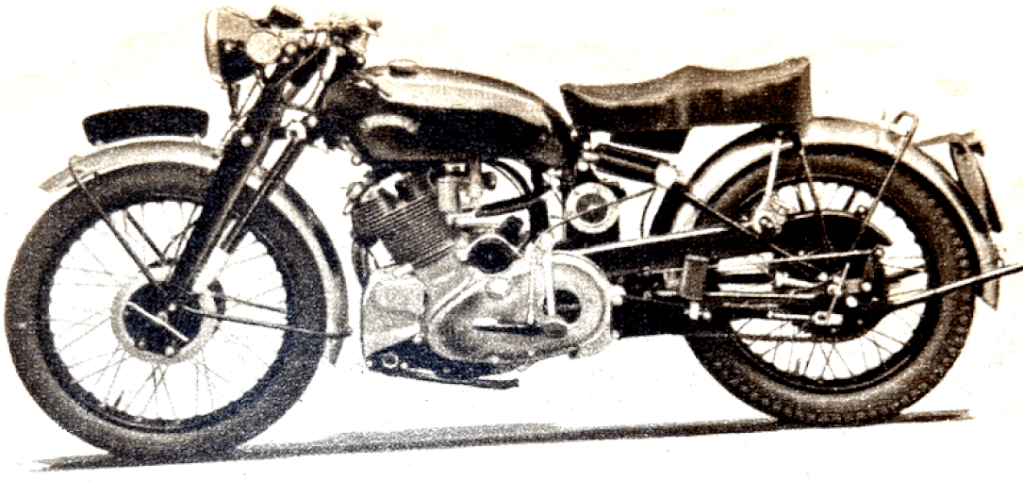
regardless of cost, to appeal to the genuine, dyed-in-the-wool enthusiast. The aim behind the ‘1000s’ is to provide models with outstanding speed and acceleration, superb brakes, and handling properties equal to those of a first-class 500. The machines are compact; in spite of the in-line V-twin engine, the wheelbase is no more than 56in. As with every Vincent that has ever been produced, the machines have pivoted-fork rear springing. There is no frame in the generally accepted sense. The engine-gear unit provides the link between the massive frame backbone and the rear fork. Front forks are of the Vincent Girdraulic pattern which incorporates the features—and advantages—of both link and telescopic forks. The blades are massive L40 Duralumin forgings. Controlling the fork are two long, telescopically enclosed helical springs and a hydraulic damper. Control of the pivoted rear frame is similarly arranged, although the coil springs are much shorter and of larger diameter. It has already been said that Vincent models are built almost regardless of cost. Aircraft specification, heat-treated light alloys are widely used in the engines. A unique feature is that each valve is operated by a rocker bearing on a hardened contact collar situated roughly mid-way along the valve stem, this between separate upper and lower valve guides. One virtue of this system is that the duplex, helical valve springs are seated on the upper guide, and thus run cooler than is possible with a conventional layout; those on the exhaust valve, for instance, are separated from the hot port by an appreciable air space. All models have four 7-in diameter brakes—two per wheel. New-type Feridax Dualseats with a one-piece covering are standard equipment. Also standard are Avon tyres, Amal carburettors, Miller 50-watt dynamos and headlamps, Lucas magnetos, Exide batteries.
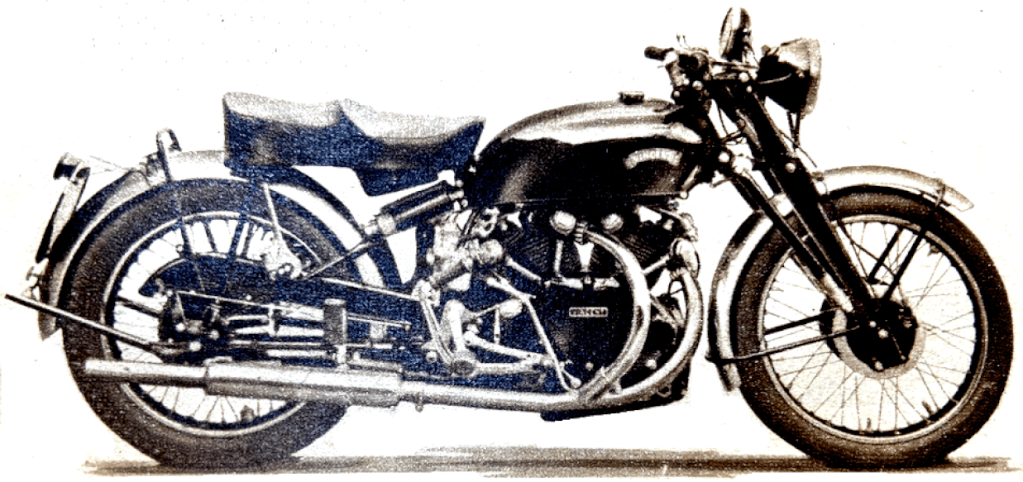
“PERHAPS YOUR READERS would be interested to know that a BSA Bantam and sidecar (a home-made sidecar—both chassis and body) has just done a 3,000-mile trip on the Continent through France, Switzerland (three Alpine crossings—the Petit St Bernard, the Maloja and the Julier), part of Austria, up the Rhine Valley, Holland and Belgium. New races had to be put in the back wheel, but as the machine had previously done 7,000 miles solo, the races may have been considerably worn before the sidecar was attached. The front-wheel spindle broke owing to the holding nuts coming loose. The plug whiskered twice on the Alpine crossings. There was no trouble whatsoever from the engine, gear box or chains.
EH SMITH, Bedford.”
“I HAVE BEEN a reader of your wonderful journal for some time now, and would like to let your readers in Great Britain know of our Australian worries, troubles and advantages regarding motor cycling as a sport. Our main and, I think, our only advantage is that all British machines are readily available, and finance is very easy to secure; but as to spares being available—well, the position is well-nigh hopeless as regards English-made bearings, rings and the like. We have to contend with a 100% antagonistic government; we have main roads of the same quality as English country lanes, so new arrivals from England assure me; and we get the rudest and most discouraging abuse from all other vehicle drivers on the road—it fairly stands one’s hair on end with its embellishments. The motor cyclist is always being decried through the medium of the daily newspapers, and when an accident happens—well, naturally it is the motor cyclist’s fault. Our overland trips are very lonely, tiring journeys, and in this State petrol is very hard to obtain after 8pm. We have no such thing as a pie shop, open to serve refreshments at night, or even in the daytime, and no RAC patrol or its equivalent to telephone we are in trouble on such a run. But in spite of such troubles and woes, I and many others like me enjoy many thousands of miles a year on the ‘old floater’ and
would not let these things upset our sport one iota. I am the possessor of a 1950 B31 BSA springer, and for reliability an i high cruising speed I could wish for nothing better. I also have an old 1,000cc JAP V-twin in an Aussie-built frame which is used purely for tinkering purposes, but which is equally as reliable as the BSA. Motor cycles are very popular in Tasmania, and most boys can own one when they turn 17, at which age our government allows a motor cycle licence to be purchased. One point against our machines is that mudguarding it very much behind our roads in wet weather—sadly behind in keeping mud off the rider’s legs. If any readers would like to write to me I will gladly answer such letters and give further details on life here for motor cyclists.
D HOUSTON, Launceston, Australia.”
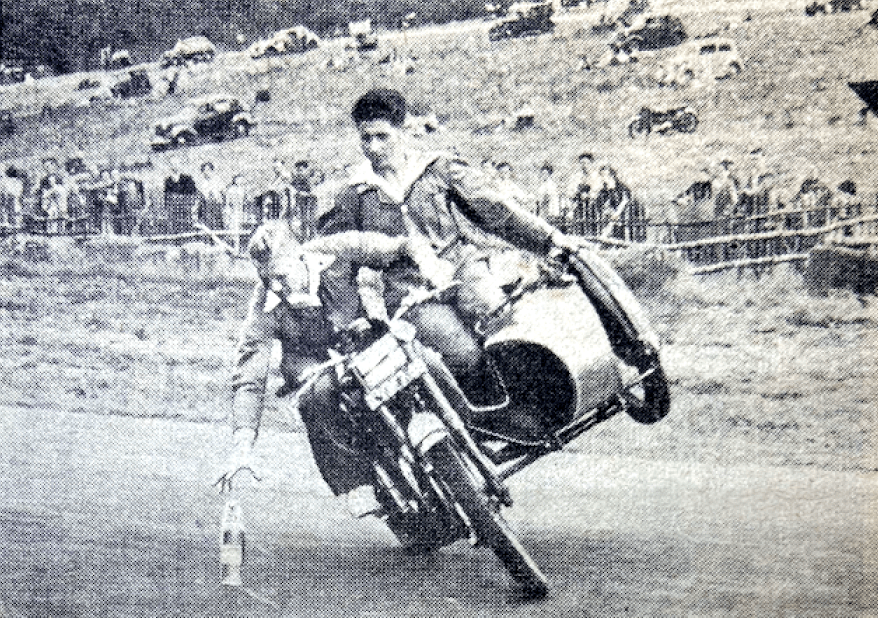
“I OWN A PRE-WAR 500cc single with a sidecar attached. Until recently I paid no attention to mpg. It was then brought to my notice that a 32-seater coach could get more mpg than my outfit. This roused me to action. I fitted a new Glug carburettor, which immediately trebled my miles per gallon. By now the bug had got me—I was not satisfied. I next fitted a Flim-flam atomiser. This improved my mpg by another 50%. I was happy with this state of affairs until someone pointed out that my cylinder needed sleeving. Since having this done, I find that I now gain petrol instead of using it. This has its drawbacks. If I do not take the precaution of starting a long journey with an empty tank, I am in danger of fire outbreak owing to the excess petrol spouting out of the filler cap hole. As I am not licensed to sell petrol, I intend piping this overflow to various dirty parts of the machine so that it will he self cleaning.
BELT DRIVE, London, E8.”
“WORKS PHOTOGRAPHS OF the new BMW racing machines have at last been released. Three of the new models, ridden by G Meier, W Zeller and G. Baltisberger, who finished first, second and third respectively, were at a meeting at Hamburg on August 25. Meier’s speed was 130.6kph, which compares with his 1950 winning speed of 130.9kph on the same circuit when he rode one of the earlier supercharged models. Zeller’s speed at Hamburg was 130.5kph, and Baltisberger’s 129kph (130kph is equal to 80.63mph). These figures appear to indicate that remarkable progress has been made with the atmospheric-induction engines—and also, presumably, with the new frames, which are said to provide good, though not yet exceptional, handling.”
“Driving shaft of the new BMW is housed in the right-hand side, rear-fork leg.”
“FOR its first road race meeting to be organised under a national permit, the Aberaman Club last Saturday received a record entry of over 170. Chief honours of the day went to ST Barnett (Norton), J Surtees (Vincent) and AL Parry (Norton), winners of the 350, 500 and up to 1,000cc races respectively. During the 500cc race, Surtees set up a new lap record with a time of 51sec. The twisting, ⅞-mile circuit in Aberdare Park, which follows a natural road through the park, was well lined with spectators when the riders took their places on the grid for the first event—the 125cc race, which was run over eight laps. Weather conditions were near-ideal, with warm, still air and not very much sun; they remained so throughout the day.”
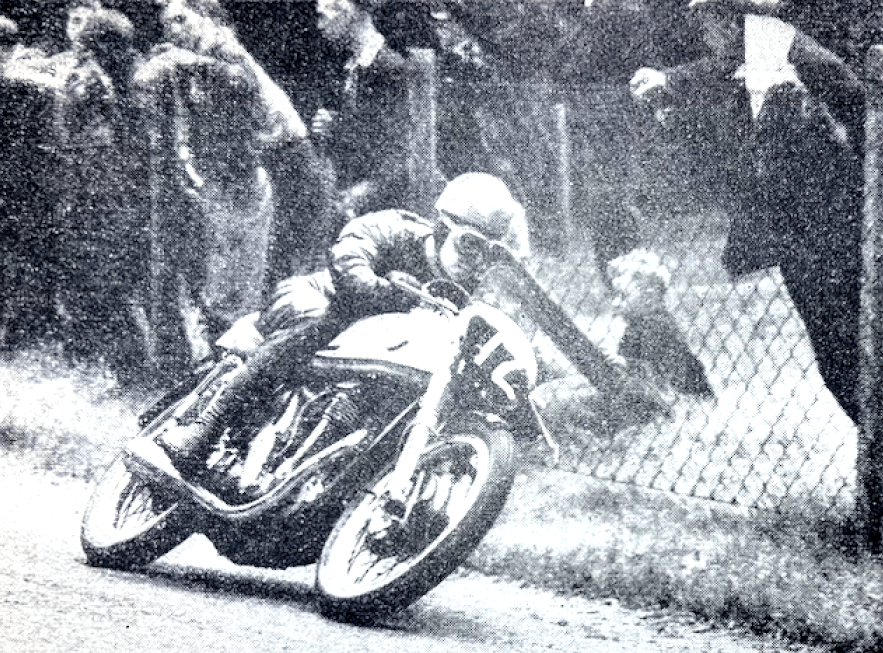
“IN THE GREATER part of the United States, the only circuits available for motor cycle racing are the horse tracks. In the early days, road racing was popular, but the authorities frowned upon it and gradually the number of road circuits dwindled to nothing. Of horse dirt-tracks, however, we have a plethora. Almost every county in every state has some sort of fairground track, most of them half a mile to the lap. The typical half-mile track has longish straights and sharp turns. The surface is dirt, clay, and/or sand, and unbanked. This combination, of course, results in the well-known sliding of corners. A few of these tracks, built since the advent of motor cycle racing, have short straights and wide-radius turns, slightly banked. On this type of track, lap times are better, but for sheer crowd appeal the older ‘flat’ circuits are unbeatable! Some of the more pretentious fairgrounds have one-mile tracks—laid out in much the same form as the shorter ones. Good lap times for a half-miler are 28-30 seconds, and for a mile track, 45-44 seconds. In the old days a dirt-track meet was marked with clouds of dust, but with the application of calcium chloride, modem dirt-tracks are relatively dust free. It is impossible to run a race on a wet track, however, so the weather is often a factor at these meets. A scheme that is often resorted to is called ‘ironing the track’. It is a method used to dry a track quickly after rain: as many cars as can be secured are set to churning round and round the circuit, and in a matter of an hour or two a quagmire can be converted to a. fast surface. By far the greater number of dirt-track machines are the WR Harleys, which are an adaptation of the 750cc sv road model. They are much modified, with light frames, small, sprint tanks, magneto ignition and, of course, much breathed-upon engines. The WR model is to be replaced shortly by the K model, which is also a 750cc sv job. Still to be reckoned with are the Indian Scout 750cc sv machines. Fewer and fewer of these famous mounts are to be seen, as they have been out of production for several years. But they are still potent! One a these machines, ridden by Bobby Hill, last season showed its rear tyre to the best that Milwaukee could produce. Perhaps the most popular British mount on the dirt-tracks is the Triumph. Some of these are very fast indeed. The BSA 500cc Gold Star is popular with many riders. The writer expects great things of the new BSA competition twins that were unveiled at Daytona; they are reputed to be extremely rapid. Norton, in various guises, are to be seen in goodly numbers—many of these have Manx engines in solid frames. Incidentally all the dirt-track jobs have solid rear frames for reasons of control in sliding. Occasionally, one sees an AJS or an Ariel on the track—or a BMW! Broadsiding à la small-track speedway is not too helpful on a half-mile track. There are some who attempt this, but they seen to lose time doing it. The most successful dirt artists use a straight-up style, foot forward, keeping close to the inside. They do very little sliding. As is always the case, the best riders are the least spectacular. In this category are such riders as Dick Klamfoth, Jimmy Chann, Ken Eggers, Bobby Hill, and Bill Tuman—five of the finest on any track.”
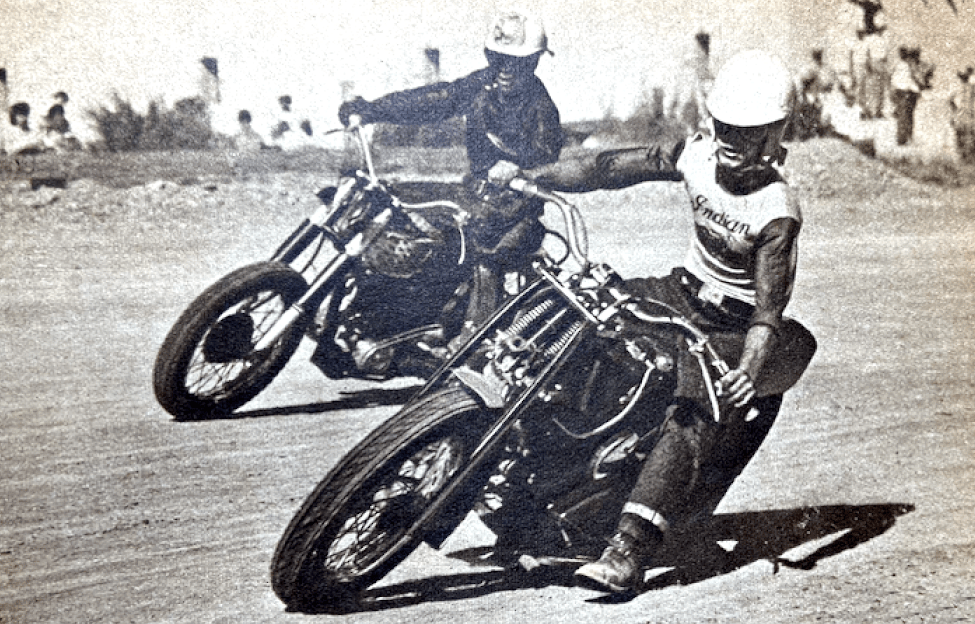
“MILWAUKEE MEETING: Paul Goldsmith of St. Clair Shores, Michigan, won the 15-mile national championship dirt-track meeting at Milwaukee, Wisconsin, USA. He came through during the last lap and won by a ‘whisker’ from E Beckman of Kalamazoo, Michigan. Goldsmith was riding a WR Harley and Beckman was on an Indian. Goldsmith also made the best time trial in 44.32 seconds. The race actually ran to 19 laps, as four laps were covered under the hold-position flag after Billy Huber fell during the eleventh lap; Huber escaped with bruises.”
“IT WILL COME as a surprise to many to learn that the German Trophy Team for the ISDT is to be mounted on lightweight machines of 175 and 98cc capacity. Why, you may well ask, should a country famous for her large-capacity BMWs and Zündapps suddenly decide to mount her Trophy teamsters on pip-squeaks? It would appear that the stage has been reached which was forecast by colleague George Wilson in his reviews of the past three ISDT events (for which he has so often been shot at!). Reviewing last year’s event, Wilson said: ‘…two years ago…I made the point that unless the speed schedules were altered, the stage could be reached where we should have to mount our national teams on lightweights if we were really serious about winning…With the ever-growing popularity of machines of under 250cc capacity in Europe, Continental countries will oppose fiercely any suggestion for increasing lightweight schedules (or decreasing the schedules for larger machines). If next year’s event is held on the Continent, and it is a well-organised trial with tight time schedules throughout the week, we shall, I am certain, be extremely lucky to win, for the schedules will be anything but in our favour.'”
“THE ITALIAN, LUIGI CAVANNA, driving a 248cc supercharged, single-cylinder Moto-Guzzi with sidecar, broke (subject to confirmation) no fewer than 20 world’s records on the Munich-Ingolstadt highway in Germany. Cavanna captured not only the eight standing-start and flying-start records up to 10 miles in the 350cc classes, but he also broke the existing records in the 500, 750 and 1,200cc classes for 5km and five miles flying start and 10 miles standing start. The engine has a supercharger of the pump type.” Speeds ranged from 73mph (standing start, 1km) to 137.5mph (flying start, 1km). “Cavanna’s speeds for the flying kilometre and flying mile are higher than the 250cc solo records…his speeds for the 5km and five miles beat the existing 250cc and 350cc solo records.”
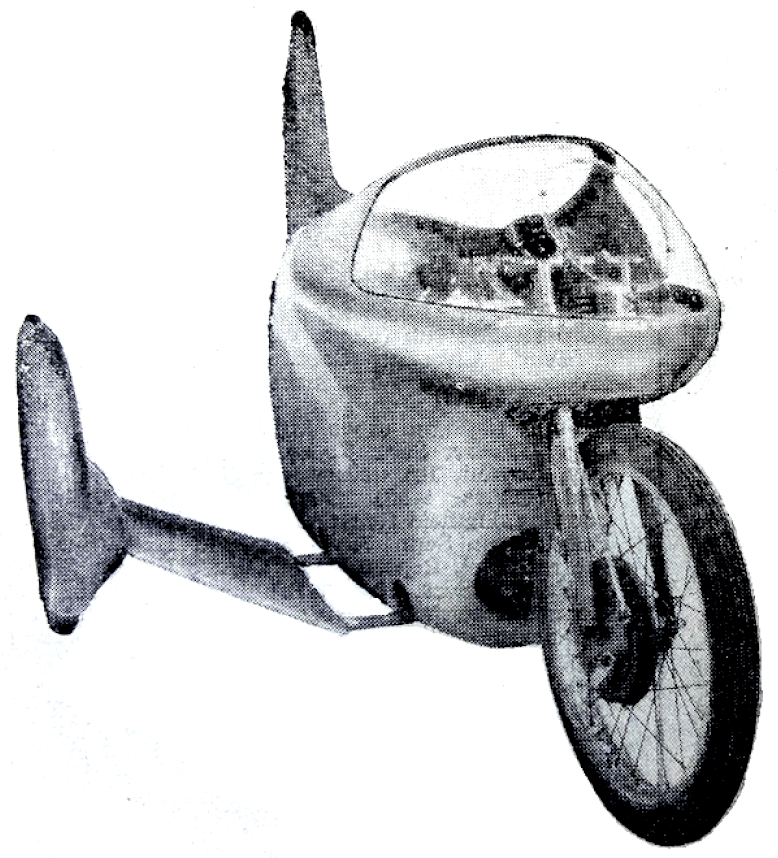
“MAY I MAKE a meek contribution to the trials controversy, on an aspect of these paroxysms of crashery which is not universally appreciated? Scattered all over the country is a vast band of dejected enthusiasts, of which I am a humble and unimportant member, who would gladly surrender pints of blood and their grandmothers’ pelt, to obtain a new motor cycle, and who, if they had one, would treat it with an affection, by comparison with which, a mother’s regard for her child closely resembles loathing and contempt.” The feelings of these unfortunates on reading, and worse still, contemplating, each week accounts and photographs of the assassination, under conditions to which no sane person would dream of subjecting his beloved mount, of magnificent machines which, in their possession, would probably justify the erection of a small altar and daily devotions, are by no means the least of the trials of penury. For the competitors, these events may be fun, even though of a somewhat masochistic nature; and I cannot but feel that they must be peculiarly insensitive to the pleadings of beautiful mechanism. But precisely what the factories hope to learn from them I cannot imagine; for very few of their normal customers ordinarily lay a hot engine down in a watersplash, charge madly at boulders, or ride hub-deep in slime. If manufacturers actually have machines to get rid of, it would he kinder, rather than smash them in this wholesale manner, to remember the Legion of the Lost I have mentioned and dish out a few to the more deserving; as their pioneer spokesman, doubtless my address could be forwarded to any factory interested!
RK BATTSON, Weymouth, Dorset.”
“BAD WEATHER DELAYED the start of the Patea (New Zealand) TT races, and almost continuous rain fell during the Senior and Handicap races. RW Coleman (AJS) led from start to finish in the 40-mile, four-lap Junior event, and LV Perry (Velocette), laying second, was always well ahead of the rest of the field. In the Handicap race, B Field (347 Matchless) and AG Bain (348 BSA) led for most of the first lap. Triumph rider JA George threaded his way through the field, however, and during the last of the three laps he took the lead and held it to the finish. R Milne (498 Triumph) followed George to take second place.”
“THE NEWLY FORMED Calcutta Motor Sports Club has acquired a racing circuit at Kancharapara airfield, some 40 miles from Calcutta, and two meetings have been held there. Artificial bends and corners were introduced to keep down speeds, as most of the riders were new to racing. In the 500cc event at the first meeting, A D’Abreu (Ariel Twin) was the winner with a speed of 43mph. The second event was a ½-mile ‘dice’, with Harley-Davidsons competing against the 500s. On the first run, Bishop (Triumph Speed Twin) was winner, and on the second D’Abreu again won. The second meeting took place over a 2.2-mile circuit, in a temperature of 110°. Seven machines started, and Gordon, mounted on a Triumph Tiger 100, immediately took the lead, with D’Abreu (Ariel Twin) slipstreaming him. On Lap 2 the Ariel retired with a seized engine, and Wilks (Triumph Speed Twin) filled second place. Gordon’a fastest lap was at 60mph.”

JAWA 350 TWIN
A SUPERFICIAL GLANCE at the 344cc parallel-twin two-stroke Jawa might well suggest it is the more widely known 250cc. single-cylinder machine. The mistake is understandable. General design features and, indeed, many components are similar for both models. The result is a 350 with dimensions, weight, appearance and certain performance characteristics of a 250. These aspects, allied to other characteristics which are unmistakably those of a 350—and an unusual 350 at that—result in a singularly distinctive machine. Dimensionally, the Jawa is small and compact, yet the control and seating layout is such that riders of widely varying stature can be comfortably accommodated. The footrests have a 360° range of adjustment on a 1½in radius with the rear-brake pedal pivot (on the right-hand side) adjustable to suit the footrest setting. The positive-stop foot-change lever can be adjusted for height, but not for length, and although the pedal is perhaps a shade too rearward in relation to extreme forward settings of the footrest, the various combinations that can he obtained represent a far better attempt to achieve footrest and pedal positions suitable for the tastes of all riders than usual with the majority of machines. Handlebars—in separate halves, each independently clamped in the steering head lug—can be swivelled for a limited range of height and grip angle. The pan-type saddle pivots at the nose under the control of a single tension spring. The setting of this spring can be readily altered to suit the weight of the rider and there is an adjustable friction damper at the pivot. Clutch and brake levers are welded to the handlebars and are therefore not adjustable. The compactness of the Jawa, abetted by its light weight, result in excellent handling qualities. At all stages—manoeuvring the machine on foot, riding at very low or at high speeds—these qualities are appreciated and inspire confident control. The saddle position is of average height—at 27½in it is perhaps slightly lower than on many British machines—yet the rider feels to be ‘over’ the machine and to have masterly command. Experience on wet, greasy, city streets showed that stability was first-class under the worst conditions. Coil springs control the front-telescopic fork and the plunger-type suspension. The fork does its job adequately, without being exceptional, and the rear-springing, though of limited movement (about 1in under average conditions) and inclined to be hard, adds considerably to comfort. Steering is exemplary and the roadholding adequate for the performance of the machine. With its cranks set at 180°, the two-stroke twin-cylinder engine has the smooth power delivery of a four-cylinder four-stroke. This smoothness, plus sprightly acceleration, endow the Jawa with a zestful charm and there is a strong temptation to use the full performance available, especially the acceleration, as often as road conditions allow.
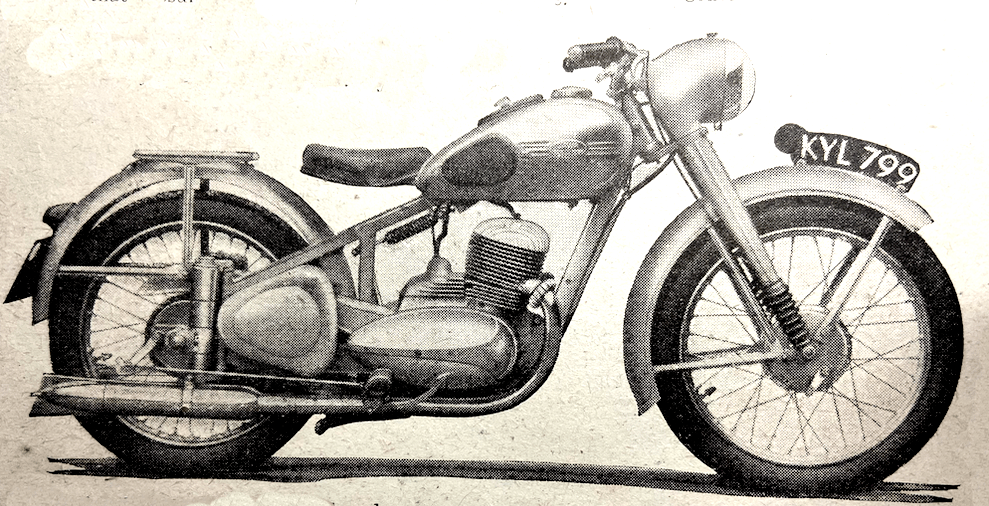
The machine tested was one taken at random from the first batch to reach this country since the trade agreement allowing Czechoslovak machines to be imported was concluded. After about 600 miles devoted to running-in, the full performance, was used and some fairly hard driving was administered. Because of the smoothness of the engine—for all practical purposes it could be regarded as entirely free from vibration—any speed up to the maximum could be considered as comfortable, and the engine remained cool and unflurried. The mean maximum speed achieved was not notably high, but a steady cruising speed in the 60s could be held indefinitely without, any apparent protest from the engine; under favourable conditions speeds in excess of 70mph could be attained. The speedometer, incidentally, recorded approximately 10% fast. Throughout a test extending to over 1,000 miles, the only time the engine showed signs of fussiness was in heavy, slow-moving London traffic during the early running-in period. As with almost all two-strokes, the engine fired unevenly under light load, on the overrun, and when idling. The Jawa was about average in this respect, but its slow idling speed was thoroughly reliable in spite of its unevenness. Starting was uncommonly easy. If, when the engine was cold, the carburettor was amply flooded and the air shutter closed, it was rare indeed not to obtain a first-kick start. After about two minutes’ running the intake shutter could be opened. With a hot engine it was sufficient to give a lazy, 45° prod on the pedal while still seated in the saddle. The cork-insert clutch runs in oil and is smooth and pleasant in taking up the drive. It is light to operate. However, the plates have a strong tendency to stick, and when bottom gear is engaged with the engine running and the machine stationary, a clash of pinions is unavoidable. The plates cannot be freed by the usual expedient of raising the clutch lever and depressing the kick-starter pedal because the starter operates through a face ratchet on the clutch sprocket—in other words, kick-starter torque is not transmitted through the clutch. As the gear-change pedal is moved up or down from the mid-way position,
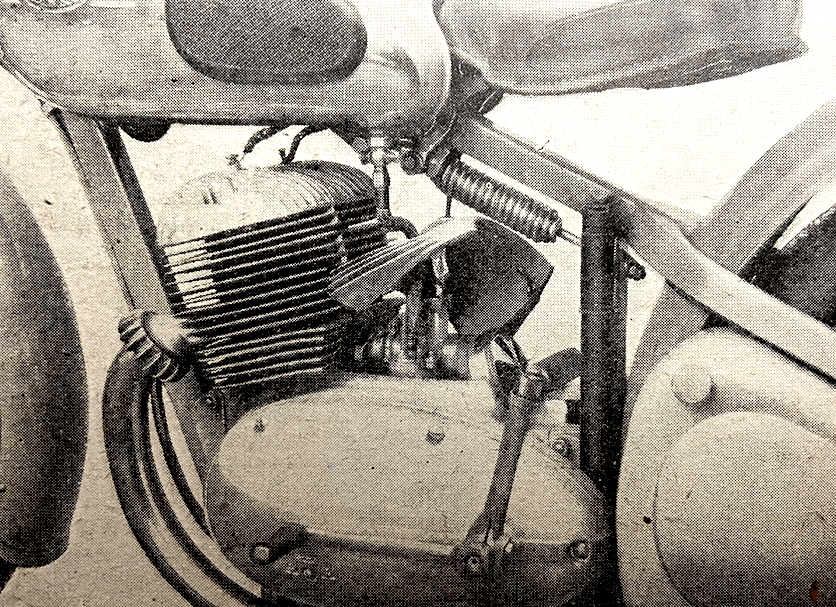
the clutch is operated by a cam mechanism. This arrangement makes it unnecessary to employ the handlebar lever when changing gear and ensures that changes are not made without the clutch being brought into use; to some extent the value of this device was nullified by the reluctance of the clutch to free, and clean, noiseless gear changes when on the move were difficult to achieve. An appreciated feature is a neutral indicator on the tank switch panel; this indicator is also the ignition tell-tale light when the ignition is switched on. The engine was as noiseless as a mechanical device could be. Piston slap was absent and pinking was never experienced. Oil leaked from the boss of the concentric kick-starter and foot-change spindles through too high a level in the primary chaincase. For all normal riding the brakes were satisfactory, but the front brake could have been more powerful with advantage. Operation was spongy and lacking in precision. The rear brake, although it could be made to lock the wheel without excessive pressure, lacked progressive efficiency. Under hard application of the brakes the machine handled exceptionally well; even if the rear wheel was locked at highish speeds, tail-hop was noticeably absent. Silencing was slightly, but not markedly, inadequate by British standards, although it must be admitted that the tuneful drone from the exhausts when the engine is revving has its attraction. Oil seeped past the fishtail points of both silencers and the T-piece of the baffle retaining rod of the left-hand silencer fractured during the test. Generator output balanced the full lighting and ignition load at speeds higher than about 25mph in top gear. The main head-lamp beam was nicely focused but was considered to be inadequate for speeds above 50mph on dark roads; the dipper gave an excellent cut-off of light and entirely obviated dazzle of oncoming road-users. Few designs are so neat as the Jawa and although this characteristic is widely known, it deserves even more recognition Finish is in light grey with gold line, and chromium plate for the wheel rims, tank panels, exhaust system, handlebars and controls, and other detail components. This finish, coupled with the clean lines of the machine, give a most pleasing appearance.”
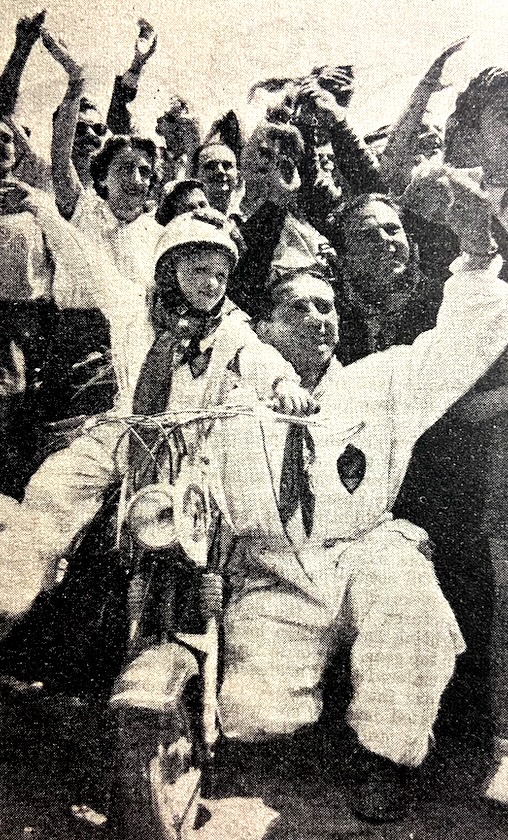
“AN EVENT WHICH CAN probably be classed as the most arduous-ever rally for veteran and vintage machines was held by the Midland Region of the Vintage Motor Cycle Club last Sunday. Yet, in spite of the extreme severity of the course, bearing in mind the average age and size of the entry, remarkably few troubles were encountered. Those which did crop up were, in the main, of a trifling nature. Total number of competitors that started was 116; 107 checked in safely at the finish in Birmingham—which would seem to prove that old-timers did not experience quite so many road-side adventures as they said (and still say) they did, or else they didn’t know how to maintain their machines quite so well as the modern vintager does! Perfect weather blessed the event. The start was from the Crown Hotel, Banbury, at 10am, and the finish was at the BSA Works’ Recreation Ground in Small Heath, Birmingham. Between these two points lay 65 hard miles. The route was by Shutford, Sibford, Gower, Bratles, Tysoe, Sun Rising Hill, Harbury, Kenilworth, Knowle, Solihull and, finally, Small Heath. The first 20 miles or so were over loose-surfaced roads, severe up and down gradients, and there were two water-splashes—the first of which was deep enough to wet belts and dummy-belt brake rims. Sun Rising Hill, of course, is a famous test hill, said to have been used in the first organised trial ever to have been held, in 1899. In the entry were machines which first saw the light of day as long ago as in 1901; none was younger than 1930. In spite of that, or more probably because of it, numerous top-gear climbs were made—this on a hill with a 1-in-5 gradient! As one rider remarked, ‘Makes you wonder what designers have been doing for the past 30 years!’ Vast crowds lined the route from start to finish, and on Sun Rising Hill especially, enthusiasts and lay-public were packed three and four deep. At the BSA ground at the finish there was also a large, interested audience. They crowded round machines to such an extent that judging of the concours d’elegance was made almost impossible. Eventually, a short list was made up and the dozen or so machines taken off to a special enclosure. The eventual winner was Oliver Langton’s 1903 325cc Rex. Langton, of course, was a trials rider of note for many a year. His mount was one of the famous deep-tank models, with the tank concealing the surface carburettor, coil and battery. The machine was stored for 40 years in a shed and is to-day in original condition even down to the sparking plug! Second in the concours was an even older machine—a 1901 Beeston Humber ridden by CG Williams. The machine is reputed to be the fifth ever to be registered in Cumberland. Third place went to FC Potts. with a 1903 Humber Fore-car having a water-cooled 625cc P&M engine. The machine was bought recently from the estate of a professor, and it had never been taxed since 1905.”
“THE SPARTA FACTORIES, Apeldoorn, Holland, have announced two new lightweights which are attracting considerable attention. Both have Villiers engines, of 122 and 197cc, and are identical, with the exception of the engine-gear units and the rectifier lighting equipment and larger silencer on the 197. The general specification for these hand-some machines is as follows: Frame of welded steel tubing (0-section); hydraulically damped telescopic front fork; plunger-type rear springing; 6in diameter hubs embracing the brakes, which have internal cam-operating levers; QD and interchangeable wheels; soft top, front-suspended saddle, the springing of which is hand-adjustable; tank capacity, two gallons. Silencers can be dismantled for cleaning by removing the nut on the end of the retaining rod running through the axis of each expansion chamber. Both upper and lower chainguards are fitted; and the large-section mudguards are of attractive design. The handle-bar halves are attached to a very neat steering-head casting through which the brake and clutch operating cables are led by means of rubber protectors. The machines have strong prop-stands. Finish is black and chromium plate, but red and green plus chromium plate is optional as an extra. Tyre sizes are 19×3.00in for the 197 and 19×2.50in for the 122. Selling price in Holland is approximately £113 for the large machine and £94 for the smaller.”
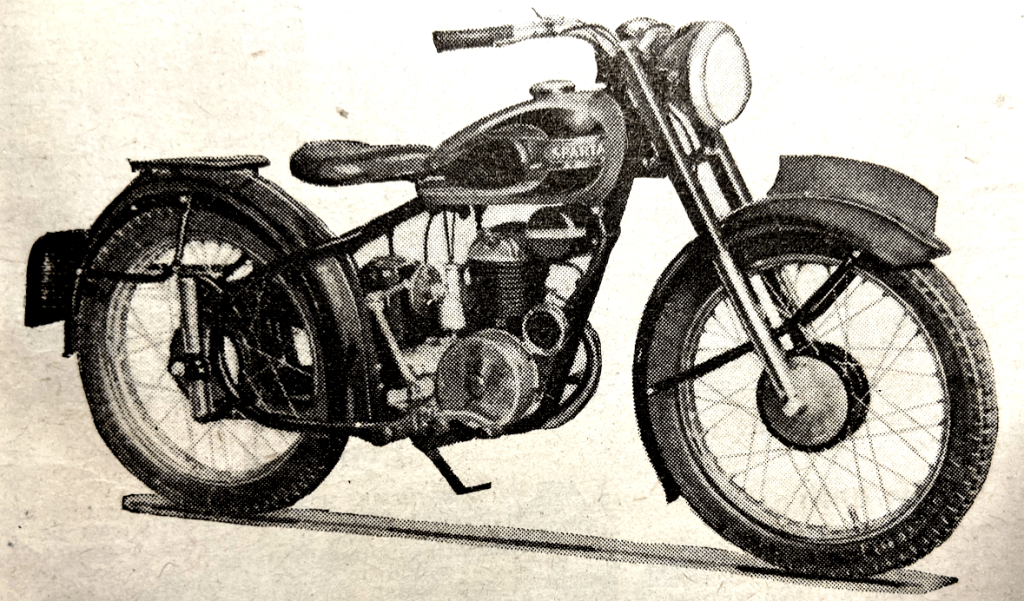
“S0 GREAT WAS the interest aroused by the Berlin Show that the period of opening was extended for three days, and daily opening hours were also extended. British machines on view included Ariel and BSA, but of course the majority of the exhibits were devoted to German products…novelty was provided by the scooters, two of which, the Autofix and the Mascottchen, are produced in Berlin. The Autofix is unorthodox in that the 120cc two-stroke engine with three-speed gear box is mounted on the front fork and the drive is by chain to the front wheel. A shapely pressing enshrouds the petroil tank and engine unit; this pressing can be readily removed or swung forward to give access to the engine. Another remarkable feature is that, after removing one nut, the fork, complete with the tank and power unit, can be detached from the chassis. This feature is a selling point in Berlin, where accommodation is scarce and owners of small machines might have to garage them in a home at the top of a flight of stairs. Suspension of both wheels is by rubber bands. The Autofix is designed to accommodate two, with luggage space in the compartment under the tandem seat. Price of this scooter is approximately £80, with the spare wheel and tyre costing an extra £3. Tubes are extensively employed for the frame of the Mascottchen, which is available with either the Lutz 58cc or the ILO 120cc engine. Soft suspension is provided, with coil springs controlling the movement of trailing links at the front and a pivoting fork at the rear. Total movement, it is stated, is up to six inches. Prices of the Mascottchen are about £50 with the Lutz engine, and £75 with the ILO three-speed engine-gear unit. Prices of some established models have been reduced in the past two months, and the strong emphasis on lower and lower prices is resulting in designs of extreme simplicity. One of the most notable in this field is the Cityfix, which sells at approximately £46. As in the case of the NSU Fox and the Imme, a ‘spine’ frame is employed. This consists of a single 1½in-diameter tube extending from the steering head and curving at the rear to form the seat tube and the mounting for the 98cc two-speed Sachs unit. The rear fork is made up of two ⅞in-diameter tubes, each of which is curved to form a seat and chain stay and welded to the main tube. Front fork is of the link type with a compression spring and pressed-steel blades. The saddle pivots at the nose and has a single, coil tension spring.”
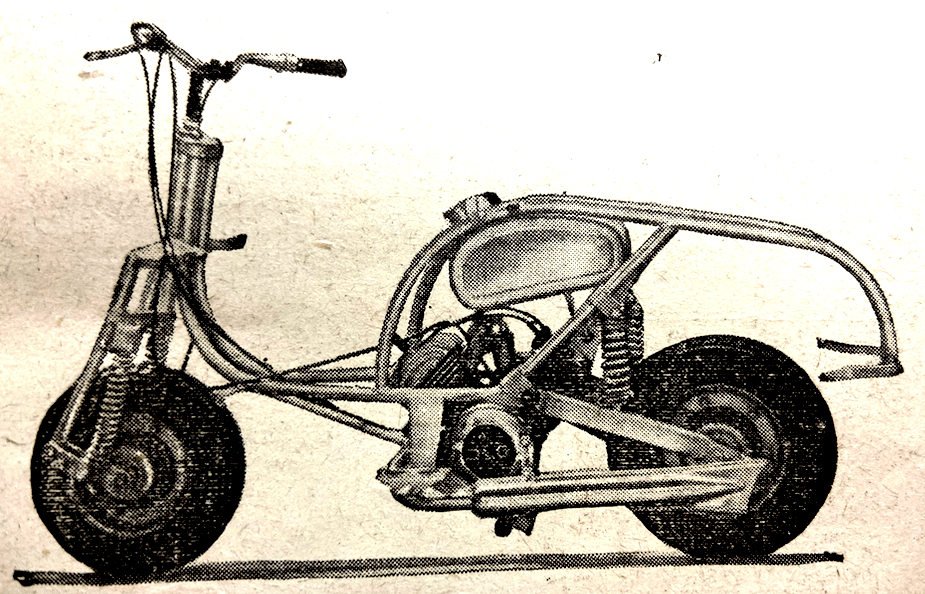
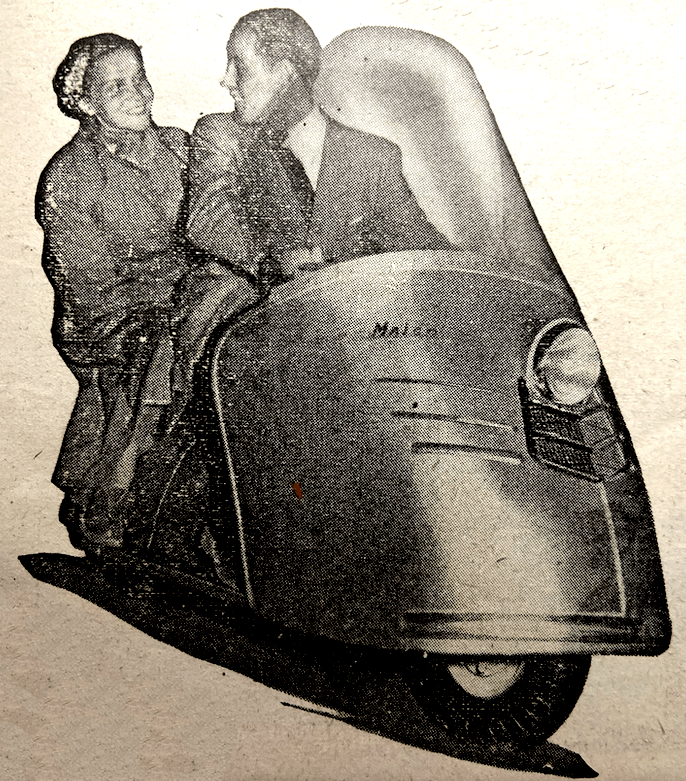
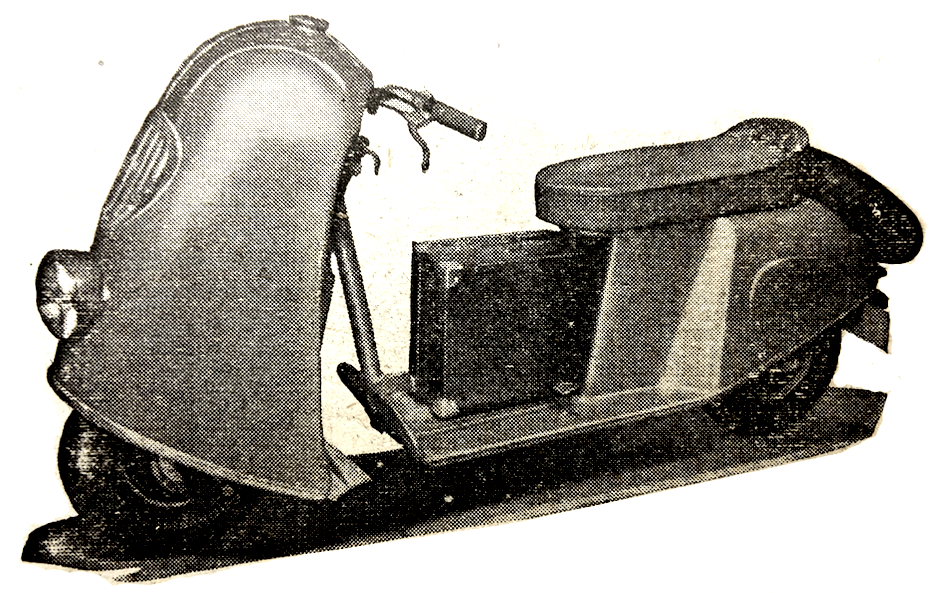
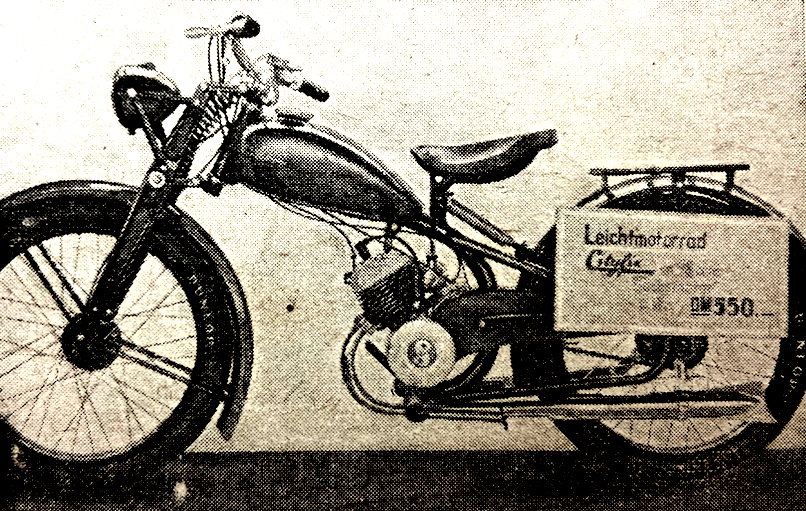
“THIS IS A TRUE STORY. Sonny: ‘Pops, can I have a motor bike?’ Pops: ‘And where d’you think the money’s coming from?’ Sonny: ‘Pops, I’ve found a beauty!’ Pops (The poor boob thinks he sees the way out): ‘HOW MUCH?’ Sonny (hopefully): ‘Only seven pounds five, pops!’ Pops (again seeing a way out): ‘WHAT’S WRONG WITH IT?’ Sonny (praying hard): ‘Nothing I can’t put right in our shed.’ Pops (seeing the third way out): ‘You’d better talk to mum!’ (One week’s interval, during which Sonny squares mum). Sonny: ‘Pops, mum says it is OK by her!’ Pops (desperately trying Way Out No 4): ‘Son, you’ve had a lot of crazes, which didn’t last long. You can have it if the shop’ll take five bob a week, and you can save the 5s yourself.’ (Interval of seventeen weeks.) Sonny: ‘Pops, here she is. Isn’t she a beaut?’ Pops (surveying a 1935 250cc very sourly): ‘You’ve never saved £7 5s in 17 weeks?’ Sonny (proudly): ‘No, pops. When I paid £6 15s, the man said he’d let me off the odd 10s.’ (Interval during which Pops paid for one new tyre, one new clutch, one new gear box, and one new cylinder, and resolved to regard ‘How much?’ as his final answer to all similar proposals.)”—Ixion
“A WOMAN READER, resident in an area where handbag snatchers and other pests are a menace, realises that the ‘Put Bobby Back on the Beat’ policy is barely possible with the current shortage of police. An enormous number of foot patrols would be required to supervise our big towns and cities, largely owing to the low speed to which a constable is limited when he trudges his rounds. She points out that motor cyclist patrols could cover the same area at speeds up to ten times that of the walkers, ie, 30mph as opposed to the old 3mph. Thus a tenth of the old force could do the job if they were suitably mounted. They would not be so quiet as the foot-sloggers, but they would create a mild panic among the petty criminals if their rounds were varied on the clock from night to night. No doubt specially quiet machines could be developed for their use. (An LE, for example, would be quite fast enough, and is not intrusively audible in its standard form.) The citizen of today cannot realise what meticulous protection the ‘beat’ men gave us half a century ago. As a young man I lived in a large house in an area marked black on the national crime map. Believe it or not, but the night patrols tied worsted across the paths in our garden, and across our gates. They also periodically strewed grey powder along the top of the garden walls. They knew without entering whether any prowler had invaded our grounds since their last round of the road.”–Ixion
INTERNATIONAL SIX DAYS’ TRIAL
THE SILVER JUBILEE ISDT attracted overseas riders from Austria, Belgium, Czsechoslovakia, Ireland, Italy, the Netherlands, Norway, Sweden and Switzerland. It began in gales and torrential rain; having won in 1949 Britain hosted the event and, as in 1949, the trial was based in Llandrindod Well. Just before the start Czechoslovakia withdrew its Trophy team and two Silver Vase teams. This was a shame because having won the first post-war ISDT and thus hosted the 1947 event the Czechs were among the favourites. The British Trophy team comprised Captain Fred Rist (500cc BSA), Jack Stocker (350cc Royal Enfield), Peter Alves (500cc Triumph), Hugh Viney (350cc AJS) and M Ray (500cc Ariel). They were up against Italians on three 125cc MVs, a 250cc Moto Guzzi and a 250cc Sertum (Italy had won in 1948) and Austrians on 125 and 250cc split-single Puchs. Britain fielded two Vase teams to take on seven overseas teams. The Austrian trio rode two 250cc Puchs and a 500cc Beemer. There were two Italian teams, riding a variety of Italian bikes. The Dutch ‘B’ rode CZs while their ‘A’ team were on Ariels and BSAs as were the Swedish and Irish teams. Most of the 26 marques in the ISDT were British: AJS, Ariel, BSA, DMW, Douglas, James, Matchless, Norton, Panther, Royal Enfield, SUN, Sunbeam, Triumph, Velocette, Vincent—and HJ Harrison’s ‘Rovil’ , a 1925 Rover fitted with a Villiers engine. Foreign marques were CZ, Jawa, Gilera, Guzzi, Lambretta, Mondial, MV, Sertum, Puch, DKW, BMW and Zündapp. Motor Cycling produced the programme but this report is courtesy of The Motor Cycle.
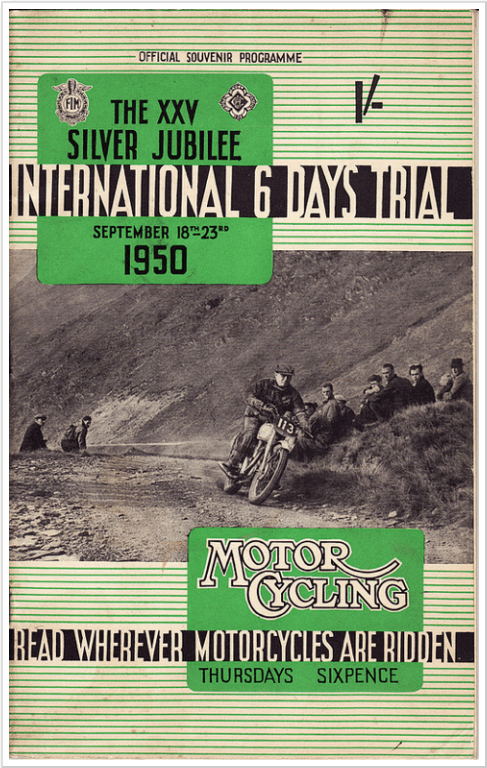
“THE INTERNATIONAL TROPHY, the premier award in the International Six Days’ Trial, held in Wales last week, was won by Great Britain. Comprising the victorious team were FM Rist (499 BSA), captain, BHM Viney (347 AJS), PH Alves (498 Triumph), WJ Stocker (346 Royal Enfield) and CM Ray (498 Ariel). The event was the silver jubilee, the 25th of the series. Britain’s success this year brings her total number of wins up to 14. Britain was also supreme in all other major contests. The International Silver Vase was won by the British Vase ‘A’ Team consisting of E Usher (347 Matchless), DS Evans (498 Ariel) and AF Gaymer (498 Triumph). Britain has won the Vase on 10 previous occasions. Other chief awards, for manufacturers’ and club teams, were won by British riders on British machines. Manufacturers’ teams to finish without loss of marks were AJS, Ariel and Triumph. The club team prize was captured by the Newport & Gwent MC—one mark lost. A summary of results shows that of the 213 starters, 132 retired, leaving only 81 finishers; 38 competitors received gold medals (no marks lost); there were 15 silver medal winners (up to 10 marks lost), and 12 won bronze medals (up to 50 marks lost)…The first day’s route of 245½ miles proved to be very severe. At the end of the day the results showed that in the Trophy and Vase contests only the British teams had retained clean sheets. However, late on Monday night, the jury of the trial announced that time allowances had been authorised equivalent to one and a half miles for the section approaching the final check. These allowances were necessary because the final section was, in fact, longer than that stipulated on the route cards. The ruling meant that the Dutch Vase ‘A’ Team and the Swedish Vase Team each recovered the mark lost through being late at the final check. The day’s route lay over metalled and mud tracks. Since there had been heavy rains before the start of the event, the going was so severe that machines
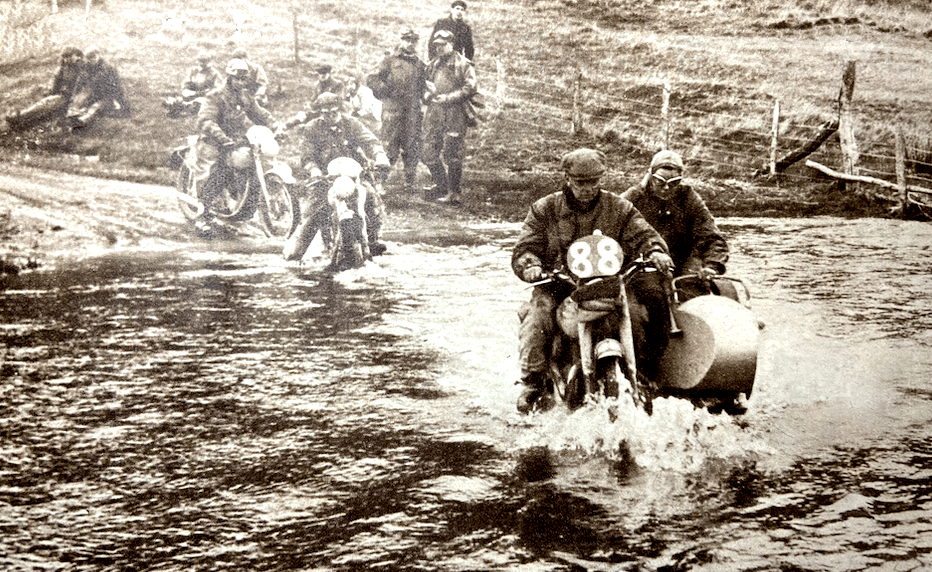
finished the day in a more mud-plastered condition than they might well have done if competing in a half-day sporting trial. Of the 213 starters, there were 42 retirements, and of the remaining 172 still running, only 88 remained unpenalised. Of the 15 manufacturers’ teams only eight finished the day without loss of marks, and only five of the 30 club teams entered had lost no marks. Rain fell overnight, but the early morning held promise of a fine day. What a false promise it was! Heavy mist was encountered on the heights of the Black Mountains, and in the afternoon there was torrential rain as competitors battled against a tight time check on the infamously tricky Tregaron Pass. The time of starting of the first man was, again, 7am, and from the moment he was allowed access to his machine the starting area became a centre of bustling, business-like activity. The last section on the previous day had allowed hardly a second for maintenance at the final check. There was as much done in the 15 minutes allowed each competitor before he had to start as would be done by the average enthusiast, at home, in a couple of hours! Many found the cold start difficult—but not the. stars, most of whose machines fired on the first positive dab. Since it had been decided to use the slower, wet-weather schedules today, it was anticipated that though the going would, undoubtedly, be severe, only the Tregaron Pass would cause any substantial loss of marks. That surmise proved true, but inadequate, for marks were lost piecemeal, and there were no fewer than 30 retirements. The day’s mileage was 212¾. Whereas first-day nerves have usually disappeared after the lunch check on the first day, and riders thereafter ride in more calculating style as they get the feel of things, this was far from so on Tuesday. Many of the retirements were caused by riding at higher speeds than necessary to hold the schedules. It usually transpired that where the terrain demanded slowish riding it was allowed for on the time cards. The route followed was almost identical with that used on Wednesday, last year. It led south first of
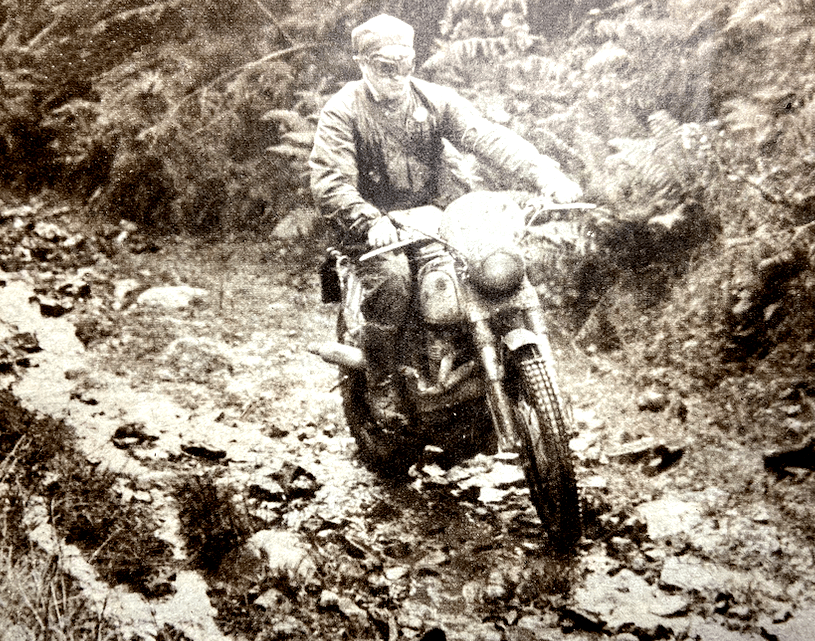
all, with time controls at Penlan Lwyd, Trecastle and Cam Lwyd, where there was also a petrol stop. Between these last two places the route passed over rough, rutted, muddy, and rocky paths, rising sometimes to as much as 2,000ft above sea-level and providing what was rather like a Scott Trial in miniature. However, the aces, notwithstanding their 10% higher schedule, were generally able to reach controls with six or seven minutes to spare. Another who was building up on schedule in the most inspired fashion was ABN Taylor (347 AJS), the reserve for the British Vase Teams. There were a few mishaps during the morning. Among them, George Eighteen (249 Jawa) mistook the route and, after being astray for an hour, retired. Young Peter Perrey (498 Triumph), son of the once-famous ISDT competitor HS Perrey, had a spill and, shaken, retired. The two Morris’s, 0RJ and JW, father and son, leapt a grass bank and dived down a 20ft tree-clad slope, one after the other. The lunch check was at Llandovery and here, too, riders had as much as between nine and eleven minutes in hand. Rain began when the early riders were within a few miles of the control and became heavier, lasting throughout the afternoon as the long convoy headed for the controls at Farmers (a surprisingly tight section), Tregaron and Abergwesyn. Over the Tregaron Pass, the Trophy and Vase men, on 500s, had to average 31mph, and all of them checked in on time. DS Evans (498 Ariel), of the British Vase ‘A’ Team, did so in spite of a three-minute delay caused by a spill. When he set off again on his desperate dash, the front mudguard was bearing down on the tyre and his passage was punctuated by loud screeching. Both Abergwesyn watersplashes were considered to be too deep, and were by-passed; the first by means of a temporary bridge and the second by taking riders through a farmyard and across a part of the river where it was not so deep. JV Brittain (346 Royal Enfield), had bad luck in the afternoon. Attempting to round a corner he found that he was too fast and so ran up the steep, grassy, bank, trials-fashion. On his stopping, the front wheel turned round on the wrong lock, causing the machine to drop on top of him. The result was a bruise on his forehead as big as an egg, and humorous comment that young Johnny—the most modest of lads—was shockingly swollen-headed! WJ Stocker (346 Royal Enfield), had a heart-stopping moment when a length of wire caught round his footrest, arresting his progress so suddenly that he thought the engine had seized! He quickly freed himself, however. NIGHT RUN. The first man left at 8.31pm and returned to the final control at Llandrindod Wells at 23 minutes after midnight. The course ran north to Crugynau, south-west to a stamp check at Knighton, and a time check at Kinnerton, and thence to base again. For the most part the route lay over tarred roads and there were only short patches of greasy
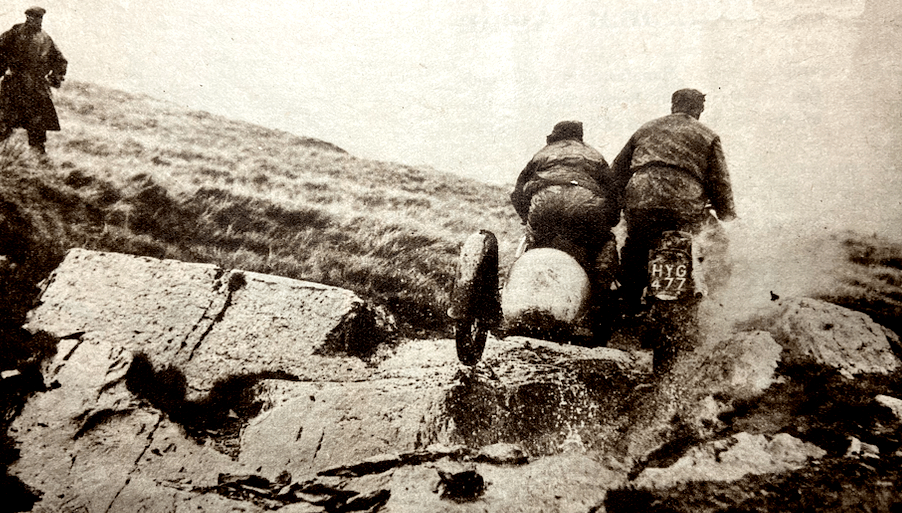
going, none of which caused anyone the slightest bother. The time-check schedules were fairly easy, the object of the night run being not to snatch marks on time, but to be a test of lighting equipment. At the end of the run a light intensity test was held and riders whose lights did not come up to the required standard lost one mark. Until the second half of the entry was on the return journey, the evening was dark though pleasant. Later there was heavy rain, but the schedule was easy to maintain even then. The highlight of the night run was undoubtedly the stout effort made by PF Hammond (498 Triumph), of the official works’ team. He had lost a stud from the tread of his rear tyre during the day and the canvas was showing. He decided to fit a new tyre in the dark before setting out on the night run, and prepared accordingly. Everything went swimmingly; the new tyre was in place in a few seconds over nine minutes after he had started when—disaster! The end broke off the rear spindle when he was tightening up. While a solution to the problem was being found the minutes ticked by. So he pushed over the line when scheduled to start, hurriedly burred over the end of the spindle and, five minutes late, set off at a burning pace. After all that he was early at the first check! Crowds as large as 400 thronged the controls and there were many spectators lining the route. In spite of the ease of the evening’s work it was sufficient to cause M Rozenberg (499 BSA), of the Dutch Vase ‘A’ Team, to lose a mark, thus soiling the hitherto clean sheet of his team. He was late in starting. He was not alone in this, for six others lost marks for the same reason. There were nine further retirements, and four riders who had trouble lost marks for being late at time checks. Those who lost marks for lighting failures numbered five—three had inoperative tail lights and two had neither front nor rear lights. Wednesday’s route was the previous day’s ridden in the opposite direction. Taken this way the checks proved tighter than they had done on Tuesday, but with the exception of the checks between Abergwesyn and Tregaron, and between Llanllwmi and Pant-y-Cerig, none was so tight that British Trophy and Vase Team men could not build up a safe margin on their schedules. In the morning, there was hard, stinging rain and in the afternoon bright, warm sunshine. That it was a severe day is amply evident from the fact that there were a further 17 retirements, leaving 115 riders still in the trial, only 55 of whom retained clean sheets. There were numerous ‘incidents’ in the morning. Several
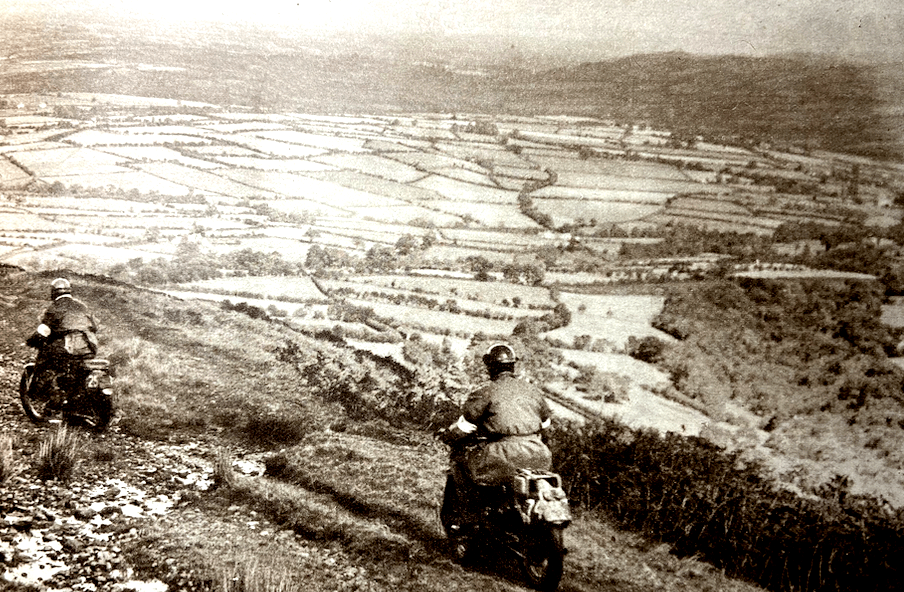
riders, among them JF Kentish, who was riding a Matchless Twin, went astray after leaving the petrol check at Lanllwmi. Nevertheless, Kentish beat the clock (and the Matchless!) to check in at Pant-y-Cerig on time. Young Ken Heanes (346 Royal Enfield), who at 16 is the trial’s youngest competitor, also went off the course, but he strayed rather farther than Kentish had done and lost two marks; up till then he had been unpenalised. The lunch check was again at Llandovery. There was consternation when WJ Stocker (346 Royal Enfield) entered the check with his face bleeding. He was not seriously injured, however, and his spill had not delayed him long enough to lose marks. Indeed, he had a full 10 minutes to spare. When PH Alves (498 Triumph), of the Trophy Team, came into the village he took up a little play in the steering head; then, saying he would use up one of his three spare minutes, he cleaned up his contact breaker points on a matchbox rubbing strip. Methodical—very! Ray’s, Viney’s and Rist’s machines were running like perpetual-motion dynamos and only required checking. Unless sheer disaster overtook the team, the Trophy was virtually already in British hands. With both Vase Teams also clean, there seemed nothing that could rob Britain of complete victory. Among the outstanding performances so far were those of D Carancini, who, said to be of non-mechanical inclination, was riding the sole Lambretta in the trial, and Mrs MA Briggs (498 Triumph). Carancini lost marks, it is true, but he was handling his little scooter in the most amazing manner through mud and slime, deep water-holes, and up (and down!) slithery gradients: over every sort of going, in fine, that had surely never been considered when the Lambretta was laid down on the drawing board! Mrs Briggs was the sole lady rider still in the trial since Monday afternoon, and she was carrying on in a way that earned her admiration on all sides—and special cheers from the enthusiastic villagers who thronged the miles of route. The tracks encountered in the afternoon were in prime condition, and spills on soft mud, which did little more than cause a few seconds’ delay, were quite frequent. All morning there was heavy stinging rain. As noon approached the rain eased and in places there were brief, fitful gleams of sunshine. For the most part, however, there were grey skies and a cold, biting wind that bent the ferns and whins on the higher reaches of the mountains flat from the roots. Mud tracks were saturated, bringing the speeds down so such in some cases that sopping-wet goggles steamed up and had to be dispensed with. The cold, the agony caused by the sting of the rain, the condition of the surfaces, the tight schedule: Thursday morning was, indeed, a bad ‘un. Before encountering these hardships at all HR Taylor, the famous sidecar driver, using again the Sunbeam outfit with which he won a Gold Medal last year, had to change a propeller shaft and bevel pinion! He practised at the change-over on another machine with all the care and fastidious attention to detail for which he is renowned, and when he was given access to his machine, he had everything well under control. The day’s mileage was 249. After three time checks over narrow lanes and muddy tracks, the course led to a fourth check at Bwlch-y-Groes, the famous Welsh test hill, and thence over the Eunant Pass. Here, the section presented a vastly different picture from that encountered last year. There was deep mud, slimy rock and
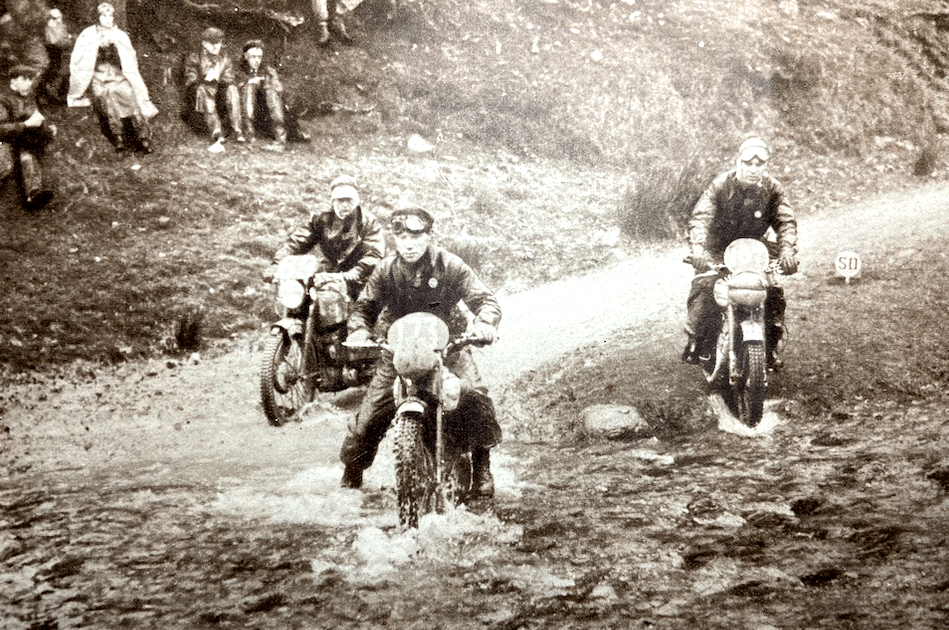
innocuous-looking water holes that were easily deep enough to cause bother if taken too fast. And with such a narrow margin of time available, riders could far from afford to be delayed. From Eunant, the course led to Aber Hirnant over the atrocious, water-broken Pass. Sheeting rains had removed tons of earth, leaving deep, gaping gullies along, the sides. The ascent and drop at each end were in such a state as to be worthy of observation in a one-day sporting trial. Though Trophy and Vase Team men had no difficulty in completing the section in three or four minutes inside their schedule, at least 27 competitors lost marks by arriving at Aber Hirnant late. Most riders were careful on the roughery but there were marked contrasts in technique. The scramblers were fast, safe, superb, the prime examples being FM Rist and W Nicholson (BSAs), BG. Stonebridge (347 Matchless) and Alan Taylor (347AJS). In contrast, the trials specialists were slower and most methodical. Those who normally compete in both types of event with average success were not very fast and, hush! not very confident, if appearances are anything to go by. The Austrians and their Puchs were very fast, the Italians on their MVs, Sertums and Gileras, slow, and obviously unhappy in the downhill mud; the most polished rider on a lightweight machine was M Riley whose 122cc DMW obviously handled well, and he seemed to place it just where he intended in the most nonchalant manner imaginable. Of the sidecar brigade seen, by far the fastest was HR Taylor. At the end of the day, incidentally, only five sidecars remained unpenalised: all were British. They were WHJ Peacock (347 Matchless SC), AC Kelly (649 Triumph sc), F Wilkins (497 Ariel sc), HR Taylor and the famous Harold Tozer (646 BSA sc). FH Whittle (598 Panther sc), a works’ entry, who was set to ride at a 10% higher speed schedule than every other sidecar, gave the trial best that evening. Soon after Hirnant, the rear chain broke and wrapped itself round the gear box sprocket. Between Hirnant and the lunch check at Llys, near Denbeigh, far in the north, R Clayton (497 Norton) of the British Vase ‘B’ Team, was attacked by the Fates. Sweeping round a fast corner, and about to overtake a Swedish rider, he encountered an unexpected and quite deep watersplash. Both riders braked heavily. Then Clayton opened up to go through, but the Swede swerved. Clayton shut off just as he entered the splash. Too late—water was drawn up into the cylinders and that was that. The cylinder-head gasket was blown. A magnificent rider, poor Clayton had to suffer the mortification of being the first British Trophy or Vase Team man to lose a single mark. After lunch there were miles and miles of boggy moorland and two especially tight sections, to Minera first, and then to Glyn Dyfrdwy. The going was such that machines had to be held up all the time; one slip and it would be away; tremendous concentration was required, and Fred Rist remarked afterwards that his clutch hand became quite ‘tired’ from constant gear changing. By

this time, the weather cleared and the sun shone brightly and warmly in its best summer manner. It continued to do so throughout the hectic afternoon. As though to balance the issue over Vase Teams, the Fates also struck at M Rozenberg (499 BSA) of the Dutch Vase ‘A’ Team. He crashed heavily and was taken to hospital with a broken leg. To make matters more poignant, it was announced that evening that the mark lost by Rozenberg for making a late start for Tuesday night’s run had been rescinded by the jury—which meant that the team again had a clean sheet! Summary of the day’s results showed that of the 95 competitors still running, only 50 had lost no marks. And no praise in the world is too high for that 50. Again there was heavy overnight rain, which cleared soon after 7am when the first man set off. The ‘paddock’ presented now a vastly different scene from that of three days ago, when there was hardly an inch to spare and bustling activity everywhere. Now, with over 100 competitors retired, there were long gaps between riders being called into the control. Basil Hall (499 BSA), of the British Vase ‘B’ Team, decided to fit a new front-brake shoe plate complete with shoes—a job which did not take him long. He then decided, however, to adjust the tappets, and before he had finished he was called to the starting grid. In the most easy and unhurried manner imaginable, Hall collected his tools, pushed up to the grid, started the engine on being given the signal, made off, stopped outside the con-fines of the control and finished the job. He then push-started, gave a cheerful wave to Len Heath, the British team manager, and sped off. No one felt any concern. If any man can snatch back time in a tight check, it’s Hall! Another who was busy until called to the line was NE Vanhouse (498 Ariel), who, as a precautionary measure, decided to fit a new tensioner blade to his timing chain, a six- or seven-minute job only, and to replace a broken exhaust pipe bracket. The Ariel Twins, incidentally, ridden by Vanhouse, Ray and Evans, were performing in the most impressive fashion and were, at this stage, probably the only machines in the trial the exhaust pipes of which were not highly discoloured. Notwithstanding the high speed schedule, the engines seemed to be working happily within their limits. Young Ken Heanes (346 Royal Enfield) decided to change a rear tyre after he had ridden in with it flat the previous night; he lost a few precious minutes completing the job after riding across the line with the wheel still to be lined-up and tightened, and the rear
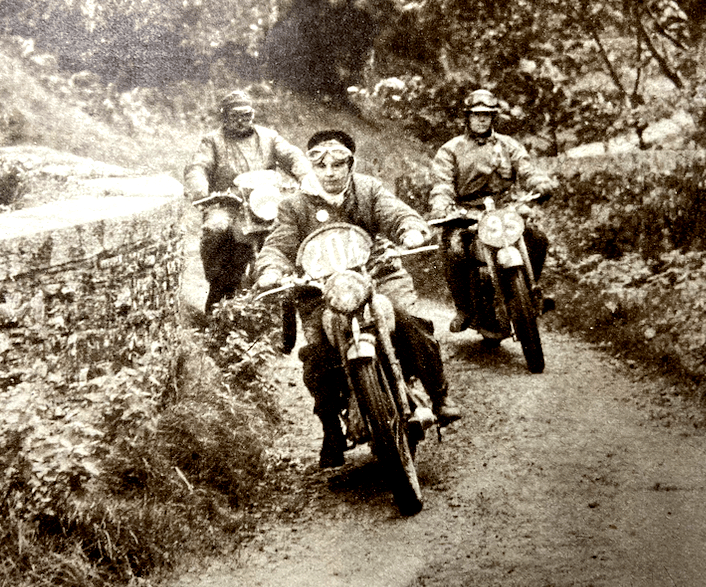
mud-guard to replace. Meanwhile, his father, starting while Ken was still working, came back to ensure that all was well before setting off. Later in the day, young Heanes retired. The route followed was that of yesterday’s run in the reverse direction, with the tight Minera sections taken before the lunch check and the Hirnant and Eunant Passes encountered in the afternoon. Stage by stage, or rather section by section, the survivors sped northward over mud and rock. Many of the machines in the hands of private owners were showing signs of the hard life they had had during the previous four days. It is not without significance that 14 riders lost marks this morning for being unable to start within their three minutes’ time allowance. G Pickering (123 BSA), who had been ‘sitting on his Gold’, and riding brilliantly throughout the week, rode for 34 miles, only to discover that he was on the previous day’s route marking! By the time he regained the correct course over one hour had passed and he was ‘deemed to have retired’. At the third check, HR Taylor (497 Sunbeam sc) retired owing to clutch slip. Taken in this direction, the Minera section proved even tighter than it had been on Thursday and many riders scraped in with nothing to spare. AJ Blackwell (497 Norton) took a toss avoiding a fallen foreign rider. On restarting he found that a valve was sticking so he continued on one cylinder. Later, he, too, retired. G Chivers (497 Ariel sc), who had been giving a stirring performance, also retired this morning when the lower gear box bolt came adrift. In the afternoon, TU Ellis (499 Royal Enfield), of the British Vase ‘B’ Team, retired with a suspected big-end seizure. Until then Ellis had not lost a single mark. Over the Hirnant and Eunant Passes the weather was brighter but the going just as severe as it had been on Thursday. And so back to Llandrindod. S Cmyral (248 Puch),
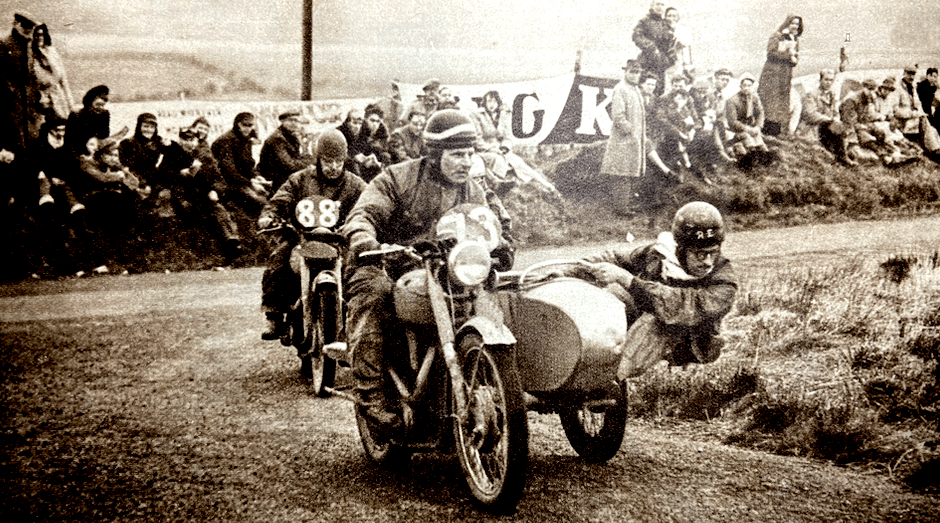
riding with the high degree of consistency he had shown all week, was first man in and the only attention his machine required was an adjustment of the rear chain. By now the field was considerably thinned, there having been a further 14 retirements. DS Evans (498 Ariel) of the Vase ‘A’ Team was first Britisher into the final control. As with the other team men, his tyres were just nicely ‘scrubbed in’ for the speed test at Eppynt. All the teams had gone through so far without tyre changes being necessary. One who was in tyre trouble, however, was WJ Stocker (346 Royal Enfield) of the Trophy Team who finished the day with a hole in the side of his rear cover. He decided to make a quick change in the morning. B Mattson (497 Ariel) of the Swedish Vase Team ran out of fuel and pushed in—but he was on time. Basil Hall (499 BSA), whose piston rings had broken, it was thought, did not appear at his ETA. The paddock was cleared as the seconds ticked away—for Hall in a hurry is dynamite. He came in sedately, however, one minute inside his three minutes’ allowance. With the day’s retirements, there remained only three manufacturers’ teams with no marks lost and only two club teams, Sunbeam ‘B’ and Newport and Gwent, intact. The last day dawned clear and warm—by far the best morning of the trial so far. For the 81 survivors it was in many ways the most important day of all. By way of Painscastle and Upper Chapel the course led over moor and track to the racing circuit at Eppynt. The distance was 48 miles and on arrival competitors had to lap the tortuous, bumpy Eppynt circuit at schedule speeds (speeds set according to capacity) for one hour. Actually the distance proved too much for Basil Hall’s machine which would go no farther. Two miles from Eppynt, Basil retired and thus the ill-fated British Vase ‘B’ Team were two men short. Of the 22 125s which started five days ago, only three remained!—one Puch and two British DMWs, ridden by M Riley and EW Smith. Both DMW riders
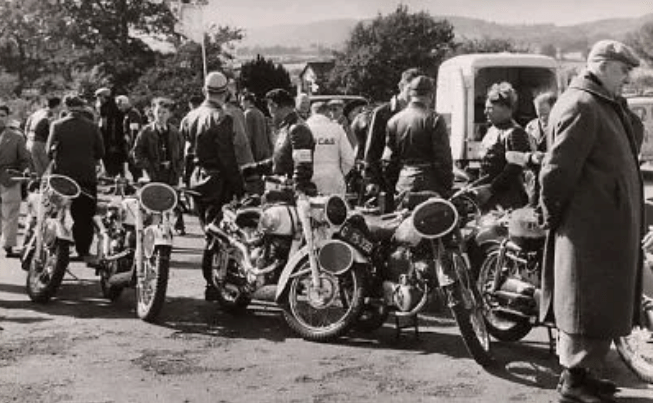
and C Clegg (249 BSA) had to change rear-wheel bearings before starting. Though all three managed the job in time, Clegg, who had ridden most gallantly all week, mistook his starting time and left the control half an hour too late, thus losing many marks. The crowds thronging the starting area gave special cheers for two of the trials most meritorious performers: Mrs M Briggs (498 Triumph), a cheerful housewife, who, after losing nine marks on Monday, had not lost another since, and T Tun (649 Triumph), a young medical student from Guy’s Hospital, who had only started riding three month earlier. So far as the Trophy contest was concerned, the Trophy was already, as the saying is, on the British sideboard. Indeed, our team men were so far ahead on marks, not a single one lost throughout the entire hectic week, that they could have ‘declared’ on Friday night and still won! In the Vase contest, the British Vase ‘A’ Team had only to finish to win. High in the Brecon Mountains, Eppynt was a centre for enthusiasts from all over the country, who rode in from early morning until well after the speed test had started. In the distance could be seen the Brecon Beacons, which had formed part of. Monday’s route—only five days ago but it seemed like aeons! So far as the 125s, 250s, sidecars and 350s were concerned, the test was plain sailing. But as the 500s were preparing to start there was heavy rain and a thick, all-enveloping mist, blanketed down, reducing visibility in many places to few feet. Nevertheless, the test passed uneventfully. And another epic International Six Days’ was over with Britain once again victorious in all the major contests. RESULTS International Trophy: 1, Great Britain—FM Rist (499 BSA), captain, BHM Viney (347 AJS), PH Alves (498 Triumph), WJ Stocker (346 Royal Enfield), CM Ray (498 Ariel), no marks lost; 2, Austria, 1,225; 3, Italy, 2,582. International Silver Vase: 1, Great Britain ‘A’, DS Evans (498 Ariel), E Usher (347 Matchless), AF Gaymer (498 Triumph), no marks lost; 2, Holland ‘A’, 300; 3, Sweden, 307; 4, Great Britain ‘B’, 600; 5, Ireland, 773; 6, Holland ‘B’, 904; 7, Italy ‘A’, 1,415; 7, Italy ‘B’, 1,800. Austria and Czechoslovakia were non-starters. Manufacturers’ Team Awards: AJS (BHM Viney, TH Wortley, AW Bernard). Ariel (DS Evans, CM Ray, NE Vanhouse). Triumph (PH Alves, AF Gaymer, PF Hammond). Club Team Prize: Newport & Gwent MCC (DJ Redmore, 498 Triumph; LG Wedgbury, 348 BSA; T Hawkins, 347 AJS) one mark lost.
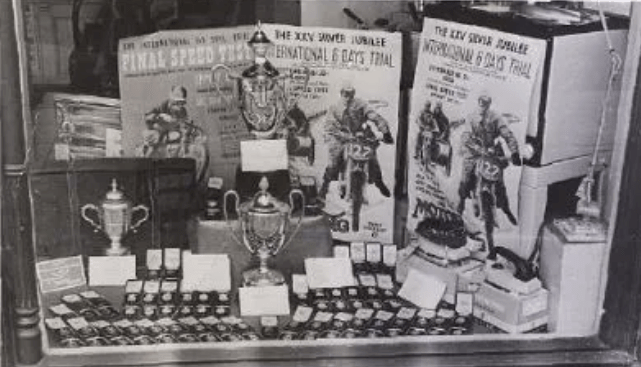
“NO TIME HAS BEEN LOST by the ACU in grappling with the problems presented by the Clubman’s TT. Already one decision has been reached: while for 1951 kickstarters will be a race requirement, there will be no kickstarting of cold engines. For the rest, the TT Sub-committee confines itself to suggestions. Five of these are under consideration, of which two are complementary. First, all competitors in the Clubman’s TT must have had previous racing experience; they must have competed and finished in two road races, each not less than 10 miles in length, or in one road race and one airfield-circuit race, each over 10 miles. Secondly, those competing in the Isle of Man for the first time will be briefed by an expert. These, we repeat, are suggestions which are under consideration, not rulings. The remaining suggestions are the elimination of the 250 and 1,000cc Clubman’s TT Races and the banning of all motor cycles manufactured previous to September, 1945. Linked with the suggestion that two of the four Clubman’s Races be abandoned is consideration of the reinstatement of the International Lightweight (250cc) TT as a separate race. Undoubtedly the kickstarter rule should be modified on the lines proposed. It will also be universally agreed that safety demands that, where a course so long, tortuous and difficult as that for the TT is employed, none should be eligible unless he has served a road-racing apprenticeship. Briefing by an expert is suggested as an additional safeguard. We wholeheartedly concur: indeed, we go beyond the realm of the TT Sub-committee in stating that training as well as briefing should be the rule on many other, lesser circuits. There is need for graduation in road racing and, with it, training. To date, these aspects have not received the consideration they merit.”
“AUGUST TRADITIONALLY IS THE SILLY SEASON, the period when busybodies, carping critics and any others whose vapourings may bestir controversy are allotted space in sections of the lay press. Pillion riding is among the targets in several journals this year. It should be banned, one is informed. Yes, and, further, all motor cycles should be barred from entering a tram-infested area, because they skid on tramlines! There is no suggestion that trams and their lines should have been scrapped years ago, as indeed was promised, nor that it is utterly disgraceful that there should still be highway surfaces which prove treacherous when wet. To-day there are nearly 700,000 motor cycles registered. The movement is stronger numerically than it has been for 20 years. Silly season though it is, motor cyclists should take up cudgels against stupid attacks upon the economical motor cycle.”—Ixion
“FOR 1951 THE ARIEL RANGE will comprise seven models embracing, once again, the illustrious Square Four; the sleek, handsome twins, made even more elegant by increased cylinder fin area, and a new sweep to the exhaust pipes; and the singles, as much to the fore in the Ariel range as ever. In post-war years, Ariels have found it increasingly difficult to maintain a production output to satisfy world-wide demand. In order that the position be eased next year, it has been decided to simplify production by reducing by two the number of models available. The proposal is that only two ohv singles be marketed instead of four. Which two? The obvious choice, it is felt, lies in retaining the Red Hunter models in each case. However, it is stated that, should the supply-to-demand position become easier, the NG and VG models may be reintroduced. Briefly, then, the, models for 1951 are the 4G, renowned 997cc Square Four, which has an aluminium-alloy cylinder block, aluminium-alloy head with integral rocker box, a Solex carburettor with in-built bi-starter, a four-speed Burman gear box (giving ratios of 4.5, 5.7, 7.7 and 12,1 to 1), coil ignition, Ariel link-type rear springing which ensures constant chain tension, and a 3¾-gallon capacity fuel tank. Next come the 498cc twins, the KG de luxe model, and the KH, which has polished internals and is the Red Hunter or sports version of the former. Features of the twins are smart appearance, 4-gallon capacity tanks, gear ratios of 5.20, 6.65, 9.15 and 13.85 to 1, and compression ratio of 6.8 to 1; weight, with spring-frame, comes out at approximately 4001b. Ignition is by magneto, with automatic advance and retard. The fast Red Hunter singles are of 347 and 497cc capacity, and have a world-wide reputation for speed and
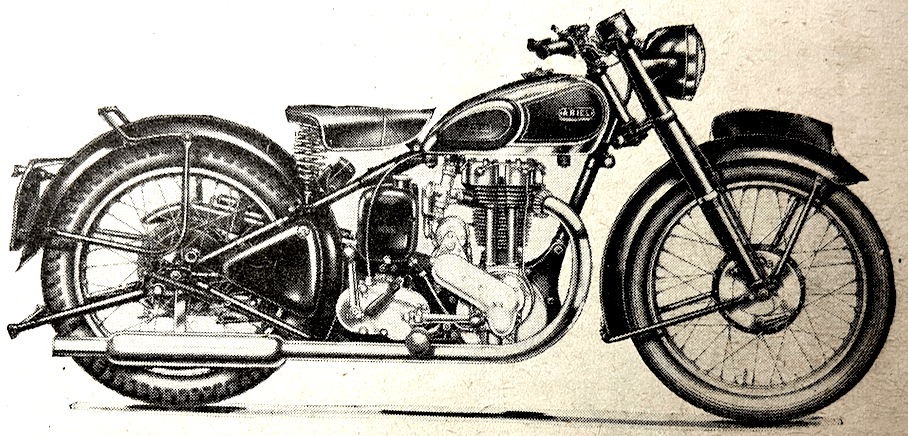
staying power extending back to 1932. Tank capacity of the 350 is 2¾ gallons, and of the 500, 3½ gallons. Gear ratios on the 350 are 5.7, 7.3, 10.1 and 15.3 to 1, and on the 500 4.7, 6.0, 8.0 and 12.6 to 1. Compression ratio of the 350 is 6.2 to 1, and for the larger mount 6.8. Both of these models have magneto ignition, with manual control of ignition advance and retard. Last of the ‘popular’ machines in the range is the VB, the 598cc side-valve single that has earned a wide following as a sidecar machine. Like the VH, the VB has a 3½-gallon fuel tank. Standard gear ratios are 5.7, 7.2, 9.7 and 15.3. A compression ratio of 5 to 1 is used. Brake size on all models is 7in, except for the Square Four, which now has an 8in rear brake. The VCH competition model, introduced last year, is in limited production. It will be remembered that Ariels last year made a wide departure from their long-standing layout by mounting the speedometer (on the four and twins) in a steel pressing bridging the top of the fork legs. This departure in 1951 will spread to all models, a further improvement in appearance being achieved by replacing the steel pressing with a deeper and more aesthetically proportioned light-alloy die-casting which is more simply mounted, being bolted on top of the fork legs by means of the top plugs. The ammeter and light switch are now incorporated in the head lamp. Thus the instrument panel, which has for so many years been an Ariel feature, has disappeared. On the twins and four, the oil pressure gauge remains in the tank top, fitted into a circular compartment to the rear of the tank filler cap, which has been moved from the right-hand side of the tank to the middle. Without the instrument panel, tank capacity has been increased by ¼ gallon. On all other models the oil pressure gauge has disappeared, leaving the tanks smart and sleek. There are doubtless some who will lament the passing of the tank panel, but it is generally felt these days that the plain tank has many advantages.”
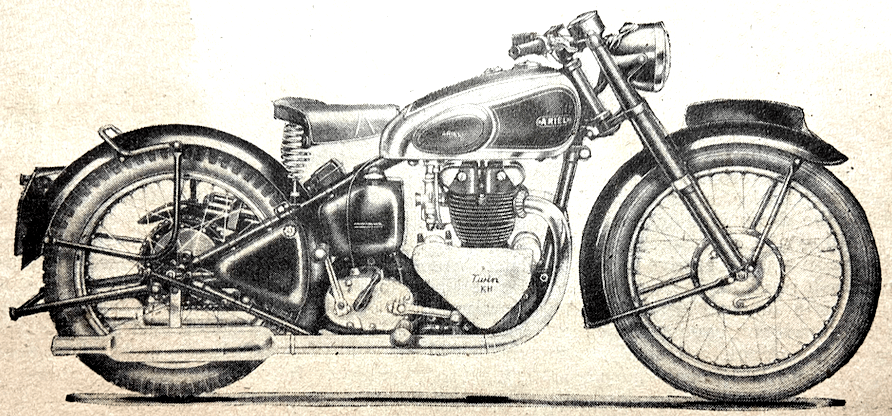
“THERE HAVE, IN THE PAST, been frames of many shapes and sizes made from many unusual materials; but has there ever before been in production in Britain, DMWs ask, an all-welded frame made from solid-drawn rectangular-section tubing? For 1951 such a frame will supersede the round-section one on the spring-frame de luxe models. In practical tests it has been proved that square-section tube gives greater lateral rigidity for slightly less weight of material, and that whip at the rear end of a machine with plunger-type rear springing (where the wheel spindle moves up and down) is materially overcome. In this case it has been possible to reduce the total weight of the frame from 16 to 13lb, although, in order to increase the resistance to sideways bending of the rear fork by 59%, the, weight of that part was increased by 22%. Because of the overall strength of the structure of the frame, it has been possible to use a metal one gauge lighter than that required with an orthodox frame. Apart from the weight-saving and strength increases there are incidental advantages in using square-section tubes especially when, as in post-war DMW designs, all-welded construction is employed (there are, of course, no malleable lugs and no bolted-on fittings on DMWs). For instance, it is stated that complete manufacture of the frame has been simplified and improved. Obviously, lugs can be welded more easily to flat surfaces than they can to surfaces that are curved. Moreover, lugs for engine bolts and the like can be welded to the corners of the square, thus eliminating local buckling which can take place at points of attachment of lugs on frames of round-section. Local welded points are, therefore, it is stated, very much stronger. The new frames are of the full-loop type, and, in general design and geometry, identical with the previous ones. Another feature which distinguishes the 1951 de luxe models from the present range is the fitting of a smart, very comfortable and at the same time extremely functional, one-piece, foam-rubber seat for rider and passenger. The base of the seat is mild steel, and the rubber padding’ is covered in biscuit-coloured hide with a fine black line through the beaded edging to match with the black, thread-width line running through the gold line on the fuel tank. Ingeniously, the tool-box is attached under the seat
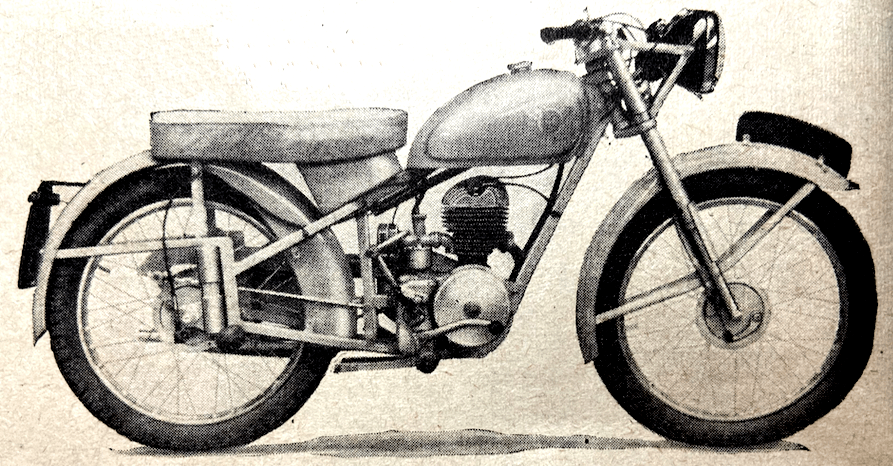
and forms the seat’s for-ward mounting. The box itself is fixed in position on the front by a bolt through the rear tank-supporting bracket, and at the rear by means of two bolts, one on each seat stay. A lip is formed on the top forward edge of the box to take the lift of the seat and, at the rear of the seat’s base, there is a bridge which is fixed by wing screws across the vertical mudguard stays. Therefore, to remove the seat to gain access to the tools, all that is necessary is to slacken each screw half a turn or a little more and lift the rear of the seat slightly before draw-ing it backward. Seat height is 28½in. The fork used on all models is the proprietary one manufactured by Metal Profiles. Its chief features are simplicity of design and construction, as regards both assembly and maintenance. It is very robust and provides excellent rigidity to torsional loadings. Metal Profiles rear-springing units are also fitted. Villiers 10D and 6E engine gear units provide the motive power in the 125 and 200 models respectively. Principal differences between standard and de luxe models are that the standard models have rigid, round-section frames, orthodox-type saddles, which, incidentally, are adjustable for heights between 28½ and 32in, and 5½in instead of 6½in headlamps. The de luxe models are fitted with battery and rectifier lighting and electric horns, but the standard models can also be supplied so equipped at an extra charge of £5 14s 4d including purchase tax. In the case of both 122cc models, gear ratios are 7.6, 10.6 and 20.1 to 1; tyre sizes are 2.75x19in and the weight is 150lb. Gear ratio on both 1907cc models are 5.9, 8.2 and 15.6 to 1; tyres are 3.00×19; weight is 195lb—5½in brakes and 2½ gallon tanks are common to all four models. These DMWs are luxury lightweights in the fullest sense. A member of The Motor Cycle staff had the opportunity to ride the first of the 1951 de luxe ‘200s’. The handling was found to be exemplary, the model hugging any selected line on corners and bends irrespective of road bumps. Straight-ahead steering was hands-off from 13-14mph right up to maximum speed. The riding position was excellent and that too, no doubt, contributed in no small measure, to the excellent handling. In conjunction with the new tandem, seat, the DMW can safely be said to set new standard in comfort for this class of machine. Stopping power available from the brakes was far in excess of that normally associated with machines in the lightweight class. Exhaust silencing was of quite a high standard. The colour scheme is in a pleasant turquoise blue and chromium, with only the head lamps, horn, number plates and so on coloured black.”
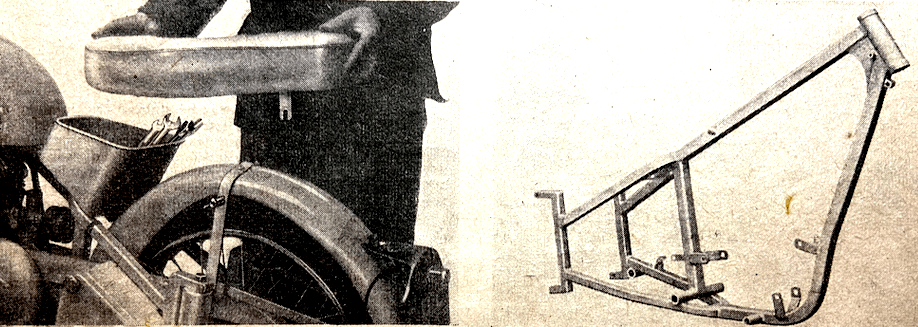
FOR 1951 THE SWALLOW GADABOUT will once again be available in solo and commercial three-wheeler forms, but the commercial model, now to be called the ‘Major’, will be fitted with a 197cc Villiers engine in place of the 122cc engine employed in the past. Cooling of the commercial model has been improved by the adoption of a four-blade fan which replaces the two-blade type used previously. Also designed to assist cooling of the commercial model, the track has been widened by an inch to allow a greater airflow between the carrier body and the engine housing. Other changes to the Major include the use of 531 tubing for the fork and higher-grade tubing for the chassis; the replacement of the rear brake operating cable by a rod; a rather more rounded front weather shield; the provision of 10 louvres in the engine housing; an improved silencer; better engine accessibility; and the fitting of a cover to facilitate topping up of the primary chain case. The ‘van’ component of the Major has a capacity of eleven cubic feet and a payload of 2cwt. Tare weight is 300lb; overall width is 4ft 4in. Cruising speed is 35mph with a maximum speed of 42mph. Lighting is by battery, rectifier and a Lucas 6in head lamp. No change is to be made to the Mk 2 Solo Gadabout which has a 122cc Villiers engine. Weight is 2141b; ground clearance is 4in; tyre sizes are 4.00x8in; seat height is 27½in.”
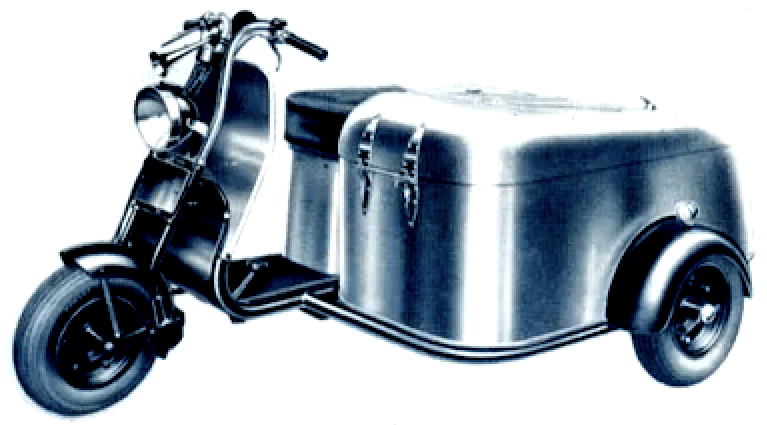
“FEW RANGES OF MOTOR CYCLES have gained so much kudos in recent years as the AJS and the Matchless, products of Associated Motor Cycles. Their renown results from their high quality—their excellence in manufacture and, not least, delivery tune. Except that there are new spring-frame competition models produced specially for scrambles, the ranges remain precisely the same as for 1950, though there are many interesting innovations, including light-alloy cylinder heads on all singles; improved Teledraulic forks; and the modified rear-springing which proved its efficiency in the Ulster Grand Prix. The light-alloy cylinder head is a beautiful job of work of almost racing proportions with cast-in austenitic-iron valve seats, which are keyed to the light-alloy by means of a trio of deep circumferential corrugations. Owing to the greater heat conductivity of the light-alloy heads, compression ratios can be in-creased for greater power and improved mpg. The present compression ratio of the 350s is 6:35 to 1, and of the 500s 5.97 to 1 (or, with the compression plate removed, 7.24 to 1). Experiments are still proceeding, to decide the compression ratios employed with the new heads. Racing experience has been used in connection with the clutch as well as the suspension. There is a new clutch which is basically that of the production racing machine, the 350cc ohc 7R AJS. More obvious to the eye is the jam-pot size of the upper halves of the rear-suspension units on the spring-frame models. The springs are now
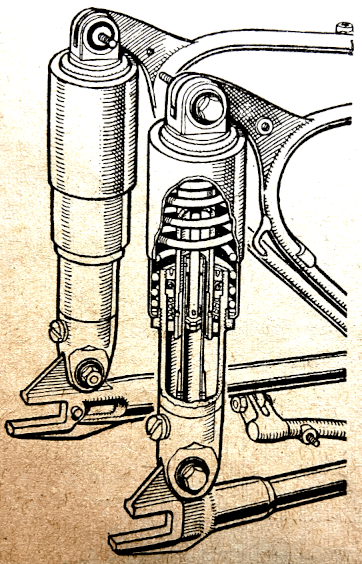
outside the main telescoping members, and thus of large diameter, but the main reasons for the modified design of the suspension units of the pivoting-fork design are these: It has been possible to employ a small fabric shuttle which, unlike the shuttle in the slim-looking layout, functions unheard as well as unseen; the load on the oil seals is now almost negligible; and there is not the same sensitivity to oil content—with the earlier design the quantity of oil per leg needed to be accurate to a cubic centimetre. Total up-and-down movement is 3⅛in. A point which will appeal to all who do their own maintenance, and to every owner who likes to keep an unusually oil-free machine minus oil seepage, is a new type of synthetic-rubber seal for the primary chain case. While not endless (because of stretch), this new sealing band is so designed that it is firmly held on the lip of the inner half of the case while the outer half is lined up and the fixing band fitted. In cross-section the sealing band is not unlike a slice of mush-room—a slightly lop-sided mushroom—cut in a vertical plane. Oil-pipes have flexible synthetic-rubber inserts to ensure reliability even when there is lack of
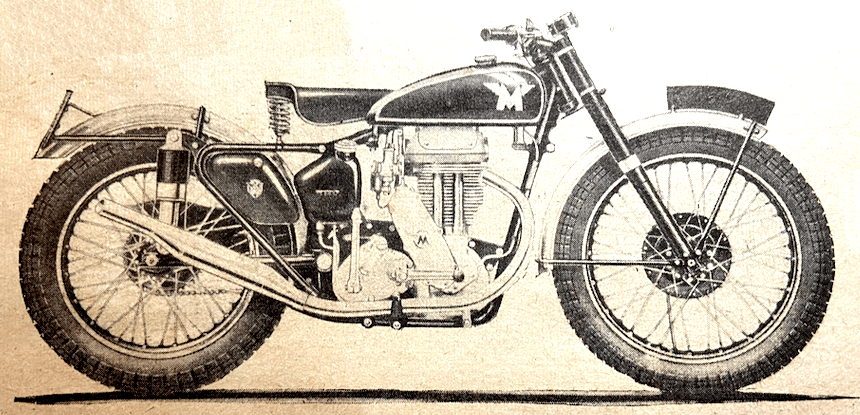
care over re-connecting the pipes to, say, the crankcase. For neatness, these are arranged below the gear box and under the tank. What will perhaps thrill many readers in Great Britain is that the vertical twins, both Matchless and AJS, are to be available in limited quantities on the home market; thanks to increased production they are no longer to be reserved solely for export. Competition models will still be made in limited quantities—a batch in the autumn and a further batch in the spring. The new spring-frame models for scrambles (or for the International Six Days’) will be available for scramble riders with a silencer (as standard) or a straight-through extension pipe at option. Development work on the racing ohc 350, the now-famous 7R AJS, is carried out over the winter months and no final decisions have therefore been reached for 1951, whether in connection with the rear suspension or other items of specification. The spring-frame scramble models are fitted with the BA (heavyweight) type of Burman gear box and have specially sturdy footrests. Those who know scrambles will endorse the wisdom of these decisions! Other points for 1951 are the use of’ ‘Vynide’ instead of leather for the dualseat of the Matchless Super Clubman Twin (tropical tests show that this material stands up better than leather; it is also waterproof); a new medallion-type AJS tank badge (except the light-alloy tank of the 7R; and standardisation of the spring-frame machines’ wider rear hub on all models.”
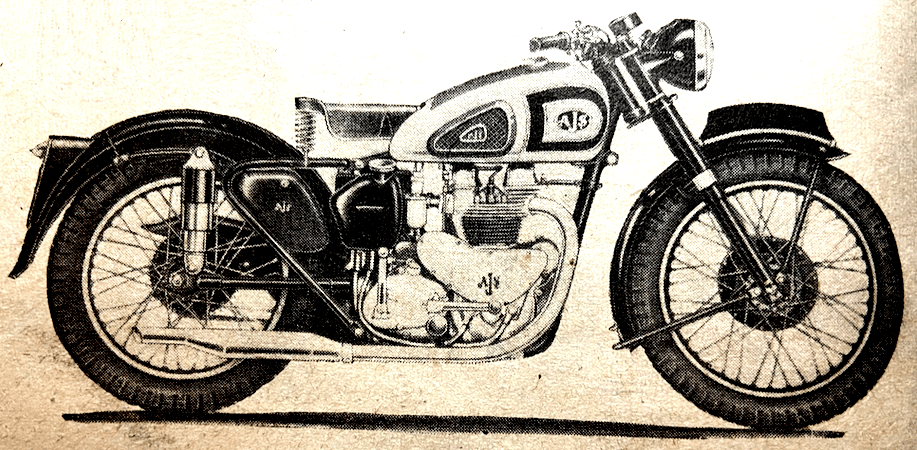
“TO MEET THE UNITED STATES demand for a small-capacity machine incorporating American ideas of styling and robust appearance, Brockhouse Engineering (Southport) has introduced the ‘Brave’. Output of the new machine will, at least for the next 12 months, be reserved almost entirely for the US, where it will be sold through the Indian Sales Corporation. Frame is of the cradle type with single tubes for the top and down members and welding at the joints. The telescopic front fork incorporates coil springs and rubber limit stops. Unusually deep domed mudguards are fitted. Dunlop 3.25x18in tyres are employed, and each wheel has a 5in diameter brake. Saddle is the normal British type with sprung top, pivoting at the nose and with rear coil springs. The engine is a neat side-valve unit. incorporating a three-speed gear box. Bore and stroke are 64.5x76mm, giving a capacity of 248cc. The detachable cylinder head is in light-alloy and the tappets of the side valves are accessible after removal of a cover retained by a single central screw. Compression ratio is 6.3 to 1. Finish of the Brave is black for frame and fork tubes, with alternative colour schemes for mudguard, tool box and tank. The colours available include Indian red, blue, green, yellow or black. Chromium plate is used for handlebar controls, exhaust system, wheel rims, headlamp rim and other details. Dimensions are: wheelbase, 52in; length, 79in; saddle height 28in; width. 24½in ; ground clearance, 5⅜in. The weight is 2301b and the maximum steed is 55mph. Fuel consumption is in the region of 100mpg.”
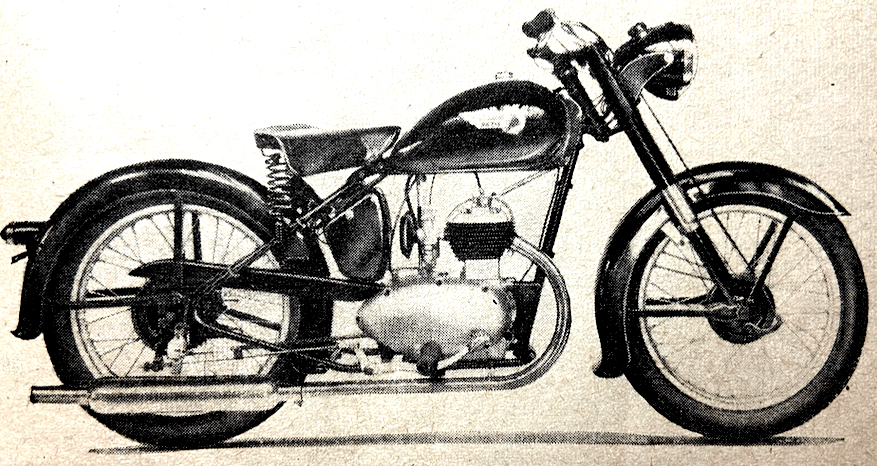
“THE NEW FERIDAX Luxury Dualseat, the prototype of which was tested in the recent round-Britain trip by George Wilson and Jim Feriday, is now in production. The production seat will be supplied with universal fittings and is said to be suitable for fitting to all makes except Sunbeams. Latex foam rubber forms the resilient medium, and the outer covering is in Vynide, a double-texture material with proved long-wearing qualities. Length of the seat is 22in, which means that it is an inch or two longer than the Hammock seat; it also provides a slightly lower riding position than previous Feridax seats. Other Feridax equipment for 1951 includes a QD pannier set consisting of sheet-metal ‘pockets’ which carry detachable Rexine bags measuring 13½in long, 5in wide and 12½in high. Also ready for 1951 are the Mk V Perspex handlebar screen which has short, curving sides and replaces the Mk I; the Mk II screen for nacelle Triumphs; the Mk IV for fitting to LE Velocettes; and the Mk III Universal screen which has an apron and fittings for telescopic forks or handle-bars; pillion footrests for rear-sprung BSA Bantams; the Hammock seat; and a comprehensive range of coats, gloves, two-piece International-type suits, crash-bars and legshields, pillion seats, tank luggage grids, latex saddle pads and elastic ropes.”

“VIC WILLOUGHBY A letter from VH Willoughby, who crashed on the approach to Muckamore Corner during practice for the Ulster Grand Prix, says that he is progressing very well in the Bennett House Convalescent Home, Helen’s Bay, Co Down, Northern Ireland. He wishes to express his thanks to those who, by their personal visits, gifts and encouraging letters, have helped to sustain his morale. He goes on, ‘The hospitality of these Irish people is one of those things which has to be experienced to be fully appreciated, and makes it almost worth while to ‘step off’ in Ulster. Certainly, one could hardly prang in a better country.'”
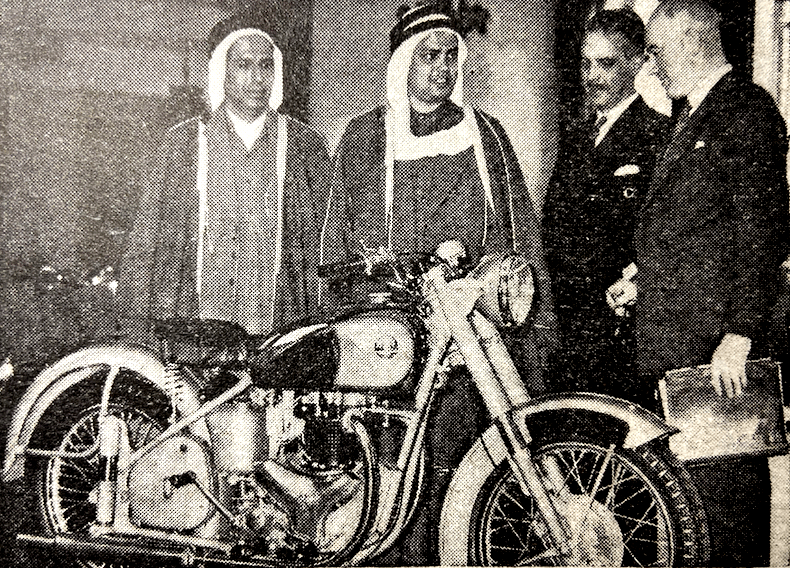
“NINETEEN-FIFTY MAY WELL go down in speedway history as the year which saw the passing of the old order (writes Roy Morton). At Wembley last Thursday over 90,000 people saw four comparative youngsters, all of whom have come into the game since the war, take the first four places in the Speedway Championship of the World, beating old and seasoned campaigners of the calibre of Jack Parker, Vic Duggan and Tommy Price, all former title holders. This infusion of new blood in the top flight—of spirited young riders who are prepared to take the extra risk and who refuse to be beaten—is the finest tonic the speedway game can have. What of the quality of their riding? Suffice it to say that the first two men both broke the four-lap clutch-start record of 71.4sec (43.32mph). The new World Champion is 24-year-old Fred Williams, a Welshman who rides for Wembley, who scored 14 out of a possible 15 points. Runner-up was 28-year-old Wally Green (England and West Ham) with 13 points. Third man was 25-year-old Graham Warren (Australia and Birmingham) with 12 points, and fourth 24-year-old Aub Lawson (Australia and West Ham) with 10 points. prizes were £500, £250, £100 and £50. Starting money was £3 lOs a start and point money £5 a point. Hence Williams the new champion. netted £587 10s [some £26k in 2025—Ed]. In his first race. Williams lowered the track record to 71sec, best time of the meeting. In the seventh race Graham Warren returned 71.2sec, and in the tenth Williams also returned 71.2sec. In his five rides. Williams was beaten only once. From the outside position Williams essayed to run round the field on the first bend, but Lawson, with the inside station, kept level. Between them was Parker who, as Williams closed in, eased off and gave them best. Going into the second turn Williams again tried to head his man, but Lawson refused to give way. Both riders were carried wide as a result and the wily Parker, instantly seizing the opening, flashed through on the inside to take the lead. Once ahead Parker demonstrated that he can still show a clean pair of heels to anyone. Dropping two points, Wally Green was beaten twice, in the opening race by Williams and in the 16th race by Graham Warren after a royal scrap in which Green got inside to gain a bare lead out of the sixth turn, only to be run-round by Warren on the seventh bend.”
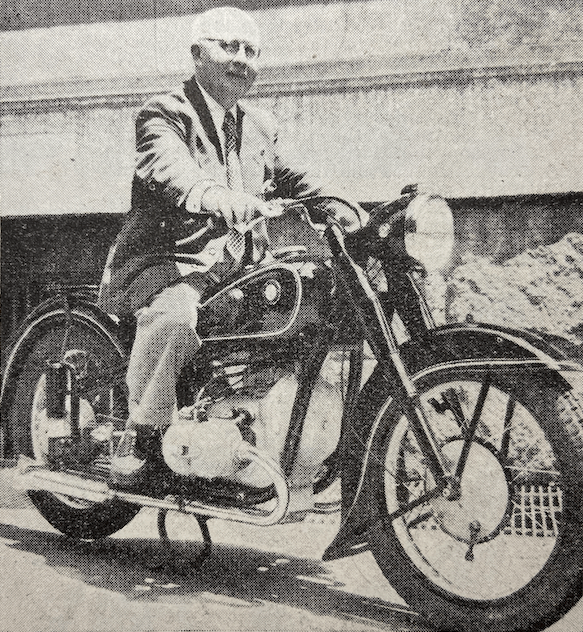
“RECORDS IN AMERICA. At the Bonneville Salt flats, Utah, on 11 September, Roland Free, who already holds the American national maximum speed record, broke two world’s records with his 998cc Vincent Black Shadow. The attempts were originally planned to include an attack on the world’s maximum speed record of 174mph held by Ernst Henne, and for this purpose the machine was fitted with a streamlined shell. Unfortunately the machine crashed during one of the practice runs and the shell was damaged. Undaunted, Roland Free removed the shell and then broke the 10km and 10-mile world’s records without the streamlining. The figures are: 10km at 155mph, 10 miles at 154mph. The previous holders of the records was Taruffi at 138mph for the 10km and 133mph for the 10 mile: Taruffi was riding a 493cc Gilera and he made the records on 2 October 1937.”
“S0ME REMARKABLE WORLD’S RECORDS were established on 14 September at Montlhéry, France by B. Ruffo, Gianni Leoni and R Alberti, riding a 75cc two-stroke Guzzi—a specially built machine enshrouded by a light-alloy shell. The records include 10 miles, 68.36mph; 100 miles, 71.16mph; 1,000 miles, 63.97mph; one hour, 70.75mph; twelve hours, 64.96mph. A few days later, on 17 September, further world’s records were obtained, this time by B Ruffo, Guido Leoni and Fergus Anderson riding a 248cc Guzzi Gambalunghino including 500 miles, 90.97mph and eight hours, 89.78mph. All except two of the 75cc class records were previously held by Guzzi machines: the exceptions were the 10km and 10-mile figures established at Brooklands on 3 July, 1929. by JJ Hall, riding a Rocket-JAP: the speeds were respectively 33.5 and 34mph—below half the speed of the new figures. In the 250cc class, six of the records (500 miles and 1,000km, 5, 6, 7 and 8 hours) were held by the late Eric Fernihough and PR Mortimer, riding a Cotton-JAP at Brooklands on 11 October, 1935. The two-hour record stood to the credit of Georges Monneret and Tinoco on a Monneret machine at Montlhéry on 10 August, 1938, and a Guzzi held the records for the 500km 3 and 4 hours which were made at Montlhéry in 1947. Last Thursday. Fergus Anderson again took out the 248cc Guzzi and succeeded in improving on the earlier figure set up for two hours; his speed was 99.22mph. The Guzzi was in standard road-racing trim and running on 80-octane fuel. An interesting aspect of the new figures is that they were recorded on the basis of the new Montlhéry measurement line 90cm from the inside edge of the track. This gives a lap as 2km 499.88m. Previously the measurement line was farther out, resulting in the lap distance being reckoned at 2km 548.24m. The change came about following records established by small machines, which, at their speeds, could lap consistently inside the measurement line and thus gain something like 50 metres on each circuit. The new line is, however, a hardship on faster machines, which make the turns high up on the banking. For example, a lap at 118mph on the basis of the former measuring line would be given as under 116mph on the new line. Many established high-speed records may therefore be extremely difficult to improve soon at Montlhéry track.”
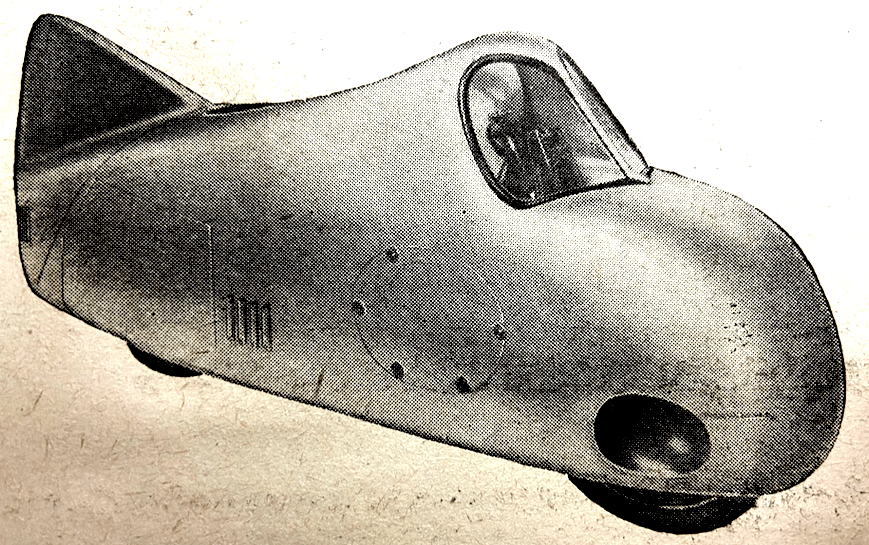
“I HAVE READ, with much interest, the recent letters by various readers denunciating Mr Terry Saunders and his opinion of women as drivers. I feel it is now time I wrote and gave my opinion, which I cannot express really correctly owing to censorship of certain words I should like to use. I can only say I agree 100% with Mr Saunders, and I personally would not trust myself on the back of my 1,000cc Vincent Rapide with the most expert woman rider in the world. My own wife, by her own admission (fortunately), would not take hold of the front seat position for all the money in the world, but give her the rear and she will ride until the wheels drop off. In a recent run to Skegness this holiday I covered 288 miles in one day, and during the run I encountered seven separate cases of very bad and dangerous driving; fortunately, four of them, although occurring whilst I was travelling at a fair speed along long, straight stretches, occurred in the distance, allowing me to drop speed and pass the offending vehicles with the greatest of caution. For no apparent reason each of these four different cars swerved right across from one side of the road to the other and back again, on straight, flat stretches of road. If at that precise moment I had been overtaking, I should either have had to brake hard or hope my bike would just scrape through the bit of space between car and grass verge. The other three cases occurred in towns. In each ease the offender swung off to the right with not the slightest of signals to give a following driver any warning. Now what is rather ironical about all these seven cases is that in every case I remarked to my wife, ‘I guess that is a woman driving that car,’ and, believe it or not, when passing I found my guess right every time. This occurs constantly in my daily driving—it is not just one isolated day’s experience, so perhaps you will understand when I say, in my opinion, Mr Terry Saunders is dead right in saying keep the woman on the pillion and off the driving seat of a car. The remark by one reader about the pillion being less comfortable, and therefore a, reason why a change over of positions is fair, is ruled out if a dual seat is fitted similar to the type fitted to the Vincent, as the rear rider has as much comfort as the front. I would like to add I am a driver with 19 years’ experience behind me, and in all that time I have had my opinion forced on me daily by the women drivers themselves with their constant lack of road sense and driving ability.
LF MORRIS, Dudley, Worcs.”
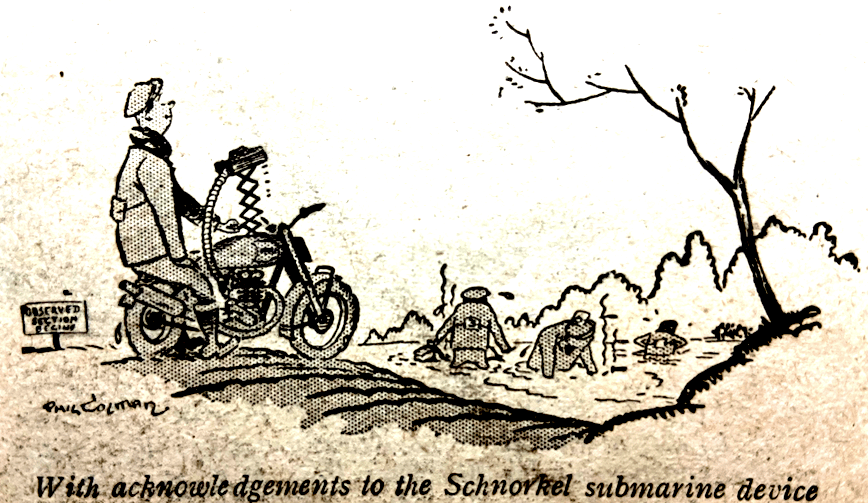
“TO HAVE RIDDEN in a trial in Yorkshire over 20 years ago was the necessary qualification for eligibility to compete (or act as an official) in a special trial run by the Ilkley Club on 17 September. It proved a most successful event that brought out of semi-retirement most of the Yorkshire stalwarts of the early Scott Trial days. And that in spite of a day of storm that blew trees down and turned shallow watersplashes into roaring torrents in a matter of minutes. There was a bonus for age of machine and for the rider’s ‘trial age’ and, adding those assets to a good performance, A Bryden was the winner. He survived the deluge by using a leather belt on his hub-gear Triumph, which dated from his first trial—the Leeds-Bradford to London and back of 1913. Bill Milner (1920 Norton) was second and A Hill (1923 Scott) was third. Other once-famous old-timers competing were J Stuart White (age 70 plus), GW Shepherd, BJ Jenkins, and those two who remain unchanged, Charlie Helm and Eddie Flintoff.”
“B0YS TRAINED AS motor cycle telegram messengers at the GPO Dublin are accompanied by their instructor in all their training outings. At any time you can see pairs of smartly uniformed lads riding their well-kept machines through Dublin traffic in company with a soft-hatted instructor. Sometimes one boy leads, sometimes both ride together, with the instructor behind. More than once I have trailed a boy when he was on duty, and have always found them neat, unobtrusive riders, giving good signals and keeping a very good average speed—considering that the machines are governed down to about 30mph. To my mind this is the only way of really testing riding ability. DW KENNAN, Blackrock, Dublin.”

“‘I’M SURE THAT what the aged parent needs’ (or words to that effect), wrote my mother, ‘is to see you again.’ Those who know me and hold that I am no Adonis might raise an interrogative eyebrow at such a statement. Be that as it may, it needs no second hint to speed a Wilson to the sick-bed of a pining parent. But before I left I cast a baleful eye at the ten-tenths cloud and guessed that there was dirty weather ahead. When I’m in the saddle for something like nine hours at a stretch I like to be (a) dry, and (b) warm. So I didn’t hesitate to buckle on my screen and muffs before setting off, especially as it was still early in the year. Did I say ‘in the saddle’ for something like nine hours? That’s not strictly true. From my home, near Redditch, to my parents’ home in Kirkcaldy (Fife, Scotland, for those whose geographical education is incomplete) I clocked 377 miles on the outward run, and nine hours means an average of under 40 miles an hour—I’m not that slow. However…It was 10.30am when I donned coat and waders, and 10.35 when I started up the Triumph. Though the outlook, as I said, was dull, I had high hopes—and, in any case, I was prepared for the worst. It was just as well. I covered the first 62 miles to Nottingham in disappointingly slow time, since I had to cross Birmingham from south to north, and the road thereafter is one that only permits the use of the upper part of the throttle for short spells. There was intermittent rain as I rode between ancient Ashby-de-la-Zouch and Nottingham. In Nottingham I ran into a deluge! I was more pleased than ever that I’d fitted the screen and muffs, especially since I emerged with dry hands and gloves. I patted my back metaphorically for my forethought and cracked on as hard as I could. At Bawtry I joined the Great North Road, A1—for me the most romantic road in Britain. Where else in the world are there such thrilling signposts—To The North, Scotch Corner, Scotland, Edinburgh, and so on? The Triumph went like a bird, as if knowing jolly well it was going to Scotland: Shangri-la, Paradise, Heaven, the Isle of Man, and Blandford all rolled into one. Here on A1 the Triumph’s performance could be used and the needle was held pretty steadily on 80mph (about 73mph actually, I should say) on the straights. The average climbed. Came Scotch Corner and I had mentally to flick a coin. The question was, to continue on A1 or go to Carlisle? There’s little in it as regards distance, I mused, and with about 200 miles behind me I would prefer the road with the better surface—better, that is, as regards comfort. I plonked for Al—and regretted my decision for nearly every mile afterward. Traffic was interminable and I took a wrong turning in Newcastle. Built-up area followed built-up area. I gradually saw myself getting not the six o’clock ferry across the Forth but the 6,30, then the seven o’clock. It began to rain again, and a gale blew up as I ran along the coast between Belford and Berwick, then towards Dunbar. The daylight faded and I pressed on all I could, though by now I knew (my muscles kept telling me) that I had over 300 miles behind me. The cockles of my heart, however, became warmer and warmer… Edinburgh at last—wet and dark and in a far from welcoming mood. It was ten minutes past seven, so I decided that there would be no halt, however brief, and that I should get the 7.30 ferry. At 7.20pm I dropped down the steep hill into South Queensferry, to find that the ferry was not at the quay and not even in sight! Realisation dawned. It was still winter, according to the ferry schedules, and there was only an hourly service. Forty minutes to wait in a drizzle is a dull prospect, but it was brightened by the sight of a cafe nearby where, I was informed, I could have tea,
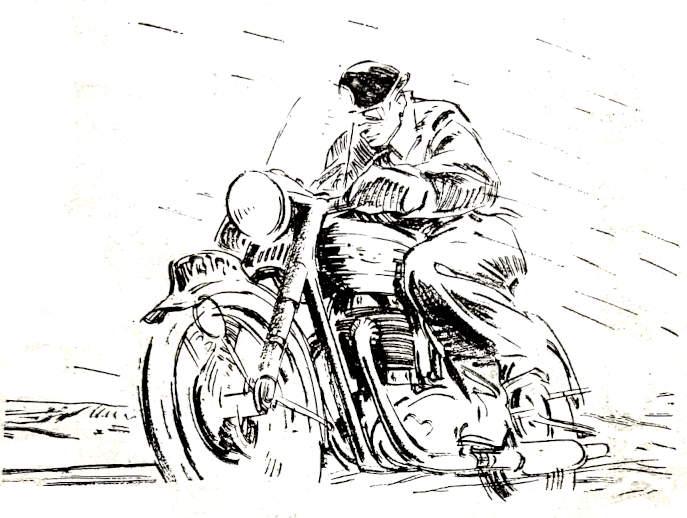
cakes, bacon and chips, egg and chips, or sausage and chips. I settled for tea, and whiled away half an hour in the warmth and cosiness of the cafe, relishing the sound of the brogue as much as the taste of the sweet, strong tea. The ferry came in on schedule and dumped her cargo of miscellaneous cars and four motor cycles. Soon we were crossing the choppy waters within the shadow of the towering cantilever of the Forth Bridge. Then came North Queensferry, Inverkeithing and Crossgates, and next the sinuous stretch to Kirkcaldy which, as a youngster, I knew intimately and used to take very, very fast. Now, alas! in the dark and drizzling rain I found I’d forgotten where the corners went. What had been a 20 minutes’ run in the worst of conditions now dragged on and on, or so it seemed, and it was nearly nine when I reached chez les Wilsons. Immediately the prodigal son arrives, aged, pining parent begins to improve, or so it appeared. Happiness reigned. Worry was overcome. Next day was one of torrential rain, and the same applied the next morning, when I was scheduled to leave. I said good-bye in a downpour and set off to the ferry. From the first I was in high spirits, for was I not at the ferry in 20 minutes? My lost ego was restored. As the faithful Robert the Bruce battled across the Forth, the rain lessened, then all but stopped. As I rode into Edinburgh the sky appeared to be breaking, and at Princes Street the clock in the post office read 10.30am. Such was the state of my spirits now that I was in Carlisle, 100 miles away, at 12.20pm, and in Penrith, 18 miles farther on, a quarter of an hour later. An Allard gave chase, expecting sport, but dropped back. Over the Shap the Triumph streaked in top. I wanted to shout cowboy cries of ya-hooo! Third on the corners and into top at about 60mph; the miles flew by. This time I decided to give Al a miss and try A6. Kendal, Lancaster, Preston, Wigan, Warrington, Knutsford then—trouble. A rear-tyre puncture. Ye gods—the first in 10 years! I braked to a stop as gently as I could and resignedly set about the repair. A large slice of sheet metal had scissored its way into the tread. My model does not have a so-called quickly detachable rear wheel, and removal takes some time—and I mean some time! Then I found I had one of those tyres. You know the type, never been off before and tight as blazes. The problem presented to my ordinary tool-kit tyre levers was acute and I had, to say the least, a fair struggle. Then I had the tube out and the patch in place. In with the tube, on with the tyre—then off with the tyre and out with the tube again because I’d nipped it. Slippers worn inside waders are just not the wear for kicking a tyre back into place, and I had chanced using a lever. At length, heigh ho! everything, even my panniers, were back just as darkness fell. Ahead lay 30 or so fast miles—or fast, so I thought—and 30 slow ones, but it was nearly nine o’clock when I eventually arrived home. Were the troubles then over? Not quite—my wife was down with influenza.”
“APTITUDE WHICH CAN be guided into a a form of training for the advancement of the soldier, his entertainment, or the improvement of his chances in civilian life is encouraged in the Army today. An outstanding example of this policy can be found in Army speedway racing which takes place in Germany, and, odd though it may seem, a regular soldier can take a pre-release course in speedway racing. Machines are built up from battered remnants of damaged and worn-out motor cycles. Prior to dumping, all parts that are economically repairable are removed—and the resultant pile of scrap machines would daunt any but the keenest enthusiast. The men who devote their spare time to building the machines are in no way deterred by this, and the bits and pieces are duly cleaned, examined, and taken to the workshops. There they become the object of weeks of spare-time effort and are assembled into reborn models. New parts are made when necessary, thus providing experience in machining and fitting; work in spare time under skilled guidance makes the rebuild economically possible.”
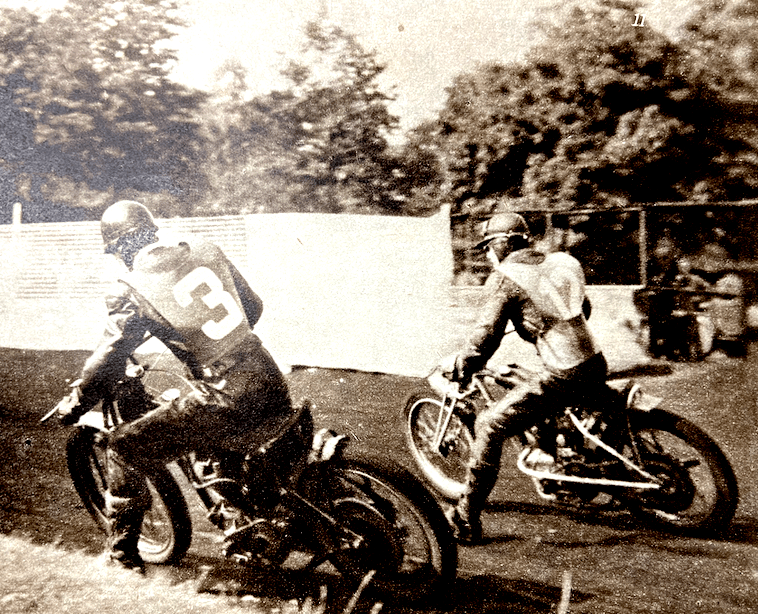
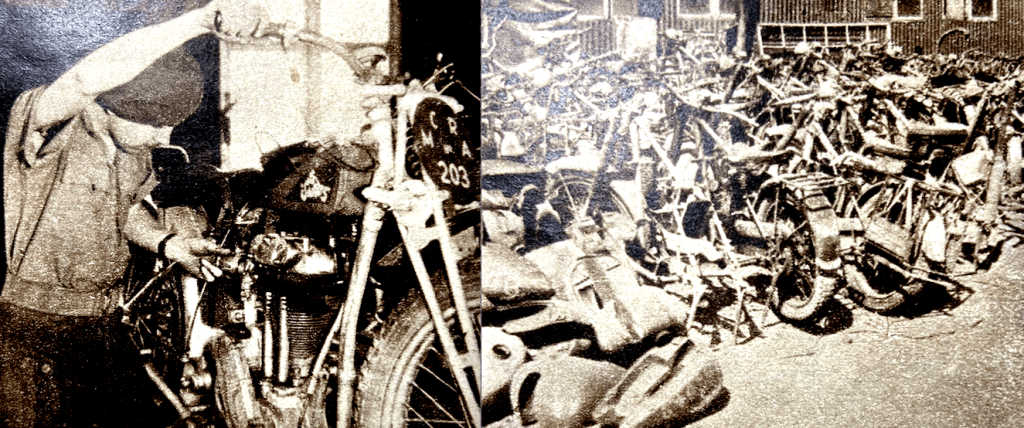

Francis-Barnett Falcon 55
“FOR MANY YEARS the name Francis-Barnett has held an illustrious place in the lightweight sphere. The reputation is based on such features as robustness of construction and a high standard of finish, and it is predominantly in these respects that the 197cc Francis-Barnett Falcon 55 merits praise. In addition, the all-round performance provided by the 197cc Villiers Mark 6E engine, with three-speed gear in unit, is exceptionally good. Irrespective of night temperature during the course of the test, starting from cold in the morning was simplicity itself. The pre-starting drill consisted merely of flooding the carburettor, moving the separate, handlebar-mounted mixture control forward to the ‘rich’ position and then, with a throttle opening of slightly less than one-third, prodding the kick-starter. The engine would usually fire at the second kick. Immediately the engine had started the mixture control could be moved back to about one-eighth from the ‘full-weak’ position and then forgotten, for there was no need to alter its position at all while the machine was under way. Starting from hot was even more simple and accomplished with an easy swing on the throttle about one-third open. The standard of mechanical quietness of the engine was exceptionally high. After a cold start the piston was just audible. Apart from that there was only a pleasantly subdued whirr, characteristic of a two-stroke unit. In its exhaust quietness the Francis-Barnett also scored heavily. The exhaust could only be said to be noisy when the engine was firing irregularly as, for example, when the machine was running downhill on a light throttle opening. Maximum cruising speed of the model ranged from 45 to 50mph, depending on the conditions. At these speeds the
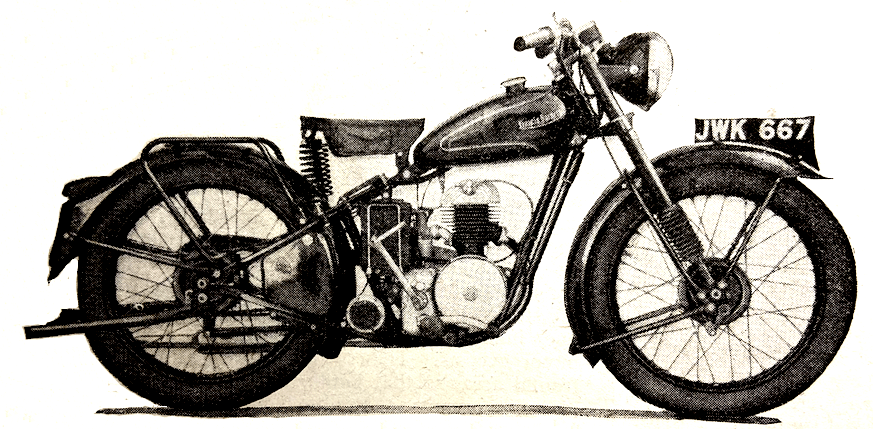
engine gave no signs of being driven ‘on the limit’ and there was no indication of fussiness. In the course of a 400-mile test the exhaust pipe did not discolour even slightly near the port, but the silencer became stained with burnt oil. There was a marked absence of leaks from the upper part of the engine, but oil appeared on the exhaust pipe and silencer, the oil coming from the underside of the engine; oil was also thrown from the rear chain and silencer mouth on to the rear tyre and rim. At speeds above about 28mph in top gear under light load the engine would two-stroke quite happily. Acceleration from this speed was sufficient for normal road work. Power on hills was markedly good and average main-road gradients were generally breasted without the speed dropping much below 40mph. In the early days of the test slight transmission roughness was apparent throughout the speed scale. Later this disappeared almost completely. Engine balance was good, and only slight vibration was felt at speeds over 50mph. It was not possible to obtain a tickover that was slow and, at the same time, perfectly reliable. The pick-up from idling to full-bore, however, was brisk and clean. The clutch freed perfectly. It was beautifully light in operation and silky smooth in its take up of the drive. It required no adjustment during the test, although when the speed-test figures were taken it was subjected to a degree of abuse unlikely to be encountered normally. Bottom gear could be faultlessly selected from neutral when the machine was stationary and the engine running. Neutral was easily located from bottom or second gears under similar conditions. The gear pedal was extremely well positioned in relation to the right footrest. Light, leisurely pressure of the foot was all that was necessary to make clean, noiseless, upward gear changes. Clean downward changes could be made as quickly as the clutch and gear controls could be operated. A noteworthy feature of the Falcon is that the saddle can be quickly and easily adjusted between heights of 27¾in and 29in. At its lowest setting the riding position provided was as near perfect as might be for a rider of average stature. Distances of over 100 miles could be covered without the
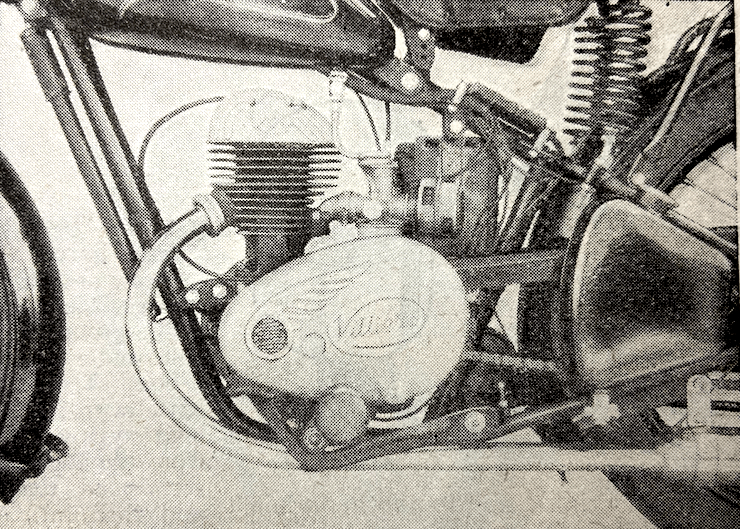
need for a leg-stretching stop. It was also a riding position which caused the rider to sit ‘over’ rather than ‘in’ the machine, thus giving absolute control at all speeds regardless of all but trials-type conditions (for which the footrests were rather too far forward). Wood blocks, tramlines and cobbles in their trickiest of moods could be negotiated with entire confidence. On the open road, corners and bends could be entered with the certain knowledge that any chosen line could be unerringly held. Straight-ahead steering was equally good at 1mph. and 30mph. The steering lock was worthy of a trials machine and very useful when turning the machine in confined spaces or when manhandling it. All controls were light and quite well placed for ease of operation although slightly less reach of the front brake and clutch levers would have been appreciated. Used together the brakes provided adequate stopping power, but the front brake was not so effective as could be desired. A rear stand is fitted for parking purposes—lifting handles on the sides of the standard rear carrier made parking easy. Fitted between the seat and chain stays on the nearside is a 3-pint oil-tank to allow a separate supply of oil to be carried. The tool-box is mounted on the opposite side of the machine. A two-compartment container, it is rather too small to accommodate both the excellent tool-kit provided and a repair outfit. Lighting is by Lucas battery and AC rectifier. The driving beam was good and allowed the use of daylight speeds after dark. The full lamp-load was never balanced by the output from the flywheel lighting coils no matter how high the engine speed. Both front and rear mudguards are of wide section and provided more than average protection in wet weather. The tank filler cap was petroil tight. Mounted on top of the front fork, the speedometer was easily read and the instrument, for all practical purposes, accurate. The finish is black with chromium plating, and the tank is gold-lined. The effect is quite distinctive and the proportion of black to chrome, tasteful.”
“NEWS THAT THE BAN on road racing at Blandford Camp, Dorset, has been lifted has been received with widespread satisfaction. Arising from the energetic efforts by officials of the Blackmore Vale Club and especially from the sympathetic interest shown by Mr Robert Crouch, MP for North Dorset, the decision of the War Office is that motor cycle racing may be re-started under two conditions. First, that the general public must be fully informed that the War Department bears no responsibility for organisation of the meetings and thus for any mishaps that might occur to spectators, riders, officials or others. Secondly, that the ban is lifted for a trial period of six months only; after the first two meetings have been held, the question will be considered again in the light of the experience provided by those meetings. It will be recalled that a number of accidents occurred during both motor cycle and car race meetings held this year and in 1949, and strong criticisms which received wide publicity were voiced by the North Dorset Coroner at inquest proceedings. The Army authorities felt obliged to withdraw permission for the Blandford Circuit to be used, because of the implication that the responsibility was not solely a matter for the organisers. This explains the reason for the War Department’s wish that it should be made absolutely clear and widely known that the races are organised by clubs who accept full responsibility for the-conduct of the meetings.”
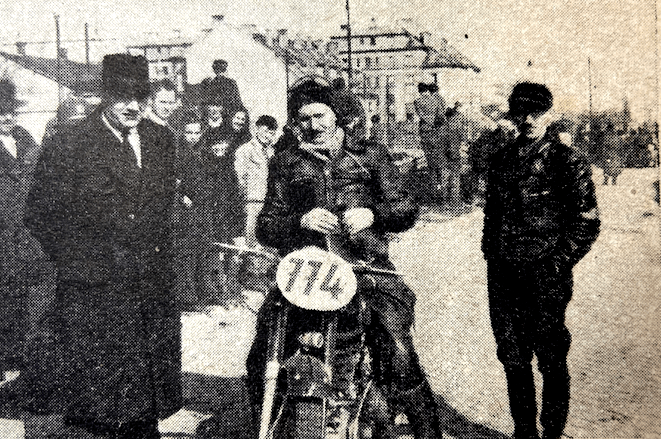
“IF THE YOUNG enthusiasm for midgets ultimately wilts a little under the ruthless searchlight of prolonged experience, it may very well be succeeded by a possibly saner enthusiasm. Meditate a moment on the BSA Bantam, which is ploughing a most promising furrow. It is not cheap, as lightweights were cheap before the aftermath of war steepled the prices of all commodities. But it is definitely a go-anywhere machine. Except in terms of speed, or for riders too long in the leg and too corpulent in the tummy, it can hardly be faulted. If man’s aim is the greatest happiness of the greatest number, the production of machines accessible to the multitude is a great step forward.”
“IN THE DARK, cold months, Earls Court is the motor cyclist’s Mecca. It is not only a rendezvous for old pals, bursting with memories of no interest to those outside our clan, but it also tickles one of our basic instincts. Like the Athenians of old, we love to hear of—and to see—’some new thing’, especially some novelty connected with our main hobby. From both delights in their fullest savour the suspension of the Show denies us in 1950. To our rescue come these pages, detailing such changes as controls and exports permit designers to essay.”—Ixion
“IT WAS A FRENCHMAN who said 150 years ago that the more things change, the more they are the same—plus ça change, c’est la même chose. This verdict was not uncommon at the last Motor Cycle Show, although, in my view, it was grotesquely unjust. We happen to be born in an age when science is just becoming adult, and many backward nations—especially out East—are at long last adolescent. The world is thus being flooded with novelty on the grand scale. Both events and inventions which would have seemed incredible to our grandfathers burst upon us daily—radio, radar, television, 750mph aircraft, penicillin, cortisone, jet engines, atomic devices, and a myriad of other novelties. Nor is the end yet. Thus at the last Show some of our surlier brethren frankly complained that there was little new—’nothing but a lot of copyists building vertical twins’, was their catch-phrase. There is a sediment of truth in such grumbling. In the sphere of land transport, invention is attempting little more at the moment than detail progress. That is normal to the exploitation of any basic notion. There will be a sensation of lull about road transport until some new prime mover is devised. Yet against this slightly static background, I ask you to notice how the British motor cycle industry still contrives to offer a variety without parallel in other lands. Compile a brief mental catalogue of the enormous range of our models with the specifications available elsewhere. The USA has rested content, until recently, with two large lumbersome V-twins. France has not produced a first-class motor cycle of really original design for many a long year. Italy is just emerging from a kind of stupor. Her conventional patterns are good; her motor-cyclettes are numerous and excellent; and she has some very promising racers. Germany was famous up to 1939 for the incomparable BMW and for the highly distinctive DKW. But in Britain—and in Britain alone—the market offered amazing variety, in fact too much variety to permit of economical mass production. There were unique machines, such as the Scott, the Ariel Four and the big Vincents, and a host of the ‘bread-and-butter’ standardised, large-production roadsters and sports models and racers too numerous to be listed here, each subtly different from its cousin. Most of our readers are dreamers and idealists. Like the Athenians, they burn for novelty. They are, if anything, too critical. But so fierce and concentrated is the task of transposing any fundamentally novel motor cycle into practical form that all their criticisms have never yet even contrived to outline a major practical innovation. If and when such a model arrives, it will probably be a British engineer who begets it.”—Ixion
“WITH NO LONDON SHOW this year, British motor cycle manufacturers have concentrated, in the main, on improving t designs. There are a dozen more new models or machines which have undergone major changes, but the general policy has been to use the breathing space as a means of develop-ing current models to a still greater pitch. While from the technical aspect, the introduction of new models annually adds fascination, there is little in favour of changing for the sake of change. Further, constant alteration adds to production cost and, therefore, to the prices buyers have to pay; and can mean that hardly is a design ‘ripe’ than it is outmoded• • •For 1951, ABJ continue to market a 98cc autocycle and a
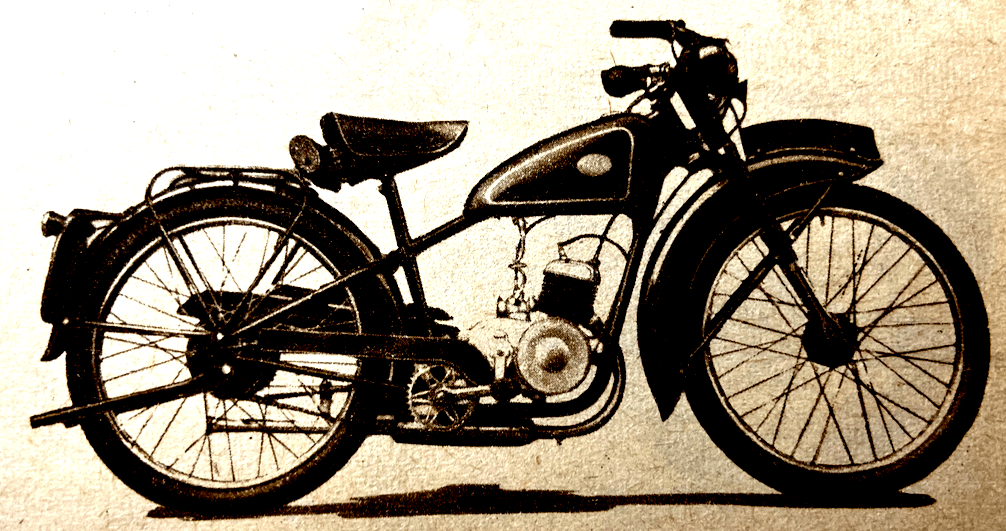
98cc motor cycle—the former having the Villiers single-speed engine clutch unit, and the motor cycle, the Villiers engine/two-speed-gear unit with handlebar change. Frames are loop-type, and the joints are made with brazed, malleable-iron lugs. Saddles are stem-mounted, which gives them a vertical adjustment range of 3in. Both machines are fitted with a telescopic front fork with each stanchion containing two springs, one for compression and the other for rebound. Front mudguards are valanced and mounted on the sprung part of the fork, while the rear mudguard is hinged to simplify rear wheel removal. An auxiliary-engined bicycle of 48cc capacity is to be added to the range but as yet no technical details are available• • •Production began recently at the new Bown factory at Tonypandy of an ultra-
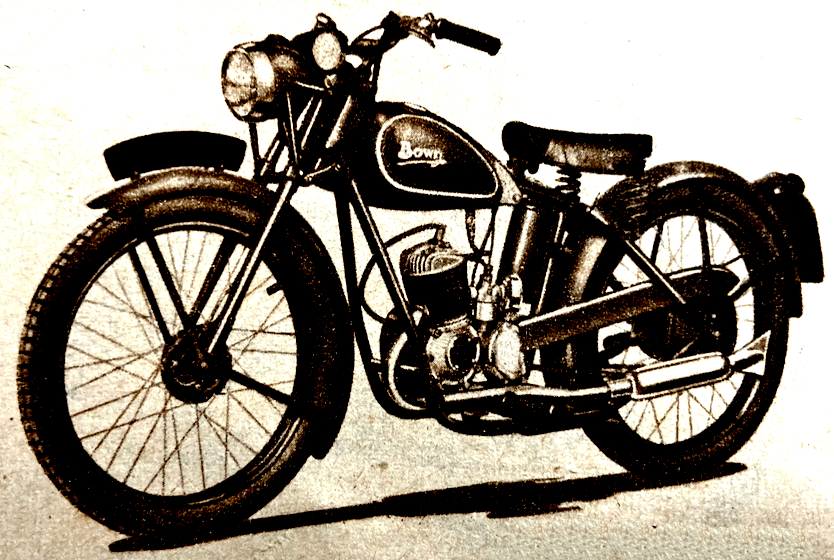
lightweight Bown motor cycle. This machine employs the Mark 1F Villiers engine. The frame is a twin-tube, cradle type, and a link-type front fork with tubular legs is employed. A 98cc autocycle is also available. This machine has a parallel-ruler action front fork with pressed-steel blades. This frame also is of twin-tube, full cradle construction, and, as is normal in autocycle practice, is of the open type. A noteworthy feature is the ample shielding to protect the rider’s clothing from the engine and rear chains• • •A new 98cc Villiers-engine two-speed lightweight called the BAC Lilliput is to reach the market early next year. Frame is of welded loop type, fitted with a telescopic front fork. The machine is
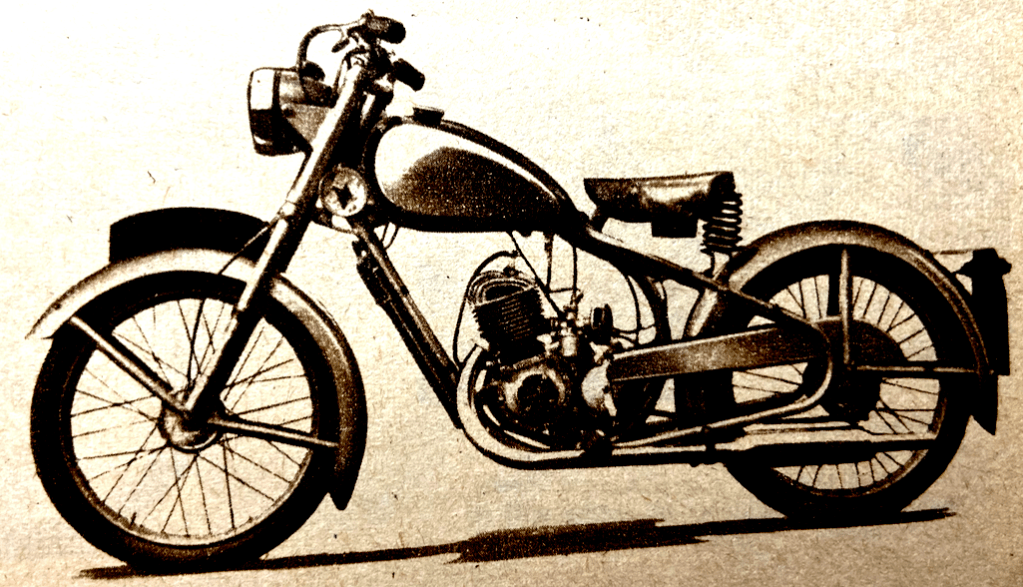
claimed to weigh only 89lb; it has a 45in wheelbase, tyres of 20x2in, 3½in diameter brakes and a saddle height of 25½in. Finish is in polychromatic bronze• • •Four models comprise the Douglas range of transverse-twins for 1951. All four have 348cc ohv engines with four-speed gear boxes in unit. Two of the past year’s models, the Mk IV Sports and Mk IV de luxe, have been superseded, and in their stead comes a new machine, the Mk V. The Mark V is very similar in layout to the Sports Mk IV, but has a new, ribbed front mudguard, with a smart rubber-edged front number plate. The finish is in polychromatic blue, or black, and chromium plate; the appearance of all the models has been enhanced by an additional coat of high-gloss lacquer. The Douglas spring-frame is retained. This is of pivot-action pattern, with torsion bars concealed in the lower frame members as the suspension medium. Radiadraulic bottom-link front forks are fitted to all models in the range. Intended for fast touring and easy modification for speed events are the Plus machines—the 80 Plus and 90 Plus. The latter is available in stripped form for road racing and has, among the extras available, a racing seat, 4½-gallon fuel tank, TT carburettors, and alternative gear ratios. Normal road wear includes Lucas Magdyno, with
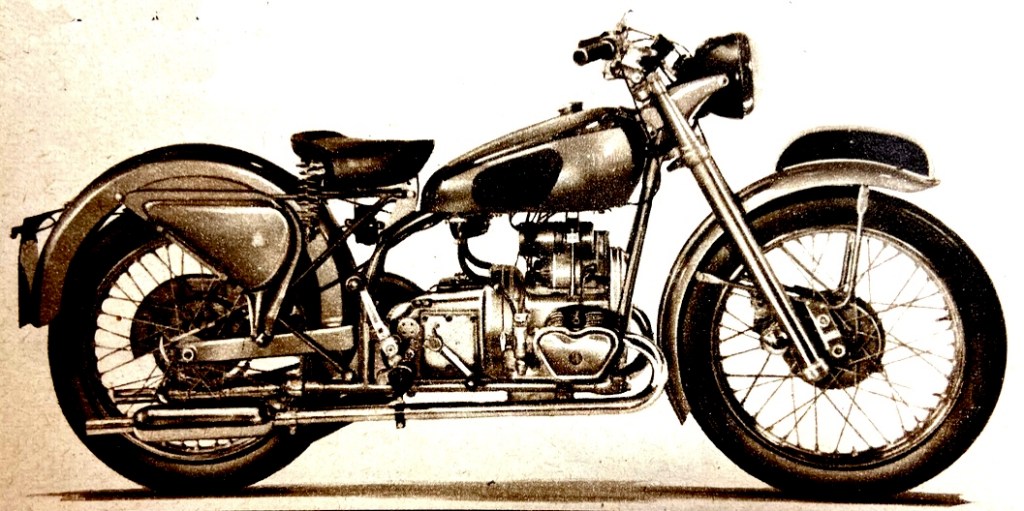
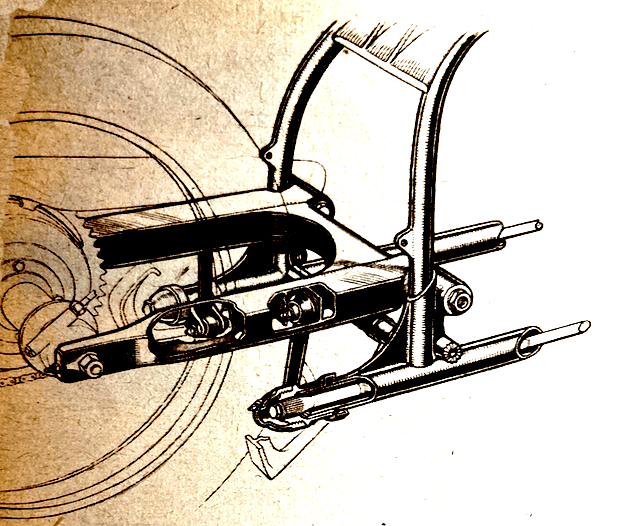
7in head lamp, and down-swept exhaust pipes with tubular silencers. Components of both machines are inter-changeable. Maroon and chrome is the colour scheme of the 80 Plus, while the 90 Plus has gold polychromatic finish. Not many trials mounts can boast the 8in ground clearance of the rigid-frame Douglas Competition model. Front mudguard is mounted on the fork and gives ample clearance for the wheel. A 2-gallon fuel tank leaves ample knee room, while the Firestone trials-pattern saddle has a height of 32in. Finish is black and chrome. Light-alloy cylinder barrels and heads are available. Coming on to the market early in 1951 are the 125cc Douglas Vespa scooters• • •Six OEC models are listed for 1951. All have Villiers two-stroke engines. The first two models are the DI and D2, which have capacities of 122 and 197cc respectively and are fitted with direct-lighting equipment. Frames are of the loop type, and are constructed of tubes welded at the joints. Telescopic forks of OEC pattern, employing compression springs for load and rebound, are standard. Battery-rectifier lighting sets are provided on the 122cc S1 and 197cc S2, otherwise there is no
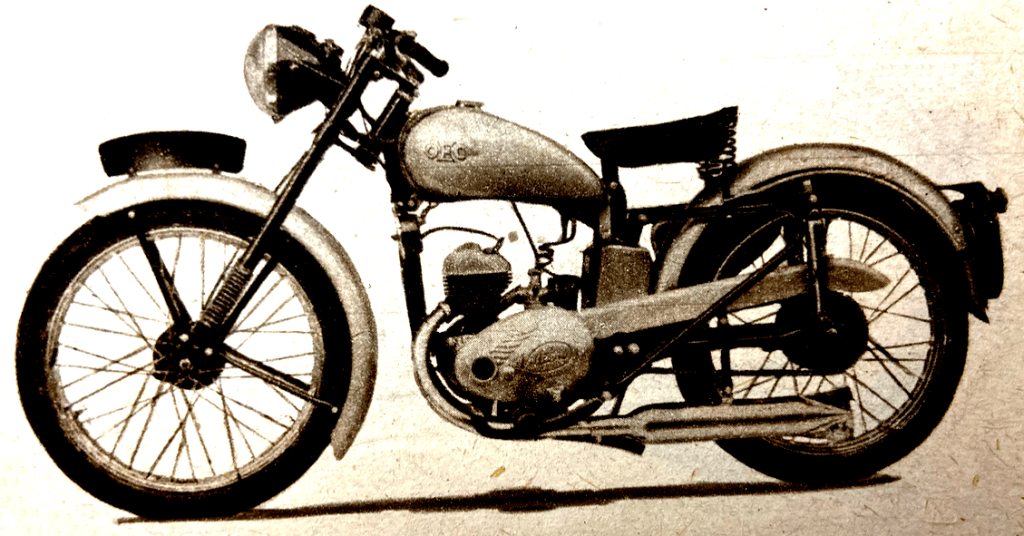
difference in specification. As an extra, these four models can be fitted with a new spring-frame. This is similar to a type of rear-springing which first appeared on OEC machines in 1928 —pivoting chain stays with telescopic suspension legs. The last pair of machines, the C1 and C2, are competition mounts• • •Many modifications have been made by Panther to the Stroud 248 and 348cc Competition models for 1951. An increase in ground clearance to 6¾in results from frame alterations; a new small-capacity (1½gal) tank reduces top hamper and gives plenty of room for the rider’s knees when he is poised on the footrests; the exhaust pipe is downswept to bring weight lower—the end of the pipe is curved upward so that the silencer outlet is at a high level; each footrest and its hanger are formed in one piece for greater strength; Lucas ‘Wading’ magneto is fitted and the standard specification no longer includes lighting equipment; tubular mudguard stays are employed instead of strip-steel stays as in the past. Engines are as fitted to the standard Model 65 (248cc) and Model 75 (348cc), but are specially assembled and tuned to give good low-speed torque. The Burman gear boxes are of the wide-ratio type. The Model 65 has a de luxe brother, the main differences between the two models
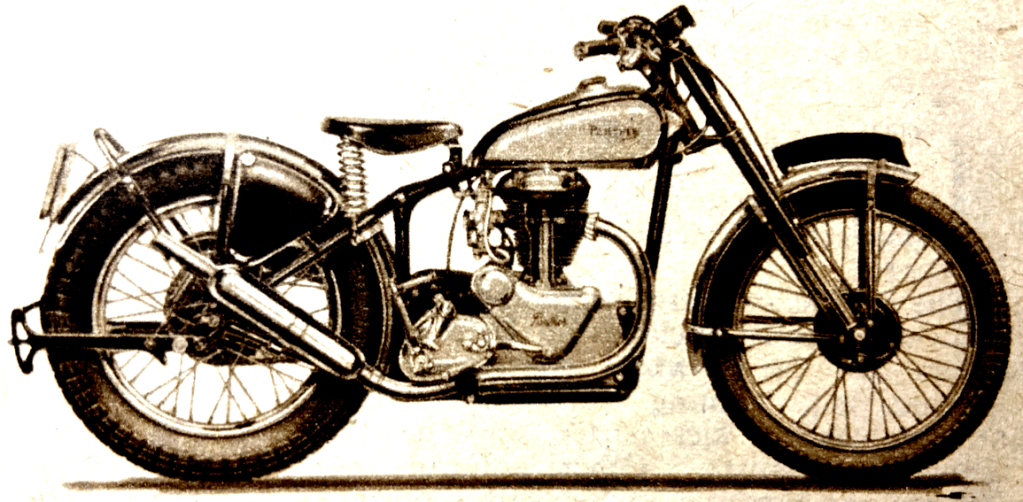
being that the former has a three-speed Burman gear box and the latter a four-speed box; both models have Lucas coil ignition. Central stands are fitted. The 348cc Panther—the Model 75—has magneto ignition and a separate dynamo placed in front of the cylinder for lighting purposes. A four-speed gear box is fitted. A ‘roll-on’ rear stand is employed as well as a prop stand. Most powerful machine in the range is the famous Model 100 with 598cc ohv engine inclined forward and forming part of the frame. The Model 100 is unchanged for 1951 except for a larger (3.5in section) rear tyre and an improved type of rear lamp. Because of its unusually good pulling powers and relatively light fuel consumption, the Model 100 has a special appeal to sidecar enthusiasts• • •Manufacture of the world-renowned Scott has been moved from its traditional home in Yorkshire to Birmingham. However, this does not mean that the Scott has lost its identity—
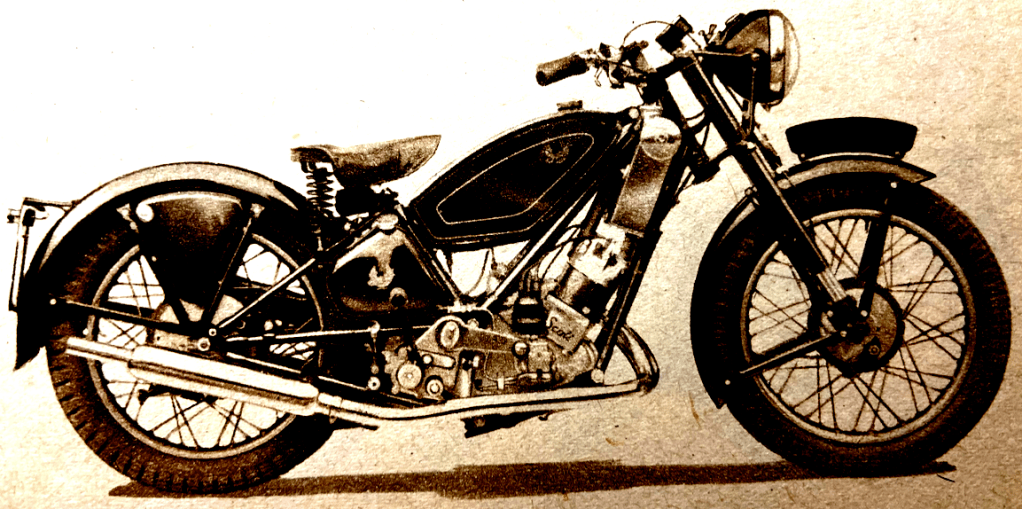
the 1951 Flying Squirrel is unchanged from the 1950 model. The engine is basically similar to that on which the Scott reputation as a ‘machine that is different’ has been built. Of 596cc, the engine is a parallel-twin two-stroke, water-cooled, and lubricated on the total-loss system by a duplex Pilgrim pump. Ignition is by coil and there is a ‘pan-cake’ dynamo on the near-side of the engine driven by the crankshaft; the contact-breaker-distributor unit is mounted on the offside crankcase. Specification includes a Dowty Oleomatic front fork in which the suspension medium is air and oil; there are two 6in-diameter brakes on the front wheel balanced by means of a rocking bar across the fork legs; the single rear-wheel brake is 8in in diameter• • • A new model joins the Tandon range next year. It is the Supaglid Supreme,
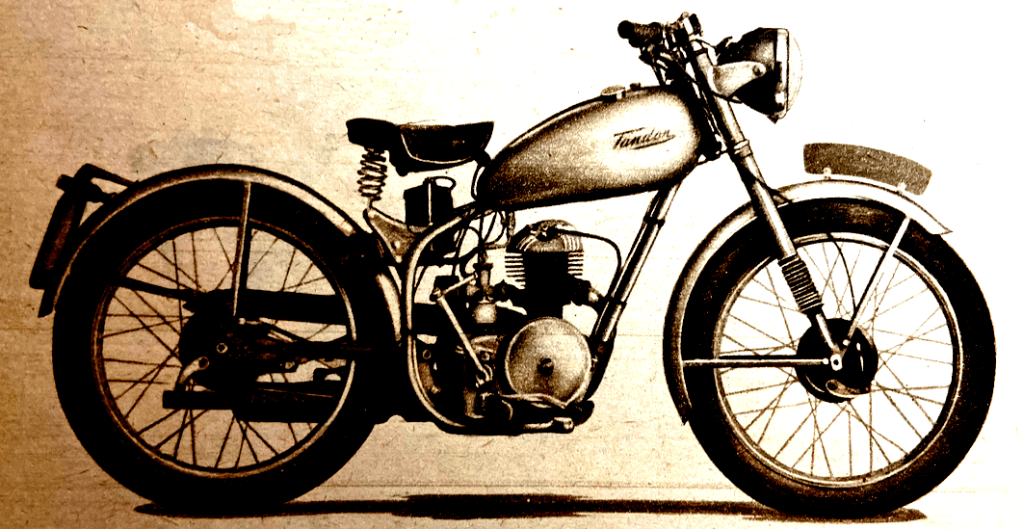
similar to the 122cc Supaglid, except that it has a 197cc Villiers engine-gear unit. Both these machines have a twin-tube cradle frame and pivoting-fork rear suspension. Operation of the rear fork is controlled by a 4in-long synthetic-rubber cartridge placed horizontally under the rear of the engine unit. All models of the range have the Tandon telescopic front fork. The third model, the 122cc Milemaster, has a rigid frame and the Mark 9D, 122cc Villiers engine-gear unit is employed. Gear change is by hand and direct lighting is standard. The Supaglid models are available in various polychromatic colour schemes• • •Always a popular sporting roadster, the Triumph 1951 Tiger 100, modified with the aid of a conversion kit supplied by the makers for £35, can be made a ‘week-end racer’. It is claimed that this model is more potent than the ‘Grand Prix’ which it replaces. Power output of the engine in standard form is stated to be 33bhp. The conversion kit can also be applied to the Trophy model, with which the Triumph trials and scrambles riders have made such a good impression. The kit comprises a set of pistons (available for pool petrol, petrol-benzole or alcohol fuels); racing camshaft (vernier-type three-keyway timing wheels enabling accurate setting are standard on all 1951 models); racing valve-springs; twin mixing chambers with manifold and single remote float chamber; megaphones with small
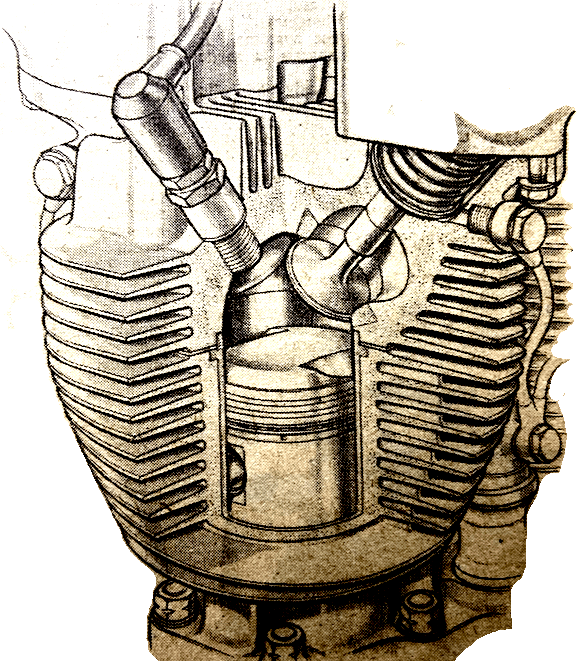
diameter exhaust pipes; folding footrest assembly; revmeter and fittings; racing handlebar and lin fittings; a one-gallon oil-tank with pipes; petrol feeds; cables and junction box for the twin carburettors; gasket set; front racing number plate to fit the nacelle. Close-ratio gears, straight-through exhaust extensions, and engine sprockets are also available as extras and the owner is left to provide only racing tyres, chains and plugs to his personal taste. The appeal this racing kit will make to the sporting rider can well be imagined. To be able to obtain a racing machine for more than £100 below the price of the old Grand Prix and to be able to use the machine on the road as well is a welcome innovation. The T100 engine has undergone several changes. The cylinder and head are now die-cast in light alloy, and the fins are of closer pitch than before. Valve-seats of Meehanite cast-iron are cast in the light-alloy head. Push-rods are now of Duralumin to keep pace in expansion with the light-alloy cylinder-head and block. There is very little ferrous metal in the new Tiger 100 engine, which is also used with a lower compression ratio in the Trophy model.” As well as reviewing innovations to motor cycles on the British market (the foregoing excerpt concentrates on some of the lesser known marques) the Blue ‘Un described the auxiliary engines and sidecars destined for the 1951 season. So, for the record, here are the sidecar manufacturers: Blacknell, Bowser, Busmar, Garrard, Leyton, Swallow, VP and Watsonian; and the clip-on motors: Bantamoto, Bikotor, Cucciolo, Cyclaid, Cyclemaster, Cymota, GYS Motamite, Mini-Motor, Power Pak and VAP.
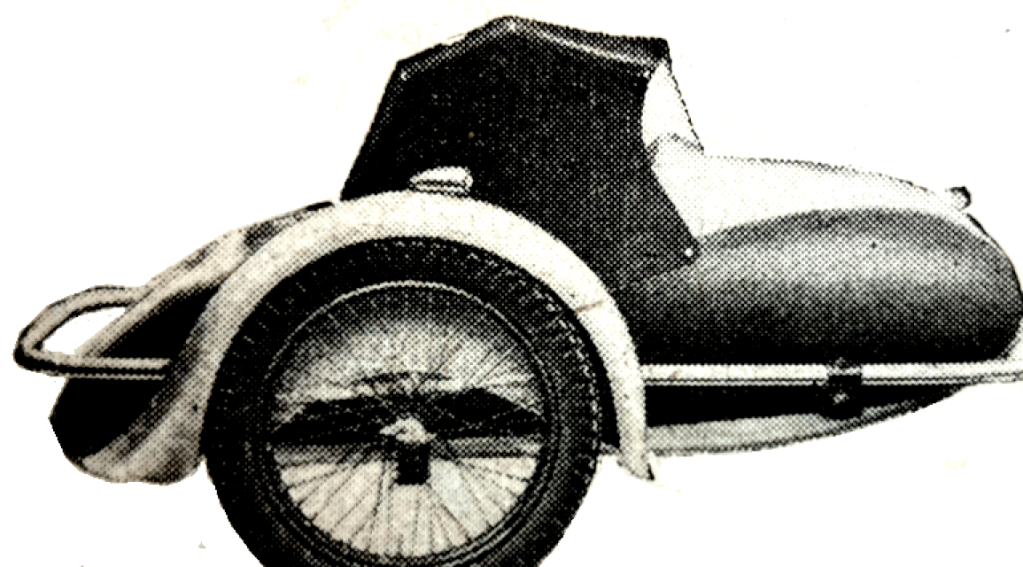
“I SHOULD LIKE to reply to two of your recent correspondents, PG Heron and T Saunders. First to deal with Mr Saunders. Surely it must occur even to him that those of us who elect to ride bikes are not exactly helpless, fluttery females, and we certainly don’t think it is our ‘rightful’ place to take the back seat! As for road sense, and driving in traffic…well, Mr Saunders, we all have to pass the same driving test—at least I haven’t heard of a ‘Ladies Only’ driving test. As for his little piece about ‘temperamentally they are definitely not suited to ride motor cycles’,—just what he means by that, is, I am afraid, lost on me—unless of course, it is male pride trying to assert male superiority. Mr. Saunders, I have one suggestion to make—seeing that women are joining the game, sell your bike (if you have one) and take up knitting; then you won’t have to worry anymore about this horrifying business. The second letter was in reply to Marie Krejcar, and I must say that my sympathies lie with her. The ACU restrictions do seem very unfair when you consider that every other form of racing is open to women, eg, in cars, sand racing, etc. These ancient prejudices were drowned during the war—nobody said that we shouldn’t work in munitions factories, fire the guns, etc, etc, but when some girl or other wants to take advantage of the so-called freedom which we are supposed to have won well, a lot of Victorian ideas and ideals keep her out. I ask you, is it fair? After all, what’s the use of saying, ‘you can go in for trials’, if the yearning is for racing? It is like saying to a fisherman ‘well, you can’t fish, but you can go in for dancing!’ I hope that Marie Krejcar and the others like her will keep on trying. Then one day they may get their wish. Anyway, lots of luck.
(Mrs) RUTH OWENS, Moreton, Cheshire.”
“THE RECENT LETTER of Mr. Lanyon-Owen is apt to give the rest of the motor cycle world a wrong impression about us Yank riders who prefer British machines to our own manufactured products. In the first place, it is possible to buy most of the accessories made by British suppliers, such as Feridax. Further, almost all of our own accessory companies are daily adding to their stock of gadgets for English motor cycles. But it is a good sign that these accessories do not resemble the trash described by Mr Owen as decorating the Indian which he saw during his brief trip to Coney Island. By the way, this would be the last place in America to start a serious investigation of our attitudes; Coney Island is famous for its freaks and sideshows, as well as some monstrously decorated motor bikes. Let us be serious about this accessory problem. There is no aspect of the game, outside of noisy exhausts, that does more to ostracize us motor cyclists from the general public than does the juvenile ornamentation of ourselves and our mounts. ‘Gasolene Cowboys’ is the name applied to motor cyclists over here. How can we ever hope to change this attitude if we continue loading our bikes with silver studs, fox tails and useless chrome attachments, not to forget the gaudy uniforms worn in accompaniment? One of the worst advertisements are our ‘Gestapo get-ups’—loud uniforms braying the fact that we are immature fools who choose to advertise the fact by dressing in ridiculous costumes. It is a wonderful feature of the British bike that it looks silly when it is decked out in useless gear. Most of the lads in America who ride English machines are content to leave them the way they found them.
JB MERCER, New York, USA.”
“MUST THIS DISCUSSION of women drivers go on and on? For weeks I have read the letters pro and con and have decided that I, personally, would like to run over this Mr Terry Saunders for starting the whole thing. Yes, I am a lady rider! I am the president of the Metropolitan Chapter of the Motor Maids of America. This chapter is only one year old and has 16 members who own and operate their own motor cycles. Of these, 10 are very active and the club has a wonderful safety record. We all live in and around New York City and most drive in its congested traffic, which is certainly a test for anyone’s driving ability—male or female. We go on trips alone, or with each other, or with our husbands (the majority of the girls are married). The husbands wouldn’t think of asking their wives to ride on the pillion because they are of the opinion that we can travel as well as they. They therefore must recognise our ability as drivers. In February another girl, Rosemary Speer, on a 350cc Panther, and myself on a 500cc AJS went to the Daytona Races, a round trip of 2,300 miles. We went from the freezing cold of the north to the wonderful warmth of the south. We had rain, high winds, road construction, and on our return we were caught in a heavy snow storm that delayed us a day and meant that we had to ride on icy roads the next day. I know any driver will admit this takes some riding ability. One thing that makes me feel proud is the fact that my husband likes to ride on my pillion seat. At the present time I own a Trophy Triumph which isn’t equipped for double riding because I have been doing some trials riding with it; but when I had a motor cycle suitable for two, many nights he would insist I take him home from our shop so that he could sit back and relax after a hard day’s work. I know that he must feel I’m a competent driver—otherwise he would have taken the handlebar. Some of the girls ride American motor cycles of 1,000cc and 1,250cc capacity. With accessories, these machines weigh between 700 and 800 pounds. It is a marvellous sight to see these girls handle them; it puts many a male to shame. I have never heard these girls say they can ride better than a man, although in many cases this is true. But let a man ride better than a girl and he writes all kinds of letters to tell the world about it and generally makes a big nuisance of himself. Just what is he trying to prove? In conclusion, a word to this Mr LF Morris who agrees with Mr Saunders—bring your Vincent over here some time and I’ll get some of the girls to take you for a ride and, in an American manner of speaking, ‘we’ll suck you up the pipe and blow you out for carbon’. Perhaps now we can end this controversy, because women motor cyclists are here to stay. So Mr Saunders and all those who agree with him had better reconcile themselves to the fact or else get off the road and make room for more women to come.
VI PHILLIPS, Bronx 57, New York City, USA.”
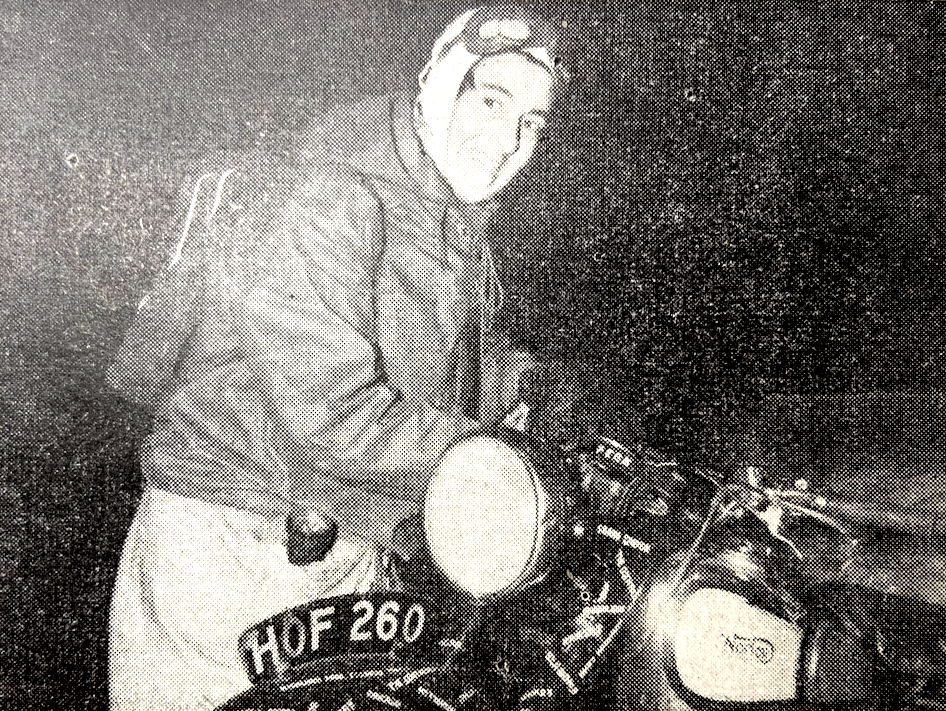
“SO, MR TERRY SAUNDERS, you have done it again. It was bad enough when you got the English gal riders on your neck, but now that you have started on the American girls…look out! I have seen pictures of your girl riders (no offence, girls, every one to own taste) perched on a buddy seat with skirts flapping, hair blowing, and stockinged legs dangerously close to a hot motor. It’s men like you that keep your gals from thoroughly enjoying motor cycle riding. When they have to ‘dress up’ and look feminine when riding a motor cycle, how can you expect them not to fret about their appearance when there is a great danger of sliding down the road topsy-turvy or burning their unprotected legs on the motor. We girl riders of America have no such worries. Our hair is neat under our hot-rod hats (military peaked caps to you) or helmets; our figures are trim in fitted riding breeches, boots and leather jackets. In fact, the majority of girls appear to be going for a morning jaunt at an expensive riding stable instead of mounting an iron steed. Further, boots and breeches give us added protection and more comfortable riding, so let’s not hear any more about the personal appearance of American girl riders. My husband and I own an Ariel and Triumph motor cycle shop and although I am just five feet two inches tall and weigh all of 98 pounds, it would give me great pleasure to ‘pull your cork’ on any bike you prefer—from a Square Four down to a 30.50.
ALICE HAKOJARVI, Fairport Harbor, Ohio, USA.”
“I FEEL THAT Terry Saunders should not be alone in his battle to uphold the true feelings of 95% of Britain’s male road-users and 99% of Britain’s pedestrian population. It is only necessary to ask one of the 95% and he will comment on the wide berth he gives to all female riders and drivers. With regard to the feminine touch, no argument is necessary, for anyone with a grain of intelligence appreciates that the saddle of a motor cycle is no place for a feminine woman.
FJ ADAMS, Ealing, W5.”
“I MUST SUPPORT your correspondent, Terry Saunders, who, to my mind, is quite correct in his statements, despite the one-sided onslaught. I agree with his saying the ‘average’ girl is not really interested in motor cycling; it is merely a means of transport. Her idea of a good machine is really amazing. If it looks like a juke box and sounds like a vacuum cleaner, it represents the last word in engineering skill. Regarding the girl taking the pilot’s seat with her male companion ‘sheltering’ benignly behind her, reminds me of that well-known axiom ‘If a thing looks right, it usually is.’ To my mind nothing could look more out of place. Lastly, motor cycling is first and foremost a man’s sport, so I will also say ‘Keep off the front seat, girls.’
G NEWTON, Mitcham Junction, Surrey.”
“HUSQVARNA, THE SWEDISH firm, continues to make complete motor cycles as well as supplying engine-gear units for incorporation in machines of other makes. A 1950 Husqvarna equipped with several interesting fittings has been shown to The Motor Cycle by Mr A Welander, Jnr who represented his firm of accessories manufacturers on a business tour of Europe. This latest model has a 120cc unit-construction two-stroke engine with a flat-top piston and light-alloy cylinder head, carried in a welded loop frame. The front suspension is by a pressed-steel, link-type fork. The gear change mechanism is controlled by hand, toe or heel. When changing with the foot, the amount of movement of the lever is considerable. Foot-change adaptors for pre-1950 Husqvarnas are marketed by Mr Welancler’s company. His legshields and luggage arrangements are noteworthy. The legshields cost the equivalent of about £2 and are finding popularity in Sweden, where the number of utility riders is extremely high—Mr Welander puts the number of motor cyclists there at nearly 200,000, which is considerable in a total population of 6½ million. The silencer, made under Tyden patents, is noteworthy. This is just an expansion chamber with the baffle ‘bayonet’ fixed into the rear end.”
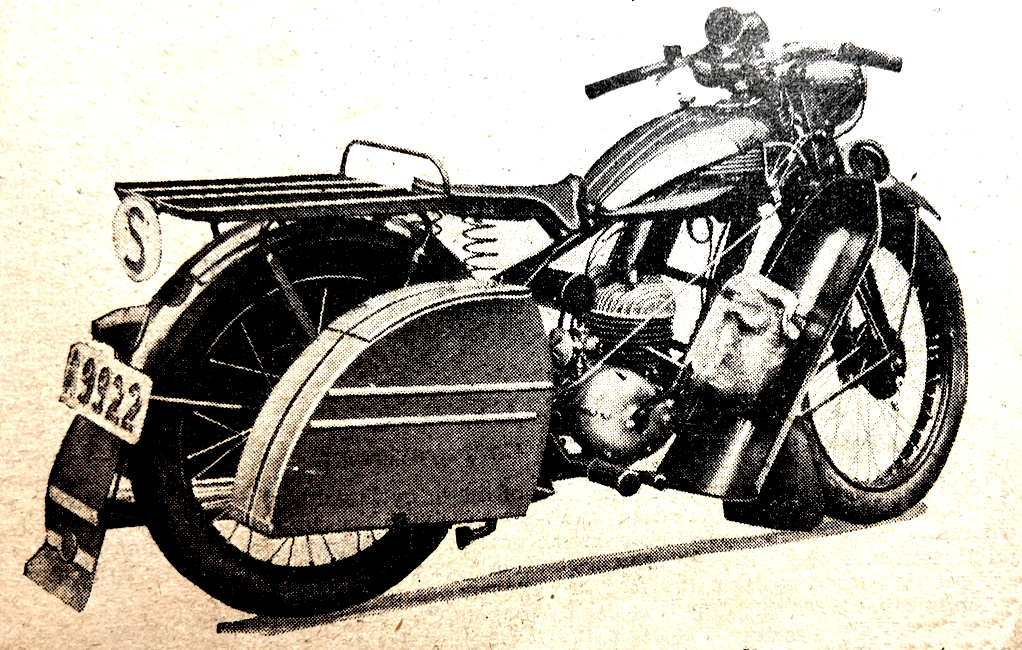
SOME YEARS AGO I shifted my residence some 60 miles from X to Y. The local paper at Y announced my impending arrival, since I was taking up an official position, whereupon the live tradesmen of Y with one accord motored over to X to bespeak my custom, and sweeten the palms of my missus and brats with delectable gifts. The stodgier tradesfolk of Y, of course, just stood behind their counters and hoped we should patronise their establishments. Many motor cycle retailers are similarly passive salesmen. You may go a long way without encountering a single motor cyclist who took the plunge because he was wooed by a retailer. Most of us took it on our own initiative, or because we were sold the idea by amateur enthusiasts. Successful dealers always adopt three methods. They make their showrooms ‘pull the public’. Next, they fasten on all spontaneous inquirers and grapple them to their souls with hooks of steel. Thirdly, they take pains to earn a reputation for first-class service at minimum prices. Unless they live in a small place, and know their population well, it is difficult to attempt more. The car vendor sees local owners driving an antique, identifies them, and suggests a trade. But a large percentage of motor cyclists graduate from shoes or pedal-cycles, and are not easy to identify. However, one Manchester firm, specialising in motor cycles, goes further than that. It has sent me a copy of its beautifully printed 4pp booklet, which is vigorously circulated among possible patrons. This is written in friendly man-to-man style. It explains that the two partners are themselves passionate motor cyclists no less than competent engineers. It describes how they started on a shoe string with ancient models, how they went into business after demobilisation without capital. and how they have built up a thriving business, by their
own skill and enthusiasm. These two seem to command, no less than to deserve, success.”—Ixion
…and decades later I knew two dealers within half a mile of each other in south-west London. One endlessly complained about lack of business. His shop was so cluttered that sometimes it was hard to open the door far enough to get in. He was in the habit of remarking that “you can’t drag customers into the shop” and was so surly with potential customers that I once persuaded him to role-play as a customer and showed him how grumpy he seemed (once you got to know him he was actually an excellent chap and his missus made brilliant snacks with fried eggs and burgers in pitta bread). Down the road two youngsters ran a bike shop of about the same size. It was clean, tidy and welcoming with the walls covered in bits and pieces for sale. When things were quiet they made accessories for stock (including a screw-in extension tube for Ducatis so you could pour engine oil in without spilling it). And they regularly spent tea breaks at the local cross-road handing business cards to riders waiting for the lights to change with a cheery “10% discount if you show the card!” Ixion would have approved.—Ed

“JOHN DALE, the New Zealand racing man, who is equally famous for his ‘wizardry’ in extracting the ultimate in miles per gallon from Matchless machines, demonstrated how it was done at the MIRA proving ground, Nuneaton, last Friday. All forms of trickery were ruled out since the test, in this case, was observed by Mr Jack Woodhouse on behalf of the ACU. With a measured half-gallon of fuel in the tank, Dale began the test at 11.50am. He covered 51 laps plus two miles of the 3.013 miles circuit and finished at 8.24pm! The total distance covered was, as near as makes no difference, 155 miles—thus the consumption figure was 310mpg. The total time taken was 8hr 34min, 23 minutes of which was accounted for during stops for sustenance, for even wizards must eat. The average speed was 19mph. The machine used by Dale was a fairly standard-looking 347cc G3/L Matchless, fitted with 3.00x19in ribbed tyres front and rear, an Amal type 75 carburettor (which is smaller than the G3/L standard instrument), and the dynamo, battery, headlamp and lighting harness were removed. Both wheels, incidentally, were balanced. Dale waisted SAE20 oil for the engine and gear box but in the end, the required brand not being available, used SAE. The engine was run until it was really hot before the measured quantity of fuel was poured into the tank. Much of the value of this was lost, however, since there was a cold wind blowing and considerable time elapsed between the engine’s being, stopped and the test embarked upon. When Dale got away at 11.50am he did so in third or top gear and since he was heading into the wind, he immediately crouched right down flat, holding the handlebar in the middle, and placing his feet on the pillion rests. When he turned downwind he sat up so as to obtain the maximum ‘sail effect’. His speed throughout never varied from between,18 and 20mph. When the test finished at 8.24pm it was too late to measure the engine; this was done the following morning. It was of course, found to be accurate.”

VINCENT BLACK SHADOW
“MERE MENTION OF THE NAME ‘BLACK SHADOW’ is enough to speed the pulse. Since the machine’s introduction last year as a super-sports brother to the already famous Rapide, the sombrely finished ‘Shadow’ has achieved wide distinction. It is a connoisseur’s machine: one with speed and acceleration far greater than those of any other standard motor cycle; and it is a motor cycle with unique and ingenious features which make it one of the outstanding designs of all time. So far as the standards of engine performance, handling and braking are concerned—the chief features which can make or mar an otherwise perfect mount—the mighty Black Shadow must be awarded 99 out of 100 marks; 99 because nothing, it is said, is perfect The machine has all the performance at the top end of the scale of a Senior TT mount. At the opposite end of the range, notwithstanding the combination of a 3.5 to 1 gear ratio, 7.3 to 1 compression ratio and pool quality fuel, it will ‘chuff’ happily in top at 29-30mph. Indeed, in top gear without fuss, and with the throttle turned the merest fraction off its closed stop, it will surmount average gradients at 30mph. In Britain the machine’s cruising speed is not only limited by road conditions, it is severely restricted. It is difficult for the average rider in this country to visualise a route on which the Black Shadow could be driven for any length of time at its limit or
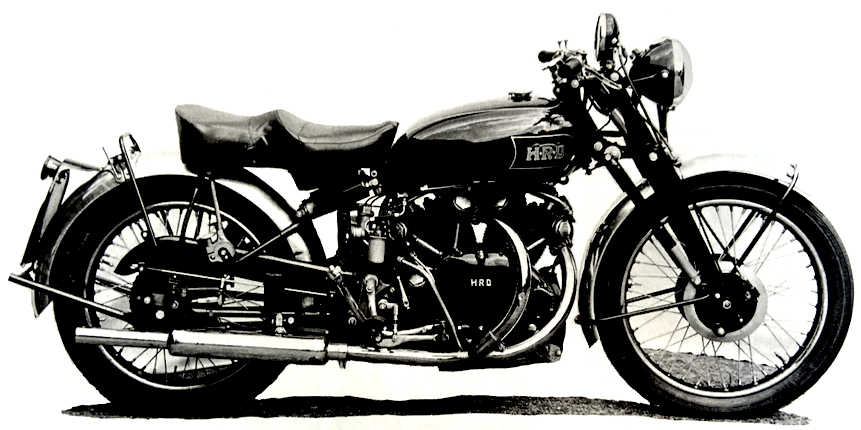
near limit. During the test runs speeds of 85-90mph were commonplace; 100mph was held on brief stretches and, occasionally, the needle of the special 150mph Smith’s speedometer would indicate 110. No airfield or stretch of road could be found which would allow absolute maximum speed to be obtained in two directions against the watch. Flash readings in two directions of 118 and 114 were obtained, and in neither case had the machine attained its maximum. Acceleration from 100mph, though not vivid, was markedly good. The compression ratio of the test model, as has been remarked, was 7.3 to 1. This is the standard ratio but models for the home market and low-octane fuel are generally fitted with compression plates which reduce the ratio to 6.5 to 1. The greater part of the test was carried out on ‘pool’, though petrol-benzole was used when the attempts were made to obtain the maximum speed figures. Steering and road-holding were fully in keeping with the exceptionally high engine performance. A soft yet positive movement is provided by the massively proportioned Girdraulic fork. There is a ‘tautness’ and solid feeling about the steering which engenders confidence no matter what the speed and almost irrespective of the condition of the road surface. Corners and bends can be taken stylishly and safely at ultra-highs speeds. There was no chopping, no ‘sawing’; not one of the faults which are sometimes apparent on high-speed machines. Bottoming and consequent clashing of the front fork were, however, experienced once or twice. Low-speed steering was rather heavy. Any grumble the critics may have had with regard to the Vincent rear suspension has been met by the fitting of the hydraulic damper between the spring plunger units. So efficient is the rear springing now, that never once was the rider bumped off the Dualseat or forced to poise on the rests. Even at speeds around the 100mph mark, only the absence of road shocks gave indication that there
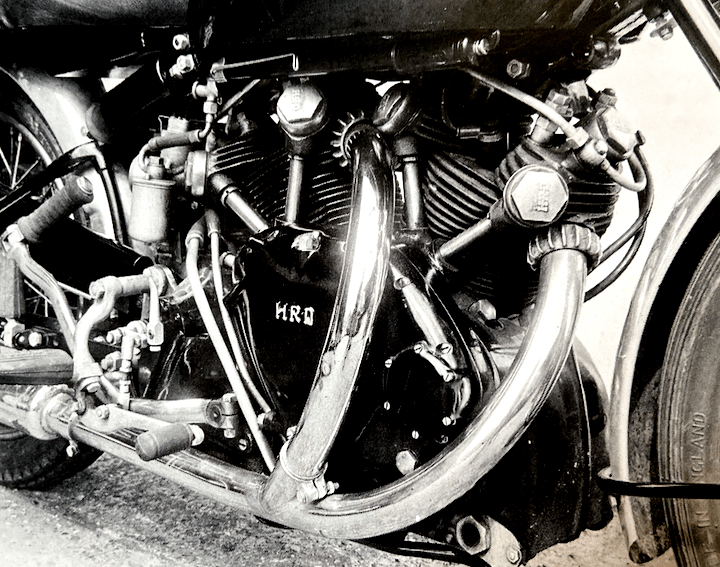
was my form of rear-springing, such was the smoothness and lateral rigidity. Straight-ahead steering was in a class by itself. The model could be steered hands off at 15mph with engine barely pulling or just as easily at 95 to 100mph. The steering damper was required only at speeds over 115mph. Used in unison, the four brakes (two per wheel) provided immense stopping power. Light pressure of two fingers on the front brake lever was sufficient to provide all the braking the front wheel would permit. One of the front brakes, incidentally, squealed when in use. The leverage provided at the rear brake is small, and the brake operation was heavy. Engine starting from cold was found difficult at first. Cold starting was certain, however, provided that only the front carburettor was flooded and the throttle control was closed. When the engine was hot, there was no difficulty. After a cold or warm start the engine would immediately settle down to a true chuff-chuff tickover. Throughout the course of the test the tickover remained slow, certain and 100% reliable. No matter how hard the previous miles had been, the twistgrip could always be rolled back against its closed stop with a positive assurance that a consistent tickover would result. The engine was only tolerably quiet mechanically. At idling speeds there was a fair amount of clatter, particularly from the valve gear. But so far as the rider was concerned all mechanical noise disappeared at anything over 40mph. All that remained audible was the pleasant low-toned burble of the exhaust and the sound of the wind in the rider’s ears. Bottom gear on the Black Shadow is 7.25 to 1. Starting away from rest can seem at first to require a certain amount of skill in handling the throttle and clutch. The servo-assisted clutch had a tendency to bite quickly as it began to engage. The riding position for the 5ft 7in rider who carried out the greater part of the test proved to be first-class. The saddle height is 31in which is comfortable for the majority of riders.
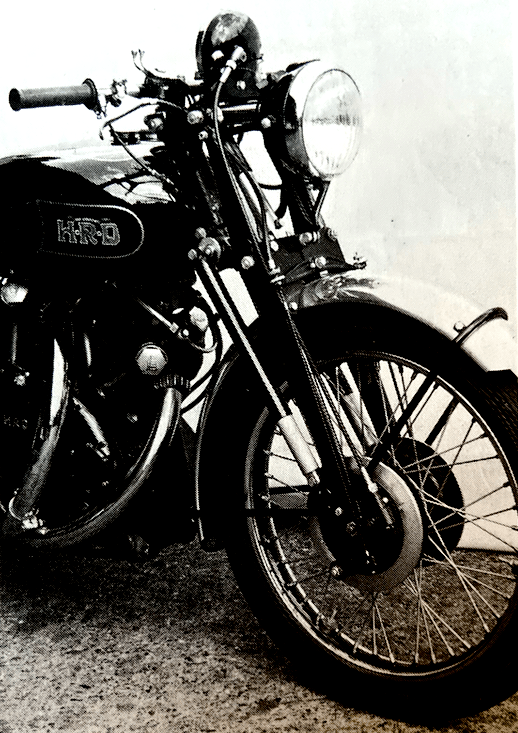
The footrests are sufficiently high to allow the rider complete peace of mind when the machine is heeled over to the limit, and were sufficiently low to provide a comfortable position for the 5ft 7in rider’s legs. Now famous, the 25½in from tip to tip, almost straight, Vincent-HRD handlebar provides a most comfortable wrist angle and a straight-arm posture. All controls are widely adjustable—the gear pedal and brake pedal for both height and length. Both these controls, incidentally, move with the foot-rests when the latter are adjusted. The gear change was instantaneous but slightly heavy in operation. Snap gear changes could be made as rapidly as the controls could be operated. The clutch freed perfectly throughout the test and bottom gear could be noiselessly selected when the machine was at standstill with the idling. However, because of the pressure required to raise the pedal it was sometimes necessary to select neutral by means of the hand lever on the side of the gear box, and also to engage bottom gear by hand. In the 700 miles of the road test the tools were never required. In spite of the high speeds there was no apparent sign of stress. Primary and rear chains remained properly adjusted. There was very slight discolouring of the front exhaust pipe close to the port and a smear of oil from the base of one of the push rod tubes on the rear cylinder. The ammeter showed a charge at 30mph in top gear when all the lights were switched on and the road illumination was better than average. An excellent tool-kit is provided and carried in a special tray under the Feridax Dualseat. There are many ingenious features of the Vincent-HRD which brand it as a luxury mount built by highly skilled engineers who at the same time are knowledgeable motor cycle enthusiasts. The Black Shadow finish is distinctive, obviously durable and very smart; and only a minor reason why the ‘Shadow’ attracts a crowd of interested passers-by wherever it is seen!”
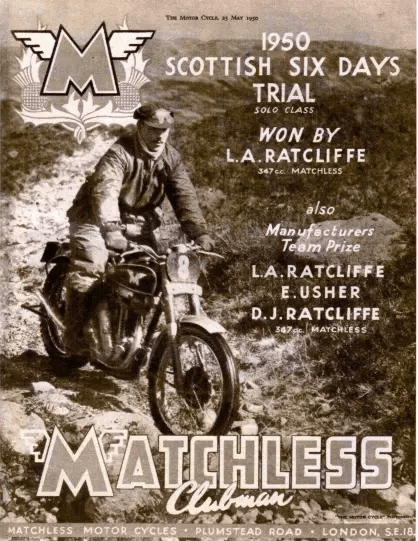
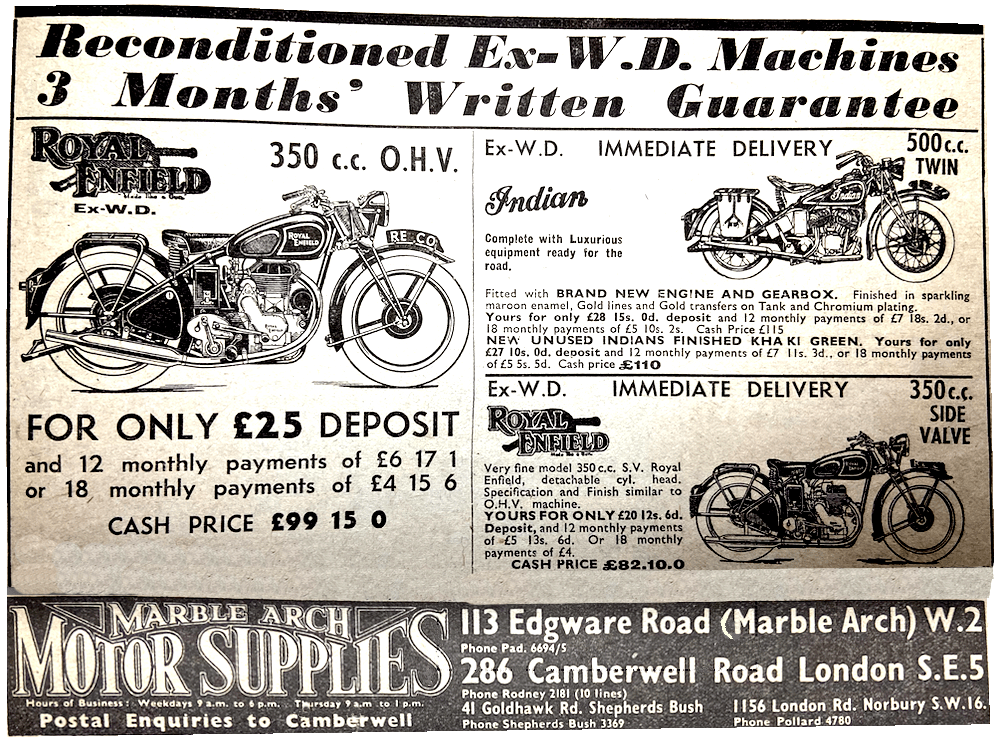

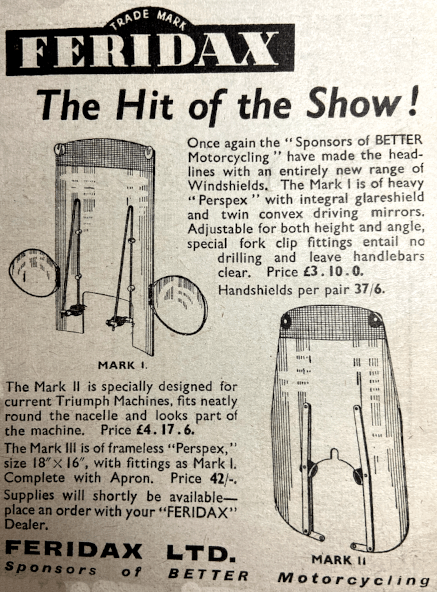
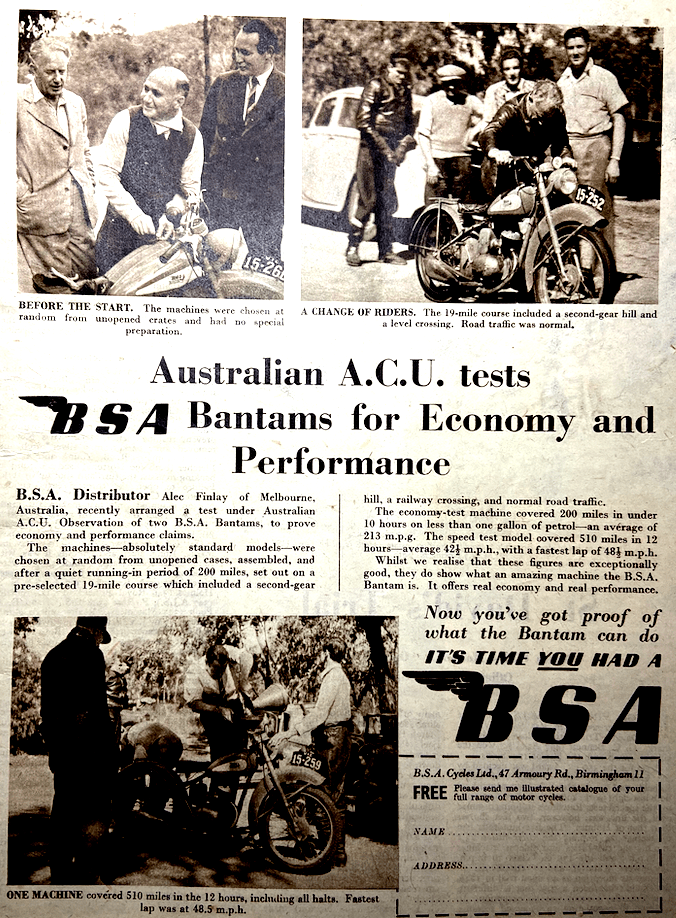
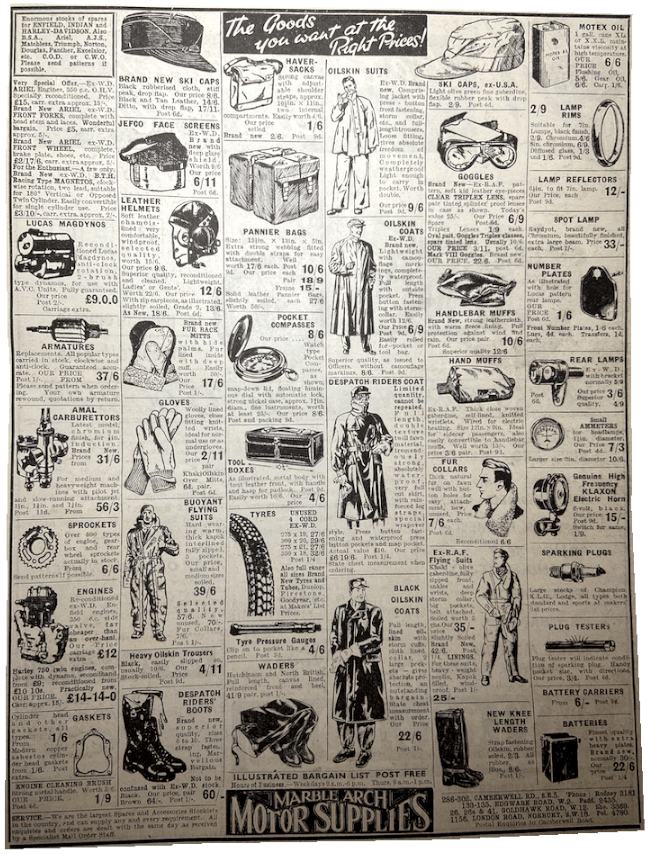
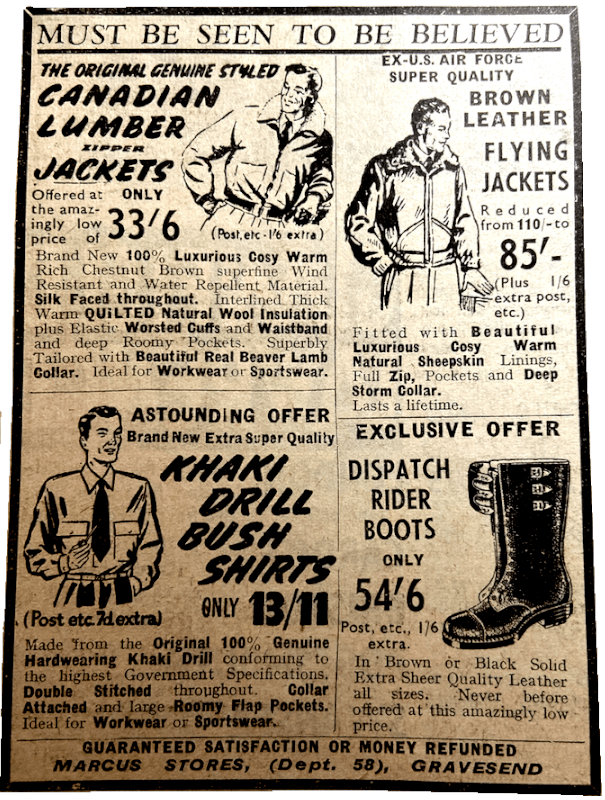
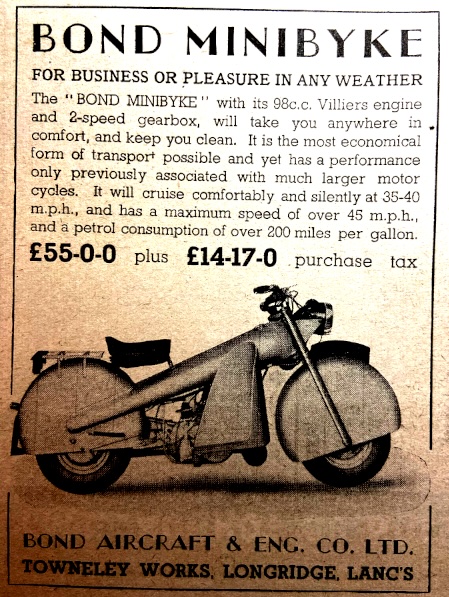
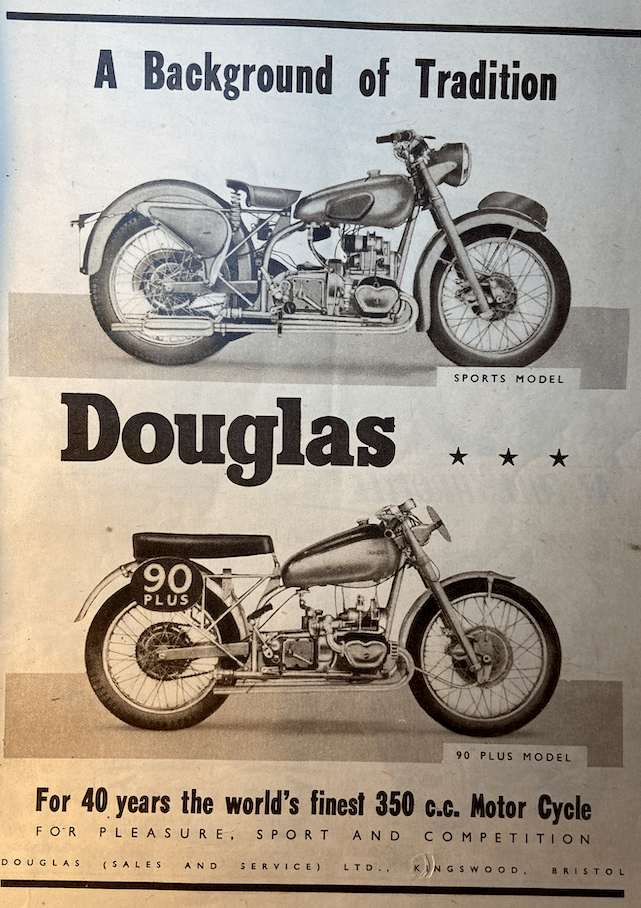
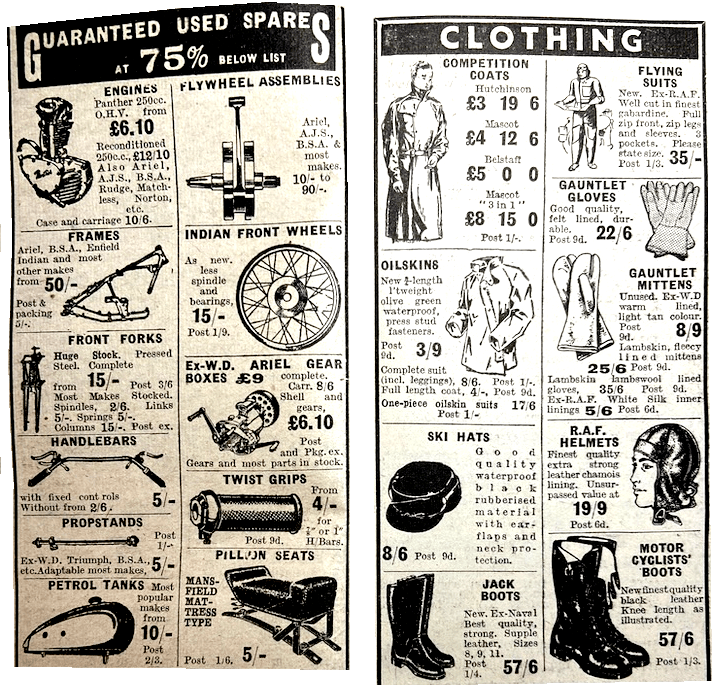
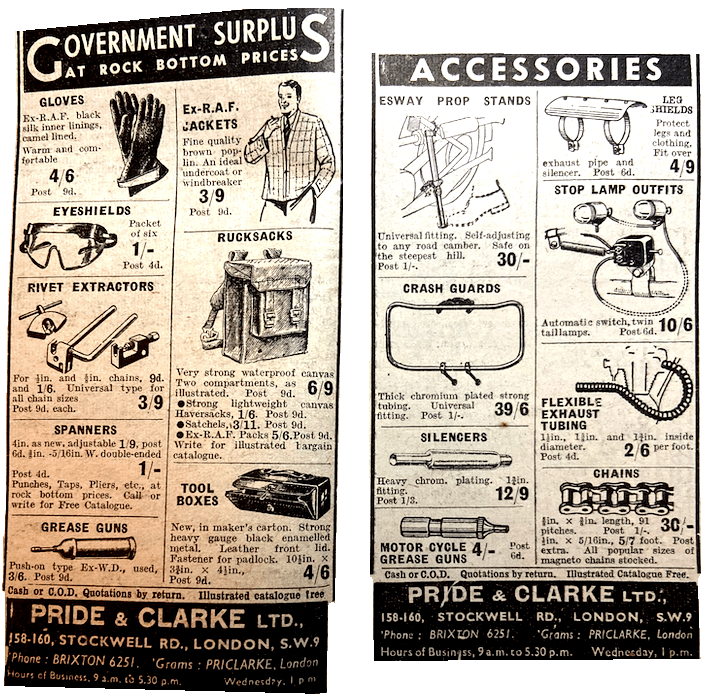
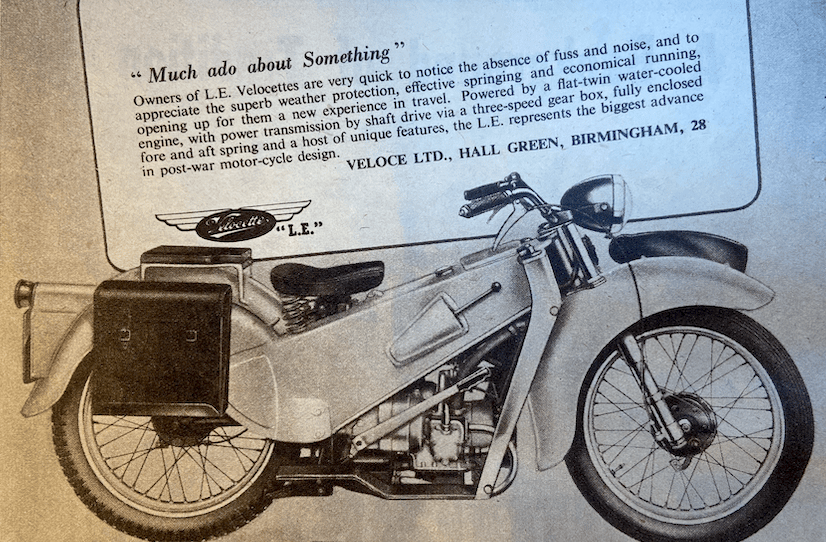
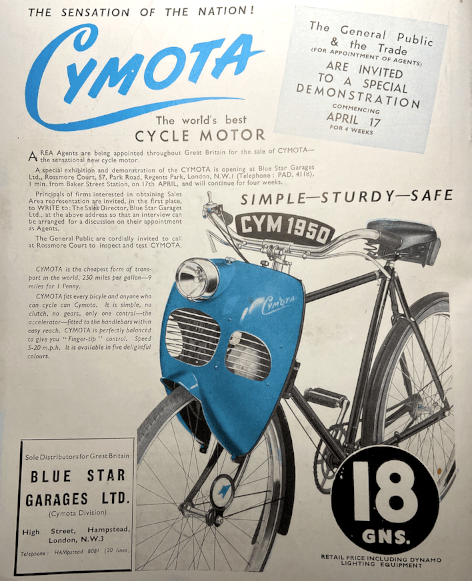
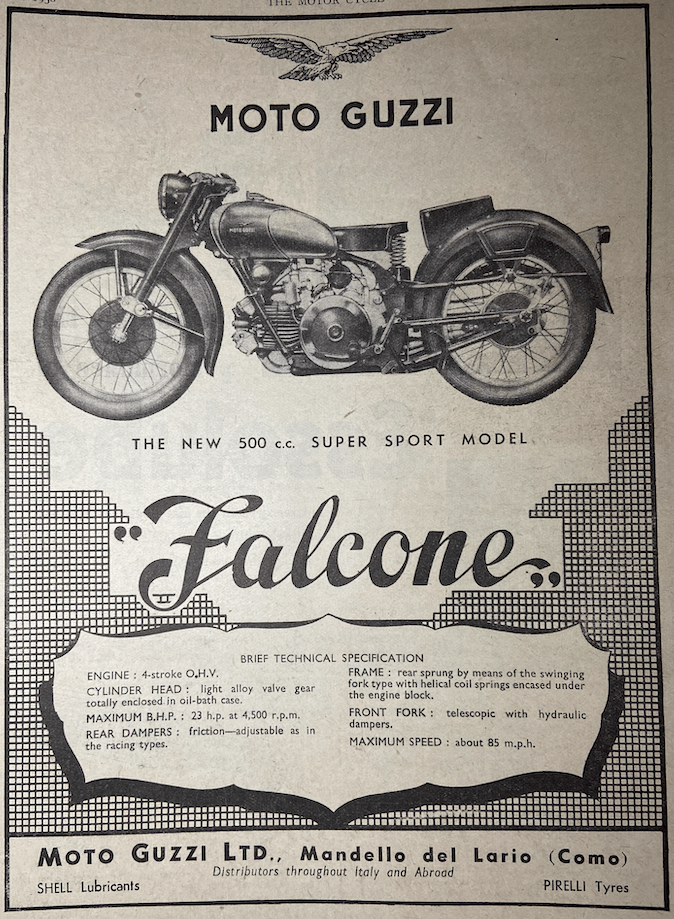
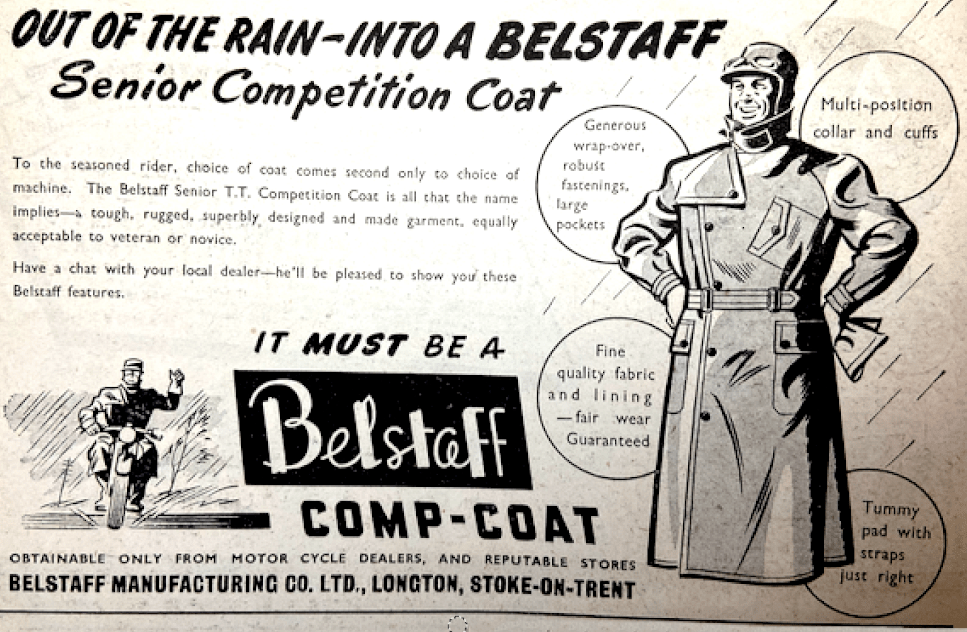
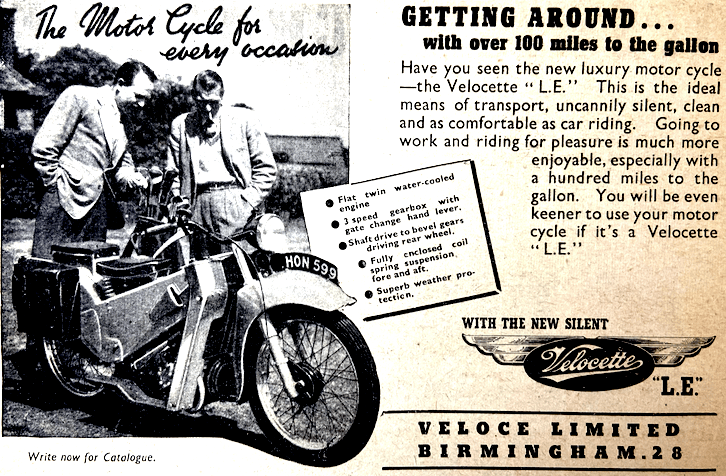
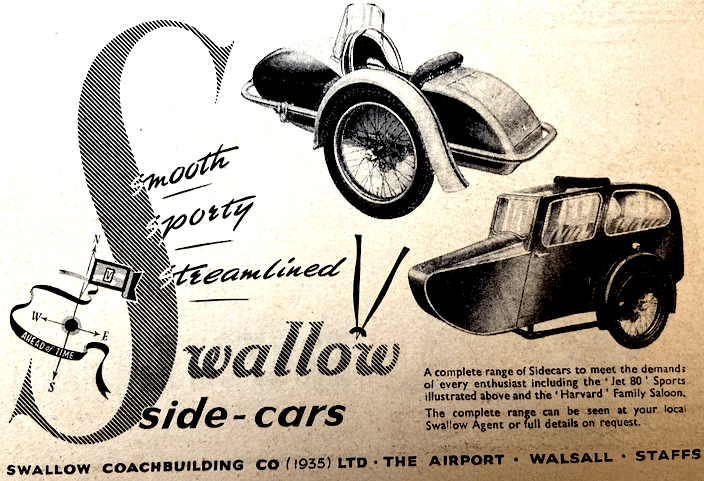
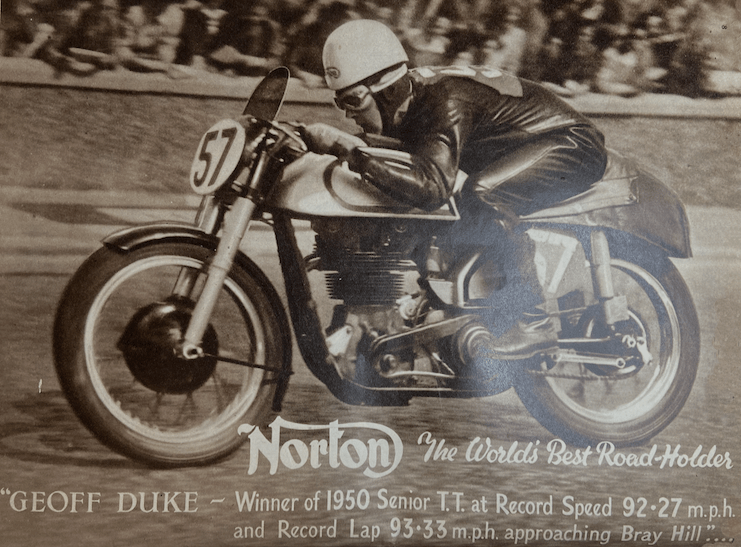
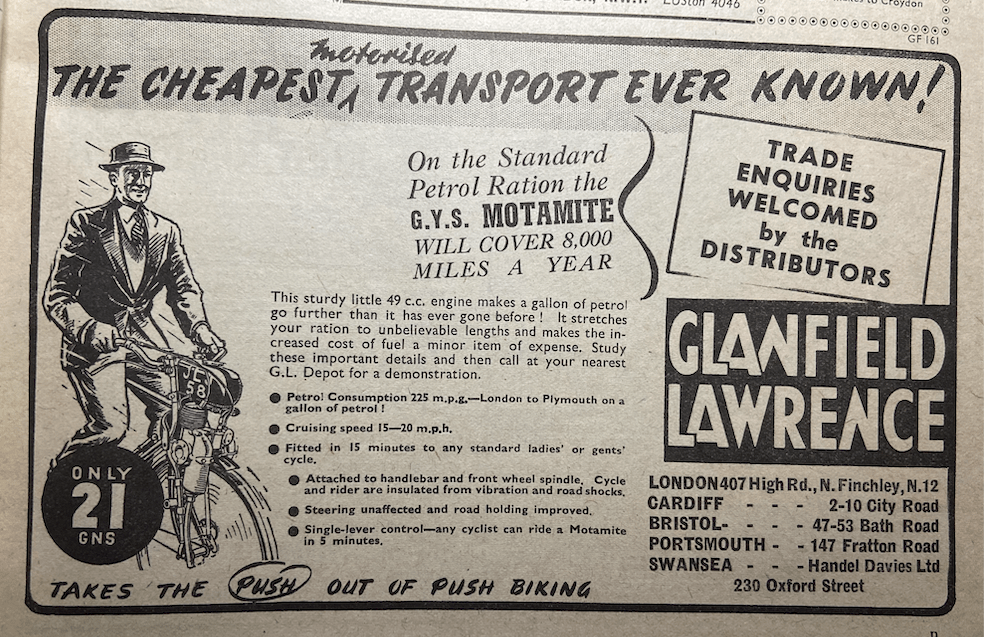
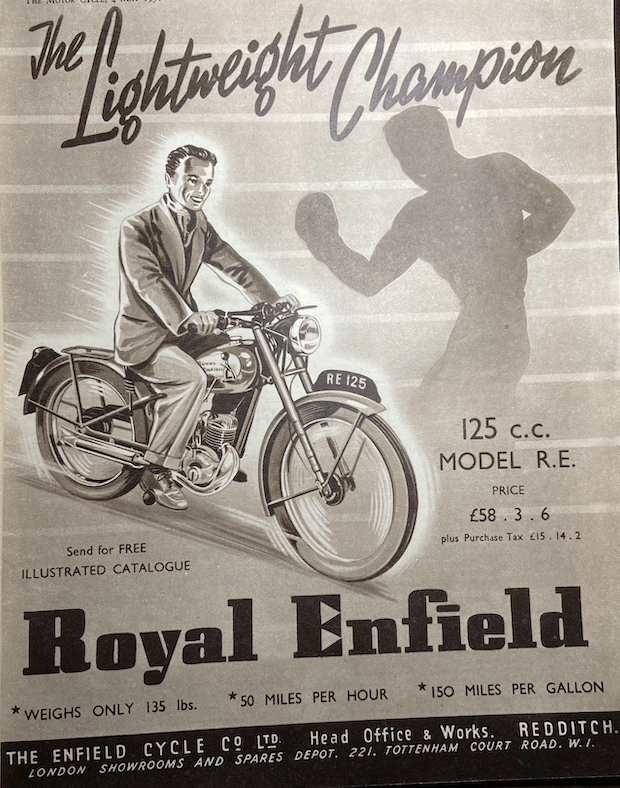
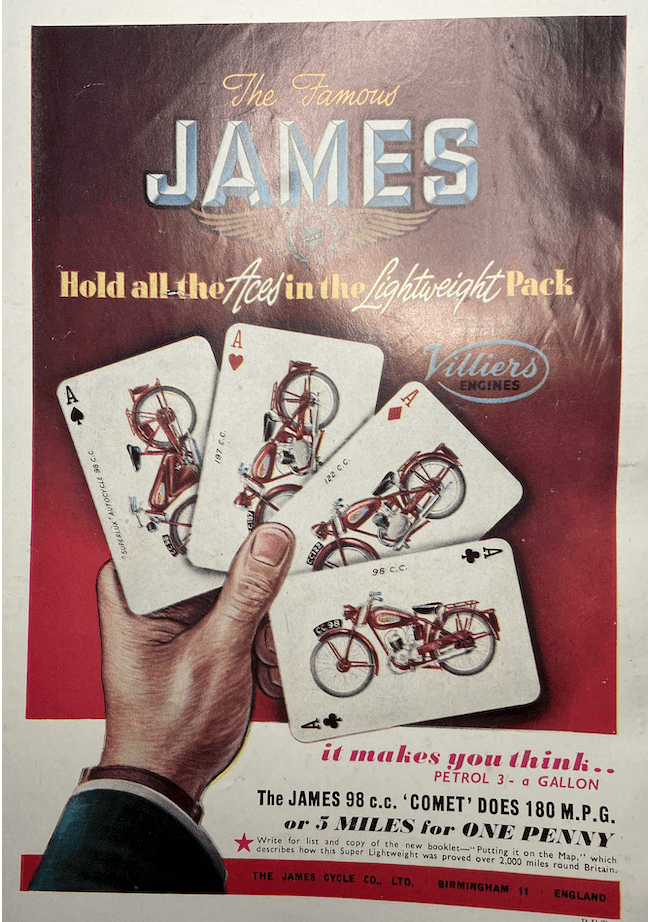

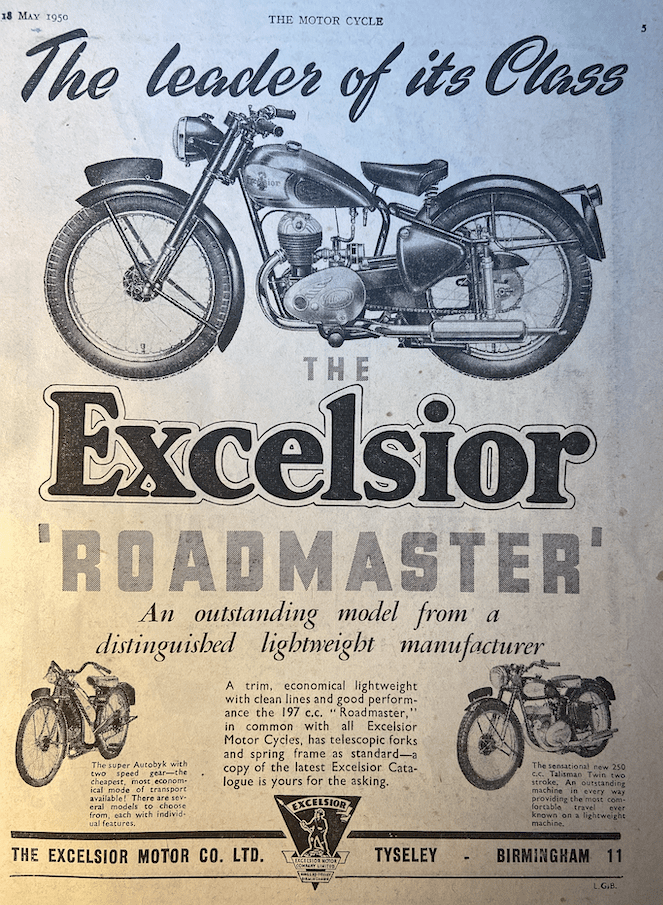
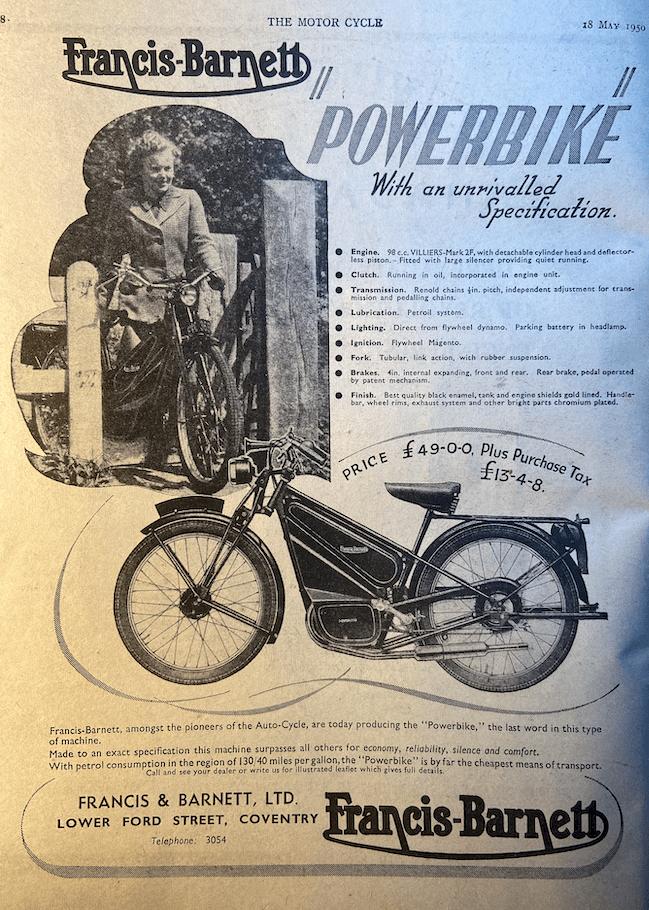
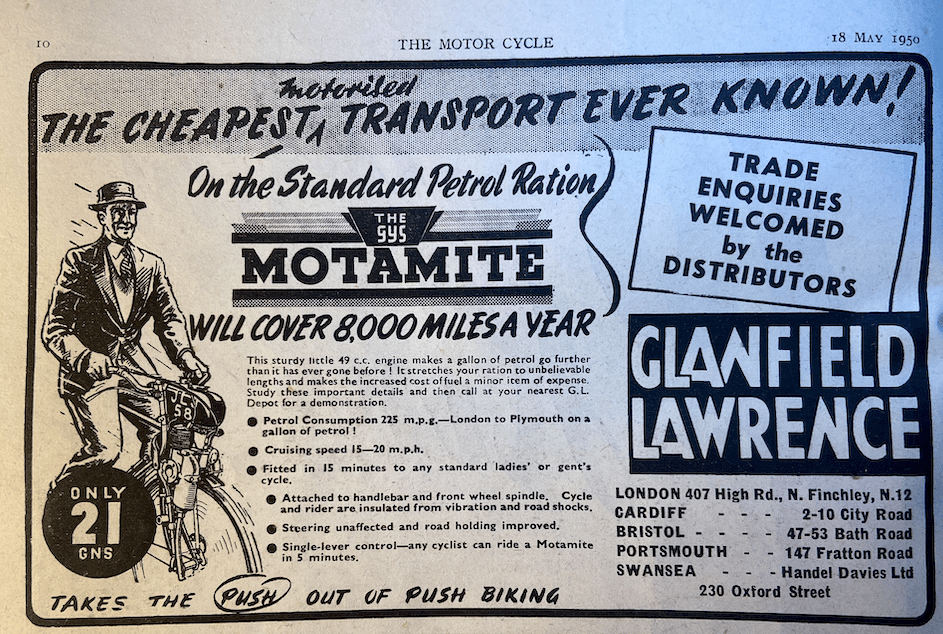
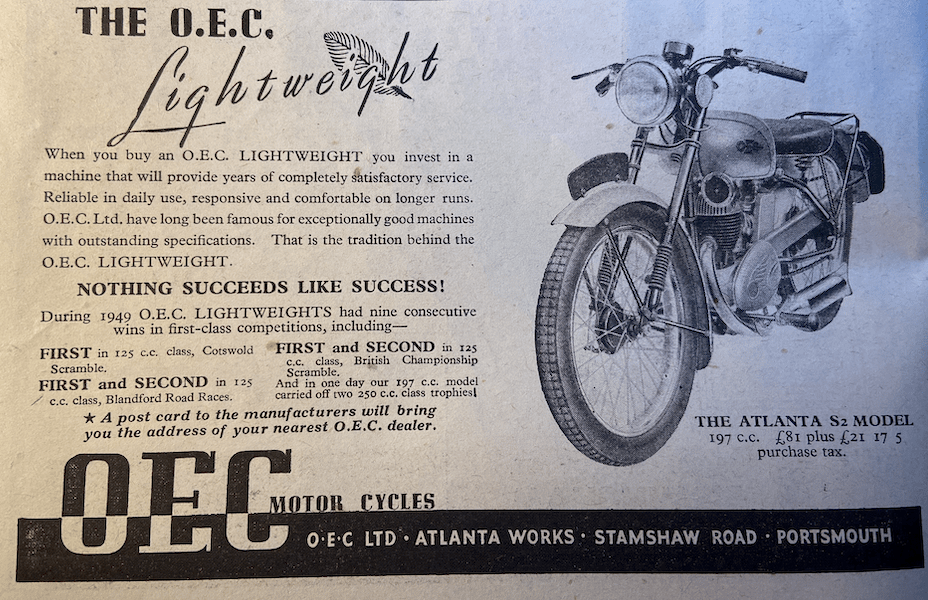
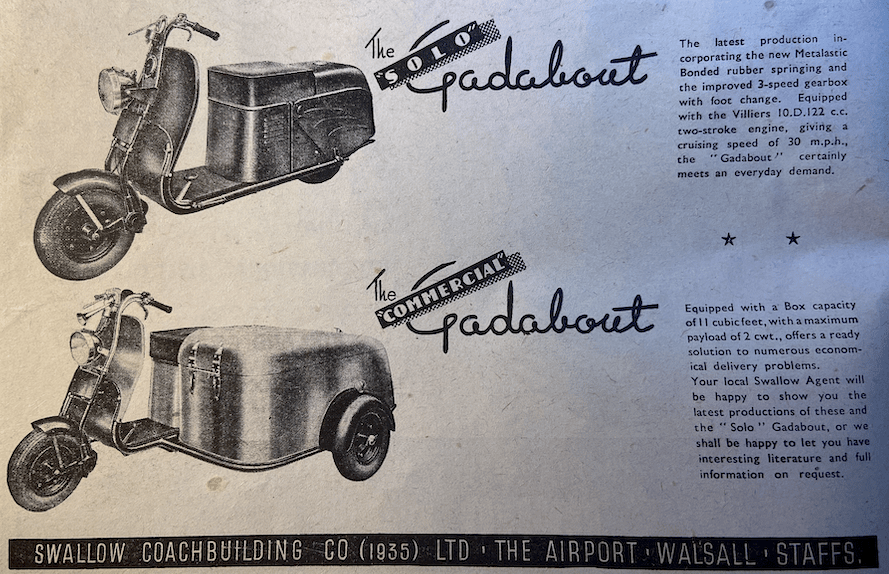
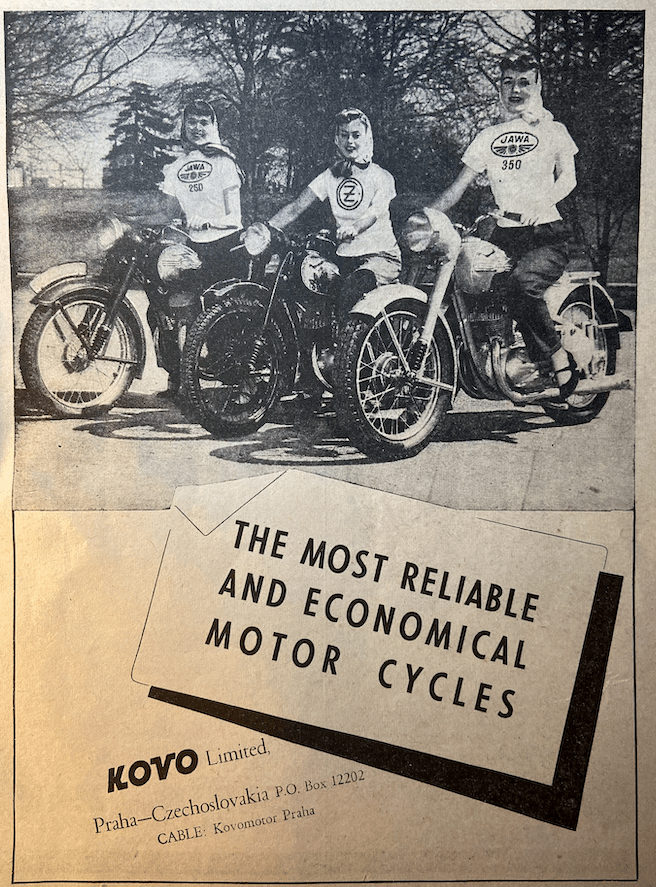
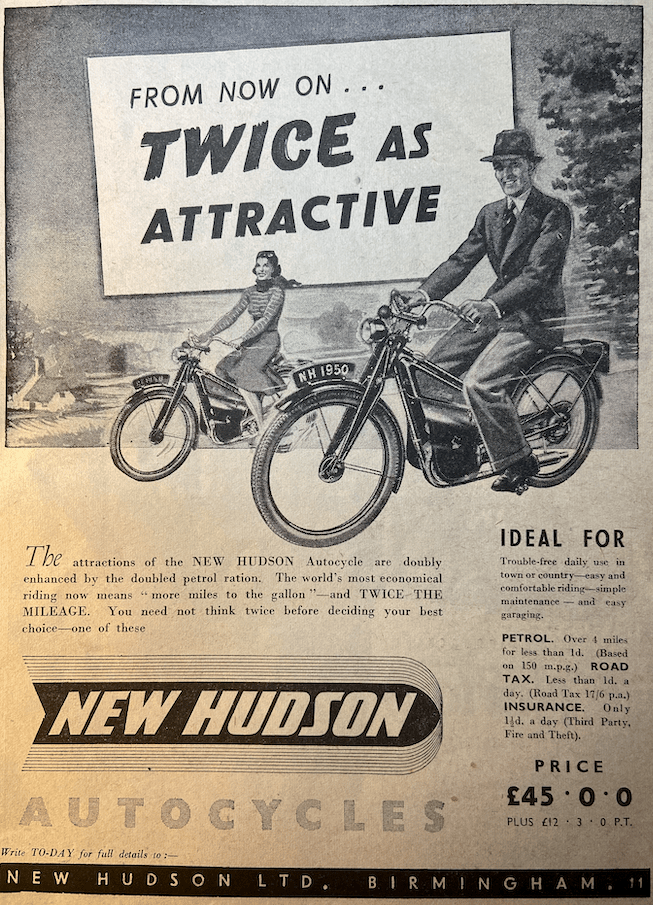
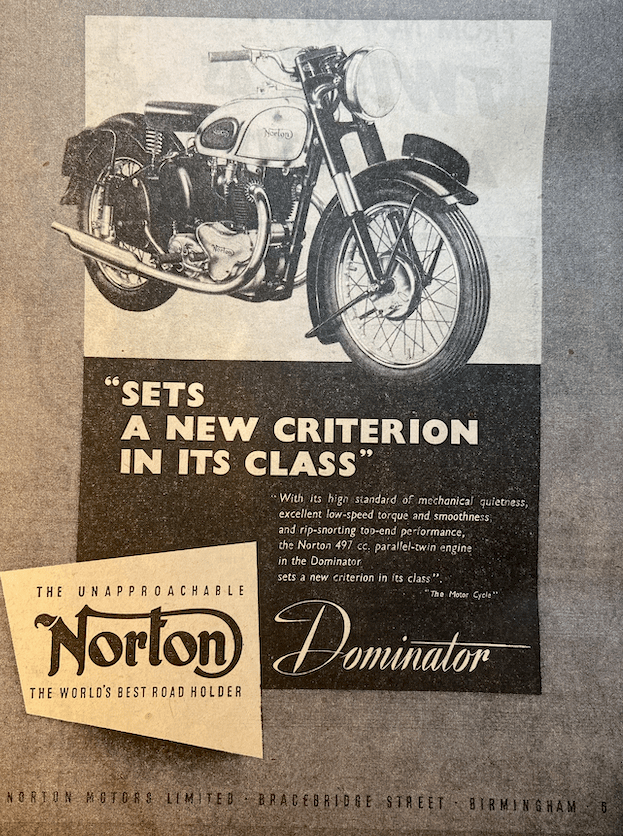
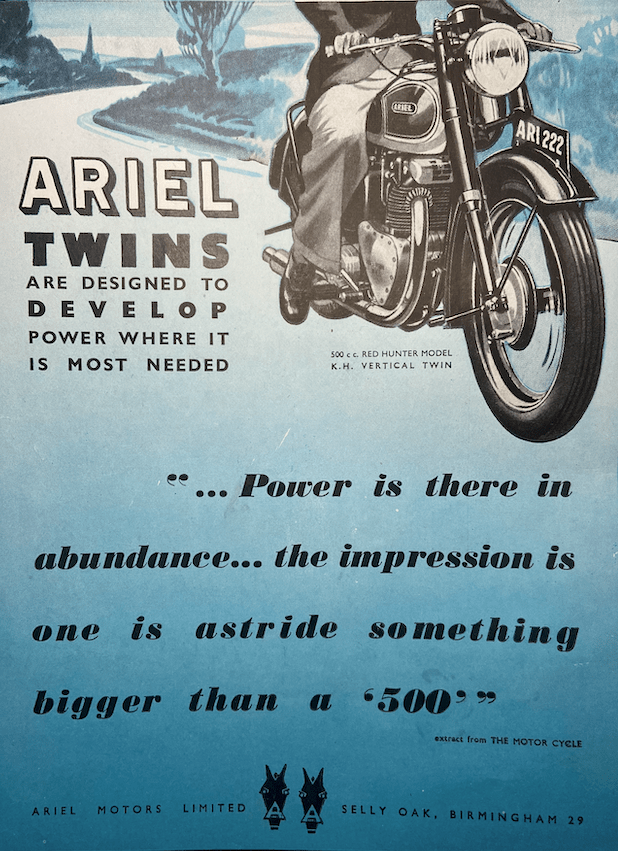

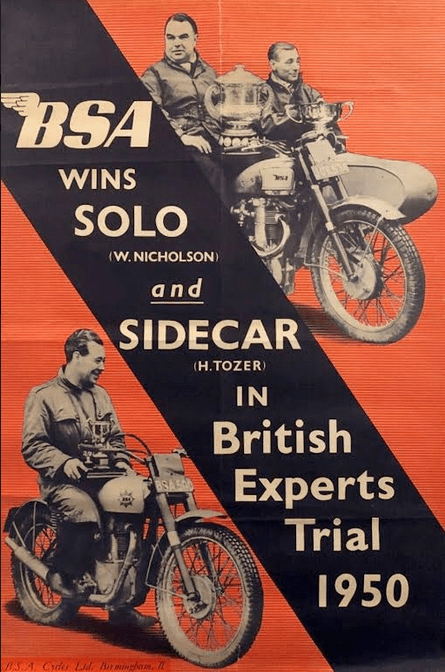

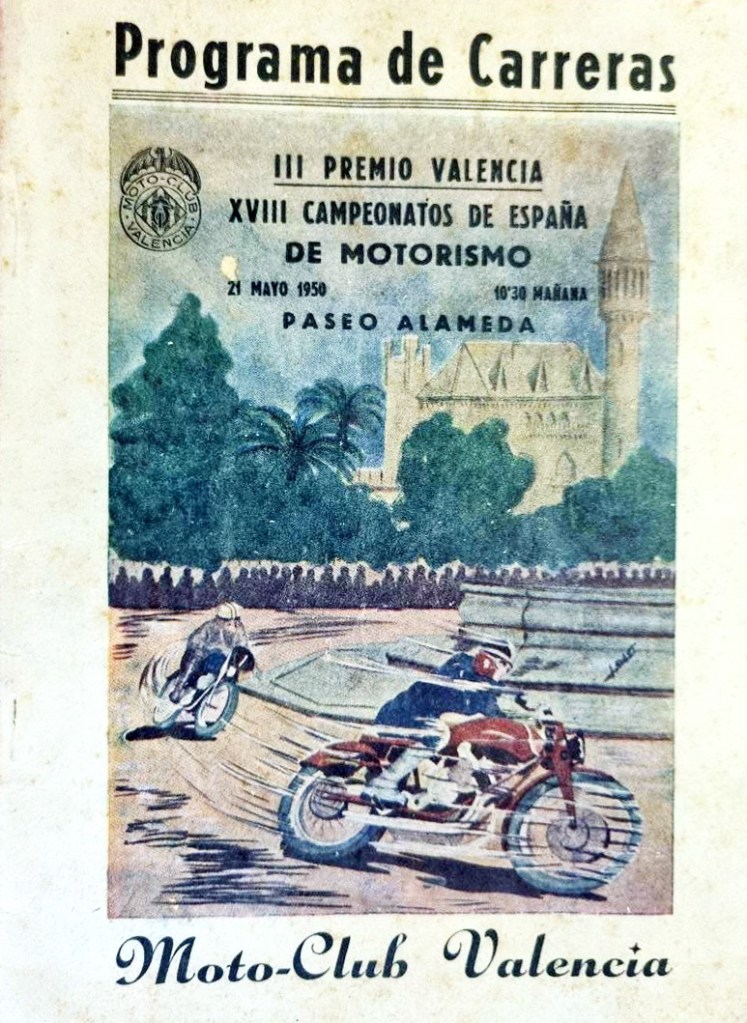
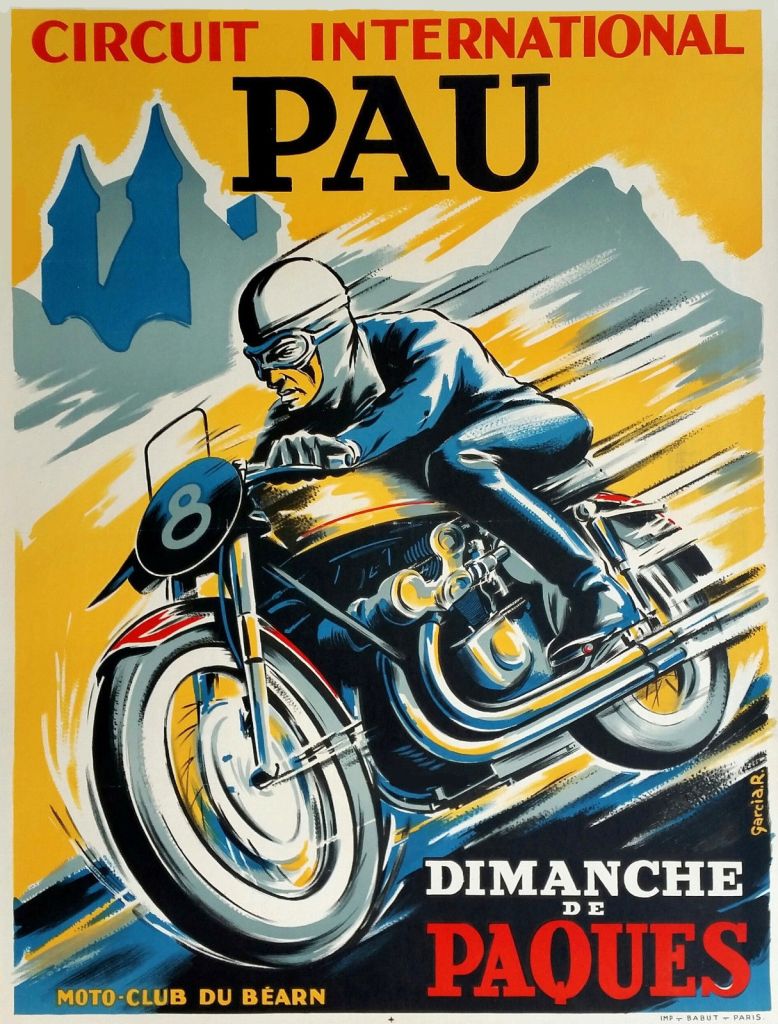
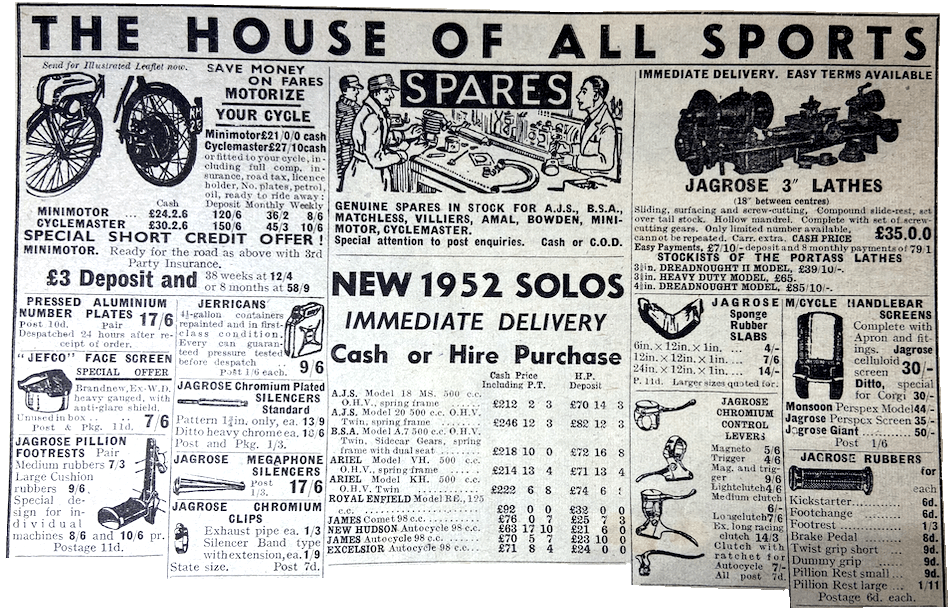
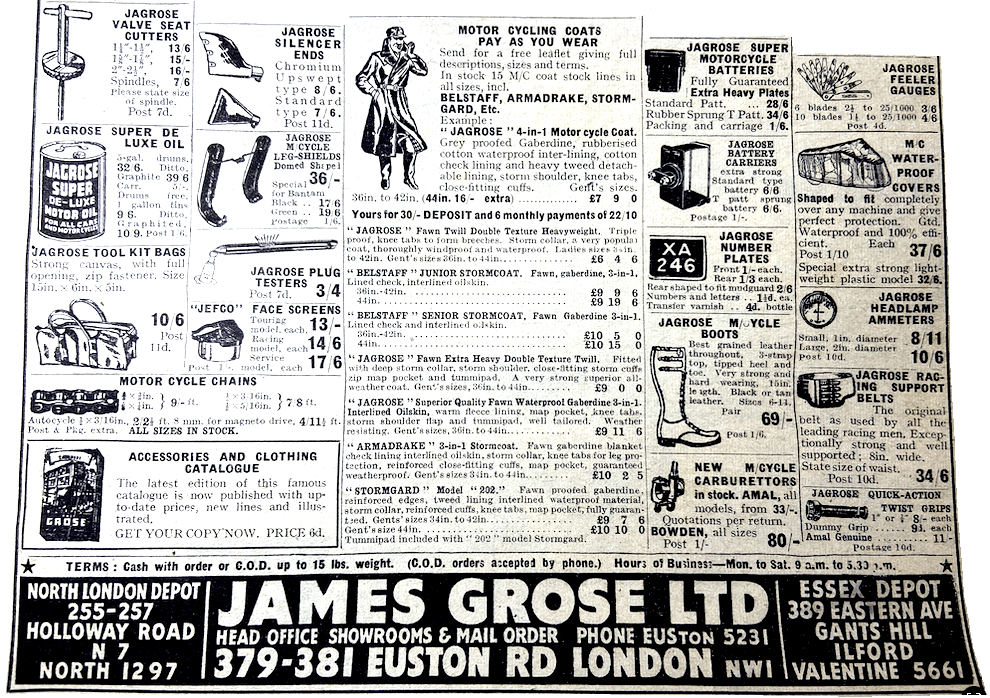
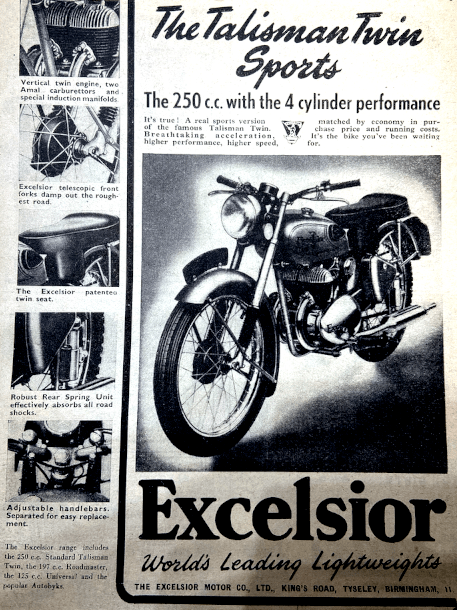
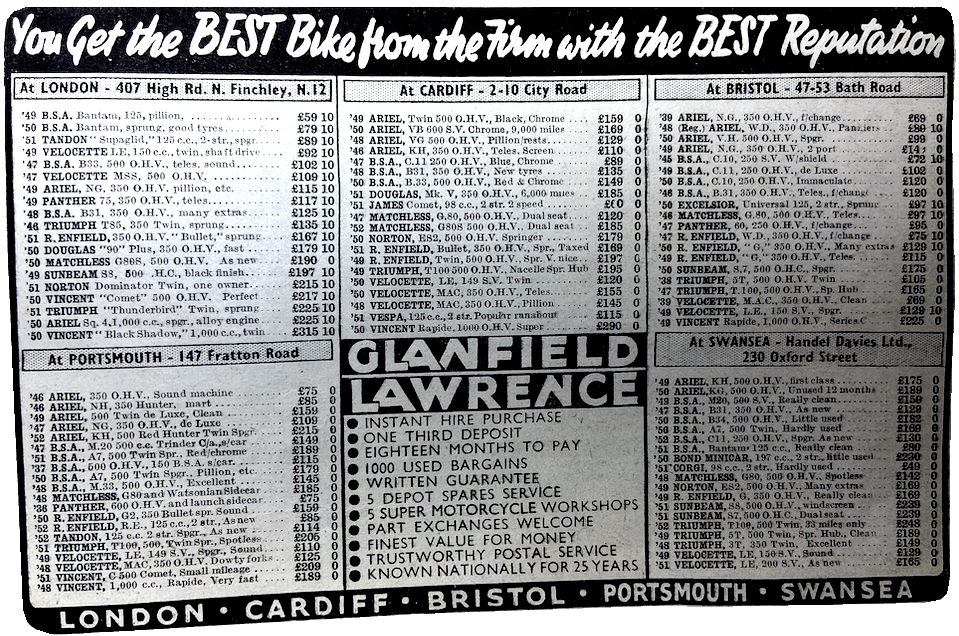

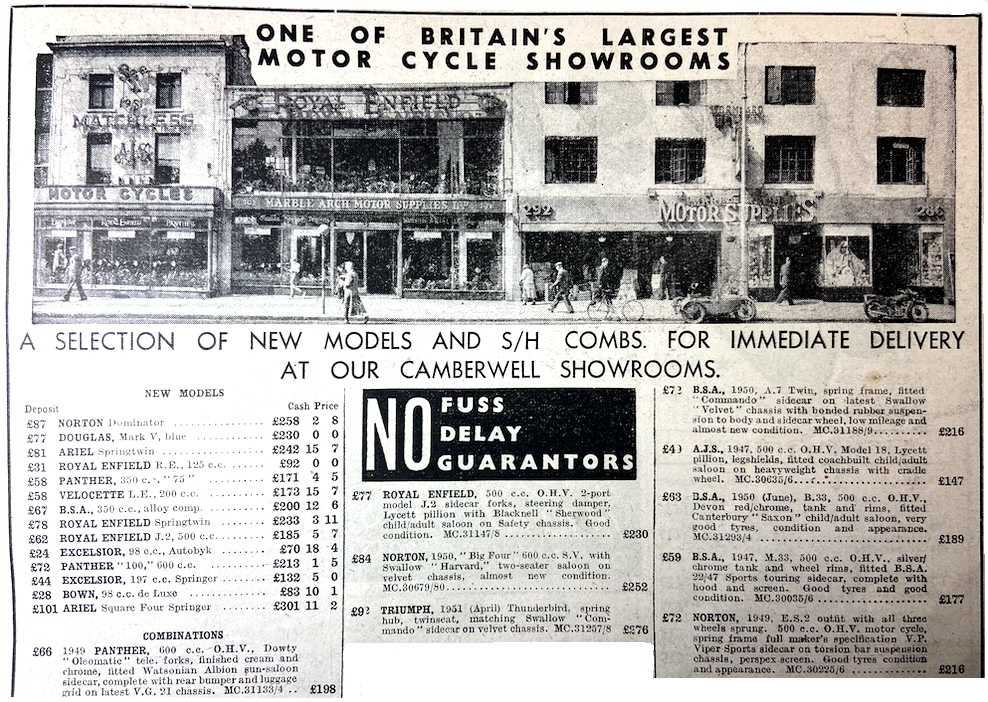
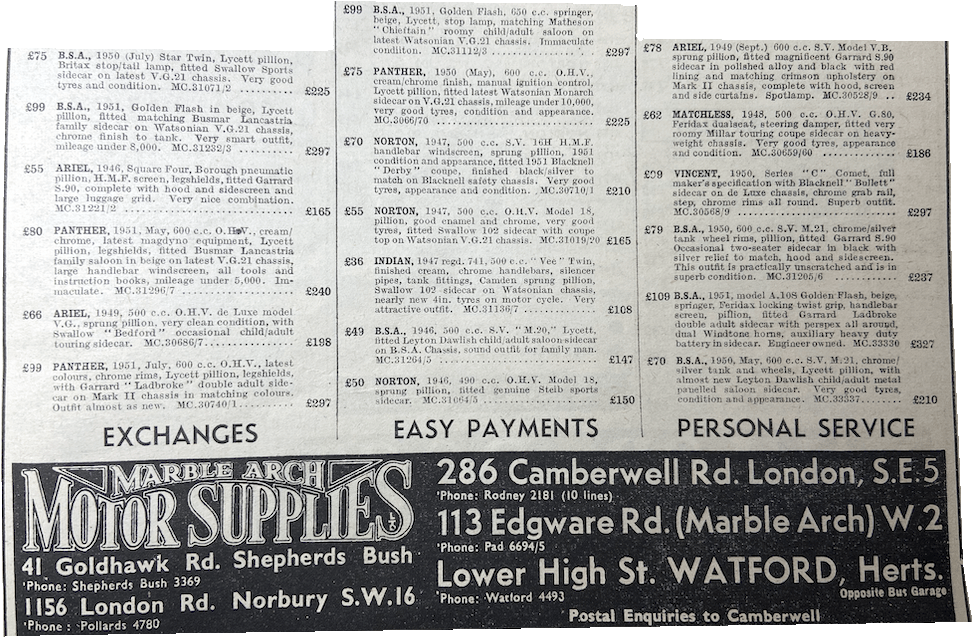
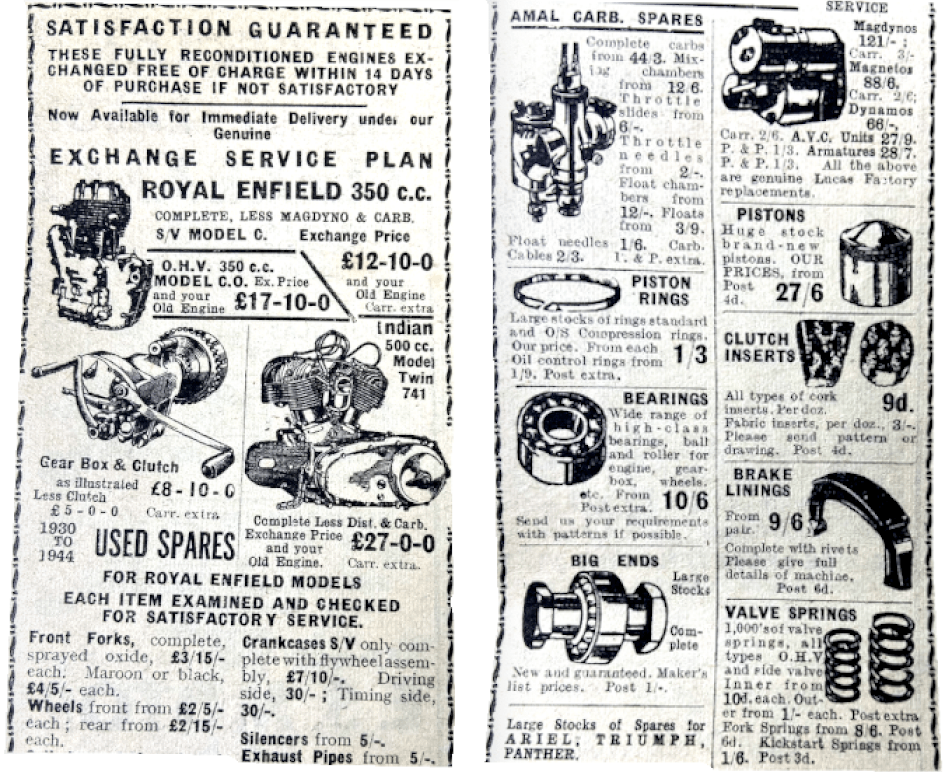
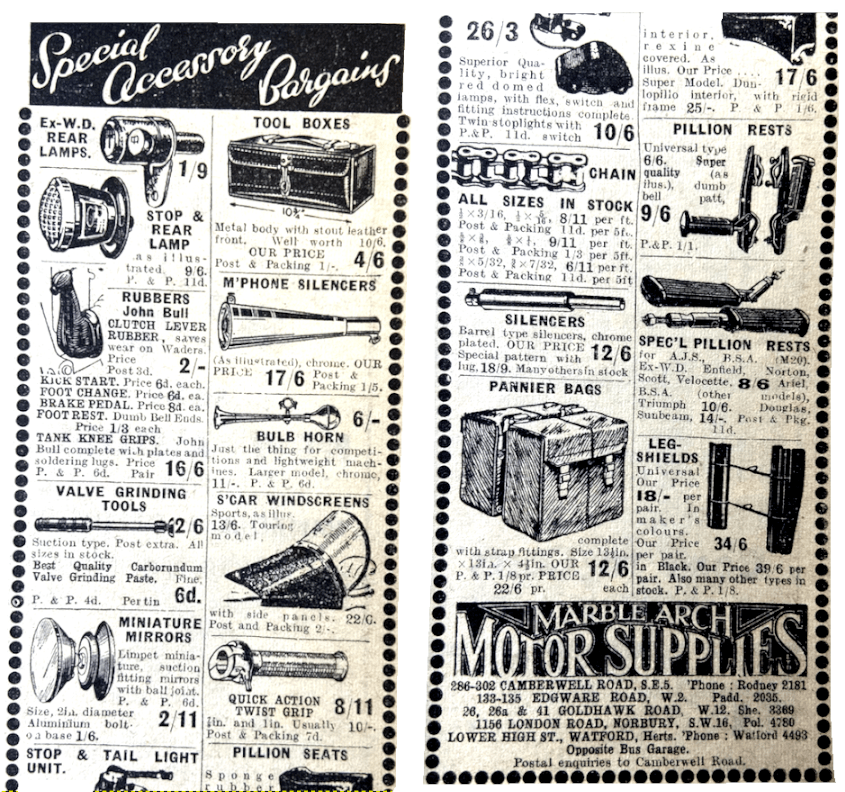
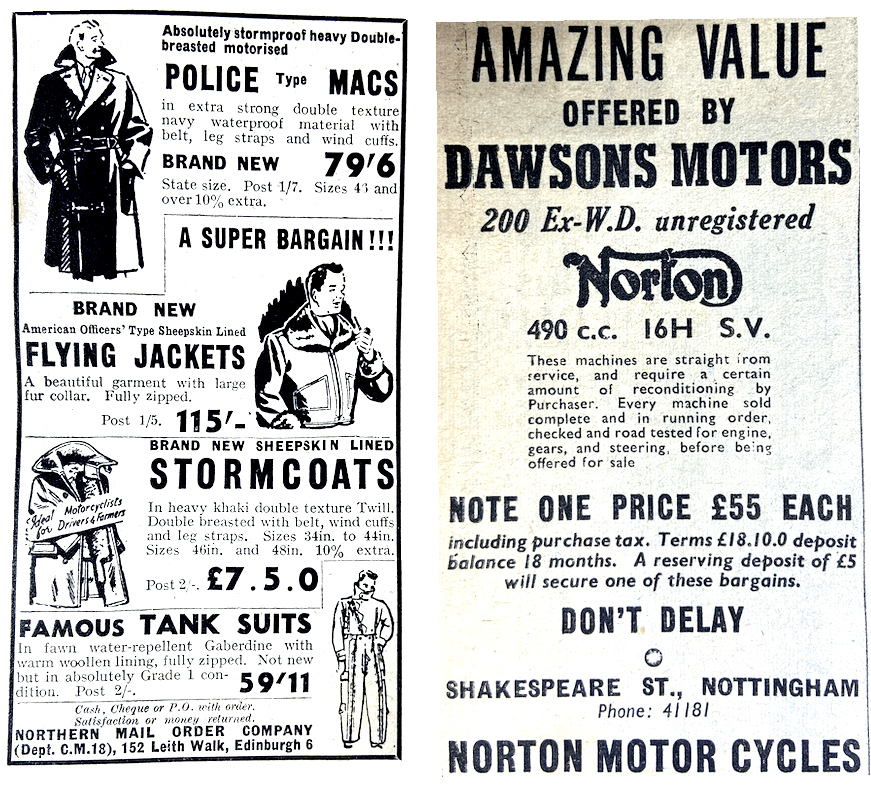
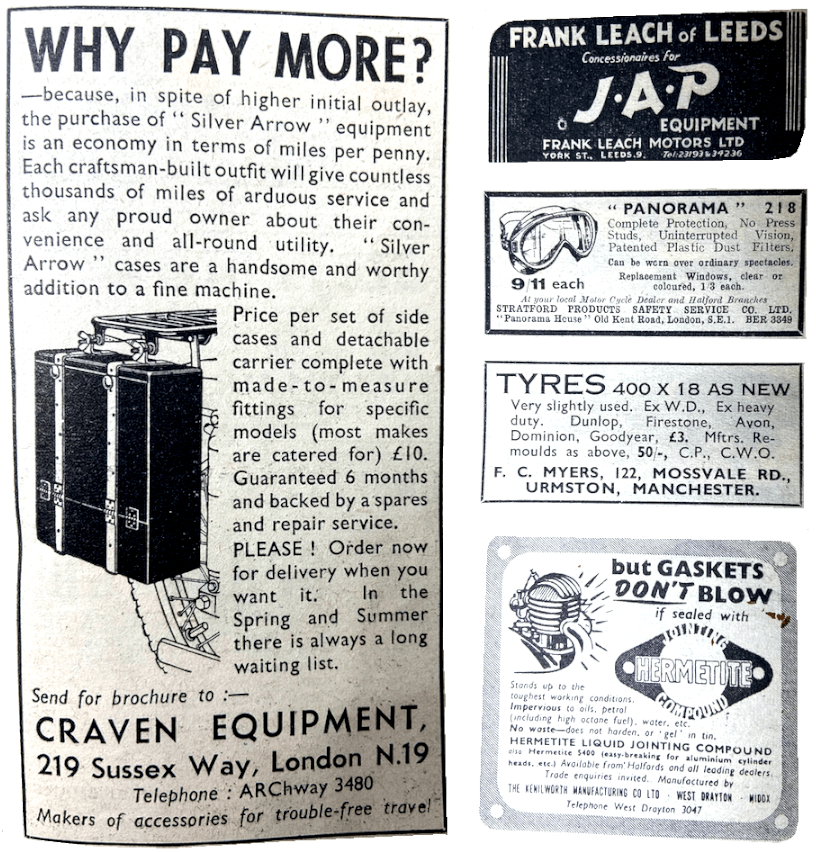

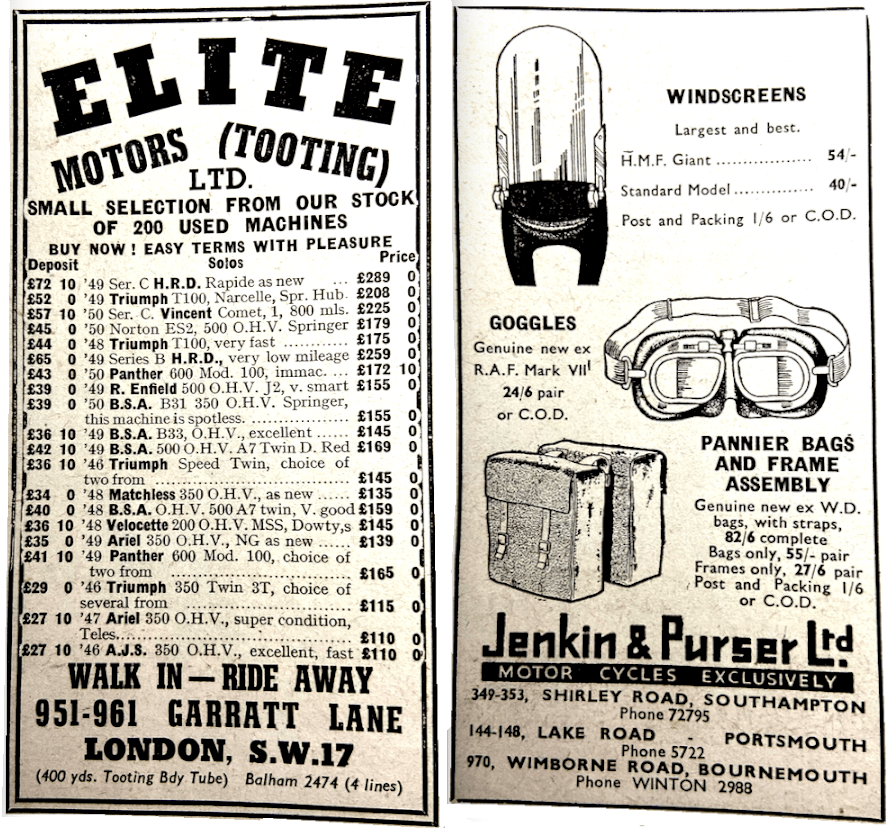
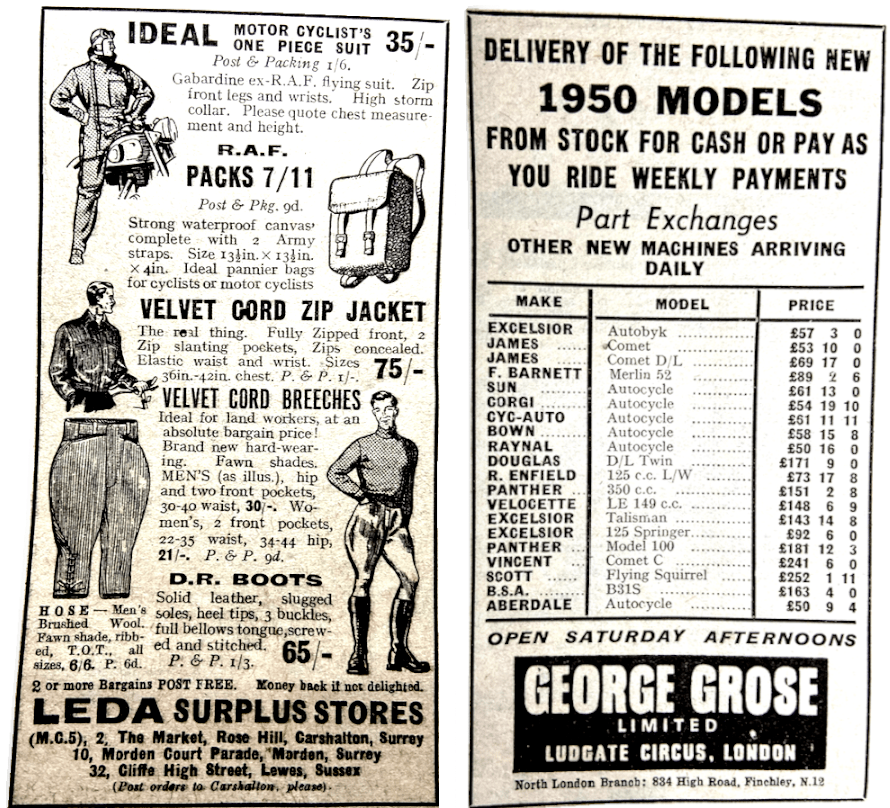
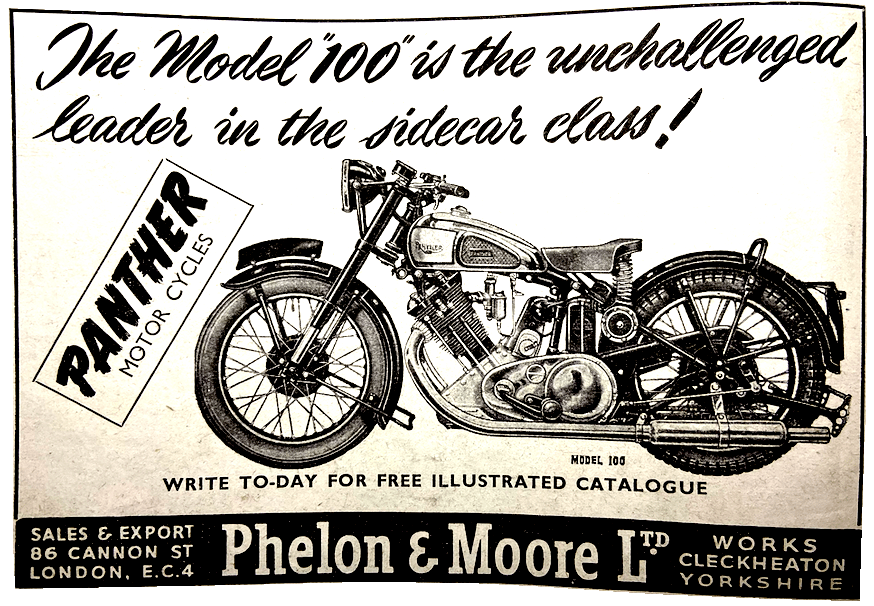
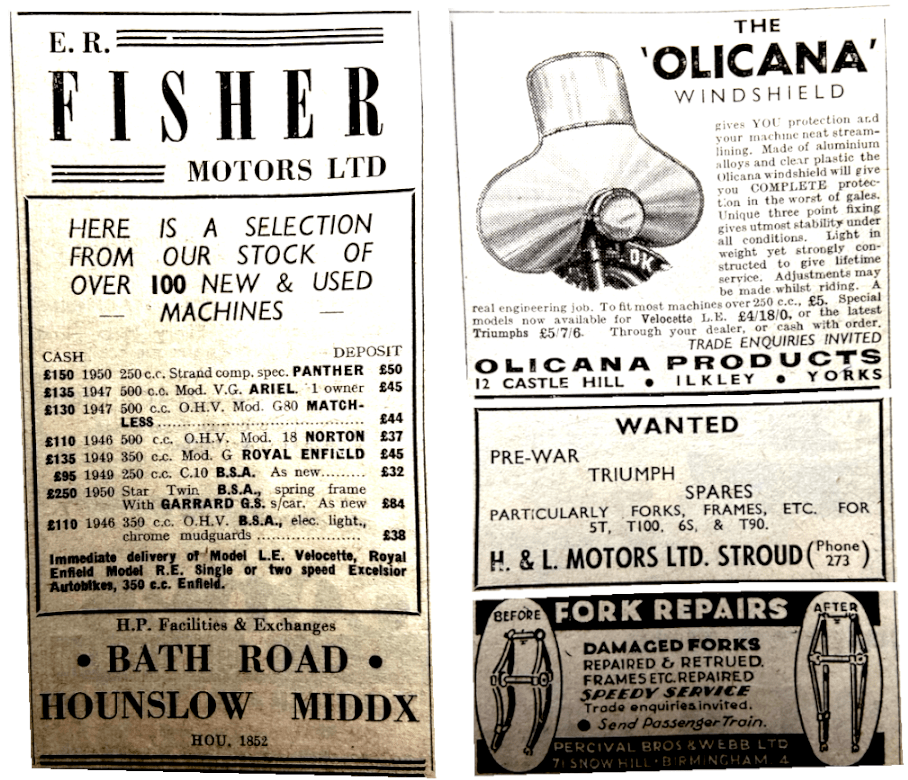
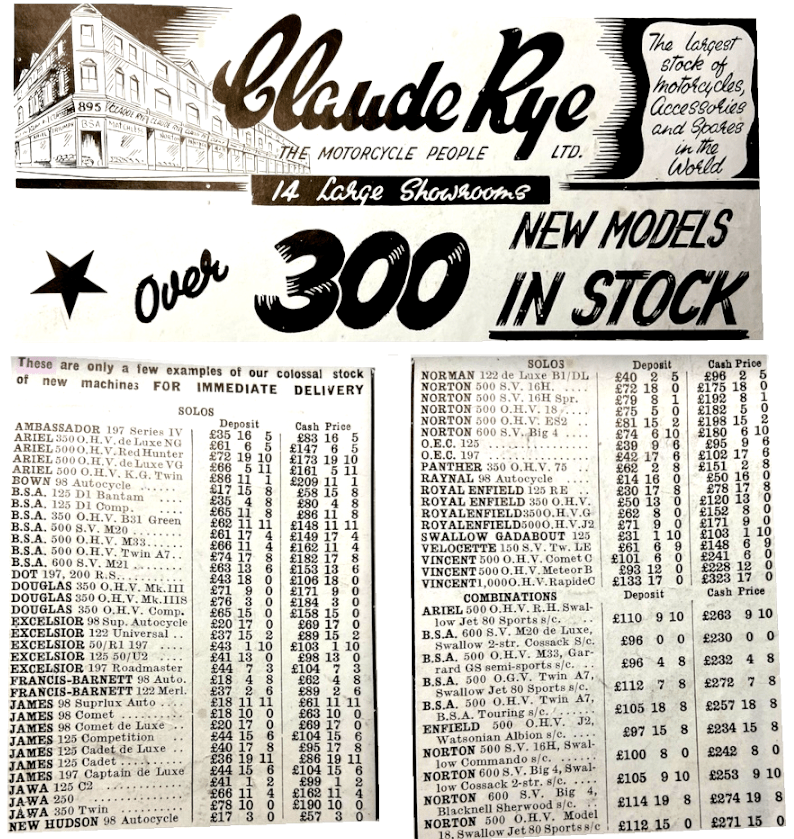
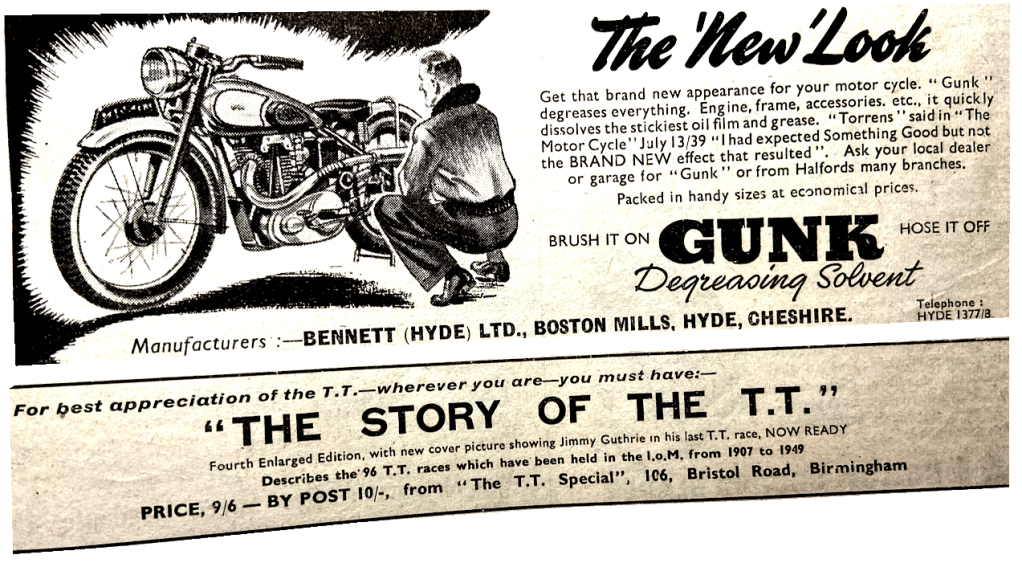
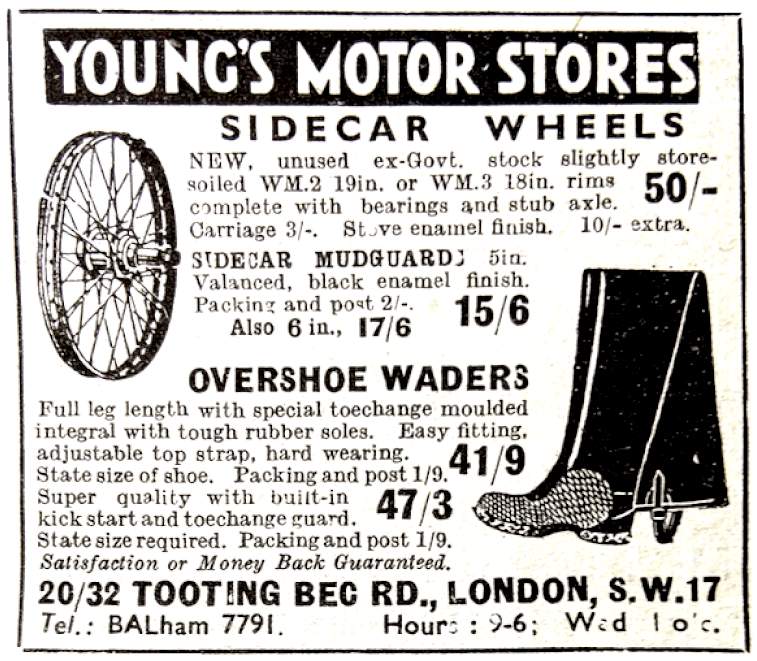

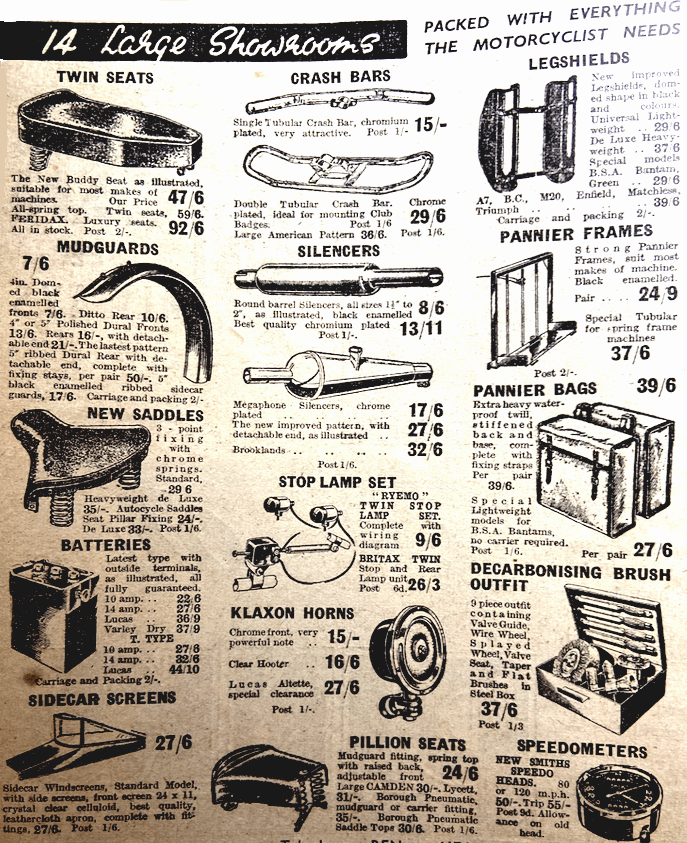
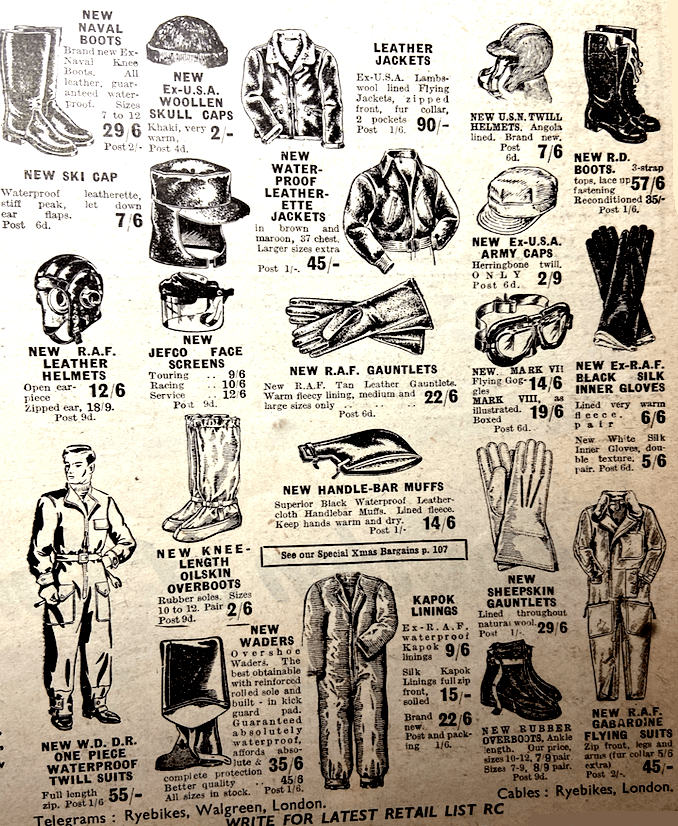
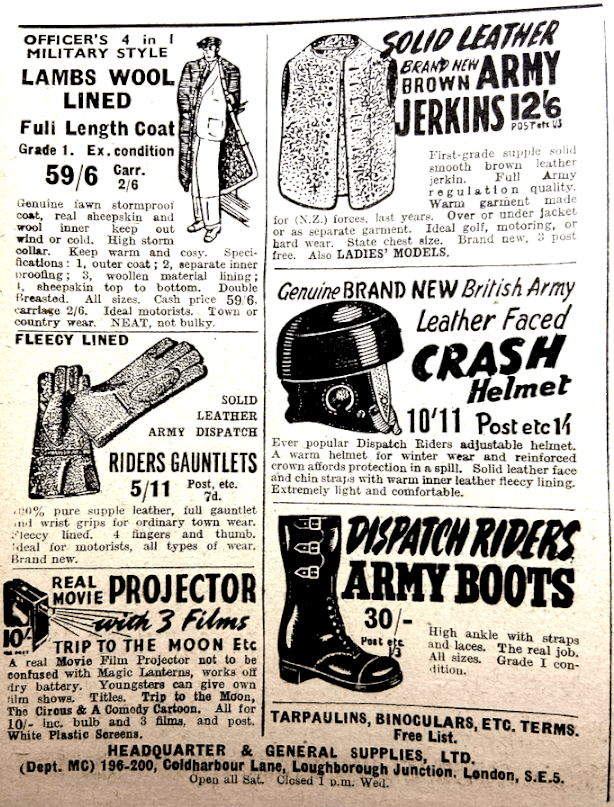
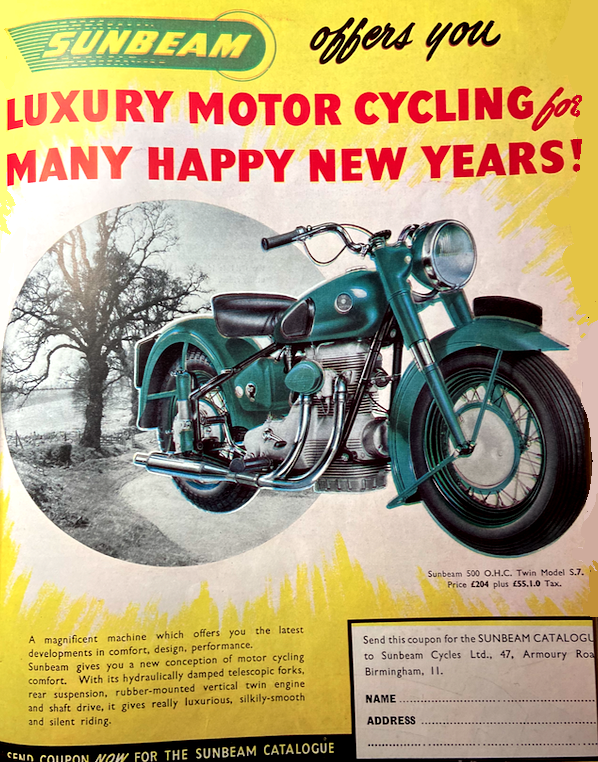
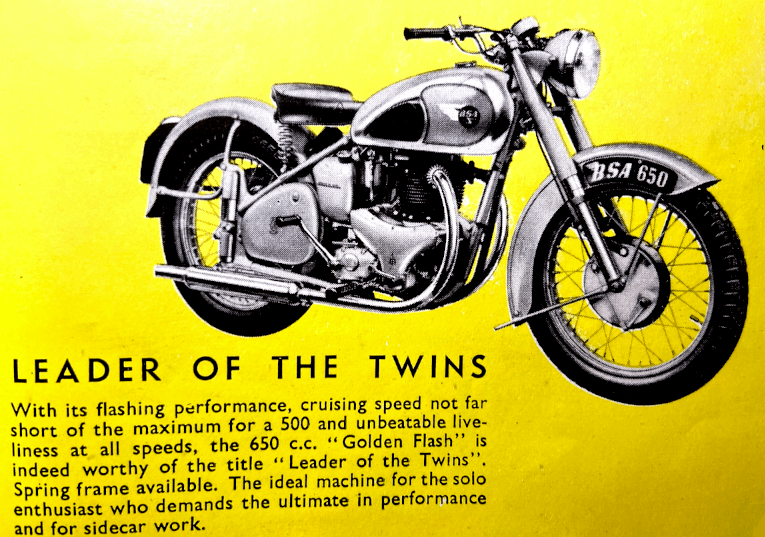
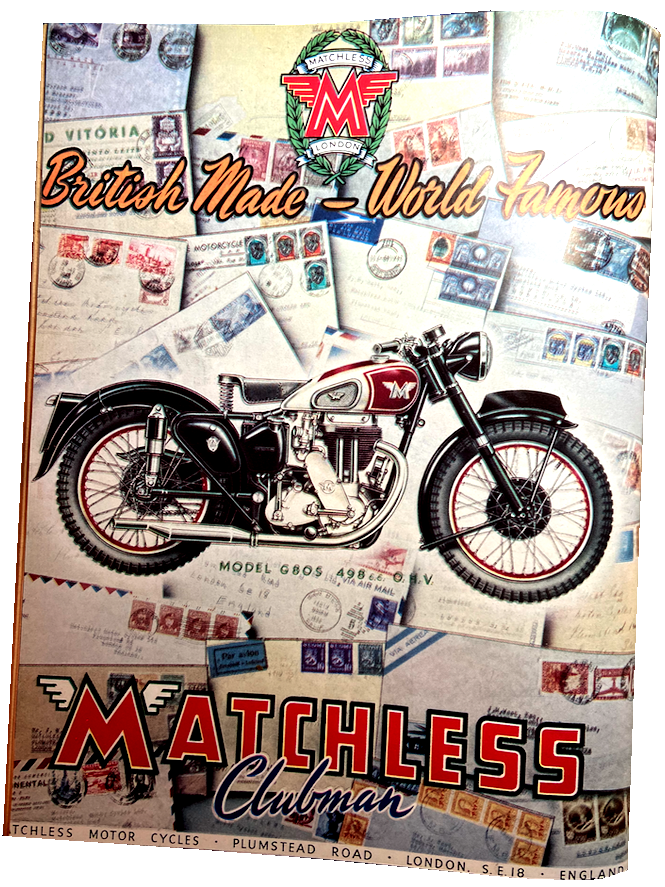
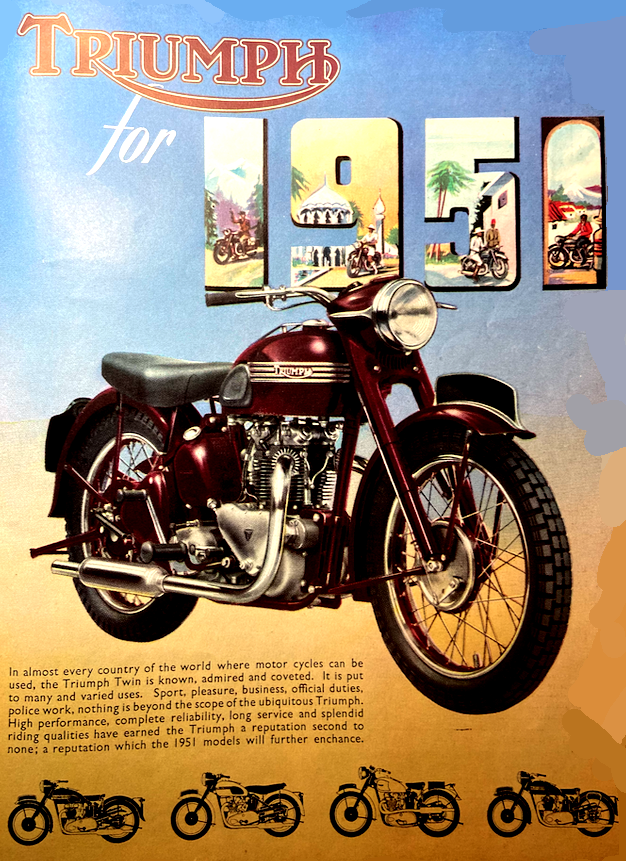
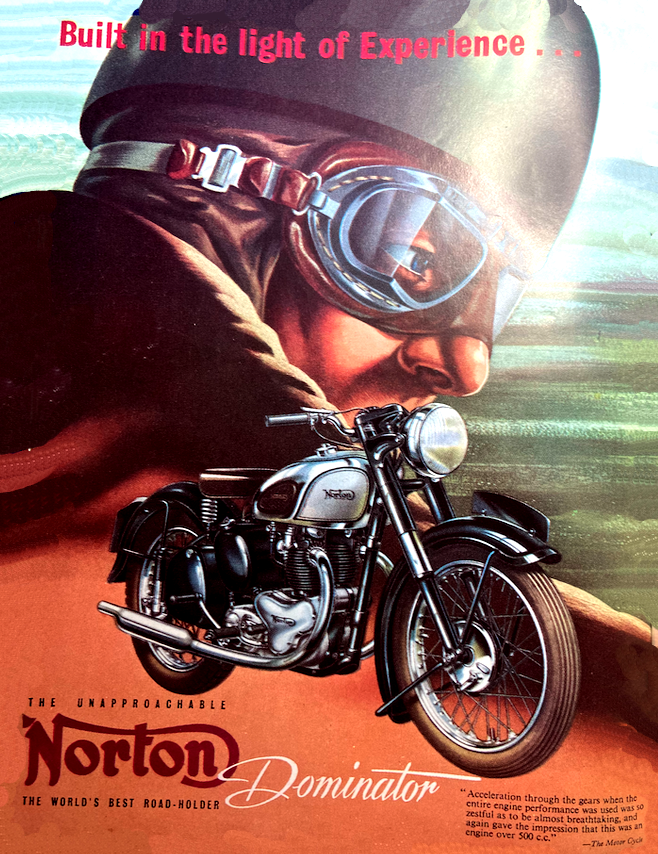
 Motorcycle Timeline