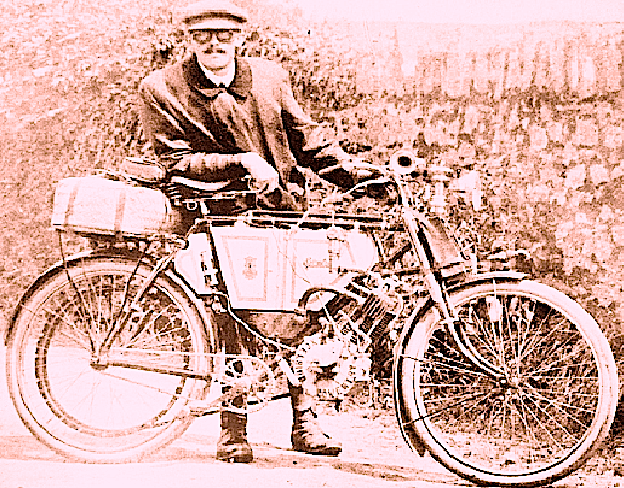
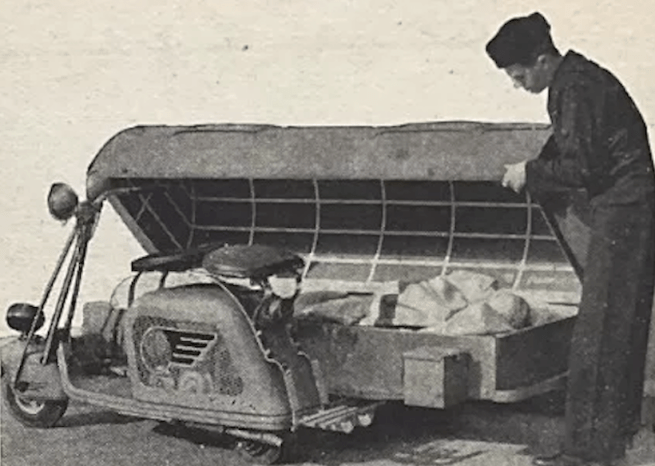
“YOU ARE STILL being exhorted by correspondents to press for a quiet, clean, comfortable and generally refined motor cycle. You have, I believe, been doing that for nearly 40 years. I remember as a small schoolboy waxing enthusiastic over a machine called the TMC, of about 1907. It had a four-cylinder water-cooled engine, three-speed gear-box, shaft and bevel drive, both wheels properly sprung and adequately mud guarded, and an upholstered pan seat. If that machine had survived. and embodied all the intervening improvements in design and metallurgy, the 1942 TMC would render your correspondents’ exhortations unnecessary. I have owned and ridden a 2¾hp 1914 Douglas; a 1920 4hp Douglas to which I fitted rear-wheel springing; a 1923 Coulson-Blackburne, to which I fitted an effective silencer; and a Scott Super Squirrel, to which I fitted coil ignition, a needle-jet carburettor, and an effective. silencer—and its performance astonished many people, especially the police! But they all lacked points embodied in the TMC. What is required is not the ideal motor cycle but the ideal motor cycling community. Manufacturers do not make what they think their clients ought to demand, but what the latter actually do demand: which is, terrific speed and violent acceleration, with all possible dramatic sensationalism and noisy ostentation. As a result, we have that barking, clattering, buck-jumping mechanical monstrosity, the hyper-super-sports ohv single, which excels in all the above qualities, as well as annoying everyone in its vicinity (but its rider) with its ear-shattering-din. And there is no TMC for eccentric people like me who do want comfort, silence, smooth running, cleanliness, weather protection and the minimum of upkeep work; and who, as a result, must resort to a car for utility and convenience, and a bicycle for pleasure.
WH Spoor, MA Cantab, Saltash.”

“IN SOME DIRECTIONS war is a drug; in others, the greatest of all stimulants. So far as motor cycles are concerned the present war would seem to come into the former category, for none of the machines in Service use is in any way ‘advanced’ in design. The majority, indeed, are old-fashioned and there are no signs of fresh developments of a major character, which seems a pity, if not an error. By no means everything is on the debit side. War inevitably has a great broadening influence on the engineering world. New special-purpose machine tools are constantly being introduced, there are fresh methods of construction and fabrication and new materials, while materials which in the past were expensive are produced in quantity and, therefore, give promise of being available eventually at a cost that will permit their use commercially, The motor cycle industry is gaining fresh knowledge in many directions, for its work at present covers many spheres. A proportion of this knowledge, it is certain, will be reflected in the motor cycles of the future. The broadening influences will not be without tangible value.”
“IN REPLY TO questions in the House of Commons last week, Mr Noel-Baker, Parliamentary Secretary to the Ministry of War Transport, announced steps taken to secure greater safety and economy in the use of fuel and rubber on the roads. He said that in co-operation with the Ministries of Information and Fuel and Power, and the Service Departments, his Ministry had endeavoured, by widespread publicity, to induce private motorists, Service drivers and drivers of heavy passenger and goods vehicles to avoid driving at high speeds. The assistance of the BBC and the Royal Society for the Prevention of Accidents had also bees obtained. The purpose of this campaign was to bring home to all operators and driver. of road vehicles the fact that driving at high speeds was not only dangerous but also exceedingly wasteful of fuel and rubber. The fuel and rubber situation was very serious; and to drive at high speeds, except on urgent Government or Service business, was most unpatriotic.”
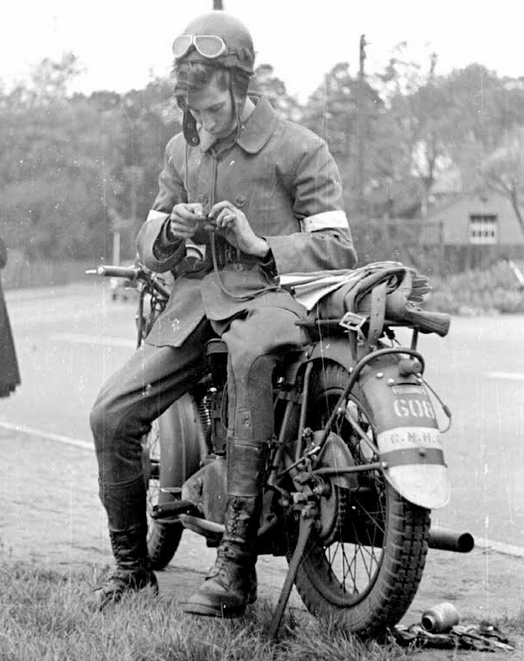
“WEST BRISTOL CLUB will hold a training event for DRs at Lansdown on October 4th, starting at 10.30am. The event is for individuals and teams of three riders, and will ‘take the form of an Army-type trial’. Competitors are asked to bring a picnic lunch. In the afternoon there will be a scramble. Details are obtainable from WH Brown, 58, Worthing Road, Patchway, Bristol.”
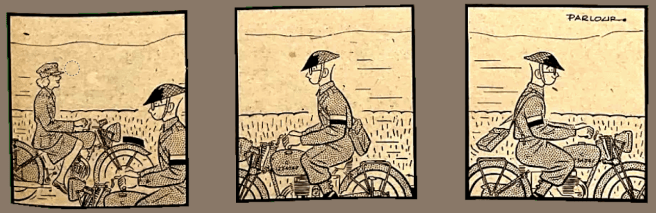
TO REDUCE PETROL consumption to a minimum, the Rugby, Club’s training trial ‘or Home Guard and Civil Defence DRs was held in a field within three miles of Rugby. Riders had to do four laps—one with respirators worn—of a circuit which included several hazards. There were 45 entries, including eight teams. Machines were examined and marks lost for missing or defective equipment. As a further teat, riders were given a verbal message at the beginning of the trial, and subsequently had to repeat it to a marshal; marks were lost for each incorrect fact. Three officers from a Coventry Home Guard company gave a polished display of riding and put up the best team performance, closely followed by another Coventry Home Guard team. A Rugby Home Guard team was third. Later, an advanced trial was held for the more experienced riders, to serve as a demonstration for the remainder.”
“IN SPITE OF everything (not least that there are 43 serving members), there was an attendance of 76 at the recent dinner of the Manchester Eagle MC. Alec Parker, in proposing ‘The Club and Absent Friends’, reminded the party that by swallowing their pride and turning out on runs on their pedal cycles they were keeping things together for ‘the lads’ when they returned. CA Barker, the youngest committeeman, proposed ‘The Ladies’. A telegram was received from the ex-hon secretary, Ordinary Seaman Peter Green.”
MEN 18 YEARS OF age can now take advantage of our official recruiting scheme, the minimum age for DRs in the Royal Signals having been lowered. Motor cyclists approaching 18 may fill in the official form; the names of show approved will be passed to the War Office approximately’ a month before they reach 18. Only those who have motor cycle experience can be considered via our special scheme. Those released for service with the Forces can also make use of ourRegister. Brief details covering DRs, drivers and the Corps of Military Police and, as regards women, the ATS, are given below. Those men who have registered under the Armed Forces Act must include in their applications their registration number under the Act and the address of the Ministry of Labour office at which they
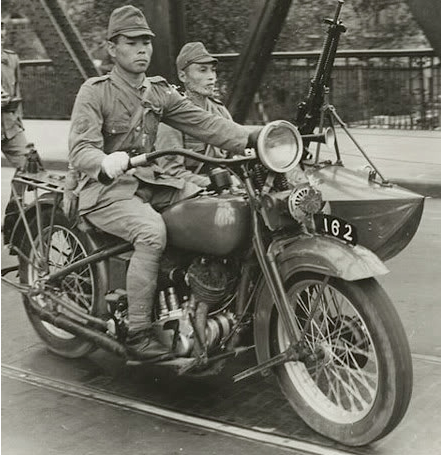
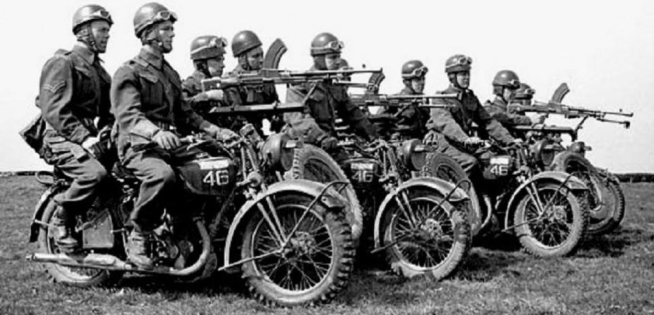
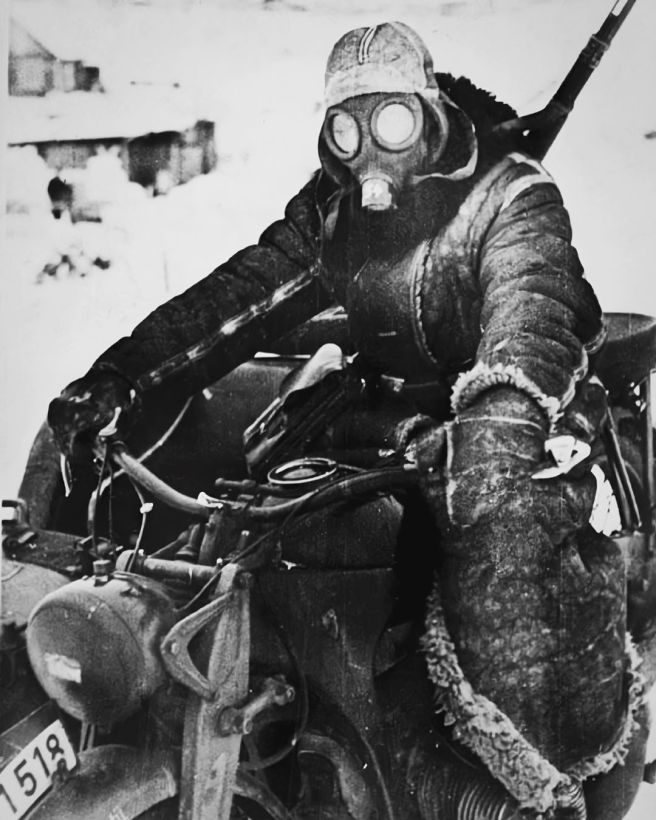
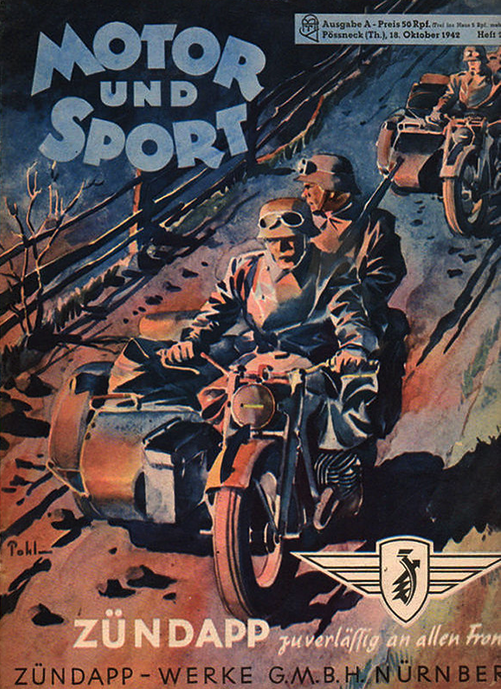
“IN THE FOREFRONT of the German advance in Russia are motor cyclists with anti-tank rifles mounted on their handlebars, according to a radio announcement last Friday. An obvious question framed by any motor cyclist is: ‘Are we, who in trials and races have been the unwitting mentors of the Germans in motor cycle matters, adopting similar tactics?’ Naturally, information on this subject is not likely to be vouchsafed. So far the British Army has made little, if any, use of motor cyclists in an offensive role, in direct contrast with Germany. In France the latter employed them with demoralising effect in conjunction with the Panzer divisions, using them as spearheads and to scour side roads and lanes. In Norway motor cyclists were widely used to probe the Allied defences. Strange as it may seem, it appears that the German methods in France tended to cloud the issue so far as our own authorities were concerned. There were instances in which the Germans unwisely used motor cycle troops en masse, and when the leading men were picked off by rifle or machine-gun fire the remainder were killed or injured in the ensuing crash. Are there not ways and means of employing motor cycles for offensive purposes which afford the riders a reasonable degree of safety? Obviously, no one would advocate using them in a body in the way adopted by Germany in France. Has the tactical use of motor cyclists ever been thoroughly explored—needless to say, in conjunction with the question of suitable, really quiet and light motor cycles?”
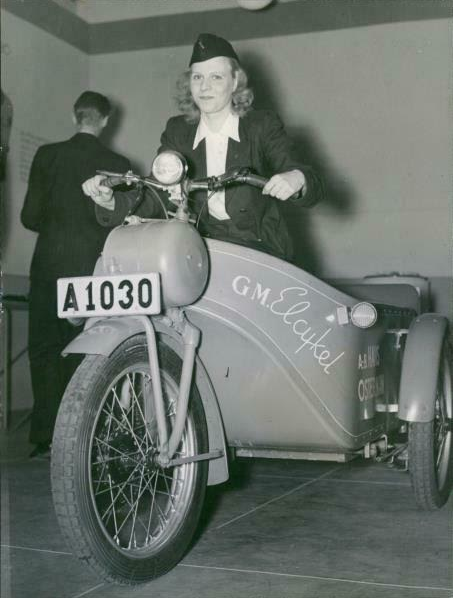
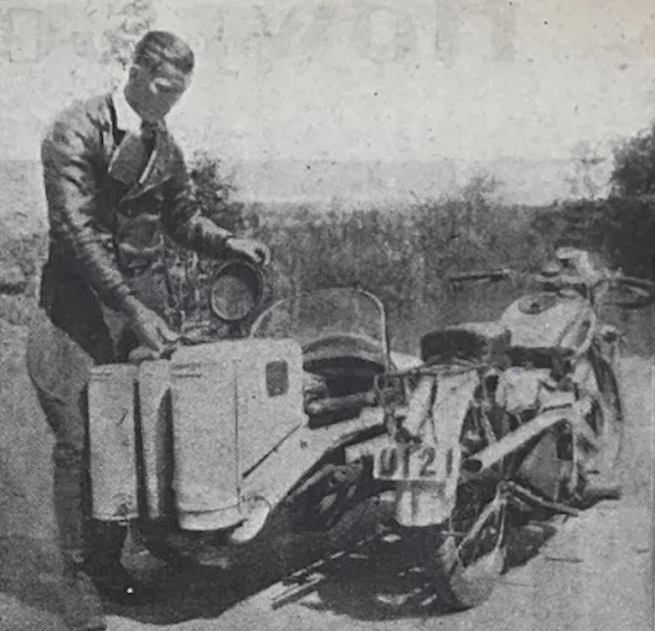
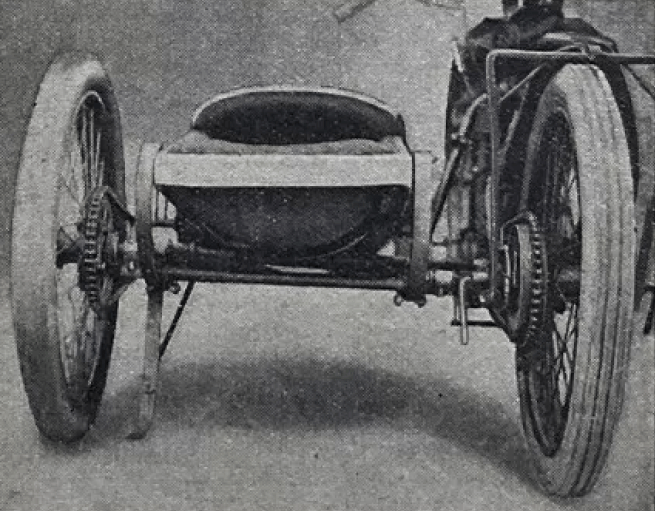
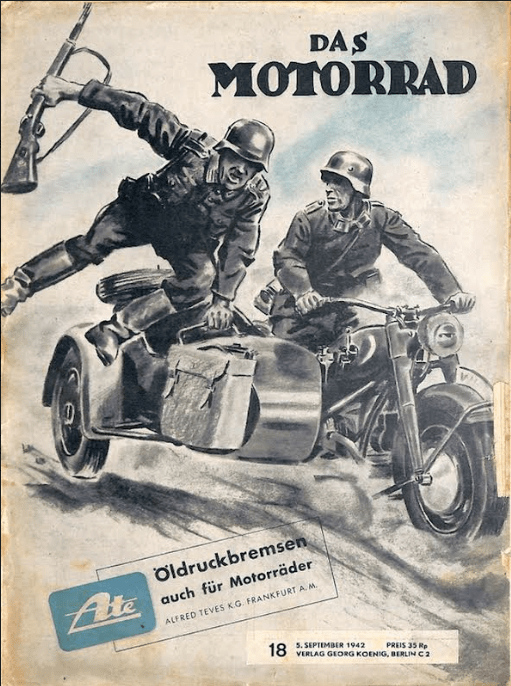
“THE AMERICAN ‘JEEP’ or bantam car has entered the fray, proved itself and reached large-scale production. Its capabilities across country are remarkable, and teaching a man to handle it efficiently takes less time than it does to teach him to make the best possible use of a sidecar-wheel-drive outfit. For special purposes, however, the latter would still seem to have a place. It is appreciably lighter, turns round in little more than its own length, and demands less rubber, steel, aluminium and fuel. That the Germans have made great use of sidecar machines is only too well known. Motor cycles have, of course, been employed by the 8th Army in .many cases where difficulties of navigation and over supplies do not arise, as witness the various photographs we have published. DR work in the desert is but one phase of the present war. Motor cycles, which often proved worth their weight in gold during the retreat to Dunkirk, will almost certainly play a great part in the offensives of the future.”
THE WAR OFFICE indeed decide that military outfits were rendered obsolete for cross-country work by the Jeep, but M20 and 16H outfits were still supplied for cheap passenger and stores transport, particularly with the RAF and the Home Guard. Sidecar-wheel-drive combos continued to earn their keep in the North African deserts.
“AT A TIME WHEN many clubs are hard put to it to find ways and means of carrying on now that club motor cycling is out of the question, it is encouraging to find that a new club has come into being. The recently formed Reading Ace MCC has secured a clubroom at the Crown, Crown Street, Reading, for use every Friday, from 7.30-10pm; all motor cycle clubmen in the district are invited. Tomorrow evening (Friday) there will be talkie film show. A library is being formed. The hon secretary is D Broughton, 25, Beresford Road, Reading.”
“ON NOVEMBER 21st a training event was held at Bagshot for Home Guard despatch riders of L and M Zones. Training on six different types of hazard, with a demonstration at each, was followed by a competitive event, and the Home Guard authorities seemed well satisfied with the progress made.”
“WEST BRISTOL CLUB supplied the ‘civilian experts’ to demonstrate to and instruct some 96 Home Guard despatch riders on Sunday in a special DR training scheme sponsored by Gloucester Home Guard.”
“MOTORISTS ARE REQUESTED not to exceed 40mph. The request comes from the Government. No Order or Art is to be introduced. Lord Templemore made this announcement in the House of Lords last week. The Government had been asked whether it was proposed, during the present emergency, to prevent high-speed driving, thus bringing about economies in tyres, petrol, oil and maintenance generally. It was pointed out in reply that as private motoring is, to all intents and purposes, to cease at the end of the month with the withdrawal of the basic petrol ration for cars, the saving of rubber by the imposition of a 40mph speed limit on private cars, as in America, would be small, also such a speed limit could not be enforced without greatly increased police supervision. Various measures for saving rubber were announced, such as the use of fewer and smaller cars for staff purposes, both by the Army and Government departments, and the issuing of instructions that 40mph is not to be exceeded by the drivers of these vehicles save in exceptional circumstance. (The Fighting Forces, of course, already have a comparatively low maximum speed for each type of vehicle.)”
MOTOR CYCLE RACING in the USA was suspended for the duration. At the final dirt-track meeting nearly every bike on the track was British; most of the trophies at the last road race on the Pacific Coast went to Triumphs or Ariels.
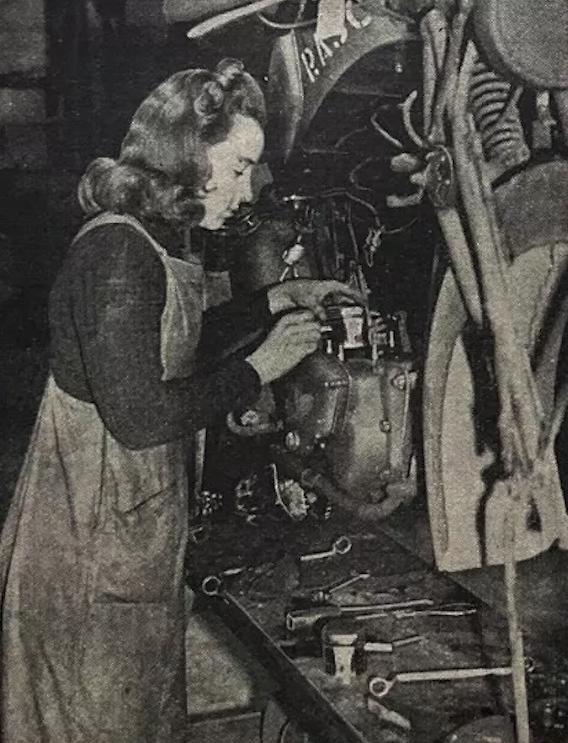
TWO YEARS AFTER the Luftwaffe flatted Triumph’s Coventry factory production resumed at the new site in Meriden, Warks. Triumph’s wartime production included generators for the RAF, using 500cc Triumph engines with alloy barrels.

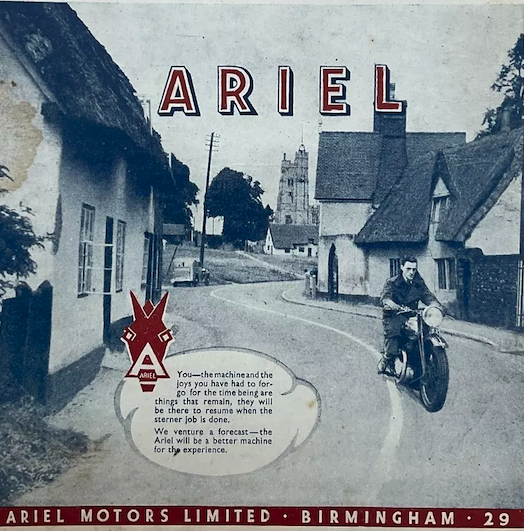
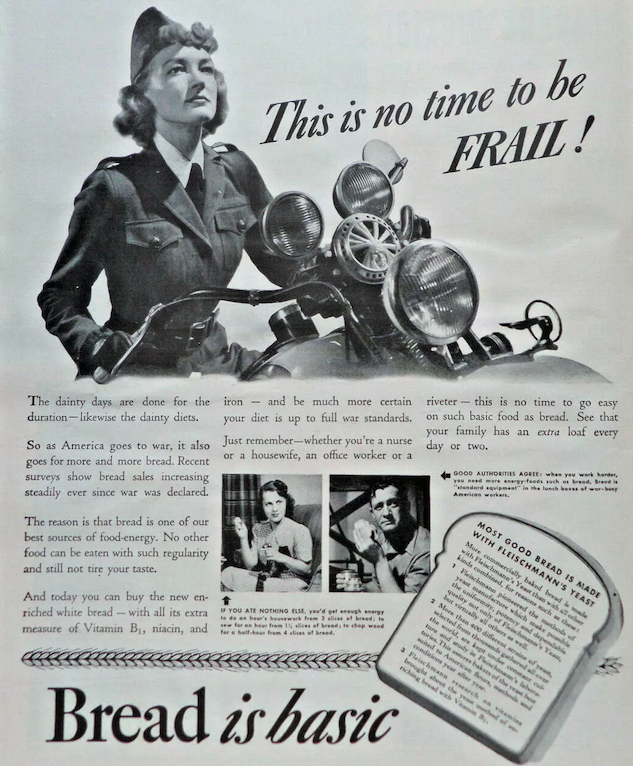
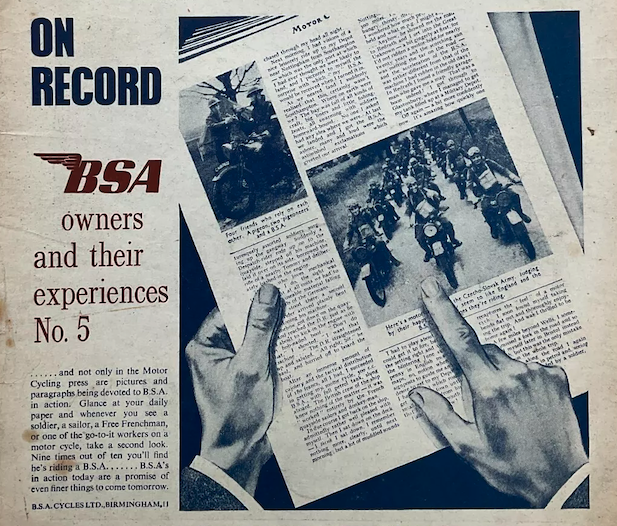
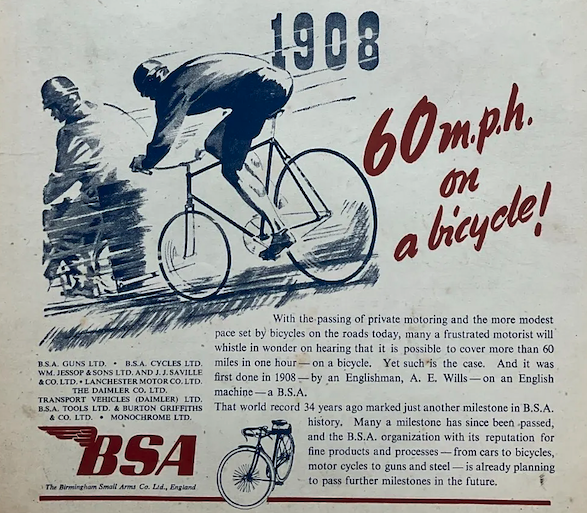
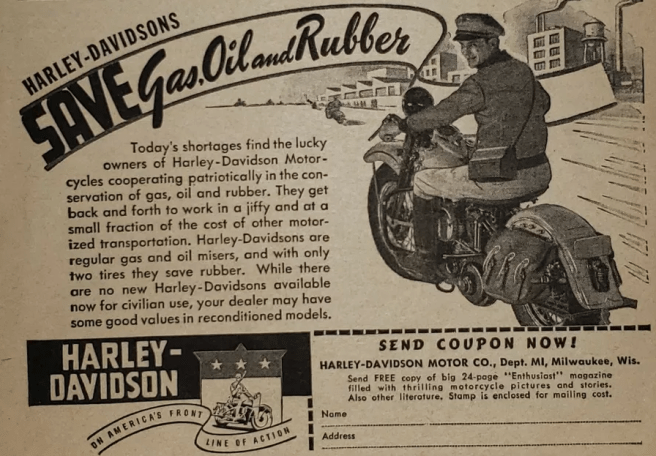
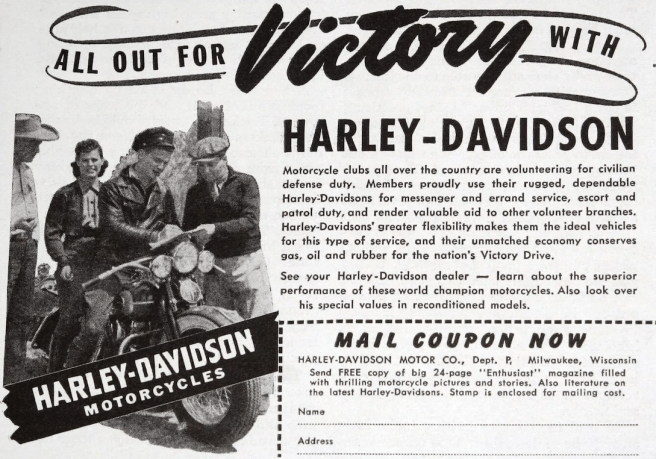
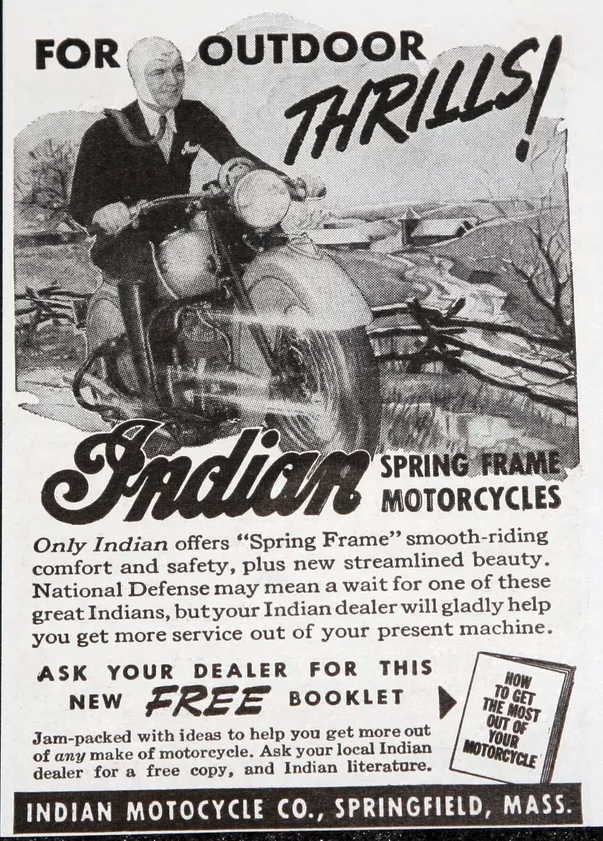
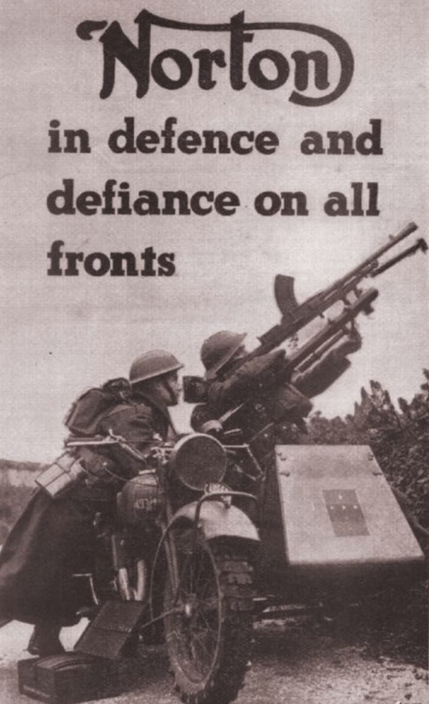
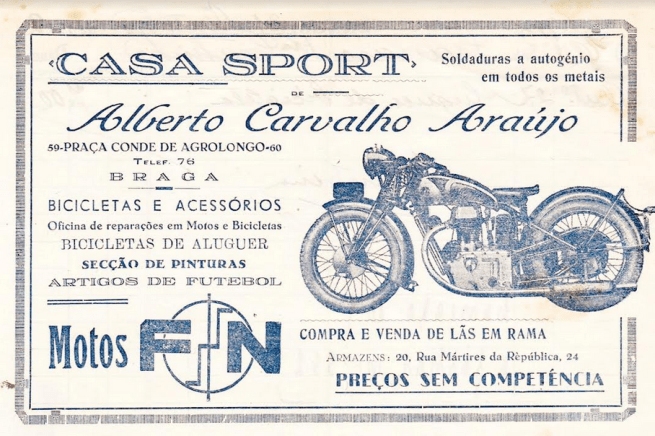
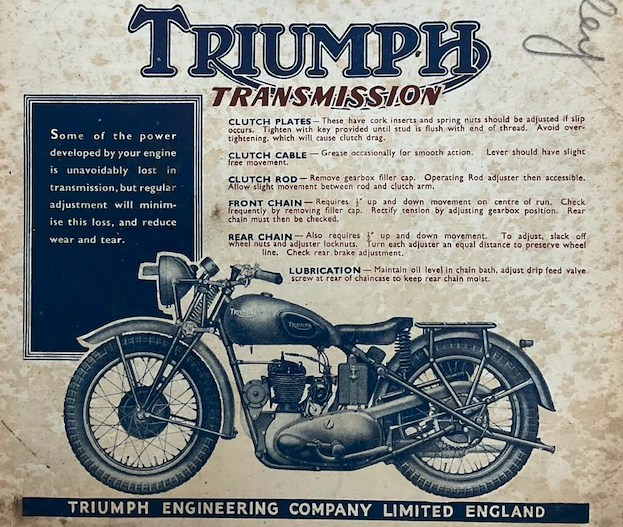
You’ll find more 1942 pics in the World War 2 Gallery; here’s a selection of 1942-vintage ads.


 Motorcycle Timeline