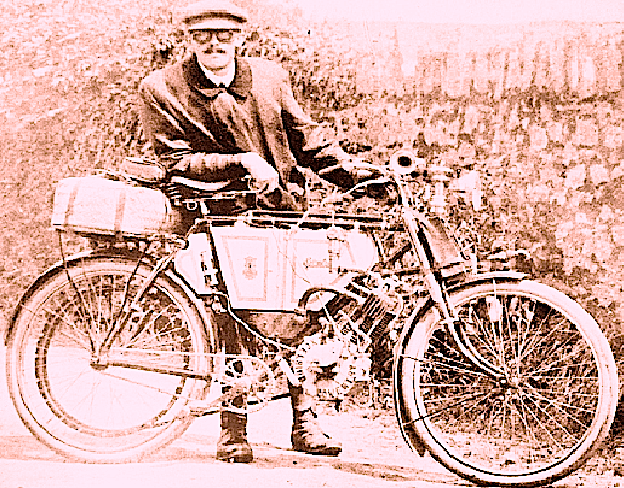
NOT A FACT BUT A WHIMSY, courtesy of Motor Cycle technical editor Vic Willoughby who, in a 1969 technical review of the blown Beemer that carried Georg Meier to victory in the 1939 TT, suggested: “Had the war been averted the 1940 Senior TT must have been one of the most thrilling ever, with supercharged multis entered by BMW, Gilera, Velocette and AJS, and probably by DKW and NSU too.”
ALL ROYAL NAVY DRs were women, mainly riding 250c BSA C10s and 11s and 350cc Triumph 3HWs and Royal Enfield WD/Cs. Of the 303 women who died on active service during the war, a third were DRs.
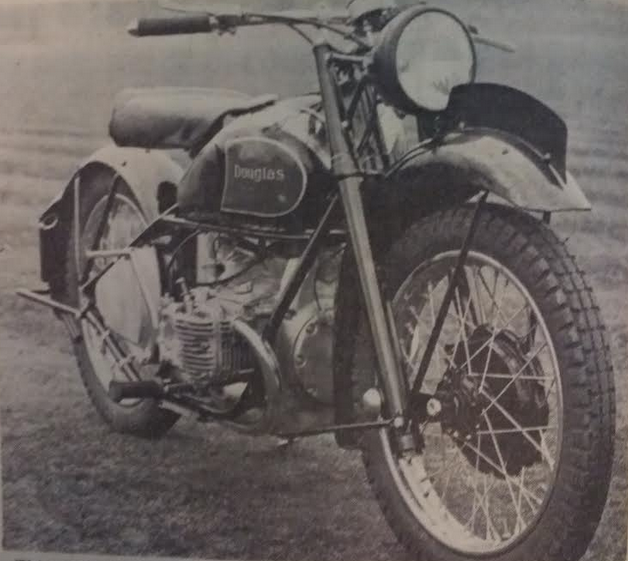
THE LUFTWAFFE DESTROYED Triumph’s Coventry base where production had started on a batch of 50 lightweight (247lb) 350cc twins for the Army.
FROM THE AUSSIE Daily News: “When his motorcycle and sidecar outfit struck a straying cow at Belmont early today 34-year-old Arthur McIver Ball, patrolman of the Royal Automobile Club, received severe injuries. A St John ambulance took him to Perth Hospital, where he was admitted suffering from a fractured skull. His condition was later reported to be very fair. It is understood that Ball had been called out to give help to a stranded motorist. He was travelling east along Great Eastern-highway and just near the corner of Norwood-street collided with a black cow. The motorcycle and sidecar overturned an Ball was thrown to the roadway. The cow was not seriously injured.”
LIKE THE NAZIS, The Japanese military government had taken control of industrial production. It named Tohatsu as the sole supplier of small petrol engines.
THE ARIZONA HIGHWAY Patrol acquired 10 1,000cc Crockers which was bad news from speeders as the Crocker was, probably, the fastest production motorcycle on the planet.
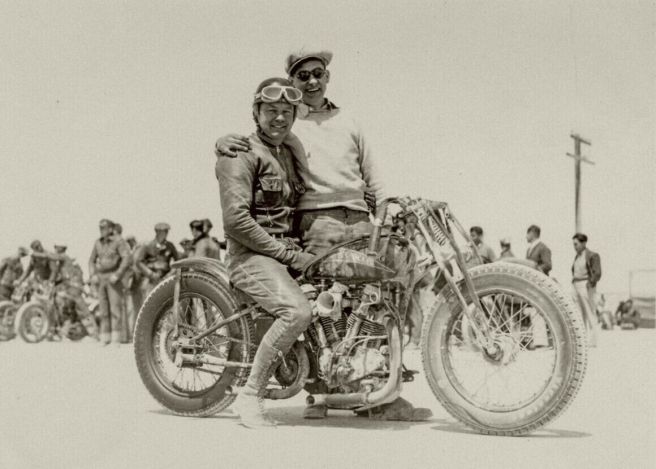
A HUGE NUMBER of WD bikes were lost in the evacuation from France so emergency orders were placed with all the major manufacturers. The War Office also snapped up civvy models from factories and dealers; thousands more were donated by patriotic enthusiasts. Harleys and Indians began to arrive from the US under the Lend-Lease programme.
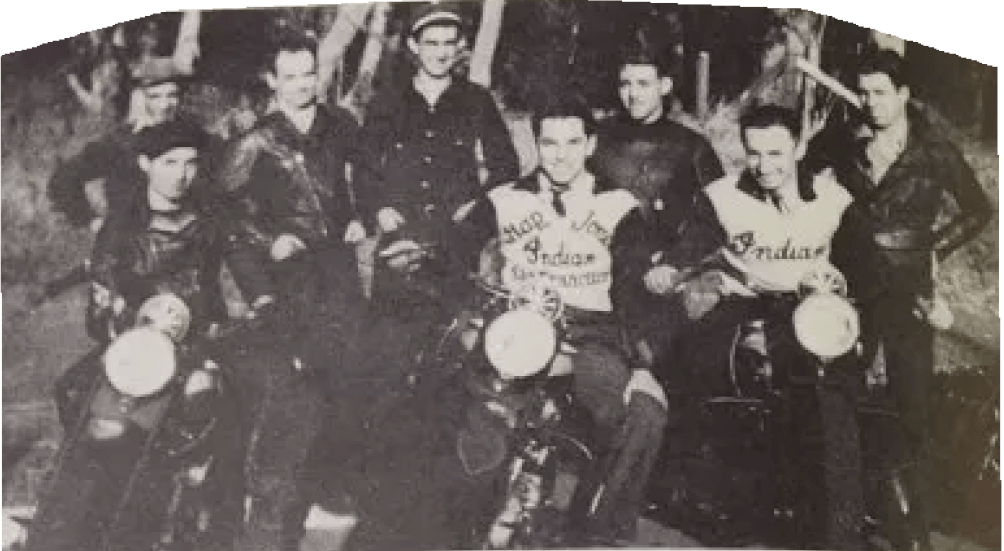
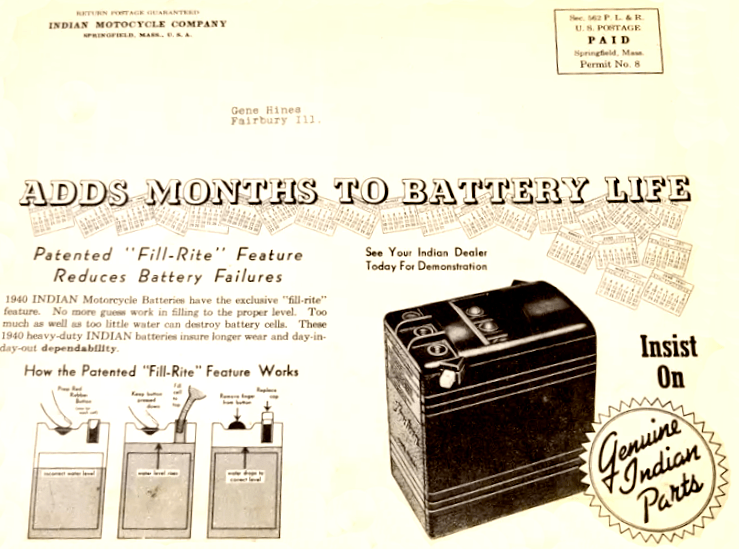
Lend-Lease was of critical importance to the British war effort but America was still at peace and the civilian motor cycling scene was flourishing, as is indicated by these excerpts from the Indian factory magazine…
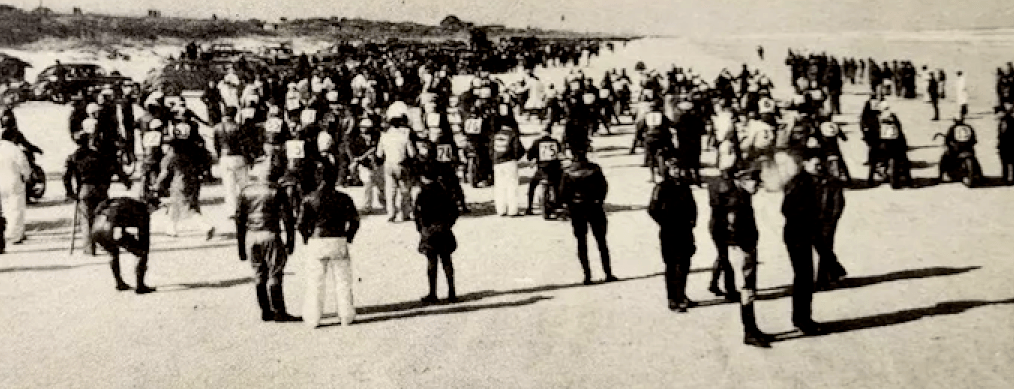
“RACING FASTER THAN the cold, biting wind that whipped into their faces as they sped around the frosty beach track, Ted Evans, Venice, California, Indian rider and Babe Tancrede, Woonsocket, Rhode Island, Harley rider, won the first crowns of the 1940 riding season at Daytona Beach, Florida, January 27 and 28. Evans, pacing a field of 119 riders, roared down the beach at the blazing speed of 79.89mph to cop the 100 Mile Novice race and eclipse the 1939 record of 75.5mph. Tancrede averaged 75.03mph to finish first in a field of 70 starters in the 200 Mile National Championship. His time was 2.17mph. slower than the 1939 record. Finishing in second place was Wally Akins, virtually unknown Indian rider representing the home town forces of Daytona. Jimmy Kelly, Bell, California, Indian rider, holding a strong lead with but three laps to go, received a kick in the pants from dame fortune when his motor ran dry of oil on the back stretch. Leading for the first 100 miles with a speed averaging better than 83mph was Ed Kretz, Lemons, California, Indian rider. Kretz, two-time 200 mile champion, still dogged by the ill-luck that forced him from the lead in 1938 and 1939, again received the luckless, kiss of fate when he was forced to the sidelines. Kretz set the pace from the start. of the race and his spectacular riding gave promise of a brilliant new record had he but been able to maintain his dazzling speed. In winning the 100 Mile Novice, Evans outrode and outlasted the entire field in a test of endurance, speed and skill to cross the finish tine after 1hr 17min 45½sec, nearly 4min ahead of Charles Stockey of Toronto, Canada, on a Triumph, in second place. Third position went to Waymon Gunter, Atlanta, Georgia, on an Indian, Albert Wolfe, Northampton, Pensylvania, Indian rider, was fourth and Forrester Wilkinson, on a Harley, placed fifth.”
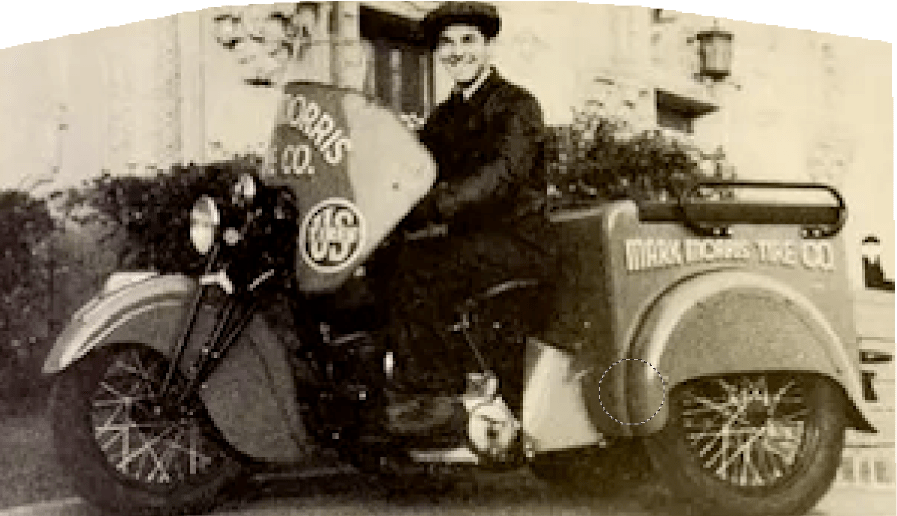
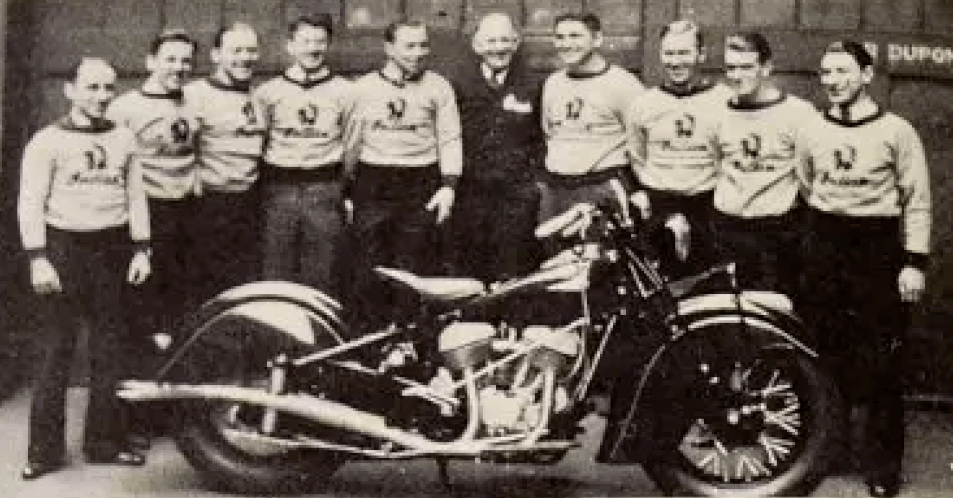
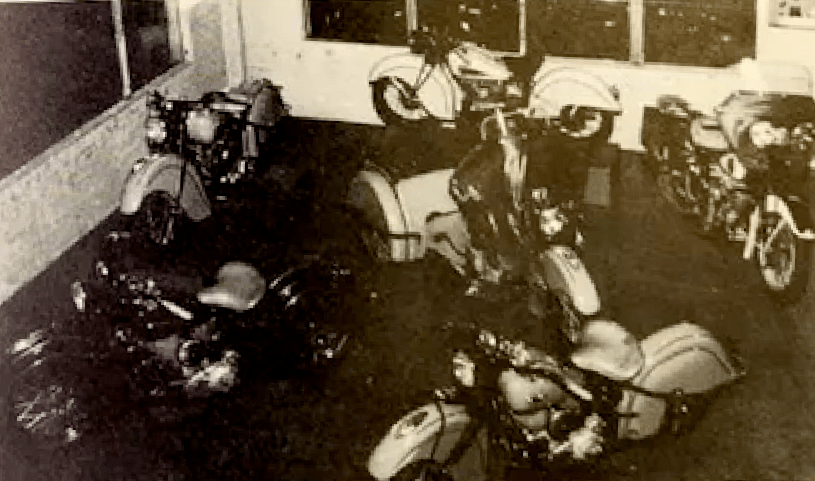
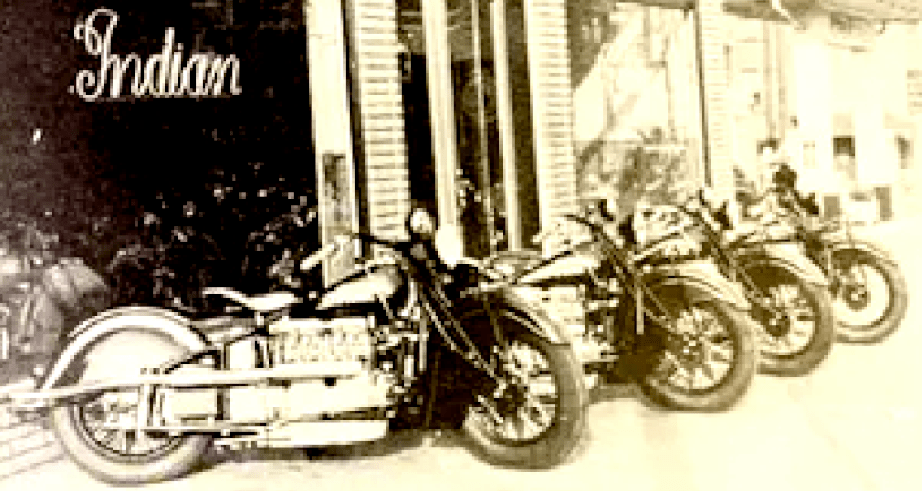
“‘SO THEY CALLED IN the cavalry and motor cycle units to continue the chase.’ Thus runs a newspaper account of the Greeks’ successes last week. The Italians were retreating too fast for the Greeks to keep contact with them. Hence the call for motor cycle troops. This is but one of the many possible military uses of motor cycles. All are aware how the Germans employed solos and sidecar outfits for marauding in the Battle of France and how Britain has motor cyclist battalions and motor cycle reconnaissance platoons. For anti-invasion work, too, the motor cycle, with its speed and mobility, is of supreme importance, a fact that is fully realised. Obviously it would be indiscreet in time of war to discuss in detail all the possible uses of motor cycles. Our feeling Is that not only are there still further uses of great potential value, but, with the keen interest in the possibilities of motor cycles that is being displayed by the General Staff, these am certain to be exploited to the full.”
VELOCETTE PRODUCED the MDD, a military version of the MAC ohv 350 with a lower compression ratio and a cylindrical silencer that offered greater ground clearance than the famous fishtail. A consignment produced for the French government was acquired by the War Department following the fall of France.
MATCHLESS ALSO modified a pre-war ohv 350 for military use. The G3 became the G3/L (Lightweight) and was noteworthy for its use of Teledraulic oil-damped telescopic forks.
FRANK MUSSETT, service manager of Australian Velocette, AJS, Scott and Wolf importer Stillwell and Parry travelled 2,000 miles from Melbourne to Albany in West Australia for the Australian TT. (The Aussie ACU ran an annual lottery to decide which state would host the national TT.) He took a brace of cammy Velos with him and rode them to victory in the 75-mile Junior and 100-mile Senior races. Musset’s Junior time was 70min 20sec, 4½min ahead of the runner-up. He won the Senior in 1hr 30min.
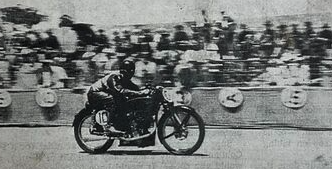
“ONLY THOSE WHO have competed in both periods can appreciate the difference between our sport in its present-day form and that which it enjoyed prior to the summer of 1925, when speed events on the public highway were banned by law. In our opinion the decreased popularity of motorcycling can be traced to that enactment, because it is the sporting appeal which is the motorcycle’s greatest asset and the competitions of to-day do not attract the majority of riders. whereas those of the pre-1926 era definitely did so. After the war this country will owe a great debt to its motorcyclists. After the war, too, there should he—indeed, must be—a great road-building programme. Many suitable hills and straight stretches will be by-passed by the new arterial highways and it would be a fitting recognition of our services if the law permitted such disused sections to be closed for organized competitions on suitable occasions. Probable? No! Possible? Yes!”
“THE MINISTRY OF Transport figures of fatal accident statistics for the month of August, 1940, are of great interest because they are compared with those for the corresponding period in 1939—the last month of peace. Unfortunately, fatal accidents to motorcyclists totalled 143 in the eighth month of 1940, whereas the 1939 figure was 112. As civilian motor-cycling has been reduced drastically it is reasonable to assume that the majority of 1940 casualties occurred to Army riders and it is disturbing to consider a possible increase in the figures now that autumn is here with its treacherous road conditions. The black-out must not receive an undue share of the blame, for 84 deaths occurred in daylight compared with 57 during hours of darkness. Furthermore, 98 occurred on roads not subject to a speed limit compared with 45 in restricted areas. The fact must be faced that many military riders are lacking in judgment of speed and it is to be hoped that the improved methods of training now in force will tend to put a brake on this tragic loss of valuable manpower.”
“A SMALL BAND of motorcyclists, stars of the road-racing and trials games or technical journalists, whose names make news in peace time now proudly wear on their battle-dress the three black stripes of sergeants in the King’s Royal Rifle Corps. And why, you ask, should famous motorcyclists be needed in a Rifle Corps? The answer is easy. The KRRC is now largely mechanized and although many in its ranks still do the distinctive quick-step march of the Corps, hundreds of others are required to know all there is to know about motorcycles and to gain that knowledge in the shortest possible time. When the decision was taken to greatly increase our military motorcycling strength, I was invited by the Director of Military Training to provide a group of skilled instructors. He did not beat about the bush—the men must be the finest experts available, for their’s would be the task of training selected NC0s and men dent from units all over the country with a view to their becoming, in turn, instructors in their own areas. Furthermore, a considerable number of officers would also pass through the instructional course. Any anxieties I might have had were quickly allayed by a most encouraging letter from the Commandant of the Driving and Maintenance School to which the selected volunteers were attached. You know their names—Bob MacGregor—all ‘old soldier’ in more ways than one, with service in the last war and a man with the proud record of having ridden successfully in the International Six Days Vase Team more often than anyone else; Jack Williams—certainly one of the finest all-round riders we have ever produced, equally at home in a scramble. the TT or as a member of the BritIsh Trophy Team in the Six Days; Alfy West—ace scrambler and Vase Team member: Peter Chamberlain—probably the most brilliant motor-cycling journalist of all time and man to whom we owe a great deal for his tremendous efforts on behalf of the ISDT and his sane counsels concerning the sport generally; J White—erstwhile schoolmaster, winner of the Manx Grand Prix and a member of the famous Norton TT Team; H McKeever Phillips and Harry Louis—respectively responsible for technical articles in Motor Cycling and The Motor Cycle, and Maurice Laidlaw—a South of England sidecar exponent with a known ability to lecture on and to
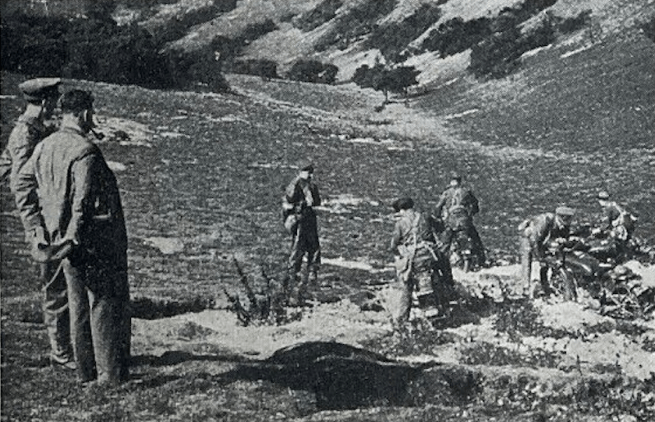
demonstrate this most difficult art. The letter I mentioned contained an invitation to visit the School and to examine the system of training approved by the Commanding Officer, who has made every possible use of the advice given by his specialist sergeants…when we went down to ‘Somewhere in the South’ we found our mea looking almost disgustingly fit. When I had seen a sample of their work and the surroundings is which it is performed I could understand why they looked so bronzed and why more than one had lost the odd stone or two of surplus weight. This particular area of England has not the wide variety of difficult going which can be found around Camberley, for example, but our trials experts have ferreted out sections which can try the stoutest scrambler and, although I did not see them, I was assured that sand, mud and stones were to be had for the asking if one knew where to look for them. The main obstacles, however, consist of great rolling chalk down with fearsome gradients and turf which is so slippery that rubber tyres certainly seem safer than leather soles—as I found to my acute discomfort on more than ono occasion!…The last day of the short course is devoted to maintenance and a straightforward routine examination. followed by the handing in of machines with the inevitable checking of tools and equipment…pupils on the long course must learn the duties of a full-blown Despatch Rider, including Map Reading, Route Finding for Columns, Reconnaissance, Traffic Control in a Concentration Area and Message Writing…They are also given considerably more instruction in the theory of motorcycles and in maintenance, together with lessons in chair dicing. Mention of chairs reminds me that Sergeant Laidlaw provided an unrehearsed thrill which was more than somewhat spectacular. With the two wheeled drive of the big 633cc Norton engaged, he charged up a long 1 in 4 slope, only to hit an unseen gully. The gradient promptly became 1 in 1, whereupon the model stood upon its tail casting Laidlaw off. He shouted to his corporal passenger to abandon ship whilst the going was good, but, like Casabianca, who stuck it to the last when all but he had fled, the latter made an heroic (and almost successful) attempt to steer the plot in reverse from the sidecar. Realising it was hopeless, however, be leaped to safety and the outfit went over and over, bump—Bump—BUMP—CRASH—to the bottom of the 300 yards gradient. And yet the only damage was a slightly splintered locker lid. Tough stuff, these Nortons! It was due to a similar spot of bother that poor Louis bust his leg. I handwritten a lot about the sergeants instructing their pupils, but they themselves had a lot to learn. They are stationed in a distinctly ‘Active Service’ area where everyone must be on constant alert. For this reason they have to carry that extremely useful but infernally awkward instrument, the service rifle, complete with ammunition, wherever they go. Now it’s no use having one of these lethal weapons if you don’t know how to use it, so they have had much musketry instruction and, lest it falls to their lot to rejoin their regiment in an emergency, they have had to study infantry drill, which is essential knowledge in a man wearing three stripes, who will be looked to by Other ranks for instructions in awkward moments…Army life is what you make it. It can be darned good fun or it can be purgatory, according to whether you decide it like or dislike it. Thy heroes of this tale all wisely adopted the former policy. The place in which they ore situated is hardly a maze of music halls and picture palaces, so that they have to provide their own amusement, but if you have ever seen a crowd of Six Days or TT fellows together you will appreciate that this would be easy even in the Sahara! I was told by one sergeant, who is well qualified to pass an opinion, that the, beauties of the South Downs are not confined to the scenery! Moreover they have an excellent Sergeant’s Mess with everything laid on, including beer of magic quality, and it would lie a poor motorcyclist who did not rejoice at the sight oh the excellent quarters where the machines are garaged…I hope the success of this scheme will lead eventually to some of those other hundreds of applicants being enlisted. This first group is doing a grand job of work and their efforts are spoken of with enthusiasm by their officers. I remember an officer once saying of a certain NCO that he was highly efficient because ‘he had the advantage of a board school education’.
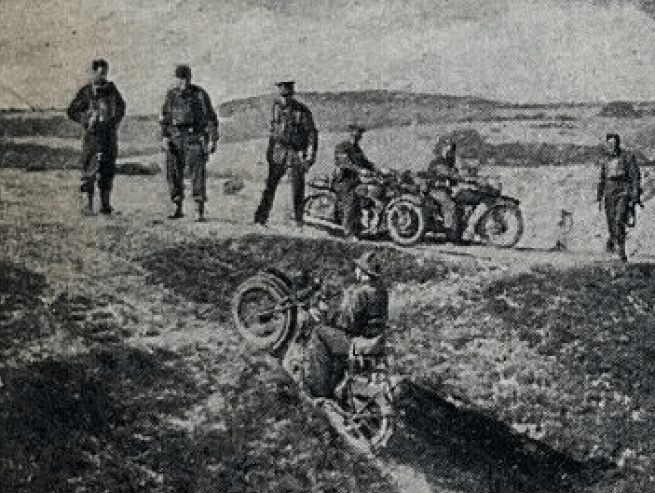
As a witty wisecrack, the quip was not without its humour, but from a practical viewpoint it was a darn silly remark. The ‘tough’ type of sergeant may have been all right in the Boer War, but nowadays an NCO must possess imagination and initiative, and they are not the prerogative of any particular type of education. As a matter of fact, the original 1914 DRs consisted very largely of University and Public School men and they were every bit the equal as NCOs of the Trade riders from the Midlands, and the fellow who was one of my greatest Army pals—a costermonger in ‘Civvy Street’. No, a Public School education is no drawback, and when it comes to lecturing it can be a great asset. Neither does it affect discipline, because, whatever the NCO may think, he never says it out loud! Thank heavens, there are no class distinctions in our game, and that is why a small section of ex-civilian motorcyclists from all walks of life remain entirely unaltered now that they are in uniform, passing on knowledge which is vital to the Army and learning something in return which can be of great value to the competition world when peace returns.”—Graham Walker
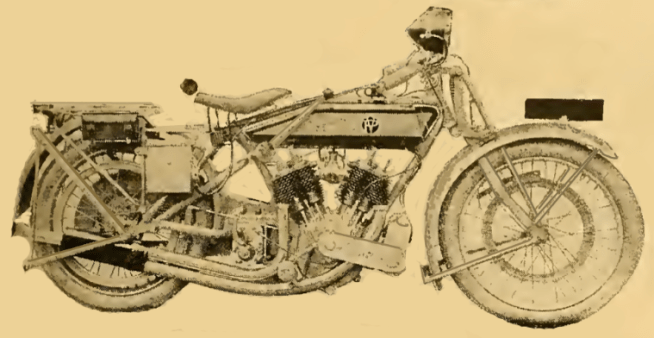
“THERE WAS A KNOCK of a friend’s front door last week, and on opening it he was met by a middle-aged man in full motor cycling kit. He had called, he said, on behalf of the local council to see if it would be convenient for his men to replace the tiles dislodged by a recent bomb explosion. Business settled, the talk naturally turned to motor cycles, and he invited my friend to inspect his ‘old crate’ which, he said, he had been riding since 1922. At the kerbside stood the smartest vintage outfit my friend had seen for many a long year—it positively glistened, from its heavy ‘Bi-flex’ front forks to its huge domed rear mudguard and its shapely top-tube tank. And what is more, it had a fully sprung rear frame and a sprung sidecar wheel—both so unobtrusive as to be almost unnoticeable to the casual observer! Old memories came flooding back—to those far-off days in the early twenties when my friend greatly coveted one of the most ‘modern’ machines of the period—the PV. Do you remember it? In case you don’t, let me add that the springing of both machine and sidecar in of the central-pivot type, with a long coil spring carried in a kind of sub-frame. The owner was duly complimented on the way he bad kept his outfit, but the biggest surprise came at the end ‘Well,’ he said, ‘I should know how to maintain one: you see, I’ve made hundreds of them in my time.’ Yes, thanks to a trick of Fate it had taken a war to introduce the actual maker of a once-famous machine!”
“TRAFFIC POLICE, a proportion of them, are to be restored to the London streets. The Commissioner of Police for the Metropolis announces that he is doing this on account of the number of accidents, and that be has given instructions for the prosecution of offenders. The view expressed is that a sense of immunity from prosecution has encouraged road users to commit offences. Dangerous and careless driving, exceeding speed limits, and disregarding traffic lights, are specifically mentioned. All who ride or drive in London will say ‘Thank you for the warning’, and the majority, we feel, will be inclined to agree that, owing to war, the present shortness of the working day and that feeling of immunity from prosecution, there has been a lot of licence.”
FROM THE NOTTINGHAM EVENING POST: “If they could make a successful landing, Hitler has many motorcycle troops who are familiar with British roads, even if they are no longer signposted. German motorcyclists have formed the advance guard of every occupation of the war. This may be one of the reasons why in recent years Germany developed a motor cycling industry and in motor cycle sport reached a place second only to Great Britain. In the last few years, and especially since Hitler came to power, German motor cyclists have taken part in events in practically every country in Europe; and whether by accident or design, many of them were serving soldiers. Britain is one of the places in which they competed. In 1937, and again in 1938 (little more than a year before the war started) Nazi storm troopers, and even SS men from the Führer’s own bodyguard, took part in the International Six Days Trial in England and Wales. There were, of course, many civilian riders, if anybody in Germany regimented sports could be termed a ‘civilian’. A military type of discipline governed the German parties—riders, competitors, officials and even journalists—who ‘invaded’ this country and other countries, ostensibly for the sport. In both years, the German riders had ample opportunity for studying British roads for they travelled from the port at which they arrived through the Midlands to Wales, and for five days of the trials covered nearly 300 miles a day on all class of roads, chiefly in Wales. The final day in both events consisted of travelling to the Midlands again for speed trials on the famous Donington Park course, which incidentally was a prison camp in the last war. Germany had no fewer than 79 riders in the 1937 event. In addition, there were mechanics and others who made the little ‘army’ led by the Duke of Saxe-Coburg and Gotha total about 150 men. The Nazi teams, tight-lipped and deadly serious, with the innumerable Nazi salutes, had only one idea in all events in which they took part—to win, as the Duke of Saxe-Coburg and Gotha said when he addressed the Germans before the 1937 trial. They were here to ‘fight for their country’. For the trial the following year, held in this country again because of a British win in 1937, Adolf Hunnlein, Nazi motor sport ‘Führer’, presented a special trophy for which Army regiments as well as clubs could compete. So once more many German soldiers, SS men and Nazi ‘motor cycle volunteers’ completed that year. They were led by Baron Falkenhayn and, as before, a large number of mechanics and others came with them. George Meier, one of German’s ‘crack’ motor cyclists, who has ridden in the Isle of Man as well, was among them, and was even then an army officer. The British Army entered teams for the first time in 1938 and ‘learned a lot’ from the trial. British soldiers went to Germany for last year’s event, which was held only a few days before the outbreak of war, but they withdrew from the trial on the fifth day, and returned home. Two days later Germany invaded Poland, her motor cycle troops playing a prominent part.”
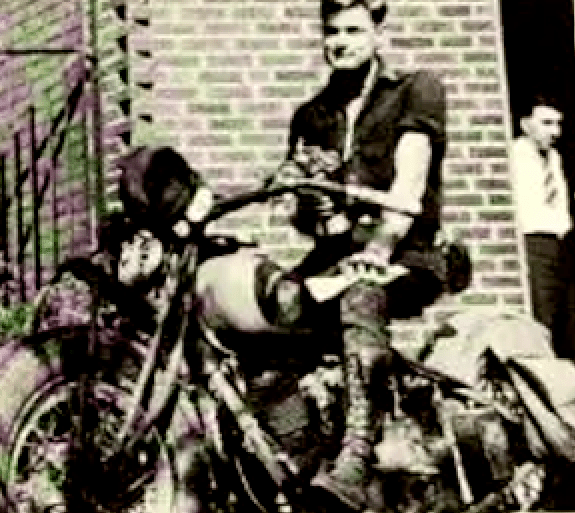
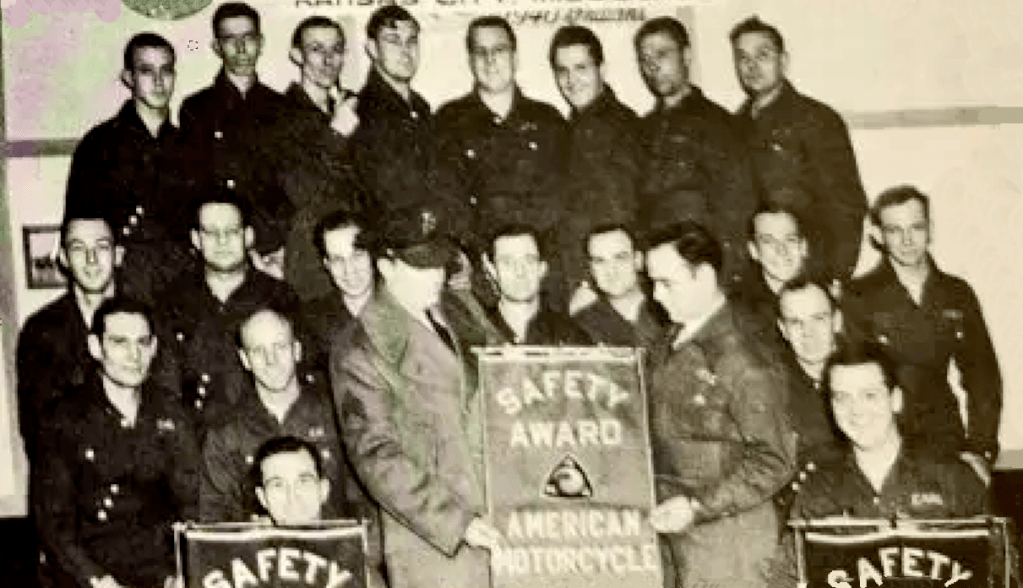
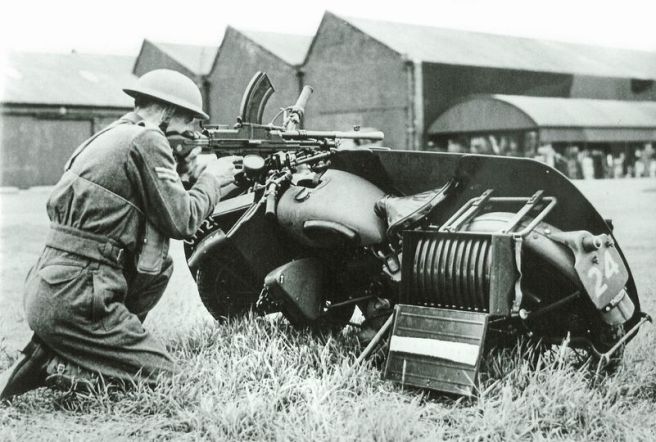
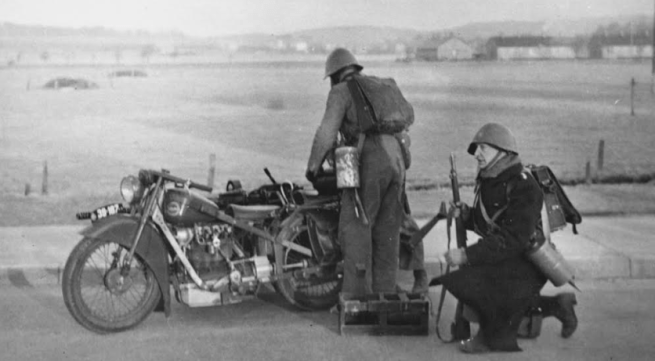
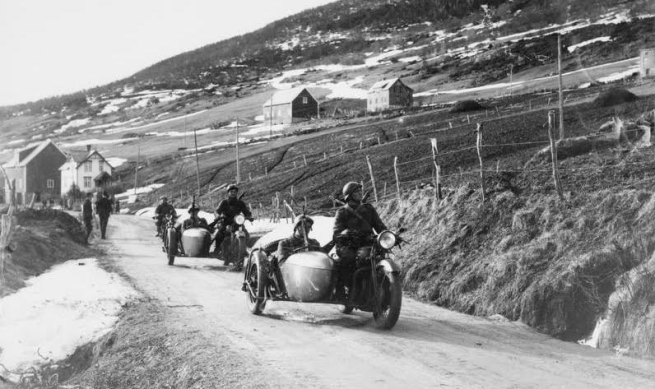
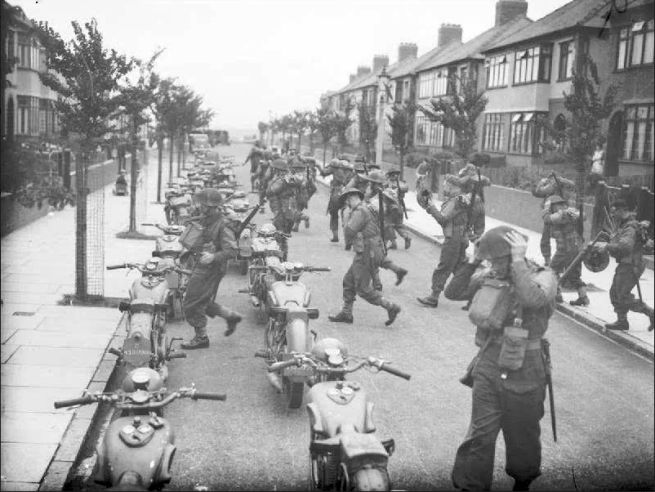
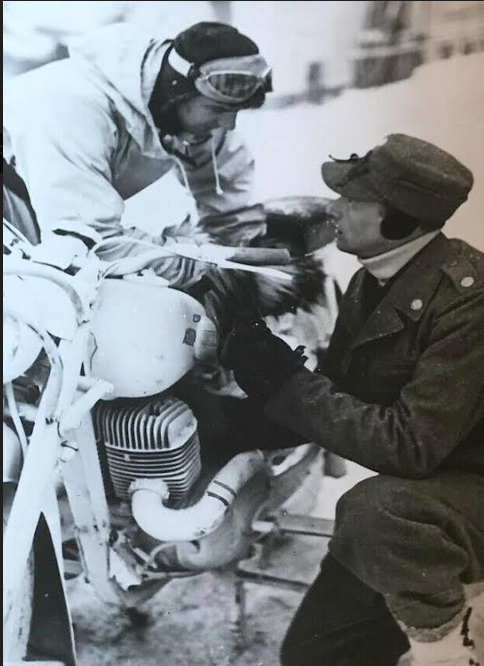
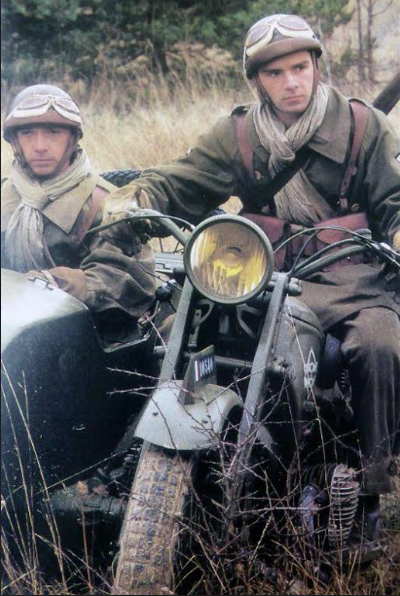
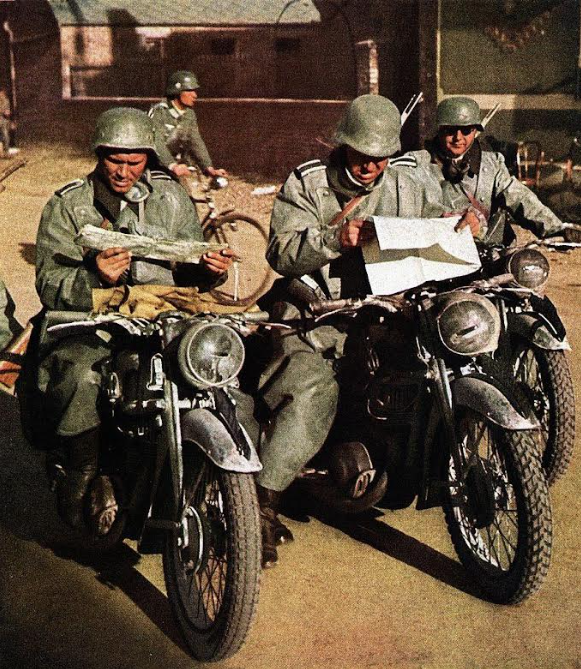
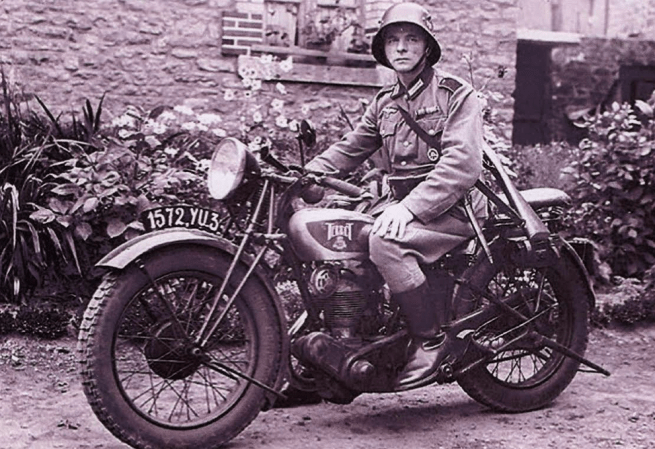
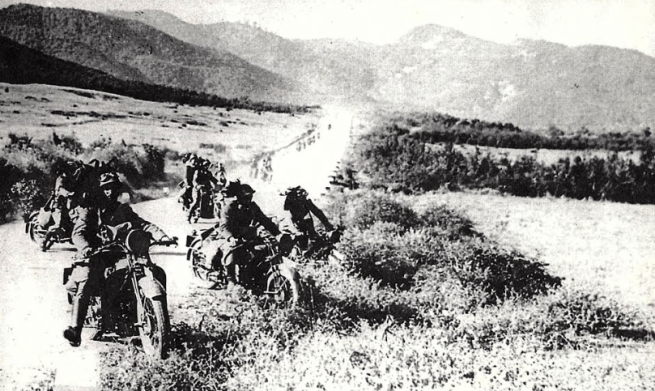
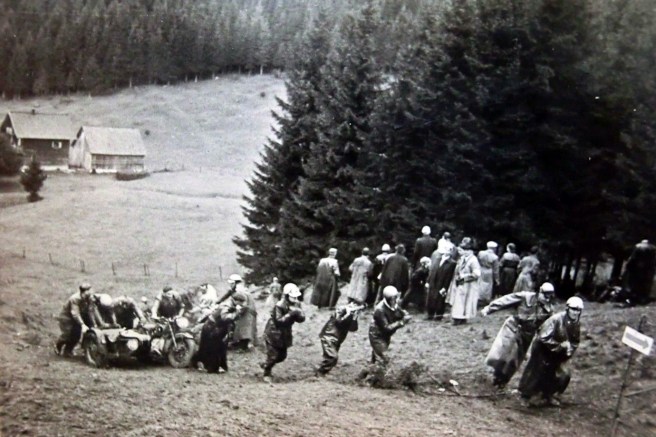
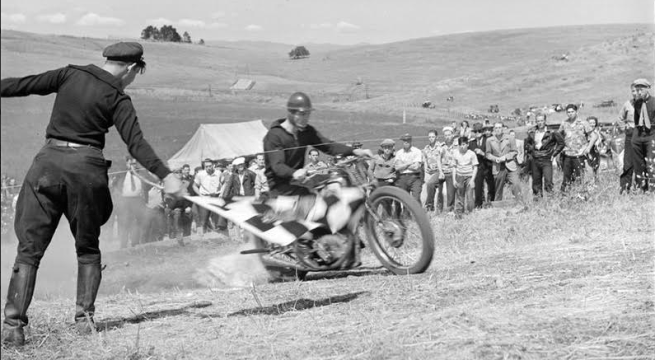
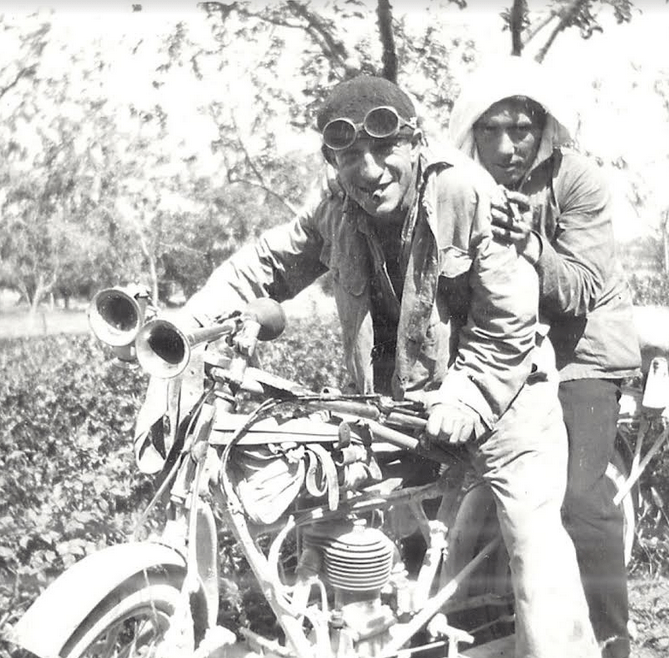
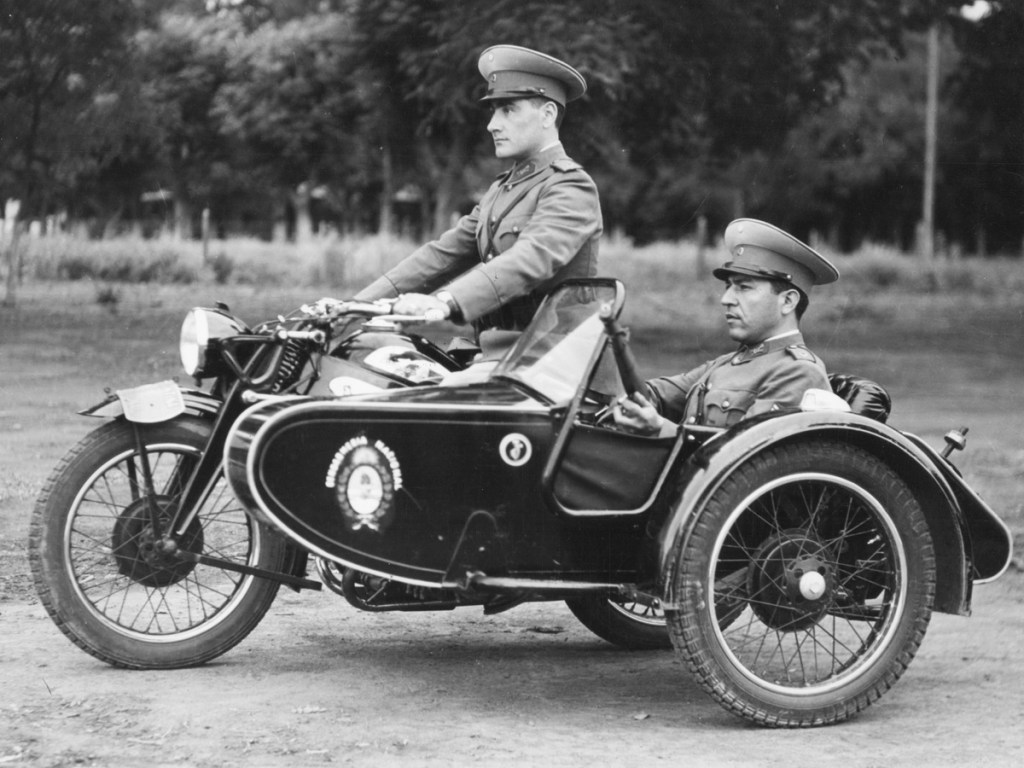
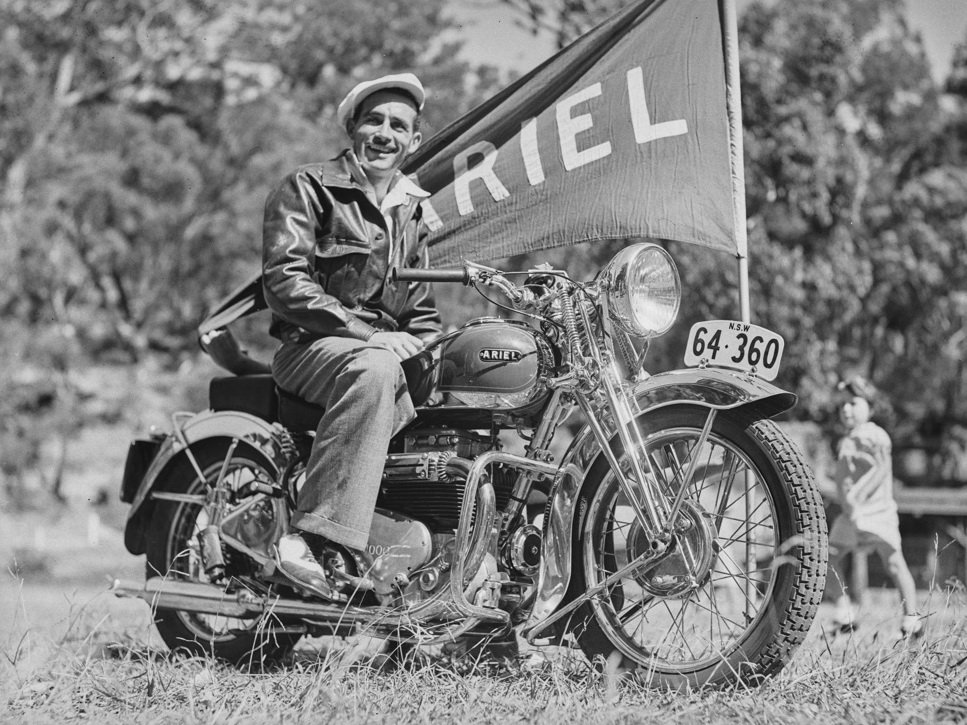
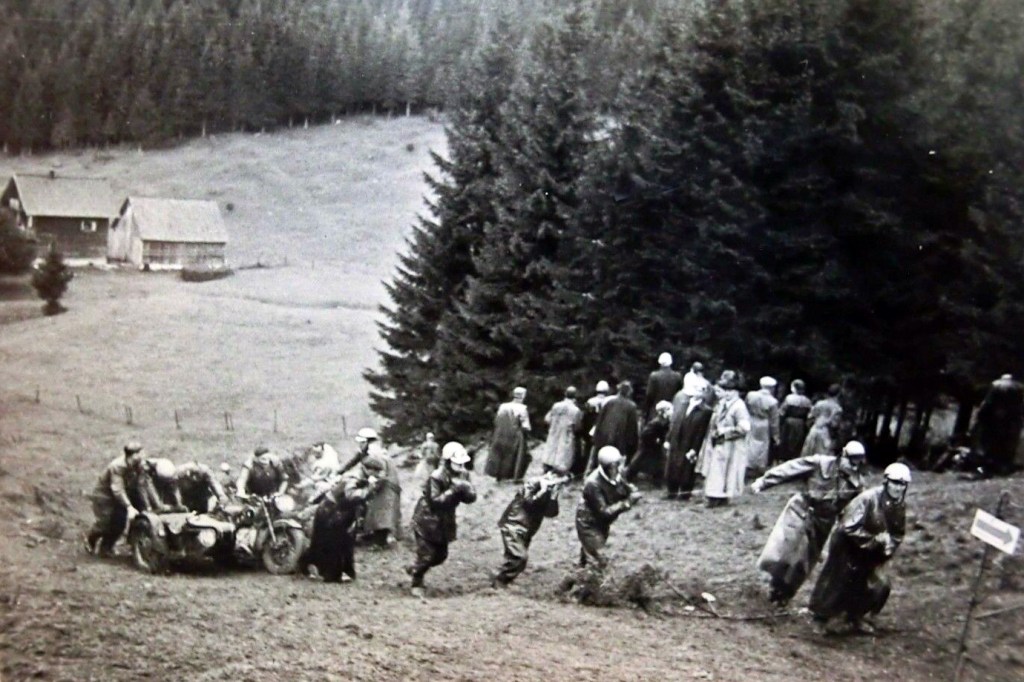
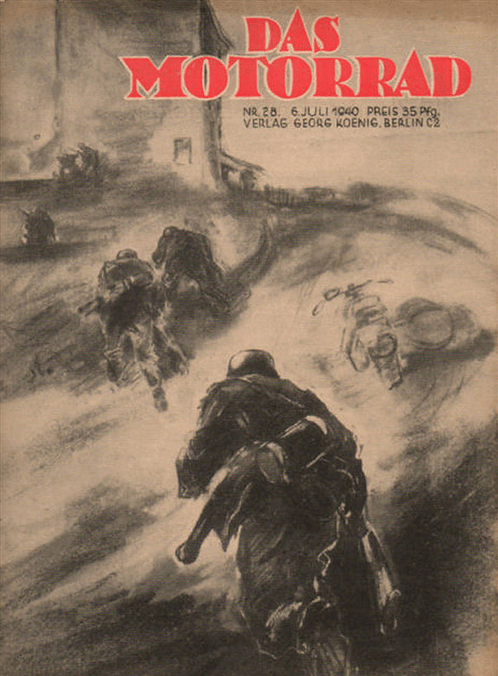
Here’s a selection of images from 1940, kindly supplied by my amigo Francois. You’ll find more in the World War Two gallery (in the main menu) which will grow to include more than 300 pics.

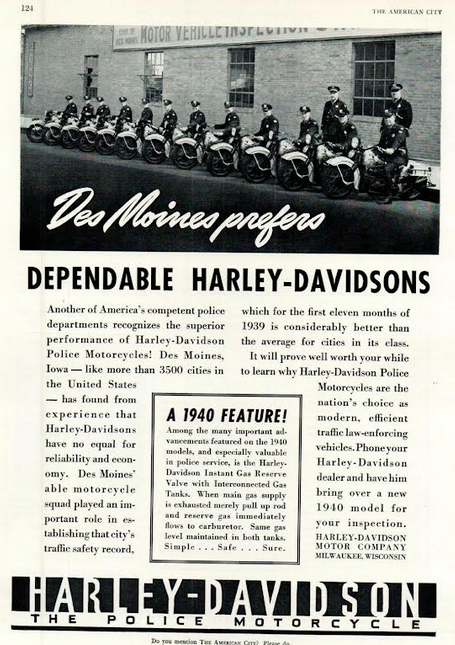
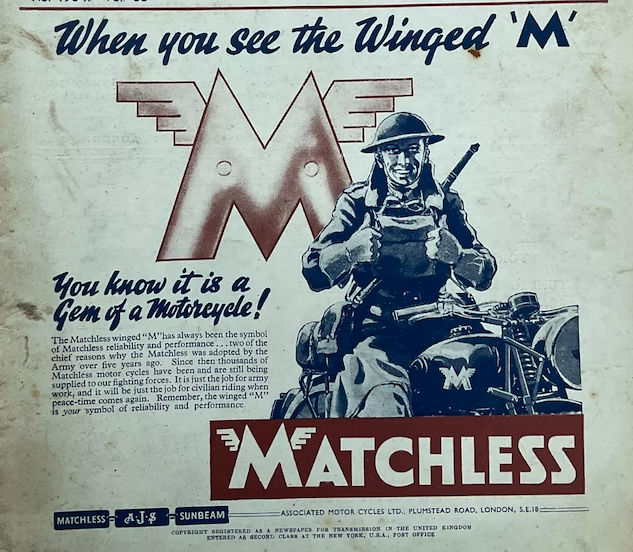
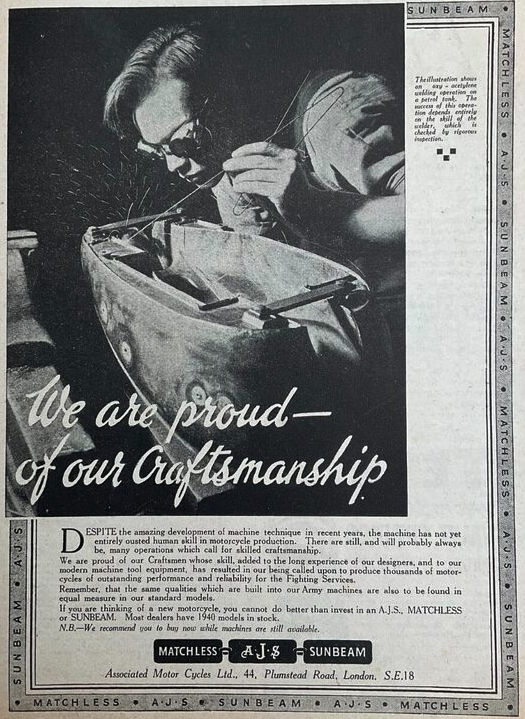
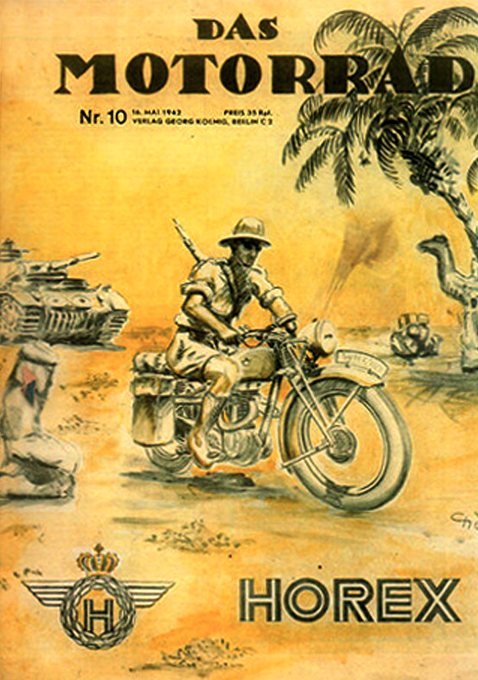
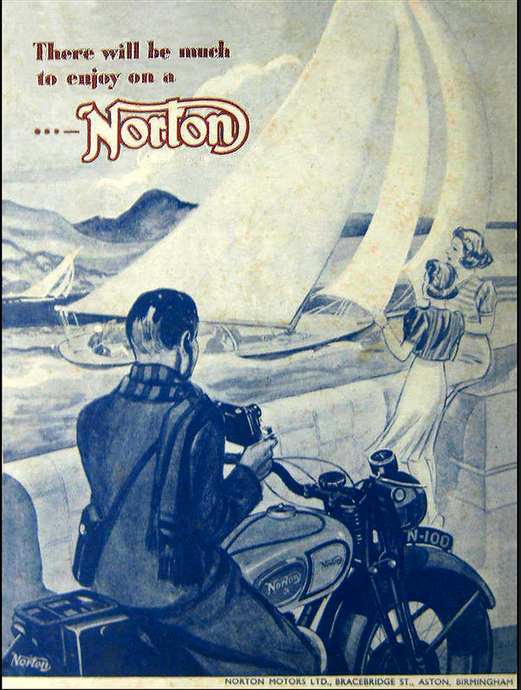
Here are some contemporary adverts.
 Motorcycle Timeline