
“TO HAND, A LETTER from an enthusiast enquiring whether the TT will be televised this year or next now that the Boat Race and a Rugger international have been televised. I am credibly informed that the technical problems in the way of televising a Manx race from Alexandra Palace are quite insuperable. I did not personally ‘view’ the Putney and Twickenham transmissions, but I watched the Harvey vs McAvoy fight televised from Harringay. (Incidentally, I ‘viewed’ it at a range of 70 miles from Alexandra Palace, which is more than double the guaranteed range.) But it did not rouse me to a passionate desire for the TT to be televised. The screen was so small and the figures so tiny that swift movement was tiring to watch, and it was not very interesting. Motor cyclists’ objection to the news-reel film presentation of the TT is that they get only a few feet instead of a solid hour’s entertainment. If and when a televised TT becomes possible, I do not think it will satisfy enthusiasts any more than the news-reels do—at any rate, not until a far larger screen is available and programme considerations permit plenty of the race to be transmitted.”—Ixion
“NEARLY 6,000 PEOPLE filled the Park Hall grounds at Oswestry on Good Friday for the Oswestry Club’s miniature road race meeting. They saw racing by some 70 competitors under splendid weather conditions, although no records were broken and there were only a few thrilling finishes. There were five heats of six riders in the novice event, which, according to custom, was run off as the first item. There is no final for this event, the result being decided on the recorded times of all competitors. C Morris (349cc Rudge) won with a time of 4min 54.8sec; R Brassington (348cc Velocette) was four seconds slower; and H Waddington (348cc Norton) was a further five seconds behind him. The 350cc event produced only one heat that was really thrilling, this being the one in which Roy Evans (349cc Rudge) and Jack Wilkinson (348cc OK Supreme) had a real scrap all the way, Evans finishing under two seconds to the good. This heat was so fast that it not only placed the first two in the final, but FH Worrall (349cc Rudge), the third man, as well.”
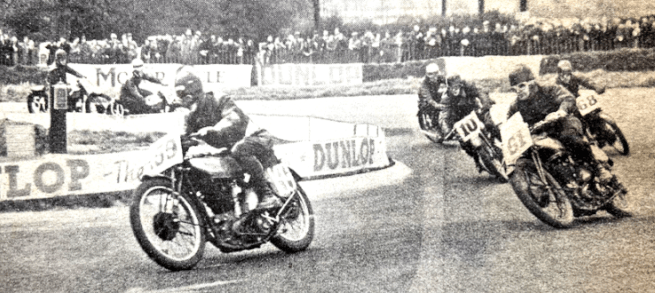
A GLORIOUS morning greeted riders and spectators at Donington on Easter Monday. All roads to the famous track were packed with traffic, and it certainly seemed that a record attendance would be the result. The weather was cold but beautifully bright, and good racing seemed assured. This was the first occasion on which the extended circuit including Melbourne Corner, and the hill approaching it, has been used for motor cycle racing, and, from the outset, it was obvious that speeds would be much higher than on the old circuit. There was an excellent line-up for the first race for 250cc machines, and LJ Archer (New Imperial) set a cracking pace. He was followed by AL Cann (Moto Guzzi), S (Ginger) Wood (Excelsior) and JJ Booker (Royal Enfield). Archer had things all his own way from the word go’, and he piled up a lead which held off all opposition. The positions of the leaders remained unchanged until the very last lap, when, surprisingly, and to the disappointment of everyone, Archer failed to appear. This gave Cann the lead, Wood second place and Booker third place. On their heels came D Parkinson (Excelsior) and R Harris (New Imperial), and, following them, RH Pike (Rudge) and DH Whitehead (Rudge). These two had
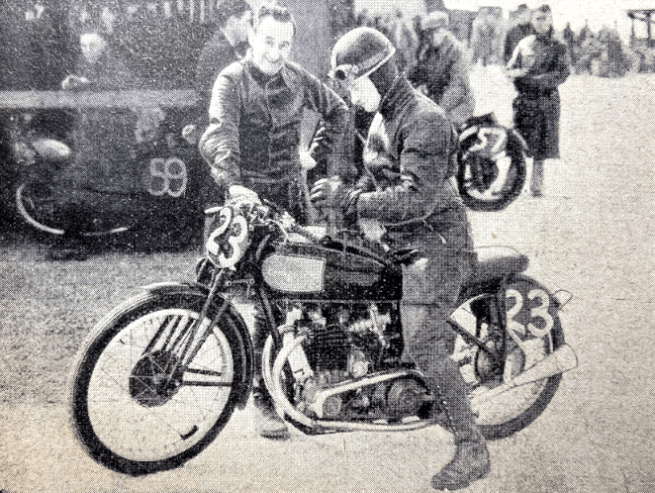
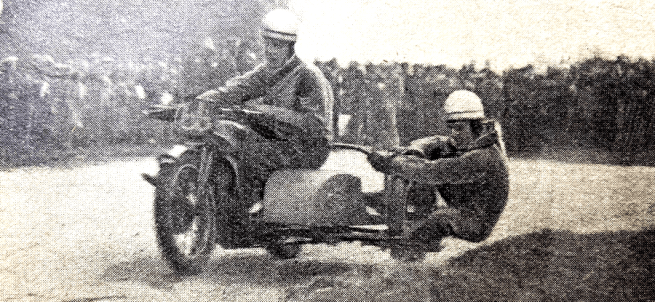
had a lovely scrap all the time and seemed thoroughly to enjoy themselves. Heat 1 of the 350cc race promised well, but it promised nothing like so much as it gave. It was ding-dong racing all the way, with one man, J Lockett (Norton), riding the race of his life to snatch victory in a most spectacular manner from J Moore (Norton) and Stanley Woods (Velocette). At first, Moore dominated affairs and obtained a formidable lead, being trailed by JB Moss (Norton). During the third lap, however, Moore fell at the hairpin, but recovered remarkably quickly. This let Moss into the lead, but Moore soon had it back again. Then Lockett got down to it and did battle royal with Stanley Woods and J Moore. A blanket would have covered these three as they shot down the straight, and it looked as though Stanley would win. But it was Lockett who finished first, with Moore second and Stanly third. There was only three-fifths of a second between the three as they crossed the line! Heat 2 was much slower and was in the nature of a procession, with R Harris (Velocette) leading handsomely all the way. D Parkinson (Excelsior) was second all the time, and the third man, who also held his place throughout the race, was J Sandison (Norton). The leader’s speed in this heat was 66.69mph. The third heat was a spirited event and very well contested. The lead changed hands half way through the race when JRT Upton (Norton) displaced B Gibson (Velocette). On the last lap Upton had a lead of about 100 yards, but Gibson, riding extremely well, reduced this to a couple of yards as the finishing line was crossed. The first sidecar race was uneventful, and although J Beeton (490cc Norton sc) took a commanding lead at first, LW Taylor (596cc Norton sc) was not to be denied. Driving in his usual polished style, he went ahead and gradually increased his lead until he was so far ahead that nobody had a chance of catching him. Beeton held second place for six laps, but was afterwards passed by W Bibby (596cc Norton sc) and WG Tinsley (596cc Norton sc). All eyes were on Stanley Woods when the first heat of the 500cc race assembled. He had already put up the best time in the 350cc race with a lap at 70.75mph. Badly placed at the start, and ninth at the end of the first lap, Stanley had two remarkably fast men out in front of him. They were Maurice Cann (Norton) and J Moore (Norton). Cann set a very hot pace and passed Moore early in the race. Then Moore dropped back, but took the lead again when Cann fell at the hairpin. Stanley was now creeping up until, finally, only Moore was in front, with N Croft (Norton) coming up a good third. In this order the heat finished, with Moore too far in front for Woods to hope to catch him. In this heat Cann put in a lap at 72.02mph. In the second heat J Lockett (Norton) went for all he was worth, and was, in fact, fast enough to relieve Croft of his third place. Lockett’s speed was 68.65mph, and he was chased home by JR Upton (Norton), who averaged 67.26mph. Apart from Lockett’s effort, the heat was not really interesting nor was Heat 3, although the latter was enlivened by the appearance of a Scott, a Douglas and a BMW. The second sidecar race was more eventful than the first one. Once again J Beeton (490cc Norton sc) took the lead, but was closely chased by LW Taylor (596cc Norton sc). AH
Horton (596cc Norton sc) put on a wonderful spurt, and went on ahead of both men. Taylor hung on to him grimly, but Horton was in a winning mood. His passenger lay flat on a padded platform and enjoyed himself hugely. Taylor could make no impression on the leader, but W Bibby (596cc Norton sc) ran past Beaton into third place. It was an excellent race and a close finish, and Horton had reason for congratulating himself on a really stout effort. Several competitors, including. Stanley Woods, JB Moss and M Cann, did not turn out for the first heat of the to 1,100cc solo event. Nevertheless, it was a hotly contested race, with J Moore (Norton) leading from start to finish. In the later stages, Norman Croft (Norton) made an effort, passed H Havercroft (Rudge), and set off after Moore, who was not passed, and Croft had to be satisfied with second place and Havercroft third. In the second heat Lockett again made a great effort, but just failed to come within reach of the first three in the first heat. He went wonderfully well and was miles ahead of his nearest rival, H Taylor (348cc Norton). Lockett’s speed was 69.02mph as against 65.98mph by Taylor, which gives an indication of the effort Lockett made. The third heat was uneventful and not anything like fast enough to cut any ice. All the way through, DL Jones (OK Supreme) made the running and finished ahead of everybody else at a speed of 67.73mph.”
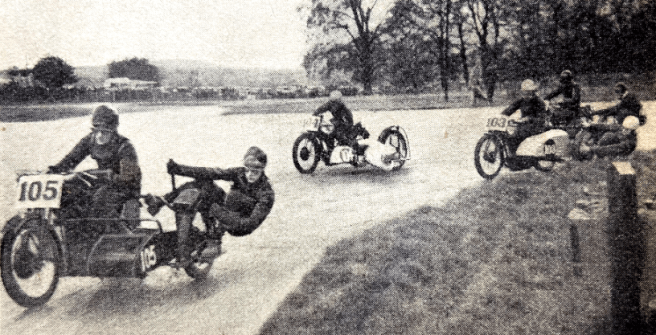
“OPPORTUNITIES FOR THROTTLE-twisting on a flat stretch of concrete do not occur very often in Scotland. It was not surprising, therefore, to find nearly 40 machines entered for the acceleration tests organised by the Renfrewshire Eagle MCC on the private track of the India Tyre Company at Inchinnan. There were 250cc, 350cc and 600cc classes, non-expert and expert, and the only class that was poorly supported was the 250cc non-expert. Each rider was allowed two runs per class. In the 350cc non-expert class J Thomson (Norton) was best with 11.78sec on the first run, but on the second J Weddell (Norton) recorded 11.70sec and won the class. In the 600cc class J Weddell (490cc Norton) made a fast run in 11sec dead, and of the other nine in the class J West (Rudge) was best with 11.46sec. Weddell reduced his time on his next run, with 10.64sec. This time stood as the best recorded until the 600cc experts came on the scene. J Valente (Norton) put up a time of 10.7sec, which looked as if it might win the class. Then came A Marr (498cc Douglas), who cracked along to the tune of 10.15sec—a course record and best time of the day.”
THE MIYATA 175CC TWO-STROKE Asahi, which we last encountered in 1935, had been out and about. Following a gruelling run from Tokyo to Fukuoka it was taken to Manchuria to see how it stood up to operations at -20°C. The military were interested and production topped 150 a month including the Asahi Special with a chromed frame. For the first time Japanese vehicles were exported to the Americas—Asahis were taking to the roads of Argentina, Brazil, Mexico, Peru, and Venezuela. Other export markets included China, India, Korea and the Dutch East Indies; company sales reps went as far afield as Africa, Sungapore and Central and North America. On the domestic market Asahi owners clubs sprang up. At which point Japan’s militaristic government restricted motor cycle production and diverted Miyata’s state-of-the-art Kamata factory to aircraft components. Undeterred, Miyata started work on a 350cc four-stroke “joint army-civilian motorcycle”.
“OFFICIAL REGISTRATION FIGURES just issued by the Ministry of Transport show that the number of new sidecar outfits registered during February was 315, as compared with only 281 in the corresponding month of 1937. The total number of new machines registered during the month was 2,864. Of this total, 313 machines were in the under 150cc class; 800 between 150 and 250cc; 1.374 over 250cc; and there were 315 sidecars and 62 three-wheelers.”
“A TOTAL OF 949 motor cycles was imported by India in the last nine months of 1937, as compared with only 554 machines in the corresponding period a year previously.”

“A ROAD TEST OF THE Francis-Barnett H47 Seagull is especially interesting because the machine has a 249cc Villiers deflectorless-piston engine. Its general performance was excellent; it was flexible, lively, and had a surprisingly good turn of speed. In traffic the machine would run happily at under 20mph in top gear (5.2 to 1), and would accelerate cleanly without the rider having to change down. Unless the engine was pulling, four-stroking would occur at these low speeds in top gear, but this was not unpleasantly noticeable and could be obviated by careful use of the throttle—by closing it when the engine was not pulling. Actually, the machine could be throttled down to 10mph in top gear without snatch, and could be accelerated slowly away from this speed on the level. Out of town the machine could be cruised at quite high speeds, and one of its outstanding features was that it would stand really hard driving for long periods without ‘fussing’ or showing signs of stress. No 1 petrol was used throughout the test, together with oil in the proportion of one pint to two gallons. With this mixture the engine at no time during the test either pinked or knocked. On main-road hills the machine held its speed well, and when the rider was baulked by slower traffic the excellent performance in third gear was found exceptionally useful. In top gear the mean timed speed of four runs over a quarter mile was 60.8mph, and the best speed was nearly 65mph. These speeds were obtained with the rider sitting on the carrier and streamlining himself along the tank, but even so they are very creditable. Throughout the maximum speed tests and during the acceleration tests the machine behaved splendidly, and at no time did it show any signs of drying-up.
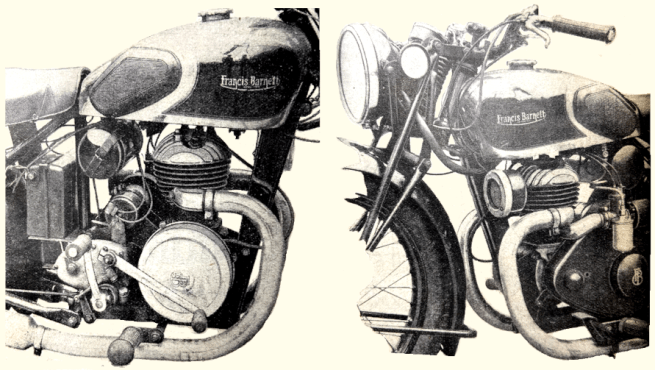
During one of the acceleration tests the air-filter on the carburettor intake worked loose. Acceleration from a standing start was very good indeed, the machine on each occasion reaching 57mph at the end of a quarter-mile—only 3mph short of the maximum. Consumption of petroil at a steady 40mph worked out at 65mpg. As is to be expected with a modern two-stroke engine, starting was extremely simple. After closing the air slide and flooding the carburettor, one dig on the kick-starter was sufficient to start the engine when cold. It was found important to keep the throttle nearly closed when starting the engine under these conditions. When the engine was warm it was merely necessary for the rider to push down the kick-starter gently, when the engine would immediately fire. Mechanical noise was not noticeable at any time, and the exhaust note, while healthy at wide throttle openings, was never unduly obtrusive, and under traffic conditions was pleasantly subdued. So much for the engine performance of this excellent little machine. The word ‘little’ is used in the sense of lightness only, for although its total weight, fully equipped, is only 254lb, the machine has that solid feel associated with much heavier machines. The road-holding, even at high speeds, was excellent. The steering damper was not found necessary at any time during the test, and the steering always gave the rider an immense feeling of safety. On bad roads the front forks dealt efficiently with road shocks, and the rear wheel was not inclined to hop. On fast corners the machine was rock-steady and could be leant over as far as the footrests allowed with perfect safety. At low speeds the steering was positive without being heavy, and no great skill was required to ride feet-up at less than walking pace. This feature, combined with a good steering lock, made the machine extremely pleasant to handle in dense traffic. Ease of control is, in fact, one of the many pleasant features of the Francis-Barnett. Only three of the four controls on the handlebar are used at all frequently, for the air lever is required only when starting from cold. These controls were light and smooth in use. The clutch was particularly pleasant, being positive and at the same time very sweet when taking up the drive. Both brakes were well up to their work and were pleasantly ‘spongy’. Either would hold the machine on a gradient of 1 in 5, and used together they would bring the machine to rest from 30mph in 42ft. The positioning of the footrests, handlebars and saddle is good, for although the Seagull is a small machine it will accommodate a tall rider comfortably. The handlebars give a natural, low position for the rider’s hands and arms, and the saddle is high enough to allow a comfortable leg position. One criticism can be applied to the position, viz, that the rider’s leg is inclined to foul the carburettor. Obviously the makers have given a good deal of thought to the Seagull. The machine is not expensive, yet the equipment includes a 6-volt lighting set, four-speed gear box with foot change, three-gallon fuel tank, and a carrier. To sum up, the machine is easy to handle under all conditions, has a good all-round performance, and useful maximum and cruising speeds.”
“IT IS WITH THE DEEPEST REGRET that Motor Cycling records the death of Eric Fernihough, who was killed at Gyon, in Hungary, on Saturday last when attempting to regain the world’s motorcycle speed record on his supercharged Brough Superior. At the time of going to press details of the tragic accident are still vague. All that we know is that when travelling in the region of 170mph the machine suddenly swerved off the road and catapulted Fernihough over the handlebars. He was rushed to the University Clinic, but died without regaining consciousness, of a severe fracture to the base of the skull. And so passes a brilliant rider-tuner, who has done more than any other individual to keep the British flag flying right at the top of the record-breaking sphere.”
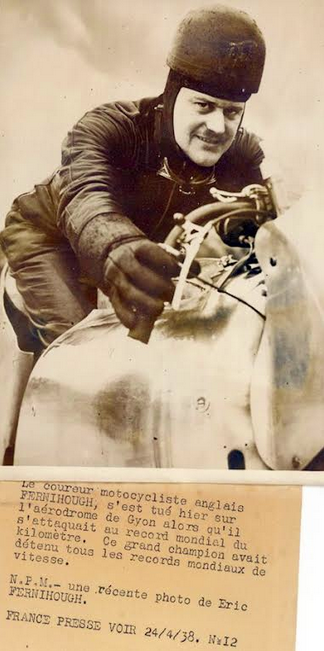
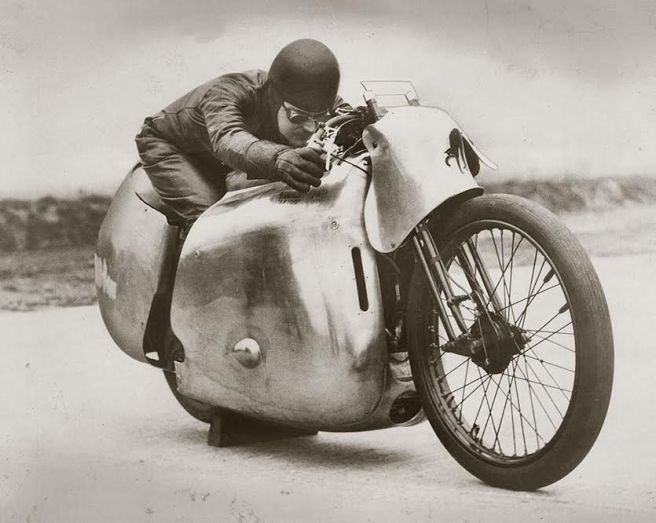
“GREAT BRITAIN HAS SUFFERED a most grievous loss, for Eric Fernihough, her fastest motorcyclist, is dead. He met his fate in Hungary whilst striving to regain for his country the ‘World’s Fastest’ motor cycle record. Thus ends an heroic struggle against apathy and adversity, for ‘Ferni’ fought a lone battle against the organised might of Continental countries. Fired by the flame of a burning patriotism, his life was dedicated to the furtherance of British motor cycling prestige. And now that life has been sacrificed. But it has not been sacrificed in vain, for although Fernihough the Man has passed on his name will be handed down through the generations of motor cyclists to come as an example of all that is best in sportsmanship. Denied by his own country the use of a suitable road, financial assistance or official recognition, Fernihough did not despair. A Crusader in the true sense of the word, he spared neither himself nor his substance in his endeavours to make Great Britain supreme, his only reward the unstinted praise and admiration of his fellow motor cyclists. In victory or defeat he remained always the perfect sportsman and a most worthy ambassador for his country. He will be hard to replace, but British history records that the sacrifices of her sons make the heroes of to-morrow, and the man will be found who will don the armour of that very gallant gentleman Eric Fernihough. Whilst we convey to his widow our sincere sympathies, we are proud to write beneath his name the epitaph: ‘Killed in action in the service of Great Britain.'”
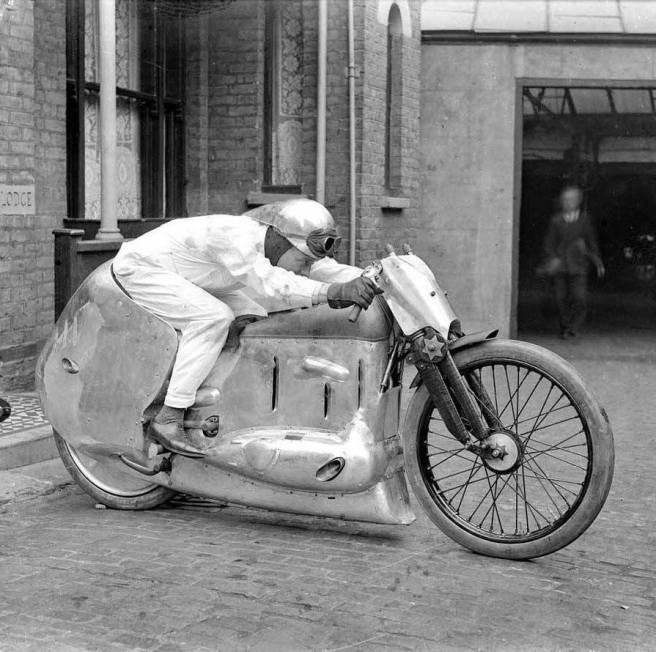
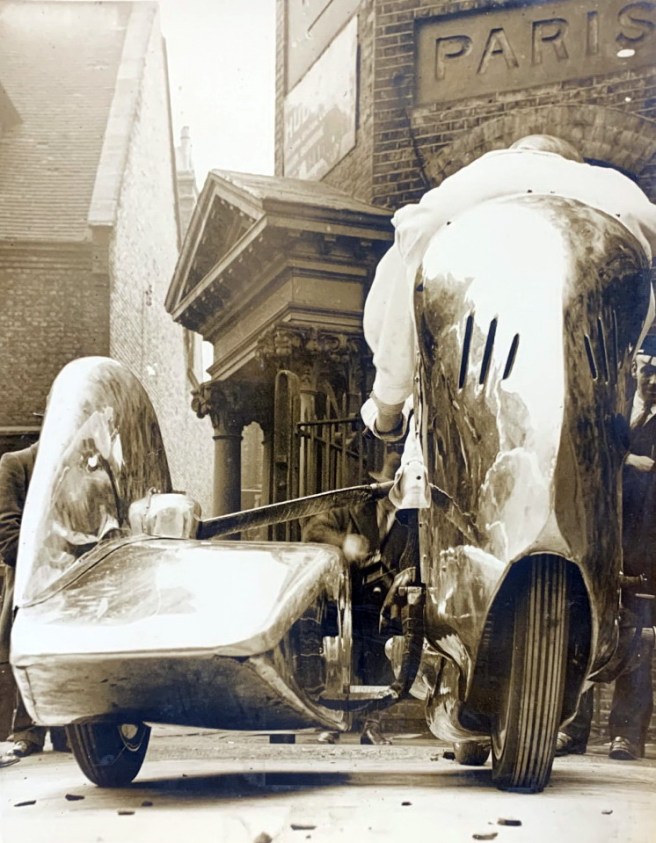
ROLLIE FREE WENT to Daytona to pick up a number of US records, including a 111.55mph run on an Indian Chief he tuned himself.
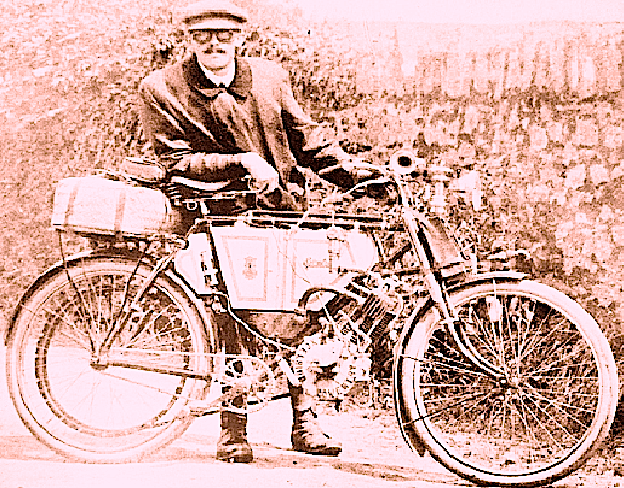
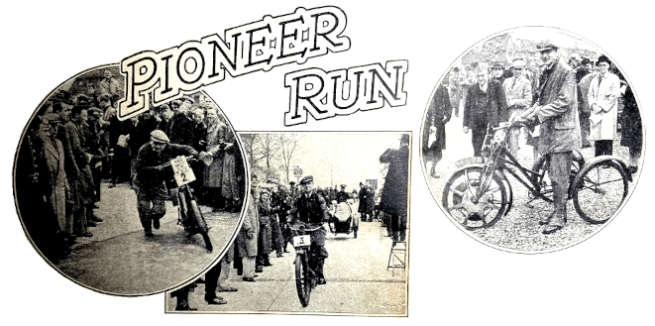
“CROWDS CAME FROM far and near last Sunday to watch the Ninth Annual Sunbeam MCC Pioneer Run pass by…not one of the machines among the 38 entrants was built after the end of 1914, and, in fact, eight of them were built prior to 1905. Of the ‘pre-1905’ models two did not even belong to the present century. The route lay from Tattenham Corner, on Epsom Downs, to the Devil’s Dyke Hotel, in Brighton’s hinterland, and passed through Reigate, Crawley and Bolney. For those machines built later than 1904 the whole run had to be carried out non-stop, but in the cases of the earlier mounts, the ‘non-stop section’ finished at the famous Pylons, a few miles before the Devil’s Dyke. The regulations, while permitting no adjustments en route, allowed the older machines to refuel without penalisation in consideration of their diminutive tanks. Each rider was accompanied by an observer, mounted on a modern machine, whose job it was to record the progress of his companion. The scene in the starting paddock on Epsom Downs would have brought joy to the heart of any old-timer; wondering groups stood around almost every ancient model while the ‘phut-er-phutter-phut’ of the aged engines, wheezily struggling for breath, would have struck music in his ears. The comments of the crowd were varied but nearly always appreciative. They would gaze at some spidery, high and flimsy machine, built long before many of them were born, and admire the skill and pluck of those who had ridden them in those far-off days of bad roads and public prejudice; then they would express wonder at the sight of an elaborate motorcycle incorporating many of the details in a specification which they, themselves, long for, but which is denied them, even to-day—the handiwork of some long-forgotten engineer whose ideas had been too far ahead of his time…For example, there was S Jess’s 1912 Wilkinson combination, an 800cc outfit having a water-cooled straight-four engine, shaft drive and a spring frame—a specification which, to-day, could be called ultra-modern. The oldest mount there on Sunday was Rex Judd’s 990cc ‘opposed-four’ Holden, built in 1898 and having its crankshaft in the rear hub! The runner-up for longevity was a beautifully kept Ariel tricycle, circa 1899, entered by EA Marshall, which had a water-cooled head. Other interesting mounts included C Bullen-Brown’s 1902 Clement-Garrard—a real lightweight of 142cc—the 1901 Singer tricycle ridden by NCB Harrison and having its 200cc engine mounted in the front wheel, the 1914 unit-construction Calthorpe entered by HR Nash and ridden by CK Mortimer, and CR Southall’s 1912 AC Sociable, which he drove all the way down from Birmingham. Another rider who came a very long way to compete was Norman Cox, who brought his 1912 Triumph from Yorkshire. The weather, as is usually the case where a Sunbeam Club event is concerned, was eminently suitable for the occasion, for, although no rain fell, the temperature was low enough to help the doubtful cooling of the old machines. At a minute after 10am, No 1, C Bullen-Brown, pushed off his Clement-Garrard and began his run to Brighton; next the Holden ‘four’, Rex Judd up, went into action, and very queer it looked, its tiny big-ends twinkling round each side of the back wheel as it got up speed. And so the veterans began their task and not one of those who had arrived failed to start. C. NV. Rowe’s 1914 NUT twin sparkled in new paint and plate and hummed along with scarcely a sound: both he and FW Clark (1911 Scott) forced the pace up to between 50 and 55mph, and soon discovered the poignant truth that, except for short stretches, the speed of pre-war machines is still much too high for 1938-pattern roads! NCB Harrison (1901 Singer) had a warm time, notwithstanding the weather, for when he was not pedalling to assist his unwilling pair of horses, he was extinguishing the flames which frequently threatened to engulf his machine. Being without pedals proved a severe handicap to Rex Judd (1898 Holden), and he had to assist his Victorian model in scooter fashion until one shoe was nearly worn through. Nevertheless, he got to Brighton with only one unofficial stop, to refill his water tank. In remarkably few cases did Anno Domini take full toll, and one of the real hard-luck retirements was that of HW Bullock, the rear-wheel bearings of whose 1909 Triumph disintegrated although his engine was full of ‘urge’; then another machine of the veteran Pioneer supporter, HE Cooke (1902 Kerry twin), whose magneto gave out. Cooke, incidentally, was the only ‘pre-1905′ entrant not to finish. Such bothers as belt-slip, due to oil getting on to the drive, stuck valves and choked fuel supplies caused most of the few stops which occurred, and one could not help but he impressed by the reliability and speed of the competitors’ machines. The first man to arrive at the finish was FW Clark, whose aged Scott, followed by a yowling string of its descendants, had clipped off the run in 61 minutes!”
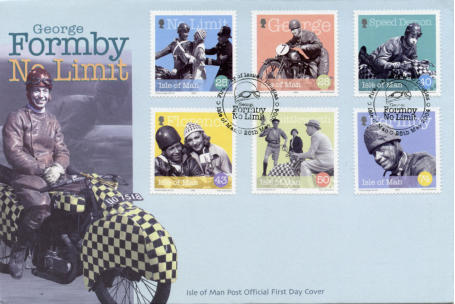
“WHEN NEXT YOU SEE, in gleaming lights, that famous name ‘George Formby’ glowing on the front of your cinema theatre, take more than a film fan’s interest because it is the name of a real, keen motorcyclist like yourself; it is the name of a man who, despite the fame which outstanding talent and originality have brought him, still hankers after the thrill of a fast 500, and would like nothing better than a day’s tinkering with an engine. At the top of his profession, George Formby, who has achieved that aim of all theatrical folk, to appear before our King and Queen, holds dearest his memories of the days when, riding a not-too-good side-valuer, he travelled from theatre to theatre doing his ‘shows’—and he still thinks that the best way of getting about town is on a solo. I found George in his dressing-room at a well-known London theatre, and the fact that I had come to talk to him about motor cycling ensured me a war and rapid reception. As a matter of fact, I gathered that he had put off one or two other visitors who had been worrying him for interviews. Before I had a chance to ask him questions George was putting me through quite an inquisition about the model I used; what was this trial or that trial like; had I seen So-and-So or What’s-his-Name lately, and it was quite a while before I could get him to talk about himself. Naturally we discussed that marvellous TT film of George’s—No Limit. What motor cyclist has not seen it, or at least heard all about it from enthusiastic friends? I won’t attempt to reproduce George’s broad Lancashire accent—suffice it to state that when you hear him on the air, or on a record, or in a film—well, that’s the way he talks in real life ‘and no kid’. “Do you know,” said Formby, “I’d have played that part for nothing—just to have a ride on a fast machine on the actual TT course. I’d have liked to have entered the race in reality, but as I can’t do that, well, I did the next best thing. When the producers were looking for a subject for a film in which I was to star they asked me what I thought. So I told ’em that nobody had ever filmed a TT race. They fell for it at once, so we got in touch with the Manx Club, obtained their advice on details, and we found their help invaluable. Particularly did we have to thank the Howell brothers, who rounded up all the fast riders in the Island for group shots. The IoM people were fine and gave us all the help they could. Where necessary, we used shots taken in the 1935 Senior race, when Stanley Woods won on the Guzzi at eighty-four-six-eight, but we actually used very few of these. As a matter of fact, we found that the real racing didn’t have enough crashes to suit us, so we had to stage a few for good measure! To fill the grandstands, we got a crowd of holiday-makers from Cunningham’s Camp to come along, and didn’t they enjoy themselves! Between shots we kept them amused with music and distributed lunch baskets, for we had them there all day long.” I asked George whether he had used a ‘double’ for any of the fast-riding scenes. He was scandalised. ‘What!’ he almost shouted. “Me use a ‘double’ for motor cycling? I’d have crowned anybody who had wanted to ride my bike! As it was, an ‘extra’ borrowed it, went too fast, scared himself out of his wits and ran into a car. He bent the model so badly that we had to send to Birmingham for another!” George’s face was amusing as he registered the horror which he had, evidently, felt when his pet machine had been reduced to scrap in his absence. I sympathised with him, for I have had a similar experience…Like most laymen, I held the opinion that much of what we see in films is faked, and asked whether there was any faking about No Limit. “Practically none at all,” said George. “A dummy or two was used when really serious crashes wore shot, but, for instance, when a machine ran on the bank, burst into flames at the top and came down ablaze, that model was well and truly burnt out. We saturated it in petrol and sent it up the bank where a couple of men were hidden at the top with torches.
They touched it off, so that when it came down it was burning like a bonfire. On the other hand, we had several unrehearsed incidents which we kept in the film. There was one, which very nearly brought my career to a sudden and definite finish. You remember how, when I am supposed to be flat-out, you get, a close-up of the front of the machine and I let go with one hand to wave to a girl in the crowd—Florence Desmond, of course? Well, we obtained those shots in this way. We used a very special fast car with the camera at the back; behind them trailed a cable with a white disc at the end. I had to keep my front wheel just behind that disc so that the cameraman could keep me in focus, and in that fashion we marched along with the throttle very near full open. When the time came for me to wave to Florence, I went just a shade too fast and my front wheel went over the disc…I had only one hand on the bars and, of course, when the disc got under the wheel it pulled it out of the straight and let me in for the father and mother of a wobble…! I don’t know now how I saved the plot, but when we saw the shot it was so realistic that we made use of it.” There was one thing which he told me about the TT film which, more than anything else, impressed me with the seriousness and painstaking care with which it had been produced by Mr Monty Banks and his merry men. It concerned the finish, when George pushed his machine over the line to win by a split second before the ‘villain of the piece’ flashed by (‘Ah-ha! Foiled again!!’). It seemed that, in order to get just the right effect, George had to run from Governor’s Bridge to the stands—nearly a quarter of a mile, in full leathers and pushing his heavy 500—no fewer than seven times before they got the shot they wanted. The rival would either be too far ahead or too far astern at the line—it was all a matter of timing, and everybody, George included, wanted to get it right, whatever it cost in perspiration. Apart from his famous TT film, Formby has done a lot of motor cycling, including racing at Southport. Since 1920 he has owned an amazing number of different machines, ranging from a 1913 hub-geared Humber, on which he taught himself to ride and which he bought for £20 and hotted up so much that he ‘burst’ it, to a ‘very, very’ Ulster Rudge, on which George distinguished himself at a grass-track meeting near Burnley, Lanes, by winning several races and put up the fastest time of the day. On another occasion he rode at Post Hill. Other models which Formby has possessed at one time or another include a 350 Blackburn, a Matador (remember those sleek little red motors?), a Levis, an Ivy, a Royal Ruby, an OK-Villiers, a Francis-Barnett, a brace of sv AJSs, a Rudge Multi and a Zenith Gradua, a Harley-Davidson (with a cut-out which George used to keep off dogs), a 7-9 Indian, the first ‘Riccy’ Triumph to appear in Warrington and to which he fitted a sidecar, a very quick ohv Douglas, a long-stroke Sunbeam and a twin NUT. That a solo motorcycle is the best wear for town travel is George Formby’s firm conviction and, to quote the words of this experienced rider: “The vulnerability of the motor cyclist that we hear so much about is, I think, mostly eyewash. If you handle your machine properly you should never have a crash and, if you do, the chances are that you will be chucked clear. Which fact, to a great extent, cancels out the much-vaunted ‘security’ of a car, where you are boxed in.”
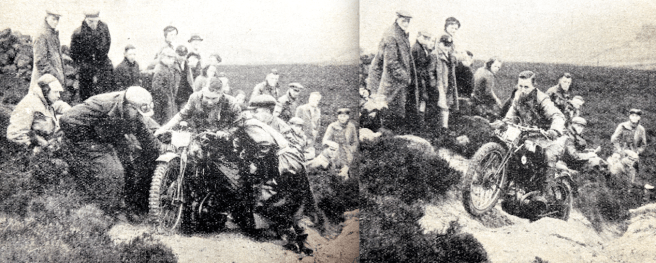
“THIS YEAR’S ILKLEY Grand National was rather a disappointment as a super-sporting event because the prolonged spell of dry weather had taken all the sting out of the course. Compared with last year’s event, however, there is no doubt that the competitors much preferred last Saturday’s conditions, for in 1937 it rained in torrents all the time and the course was feet under mud in places. This year mud was conspicuous by its absence, but the Ilkley &DMC officials managed to introduce enough ‘trickery’ into the circuit to cause everybody to lose marks—even the winner, Ken Wilson (498cc Matchless), lost as many as 25. The starting and finishing point was the Royalty Inn, on Chevin Top, overlooking Otley, and the circuit of some 20 miles had to be covered three times. It embraced a number of well-known sections, commencing with Danefield Steps and Pool Crags, which had to be descended on the first circuit and climbed on the last lap.”
“SOAP CAN BE a useful means of finding top dead centre. Screw an old plug body into the plug hole and bring the piston to the top of the cylinder on compression stroke. Smear a film of soap lather across the top of the plug body and rock the crankshaft so that the bubble increases and decreases in size, the maximum bulge on the bubble indicates TDC.
Dudley W Hearn.”
“HUNDREDS OF BABIES. Three hundred and thirteen machines of under 150cc capacity were registered during February. This compares very favourably with the figure of 252 recorded for the same period last year.”
“A CARBURETTER(OR) MATTER. The question of the alternative methods of spelling the word ‘carburetter’ has been causing a certain amount of heartburning to a number of entrants in Motor Cycling’s latest competition. To clear up the matter, competitors can rest assured that the word in dispute has not, and will not be used in this connection.”
“AUSTRALIAN TT RACES. Norton machines occupied the first and second places in the Australian Junior TT and first, second, third and fourth places in the Senior event.”
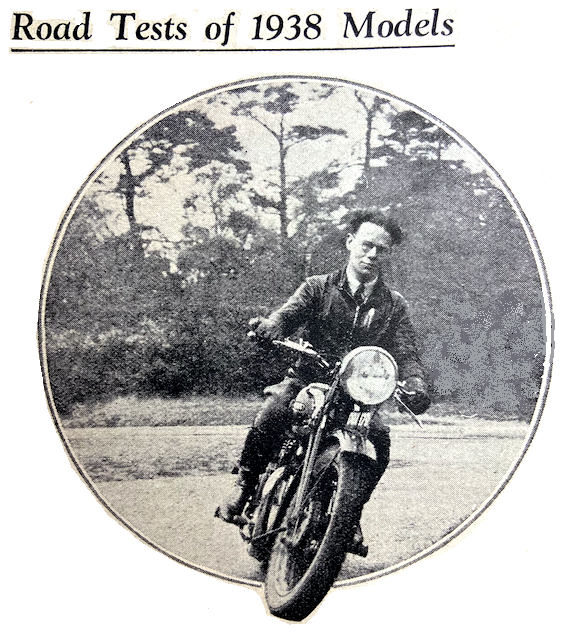
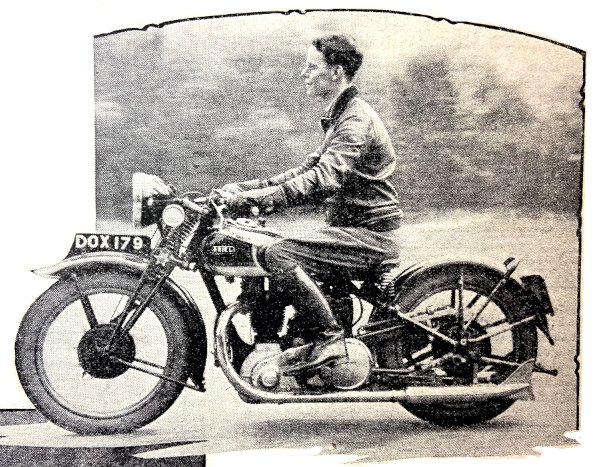
“IN THESE DAYS OF ultra high-performance motor cycles it is apt to be forgotten that most manufacturers list a model or models intended purely for touring use. One of the best machines of this type, a 350cc ohv Model NG Ariel, has just completed more than 1,000 miles in the hands of Motor Cycling’s testers and it proved itself a most likeable and pleasant mount. Many machines of various makes have earned reputations for their individuality, and this Ariel should definitely have a place in this class. Its characteristics are comfort, quietness and a wonderfully docile power unit. The Ariel at once gives an impression of smartness. It is finished in black and chromium and the work is excellently and thoroughly carried out. The power unit is neat, the valve gear and all moving parts being totally enclosed, and there being a minimum of external ‘plumbing’. Seated in the saddle, a rider of average height is given a feeling of complete control and comfort, the body being practically upright when the hands are resting easily on the handlebars. One small detail criticism relates to the footrests, which were placed rather high and when adjustment was attempted it was found that the offside rest could not be lowered any further owing to the position of the exhaust pipe. Starting was a feature of this 350 which cannot be too highly praised. Almost without exception one kick was sufficient to get the motor ticking over quite easily and slowly. When the engine was warm no particular care had to be taken of the positions of the controls to obtain this very fine starting, but when cold it was found that the best results were obtained with the magneto about one-third retarded and the air lever fully closed. Very little throttle opening was necessary and, in fact, it was best to keep the twist grip nearly shut for a moment or two after the engine had fired, as otherwise it might ‘fluff out’ if the throttle was immediately opened. The controls, which are of the grouped type, were all very well placed, and the clutch was delightful—smooth and light in action. The exhaust valve lifter and the magneto control are of the lever type mounted together on the left handlebar.
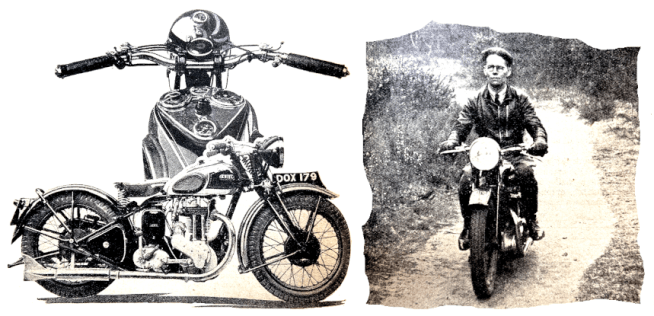
When under way the machine was found to be delightfully controllable; it steered well and could be placed just where it was required, and for pottering about in London traffic this ease of handling was much appreciated. On the open road, too, the general handiness of the Ariel was remarkable. It is not intended to be a sporting mount and, in consequence, the engine performance is not outstanding, but the road holding and cornering at cruising speeds made it easy to put up good averages over long distances. As a touring mount this 350 Ariel lacked none of the qualities which are so desirable for this class of riding. The engine would pull quite comfortably at a very low rate of rpm and at times gave the impression that it was more like a side-valve than an ohv in this respect; on the other hand it had real ohv acceleration. For the rider of an exploring turn of mind the handling on real colonial going would inspire confidence and it is here that the trials breeding for which Ariels are famous is demonstrated. Through thick mud and over rutty lanes the model could be handled with ease without any need for foot slogging, and the tester formed the opinion that, fitted with a couple of competition tyres, this would be an excellent go-anywhere mount for the countryman or for colonial use. The actual maximum speed proved to be 65mph, which is a very reasonable figure for this type of machine. At this speed it was found advisable to have the steering damper in action, and over rough surfaces a certain amount of fore-and aft pitching was noticeable. Nevertheless, fast bends could be taken flat out with a perfect feeling of security on ordinary surfaces. When dealing with performance the matter of brakes immediately comes to mind, and in this department the Ariel was far above the average for its class. The anchors were really awe-inspiring in their efficiency; not only would they stop the machine in a very short distance but they would do so without any fuss or bother, smoothly and powerfully. Really hard pressure on the front brake lever would make the front tyre squeal on a dry tarred road, and although the rear wheel could be locked by heavy pressure it was possible to tell to a degree when this would happen, with the result that the maximum braking efficiency could always be utilised. The excellent arrangement of the controls has already been dealt with; but the machine has a tank-top instrument panel and the speedometer is mounted here. In this position it was rather difficult to keep a constant check on one’s speeds as it was awkward to look quickly from the road in front to the instrument mounted almost between the rider’s knees. The gearbox was pleasant and quiet, and the foot operating lever required a very short movement to effect a change of ratio. In third gear (7.3 to 1) a maximum Of 55mph was obtainable, but at this speed the valves were commencing to bounce. In the second ratio (5.7 to 1) a maximum of 41mph was reached. These speeds were obtained with the rider crouching down in the saddle. At all times the exhaust note was very subdued, little more than a burble emanating from the twin fishtails whether the throttle was opened wide or the model just touring along at a leisurely pace. Because of this very high degree of exhaust silence a certain amount of mechanical noise from the tappets could be heard, but the transmission and timing gear were quite quiet. Incidentally, the fishtails project well to the rear of the machine, and some care is necessary when lifting the model on to its rear stand to avoid getting one’s legs in the way as the machine comes back. Riding at night behind the large-diameter Lucas head lamp was very pleasant. The beam given was well diffused and had a very long range, and the dipping switch on the left handlebar was in such a position that it could be operated very easily. Some long night rides were undertaken, and it was found that the average speeds were very little below those attained in broad daylight. Economy of fuel consumption was a good feature of this Ariel. For country running it was possible to cover approximately 85 miles to one gallon of No 1 fuel, and for town work approximately 70 miles. In this connection, although the motor would run very well on any standard fuel, it seemed to prefer one of the Ethylised brands, and with this type of petrol in the tank it was practically impossible to make the engine pink, however ham-handed the rider was with the throttle. The consumption of oil was not quite up to the same standard, as one gallon was required approximately every 1,100 miles. This may be in part due to the fact that there was a certain amount of leakage from the oil-pipe unions on the timing case, and also that lubricant seeped out in small quantities from the rocker housings and the oil-bath primary chaincase. The chains themselves were well supplied with lubricant and did not require any adjusting whilst the machine was in our possession. Most of the adjustments of the various components were found to be readily accessible, but it was difficult to get a feeler gauge between the rocker and the valve stem to measure up the actual clearances. This was due to the fact that the screw-on cap did not allow of sufficient room for the feeler gauge to be inserted. The detail work throughout the machine is excellently carried out and the manufacturers must be congratulated on producing a really first-class de luxe 350 with a good performance, excellent handling and a docile and pleasant motor for the very reasonable figure of £55 10s.”
“THE RECENT ARTICLE on motorised cycles reminds me of some interesting details I have collected. I get a great deal of fun out of studying the various aspects of motor cycling and the potential use of the motor cycle to the ‘world’s workers’. I made a dip check of some 300 members of the BMCA, as to the occupations of the riders. There were 66 different occupations concerned. Some were plumbers, fitters, builders, electricians and decorators. Clerical workers were also prominent, not omitting labourers, whilst secretaries, school teachers and shop assistants occupied a ‘place of honour’. There was another group of people whose normal occupation is that of professional transport men, such as chauffeurs, taxi-drivers, lorry and bus drivers, and the like. The old doggerel comes to mind, ‘Tinker, Tailor, Soldier, Sailor’, when you consider ‘motor cycles with pedals’, which may well be the best friends of every worker and indeed of professional men like doctors and parsons. I profoundly hope that the manufacturers will produce the goods and ‘tell the world’ and, in spite, of the Jeremiads of the industry, there will soon be 1,000,000 registered motor cyclists in Great Britain. The process is that of graduation; that is, a gradual step from the pedal cycle or the pedestrian to a small motor-cycle, followed by the graduation to the large types of motor cycles. Upon the success of the graduation process. the makers of small-type machines will get customers from the recruits and pass them on to the famous makers of the 500s and over, who over a period of years have expended great energy and expense in making the British motor cycle pre-eminent in the World and deserve to reap a rich harvest. Make Great Britain ‘motor cycle conscious’ and you will make her fitter and more efficient.
SA Davis, Organising Secretary, BMCA.”

“THE MUSINGS OF A Mid-Victorian Magistrate. When fining an 18-year-old motor cyclist at Epsom recently, the Chairman of the Bench said: ‘Anyone who gives up motor cycling is to be commended.’ This statement, coming from a man in a privileged position, at a time when the Army, the Territorials and the police are appealing for motor cyclist recruits, is nothing short of amazing. A prejudiced remark of this nature can hardly imbue motoring technical offenders with a respect for the justice to be anticipated from the bench of this horse-conscious township. It is the duty of a magistrate to dispense the law; he is not entitled to interlard his findings with his personal and irrelevant opinions. Presumably he has forgotten the services rendered by motor cyclists in 1914-1918. There may yet come a time when the Chairman of the Epsom Bench will have cause to be grateful for similar services. Whilst we cannot commend his common sense, we can only hope his legal decisions are wiser than his published comments.”
BELGIUM, THE NETHERLANDS AND GERMANY jointly organised what Motor Cycling dubbed the “International Three Days”. Out of an entry of 150, 108 were Germans. They took on 24 Dutch and 14 Belgians; teams for the “International Challenge” comprised three solos under 500cc and an outfit under 750cc.Most of the Germans were riding BMWs but one team was evaluating DKW 250 solos. There was no British team but Green ‘Un correspondent PS Chamberlain hitched a lift on Joe Heath’s Squariel/Watsonian outfit that was one of three British entries. They joined Gordon Wolsey (Triumph Speed Twin) and Jack Garty (350cc Ariel). Chamberlain reported: “Arrived at Spa, we were well looked after by van Maldegem, who drove a Norton sc in the last Llandrindod ‘International’, and has been the moving spirit in the Belgian part of the organisation, found our pension, and renewed acquaintances with German and Dutch friends. Next day the little town of Spa, familiar to English racing men as a past centre of the Belgian Grand Prix, hummed with the activity inseparable from the start of a big international event.
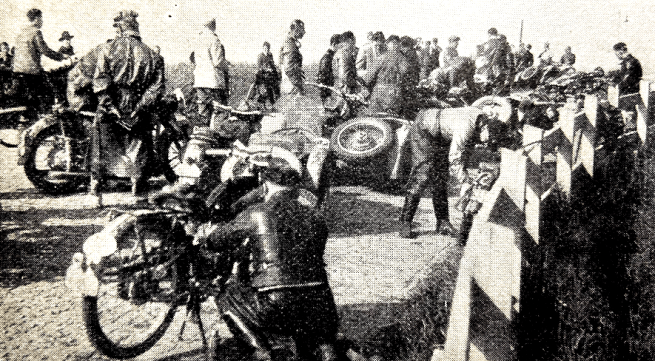
Everywhere could be heard the characteristic, hard bark of BMWs, and everywhere were Germans and German machines, much the same riders and machines—super-sports BMWs contrasting with 98cc two-strokes—as those which came to Wales last summer, accompanied by fleets of service lorries and sidecars, and swarms of managers and ‘headmen’. Probably their ultra smart military contingent, with blue-grey leathers and long coats, outnumbered the others, but one has now learnt to recognise their various units: the SS, on, it seems, somewhat older models; the NSKK [National Socialist Motor Corps], crack motorised brigade, in black leathers, with a sprinkling of works riders from the Triumph and NSU factories… In a teeming down-pour the weighing-in progressed in rather a scramble—a few marshals would have improved matters—and so to bed to be ready for the 6am start, rather anxious about the possible severity of the course, though, perhaps, much of the talk was ‘Scottish wind-up’…On Thursday morning it was still raining, cold and miserable, and within a mile of Spa, it became plain that this event was in a class quite different from what we understand for modern ‘Internationals’. A steep, greasy, stony hill, prefaced by a sharp hairpin, led through the woods, and here considerable excitement occurred, the failures being pounced upon by Belgian soldiers and pushed to the summit. Joe Heath made a really splendid climb on the 1,000cc Ariel add earned a loud cheer, and our solos were also very good. H’m, I thought, this is going to be pretty exciting. Too exciting, for almost immediately we were directed into
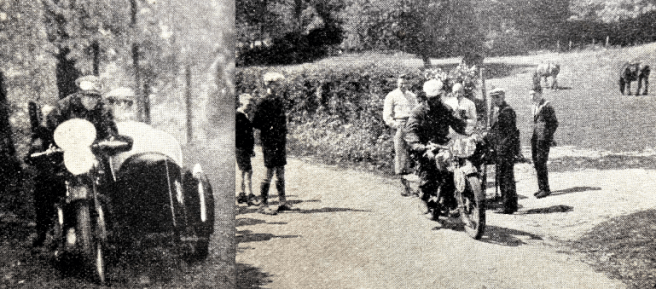
Denton Moor itself, or its exact replica. [Denton Moor was a feared section of the Scott Trial; word-search ‘Denton’ in 1929 for a detailed description and a heart-rending poem—Ed.] For what seemed miles we charged through horrible mud baths, occasionally sticking and having to heave the outfit along. Forgotten completely was the ‘International’ axiom of no outside assistance. Everyone helped everyone else, and spectators willingly lent a hand. Emerging at last, we at once entered an even longer and fiercer slough of despond. Although we gained a vicarious pleasure in becoming bogged just behind ‘Il Maestro’, Kraus, who had started 2min ahead of us, we were in bad trouble, for our chassis was far too low, and again and again we dug into a morass, or sank in enormous ruts. Heroically, Joe hauled and lifted and heaved again, virtually, I fear, unassisted by myself. Heavens knows I am no athlete, and very soon I was completely all in. Wolsey, who had taken a toss—how he longed for ‘comps’ back and front instead of ‘standards’!—and had had to change plugs, arrived at the check just within his allowance, approaching the village at a solid 85mph! Garty, an earlier number, less troubled by the general shambles, did very well indeed, but we—together with 75 others—were sadly late. Nor did matters greatly improve. There was one vile section, of only 11km, in which we again and again assumed curious angles in the pit-like ruts; frequently we had to hoist our heavy outfit back to a level keel, and the clutch was on the point of burning out. A chassis member was knocked into the wheel; the sidecar began lovingly to nestle against the Ariel. We were running later and later, and eventually were forced to retire, although no blame attaches to Joe, who motored an outfit which, fine for an ‘International’, was too near the floor for such Scott Trial stuff, marvellously well. Had he had a ‘one-day type combination—and a ‘real’ passenger: every German ballast appears an acrobat—no doubt he would have got through…Meanwhile the frightfulness proceeded. Just before lunch, at Beauraing, the Dutch Harley-Davidson, driven by the hefty Wuys, became so hopelessly bogged that a team of horses was necessary to extricate him; while when a rider like Fijma (Ariel) can retire through exhaustion, after a section which clogged front wheels with trials guards, it can be gathered that conditions were ‘formidable’ indeed, and several hills would have been regarded as finds by the Edinburgh club itself…Friday’s run was an anti-climax. The course went into Holland, but, alas, route marking almost entirely collapsed in the early stages—partly, it was said, because signs had been torn down for ‘political’ reasons—and everyone became hopelessly lost. Parties were arriving at the Valkenburg check from all sorts of directions, at all sorts of times, and everything was chaos. After considerable fireworks, the organisers did the only possible thing, ‘washed out’ all time before lunch, where an extra hour was allowed to sort things out. After, the run back to Spa was uneventful and, at last, the sun shone.
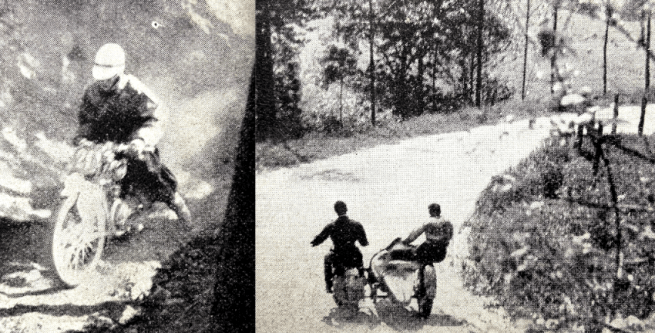
Another victim of the lack of marking was poor Garty. Riding in a block of direction-card-searching competitors, the man in front suddenly applied his brakes and Jack rammed him well and truly, pancaking the front wheel of his Ariel. So ended a very stout effort by a most competent performer, which left Gordon Wolsey, speaking most highly of his Triumph, the only British runner, albeit, a runner of the first order, for on all sides praise was heard of his fine riding. Saturday’s trip into Germany was expected to be severe, and severe it most certainly was. Practically the whole of the distance was over greasy lanes, fields and rough cart tracks, negotiating which, in torrents of rain, allowed even the best riders little or no margin at the checks. In contrast to yesterday, however, the organisation was superb. At Monschau, the frontier, a double rank of storm troopers cheered every rider as they passed the special Customs post established for the trial, and all along the way the marshals accorded the riders a Nazi welcome…After a really arduous morning, with never a moment’s relaxation, a morning of slipping off the step camber into ditches and off sliding off on greasy bends, a splendid lunch was ready at the famous Nurburg Ring, where the special attendant delegated to Wolsey looked after him splendidly, even drying his soaking clothes. After a circuit of the Ring, more he-man rough stuff had to be tackled. Mercifully, the, weather cleared, but it was a weary and bedraggled brigade which returned to Spa. To the delight of our party, Wolsey came through with flying colours—though in one check he had fallen five times. As his Triumph is cracking splendidly, there seems no reason why he should not successfully complete the final speed test to-morrow, Sunday morning. Poor Pé, the Belgian Gillett rider who had been doing so well, hit a lorry coming into Spa, and kaput went his clean sheet. Only 20 were still unpenalised and nearly 70 had retired, 19 of them to-day—figures which tell their own story! The BMW ‘Trophy’ team was placed in an unassailable position when Fruth, the driver of the sidecar in the other leading German team, pushed his outfit into the depot late. Next morning he did not appear at the speed test at Francorchamps—and that was that. The speeds required for this were quite easy for all classes, but the weather, especially during the second heat in which Wolsey ran, was vile, a cold, steady drizzle falling from a leaden sky. However, Gordon did his time satisfactorily and won his Gold with no marks lost. Far the fastest were Meier and Forstner on their BMWs. International Results. International Challenge: 1, Germany ‘B’, G Meier, J Forstner, P Struwe and L Kraus (sc) (all on BMWs). Coupes des Trois Federations: NSKK Sachsen, R Schertzer, W Fähler, R Dernelbaner (all on DKWs). Manufacturers’ Team Prize: NSU team, F Walter, H Dunz, P Ottinger). Gold medals were awarded to the best 20%; 24 went to Germans. None went to the Belgian or Dutch contingents but Gordon Wolsey brought one back to Blighty.
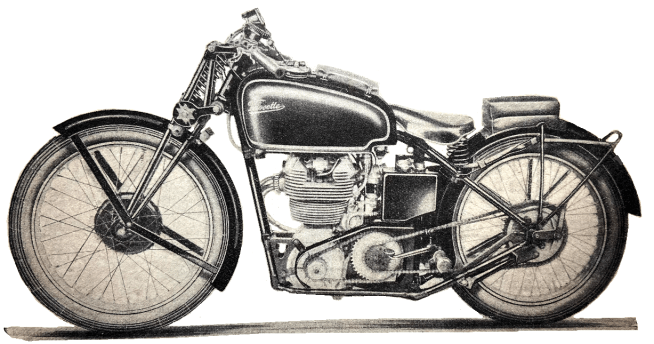
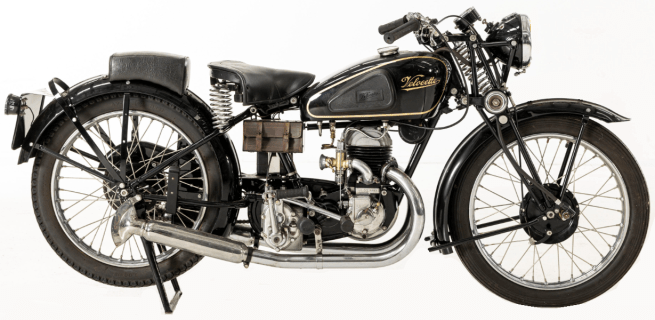
“THE NEWS THAT THE KTT Velocette is to be re-introduced will be welcomed by many motor cyclists, for this famous model was, in its old form, a favourite among racing and sporting riders alike. The new KTT is based on last year’s racing machines, and to all intents and purposes the engine and gear box are identical with those used in the machines which Stanley Woods and EA Mellors rode in the TT last year. The engine closely resembles the TT job, the only difference being that the cylinder head fins have rounded instead of square corners. The new engine is produced in the 348cc capacity only. It has a bore of 74mm. and a stroke of 81mm, and its compression ratio, for use with a 50/50 petrol-benzole mixture, is 8.75 to 1. An aluminium-alloy cylinder barrel with a special iron liner is employed, and the slipper-type piston has two compression rings and a slotted oil-control ring. The steel connecting rod, which is heavier than formerly, has the small-end bronze bushed. As in the TT engine, the cylinder head is of aluminium alloy with an integrally cast rocker box and inserted valve seats. The overhead camshaft is driven by bevel gears and a vertical shaft, and the entire valve mechanism, including the hairpin valve springs, is fully enclosed. Incidentally, the inlet valve is of larger diameter than the exhaust. Adjustment of the tappets is carried out by rotating the rocker spindles, which are eccentrically mounted. Oil is fed by a pump to a filter situated behind the magneto chain cover and thence via three jets to the main bearings, the upper camshaft bevels and the cams.”

“WE LIVE AND LEARN. I have a couple of tyres which have worn rather smooth, though still devoid of cuts and serious wounds. Realising that the long spring drought would certainly be followed by plenty of rain, and that these conditions create special risks of skidding, as the roads after a drought carry lots of rubber dust and oil, I decided to have these covers ‘sliced’, and to test for myself whether sliced treads grip a greasy surface as adhesively as their devotees claim. I am happy to report that the grip is Al. But to my perplexity and surprise the sliced treads in conjunction with certain types of wet road surface emit a curious whistling noise, quite unlike the sizzle of any standard tread.”—Ixion
“BEDFORDSHIRE POLICY ARE making increasing use of photographs as corroborative evidence in proving cases of dangerous driving and other traffic offences, but in some quarters it is being questioned whether, such photographs really do tell the truth. Half a dozen patrol cars in this county are fitted with cameras which enable photographs to be taken at speed.”.
“THE FOLLOWING RESOLUTION was adopted unanimously by the General Council of the RAC recently: “That this Council is of the opinion that in order to reduce the toll of road accidents it is desirable that positive obligations of a reasonable character should be imposed on all types of road users, including pedal-cyclists and pedestrians, and, in particular, that all pedal-cyclists should be registered and should carry rear lights and be subject to penalty for careless, riding, and that the movement of pedestrians across the roadway at controlled crossings should conform to traffic signals.”
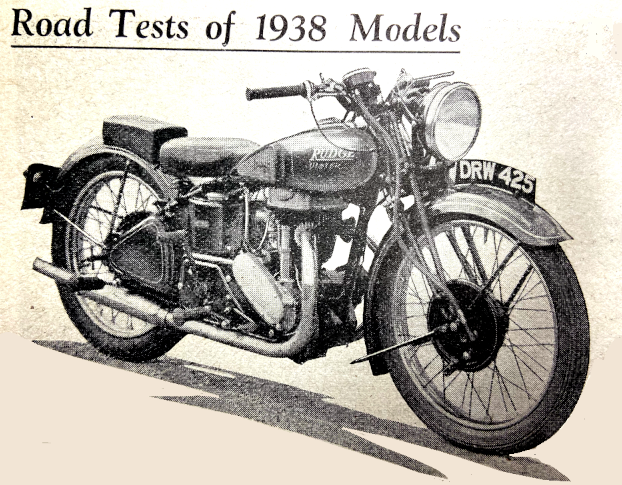
“IT IS HARDLY NECESSARY to make any introduction to the Ulster Rudge. Famous for years as one of the highest performance production machines, the 1938 edition still lives up to this enviable reputation and, in addition, has a number of refinements and modern improvements, which make it a most likeable mount to ride. Perhaps the most marked of these is the high degree of silence, both mechanical and exhaust, and the complete absence of any oil leaks after 350 miles. Coupled with this the Ulster produced a mean speed of 89mph and the speed for the standing quarter-mile of 51.72mph is the fastest yet obtained by Motor Cycling during the 1938 road tests on a 500cc machine. Seldom is such a combination of good qualities to be found in any one machine, and our tester reports that it is a difficult matter to offer any criticism. During the time the Ulster was in our hands it was used for fast main-road runs and a fair quantity of town work; two widely different duties which proved it to be a real dual-purpose model. Comfort was of a very high order, the controls, footrests and saddle position being adjustable to suit riders of all sizes. All the above-mentioned items were set correctly for the tester before leaving the Rudge factory, only one small modification being made subsequently to the foot change. This is mounted on splines and can be set to a very fine degree, which gives real nicety of control. The saddle was large and produced no feeling of fatigue even after a 200-mile spell. Handling under all conditions was superb; a really strong point in favour being the way in which it could be slung round corners of all types; fast, slow, rough or smooth, the Ulster always retained the ‘on rails’ feeling. Very little damping was necessary on the front forks, in fact, no damping at all produced about the best result under normal conditions. If the damper was ‘nipped’ up at all the tail end seemed inclined to bounce, and a certain amount of shock could be felt through the handlebars. Even when travelling flat out the steering damper was found to be unnecessary and accordingly remained right off the whole time. Mere mention of this machine brings the word ‘performance’ to any motorcyclist’s mind, so we will give some of the facts and figures which were obtained when a visit was paid to the measured ¼-mile. A maximum speed in top gear of 92mph, and a mean timed speed of over 89mph leave little to be desired. In the gears the results obtained were equally good. Third and second gears returned 84mph and 74mph respectively. At both these speeds the motor was turning over pretty quickly for a 500, but throughout the speed range no vibration could be detected.
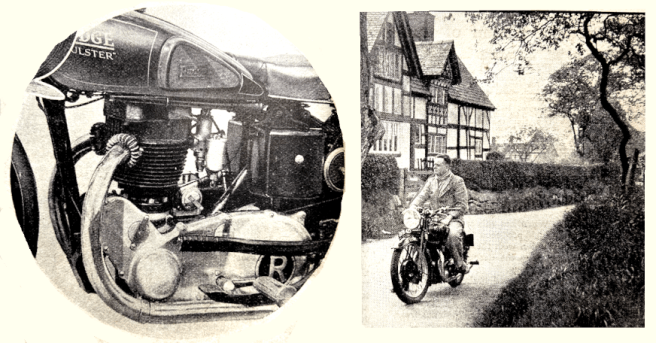
We have made a brief mention of the acceleration, which was outstandingly good. At the bottom end of the scale, the motor, with the aid of the transmission, gave a really woolly feeling and in spite of the high gear ratios the minimum non-snatch speeds were uncommonly good, 18, 15 and 12mph being the figures in top, third and second respectively. When discussing the high maximum the touring point of view is apt to be forgotten. On a good main-road run the most comfortable cruising speed lay round about 65mph. This enabled some very high average speeds to be put up, for with a further twist on the throttle this rate of knots could be maintained up main-road hills. For normal fastish travel it was best to change up from second to third and third to top at 40 and 60mph respectively. Naturally, when indulging in ordinary slow-speed touring these speeds were considerably lower, but the engine was so smooth and flexible at all times that the cruising speed could only be determined by the rider’s frame of mind, the scenery, or the general road conditions. Riding as stated above the fuel consumption remained very consistent at about 70mpg. Separate and accurate tests were made in town and country conditions which showed 66mpg and 74mpg; all of these figures are markably good for a really high-performance 500. The oil used was negligible, the level dropping only about ¼in. after 3OO miles; further-more, any oil which was used was certainly not due to any external leaks. The whole engine and gearbox were spotlessly clean, the only leak at all being from the oil tank filler cap due to the level being too high; when this had been reduced to about an inch below the neck, all the leakage stopped. From the quietness point of view the Ulster deserves full marks. Mechanically, it was one of the quietest engines we have had on test, and the exhaust silencing has been dealt with in such a manner that it is really quiet except when the ‘urge’ is turned full on; even then there is no bark attached to the noise, and it is doubtful whether anybody could possibly take umbrage. The gearbox was silent on all the ratios in addition to being very pleasant to use. When first taken over the change down was a shade uncertain, but after some real usage this appeared to wear off and then worked well. The change up was always beyond criticism. Starting was very easy both hot and cold. In either case the ignition had to be set at about half retard, and when cold the carburetter gave the best results after being flooded. When hot this was unnecessary, and one good hearty kick produced the
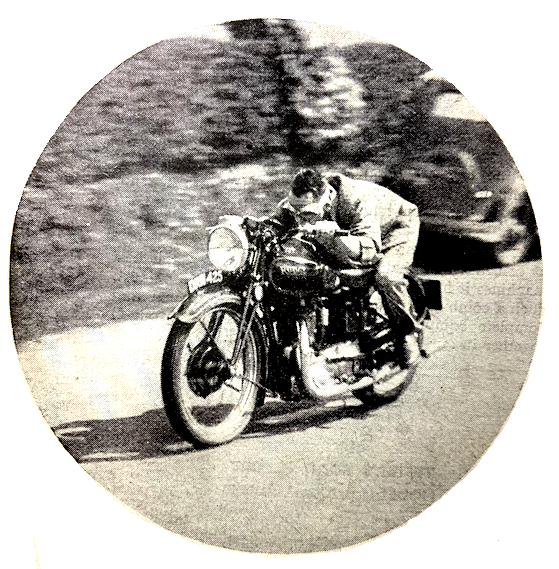
desired result after easing the compression with the valve-lifter. First thing in the morning using the decompressor enabled the valve-lifter to be left alone. The well-known Rudge coupled brakes were delight-fully smooth in operation and very powerful. On the actual brake test it was found possible to stop from 30mph in a matter of 32ft. The additional front-brake lever was used to obtain the above figure. Ease of maintenance is obviously a matter which has received the close attention of the manufacturers. The valve clearances are set through the inspection cap in the off side of the valve enclosing cover. The adjusters themselves are placed at the push-rod end of the rockers. Easy, adjustment is provided for the primary chain by moving the gearbox with a cam; this principle is also employed to tension the rear chain, both operations taking a very short time. Another feature is the quickly detachable rear wheel which can be removed while the chain and brake drum remain undisturbed. Easy access is provided to this with a detachable rear mudguard. The hand-operated central stand was delightfully easy to operate and at the same time gave a really firm support even when the model was propped up on rough ground. The sensible dimensions of both the oil and fuel tank filler caps made the easiest possible job of replenishing: also the extended gearbox filler was very conveniently situated. With the days as long as they are very little night riding was indulged in, but one short journey was sufficient to show that the head lamp possessed a powerful beam. also that the dipper switch was well placed and positive in action. There was no cause to use the tool kit during the test, but it it was examined and sundry spanners applied to some of the most commonly used nuts. They appeared to be amply strong for their job. Talking of equipment, it would be as well to remind our readers that the Rudge is a fully equipped machine with no extras. Standard specification includes an illuminated 120mph Smith’s chronometric speedo-meter, lights, licence holder, horn and rear mudguard pad. At the conclusion of the test we can say without fear of contradiction that the Ulster is one of the best machines it has been our good fortune to have on test. Such a combination of good handling, performance, and complete equipment is seldom to be found grouped together in one model. The price is £82.”
“THERE ARE NOW SEVERAL different types of motorised bicycle on the market, most of which it has been my good fortune to ride. During the last few weeks I have had in my stable a 98cc Villiers-engined Raynal—and a very interesting little job it is. It has several unusual features, chief of which is a sprung front fork. There are also a clutch, normal pedalling gear and a back-pedalling brake which is designed to avoid accidental application when the engine is in use. On machines of this type a spring fork is generally considered a luxury, but at the speed of which the Raynal is capable, it is very nearly a necessity. A short, laminated spring is employed, which allows a fore-and-aft movement of the fork blades. This movement can, to a certain extent, be adjusted by tightening or slackening the shock absorbers. A back-pedalling brake is an advantage on a motorised bicycle because it reduces the number of handlebar controls. However, this type of brake normally has the disadvantage that the slightest backward movement of the pedals applies the brake. On the Raynal, a hub-type brake is fitted, and this is operated by lever and rod from the pedals. The lever, which works on the ratchet principle, engages with the pedals only when the offside pedal is just past the horizontal position behind its crank. With this arrangement it is possible to ride many miles and shift the position of the feet without fear of the brake being accidentally applied over bumpy surfaces. Another feature of the Raynal is its open-type frame—an obvious advantage for riders of the fair sex. The handlebar controls consist of a clutch lever, with a trigger lever to keep the clutch out when required, a decompressor for starting and stopping the engine, a throttle lever and a front-brake lever. Attached to the fuel tank is a small knob, which operates a simple form of carburettor choke to facilitate starting from cold. There are two ways of starting the Raynal. One can either pedal off and, after gaining sufficient speed, let in the clutch, or one can paddle off—both ways are equally simple. When starting from cold it is both necessary to flood the carburettor and to use the choke; after 100 yards or so the choke can be taken out. The 98cc Villiers engine pulls away from walking pace to its maximum without a trace of snatch, and the drive is taken up so gently that the veriest novice need have no fear of the machine running away with him. Such flexibility, coupled with extremely smooth running, inspires confidence at the outset. And, above all, the little engine is exceptionally quiet. The drive from the engine is taken through a counter-shaft and clutch to the rear wheel by a chain on the near side of the machine. On the off side is the normal pedalling gear. The two methods of transmission are quite independent. In many respects the Raynal handles in exactly the same way as a cycle. With the drive disengaged by leaving the clutch withdrawn, the machine can be ridden as a cycle. The pedalling gear is not unduly low—in cycle terms the gearing is 60, or in other words one revolution of the crank turns the rear wheel through two complete revolutions. Because it resembles a cycle in many ways, the Raynal is extremely manoeuvrable in traffic, either with the engine or without. When traffic or other conditions demand, the engine can be throttled down to walking pace; if a slower speed is desired the clutch may be slipped slightly while the pedals are used. Even from a standing start the Raynal will accelerate without the rider
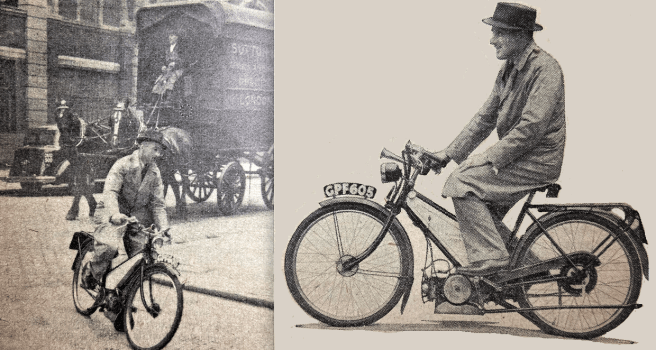
pedalling. On steep hills it is sometimes necessary to assist the engine with a little light pedalling, but for the most part the pedals can be forgotten. The maximum speed of the Raynal is between 28 and 30mph and it can be ridden on full throttle for mile after mile without the engine showing any signs of tiring. I have ridden the Raynal on several occasions be-tween my home in North Surrey and the office, through some of London’s densest traffic. By train this journey takes me 45 minutes from door to door. By road, a distance of 13 miles, it usually takes me 35 minutes on a fast solo. On the Raynal it takes only five minutes longer. On these journeys I was able to appreciate the advantages of the sprung front forks. But I should have welcomed a larger and more comfortable saddle. Another small criticism that can be made against the Raynal is the absence of a chain guard on the off side. A guard is fitted over the transmission chain, but when the machine is being pedalled the off-side chain is apt to trap the rider’s trouser leg. From an economical viewpoint the Raynal is an exceptional little machine. It covered just over 105 miles on one gallon of petrol mixed with half a pint of oil. This fuel consumption was measured on the runs to and from the office, ie, under traffic conditions. Throughout the time the machine was in my possession the engine remained clean except for a slight film of oil in the vicinity of the carburettor; this was probably due to blow-back, which was noticeable when accelerating from a slow speed. The Raynal is just as happy on full throttle on the open road as it is pottering round town streets. At all speeds the engine is remarkably free from vibration. Restarting with a dead engine on a steep bill calls for a certain degree of skill, but on account of its exceptional manoeuvrability (the machine can be turned in its own length) it is far simpler to start the engine down hill and then turn the machine round, pedalling when and as required. The brakes are in keeping with the excellent standard of the rest of the machine. They are both light in application and efficient in use. The rear brake in particular is surprisingly powerful; it is applied with the right foot through the medium of the pedals. Incidentally, a feature of the Raynal is that the chains can be adjusted independently. The equipment includes Villiers flywheel-dynamo lighting, 26xl¾in Dunlop tyres, ‘Shockstop’ handlebar grips and a fuel tank with a capacity of 1⅛ gallons. Yet the price of this efficient and economical little machine is only £18 18s.”
“JAPAN NOW HAS approximately 57.000 motor cycles in use.”
“A MANUFACTURER OF a famous multi-cylinder machine reports that sales of the model are 61% higher this year than last.”
” A CAR CLUB RECENTLY held its annual ‘criminal hunt’, in which competitors sought for clues putting them on the trail of a gang of American desperadoes.”
“MOTOR CYCLES WERE involved in only 14% of the road accidents in the Isle of Man last year, the lowest percentage for 12 years.”
“IT IS REPORTED that riders buying new machines in Germany are now asked to sign an undertaking that they will surrender the machines at military depots in the event of mobilisation.”
“THE ARIEL COMPANY ships its machines to no fewer than 68 different nations. This means that catalogues have to be printed in many different languages, ranging from Lithuanian to Siamese.”
“Five-hundred AA patrol men have joined a Supplementary Reserve of the Corps of Military Police.”
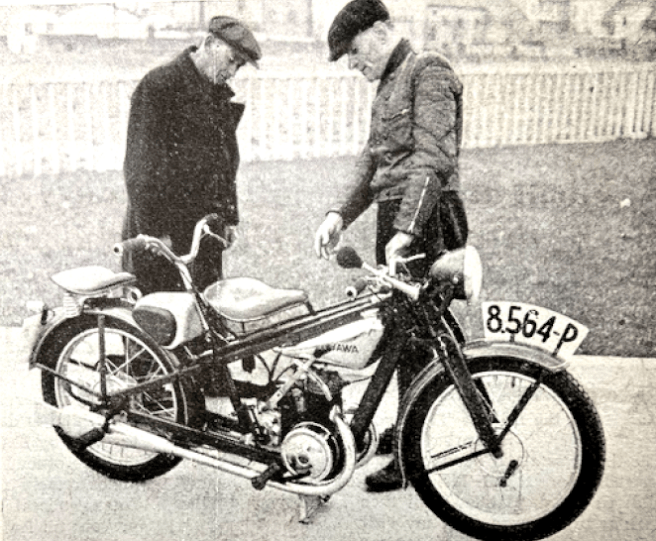
“NO MORE GLORIOUS day could be imagined than last Sunday, when the Scott Rally was held, and members of the London, Manchester and Sheffield Scott Clubs converged on Donington Hall. There was a representative gathering, and nearly every type of Scott motor cycle was to be seen by the time the assembly was complete. Old Scotts, young Scotts, little Scotts and lordly Scotts were there. Some were resplendent in modern chromium and coloured enamels, and others were—and the owners will forgive the description—a rather dingy black, tinged with the stains of thousands of miles of travel. But all were the pride of their riders. and the older the machine the greater seemed the pride. The prize for the oldest machine in its most original form went to Mr Reed, of York, with a 1919 two-speeder; the only change from the original equipment was to be found in the front wheel, which now boasts an expanding brake. As an instance of the enthusiasm possessed by all motor cyclists (and Scott owners, perhaps, in particular), the prize for the rider travelling the farthest distance to the rally went to Mr Short, who had come all the way from Eire. His total mileage was 323. For ingenuity in devising and including gadgets in the equipment of a motor cycle the palm went to Mr Jones, of Liverpool. His extra fittings included the spring frame, the rear mudguard valance and stop light, tiny parking lights front and rear with an independent switch, wire stone guards on his head lamp, a fog lamp, bumper bars, a fire extinguisher and a radiator thermometer. During the afternoon a gymkhana was held. All the events were hotly contested. Frank Varey was there, and he put in some good work. He thrilled the crowd with an unusually hectic and rapid demonstration run. After tea the prizes were distributed at the Hall.”
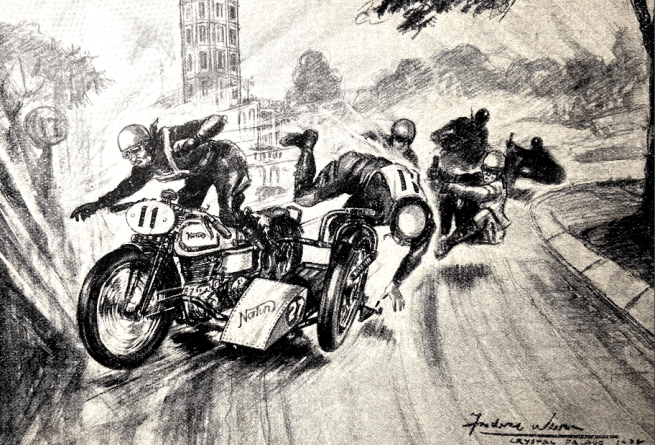
“I AM WRITING to correct a wrong impression that has been created by the newspapers re my crash at the recent Crystal Palace meeting. The cause of the trouble was another competitor who ran into my passenger on the Link Bend, when the latter was hanging out over the sidecar, nearly knocking him off. The front wheel of this machine then hit my sidecar wheel, causing me to get out of control and I hit the wall surrounding the pond. The rider of the machine in question approached me in the Paddock after the race and told me that he had been unable to stop and could not help hitting me. The machine is badly folded up but fortunately my passenger and myself are not seriously hurt.
AH Horton.“
“DO MEMBERS OF THE Government motor at week-ends? We cannot believe they do—at all events not on fine Sundays in the summer. How otherwise can be explained the present road policy? The Ministry of Transport took over the trunk roads in April of last year, yet what has been done? The answer from the car owner’s and motor cyclist’s point of view is, ‘Little or nothing!’ Progress is painfully slow. It the reason is that all available money is required for re-armament, the Government should say so and the motoring world would endeavour to be patient until such time as there is the money. On the other hand the Minister of Transport himself has said that there is no question of lack of money. Then why is there the delay? Parliament has risen; can we hope that members will make a point of motoring at week-ends—of learning at first hand the congestion their constituents suffer?”
“THE 250cc brigade should read, mark, learn and inwardly digest our recent leaderette based on the Bentley engineers’ maxim that 75-80mph is the highest safe continuous speed of a car which can touch 100mph. No commercial engine is built to run continuously at or near its maximum revs. This moral was hammered home in Italy when the first autostrada was opened. Bright lads went on to it, hooted with glee, put their foot right down and kept it there; and the towing gangs were requisitioned daily to haul dead cars off the concrete. I don’t know if the wee 98cc brigade have learnt this lesson yet, but I have often noticed that when a novice gets the real hang of his first 250 and starts scrapping hard on it something snaps.”
“YOU KNOW, OF COURSE, of the present search for crude oil in the British Isles. After Anglo had made their first boring in Sussex and been rewarded merely by a deep, dry hole, the machinery was moved to Scotland. Traces of oil and gas were found at various depths, and drilling continued to 3,857ft in the hope of finding something better. Oil was found a 1,733 to 1,760ft and the well is found capable of producing 8 to 10 barrels of crude oil a day—oil that contains some 12% petrol and 12% kerosene.”
“AT MANCHESTER ASSIZES, damages amounting to £5,500 were recently awarded the pillion passenger of a motor cycle against a car driver, sequel to an accident.”
“RUSSIA PURCHASED British motor cycles over £1,050 last year.” But some were home-brewed…
“A PROPOSED round-the-world tour for car drivers has been abandoned owing to lack of entries.”
“THE AUSTIN SEVEN racing engine can attain a speed of 10,000rpm on the track, and it has been bench-tested up to 14.000rpm.”

“GREAT BRITAIN AND GERMANY shared the victories in the Grand Prix of Europe, held at Hohenstein-Ernstthal, in South-eastern Germany. The racing was inclined to be dull, for the winners of each class established themselves from the first lap in all three races and were never seriously challenged. Nevertheless, the vast crowds of Germans (some 300,000) who thronged the sides of the road remained enthusiastic throughout a long day in broiling sunshine. They had come to the course from all parts of Germany, and in the temporary vehicle parks on the autobahn skirting the circuit there were thousands of motor cycles. The course has been slightly altered from previous years. The start-and-finish is on the straight which runs alongside the autobahn, and the acute hairpin bend by the old start has been replaced by an easier, banked turn. This course in Saxony is a very sporting one, for it contains many tricky and twisty sections, and is far from flat. In view of their recent successes, it was not surprising that the DKW 250s were present in force on their home ground. But it was disappointing that only two other machines of different make came to the starting line. At the last moment the Italian Benellis had
scratched, leaving only the DKWs and two private entrants. The race was almost a foregone conclusion, and when Kluge (DKW) came round at the head of the pack of DKWs everyone nodded their heads, After seven laps the order was Kluge, Petruschke, H Drews, and E Thomas, all on DKWs. When Thomas passed through the start he was heartily cheered, for the crowd were quick to appreciate foreign skill. But on the next lap he retired with clutch trouble. After Thomas’s retirement Kluge and Petruschke drew ahead of the rest of the field, and Petruschke, by magnificent riding, gradually overhauled Kluge. On his 12th circuit he broke the lap record, and soon overtook Kluge to take the lead. On the pit stop, however, he lost it again, for Kluge was slicker by several seconds, and from then on Kluge, now with the European Championship well in his pocket, was never troubled. When the field had been flagged in, the winner and the first private owner to finish were driven round the course in the new German ‘Volkswagen’ cars, together with Herr Hühnlein and FICM stewards Nortier and Ball. For the 350cc race there a larger and much more varied field. JH White and Walter ‘Snow White’ Rusk were hot favourites on the Nortons, but Winkler and Wünsche, with their DKWs, also had their supporters. Other stars competing includes Mellors (Velocette), Fleischmann (NSU) and Grizzle (Sarolea). They were lined up on the road in nine rows of four, with the DKWs and Nortons in front. Red, amber and green lights and a maroon were used for starting, and as the lights changed there was a terrific struggle for leadership among the huge field.
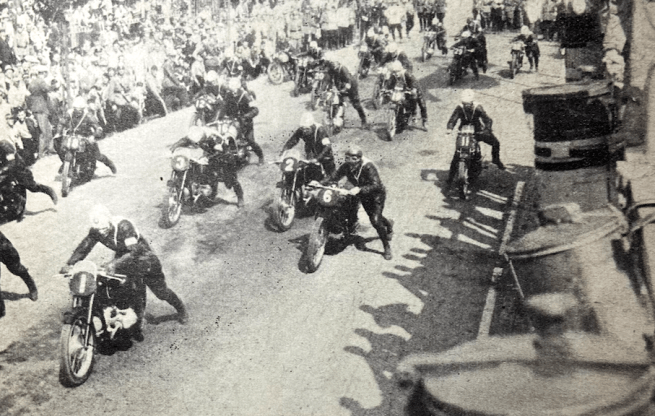
The Nortons seemed slow in getting off the mark, while Winkler and Wünsche were in the saddle in a jiffy. For nearly four minutes there was comparative quiet, apart from the buzz of the crowd. Then, coming down the hill a good way from the start could he seen the leaders of the field. Into the difficult Oberwald S-bend they went, then out on to the straight up to the start. As they drew near it was seen that a green helmet was in the lead—JH White (Norton). Behind were Wünsche (DKW), Winkler (DKW), WF Rusk (Norton), K Bodmer (NSU), and EA Mellors (Velocette), with only yards separating each man. With four different makes in the first half-dozen it looked as though there would he a good scrap. White, however, steadily increased his lead on each lap. Rusk had more difficulty in getting past and shaking off the DKW men. After three laps he had sandwiched himself between Wünsche and Winkler, and on the next lap he had slipped in front of Wünsche to take second place. On this lap Fleischmann, with the new NSU, toured in with the steering head adrift. Mellors started to chase the DKW men on the fifth lap, and he anti Wünsche tore through the start neck and neck. It was a marvellous sight that brought the crowds to their feet, and as the two men disappeared up the straight it was seen that Mellors was slowly drawing ahead. Meanwhile, White was steadily building up a good lead, and on the ninth lap he put the lap record up to 81.71mph. On the following lap Rusk, with a 20sec lead over the first DKW, skidded and fell at
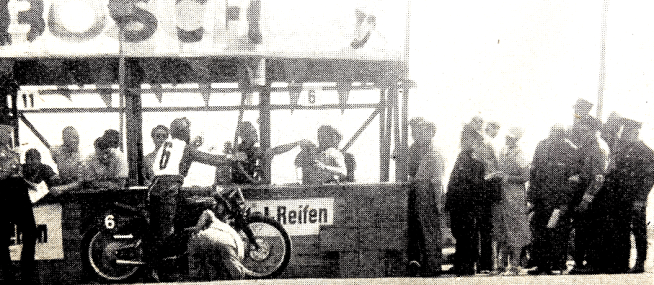
Rowley’s Corner, not far from the start. No vital damage was done, but the nearside footrest hanger was bent into the clutch sprocket, and poor Rusk had to borrow a heavy hammer from a spectator before he could move it. So much time was wasted that he decided to retire. This left White (Norton) in the lead well out on his own, with Winkler (DKW), Mellors (Velocette) and Wünsche (DKW) scrapping hard for the next places. The scrap continued until the pit stops were due. White came in and filled, and got away comfortably, So did Mellors, but in filling his oil-tank his pit attendant overdid it and oil was spilt on the rear wheel. The oil caught Mellors napping, and he slid to earth heavily on one of the fast bends. He returned to his pit, straightened things out, and got away again, but the stop had cost him many minutes, and Winkler and Wünsche were left in second and third places. Behind these men there had been many retirements. Seizures, fork trouble, valve trouble, minor tumbles—all caused riders to drop out. W Hamelehle, the third official DKW rider, crashed on one of the bends in Hohenstein. Machine and rider somersaulted, and Hamelehle came down on the kerb, breaking several toes. White, in the lead, was never troubled, and at three-quarter distance he had over two minutes in hand. Eventually, he got the chequered flag, to secure a deservedly popular win, with the DKWs filling second and third places. Naturally, the 500cc race was eagerly awaited by everyone. With a field consisting of Nortons, BMWs, and a Gilera, as well as a number of fast private owners, there was every prospect of a good race. Daniell and Frith were the Norton men, while Meier, Kraus and a new man, Schneeweiss, were responsible for BMW prestige. Serafini was playing a lone hand with the fast Italian Gilera. With the field lined up, the crowd grew quiet. First, there was the red light, then amber, and then—they’re off! Meier (BMW) straightway jumped into the lead, followed by L Kraus (BMW) and Fergus Anderson (NSU). Both the Nortons and the Gilera made a bad start, but when the field came round for the first time Serafini had gone through the field and was close behind Meier. The crowd rocked with excitement as Kraus (BMW), Schneeweiss (BMW), Frith (Norton) and Daniell (Norton) rocketed through in pursuit of the two leaders. On the next lap the order was the same, except that Schneeweiss had dropped a couple of places. It was noticed, however, that the Gilera was smoking badly. On the third lap the Italian pulled into his pit with his off-side boot and the off-side of the machine covered in oil. After a short stop he was away again in fifth position. During Serafini’s stop both Frith and Daniell had overtaken Kraus. Kraus was riding a heroic race, for only a few days before the meeting he had come out of hospital after a severe operation on his throat. Serafini also overtook the German on the twelfth lap, but a few laps later Italian hopes fell completely when Serafini toured in with a broken clutch wire. Frith and Daniell could make no impression on Meier, who was riding the race of his life. He broke the lap record on his third circuit, and on each lap he gained on the Norton pair. Just before half-distance Daniell overtook Frith, and at 20 laps the order
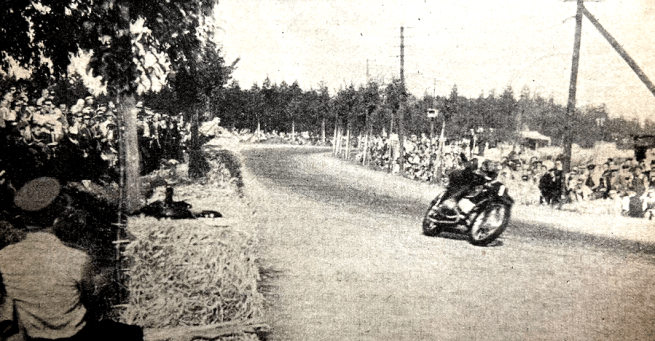
was Meier, Daniell, Frith, Kraus. Behind these four there was a terrific scrap going on between F Anderson (NSU), W Herz (DKW), H, Lommel (DKW) and H Bock (DKW). For lap after lap these four raced round very close together. On lap 30 Anderson stopped at his pit and had a rapid conversation with his attendant. As he got away again the three DKWs went through the start, and the next time round they were in front of the NSU man. These four, however, were some three laps behind Meier, and only Frith and Daniell out of the whole field had not been lapped. But Meier was not content. He continued to thrill the crowd with a marvellous display of riding, and he smashed the lap record again and again, eventually pushing it up to 88.36mph. When he received the chequered flag the crowd nearly shouted themselves into a frenzy. After the tragic finish of this race last year (when Jimmy Guthrie lost his life) the German crowds were unusually appreciative of this new victory. As Meier received Herr Hitler’s prize for the winner, the crowd gave vent to three terrific ‘Heils!’—an impressive climax to the race. Afterwards, Herr Hühnlein made a stirring speech, the German anthem was played, and slowly—but quite easily on the wide ‘autobahn’—the vast crowd started to wend its way home after a fine day’s racing.”
The Blue ‘Un reporter neglected to mention an amusing coincidence: Norton factory rider ‘blond bombshell’ Walter Rusk was also nicknamed ‘Snow White’; BMW had a new works rider, Schneeweiss, which translates as Snow White.—Ed
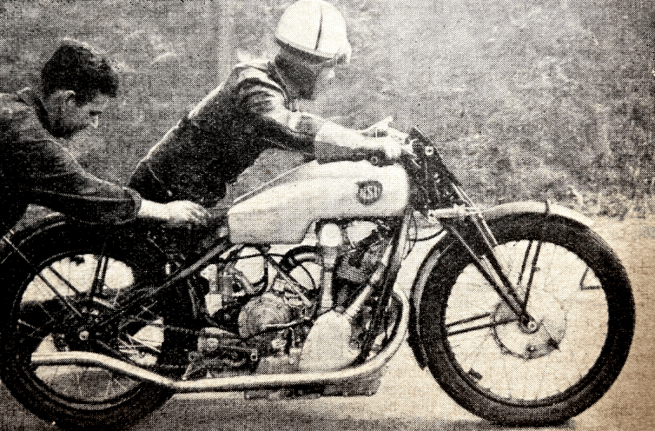
“A NEW ROAD-RACE CHAMPIONSHIP scheme is in operation this year. The FICM has instituted a Championship of Europe based upon the results of the nine most important international meetings, namely, the TT, the Belgian, Swiss, French, German, Swedish, Ulster and Italian Grands Prix and the Dutch TT. (The Swedish event is not being held this year so only eight events count.) The marking is as follows: A win, 6 points; second place, 5; third, 4; fourth, 3; fifth, 2; and sixth, 1. The. Championship is divided into classes, namely, 250, 350 and 500cc, and thus there will be the ‘250cc Champion of Europe’ and similarly in the other two classes. In addition, the rider who gains the highest number of points in one class will be declared the Champion of Europe. This rule is of an experimental nature and may be modified another year—perhaps so that the rider with the highest aggregate score is the winner. Should there be a tie the rider with the higher place in the Grand Prix of Europe (this year the German event) will be the Champion of Europe. Up to last week-end the positions were as follows: 250cc Championship—1, E Kluge (DKW ) 30; 2, B Petruschke (DKW) 20; 3, H Gablenz (DKW) 11. 35Occ Championship. EA Mellors (Velocette) 19; 2=, FL Frith (Norton) and JH White (Norton) 9. 500cc Championship —HL Daniell (Norton) 15; 2, FL Frith (Norton) 14; 3, G Meier (BMW) 12; Champions Of The Year—1, E Kluge (DKW) 30; 2, B Petruschke (DKW) 20; 3, EA Mellors (Velocette) 19; 4, HL Daniell (Norton) 15; 5, FL Frith (Norton) 14; 6, G Meier (BMW) 12.”
THIS ART-DECO STYLED FRONT-WHEELED-DRIVE beauty was called Friedenstaube Motorrad (Peace Dove motorcycle) which, given the year, and its home in Munich, might seem a tad ironic. This one didn’t just look radical: power came from a 600cc three-pot rotary two-stroke engine in the front wheel, which is reminscent of the 1920s Megola (though unlike the five-pot four-stroke Megola the Peace Dove boasted far fewer components but did have a gearbox and clutch). The engine and monocoque body were designed by Robert Killinger and Walter Freund respectively. A fascinating concept that came at just the wrong time; it survived the war but was ‘liberated’ by US squaddies.
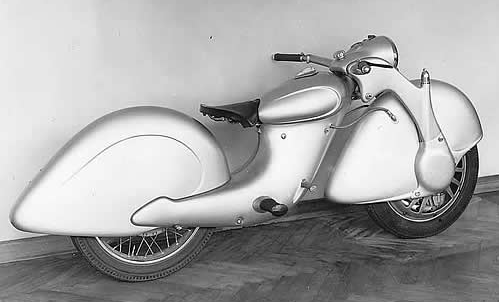
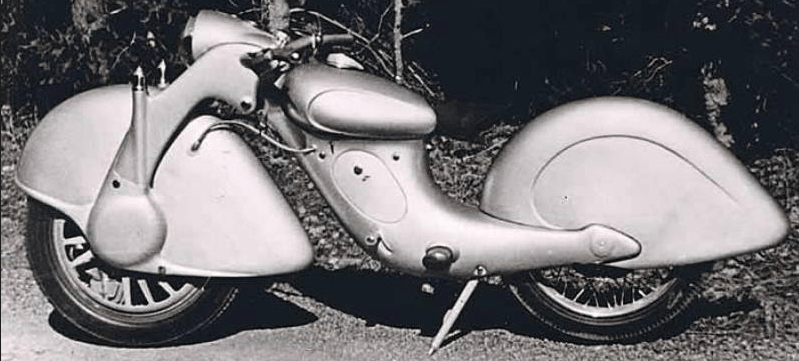
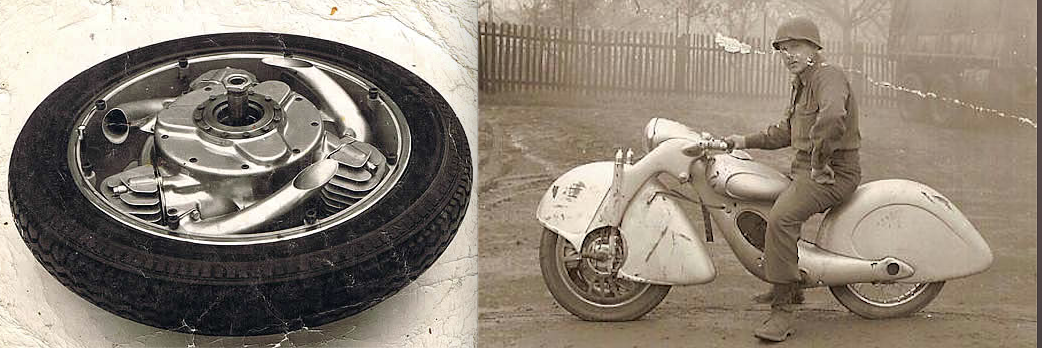
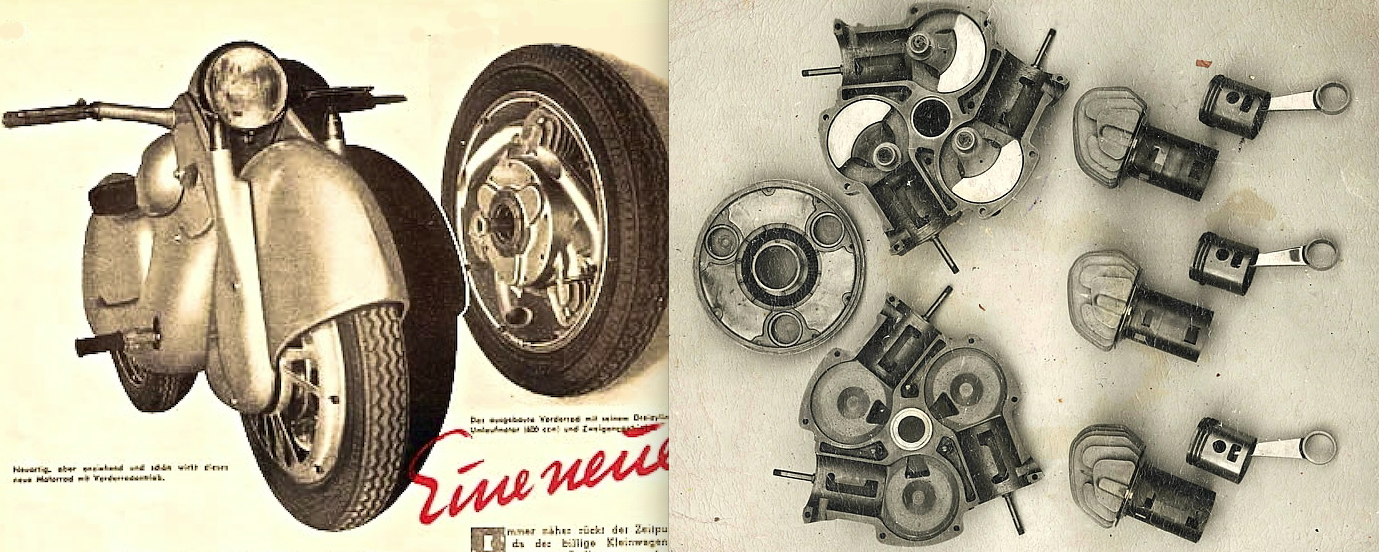
“SOME EVENTS HAVE ‘atmosphere’. Everything about them seems matey or, maybe, different. Gatwick is a very good example of this. These sprint trials run by the Sunbeam Club are not very thrilling: being timed over a quarter of a mile from a rolling start or watching people accelerate up a short stretch of road one at a time is not exciting, but to anyone with motor cycle blood in his veins an afternoon with the Sunbeam Club at Gatwick is the best of good fun. First, there are the machines. There are batting irons of all shapes and sizes, and of all manner of vintages. At the upper end of the capacity scale at Gatwick last Saturday were Noel Pope’s supercharged Brough Superior, Trevor Battye’s old big-twin Zenith and ‘Ginger’ Wood’s Vincent-HRD Rapide, and at the other there were four-valve 250cc Rudges like Ivor Roberts’ spick-and-span job, and strange-looking JAP engines which few present-day riders would imagine to be JAPs at all. By walking round at the starting end of the course spectators are able to examine the machines at close quarters and watch the competitors and their helpers get them ready. There is a happy informality about everything. The warming-up, the getting off the mark, the gear changing, the braking after the finishing line—everything could be watched, even to a director of Vincent-HRDs adjusting the tappets of the Rapide. Besides being interesting, the meeting is one that provides plenty of ‘points’. It requires real skill to take a machine off the mark with the utmost possible acceleration, to change gear at the exactly right point in the power curve and to make those changes with the minimum loss of time. Watching and listening on the starting line was interesting. Valves could be heard to float as some riders let in their clutches, back wheels could in certain cases be seen leaving steamy, smelly, black lines on the tarmac, front wheels (like that of RE Valentine’s 590cc Pullin Special) spent much of the first 20 yards skimming through the air owing to torque reaction…Gear changing in many instances was slow, and a number of competitors had not managed to get their carburation so that their engines opened up cleanly. Perhaps the most perfect exhibition of all was that of NB Pope (Brough Superior) on his first run when he covered the course in 11.87sec, the best time of the day. His getaway, gear changes and everything was perfection, but he was not fast enough to break the record made by the late Eric Fernihough; he was slower by three-tenths of a second. ‘Ginger’ Wood managed 12.50sec as his best. His getaway, too, was excellent—no roughness, just a straight zooming surge off the mark. His gear change worked upwards for top, and each time he changed he gave the impression that he was trying to throw the machine over the fence! Others who were very good were FJ Williams (498cc Cotton-Blackburne), F Harper, whose twin Triumph has been fitted with a pair of Bowden carburettors, N Roffey (730cc BMW sc) and FI Green (596cc Scott). Roffey, whose machine has hand change, gave a superb exhibition, while Green made as polished a show as anyone. Later it proved that Green had won the Beart Trophy for the most consistent performance with four consecutive runs in 14.84, 14.94, 14.89 and 14.79sec—a maximum variation of only 15/100sec. Next was Trevor-Battye with a variation of 0.,18sec and third HAR Earle (348cc Velocette), that man whom many think will; make a big name for himself in the racing world, with a spread-over of 0.19sec. [“…back wheels leaving steamy, smelly, black lines on the tarmac…front wheels skimming through the air owing to torque reaction…” ‘sprint trials’ would lead to speed trials and drag racing; welcome to the age of wheelspin and wheelies.—Ed]
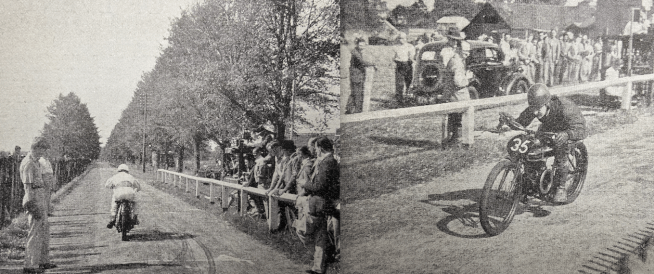
“ZÜNDAPP MOTOR CYCLES are now represented in Great Britain. Pride and Clarke, 158-160, Stockwell Road, London, SW9, have been appointed distributors. The three models in which this concern are specialising are unit-construction shaft drive machines: the 500cc side-valve transverse twin, the 500cc overhead-valve transverse twin and the 800cc side-valve transverse four. Fully equipped, the machines cost respectively £99 10s, £112 10s and £119 10s. Each of the three machines named is available for examination at Pride and Clarke’s showrooms. In general design the machines are similar to each other. All have neat pressed-steel frames and pressed-steel forks and are notable for their exceptional cleanliness in design. Ignition is by coil with a Bosch high-output dynamo. German Amal carburettors are fitted—two in the case of the ohv 500. An unusual feature is that the four-speed gear boxes do not incorporate pinions, but sprockets and duplex chains. A combined hand control and foot change is fitted to the ohv model, and hand changes to the side-valve twin and side-valve flat four. The kick-starter operates through a pair of bevel gears and works in line with the wheelbase of the machine instead of transversely. It is provided with a folding pedal. Other features of the machines are saddles adjustable to suit the weight the rider, speedometers mounted in rear of the head lamps, air cleaners and neat pressed-steel carriers. A 600cc ohv twin is available to order.”
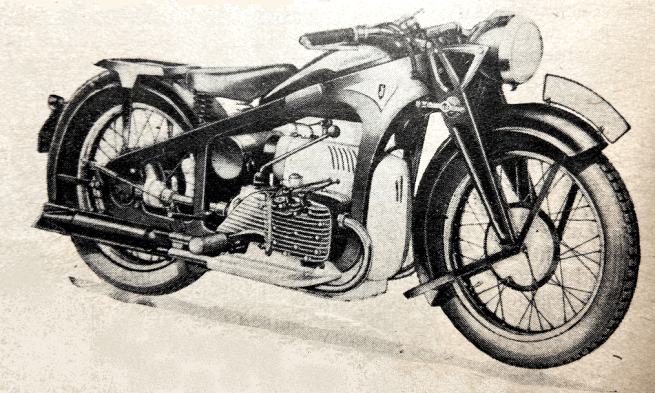
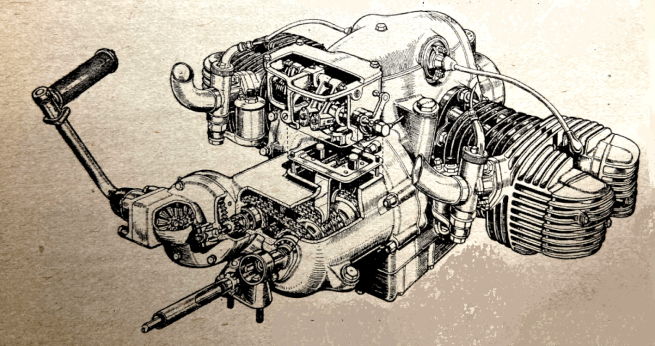
“BRITISH MACHINES, PILOTED by foreign riders, were successful in the 350cc and 500cc classes of the French Grand Prix held at Nice. A Velocette in the hands of the well-known French rider R Loyer won the 350 event, and Cordey, the Swiss champion, won the 500cc race on a Norton. German machines dominated the smaller classes. Petruschke (DKW) easily won the 175cc class from Nougier (Magnat-Debon) and Dubois (Dollar). His winning speed was 54.2mph. In the 250cc race, Kluge (DKW) quickly went into the lead and was never harried. Behind him, however, there was a lively German-Italian duel. Up to half-distance, Soprani (Benelli) valiantly stuck to second place, although hotly challenged by Petruschke (DKW). Rossetti (Benelli) was fourth. After Lap 16 Petruschke took second place from the Benelli rider, and ran home behind his team-mate Kluge. Kluge won at 59.2mph. Soprani (Benelli) finished third. Eleven men competed in the 350cc event. Loyer (Velocette) took the lead in the early stages, and retained this lead through the major part of the race. R Braccini (Monet-Goyon) was second, and Simo third. Loyer’s speed was 57.8mph. Cordey (Norton), the Swiss champion, engaged in a heart-stopping duel with Cora (Sarolea) over many laps of the 500cc race, and only a few seconds separated them. Cordey finally ran home the victor less than three seconds in front (speed, 60mph). Fouminet (GA ACL) was third.
“THE 1938 EUROPEAN GRAND PRIX may well prove an historical event so far as British motorcycle design is concerned. Why? Because racing has always had a profound effect upon designers in this country ever since the earliest days of the TT when multi-cylinder machines were given an extra cubic capacity allowance over the singles. Despite this handicap the single with rare exceptions nearly always proved victorious. As a direct result Great Britain concentrated upon the ‘one-lunger’ to such good effect that we ultimately dominated the racing world. That supremacy seemed invincible until the advent during the past few years of 500cc supercharged machines on the Continent. Take the BMW. British racing managers realised two years ago that here was a machine which was faster than our own super-tuned products, but Great Britain still won because of the superior road-holding and navigational qualities of our hefty singles. Last year Germany began winning on the faster circuits, such as the Assen course in Holland, and the Swedish course at Saxtorp, but, thanks to the magnificent riding of the late Jimmy Guthrie, Freddy Frith, Stanley Woods and other great jockeys, we were still supreme on the tricky courses in Belgium, Germany and, of course, in the Isle of Man. Germany admittedly won the 1937 Grand Prix at Hohenstein-Ernstthal, but only because of the tragedy which overtook our greatest road racer. The significance of the BMW victory in this year’s Grand Prix lies in the fact that it was gained on one of the hardest courses in the world. This horizontal supercharged transverse twin has had the reputation of being hard to handle on corners. A young man named Meier has exploded that myth—unless he be a superman—for he broke the lap record on no fewer than six occasions. Forty laps of the 5¼-mile circuit had to be covered and he put up fresh figures on the 3rd, 5th, 27th, 30th, 31st and 33rd tours, although at no time pressed, despite heroic efforts on the part of Daniell and Frith on their Nortons. (The pace was so hot that Daniell tore off a footrest on a corner, which flew into the crowd like a small projectile, cutting a woman spectator’s arm.) Kraus (BMW), who was riding under great physical difficulties due to a recent throat operation, finished
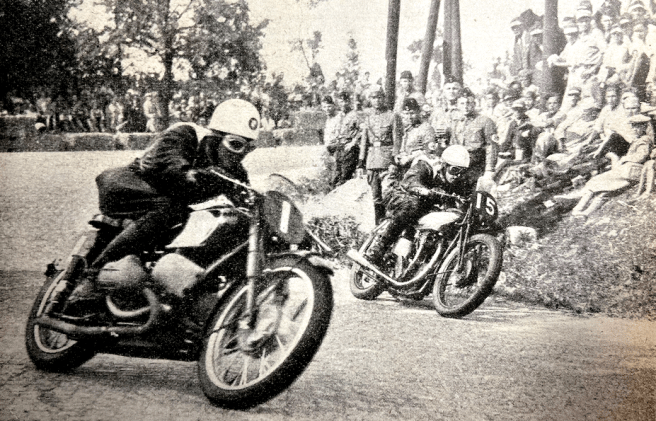
fourth behind the flying Norton pair, which is an item of importance, for he would he too modest—even when physically fit—to claim the outstanding road-racing ability of his team mate. His performance, however, gives convincing proof of the qualities possessed by the BMW machines. It will be remembered that Meier won the Belgian Grand Prix, which is also run over a ‘real rider’s’ circuit, so the fact must be faced that here is a combination of man and machine capable of beating our cracks on their existing models over any known racing circuit, with the possible exception of the Isle of Man. It would be a brave man, however, who would deny Meier’s chance of victory in next year’s Senior TT. The four-cylinder Gilera must not be overlooked, either. It is even faster than the BMW and steers amazingly well. It is going through teething troubles at present, but next year it may well beat Germany’s pride. So much for the 500 class. We won the 350 race in Germany, and for the time being we shall continue to win in this category. White rode a magnificent race on his Norton, but German supercharged. DKW two-strokes were second and third. This 350 type is a new model going through its development period. Next year it is on the cards that it will have a relative performance to its wonderful prototype which has carried all before it, including the Lightweight TT, in the 250cc class. We can anticipate, therefore, that our last shred of racing supremacy may disappear in 1939. The rumoured 350 BMW has not materialised, but it is interesting to note that DKWs have an experimental 250cc four-piston twin (the existing machine is a two-piston single), and this will probably be made in the 350 capacity, and even in 500cc form, later, when something pretty formidable may be expected. The supercharged NSU 350 side-by-side inclined twin is too new to warrant an accurate estimate, but there seems no doubt that the speeds of these supercharged multis have brought the British racing firms to the cross-roads where a decision must be taken. Theirs is not an enviable position, because the fact must be faced that supercharging has proved itself, and supercharging implies multi-cylinders, as no satisfactory method of supercharging a single cylinder is likely to be evolved. It is only supercharging which is beating us. Great Britain makes the finest single-cylinder machines in the world, and for sheer power per cc, without the aid of supercharging, Great Britain has always led the way. Joe Craig of Nortons, and Harold Willis of Velocettes, to name but two British development engineers, have worked miracles in pitting unsupercharged machines against their supercharged foreign opponents. The margin between the foreign and British machines is amazingly small when one considers the enormous advantage which supercharging gives to an engine so equipped.—Graham Walker”
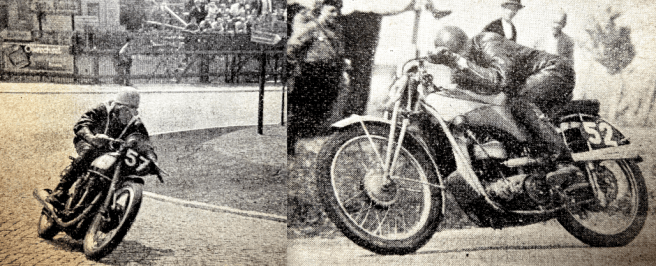
“‘THIS IS ANOTHER instance of the way in which you fellows ride those cycles—coming helter-skelter through the streets of the city regardless of the danger to yourself or any one else,’ said Stipendiary Magistrate Smith at Glasgow Central Police Court when sentencing a cyclist who was charged with reckless riding.”
“TWO MEMBERS OF the BMCA, also members of a very prominent London motorcycle club, were dismissed in the Rugby Court on a charge of careless driving whilst doing 75 to 80mph on a derestricted road. The defending solicitor, instructed by the Association, held that there was no danger whatever to other traffic on the road, and this view was sustained by the Bench.”
“THE ISLAND OF STROMA, in the Pentland Firth, which recently made history when the first road licence was granted, can now boast of four vehicles. Three natives have returned to the island each bringing a motor cycle. If progress continues at this rate, the Minister of Transport will be wanting to install automatic traffic signals and pedestrian crossings.”
“BEST PERFORMANCE OF THE day, fastest time and first in every event—all these honours were recently, collected by a British motor cycle in one of the toughest hill-climbs in America. The event was held in Westfield, near Jamestown, NY, on the edge of the Canadian border, and it was supported by most of the hard-riding ‘slant-artists’ from the Eastern states and the Dominion. Only one British machine took part, a Triumph Speed Twin, ridden by a Canadian, Bill Smith. The rest of the entry consisted mostly of American machines, specially built for hill-climb work. They all used tyre-chains and many were of 1,300cc. The Triumph was a standard sports touring mount of 500cc and was used in all events without chains. Even so, it was the only machine to reach the summit.”
“I NOTICED A LETTER in Motor Cycling about cutting patterns on smooth tyres, and I suggest another method. There is always a chance of cutting the cord when using a knife and for that reason I prefer to burn a pattern with red-hot skewers. This has the advantage of being unable to cut the canvas but at the same time put the deepest possible pattern on the tyre. I use two 10in metal skewers and a small blow lamp. It takes about an hour and a half a tyre, with a transverse tread every 2 inches. It sometimes catches fire but is easily blown out, and the smell is not too bad if one concentrates on the job!
FA Grantham.”
“ARE WE 1% BLACK SHEEP? Further to the letter from Mr RD Hollis, concerning motor cycle patrols on the Epping Road. It was not my intention to condemn the present activities of the police on this road, but rather to deplore the paucity of such activities. Since writing my first letter I have had an opportunity of a chat with two patrols at The Wake Arms. Their opinion was that about 99% of motorcyclists are decent fellows, but the other 1% are real ‘black sheep’. To my mind, road-users are not persecuted on [the] A11, but are being helped by having their driving faults explained. Such items as riding two abreast round bends, and passing at an island, are the main faults of motor cyclists. Mere speed on a deserted road seldom calls for any notice. I think that considerate riders do not have to watch for police patrols. It is only those who are proud of ‘Brooklands cars’, and the absence of a rear light, combined with Castrol R, who have any need to feel guilty. And such people are the first to moan when they are apprehended.
‘Metro’.”
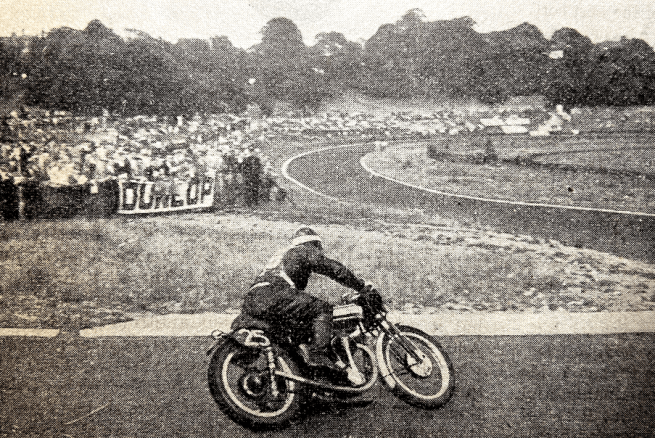

“THE FOLLOWING ARTICLE was received from a correspondent in Tokyo and is reproduced just as written. In many instances the English is on the quaint side, but the article is of extreme interest, showing as it does how much interest is taken in motor cycling in a land and among a people where development upon modern lines has taken place only in the last few years.”
“THE TRADITIONAL SPRING motor cycle race of the Nippon Motor Cycle Club was held this year again on the Tamagawa-Speedway, near Tokyo-City. Ten thousand spectators surrounded the track, sitting on wooden steps of the open stands. The entrance fee was 50 Sen for the sides and Yen 1 for the first place, programme included. (Yen 1 equals about 1s 3d.) This year’s race war of utmost importance, since, for the first time in history a remarkable number of Japanese-made cycles appeared on the start-line, the names of which were Meguro, Ritsurin, Kuwabara, Sunshine, MSA, Kamia, Cabton, Asia, Mikasa and Asahi. It will be noted that many names sound like English ones, which doubtlessly is a reason of sale on the world market. The European and American industry has been represented by Velocette, Blackburn, AJS. BSA, OEC, Zündapp, Sarolea, Harley, Eagle, Ariel. Indian and Bridgestone [sic]. Most of these cycles, however, have been of very old design and not the right specimens to represent European technich of to-day. While the events on the track could be compared with life on an European race-course, the officials and spectators proved themselves entirely different to those of the western countries. The race-officials appeared in morning coats with brown hats or caps; while the spectators did not mind to walk along in under pants. The Hino Maru, the Japanese national flag was found painted on almost every frame-part of the Japanese cycles; golden and silver painted racing helmets have been in favour. The inner sides of the tyres were not seldom painted with the same colour as the frames. The main event of the day was the race of the big 500cc class in which the only European driver, the German, Bernstein, on a Zündapp participated. The first race of this class, covering 5 laps of the ¾ miles long race course, without elevated curves, was won by the Zündapp at the speed of 66.8mph with 2⅖ seconds before the second, Asia 500cc and third a Velocette 485cc. The final race, however, went to the Asia, which did the 10 laps in 67
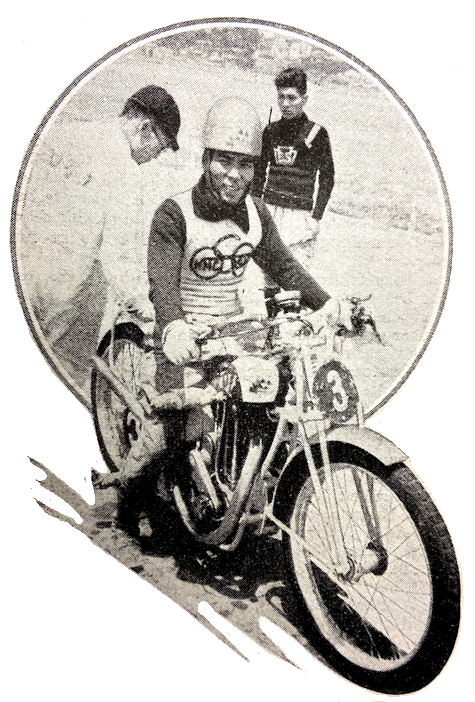
miles speed before the second Velocette and the Zündapp, which was unlucky to flew off the sandy outer curve, 300 yards before the goal, and lost, by bringing the cycle straight again, the 1 second to Asia. The 350cc class race was won by Cabton with 65mph before a Velocette and a Mikasa, while a Meguro could secure the final laps with 65.2mph. Sunshine was successful in the 300cc class with 63 miles average before a Velocette and a Blackburn. The final race was, however, won by Blackburn in 64 miles before a MSA and the former winner Sunshine. It is interesting that the average of the 200cc class was higher than the 350cc cycles, while the 500cc machines could only be faster by two miles. Sunshine, 196cc, won this in 63 miles ph, leaving Kamia, 175cc, and MSA, 175cc, behind, and could even increase its speed to 65.2 in the final laps. The very climax of the day was the economic test drive of a dozen of Japanese-made rear-cars with lorry body. Every driver received only ⅒ gallon of petrol (0.380cc) and had to run at a speed of minimum 18 miles ph. New Era succeeded in setting up records with nine miles for 600cc and eight miles for 750cc engines. The test was interesting, so far as at present the consume of petrol is limitated in Japan to two gallons (American) to owners of passenger-cars, and much less to cycles. The costs of Japanese-made motor cycles in general are much higher than believed in Europe, where everything made in Japan is thought to be cheap. This is entirely different as regards motor cars and motor cycle, The Asahi, most popular cycle, with 175cc two-stroke engine—similar to the 1932 model of DKW engine—with steel frame, costs Yen 475, or about £30 15s, which is supposed to be an exorbitant high price for such a vehicle. Compared with the low wages in Japan, the cycles are much too expensive, and the 500cc ones are priced also over £70. It might be of interest that a first-class bicycle, the Miyata, costs in Tokyo Yen 75 (about £4 I5s) and the bad class starts at 25 to 45. As regards the motor cycles it does not surprise that there are only a few up to now on Japanese roads, compared with its population. The three-wheeler rear car, however, is seen in big numbers and dominates in the transportation business. The prices of these vehicles are £78 for the 600cc and about £90 for the 750cc.”
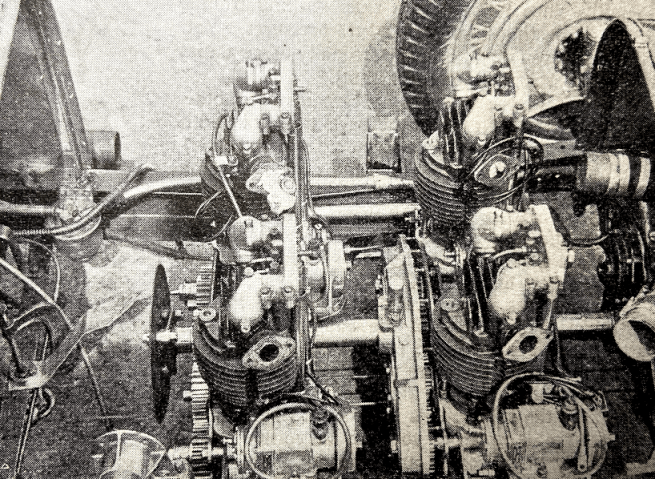
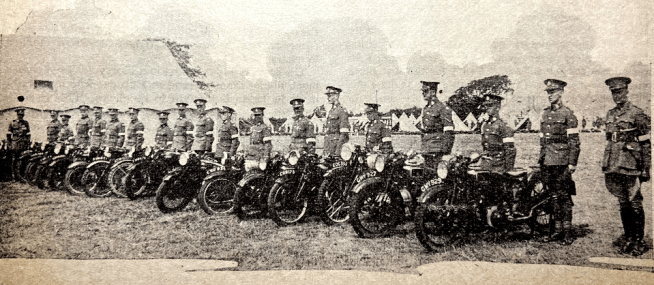
“FORSAKING ordinary sporting and social events, members of the North-Western Centre gathered at the Park Hall Hotel, Charnock Richard (Lancs), on Sunday last for the Centre’s annual rally and gymkhana. This is always an opportunity for a gala day and a dozen of the Centre clubs were officially represented, members of others were present, and the total attendance was in the neighbourhood of a thousand. A feature of the affair is a competition for the Kenworthy Cup which is awarded to the club having the best figure of merit, based upon percentage of members present and the distance travelled from the club territory. Winners proved to be the Tyldesley &DMC with 30 (out of 32) members present; their figure of merit was 103. Next came the Leigh MCC with 92.8, and third were the representatives of the ATM MC (Liverpool) with 75. On last Sunday’s showing a Society for the Preservation of Ancient Machinery would have little success in the North-West. There were only two contestants for an award in connection with the oldest motorcycle ridden to the rally. They were C Greenall, on a 490cc Norton of 1929 vintage, and John Mares, with a 348cc Sunbeam of the same year. Further particulars regarding the date of registration were called for, but such evidence as could be produced was not decisive. The regulations had not foreseen the possibility of a tie in a competition of this type, so the claimants agreed to toss for the award. Luck favoured Greenall, who thus took the prize. There were plenty of excellently maintained machines on the ground, but the entry for the ‘spit and polish’ competition, with an award for the best-kept model actually ridden to the Rally, was on the small side. Shining enamel and plate graced even the products of 1931, but after due inspection the judges had no hesitation in giving the honour to JW Valiant, who had obviously lavished considerable care upon his Ariel Square Four sidecar outfit. Later, it was discovered that owing to an error one entrant had been awaiting the judges at the wrong place. He was J Watson, mounted on a 1931 Brough Superior solo. After investigation of the circumstances, and after an examination had revealed the machine to be in absolutely tip-top condition, the officials decided to grant a special prize. A highlight of the gymkhana was a trick-riding display, specially featuring jumping through hoops of fire, which was given by a number of club members. Mr Arthur Taylor, Centre chairman, and Mr Jack Greene, Centre secretary, had a change from their serious business of supervising sporting events and were the leaders in filling up the afternoon with a programme of the ‘fun and games’ variety, there being surf-board races, obstacle races, slow races, musical chairs and pram races. After the sports there was tea at the hotel, with a prize distribution to follow. Those clubs with the longer journeys before them needed to start for home fairly early in the evening, but a large crowd remained to enjoy dancing in the ballroom and some of the parties did not depart until a late hour.”
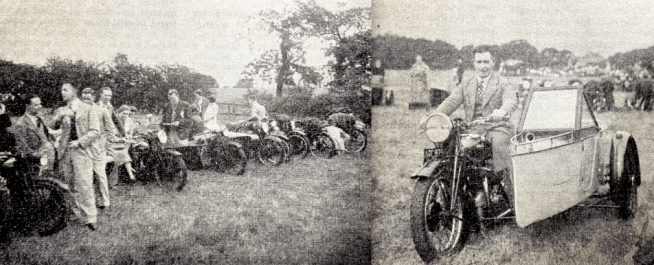
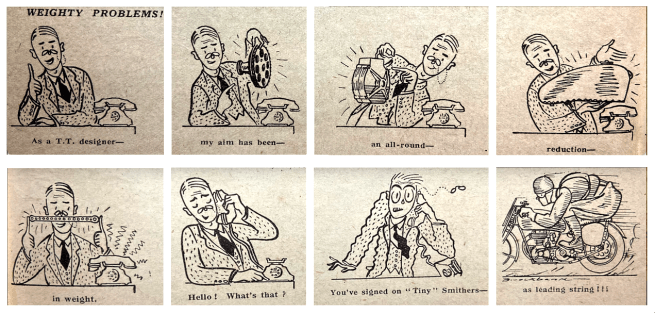
“IN THE LIGHTWEIGHT RACE this year there will be a British machine of unique design, full of novelty and new applications—a newcomer in every sense of the term. At the moment of writing this machine is incomplete, and the engine has not run, and in view of the little time left for experiment, it is, perhaps, too much to expect that it will figure prominently in the Isle of Man. Nevertheless, its performance, no less than its design, is bound to be viewed with intense interest. The machine, known as the CBT, has been designed by CB Taylor and will be ridden by him. The first model includes several features which have had to be adopted owing to lack of time. Originally, the machine was laid out for shaft drive, but for the moment the final drive is by chain, while the gear box, as will be explained later, is not in accordance with original ideas. The engine is a twin two-stroke of 247cc, and is placed transversely in the frame. The cylinder consists of a continuous tube with induction, exhaust and transfer ports. In the middle portion, the bore is 56mm., but at the two ends of the cylinder the bore is increased to 62mm. The stroke is 50mm. Horizontally-opposed, the two pistons have both their ends closed; they also have two different diameters, corresponding with the cylinder bores. The middle of the cylinder is the combustion chamber, and the single sparking plug protrudes into the bore between the inner ends of the two pistons. Each piston has a small gudgeon pin, attached to which is a tiny connecting rod, which runs down the middle of the piston. On the under sides of the pistons are slots, which admit the ends of rockers, and these in turn are pivoted to the ends of the small connecting rods within the pistons. These rockers are very substantial and pivot on large bearings supported on webs cast inside the crankcase. Their lower ends are joined to stiff connecting rods 3¹⁵⁄₁₆in. long, and these rods are attached to crankpins on a two-throw crankshaft. The cylinder assembly is bolted to and lies flat across the top of the crankcase, and the rockers extend downwards through slots cut in the underside of the cylinders, into the crankcase. Rotation of the crank moves the main connecting rods, which operate the rockers, and the latter cause the pistons to slide within the cylinder; the pistons move outwards and inwards together.
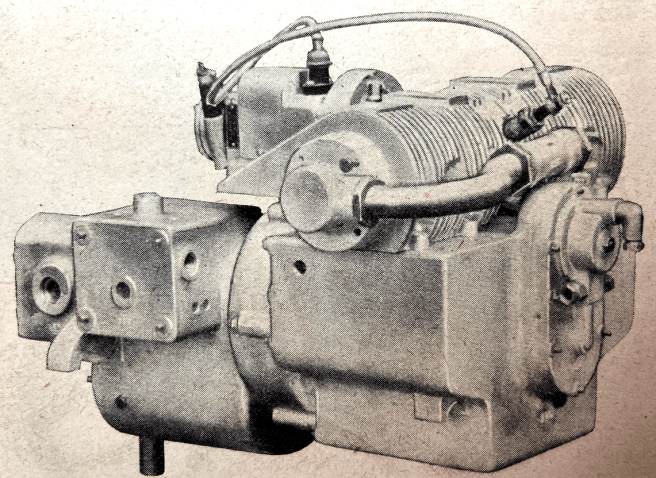
“ONE OF THE MORE interesting points about the AJS four-cylinder model is the fact that it runs on a petroil mixture. No, it has not become a four-cylinder two-stroke during the winter. It is only an ingenious idea to overcome the necessity for a special oil pump to lubricate the Zoller supercharger. The appearance of the AJS Four has been altered in several ways since the machine made its debut in the Isle of Man. In its latest form the camshaft gear and rocker boxes more closely resemble those on the single-cylinder models. Improvement has also been made to the ‘plumbing’ of the exhaust and inlet pipes. To achieve this end a small quantity of oil (2%) is mixed with the petrol. As soon as the engine is running the oil becomes separated from the petrol vapour by the centrifugal action of the supercharger on the same principle as petroil lubrication in simple two-stroke engines. On the AJS Four a large Amal carburettor supplies the mixture to the supercharger which, in turn, passes it to the cylinders at a pressure of roughly 5-6psi. To improve the ‘navigation’ of the four-cylinder AJS Matt Wright decided to set the power unit farther back in the frame. This, in turn, called for the removal of the oil tank. This alteration was in some respects a blessing, for the oil tank was rather apt to mask the two rear cylinders. Now that the oil tank is situated inside the large fuel tank the cooling of the AJS has been considerably improved, together with its steering.”
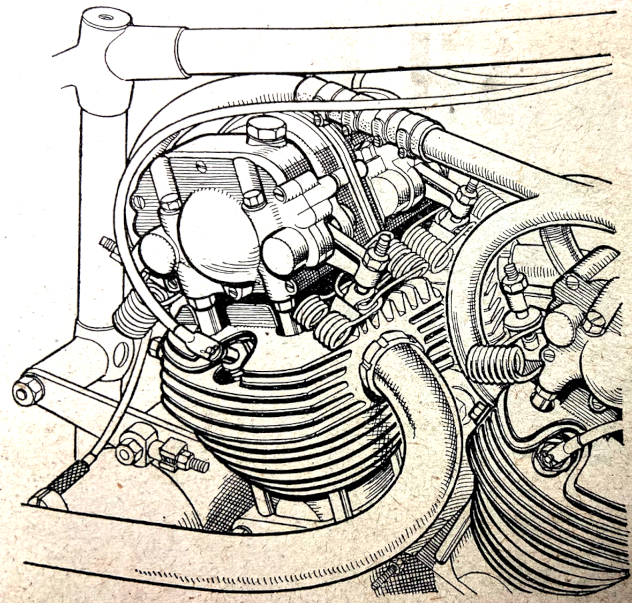
COTTONS have only one official entry in the Lightweight Race, but that lone model will have several features of interest. It will be ridden by the Brooklands and Donington star, MD Whitworth. The engine fitted to the Cotton will be an experimental JAP with a new and improved cylinder head.
“NO DOUBT YOU have pondered over the details and photographs of the new racing Nortons. Did you at the same time recall our ‘Technical Lessons of the TT’ published on July 1st of last year? Here is an extract: ‘If this method of suspension (plunger-type springing) is sound at the rear end of the machine, it seems reasonable to suppose that it will be equally good at the front. It would obviously reduce the amount of unsprung weight as compared with the modern girder-type front fork. This, I suggest, is likely to be one of the next lines of development.”
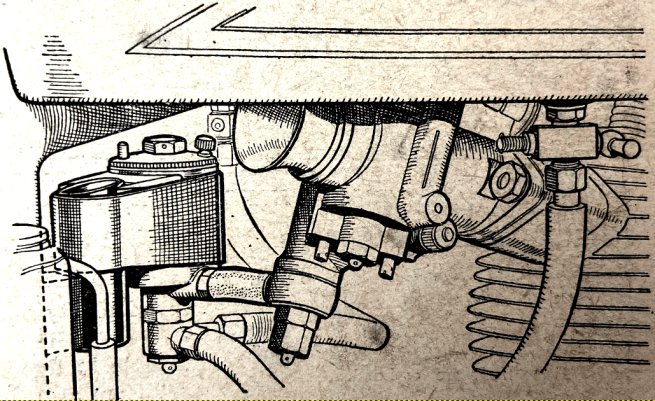
HAVING PREVIOUSLY EMPLOYED Jock West to ride in the TT BMW sent German stars Karl Gall and Georg Meier to the Island two months before the TT and paid West to teach them the course. Norton, following its narrow victory the previous year, was well aware of the BMW’s ability. It also faced a serious challenge from the blown Ajay V-4 (which was now water-cooled) but Moto Guzzi would not be there. The reason given was that the TT clashed with a summit meeting between Mussolini and Hitler but this clearly wasn’t a problem for the Germans. Possibly the Italians simply lost their nerve. In the event Gall was hospitalised by a crash during practice and Meier’s BMW stripped a spark plug at the start. Geoffrey Davison, editor of the TT Special, produced his usual excellent summary of the week’s racing: “The one evening’s practice in 1937 had proved so popular that for 1938 the ACU extended the idea to cover two evenings—the Tuesday and Thursday of the second week. Also they very wisely decided not to hold any practising on the mornings following. On each of these days, therefore, there were two practice periods, morning and
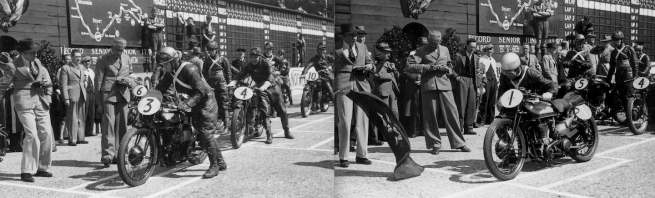
evening, and on the Wednesday and Friday the riders were able to stay ‘backs down’ until the world was well aired. The two evening practices were most welcome, for the first five mornings were the worst the TT has ever known. On the opening day torrential rain fell and the four stalwarts who turned out looked as if they were taking part in a combined operation. On the second morning it was not actually raining, but there was mist on the Mountain. On the Saturday the weather was nearly as bad as on the opening day and only eight men faced it. Monday and Tuesday mornings saw more heavy rain and thick mist most of the way round the course. It was not, therefore, until the Tuesday evening that most riders got going, and even then no records were broken. In fact, the practising period came to an end with both Junior and Senior records standing, though in the lightweight S Wunsche and E Kluge on the German DKWs did laps in 28-41, 27sec better than the record established by Tenni in the 1937 race. Crasher White (Norton) had made best Senior lap in 25-48 and Stanley Woods (Velocette) best Junior in 27-9. The 1938 Junior was once more a Norton-Velocette duel, but the Velos had found some extra speed during the past year and Stanley was a hot favourite. He and Mellors, also on a Velocette, were, indeed, first and second each lap of the race, with Freddie Frith and Crasher White both on their heels. Stanley won easily—by nearly four minutes—but only 36sec divided the second, third and fourth men. Daniell, who had then joined the official Norton team, was fifth and Nortons won the team prize. The Italian Guzzis, replete after their victory the previous year, were absentees from the 1938 Lightweight; and the only real Continental challenge came from the DKW two-strokes ridden by E Kluge, S Wunsche and the Englishman, Ernie Thomas. Those of us who had studied form, however, knew that, unless disaster overtook the DKWs, one of them was sure to win. The best practice lap by an English machine was that of Ginger Wood’s Excelsior in 30-2, 1min 21sec slower than the two German riders. There seemed little hope of a British victory, although Ginger. Wood and Tyrell Smith (Excelsiors) and Les Archer (New Imperial) could be relied upon to force the pace. The start of the race was delayed for a couple of hours owing to bad weather on the Mountain, but when the maroon went off at 1pm visibility was reported to be at least half-mile everywhere and high speeds were anticipated. The three DKWs showed fine acceleration as they left the start and they were certainly the noisiest machines the Island had ever heard. Wunsche had trouble in the first lap and retired at Ramsey, but Kluge led his team-mate, Ernie Thomas, by nearly a minute, with Les Archer (New Imperial) over three-quarters of a minute behind. After two laps Kluge had increased his lead over Thomas to nearly two minutes and Ginger Wood had drawn into third place. Then Ernie Thomas ran out of petrol towards the end of the third lap, and, with only one of the Germans left, we said that there was still a chance. Kluge, however, was riding magnificently and had so substantial a lead that he could afford to take things easily. At the end of the third lap he was 52min ahead of Ginger Wood, but instead of slowing down he increased his lead to 5½min on the fourth lap, nine minutes on the fifth and nearly 10 on the sixth. Finally he won by over 11 minutes, with a host of Excelsiors after him. Actually Excelsiors filled all places from second to seventh and were the only machines to qualify for first-class replicas. Needless to say, they won the team prize. [So it’s fair to say the Excelsior Manxmen lived up to their insular nomenclature—Ed.] The Lightweight had been a dull race. Our only hopes were that Kluge would break down, but, as he showed no signs whatever of doing so, it was just a case of Kluge and the ‘also rans’. The Senior was very
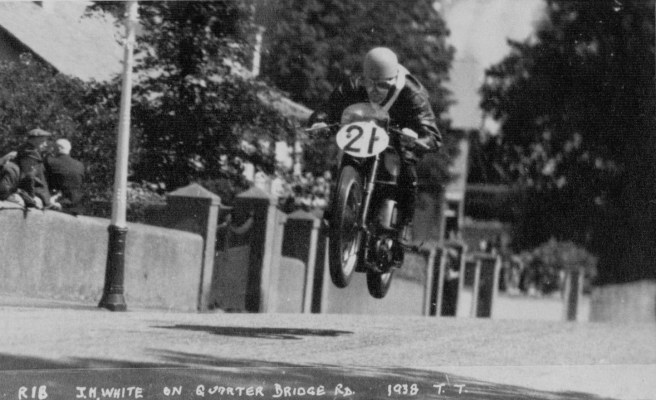
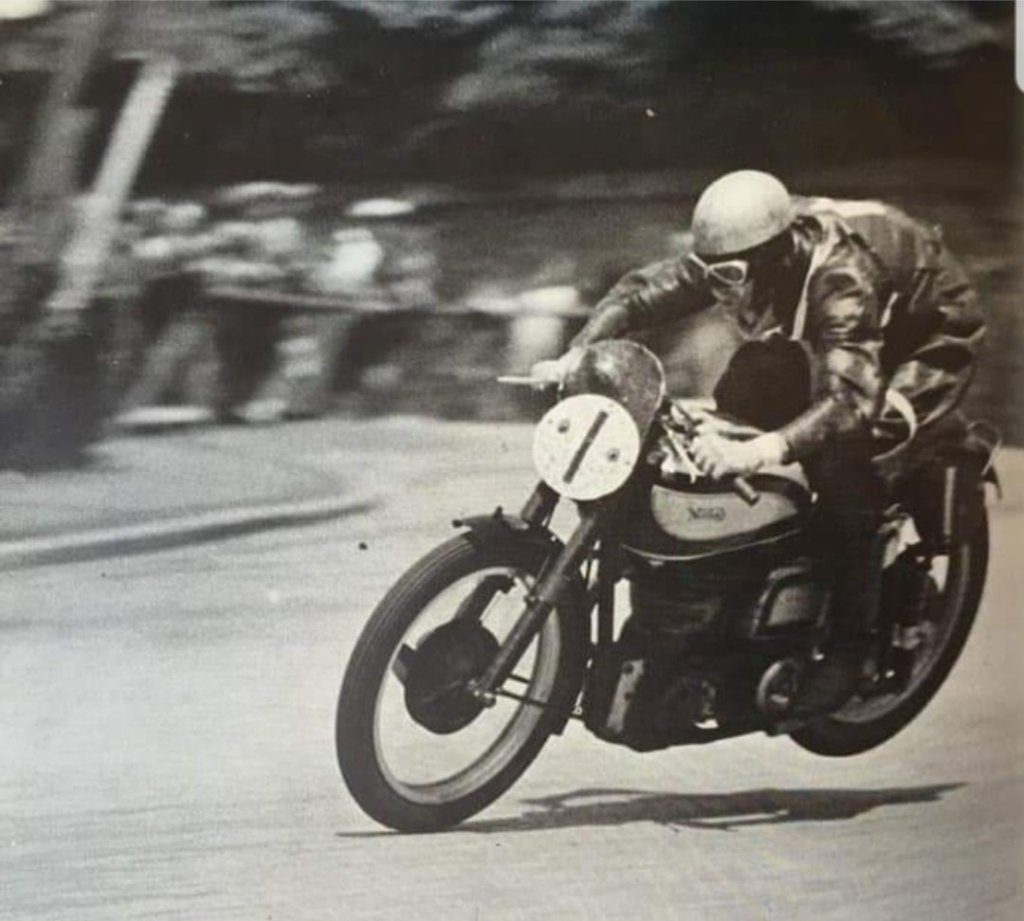
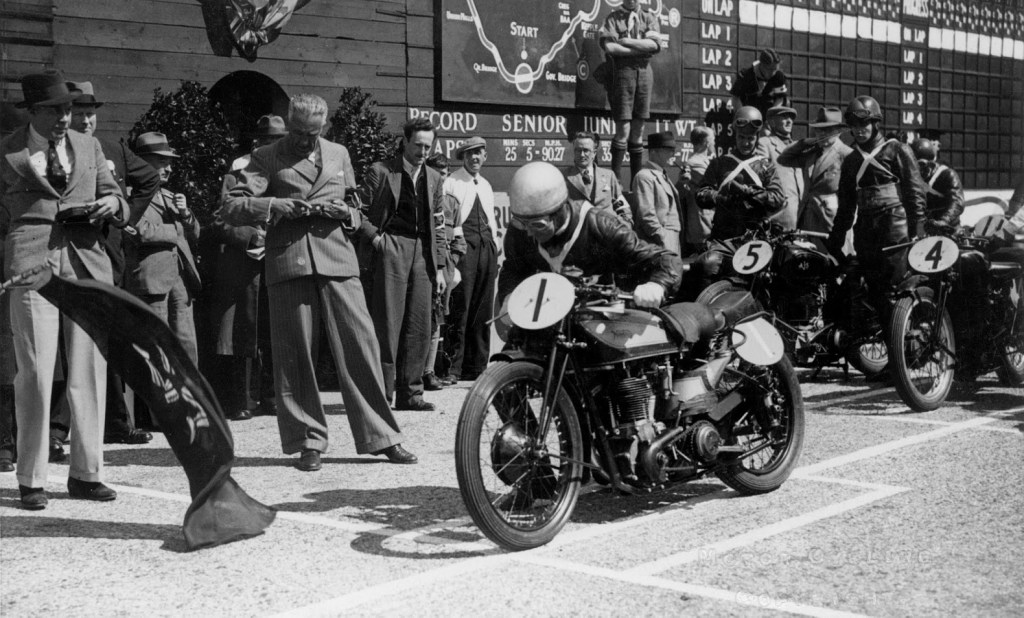
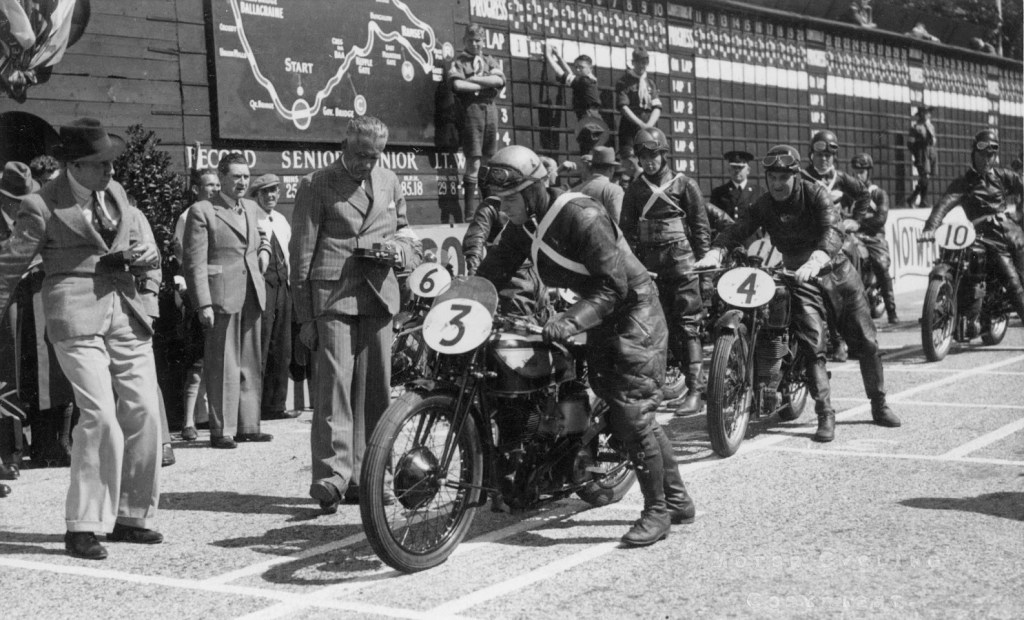
different. As in 1937, it soon resolved itself into a battle between Freddie Frith (Norton) and Stanley Woods (Velocette), with Harold Daniell and Crasher White (Nortons) close behind. Freddie led Stanley by 16sec at the end of two laps, but on the third lap Stanley was three seconds ahead, with Harold Daniell half-a-minute behind Frith. On the fourth lap Freddie was two seconds faster than Stanley, so was then only one second behind him, and Harold Daniell had picked up to within seven seconds of Freddie. The excitement was terrific. Next lap Stanley turned the tables on Freddie by doing a lap in two seconds better than him—so they had covered the two laps in exactly the same time. Harold Daniell, however, had knocked seven seconds off Freddie’s time, so was bracketed second with him, three little seconds only behind ‘the flying Irishman'” Harold was now definitely out to win. On his sixth lap he broke the record for the course by putting in a time of 24-57—first ever under the 25 minutes. This gave him a lead of five seconds over Stanley, and Freddie, having also picked up three seconds, was bracketed second. Then the man who, a
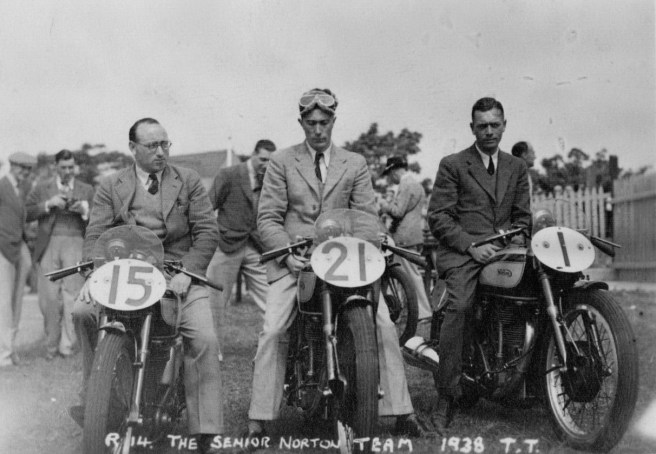
year or so later, was considered too short-sighted to join the Army as a despatch rider, went faster than ever. On his last lap he improved his speed once again with a time of 24min 52.6sec, at a speed of exactly 91mph, which won him the race by just over a quarter of a minute. Freddie Frith finished third, 1.6 seconds only behind Stanley. Nortons won the team prize and Harold Daniell’s record lap was unbeaten the next year and still stands to-day. That was the most terrific lap the Island has ever seen.” [Geoff Davison was writing in 1948; in 1950 a newcomer named Geoff Duke, also aboard a Norton cammy single, smashed Daniell’s lap record, helped by the re-introduction of decent fuel following wartime low-octane ‘pool’ petrol and a Featherbed frame. Every bike that finished the Senior was a Norton or a Velo. an HRD-Vincent retired. The blown V4 AJS was back following its disappointing debut in the 1936 Senior but Bob Foster’s campaign ended after two laps due to overheating. —Ed] RESULTS Junior (42 starters, 22 finishers): 1, Stanley Woods (Velocette) 84.08mph; 2, Ted Mellors (Velocette); 3, Freddie Frith (Norton); 4, Crasher White (Norton); 5, Harold Daniell (Norton); 6, M David Whitworth (Velocette); 7, N Croft (Norton); 8, J Williams (Norton); 9, R Loyer (Velocette ); 10, WH Craine (Norton). Lightweight (29 starters, 14 finishers): 1, Ewald Kluge (DKW) 78.48mph; 2, S Wood (Excelsior); 3, HG Tyrell Smith (Excelsior); 4, Maurice Cann (Excelsior); 5, Charlie Manders (Excelsior); 6, JW Forbes (Excelsior); 7, Les Martin (Excelsior); 8, GL Paterson (New Imperial); 9, JC Galway (Excelsior); 10, SM Miller (OK-Supreme). Senior (25 starters 14 finishers): 1 Harold Daniell (Norton) 89.11mph; 2, Stanley Woods (Velocette) 3, Freddie Frith (Norton); 4, Crasher White (Norton); 5, Jock West (BMW); 6, Ted Mellors (Velocette); 7, Les Archer (Velocette); 8, JC Galway (Norton); 9, JA Weddell (Norton); 10, JK Boardman (Norton).
THE FIRST ISLE of Man Grand National scramble was held during TT race week. The top three bikes were a 350cc Beeza, a 350cc Triumph and a 500cc Ariel.
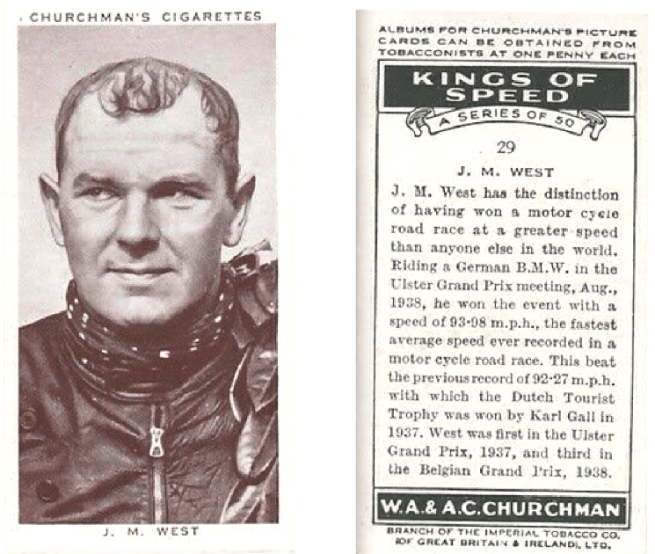
“STANLEY WOODS LOOKS BACK on 16 years of TT riding: ‘Often when I hear riders complaining about the condition of certain parts of the, TT course I smile, and say to myself, “What would they say if they had to ride on the course as it was when I first rode in 1922?” Whenever I voice this thought aloud their obvious remark is to the effect that machines were not so fast in those days. This is, of course, true. But neither did they steer so well, for such refinements as big-section tyres, steering dampers and spring frames still belonged to the distant future. It is practically impossible to convince a newcomer to the Island that the roads of 1922 were really so bad as I describe them. Tar-spraying was only just coming into general use, and with the exception of the roads in the immediate vicinity of Douglas, a few short stretches on the way to Ballacraine, and a very short stretch in Ramsey, this type of surface was unknown on the TT course. For the rest, the surface as far as Ramsey was simply water-bound macadam. Dusty and loose at its best, under any overhanging trees it was badly pot-holed from the rain dropping off the trees. Moreover, the road was little more than half its present width, and steeply cambered…Sulby Bridge, as I first remember it, was barely wide enough for two cars to pass, and the road from Sulby to Ramsey, which is now one of the best stretches, was up to 1924 easily the worst. Loose and dusty, it was deeply pitted with pot-holes which were quite impossible to avoid, even at touring speeds. From Ramsey over the Mountain was the piece de resistance. From just above the hairpin there was no true surface at all—it was just a sandy mountain track with grass growing between the shallow ruts that the wheels of passing cars had left. Even at its widest point the track was far narrower then than it is now at its narrowest, and the crown of the road was unusually high. This made passing very difficult, and when the weather was wet the surface became so soft that the wheels of passing motor cycles left a distinct track, which intensified the difficulties. More than once when conditions were like this I was able to pass Senior mounts with my Junior Cotton. This was due solely to the low centre of gravity and general controllability of this little machine. Scotts were another make that always shone under these conditions. Approaching Craig-ny-Baa the road surface improved somewhat, although judged by modern standards it resembled a gravelled drive more than a road. There was a group of enthusiasts—Scotsmen I believe they were—who for several years used to arrive armed with brushes and sweep several hundred yards of the approach and the actual corner. Stout fellows! A fair idea of the actual race conditions may be obtained by quoting from The Motor Cycle report of the 1923 Junior: “The sliding wheels of Woods’ Cotton threw up a bow-wave of dirt and stones.” That was on Hillberry! Another hazard with which we had to contend was nails. Horse-drawn vehicles still outnumbered motors and the number of nails which used to drop from horse shoes and carts was enormous. During practice one morning a friend and I walked up the course towards Signpost—the roads were not closed for practice in those days—and between us we collected a pocketful of nails! The foregoing accounts for the reason why most of us rode with at least two butt-ended tubes wrapped round our waists, and frequently needed them. You will now probably think that the increase in lap speeds from 60mph in 1922 to 90mph in 1937 is due principally to the improvements in the roads. I do not hold this view. While admitting that the road improvements have contributed very largely to the in-crease in speeds, I contend that by far the greater proportion of the gain is due to engine design and general controllability of the machines. The question has been raised from time time as to how one of the 1922 racers would perform on the present-day course, and what sort of a show a 1938 machine would make under 1922 conditions. There are those who say that the 1922 machine would go much faster on the new course, but only for a few laps—a short life but a gay one! They contend that it would never be able to stand the strain of full throttle that the present-day roads permit for mile after mile. That is undoubtedly true. For I know from experience that the racing engine of 1922 could not stand full throttle even for the comparatively short stretches that the roads of that time permitted. How then, you ask, did any machine finish the course? How did the winners win? Simply by realising the limitations of their mounts and driving well within them. Therefore, assuming that the rider realised he must nurse his engine, as it had to be nursed in 1922 I think that it would probably be possible to lap about 2mph faster to-day…If anyone is inclined to doubt that conditions were really so bad as I make out, I suggest that if they are in the Isle of Man this year they branch off the Mountain road about half a mile after the Bungalow. The second turn to the right, to be exact. Follow this road for some distance, and quite suddenly the wide, good surface degenerates into a narrow mountain track. That is what the old Mountain road used to be like. I am assuming, of course, that the Highway Board have not completed the job of remaking the road. In my opinion, the greatest change of all concerns the Races themselves—not the course or the machines. Up to about 10 years ago the Races—all of them—were wide open until the winner crossed the line. With the exception of the Junior AJS machines of 1921, 1922 and 1923, it would have required great courage to forecast what make of machine would do well, let alone naming the actual rider. Even the riders could do no better than name half a dozen and say that one of those would win if his machine lasted the course. Ah, well! Times have changed since 1922, but it’s great to look back on it all.’
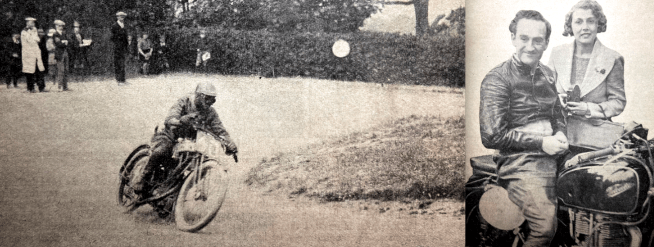
ALL-WEATHER RIDERS could buy RAF electrically-heated ‘flying waistcoats’ for 3/11d ; heated gloves cost 2/6d.
AJS’s Olympia line-up included a potent 350cc cammy single racer designated the 7R.
A GROWING NUMBER OF police forces were joining the ‘courtesy cops’ campaign which entailed using advice rather than prosecution to deal with minor traffic offences. The Metropolitan Police Commissioner called for 2,500 motor cyclists to volunteer for the Special War Reserve Police.
NEW IMPERIAL FELL INTO receivership following the death of company founder Norman Downs. Not for the first time Ariel supremo Jack Sangster leapt into the breach. He bought the name, paid off its creditors in full and maintained New Imp production tat Hall Green in Birmingham, pending a move to use up unused space at Triumph’s Coventry plant. The Motor Cycle reported: “An offer made by Mr Jack Sangster to take over New Imperial Motors as a going concern has been accepted by Sir C Herbert Smith, the receiver for the debenture holders. It is stated that it is Mr Sangster’s intention, as soon as the necessary legal formalities have been completed, to make an offer to the company’s trade creditors whereby they will receive. 20s in the £ in respect of the claim against the Company. Mr Sangster is now on holiday abroad but his representative states that the manufacture of New Imperial motor cycles will be revived within the course of the next few weeks and that a statement in regard to the future policy will be made shortly.”
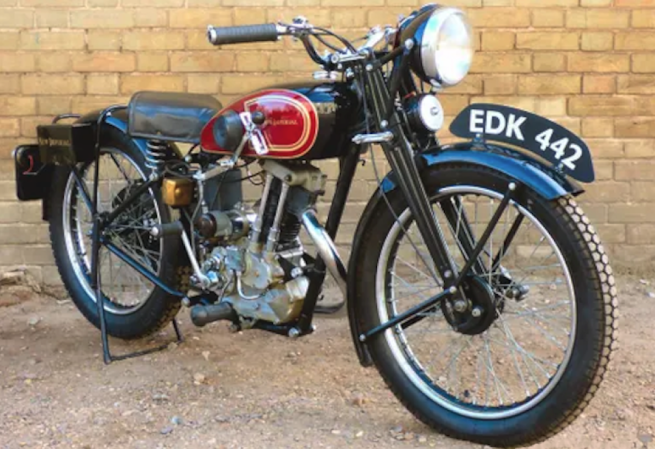
RUDGE PRODUCTION MOVED from Coventry to HMV’s site in Hayes, Middlesex. A utility 98cc autocycle was added to the range, there were plans for a cammy 350 and the War Department ordered a 250. But after the first 200 bikes had been delivered the HMV factory was requisitioned to make electronic equipment for the military. The autocycle design was taken up by Norman, but for Rudge it was the end of the road.
VICTORY IN THE VICTORY Trial (launched in 1919 to celebrate the end of the Great War) went to a team from the Royal Tank Corps.
“WHY ARE THERE NOT more lady motor cyclists? This is a question that is frequently asked—in the Correspondence columns and by riders who would like to see their sisters, fiancées or lady friends taking an active part in the sport which they themselves enjoy. The probable answer is that very few women have an opportunity of trying a motor cycle—of finding out just how easy it is to manage and control one, and how much pleasure it can give. The natural result is that, doubting their ability to handle a powered machine, they often decide that a pedal cycle would best suit their needs. Unfortunately, a few men riders are inclined to look upon lady motor cyclists as ‘gate-crashers’ in a sport which (they consider) should be purely masculine, and for this reason are prepared to do little more than permit their lady friends an occasional ride on the pillion. And yet feminine interest in the sport is actually of the utmost importance. For instance, how often Mother has the last word when sixteen-year-old wants a motor cycle; and everyone knows the young man who has to give up two wheels because his wife prefers a car. But the modern Miss (or Madam!) who would like to learn to ride is no longer dependent upon the whim of her male friend—that is, if she lives in the London area—for she can join the London Ladies’ Motor Club and be taught by experts on a special Club machine. As is well known, several clubs have similar excellent schemes for introducing beginners to the sport. The ideal would be for every club to have its ‘beginners’ course’ with, may we suggest, a special section for ladies.”
MATCHLESS RECEIVED A WAR Department order for modified 350cc ohv G3 Clubman models which were certainly nimbler than most contemporary military bikes.
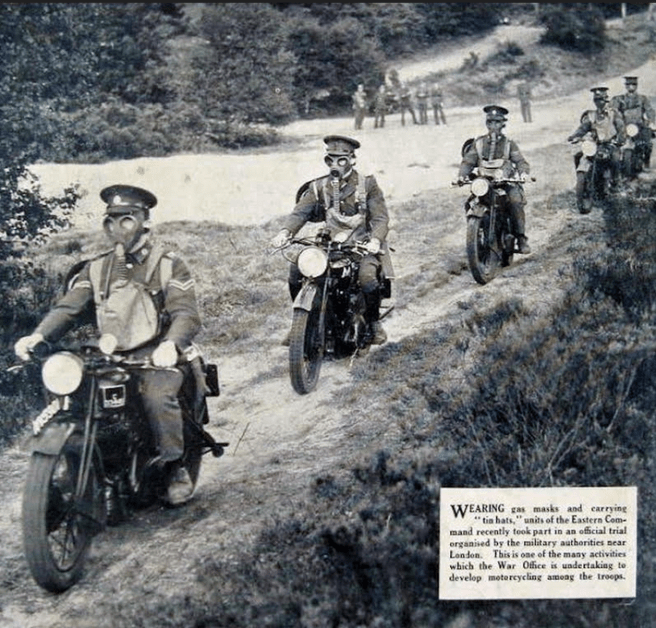
FOLLOWING ALLAN JEFFERIES’ BRITISH Experts Trial victory on a sidevalve Triumph so many riders decided that a ‘soft’ sidevalve engine was the way to go that Triumph increased sidevalve production to match demand. So a single victory affected the production schedule of a major manufacturer—not something that happens every day.
“I NEARLY FELL OFF yesterday. Was adjusting the flaps of my Stormgard at about 60 with one hand only on the bar when a big saloon car, which had crept unnoticed on to my tail, let fly with a hooter resembling a crashing chord on a super cinema organ, and startled me out of my wits. Some Continental nations have laws about hooters which we do not share, such as a bulb horn for towns, and the klaxon type reserved for the open road. There was a time when the fast-car brigade used exhaust whistles for quick overtaking work. I must say that for overtaking on the open road something shrill and high-pitched always strikes me as more efficient and less startling than the organ type beloved by the young millionaires of to-day. Anyhow, drivers of fast cars should not operate a super-alarm right in the ear of a motor cyclist.”—Ixion
VELOCETTE WAS WORKING on a 500cc blown, shaft-drive inline dohc vertical twin dubbed the Roarer.
DKW LIGHTWEIGHTS WERE SELLING well in the Netherlands but the Dutch distributor had Jewish directors and under the Nazis’ anti-Semitic laws German firms were not allowed to do business with Jews. The distributor, Stokvis & Sonnen, turned to Royal Enfield which quickly turned out a copy of the 98cc single that was DKW’s best seller in Holland. For British consumption the DKW lookalike got an improved 125cc engine and was sold as the RE, more commonly known as the Flying Flea. The Flea, which was developed because of Nazi race laws, would be put to good use by British paratroops.
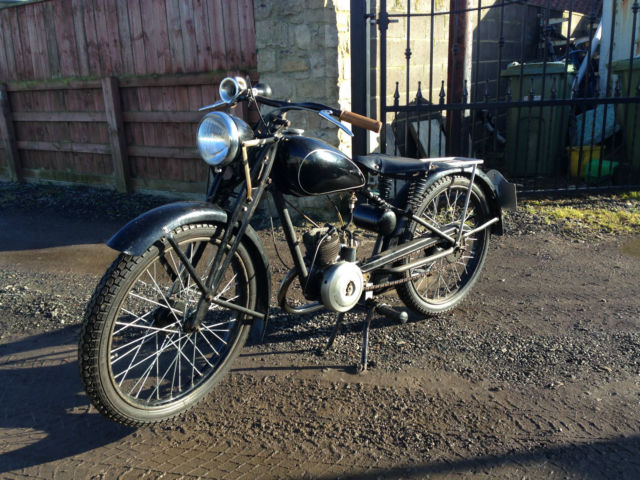
SUNBEAM HAD PASSED from ICI ownership to join AJS under Matchless control; the three marques would operate as Associated Motor Cycles. Sunbeam and tooling headed south but the workforce was absorbed into ICI; AMC gained access to Sunbeam’s legendary high-quality paint finishes which is what had attracted ICI in the first place. An early product of the move was a Sunbeam high-camshaft ohv single designed by Bert Collier.
BRITAIN AND FRANCE EACH had more than 500,000 motorised two-wheelers on the road, though many of the French bikes were untaxed tiddlers. Germany had more then 1,300,000 and Italy had plans for a ‘national’ 200cc utility bike to be sold via a government savings scheme.
“IN LAST YEAR’S International Six Days Trial Great Britain won the International Trophy from Germany by the extremely narrow margin of ten seconds. This win was much too close for comfort, and during the winter riders, manufacturers and officials of the ACU have been working to see that the margin is improved should the decision again rest on the final speed test. Last week preliminary tests were held at Donington and all the riders provisionally selected for the Vase and Trophy teams turned up to show what they could do. The day selected was foul from the weather point of view; rain fell steadily and continuously and the temperature was low. But in some ways the bad weather was advantageous, for it meant that the riders had to carry out their tests under the worst possible conditions…All the members of the Vase teams have well-tried mounts. Len Heath’s Ariel has a bronze cylinder head and an oil feed to the rear of the cylinder barrel. His air bottle is mounted in a neat cylindrical holder attached to the rear fork stays. Len was wearing the new type of Stormgard suit that all the team men will wear in the Trial. It is of a new black material, and it looks extremely smart. The suit is in two pieces, comprising trousers with no front opening and a short jacket that opens and closes with a zipp (sic) at the front. The Rudges that R McGregor and JA Leslie are to use are straightforward Ulster models, very neat and workmanlike, while the 250cc Triumphs of Jefferies and Thacker also looked fairly standard and sounded extraordinarily healthy. The Triumphs have a neat yoke fixing for the bottom of the front fork spring, so that the spring can very quickly be changed if necessary. Billy Tiffen’s Velocette has a TT-type engine, and Jack Booker’s 250cc Royal Enfield is of the type he has raced at Donington; it has an alloy barrel and head With very shallow fins. When the examination of machines had been concluded the competitors went out on to the track in the rain. After one lap of the long circuit the rear wheel had to be taken out, the tube removed and replaced, and the wheel put back, and then another fast lap had to be covered. Everyone got away well, and in a few
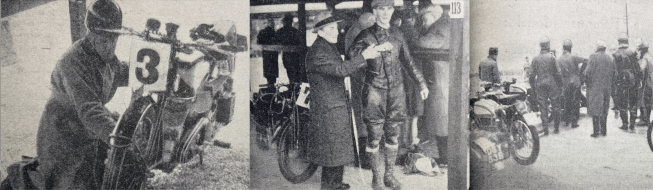
minutes the two Ulster Rudges arrived back, followed by Heath on the Ariel. In the tyre tests, Allan Jefferies was outstanding. Although his tools were not handy, he got them and proceeded to remove the Triumph’s wheel and tube calmly and quickly, and was first away on the second lap. Jack Booker was very little slower, but when he was replacing his wheel a piece of stone got into the female portion of the detachable spindle, and he had to remove the wheel again. McGregor, Heath, Waycott and Thacker were also very good. Poor George Rowley found that all the pressure in his air bottle would not inflate the tyre sufficiently. He went off for his second lap with the tyre soft, and on the way round the valve pulled out. Another in trouble was Stuart Waycott, who found the engine of his Velocette not all that it should be, and he decided to return to the works to make an investigation. After a break for lunch, a move was made to the pits, where the riders were to be started in the schedule speed test. Waycott, of course, was not present, but everyone else put in some good laps. McGregor’s Rudge was very fast, and the two Nortons also made an impressive showing. Allan Jefferies made a real race of the test on his speedy 250cc Triumph, but most of the others took no chances. After this test, which was unpleasant enough in the rain, the officials decided to call it a day and the little party of manufacturers and riders dispersed, the manufacturers to look over the machines and the riders to continue their training.”
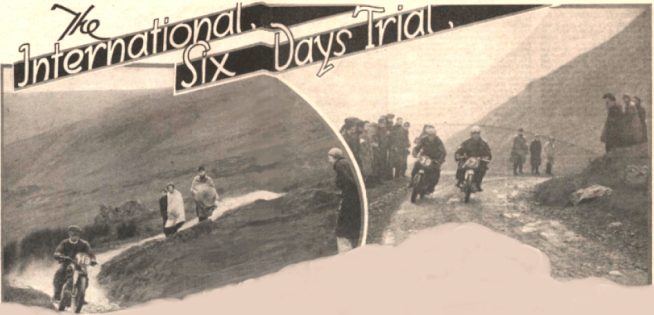
“AFTER THE MOST STRENUOUS International Six Days Trial since the inception of the series in 1913, Great Britain has emerged the winner of the treasured International Trophy for the third year in succession. Her team of four men—GE Rowley (346cc AJS), VN Brittain (348cc Norton), J Williams (348cc Norton) and WS Waycott (598c Velocette sc) was the only trophy team to finish complete. The severity of the conditions can be gauged by the fact that out of 37 starters only two sidecar outfits, of which Waycott’s was one, finished the course. There were 209 starters, of whom no fewer than 127 retired during the week. Germany was victorious in the Silver Vase contest, and also one both the Hühnlein and Bowmaker trophies. Monday—first day. For the first day of an International Six Days Trial, Monday’s run was particularly exacting. For days on end the rain had been practically continuous, so that flooded roads, fords and watercourses formed the chief obstacles. But worse was the follow, for two hills towards the end of the day’s run, produced such a crop of failures that they became choked with perspiring competitors, frantically struggling to push their anything but willing mounts up the narrow, slippery tracks. Delays were inevitable, and as a result many riders, including members of the British and Czechoslovakian teams, lost marks. However, after a meeting which lasted into the early hours of the following day, the stewards decided to abandon the results of at least one check. This left the German and British teams unpenalised. At the start of Monday’s run, the clouds were still ominously low on the hills, and within a few miles, the competitors encountered showers of rain, and on the mountain roads a driving myth. The course lay to the south of Llandrindod Wells—for the most part in the Black Mountains . Long, hilly climbs were encountered, together with hundreds of cross-gullies of a type which, when encountered at over 30mph,
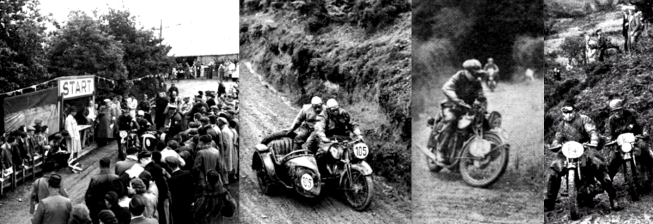
subjected the machines to a series of frame-shattering blows. Normally, such conditions would cause little trouble, but the exact demands of the schedule speeds produced many retirements.
Tuesday—second day. After Monday severe going it was hoped that conditions will be better on Tuesday. To a certain extent this was the case, but there were two ‘tight’ sections in the morning and one in the afternoon which were to cause not only the loss of many clean sheets, but also the retirement of German and Czechoslovakian Trophy team members. Actually, the Germans lost two team members and the Czechs one. As each team loses 100 marks per day for each missing rider, these retirements left Great Britain ‘sitting pretty’ for the trophy. Sharp at 6am the first three riders were dispatched on the 270-mile journey. The route laid in a westerly direction as far as Crymmych Arms in Pembrokeshire before turning back via Tregaron. Several riders who had finished the first day failed to put in an appearance at the start. J von Krohn (597cc Zündapp sc), of the German ‘B’ Vase team, had dislocated a shoulder while HW Croucher (598cc Panther sc) had done so much damage when he had turned over on Monday’s run that he decided to retire soon after the start…The original idea was to have included a steep hill and splash at Pentre Bach, but owing to the flooded nature of the splash this part was bypassed. Meanwhile F Fletcher
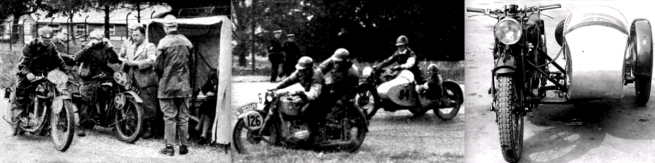
(125cc Excelsior), HN Toomey (493cc Panther), ES Edden (497cc Triumph sc) and IG Davis (348cc Velocette) had retired. Just after Pentre Bach the course climbed over Noethgrug and descended into a valley, across a watersplash and up the other side to Llanfair-ar-y-bryn. This last hill included two acute bends, which provides some interesting performances. The little 98cc Fichtel and Sachs machines came up in style—they have an ordinary three-speed cycle-type hub gear. TG Meeten (172cc SOS) looked happy and confident, and the three German Trophy DKWs performed more like racing 250s than 175cc machines. R Settsam (494cc BMW) misjudged the first bend and was nearly run into by P Head (346cc Enfield). FW Clark (346cc New Imperial was neat in spite of having met a lorry head on in a narrow lane a little way back. GE Rowley (346cc AJS) and R MacGregor (499cc Rudge) were both pretty to watch. Capt G Wolf (597cc BMW sc) of the German army team, rounded the bottom bend in a magnificent power slide with his passenger leading out as far as possible. He was followed by sturdy Sergeant DT Dalby (498cc BSA) of the Royal Tank Corps team, who made a splendid climb. S Moran (347cc Matchless) of Ireland and G Meier (494cc BMW), the German TT star, were both amazingly quick. On the whole the foreign riders were rather vicious with their throttles on the bends, in contrast to the British riders, who preferred to open up after the bends. This applied more to the side than to the soloists…just beyond the Dyffryn control the Czechoslovakian Trophy team sidecar driver was forced to retire with engine trouble and with him went all Czechoslovakia’s hopes of winning the trophy. Near here, F Walter (593cc NSU sc) charged a wall and turned over, but while both driver and machine were undamaged, the passenger, Preiz, was unfortunately seriously injured. Before the lunch check R Demmelhauer (175cc DKW) of the German Trophy team had a puncture and lost three marks on time. A little later T Barnes (997cc Ariel sc) was forced to retire with sidecar chassis trouble. D Holland (349cc Triumph), A Fletcher (348cc BSA) and A Colcombe (347cc Ariel) also retired at the lunch check. on the whole of the return run was easier than the
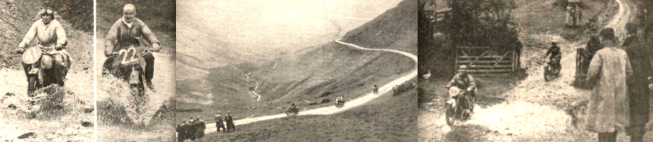
outward run…Back in Llandrindod Wells many riders changed their tires, but very few British riders found this necessary. It was noticed that nearly all the German sidecar machines had worn down the tread of their tires until they were practically smooth…Before handing in the machines each night both the German and Dutch BMW riders carefully washed their cylinders and rocket boxes with paraffin. Harold Flook (596cc Norton sc) changed an inlet valve spring and then discovered that his rear fork-end had fractured. Not even Flook could overcome this trouble, and he decided to retire the following day. It was noted that before each Czech driver handed in his machine he ran his engine for some distance with the air lever closed, presumably to ensure an easy start for the following morning. It had been a strenuous day and coming on top of a severe first day, it produced a crop of 57 retirements. Great Britain’s trophy team was still intact while both of the Irish and Dutch Vase teams were without loss of marks and so were the British and German ‘A’ teams and those from Czechoslovakia and Sweden. The two retirements cost the German Trophy team 200 marks and the Czechoslovakian team was penalised to the extent of one 104 marks.
Wednesday—third day. So severe had been the conditions that by Wednesday night out of 209 starters only 106 were still running and of this number only 72 were still qualifying for gold medals. Even Stuart Waycott (595cc Velocette sc) of the British Trophy team, lost 17 marks on time. But this did not unduly perturb the British team, for since Tuesday they had had the trophy ‘in their pockets’. While there were seven Silver Vase teams complete at the start of Wednesday’s run, only three were intact by the evening. They were the British team, the German team, a trio of German army riders and the Irish ‘B’ team. Very much the same state of affairs existed in the Hühnlein Trophy team contest. Out of 27 entered, only two arrived at the finish of Wednesday’s running intact; to everyone’s delight one of these was the Tank Corps team, consisting of sergeant DT Dalby and corporals FM Rist and R Gillam, all on ‘Gold Star’ BSAs. Their rivals were a team entered by the Touring Club of Germany, the DDAC. Wednesdays run was the same as that for Tuesday, except that it was tackled in the reverse direction. No fewer than eight riders retired at the start, including HJ Flook, (596cc Norton sc), whose rear fork had fractured the previous evening.
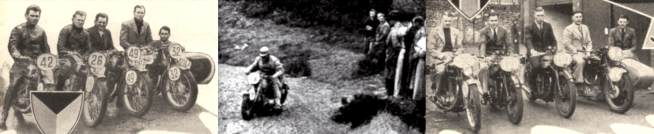
Thursday—fourth day. Before the difficult Abergwesyn-Tregaron section was reached Morris Greenwood (346cc New Imperial) was compelled to give up. Maurice has competed in every ‘International’ since the first one in 1913. Just before the lunch check B Stronge (246cc Matchless) was hit by a German sidecar outfit. His machine was so damaged that he was forced to retire…HR Taylor (997cc Ariel sc) stopped to render assistance to J Hecker (597cc Zündapp sc) who had turned over. In trying to make up time, Taylor was forced to take risks over the cross gullies with the result that his sidecar chassis fractured and he was forced to retire…The Dutch rider J Roest (494cc BMW) came to a standstill with a stone jammed in his front wheel. G Meier (494cc BMW) was outstanding neat, as were WA West (497cc Ariel) and Sergeant JT Dalby (499cc BSA). Mrs M Anning (249cc BSA), Alan Jeffries (247cc Triumph), Len Heath (497cc Ariel) and Tyrrell Smith (349cc Excelsior) were also excellent. Little H Klopfer (98cc DKW) slid round broadside on the descent to the watersplash at Gwenddwr, but his model is little heavier than a bicycle, he was able to heave it straight without any difficulty…Lance bombardier TA Tracy (499cc Norton) of the Mechanisation Experimental Establishment, Farnborough, was forced to retire with a fractured rear spindle. At the finish there was little excitement, but there was a noticeable lack of sidecars. Actually only seven outfits were still running—seven out of 37 starters!…In the Hühnlein Trophy contest, the Tank Corps
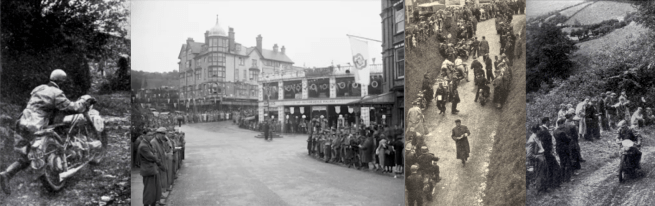
suffered a blow with retirement of corporal R Gillam (496cc BSA). As the German and NSKK team had lost only one mark they now tied with a German SS team in this contest. Never in the memory of some of Europe’s most experience riders has an ‘International’ included such a gruelling day’s run…After passing through Dinas Mawddwy the riders were faced with the ascent of that long, telling climb, Bwlch-y-Groes, the summit of which were shrouded in low cloud. F Fletcher (125cc Excelsior) cruised up gently, and H Klopfer (98cc DKW literally ‘buzzed’ up. While most of the ‘babies’ tore up, H Herrmann (98cc DKW) had to sit sideways on the saddle and paddle up scooter wise…After Vron came the ascent of Allt-y-Bady and the descent of Dol-y-wern. The former was easy, but the latter was slippery and caused several spills. In this extremely difficult section G Wolf (597cc BMW sc) retired with a broken sidecar chassis…Many of the machine for showing signs of spills. Mrs ML Anning (248cc BSA) had written half the day without one footrest, while B Kratzer (98cc F&S) was without a front brake cable and K Zimmerman (494cc BMW) had swept off his foot gear change. However he had his hand lever as an auxiliary. Even riders like George Rowley had left their models during the day, but in his case it was partly due to a damage break. During this days run Britain’s ‘A’ Vase team, which had been riding so magnificently during the week, lost one mark, leaving the German ‘A’ team the only one still running in the Vase competition without loss of marks. No team finished the day without loss of marks in the Hühnlein Trophy contest, but two—the NSKK ‘B’ and the SS were leading with one mark between them. Only two club teams, the Sunbeam ‘A’ team and the German army VFHM club team were left unpenalised. Friday—fifth day. By Friday morning only 89 riders were left in the trial—89 out of the 209 starters! This factor alone tells the tale of the 20th International Six Days Trial. Friday’s run was much the same as Thursday’s. It was difficult, but improved conditions and revised schedules at certain points made the going slightly easier. The course was the same as on the

previous day except it was taken the reverse direction, and that one section near Bidno bridge on the old Aberystwyth road was cut out at the last minute owing to the depth of the water splash. For once it was not raining at the start. Possibly on a count of this, the writers still left in the trial were more talkative than usual when waiting to collect the machines. Anyway, several did not hear their numbers called out and were promptly penalised marks for not being on the line at their correct starting time. In this way Miss Marjorie Cottle (249cc Triumph lost one mark and with it her gold medal. Everyone was very sorry for Marjorie for if anyone deserves a ‘gold’ in this year‘s trial, she does and her brilliant riding on the previous days with a talk of the trial. The route led northward via Carno and Dol-y-wern, up Vron, the infamous Hill, which caused all the trouble on the previous day. As might be expected, C Edge (498cc Matchless) romped up in style for the hill is practically on his back doorstep. From the top of the hill, the route plunged down to Lake Vyrnwy and onto the Hirnaut pass. Then came the Cross Keys control and the lunch check at Loggerheads, and an excellent lunch it was too! Here within 20 yards of the control, JC Edward (499cc Rudge) skidded broad side of fell. He received slight concussion and later spent so long straightening the machine that he lost two marks on time. That night medical examination disclose a fractured rib but Edwards announced his intention of continuing. After lunch, the riders are faced with the ascent of Vron. As expected this steep, grass-grown sense, caused a big delay. Riders literally dropped with exhaustion and when such stars as Hugh Sim and Jack White cannot reach the summit, something must be wrong.
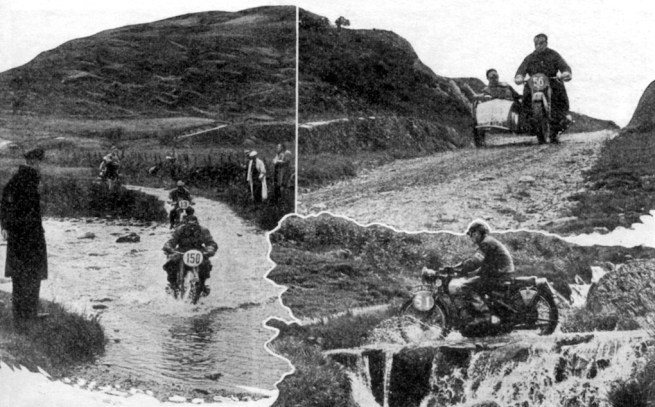
Owing to delays, many riders lost marks through no fault of their own. Among them were Mrs ML Anning (248cc BSA) and Miss M Cottle (249cc Triumph), both of whom have been riding brilliantly. As the day progressed the fine weather helped to dry up the course. In spite of this Vron required every caution. Even George Rowley (346cc AJS) said that he went down with his front wheel locked and both feet planted in the grass in mud…JA Leslie (499cc Rudge) of the British ‘A’ Vase team fell victim to a most unusual form of trouble; the front-wheel drive speedometer locked and threw him off…Strangely enough precisely the same trouble had befallen Jack Williams (348cc Triumph) on the previous day. Descending Bwlch-y-Groes H Klopfer (96cc DKW) fell foul of a sheep which, if his story is to be believed, ran off with one of his side numberplates…The last section of all from Glan Llyn to Llandrindod Wells—14¼ miles of muddy tracks with very little road on which to make up time—caused a lot of trouble and nearly all the riders found themselves so short of time that they had to ride straight in without filling up with oil and and petrol…The rear tyre of Gordon Woolsey’s Triumph twin began to go down rapidly as he filled up, but he was unperturbed, for he knew he could put the trouble right in the time allowed him in the morning before the start. Mrs M Manning, (249cc BSA) arrived very late, but still fresh and smiling—a surprising fact really, for Miriam had had a worrying time in the past two days with an ailing engine and trouble with other components, due chiefly to a spill early on Thursday. Another who smiled in the face of adversity was J Southall (348cc Norton) the RAC guide. He had tackled a type of going quite foreign to him, but he had stuck it so far and was determined to finish. Of course it just had to rain hard at the finish of the day’s run and in consequence the spirits of the remaining ride as were still further damp. Saturday—sixth day.

At the start on Saturday morning the Trial bid farewell to Llandrindod Wells, whose people have been so kind and helpful. A large crowded gathered to cheer the remaining riders off on the way to Donington, and it was with a a sigh of relief that the riders departed, for gone were the muddy lanes, the cross-gullies and the watersplashes that made the week such a nightmare. Instead, moderately good roads lay ahead and there remained but the speed test at Donnington—frightening enough for those with tired motors, but not to be compared with the horrors of those Welsh mountain tracks. In some ways Saturday was disappointing after the thrills of the week. All interest in the destiny of the Trophies had gone. The International Trophy was ours while the silver Vase was almost bound to be won by Germany, providing The German team completed its required number of laps at Donington. Soon after start CN Rogers (346cc Royal Enfield), a member of the Sunbeam ‘A’ team, which had not lost any marks, found his front spindle fractured. A hasty temporary repair got him as far as Donington, but any further attempt to finish out of the question, so Rogers had to retire. A total of 81 riders started on this the last day, only 40 with clean sheets. With Rogers’ retirement at Donnington. This number was reduced to 39. At Donington, the weather was fine until soon after the first batch riders had been dispatched…Most of the machine started without difficulty, but curiously enough the last to start were the two ladies, Mrs Anning and Miss Cottle…It was interesting to note that R Demmelbauer (173cc DKW) of the ill-fated German Trophy team, was able to keep up with nearly all the 250s and several 350s…JC Edward (499cc Rudge) who had covered the last
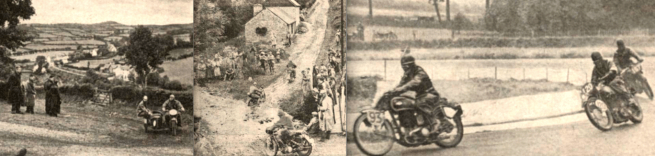
two days with a fractured rib, pluckily achieved his schedule—a really wonderful effort— and J Southall (348cc Norton) ran out of petrol just as the maroon went off…there were no sparks flying, except from Vic Britain’s central stand which periodically trailed on the ground…K Zimmerman, F Linhardt and L Patina, all on BMW, jockeyed with one another for the lead and produced the only excitement. Before the third heat, which contained most of the likely team winners in the Vase, Hühnlein Trophy and club contest, could start the riders had to wait on the line until a heavy downpour of rain eased up…MacGregor led the heats for lap after lap until near the finish he failed to appear. The minutes passed, the maroon went off, and poor Bob had lost his gold. The German riders in the heat were obviously riding to orders, and when the maroon went off Meier led his men in as winners of the silver Vase. The speed test was a complete anti-climax to the most arduous, International Six Days Trial since the series started in 1913. In view of the severity of the trial all who finished after to receive a special award. THE TEAM AWARDS. International Trophy winners—Great Britain: GE Rowley (346cc AJS), V Brittain (348cc Norton), J Williams (348cc Norton), WS Waycott (595cc Velocette sc). Marks lost, nine. Runners-up—Czechoslovakia: A Vitvar (247cc Jawa), V Stanislav (247cc Jawa), R Protiva (247cc Jawa), F Juhan (590cc Jawa sc). Marks lost, 545. International Silver Vase winners—Germany: G Meier (494cc BMW), R Seltsam (494cc BMW), J Forstner (494cc BMW). No marks lost. Runners-up—Sweden: F Larson (496cc Zündapp), A Laren (494cc BMW), C Hedelin (490cc DKW). Marks lost, 5. Third—Great Britain, JA McLeslie (499cc Rudge), R MacGregor (499cc Rudge), WT Tiffen (349cc Velocette). Marks lost 8. Fourth—Ireland: S Moran (347cc Matchless), T Stewart (346cc Royal Enfield), RC Yeates (349cc Triumph). Marks lost, 14. Hühnlein Team Trophy winners—SS: L Patina (494cc BMW), K Zimmerman (494cc BMW), W Mundhenke (494cc BMW). Marks lost, 1. Total time gained at Darlington, 13min 29sec. Runners up—NSKK: W Schaefer (494cc BMW), H Fruth (494cc BMW), H Lodermeier (494cc BMW). Marks lost, 1. Total time gained at Darlington, 10min 11sec. Bowmaker Club Team Trophy winners—SS: L Patina (494cc BMW), K Zimmerman (494cc BMW), W Mundhenke (494cc BMW).Runners-up— NSKK: W Schaefer (494cc BMW), H Fruth (494cc BMW), H Lodermeier (494cc BMW). FICM gold medals (for Manufactures’ Teams—none awarded.”
YOU’LL FIND A SHORT newsreel of the 1938 ISDT on youtube: https://www.youtube.com/watch?v=AtfZPF-zDIE

“LAST WEEK’S INTERNATIONAL Six Day Trial might be likened to a damp squid and not merely because of the weather in Wales and later at Donington. The fact is that after the second day the main interest in the trial disappeared because in the contest for the International Trophy only Britain had a complete team. Germany lost two of her four representatives on that day and Czechoslovakia one. Thus, it was almost a certainty that Britain would prove the winner. That this should rob the event of so much interest shows how, in this trial of trials, the trophy competition is paramount. While Britain won easily, Germany had the lion’s share of the remaining awards for she won the International Vase, the Hühnlein competition and the Club team prize. She also gained 14 of the 33 gold medals to be awarded; Britain won 12; Holland, 3; Czechoslovakia, 2; and Sweden and Ireland 1 each. To compare results on a basis of the number of entries per gold medal is of little value. With some countries, the competitors consisted almost entirely of picked men, while with others many of those taking part were competing for the sake of a sporting holiday, often without real knowledge of the International and with machines far from suitable for the work in hand. Because of this it is easy to gain a false impression of the reliability of the modern motor cycle. This year, largely because the British Army had entered three teams, the daily press were presents on the trial in force. Their descriptions as a whole were better than ever before. Inevitably, however, the reports spread far and wide the fact that of the 209 starters well over half—actually 127—retired. These retirements in numerous cases had nothing to do with machine reliability—even in this trial, the most Six Days ever held.
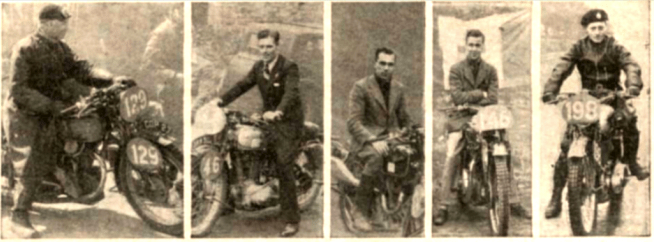
No doubt the ACU, after being told that last year’s course was too easy, decided, ‘Well, that shall not be so this time!’ The net result was a 1,495-mile ‘road’ course that, by reason of its nature, the high-speed schedules, and the settings of the frequent time checks, was more severe, even than the German trial at Oberstdorf. The ACU did magnificently, but the fact is that Britain, a country in which roads cannot be closed, is not suitable for such a trial. The competitors, if the test is to be sufficiently severe, are liable to be endangered. There is no doubt that for certain classes—notably the sidecar class—there was real danger. Much discussion will result from last week’s trial. In the opinion of many it is only the few among the competitors who have brought riding in the International, a trial which is entirely different from the normal run of events, to a really fine art. There is also the important point that a member of a trophy of vase team not only has to ride to ensure his team winning, but to use every endeavour to gain a gold medal for the maker who has entered him. These two interests can be diametrically opposed. Obviously, if a team is ‘sitting pretty’ for the vase or trophy with a win assured provided the members of it do not retire, that team should not take the slightest risk. It can be better to lose marks on time and therefore gold medals rather than risk retiring altogether. This team question is important, for it might in some future competition prove a problem. The final question is, ‘Where will next year’s trial be held?’ Various countries have been discussed as possible venues—Germany, France (with Grenoble as the centre), Switzerland, Italy and even Sweden. At the moment it is likely that Germany, our excellent hosts in 1934 to 1936, will be interested with a task.”
“THERE ARE SEVERAL surprising features about the ‘trials business’. Next Sunday the Auto Cycle Union is itself organising a Sunday trial—the inter-centre event—although the joint committee on trials, while it did not ban Sunday events, certainly conveyed by its comments that trials on Sundays are, in its opinion, a bone of contention. The fact is that such trials are the cause of much of the antagonism which forced the Ministry of Transport to say that either the trials world put its house in order or trials would be made illegal. And not only is the ACU promoting a Sunday event, but it is also setting rather a poor lead to the club world by using for its first standard-tyre trial a course on the same lines as one originally picked and used for competition tyres. I mention these points; they formed a major topic of conversation among a number of famous trials riders at the start of the Southern Trial last Saturday. Another topic was the abandonment of the Lancashire Grand National, that annual race over Holcombe Moor, near Bury. The cause of its abandonment is the insurance difficulty that has arise over scrambles—that question of third-party insurance that has been discussed so thoroughly in these columns over the past couple of months. You might expect that those who compete in this famous event are bitterly disappointed. Some may be, but by no means all of them. Two very well-known riders—men who are invariably around the top of the finishing list in the Lancashire Grand National— are delighted. They mutually congratulated each other in my presence last Saturday, one saying that it was the best bit of news he had heard for a long time. They are trade riders, and I said, ‘Why, is it hard work?’ By ‘hard work’ was meant sheer penance owing to the battering the human frame receives in charging across such rough stuff. ‘No!’ replied one, ‘I am frightened of smashing myself up.’ The other, who is one of the most tenacious beings I know, smiled and said, ‘Perhaps the body (meaning his own) is getting old.’ As it happens, the Lancashire Grand National is one of the few events it has not been my good fortune to watch. All scrambles are dangerous to the man who is determined to win: precisely how dangerous this one is I do not know, but I am only too well aware that so far as other scrambles are concerned there are many in which far too little consideration is given to the competitor and his safety.”—Nitor
“FOR THE FIRST TIME in the history of the Southern Trial the organisation of the event was entrusted to a South-Eastern Centre Club instead of being run by the Centre itself. It was the Sunbeam MCC who undertook the running of the trial and the Club ran the event on similar lines to the 1937 ‘Southern’. In addition to the observed hills there was a series of special tests and performances in these as well as on the hills counted for the allocation of the awards. The trial was run on standard tyres and lamps that worked had to be carried, so that at the start the competing machines looked very ‘standard’. The starting point was Rushmoor Arena, where the Aldershot Tattoo is held every year, and as there were several Army entrants and the Championship Trials of the Army are in the offing, there were a number of Army people at the start to me how things were run. The Arena proved a very suitable point from which to start a trial, and particularly this event, for one special test and a machine examination were carried out before the trial proper began. Competitors waited outside the enclosure and were admitted in numerical order. Inside [Brooklands regular and tuning ace] Francis Beart checked over each machine. The regulations required that machines should be clean, that all lamps were working correctly, that the mudguards were up to regulation, that tyres were not in the banned list, and, finally, that pump-fuel was in the tank. Len Heath (497cc Ariel) surprisingly lost marks because his rear lamp was not working and H Tozer (496cc BSA sc.) could not get any of his lamps to function. Only one man had ‘stink’ lights—Harold Taylor—but George Hadfield (570cc Royal Enfield sc) had a torch for a sidecar lamp. Immediately after the examination came an easy starting test. Competitors were required to start their engines at a signal and ride a short distance to a second line within seven seconds. Most people followed the example of LG Holdsworth (499cc Royal Enfield) and GA Wolsey (349cc Triumph), both of whose engines started instantly. TC Whitton (346cc AJS) had to give two kicks, as did JM Heanes (347cc Matchless), but Heanes’ machine obviously had too rich a mixture, for the exhaust pipe belched black smoke as he rode to the second line. VN Brittain (490cc Norton) caused a stir by standing at the side of his machine and using his left foot on the starter. At the signal he gave one jab on the starter and immediately threw his leg over the saddle, confident that the engine would start—as it did. The first hill was close at hand on W.D. land. It was called Hungry Hill and consists of a narrow, steep track with a surface of deep sand. It was not really difficult, but competitors were started right on the gradient and were given only a few yards in which to get their feet on the rests. Surprisingly enough, it caught several of the experts napping, and J Williams (348cc Norton), L Heath (497cc Ariel), and GF Povey (348cc Ariel) all footed, while WA West (497cc Ariel) stopped. Next followed a timed hill-climb and, after several miles of country lanes, a brake test. When he arrived at the brake test, J Douglas (348cc Royal Enfield) discovered that his gear lever was missing and he could not remember how far back along the course he had last changed gear. He carried on, using a spanner to alter the ratios. The brake test was a straightforward affair in which riders were timed over a short distance and then had to brake before a third line. AS Herbert (347cc Matchless) overdid the acceleration and in his efforts to stop on the loose surface he locked the front wheel and collapsed right on the third line. After this came four observed hills, but the first of these was by-passed at the last moment owing to a ‘shoot’ being held in the vicinity. Of the other three, Higher Oakshott and New Warren were reported to be in good condition.
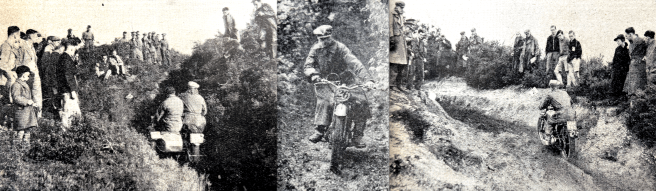
Higher Oakshott proved to be a very narrow track between trees, up the side of a range of hills. It was almost dry, and in order to make the hill difficult an artificial ‘S’ bend round some trees was introduced about three-quarters of the way up. Unfortunately, the bends were made too sharp and the riders were quite unable to see what they were expected to do as they came up the hill. As a result, no one negotiated the bends without footing. At the top of the hill was a sharp right turn. The corner was marked with direction cards, but for some reason several competitors continued straight on and turned right at a fork some yards farther on. This turning rejoined the course again but after New Warren so these competitors missed a section. New Warren consists of a track containing two sharp bends, one left and one right, and is farther along the same range of hills as Higher Oakshott. The bottom bend was greasy, and a number of people footed. Of those seen here, EJ Heath (497cc Ariel) was the best; he shut off his engine to prevent wheelspin as he rounded the steepest part of the corner. Pte AC Doyle (348cc BSA) of the Tank Corps was as confident and neat as anyone. On the top hairpin the main obstacle was a big tree-root, which protruded out of the ground and ran right across the track, forming a considerable step. FE Thacker (349cc Triumph) took the inside of the bend where the step was steepest, got over it successfully and then had to foot to regain control higher up the hill. Mrs RB Gibbs (348cc Norton) failed on the step, and on the second attempt rode the corner perfectly. Easily the most spectacular was Pte JL Wood (348cc BSA); he approached the corner on the outside in the correct style, rode over the step, but got broadside on and the machine toppled heavily down the hill. When the sidecars came along their drivers all told tales of woe concerning their performances on Higher Oakshott. It seemed that nearly everyone had stopped low down because a narrow gate near the bottom prevented rushing tactics. DK Mansell (490cc Norton sc), however, got up the bill non-stop. At New Warren he was not so lucky, for his outfit crabbed into a log at the side of the track before the second corner. H Tozer’s BSA outfit did the same thing, only slightly harder. Harold Taylor (497cc Ariel sc) successfully passed this fatal spot, and although
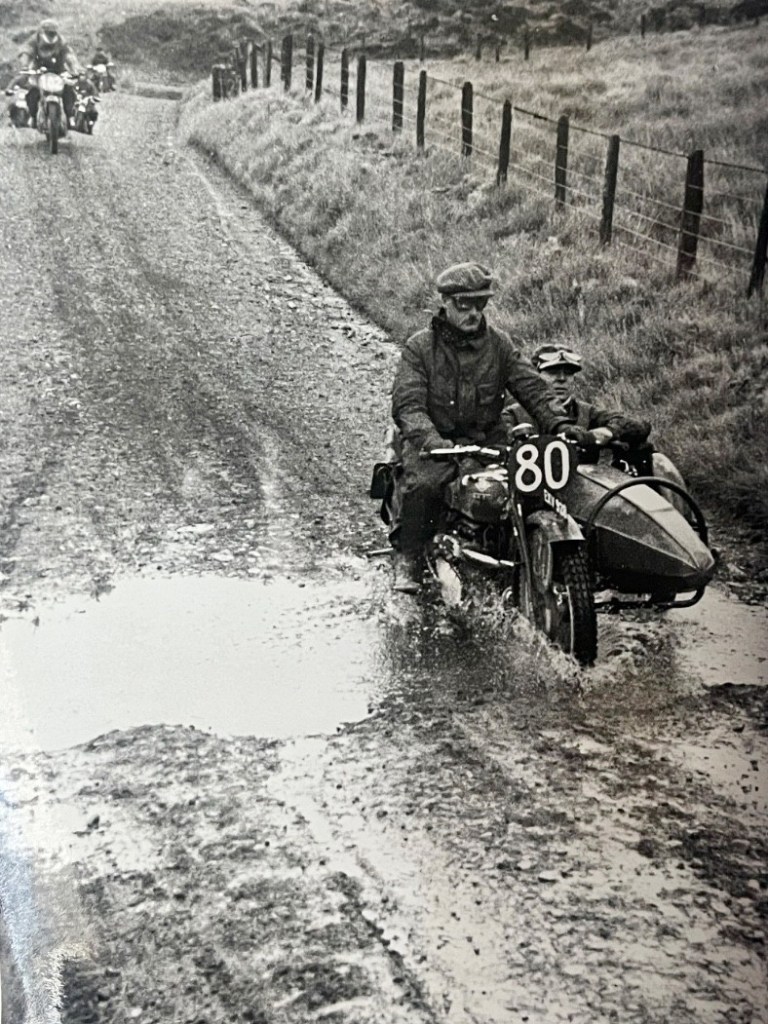
he was losing speed he got up the hill and round the corner as far as the step, where wheelspin beat him. Late in the entry came WS Waycott (495cc Velocette sc) to make the only clean sidecar climb of the hill. Four miles farther on was a flexibility test consisting of two consecutive sections, one of which had to be ridden slowly and the other fast. Times were taken and the ‘fast’ divided into the ‘slow’. GA Wolsey (348cc Triumph) returned the best figure of merit. Shortly after came the sting in the tail of the trial. It was eight miles of rough, sandy tracks over the WD ground known as Longmoor and Weaver’s ‘s Down. In this eight miles were three observed sections marshalled by members of the Tank Corps. The crux of the whole thing was that the schedule speed for solos was raised to 30mph and for sidecars it remained at 20mph. Baulks or claims for delay were not allowed. Gullies, deep sand and stones were the main ingredients of the surface, and, in addition, there were the three observed sections which were purposely on the easy side to avoid delays. As it transpired, several soloists managed to arrive at the final check within their three minutes’ late allowance, and although no solo was early, nearly all the sidecar men averaged the required 20mph. At the check there were many stories of hectic moments over this section and nearly every sidecar outfit had capsized at least once. Immediately competitors arrived from this gruelling section a machine inspection was carried out. Very few people were in trouble and lights were again the only weak spot. There was just one more test, this time a driving test, before competitors were free to disperse. It consisted of three hairpin bends marked out with stakes and tapes on a level piece of ground. Each bend was so sharp that it required a freak lock to negotiate it. A number of the solo riders got round the bends without footing, among them being JH Amott (249cc BSA), who gave a wonderfully polished display of balance. It was generally agreed, however, that the test was stupid for solos and it certainly looked impossible for a standard machine. For sidecars it was no test at all, but merely a question of whether the outfit had sufficient lock and a sufficiently narrow chassis. H Tozer’s BSA outfit had the requirements and he just crept round the bends without trouble. When the results were worked out it was found that most of those people who had done well on the hills had also been good in tests, and the solo winner, VN Brittain (490cc Norton) had dropped only one mark in the tests and five on observation. RESULTS. The Motor Cycle Solo Cup: VN Brittain (490cc Norton), marks lost on observation, 5, on tests, 1, at checks, O. The Motor Cycle Sidecar Cup: DK Mansell (490cc Norton sc), 15, 11, O. Carshalton Cup (best 250): JH Amott (249cc BSA), 6, 3, O. Sydenham Cup (best 350): A. Jefferies (349cc Triumph), 3,3, 1. Sunbeam Cup (best unlimited): L Heath (497cc Ariel), 8, 3, O. Brighton and Hove Cup (sidecar runner-up): WS Waycott (495cc Velocette sc), 20, 23, 0. Manufacturers Team Award: Norton (J Williams, R Dee, VN Brittan). Club Team Award: Sunbeam (L Heath, CN Rogers, GA Wolsey).”
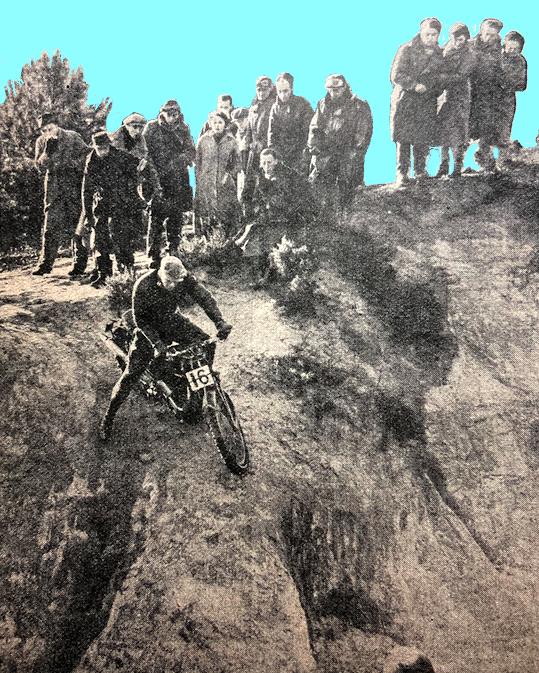
FOR YEARS THE NAZIS had been training motor cyclists who would be at the forefront of the blitzkrieg. Now the British top brass also grasped that motor cycling, particularly off-road motorcycling, was a useful military skill as well as building fitness and confidence. The Army Chamionship Trials (based, inevitably, at Aldershot) attracted 42 three-bikes teams of military personnel from England, Wales, Scotland and Ireland; the public was invited to watch the fun.
“TO THOSE ONLOOKERS accustomed to ordinary motor cycle trials, the Army Motor Cycle Championships held last Friday and Saturday were in some respects a little incomprehensible. What can be thought when you see one individual ride three different machines up the self-same hill? The fact is that this, primarily, was a team event. While competitors rode as individuals on the first day they were also helping (or spoiling) the chances of their teams, and on the second and final day self counted as nothing—except in so far as ‘self’ helped along the team. The event had been made extremely difficult—purposely so. What had occurred previously was that each of the Commands, Aldershot, Eastern, London District, Northern, Northern Ireland, Scottish, Southern and Western, had held eliminating trials to determine which of the Command teams was the best. Then came these Championships which were run by the Army Motor Cycle Control. The organisation was magnificent throughout…A number of the had only been riding motor cycles a matter of months, which makes their achievements in the trial little short of extraordinary. For the first day there was a course 145 miles long. When the details from the programme are set prosaically in print and it is found that the morning’s run merely contains a mud section, a sand section, a watersplash and a stop-and-restart test it does not seem that there is much to it. However, when it is added that the time checks were denoted by map references and that the route-marking ceased four or five miles beforehand, and the schedule including mud, sand and map-reading was 25mph, the task takes on a very different complexion. It is small wonder that at the finish of the day’s run there were men who rode for the Army in the last International Six Days Trial who said that some of the checks were considerably ‘tighter’ than those of the ‘International’ itself. And it is not as if there were miles and miles of easy going; the day’s run was a hard grind almost from beginning to end, while the various sections were very difficult indeed. Take the first section as an example. Here was a mud patch about 25 yards long and at places nearly hub deep. This does not sound too bad, but it is one thing tackling deep mud on the level
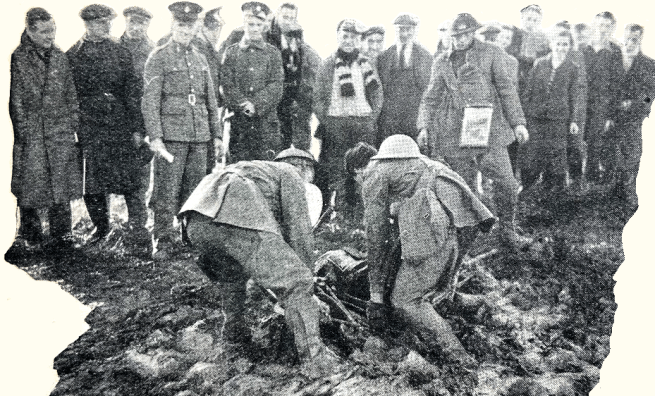
or uphill, and quite another when that mud is approached by a downward swoop as was the case near Crookham. Very, very few civilian trials riders would have done more than scramble through with the aid of their feet even with their special competition mounts. It was hardly surprising that the tow gang was busy…What with lanes, tracks and other difficult going—not to mention riding parts of the course by map—competitors found it very difficult indeed to keep to the high schedule. The result was that at the sand section near Kingsley the first men were decidedly behind the time mentioned in the programme. This sand section consisted of about a mile of track that was sandy from start to finish and at one or two places some six inches deep. The worst part was where the track dived into what appeared to be a one-time sandpit. The drop was quite gentle, but the sand fairly deep and rutted. Again it was a case of a section which if tackled on the level or uphill would have been comparatively easy, but approached downhill was definitely a teaser. As it happened, there was good, hard going at the sides of, the track, but no sooner were competitors over the brow and in front of the crowd than they were in the furrowed sand. The first man, Cpl L George (Norton), 10th R Hussars, turned up the wick, got into a front-wheel skid and went roll, bowl or pitch. Capt RS NcNaught, 2nd Bn R Scots Fus, was equally determined and decidedly wild, but corrected each skid with his feet. The first to sum up the situation as he crossed the brow was L/Sergt W Inglis, Gordon Highlanders, who immediately noted that there, was hard going on either side of the track, but unhappily for him, toppled over in his efforts to reach it. Sergt E Vale, 1st Bn HLI, was better; he got safely on to the good going at the side of the track, and then, having managed without footing until the last yard or two, his machine became entangled with a mass of wire, including barbed wire, that lay, beside the track. The wire was wrapped around both wheels, and right around the front brake drum.
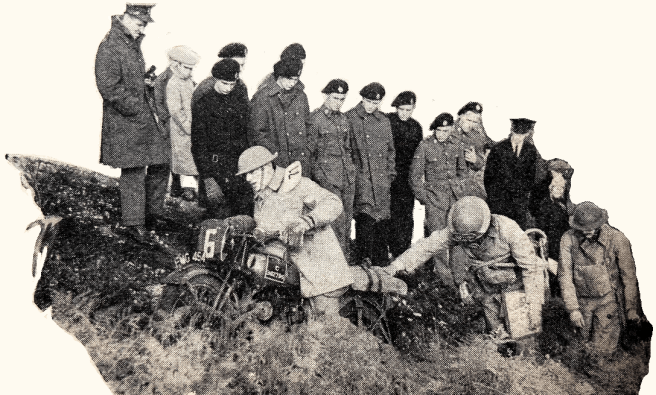
Stoically he got out his pliers and set to work—cutting and heaving at the strands….The next really bad section was the Headley Park watersplash. Here competitors had to forsake the road for a 50-yard stretch of the River Wey, which at this point was running swiftly and in places was hub deep. Not only was this so, but there was a drop down the bank into the river and a very difficult turn up a still steeper bank at the far end. It was obvious that the competitors had learnt much since the earlier trials—even since the Aldershot Command event just over a fortnight previously. Had it been an International it is questionable whether the general standard of riding would have been appreciably higher. The majority had to have assistance in getting up the steep and slithery four-foot-high bank. One of the few to get out without apparently any help at all was Pte Ireland, 2nd Bn Dorset Regt. From here the course led to a stop-and-restart test and lunch! Already many competitors were very, very tired. Riding the stiff course in normal motor cycle kit would have been pretty hard work, but these men were riding in steel helmets and carrying respirators, water bottles, packs containing their greatcoats, mess tins, and so on, and many, as mentioned, had only been mechanised a matter of months. After lunch there was Boulder Alley, near Thursley, a hill with a gradient of 1 in 5 to 6, and mighty rock steps—serried ranks of them. This would not have been too bad had the hill been dry, but it was covered with mud and skid-provoking slime. Boulder Alley was just about as difficult as it has ever been, and after the first few men had scrambled up would have wrought havoc in even an important competition-tyre event. What with standard machines, mostly side-valve jobs, and standard tyres, the hill proved too much of a good thing. The conditions were against competitors. However, it was magnificent the way they charged the hill, fighting skids, smiting banks—and then struggling to get under way again…Then came the descent of Kilimanjaro, which is a horrid-looking hill to drop down. At Rushmoor Arena, which was the finishing point as well as the start, there were very tired men dropping into the canteen for a cup of tea. The day’s work, however, was not yet over. After supper there was the ‘Riding without Lights’ test. In this the competitors were given three map references and had to find each point in turn, pick up a coloured card from each checker and return to the finish, doing the whole lot at an average speed of 20mph! In actual fact, competitors were allowed some light, but the majority of motor cyclists would have been happier on their pilot bulbs. All that was permissible was the light which passed through a semi-circle of 2in diameter, the base to be in the centre of the head lamp and the circumference below, and the lower half of the reflector had to be covered with black matt paint!
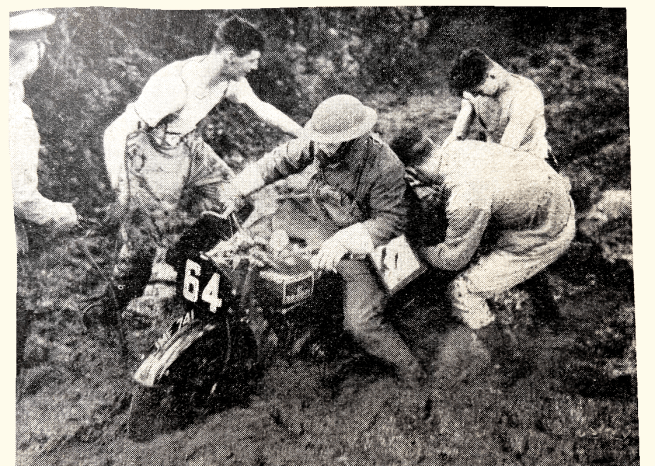
The speed with which competitors shot into the first check was something at which to marvel. To watch was thrilling. Competitors not only worked out where the points were and found them, but actually completed the circuit at speeds well over 20mph. So much for the first day. On the morrow there was to be the cross-country riding with obstacles such as might be encountered on active service—obstacles that would involve team mates hauling and heaving to get each other through. Many, to judge from their comments, did not believe that the conditions could be worse than those they had encountered. Their beliefs were soon swept away! From the Rushmoor Arena, which the first man was due to leave at 1pm, there was sand, some of it deep. Then came a not-too-difficult sandy ascent followed by a very loose steep climb up Hungry Hill. The next test was the eye-opener. Down in the valley is a large pond which has been drained, leaving only mud. Competitors had to get down a ledge, then off a wall some two feet high, over a hummock and up a 1 in 2 bank that has protuberances guaranteed to foul crankcases. And this was merely hors d’oeuvres! Next they had to get themselves, team by team, through the mud lake that was once a pond. It had been stated that the mud close to the line of flags came in places well above the top of a normal pair of gum-boots. The task seemed fantastic. Sergt Mitchell, RE, Aldershot, was heaved up the steep hummock by his team-mates and fell headlong into the undergrowth. Another of this team’s
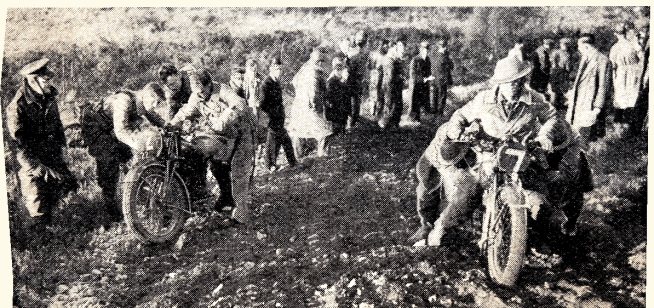
machines ran backwards and nearly fetched up in the mighty duckpond. It was realised that if this colossal test of physical strength was left in, the delays would be enormous; consequently the 1 in 2 hummocky bank was outed…First to tackle the mud was Lieut R Money, RE, Aldershot, who was eventually heaved through by his companions. The time taken in the struggle was so long that the other two were sent round. Then came a marvellous dashing attempt by Sergt M. Newbury, who got through merely with foot-slogging. The other two members of this, the 3rd Grenadier Guards team, had a struggle, and while the trio was busy on the second machine the third mount toppled over in the mud. Meanwhile, an NCO shouted to an officer on the far bank, ‘You can come along, Sir!’ Sergt Newbury’s feat could not be beaten, for, even while he was charging through, an official was moving the posts so that they marked an easier route. It was still not easy, however, and soon the mud became deeper and deeper and badly rutted. Machines could be left standing upright with impunity. L/Bdr C Foulkes, 6th AA RA, went through close to the newly placed line of flags; his team mates had put a rope on his machine, but he got through unaided. Three magnificent crossings were made by L/Cpl J Vickers, No 1 Sect. RAOC, Pte R Scovell, 4th Bn RTC, and L/Sgt J Dalby, 4th Bn RTC; these last two men were mounted on BSAs. Meanwhile a tractor was brought into use to haul out one of the earlier machines. At first all it did was almost to bury the machine in the mud. Finally, the hawser was attached to the rear stand and the machine hauled out on its side. It became almost unrecognisable as a motor cycle. However, after a minute or two, the game 16H was running again and its rider was on his way to the next of the nightmare tests. This was Beacon Hill, which consisted of a very narrow, extremely rough, and loose climb, which was next to impossible unaided, even given the utmost cleverness in throttle control and path picking. Here Scovell was probably the best of the lot. He shot up standing on the footrests until he hit a young tree at the final 1-in-3 pitch and dived over the side. One by one the competitors struggled up, helped by their team mates. ‘Help’ is a wide term, for some riders received heaves that caused them to sit down, and others had assistance of a type that reduced any tractive effort the rear wheel might have had. In some cases the leader of a team would try to take up each machine in turn. The determination of all was something extraordinary. Rough
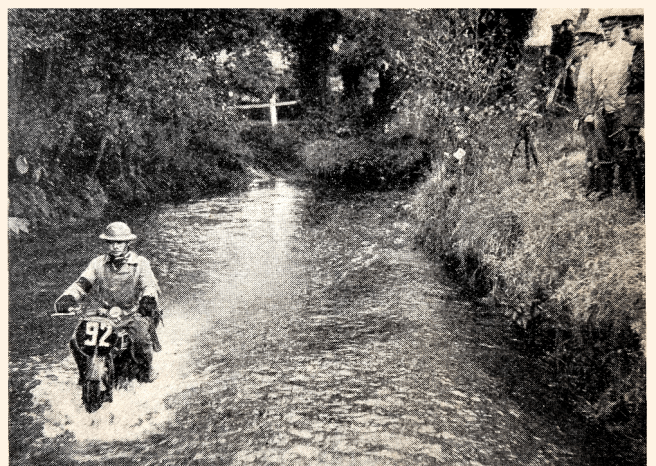
going followed and then came the Army test tracks at Miles Hill—the last real difficulty of this circuit of less a dozen miles. What happened here was that teams had to shoot down one hill charge up a 1-in-2.7 climb, stop in the middle of it, stop their engines and restart—on a surface. That consisted of loose earth carefully raked over in between each climb. This meant more hauling and heaving, especially for the 24th Fd Regt RA, for one of their men had smashed his kickstart; the three of them heroically heaved the machine inch by inch over the summit with a dead engine. Many had difficulty in finding neutral and starting their engines. Just a few teams had everything organised. One of the best shows of that of 20th Fd Regt RA. Others who were particularly good among the later teams were the 7th Bn RTC, who had matters thoroughly organised and a great stalwart in 2nd Lieut RV Johnstone, and the 8th Bn RTC, who also put up a real team effort. So to the finish of one of the most interesting trials ever held. It demanded much from the competitor, stressing him in many cases almost to breaking point, and assuredly it has taught much.—Torrens. RESULTS. Championship of the Army (Trophy presented by Viscount Gort, VC, Chief of The Imperial General Staff)—4th Bn Royal Tank Corps: L/Sergt J Dalby (BSA), Pte R Scovell (BSA), Pte Beatham (Norton); marks lost, 156. Second—5th Divisional Signals: 2nd Lieut Horsfield (Norton), 2nd Lieut Yule (Norton), Cp. Stowers (Norton); 200. Third—School of Signals: Capt Smith-Windham (Norton), Capt Dobson (Norton), Dvr Baker (Norton); 209. Fourth—Military College of Science No 1 Team: BQMS Mackay (Norton), BQMS Smith (Norton), L/Sergt Lloyd (Norton); 210.”
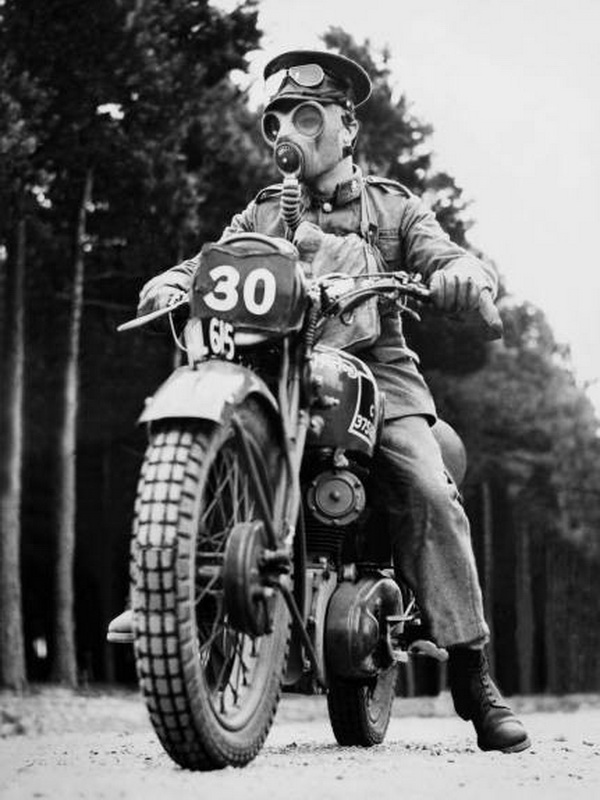
NO DOUBT IMPRESSED BY the Wermacht’s BMW and Zündapp sidecar-wheel-drive (SWD) outfits, the War Department evaluated a Norton 16H trials outfit fitted with Baughan SWD. It worked well so Norton produced a 633cc Big 4 version with a sidecar rigged to take a Bren gun. A pillion seat was fitted and the combo proved capable of hauling three squaddies across extremely rough country. By the time the Big 4 opiutfits were superseded by Jeeps in 1941 nearly 5,000 had gone into service.
“AT THE END OF last week one of the most remarkable trials in the history of motor-cycle sport was held in Surrey and Hampshire. The event was the first Motor Cycle Championship of the British Army, run by the recently formed Army Motor Cycle Control Board. Forty-two teams competed, representing Commands all over the British Isles. The importance of the event can hardly be over-stressed. The motor cycle is taking its rightful place in the scheme of things. That it is a great sport and a most valuable training in quickness of mind and action and in developing mechanical knowledge has been known to all connected with the pastime since its very inception. What has seemed almost incomprehensible is that its great merits have not been more widely realised hitherto.
“IT IS VERY INTERESTING to note the increased size of orders placed by modern armies for motor bicycles. These machines were originally, as we all know, of military value exclusively in communication work. Some apprehension was felt that with the growth of wireless for communications the military motor cyclist might tend to disappear. But the reverse has happened. The French, German, American and British armies are all using a far larger proportion of motor cycles than ever, though we are not allowed to be talkative about the exact fashion of their employment. After all, the basic fact is that if you want to render an individual mobile under all conditions, there is nothing to touch a motor cycle. It may encounter weather or surfaces or other conditions in which it is momentarily useless; but the same handicaps will put any transport, including feet and horses, out of action just as effectually; and if progress is possible at all, the motor cycle will keep moving, will ordinarily move much faster than any rival form of individual transport, and will keep on moving indefinitely without becoming exhausted, and without requiring bulky supplies such as fodder.”—Ixion.
ALLAN JEFFRIES WAS A WORLD-CLASS trials rider, world-class engine tuner (Sprouts Elder, America’s first AMA speedway champion took Jeffries with him to South America to fettle his bikes) and successful motor cycle dealer. ‘Wharfedale’ reviewed his career to date; here are some excerpts: “When I called on Allan Jefferies the other day and found him in his garage busy preparing his Triumph for the Southern Trial he immediately pointed out that he was only cleaning it in view of the regulation about penalties for dirty machines at the start. ‘And what I want to know is, ought I to wear a carnation or an orchid?’…Allan has always been among the stars in open events. And he remains an enthusiast. He will ride as thoroughly for the Bradford Club in a Centre team trial as he will for Britain in the International, and he will ride the length of the country at night from an open event to take part in a West Yorkshire group trial the next day, or to show up at a club dinner. In short, he is a real motor cyclist and not just a professional jockey. Allan believes entirely in preparing his own machines, but he has no special fads regarding engine tune or mechanical equipment. ‘More than half the battle is getting the machine comfortable,’ he said. ‘I bend the bars and the footrests and alter the saddle position to suit my style. For trials I like a high saddle, because I am long in the leg and I cramp if the seat is too low. But for scrambles, where you may have to foot hard, I often use a low racing saddle, so that I can slide about, and which facilitates using the feet good and proper when you have to.’ Before I could frame a question on the point, Allan went on to the matter of standard tyres. ‘They are all to the good. I like ’em, for they are at least comfortable on the road, and when you make long, fast journeys as I do you appreciate that they are much safer on main roads. I believe in riding to and from events. I never use a trailer, and if I do go by train it is only for convenience in night travel due to the rather awkward location of Shipley. Take the West of England Trial, for instance. I ride to Birmingham and then get a train from there onwards. Another thing about standard tyres in trials—I think they will have a big influence on engine performance and we shall go back to more tractable engines of better all-round performance for the ordinary rider, and that is what is wanted.’…he was entered officially in the Reliance Trial by the Scott Company, and his outstanding recollection is of tying a bunch of crackers to George Rowley’s machine (it was about November 5th) before leaving their hotel at Chester. That was in the days of acetylene lighting, so it was quite easy to let George sit on the model and say, ‘I’ll light your tail lamp.’ Which he did—and the timing was so perfect that the crackers started to explode just as George drove off, to his great consternation and to the disturbance of much of Chester’s traffic.”
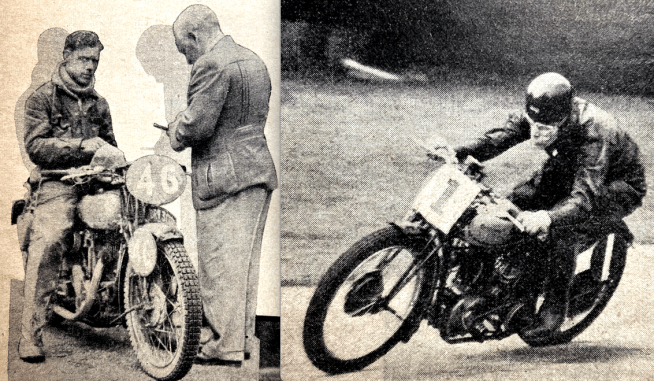
OBSCURE FOOTNOTE DEPT: a popular Daily Mirror cartoon strip of the time starred a diminutive trio called Pip, Squeak and Wilfred. Older readers will know that ‘pipsqueak’ is a derogatory term for a small person, and for many years 98cc autocycles with their auxiliary pedalling gear and extreme fuel economy were known as ‘Wilfreds’.
THE BRITISH INDUSTRY OFFERED more than 320 models; 10 manufacturers included rear suspension. Prop stands were becoming the rule, many with ‘heels’ to stop them digging into soft ground (a useful feature missing on many later bikes; riders are still using flattened beercans to stay upright). One-lungers made up 90.6% of the total (up from 80.6% five years earlier) while 7.2% were twins (down from 17.8%). Exactly 45,239 bikes were registered for the first time, boosting the total British parc to 462,375.
CALTHORPE HAD BECOME one of the ranges sold exclusively by South London dealers Pride & Clarke, at which point a chasnge of colour transformed the well established Ivory Calthorpe into the Red Calthorpe, though green was available as an option. The revised colour and name didn’t please the buying public and Calthorpe went into liquidation. It was bought by Bruce Douglas (yes, that Douglas) and a new range was announced: 245, 348 and 497cc ohv singles with Matchless engines. But the move to wartime production led to the new firm losing its factory at Bristol Airport and that was the end of the line for Calthorpe.
“SO BSAs HAVE WON the Maudes Trophy for their remarkable certified test held last February. I am not surprised. They deserve it. This trophy, you may recall, is awarded to whoever makes the most meritorious performance in the year’s certified tests. In the case of BSAs two standard machines, one a 500cc Empire Star and the other a 600cc side-valve sidecar outfit, were obtained by the ACU from agents just as if the machines were being bought by ordinary purchasers. They were then used for 20 consecutive ascents and descents of Bwlch-y-Groes, which is generally adjudged the most difficult hill tourists ever tackle, and then, after strenuous tests at Brooklands, there were a further 20 consecutive ascents and descents. Among the tests were six hours’ high-speed running at Brooklands, tests of maximum speed, of acceleration and of braking. As a means of demonstrating the flexibility of the machines both were driven through London during traffic hours from north to south and east to west using only top gear and the clutch. What was remarkable was that in spite of the gruelling the solo machine averaged 58.59mph for six whole hours and the sidecar outfit 46.12mph. The maximum speed of the two machines was 78.94 and 56.25mph respectively.”—Nitor.

“IN THE ANNOUNCEMENT of the new Territorial Motor Cyclist Battalions a fortnight ago it was stated that readers should apply for details at their local Territorial Headquarters. London readers will be interested to know that the London battalion is the Queen Victoria Rifles, which, the Commanding Officer states, has vacancies for approximately 100 motor cyclists, and is, incidentally, the second oldest volunteer regiment in the country. WD motor cycles will be provided and the work includes wireless control and use of the Bren gun. Application should be made either to the Adjutant at 56, Davies Street, Berkeley Square (close to Bond Street station) or foe those in the Hampstead area to the Commander of B Company, the Drill Hall, Lymington Road, Hampstead (a turning off the Finchley Road).”
“AS IT WAS NECESSARY to do a journey of nearly 300 miles every week-end, it was felt (!) that an attempt should be made to devise some arrangement for keeping the hands warm, yet at the same time the ‘lines’ of the Manxman must not be spoilt. The first attempt was suggested by observing the method adopted on many modern cars, namely, using the exhaust pipe to heat a stream of air collected by a funnel. On a motor cycle, however, the conditions are very different, and although it was found possible to obtain some hot air from a 6in. funnel and three turns of ½in pipe round the exhaust pipe, very little air was delivered until a speed of about 60mph was reached. And further experiments showed that at least a 10in funnel was needed. So, because the Manxman was rather offended at hearing people allude to its ‘ship’s ventilators” the experiment was dropped and another method of approach tried. Why not use current from the battery? But would the dynamo be able to ‘keep pace’ with it? On my machine there is only just sufficient juice for the lights, and the greater part, and certainly the colder part, of the journey is made during darkness. After winding ‘Eureka’ and nickel-chrome resistance wire round the fingers of a thin cotton glove it was found that while a small current would keep the hands warm, once they were warm, nearly 4 amps. were needed to ‘heat-up’ frozen hands in a reasonable time. The idea of a constant discharge was discarded, as often, even at night, a discharge of up to 4 amps can be tolerated for short periods, viz, when passing through towns with only the parking bulb on. Working on these lines, I stitched 30in of 26swg Eureka resistance wire round the backs of the fingers of a pair of cheap cotton ‘cleaning’ gloves. The ends of the wire were then soldered to a length of thin twin-flex—the kind used for hanging bell-pushes. This wire, although of appreciable resistance, was used for the sake of neatness, and allowance made for the resultant voltage drop in calculating the length of the resistance wire. Next came the method of fixing. Although the wire was thin enough to break in the event of a spill, it was often forgotten when getting off. After trying various plugs and clips, the ‘perfect’ device was suggested quite unwittingly by the fair passenger—press-fasteners! These allowed the wire to be ripped off in a hurry, and also, if forgotten, would pull off, no matter what the angle of the wire. It was found that a trailing wire from each hand to the tank panel was very liable to get entangled when one gave hand-signals, etc, so the final arrangement adopted was as follows: Two of the male portions of the press-fasteners were sewn on the sleeve of the coat about an inch apart, and to these another length of flex was soldered and taken up the sleeve between the ordinary lining and the oilskin lining of the coat. After joining the wire from the other sleeve (the two gloves are wired in parallel), the wire was led down the front of the coat and finally emerged at the bottom button-hole, where it was firmly sewn. About 18 inches of wire were left loose, and the ends soldered to a 6BA bolt, which in turn was soldered to the female part of another pair of fasteners.
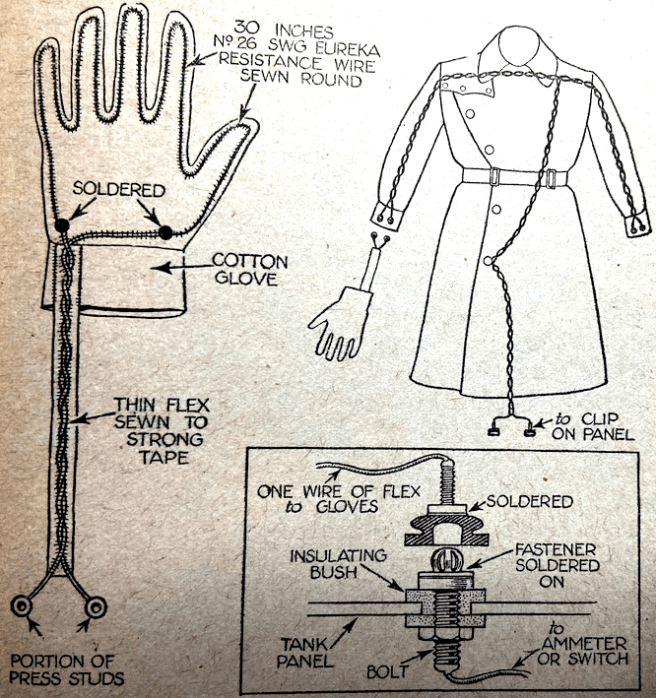
The reason for the bolt is to increase the leverage on the fastener when the wire is pulled from au acute angle. Then the male portions of the fasteners were fixed on the tank panel by soldering them to the head of a suitable bolt and screwing the bolt through insulated bushes to the panel. One of these bolts was then connected to the ammeter, and the other, via a switch on the bars, to ‘earth’. It only remained to terminate the flex sewn to the glove with a pair of female fasteners soldered on, and then sewn to a strip of strong tape, and the job was finished. As to results, the gloves take just over 3 amps, and the initial period of heating varies from one to three minutes, depending on the temperature of the hands and air. On the average, with the temperature around freezing point, and maintaining a good speed, it is only necessary to switch on for about a minute every quarter of an hour. Naturally, a pair of loose-fitting gauntlets are worn over the top of the ‘electrics’. The battery does not appear to be adversely affected, for in daytime the charging rate almost balances the current taken, and it is of short duration, while at night, as the gloves are used only when the small bulb is on, and the full charge is being supplied to the battery, there is a slight surplus. There is only one disadvantage—the passenger has also insisted on a pair. But, as there is hardly enough current for two pairs. she will have to have them, and—well, 1 shall have to wear my old thick fur gauntlets!
ELTH.“
“THE ATTACHED SKETCH shows details of a ‘trafficator’ ,made by my father. The body, which measures 6x4x2in, is made of sheet brass with copper channelling to take the ruby glass. The arrows and lettering were stencilled in thick, dark-brown paper and then stuck on the inside of the glass; they do not show until their respective lights are switched on. The arrows are illuminated via a two-way switch on the handlebar, and the ‘stop’ by means of a single-pole switch connected to the brake pedal.
WGF.“
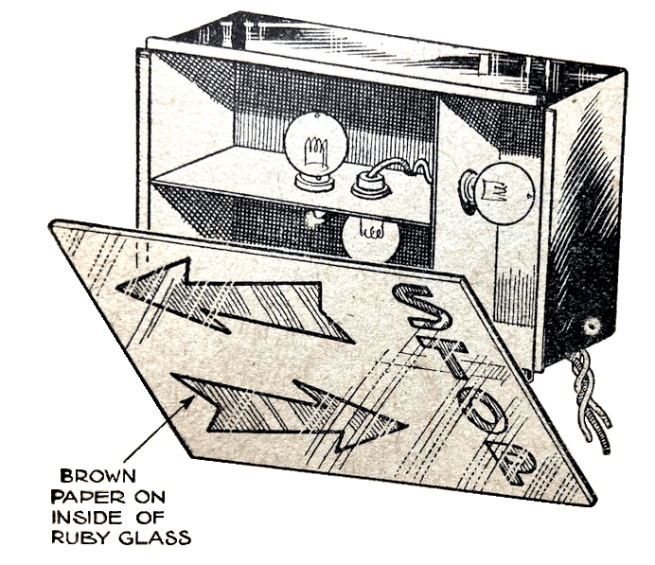
“THE SKETCH SHOWS a luggage carrier which I made for my machine and which carries two small suitcases without giving any trouble. I can recommend the idea to motor cyclists going on tour, and assure them that the balance and steering are not noticeably affected by the weight.
AH.“
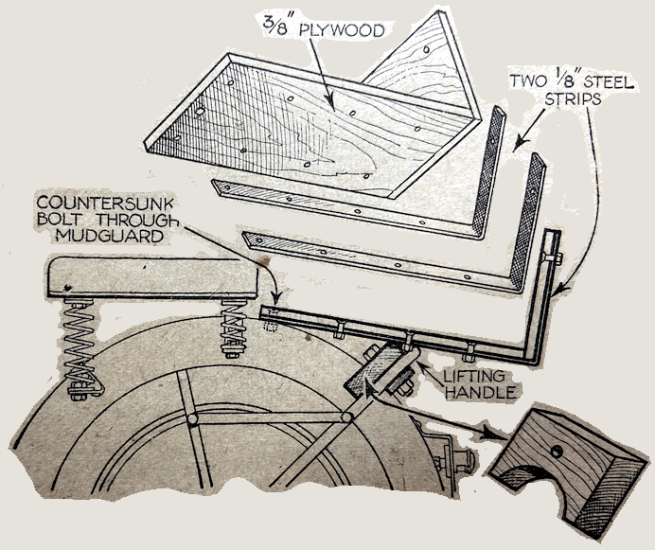
“AT BROOKLANDS LAST SATURDAY, NB Pope and HAR Earle, riding Beart’s 348cc Norton, succeeded in breaking the world’s records in Class B for 3 hours and 500 kilometres. An attempt on the records was first made on Friday, but had to be abandoned when the 6¾-gallon fuel tank split after l½ hours. On Saturday Beart tried again, but this time a 4½-gallon tank had to be used, bringing with it the obstacle of an additional refuelling stop. Three instead of two stops were now necessary. In bright but cold weather Earle got away soon after 12.30pm. The schedule was a lap time of 103sec, or 96.71mph, which Earle seemed to have difficulty in holding. Times of 104, 105 and later 106sec were not good enough to get the record with three pit stops. At 24 laps Earle came in for Pope to take over. Pope knew the position and answered with lap times of just under 103 secs, which were consistent often to ⅕sec. Round and round he circled, until when Earle again took over at 52 laps Mr AG, Reynolds, the official time-keeper, announced that they were almost back to schedule. Then came misfortune. In starting from the pits the plug had oiled slightly and an intermittent misfire slightly bought the lap times up to 107 and even 110sec, or 90.5mph.
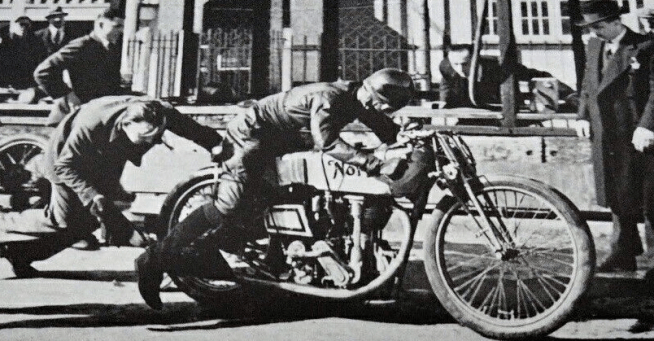
What could be done? A stop to change a plug without refuelling was almost certain to put the record out of reach. Beart, hoping that the plug would clear itself, let Earle carry on. But the misfire persisted and the plug had to be changed at the refuelling stop. Pope was now in the saddle again. Could he do it? He tried magnificently. Lap after lap was reeled off with the Norton going like clockwork. Grass-cutting, using every trick bred of his Brooklands experience and, as he said afterwards, cursing the numerous cars on the track, he hurtled round. in 102sec, and then in 101sec, about 98mph. This was beautiful riding, and at 101 laps Mr Reynolds said, ‘I see light’— the 3-hour record was in the bag. Immediately Beart decided to go for the 500km record and possibly the 4 hours. Pope was signalled in after 3 hours to return a speed of 93.30mph. Earle went off again for about another 20 minutes, when with the 500km record shattered by nearly 5mph he was called in owing to the poor light. Details of the new records are as follows: 3 hours, 93.30mph (previous record, 92.88mph); 500km, 92.99mph (88.19mph). The previous record for 3 hours was held by A Denly (AJS), who made it at Montlhéry on July 5th, 1929. The 500km record previously stood to the credit of Milhoux and Tacheny (FN), riding at Montlhéry on October 26th, 1931.
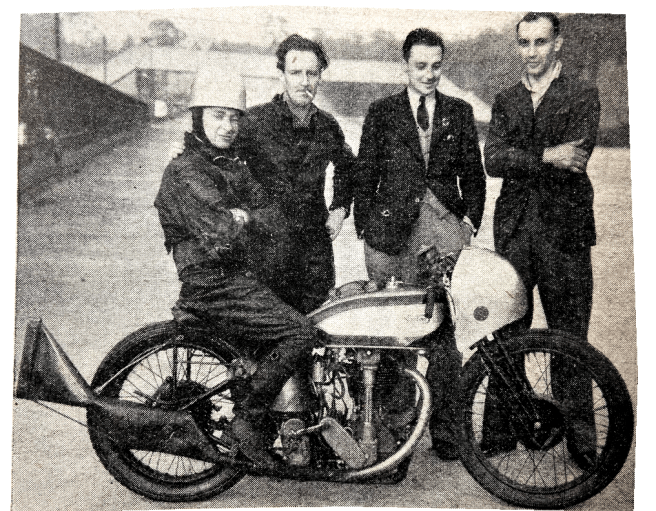
“AN INTERESTING ACU-OBSERVED test of a 248cc Red Panther and a 598cc Model 100 Redwing Panther has been carried out at Brooklands. The two machines were submitted to an ACU certified test of fuel consumption. After emptying the tanks and float chambers the ACU observer poured a measured gallon of ethylised fuel into the tank of each machine and sealed the tanks. Then the machines set off, EF Chidley riding the Redwing model, and H Marians the Red Panther. The test continued for hour after hour under fine weather conditions, but with a wind that at times was decidedly strong. The 598cc model cruised around the track at roughly 37mph, and the 250 at approximately 28mph. When finally the tanks ran dry the Red-wing 100 had covered a distance of 123.8 miles measured on the 50ft line, and the 248cc Red Panther 130.1 miles—in other words, the respective fuel consumptions were 123.8 miles to the gallon and 130.1mpg, two very creditable figures. The average speeds were respectively 36.77 and 27.78 mph.”
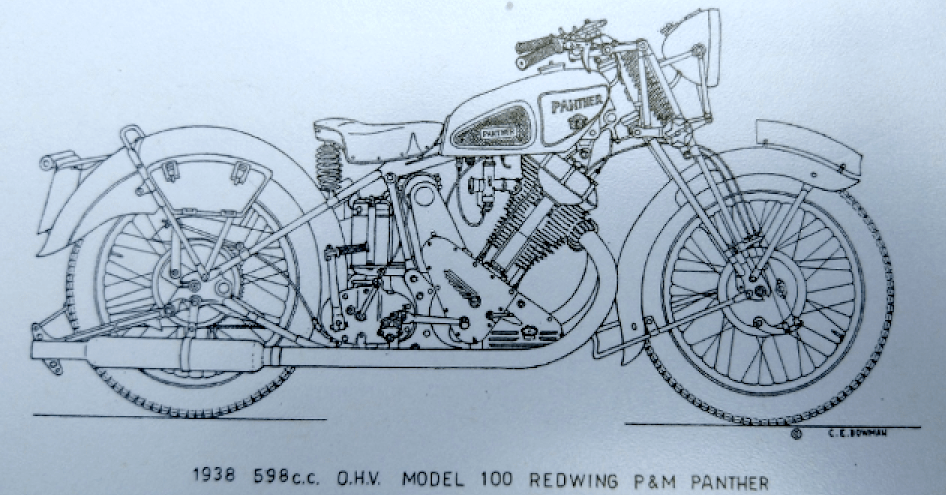
“I OWN A 1935 248cc PANTHER, to which is fitted a light sidecar. I bought this machine 18 months ago and it is used every day to take me to work and at week-ends for pleasure. It carries myself on the saddle, my wife in the sidecar, and a son aged 14 on the pillion. It will do 50-55mph and I obtain 80-100mpg. The total weight carried is about 33-stone, including food, tools, and riding kit, and the little machine pulls it with ease, and in my opinion there is nothing to beat the 248cc sidecar outfit for economy—provided it is handled correctly. On my machine careful use of the ignition control in conjunction with the gears works wonders.
Thos Cooke, Wallsend.”
AN UNDERGROUND CARPARK in Birmingham was built to double as an air-raid shelter for 3,500 people… just in case.
EDWARD TURNER’S VERTICAL TWIN Speed Twin was tweaked into the Tiger 100 and, like George Brough’s SS100, the name reflected the model’s potential speed. It was soon a formidable clubman’s racer helped by the use of a reverse-cone magaphone. The reverse cone and baffles were detachable, leaving the Tiger 100 roaring through a racing mega–and leading to the popularity of reverse-cone megas of later years.
“DESIGNER PAGE JOINS TRIUMPHS—Mr V Page, the designer, whose paper on ‘Motor Cycle Engine Development’ brought many famous designers together in Coventry last February, has joined Triumphs as chief engineer.”
THE JERRIES DIDN’T HAVE a monopoly on superchargers. Ivan Wicksteed rode a blown Triumph Speed Twin round Brooklands at 118.02mph to set a 500cc lap record. Freddie Clarke set a 750cc record of 118.60mph on a Speed Twin bored out to 501mph; he also set an all-time 350cc lap record of 105.97mph on a Tiger 80. Wickstead’s Triumph was tuned by Marius Winslow; the two had met at boarding school and made an effective team. Among bikes tuned by Winslow and ridden by Wickstead was a Rudge-Jap which had earned a Brooklands Gold Star. In his obituary of Wicksteed Jim Reynolds reported: “The two young enthusiasts, still in their twenties, had approached Triumph’s managing director in a supreme example of naive optimism, explaining that his newly announced twin-cylinder road machine might be modified and supercharged so effectively that it would break the Brooklands record. Edward Turner, never a man with time for publicity through racing, listened to what they had to say and simply replied, ‘A very logical conclusion. Good afternoon, gentlemen!’, before turning on his heel and walking away. Spurred on by this rejection, Wicksteed and Winslow bought their own Triumph, prepared it for the track attempt and in October 1938 set the new lap record. The response from Turner was immediate, with full-page advertisements congratulating Wicksteed on his achievement, then inviting the two to the Coventry factory and asking what support they needed for future efforts. Before that promise could be realised, the Second World War intervened, the steeply banked Brooklands track was partly dismantled to make room for a runway, and Wicksteed’s record was forever beyond reach.”

THE DRIVERS OF A CAR and a lorry were unhurt when they collided. But a woman who happened to see the accident claimed the fright affected her health and sued them. The Manchester Assizes ordered the drivers to pay her £2,500 (at a time when a new ohv 500 could be picked up for £50, her payout equates to more than £300,000). Ixion, distinctly unimpressed, wondered if football clubs might be held liable for the stress caused by narrow misses and the like.
EUROPEAN-STYLE ROADRACING migrated to the USA with the innauguration of the Laconia meeting in New Hampshire.
DURING AUGUST alone 688,000 fans paid to watch speedway.
BMW WAS PROBABLY the best known German marque internationally, but in terms of sales it was behind DKW, NSU and Zundapp. From January-November they produced 42,000, 28,375 and 17,341 motorcycles respectively.
THE INTERNATIONAL Motorcycle Tour Club now had a membership of 364.
MORE THAN 5,500 MOTORISTS and motorcyclists were fined for number plate offences, mostly dirty number plates.
JAPAN PASSED THE NATIONAL Mobilisation Law, which empowered it to mobilise 100% of the country’s population and resources for the war effort–Japan had been carving its way into China since 1936. Among enterprises set up during Japanese mobilisation was Showa, which was initially tasked with developing aircraft suspension units.
“THE ENCLOSED PHOTOGRAPH is of my father who, at the age of 72, has just taken up motor cycling after having been a cyclist for a great number of years. His new mount is an Excelsior Autobyk.
WJ BROMILOW, Wigan.”
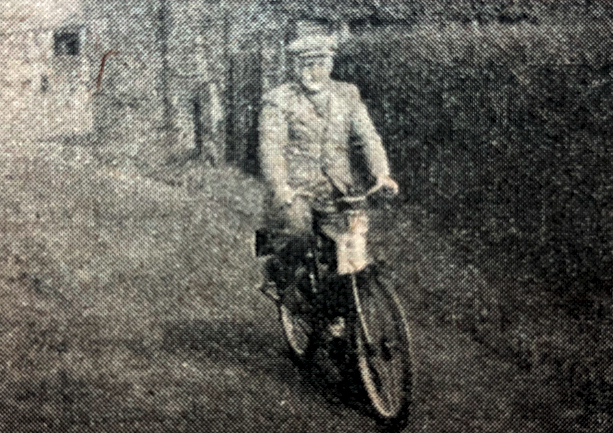
“WHEN MR AM RUFF WRITES that the word ‘velocycle’ is ‘a hybrid of the deepest dye’, he slightly exaggerates. The first part is undoubtedly from the Latin, but so is the tail. Cyclus is a Latin word borrowed from the Greek Kuklos, nevertheless it is a good. Latin word. I ascertained this before submitting the suggestion, for I agree that two languages should not be blended in one word, though it has been done in the common English word ‘bicycle’. The Greek prefix is ‘di’—’bi’ is Latin. ‘Velocycle’ does not sound foreign, and it is not foreign. Latin is part of our English language. Anglo-Saxon is one only of many other languages that have been fused into our English tongue. Though away from the point, I would point out that ‘brake’ (Old French), ‘hub’ (origin unascertained, its first traced use was in 1649), ‘tire’ (an abbreviation of ‘ attire’, derived from Old French), and ‘frame’ (Old Norse) are not ‘good old Anglo-Saxon words’, while the ‘foreign’ words, ‘engine’ (traced back to 1330), ‘car’ (to 1382), ‘valve’ (to 1387), and ‘motor’ (to 1586) have been long enough in use to have ceased to be foreign. If the motorised cycle is to be popular, attention must be given to many things (see the current issue of The Automobile Engineer) and one small thing is a name for the type. In my opinion, as it is designed to appeal to the public who cycle because they need cheap transport and not because it is their hobby, emphasis must be laid on the fact that it is essentially a bicycle, and the name ‘velomotor’ does not stress this, while the name ‘velocycle’ does. Again, ‘motor’ means colloquially a vehicle with more than three wheels, while ‘cycle’, to most persons, means something with two wheels. When I wrote that ‘velomoteur’ looks foreign, so that it would be preferable not to adopt it, I had in mind the fate that has befallen the name of the variable cycle gear known as the ‘derailleur’. To hear this anglicised is painful, yet speak of a ‘de-ray-ee-eh’ gear and you are either not comprehended, or marked down as trying to be superior. ‘Velomoteur’ is, and looks, alien and would not be gracious to our tongue.
HJ KENDRICK, Coventry.”
“A YEAR AGO ANY PROPHECY to the effect that the British Army in a matter of months would be competing in motor cycle trials and have its own motor cycle championships would have been treated as fantastic. The fact is that in the past few months the Army has realised anew the value of motor cycles and taken to trials with an enthusiasm which has to be seen to be believed. The authorities started from scratch; few connected with the Army had any experience of trials, but nearly all believed, like certain Continental nations, that trials and scrambles formed magnificent training, imbuing those who competed with a far higher degree of skill than was possible in any other way and, what is also important, developing courage and initiative. As all must know, a start was made with local trials. Almost immediately afterwards the War Office entered three teams in the International Six Days Trial. No one expected these teams to win or anything of that sort; experience was needed before this could happen. However, those who competed and those who accompanied the trial gained knowledge that is proving invaluable. There is no doubt about it; in the few months that have passed since the. Army took to trials riding the skill of Army riders has increased remarkably.”
“I SMILED BROADLY when I read ‘Repairer’s’ suggestion to use a common safety-pin as a substitute for a split pin in emergencies. I think one of my early loves invented this simple tip about the year 1901. I am ashamed to add that I cannot even remember her name. Anyhow, I had taken her out in a trailer, and during an adjustment dropped a split-pin in long grass. As I fussed and cursed she suddenly felt under her blouse, produced a small plated safety-pin, and asked meekly ‘Won’t this do?’ Since then I have often used both safety-pins and bent pins for the same purpose.”—Ixion. [About 50 years ago I was riding through South London with a chum on a G9 Matchless when it was immobilised by a snapped drive chain. A hairgrip supplied by a passing schoolgirl allowed him to limp as far as the nearest supply of splitlinks. Soon afterwards a safety pin was pressed into use to secure the rear brake clevis pin on my plunger ‘Flash. Plus ça change, plus c’est la même chose, n’est ce pas?—Ed.]
EUROPEAN 350cc CHAMPION TED MELLORS was featured. “…There is, in his opinion, no chance for the rider who picks up a fastish machine and imagines that he has only to learn to ride it in order to succeed. It goes much deeper than that. Mere riding experience counts for little; you must remember every fault and be able to correct it, you must keep an eye on the other fellow, but you must not allow him to lead you astray. You can learn much from the close observation of a star rider, but in trying to emulate him you must remember that you are not riding an identical machine, and in any case you may not have a similar brain. Again, should you tuck in behind one of the fast men, do not be too sure that he is going to be willing to act as your guide throughout the race. Use him as much as you can, but be suspicious of any variation in his tactics, and as soon as you notice a change disregard him immediately and ride your own race.”
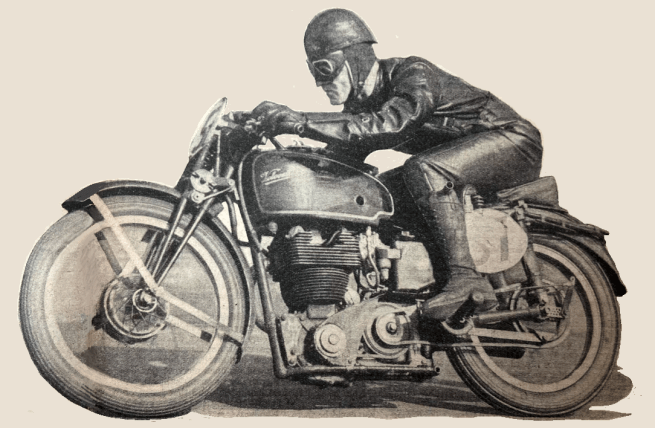
“SEVERAL INTERESTING FACTS emerge from our Buyers’ Guide…The first is that no fewer than 10 British manufacturers now offer rear wheel springing either as standard or as an optional extra. Another fact that is not always realised is the extraordinarily wide choice that is offered the British motor cyclist. No country in the world produces nearly so many models. Analysis of the Buyers’ Guide shows that the total number of different machines is over 320! Of these models 27.5% are between 150 and 250cc, 25.3% are 500s and 20.6% 350s. Last year the percentages were respectively 25.8, 32.5 and 19.8. In other words, there is a marked tendency for manufacturers to concentrate upon engines of smaller size, no doubt the result in part of the ever-increasing power extracted from engines. Side-valve and two-stroke engines show an increase at the expense of overhead-valve types, and there is a notable increase in two-strokes of under 150cc. A rather surprising feature is the growth in the number of three-speed gear boxes. No doubt, however, this can be accounted for by the increase in small two-strokes.”
Here’s a selection of the bikes that featured in the Buyer’s Guide…








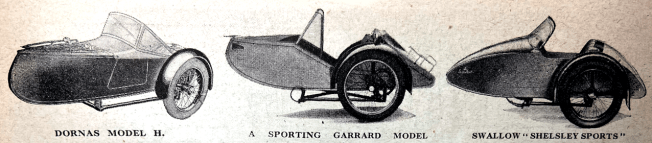
“WHAT ARE THE CHANGES for 1939? For an hour and more I have been poring over the many pages of ‘Advance Details’ we have published. The amount of change has come rather as a surprise, a very pleasant one. Not only that, but it seems fairly easy to see the development of new trends in design. Of course, the most spectacular change is in the adoption of rear-wheel springing. If you count up the number of British manufacturers in the Buyers’ Guide you will find, I believe, a total of 38. Eliminate those who produce only motorised bicycles, miniatures or three-wheelers and you have 32. Of this 32 no fewer than ten offer rear-wheel springing, while two others used spring frames in the TT, but do not as yet market them. These figures are rather surprising. Undoubtedly they show the way design is tending. When we come to engines the change is less marked. There is no wholesale swing towards the multi. There is a second 500cc vertical twin (replacing a single, incidentally), a 600cc four ranging itself alongside a well-proved 1,000cc four, and a vertical-twin two-stroke now in production. This completes the list except for one new multi that will probably be described next week; it is in singles that there are so many new designs. Here there are entirely new engines, both four-stroke and two-stroke, and more than a dozen which are very largely new. Engines are taking on a fresh appearance as a result of the wholesale adoption of the principle of enclosing all the moving parts and eliminating excrescences. Push-rods now run in tunnels in the cylinder and cylinder head, and the whole of the overhead-valve gear is enclosed and positively lubricated, almost as a matter of course. Another principle that is gaining fresh advocates is chain drive for the timing gear, a practice adopted in the automobile world. This has great advantages in the case of high-camshaft designs and helps to eliminate mechanical noise. There is also an increase in the number of designs employing outrigger bearings in timing gears, again with the object of ensuring silence. The timing side in numerous instances has been completely redesigned. More spectacular, if less important from the user’s point of view, is the marked change is colour schemes. In some quarters there is even a tendency to go gay!”—Nitor.
…and here are some of the line drawings of those innovations.
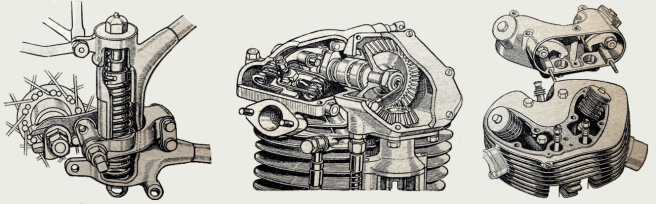
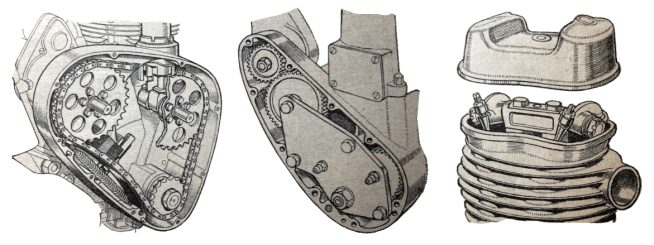
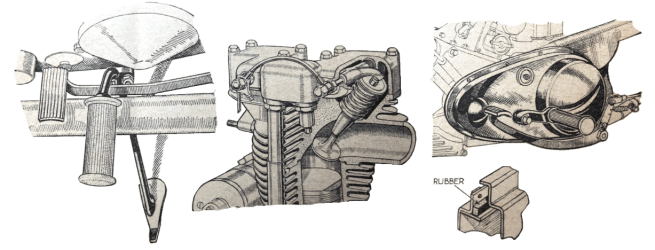
“IF IN THE MOTOR CYCLE world there is a real desire to break away from convention, a very definite lead is given by a design which will appear at Earls Court next Monday. So full of interest, so cleverly constructed and so beautifully carried out is this new effort that all must admire the pluck, ingenuity and imagination that have brought it into being. The maker is George Brough and, with his unbounded enthusiasm, he has produced a machine which outclasses any previous attempts that even he has made. This is no freak model, but a very serious endeavour, and from stem to stern it is a Brough Superior product. There is nothing, apart from the obvious accessories, that is not made in George Brough’s own factories, and so far advanced are his plans that production is now definitely taking place. George Brough calls this new machine The Dream—the realisation of a cherished ambition to produce his ideal motor cycle. It is a four-cylinder mount of unique pattern in which the cylinders are mounted across the frame. In effect, the engine consists of two flat-twins set one on top of the other, but with a common crankcase, which is formed in unit with a three- or four-speed gear box…The crankcase is a massive aluminium casting split down the middle; this forms the cylinder block and is fitted with centrifugal cast-iron cylinder liners that are pressed and shrunk in. An unusually short stroke is employed, which gives remarkable compactness to the unit. The cylinder dimensions are 71mm bore and 63mm stroke, a total capacity of 996cc, yet the overall width of the unit is only just over 20in. Each pair of cylinder heads is formed from a single casting; hemispherical combustion chambers are used…the 14 mm. sparking plugs are carried almost in the middle of the combustion heads. The first engines have been fitted with cast-iron cylinder heads, but aluminium ones have also been made…There are two gear boxes available, one a normal three-
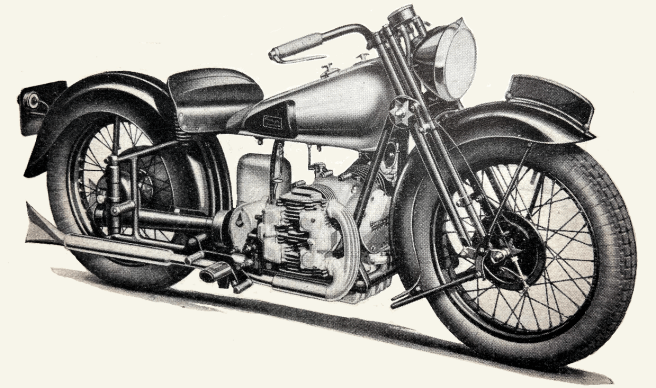
speed and the other a not-so-normal four-speed job. The three-speed box has a kick-starter, but there is a hand-starting lever for the four-speed design. This hand-starter is arranged in such a way that in the event of a back-fire the clutch is thrown instantly out of engagement. Details of the internal mechanism of the four-speed box are not yet available for publication owing to the question of patents. The propeller-shaft is enclosed and terminates in bearings in a case which encloses the worm and phosphor-bronze worm wheel. A double-thrust bearing takes any side load and there are super oil seals to prevent grease entering the 9in diameter rear brake. The rear-wheel springing is on the well-known Brough Superior principle of sliding fork-ends moving between two springs, an upper main spring and a lower rebound spring…A redesigned Castle fork is fitted. It is much neater than previous patterns and is wider, eliminating the necessity to trap the front mudguard…Incorporated with the fork is an adjustable ball mounting for the head lamp. There is an ingenious prop-cum-lifting stand which, by slight pressure of the foot, will hold the machine, or which may be used as an ordinary stand. In either case, both feet of the stand are lowered, so road camber does not interfere with its use as a prop-stand. A handsome 4½-gallon petrol tank is fitted; this has a bulbous nose which is nicely swept op to the head which it partially surrounds. On the under side of the tank is an unusually wide channel that accommodates the tool box. The saddle is 18in wide and has a 2in. high backrest. A special triangulated sidecar chassis has been designed. This has only two points of connection, which are 70-ton tensile steel bars and run straight through two of the tubular cross-members of the frame of the machine. The connections are locked on tapers and the wheel is mounted on the end of a torsion bar located within the rear transverse chassis member. The price of the Brough Superior, solo, is £185.”
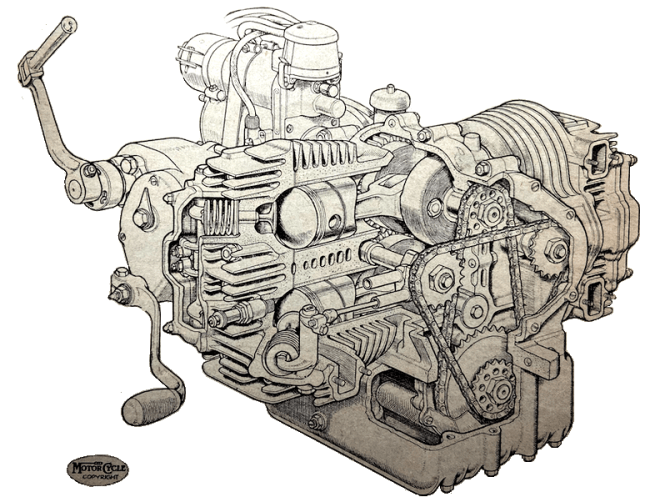
“SINCE ITS INTRODUCTION, the unit-constructed 125cc Villiers engine has enjoyed an increasing popularity. Its performance, liveliness, general reliability and compactness are features that have made a distinct appeal, and it remains a firm favourite. In view of this, it is interesting to find that the Villiers Engineering Company has produced another engine on similar lines. This newcomer, which is of 197cc capacity, has a bore and stroke of 59x72mm and employs a flat-topped piston. It is an exceedingly sturdy job and possesses many features that represent a marked improvement over former types. Its cylinder is deeply finned and the finning is carried very low down on the barrel. A detachable aluminium cylinder head is fitted and this accommodates an 18mm sparking plug and a release valve.”

“IN ADDITION TO the popular ohv Flying Fox model, the AJW range for 1939 includes two two-strokes of particular interest. These models, the Lynx and the Lynx de luxe, both employ a 250cc Villiers engine of the deflectorless-piston type. An unusual feature of the design is a bolted-up duplex cradle frame, constructed of L-section nickel steel throughout, with the exception of the twin seat stays, which are of tubular construction. In this frame accessibility has been very carefully studied; both the engine and gear box can, it is claimed, be removed without difficulty in a few minutes. Another point is that there are no engine plates, the crankcase being bolted directly to the frame members. The engine is mounted vertically, and twin high-level exhaust pipes are carried in a straight line, one on each side of the machine, to the rear wheel, where they terminate in tubular silencers.”
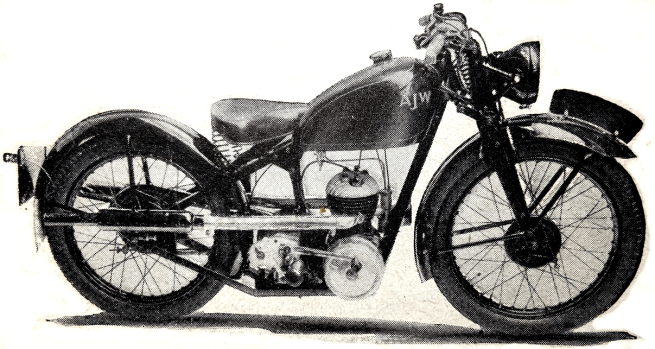
“CONTINUING ITS PROGRESSIVE policy, the OEC concern introduces Girling brakes as standard equipment for the three 1939 models. Apart from this feature the rear springing has been modified so that there is now a 4in. range of movement, and the tank has been redesigned. Other improvements are a more symmetrical exhaust system, a streamlined rear number plate, and a vertical carburettor. The range consists of the 350cc ohv Cadet, the 500cc ohv Commander, and a new model, the Commodore, which has a very high performance 500cc ohv engine. This machine also has duplex brakes, which can be obtained as an extra on the other two models. Specially produced Matchless-AJS engines of the high-efficiency type are employed, and these are claimed to be notably quiet in operation. The Cadet model has fully enclosed valve gear. The Girling brakes have 7×1¼in shoes. Where the duplex system is fitted each wheel has two distinct brakes on a normal hub. However, the backs of the drums are cut away to leave four webs, corresponding with similar webs which support the cylindrical fin silicon-aluminium alloy outer hub, which has approximately the same diameter as the drums. Through each set of drums and cylinder webs is a long bolt parallel with the wheel spindle. The complete assembly looks extremely massive, although in actual fact it is only a few pounds heavier than a normal single drum rear hub. Apart from the greater power of the twin brakes, the light-alloy cylinder promotes rapid cooling. Operation of the brakes is by means of cables. With the duplex arrangement the rear brake pedal spindle passes through the middle of the frame lug and actuates two cables, each provided with an adjuster. The two front brakes have a cross-over compensator of simple design. With a capacity of 3½ gallons the new tank is very pleasing in appearance.”
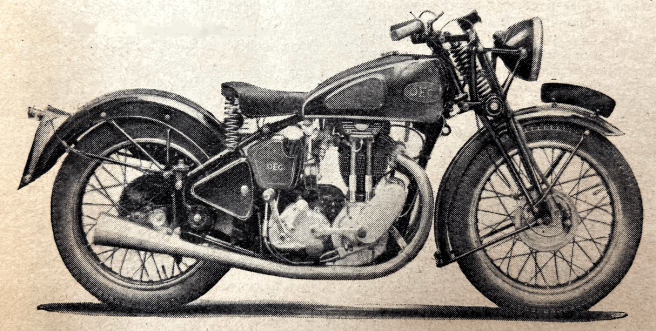
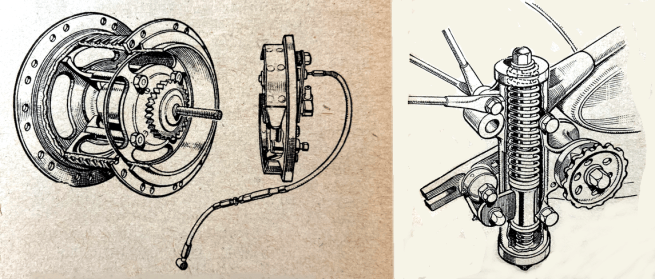
“FOR SOME TIME PAST the Levis concern has been experimenting with a spring frame. In one form or another it has been on the road for the past two years; in its final form it is unusually interesting. In principle it is much the same as other well-known devices in which the wheel spindle is attached to two sliding members that are controlled by main and rebound springs. The Levis design, however, goes much deeper than this, for definite steps have been taken to eliminate the possibility of variations in tension between the two sets of springs, and possible differences in their lengths, tending to place a bending load upon the wheel spindle and the frame. In order that the wheel spindle shall at all times remain horizontal, the two sets of springs are balanced hydraulically. Further, each spring has a damper of the friction type in which a friction pad bears against a flat formed on the sliding member.”
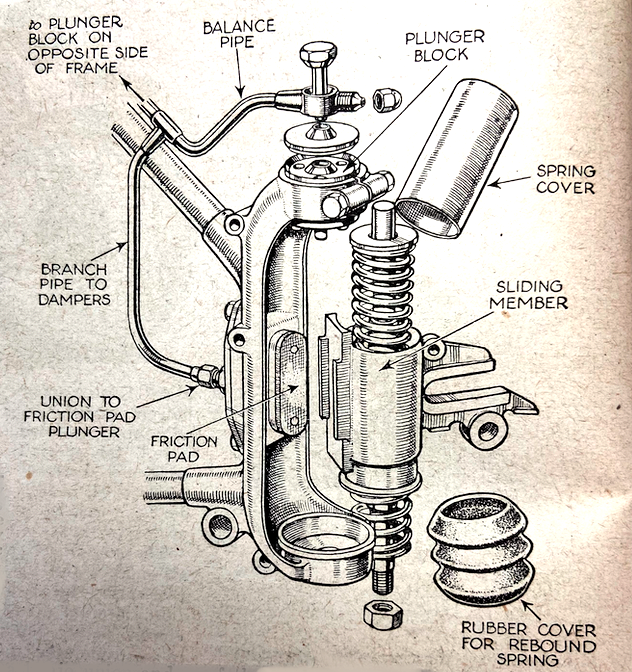
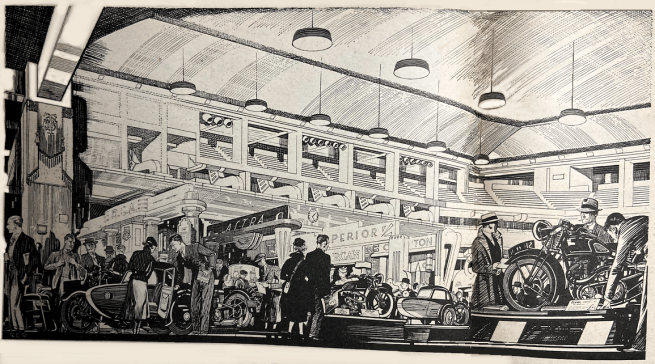
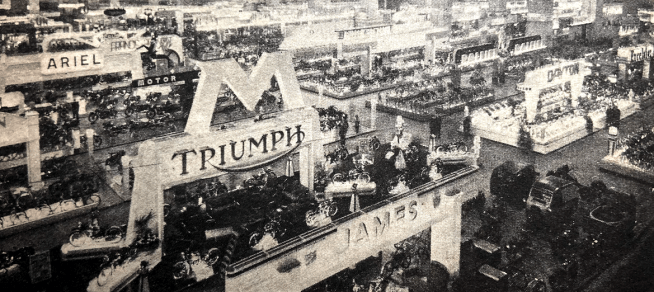
“THE 600cc SQUARE FOUR is reintroduced for 1939, and it has an engine layout similar to its 1,000cc brother. The monobloc engine has two geared crankshafts, plain big-end bearings and totally enclosed push-rod-operated valves. A separate compartment adjacent to the crankcase houses the crankshaft gears. Always popular among sporting riders, the new 500 Red Hunter is now even more attractive. Modifications have been made to the timing gear and piston, and a new handlebar and front fork springs are fitted. This model has fully enclosed and positively lubricated valve gear with quickly detachable, screw-in caps that provide easy access to the rocker adjusters. Another feature, now well-known, is the remote clutch housed outside the primary chain case.”
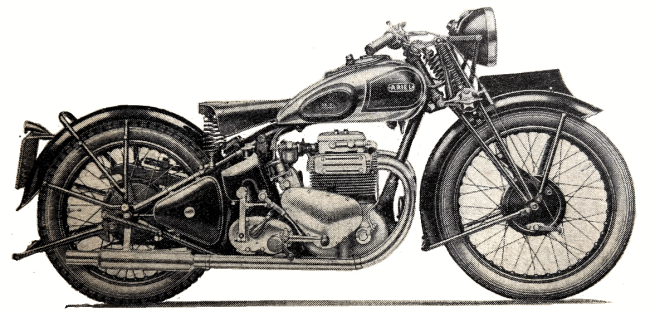
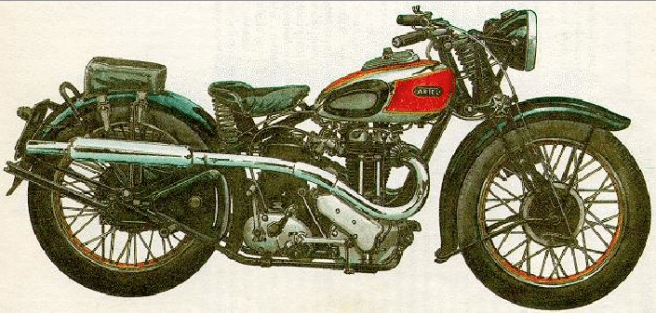
“WITH MODELS FROM 250cc to 1,000cc, and including sports, touring and ‘competition’ types, there is indeed something for everybody in the BSA range. The feature of this range is that there are side-valve examples in each of the sizes, which indicates the growing interest in this type of engine. The 500cc Gold Star is attracting considerable attention. The high-compression engine fitted to this model is a fine example of modern metallurgical progress, with its light-alloy iron-linered cylinder barrel and other ‘advanced’ features. A close-ratio gear box and a smaller tyre section on the front wheel are typical of the sports-type specification. Chromium and silver finish has now displaced the familiar BSA green. The 350cc Silver Star, which replaces the Empire Star, is a well-equipped model with a specification and performance that will appeal to the enthusiastic rider of experience; moreover, the price is very attractive. The cylinder barrel is of the hardened type, designed to resist wear.”
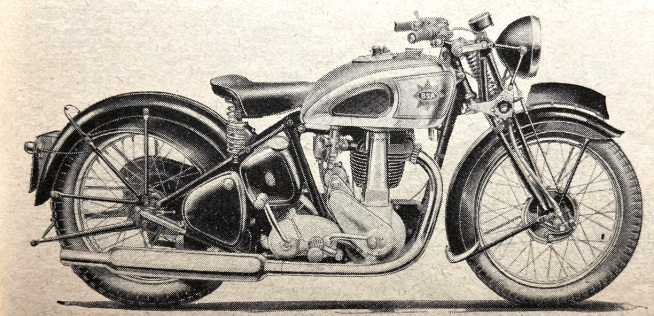
“THE ONLY LIGHTWEIGHT machines with spring frames in the Show are to be seen on the Coventry Eagle stand. There are two models, one with a 98cc Villiers engine-gear unit, and the other with the 125cc Villiers unit. Apart from the engines, the machines have similar specifications, which include pressed-steel forks, 2¼-gallon petrol tank, legshields, improved silencing, and a larger saddle than before. The simple spring frame is of the plunger type with a single compression spring on each side of the wheel. Re-bound is checked by rubber buffers. For pillion work stronger springs are fitted. In addition to these two spring-frame models there is a full range of the well-known Silent Superb two-stroke models with 98, 125, 148 and 250cc Villiers engines.”
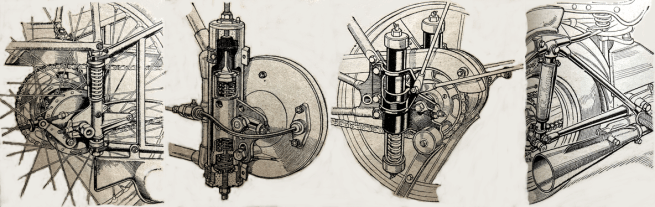
“THE HEC IS AN entirely new motorised bicycle. The engine-clutch unit is housed inside the frame tubes and attached at three points. It is a self-contained little unit with flywheel magneto, and the manufacturers state that it can be removed complete very quickly. This is an attractive point to a rider who must have a means of conveyance; he can take out the engine and cycle normally, as the riding Position and pedalling gear are quite suitable. Appealing features are a back-pedalling rear brake (hand-operated if desired) and a ratchet on the handlebar lever for holding the clutch permanently disengaged.”
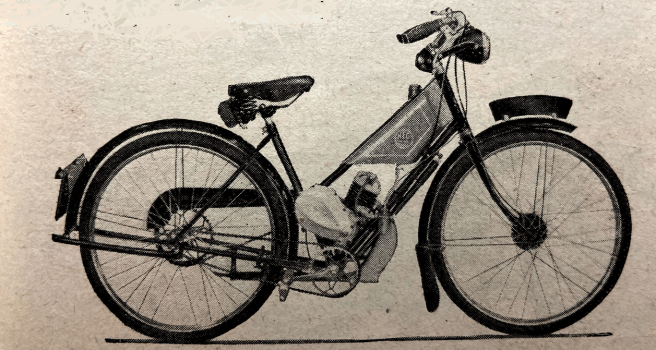
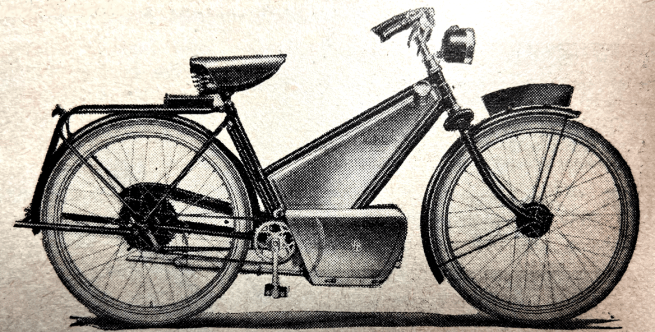
“ANOTHER CYCLE FIRM to enter the motor cycle field this year is Norman Cycles, and two types of machine are shown on their stand, One is a motorised bicycle with the 98cc Villiers unit in an open frame. A clutch with ratchet control is fitted, and internal expanding brakes are operated from inverted levers on the handlebar. (On one model the rear brake operation is of the back-pedalling type.) The other machine is a full motor cycle with a 125cc Villiers engine-gear unit in a simple loop frame.”
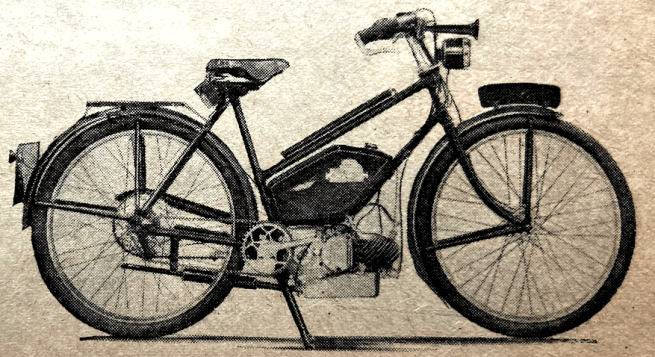
“AN ENTIRELY NEW ENGINE is fitted to the 350cc Bullet, for although the crankcase assembly is on familiar Royal Enfield lines, the cylinder and heal represent a complete departure from previous models. The barrel is an alloy casting with a Vacrit liner, while the alloy head has inserted cast-iron valve seatings. The tappets have large, flat bases and are inclined so that the push-rods, which work in passages cast through the cylinder finning, operate in a straight line. The rocker gear and valve springs are completely enclosed with a separate cover for each valve. Several improvements have been made to the cycle parts, notably to the layout of the brake gear, the spring forks and the knock-out rear-wheel spindle, which permits an inner tube to be changed with-out removing the wheel from the frame. The tyre equipment is specially suited to the sporting rider, for not only is the front cover of smaller section than the rear one, but it has a ribbed tread. Variations of this model are a 500cc Bullet and 350 and 500cc ‘competition’ models.
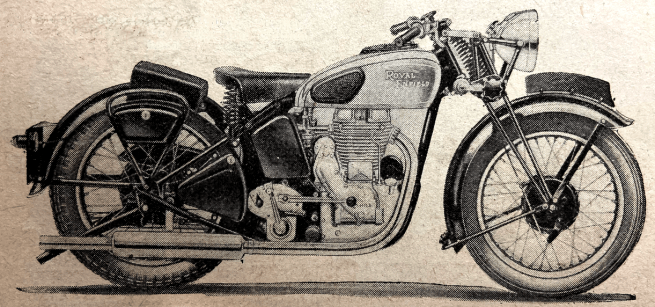
“FOR THE FIRST TIME in its history the Levis stand is housing a side-valve model in addition to the well-known over-head-valve, and two-stroke types. This side-valve machine is a straightforward model, sturdily built and without frills. The engine has an aluminium cylinder head and the valves are enclosed by. a detachable cover. The big-end is a double-row roller bearing and oil is fed to the engine by a Pilgrim pump.”
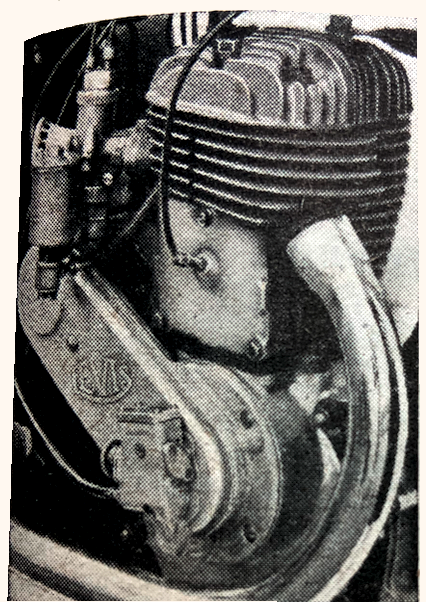
“THE NEW TIGER 100 is a super-sports edition of the Speed Twin. It differs from the latter slightly, having so-called forged pistons, a slightly higher compression ratio and new-type silencers which, when dismantled, form exhaust megaphones. Fully equipped, this model costs £82 15s. An eloquent testimony to the manufacturers’ faith in their twin-cylinder models is that nothing larger than a 350cc ohv super-sports single is now available. Well known to high-speed tourists and clubmen, the Tiger 80 has been considerably improved in both performance and appearance. The silver finish is retained, but is now also applied to the mudguards, which are relieved by a black strip down the middle. The engine has fully enclosed valve gear and is specially tuned.”
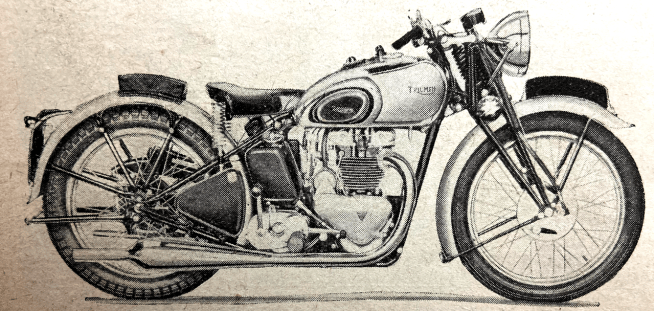
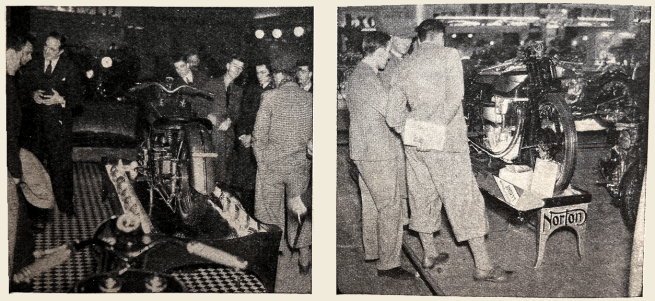
“IN KEEPING WITH the tradition associated with the Sunbeam name, the new range exhibited includes all that is best in accepted design. The engine is of the high-camshaft type and is available in sizes from 250 to 600cc. The camshaft is driven by a triangular chain, which passes over the magneto driving sprocket. The latter runs on its own bearings independently of the armature spindle, the connection between the two being by a rubber coupling. A Weller automatic chain-tensioner with a special damping device is applied to the chain. Side-by-side tappets are mounted in a detachable guide block, and short, enclosed push-rods actuate the overhead rockers; the hairpin valve springs and the whole of the overhead-valve gear are fully enclosed, and special care is taken to prevent oil leaks. In general, the Sports range of models, of which this is a typical example, are planned for their job and have small-section front tyres, twin-damper forks with check springs and high-level exhaust systems.”
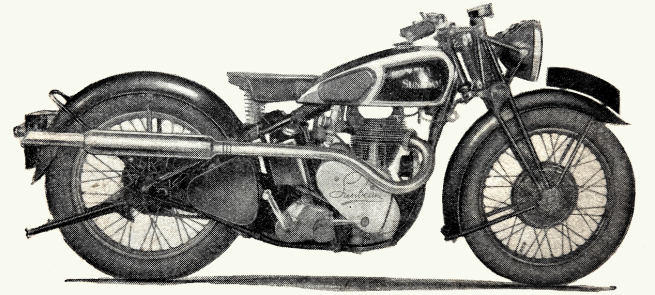
“I HOPE IT IS NOT INVIDIOUS for a veteran like myself to extend a special welcome to the new high-camshaft Sunbeam engine. We oldsters can recall a date at which the two British machines famed for their really first-class workmanship were Sunbeam and Triumph. I always liked to straddle one of these two makes when reporting a six days’ trial single-handed, for you knew in advance that nothing would break or fall off. Both firms, for example (to cite a small but vital point), scrapped all screwcutting tools at the least sign of wear, so that on a strenuous 1,000 miles every nut stayed put. On one occasion I thought Sunbeams had let me down; they volunteered the loan of a sports 350 for a Scottish Six Days, and when I collected it, to my horror it had no kick-starter. And I knew that throughout the week I must stop at the worst knuckle of every trials hills and restart somehow after the last of the lads had gone. No other mount was available, and I cussed ‘orrid as I started north. But actually I had an extremely pleasant week, for the little ‘Beam had a marvellous clutch and proved to be a tickle-starter. I could either re-start down the test hill, and turn in the road; or stick the ‘Beam on its legs, start the engine by twitching the back wheel, and get away on the clutch. Now we shall expect the Sunbeam people to recapture past glories.”—Ixion
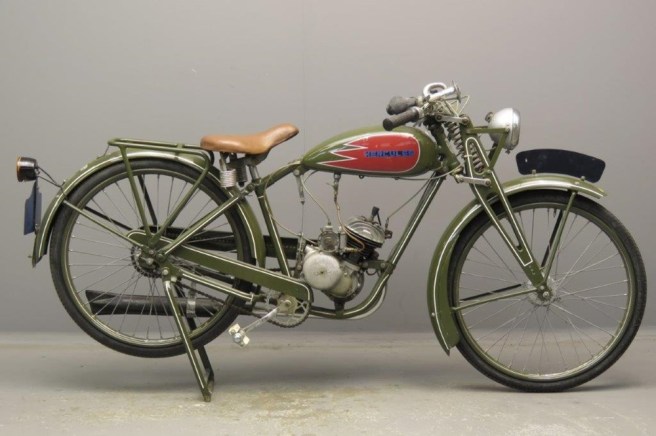
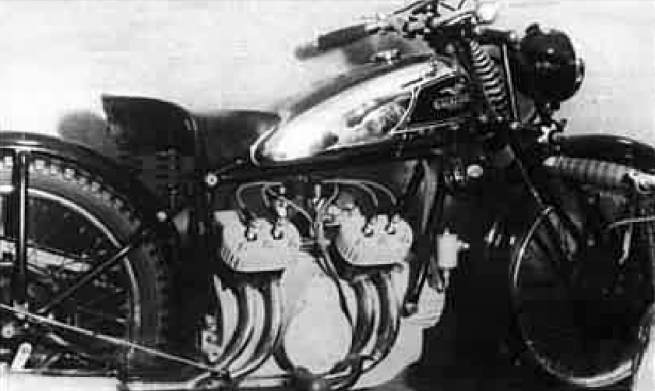
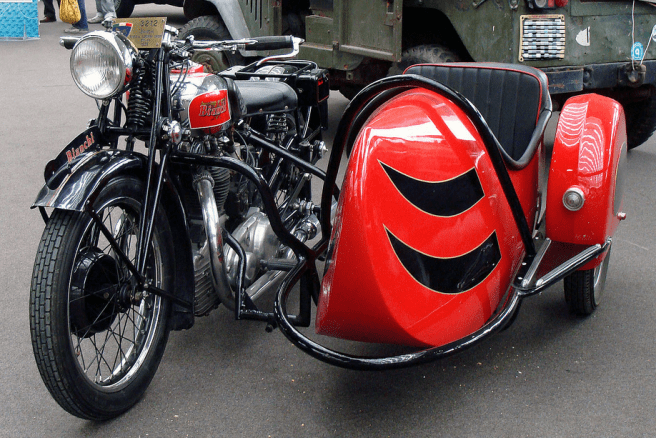
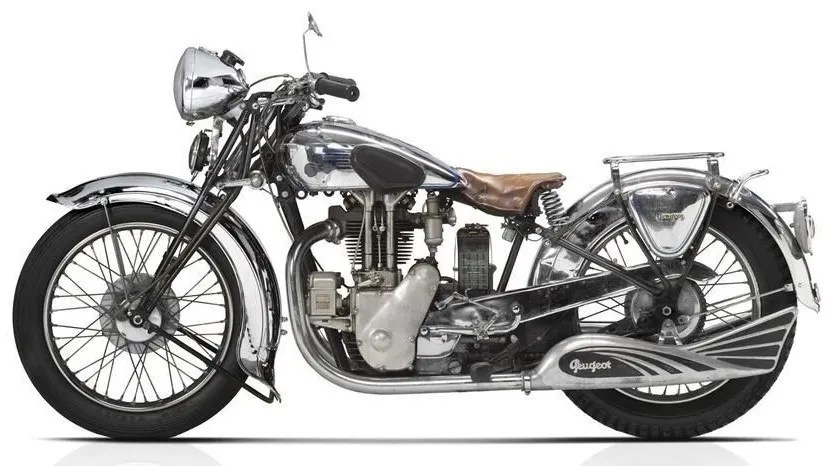
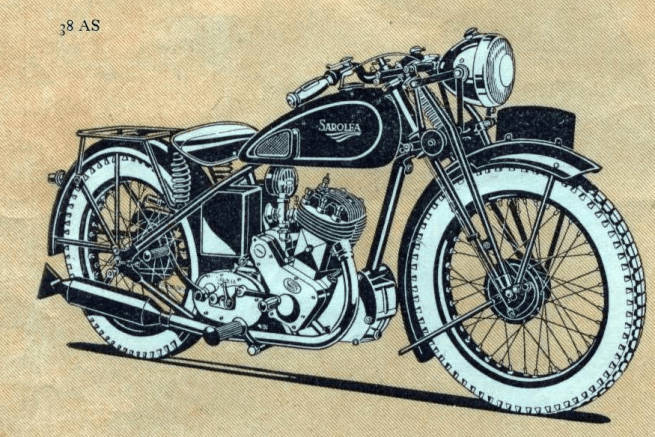
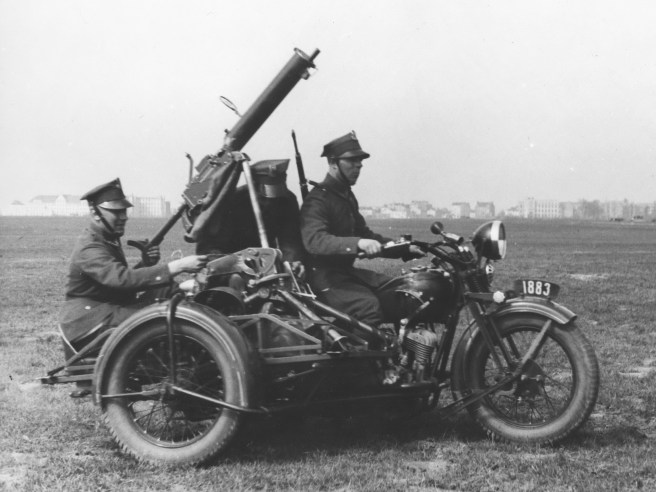
It was Torrens’ turn to write the Blue ‘Un’s traditional ‘my favourite rides of the year’ feature. It was published in the first issue of 1939 but as it refers to his experiences in 1938 I’m including it here.
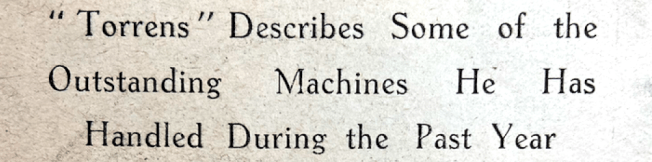
“NO, I CAN’T GRUMBLE: my log for 1938 proclaims a five-figure mileage, experience of a couple of dozen models, no punctures and no serious roadside bothers. On. the other hand, I’ve known more exciting years. My most thrilling experience was undoubtedly being left in charge of the Brough Superior ‘Dream’ engine five minutes after it had fired for the first time. So far as complete machines are concerned, except for a short run on the Velocette that won the Junior TT, it has been a question of riding the latest versions of old favourites—Ariel, Matchless, BSA, BMW, Royal Enfield, Vincent-HRD, and so on. There have been experimental features to try, but no complete machine that shrieked NOVELTY from front to rear. However, maybe that means more pleasure in store for me in 1939. I suppose no machine over the past ten years has established itself in public favour more quickly than the Speed Twin Triumph…It is not surprising, because the machine has given first-class service and proved very fast and lively; in addition, it is a good looker. Over the year I have ridden a number. The degree of balance achieved having regard to the crank arrangement—both pistons, as you know, go up and down together—is surprisingly good. I have even had a letter from one man who said that he was worried over running-in his new Speed Twin because from feel he was-quite unable to tell the difference between 30mph and 45mph. I cannot admit to having any similar feeling. After all, the balance is necessarily single-cylinder. The great point is the smooth flow of power and the zest that the remarkable performance provides. On one very wet trip I had trouble with water in the brakes, which is a matter that has been investigated, and my only other criticisms of a motor cycle that deserves every fraction of its big success have been that on rough roads the model could be a bit of a handful, while at very low rpm there could have been greater smoothness and also better pulling. You may recall the article, ‘Designer, Rider—and Critic’, in which I related how one morning on the International Six Days, Mr Turner, the Triumph managing director, said he wanted to come with me on his Speed Twin, and I took him over a long stretch of road that was all twists and turns and bumpiness—did so on purpose, needless to say. Only a matter of weeks passed before the hyper-sports edition, the new Tiger 100, was announced, and with it details of a modified steering layout and a new and more progressive two-cam engine-shaft shock absorber. Things had happened quickly, for when I went to the factory to obtain details of the new model I was able to try out the new steering and road-holding. As I remarked at the time, the steering is of that safe-feeling ‘solid’ type and the road-holding excellent.
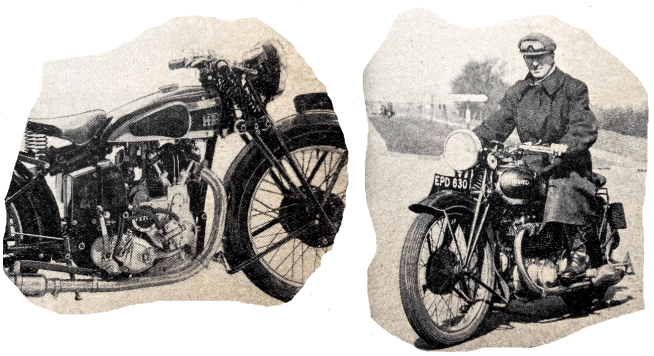
Another point stressed in regard to the Tiger 100 was the high engine torque at comparatively low revs. The Speed Twin has been improved in this respect by modified valve timing. My own type of multi, the 1,000cc Ariel, has been improved for this year by being made available with a spring frame. Some lucky riders have already taken delivery of new spring-frame fours. I am still waiting, no doubt because of the fact that I am after several non-standard features with the idea of trying to add to my experience. Thus I cannot write of the behaviour of my 1939 model. However, I have had a short run on the 600cc spring-frame Four. Several readers have asked me why I have not gone in for this model instead of buying another 1,000. The reason is that having tasted the zipping acceleration provided by the 1,000cc model I should miss it were I to purchase a 600. As it happens, my short run occurred immediately after a 120-mile trip on my own machine. Thus there was a direct contrast. Had I no experience of the 1,000 I imagine my choice would be the smaller machine. Now I have been spoiled for it. There is nothing fresh that I can relate about my present model. The works fitted the 1938-type front brake with the floating cam arrangement so that I should be able to compare the new with the old. My old type was non-standard to the extent that the cam lever was about half as long again as the normal one in order that the brake might be lighter in operation. With the new design I found that the lightness and power were about equal to those of my modified brake. No other important change has been made to the machine, which has continued to give utter reliability except for that occasion when the contact-breaker rocker arm tried to seize-up towards the end of a 280-mile journey. The machine only goes to confirm my previous experience that small cylinders and plenty of them spell day-in, day-out reliability and freedom from tinkering. One man has told me that he habitually runs 10,000 miles without touching the engine of his four ; with the various fours I have owned I’ve usually run 4-5,000 miles without altering even the valve clearances. As you may recall, I’ve yearned for a spring frame on my Ariel. Now I am having rear springing and a new model…Perhaps one of the most interesting trips of the past year was with a sidecar outfit that had an engine only one-quarter the size of that of my own solo—the 250cc Royal Enfield and sidecar which carted Tony Wilson-Jones, the head of the Enfield technical department, and me on a 600-mile week-end. Machine and sidecar, passenger and driver, together with luggage and riding kit, weighed 942lb: not so very far short of half a ton. Added to this load per 248cc we had 175 night miles against half a gale. Having covered many thousands of miles with small-capacity outfits in my school days, I was not anticipating that the Royal Enfield would not ‘work’, but certainly I had no idea that the total weight was going to be anything like so huge. Had I known the weight I might have had grave doubts about tackling Lynton Hill. As it was, Tony Wilson-Jones looked very glum when we weighed ourselves on a machine in Watersmeet Valley and found that the two of us in riding kit came within half a pound of 33-stone. As I recorded, the stalwart engine took us up Lynton at a speed that never dropped below 12mph and made so light of Porlock that we actually restarted beside the tea-gardens on the outside of the first hairpin bend.
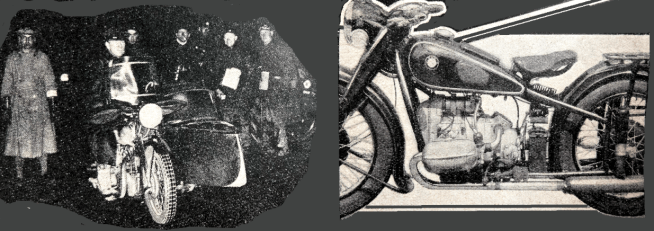
Later, on a 162-mile trip we averaged almost exactly 30mph, including stops, one fairly lengthy as there was a short-circuit in the wiring for the lights. With the wind in its favour the machine covered within decimal points of 70 miles in a period of two hours, and the fuel consumption over the whole week-end, which included trials going and cross-country work in addition to Porlock, Lynton and Countisbury, worked out at 68mpg. Under more usual conditions we should have probably obtained getting on for 80mpg. After our trip there were one or two people who said, ‘Oh, yes! Interesting, and good proof of the capabilities of the 250 Royal Enfield, but so far as sidecarring is concerned a bit of a stunt.’ My experience is that there is nothing of a stunt about using an engine of 250cc for sidecar work. Assuming a frame that is suitable, a sidecar which is light (I look upon the 115lb of the sidecar we were using as unnecessarily heavy), and common-sense in handling the outfit and as regards what is expected from it, the 250cc outfit can provide really cheap worthwhile motoring. Tax, insurance and fuel—all these cost little. The only question is, ‘How will the machine stand up?’ My experience has been that given sensible handling the answer is, ‘Very satisfactorily’. A sidecar outfit of another type was the 600cc side-valve job that, in conjunction with a solo Empire Star, earned for BSAs the Maudes Trophy for the most meritorious certified test of 1938. Again I have related nearly all I can say. The engine proved beefy, really supple and capable of most things that a sidecarrist asks of his machine. That it will climb any hill that the normal tourist would tackle is proved by the machine’s many ascents of Bwlch-y-Groes in the ACU test, and the Bwlch, you will remember, was easily voted as the worst touring hill in the country by the dozen famous trials stars who a year ago gave their views on the subject. The machine also proved lively, as can be gathered from the twin facts that it could be cruised at 48-5mph, and that with some throttle to spare, and under windless conditions tucked almost exactly 40 miles into 60 minutes. I have no criticisms of any real importance, and, as I have remarked to several readers who said they were buying a similar job, ‘Here you have an outfit that should give you many thousands of happy miles.’ The only notable foreign machine I have ridden over the past year was a 600cc ohv spring-frame BMW. I’ve now handled many of these Munich-made motor cycles. They need no eulogies from me. Of all the models I prefer the 500. Somehow, the 600 I sampled did not enthral me nearly so much as the R5s I’ve tried both with and without spring frame; it did not give the same silky feel, perhaps because of the additional 50cc per cylinder, though that alone does not seem to explain the matter. Accelerate hard at any speed up to about 40mph in top and the engine was thumpy unless the ignition control was used. To get silkiness one needed to make considerable use of the controls. No, I give the greatest number of marks to the 500, one of the most pleasurable motor
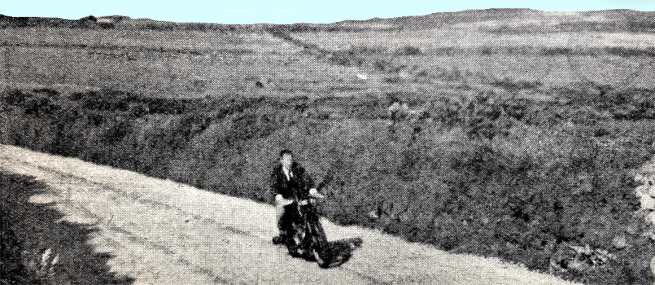
cycles it has been my good fortune to handle. The only crab I have is that the gear change is not quite perfect. A super-sports mount which, although a single, has characteristics somewhat similar to those of the 600cc BMW is the model Vincent-HRD Comet. It would be a poor year if I did not have a run on a Vincent of one type or another. The particular mount I rode had much of the feeling of a racer—punch, life and a sense of well-oiled, well-made internals. This last year or two the Vincents have been endowed with much more acceleration, and allied with the high performance there is the same safe steering and excellent road-holding. I know of few machines that approach the Vincent in its inbred safety. My run on the TT-winning Velocette was very brief. ‘Paton’ was to do the test and I—well, I could not resist just having a flip upon it. Here was a machine that seemed unbelievable—a 350 single that gave the impression of being some remarkably developed racing 500. At some 4,500rpm the power comes in with the cut of a knife. There might almost be dynamite suddenly being induced in place of petrol-benzole. That was the only harsh thing about the model. I am neglecting low engine speeds because those you don’t use. Controls, engine balance at high revs, brakes—there was smoothness everywhere. Even the roads seemed smooth with the combination of front and rear suspension. Yes, the degree of perfection attained by Velocettes in their singles is little less than uncanny. Now, having run through my brief list, I am left wondering: What has this year in store? Spring frames, Dreams, Tiger l00s, other new multis, other shaft-drive jobs…I wonder.”
For your delectation, let’s finish the year, as readers of The Motor Cycle did, with three touring yarns, taking us to a lost valley in the Cheviots, an excellent restaurant in the South of France and a dodgy cantina in Mexico. Enjoy! Bonne lecture! ¡Que aproveche!
“WHEN HOWARD AND ARTHUR suggested that we should spend a short holiday in the Cheviots I was not particularly enthusiastic. I had always associated them with sheep, border raiders and Scotland. Their rolling slopes, as seen from Carter Bar, do not give the slightest hint that they hide beauty for the seeking. My spirits rose, however, as the pannier bags were bolted on to my ‘Thousand’ – a day and a half in new country could at least be interesting, and life in camp is never tame with Howard. Life was better still as, lunch over, two ‘Thousands’ and a Norton left the grime of the city and followed the signs pointing north. In a surprisingly short time we were sitting on the summit of Carter Bar gazing into the valley below and telling each other what we thought about having forgotten a map of the district. The small-scale map did not show one road where we wanted it to be it only corrected my geography. Incidentally, the bulk of this rolling country is in Northumberland, including the ‘Cheviot’ (2,676ft). It was difficult to imagine from our lofty viewpoint that any of that landscape could be so high. We turned our wheels along the first road to the right. Soon, the moderately good road became definitely interesting. Walls and hedges disappeared (and the road nearly did!) and we were on moorland proper. Then we received the first check – the track divided. A penny decided the route, and so we pottered on. Those rolling hills received us kindly, the sun shone on the slopes which reared on all sides, and some of the gems for which we were looking began to be revealed. A few miles further on we struck a secondary road, which did not give any indication as to where it led. However, in due course we reached civilisation at Hownam. A charming old lady gave us a hint where to camp and sold us home-made bread, jams, butter and eggs. We followed her directions, and after four or five miles reached our destination—a blind valley, no road, nothing but a wee loch, a brook and the silence of the hills. While we made a meal of bacon and eggs, we watched the sun disappear behind the hills, and the shadows gradually lift up the opposite slopes as the sun sank lower.
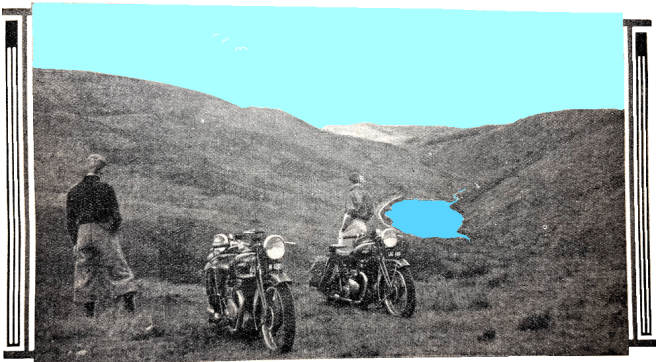
Then, as it was only eight o’clock, we decided to explore. We chuffed quietly down the Kale Valley to where it opened out to broad pastures. The land was rich, contented cows flicked flies from their backs as the stood in the stream among a riot of wild flowers, and we sat on an old stone bridge and watched the trout going crazy over a hatch of flies—the evening rise with a vengeance. We passed on, never meeting a soul. A heron rose at the sound of our machines and flapped steadily away, retracting his (or perhaps her) undercarriage after height was gained. Morebattle looked an interesting name for a small hamlet, so the usual place to find the ‘why and wherefore’ was sought. I forget the name of the inn, but it certainly was rural, with its old-fashioned double-burner paraffin lamps. The ‘ancient’ we sought was not so old and could not help us with the derivation of the name or provide any historical data. All he seemed to know was that the Kale was one of the best trouting streams in the country, and I agreed with his attitude towards the poachers who come in cars from the larger towns. Then it was back to our hidden valley. A camp fire was soon blazing, and over a nightcap of tea and a cigarette we sat wrapped in Stormguards round the fire, as a chill wind had sprung up. A thin drizzle followed, and so we turned in. My last impressions were the babbling of the ‘Heather Burn’—beautiful name—the splutter of the dying fire, and the mournful bleat of a lamb drifting down on the night breeze. Next morning we explored farther. We climbed out of the head of the valley up the hill slopes, following the sheep tracks until the loch and the tent looked like specks in the distance. We tried to get along to the Coquet Valley. However, 1,000cc Ariels are not exactly lightweights, and to tell the truth both Howard and I were about out for the count after bucketing over what seemed like miles of heather clumps on Windy Gate Hill. However, we were amply repaid by the view. The Bass Rock and the sea coast were visible, and to the west, ridge upon ridge of rolling hills stretched into the haze of distance. We returned (I never like returning) and as we slid down the slopes the heather twigs spanged on the spokes and gradually the tent and loch resumed normal size. An hour later we left our valley, and somehow or other I do not think it is the last time those rolling heather-clad hills will echo to the purr of a couple of ‘thousands’ and a throb of a ‘single’.”

“WHEN DOROTHY (MY WIFE) decided that we should fill the Douglas outfit with petrol and oil and leave for the South of France I must admit that I experienced a certain trepidation. You see, I had only just returned from work with the news that I could have three weeks’ holiday (two of them with pay). Nevertheless I was feeling rather depressed, for the weather had not been very good all the summer. But Dorothy had it all fixed. “There’s a boat leaving Dover at midnight for Dunkerque,” she said. “Can we make it?” “We can,” I replied, and so with incredible speed the necessary chattels were packed in the sidecar and we were off. With only one stop for Dorothy to do a bit of shopping, we arrived at Dover at about 11pm. After cruising around the docks for a while we eventually found the ferry berth. There we hunted up a railway offficial, who, after explaining that we should have beeen alongside at 9.30pm, should have reserved a berth, should have fitted a ‘GB’ plate, and should have done numerous other things, finally provided us with a large Customs sheet enumerating the number of lamps, tyres, wheels and other odds and ends, together with a bunch of tickets and his best wishes. We then drove up the ramp into the well-appointed garage on the deck of the boat and, having rested the machine, retired to a large lounge to rest.
We were called at 5.30am and found the boat had arrived at Dunkerque. We collected the machine and drove onto the quayside, where several imposing looking gentlemen awaited us. While I sought the Customs man, Dorothy got busy with some paint she had bought on the way to Dover. By the time I got back to the machine there was a very legible though slightly wobbly ‘GB’ painted on the back of the sidecar. After filling up a pink form called a laissez-passer, have engine numbers, etc, verified and paying about 8s for dock dues and the pass, we were free to cruise about in France for a maximum of twenty days. And so, within twelve hours of Dorothy’s fateful decision, we found ourselves riding over the cobbled roads of Dunkerque. For the first hour the road surfaces were very bad, but after Bethune there was a marked improvement, in fact, out of the 2,000 miles we covered in France, not more than 50 were really bad. Our route, based on a map that Dorothy had bought for a shilling, carried us straight along the Allies front line during the war. The first day took us through Rheims, where we saw the newly restored cathedral, and Epernay, in the Champagne country, where we stopped at a cafe and bought a half-bottle of the famous wine for 12 francs – roughly 1s 6d. Finally, we reached Chantillon, some 300 miles from Dunkerque, at about 8pm. Thoroughly tired and hungry, we entered the first hotel we came to and asked for a room, only to learns that there was a cattle show on the next day and all the rooms were taken. Enquiry at the next hotel brought the same reply, and we began to feel decidedly depressed. Faceed with a 40-mile run to Dijon, we decided to fortify ourselves beforehand with a meal and a drink in a large cafe in the square. Over coffee we explained our dilemma to the waiter. “I think I can help you,” he said, “provided you don’t want a palace.” We assured him we did not and, although there were at least fifty customers and he was the only waiter, he conducted us five or six hundred yards round tortuous back streets, then down a narrow alley, where we found a tiny cafe with an enormous but pleasant-looking woman in charge. After the friendly waiter had explained our difficulty she said she would be delighted to put us up. I walked back to the bike with the waiter and, feeeling grateful for his help, offered him 10 francs, which he refused with considerable dignity. However, after some persuasion he consented to join me in a ‘final’, and we parted with many thanks on my part and ‘don’t mention its’ on his. We slept soundly in a tiny room and did not awaken until 9 o’clock next morning. Then, after a hearty breakfast of delicious coffee and hot rolls, we were ready to go. The bill for everything was 35 francs—exactly 4s. Before we left we looked at the cattle show. The market-place was filled by black-clad peasants who moved around pens in which dozens of frighted little pigs were packed like sardines. From time to time a buyer would reach down into the tightly packed mass and pull one of the poor animals out by its hind leg, holding it squirming in the air, then it would be dropped back, squealing. When we got back to the outfit, which was parked on the other side of the square, there were several peasants sitting on their haunches looking at the engine. ‘What do you
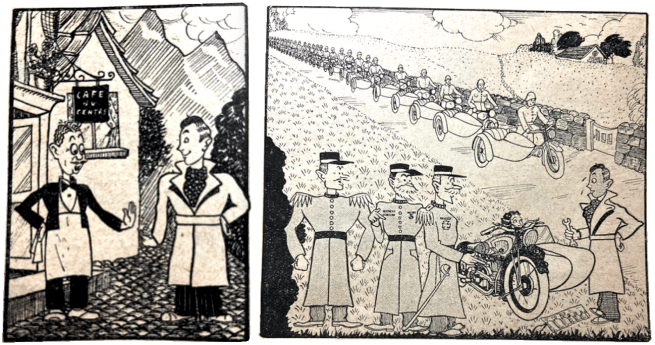
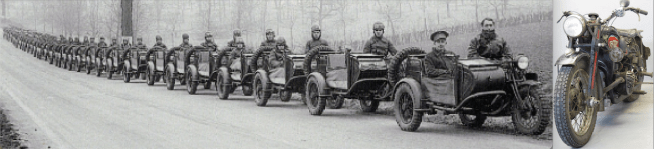
think of it?’ I asked. ‘Ah!’ said one of them. ‘La Douglah, it is a very fine machine. The English are very strong on motor bikes. What horsepower is it?’ ‘Six,’” I replied, and he looked very impressed. ‘The English are very strong on motor bikes,’ he said. ‘They win all our races here. We, the French, are stronger on bicycles.’ Everybody seemed quite satisfied with this, so I said ‘Au revoir,’ let in the clutch and we moved off. They stood in a little knot, waving to us until we turned the corner. Climbing steadily, we soon left the flatish country behind, and in a few miles the first range of the Jura Mountains came into view, with, in the far distance, the snow-capped peaks of the Alps. We passed Dijon and Dole and then descended suddenly into Ferney, which is on the Swiss frontier and is famed because Voltaire lived there. On the advice of a friendly Customs official we took a bus into Geneva. The town is beautifully situated at the end of the lake. It is very spacious, clean and has an air of prosperity. We walked around, saw the cathedral, had an enormous lunch at a cafe on the Quai de Mont Blanc, and then went to se the Palace of World Peace. It is a very impressive building of white concrete set in the woods of the Ariana Park. We were told it cost £2,000,000, was designed by five famous architects, and provides permanent employment for several thousand people of all nations. After we left Geneva the most interesting part of our tour started—’Napoleon’s route across the Alps’. Passing Annecy, with its lovely lake, we drove on up the ever-increasing gradients to Grenoble and thence to Gap, a delightful village several thousand feet above sea level. At first there were trees growing on the mountainside, but soon they stopped and there was only grass and, after that, nothing but the bare, sharp rock rising sharply on one side. On the other side there was a sheer drop several thousand feet to the valleys, where red-roofed villages nested on the green slopes. We stopped at one of the highest points and played snowballs like a couple of children. The run down from the Alpine peaks is one of the most beautiful we had ever seen. We arrrived at the little mountain village of Puget-Theniers that evening and sought shelter in the local auberge. The forty marvellous miles which seperated us from Nice were soon covered, and we saw for the first time the incredibly blue Mediterranean. I find it difficult to describe the beauty of the places through which we passed—Monte Carlo, Mentone, la Turbie, Monaco. We rode up to the Italian frontier and then headed
back towards Marseilles, finally stopping at a charming little place called Lavandon. We put up at a pension, where we stayed for a week. Our room looked out over the bay and we ate sumptuous meals under a palm tree in the flower-laden garden. The cost was exactly 11s a day, including wine and service, and we had quite a lot of both. But alas! The time came for us to return, so one morning we got up at 5.30am, said goodbye to our hostess and started off on the 800-mile trip home. We drove along the road to Toulon and then struck inland through Aix, Avignon and the ‘nougat’ town of Montelimar. By nine-thirty we had covered the first hundred miles. Our route lay down the valley of the Rhone, an original Roman road which runs straight as a die for miles on end. After Valence we came across the French Army—about a hundred sidecar outfits of massive construction manned by steel-helmeted poilus. They were cruising along at about 30mph so I twisted the grip and the Duggie flashed past them. Dorothy waved as we overtook the soldiers and they all waved back, and even the efficient looking officers, who were leading the procession in a car, smiled and saluted. Our pride in this rather swanky display was short-lived, however, for we had hardly covered more than a mile before a spluttering from the engine announced trouble. A few spasmodic jerks and we stopped. Then the Army came along. As soon as they saw us the leading car stopped and an impressive-looking gentleman got out and walked towards us. ‘In trouble?’ he asked. So we said, ‘Yes, thank you very much,’ and he said, ‘The engineer of the French Army will repair the machine.’ He then fetched an almost equally impressive-looking man. In the meantime the Army bikes were stopping one behind the other all down the road; the procession was already half a mile long and we began to feel quite embarrassed. However, the ‘Engineer of the French Army’ was already on the job—he had the carburettor in pieces and was blowing down the feed-pipe. He said he was glad to examine the machine because it had horizontally-opposed cylinders and similar engines were fitted to the Army machines. After about 15 minutes’ work he kicked over the Duggie and she started immediately, so we thanked them all profusely and started once more on our way. That night we stopped at Saulieu, having covered 403 miles in about 15 hours, and the following day we reached Paris. We explored the city, went up the Eiffel Tower and down the Seine subway, looked at the Louvre and saw the Sacre Coeur, Then, in the evening, we explored some of odd little dives in Montmatre. Next afternoon we reluctantly turned our backs on Paris and after a relatively uneventful drive reached Dunkerque. Our last francs were spent on a meal of mussels boiled in onion soup, chip potatoes and a final bottle of the good red wine of France. Then we boarded the boat and after a surprisingly short time were home again. And now we are already looking forward to next year’s trip.”

“AHEAD ON THE DARK, LONELY Mexican road, my spot-light’s beam danced crazily across a blurry-white animated cloud that soon materialised into two cotton-clad peons astride a white horse. They were waving frantically; now I could hear their urgent calls above the loud noise of my engine. When almost abreast of them I saw the great straw sombrero that lay just before me in the roadway, across the rut in which I was riding. Instinctively my wrist twisted the throttle and I climbed out of the channel, just missing the hat, and sending the startled horse skittering off to the side with its two riders clinging desperately. I stopped the engine and came to a standstill; the nervous stomping of the animal and the vibrant tenor commands of the men came crisply through the quiet night. Rearing and shying, torn between fear and their urging, the beast returned its riders to an irreducible ten yards from me. From that distance, interspersed with happy curses at their mount, the men shouted a plea to me in jumbled Spanish that I could not make out. I called back in my best ‘Spanish-made-easy’ that I did not understand. They continued to wave and babble. I leaned my motor cycle on its prop-stand, dismounted, and walked over to them. The quieter one of the two wore a duplicate of the sombrero on the ground, while the other was bareheaded and happily and noisily drunk. The latter repeated his plea again and again, waving towards where my motor cycle stood beside the hat. I began to understand that it was his sombrero he wanted—he was saying that he would have got it himself, long before, only he could not reach it—and his body followed his arm in a great downward sweep over the side of the horse to demonstrate how he could not reach it. He must surely topple! I jumped forward to catch him, but even as I sprang, the quieter one behind made a deft and obviously practised movement which brought the hatless one circling up to safety again. ‘Furthermore,’ the rescued one flowed on without interruption, ‘once off, if was difficult, most difficult, to mount again, for the horse was very high, and so here they had been patiently waiting for aid.’ I walked over to my machine, picked up the great, floppy straw, and returned it to the mounted peons. The front one reached for it with tearful eagerness; he was so very, very grateful (he said so many times), while the one behind directed his efforts towards getting it on straight and bringing the string under his chin.
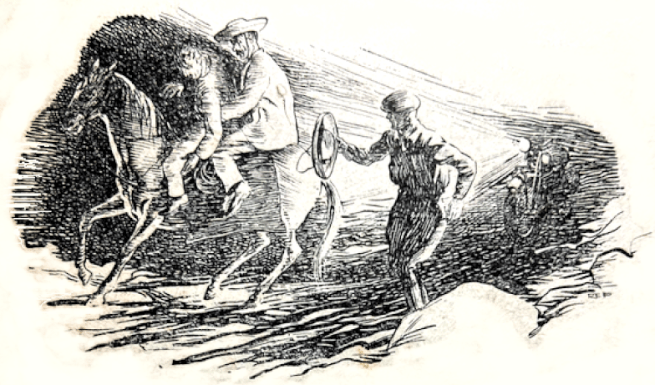
That accomplished, the front man twisted round towards me with a sudden surge of emotion, and reached down his hand to shake mine, while his friend grasped him steadyingly. That done, I must shake hands with the other, and while I moved to do this the one in front grandly thrust a little uncorked bottle down at me, and immediately I smelled, many times stronger, the acrid, joyous odour that radiated. Politely, but firmly, I declined the drink. Then. asserted the happy front one, with an oratorial gesture. We should all shake hands once more. With his pose, his grasp loosened on the bottle; I saw the dark glint of the glass as it slipped from his hand. Too late, I lunged to catch it, saw it flash past my reaching hands to a certain crash, then looked in surprise at the bottle where it had suddenly and mysteriously jerked to a dead halt in mid-air, and now hung magically framed in the middle of the black rectangular space under the horse’s belly. After a moment it began to rise—the front rider had begun to haul up his precious supply of tequila, hand over hand, by a precautionary length of string tied from bottle-neck to saddle that I had not noticed before. Triumphantly, he grasped the bottle once more, then leaned over for a very last handshake with me. That done I turned, and then thought to ask them if I was still on the right road for Purepuro, and more distant Guadalajara. Si, si! This was it! In truth it was the road—and the front one made a wave with his entire body in the general direction of the route, while the other supported him with a steadying arm. I thanked them, and remounted my machine, returning their ‘Adios!’ again and again. I operated the kick-starter and, as the engine roared into life, the ground suddenly shook with terrified, uncontrollable stomping. I turned, and saw the frightened white animal with its swaying, floppy-hatted riders become a single dancing grey wraith and dissolve into the darkness. At 10pm I jogged down the cobblestoned main street of small Purepuro, and halted opposite where yellow light streamed out through the open doorway of an adobe-walled store. My engine was a never-failing advertisement; in a moment the whole curious population of the town surrounded me. I gained the entrance of the small store that already was filled with newcomers, and called across to the man behind the counter for ten litres of gasolina; while on all sides they plied me with questions: ‘From where did I come? For where would I go?’ The excited storekeeper’s boy slipped by with a full ten-litre can in his hand. Tardily I pushed after him, trying to answer questions and to avoid stepping on their bare toes with my heavy, hobnailed boots. I was tired; I had ridden all day and I had not eaten since morning; the press of people made me a little dizzy. When finally I thrust through the tight ring around my machine the boy was standing there with the almost emptied can in his hand, while the crowd besieged him with their advice. With a sudden cold chill I saw that a funnel stuck up from the front tank— the oil tank! Already it was filled with gasolina; it brimmed over with the thin liquid. My almost empty oil tank filled with petrol! Someone in the crowd helpfully held out the tank filler-cap. Dumbly I took it and mechanically screwed it on, while my tired mind struggled with the calamity. I could siphon the petrol out if I had a hose, but I had none. What was hose in Spanish? I could not think. The boy was telling me enthusiastically that he had filled both tanks, and was there another tank? No! By all the saints, no! There were no more tanks! Helplessly, I gazed at the machine, my weary
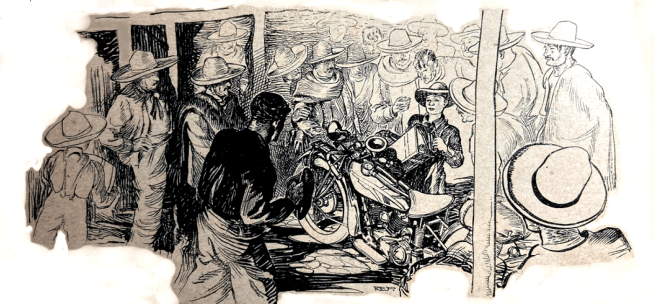
wits trying to cope with this unexpected catastrophe. Suddenly a deep, steady voiced boomed out above the chatter, demanding in English to know what the trouble was. I turned to face a large, sturdy man whose strong, tanned face defied my classifying him between Mexican and Yankee. But there was no doubt as to his understanding of English, so I poured out my troubles to him. He would get a siphoning hose, he said, although that could wait till morning. For to-night the store-keeper had a room next door and a place to eat would still be open by the square. To all this I thankfully agreed. We hoisted the machine over the high curb and pushed it through to my room, and then the big man and I walked to the square. A single lighted candle stuck into a bottle stood in the middle of the room that we entered. Its dim, yellow light showed crude booths along the wall, and a black, open archway to an inner patio. My friend picked up the light and carried it over to the booth we chose. Presently a mysterious, dark Indian woman padded in through the archway, with the shawl that covered her hair held bandit-fashion in front of her mouth and nose. She stool silent and expressionless while the big man ordered scrambled eggs and tortillas and milk for me, and a beer for himself. The eggs came mixed with red pepper strips that were not unbearably hot; I tore of a half of one of the heavy tortillas and pressed another on to my friend to eat with his beer. I raised my glass of milk to his; we said ‘Salud!’ We smoked and talked. It was about 130 miles to Guadalajara, he thought. Still another hard day’s ride. The cigarettes he produced were the common, strong, inexpensive ones with a picture of a raging tiger on the package. They were potent: he held the candle across to me and then to himself, while black shadows rushed over the walls…Outside again, we crossed the chilly, empty square. Half-hearted music came from a huddled group on a bench; they called out the big man’s name as we came up, and we stopped. A couple of them had blankets that they all tried to share; one wore an American-style overcoat. They boasted a guitar and a mandolin, and one had a gourd with a single thick string across the opening that gave out a hollow ‘boomp’ when he plucked it. They limped through a melancholy song. I was cold; I tensed myself together, my hands in my pockets, while they debated a song. One pushed the guitar towards my friend and demanded that he play. The others joined in urging him. The big man took the guitar, put his foot up on the bench, and plucked experimentally with a few chords. Then he started in his deep voice to sing a song I had heard many times, and they joined in, singing as if they were cold. He played the guitar easily and did not seem cold; with his strong leading the lot of them followed nasally, while the gourd ‘boomped’ in accompaniment and the mandolin’s taut, tinny note followed the air…The song went on, over and over, until finally the big man finished and handed back the guitar. We left them huddled there and started back for the store. Behind us they struck up a number again; even after I had blown out the candle in my cold room and rolled myself tightly in my serape on the straw mattress I heard them faintly for a while, singing a plaintive, hopeless little song to the night…”

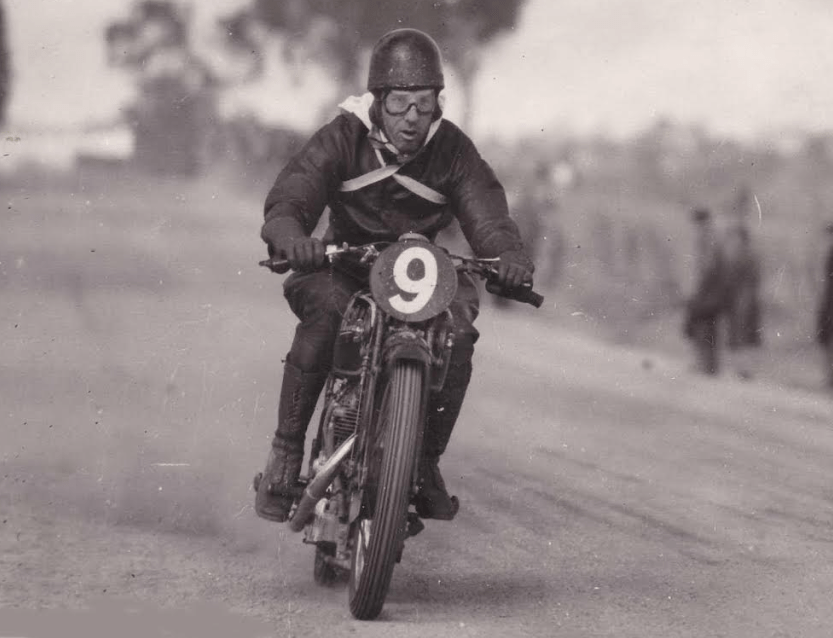
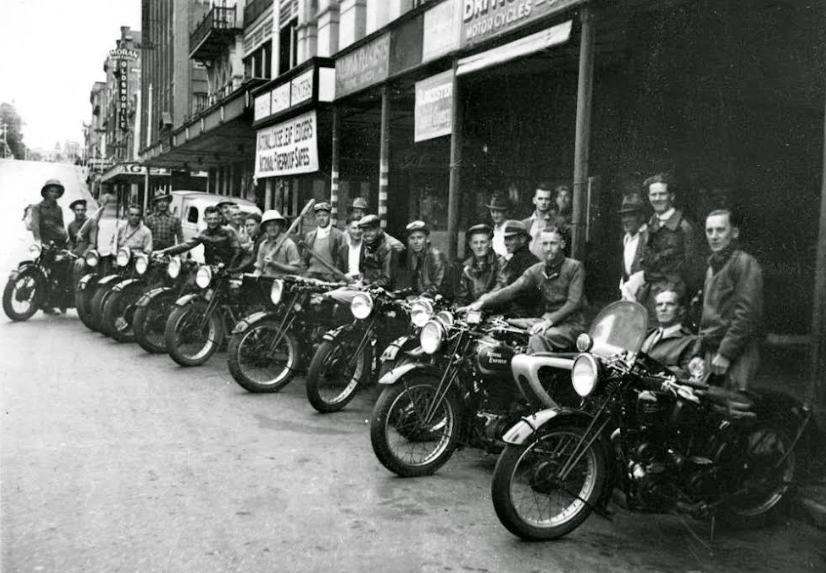
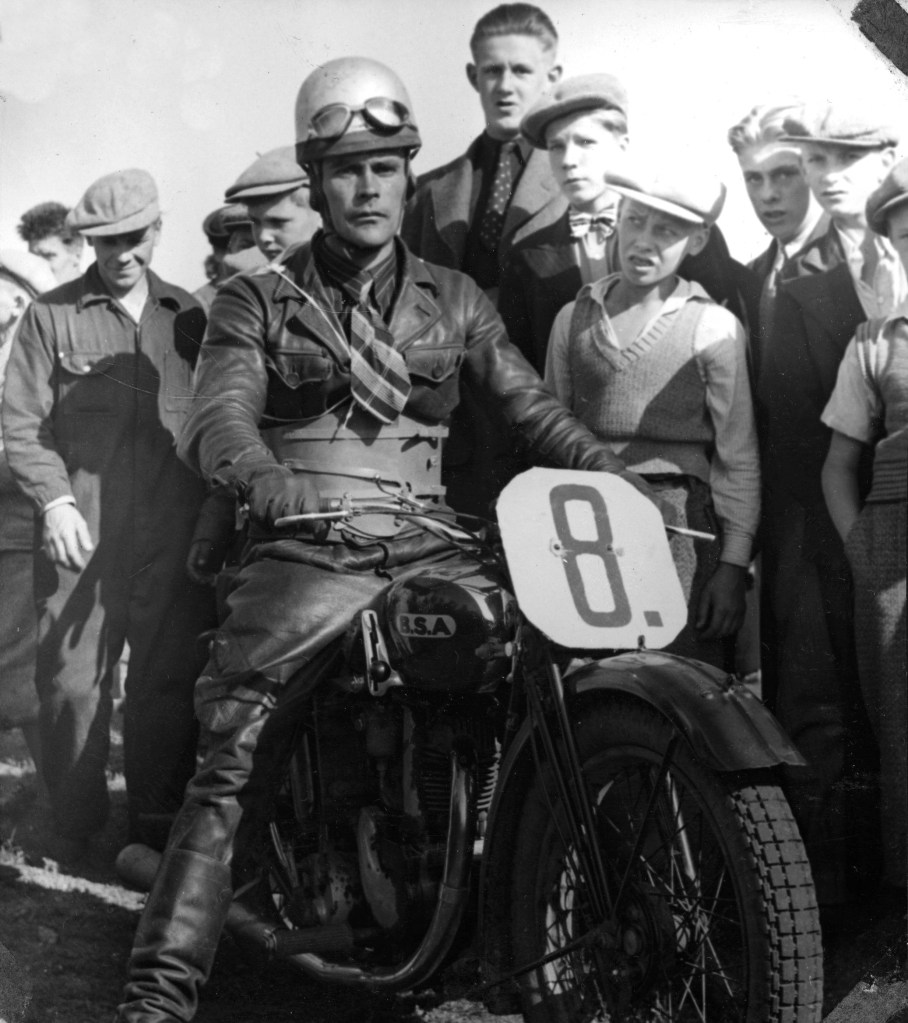
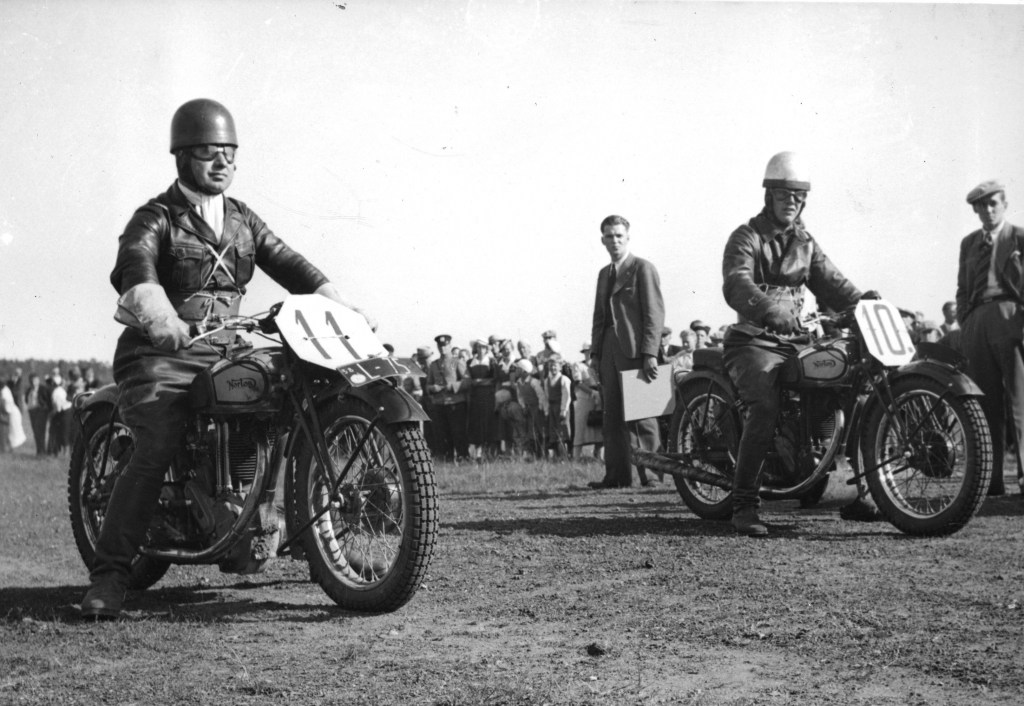
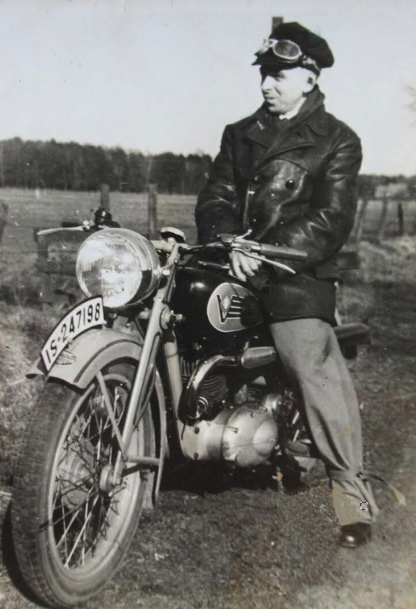
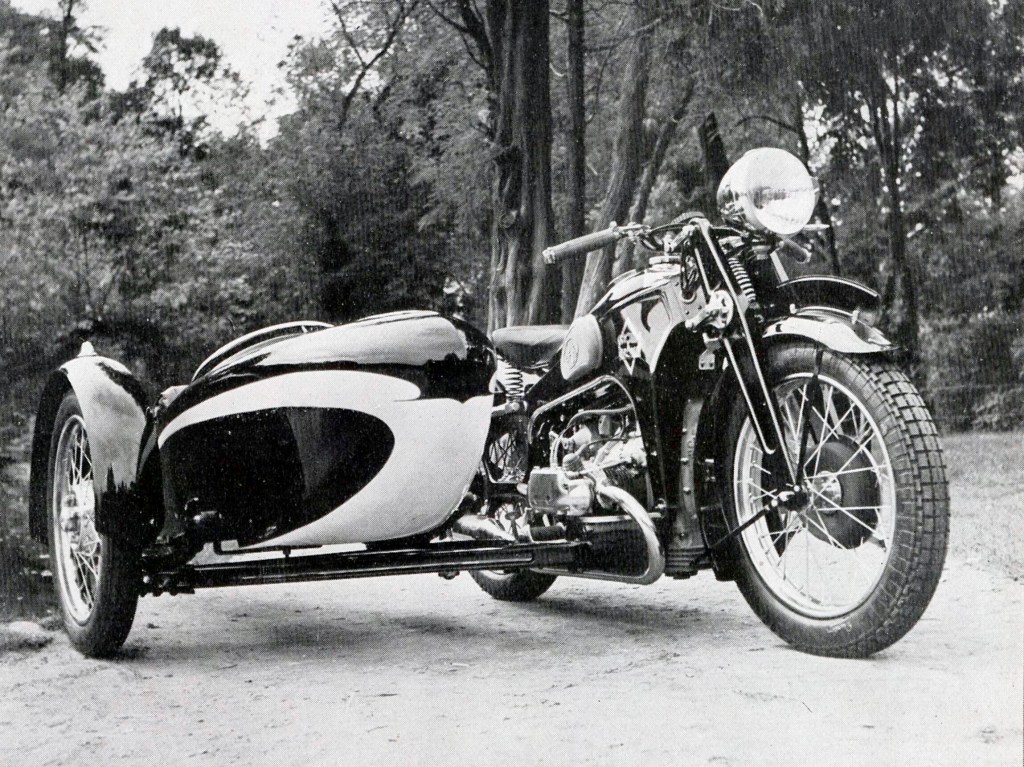
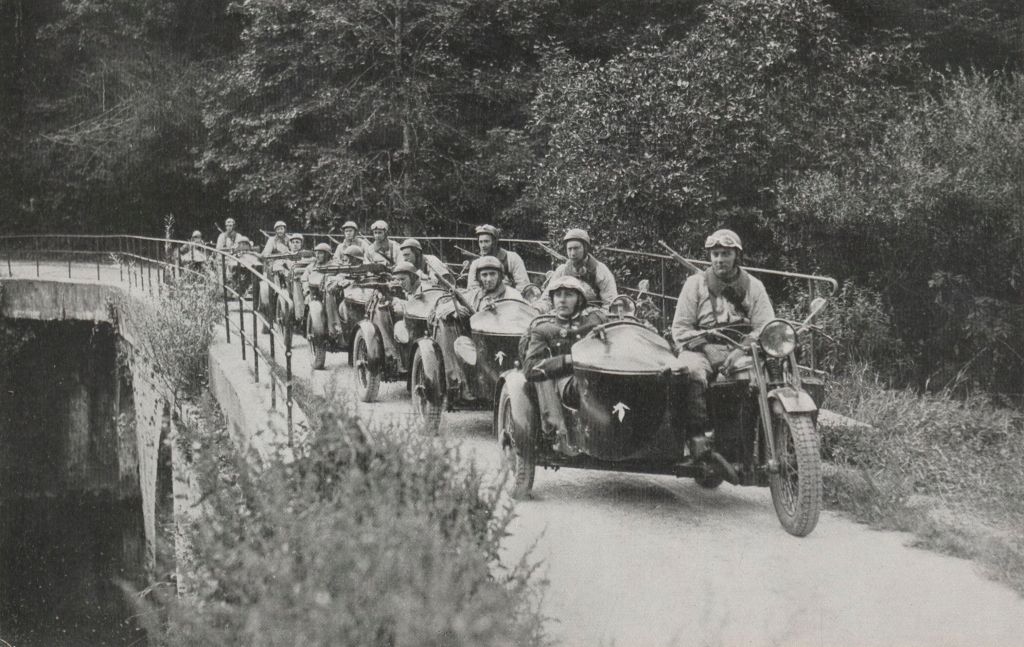
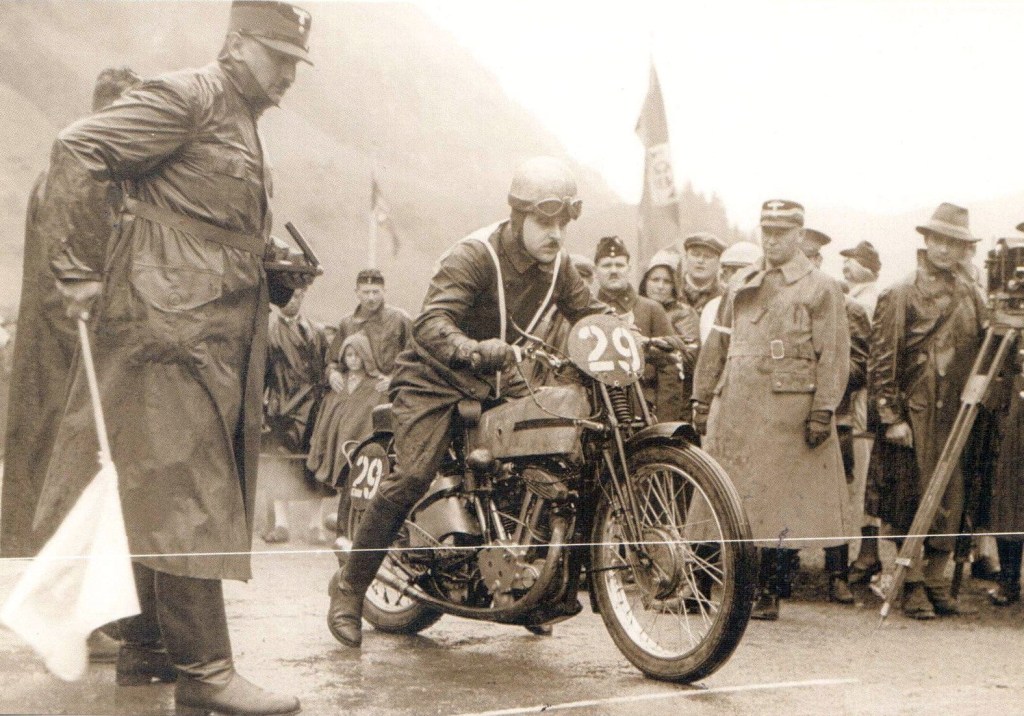
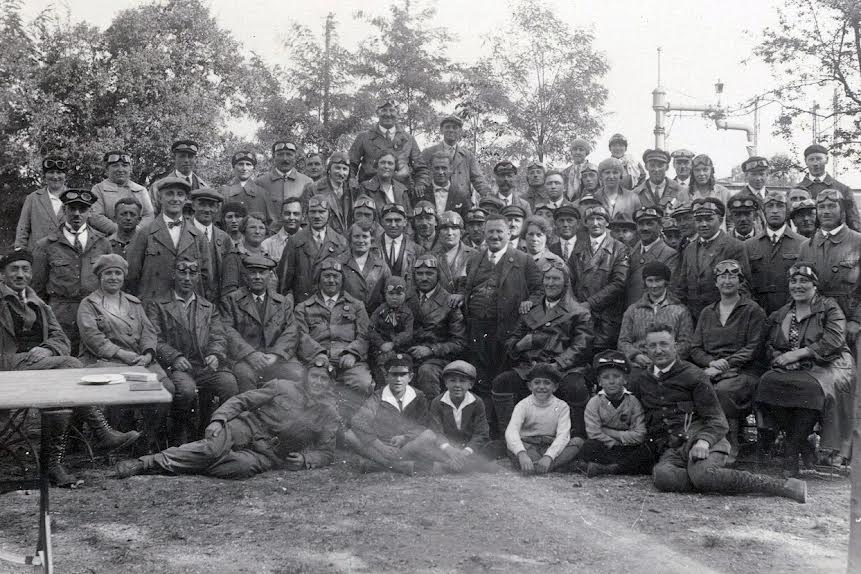
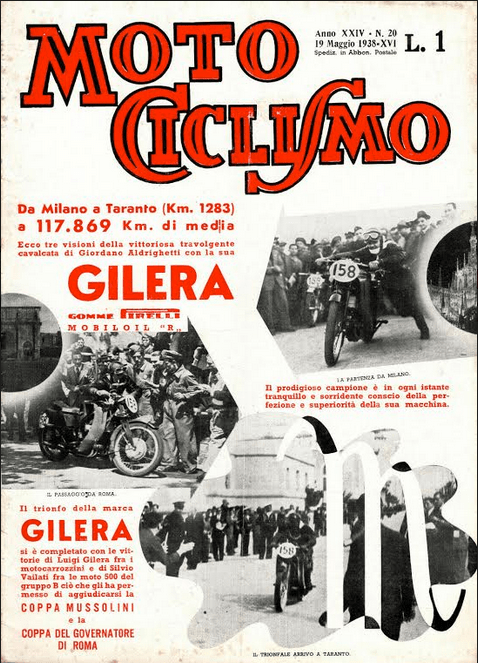
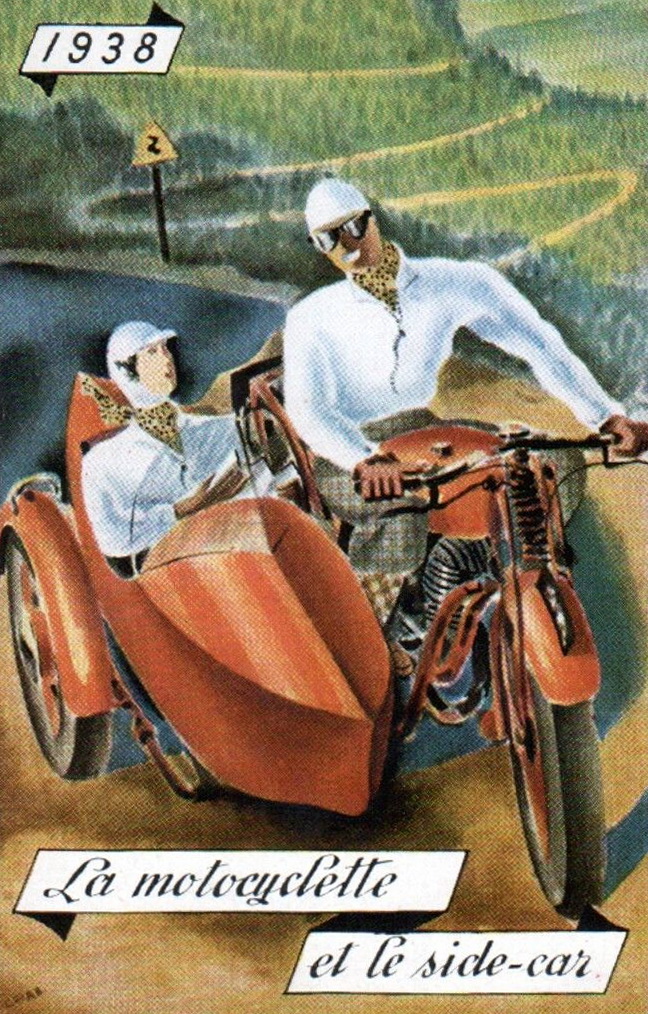
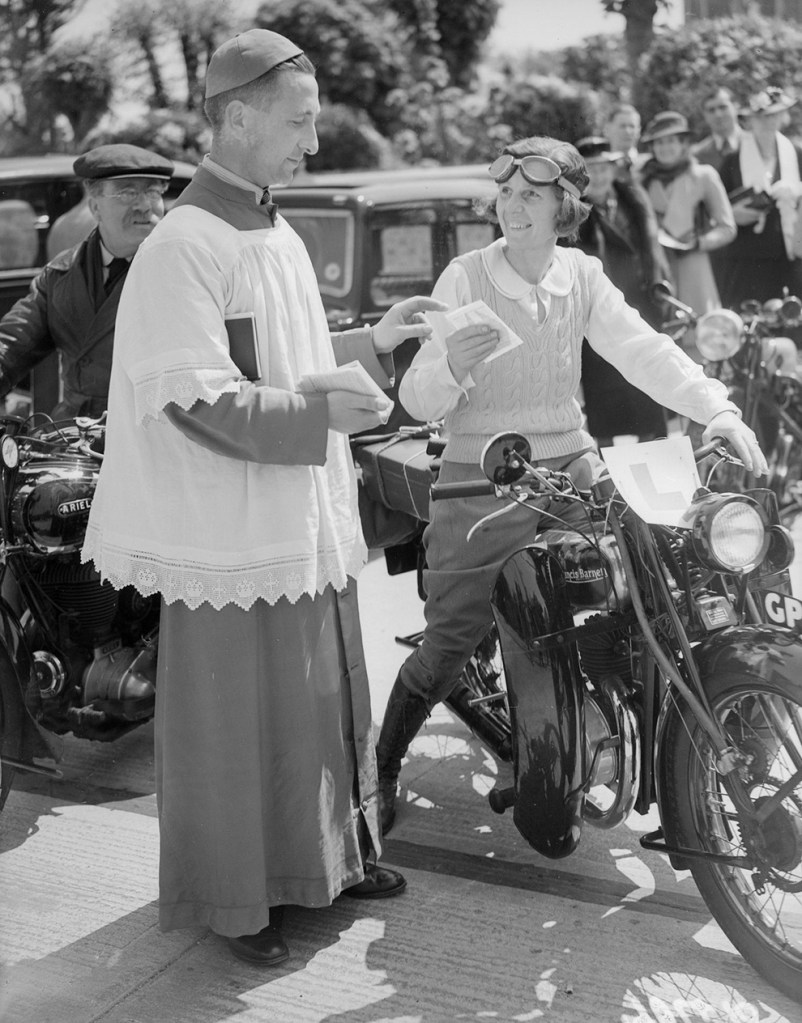
You won’t be surprised to find some contemporary ads at the end of the year.
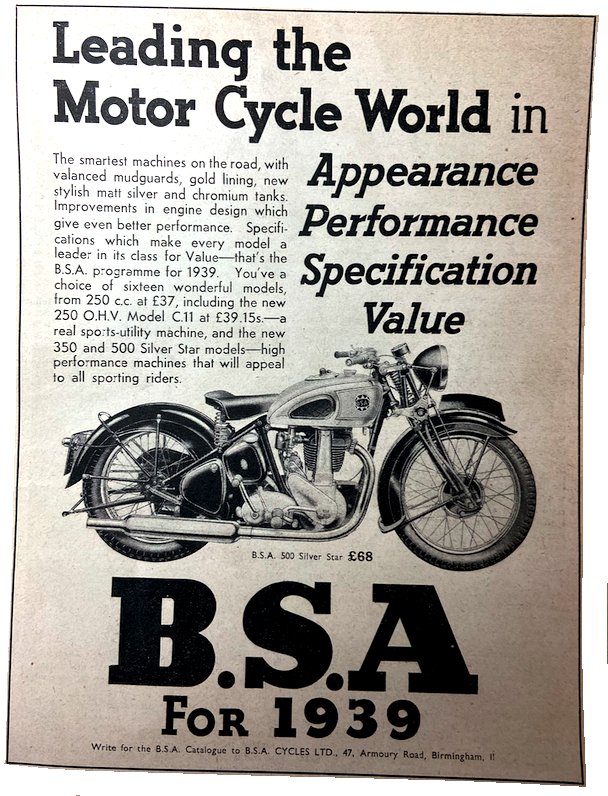
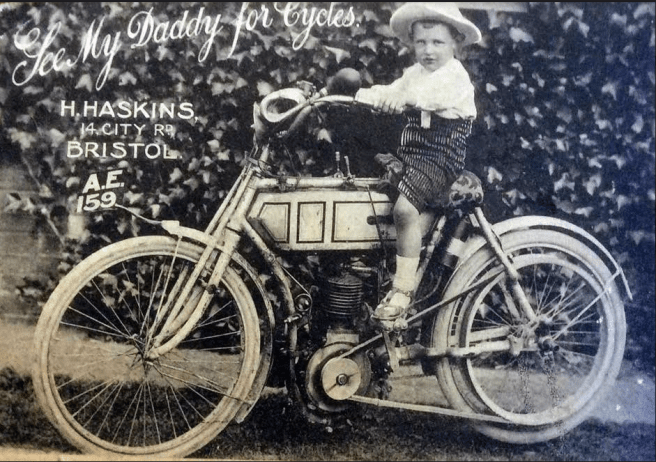

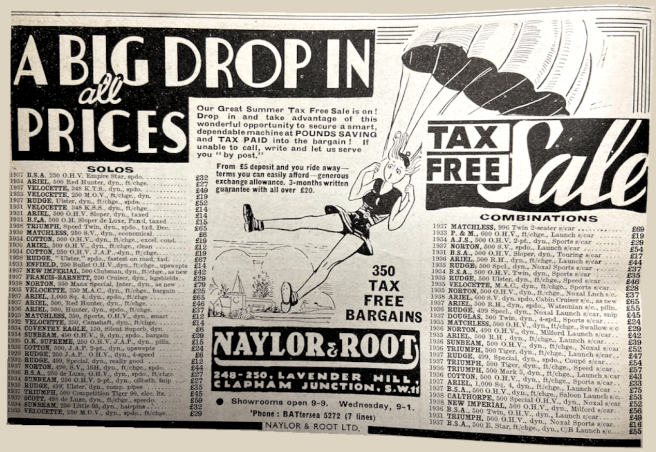
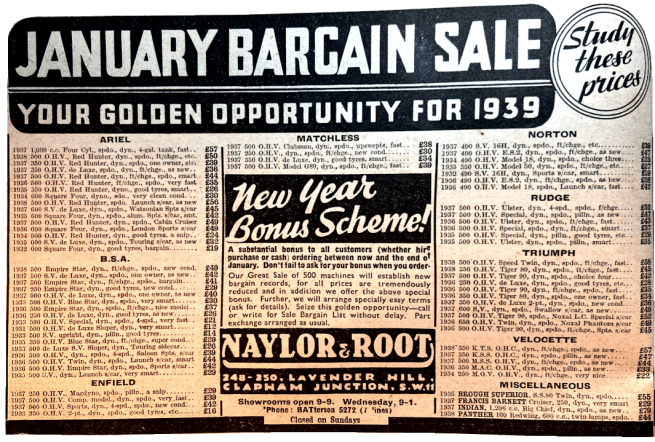
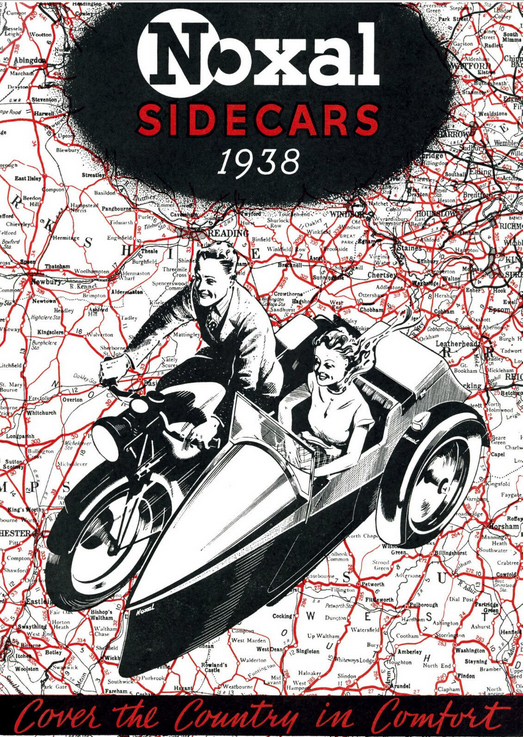
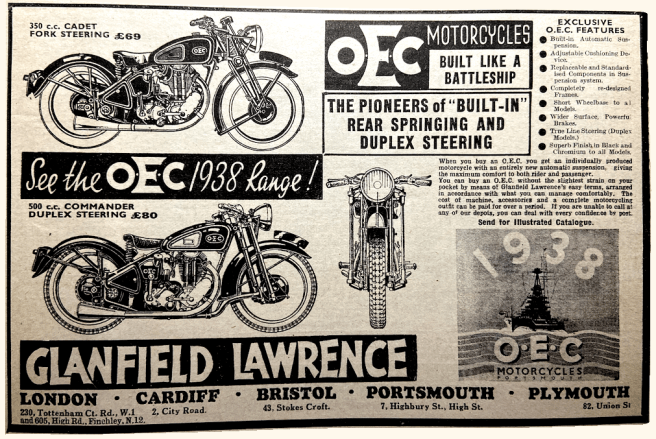
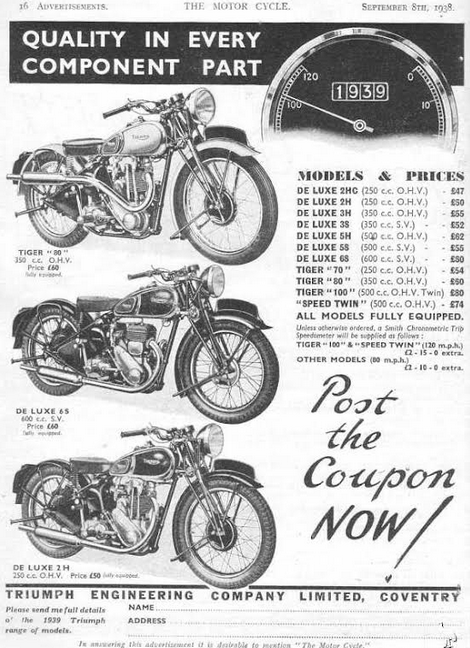
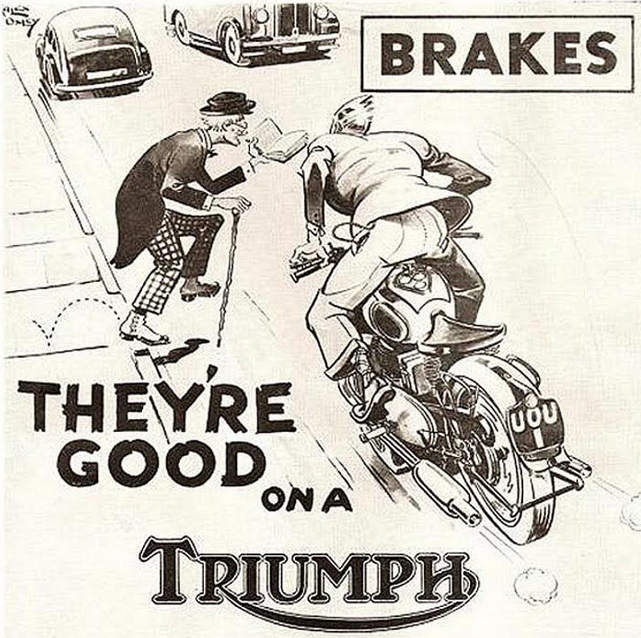

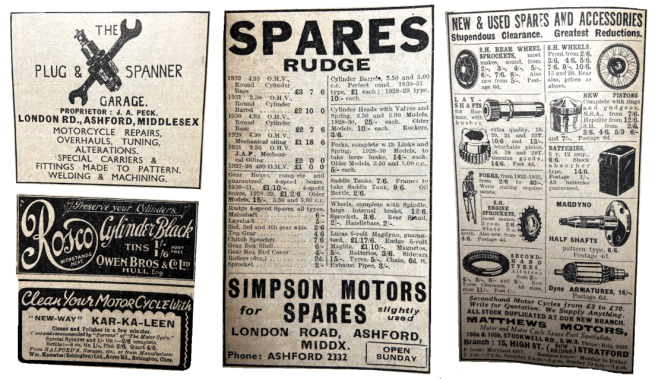
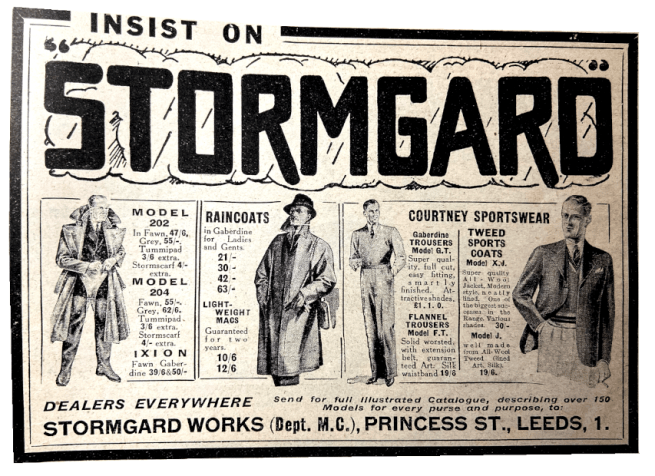
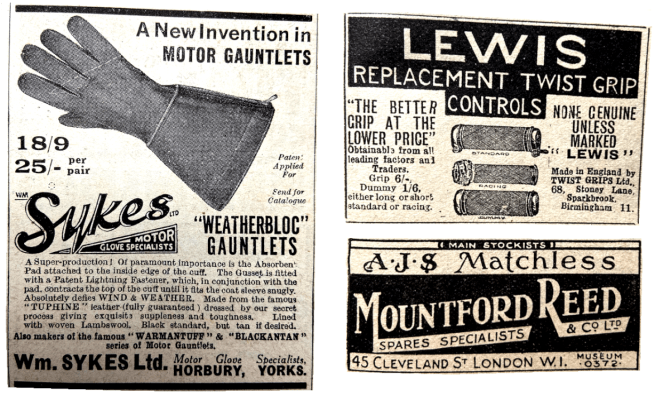
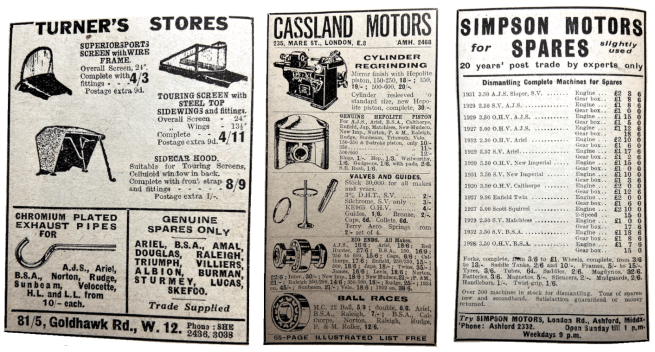
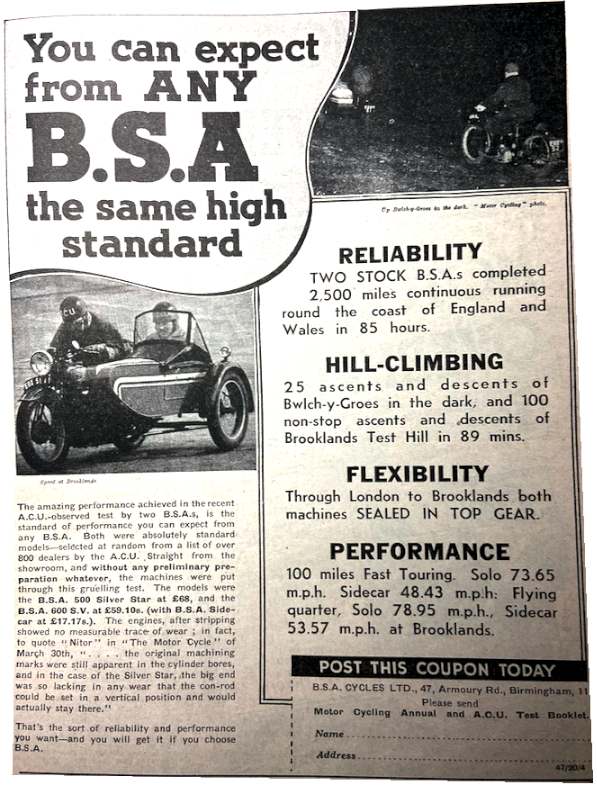
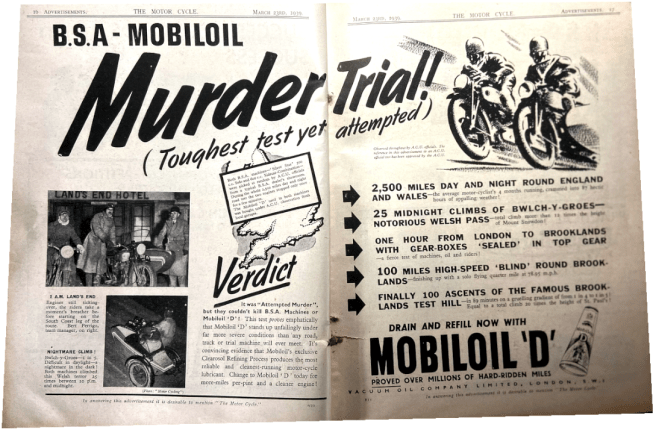
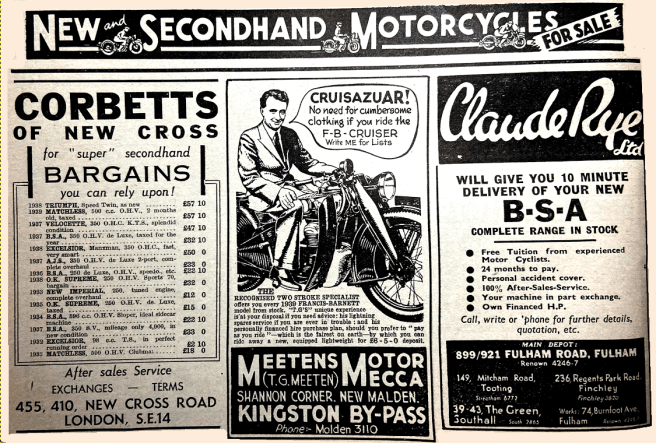
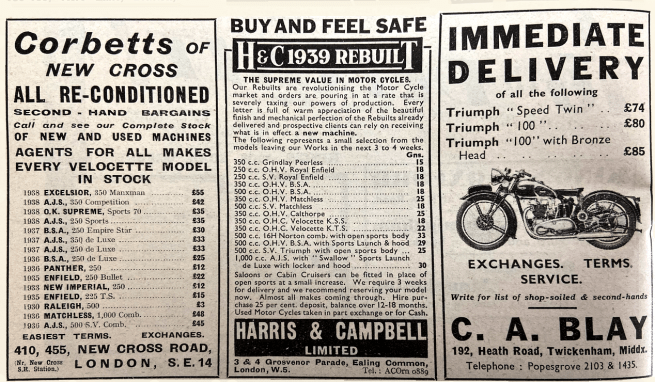
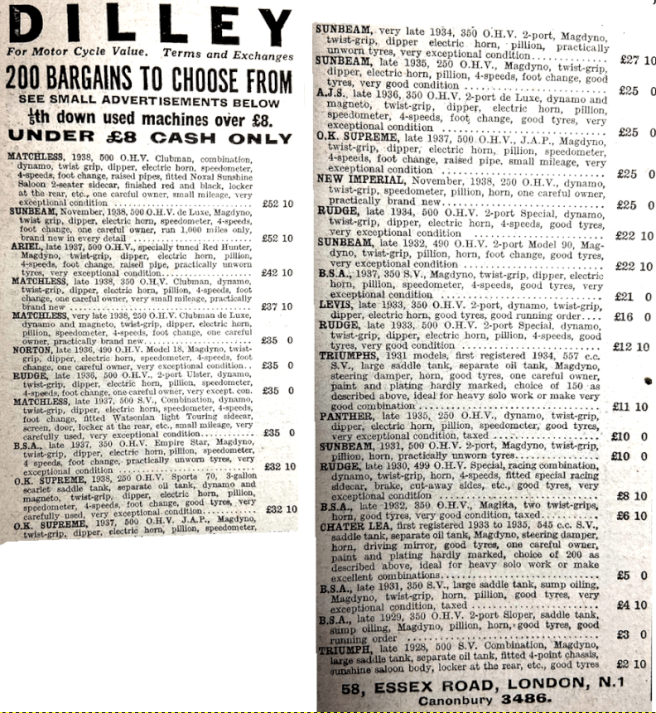

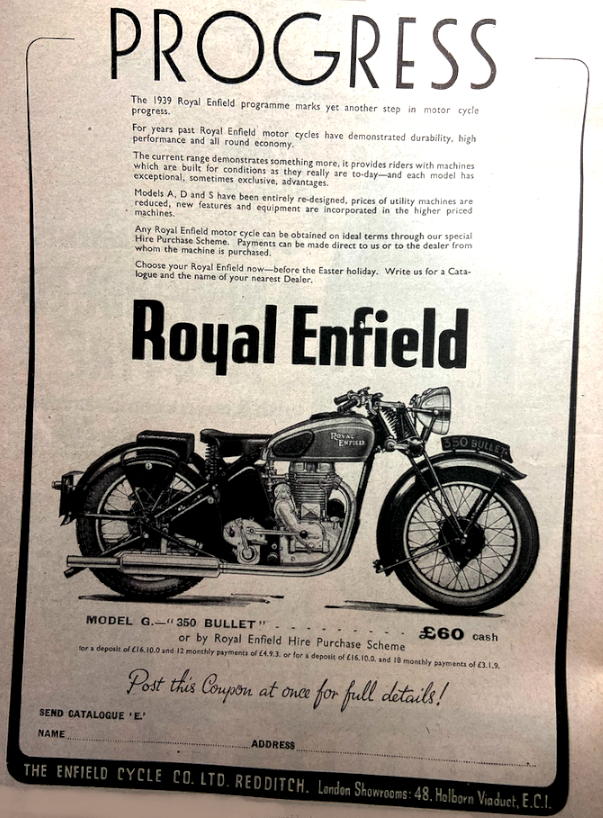
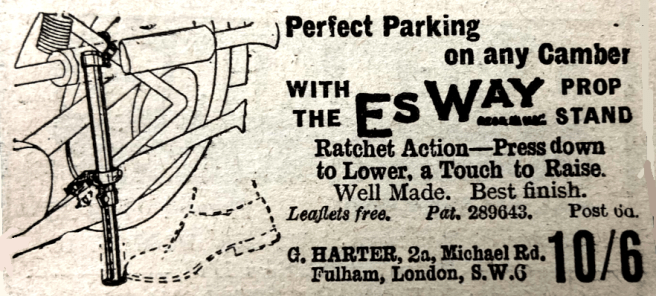
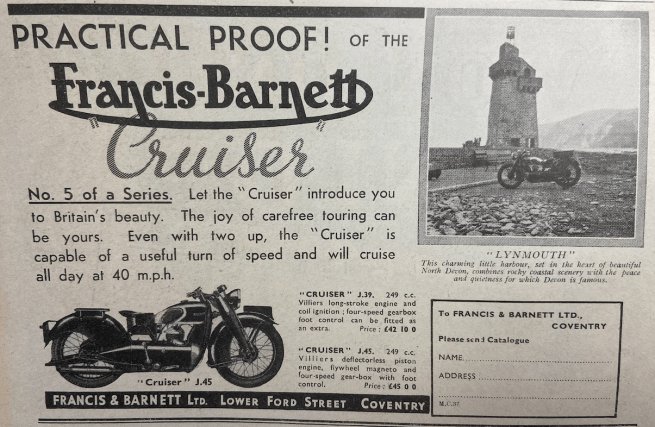
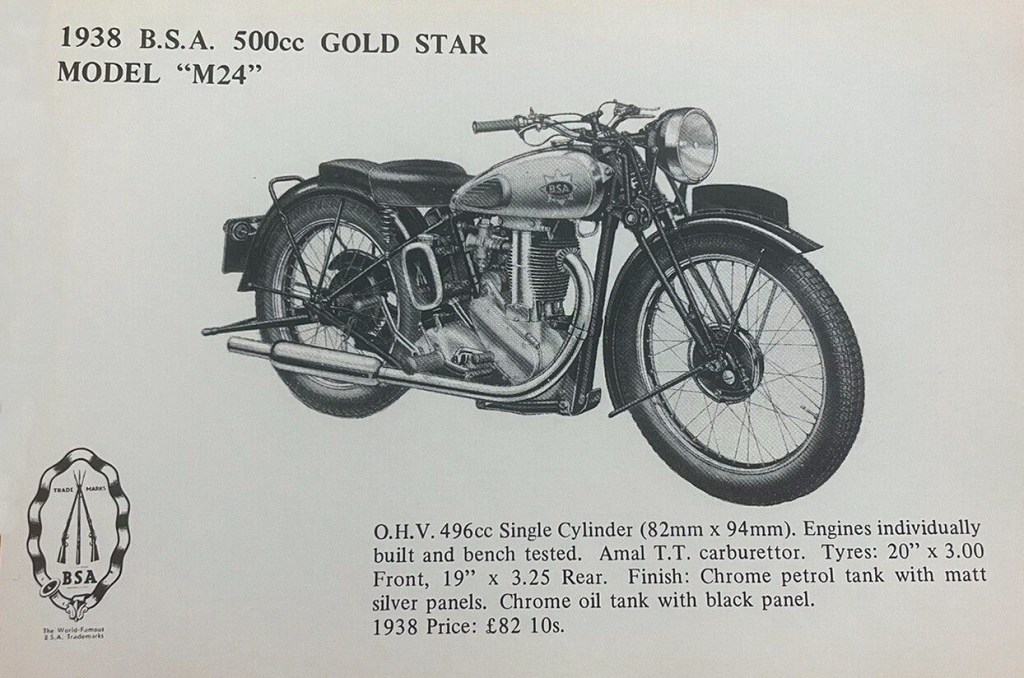
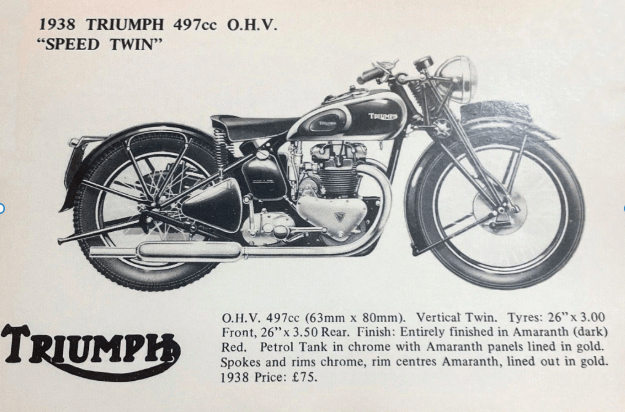
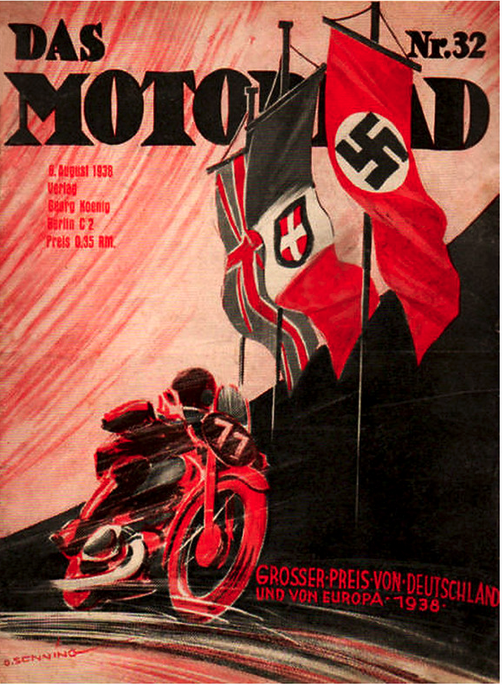
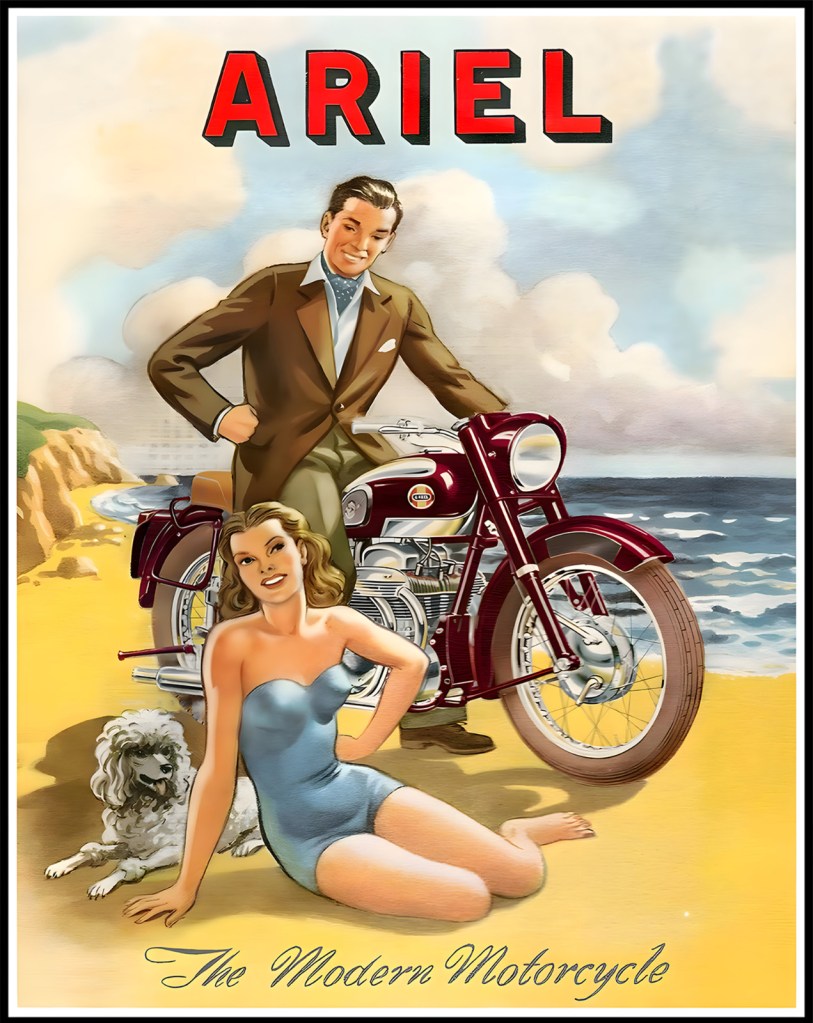


 Motorcycle Timeline