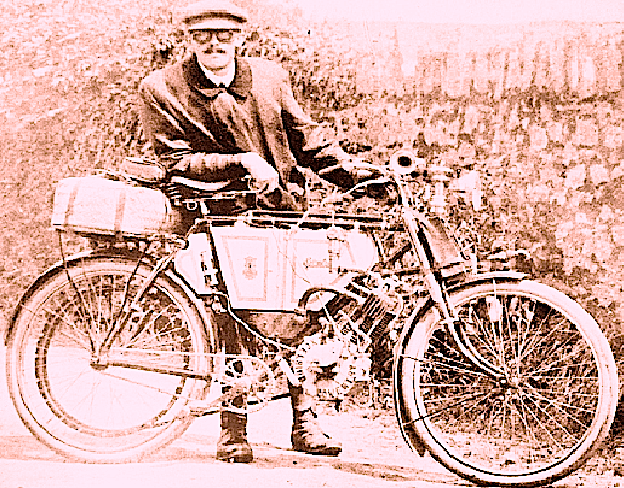
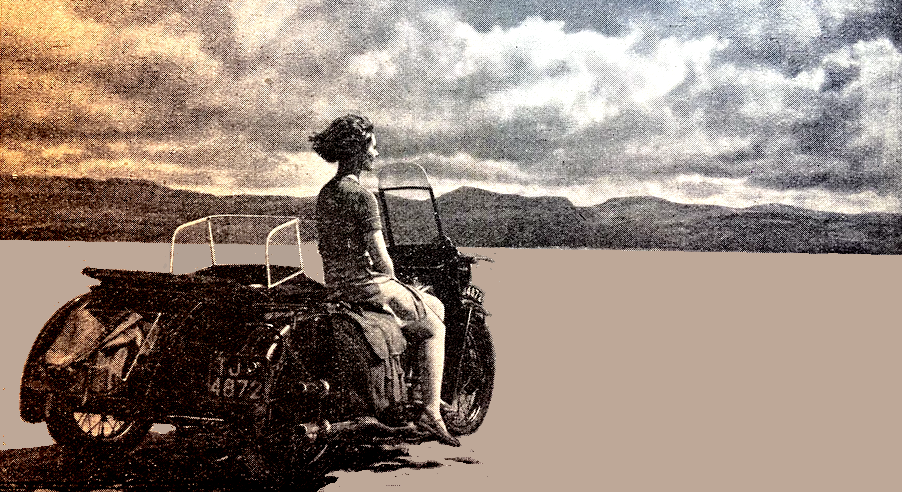
“MORE MOTOR CYCLISTS are using their machines all the year round…Three out of four motor cycles in August of last year were still in commission at the end of November…the number for last February was over 63% of the figure for August—and was 30,000 greater than that of the previous year. That a large proportion of motor cyclists now use their machines winter as well as summer is testimony to their good sense and, more particularly, to the stability of the modern motor cycle. Even on the recent days of snow and ice many motor cyclists were to be seen on the roads. To-day the stability of the two-wheeler is little short of extraordinary, while as for the sidecar outfit, as the world knows, this has long been proved to be the safest mechanically-propelled vehicle of all.”
HITLER PROMISED THAT within 18 months Germany would no longer need to import petrol and that within four years it would be making enough synthetic rubber to meet its needs. There were sustained calls for similar moves in Britain where it was said our vast coal reserves could have made us self-sufficient in fuel.
A COAL-TO-PETROL PLANT opened at Erith, Kent. Each ton of coal was said to produce 15gal of petrol, 20gal of diesel and 15cwt of smokeless fuel. Japan also built a coal-to-oil plant.
OBSCURE BUT TRUE: for the first time all automotive bulbs had to be marked with their wattage; headlights over 7W had to be turned off as soon as the vehicle stopped moving.
THE GOVERNMENT NEEDED MONEY for re-armament and decided roadtax no longer had to be spent on the roads. Part of the diverted Road Fund would be spent on motorcycles: the Army was keen to standardise on a bike to replace its V-twin Beezas, sidevalve Triumphs and flat-twin Douglases so BSA, Norton and Rudge were invited to submit machines for a 10,000-mile evaluation. Norton’s well-proven 500cc sidevalve 16H won the day and 100 were immediately ordered to equip troops en route to Palestine. The war office decided a lightweight was need for training and bought a batch of G7 250cc Matchlesses as well as a batch of G3 ohv 350s.
AS THE FIRST step towards establishing a national road system the Trunk Roads Act transferred responsibility for 4,500 miles of main roads from local authorities to the Ministry of Transport. But with more than 1,400 independent road authorities looking after 180,000 miles of roads there was a long way to go.
TRANSPORT MINISTER Hore-Belisha noted that 500 motorised vehicles had been registered ever day since he took office two years before (a total of some 183,000). He announced plans to ban L-riders from taking pillion passengers and appointed a corps of Divisional Accident Officers to investigate accidents. They were all experienced road users; at least one rode a motorcycle to work.
THE BRITISH Motor Cycle Association drafted a Motor Cyclists’ Grand Charter including a proposal for police courts to sit in the evenings, allowing misbehaving motorcyclists to face the music without the added penalty of losing pay by attending court. Its case was put to the Home Secretary by Captain Strickland MP who, as a committee member of the BMCA, gave motorcyclists a voice in Parliament. But to no avail: the courts remained firmly closed outside office hours.
MANY RIDERS had been fined for trickling over the line at the new ‘Halt’ signs when the road was patently empty of all other traffic but their complaints came to nought—a High Court judge decided that signs meant just what they said. Even on an empty road every vehicle had to come to a standstill.
THE METROPOLITAN Committee of Motorcyclists (MCM) was formed by a collection of London bike clubs “to campaign agains the increasing injustices which the motorcyclist has to bear”. These included the Police Court practice of forcing riders to pay court costs even when they were found innocent of any wrongoing—and the fact that a single copper’s allegation was usually enough ‘evidence’ to secure a conviction.
LORD NUFFIELD DENOUNCED the “persecution” of motorists: “No matter how law abiding a motorist is, he must have luck on his side of he is to avoid trouble with the police.” He called for specialist motorists’ courts, staffed by magistrates with some knowledge of motor vehicles. Not all cases were contentious—a cop giving evidence in the Highgate Police Court solemnly told the magistrate: “At the defendant’s request I showed him our stopwatches. He said, ‘Tick tock tick tock, old chap’.”
A FRENCH RAILWAY company was using a fleet of 250cc combos set up to run on road and rail for track inspections.

A CROYDON motorist convinced traffic cops he was sober enough to drive by writing his name and address backwards and performing tricks with three matches and two glasses of water. Things were less flexible in Germany, where any driver or rider involved in an accident was bloodtested for alcohol abuse.
IN THE US an inner tube was marketed with a two-year ‘no-puncture’ guarantee.
THERE WERE 22,395 bikes on Kiwi roads.
AT A DINNER to mark the centenary of roads pioneer Macadam, the great man’s great great grandson called for roads to be paved with rubber.
FANCY THAT DEPT: A one-armed Bradford vegetarian set an English record by covering 36,000 miles in the year on his bicycle.
AT YEAR’S END 516,567 motorcycles were registered in Britain. January-October registrations were up 17% year-on-year to 49,820. Exports rose 22% to 16,399 despite tariff and currency restrictions. Leading importers of British bikes were Australia, South Africa, the Netherlands, Denmark, Sweden and Switzerland. However a large batch of Triumphs went to Iraq; King Ghazi was a confirmed Triumph enthusiast.
ANYONE WHO committed three motoring offences in New York was automatically jailed.
RUDGE, NOW BACK on a sound footing, was bought by music company His Masters Voice (still in business as EMI).
AN ENGINEER proved, with the aid of graphs, that a 100mph TT average was a physical impossibility.
A FILLING STATION attendant in Miami builT a petrol-fuelled steam bike that returned 50mpg.
THE ITALIAN industry was building some exquisite lightweights for road and track.
GLOUCESTERSHIRE County Council fitted some green kerbside mirrors to help cut accidents in fog.

“WHEN THE FRANCIS-BARNETT CRUISER was introduced in 1933 it was immediately recognised as one of the outstanding models of the day. Subsequent tests showed that the performance of the model was well in keeping with its looks, and it rapidly gained an enviable reputation. This reputation is more than uphold by the 1936 edition of the Cruiser fitted with the 249cc Villiers deflectorless-piston engine. The most outstanding features of the model are the comfort and cleanliness that it affords the rider. Handlebars, footrests and saddle are well placed in relation to one another and really do give ‘armchair’ comfort. The pan-type saddle is exceptionally wide and has long supple springs, while the handlebars are of such a shape that the hands rest comfortably upon them. No oil or dirt from the engine can reach the rider’s clothing, while the legshields and heavily valanced mudguards are very efficient. Leggings or waders are unnecessary for town work or on short runs in wet weather; and it is only when the rider drives through deep puddles at speed that any splashes reach his legs. After long runs on wet and muddy muds the machine can be cleaned in a few moments, and it is no idle boast of the makers when they say that the machine can be washed down with a hose. Starting at all times proved exceptionally easy. When warm a light dig on the kickstarter was sufficient to set the engine ticking over, and when cold the engine could be relied upon to fire on the first or second kick if the strangler was closed and the carburetter flooded. At no time during the test did the engine stall, and although four-stroking would occur when running light or on the over-run, this was never unpleasant because of the very subdued exhaust note. At all other times the engine was smooth and re markably free from vibration. Flexibility is another of the Cruiser’s strong points. At all speeds above 10mph the engine was quite happy in top gear and from this speed would accelerate
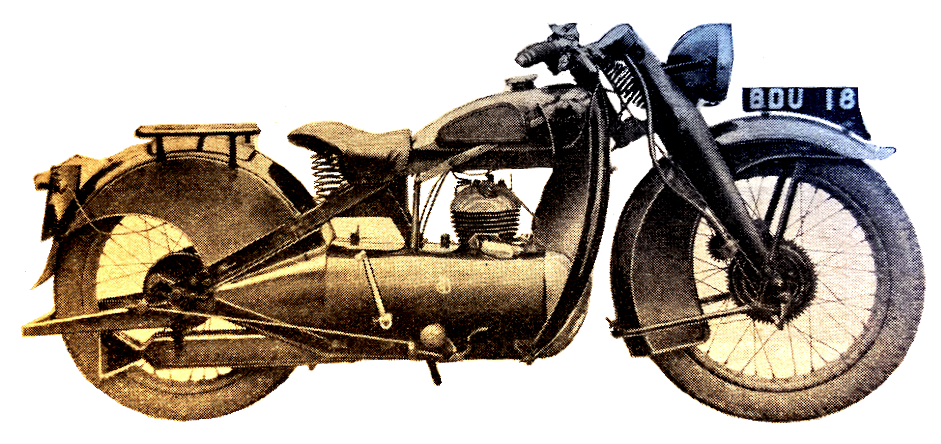
smoothly even if the throttle were snapped wide open. Naturally, to obtain the best acceleration it was necessary to use the gears, and the engine proved lively, particularly in second gear. In third (7.7 to 1), the machine took 13 seconds to accelerate from 20 to 45mph, which is, particularly creditable when it is considered that the maximum speed in this gear was 47mph. In top gear, between the same speeds, the time taken was 20 seconds. Maximum speeds were: bottom gear (16.78 to 1), 27mph; second gear (10.26 to 1), 41mph, and top gear (5.7 to 1), 56mph. These figures were taken with the rider heavily clothed; by lying down the maximum speed in top gear was increased to approximately 59mph. The engine appeared happy at all speeds and on long periods of full throttle failed to show any signs of dis-tress—45mph could be maintained over give-and-take roads without effort or without the slightest tiring of the engine. The steering of the Cruiser is very light and at first there was a tendency to oversteer the machine on corners. Once the rider had become accustomed to this the steering proved to be above criticism. There was no sign of wobble or wander, although the machine was driven over bad roads at various speeds. An exceptionally wide steering lock makes the Cruiser very easy to handle, and it could be ridden round in a complete circle on a secondary road.without removing the feet from the footrests. On greasy city roads the machine was as much at home as on rough surfaces and inspired confidence. During the test many miles were covered on ice-covered roads, but the machine never showed any inclination to skid, although deliberate liberties in the way of cornering were taken with it. Both brakes are powerful and well up to the work required of them. The rear brake pedal is situated conveniently beneath the rider’s right toe, but the lever for the front brake requires rather a long. stretch of the hand to operate it. The same criticism can be applied to the clutch lever, but the clutch is delightfully sweet in action and does not tire the hand even when the machine is used continuously in traffic. To obtain the best gear changes it was found necessary to let in the clutch as the gear was engaged, this being so either from neutral or when on the move. The gear change, however, is very light and the lever is placed so that it does
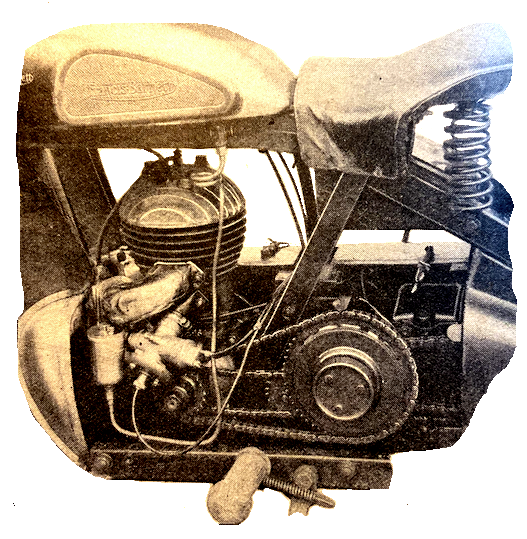
not foul the rider’s knee. At a maintained speed of 35mph the consumption of petroil was 78mpg. On a run of 170 miles the consumption was only slightly heavier, although the run included many miles of full-throttle work, hill climbing, and much stopping and starting. With the petroil lubrication the oil consumption worked out at 1,300mpg. At the beginning of the test there were two rattles in the machine: one from the toolbox and the other from the front mudguard, which had been damaged in transit. Both were quite easily cured. No rattles emanated from the bonnet sides or legshields. With the bonnet sides removed, the machine becomes more accessible than most, and such items as cam lever adjustment of the primary chain and a quickly-detachable rear mudguard considerably simplify maintenance work. Mounted on the steering head is an instrument panel which houses the lighting switch and ammeter. The Miller lighting equipment proved powerful enough for all normal use, although for fast touring at night a better head light beam would be desirable. During the course of the test the bracket carrying the horn broke away from its fixing; this was the only component with which any trouble was experienced. The makers of the Cruiser have achieved a very high standard of silence with the model. At normal speeds the subdued exhaust note renders the machine quite unobtrusive, and this, combined with the smoothness of the engine and the comfortable riding position, makes the machine a delight to ride under all conditions.”
“BEHIND THE SCENES there have been moves with the idea of ensuring that motor cycles are easier to start. The difficulty some riders experience in this direction has been brought home to certain manufacturers. One famous maker admitted the impeachment and added that in his opinion the chief cause of the trouble has been that magnetos were not what they used to be. He had, he said, gone into the matter and felt that once again starting could be construed as easy. Personally, I feel that coil ignition should be developed to a greater pitch of perfection. Given a battery that does not let one down—to which various users have been replying ‘the nickel iron battery'”— there is no reason at all why coil ignition should not be much better than a magneto for normal work. After all, the coil is stationary and does not rotate as is the case with a normal-type magneto, and it can be tucked away in a position where it is completely protected. As for the contact breaker, there is no difficulty in making this absolutely reliable, nor in providing a 2 to 1 gearing in the case of a four-stroke. That leaves the wiring—which should be substantial and armoured and have proper connections at its ends—and the dynamo, which we pretty well have to possess in any case. For myself, I cannot see why the coil set should not become more reliable than the magneto. Then we should have really fat sparks when we press the kick-starter pedal down—irrespective of the position of the ignition control.”
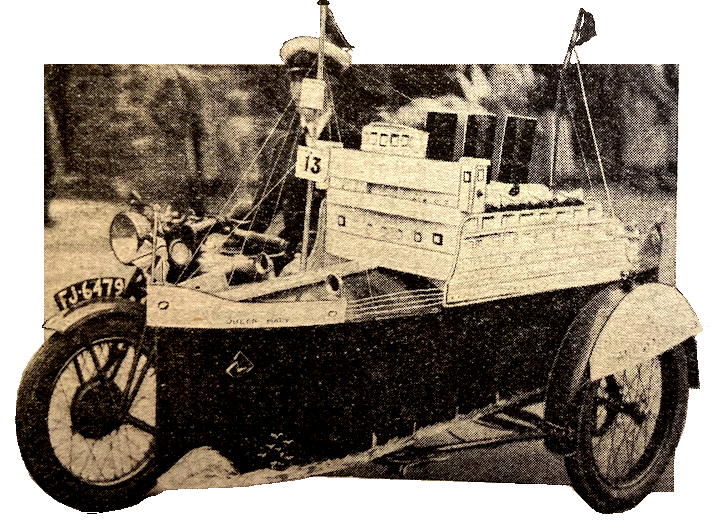
“THIS IS A TRUE ‘human story’ and is recounted by a Glasgow motor cyclist. He was returning home from his garage at about 2am after a night run. Then he saw something which quickened his steps—a police constable flashing his torch in a darkened shop-window and peering intently inside. Were some dangerous safe-breakers about to be apprehended? He hastened to the side of the constable, ready to help if need be. Crouching forms of burglars? No; the constable was playing the beam of his torch on an ‘International’ Norton in the window!”
“HERE is yet another striking testimony to the value of motor cycles. Maybe you read it in your paper earlier this week. A special service of motor cycle despatch riders ran between Buckingham Palace and Fort Belvedere, near Sunningdale, King Edward’s private residence, where he was spending the week-end. For such work motor cycles are invaluable, and it is good to find the King—the first monarch to fly—makes -use of another modern boon, the motor cycle.”
“DURING a recent week-end I made a trip of 26 miles each way under particularly bad, ie, icy, conditions. So bad, in fact, that many cyclists were ‘walking’ their machines down hills, and there were very few motorists out on either two or four wheels. In those few miles I met no fewer than three cars and four motor cycles bearing that large and significant red L, and two of the motor cyclists had pillion passengers at that. It is true they had the roads very much to themselves, but if those learners had the nerve to practise on roads which were, literally, sheets of ice, it speaks well for their determination, and even more for the modern motor cycle as a safe means of transport under all road conditions. I gave them plenty of room, but they all appeared to be blissfully contented with the conditions, and to be riding with the utmost confidence. May they all be passed off with flying colours when their exams. come.”
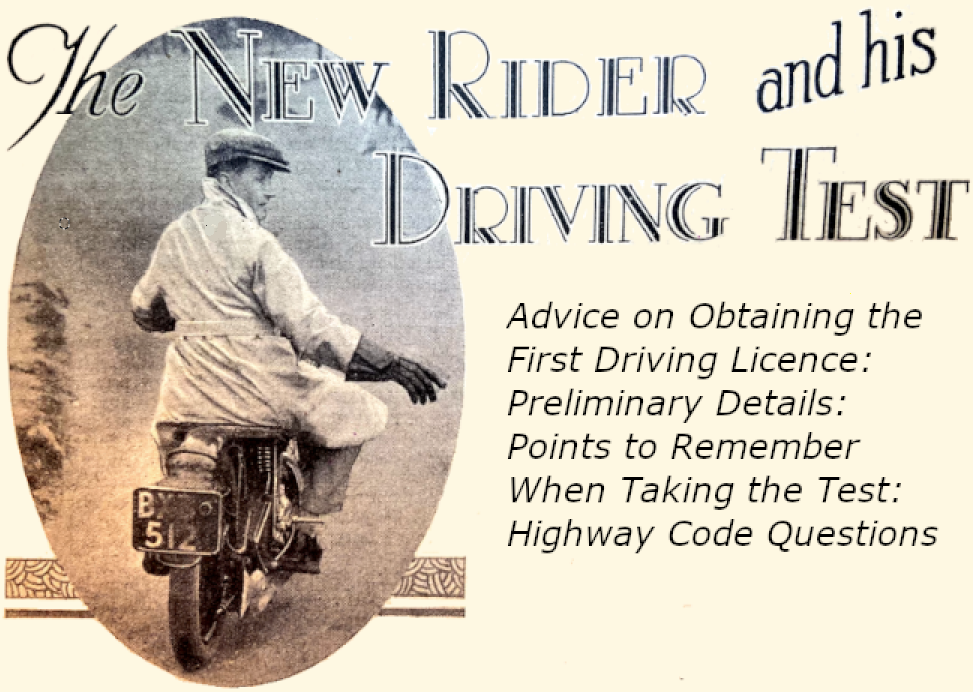
“ALL THE YEAR ROUND there is a steady influx of newcomers to the large army of seasoned motor cyclists. Some of them are proud owners of shining new models; others are equally proud of their somewhat dilapidated and very second-hand mounts. One and all would be in the seventh heaven of delight but for one thing—the Driving Test—that is unless they were in possession of a driving licence before April, 1934. Last year I went in for a driving test myself. Very probably I was one of the first motor cyclists to be tested, and, although I have been a rider for many years, I can honestly say that there is little to worry the tyro. However, there are three things that are essential. First, the rider must be absolutely at home with his machine. Secondly, the Highway Code must be learnt—but not parrotwise. The third requirement is common sense. What are the steps to be taken previous to going in for the test? Well, the beginner must first apply to the local licensing authority for a provisional driving licence. His nearest money-order office will provide the necessary form and the name and address of the licensing authority. After filling up the form he must take or send it to the licensing authority together with five shillings. The licence received, the tyro can ride his machine for a period not exceeding three months, during which time he can become fully accustomed to his machine and take his driving test. The red letter ‘L’ must, of course, be displayed on the front and back of the machine until the test is passed. A copy of the Highway Code will be issued with the licence and should be read carefully before the new rider takes to the road. When he has become confident the beginner should fill up a driving-test application form—obtainable from the licensing authority—and send it, together with a fee of 7s 6d, to the nearest authority controlling his area. For this purpose a list of driving test authorities printed on the back of the application form. In due course he will hear from the authority, fixing an appointment with an examiner—in my case I was offered several alternative times to suit my convenience. Be at the appointed place in plenty of time, and if there is an office there walk straight in—don’t expect the examiner to be waiting for you beside the kerb. If the applicant is ‘ploughed’ in the examination, and the probationary period of three months has elapsed, a further provisional licence (cost 5s) must be taken out, for a month has to elapse before the driving test can be taken again. Remember, there is nothing to worry about in the test, provided it is tackled seriously and in the right spirit. When I undertook my test I was on a solo machine. This is what happened. First, my driving licence was inspected. Next I was asked to sign my name in the examiner’s book, so that the signature could be checked with that in my driving licence. Then the insurance certificate was perused. I was next tackled on the subject of the Highway Code. My examination, if you could call it that, was carried out in the manner of an ordinary conversation—a method calculated to give confidence. Now the questions were obviously designed to see if I had not only learnt the Highway Code but, more important, knew its application. For newcomers I cannot stress this point too much, and so that they may he guided I am roughing out a short list of questions of the type which they will very likely be asked. Just see if you can answer them correctly: (1) What is the number of driving signals that a motor cyclist should give? Give also a brief description of them. (2) What do you understand by the traffic lights? What is their sequence? (3) When can you turn left against a red traffic light? (4) What steps would you take to turn into a road on the right? (5) When would you overtake on the left? (6) What do you understand by traffic lanes and how would you drive along a road so marked? (7) What is the principal law with regard to pedestrian crossings? (8) If at a cross-roads a policeman fails to notice you, what should you do? (9) What is the High-way Code and what is it for? When answering an examiner it is always advisable to show a genuine interest in the answers. Attempt if possible to enlarge on the points raised. It will help to convince the examiner that not only do you know the Highway Code, but that you also understand its application. In my particular case the examiner questioned me before asking me to perform a few manoeuvres on the road. Then, having proved I knew my Highway Code, I was requested to proceed to a certain road. There I was asked to ride down it, turn round at the end and come back. Although the road was free from other traffic, I was told to regard it as a busy thoroughfare. In a case such as this the learner must take the greatest pains to give all the necessary signals. It might even be to his advantage to pull into the side of the road, stop, and look round before turning round. His chances will also be considerably enhanced if he keeps his feet on the footrests whenever he is in motion. Likewise, riders using machines with a hand gear control would be well advised to refrain from looking down at the gate. After all, it is fairly easy for an examiner to assess the ability of a rider simply by watching him start off and stop. Obviously if he wobbles into the centre of the road, as some beginners are apt to do, he will lose one or two marks. He most be able to use his clutch in conjunction with his brakes, and for this purpose applicants are frequently asked to stop and restart on a hill without slipping backwards or leaping forwards. Sometimes a pre-arranged signal is given in order to see how the motor cyclist can pull up in an emergency. In this instance I was asked to pull up immediately my examiner raised an arm. In the case of passenger machines the examiner frequently accompanies the driver, who might, in these circumstances, be called upon to stop when he least expected it. In the case of a three-wheeler fitted with a reverse, the examiner would in all probability request the driver to turn round, using a side turning for the purpose…Really, the whole test is very simple and free from any ‘catches’, but it must not be taken lightly. It is not a test of skill. It merely shows the examiner that you are a safe and proper person to be in charge of a motor vehicle, and that you are capable of coping with the traffic conditions of to-day. I can only reiterate that there is nothing to cause the beginner any worry. If he should have the misfortune to fail—and I can assure him there is very little chance of this—he can console himself that the errors he made were in a test and were not the real thing, in which case the results might have been very different! The following are the answers to the questions on the Highway Code: (1) The number of driving signals is four. To slow down or stop, the right arm should be extended sideways and moved up and down from the shoulder, keeping the wrist loose and the palm facing downwards. To turn to the right, the right arm should be rigidly extended to the right, with the palm facing forwards. To turn to the left, the right arm should be extended and rotated from the shoulder in an anti-clockwise direction. To indicate that other vehicles can overtake, the right arm should be extended below the level of the shoulder and moved backwards and forwards. In this connection it is well to remember that the onus rests on the driver of the overtaking vehicle. (NB—All signals must be given with the right hand.) (2) The sequence and significance of the traffic lights are as follows: Red means stop and wait behind the line on the road. Red and Amber still mean stop, but traffic should prepare to go. Green means proceed, but with • particular caution if turning to left or right. Amber means stop at the line, unless it has already been passed or you are so close that to pull up might cause an accident. (3) It is permissible to filter, ie, turn left against the red signal, when a green arrow is shown at the same time as the red signal; traffic can then proceed only in the direction indicated by the arrow. (4) To turn to the right, the right arm should be extended to the right. Filter towards the crown of the road well before the turning. (5) Overtake only on the right, except when a driver in front has indicated his intention to turn right. This a rule does not necessarily apply in one-way streets. (6) In the majority of cases where traffic lanes are employed, the road is divided down its length into three equal pacts by two white lines. The centre lane should be avoided except when overtaking another vehicle. Otherwise the left-hand lane only should be used. (7) Where a pedestrian crossing is not controlled by police or light signals, drivers of vehicles must give way to any pedestrian actually on a crossing. (8) Wait until he does notice the vehicle. On no account must the horn be sounded, except in the case of emergency, when a vehicle is stationary. (9) The Highway Code is a standard of conduct for British roads. Its provisions are intended to make the roads safer for all classes of road user.”—Ambleside
“MUCH HAS BEEN WRITTEN lately on the subject of mudguarding. Certain manufacturers have found that narrow front mudguards are a sine qua non; their customers will not accept wide and really effective valanced guards—they do not look sufficiently sporting! From this it might be assumed that protection from mud and dirt and sporting lines are as poles apart. That this need not be so is proved by at least one of the 1936 models. The enclosure and shielding in this case, instead of detracting from the lines of the machine, improve them considerably. It is not a big step to visualise sports mounts in which the shields blend to give a streamline effect—that fulfil the dual function of making the machines to which they are fitted look still more sporting and at the mine time affording almost complete protection to the rider. No one thought that forerunner of the various foreign transverse twins, the old 398cc ABC, in any way unsporting. Quite the reverse in fact, yet it was a motor cycle that could be ridden anywhere without the rider having to don waders.”—Ixion
“JOE VAN HOOYDONK, who died the other week, was a great man in the early days, and embodied Minerva engines in bicycles bristling with all sorts of practical little gadgets. He first achieved real fame as the apostle of the tricar, with his Phoenix Trimo. How he used to grin at meets of the MCC, when the rest of us sprinted along the road on a hot day in our leathers, attempting to get our engines firing, whilst he coolly extracted a starting handle from his tool-box, wound up the engine of his Trimo, and glided away on the clutch! So in revenge we pinched his handle, and poor Joe had to sweat and strain to push off. He once teased me to death at the end of a Land’s End-John o’ Groats trial in which his Trimo scored a non-stop gold, and I scraped up a gold by the skin of my teeth, reaching Groats at the last possible second with my bike falling to bits. I dumped it in the stable at Groats, and begged a lift back to Thurso in a car. Half way to Thurso my car was sitting on the Trimo’s tail when the Trimo’s back wheels suddenly folded outwards as the rear axle snapped. Joe advertised that gold medal for months afterwards, and I used to carry a copy of the ad in my vest pocket, and show it to him whenever we met.”—Ixion
“T0 LET YOU INTO A SECRET, I don’t intellectually approve of anything for which Hore-Belisha is famous. I hae ma doots whether the 30 per has reduced casualties. I note that except when a cop is around motors ignore pedestrian crossings, and pedestrians expect motors to ignore them. But he has produced a genuine miracle in effecting a substantial reduction in road deaths and injuries for 1935, when previous tendencies, plus the increased traffic, threatened a heavy increase. I don’t know how he has accomplished this. He probably thinks that speed limits and pedestrian crossings and such like are the main factors. I think the decrease is mainly due to (a) educating, and (b) frightening road users. Nobody can prove which of us is right, but anyhow, hats off to the man who saved more lives and limbs in 1935 than many hospitals! Incidentally, do you know that although until 1935 the total road casualties were ‘increasing’, yet the fatal accidents blamed by the police on to motorists have been ‘less’ for four years than the 1930 figures? Who, then, was to blame for the rise in the totals of those four years? Cyclists? Hush—Mr Stancer* may be listening. Pedestrians? Hush—the Pedestrians’ Association will annihilate you at sight.. To put sarcasm on one side, the police deal only with the motor as a ‘direct’ cause of smashes. It can also act as an ‘indirect’ cause. For instance : Aunt Maria crosses the High Street avec parcels. In 1906 motors were few, and she stalked across. In 1936 motors form an almost continuous stream, and Aunt Maria hesitates and scutters. She pirouettes in front of a motor bus…The police hold the motor bus not guilty. So it is—in a direct sense; but if there had not been such a lot of motors in the High Street Aunt Maria would still be alive.”—Ixion
* George Stancer OBE was a racing cyclist who became editor of Cycling magazine and president of the Cyclists Touring Club.
“A CROWD, OFFICIALLY estimated at 60,000, witnessed the first Port Elizabeth (South Africa) ‘200’ road race field recently. The event was won by HJ Brook (348cc Velocette) at an average speed of 75.5mph. There were 26 starters, including J Sarkis and JC Galway—the latter the winner of the last South African TT.”

“OVER 1,000 PEOPLE witnessed the 1935 Grass-track Championships of Victoria (Australia), which were held under ideal conditions on the Warragul racecourse, about 65 miles from Melbourne. In the big event of the day Reg. Hay (Coventry-Eagle), the veteran Tasmanian rider, retained his title of solo champion. Hay rode a hectic race to win by four seconds from Gordon Wilson (346AJS). Les Darby was third, three seconds behind. In the sidecar events Bill Longley (Excelsior-JAP) won both the 500cc championship and the All-Powers event breaking the class record by 11seconds in the former event.”
“FOUR THOUSAND GAS street lamps in the Borough of Camberwell, London, are to be superseded by electric lamps.”
“THERE ARE 178,507 miles of public highway on Great Britain. About 75% of the total—133,229 miles—is in England; 18,607 miles (about 10%) in Wales; and 26,411 miles (about 15% in Scotland. Britain has gained 7,016 miles of first-class roads in the past 13 years. Britain now has 26,779 miles of Class I main traffic arteries and 16,837 miles of Class II less important traffic routes—a total of 43,616 miles. In 1921 the total length of classified roads was only 36,000 miles.”
“MOTOR CYCLE BASEBALL, a new game in the United Stets, is said to be very popular with spectators.”
“YOUR CORRESPONDENT ‘ARDUPP’ complains of poor mpg, and requires tips in this respect. I am of the opinion that he has been riding a very bad machine, for there is nothing in obtaining over 100mpg with a two-stroke engine. Perhaps any own experience will support this. I have two machines; one a 1929 196cc Francis-Barnett-Villiers, which has been on the road continuously for the last six years and still gives me 125-130mpg. It is a perfectly standard machine in every way, and, beyond the usual running adjustments, has not been overhauled in any way. The other is a 1923 799cc twin-cylinder with heavy adult two-seater sidecar; this outfit is used throughout the summer months for week-end jaunts and holidays. It is in perfect mechanical condition and often takes four up on long runs. It has the usual de-coking every spring, but nothing else (for it does not require anything else); this outfit regularly gives .an average of 68-70mpg carrying four adults. Perhaps your correspondent will think this is an exaggeration, but the agent for AJS and Francis-Barnett machines in Chester will bear out what my machines do.
RHG Hankinson, Chester.
I WAS INTERESTED IN A letter from ‘Ardupp’ regarding petrol consumption. From my own somewhat small experience I can state quite definitely that it is necessary to coast down hills, and also one must not exceed 30mph for any distance if a decrease in petrol consumption is aimed at. This is obviously true for all capacities and makes of machine. I have a 150cc overhead-valve BSA which is 18 months old and has done 14,500 miles. I use it for business daily, and regularly get a fuel consumption of 150mpg. The road I use is fairly curly and awkward, and 30mph is rarely attained anywhere en route.
Ralph W Smart, Carshalton, Surrey.
“I HAVE READ with interest the letter in the ‘Blue ‘Un’ from ‘Ardupp’ concerning petrol consumption with the two-stroke he owned. I think his 50mpg was very poor. I own a 596cc two-stroke fitted with a two-seater sidecar, and my mileage is in the region of 70mpg. ‘Ardupp’ won’t catch me coasting down hills, and if he gets behind me he won’t find me doing a steady 30mp. I think if your correspondent had looked after his two-stroke, both inside and out, he would have found it much more economical.
‘Sludge’, March, Cambs.”
“FROM Mr AE Cooke, organiser of tomorrow night’s Combined Motor Clubs’ Charity Ball at the Royal Opera House, Covent Garden, I learn that the attendance will exceed 2,500, which I think you will agree is a staggering figure. Sir Malcolm Campbell has promised to attend, while Elsie and Doris Waters are to perform on the stage. There will be cabaret shows at 11.15pm and 12.15am. For the benefit of those who might wish to get in touch with him, Mr. Cooke’s address is 91, College Road, Kensal Rise, London, NW10.”
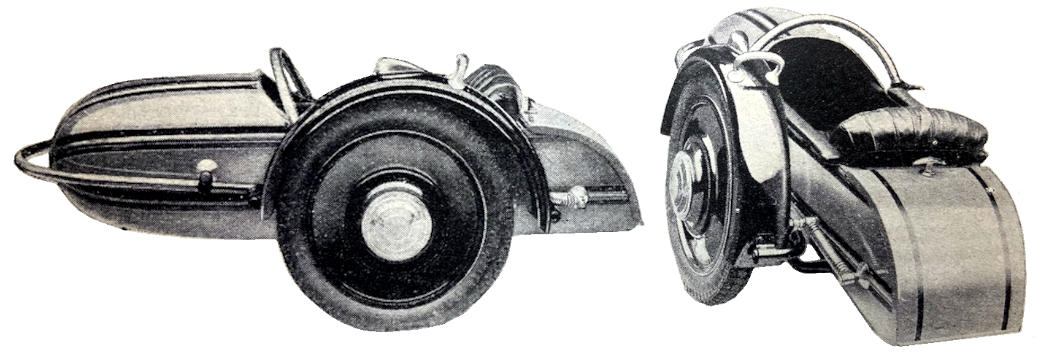
“DURING THE PAST FEW years there has been a tendency on the part of German sidecar designers to break away from the more orthodox style as regards both the bodywork and chassis. Different methods of production have resulted in sturdy, accurately-built sidecars, suited for hard work over the by-roads of the Continent. Now comes the news that one German make, the Steib, is to appear in England. For the time being only two models will be marketed. Both will be of the sports type, differing only as regards the bodywork. To British eyes the Steib sidecar sparkles with unusual features, the most interesting of which concern the chassis. The main chassis member consists of a single tube in the form of a long fiat U, with the open end at the back. Linking the open end is a shallow U-shaped bar, which is welded at each end. The wheel is carried on a long spindle which is clamped to the main chassis member. It is worthy of note that all parts of the Steib chassis, except the cross-bar, are bolted into position and not welded or brazed. An unusual method of suspension is employed for the all-steel sidecar body. The forward end of the body is attached on each side to lugs rigidly mounted on the chassis. The sidecar is, however, free to pivot on these lugs. At the rear are two horizontally placed tension springs, one on each side of the body. The forward ends of the springs are attached to adjustable lugs situated at the ends of the main frame member, and the other ends of the springs are connected to lugs at the rear of the sidecar body. In view of the part played by the side-car body in its own suspension, it is interesting to note that there is no actual body framework. Throughout the bodywork a method of skin-stressing is used in conjunction with steel panelling. The nose of the body is built-up with pressed-steel panels, spot-welded together. The lugs at the four points of suspension are backed with large-diameter steel plates, which distribute the stresses over a wide area. The bodies are well upholstered, with spring seats and backrests, while wide footrests are provided. Both models available in England have quickly detachable wheels with a tommy-nut fixing. The wheels run on large-diameter roller races which come away with the wheel when the latter is removed. The Standard Sports model is fitted with a clip-on disc wheel, whereas on the Luxury Sports the wheel is chromium-plated and the disc is an extra. The Luxury Sports model has a roomy locker, the lid of which hinges backwards. and when open is supported by two chains sheathed in rubber. Incidentally, the locker lid is of particularly sturdy construction, having an inner panel of greater radios than the outer. The two panels are spot-welded together at the top and bottom, while in the centre are two steel strips, which form stiffening ribs. The Standard Sports model also has a locker, but in this case access is obtained by hinging the backrest forward. These interesting sidecars are being handled by the sole concessionaires for Great Britain, Pride & Clarke, 158-160, Stockwell Road, London, SW9. The price of the Standard Sports model in this country is £20 10s., while that of the Luxury Sports model is £21 10s.”
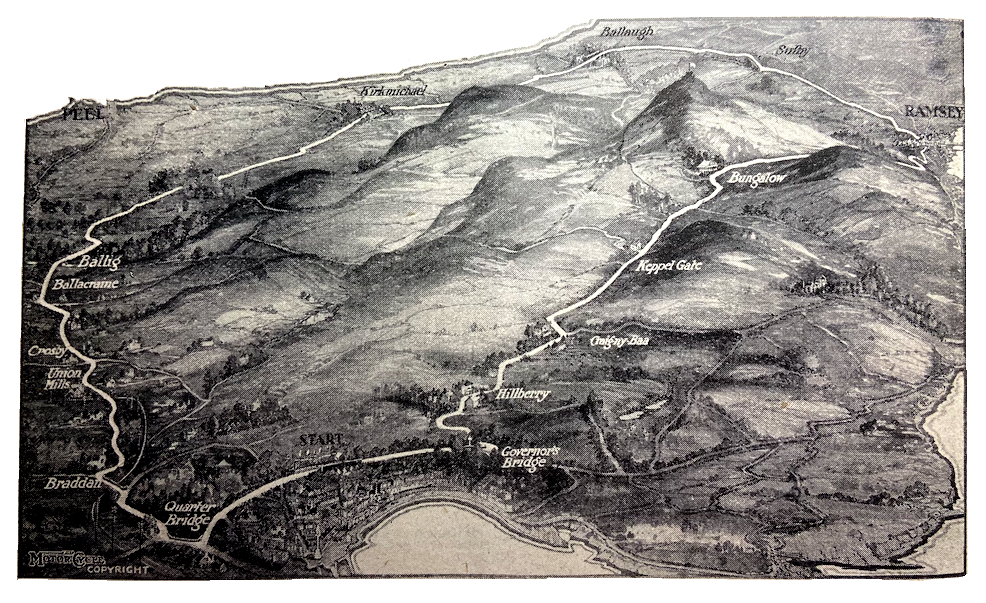
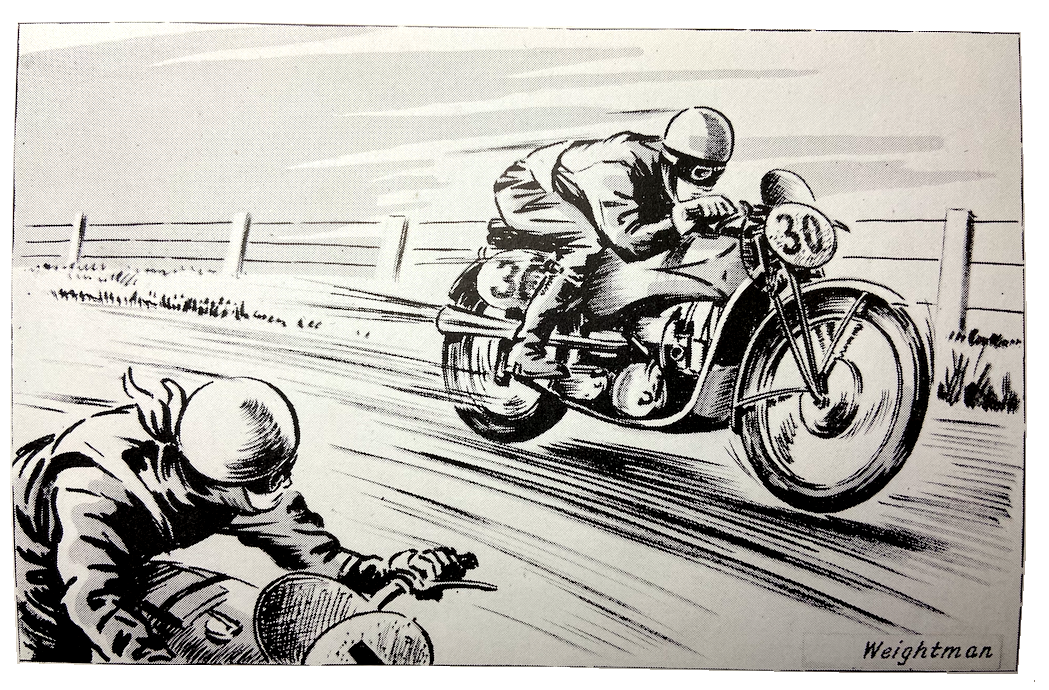
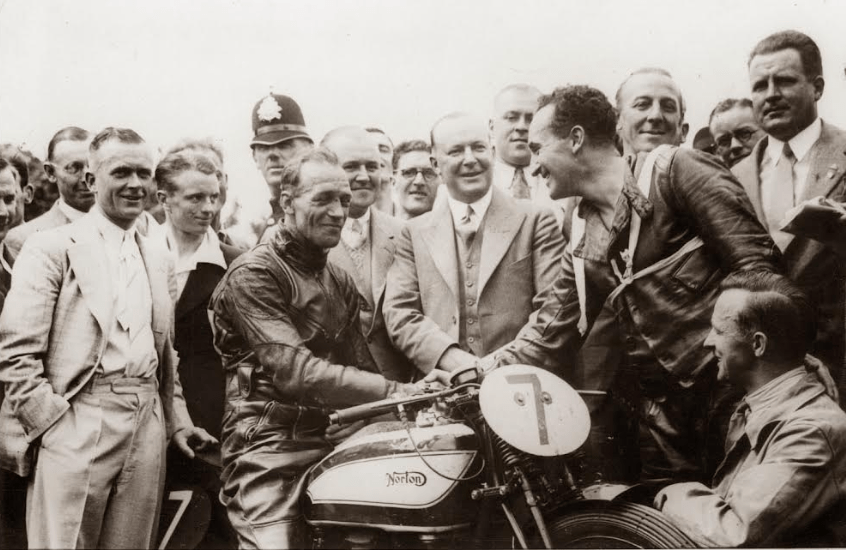
WITH MUSSOLINI’S FASCISTI attacking medieval Abyssinia the British government did not want Moto Guzzis anywhere near the Island so Stanley Woods rode for Velocette in the Junior and Senior races. Having become used to the spring-frame Guzzis he must have appreciated Velo’s innovative air sprung, hydraulically damped ‘pivoting fork’ (swinging arm) frame. Not for the first time, here’s a contemporaneous report from the man on the spot, TT Special editor (and TT rider and staffer for the Green ‘Un) Geoff Davison [the notes in italics are mine—Ed]. “Right from the beginning of the race the 1936 Senior was a Guthrie-Woods duel, and Jim made no mistake about it this time. He led Stanley from the very beginning of the race by 19sec on the first lap, 27 on the second lap, 23 on the third lap and 18 on the fourth. On the fifth lap there were 25 seconds between them, which Stanley had reduced to 22 by the end of the sixth. During that lap both of them broke the record, Guthrie with a lap in 26min 5sec and Stanley with one in 26-2. In the Grandstand we were in a fever of excitement. In 1935 Jim had led Stanley by 26sec at the end of the sixth lap—and Stanley had won. This year Jim had a 22sec lead—was history to repeat itself? Jim made sure that it didn’t. His last lap in 26-22 was not his fastest, but nor was Stanley’s, which was four seconds better than Jim’s but had nothing of the 1935 fireworks in it. Jim won by 18 seconds and so wiped out his defeat of the year before. Stanley, however, had put up the record lap,
Norton won the team prize—so all was square. [Harold Daniell and George Rowley were out on the new AJS ohc V4s complete with superchargers but both retired with mechanical problems.] There had been no minor ‘gefuffle’ in the Junior race held on the previous Monday. Stanley Woods retired early on [his cammy Velo had engine troubles at Sulby] and Jim Guthrie led the first lap, closely pursued by a newcomer to the Norton team, Freddie Frith [who was recruited after winning the 1935 Manx GP]. At the end of the fifth lap Guthrie was delayed at Hilberry [to replace his drive chain]. He had taken 31min for the lap, as against the 28min odd of his others, and had dropped to third place. He carried on, however, and picked up to second on the sixth lap. Then came news that after his stop at Hilberry he had received the assistance of a marshal in re-starting his machine. It was announced that he was to be excluded from taking further part in the race and orders were sent out by telephone for him to be stopped at Ramsey. Immediately he was stopped he got on to the telephone to the Start and was told the position. He then re-mounted and carried on at speed to the end of the race, finishing, so far as I remember, fifth on time, although this was not officially recorded. Guthrie and the Norton firm at once put in a protest. This was upheld, the following announcement being issued during the evening: ‘The stewards have considered a protest from Norton Motors Limited on the exclusion of No 19, J Guthrie. After a careful sifting of the evidence, and from voluntary reports by independent witnesses, together with a personal inspection of the ground, they are now of opinion that they were originally misinformed. The protest is therefore allowed. The official placings cannot be disturbed, but in the circumstances they recommend that the value of the prize attaching to the second place, which, in all probability No 19 would have occupied had he not been flagged off the course, be granted to the entrant. No l9 will be recorded as a finisher, and Messrs Norton Motors Ltd win the Manufacturers’ Team Prize.’ The whole affair, was, of course, extremely unfortunate, for, as the stewards had agreed, Guthrie would probably have run

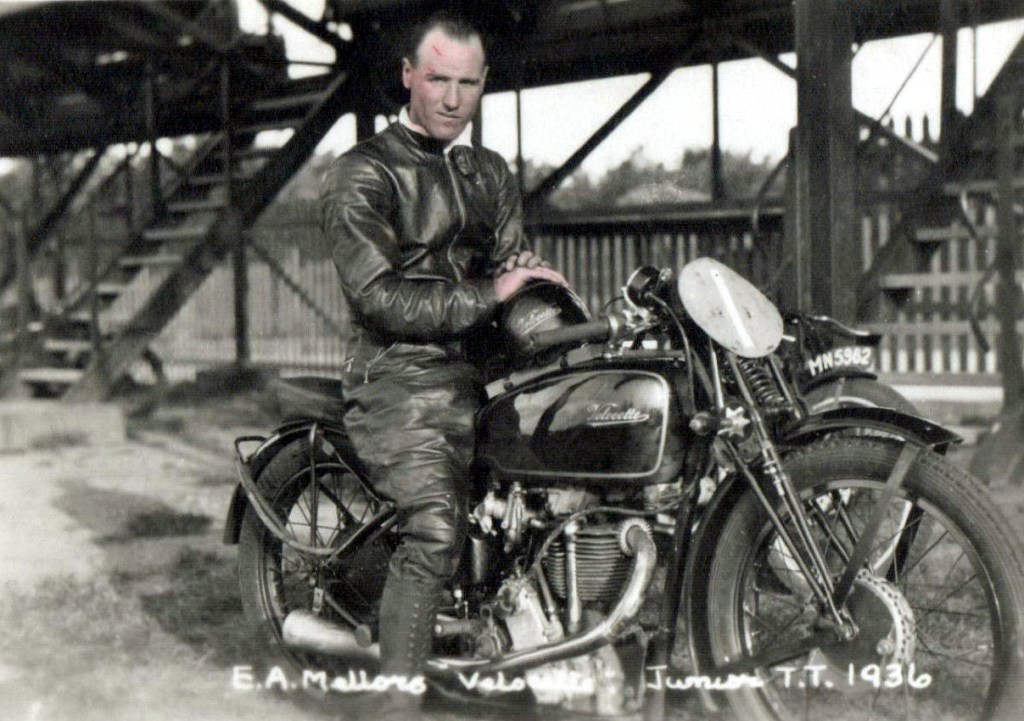
second to Freddie Frith, with Crasher White third. This would have given Norton a 1-2-3 victory. As it was, they had to be content with first, second and team prize. The results of the Lightweight race [delayed for a day because of mist and fog on the mountain] cheered us up a bit. Stanley Woods on the German [three-cylinder supercharged] DKW led on the first two laps, but in the third Lap Bob Foster (New Imperial) overtook him, only to lose his place on the fourth lap. In the fifth lap the positions were the same, with Stanley 14sec ahead. On the sixth lap Bob Foster overtook the Irish-German combination again and led by 35sec. Then Stanley retired near The Bungalow on the last lap [with an ignition problem] and Bob regained the Lightweight Trophy for Britain His speed of 74.28m.p.h. was nearly 3mph faster than that of Stanley’s Guzzi the previous year.” Foster owed his win to a gamble: company founder and MD Norman Downs cancelled a scheduled pitstop to take on oil. The New Imp had a notorious thirst for oil; Foster didn’t call his mount the Flying Pig Trough for nothing. It was the last TT win by a British 250 and the last solo TT win by an ohv engine. Foster, by the way, was a newlywed; his bride’s reaction to her TT honeymoon destination is not recorded. Tyrell Smith, riding for Excelsior, was runner-up and Woods German DKW team-mate Geiss was 3rd—if Woods’ Deek had lasted a few miles longer…RESULTS: Senior: 1, Jimmie Guthrie (Norton), 85.8mph; 2, Stanley Woods (Velocette); 3, Freddie Frith (Norton); 4, John H White (Norton); 5, Noel Pope (Norton); 6, C Goldberg (Velocette); 7, WT Tiffen Jnr (Velocette); 8, Jock West (Vincent-HRD); 9, JC Galway (Norton); 10, Bill Beevers (Norton). Junior: 1, Freddie Frith (Norton) 80.14mph; 2, John H White (Norton); 3, Ted Mellors (Velocette); 4, Ernie Thomas (Velocette); 5, Jimmie Guthrie (Norton); 6, Oskar Steinbach (NSU); 7, Heiner Fleischmann (NSU); 8 D Hall (Norton); 9, Harold Daniell (AJS); 10, George Rowley (AJS). Lightweight: 1, Bob Foster (New Imperial) 74.28mph; 2, HG Tyrell Smith (Excelsior); 3, Arthur Geiss (DKW); 4, DS Fairweather (Cotton); 5, Charlie Manders (Excelsior); 6, EW Corfield (Excelsior); 7, Harold Hartley (Rudge); 8, Svend Aage Sørensen (Excelsior); 9, HC Lamacraft (Excelsior); 10, JC Galway (Excelsior). Competitors came from Belgium, Denmark, France, Germany, Spain, Sweden, the USA, New Zealand and South Africa.
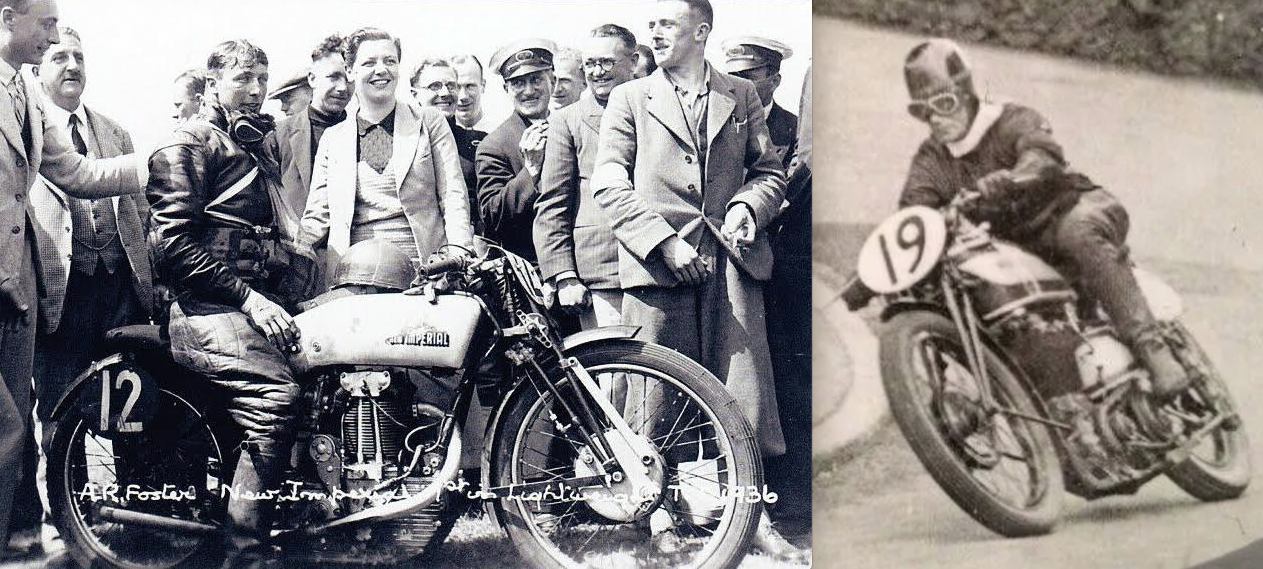
“I WONDER HOW MANY people watching this year’s Lightweight TT realised that but for Snaefell the DKW would probably have won. This is only a speculation, but we all know that the DKW is practically invincible for sheer speed in 250cc events on the fiat Continental courses, where it usually scores a non-stop win. In the Island it fell far short of achieving even one ‘non-stop’ with three entries; and, if I am correctly informed, the main reason for stops was plugs. The probable cause of this unparalleled plug trouble is to be sought in the high temperatures generated by racing up a high mountain, with a minimum head draught and high rpm, on indirect gears. The No 8 hats must decide whether the technical value of a mountain section in a road race (plus the concomitant stresses) is a first-class asset or not. As we all know, there is a movement afoot to establish a new, shorter, and flatter course. If that movement succeeds, we shall have a tough job to defeat the DKW in 1937. ‘Died on the Mountain’ must be its epitaph for last TT week.”—Ixion
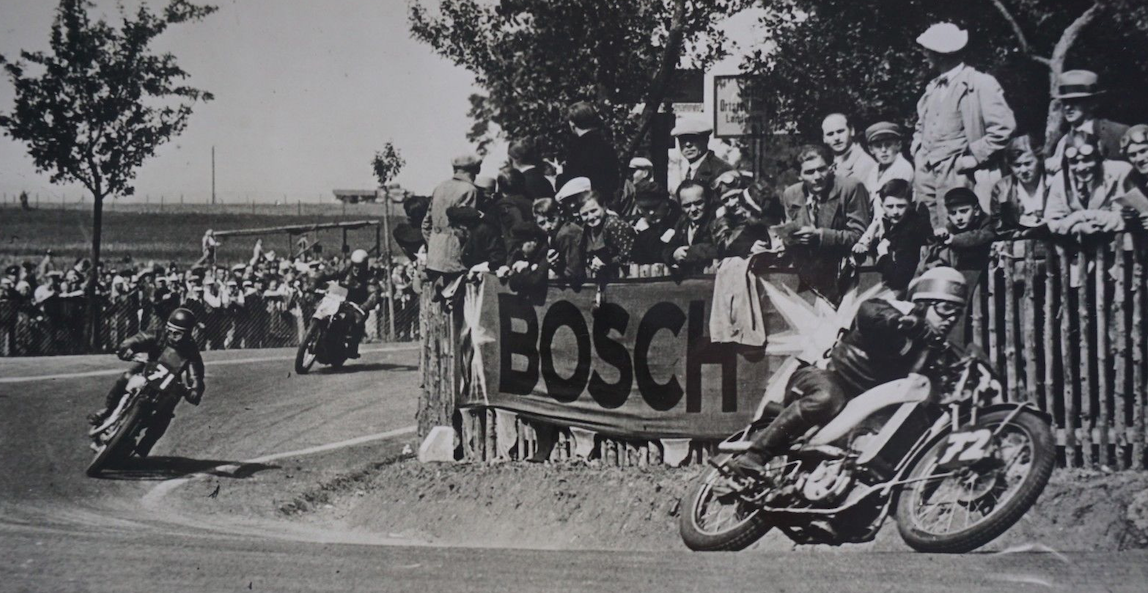
“HITHERTO there has been some competition for the honour of being ranked as an ACU steward in the Island. Stewards. are big pots. They wear gorgeous brassards. They have the entrée everywhere. They get the first low-down on everything. But 1936 I was an unlucky year for them. Having made that original bloomer of excluding Guthrie, they wriggled and wobbled down a host of logical lanes, found it quite impossible to straighten out the mess resulting from too hasty reliance on imperfect information. And wasn’t fate unkind to them on the Wednesday? Mountain swathed in impenetrable mist at noon. Mountain bathed in glittering sunshine at 2pm. In 1937, I imagine they will have to bribe men to act as stewards, for this year’s issue hardly dared enter a bar by the end of the week, such roastings awaited them.”—Ixion
“WOULD YOU PURCHASE A TT machine to-morrow if you could prevail on your pet firm to sell you one, and if you had the necessary dibs? Loud, envious, enthusiastic affirmative chorus of answers, I suppose. No doubt we all would. But should we get our money’s full worth? Where could we unleash its 110mph (?) more than perhaps once a summer? What should we have to pay for spares if we broke one of its special light alloy bits? How long might we have to await delivery of said spare? Apart from probably un-canny road-holding, would it be so very much better than a standard roadster at roadster speeds? How much should we drop when selling-time came? The sane answer probably is that we should be quite wise to buy the machine on condition that we intended to do some speed competition work, but that if we are mere fast tourists we might actually be better served with a standard sports model.”—Ixion
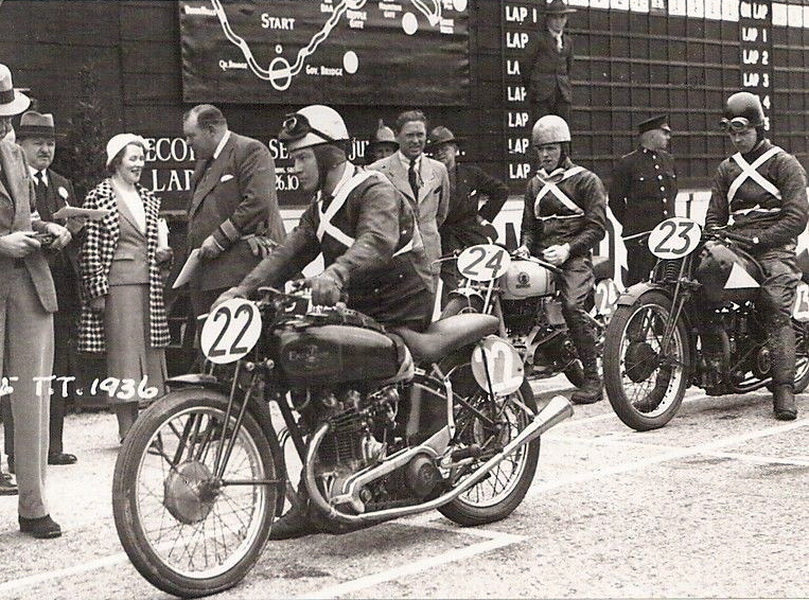
“NOT FOR YEARS HAVE I heard the manufacturers in the Island for the races talk so comfortably. The long depression had set some of them wondering whether motor cycling had in part lost its appeal for British youth. Now that a wee boom is beginning to mutter in all-round trade, they find that orders are rising fast. It is clear that the motor cycle is as popular as ever, but that financial stringency forbade many an enthusiast to invest. Did I pat ’em on the back? Not me! I said, ‘For five years you have refused to produce new models because you couldn’t afford it. Now that you are once more making money you will say it isn’t necessary to produce novelties—you can sell what you’ve got. That’s how an industry gets groovy.’ One maker got quite waxy with me. ‘Why,’ he ejaculated indignantly, ‘I list 14 models for 1936.’ ‘True,’ I replied, ‘and not one of ’em shows any radical alteration from 1930.’ He reflected, grinned, and began talking Fours. Within the next two years the trade as a whole will have a golden opportunity to launch out into novelty.”—Ixion
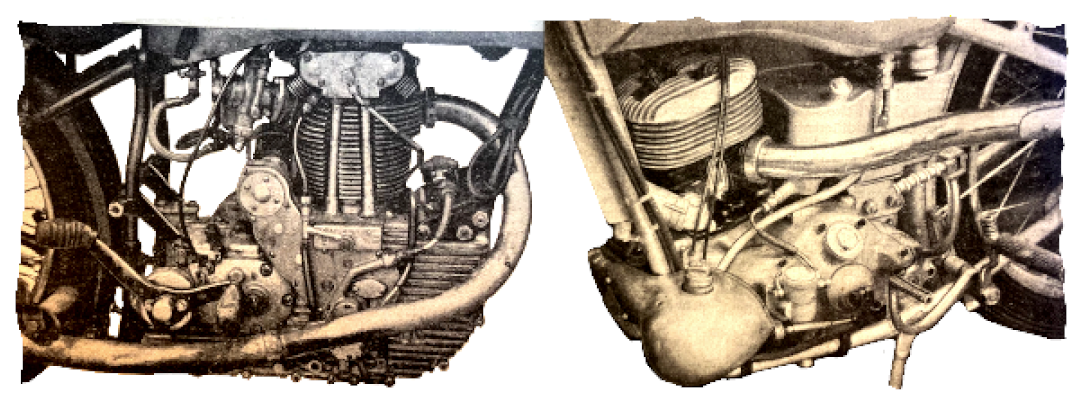
“NATURALLY INFORMATION RE THE ‘also rans’ in the Senior TT is bound to be meagre, with the epic Guthrie-Woods fight for supremacy taking place. (Hats off to both!) From receiving Ebby’s ‘Go’ to my retirement, an increasingly troublesome oil misfire spoiled the twin New Imperial’s chances of really moving. (Last year’s engine and ‘heavy’ tanks were used, incidentally!) The alloy brake shoes in the rear hub ‘fatigue fractured’ and collapsed early in the fourth lap! Again, on the fourth and fifth laps, four plug stops were made. (Don’t we have fun!) Mysterious and sudden periods of seizing now became apparent, culminating in. a locked rear wheel at Glen Helen on the last lap. The chain jumped the sprockets but did not break. And in fairness to Messrs. Hans Renold, Ltd, I should like to say that chains were not the cause of my retirement in the Senior. The rear hub, bearings and remnants of the brake plate were fused together! And as the wheel was immovable, I retired. Lightweight Day I distinguished myself by only reaching Greeba on the first lap before I was forced to change a burnt-out plug. My rev counter had shown me 500rpm down in third, up from Union Mills (plus nasty hot ‘tinkling’ noises from the ‘urge’ dept!) I fitted another plug and got cracking as Arthur Geiss came into view. We did battle, I played on the air-control with a wary eye on the re. counter, Arthur stealing a look every mile to see if he was ‘shaking’ me. He ‘plugged’ on the Mountain on the second lap. That was the last chuckle I got. Fifty yards later the ‘Imp’ expired for good and all at the Bungalow bend. So, dear friends, ‘thatter was thatter’!
‘Ginger’ Wood, Birmingham.
“AFTER GOING TO SEE last year’s Senior TT and having to return owing to its postponement, I wrote to you and said that I should never go again—and at the time I meant it. I have just returned from seeing the Lightweight and Senior Races, and the inconveniences on the boat and the absolutely unnecessary postponement of the Lightweight are enough to make anyone say the same again—that is, if there were to be another real TT. With two friends and their Norton outfit I caught the 1am boat on Wednesday morning from Liverpool. On arrival at about 6am we found no means available to get the outfit off the boat. RAC officials and ship’s officers alike turned a deaf ear to us, and we could hardly manhandle our outfit up about 30 stone steps, as the solo owners bad to do, unaided by the seamen, [The RAC guides are not allowed to handle vehicles.—Ed.] When we eventually got the machine off at about 8am with ramps obtained from the pier we found the RAC men gone and had to push to the nearest garage On Wednesday morning we were on the Mountain near the Bungalow and at 12.30pm visibility was over 100 yards. By 1pm the mist had cleared completely. Everyone, including marshals, was astonished at the postponement to the following day, and one rider expressed his opinion in no uncertain terms. To crown this conics the astonishing decision of the ACU concerning Guthrie in the Junior. How they can possibly justify their inclusion of him in the awards I would like to know. Th rules definitely state that anyone receiving outside assistance will he disqualified. The rider must be capable of starting his machine unaided, and to state that Guthrie did not receive assistance on the course is begging the point. One cannot help feeling sorry for Guthrie, but what about Thomas on the Velocette? It seems to me that the Velocette directors would be far more justified in appealing for the time taken to examine his machine plus a reasonable allowance for the stop and restart to be deducted from his time. After all he received no outside assistance and these one-sided decisions must leave s nasty taste in the competitors’ mouths, particularly after the Guzzi disqualification from second place in 1926 for using a different make of plug. Alter having let off steam, may I say that I really enjoyed the races, particularly the magnificent riding of Woods and Geiss. Woods in the Senior on a slower machine than the Nortons was marvellous. Also, may I congratulate your paper on the splendid reports it published, but most of all for its unprejudiced opinions?
AJ Mohr, Streetly, Staffs.
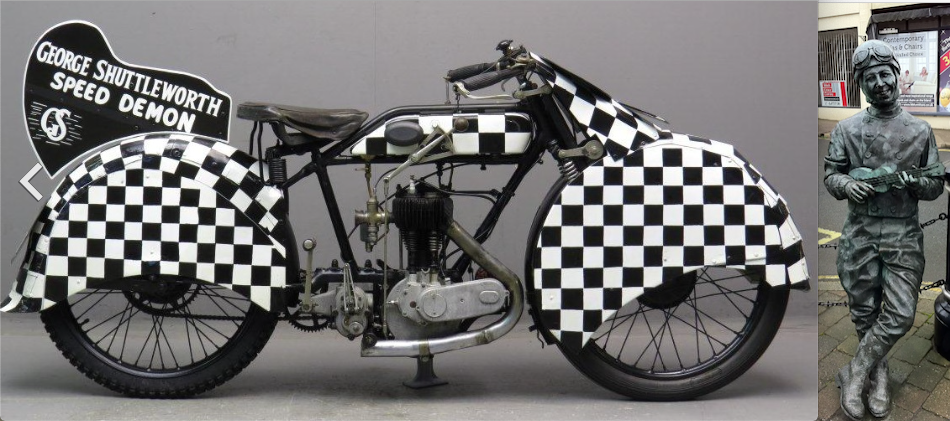
FORGET THE WILD ONES. Forget Easy Rider. The best motor cycle film of them all was No Limit, starring motorcycling ukulele maestro George Formby who was far cooler than Brando or Fonda. Brando was looking for something to rebel against on his Triumph Thunderbird. Fonda was looking for America on his Harley panhead chop. Our George was looking for a fiver to get himself and his bike, the Shuttleworth Snap, to the TT. He falls off the Mona’s Queen, sets a lap record because of a jammed throttle, pushes his bike over a cliff, wins a works ride, punches a bullying competitor on the snoot, pushes his bike over the line to win the race, wins the girl and wins a Sprocket dealership. The film features real TT action and an unforgettable song. All together now: “La la la la la-la going to the Teeee Teeee ra-ces!” If you still need convincing you can see highlights of the film at http://www.youtube.com/watch?v=ukCc3c6RVo4 and sing along with George at youtube.com/watch?v=eayllywNxUw./ Eeeee! Turned out nice again!
“FRITH IS GLORIOUSLY DIFFIDENT about saying anything concerning riding methods, so I turned to the question of the parts of the TT course he likes best. ‘Kirkmichael to Ramsey,’ he replied. ‘Always have done. You seem to tear through there, going so much quicker.’ As he said this I went with him in spirit around the course—those glorious sweeps, much of the going either under or beside trees: just imagine it all on a really fast mount! His pet aversion is Quarter Bridge, with its more-than-a-right-angle turn, approached downhill. It feels like ten miles an hour, and there is an adverse camber on the far side; I rather think that his wholesome dislike of the corner is shared by others! ‘How much gripping of the bars do you do?’ I asked. He replied that it is only on the straight bits of the course that his hands are merely resting on the handlebars; for the rest they are ‘gripping’, and on S-bends one hand is pushing—first one, of course, and then the other; the riding position is such, remember, that the rider’s arms are nearly straight. Frith marvels at the Norton riding position, and the way Joe Craig has got it dead right; it suits every member of the Norton team.”—Torrens.
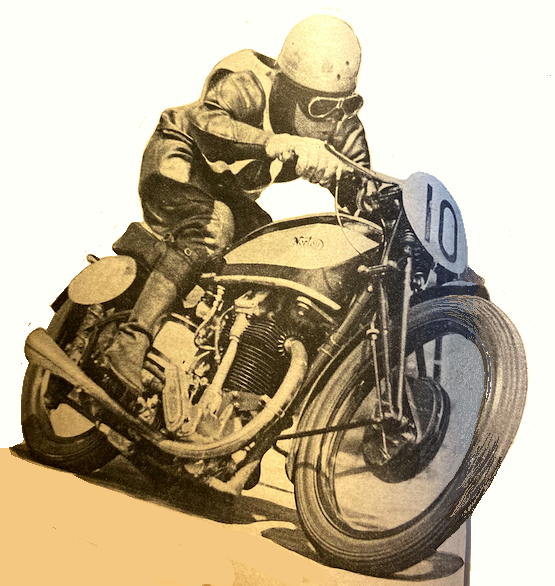
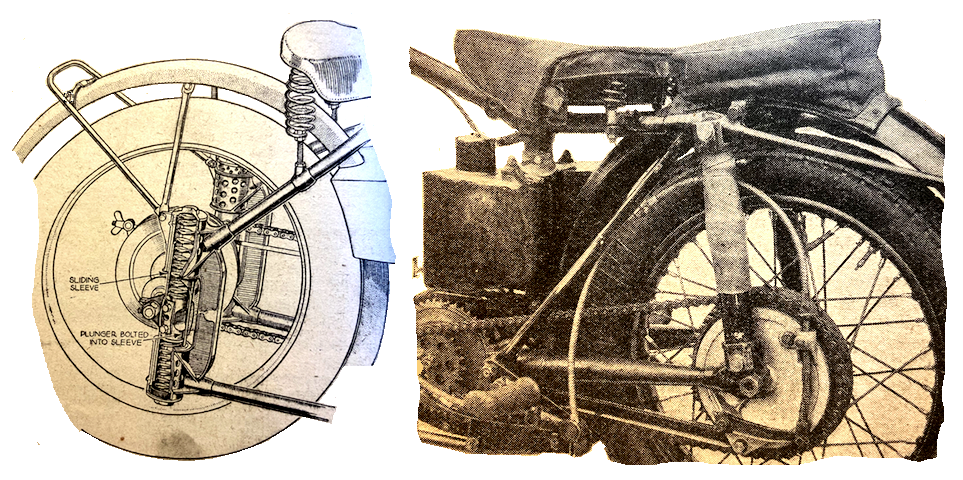
‘UBIQUE’, THE BLUE ‘UN’S de facto technical editor, had clearly spent a lot of time in the paddock: “There have been many changes in design which are of technical interest; some have been highly successful, some have been less so, but all should be chronicled…The first point of interest is the adoption of spring frames by the racing Nortons and Velocettes, in addition to the Vincent-HRD design, which remains substantially unchanged. The Norton frame consists of a pair of spring-loaded, light-alloy pistons, one on each side of the rear frame, coupled by a long and very stiff axle. The design is extremely simple and robust, and although-small changes in the length between chain centres are inevitable (actually the maximum change in centres is ⁵⁄₆₄in), they are of minor importance. I have heard criticism on the score of the stresses imposed on the spindle, but these may be discountenanced, since the point is so obvious that the manufacturers would be the first to ensure adequate strength and stiffness. The Velocette rear suspension is entirely different, and there are no springs whatever included in the design. The chain stays, pivoted at the front end, consist of very large diameter tubes tapering rearwards and splined in front to a large-diameter cross-member. The weight is taken by cylinders of air pumped to a pre-determined pressure, and the action is controlled damped by a flow of oil (contained in lower cylinders into which the air chambers telescope) through small controlling jets or orifices. The device, in fact, resembles an aircraft landing gear, and it is extremely efficient. It is obvious that the air chambers can be pumped up to suit the weight of the rider. New Imperials did not use their spring frame, purely because they had insufficient time to prepare a machine for the race. Next in order of interest comes the question of superchargers. Vincent-HRDs have carried out a lot of experimental work, but decided before the race that still further experiment was needed and raced without compressors. This does not necessarily mean that they have abandoned the idea altogether, but it is a curious feature of the supercharger—at least as regards its application to this particular engine—that the machine appears to run equally well with a wide range of mixtures and ignition settings. On the other hand, it is vital that the mixture should not be so lean as to cause overheating, nor so rich as to cause excessive fuel consumption. As regards the blown four-cylinder AJS, the pressure was reduced before the race, and it is not unlikely that further experiments will produce much better results. At the moment it would appear that more data is required before a supercharged TT winner makes its appearance. The case of the DKW two-stroke, with its piston-type compressor, is somewhat different. The makers have a wide experience of the type, which was designed in conjunction with the engine, and they had already registered many success.. It remained only to see if a compromise could be reached between sheer power output and reliability sufficient to complete the course. In this they are helped considerably by water-cooling and—this year—by ribbed aluminium head jackets. In engine design there has been more change than meets the eye. Compression ratios have gone up with a bump, and, since a designer is always likely to employ the highest ratio possible consistent with reliability, it is clear that changes must have taken place internally to permit of the increase. More than ever before there was a tendency for designers to withhold particulars of the compression ratio in use, but when I state that ratios of up to 9 to 1 on Senior and over 10 to 1on Lightweight machines were tried, and tried successfully, on petrol-benzole mixtures, it will be realised that there must have been considerable advance in cooling to enable such ratios to be used The vital point lies in the cylinder head, and more particularly in the neighbourhood of the exhaust valve. New methods of head construction, improved materials, increased fin area, careful port design, and other less obvious devices were employed with success. High-conductivity alloys are the rule rather than the exception for cylinder heads, and these range from aluminium-bronze heads, such as those on certain Velocettes, JAPs and Excelsiors, through composite aluminium-bronze and light-alloy heads, such as the Norton and New Imperial, to aluminium-alloy heads with inserted valve seats—as on Velocettes and AJSs. In some cases the inlet seats were of bronze.”

“IT LOOKS AS IF TECHNICAL developments have butted up against a terminus, so far as existing designs of ohc single-cylinder engines are concerned. It is true we did not get one day in the three which was ideal for record breaking. The stars they want dry roads, no wind, perfect visibility, no sun, and no flies in order to scrape the last split second off the course. These pluperfect conditions were not offered this year, worse luck. But the fact is that machines were only faster than in 1935 by the very tiniest fraction. If there is an exception to this it can only be sought in the theory that Guthrie s never drove any faster than he was compelled to drive, and that in the Senior he always had a scrap of throttle up his sleeve. I doubt it. Guthrie won by 18 seconds. If Woods had been mechanically able to ride his last lap in the same time as his sixth lap, Guthrie would have won by two seconds. Guthrie does not consciously run matters as fine as that. Woods’ engine misfired for a long spell along the back of the Island. Guthrie’s last lap was a smasher. On the clock it took him 26min 22sec, but from that we have to deduct (a) 15sec stationary at his pit while he sloshed in a few pints of juice; (b) slowing for his pit; (c)re-starting; (d) accelerating from rest up to maximum for Bray Hill. Total loss, at least half a minute. Deduction: Guthrie did his last lap in under 26min, ie, at an average of well over 87mph. Why did he not let out an 87 or 88mph lap earlier in the race? Because he dared not. Why didn’t he dare? Either because he did not want to smash himself to bits or because he was afraid of bursting his engine. Machines were only fractionally faster than in 1935, or, allowing for road improvements and spring frames, no faster!”
“‘IT IS NOT A PICCADILLY CIRCUS machine, you know.’ With these parting words from Joe Craig, I walked over to the spare machine—the fourth of the four new 500cc spring-frame Nortons. Alec Bennett, who had been trying it, handed it over and told me which way the gear lever works. He also told me a lot more, for he was fairly bubbling over with enthusiasm. The point of my run was not to try any funny business, to endeavour to emulate a TT star, and that sort of thing, but to learn what the spring frame is like in ordinary hands. Brief though the trip was I learned a lot. That spring frame adds immeasurably to the machine. No longer is the rider thrown about; the machine sits the road almost like the tarmac that surfaces it, and, in the words of Jimmy Guthrie, on corners you can pick any line you like. It will go exactly where you want it to go. As 1 have said several times before, a good spring frame is one of the greatest safety factors imaginable. Some people stress the comfort afforded by a spring frame. I look upon this as of secondary importance. The great point is that first-class rear-wheel springing spells safety by improving the road-holding and by enabling the rider to steer to a millimetre. Half the so-called steering troubles that are experienced result solely from the rider being thrown about; it is he who causes the machine to do strange tricks, generally through thrusting and heaving on the bars. The Norton steering is superb—there is no other word for it. The rider can concentrate on riding. For myself, I learnt that the road-holding of the spring-frame job is cent per cent. better than that of the racing Norton I rode a couple of years ago. Because of this magnificent road-holding, the steering and braking are both greatly superior. Really there is no comparison, and now with the spring frame the rider has a really comfortable ride. Witness how Freddy Frith after finishing in the Junior handed his machine to a marshal and ran—yes, ran up the road to the Paddock!—Torrens.
VELOCETTE’S RETURN TO the 500cc sector with the ohv MSS was clearly worth waiting for. The Motor Cycle’s roadtester reported: “Throughout there is evidence of good workmanship and accurate assembly…it would be difficult to find a more charming motor cycle. Excellent engine balance and a silky transmission rendering the machine equally pleasing for town riding or the open road. At speeds up to 30mph the Velocette was markedly caner as regards its exhaust, and bearing this point in mind the mechanical silence was exemplary. In spite of the fact that the top gear ratio is 4.4 to 1 it was unnecessary to change gear continually. There is something fascinating about a machine that will pull a high gear successfully. High averages can be accomplished without fuss or noise so that the journey becomes less fatiguing. It will tour all day at 60mph. The steering was faultless. Hands off riding at 70mph…was automatic. As regards fuel consumption the machine was good: a gallon of fuel being enough for 88 miles…Oil consumption was negligible. The prop stand was a boon—the finishing touch to a very fine machine.”
…AND HERE’S AN EXCERPT from the Blue ‘Un’s test of the 600cc Panther M100: “…a most imposing machine…the Burgess silencing system was so effective…the mechanical silence of the engine too was an admirable feature…road-holding at all speeds was excellent…cornering was excellent, and under greasy conditions the steering was such as the impart every confidence…the engine kept perfectly oil-tight…under give and take road conditions the petrol consumption worked out at 103.2mpg.” Panther claimed a top speed of 80-85mph solo or 65-70mph with a chair.
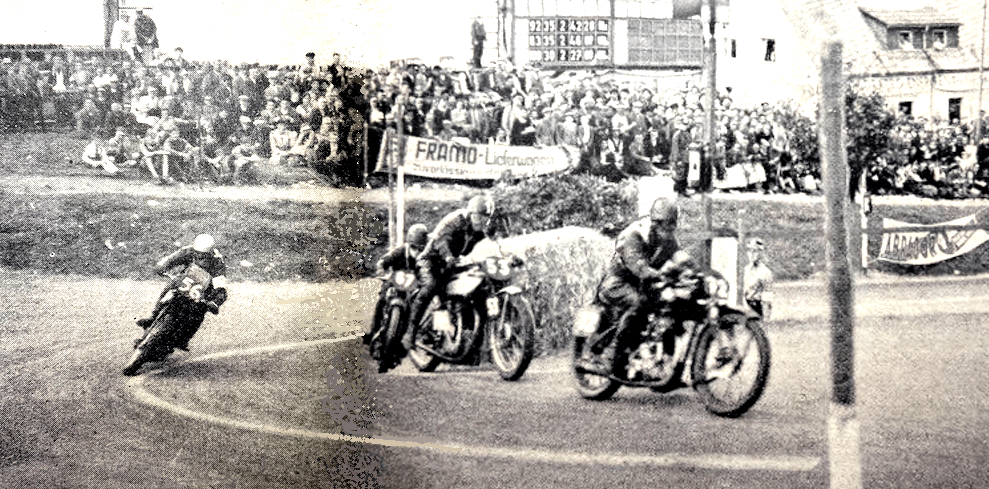
“LAST WEEK-END, IN THE FICM Grand Prix of Europe, held in Saxony, British machines swept the board in the three major classes. J Guthrie (490cc Norton) and JH White, on a similar machine, were first and third respectively in the 500cc race, while FL Frith (348cc Norton) won the 350cc race, with EA Mellors (348cc Velocette) and ER Thomas (348cc Velocette) respectively fourth and fifth. The 250cc event was won by HG Tyrell Smith (248cc Excelsior), with a German rider, B Port third on a 249cc Rudge. No one succeeded in finishing in the 175cc class [Eric Fernihough was leading four German riders on MMs when his Excelsior-JAP dropped a valve—Ed].The race attracted a huge crowd—over 240,000 people paid for admission, and they had come from all parts of Germany, many of them arriving the evening before with the object of sleeping near a vantage point on the course. Throughout the night Army searchlights from a hill-top swept the ground looking for people trying to avoid theadmission fee. Racing was due to start at 9am, and as there were three separate races it was going to be a long day. The triangular five-mile course, situated outside the picturesque Saxon village of Hohenstein-Ernstthal, near Chemnitz, was lined, inside and out, three, four and five deep with spectators. It a difficult course, full of intricate bends (with IOM-type warning signs) and steep gradients. The pits and chief stands are situated on the southernmost leg of the course. Above the starting grid is a ‘traffic’ light, which shows red, orange or green according to the requirements of the starter. ” Here’s the Blue ‘Un’s blow-by-blow account of the main event: “It is nearly 3.45pm before the 500cc class is despatched. Through nearly 200 loudspeakers around the course, a deep, Teutonic voice announces ‘Achtung, achtung! Rotes licht! Noch eine minute bis zum start!’ (Attention! The light is at red!
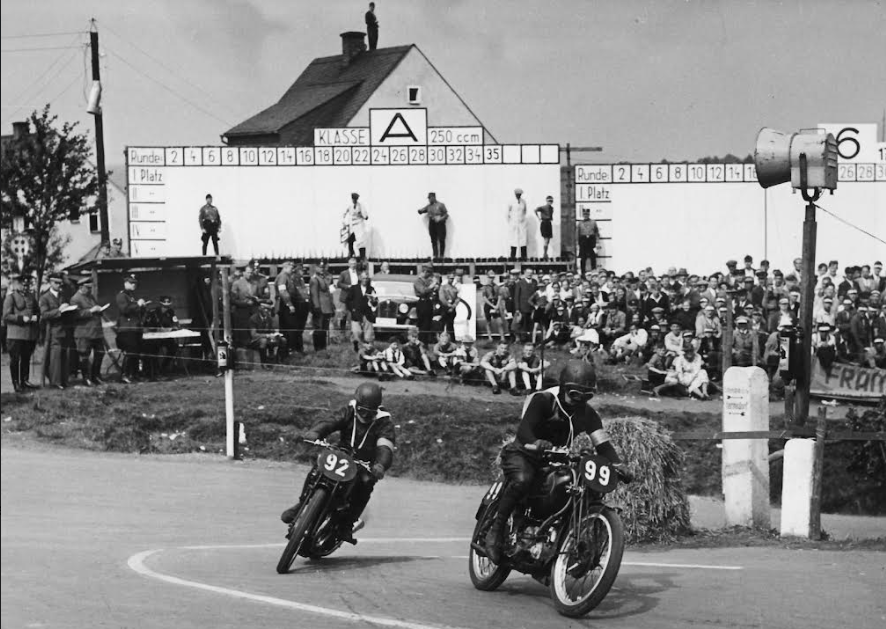
Only one minute until the start!) A few seconds later the light is at yellow, and then simultaneously with the nerve-shattering explosion of a maroon the green light appears and they’re off. The rain has ceased, but it is very dull and overcast. In spite of the weather the vast crowd, which has patiently stood all round the course since 8am and possibly earlier, is all agog to see the riders off on this the most important event of the day. It is going to be a terrific race: The Guzzis are known to be exceptionally fast. The BMWs are possibly a shade faster, while the senior DKWs, judged on their practice form, are something to write home about. All this is a knotty problem for the Norton camp to tackle; White and Guthrie (Nortons) are the only British riders in the race. However, at the end of the first lap, with all the riders in a bunch, the flying Scotsman is in the lead. Close behind are Steinbach (DKW), HP Müller (DKW), JH White (Norton) and Fleischmann (NSU). On the second lap the positions are unchanged, but the next sees a gradual thinning out of the field. Guthrie is clear 20 seconds ahead of Müller (DKW), who has overtaken Steinbach (DKW). White is sitting on the heels of the DKWs, obviously riding to orders. But where is Tenni and the Guzzi? At last over the loudspeakers comes the news that he has crashed beyond Hohenstein, though without serious results. Then Gall (BMW) drops out, leaving 0 Ley to carry on the name of BMW alone. Six laps later Guthrie has definitely. established a lead over Müller’s DKW, while Steinbach has a grand tussle with the DKW rider for second place. Lap after lap they fight it out; first it is Steinbach, then it is Müller, while White (Norton) holds a watching brief just behind. Fleischmann (NSU), in fifth place, struggles to keep away from the ever-pressing Ley (BMW). Half distance sees Guthrie come in for a pit stop, while White proceeds to overtake the DKWs and lie second. Then the two DKWs come in. By an unfortunate accident Steinbach gets the full force of the boiling -water from his radiator in his face and all over his leathers. With the consequent pain he drops his machine and nearly knocks Müller over at the same time while fuel goes gushing over both of them. As a result their pit stops, instead of taking 30 seconds, last for nearly a minute and a half. This slip rather spoils the excitement of the race, for Guthrie and White are well ahead. Ley (BMW) comes in for his stop and likewise makes it rather a long one; he appears to change a plug. The delay lets Fleischmann into fifth place. The order of the leaders remains unchanged until the 32nd lap, when Mansfeld (DKW) comes into the picture, displacing Fleischmann from fifth place. Meanwhile Müller (DKW) has been creeping up to White (Norton) and by the 37th lap—only two more to go—he is just eight seconds behind White, the latter having come off on the bend in Hohenstein. How tho crowd loves the scrap! Müller was actually level with White as they passed the stands—everyone went delirious with excitement. The end of the last lap sees Guthrie (Norton) cheered to the echo—an easy winner. But actually the crowd is much more interested in who is going to come out on top in the White-Müller duel. At last these two can be heard, then seen swooping down the dip to the last bend. White is ten feet in front! The excitement is terrific, with the crowd yelling itself hoarse. Then comes the real climax. White goes wide and strikes the hay barrier on the last corner, while Müller nips round on the inside and is away before White can get going again. More amazing still. Muller on his last lap has broken the record for the course, at 82.63mph. Just as there was a battle for second place, so is there another for the fourth position, between the DKW riders, Mansfeld and Steinbach. It looks like a victory for the latter, but on the last lap Steinbach falls and lets H Fleischmann (NSU) and Sunnqvist ( Husqvarna) into fifth and sixth positions. Once again it has been a British victory, and once more the crowd stands motionless with arms upraised for the British National Anthem—and how they cheered when Guthrie received Herr Adolf Hitler’s prize and a special message of congratulation.”
And here’s Ixion’s penn’orth: “Last Sunday saw the first performance of the ‘Continental circus’. This term ‘Continental circus’ may seem strange to some; it is one used by road-racing enthusiasts to denote the annual tour of the Continental races that as a rule follows immediately after the TT. Actually this year one of the big events, the Swiss Grand Prix, was held before the Isle of Man Races. However, last Sunday there was the German Grand Prix or Grand Prix of Europe, as it is called this year, next Saturday the Dutch TT will be held and on Sunday, July 26th, there is the Belgian Grand Prix. The handful of British representatives go from one race to the next, renewing their TT battles and endeavouring to display their own prowess and that of British machines. The first fruits have fallen to Britain with a vengeance. In the Grand Prix of Europe last Sunday, held on German soil against the pick of Germany and other Continental nations, British riders of British machines won three major races. Norton, handled by Guthrie and Frith, won the 500 and 350cc races respectively, thus these two brilliant riders with their superb spring-frame machines repeated their Isle of Man successes. Guthrie, incidentally, won at the record speed of over 80mph. The 250cc race was won by Tyrell Smith with the new four-valve ohc Excelsior. Thus, once again, has the skill of British riders and the excellence of their mounts been demonstrated to the world.”
“A MOTORIST FINED 10s at Bristol for failing to stop at a ‘Halt’ sign declares that he would go to prison for six days rather than pay.”
“TRAFFIC WAS HELD UP in a street in the West End of London recently when a large poisonous tarantula spider escaped from a crate of bananas.”
“IT HAS BEEN SUGGESTED in Parliament that large bomb-proof underground parking places should be built in large cities, thus also providing sanctuary to civilians in the event of war.”
“A NUMBER OF 250cc motor cycle side-car outfits adapted to ran either on the road or on rails are now being used by inspectors employed by the Paris, Lyons and Mediterranean Railway Company.”
BRITAIN PRODUCED SOME 11,000,000 gallons of Benzole.
“A PEDESTRIAN WHO twice jumped in front of a motorist’s car, the second time also striking the motorist’s face, was sentenced to one month’s hard labour at Castle Hedingham (Essex). The pedestrian was summoned by the RAC.”
“AT THE ANNUAL GENERAL meeting of the British Granite Whinstone Federation in North Wales, it was suggested that bigger Road Fund grants should be given to highway authorities who lay down non-skid roads. May we suggest that no grants at all be given to authorities who do not lay non-skid roads?”
“THE CONSTRUCTION OF a network of 120-150ft wide main trunk highways, dead straight, was suggested by David Edwards, Brighton’s Borough Engineer and Surveyor, at a conference last week. Vehicles would attain 100mph, perhaps, for pedestrians would be permitted to cross only at bridges or subways.”
“I THINK THE ACU have made a big mistake in increasing the mileage for the road test part of the National Rally. I have taken part in the last two events, and thoroughly enjoyed them, but I will not be able to do so this year because of the long mileage—it would more than double the expense through having to put up overnight, and my ‘fairy’ would find it too uncomfortable to do 500 miles in little over a day. We both very much regret this, as we look forward to the Rally very much.
A Patterson, Liverpool.”
FOUR THOUSAND FIVE HUNDRED miles of main roads are to be taken over by the Government, according to an important announcement made by the Minister of Transport earlier this week. The highways concerned comprise the more important trunk roads, used largely by through traffic. Thus we have the first step towards the nationalisation of the roads—a policy we have urged consistently over the years. The roads are a national asset. The present system whereby there are no fewer than 1,400 road authorities is patently out of date, uneconomical and, from the motorist’s point of view, totally unsatisfactory. All main roads should come under the control of one central body. Then, and only then, shall we have roads of uniform safety—a road system designed as a whole, instead of piecemeal, and surfaces that are standardised and skidproof. A start is being made, though 4.500 miles is but a fortieth of the total length of British roads and but a sixth even of the main highways. We sincerely hope that the Government will press onward and bring all main roads under State control—those in towns and cities included. It is the urban roads that present the greatest danger. It is on these roads that the most accidents occur, and it is these roads that have the most dangerous surfaces.”
“BRITISH RIDERS AGAIN upheld the the prestige of their country by winning the two larger classes of the Belgian Grand Prix, which was held over the Floreffe circuit in the South-East of Belgium. J Guthrie and JH White (Nortons) were first and second respectively in the 500cc class, while in the 350cc race EA Mellors (348cc Velocette) won comfortably from R Renier (FN). This is the first time that the course at Floreffe has been used for an international event. It is approximately 10½ miles long and roughly triangular in shape, consisting of one short leg and two long stretches to the apex at Floreffe.”

“THOSE hundreds of motorists who at one time or . another have been ‘gonged’ for exceeding the 30mph speed limit—and consequently relieved of a portion of their hard-earned cash—will no doubt learn with glee that a private motorist had the temerity to charge the driver of a police patrol car with a similar offence. The police—in the way the police have—promptly retaliated by issuing a summons against the car owner for exceeding the limit while following them! But they reckoned without the AA solicitor, who successfully contended that whereas in the case of the police car there was no excuse for excessive speed, the defendant was within his rights in exceeding the limit, since his car was really being used for ‘police purposes’ within the meaning of the Traffic Act! Needless to say, the police authorities are appealing against the decision to a higher court. All motorists will await the result with interest, and in the meantime they can amuse themselves by trying to find the not-too-difficult moral of this little story.”—Ixion
“VISITED BEXHILL ON MY HOLIDAY, and was delighted to hit a burg where originality replaces the usual demure kow-towing to central road authorities. Only encountered one set of robot traffic lamps. Did not notice a single pedestrian crossing. Found an absolute minimum of those too-popular warnings and notices which are mounted on the kerbs of wide roads, and function chiefly in distracting drivers’ attention from the obstacles in the roadway. This town contains several traffic vortices which are capable of provoking blunders by road users. In every case the necessary warnings and instructions are placed in the proper location, ie, in or on the carriageway., Sometimes they assume the fairly common form ‘Dead Slow’ painted in enormous letters on the actual road surface. Sometimes the wide spaces are split up into obvious lanes by small islands with big bright boards bearing the words, ‘Keep Left’, etc. It was a very pleasant change to ride with my eyes focused on buses, cyclists, old ladies and other obstacles, instead of developing the usual appalling squint by aiming one eye at the actual traffic and the other 45° left or right for kerb notices. If Mr Hore-Belisha survives much longer we shall develop a race of Britons with a permanent 45° squint, and feminine beauty will evaporate off these islands.”—Ixion
“ON A RECENT WEEK-end I met eight motor cycles exhibiting L plaques and carrying pillion passengers. Some of these fair pillionistes may not have been so brave as appearances indicated, for some ‘L’ drivers have been on the road a very long time, being unable to secure their test appointments. But at least three of these ‘L’ drivers struck me as very ellish indeed. So ellish that I was glad to read Mr Hore-Belisha’s promise that motor cycle learners would shortly be forbidden to drive with an occupied pillion.” —Ixion
“LAST SUNDAY THE WATSONIAN Sidecar Company held another of its annual rallies for Sidecarrists—at Maxstoke Castle, Warwickshire. And the number and variety of sidecar outfits present were-evidence of the ever-increasing popularity of the event. Cups and prizes were awarded to the winners of the various classes. One of the most interesting classes was that for home-built sidecars. In this category the first prize was won easily by EH Lock, who had an enclosed sidecar on an Enfield machine. It was a beautifully made job and had taken ten months to build. A notable winner was M Harrington, who had covered 636 miles in order to he present. He was followed closely by C Harris, who had ridden 612 miles—two very stout efforts.”

“THE 990cc AJS AND SIDECAR is an outfit that should appeal to both the potterer and the high-speed tourist. To the potterer its fascination lies in its extreme flexibility, while for fast work it is effortless and commendably quiet. The machine tested was the Export model with a large touring sidecar. It is a luxurious outfit and one that has been designed to afford both driver and passenger a high degree of comfort. Long, American-type handle-bars, footboards and a pan-type saddle with very supple springs give a comfortable driving position for a man of normal stature, and although very little weight is carried on the driver’s feet, no saddle soreness was felt even after long strenuous mileages. In keeping with its luxurious character, the outfit is effortless to drive and handle. The long handlebars make the steering exceptionally light so that very little effort is required even when negotiating acute corners. The steering is positive at high speeds and only a small amount of damping was required. On rough surfaces the outfit handled well. The forks have a long and smooth action and do not bottom even over deep pot-holes. No praise can be too high for the docility and pulling powers of the engine. Starting was always very easy and when the engine was warm it was possible for the driver to start it without rising out of the saddle. Slow running was positive and with the ignition retarded the idling speed was very slow. Under all conditions the machine was pleasantly silent, both as regards exhaust and mechanical noise. Even at very large throttle openings the exhaust note did not rise above a subdued burble, while at low speeds it was practically inaudible. Similarly, the engine is quiet mechanically, and at most times it was possible to hear the whirr of the rear chain. Piston slap and tappet clatter were both noticeably absent. The most striking characteristic of the engine is its power at low speeds. With the ignition retarded it was possible to drive at approximately 10mph in top gear, and from this speed the outfit would accelerate away smoothly and without snatch. Once clear of the traffic the need for a gear box almost disappears. Long gradients were easily breasted in top gear and on a run from London to Dorset the gear box was used only in traffic. No 1 petrol was employed throughout the test and no pinking occurred although the engine was purposely maltreated. Acceleration in the intermediate gears was good. With passenger and an 11-stone driver the AJS would accelerate from 20 to 45mph in less than 9 seconds in third gear (6.1 to 1). In top (4.9 to 1) 12. seconds were required. Maximum speeds in these gears were approximately 53 and 60mph respectively. These figures do not, however, give a true impression of the engine’s performance, for speeds up to 50mph could be held indefinitely. Apart from a slight whine in third gear the gear box was in keeping, with the silence of the engine. .A foot clutch and left-hand gear change are fitted to the Export model and these are very pleasant to use.
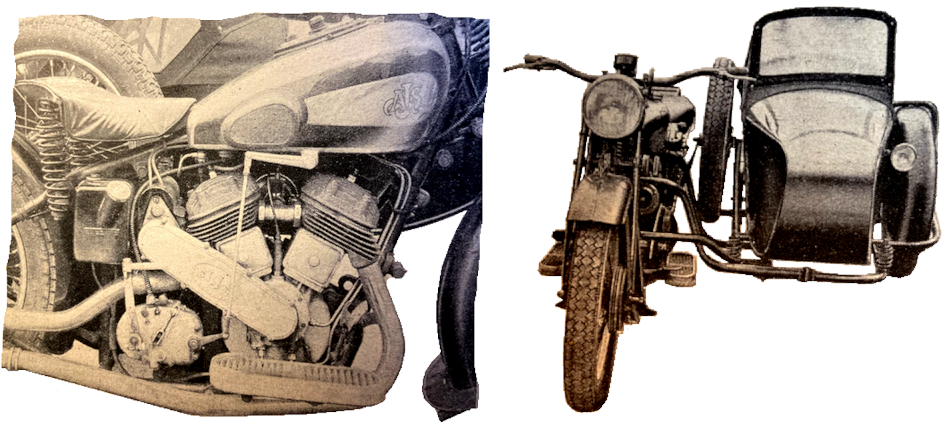
Changes are made without the driver removing the ‘throttle-hand’ from the handlebar, and no difficulty was experienced in making a smooth get-away with the foot clutch even when the driver was wearing waders. Slight criticism could be levelled at the position of the clutch pedal, which is so placed that the driver’s foot is inclined to foul the front sidecar connections. The rearbrake pedal is mounted on the right-hand side of the machine, and the front brake is operated by a normal-type lever on the right handlebar. Both brakes were smooth in action. The front one was very powerful, but the rear one would lock if applied carelessly, and in very wet weather had a tendency to lose its efficiency. Both controls arc well placed. Several long runs were made over wet roads, but at the conclusion of the test the outfit was exceptionally clean. Both mudguards on the machine are very wide and heavily valanced and effectively prevent road dirt being thrown on to the driver. The engine kept very free from oil externally, No leakage occurred from either the crank case or the timing case, but there was a slight seeping of oil from the tell-tale lead to the dash-board in the tank. Over a prolonged run oil consumption worked out at 2,000mpg, while at a maintained speed of 35mph the petrol consumption was 50.6mpg. Various passengers were carried in the sidecar, which is roomy and comfortable. The windscreen and side curtains effectively prevent side draught. The large rear locker is upholstered as an additional seat. The AJS is fully equipped as a sidecar machine and the equipment is luxurious. The dip-switch and horn button are neatly positioned on the very ‘clean’ handlebars. It was found that the main head lamp beans, although wide, did not give sufficient illumination straight ahead for comfortable high-speed work at night. During the test the positive lead from the battery became detached, causing the side and dim bulbs to ‘blow’. Finally, mention most be made of the exceptionally neat and strong spare wheel mounting. The wheel is placed behind the driver, well out of the way but readily accessible.”
“FRESH FROM THEIR VICTORIES in the Grand Prix of Europe the previous week-end, British riders and machines again covered themselves in glory last Saturday on the occasion of the Dutch TT, which was held over the Circuit van Drenthe, near Assen, in the North of Holland. Throughout the night thousands upon thousands of motor cyclists had streamed into the little town of Assen, which was suitably decorated with flags, bunting and flowers. They had come to see one of the fastest motor cycle races in Europe. Practising had produced such phenomenal times that the organisers could not credit the results of the road widening and banking of the corners as being responsible—and they were right in their doubts, for when they had the 10-miles course measured the figures showed that the improvements had shortened it by over 500 yards! The surface has been improved. Even so, when wet it becomes treacherous and almost ice-like. Still, it was going to be a day of fast—really fast—racing. The Senior race was won comfortably by J Guthrie (490cc Norton) from 0 Ley (supercharged BMW), with S ‘Ginger’ Wood (490cc Norton) third. Ley smashed the lap record, averaging no less than 90.71mph. In the 350cc race the Norton pair, JH White and FL Frith, were first and second respectively, while HE Newman (Velocette) finished third. The Lightweight event saw Tyrell Smith (Excelsior) come home third, behind two exceptionally fast DKWs.”
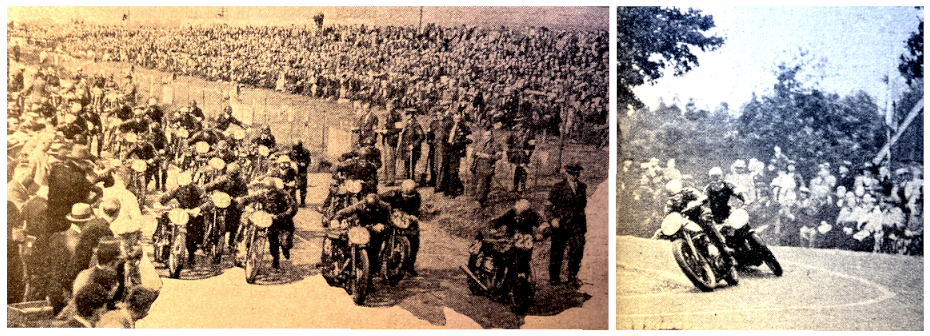

“NO ONE ACTUALLY USED the words, ‘You daren’t do it!’ Nevertheless, it was largely the feeling that I had been dared that caused me to fit the handle-bar windscreen—that and the fact that I had never ridden behind a handlebar screen in my life. Of course, small screens have been used in the TT. Freddie Dixon, I recall, used to have one. Perhaps there is more in the matter than appears to be the case. I decided that I would experiment. The Beta screen was fitted for one trip of 230 miles; it has now been in use for well over a thousand miles…within ten minutes of fitting the screen I was off on a fastish 115-mile run to see the managing director of a certain motor cycle firm. On arrival at the works I had no time for a wash and brush-up. I removed the chromium-plated filler cap from the Vincent, wiped it, and looked at my face to see whether it was clean. Except for rims caused by the chenille of my goggles it was as presentable as—well, it was as nature has ordained. I glanced at the handlebar screen; it was dotted with squashed flies and traces of tar. All the same, the curved non-flam celluloid screen does not of itself keep all draught from one’s face. For this to be so I gather that one needs to use, in addition, a par of legshields that more or less blend with the screen and run forwards as well as upwards from the footrests. Since I ride minus legshields I found that there was ‘ definitely a draught reaching my face and, therefore, I employed goggles in addition. Of course, various people have asked what happens when there is a really, strong wind blowing from one side. My answer is, ‘Nothing at all.’ I have had the machine in the best part of a gale—a wind which came out of side streets almost like water out of a funnel—and the steering and handling were all you could wish. I believe that Mr Beta claims the model steers better with the screen than without it in such circumstances. I am not going to say he’s right, but I do know that the handling is not one atom the worse for the screen. And I know that the screen is amply rigid enough for speeds in the eighties—there is no tendency for it to collapse or anything nasty like that. No, the only thing that dims appear to be desirable in the case of the man who bats is that the screen is no mounted that there is a fair degree of curvature; otherwise the top of the screen—the small segment that is unsupported—is liable to flap about. You hear the engine rather more with the screen in place than previously, and, strange to relate, the screen tends to affect one’s ideas of speed; automatically I was travelling at higher speeds than I imagined, no doubt because the wind pressure had been removed by the screen. Yes, I agree with the man who said that a handlebar screen makes for higher averages rather than lower ones. And one day, when I was faced with a villainous hailstorm which made dozens of motor cyclists seek shelter, I carried on perfectly happily. But the greatest boon of all is the way the screen protects one’s goggles from the spray thrown up by other vehicles. Definitely there is more in this screen idea than one might suppose. The proof, so far as I am concerned, is that the screen was put on for a single trip, and there it still remains, and is likely to remain for quite a time to come.”
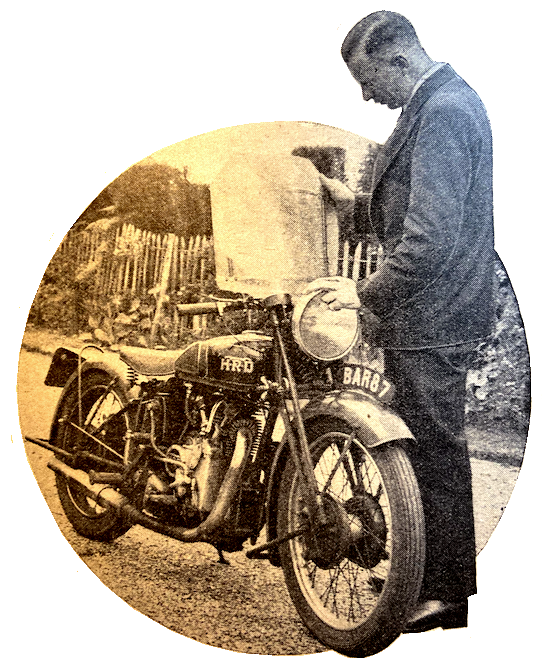
“RECENTLY A FRIEND OF Mr R McPherson, of Glenfinnan, Inverness-shire, wrote to The Motor Cycle to say that Mr McPherson had had no previous convictions, yet because he had over-looked renewing his licence he had been fined no less than £3 [more than £250 in 2023—Ed]. The BMCA also heard of the matter, and recently the case came before the House of Commons in the form of questions put to the Secretary of State for Scotland by Captain Strickland who, as you know, besides being an MP, is a member of the BMCA committee. Capt Strickland stated that Mr. McPherson had only over-looked the renewal of his driving licence by about two weeks and asked the Secretary of State for Scotland if he would take steps to remit the fine imposed. Sir G Collins, in reply, said he was making enquiries. I now hear that £2 of the fine is being remitted. It seems that in these days, thanks largely to Capt Strickland, Lord Sandhurst and the BMCA, the motor cyclist who is or appears to be victimised in any way can count upon his case being investigated.”—Nitor
“FOUR MOTOR CYCLISTS were fined 10s each for riding ‘four-up’ on a motor cycle. One was driving, two were on the pillion, and a fourth was astride the driver’s shoulders.”
“‘IN AMERICA TO-DAY, if a man steps off the footpath without care he is not summoned but arrested,’ said the magistrate at a Belfast court when dismissing a summons against a motorist for dangerous driving.”
“CLERK AT HIGHGATE POLICE COURT to motorist: ‘Do you plead guilty or not guilty to passing a police car which was travelling at 30mph?’ Motorist: ‘Guilty under great provocation. Both officers were having a good laugh.’.”
“A MOTOR CYCLIST EMPLOYED as a Fleet Street Press photographer’s ‘runner’ was fined £10 and disqualified for a year for ignoring a traffic policeman’s signal. An appeal resulted in the fine being upheld but the year’s disqualification was removed.”
“I DO NOT BELIEVE that either the motor car or motor cycle trade will ever standardise vehicle controls except in the unlikely event of the Government insisting on their doing so by a certain date…On tackling a strange motor cycle close inspection was very necessary at one period to discover which way the ignition, air and throttle levers worked. The Standardisation Committee has done its work well. There is not the very faintest reason why the whole of its suggestions should not be adopted by the entire trade for 1937, with the possible exception of the gear-changing changing pedal. The Committee have in mind the type of pedal which is pushed down for up changes and hooked up for downward changes. That ‘hook-up’ business is not particularly convenient or efficient, and we shall probably see some better method supersede it before very long. But as long as a designer retains the ‘push or hook’ type of pedal the Committee are right in advising that the ‘push’ motion be reserved for upward changes, since the machine is often travelling fast for upward changes, and the minimum interference with balance is desirable.”—Ixion
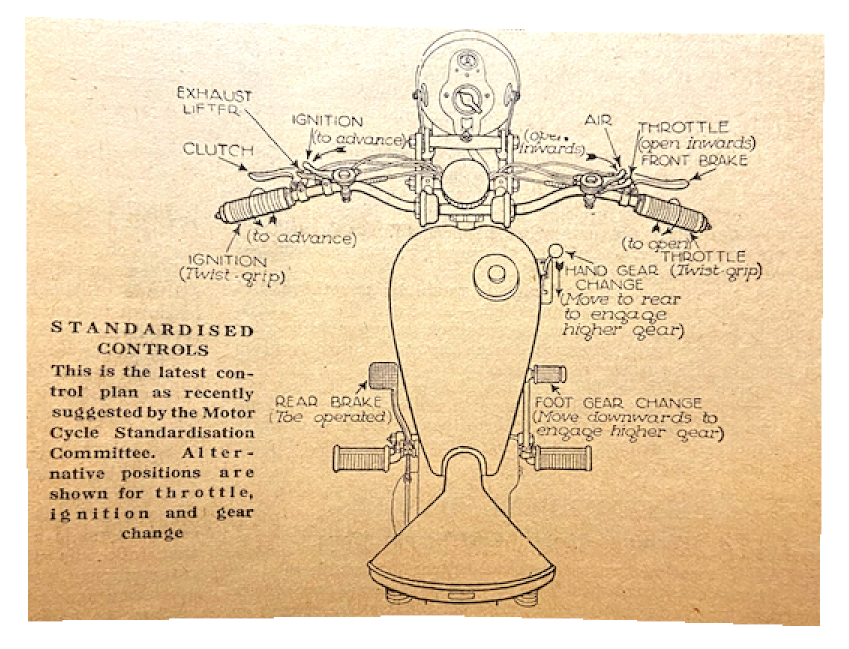
“ENGLAND WON THE THIRD Speedway Test of 1936 at Belle Vue on Saturday, when they beat the Australians by 70 points to 36. This puts England ahead in the series by two matches to one. As a match—well, I have seen closer and, therefore, more exciting Tests. As a Test occasion, however, the meeting, and everything connected with it, was without parallel. With Max Grosskreutz, who would normally have skippered the Australians in this match, out of the side through injury sustained in the New Cross Test, with Ron Johnson riding with three broken ribs strapped up with plaster, and with Mick Murphy’s ankle in such a damaged state that he should never have turned out at all, I think it was a foregone conclusion that England would win, and by a fairly big margin. The Australians, in fact, would have had every excuse had they approached the match with a ‘beaten-from-the-start’ attitude, but they did not. They tried to win in spite of the fact that they were fighting a losing battle, and the final score was by no means a true indication of the racing, much of which was really first-class.”
“A ROADMAN OF WOMBWELL (Yorks) made himself a set of false teeth by melting down and old motor cycle crank case and pouring the aluminium into a mould.”
“MOTORIST (AT WOOD GREEN police court): ‘I don’t go as fast now as I did when I was young.’ Magistrate: ‘And how old are you now?’ Motorist: ‘Twenty-three.'”
“‘I DID NOT BREAK the news about my car being smashed up to my wife at once. I told her cousin first, and he acted as a sort of shock absorber.’—Man at Highgate police court.”
“RAIN MOST OF THE NIGHT and morning before the Cheshire Centre freak hill-climb and rally at Holt Bank, Edale, Derbyshire, threatened to undo all the good work of the Manchester Eagle MC, -who were responsible for the organisation. The attendance, on such a morning, was naturally rather thin, and only a dozen clubs turned up complete and in time for the rally count, although others rolled along later. And one of the most distant clubs in the Centre—Flint and District—presented 50% of its membership, which, coupled with its mileage, put it at the top of the list, with the Nil Desperandum (Macclesfield) club as runner-up. After the rally business was through everybody moved across from the sodden and miry fields to the equally miry hill-side where the long straight track, marked by bedraggled flags, lost itself in the mists of the summit several hundred feet higher up; obviously it was going to be a case of how little distance up to win, rather than how far up.” Suffice to say the lightweights did just as well as the heavies and despite some crave attempts the sodden hill proved unclimbable. And on a personal note, I’m full of admiration for those hardy clubmen who turned out in foul weather for a rally and then tackled a ‘freak’ hill on the machines they depended on to get them home. Heroes one and all.

“FROM THE LETTERS that have been published concerning the lack of comradeship on the road to-day as compared with the state of affairs that obtained a few years ago emerges the fact that more often than not it is a lorry driver who gives help when it is needed. This only confirms my opinion that the drivers of the ‘heavies’ are rapidly becoming the one and only class of road user among which true comradeship and a sense of road craft is universally prevalent. These men live on the road, and they live by driving. Their job is responsible, and a foolish action may involve the loss of their means of livelihood. The strict speed limitation on heavy vehicles also makes the lorry driver an artist in keeping up a decent average speed on a low maximum by the old trials riders’ method of always keeping the wheels turning, no matter how slowly. If everybody drove as the lorry driver does, as a really serious job, there would be much less fuss and bother about road safety. , And I do commend his quick ‘up-take’ on anything to do with the road. I remember very gratefully how, one broiling summer day, I was walking down a busy road to my stranded outfit with a can of petrol. Car after car whizzed by, but a big lorry and trailer slowed down, and the driver called, ‘Jump on the step, mate.’ And when the outfit came in sight he did not ask if it was mine; he merely bawled above the thunder of his engine, ‘Step off when I slow down,’ and was gone without waiting for thanks. Obviously, one who could put two and two together.”
“THE RESULTS OF THE ACU National Rally tell a story of enthusiasm and endurance that will long remain a credit to all those concerned. In the mileage competition, out of a total of 402 entries no fewer than 308, or 76.6%, checked in at Skegness, and between them they totalled the huge aggregate of 170,800 mile-age marks, equal to an average of 554.5 marks per competitor. And only one finisher failed to gain an award! Starting from different parts of the country, many of the riders succeeded in cramming into the 27 hours available the maximum allowable mileage of 729, and in addition called at up to 40 controls on the way! To average 27mph for 27 hours is no mean feat given perfect weather conditions, but when it is remembered that during the Rally week-end most of the competitors encountered more or less continuous rain and flooded roads the performances are all the more amazing. And it was not merely a case of big engines getting through: note the performance of RVE Jones, who, on a Francis-Barnett Plover, covered the full distance, and with a total of 775 marks deservedly won the 150cc class award. Miss PAM Fawcett (Velocette) and Miss P Cooper (Norton) tied for the ladies’ prize with 785 marks. We offer our congratulations to the winners, the brothers GR and AA Smith (250 Levis and 350 Red Calthorpe), who tied with the excellent total of 809 marks. Congratulations are also due to the Yeadon-Guiseley Club for winning the inter-club challenge trophy for the second year in succession with a figure of merit over double that of their nearest rivals. The club had 80% of its members present sat Skegness, while the 27 members who took part in the mileage competition gained between them 13,480 marks. Ninety competitors won gilt plaques, 106 silver plaques and 111 bronze plaques, while there was one no award. [And what a pity the Blue ‘Un didn’t interview him or her on their reaction to that—Ed.]
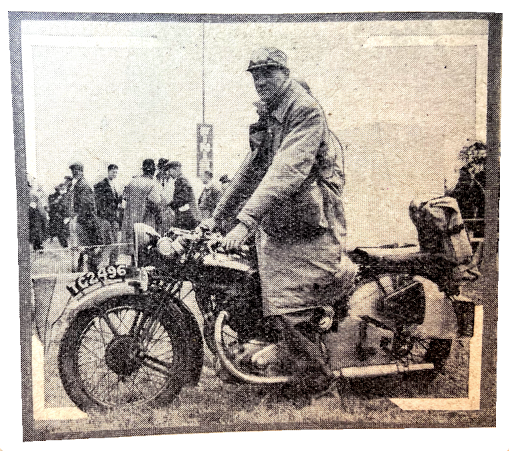
“A KETTERING MOTORIST was bitten by an Alsatian dog after he had pulled up in order to avoid running over the animal.
“‘IT’S A WASTE OF TIME to blow your hooter before turning into the North Circular Road. Everybody else is doing it; and they don’t listen, anyway.’—Motorist at Willesden police court.”
“‘IF WE WERE AT WAR and a person did not stop when a sentry said “Halt”, he would be shot. To-day we are at war against road accidents, and persons who do not stop may expect to be brought before the court.’—The Chief Constable of Northampton to 11 cyclists fined 5s each for ignoring ‘Halt’ signs.”
“THE CHIEF CONSTABLE of the West Riding Constabulary has instituted a system of police patrols at known danger spots. ‘I don’t want to catch motorists exceeding the limit,’ he says. ‘What I want is to stop careless driving.'”
“THE PERSON WHO USES the roads recklessly, whether as a driver or pedestrian, is evil. Such a person risks his own life and other persons’, including yours and mine.’ Mr Hore-Belisha, in an address to schoolchildren.”
“COMPETITORS OF THE FICM International Rally in connection with the Olympic Games are due at the finishing control in Berlin to-day.”
“A NEWSPAPER CORRESPONDENT suggests that any motorist blamed for a fatal accident should be made to forfeit his vehicle.”
“‘I SHOULD SELL YOUR CAR when you get home—or perhaps you’d better burn it.’—Willesden magistrate to a motorist.”
“MOTORIST AT SHEDFIELD, Hants: ‘there was a woman driver in front of me. I don’t like staying behind women drivers. That’s why I was speeding.”
“AA PATROLS RENDERED ASSISTANCE to members on nearly 4,000,000 occasions in one year and covered more than 37,000,000 miles.”
“UNDER A NEW REICH DECREE, German motorists who are unable to compensate an injured party for any damage will in future have their driving licences withdrawn.”
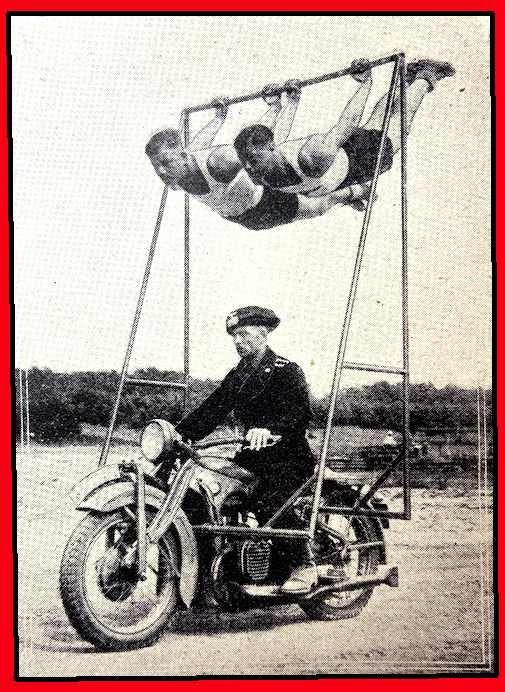
“THE DUBLIN ‘HUNDRED’ HANDICAP race, held in Phoenix Park last Saturday, was won in the most astonishing fashion by an absolute novice, a local man riding under the name of ‘Max Joyner’. Receiving ten minutes start from the two scratch men, M Barrington (499cc Vincent-HRD) and TG Byrne (499cc Rudge), he scored a runaway win on his 499cc Rudge by over seven minutes, at an average speed of 70.04mph. ‘Joyner’ is a complete novice, having owned a motor cycle for only three mouths and never having taken part in any competition previously. Yet he rode like an expert over the wet roads and, even more astonishing, made fastest lap of the race at 75.73mph—only 4½mph slower than the absolute record for the circuit, which was made in 1934 by CHW Slanders on a twin-cylinder New Imperial. The conditions were so difficult that other riders’ lap speeds were mainly 6-8mph slower than in previous races. ‘Joyner’s’ machine was a standard 1936 Rudge Ulster prepared by himself, so that there must have been at least half a dozen machines in the race with higher maximum speeds; so his performance was a most remarkable one in every way.”
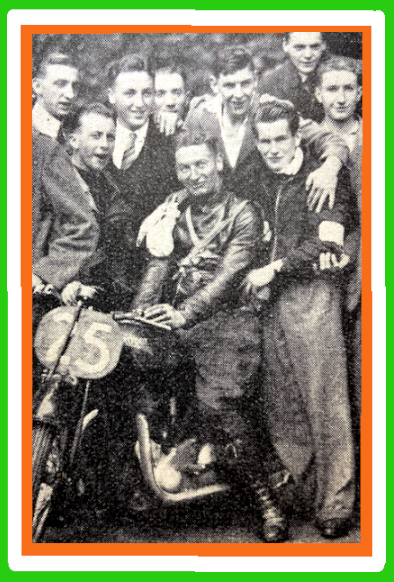
“THE DAY OF DAYS in the Scottish motor cycling world did not dawn too brightly, but that did not in any way damp the enthusiasm of the hundreds of motor cyclists who converged on St Andrews on Friday night and Saturday morning for the Championship Meeting. However, about two hours before starting time the rain ceased and a high wind gave promise of driving away the rain clouds. The tide rolled back from the sands, pits were marked off, rakish-looking machines began to arrive on trailers, and crowds began to line the course…Results—Scottish Speed Championships: 250cc, WJ Smith (0K Supreme); 350cc, JH Blyth (Norton); 600cc, T McEwan Jnr (Norton); Unlimited cc, T McEwan Jnr (Norton).

“IF YOU TAKE A KEEN interest in motor cycling matters in general, as well as in your own particular bus, you will have a pretty shrewd idea of what kind of machines Continental countries show and race. It is not so easy, however, to say off-hand what the average rider in each country prefers. America is perhaps the easiest problem, for there are comparatively few manufacturing firms, and their products are almost entirely of the large and heavy class. On the Continent there are many manufacturers and more types of machine. The big shows, such as those at Paris, Berlin and Milan, though representative of the country’s products, do not necessarily provide a reliable guide to the type of machine which is in general use unless one has a good working knowledge of the country itself and the prevailing conditions. Even less do racing machines help as in this direction, since Continental manufacturers are more apt to produce special models for racing purposes than we are in this country. For instance, it is possible to give a rough general specification which would cover the vast majority of British racing and most touring models, and the differences would lie only in details and materials employed. I doubt it this would be possible in any other country. Let us make a start at home—with the certain knowledge that if I endeavour to indicate a certain specification as typical, the protagonists of other types will say that I am wrong. Well, my specification would run as follows: single-cylinder engine, overhead valve gear, detachable cylinder head, four-speed gear box, all-chain drive, separate engine and gear box, parallel-link front forks, eternal expanding brakes, dry-sump lubrication, cable-operated controls, hand clutch, foot-rests (as opposed to foot-boards), saddle tank, and tyres from 3 to 3½in to suit the size and type of machine. Within this

specification we should find such differences as overhead-camshaft or push-rod operation for valves, cradle- or single-tube frames, open or enclosed primary chains and a choice of engine shaft, clutch or rear wheel for the position of the main shock absorber. Not for a moment do I infer that we have no good side-valve units or twin- and multi-cylinder or two-stroke engines, but I do think that my specification covers the average British machine, touring or racing. As regards motor cycles, we are the most standardised producers in the world, and I am not quite sure if is a good thing. It is true that our products are admired and purchased throughout the world, but we are getting to a stage when anything which does not comply with this specification is regarded as almost freakish. Along this path progress does not lie. Let us turn next to France, a country which is seldom represented in the important road races of to-day. A Paris show is always interesting and reveals a wide and catholic trend of thought. Until the last year or so one was accustomed to see two or three four-cylinder models, several shaft drives, and a few pressed-steel frames. Enquiries gave one the idea that some of these were show models which were not often seen on the road. Later, as a result of the economic depression, one finds that the fancy models have disappeared and that there remain a majority of moderately priced utility machines which, in the main, resemble British types, and sometimes are fitted with British engines and accessories. Unit construction is more common in the higher-priced models, end there is, of course, that admirably designed and constructed flat-twin Gnome and Rhone, with its transverse engine, unit construction and shaft drive. This machine is, however, no more typical of the average French motor cycle than, say, the Ariel ‘Square Four’ is typical of British products; both are just admirable examples what can be done rather than what is generally done. The ‘workaday’ machines deserve their name, for they have to stand up to hard treatment and are often driven at comparatively low speeds in top gear to an extent which is most unusual in this country, and not very good for engine and transmission. Most of them are 500cc singles, but there is a fair sprinkling of 350s. There remains, however, a small but select market for really ‘hot’ machines. There is another side to the French market, which is perhaps the most important of all,

certainly from a numerical viewpoint. I refer to the large and increasing output of tax-free velomoteurs. These little machines must weigh not more than 66lb, and it is wonderful what a lot the French manufacturer has learned to include at the weight. Most have two-stroke engines of about 100cc, and many have linered aluminium cylinders to save weight. A clutch is almost always included, and often a two-speed gear. One ambitious manufacturer of this class of machine has even gone to the extent of producing an overhead-valve four-stroke built as a unit with three-speed gear. There is a tremendous sale for these machines in France and their equivalents in other Continental countries, for although the regulations differ, most manufacturing countries in Europe permit ultra-light motor cycles to be used tax free. In this respect we in Britain are badly handicapped, for not only does taxation, insurance, etc, prevent the sale of many thousands of machines of this type in our own country, but also the lack of experience to be gained by manufacture handicaps our manufacturers in competition for the Continental trade. French motor cycles are rather apt to run to vivid colour schemes and motifs which appeal more strongly to their owners than to our purely utilitarian mentalities, but no one can deny that they have an eye for line in sidecar coachwork which it would be difficult to surpass. Next to France we most consider Belgium. The two best-known products, in British eyes, are the FN and Sarolea, both notable for their remarkably straightforward and solid construction. Both in the main comply with the British specification already laid down, but the FN in particular differs in that unit-construction is favoured in most models. Both these makes have done a useful bit of racing, and the FN (supercharged) holds world’s records in the popular 500cc class. In the main it is probably fair to say that the conditions of riding and types of machine are much as in France. It is when one passes on to Germany that one finds some of the most interesting and thoughtful designs. Mt

mind, and I expect yours also, swings instinctively to BMWs and DKWs of the TT type, but perhaps this is hardly fair. The former, it is true, is representative of the skilful, clever and sturdy design and construction to be found amongst the more expensive German machines, but except for police and other officials it has only a moderate market because of its price. The latter is a purely racing machine and bears little resemblance to the thousands of DKW two-strokes which are sold in Germany and in other countries. These standard DKWs are of normal construction but have the flat-top piston for which they are famous. There are other first-class two-strokes, some of which have their exhaust ports facing rearwards, which enables straight pipes to be. used, and two-strokes form the main plank of the utility market. All new motor cycles are tax free and riders of machines under 200cc are not required to undergo the stringent German driving tests. Among the larger and more expensive class there are, in addition to the BMW, the flat-twin Zündapp and Victoria models and a flat-four Zündapp, but there are also vertical single NSUs and single-cylinder Ardies and Standards, which are more conventional to our eyes. There is, in fact, a fairly extensive class of riders who admire British machines and ride their German equivalents. Several German manufacturers have adopted unit construction, and the big single unit NSU is an impressive piece of work. Germany leads the way in some electrical matters, and dynamos having a very large output are common. In one case an electric starter is fitted. Italy also shows skill and originality in design, but singles are the rule, and, although the engines are of remarkably clean and workmanlike construction, Italian riders, like our own, are fond of taps to twiddle, with the result that one is apt to see a certain number of untidy machines on the road. We are inclined to think of the marvellous racing Guzzis as typical of Italy’s products—and we are right to this extent, at any rate—that spring frames are common and popular. This may be brought about by the Italian habit of staging high-speed endurance tests over second-rate roads. We think also of the transverse four-cylinder Rondine, but this beautiful piece of work is the product of a car firm and is not so common on the road. Italy has produced some very hot 175cc four-strokes, but this type appears to be giving way to some extent to the 250cc. Most Italian machines are ohv singles with a general specification similar to our own, but we can never forget the wonderful showing of the side-valve Gileras in past International trials. German machines are common and British machines are popular, especially for racing, in Austria, from which country comes, amongst others, that interesting double-single (and double-twin) two-stroke, the Puch. Economic conditions in the country are apt to restrict the market, although a limited number of very high-class-British and foreign machines are imported annually. Czechoslovakia sticks mainly to singles, of which the Jawa provides good examples in all sizes from small two-strokes upwards to big ohv singles. The Scandinavian countries, and to some extent Holland, are by way of going in for twins. The Husqvarna is the Scandinavian machine

best known in. this country but there are quite a number of singles in use a1so. In Holland, from which country comes the Eysink, singles are probably in the majority, and there is a large class of ultra-light two-strokes, encouraged by favourable regulations. Shall I whisper that this is the land for the unregenerate, for noisy exhausts appear to be quite fashionable? Now I have dealt with most of the European manufacturing countries except Switzerland, the home of the Motosacoche. These admirable machines have a world-wide reputation. There is, however, a small but steady sale of British super-sports machines, in spite of very high insurance premiums and the cost of import. America is probably the only country in the world in which the single-cylinder engine is outnumbered, and the majority of the output consists of twins and fours from 750-1,400cc. Perhaps the types have been developed to suit the conditions—either immense distances over good, fast roads or else tremendously heavy going. In this country, however, we should consider American motor cycle engines to be too big for a light saloon car. I do not think I have left out any of the major motor cycle producing countries, and it remains for me to point a moral. This is a pastime from which shrink, but if I must…Every country which produces motor cycles in any quantity makes at least one really good one and a fair number of useful medium-priced machines, but wherever you go you get what you pay for and certainly not much more. The single, and mostly the big single, is popular throughout Europe, and there is a big market for the small ultra-light two-stroke in many Continental countries. In spite of excellent British products in this line we still have more to learn about the subject. I do not think that British manufacturers need fear comparison with equivalent types from other countries, but they have not the commanding lead which they used to enjoy and might well pay more attention to one or two Continental developments. That British machines do not have a much larger sale on the Continent is due to economic causes rather than to design and manufacture. American machines are popular m a few Continental countries and in some of our colonies, but British machines are more than holding their own.”—Ubique
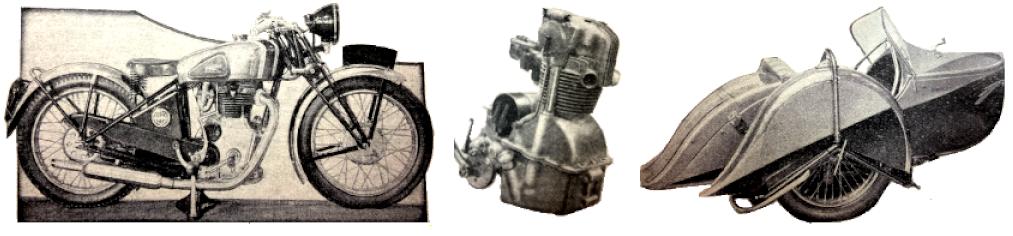
IT IS A TRUTH UNIVERSALLY ACKNOWLEDGED that Derbyshire offers more interesting off-road riding than North London. Which is why, as the Blue ‘Un reported, “For the second time the Wood Green Club made Longnor, near Buxton, the headquarters of its open Clayton Trophy Trial, and again it made a great success of the event, which is a tribute to the enthusiasm of its officers and members, for to organise an open trial so far from home is not exactly by way of being a joke. There was also the problem of this wonderful 1936 summer weather to contend with, and the forecast for last week-end was nothing to write home about. However, the Wood Green folk apparently brought their own weather with them to Derbyshire. Anyway, while the local wind blew a gale and the local rain occasionally sent down a few threatening drops, there was quite a decent sample of warm sunshine from time to time, and nobody, on recent experience, wanted to accuse that of being local! Out of a very representative entry of 74 (all solo riders) there were 67 starters, and the route of about 40 miles included 20 observed points, plus a brake test and a special observation test. No one gained all the marks possible on the observed sections, and LG Holdsworth (499cc Royal Enfield) and WA West (497cc Ariel) tied with a score of 85 marks each. The special observed test, Green Wood, had 12 sections; ties were decided by noting how many sections were covered before failing or footing. Both Holdsworth and West negotiated three, so the tie still existed. This meant reference to the brake test, and West stopped in 48ft 6in while Holdsworth took 59ft 1in, so once more he missed an open premier by a small margin in a deciding test—unlucky George! After starting from Longnor, the first observed hill was Hollinsclough, but it was observed down, and, as the surface was still a little slimy after the morning’s rain, about a dozen people had to put their props out to retain their equilibrium, and a few of these were not successful in the effort. JA Morton (493cc Triumph), VM Beach (598cc Sunbeam), TN Blockley (247cc Levis), and GHG Barton (497cc Ariel) all failed. Almost immediately after dropping down Hollinsclough came the climb of Little Hollins, a stony lane that contrives to look far worse than it is…Some of the southern riders were obviously strange to the hard and knobbly rocks of Washgate, and occasionally suffered spin because their tyres were too hard. AJ White (497cc Ariel) looked more surprised than anybody when he came round the first bend and saw the hill rising before him—he footed good and early. On the other hand, JE Breffitt (496cc New Imperial), the Nottingham rider, knew exactly what to do, and his model had obviously been prepared ‘just so’. The engine pulled at next to no revs, the gear ratio was neither too high for the engine nor so low as to encourage wheelspin, and the rear tyre was soft enough to absorb the steps and ledges in an enfolding embrace—a very pretty performance. A Southron who has become a Northerner by adoption (or adaptation), JH Kitt (349cc Rudge), tried the very slow method, but overdid it and had to foot, while Colin Edge (347cc Matchless), with his usual disregard of rocks and ledges, remained normally on the saddle and
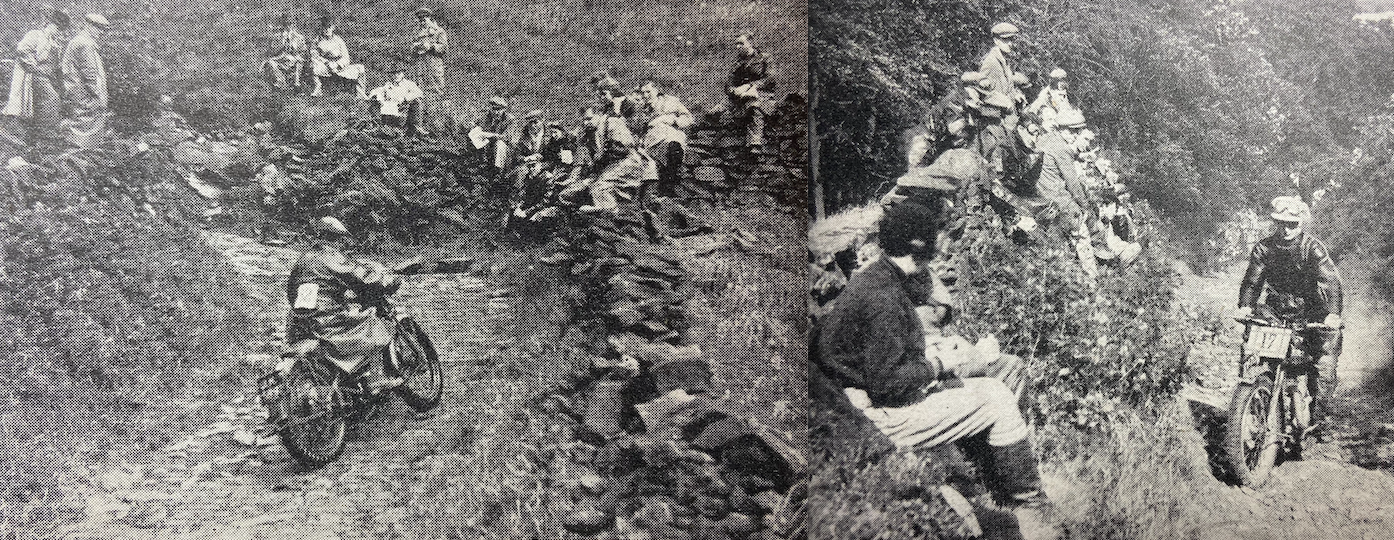
rolled over all obstacles at considerable speed. Then WA West (497cc Ariel), standing on the rests, made a particularly neat ascent, making some of the onlookers speculate as to the sort of stuff ‘these Southern lads’ practise on. Indeed, the strangers were outshining many of the locals, and even Hyslop (with Scott trial training) laid down his 250cc Triumph, and then after restarting had terrific wheelspin until the tyre bit into a hard patch, when the model reared up vertically, spilled its rider off backwards and almost plunged into the ravine. After these fireworks is was refreshing to see, some time later, AW Knowles (348cc Norton) climb the hill in a perfectly normal touring manner—no excessive revs, no standing on rests, no anything but just riding up. True, he dropped a foot once, but quite without excitement or ferocity. And Bill Clarke, too, with the Vincent-HRD, brought out spontaneous appreciations from the onlookers when they saw how his spring frame undulated over the ledges—’a galloping spring mattress!’ said one…The four sections of Flash had not much gradient but everything else—bog, rocks, grass, reeds and water. T Ridgeway, a local ‘novice’ riding a 1928 Velocette, and AJK Grover (348cc Ariel) from London were the only two individuals to cover a single section each clean…the majority of machines had to be manhandled out of the worst places…it separated the riders who have that resourcefulness in riding that enables them to keep going from those who stop…One rider only, LN Eyre (349cc BSA) made the complete passage—local knowledge and an aptitude for ‘scramble’ riding serving him well…The brake test on a falling gradient and a grass-grown surface, produced some surprisingly poor stops (from about 25mph in neutral) and also some surprisingly good ones, such as R Dee (348cc OK Supreme) in 21ft and WT Bult (346cc Royal Enfield) in 24ft. However, 60-100ft stops were by no means uncommon, and several riders fell. This test was taken shortly after Hollinsclough had been climbed on the homeward run, the climb being fairly easy and practically dry except for a slightly greasy approach. LG Holdsworth (499cc Royal Enfield), C Edge (347cc Matchless), AN Goddard (349cc BSA), R Davis (249cc Triumph) and AW Knowles (348cc Norton) made the most effortless ascents. Only three of the starters failed to complete the course, and the finishers included Miss M Twigg (349cc OK Supreme) who, having no competition for the ladies’ award, could not get it. But the organising club decided when the results were worked out that she should have a special souvenir. Results: Clayton Trophy (best individual performance), WA West (497cc Ariel), 85 marks; Le Vack Cup (second best performance), LG Holdsworth (499cc Royal Enfield), 85; Easterbrook Cup (best Wood Green MC member), KB Norris (248cc Red Panther), 80; Mrs Le Vack Cup (best lady competitor), not awarded; 250cc Cup, H Robinson (248cc Panther), 83; 350cc Cup, RH Snelling (346cc Royal Enfield), 83; Over 350cc Cup, JE Breffitt (496cc New Imperial), 80; Novice Tankard, AN Goddard (349cc BSA), 82; Wood Green Novice Tankard, HH Conran (349cc BSA), 75; Special Tankard (best performance on a pre-1930 machine), JJ Goudie (1929 499cc Rudge), 80; Team Award (one-make), Wood Green BSA team, PG Handford, EW White, HH Coman, 233 (walk-over); Team Award (any make), Thames DMC team, CN Rogers (346cc Royal Enfield), WA West (497cc Ariel), R Davis (249cc Triumph), 240.”

“ONLY ONE MEETING A YEAR at Donington is given over entirely to long-distance racing—the August meeting, when the Donington Grands Prix are held. Last Monday there were four events, three for solos and one for passenger machines not exceeding 750cc. From early in the morning competitors had been practising and hundreds of spectators who had been camping in the spacious grounds of the beautiful Donington Park were early astir to watch proceedings. As the morning wore on spectators poured into the grounds in hundreds, and by noon, when the 250cc event was due to start, the fences all round the course were lined several deep. Fortunately the course was dry and fairly free from dust after the heavy rain of the previous night. Clouds scudded across the sky before a stiff breeze and there was every prospect of a fine meeting…For the start of the 500cc Grand Prix the sun condescended to shine again. And well it might have done for there were 18 starters, including many famous Isle of Man men. From the fall of the flag it was obvious the race would be run at a very hot pace. Jock Forbes (490cc Norton) was the first to round Starkey Corner, but the rest of the field were only a fraction of a second later. On the first lap Stanley Woods (495cc Velocette) had leapt into the lead with ‘Ginger’ Wood (492cc New Imperial) and A Wellstead (493cc JAP) behind. N Croft (499cc Rudge) was soon at his pit with trouble, and as he got away again Stanley and ‘Ginger’ flashed down the straight with ‘Ginger’ just in the lead. Stanley came out of the corner first, but on the next lap ‘Ginger’ was just ahead again. Neck and neck they sped down the straight, Stanley gaining the lead on the bend only by leaving his braking a fraction of a second later than that of his rival. Behind these two the rest of the field were streaking, slow in comparison, but nevertheless very fast. A Wellstead
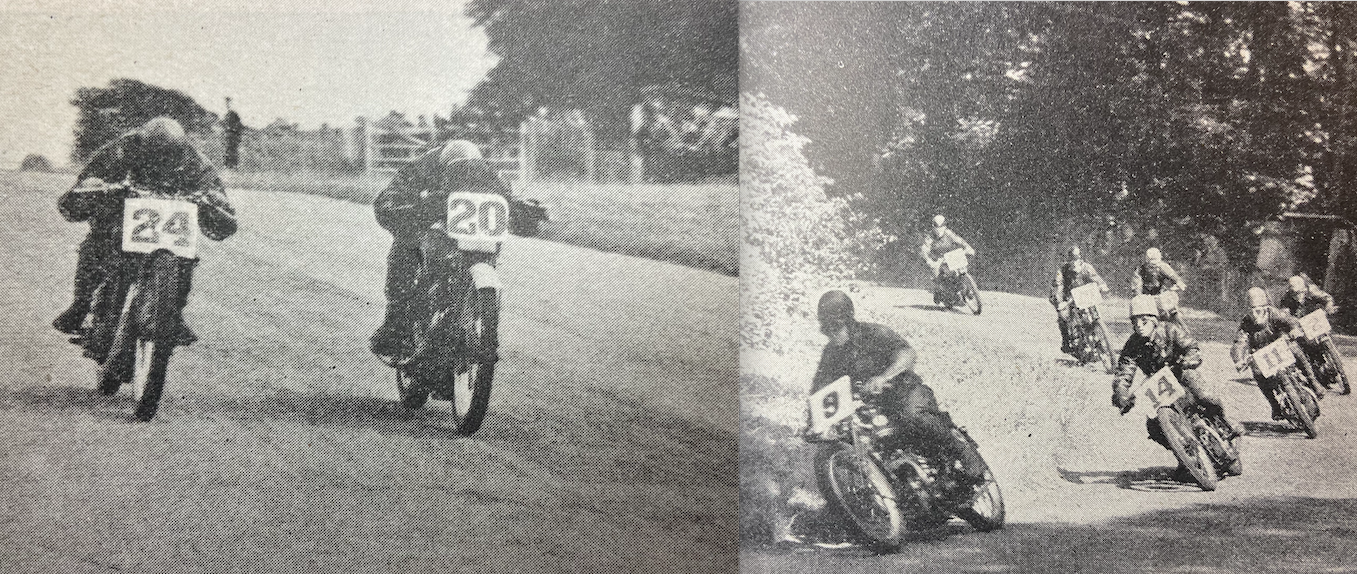
was barely holding his third position, for right on his tail were M Cann (490cc Norton) and HL Daniell (490cc Norton), with Cann sometimes in third place and sometimes in fourth, so close were they together. Two terrific duels had developed by the sixth lap, one between ‘Ginger’ Wood and Stanley Woods, with ‘Ginger’ just in the lead, and the other between M Cann and A Wellstead with nothing whatever between them. On the eighth lap ‘Ginger’ Wood still led with Stanley Woods some twenty yards behind, but M Cann had shaken off Wellstead, who had slowed fractionally, letting Daniell into fourth position. For the next three laps the duel between Stanley and ‘Ginger’ continued. Then on the 11th lap Stanley came round in front by some 20 yards. He was only to hold the lead for a lap, however, for at the end of the 12th lap he came in to his pit to retire, with expensive noises in the engine and lack of compression, leaving ‘Ginger’ Wood in the lead. Now Daniell and Cann came into the picture again, and Daniell, having passed Cann, set out to chase Wood. A Wellstead parted company with his machine at the Hairpin bend. Indeed, the pace was so hot that there were several spills and retirements in the early stages. As the half-way mark was passed the leaders’ positions remained unchanged. ‘Ginger’ was lapping very consistently and Daniell seemed unable to close up the gap that separated them. Gradually the field thinned out, and after 30 laps only eight men were left out of the original 18. Then, sensation! With only three laps to go, both Wood and Daniell were overdue, and when they eventually appeared Daniell was in the lead with Wood only just behind. Wood had run out of petrol and had had to push to the paddock to refill. Could Wood gain the few seconds necessary to beat Daniell? And then came some more rain to complicate proceedings. With only one more lap to go Wood was five seconds behind. Everyone waited on tiptoe. Then the riders flashed down the straight, and it was seen that Wood was in front—by a machine’s length! Truly a terrific finish to a grand meeting. Result, 500cc Race (100 laps): 1, S Wood (492cc New Imperial), 66.24mph; 2, HL Daniell (490cc Norton), 66.23mph; 3, M Cann (490cc Norton), 65.34mph.”
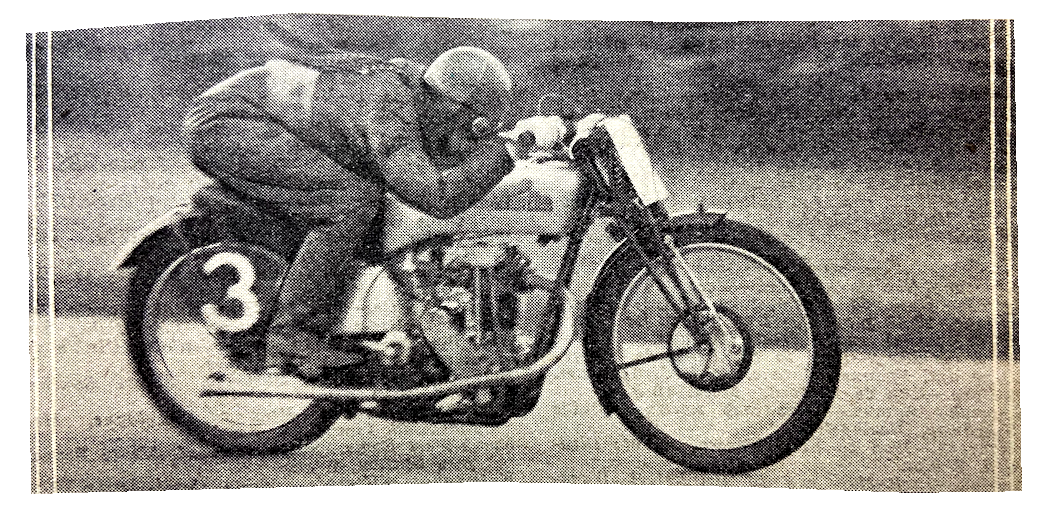
“THE ACU WILL probably ban foreign riders from joining British speedway teams after this season.”
“THERE WAS A Society for the Prevention of Street Accidents and Dangerous Driving in 1847!”
“WHAT IS SAID to be the world’s first plant for making Diesel oil from coal has been opened at Gawber, near Barugh (Yorkshire).”
“RE THE LETTERS THAT have appeared in The Motor Cycle anent ‘That Friendly Spirit’, I should like to relate an experience of mine. I own a BSA outfit and recently I took my wife for an evening run. While returning somewhere about 11pm we became stranded in the midst of a new housing suburb owing to lack of petrol. I eventually located a garage, which proved useless as it was a lock-up. Along came a kindly policeman, who upon learning my trouble was most sympathetic and did his utmost to find a spot of juice. Alas, all in vain. He thereupon took me on a route march and called upon a couple of tradesmen, but there seemed to be a dearth of petrol in the vicinity. We wended our way back to the machine where the policeman called upon a passer-by and together they proceeded to push the machine towards a yard they knew where it would be possible to put the outfit away for the night. Fortunately another outfit passed us, and the driver turned back and asked the trouble. Immediately he was informed he undid the bulb of his horn and proceeded to transfer some petrol from his tank to mine. I have since met this gentleman and reiterated my gratitude, but I have never seen the policeman since, but he will always have my sincere thanks for his ‘matey’ action.
‘BSA’, Wednesbury, Staffs.
“FOR LONG IT HAS BEEN HELD that ignorance of the law is no defence. Is it reasonable, however, to expect any ordinary motorist or motor cyclist to be au fait with the hundreds of laws and regulations that now affect the ownership and use of a motor vehicle? The number has doubled—possibly even trebled—over the past six years, and almost month by month the position becomes more fantastic. Even the police, it seems, have been unable to keep pace with the spate of laws and regulations. The annoying fact is that as yet there is not the slightest sign of the flow being stemmed. We are in favour of everything that helps to ensure that the roads are safe and pleasurable to use. Consequently, we do not suggest for one moment that there should be any slackening of right-minded effort to improve road conditions, but we urge most strongly that it is high time the whole motoring law was codified and simplified. The red tape that has accumulated over the years should be swept aside, and the multifarious acts and regulations combined to form an intelligible whole, so that the user of a motor vehicle, or, for that matter of a bicycle, has a fair chance of being able to obey the law in the letter as well as the spirit.”
“NEARLY TWO HUNDRED MILES of road within the city of Birmingham are to be floodlit. This is good news, indeed, because it means that when the scheme has been brought to fruition a quarter of Birmingham’s total road mileage will be adequately lit, including all the arterial roads leading from the City Centre and a considerable length of secondary traffic routes. Birmingham, as regards roads, is one of the most go-ahead cities in the country. Ten and more years ago it adopted the principle of dual carriageways. It has planned ahead, even if some of its ideas upon the subject of traffic regulation and the restriction to 30mph of apparently perfectly safe roads are open to criticism. In its big scheme of road illumination Birmingham is onward towards the ideal—that the roads themselves shall be illuminated and the need for lamps on vehicles eliminated. Another feature of the scheme that appeals to us is the decision to provide graded illumination on the side roads leading into the floodlit main roads. This is excellent, but the proposal is that the grading shall only extend over a distance of a hundred yards. Is this a sufficient distance? For ourselves, we doubt it.”
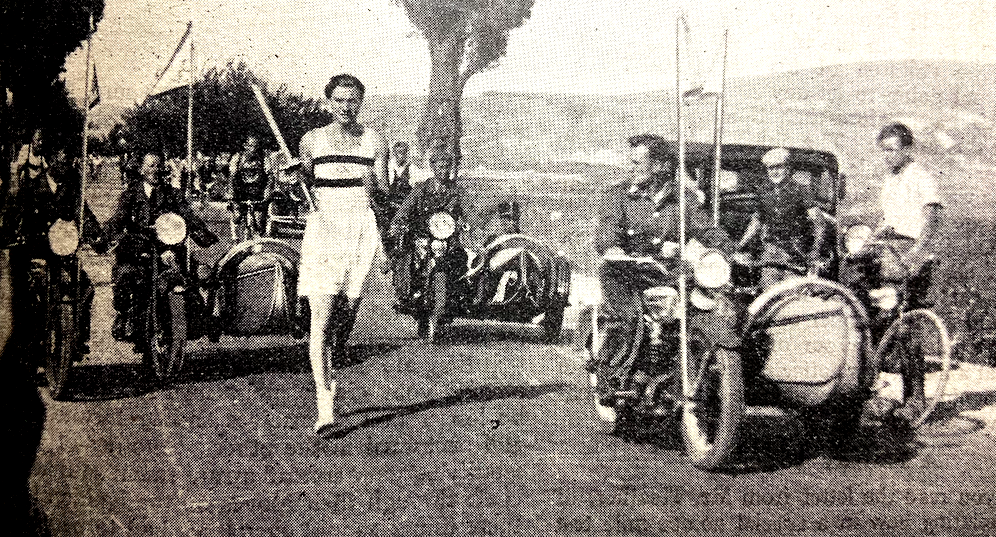
“PROPOSED USE OF LIGHT Motor Cycles for patrolling ‘beats’—cynics and others will probably say, ‘Another road danger!’ even as they did when the Post Office wisely decided to save time on the delivery of telegrams by mounting telegraph messengers on motor cycles. The experiment, however, proved an outstanding success, and the freedom from accident little short of amazing. We believe the present experiment of mounting policemen detailed for patrol work on motor cycles will also prove an outstanding success…The rapid extension of built-up areas around London has brought fresh problems into being, and the question of increasing the efficiency of the police on patrol work by mounting them on motor cycles has reached the stage when actual experiments as to the best possible type of machine are being carded out. Lightness, ease of control and reliability are obviously the most important features of a machine for such work.”
“THE REGULATIONS FOR THE 1936 International include allowance for a check almost immediately after the start each morning. This is inspired by the fact that in the previous events quite a large percentage of the men have experienced difficulty in starting up from cold every morning. I beg to repeat that this problem is responsible for a great many men abandoning the motor cycle as they begin to age. Car engines invariably start hot or cold at a touch of the switch button, except on really severe mornings in winter. Ill-maintained motor cycle engines are often laborious and uncertain starters, both when hot and cold. We may be growing ‘nesh’ as a nation, but the fact remains that middle-aged men resent repeated kicking, especially when they are heavily clad in weatherproof overalls.”—Ixion
“IN THE ACU TESTS of the International riders and machines at Brooklands the quickest man took about 8min to drop out the rear wheel, strip cover and tube, refit, inflate, and replace wheel. Does memory betray me in that I was rather shocked by this figure? In my youth we used to practise this particular stunt for End-to-End record purposes on a much simpler layout. We used belt drive with no pedalling gear at the date I have in mind. The procedure was to unhook the belt and spin the rear spindle nuts off with 8in tommies; the wheel would then just tumble out of big, plain fork-ends; you could rip the beaded-edge cover off with your fingers, and the only slow item (as we had no air bottles) was pumping up the tube. But offhand I should guess that the job took a man like Hart-Davies about 5 minutes maximum, timed from when his back wheel came to rest until he pushed off to restart. Am I wrong? Probably I am right, because the wired-edge cover takes rather more coaxing off than the old beaded-edge, and the wheel wants rather more wangling than those obsolete, simple hub assemblies. Anyhow, the job was so swift and easy that in one Six-Day trial I actually fitted a new back wheel cover every day as a precaution. Other maintenance jobs were proportionately speedy; it was by no means unknown for us to decoke during a trial, in order that the engine might be at its best for the hills in the last three days; and certain engines could be decoked in half an hour by a good operator.”—Ixion

“MAGGIE, BLESS HER ANCIENT innards, gobbled up the miles from Glasgow like a plucked ‘un. She seemed to sense that the sunny land of France lay ahead and not a single stutter marred the even rhythm of her song till we drew up in the lee of the chalk cliffs of Dover. In two hours we were in France. La Douane, in all dignity of official uniform, with bristling moustaches and pendant cigarette, slowly approached. ‘Rien à declarer, Monsieur,’ I proudly enunciated (and the glory of those trilled ‘r’s’ would have warmed the cockles of my old French teacher’s heart!) He raised a whimsical eyebrow, scrawled a mysterious symbol on my packs and said. ‘Nothin’, eh? OK.’… I thought I could distinguish a titter in Maggie’s exhaust note as I crept away. In passing let me mention that the streets of Calais, and indeed, of every French town, were apparently made by a gang of drunken navvies suffering from a ‘trials-route complex’. Pedestrian tourists call these abominable streets ‘quaint’. I called them a variety of names which are unprintable. In the first kilometre over that sacré pavé I lost one fishtail, one rear lamp, my temper, and all my dignity. My route took me along the coast of Brittany, and wherever evening found me I made my camp, and everywhere found a ready welcome from the French people. Often my request for a corner of a field for my tent was met by the offer of the use of the hayloft, or, indeed, of a bedroom in the house; and these I always gladly accepted, for, fond as I am of camping beneath the stars, there is a

difference between Scottish heather and hard-baked French clay as a mattress for weary bones. The beauties of the coast of Brittany have been too often and too well described for me to repeat. Suffice it to say that it was with reluctance that I turned my back to the grey walls of old St Malo, took a last look at the golden sands, white surf-line, and unbelievably green sea of the Côte d’Emeraude, and headed inland for Paris. Meanwhile, Maggie, poor soul, was suffering from her change of diet. The queer petrol which we had to accept, coupled with the heat of the sun, were playing havoc with her digestive system, and she had frequent attacks of hiccups. Indeed, at one of the busiest crossings of Paris she disgraced me by finally fading out right in the middle of the road, to the extreme annoyance of about 3,000 taxi-drivers, who arrived simultaneously with their cabs. They called me—amongst other things—a ‘maquereau’…I wasn’t sure what this meant, but it sounded decidedly fishy ! We rolled across the battle-scarred plains of Champagne and Lorraine, and eventually arrived at Strasbourg. With the Black Forest came mountains, green fields, ancient castles, rushing rivers, and towering pines. The cool mountain air cured Maggie’s indigestion and she rushed merrily up the winding road that climbs through steep aisles of trees towards Freudenstadt. In Oberammergau I saw the unforgettable spectacle of the Passion Play; in Munich drank the world’s best beer; and in Berlin stuffed myself with sausages and sauerkraut. So with palaces and pastry, sauerkraut and schlosses, bridges and beer-gardens, the

kaleidoscopic panorama slid on. Magdeburg, Brunswick, Hamelin, and eventually Cologne. Along the left bank of the Rhine I meandered to Mainz, and here an old friend of student days took command. Maggie was despatched downstream in a coal barge, while we, clad principally in bathing costumes, drifted down with the current in a canoe. There is no finer way of appreciating the beauties of this wonderful river than by canoe. When hungry, we pulled into one of the numerous Rhenish villages and—well, any food is good when washed down with Rhine wine. When we wanted to bathe we simply strapped down the paddles and rolled over! Bed and breakfast everywhere cost only two and a half marks, that is about two and sixpence, with registered marks. Too soon the spire of the Dom hove in view and Maggie and I, reunited, were trundling towards Aix-la-Chapelle and Belgium. Except for nearly being jailed as a spy after my trying to camp on the military territory which stretches for a long distance from the border, nothing exciting occurred. But the roads…holy smoke! I had thought the roads of France bad, but those of Belgium, and especially of Liége…! However, the universal kindness of the Belgian people made up in a great measure for the road conditions. As almost every farmer kept bees as well as cows, milk and honey literally flowed in the land. I gasped with amazement at the Grottoes of Han to see the weirdly magnificent stalagmites and stalactites in those wondrous subterranean caves; and I listened with bated breath to the swelling chorus of the famous carillon at Bruges. Two days’ rest at Ostend followed and then a final glorious dash along the Littoral. Customs…Customs again…a third time Customs, and, lo! we stood again beneath the chalk cliffs of Dover. At six next morning Maggie’s heart was pulsing with British petrol, and by nine that same night her tyres were skimming swiftly over the smooth surface of Sauchiehall Street. ‘Maggie,’ I said, as we slid into the garage, ‘we’re home again, and I’m proud of you.'”
“TRAFFIC TONNAGE ON Great Britain’s roads has increased by 34.5% during the four years 1931-35, according to the Ministry of Transport….There was one motor vehicle to every 21.3 persons in Britain in 1935. Over 1,250,000 people are now employed in the motor vehicle industry.”
“JUST BEFORE THE HOUSE of Commons rose for the recess quite a number of questions of interest to motor cyclists were fired at the appropriate Ministers. Our old friend Captain Strickland, of the BMCA, tackled the Home Secretary afresh on the subject of motor cyclists riding together and stopped by the police at the same time being summoned to attend court on different days. Two instances were postulated, and in both it was stated that the Home Secretary was looking into the circumstances in order to find out why the charges were dealt with on different dates. It can be very unfair to fix different dates, because then, unless the two men concerned each manage to get a couple of days off their work, they cannot give corroborative evidence. Another MP, Mr Windsor, tackled the Home Secretary on a speedway matter. He asked whether the Home Secretary’s attention had been drawn to the increasing number of speedway accidents, and whether he was aware that this was due to a lack of elementary precaution; that, because the riders were not regular employees, very little regard was paid to their safety, and riders unfit to take part on account of previous injuries were even encouraged to continue riding? Mr Windsor wound up by asking whether the Home Secretary would consider instituting an enquiry. Sir John Simon’s answer was brief—he did not think an enquiry into the sport of motor cycling was called for. That’s not the whole list of questions on motor cycle matters—Mr Kelly wants to stop window-cleaners carrying ladders and buckets on ‘motor and other cycles’ because such impedimenta make it difficult for them to give proper hand signals.”
“MOTORISED BICYCLES (THE UBIQUITOUS velomoteurs of the Continent) have not as yet ‘taken on’ in the industrial North. But public interest in their possibilities could no doubt be awakened. Not long ago I saw a colossal crowd in Liverpool, and thinking it must be something serious I edged in and found that the attraction was a German miniature (with its international ‘D’ plaque almost hiding it) standing unattended by the kerb. During the past week or so I have been impressed by the huge crowds continuously contemplating a Cyc-auto standing outside a dealer’s in Manchester’s street of motor showrooms—Deansgate. Postmen, tram conductors, clerks, salesmen, old ladies, business men, sailors, messenger boys, flappers—they all looked as though the little machine was suggesting possibilities to them. Yes! I think the velomoteur is just about due, in the north as well as south. Only we need a leaf from the Continental book in such matters as taxation and insurance.”
“THE EUROPEAN SITUATION, Navy week in three important ports, and the number of ships away from home waters—these, it was decided, were the reasons for the small number of Naval officers who turned up for the Arbuthnot Trophy Trial which the ACU was holding last week on War Department land near Camberley. Precisely two Naval officers entered. Instead of calling everything off, the ACU let the two concerned, Nash and PHC Illingworth, have a race over the heathland on their own. All went well until Nash found a tree in the light! In view of the minute entry it was decided not to award the Arbuthnot Trophy itself.”
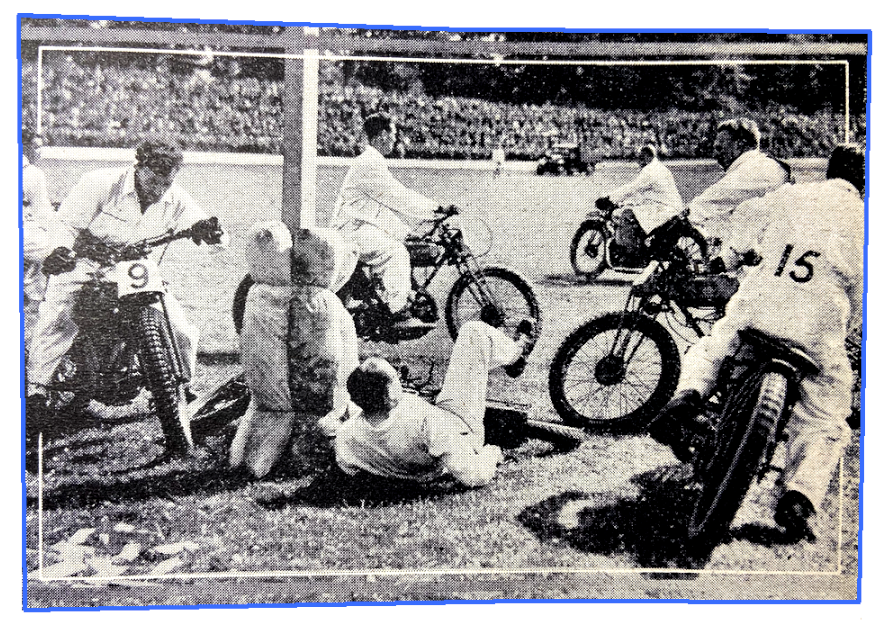
“YOUR CORRESPONDENT STATES that so far as he knows there is no 24-hour International motorcycle race in the world. May I correct this error and ignorance concerning sport on the Continent? Since before the war 24-hour races for motor cars, motor cycles, cycle-cars and even bicycles have been great favourites in Europe. The French editions of this race have generally gone under the name of Bol d’Or (Gold Vase), and the motor cycle counterpart has been held in the past few years in the Forest, of St Germain, near Paris, at Whitsun. This year’s winner was the Belgian, Craet, on a 500cc Gillet-Herstal covering 1,285.58 miles in the 24 hours (average speed 53.5mph). The machines are driven by the same rider throughout the race, which explains the low average on a closed circuit; but what a wonderful test for man and machine! In Belgium a great number of the motor cycle clubs organise 24-hour races, but on unguarded roads, with set average speeds which are severely controlled at various points on the route. So, after all, there is ‘nothing new under the sun’.
‘Sarolea 600cc’, Malines, Belgium.
“SOME OF YOUR READERS appear to think the driving test is unfair, so I would like to give my experience. Previous to my test I ‘swotted’ all the articles given in the ‘Blue ‘Un’ on the test, learned the Highway Code properly and did as much riding as possible in the three months. I had to wait half an hour for my test (during which time I developed a bad attack of ‘nerves’, so that when it came to my turn I was not feeling too happy. However, it was extremely simple, consisting of questions on the Highway Code, running along the road, stopping and starting on a hill, manoeuvres in traffic and an emergency stop. It was all over in 15 minutes. The examiner was extremely courteous, and was amused when I told him I had expected something much worse. 0n the whole, I fail to see why anyone possessed of any common sense and riding ability should fail, unless it be through gross carelessness or nerves.
‘Eighteen Years’, Sunderland.”
“WHY SHOULD A 500 do 100mpg at 35mph, while a 250 does only 80mpg at the same speed? Two road tests in one of this year’s issues of The Motor Cycle. My ‘A2’ does 100mpg, taking an average over six months. with an almost dead accurate speedometer—quite good for a 1931 350. My idea of what a good motor cycle should have: Good brakes, good head lamp beam, a really efficient front mudguard, Magdyno gear incorporating free-wheel (like those on rear wheels of bicycles), no instrument panel, rain deflector on tank, enclosed valves, a back wheel which comes out easily, and, please, no speedometer in the tank. To conclude, if British, motor cycle manufacturers would push sales in Canada, and have a really decent spares service (not forgetting tyres), they could do quite a big business—when times improve over there, anyhow. Here’s to the best and healthiest pastime of all—motor cycling!
Alan W Smith, Edinburgh.”
“I READ THE INTERESTING article entitled ‘Continental Camaraderie’ and was very gratified that this feature of foreign touring received such excellent advertisement. Members of this club return from their trips abroad with tales of the kindness and generosity of their temporary hosts, mentioning in particular the help given them by the motor cyclists they meet. There seems to be no limit to the trouble these fellow motor cyclists will take to help us, and it is always our regret that we see so few Continental motor cyclists touring in this country. I am sure all those who have experienced kindnesses such as described by your contributor are only too anxious to reciprocate, and to prove that a sense of comradeship exists as strongly in the English motor cyclist.
Hilton Peake, Hon Secretary, International Motorcyclists Tour Club, London, N22.”

“I GET QUITE A LAUGH out of some of your correspondents’ letters regarding American motor cycles. For instance, a fellow was praising the American seat post and riding position. If he had ridden American motors as much as I have he would make no such statements, for they really ride quite badly compared with your English jobs. I have had a 1936 Ariel Red Hunter and now own an International Norton: both of these machines ride more comfortably than the American jobs, even though the Norton is fitted with a semi-rigid saddle. Another contributor to your pages once said an Indian ‘four’ could take on any English job on pick-up’, but this is quite ridiculous as you have to shift the Indian so slowly that almost any 350cc machine could leave it far behind. I am so satisfied with my English single that I see no reason for a multi, although I do like the looks of your new 1,000cc Ariel. I’m also interested in your development of spring frames as I realise this is is the only way to make high-performance jobs ride better. Our American motors haven’t the workmanship and design of yours, as they are really commercial motors, on the whole, hauling heavy loads with much abuse. As for myself I enjoy tinkering with my bike, but the average American rider doesn’t; in fact, most of them know very little about the machines they ride other than how to put gas and oil in them I’ve subscribed to your magazine for some time and it amazes me how you find no much material every week; you sure must have plenty of motor cycle activity. Our only ‘cycle magazine comes out once a month. I would consider myself lucky to live in a motor cycling country such as yours, even though the tax and gas prices are higher. I cannot understand why you don’t use crash bars in England: they are really necessary in this country where so many traffic accidents occur. Before closing, I would like to compliment you on your magazine that keeps me in touch with England.
Clark Trumbull Jnr, Washington, USA.”
“I HAVE BOUGHT during the last eight years seven British made motor cycles. The reason: I like a hand clutch, a light machine, and a British-made product. However, after all these years I think I am too patriotic, and I am getting tired of the lack of interest displayed by your manufacturers in the advancement of two-up machines, cleanliness of design, and multi-cylinders at a reasonable price. The pillion question has been bothering me for the past few years since acquiring a fairy. The Harley-Davidson people have perfected a double seat that is just the thing and they are selling their mounts to many for this reason alone. This seat is comfortable, neat, and also provides the extra convenience of hand grips. The comfort is obtained through the fact that it is form-fitting; it is centrally placed, and is well sprung; an auxiliary spring brought into play in a few seconds gives the added pressure necessary for two. This seat over-comes the disadvantages of the British types of seats, which are, none of them, really sprung; they are not ideally located or conform to the lines of the machines, and are not form-fitting. Because of this the pillion rider gets any battery acid that is spilled and any mud or water flung up by the rear wheel, and the driver has not the same control over his mount. I notice spring frames are on the ‘up’, but they are of little use for two unless formed with a rigid rear fender. Also, the pillion should conform to the lines of the design and incorporate hand-grips of some sort as an extra safeguard. I feel that now, when the 1937 mounts are on the boards, to demand action on the following points: more and cheaper multis, clean-up designs by having horns and other items built in, and look after the pillion rider.
FC Brandt Jnr, Ontario, Canada.”
“A SPEED OF 100MPH or more can be maintained on the TT course next year if necessary. How? By using steam. It is quite possible to design and build a steam motor cycle to do this in silence and comfort; that is, with no vibration and using common lamp oil as fuel. Why have a gear box or clutch or primary chain? All this waste of power and weight is done away with in the steam motor cycle. We certainly do need a reformation in motor cycle design.
‘Steam’, Stanford-le-Hope, Essex.”
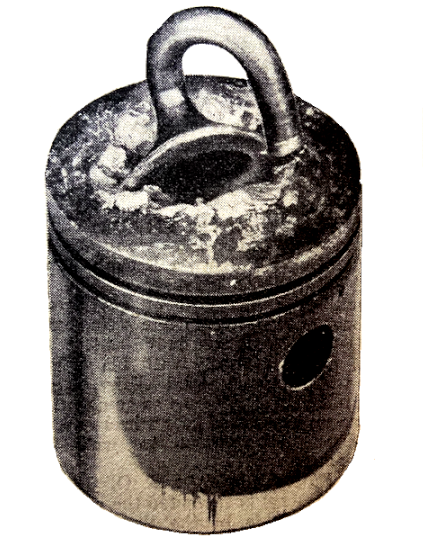
“THE MORE FAR-SEEING designers will of their own accord dwell upon the characteristics they consider essential in the machine of the future. They will dismiss as obvious the need for reliability, freedom from adjustment excellent brakes, and ‘perfect’ steering and road-holding, and pass on to discuss performance characteristics. Sheer speed, in the opinion of more than one of our leading designers, is of minor importance unless Great Britain develops high-speed motor roads on the lines of those in Germany and Italy. If such roads are laid down, design will be affected even as the German roads are to-day having their effect upon German automobile design. Since, however, it seems improbable that there will be a network of similar roads in this country, and in any case distances are likely to he short compared with, say, Germany, little store is set by sheer speed. What these few designers emphasise is the need for machines capable of attaining a reasonably high speed with great rapidity. This is a most sensible view. Acceleration is the factor of importance, though not acceleration of the type designers endow TT machines. The need is for excellent acceleration from more or less a ‘traffic crawl’, whereas in the TT the aim is to ensure it at high engine speeds. Good acceleration, in turn, involves a high power/weight ratio. Already the TT has proved that, given rear-wheel springing, a light machine can hold the road satisfactorily. It seems that as the years pass there will be a growing tendency to think in terms of power/weight ratios.”
“ENTRIES FOR THE MANX Grand Prix have closed with the magnificent total of 128. This is 26 more than last year’s number and, incidentally, half as many again as there were for the TT. Road racing may not appeal to manufacturers so lunch as it did in years gone by, but to sporting non-professional motor cyclists its appeal seems to grow with the passage of time.”
“CURIOUSLY ENOUGH, IN THE somewhat contrariwise manner of the BMCRC, two- and three-lap outer-circuit races were a feature of last Saturday’s Mountain Championship Day at Brooklands. Of course, it should be emphasised that there were two excellent ‘mountain’ races tucked in at the-end of the programme. However, it was such a perfect afternoon that even anyone who had looked forward to seeing ‘mountain’ races all the time could not by any stretch of imagination have been disappointed. The five outer-circuit races were all interesting, and although one or two winners had obviously caught the handicappers napping, there were some remarkably close finishes. The first event of the afternoon was a three-lap outer-circuit all-corners’ handicap. Out of an entry of 29 riders there were six non-starters. LA Dear (148cc New Imperial) and RC Rowland (498cc Zenith sc) were the first men off, and it was not until they had covered the best part of one lap that the scratch man, NB Pope, with his supercharged 998cc Brough Superior, was pushed off. Unfortunately for him one plug promptly oiled up, and after one lap he toured in. In the meantime EG Mobbs (348cc Velocette), with a good start, was leading the field on the second lap at a cracking pace which the left the backmarkers little chance to overhaul him. CB Bickell (498cc Bickell-JAP) did his best, but the Velocette man, followed at intervals by EJ Tubb (498cc Grindlay Peerless) and DA Loveday (348cc Velocette) crossed the line before him in that order. Tubb, by reason of a lap at 102.48mph, won bus Gold Star. Next came a short and snappy two-lap all-comers’ handicap. EC Fernihough (9996cc Brough Superior) was the scratch man, giving one minute six seconds to the limit man, RC Rowland (498cc Zenith sc), and two seconds less to MD Whitworth and his old but fleet 348cc Rex Acme.
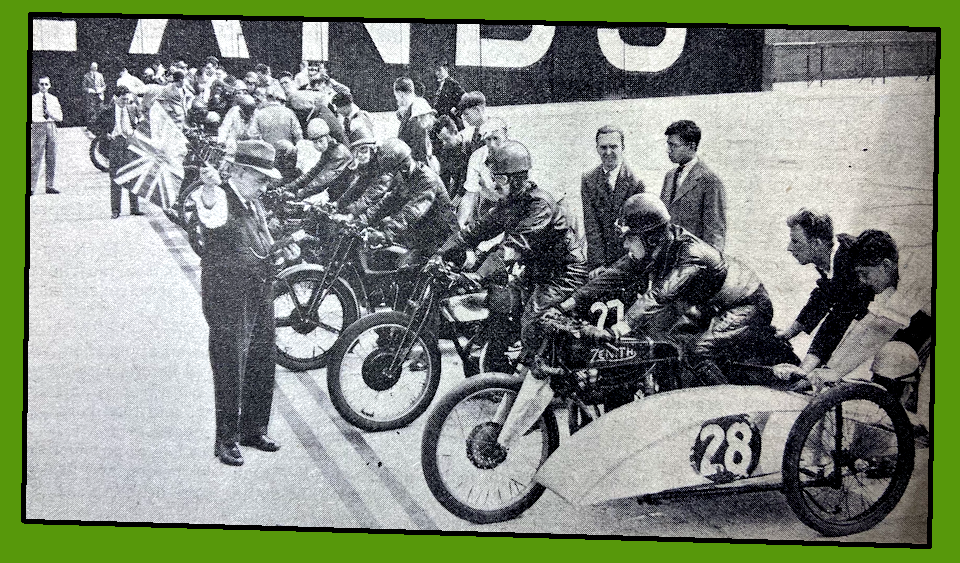
Fernihough made a perfect getaway, going through the gears in glorious style. Little wonder that when he came round again, streaking past the Vickers sheds, his standing lap was the fastest ever—at 104.85mph. Even so, he was still a long way behind Whitworth, who had somehow found a little extra speed and was doing very nicely at round about 87-88mph. At the end of the second lap he came round at least ten whole seconds ahead of Fernihough, whose flying lap was done at 118.5mph, and even so only just managed to pip CB Bickell (498cc Bickell-JAP) for second place. This time EJ Tubb (498cc Grindlay Peerless) had to be content with fourth place. Quite one of the. best races of the day was the second three-lap outer-circuit all-comers’ handicap. Bickell was the scratch man, EJ Tubb and DA Loveday had both been re-handicapped. For two laps the limit man, RC Rowland (Zenith sc), led the field, followed by EG Bishop (Excelsior sc). The remainder of the field was thoroughly spread out until the last lap, or so it seemed. Then all eyes were looking and straining towards the Byfleet banking, where a tight bunch of riders could be seen, with the backmarkers fast over-hauling them. Across the Fork they came—an amazing spectacle—with the faster men gradually overhauling the slower. Bickell flashed over the line first, GR Stanley (498cc Excelsior) was second, while DC Minett (499cc Rudge) only just got into third place ahead of RC Rowland (Zenith sc).” And, for the record, MD Whitworth (348cc Rex-Acme) won the 25-lap Junior Mountain Championship; Noel Pope (490cc Norton) won the Senior.
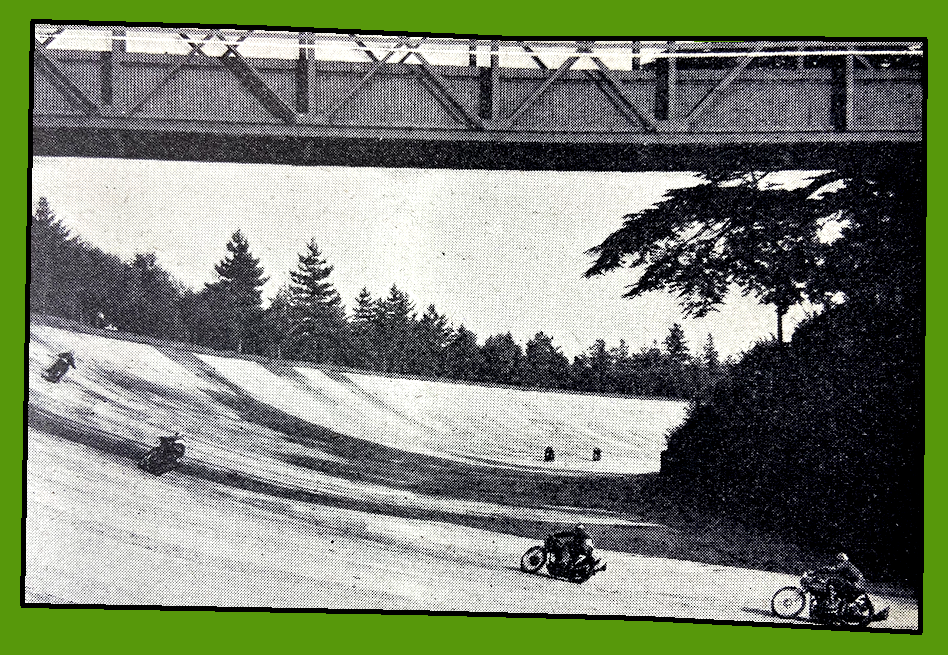
RIDING A GRINDLAY PEERLESS fitted with a 500cc speedway-type JAP engine Francis Beart established the all-time Brooklands test hill record of 6.99sec (an average of 34.55mph). He subsequently set up a workshop at Brooklands where bikes he tuned claimed 12 track and three world records.
“THE BMCA IS ORGANISING a meeting of motor cyclists at ‘The Princess Louise’, New Oxford Street, to discuss the formation of Metropolitan Vigilance Committees. This is the first real attempt to organise a ‘non-association’ political body for motor cyclists, and as it is backed by such men as Lord Sandhurst and Captain Strickland there is no doubt that such a committee will be able to voice its opinions in no uncertain terms, and achieve results.
RG Mair, Ilford, Essex.”
“TWO ENGLISHMEN TOOK PART in the French Grand Prix, held on the fast Comminges circuit. They were EA Mellors, who won the 350cc class at 83.5mph; and Ken Leach (Excelsior), who was forced to retire while amongst the leaders in the 250cc race. The 350cc and 175cc events were held simultaneously. Mellors (Velocette) went into the lead from the outset in the 350cc class and on his first circuit was seen to be nearly 200 yards ahead of Charlier (FN), second, and Sunnqvist (Husqvarna), third. Mellors was lapping at nearly 86mph. at times, but he was unable to shake off the redoubtable Sunnqvist Meanwhile, Charlier disappeared from the battle, and it was left to Loyer (Velocette) and Grissly (Sarolea) to chase the leaders. Only ten yards separated Mellors and Sunnqvist at times. Then Sunnqvist had a chain break on the Husqvarna on his 13th lap, and Mellors was left in the undisputed lead.”

“HOPE YOU READ the recent editorial on the relative merits of planned and unplanned holidays. If a fellow works 51 (or even 50) weeks in a year*, and has no definite idea where he wants to go on his annual vac, he must surely have something of a vacuum under his parting. He must further he a cold-blooded sort of fish, devoid of natural affections if there is nobody at a distance whom he wants to see. And if a fellow has a mind that works, his annual week will be filled up for years ahead by plans for going places and seeing things or people. On the other hand, an absolutely unplanned day once in a while can be the craziest fun. I particularly remember one such absolutely dotty 18 hours spent in the company of the late IB Hart-Davies (the End-to-End record specialist) and another rider. All three of us were mounted on machines which were moderately fast for those days, there was practically no traffic and—of course—no tar. We didn’t quite know what to do with an unexpected free day, and we decided to have a ‘tear over England’. We were to go as fast as safety and our engines permitted; we took no maps; and whoever happened to be ahead at the moment took any turning which attracted him. We ripped over half England in clouds of dust, and marvellous to relate we finished intact and together, though we were riding three different makes of bus, and were riders of three very different types. I also spent another amusing day with a single companion. Once more we took no maps, and rode on one principle—that whenever we found ourselves on a road and a worse road turned off it, we must take that worse road. We got into some funny places, and we encountered much extreme beauty.”—Ixion
*In 1936 most workers had only one or two weeks’ paid holiday a year.
“SELDOM IN A BIG ROAD RACE has there been such a runaway win as FL Frith (499cc Norton) scored in the 500cc Ulster Grand Prix last Saturday or victory by so few inches as that gained by S Wood (246cc New Imperial) in the 250cc race. Seldom, too, has a man taken over the entry of a crashed rider at the last moment and proceeded to win, which was the feat of ER Thomas (Velocette) in the 350cc event. The Ulster was a race full of surprises. The weather conditions were magnificent—sunny most of the time with the sun tempered by a light breeze—and the course better than it has ever been. As all know, the 24-mile Clady circuit is a fast course—none faster—and the Ulster Grand Prix easily holds the title of the world’s fastest motor cycle road race. Last year the 500cc race was won at over 90mph and Guthrie, in practice, lapped at almost 96mph. Would the magic figure of 100mph be achieved this year? This was the question. An increase of 4mph in lap speed seemed not unreasonable with the improvements in the road surface, the advent of spring frames and a year’s work on engines. The factory stables, however, scouted the idea. Works men pointed to the nature of the course—those five very fast miles from the start to Dundesert Bridge, with the right-hand turn at Bally Hill as the only check on real speed; more fast going to the right angle at Thorn Corner; the very sharp left turn, followed by a twist to the right, at Aldergrove—yes, quite a number of corners, several humpy bridges and getting on for two miles of the ‘Colonial Section’, which is like a twisty country lane, but more than seven miles of the Clady Straight. ‘So much depends upon maximum speed that 100mph is out of the question this year,’ said those in the know. ‘Maximum speeds have not increased sufficiently.’ As it turned out the 500cc lap record was not beaten, though that for the 350cc race was raised almost 4mph by JH White (349cc Norton) and for the first time topped the 90mph mark, his speed for the’ lap being 92.13mph. For a 350 such a speed is little short of amazing…Foster starts the last lap with a clear two seconds in hand. The pointers go round their dials almost as one. At last the stretch from Clady to the finish. They are side by side. They cross the line side by side. ‘A dead-heat!’ cry some. What does the judge say? The decision is announced. Wood has won! Officially he has won by one-fifth of a second. That is the shortest period of time the time-keepers’ watches will record. It is said, however, that the true difference was nearer a two-hundredth of a second. And thus ends the ‘Ulster’.”

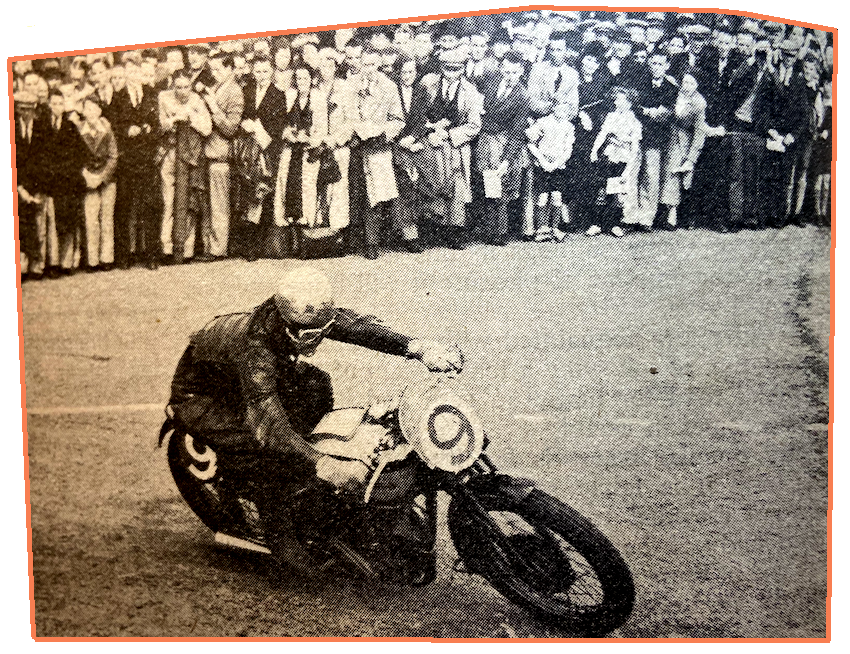
“MANY YEARS HAD PASSED since my last visit to the rugged Cornish coast, and to say that I was thrilled at the prospect of seeing it again would he putting it mildly. I had decided on my destination before setting out, and it was a spot quite unknown to me. And now I must pass on from Sussex to Cornwall. It was a grand run down. Well over 200 miles were covered since the early morning start, and it was nearing noon when I arrived. Already the tang of the sea was in the air. But were there going to be many trippers? I hoped not, as I was in the mood for solitude; anyway, judging by the map, it appeared to be an out-of-the-way spot enough. Such were my thoughts as I reeled off the last remaining miles. Soon the road deteriorated into a rough lane, which wound its way down the hillside between high banks. I rode through a gateway and the track ended on a grassy plateau. As the model was propped against a bank, I glimpsed foaming white breakers and golden sands down below. It was a magnificent day. A keen north-easterly breeze was blowing and the sky was flecked with cumulus clouds, casting sunshine and shadow over the land and sea. After discarding coat and waders I charged down the steep path full of the joy of living. A wonderful panorama was unfolded. Rugged cliffs towered skywards; great jagged rocks ran out into the green-blue ocean, and down the middle stretched the golden sands. What a perfect little bay! How lucky, I thought, is the Cornishman having all this virtually at his doorstep! But not a soul was to be seen. After exposing some films and thoroughly exploring the place, a sheltered spot was found under a rock, and sandwiches and Thermos unearthed from the rucksack. Hunger satisfied, I stretched myself full length, revelling in the heat of the sun and breathing in the ozone. And so the time slipped by. No one came to disturb my peace.
The only sounds were the cries of seabirds, the trickle of water down the cliff, and the pounding of the Atlantic on the surf. All too soon, it seemed, the sun started sinking, and gradually it disappeared in a blaze of glory. I shivered, and scrambled over the rocks and up the stony path to the plateau. Up there I turned and waved adieu to Cornwall the beautiful. A kick on the pedal and the engine burst into life. In the dusk I rode carefully up the trials-like hill. From the top a run of a few miles brought me to a little thatched, white-washed inn. Inside a log fire crackled in the open fireplace, casting light and shadow over the oak-beamed room. I was more than ready for the king of suppers which was very soon prepared, to be washed down with West Country cider at its very best. Then a chat with Mine Host, and so to bed to sleep the sleep that only a day such as this can bring.”
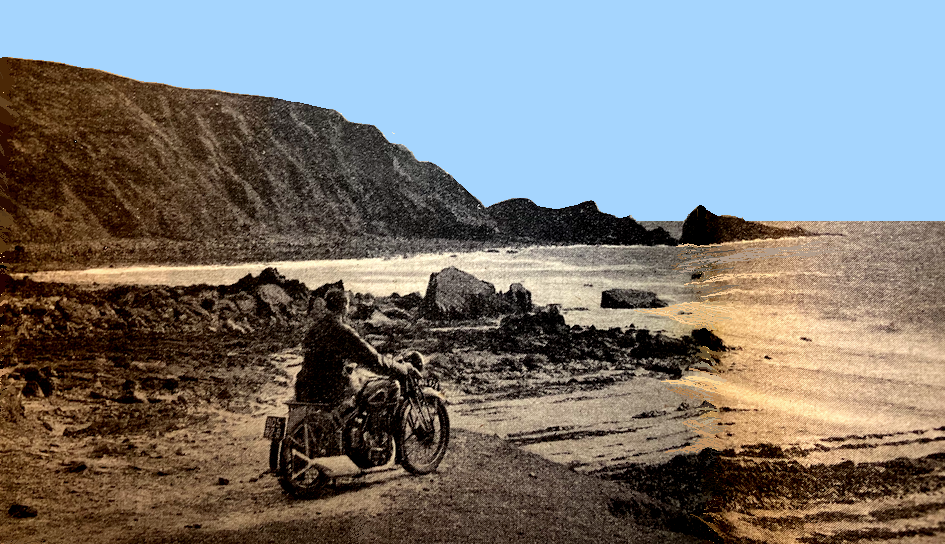
“LAST YEAR, FOLLOWING reports that the parking places at two popular resorts had been closed to motor cyclists, we printed a few words of advice—don’t warm up the engine in a noisy fashion before leaving one of these parks. Bognor was the last town to impose a ban—I say ‘was’ because after a reader sent us details a short time ago we got on to the RAC, and the result has been that the ban has been lifted. The parking place concerned—the Esplanade Car Park—is near the bandstand, which makes it doubly important that reasonable silence should he maintained. Now it’s up to you…”
“THE AUSTRALIANS REGISTERED their most smashing victory when they trounced England by a margin of 38 points in the fifth Speedway Test at West Ham last week. The old ‘roo’ for once surpassed itself, while the lion was, on the whole, not up to par. But the Australian Kangaroo made its unprecedented hop too late, for England had already won the rubber, or regained the ‘Ashes’, having won three out of the first four matches of this year’s series. But did that matter? The fact that there were over 50,000 people there to see the fun rather argues that it didn’t. What does it matter who has the ‘Ashes’? They knew that there would he some fine racing, and that’s what they went to see.”
“I ENCLOSE A SNAP of my machine, to which I have fitted valances on both front and rear mudguards. These are of sheet zinc and finished in green to match the guards. Under the sump is fitted a splash-pan, the front of which is raised two inches above the height of the bottom end of the front mudguard. The width of the pan is 12½in, and it runs as far back at the rear guard permits. On a wet road one can ride without the slightest splashing from the front tyre. As regards side-winds, it is safe on a heavy machine, but on a lightweight I should advise a perforated side valance.
George W Riches, London, NW4.”
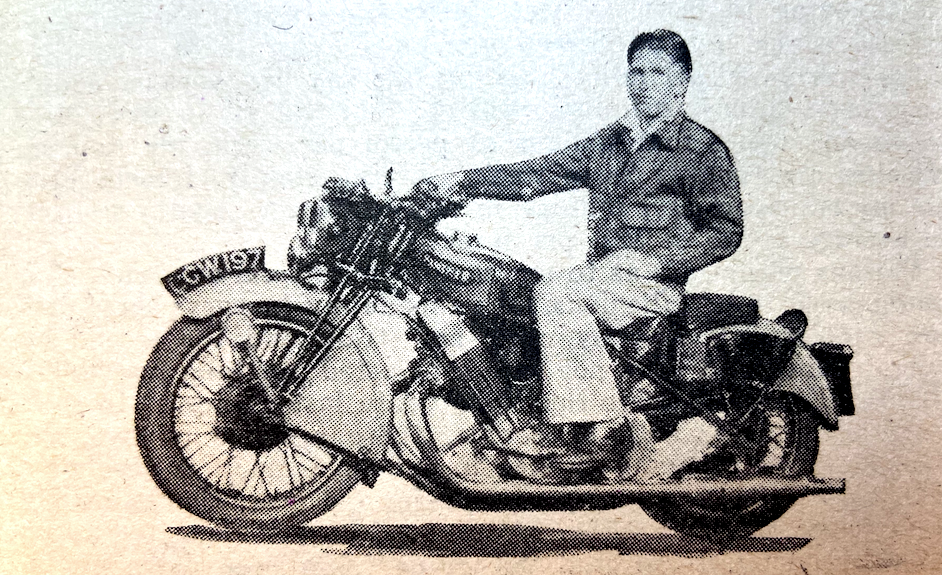
“I READ WITH INTEREST the letter from Mr Riches about his Panther machine. Evidently, like a lot of us, he is striving for cleaner motor cycling. So long as manufacturers supply only motor cycle chassis, I suppose we must fit the bodies ourselves. I venture to prophesy that in a few years’ time motor cyclists will be no more prepared to ride totally exposed machines than motorists are to ride in a box on a four wheel chassis. I enclose a snap of my own 600cc Redwing, which I have been riding for two years. Contrary to the experience of Mr Riches with his mudguard flaps, I have had absolutely no. trouble from side winds or from side gales either. The whole body was specially made for me at a cost of 50s; surely manufacturers could introduce the thin end of the wedge by listing a similar device for their standard products at a cost still lower than this. What about it, manufacturers? But please, not on a pipsqueak!
GH Illingworth, Harrogate.”
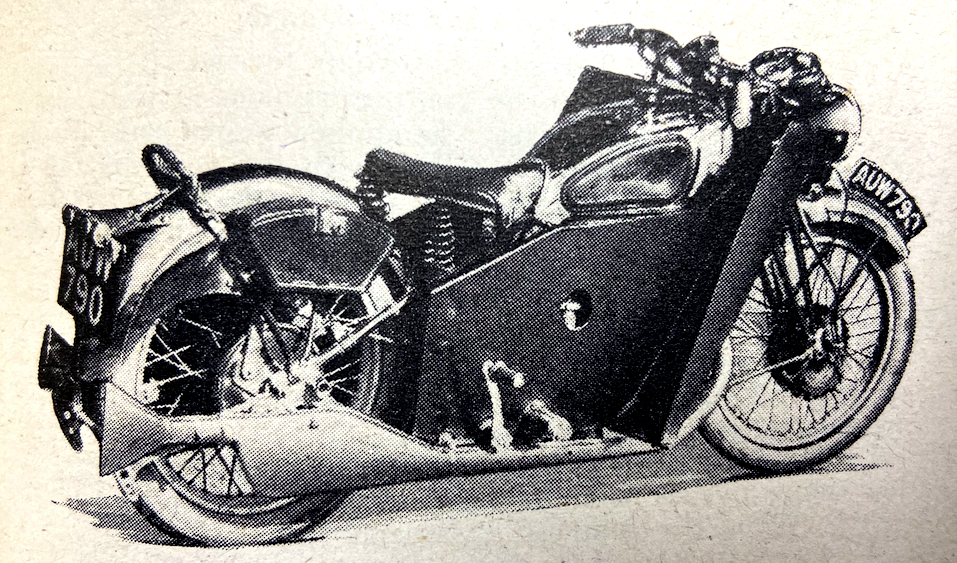
“‘I RIDE A MOTOR CYCLE and always wear trousers,’ said a young woman who was reproved for appearing in trousers at Bradford City Court.”
“TWO MOTORISTS WHO attempted to race the tide when crossing the sands between two islands in the Bay of Biscay were overtaken by the sea and drowned last week.”
“THE EFFICIENCY OF MODERN MACHINES has killed one sort of day out which we veterans revelled in years ago. We would compile during the year a list of unclimbable or formidable hills in correspondence with various pals, and ultimately devote a day to visiting the climbs in some given locality. Hart-Davies invented this particular sport, and in company with Hulbert of Triumph’s, Dr Rafferty of Daventry, and one or two other kindred spirits, would make long Saturday-lunch-to-Sunday-midnight streaks across our Island to see if this or that hill would surrender to their single-geared belt-drivers. I had one friend, resident in a hilly corner of England, who used to devote the entire winter to ransacking his area for freak hills, ready for my annual visit. I remember making some 30 separate attempts on one of his freaks, which always set up hopeless beltslip or pulled the belt-fastener out, until finally I had a special endless belt made without a joint, stretched it until it just fitted the desired pulley gearing, and at last went up clean! Mercifully, nobody unearthed Screw Hill or Simms in those far-off days. Otherwise, we should all have broken our necks or died of heart failure. Dr Rafferty was wiser than some of us. He always advised that on such hill-hunting expeditions we should use pedal-less machines; and that if the bus simply wouldn’t go up under power we should turn back. Lots of the early riders injured themselves for life by reckless pedalling and pushing on hills, especially in trials.”—Ixion
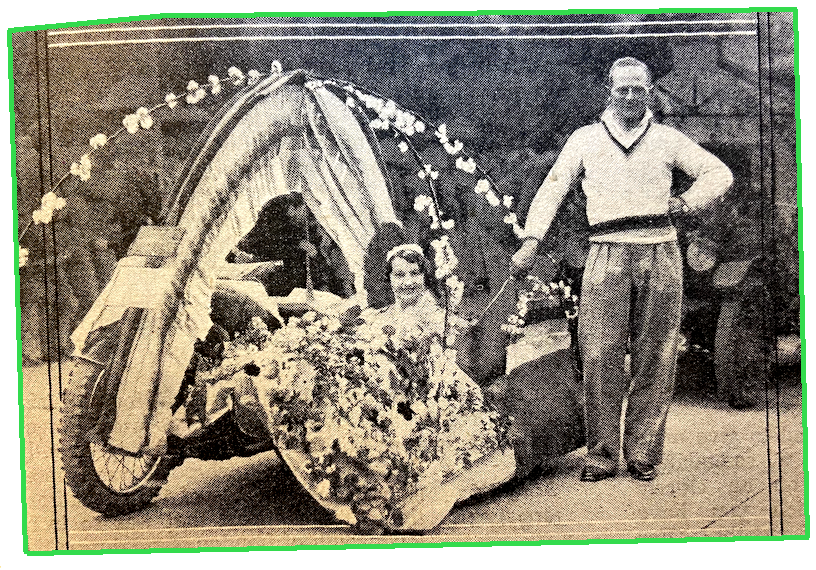
“I DESPAIR OF HUMAN intelligence once in each year when the road accidents are reported in detail for the last complete year. They are always and entirely vitiated by our complete ignorance of the mileage covered by the various vehicles. In spite of the unkind things said about motor cyclists by a Press which derives no income from motor cycle advertisements, motor cyclists killed fewer pedestrians in 1935 than pedal cyclists killed; and motor cyclists were only responsible for some 6% of the total pedestrian deaths. On the bare figures every other form of road vehicle except cabs and horse-drawn vehicles kills more pedestrians annually than motor cycles kill. All this is true. It would still be true (excluding the 6%) if there were only 20 motor cycles all told in Great Britain. ‘Very Well,’ says a critic, awaking from his sleep, ‘let us work out the respective numbers of private cars, motor coaches, lorries, motor cycles, and pedal cycles in use in this country, and see if any type of vehicle is specially lethal in proportion to its numbers’ ‘Wait a bit,’ says critic No 2, ‘That doesn’t go far enough. A motor bus is on the road all day and every day; it covers perhaps 30,000 miles a year. Lots of motor cycles are not licensed for all four quarters, are little used in the winter, and perhaps mainly used at weekends even in summer. A motor cycle’s average annual mileage probably is not more than 5.’ True; but we have no data about the mileage of any of these vehicles. We don’t even know how many cycles are in regular use. To coin a word, we can only discover the ‘lethality’ of a given vehicle if we know (a) how many people that type of vehicle kills a year; (b) how many of these vehicles are on the road; (c) their joint total mileages. Knowing these three facts, we could compare a motor bus and a motor cycle in terms of ‘lethality’. As things are, we remain ignorant of a fundamental statistic; and our figures are consequently all but worthless. At any rate, they are so incomplete that it is sheer folly to paint any type of vehicle as specially dangerous.”—Ixion
“IN SWEDEN LAST SUNDAY something of a very unusual nature occurred. The Senior Nortons, which we have come to regard as virtually unapproachable, were soundly beaten by two exceedingly swift—almost supernaturally so—BMWs. These two supercharged German machines were obviously completely at home on the particularly fast circuit used for the Swedish Grand Prix. The one consolation lay in the walk-over win of Freddy Frith (Norton) in the 350cc race. In this latter event EA Mellors (Velocette) finished second, with the Swede, Bagenholm, on a works Norton, third. The 250 event was won by W Winkler (DKW), with ‘Ginger’ Wood (New Imperial) second, and another DKW, in the hands of H Hausler, third. Otto Ley (BMW) was the winner of the 500cc race, while the second man was Karl Gall (BMW), newcomer to the road-racing world. Jimmy Guthrie and JH White, on Nortons, were third and fourth respectively. The Saxtorp circuit is situated in the south of Sweden, near Malmo. It is roughly nine miles in length and triangular in shape, and lies in flat country For the most part the surface is excellent, although two short stretches and one long one consist of what may be described as water-bound macadam topped with sand and grit. The inclusion of these dusty stretches of road caused the riders to think very hard, although they seemed to make very little difference to the speeds The start was from the Saxtorp leg. From here the going was very fast, with several sweeping bends, for three miles. Then at Dösjöbro the riders had to turn sharp right for Lyckan and Djornstorp, where another right-hand turn took them into the long ‘home’ straight, back to the start—but not before a series of loose-surfaced S-bends, scarcely 200 yards from the pits, was tackled. Thousands must have camped out during the night in the many pine woods through which the course passed. By midday the crowd had reached prodigious proportions—later it was announced that 200,000 were in attendance. In the royal box the Crown Prince of Sweden sat with Prince Harald of Denmark and the Princesses Alexandrina and Theodora. Curiously enough the pits were controlled by the police who, knowing nothing about racing matters, were far too zealous in their ignorance. It was almost laughable to see Joe Craig, head of the Norton pit, being told in heated Swedish by an incompetent and infuriated police-man, who obviously felt his dignity was at stake, to clear out of the pits and join the spectators. Luckily an English-speaking official saved the day. But many other pit attendants came across the same difficulty, although it was a long time before the race was due to start.
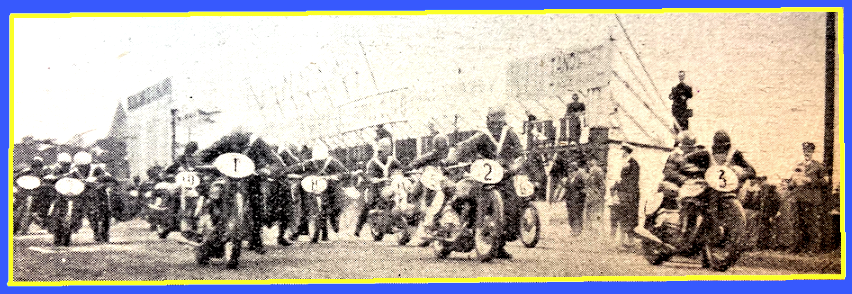

“THE SWEDISH GRAND PRIX marked the close of what we in this country generally look upon as the road-racing season. The time has therefore come to take stock of the position and see just how much British riders and British machines have achieved. In the TT and Ulster Grand Prix, all three races in each case were won by Britain. These, however, are events on our own ground; what of those on the Continent? The five races which in these days are looked upon as of outstanding importance are the Grand Prix of Europe (this year the German Grand Prix), the Belgian Grand Prix, the Dutch TT and the Swedish and Swiss Grands Prix. In the 500cc class of these events four out of the five races were won by Norton riders, Germany winning the Swedish, race. In the 350cc class Britain made a clean sweep, Nortons gaining four wins and Velocette one. Of the 250cc events three went to Germany and one each to Italy and Britain, the successful British make being the Excelsior. Thus, in these seven most important races, Britain has won six 500cc events, all seven in the 350cc class, and three in the 250cc class—16 out of 21. It is an achievement of which the makers and riders concerned, and the country as a whole, can be justly proud.”
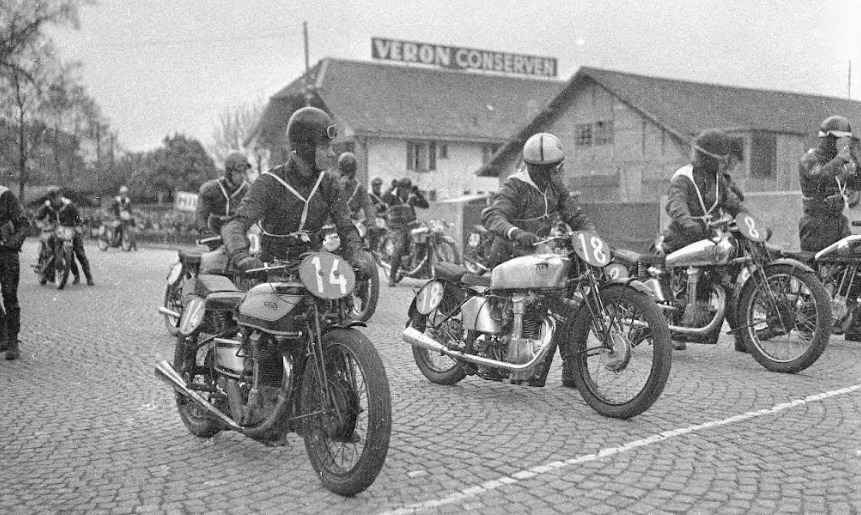
“DOES NOT THE RESULT of the Swedish Grand Prix show us exactly where we stand in motor cycle design? As a motor cyclist who sells motor cycles for a living, I am anxious about the stagnation in design of our machines, and I think it is high time that we got down to it and made a motor-cycle which would regain our prestige. It does not need a technical man to see that the foreigner is ahead of us in design, and if we don’t soon catch up to him we shall lose our export trade. So wake up, Mr Manufacturer, and back up one of our few bright designers (names supplied on request), and let’s keep the Tourist Trophies in Britain.
CH Lewis, Rickmansworth, Herts.”
“ON THE CONTINENT word has gone around that the road-racing racing BMWs are capable of approximately 130mph. As yet, it is said, these ‘blown’ jobs have not shown their true paces, chiefly because it has not been necessary. That they do not navigate too well on twisty going, and that gear changing with the type of foot-change box employed is not too good, are points that are stressed, but it is claimed definitely that these machines have just on a dozen miles an hour in maximum speed in hand on the best ‘unblown’ singles. That the margin is so great comes as a surprise to me and probably to others as well. The man who told me about the performance of the latest BMWs maintains that it is merely stupid trying to get more from the 500cc unblown single. ‘Why do it,” he asks, “when you can straight-way get ten or twelve miles an hour on maximum speed by using a ‘ blown’ twin?’. “
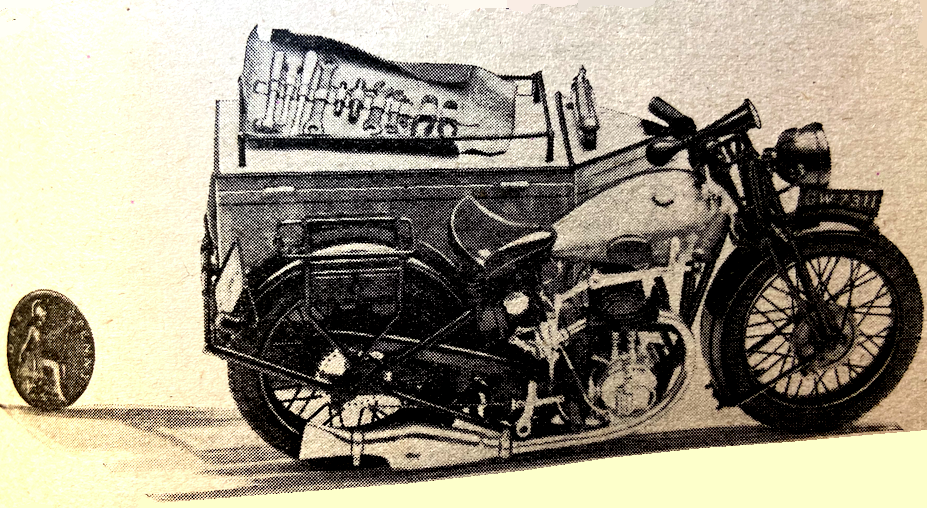
“THE SLOUGH MAGISTRATES agreed to remove the suspension on the driving licence of a car-owner last week provided he bought a slower vehicle.”
“HAVE YOU EVER PICTURED yourself as a member of an experimental department deputed to test hush-hush models? The life when new models are on the stocks as not all beer and skittles. A huge mileage most be put up in the shortest possible time, irrespective of weather conditions. Night and day the work goes The saddle is still warm as tester relieves tester. Last week in the BSA experimental department I was shown a log. In 14 days one of the experimental machines, the forerunner of a model thousands will ride in 1937, covered no fewer than 10,000 miles. Divide 10,000 by 14, and you will gain some idea of the life of the men on experimental test. ” (It works out to 714 miles a day.)
“TO BE ABLE TO convert an ordinary pedal cycle into one with an engine unit without any major alterations would at first appear to be an idle dream. But it would seem that a really simple conversion is now possible. Herr W Hartman of Stuttgart has designed and built an extremely simple unit in which a 63cc two-stroke engine is carried on the hub of a specially designed rear wheel. The rear wheel, which is fitted with normal cycle gearing on the right-hand aide, is specially built to carry the engine unit. There is a large drum, in appearance like a brake drum, which enables half of the bulk of the engine to be carried inside the wheel. This drum also serves as a fan which directs air on to the cylinder. The stress imposed by the turning movement of the engine is taken on the strongest part of the cycle frame—at the top of the seat tube—by means of a spring-loaded telescopic tube. Thus the engine is free to pivot slightly about the hub and so absorb road shocks and snatch at low speeds. The tiny two-stroke engine is carried horizontally. The drive is transmitted through a multi-plate clutch and spirally cut gear pinions. Ignition is by flywheel magneto which also incorporates a dynamo. It is possible to remove the rear wheel complete with the engine in very little more time than it takes with an ordinary cycle. All that is necessary to convert any bicycle into a motor-assisted cycle is to fit this rear wheel-engine unit in the place of the normal rear wheel, and to mount a petrol tank to the seat tube. Speeds of 30-35mph are claimed on the level, while gradients of 1 in 12 can be climbed without pedal assistance; 170mpg is also claimed.”
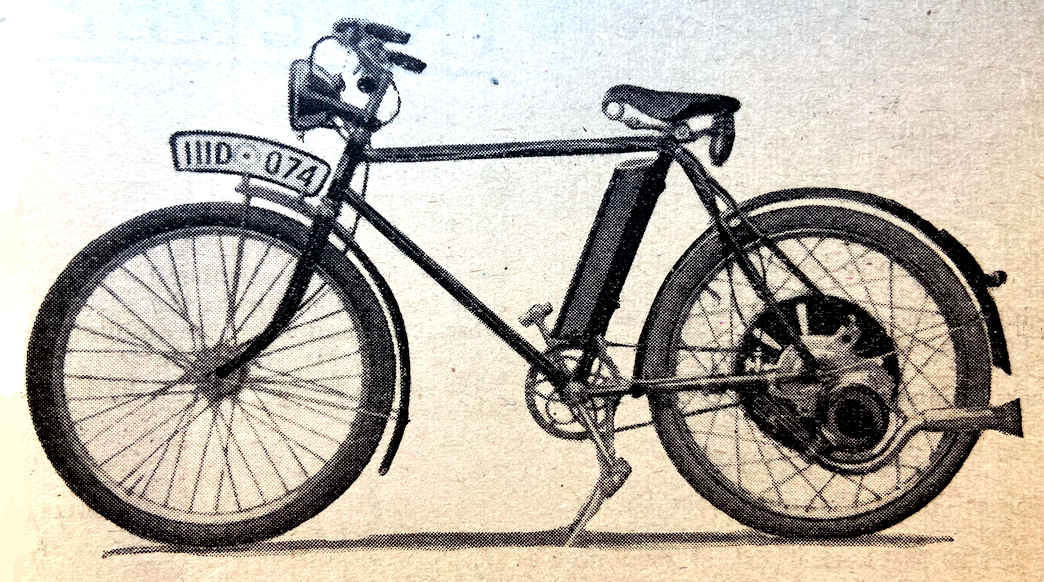
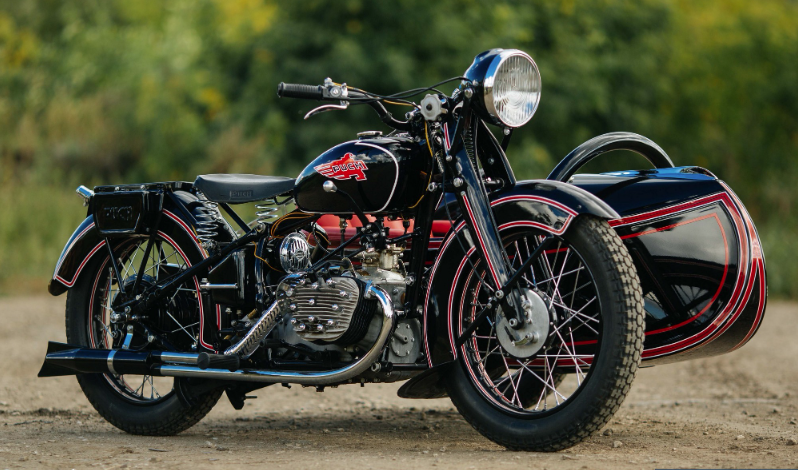
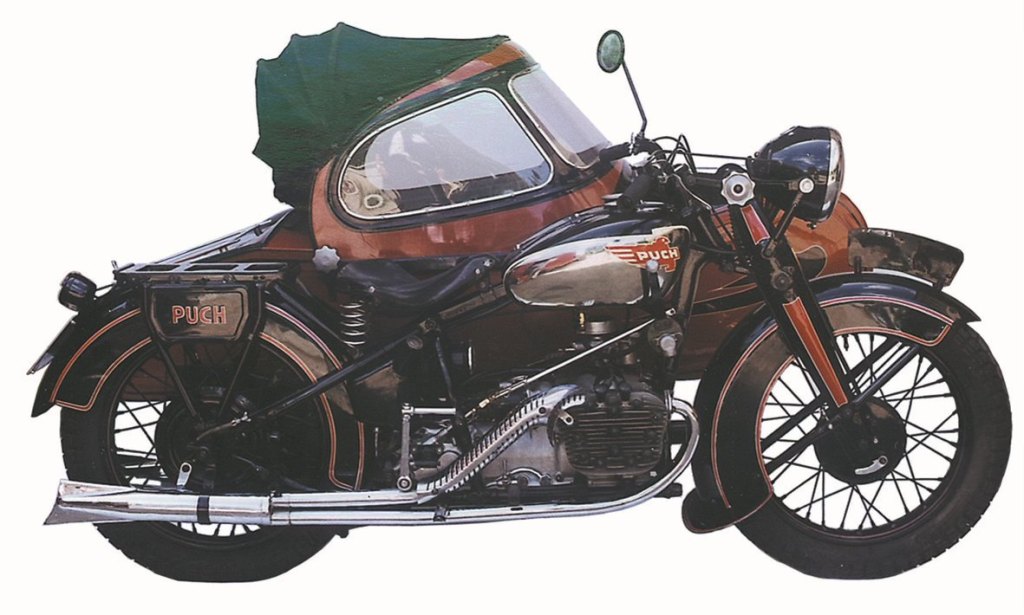
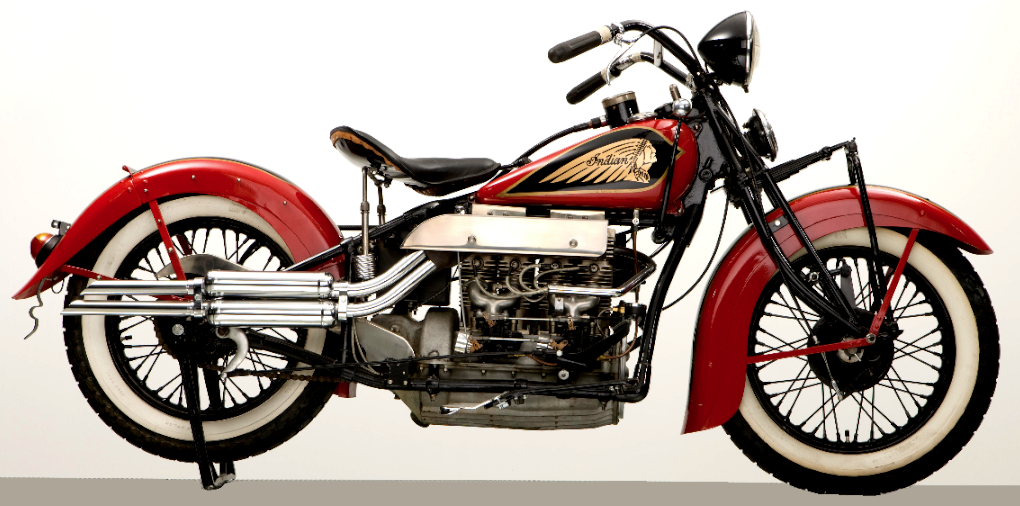
AFTER 20 YEARS with Indian, Al Crocker launched a 1,000cc V-twin that blew Harley Davidson and Indian into the weeds. It was the first ohv American roadster (Indian had made a few ohv 750cc racers 10 years before). Contemporary reports claim 56hp, 110mph and an ‘all-day’ cruising speed of 90mph. Any Crocker rider who lost a race with an Indian or Harley was promised a full refund. Crockers were built to order; one with a capacity of nigh on 1,500cc. Paul Bigsby, who designed many Crocker components, recorded 128mph on his Crocker at the Muroc Dry Lake Speed Trials; a stripped-down model bored out to 1,500cc with 12.5:1 compression reportedly hit 150mph. Wartime material shortages and the low-rate/high-cost production process killed off the company within six years—About 200 were made and no more than 70 have survived into the 21st century. In 2019 one of them sold for $704,000.

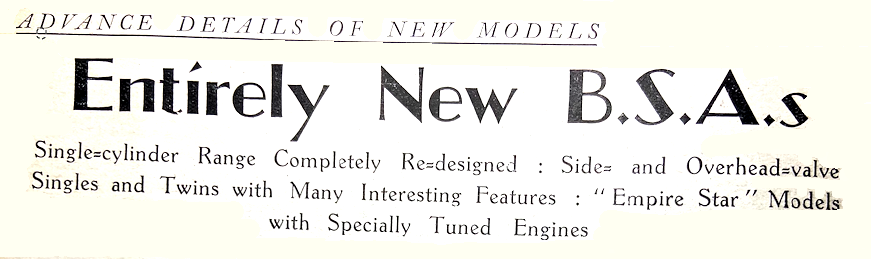
“WITH THE EXCEPTION OF the 750cc twin, which was new last year, and the 1,000cc side-valve twin, every machine in the BSA range is entirely new. This statement does not imply that the makers have discarded all the well-tried features which have done so much to earn for them the high reputation which they enjoy, but rather that these features have been embodied in a new and thoroughly up-to-date range of models of outstandingly new design. For 1937 the models may conveniently be split into three groups, the lightweight, consisting of purely solo machines, the medium for solo or sidecar work, and that of the twin. There will be three Empire Star models fitted with specially tuned engines of 250, 350 and 500cc, but the air-hardened cylinders fitted to last year’s Empire Stars have proved so successful that they will be incorporated in all overhead-valve engines except the 250 and 350cc sports models. In the lightweight group there are Models B20, 250cc side-valve tourer; B21, 250cc ohv sports; B22, 250cc ohv Empire Star; B23, 350cc side-valve tourer; B24, 350cc ohv Empire Star; B25, 350cc ohv competition; and B26, 350cc ohv sports. The medium group comprises Models M19, 350cc ohv de luxe; M20, 500cc side-valve tourer; M21, 600cc side-valve tourer; M22c 500cc ohv sports; M23, 500cc ohv Empire Star. There are only two twins, the Y13, 750cc ohv, and the G14, 1,000cc side-valve. Full dry-sump lubrication is fitted to all singles and the 750cc twin. All overhead-valve engines have single-port heads as standard, and in order to comply with the anticipated silence regulations very large and carefully designed silencers are fitted. On the ohv 500s an absorption-type silencer having a ‘nutmeg grater’ interior is employed. Two-port heads with high-level exhaust pipes can be supplied at an extra charge on all 350 and 500cc models; low-level exhaust systems are standardised in all other cases.” The transformation of the BSA line-up was down to its new designer, Val Page, who had revamped the Triumph range and was the brains behind Triumph’s 6/1 650cc ohv vertical twin. After new Triumph boss Edward Turner fired him, Page was snapped up by BSA. His credentials could hardly have been more impressive, having joined JAP in 1910, Page, more than anyone else, was responsible for the world-beating range of JAP singles and V-twins. [Having come up with Beeza’s ohv ‘B’ models and sv ‘M’ models Page would go on to put his 6/1 experience to good use in the post-war A10 range of 500 and 650 vertical twins including the A10 that sits in my garage next to my M21. Thanks, Val—Ed]
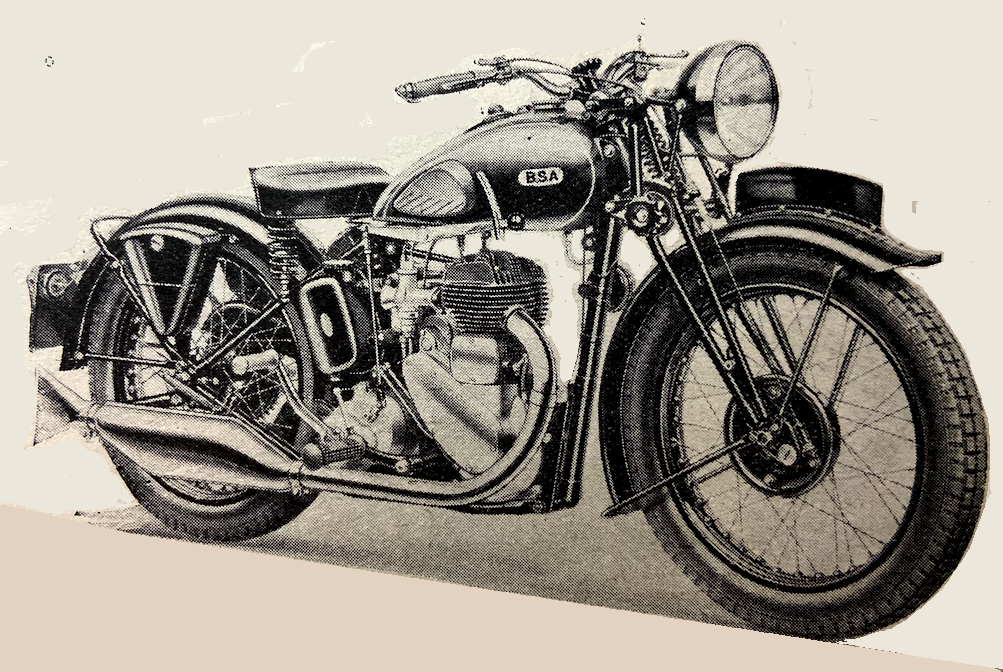

“IN SPITE OF THE mid-year introduction of three highly successful Tiger models, Triumph design has again gone right ahead. For 1937 there is to be a new range—new frames, new forks, new gear boxes, improved engines and improved appearance. The range is based on two models, similar in many respects, but differing in the weight of frame and fittings and in detail specification. Actually the 497cc Tiger 90 may be taken as typical of the firm’s products. Its engine has been redesigned, and although the lower half has the same substantial all-steel crank unit, with double-ball bearings on the drive, side, the upper part of the ‘works’ is quite new. The single-port head and the cylinder have been modified to ensure a sound head joint which is little subject to distortion even if the joint be re-made by a tyro. The head is arranged so that the whole of the valve gear is enclosed, the rockers being threaded into a one-piece aluminium housing, and held therein by hardened steel pivot pins.”
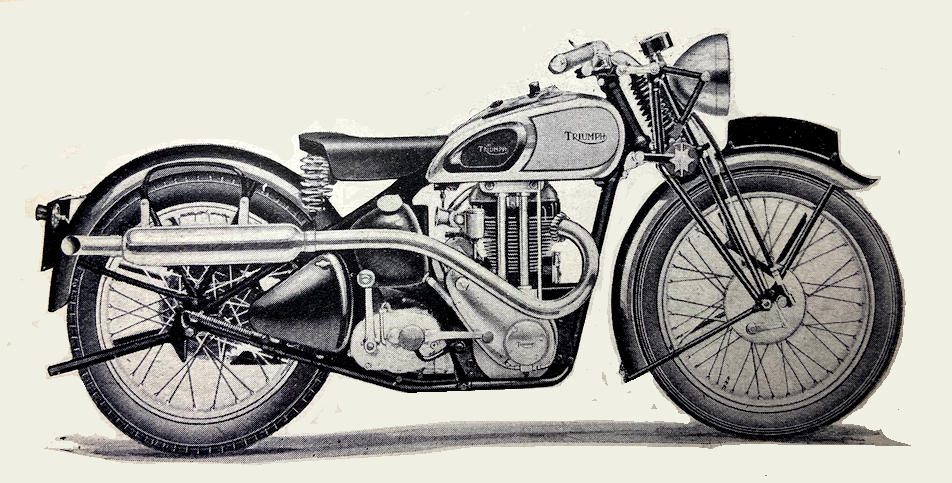
BEHIND THE SCENES Triumph was in turmoil. Having lost a shedload of money in its venture into car manufacture the Triumph Motor Co had sold its bicycle plant in 1932—now it decided to sell its motor cycle business too and that could have been the end of the Triumph story. The Green ‘Un reported: “The Board of Triumph Co announce that as from 31 January 1936 the manufacture of motorcycles will discontinue. This action is a further step in the reorganisation of the company…Machines sold prior to this date will continue to be serviced by the company and spare parts will be available. The entire activities of the company are being concentrated on the new range of Gloria cars at the new works recently purchased.” Fortunately, for the future of British motor cycles, it was snapped up by Jack Sangster, the engineering and finance number 8 hat behind Ariel. Sangster’s first move was to bring back Triumph founder Siegfried Bettman, helping convince the motor cycling world that Triumph had a future. And to reinvigorate the Triumph range he moved two number 8 hats from Ariel to Triumph: Edward Turner, as works manager, and Bert Hopwood, as designer. However, Turner sacked another great designer, Val Page, who has joined Triumph in 1932 and was the brains behind the model 6/1 650cc ohv vertical twin. He had also begun to streamline Triumph’s range from 18 models to eight, based on the ‘modular’ 250cc 2/1, 350cc 3/1 and 500cc 5/1 singles. [Page wasn’t out of work for long—Triumph’s loss was to be BSA’s gain.] To get Triumph back in the black Triumph slashed wages—as Sangster had already done at Ariel— and made cosmetic changes to Page’s range of singles, which were relaunched as the he 250cc Tiger 70, 350cc Tiger 80 and 500cc Tiger 90 (the model numbers referred to their guaranteed top speeds).

“FOR 1937 EVERY JAMES model will be powered by a Villiers two-stroke engine. Apart from this, few alterations have been made to the general specification. As regards finish, however, there has been a marked change, for the green panels have given way to a workmanlike black finish, with a broad gold-leaf line round the panels, and a new transfer of more artistic design. Also, the black wheel-rims are lined with red. Every James machine is fitted with electric lighting, either by means of a separate dynamo or by the Villiers direct lighting system and battery parking light. Speedometers may be obtained for every machine in the range at a modest extra cost. All those models which are provided with a separate dynamo for lighting purposes have automatic voltage control, and the dynamos will be driven by endless belts, adequately protected by metal shields.”
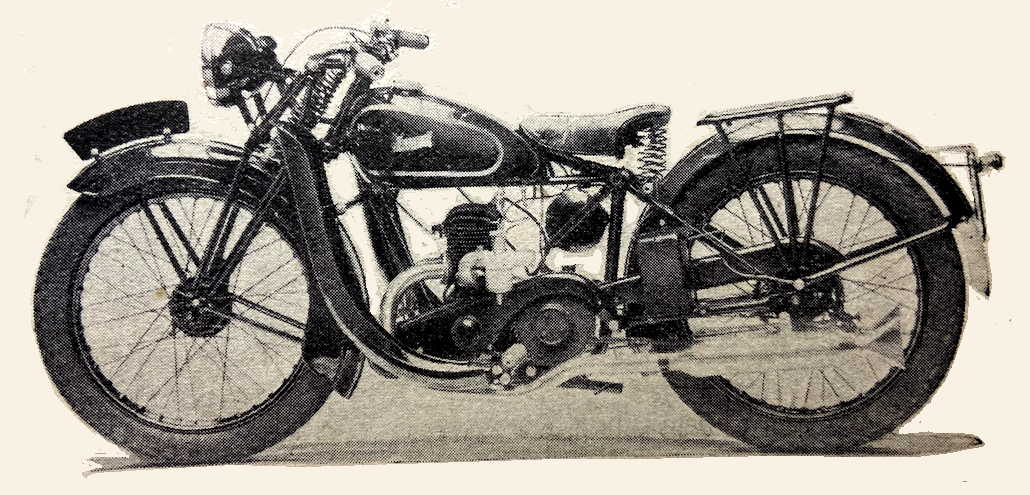

SEVERAL FEATURES NEW TO Levis design are incorporated in the new big single of 592cc (82x112mm). In the main the machine is characteristic of Levis productions. The first new point to strike the eye is the fully enclosed valve gear. The cast-iron rocker box is similar in layout to that of the smaller models, but where the rocker protrudes through the sides there is bolted on a domed aluminium casting, split vertically and held together by three screws. This dome is machined internally to grip the upper end of a pressed-steel thimble, which surrounds the valve springs and is held in place by the valve guides. This arrangement is simple, neat and effective.”
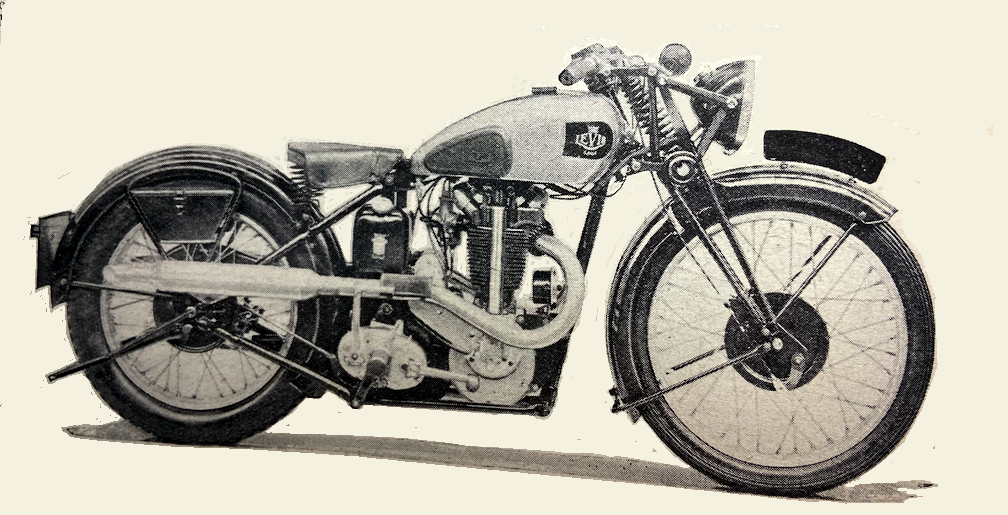
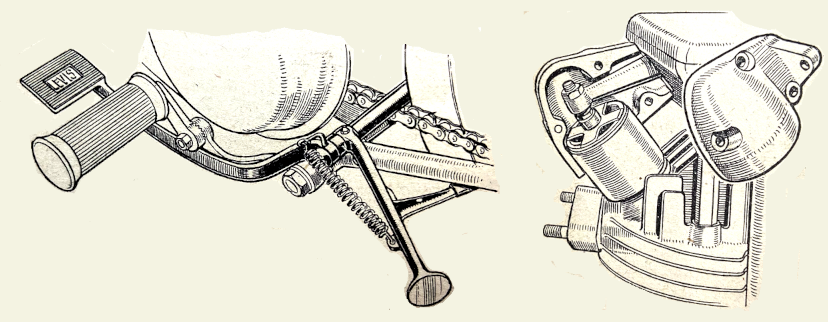
“ALTHOUGH THERE HAVE BEEN modifications to most of the machines in the Excelsior range, major changes have taken place only in the Manxman models. These changes affect all three sizes, but the 250cc model has one alteration Peculiar to itself in that the bore and stroke have been altered to 67×70.65mm (249cc)—the same as this year’s racing engine. This has enabled larger valves to be employed, and has lowered the piston speed at any given rpm, and the engine is now a better, all-round performer. All the Manxman models now have a frame exactly similar to that which has been so successful during the past racing season. The top tube is 1½in in diameter and the front down tube 1⅜in. a one-piece, cradle being brazed into position below the engine and gear box. Short, straight seat and chain stays ensure rigidity in the rear frame.”
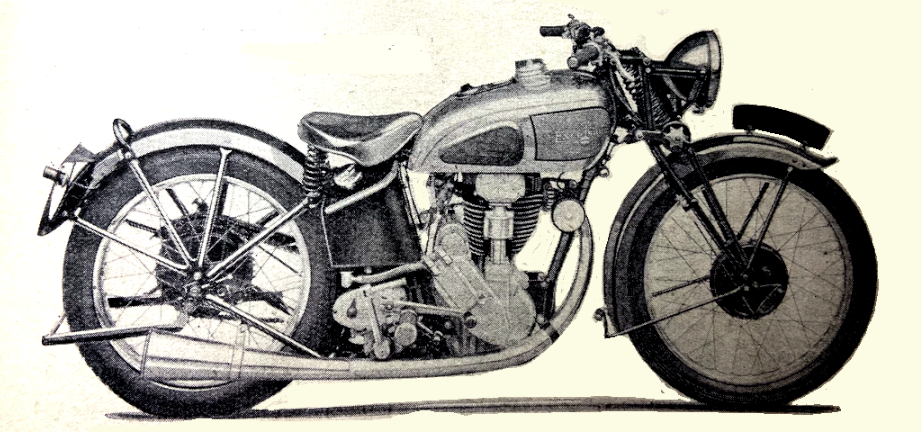
“THE OK SUPREME PROGRAMME for 1937 is a simplified one, but it still contains a wide variety of types. In view of the past experience and concentrated efforts of the makers it is only natural to find that machines of 250cc capacity are prominent in the range. It is also interesting to note the inclusion of an entirely new side-valve machine of this size. Of the other 250s there are Standard and De Luxe ohv models, and, of course, the now famous Model 70. The push-rod range is rounded off with 350cc and 500cc machines, the latter being another newcomer. Four ohc models complete the programme; there are 250 and 350cc types in touring trim and the same type with racing specifications.”
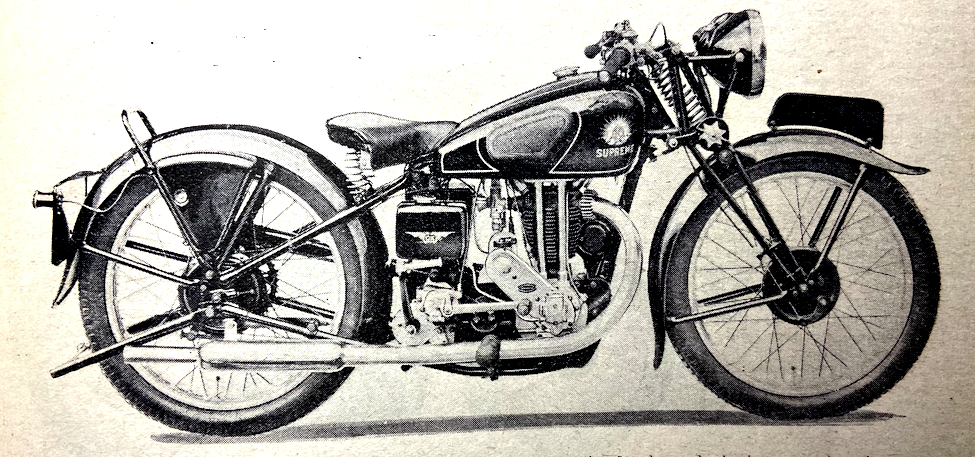
“IN EMBARKING ON a policy of standardisation New Imperial Motors have in view the advantages to be gained by concentrating on one basic type—increased reliability owing to concentrated experience, interchangeability of parts, and keeping manufacturing costs (and consequently retail prices) down to a modest figure. It takes courage and vision to decide on the actual design to be standardised, and in this the company has been helped to some extent by the design competition which they organised, but chiefly by past experience with models of all types. This experience covers not only road work, but also some highly successful racing. It seems hardly necessary to add that the programme is 100% unit-construction, but, in future every New Imperial will have a primary drive consisting of two gear wheels only. A single frame, sturdy but not unduly heavy, is employed for the whole range, and every frame is fitted with special lugs so that it may be supplied with rear springing at the modest extra cost of £3. In spite of the ease of conversion, the New Imperial spring frame must not be regarded as just an extra fitting, for it is a well-designed and carefully constructed job. A single spring type of tubular fork with steering and shock dampers has been standardised. Although Magdynos are standardised throughout the range, coil or magneto ignition can be fitted at slightly lower cost. A big feature is made of the ‘Clubman’ range. These models are claimed to be production counterparts of the racing units. In consequence the engine-and-gear differs somewhat radically from the remainder of the range, although externally there is little change.”
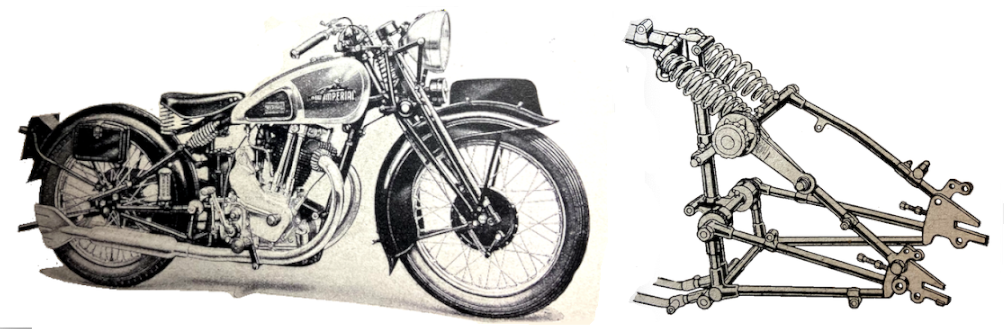
“WITH THE EXCEPTION of the ‘International’ machines, all Nortons have been provided with a new riding position. To obtain this the saddle has been lowered 1½in and the handlebars have been brought l¾in. nearer to the saddle, the bars being bent in such a way as to allow the hands to fall naturally on to the grips without any flexing of the wrists. An additional feature is the employment of ⅞in handlebars with small-diameter grips. Another important refinement is the inclusion of a constant-voltage control to the Lucas electrical equipment. This eliminates the possibility of damage to the. battery through overcharging, prevents the ‘boiling’ of the acid, renders topping-up less frequent and gives an extended life to the battery.”
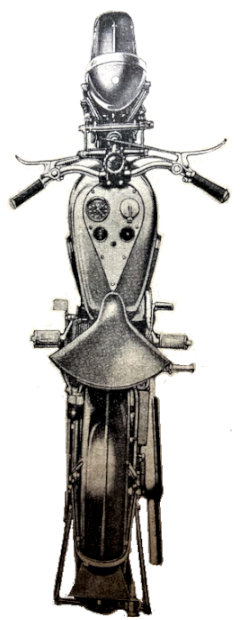
FOR 1937 THE COVENTRY Eagle Cycle and Motor Co will have two distinct ranges, one of two-stroke engined models, and one of four-strokes. The two-stroke range is complete, and although in the smaller models there is no very outstanding change, the ‘Pullman’ two-seater, introduced at the last Show has undergone several interesting modifications. Even at the first glance it will be obvious that the machine has been cleaned up, particularly in the region of the rear wheel. Next, one realises that the semi-elliptic springs which support the rear spindle have been moved from the outside of the chassis to the inside. By this means the spindle is better supported, yet the supporting base remains amply wide for lateral rigidity. At the front end there is a new head lug, larger and of box-girder section, so as to increase the strength to a considerable degree without any serious increase in weight. The front down members are now of channel section instead of being composed of flat steel laminations, and the tank support rails are stayed to the main chassis members by pressed-steel members on each side of the front end. These changes have rendered the whole construction more rigid and strong enough to withstand the roughest use. There have also been improvements in the silencing system, the cast-aluminium branch pipe being arranged so that it is quickly detachable. The main ribbed aluminium expansion box is unchanged, but the outlet therefrom leads direct to a flattened tail pipe instead of to a second small expansion chamber. The deep, pressed-steel side members, detachable rear guard and pillion seat, leg-shields, and the lifting handle for the central stand remain as before. The price with a 250cc Villiers deflectorless piston two-stroke engine is £45 10s.”
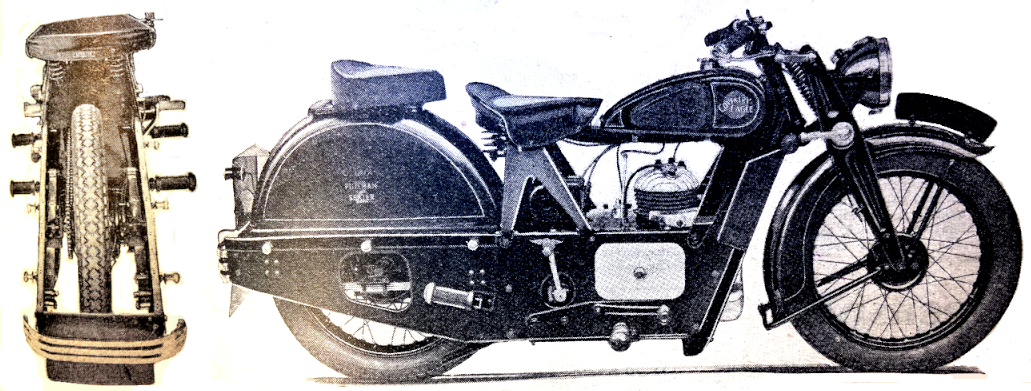
THREE NEW MODELS have been introduced into the Cotton range for 1937. They are 250, 350 and 500cc and have a new type of high-camshaft ohv engine. Each will, of course, be fitted with the well-tried Cotton triangulated frame. The high-camshaft engine is inclined in the frame. The Cotton-Druid front forks are fitted with a steering damper. All models have front and rear wheel stands. A three-speed gear box is standard, but a four-speed box is an optional extra. Dynamo lighting and an electric horn are supplied with all machines except the Model 1/V 150cc two-stroke, which has direct lighting and no electric horn.”
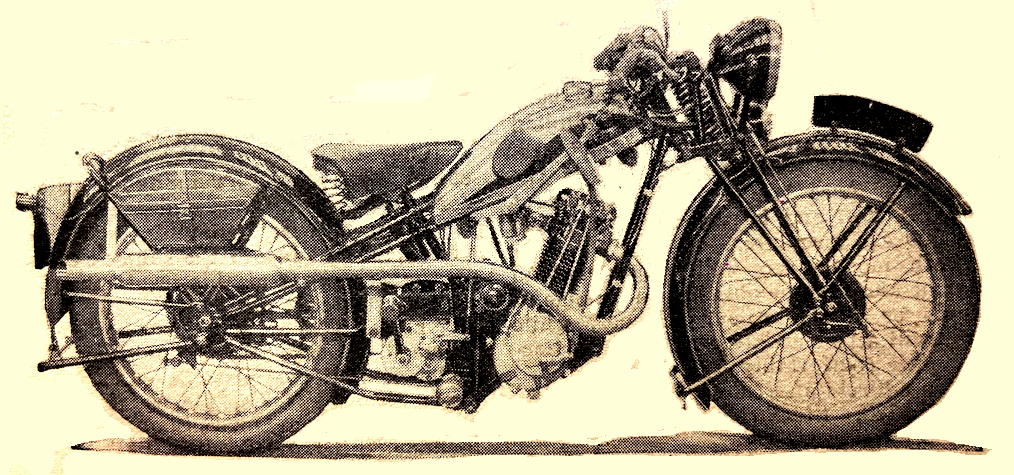
“A NUMBER OF IMPORTANT changes have been made in the design and construction of the Sunbeam range, and, apart from purely mechanical features, the appearance has been cleaned up to a marked extent, while the finish is—if possible—better than ever before. Certain features which are common to all models should be mentioned. First of all, the external gear-type oil pumps with their attendant pipes have disappeared. Although the lubrication system remains unchanged except for detail modifications, the pump gear is now enclosed inside the timing cover, and the pipes have given place to internal leads. There is no oil delivery regulator except to the rocker gear of overhead-valve engines, but an oil-pressure gauge is mounted in the tank. After a series of lengthy and careful experiments, a piston has been designed and made for each type which reduces slap to an absolute minimum, and yet does not detract from the performance. Special silencers designed on the Burgess acoustic principle, having stabbed holes and glass wool packing, are employed. And the foot-brake pivot and pedal have been redesigned so as to be neater and more satis-factory in every way. On every model the back portion of the primary oil-bath chain case is flared into the crank case casting to give a smooth appearance, and oil-bath rear chain cases can be fitted to every machine instead of the guards over the upper and lower chain runs which are standardised. The offside ends and cover plates of the four-speed foot-controlled gear boxes are finished in black, which adds materially to the smart appearance, and all machines have metal tool-cases filling the rear triangle of the frame. All models except the ‘Light Solo’ will come under the heading of Series II, and all have prop-stands and spring-up rear stands. Prices in every case include electric lighting (with automatic voltage control) and horn.”
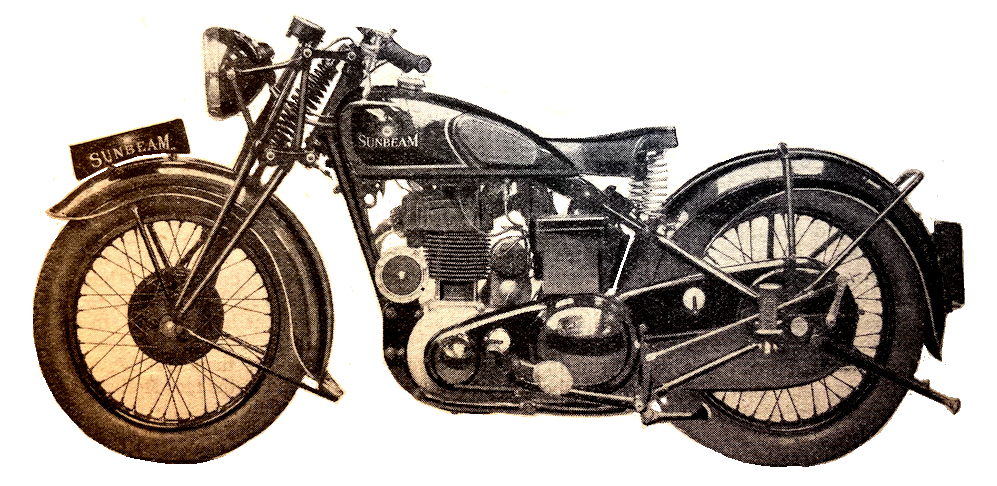
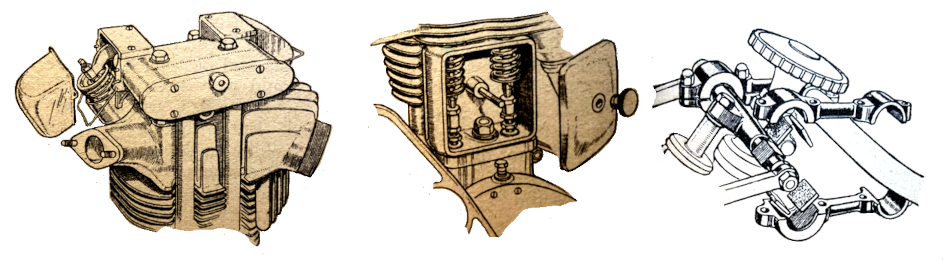
“AS USUAL, THE WOLF programme will be composed entirely of two-stroke models, sad in every case the engine is of Villiers manufacture. The Villiers 125cc engine-gear box unit was shown for the first time at the last Olympia exhibition in a machine of Wolf manufacture, but for the forthcoming show several changes have been made, and the machine is much smarter and more generously equipped. The cylinder is disposed vertically, and twin high-level exhaust pipes extend rearwards, terminating in large cylindrical silencers. The top tube of the frame is now covered by a neat saddle tank, and full-length legshields are standardised. A larger (Lycett) saddle is fitted, and the tyres are 2.75-19 (25×2.75in). Other items include expanding brakes of 4in diameter, a central stand, and an armoured toolbag on the seat tube. Lighting is direct from the Villiers flywheel magneto-dynamo. With a single-lever carburetter, and no ignition control, this is one of the simplest motor cycles to handle, yet the performance and reliability of the unit are already well proved. This model, WA10, will he available also with a 98cc Villiers engine.”
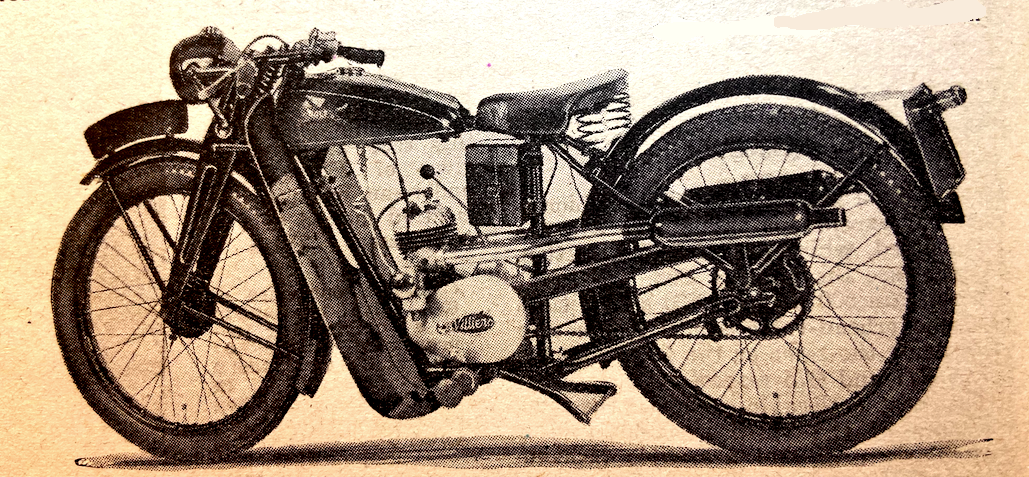

“SEVERAL IMPORTANT ALTERATIONS have been made to the range of AJS machines for 1937, and one model with the 498cc ohv single-port engine has been completely redesigned. Many of the alterations are common to all models…Valve gear on both overhead- and side-valve engines is now totally enclosed and positively lubricated. On the overhead-valve models extensions of the rocker box casting enclose the rockers and valve springs. These extensions are divided in the centre and the detachable portions are held to the main casting by two set screws. On the push-rod side of the rocker box is a large detachable plate, which is neatly ribbed in the case of the 250cc and 350cc engines. Removal of this plate exposes the tappet adjustment, and the tappet chest is large enough to allow plenty of room for the necessary work to be carried out. The tappet-chest cover is made oil-tight by a rubber seal. On the smaller engines it is held in place by hexagonal nuts, but on the 500cc models two knurled nuts are employed. The valve springs are enclosed in cups at their bottom ends, and these cups are mounted on collars, so that the springs are well screened from heat from the cylinder head. A lead from the main oil pump is taken to a point on the rocker box between the rockers and an adjustable lead from the rocker gear feeds oil to the inlet valve and guide. On the side-valve models the tappet chest is insulated from the heat of the main part of the cylinder. The chest finishes well below the main cylinder fins, and the valve springs are carried at their top ends in thimbles, which are also clear of the cylinder fins. The valve guides project downwards into these thimbles so that no moving parts are exposed. All cylinder heads have greater cooling area and modified finning, and the the 250cc cylinder barrel are of generous dimensions. Redesigned frames of the cradle are used, with self-centring steering head bearings. The fork girder assembly has been modified to give greater lateral rigidity, and a duplex fork damper is fitted to all models. Other alterations common to the range are 3-gallon petrol tanks of new design with the latest type of thin, large-area knee grips, and handlebars mounted on trailing links and adjustable in two directions. All controls are clip-on, and no inverted levers are used.”
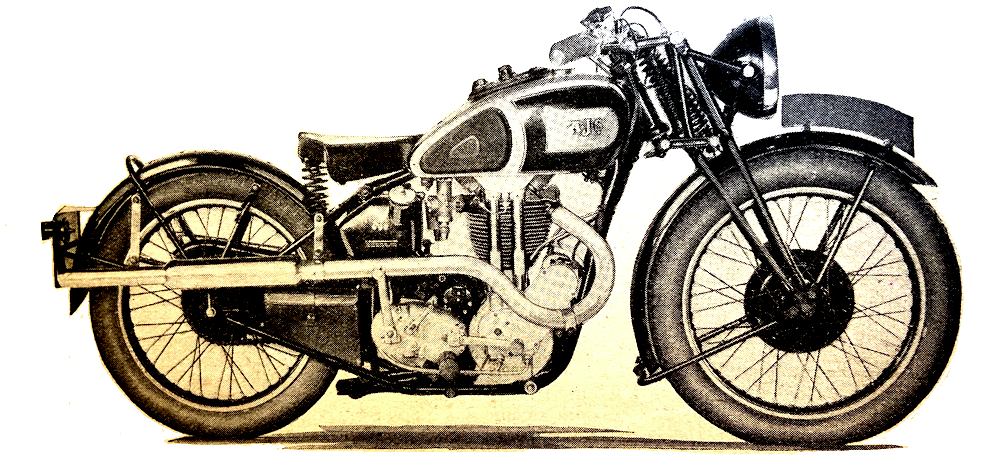
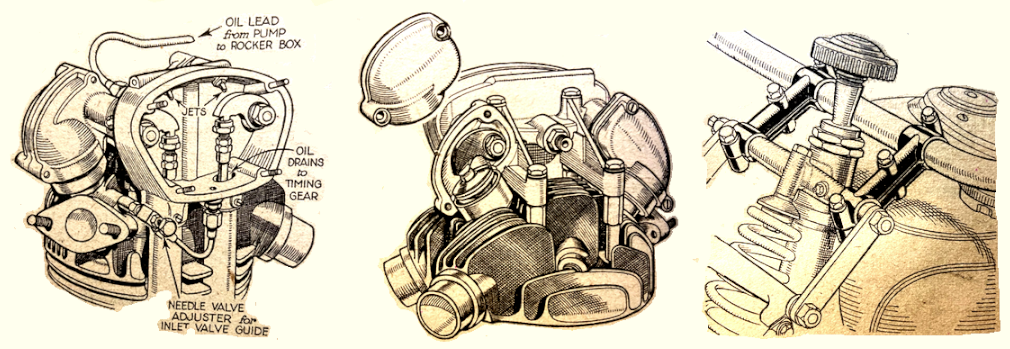

“APART FROM SEVERAL IMPORTANT mechanical improvements the new Rudge models are far better lookers than ever before. The change has been brought about partly by the enclosure of the four-valve mechanism, partly by the employment of a cylinder with bolder finning (with the cylinder head nuts below the bottom fin instead of between two fins) and partly by a general clean-up in detail design. Also, the machines have a superb black and gold finish and chromium-plated wheel rims. Dealing first with the Rudge ‘Special’, which is typical of the larger models, the four-valve head—with each pair of valve stems parallel—has been completely redesigned. The valve gear is entirely enclosed, and the lower part of the valve box is carried on vertical cylinder fins with a clear air space through the ribs to the centre of the head. The aluminium valve cover has a large gap between the.rockers, so that there is plenty of air space in the centre. There is a direct oil feed under pressure to both rocker bearings, approximately half the oil supply going to this part and the remainder to the big end. Because of this the capacity of the oil pump has been doubled. Oil leaking from the rocker gear is caught in sloping ducts and led back to the push-rod enclosing tube. Incidentally, a head which had undergone a full power test of many hours’ duration showed no sign of carbon in the enclosure. Another change in the valve mechanism consists of the elimination of tappets and the substitution of push-rods which are socketed to rockers at both ends. A small detachable plate on the valve cover provides access to the adjusters and enables the push-rods to be withdrawn if necessary. The valve cover box is held down by a single set-pin via a neat spring-steel Y-piece. An ingenious feature in connection with the cylinder head bolts is that the bolts are screwed little more than finger tight into the head and have quite small heads, so that. they are capable of passing through the holes in the fins. They are, however, threaded round the heads and are held down by larger nuts that pass over the bolt heads. Thus the cylinder head can be removed sideways without detaching the tank, yet the bolts can be removed upwards if desired.”

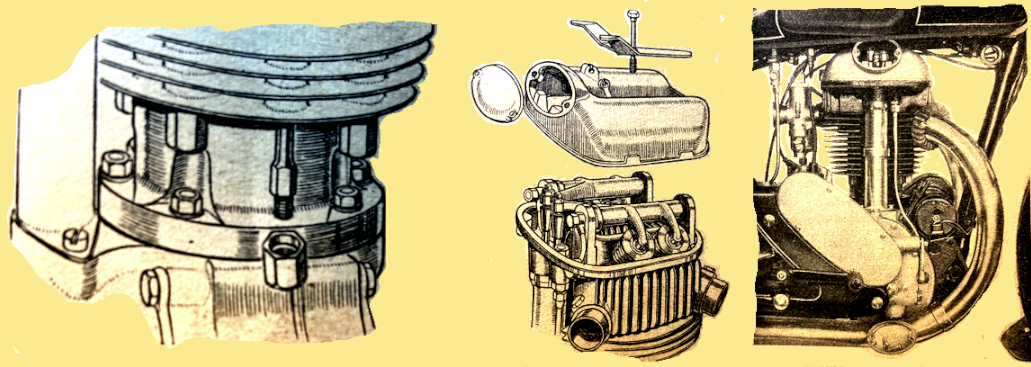
“THE LATEST RANGE OF VILLIERS engines includes no fewer than nine motor cycle units, from 98cc to 346cc, all of them beautifully made in an up-to-date and well-equipped factory. The 98cc Midget is of quite straightforward design, and is perhaps better known on the Continent than in this country. Next in order of size comes the 125cc engine, which is built as a unit with a three-speed gear. The engine is of the ‘deflectorless’ or flat-top piston type, in which the incoming gas is shot upwards in jets from each side, to meet and ‘mushroom’ outwards from the top, thus helping to expel the exhaust gas. It is a remarkably lively little unit and is rapidly making converts. The 147cc Mark VIIIC is a single-port engine with a cast-iron head. It is designed for hard work and utility. The 148cc Mark VIIC is a two-port edition with a different bore and stroke—53x67mm, as against 55x62mm. Next there are single- and two-port engines of 196cc, Marks 2E and 1E, both of which have integral cylinders and heads. There is, in addition, a ‘super-sports’ model of this size, with an aluminium cylinder head and twin exhaust ports. There are two air-cooled engines of 249cc, one a two-port model of normal Villiers design, but having an aluminium cylinder head (Mark XIVA), and the other (Mark XVIIA) a flat-top piston type. In addition there is a water-cooled engine of this size. Finally, there is the 346cc (70x90mm) two-port, long-stroke engine with an aluminium head.”
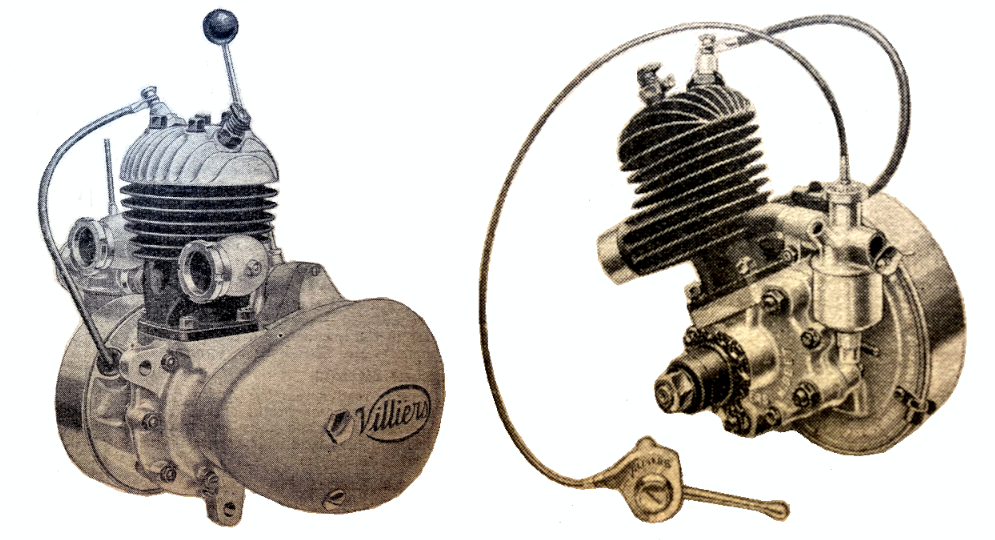
“MATCHLESS MOTOR CYCLES FOR 1937 will be divided into two separate ranges of machines—the Clubman and Tourist series. All models are improved editions of their 1936 counterparts and include many interesting alterations in design. The three side-valve machines which comprise the ‘Tourist range have undergone considerable change. The 246cc and 498cc single-cylinder models now have their engines mounted vertically in duplex frames. The cylinders are of new design with dwarf tappet chests separated from the cylinder. The valve springs remain totally enclosed, being located at the top ends in thimbles which extend upwards from the top of the tappet chest. Protruding down into these thimbles are the valve guides. A small air space is provided between the thimbles and guides so that the valve springs have no direct contact with the valve chest. Both these side-valve models have coil ignition and constant-voltage control dynamos, which are common to all 1937 Matchless machines. The coil is mounted horizontally beneath the battery carrier, where it is well out of the way. Four-speed Burman gear boxes with positive-stop foot changes are fitted. The complete range of Matchless machines has foot gear-change; hand changes cannot be fitted. The duplex down-tube cradle frame has been strengthened in the case of the 250cc model, and self-aligning steering-head bearings are now used…The other side-valve model is the well-known 990cc V-twin. For 1937 this model is being produced purely for solo and single-seater sidecar work. The frame has been redesigned and is now only fractionally longer than those used for the 500cc machines. The short-wheelbase frame has necessitated a number of alterations to the engine. A separate magneto is mounted in front of the unit, while the dynamo, driven by a chain enclosed in the primary chain case, is mounted in the engine plates above, the gear box. The exhaust port design has been considerably modified, and on both cylinders the exhaust pipes emerge almost at right angles; the cooling of the lower halves of the cylinders and valve chests is considerably improved. In the Clubman range there are high-efficiency machines with ohv single-cylinder engines of 250, 350 and 500cc capacity. All have re-designed cylinders and cylinder heads with improved finning. The rocker gear is now flood-lubricated from the main oil pump. A large, handsomely decorated cover-plate is fitted to the rocker box, and this plate is removable for tappet adjustment. The 250 and 350cc models have single-port cylinder heads, while the 500cc machines, except the Competition models, are two-port jobs. The 250cc Clubman, as standard, is fitted with coil ignition, but on the de luxe model ignition is by separate magneto mounted behind the engine. Both models have the strengthened frame and new-type forks, and, of course, four-speed gear boxes with enclosed foot-change.”
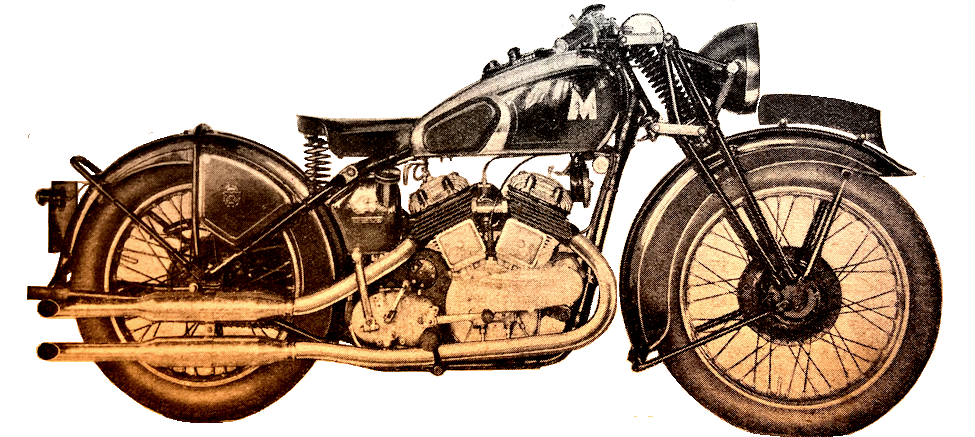
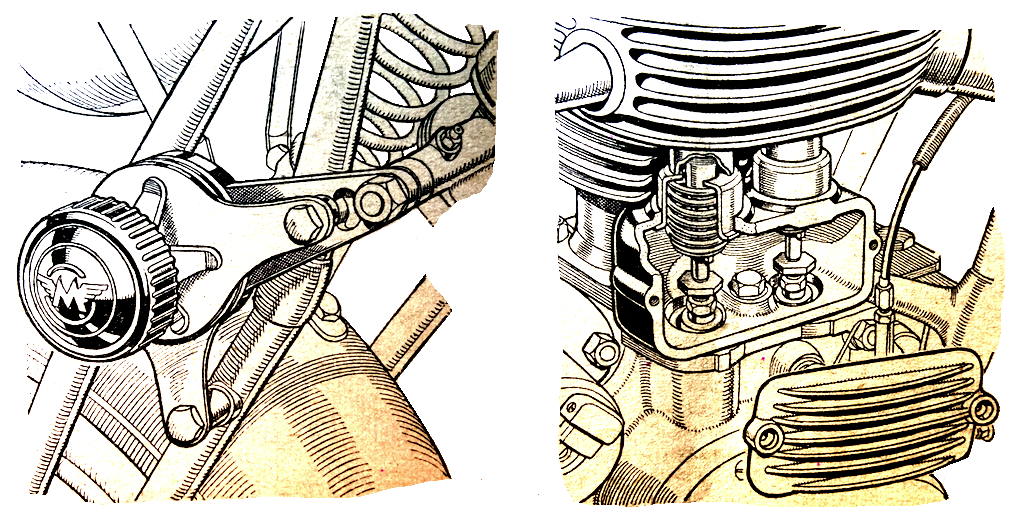
“A PRE-SHOW SURPRISE is the introduction by the Coventry Eagle concern of a completely new range of four-stroke models. Three sizes will be available, viz, 250, 350 and 500cc, and in every case an ohv engine of famous make will be fitted. All three machines are identical in specification, except for the engine size and a certain amount of weight-saving in the smallest type. The frame is of tubular construction with a single, large-diameter front down tube, and a full duplex cradle running from the front down tube to the rear spindle. A straight top tube extends rearwards past the seat tube, and is joined to the top of the seat stays by special lugs. There is a second top rail, which is curved upwards to provide ample clearance for the valve gear. The seat post is located in front of the four-speed, foot-operated gear box. Tubular Webb forks are fitted, and these incorporate both steering and shock dampers. The wheel rims are chromium-plated, the mudguards are nicely flared, the rear guard being hinged; and the tyres are 3.25-19 (26×3.25in). In addition to front and rear stands a prop stand is fitted, while the rear stand includes certain neat and interesting features which cannot yet be disclosed. As regards the engine, the push-rods and rocker gear are enclosed and lubricated, but the valve springs are exposed. Lubrication is on the dry-sump principle, the separate oil tank being mounted on the seat post so as to pair-up with the battery. The latter, incidentally, is secured to its bracket with a rubber pad interposed.”
“DETAIL MODIFICATIONS OF an extremely practical nature have been made to the Redwing Panther range for 1937. The programme consists of three ohv machines—Model 90 (490cc), Model 100 (598cc) and Model 85 (348cc). The last-mentioned has a heavyweight frame and forks and displaces last year’s Model 80. The most noticeable alteration applicable to all models is a new colour scheme. Gone is the familiar green panel with its leaping panther transfer; the handsome chromium tanks now have ivory panels lined in red and black, while a transfer of a panther’s head is attached below the maker’s name. The effect is distinctly smart, especially when viewed in conjunction with the chromium wheel rims with their black and red-lined centres.”
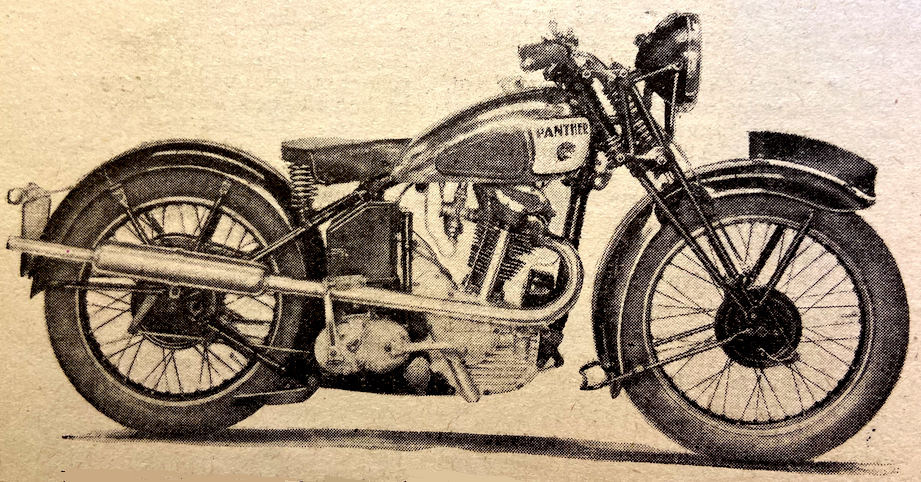
“VINCENT-HRD ARE SPRINGING something of a surprise for 1937—a 1,000cc big twin weighing only a comparatively few pounds more than the well-known high-camshaft 500. The idea behind the design is the production of an exceptionally lively, high-performance mount with the same superb handling as the smaller models in the range. Not only this, but the makers have aimed at providing a 100mph machine which is docile and does not rely upon super-tuning for its out-of-the-ordinary capabilities or require an ultra-high compression ratio. ‘Springing’ a surprise is the right word, since the machine, of course, embodies the famous Vincent-HRD rear-wheel springing. There is, in fact, very little difference between the new 1,000cc model and the 500cc Comet and Meteor’ models, except for the engine and the wheelbase, which is only 3½in longer—58½in instead of 55in. The alteration in wheelbase has been accomplished merely by increasing the length of the top tube. In effect, the engine consists of two Meteor engines mounted on a special crank case. The cylinders are set at an angle of 47°, with the exhaust port in each case facing to the front and a separate carburetter for each cylinder. In order to save weight, the barrels and heads are of light alloy, the former with nickel-chrome liners and the latter with cast-in valve seats and plug boss. The seats and plug boss are all in one and consist of
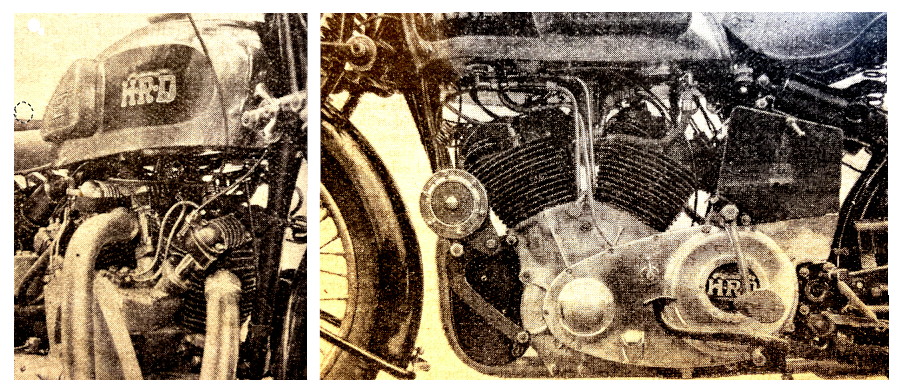
a bronze casting. This new model, the Rapide, is said to weigh between 400 and 410lb complete with 120mph speedometer, clock, electric lighting, pillion footrests and the well-proved Vincent-HRD sprung pillion seat. The price, including all these features, which are standard equipment, is £138. It will be noticed from the illustrations that no separate oil tank is fitted. This is part and parcel of the stainless-steel fuel tank, which has a new and accessible rear mounting beneath the saddle nose and is finished in black. The oil and petrol capacities are half a gallon and 3½ gallons, respectively. A gauze-type oil filter is provided on the suction side. The combined dynamo and magneto is inverted and mounted in front of the crank case. Chain drive is employed, and a special shield is provided to protect the unit. The cylinders are offset in relation to each other to the extent of 1½in, consequently the exhaust port of the rear cylinder should receive ample cooling draught. A single silencer is employed. In appearance the heavily ribbed crank case is typically Vincent-HRD. It is unusually compact and actually the crank case bolt positions are the same as on the 500cc type of case, so, if desired, a 500cc engine can be fitted without difficulty in the 1,000cc frame. The total weight of the 1,000cc unit, less carburetter and combined dynamo and magneto, is about 105lb—that is roughly 20lb more than the weight of the single. As with all 1937 Vincent-HRDs, the machine has twin brakes in both wheels, quickly-detachable rear wheel, prop stand, Burman four-speed gear box, folding kick-starter, stainless steel fittings for the rear wheel, a duplex primary chain and Ferodo AS10 oil-resisting clutch inserts.”
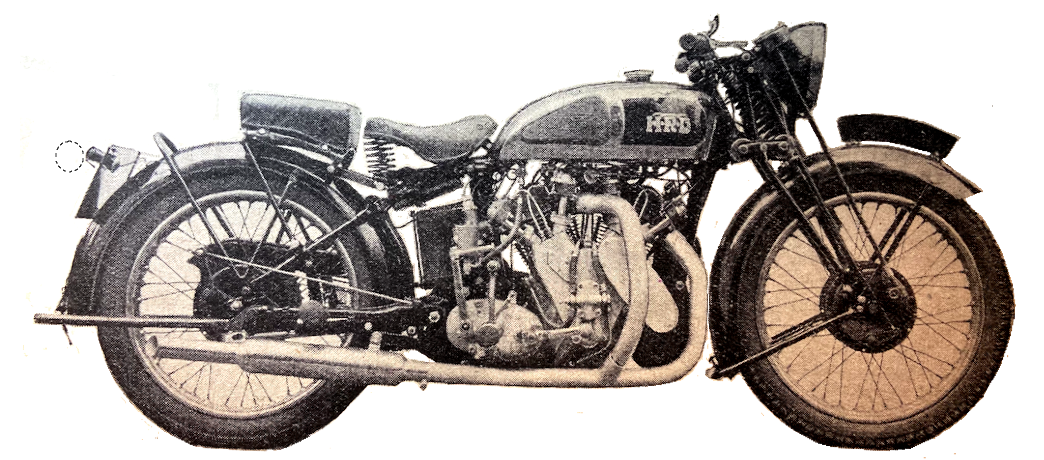
“THERE HAVE BEEN several alterations to the 250cc Stevens in order to bring it into line with its larger brothers. For instance, the tank is larger, which gives the machine a bolder appearance. Also, the tubular silencer and fishtail have given place to an exhaust system of the megaphone type with internal spirals. Extra spirals have been fitted to the silencers of all models in order to decrease the volume of the exhaust note. Another improvement consists of a larger and stronger gear box operated by a pedal and enclosed mechanism. In common with all Stevens machines for 1937, the standard finish is black, but the tank is lined in blue and gold, blue being the predominant colour. The wheels are plated and have black centres with blue lines. The 250cc model is equipped with tyres of the same size as the larger types, viz, 3.25-19 (26×3.25in), studded rear, and 3.00-19 (26x3in) ribbed front. Further, it has the same high finish and is in every way a full-sized machine with a small but highly efficient engine.”
THE BMW RANGE now comprised 198, 298 and 398cc ohv singles as well as the 494cc ohv, 745cc sv and 730cc ohv flat twins.
“ONE ENTIRELY NEW MODEL is included in the Zenith programme for 1937. It is a 500cc sports model and is fitted with the new high-camshaft JAP engine. This engine has a double-row roller big-end bearing with a duralumin cage, duralumin connecting-rod and steel flywheels. A special design of piston cast in low-expansion alloy is fitted. Lubrication is by dry-sump. Valves and rocker gear are fully enclosed and lubricated by a by-pass delivery from the oil pump, surplus oil being returned to the crank case. The high camshaft is chain driven and a tensioner and damper are incorporated in the drive. The ⅜in pitch magneto chain also has a tensioner, and the magneto is mounted on a platform which is part of the crank case casting. A single tube encloses both push-rods. A cradle frame with Zenith-Druid forks houses the engine. Transmission is by chain through a four-speed Burman gear box with positive-stop foot-change. The primary chain is enclosed in an oil-bath case which has a detachable clutch dome. Seven-inch brakes, front and rear, are fitted. Other details of equipment are a 3gal chromium-plated petrol tank, chromium wheels with black centres, Dunlop saddle, footrests with vernier adjustment and rubber-mounted handlebar.
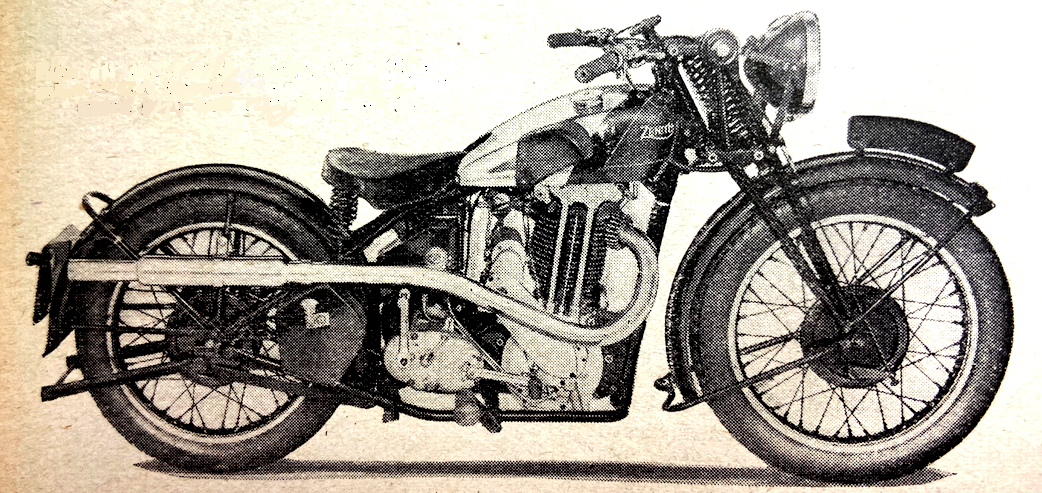
“IN ADDITION TO THE three new high-camshaft machines, five other new models have been introduced into the Cotton range for 1937. The well-known triangulated frame is used throughout the range and all models have neat saddle tanks and dynamo lighting. The three models fitted with the latest type JAP high-camshaft engines present a breakaway from standard Cotton practice, for the engines of these models are mounted vertically in the frames. These three special models also have four-speed gear boxes, and hand or foot control can be fitted to choice. Other items of the specification are Cotton-Druid forks, and large brakes with mud-protection shields.”

“MANY IMPORTANT ALTERATIONS and modifications have been made to the 1937 range of Harley-Davidsons. The programme consists of four distinct models with engine capacities of 750cc, 1,000cc, 1,207cc and 1,300cc. While the 1,000cc model has an ohv engine, the remainder are side valves. All, of course, are twin-cylinder machines. The 1,000cc model was introduced during June this year, and the only alterations made to it are a slightly different transfer on the petrol tank and a redesigned carburetter air intake. It will be recalled that this model incorporates many interesting Harley-Davidson features, particularly as regards the engine. The overhead-valve gear is fully enclosed and positively lubricated [the shape of the ohv model’s rocker box led to its nickname: Knucklehead]. A full dry-sump lubrication system, with gear-type pumps, is employed, and a one-gallon oil tank is mounted beneath the saddle. The engine is housed in a sturdy duplex frame, the forks of which now have tubular instead of forged members. Transmission is by a duplex primary chain, a four-speed gear box incorporating a multi-plate foot-operated clutch, and final chain drive. The speedometer, which is mounted in a panel attached to the petrol tank, is driven off the gear box. Ignition is by coil, with the distributor accessibly mounted on the timing case, behind the dynamo. The majority of the above features are also to be found in the 1,207cc and 1,300cc side-valve models, while some are incorporated in the 750cc machine. For purposes of description the two side-valve models may be looked upon as identical with the ohv model, except, of course, as regards the engine. Both have the new dry-sump lubrication system, and the loop frame has been dropped in favour of the latest duplex type. The 750cc model also has dry-sump lubrication, but instead of an oil tank under the saddle there is a compartment incorporated in the petrol tank. The loop frame of this machine is similar to the 1936 design, and the girder-type forks and three-speed gear box are retained. The new design of petrol tank, with instrument panel, is fitted, and the speedometer is driven from the rear wheel. All three side-valve models have a re-designed flywheel and big-end assembly with roller hearings, while the timing pinions, shafts and cams are now of integral construction. Although the prices of Harley-Davidson machines.in America have been in-creased by 10%, for the time being they will remain unchanged in Great Britain. The price of the 750cc model, with either low- or high-compression pistons, is £101 15s. It is obtainable in competition trim for £109 10s. The 1,000cc ohv model costs £132 10s, while the prices of the 1,207cc and 1,300cc models are £113 10s and £119 15s respectively. The standard equipment on all models includes electric lighting, combined ignition and lighting switch with lock and key, and an electric horn. Additional equipment, including safety guard, fork dampers, etc, is available at extra cost.”
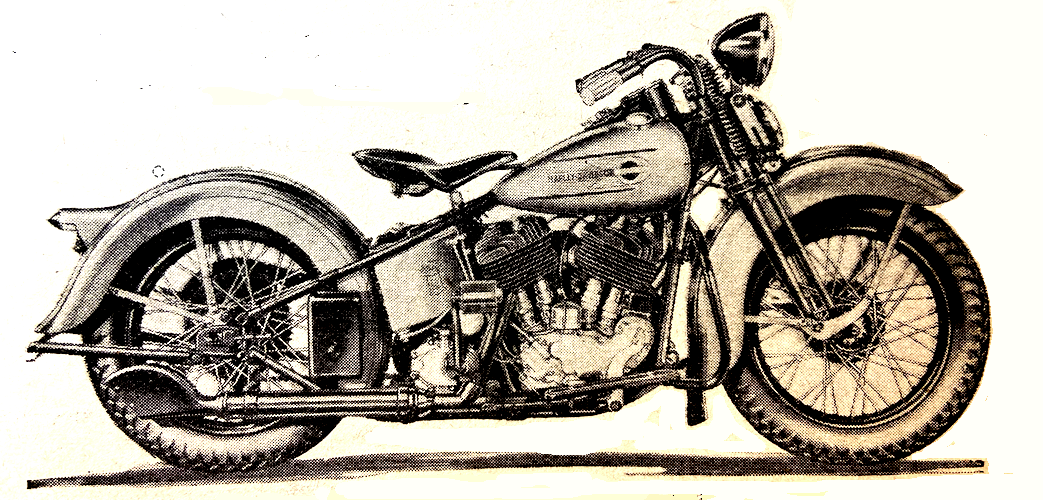
“TWO NEW SIDECARS have been added to the Swallow range. The Launch Aero Coupé is just what the name implies, the main body being of the launch type, but the passenger is protected by a neat coachbuilt coupé head. This head, which is hinged to the offside of the body so as to provide easy access, has a pressed-steel top, all the corners being nicely rounded and faired off. There is a car-type roof ventilator towards the back of the roof, and all the windows are of heavy-gauge celluloid. The top is slightly vee-d in front, and in consequence the windscreen is in two sections. There is ample room in the long body, which has ventilation louvres in front and a large compartment at the rear. Chromium-plated deck rails are fitted fore and aft, and there is a plated and streamlined lamp mounted on the mudguard. This is purely a single-seater body, and is most definitely a de luxe type. To those who require sufficient room to carry a child in the dickey seat, but insist on full protection, the new Kenilworth Coupé will make a strong appeal. The lines of the body are founded on the present models, that is to say, the body has a long, gently sloping nose. It is, however, much more roomy, and there is ample space in the rear seat for a normal child of eight. The whole seating accommodation is covered by a hinged top with plenty of window space. Further, a fabric-type sunshine roof is provided, and is so arranged that the fabric can be rolled up and fixed at the front end, leaving, in effect, an open sidecar with rigidly fixed side screens.”
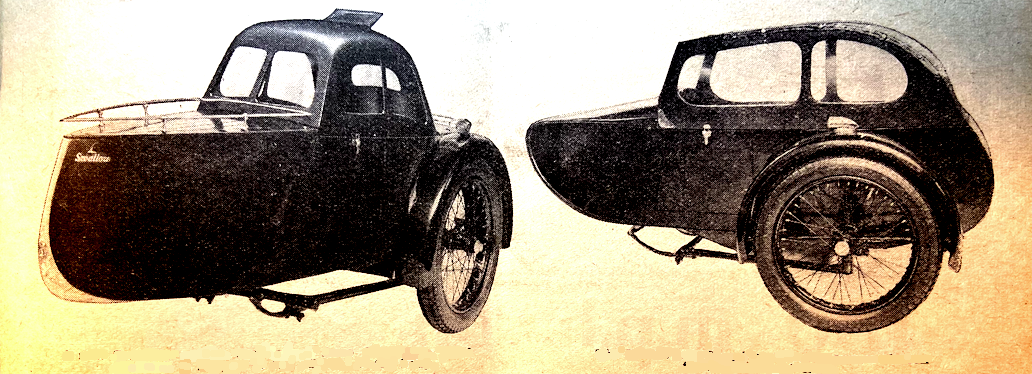
“ART SENIOR, RIDING a streamlined 498cc OK Supreme, has broken the Australasian half-mile motor cycle record previously held by L Tobin (Norton). Senior’s speed over one way of the course was said to be 116.8mph, and over the other way no less than 130.4mph. This gives a mean speed of 123.2mph, and since, according to the report, the run was made in fog and heavy rain, it is little short of amazing.”
“ITALIAN GUZZI MACHINES swept the board in the Italian Grand Prix held recently on the fast Monza track. Aldrighetti and Tenni, between them, carried off the first two places in both 250 and 500cc events. Italy, therefore, won easily the International Speed Trophy—an international team competition—with Belgium and Germany runners-up. Stanley Woods, who was to have ridden a Guzzi, fell in practice and was unable to compete. Another unfortunate Was EA Mellors, whose Velocette ‘went on strike’ during practising; he rode an NSU in the race, but retired with engine trouble. Both the 250 and the 500cc events were won at extremely high speeds—the former at 92.3mph and the latter at 101.6mph. All the races were over a distance of nearly 190 miles, yet in the 500 race, Tenni (Guzzi) and Aldrighetti (Guzzi) swept over the line together. Tenni won by ⅗sec! RESULTS. 250cc: 1, Aldrighetti (Guzzi), 92.3mph; 2 Tenni (Guzzi); 3, Pagani (Benelli). 350cc: 1, Sunnqvist (Husqvarna), 88.6mph; 2, Nocchi (Norton); 3, Grizzly (Sarolea). 500cc: 1, Tenni (Guzzi), 101.6mph; 2, Aldrighetti (Guzzi); 3, Gall (BMW).”
“BRITISH MACHINES WERE successful in winning both Junior and Senior races in the West Australian TT. In the Junior, Merralls (Red Hunter Ariel) was first, and in the Senior,. Booth, also on a Red Hunter Ariel, won in record time.”
“A NEW ROAD ACROSS the Andes (South America) reaches a height of 15,885 feet above. sea-level, and thus becomes the world’s highest road. It connects Lima (Peru) with Oroya.”
“THE MINISTER OF TRANSPORT has refused to confirm a 10mph speed limit through Pateley Bridge. The AA and RAC strongly opposed the restriction, which was suggested by the West Riding of Yorkshire County Council.”
“THE CHAIRMAN OF THE magistrates at Haywards Heath (Sussex), Lord Cautley, KC, said there could be no two views of what an Army sergeant-major meant by the word ‘Halt’. Sixteen motorists were fined 5s each for ignoring the sign.”
“AMID A WELTER OF ‘calico-tearing’ Bugattis, Maseratis, Alfa Romeos and Atlas, motor cycles provided more than a fair share of the thrills at the annual speed trials held at Brighton last Saturday. Eric Fernihough was the star of the day, for apart from winning the 350cc and unlimited cc solo and unlimited cc sidecar classes he successfully attacked his own record for the half-mile course, returning a speed of 90mph dead.”
“RECENTLY RETURNED FROM the Isle of Man where he gained two replicas on his first appearance, JC Galway, riding a 490cc Norton, won the second Durban Grand Prix from the scratch mark at 70mph. The circuit is 11.2 miles to the lap, and is exceptionally twisty, with the straights few and short. A crowd of about 60,000 watched the race. The first rider to start was C Cannon (175 two-stroke James), and he went away with a fifty-minute start on the scratch man, Galway. Third man home last year, P Jackson, was second to go and H Adams, who was to set a pace for, the back-markers, was fourth.”
“THOSE WHO HAVE RIDDEN in an International Six Days Trial carry through their remaining years a pack of memories without parallel or equivalent in ordinary riding. Working on the bus in torrid heat with sweat flooding your eye-sockets. Going deaf through altitude, and sneezing to regain hearing. Wondering where your horses have gone, as height thins the air in the gas charge. Swirling round 50 successive hairpins up hill—shall I keep changing up and down, or keep on one gear? Chasing Henne down a pass and skidding surprise bends over wet, gritty, and incredibly deep potholes. Lakes so blue that they hurt your eyes. Thick, icy fog on the peaks at mid-day. Sliding through mountain tunnels at noon with the head lamp full on and eyeballs that refuse to adjust themselves to the plunge into gloom. TT-ing through narrow villages with the side lanes closed for you by ropes and ladders. TT-ing over the roads beyond, only to meet a Fiat, Merc or Lancia ditto-ing in the opposite direction on a blind corner. Dust clouds 40 feet high and a mile long. Roadside lunches at improvised snack bars. Language difficulties. The pluperfect marshal. The bullying, blustering marshal. Tent garages in heat-waves. The chill of summer rain at 8,000ft. The inferno of a freak hill in a deep-cut lane with the entire entry stalled. Losing one’s way—no maps and nobody who can speak English. The nightmare of a puncture on a hectic speed schedule. And always, right at the end, the speed test—over good roads, over bad roads, over sun-sucked tar, over cobbles; over water-bound macadam, in teeming rain, and in stunning heat.”—Ixion
“I STOPPED THE OTHER DAY at the top of Blagdon Hill, where the view compels such a stop on any man of sense. A Calthorpe rider pulled up alongside before my pipe was finished . Discovering a brother enthusiast, he invited me to have a drink. I politely refused. ‘You will drink with me,’ he replied, I thought a trifle tersely. He unslung a haversack of the waterproof type and clambered down the bank to a small brook, where he filled the haver-sack with water. Its previous contents proved to consist of two half-pint bottles of Bass and a lump of ice. He promptly read acceptance in my eyes, and as he opened the doings he remarked, ‘Some fellows take their liquor in stuffy bars. I buy mine at a pub along the road, but I drink it where it will do me most good; and twopenn’orth of ice improves it on a day like this.’ I am now raising Cain at Benzole Villa because Mrs. Ixion seems to have sent my haversack to a jumble sale. My new-found friend had bread, cheese, and a tin of butter with him as well, and he chilled the butter before he poured the iced water away. Unluckily, the eats weren’t scaled for two. I live and learn.”—Ixion
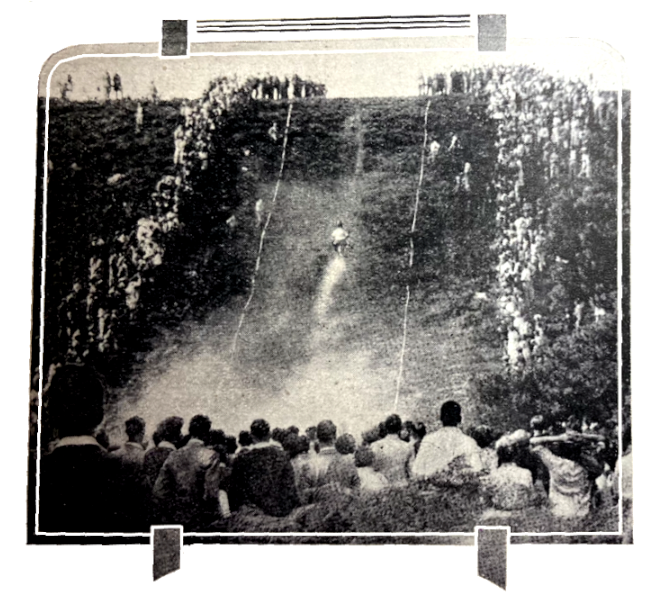
“ALTHOUGH N0 13 DID not appear on the Southport Motor Racing Club’s programme for the Championship Meeting on Ainsdale Beach last Saturday the Clerk of the Weather did not look with kindly eyes on the event. Rain fell most of the day, making conditions anything but pleasant for competitors and officials. The morning’s programme was devoted to flying kilometre trials, in which the attraction was a ‘Southport 100mph’ Gold Badge for competitors topping the 100 mark. In all, 67 runs were. made, and the fastest motor cyclist was J Blease (1,000cc Blease-JAP Special), who recorded 111.84mph on three separate occasions. B Berry (996cc Brough Superior) made several efforts to equal this figure, but his nearest was 104.52mph. Only one other motor cyclist gained a Gold Badge—JB Moss (498cc Excelsior) who returned a figure of 103.76mph on his second attempt.”
“UNEXPECTED AND MOST VALUABLE support of a point the BMCA has taken up with the Home Secretary come from Alderman Sir Phené Neal, sitting as the magistrate at the Mansion House. The BMCA has urged that it is wrong to summon a man, who is alleged to have gone fast, for three separate offences— driving to the danger of the public, driving carelessly, and exceeding the speed limit, all as the result of a single act. The BMCA has suggested to the Home Secretary that the police ought to decide upon one charge for a single action and stick to it. Now Sir Phené Neal says the same thing. In the case of a man summoned for both dangerous and careless driving he stated, ‘The police ought to make up their minds to proceed on one the other before coming into court.’ Inspector Crouch, of the City of London Police, replied that it was usual to issue two summonses, and, in the event of the case being proved event of the case being proved, ask the magistrate to convict on one only. Sir Phené would have none of it: ‘What I object to is that the police have two shots at a man instead of one. It doesn’t t quite fair.’ Sir Phené ended the matter by requesting that Inspector Crouch acquaint the Commissioner with his views. Thank you, Sir Phené; thank you, BMCA.’
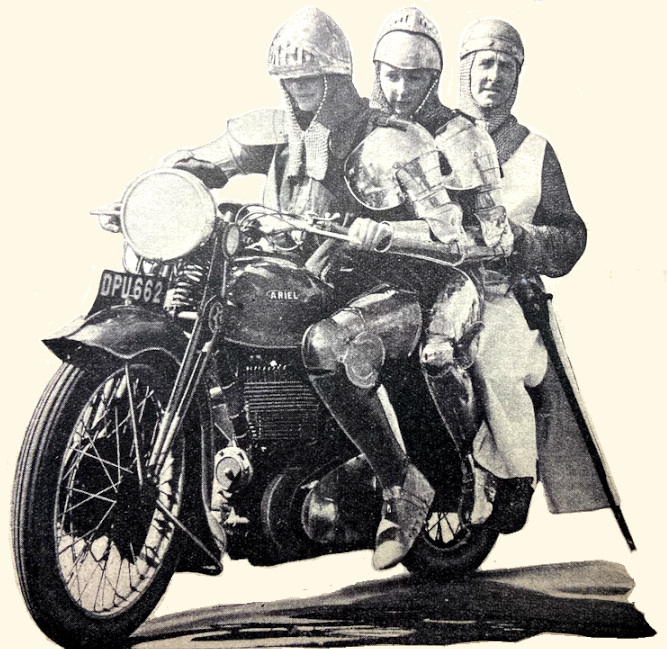
“JUST STRUCK A GENUINELY thrilling book with a stodgy title, ‘The Invention of the Automobile‘, by St John Nixon. As we Britons lay no claim to having originated the motor era, we don’t normally worry about its beginnings, but at one time Germans took sides for Karl Benz and Gottlieb Daimler respectively. Mr Nixon, aided by Germany’s archives, has no difficulty in awarding precedence to Benz, who had his car on the streets of Mannheim as early as the autumn of 1885, while Daimler was some 18 months later. Austria has advanced claims for one Siegfried Markus, who staged a car at the Vienna Exhibition of 1873 (incidentally, this identical vehicle is still in the possession of the Austrian AC); but as Markus, like the French pioneer Etienne Lenoir, never used or developed his invention, Benz has unquestionable claims to the real honour. Benz, in spite of his epoch-making notions, was rather a wooden-headed fellow. His brain foresaw the possibilities of road transport. He grappled with the appalling problems of producing gearing, clutch, steering, etc, in days when no suitable engine existed. And he coped with the practical problems of road testing when a glimpse of his first horseless carriage packed the streets with crowds, which might jeer or worship or denounce as the mood took them. But having produced a crude car which would cover his urban test route non-stop in the dead of night, judgment failed him, and he never developed it with the necessary vigour and flexibility of mind; consequently he never made much money out of his inventions. The best yarn about him relates how the authorities limited him to 3¾mph in Mannheim and 7½mph on rural roads. Karl promptly invited the local Belisha to take a trial ride with him, and bribed a milkman to gallop his cart past the car and ‘cock a snook’ at them. This so annoyed the Minister that he there and then abolished the speed limit! Daimler, by contrast, possessed a fluid brain and adapted himself almost too freely to changing conditions. His mind roamed in all directions. He had constructed a truly terrible motor bicycle of ½hp by November, 1885; it had a wooden frame, two small side-steadying wheels, and—actually—a free engine obtained by means of a jockey pulley and a flat belt. Daimler promptly decided that it was useless, and dropped it like a hot coal. He then bought an ordinary horse carriage of the double Victoria type; put the front axle on a central pivot for steering purposes; mounted a tiny engine on the floor of the rear cockpit; fitted slip clutches in the rear hubs to furnish a differential action; and achieved 12mph with it. In quick succession he produced a benzine tramcar, a benzine fire pump, a benzine airship engine; a power-driven balloon, and a motor boat! The German public, terrified by the term ‘explosion engine’, boycotted his motor boat for fear that it would blow up, so Daimler decorated its gunwales with porcelain insulators and rubber-covered wire, and pretended that it was electric! However, mercifully for us, the failure of his boats and balloons led him to concentrate on cars, and with his vigour and ingenuity he succeeded where Benz stagnated. Two days before Benz died in 1929 German motorists staged a great parade of honour near his home, and thousands of people congregated outside his house; but the aged inventor was too weak to stagger to his bedroom window and receive their plaudits.”—Ixion
“ICELAND IS ONE OF the pleasantest countries imaginable for the traveller. Everything is so fresh and unfamiliar, the people are hospitality itself, and the beauty of the scenery more than makes up for the bad roads. I should say straight away that no one should travel in Iceland on a motor cycle unless he has a trials model and knows how to ride it. The roads round Reykjavik are passable, but as soon as you get into the country, rocks, mud, streams, and loose sand are the order of the day. Photographs will give you some idea of the conditions; but they cannot show the worst sections, just as they cannot show the beautiful colouring of the moors and mountains in the incredibly clear air….in the remoter districts the appearance of a motor cycle is a rare and interesting event, and no matter what time of the day or night you arrive, you will find a warm welcome and will be given the best entertainment that means allow. If you take a motor cycle to Iceland and camp as much as possible you will, I think, feel freer than you have ever felt before…if you go by trawler or cargo-boat, as I did, you not only make a very cheap trip but will see much that is fresh and interesting…there are only sme 50 motor cycles on the island (mostly Triumphs, but also Ariel, BSA, Douglas, Harley-Davidson, and spring-frame OEC machines) so take the usual spares with you, and don’t forget a good puncture-repair outfit!”
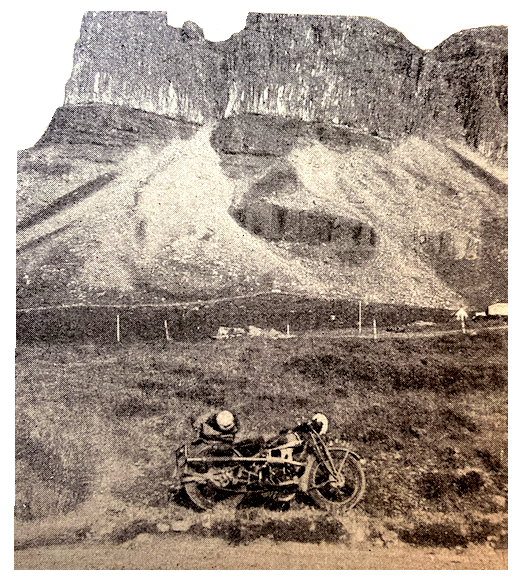
“THE 1936 JUNIOR MANX Grand Prix will go down in history as one of the closest races of the series. Throughout the race there was a dog fight for the leading position, and at the end of the sixth lap only seven seconds separated the first and second men. Austin (‘Nelson’) Munks, riding a 348cc Velocette, was the winner at an average speed of 73.93mph. His win is all the more creditable in view of the fact that last year, in a shooting accident, he lost the use of one eye. Second and third respectively were JH Blyth and WA Rowell, both riding 348cc Nortons. Thus another big race this year resolved itself into a Norton-Velocette duel. Many retirements in the Lightweight Race, which is run in conjunction with the Junior, caused considerable changes of position among the placemen. changes The Lightweight Trophy was won by D Parkinson (248cc Excelsior) after six consistent laps during which he was never seriously challenged. FRW England (249cc Python) was second; and FJ Hudson (249cc OK Supreme), third. Owing to bad weather conditions speeds were low and no records were broken, both trophies being won at a lower speed than in 1935. In previous years the race has always been run in the morning, but in the hopes of avoiding the mist which so fluently blots out the Mountain the organisers, the Manx MCC, changed the starting time to 2pm. Tuesday dawns fine, but as the morning wears on the sky clouds over, and by lunch time it is raining fitfully in Douglas and there is a high wind. The chances of fine weather for the race are remote indeed. At 1.30pm the riders arrive at the start after their run through the streets of Douglas from the Drill Hall, where the weighing-in was held on Monday afternoon. There is the usual pre-race activity at the pits. WA Rowell enlists the aid of a lady representative to repair his goggles. WL Dawson’s machine falls over as he makes a slight adjustment and nearly causes several others to fall as well. FRW England has a patent lap-scoring machine. It consists of six pieces of chewing gum, held under a rubber band, one of which is eaten at the beginning of each lap. After being postponed for 24 hours owing to fog, the 1936 Senior Manx Grand Prix proved to be one of the most thrilling races of the series. Austin Monks (490cc Norton) repeated his performance in the Junior race by beating Jack Blyth (490cc Norton) in a tremendous last lap dash by a margin of seconds. Third place was filled by K. Bills (490cc Norton) after a fierce struggle with T McEwan (490cc Norton); the latter covered four laps in nearly a minute less than the winner and made the fastest lap of the day.”
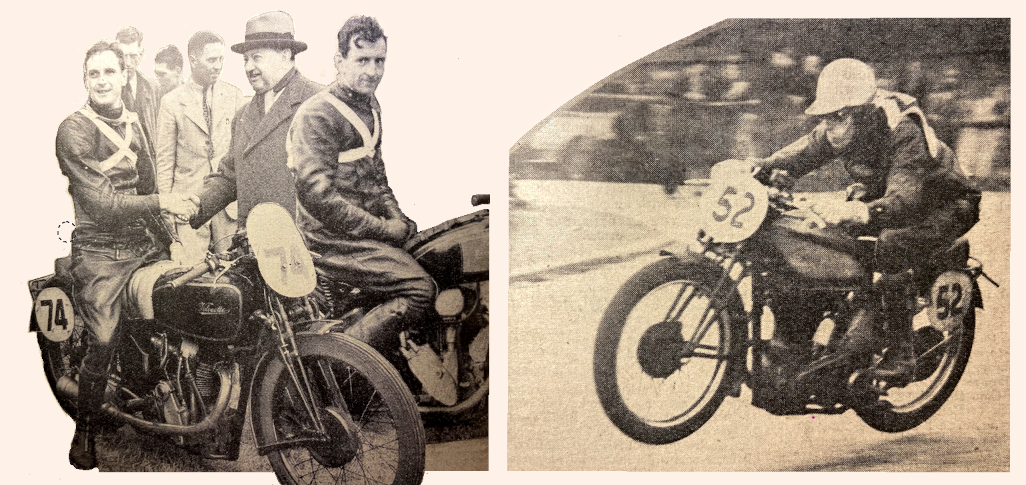
“MAY I, AS AN ENTRANT in the 1936 Junior ‘Manx’ take this opportunity of thanking, through the medium of the ‘Blue ‘Un’, the officials of the Manx MCC? Being foolish enough to try to motor a trifle fast, I found myself with a month in hospital to consider the folly of trying to run before learning to walk. During my period of enforced rest 1 was visited every day by Mr GD Hanson, the chief marshal, and I would like to thank him and the other officials and marshals of the club for the time and trouble they took making us less fortunates comfortable. These hard.working officials deserve all the credit for the great sporting spirit that underlies everything connected with the ‘Manx’. I, for one, am looking forward to the1937 Manx, when I am hoping to profit by this year’s experience. In closing, may I also thank the doctors, sisters and nurses of Noble’s Hospital, Douglas, for the treatment I received whilst a patient there—in fact, it was a pleasure to have fallen off! A11 the best to the ‘Blue ‘Un’.
W Molyneux, South Liverpool MC.”
“THE MINISTER OF TRANSPORT when issuing his only report on accidents on the road, ie, the Fatal Accidents Report, 1935, made the following statement to the Press: ‘Pedal cyclists and motor cyclists are recorded as being responsible for more accidents than any other class of drivers.’ This statement is definitely repudiated by the report issued by the Home Office on April 2nd, 1936. In the latter report (a much more comprehensive statement) the responsibility for the accidents involving personal injury, fatal and otherwise, can be clearly allocated between persons on the vehicles to whom the responsibility is attributed, and persons not on the said vehicles. An analysis of this report [covering England and Wales] reveals the following important facts: Number of motor cycle accidents, involving personal injury, fatal and non-fatal, to persons not on the vehicles to whom the accident is attributed: Fatal accidents, 230 out of 3,308 (6.9%); non-fatal, 12,156 out of 106,628 (11.3%). The responsibility attributable on the Home Office figures shows the motor cycle to be far less responsible than any type of four- (or more) wheel mechanical transport, the proportions for which are: fatal accidents, 2854 (83.2%); non-fatal accidents, 77,523 (72.7%).
SA Davis, Organising Secretary, British Motor Cycle Association, London, WC1.”
“BEFORE A RECORD CROWD of over 75,000, Lionel Van Praag won the Speedway Championship of the World at Wembley last week. A native of Australia, captain of Wembley and one-time typewriter mechanic, Lionel started speedway racing ‘down under’ at the age of 16. Second was Eric Langton, the England and Belle Vue captain. Third was Bluey Wilkinson, of Australia and West Ham, while fourth place resulted in a tie between Frank Charles, of England and Wembley, and Cordy Milne, of America and Hackney Wick. All the finalists started with a credit of bonus marks based on their percentage performances in the qualifying and championship rounds, as follows: Eric Langton, 13; Charles, Newton, J Parker and Van Praag, 12; Hansen, Harrison, Huxley and Wilkinson, 10; Case, Ormston, J Milne and C Milne, 9; Lees, Phillips and Abbott, 7. Owing to previous injuries Jack Parker and Joe Abbott were non-starters, which was more than a pity, and as first reserve Bon Johnson was also a non-starter, the vacant places were filled by the second and third reserves, Bill Pitcher and Arthur Atkinson, who each started with six bonus marks. From the start it seemed obvious that the main fight for the title would be between Langton and the eight lads with 12 and 10 bonus marks, with Charles and Van Praag second favourites, and for a number of races the riders ran true to form. Frank Charles staggered the world—yes, there were visitors from all over the globe at Wembley on Thursday—when he won the opening race from Case and Phillips by nearly a quarter of a lap in 73.6 seconds, knocking no less than 1⅖ seconds off the clutch-start record, held by himself. Could Charles keep up that sort of tramping, and if so, could anybody beat it? It was not until Heat 20, the last race, that Langton and Van Praag met each other, Eric with 24 points and Lionel with 23. It was a dog fight all the way, with Van Praag just leading Langton, and Jack Ormston trying his utmost to beat both of them. Had Ormston been successful, with Van second and Langton third, it would have meant that Langton, Van Praag and Wilkinson would have tied for first place with 25 points each, and the resultant run-off of the tie would probably have necessitated the entire re-building of Wembley Stadium! However, although there was only a matter of a few feet in it at the end, Ormston just couldn’t make it. Van ran out the winner, with Eric second. This put Langton and Van Praag level at 26 points each and the tie was decided by a four-lap clutch start (gate) match race. Langton won the toss, took the inside and was first into the bend. Van came inside, headed him up the far straight and took the lead out of the second bend. Eric drew level on the inside coming out of the seventh bend, and repeated the tactics out of the last turn. But Van just had the legs of him and won the World Title, Trophy and the first prize of £500 by three-quarters of a length. Eric Kemp Langton, of course, took the second prize of £250. Arthur ‘Bluey’ Wilkinson, who had gone through the entire Final unbeaten (scoring the maximum of 15 points), and whose total score with bonus marks was 25 points, took the third prize of £100, while the fourth prize of £50 was divided between Frank Charles and Cordy Milne.
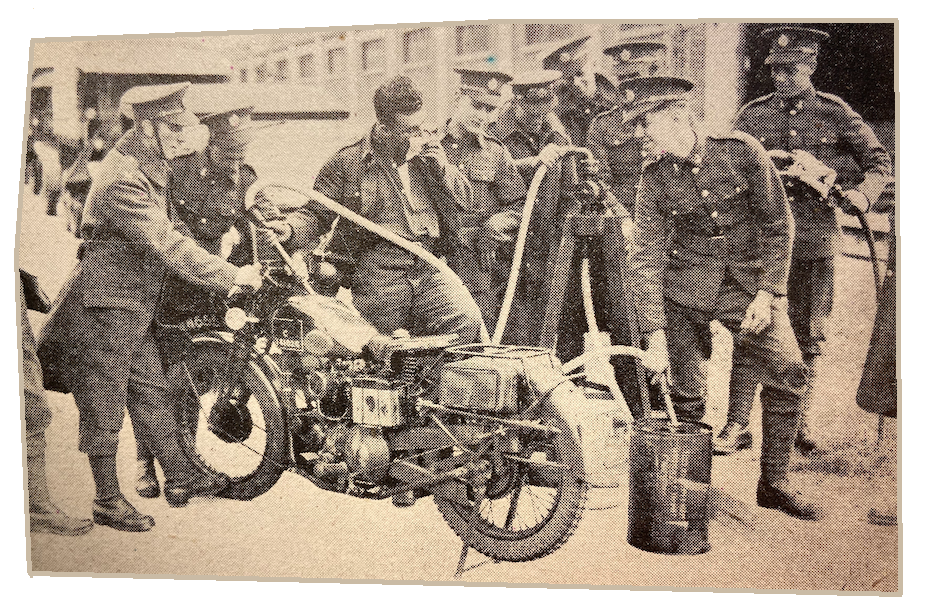
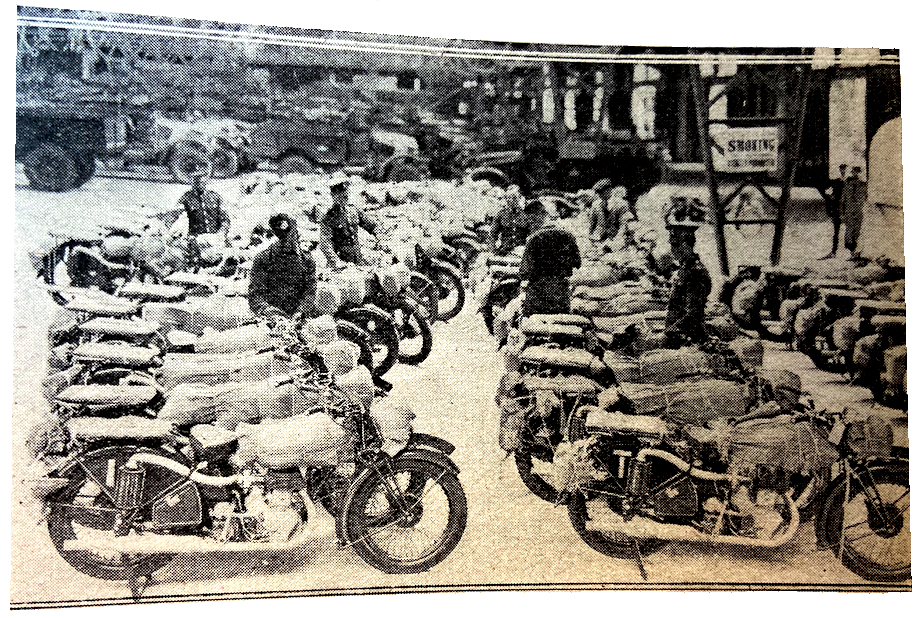
“A READER VISITING THE Pump Room at Bath was handed a leaflet published by the Bristol Pedestrians’ League, entitled ‘The Cry of the Children’. It contained some statistics about road deaths, tabloid reports of a few accidents to children, some very poor and silly verses. and some suggestions for safeguarding life on the roads. The latter indicate the mentality of the person who has spent money on printing such rubbish. They include: (a) The total abolition of all motor cycles. (They are ‘not at all necessary’ and pillion riding is ‘a sure form of suicide’.) (b) All users of private cars are to undergo a strict driving test and medical examination. (The author admits that private cars kill and injure more people than any other form of vehicle, but does not press for their abolition; presumably, he or she owns a car?) (c) The speed limit to be fixed at 12mph in towns and 20mph in the country. The verses contain such gems as: ‘Unheeding cries of anguish That follow in their wake, What matter dead or dying If a record they can break.’ I wish these humane but impractical persons would try to realise that all motorists are quite as much disturbed about road fatalities as the author of this pamphlet; and that motorists in general are co-operating to the best of their ability with the authorities in an endeavour to reduce accidents. It is an unfortunate element in the Machine Age that accidents occur at sea, on the railways, in factories—why innocent people even get electrocuted in their baths! We have just two alternatives. The one is to make all machinery illegal, and the other is to devise all possible safeguards. Man-kind in general prefers the latter solution.”—Ixion
“IN THESE SUNDAY QUEUES—eg returning from Eastbourne to Town in the evening, or on any similar road which in parts at least remains a two-stream road—exactly where should the good motor cyclist ride on the left-hand strip of the road? He must choose in a real queue between three policies, viz: (a) Hugging the road edge. (b) Where the propshaft would be if he were a car—ie, bisecting longitudinally a rectangle. (c) On the outside of the left-hand strip. If we adopt (a) we get shut in, because a car is sure to move up alongside on our right; we may even get squeezed kerbwards most uncomfortably; we lose most of our chances to overtake any ‘creeper’ just ahead, and it is a little distracting when the passengers of the alongside car either stare at us haughtily, or—if young and ribald—start ragging us. If we adopt (c) we are in a favourable position to nip past a ‘creeper’ ahead; but a car is sure to move up inside us, and wherever the road narrows to a pure two-stream width we may get uncomfortably squeezed and even dangerously squeezed between the alongside car on our left and on-coming traffic. So far as I know, not even the Archbeacon* has deigned to suggest what our proper conduct is. For myself, I elect as far as possible to pretend that I am in a car, not on a motor cycle; I assume that I am entitled to a small rectangle of road such as a car would occupy in my place, and I set my bike to bisect that rectangle longitudinally. Whenever a car evinces an inclination to move up alongside me on either right or left, I try to ‘ride it off’, as a polo man might say (I am assuming, of course, that the car ahead limits us both to a set speed for the moment at any rate). What do you do in such circumstances? Hug the kerb? Ride 4ft out from the kerb? Ride 8ft out from the kerb ? Those are approximately the three alternatives. On my soul, I do not know which we are supposed to select, or which is reckoned good riding and good roadmanship. But my own instinct is to claim my rectangle and ride about 4ft. out from the kerb whenever possible.”—Ixion
*Presumably Transport Minister Hore-Belisha.
“I WHO ADDRESS YOU (he said modestly) am to blame for the existence of the MCC Team Championship event, and persuaded our Big Boss at the office to present a cup for a club team championship over 30 years ago. We had no variable gears in those days, and the future of passenger motor cycling was supposed to rest between (a) trailers and (b) tandem motor bicycles, of which the Phoenix and Ormonde had a certain popularity. We had sufficient foresight to insist that one machine in each club team of six should carry a passenger. My own club did not include a tandem in its membership; and the crux of team choosing was to find a passenger outfit which would not be stumped by the first real hill (by ‘real’ hill under those conditions we meant, say, half a mile of 1 in 10). I still remember the committee meeting at which our most important job was to pick : (a) A reliable high-powered bike. (b) Ridden by a fellow with stout lungs and calves of fencing wire to do the lpa (‘light’ pedal assistance). (c) With a featherweight trailer. (d) And a featherweight passenger. The last item was important, as the lads liked to take their pet girls as passengers, and the girls of the last century had not learned to slim.”—Ixion
“A GLASGOW GAS-WORKS has installed a benzole recovery plant.”
SIR JOHN CADMAN, chairman of the Anglo-Iranian Oil Co, warned that world oil supplies would be exhausted within 20 years. UK petrol reserves were about 1,500,000 tones; enough for about four months.
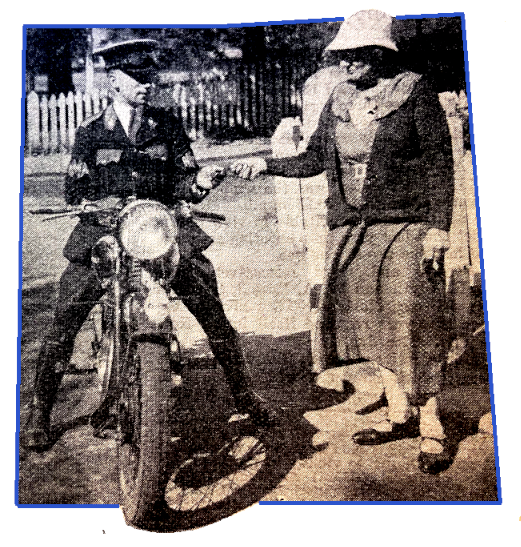
“THE RAC CLAIMS that it has secured the derestriction of over 200 lengths of previously 30mph-restricted road.”
“‘KEEP TO THE NEAR Side Lane Except When Overtaking’ is a new MoT- authorised sign to be erected on roads marked with traffic lanes.”
“MR C FOLEY, secretary of the pedestrians’ Association, wants to restrict or prohibit motor vehicles from using by-roads and lanes unsuited to them.”
“MR BASIL WATSON, KC, the North London magistrate, has made good his threat to fine a speed-limit offender £50 [worth about £3,000 in 2023]. The motorist concerned was also disqualified for four years.”
“WHEN TWO MEN were charged with taking a motor cycle in Dublin, the district justice criticised the owner for leaving the machine and said it was, ridiculous taking up the time of the court with such a case, reports Irish Motor News.”
“A LORRY-DRIVER who was seen by a policeman at Birmingham trying to light the electric headlights of his lorry with a match was later charged with being drunk.”
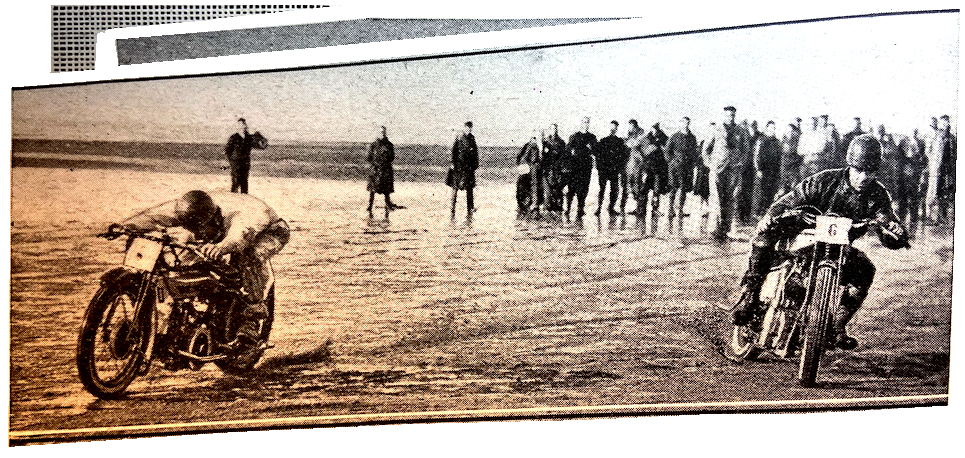
“EVER SINCE GERMANY WRESTED the International Trophy from Great Britain, when the International Six Days Trial was held in 1933 in Wales, we have tried hard to regain our lost laurels in this the greatest of all reliability trials. Our failures have never been through want of trying, but on the other hand, no one will deny that our organisation has not been quite up to the standard of our victorious opponents. Theirs was typical of Teutonic thoroughness. There were weeks of serious training. Men and machines were put through their paces in two-, three-, and even six-day trials, and as the date of the trial drew nearer, so the riders in the German team were vigorously supervised. I do not think I am wrong in saying the German riders were forced to spend the whole of two mornings doing nothing except remove wheels and tyres and then replace them. Vivid stories were told of the specialised training through which these men went, including big daily mileages. It must have been very disheartening to our teams to see and know of their opponents’ superior training. We had neither the facilities nor the support to achieve our objective. But all that is past. This year will be remembered as the one which showed what happens when John Bull gets thoroughly roused. I can assure you it will not be out fault if we do not win the International Trophy next September… Last week the members of the Trophy team and the two Silver Vase teams were asked to bring then machines down to Brooklands so that they could be scrutinised and put through their paces. VN Brittain (348cc Norton), GE Rowley (348cc AJS) and WS Waycott (495cc Velocette sc) are the men upon whom rests the task of winning the Trophy, while L. Heath (Ariel), A Jefferies (Triumph) and J Williams (Norton) will form England’s ‘A’ Vase team. The ‘B’ Vase team will consist of that well-known Scottish trio, JA McLeslie, JC Edward and R MacGregor—all of them on Rudges. The first two teams put in an appearance, but as the ‘B’ Vase team were all riding the same type of machine it was not considered necessary to bring

the riders down from Scotland. Instead, Ernie Nott came down with one of the Rudges, and it will be left to the Scottish ACU to test the riders…A noticeable feature of the machines was the big part played by rubber bands in securing tools, etc, to the machine. While the bands are undoubtedly ideal for the job, I personally consider they are not quite in keeping with the general air of efficiency. After the Committee’s scrutiny the machines were wheeled out on to the track and the riders asked to remove the air cleaners and substitute the necessary jets before doing two preliminary laps and then three more at speed. I cannot publish the speeds, but those who were looking on with watches in their hands were quietly whistling with astonishment at some of the lap and kilometre speeds. Then followed quite the most interesting part of the programme. The riders were required to fit a new spare rear cover and tube, then to fit a new tube to the front wheel. Alan Jefferies was easily the first to remove his rear cover, but his total time taken, including the replacement and inflation, was nearly equalled by Len Heath. Incidentally, the new gas cylinders—they are a discovery of Dr Galloway—are highly efficient. They contain liquid gas, and must be used in a vertical position, while the process of inflation should not take less than 30 seconds. I understand that, although they are only roughly a foot in length and two inches in diameter, they are good for six complete inflations. After a final inspection of all tools and spares, the competitors were handed cards on which criticisms and suggestions were offered.”
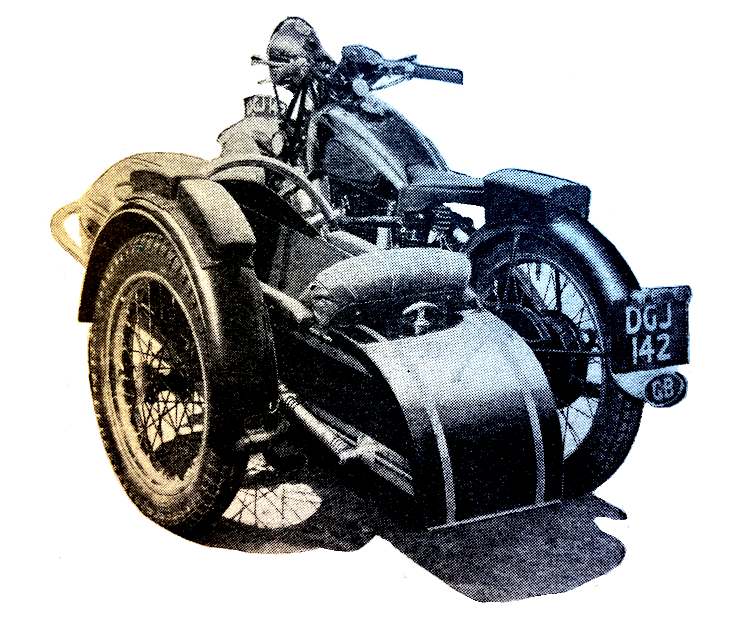
“AS YOUR READERS are probably aware, all the riders in one of the teams selected by the ACU to represent Great Britain in the Silver Vase Competition in the International Six Days Trial are mounted on Rudge machines. I should like to take this opportunity of acknowledging publicly the assistance offered to my firm by Mr Jack Sangster, Managing Director of Ariel Motors (JS) Ltd. So that the strongest possible team could be put in the field, Mr. Sangster very sportingly released Jimmie Edward, so that he might share the honour of representing his country in company with Messrs Bob MacGregor and Jack Leslie. As typifying the spirit underlying his action, I cannot do better than quote from a letter I received from Mr. Sangster: ‘I hope these arrangements will assist you to put up a fine show for the benefit of the British Motor Cycle Industry, and, in any case, as an individual firm, I should like to wish you every success.’
For Rudge-Whitworth Limited, Graham Walker, London, W1.”
“TODAY THE THOUGHTS OF thousands of motor cyclists throughout the world will be centred on the pretty little German town of Freudenstadt, where early this morning there started the greatest reliability trial of the year. The International Six Days Trial is on, and the cream of riders from six countries are tackling the narrow, twisting roads of the beautiful Black Forest country that are included in the first day’s run. There is no event on the sporting calendar that can compare with the ‘International’; it is a super-sporting trial and a long-distance road race rolled into one. And success can come only to the combination of man and machine that is perfect in every sense of the word. The big question is: ‘Who will win the Trophy?’ Germany, with the same brilliant team that brought her victory last year, is bound to be a hot favourite, while the fact that last year Czechoslovakia was leading up to the final speed test will not be forgotten. Or will the Italians spring a surprise? These three countries will, perhaps, provide the greatest obstacle to Great Britain in her efforts to regain her long-lost laurels. Nevertheless, we say with some confidence that success for this country is nearer than it has been for a long time. Our riders are among the finest in the land, and both they and the machines they ride have been thoroughly prepared for the gruelling test. Britain is due for a win; may our riders have all the luck they deserve!”

“THURSDAY—FIRST DAY. For many people 5am is an hour about which the less said the better. Yet at this time last Thursday there were hundreds of people lining the roads through Freudenstadt. They were there to see the start of the year’s greatest motor cycle trial, the XVIII Internationale Sechs-Tagefahrt der FICM—to give the ‘International’ its correct title. Five-thirty was zero hour, and with five minutes to go it was still pitch dark. However, such was the lighting of the scene of the start that every detail could be seen. Soon the riders were brought up to the starting line—with their hearts in their mouths, be it said, for this year there was a special check less than two miles away to catch out those with sulky motors. Promptly at 5.30am the maroon announced the start of the trial. The first men got away without difficulty. At the check outside the town, quite contrary to expectation, the riders were arriving early. One or two of the later numbers had narrow squeaks. AH Collison (346cc AJS) only just managed to clock in on time. By 6am the sun was trying hard to pierce a high mountain mist…The going was for the most part over forest roads. It was the next section on to St Anton that started the fun. Here, mud, loose surfaces, acute bends and sudden drops played havoc with the ‘racers’, many of whom had yet to settle down to the steady speeds that win gold medals. PL Topliss (496cc BSA sc) broke an oil pipe and ran out of oil five miles before the refuelling depot. By nursing his engine he got there, but in spite of ‘blinding’ lost many marks on time. Later a stone in his chain caused him to retire. R Dusil (595cc Jawa sc), of the Czechoslovakian Trophy team, severely damaged his sidecar in a toss, which likewise caused him to retire. His team-mate Stanislav (247cc Jawa) crashed rather severely, and also disappeared from the trial. That the going was undoubtedly severe was true, but it certainly was not impossible, and at the end of the day several British riders agreed that it was almost a good thing! Then news leaked through that both the Italian and French sidecar men had retired—the going was certainly trying out sidecar chassis. Even Dr RL Galloway (499cc Rudge sc) had trouble, although in his case it was connected with his fork spindles, which became damaged and caused him to lose valuable marks on time. AG Wills (347cc Matchless) had to give up—wisely in the circumstance—with an inoperative clutch and a pulled-out nipple on the front brake cable. AG d’Arcy Sugden (499cc Vincent-HRD) broke his ht lead through catching it in a branch, and lost so many marks on time when replacing it that bd had to retire. Many Continental riders also fell by the wayside, and no wonder, for the demand of the schedule was nerve-racking even to the experienced riders. Walfried
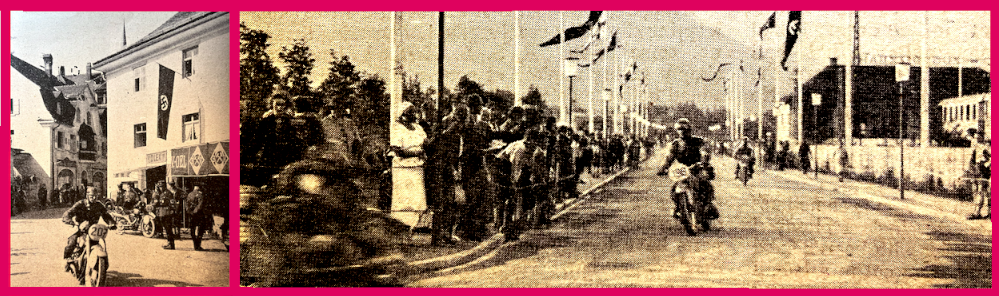
Winkler (246cc DKW), of the German ‘A’ Silver Vase team, came off and damaged his foot gear change, losing many marks in getting it to work again. Fleischman (348cc NSU), of the German ‘B’ Vase team, had three punctures in quick succession, and lost marks on time at the St Anton check…For miles at a time the route lay through vast pine forests, much of it enshrouded in low cloud. On rare occasions it climbed above the clouds and sometimes it was possible to catch glimpses of the mountains en each side standing proud above the clouds. The chief difficulty of this section lay in the negotiation of terrifying water gullies at least a foot deep and two feet wide. Striking these gullies at 30mph at the rate of one every 50 yards put a great strain on the riders, who had by now to contend with a soaking drizzle…One little section before the second speed hill-climb at Ottenhofen caused quite a lot of trouble. It started by being a normal gradual descent under trees. It was not so bad as it seemed, and with growing confidence one’s speed increased to 30-40mph. Then suddenly the surface changed so that it resembled Hive Brae, of ‘Scottish’ fame. Imagine taking that at 40 downhill! The result was that many came unstuck, including such well-known riders as AP van Hamersveld (497cc Ariel). On the hill-climb 44 riders lost marks. Then followed a 40-mile run back over better roads to Freudenstadt, where a vast crowd waited to see the end of the first day’s run—and what a day! Only two teams, England and Germany, left complete and without loss of marks. In the Silver Vase contest both British teams and the Irish team were intact, while only Holland (‘A’ team) and Austria (with both teams) were left without loss of marks—in one day’s run 10 teams had lost marks in the Vase contest. FRIDAY—SECOND DAY. By way of contrast…for the most part the going was easy—possibly the brilliant sun had something to do with this. But when it lay along forest roads or tracks it was frequently quite a different story, for here in the gloom lay snares for the unwary. Rocks, boulders, loose and muddy surfaces all took their toll. particularly when encountered on the multitude of acute bends. Of the 219 riders left in the trial after the sorting-out on Thursday, thirteen were fated to retire, among them being G Oates (497cc Ariel sc) and LEC Hall (499cc Rudge sc), both with sidecar chassis trouble…Even at this early juncture it was pitiful to see the condition of many of the machines which had endured the fork crashing and bumping of Thursday’s run. It was definitely dangerous to follow closely behind some of the 250cc machines—particularly on hills—owing to their liability to seize up. Once again a huge crowd turned out to see the start. The course immediately ‘dived’ into the Black Forest by way of a terrifyingly muddy and precipitous descent. At Oberwolfach the riders dropped down out of the clouds for the number check…Eventually, after a very tiring run, but nevertheless a very enjoyable one, the first competitors began to trickle into Freudenstadt soon after 3.30pm. And still the sun shone in all its glory—a fitting end to a grand day in which both Germany and England, of all the Trophy teams, still retained their clean sheets. SATURDAY—THIRD DAY. Although it was still pitch dark at 5am, it needed but little imagination to realise that the rain was pouring in torrents. A glance out of the window showed the street lamps enshrouded in mist. What a gloomy start for one of the most difficult days of the trial! Soon after leaving Freudenstadt the route plunged into hilly country with narrow and really tricky tracks, which in many cases became so muddy that time and again competitors found themselves suddenly sitting on the ground. What with the mist and rain and the two timed sections–one a hill and the other some 10 miles of a very poor and rutted country lane—competitors had a terrible time of it. Incidentally, the timed hill-climbs were not finding favour. Most of them were held over excellent roads up gentle gradients with few bends. The marks were based on the average of the five fastest men (regardless of clean sheets), plus 15%. To-day’s first hill at Ziegelwasen caused little bother, but the timed road section was quite another story. Here the riders had to tackle an extremely bad-surfaced track, which had its bends marked out with warning boards à la TT. Many sidecarrists had hair-raising moments, but it seemed to suit WS Waycott (Velocette sc), of’ Britain’s Trophy team. Gordon Wolsey (Ariel) had rather a rough passage; his fork spring had broken, and he was compelled to lock the forks up solid. Marjorie Cottle (BSA) also had a trying time of it, for her clutch was giving trouble.
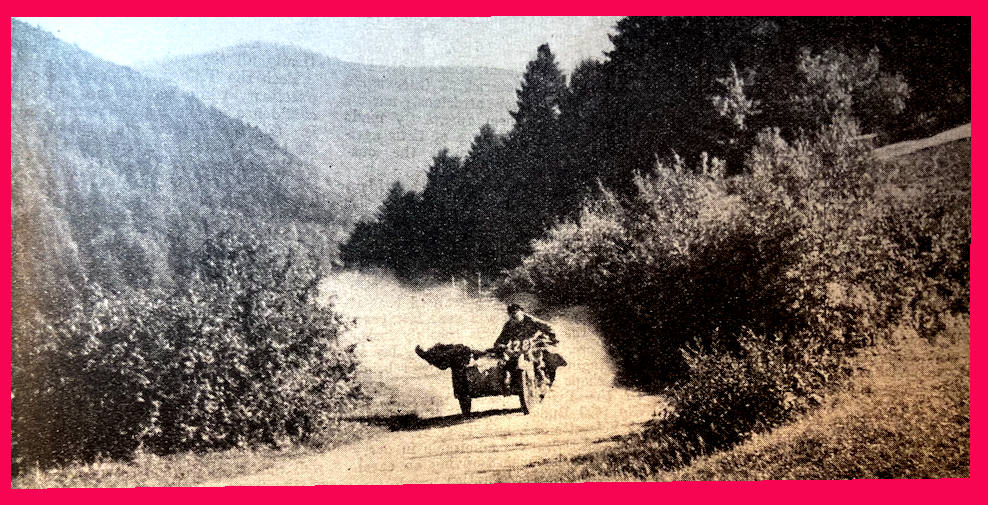
All the men in Britain’s three teams came through in style, although those in the 500cc class found the demands of their higher schedule very exacting…by the time Weingarten was reached the sun was shining brilliantly. Even so, the mud on the roads—surely this must have been one of the muddiest days in any ‘International’—had by no means dried. In fact, one hill was so bad that several unfortunates had to turn round and descend in order to make a second attempt. Wheelspin was, of course, the chief bogy…At Füssen, where the speed test is to be held on Tuesday, the riders travelled down one leg of the speed circuit. Soon Oberammergau, of Passion Play fame, was reached, and now, high up in the mountains, the riders cracked along as fast as they could. Round the curves of the Ettalerberg they swerved until they reached the level on which Garmisch-Partenkirchen lies, with the lofty Zugspitz on one side and the Wank on the other. Soon they were being ‘Heiled’ into the Olympic Stadium—the headquarters of the trial from now onwards. Still Great Britain’s three teams retained their clean sheets, while the Trophy team still had to contend with the German Trophy team—both being intact. SUNDAY—FOURTH DAY. Germany and Britain alone were un-penalised in the International Trophy contest. I n the case of the Silver Vase contest, both of Great Britain’s teams were without loss of marks, a distinction shared with the Irish boys, the Dutch ‘A’ team and the Austrian ‘B’ team. Once again it looked as though a battle royal would take place on the road circuit at Füssen. In this case the odds would be slightly in favour of Britain on account of having two very fast three-fifties in the team, which would mean that the 500cc BMWs would have to gain approximately seven seconds a lap in order to win…Down at the start Gordon Wolsey (497cc Ariel), alter practising on another Ariel the night before, managed to fit a new fork spring in the 15 minutes allowed. TCK Barnes (1,000cc Ariel Four sc) created a stir when his carburetter caught fire. Willing hands pushed him off and so allayed the flames—but was the pushing looked upon as outside assistance? That important point was not settled until the evening, when it was declared that ‘outside assistance’ had not officially been given. After passing through the narrow, be-flagged main street of Partenkirchen, the route immediately took to a narrow track with huge fork-bottoming galleys. As if these conditions were not bad enough, the sun decided to come from behind the clouds—to the consternation of the competitors, who had to face its full glare all the way until the main road to Klais and Walchensee was reached. The Walchensee itself presented a never-to-be-forgotten spectacle even at this early hour, for the surrounding mountains were reflected on its calm, mirror-like waters. Good roads—good, that is, for the ‘International’—led to Holrkirchen where the famous Munich Autobahn was- reached, and for the next 40 or so miles competitors were able to experience the delight of travelling at continuous and safe high speed down this wonderfully smooth double-track highway, one track of which is probably wider than the average British by-pass. At the end of the Autobahn good roads—except for two short detours—led to the beautiful Königssee which was almost unbelievable in its beauty. The lake, its clear, blue waters lapping the base of vast mountains, supplied a refreshing contrast to the sweltering heat encountered in this
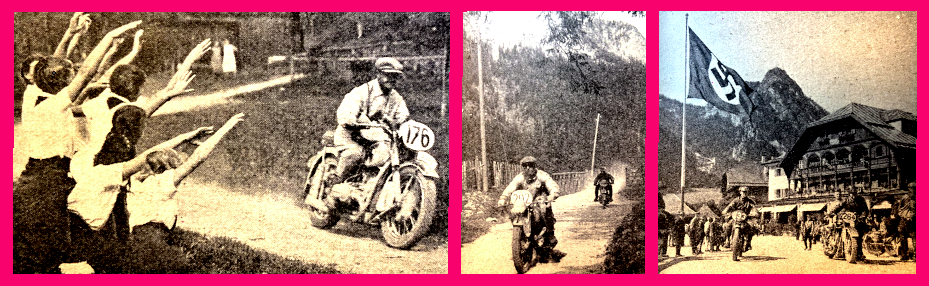
famous German beauty spot. And to make the lunch stop all the more enjoyable, an hour was allowed, and competitors were urged to take advantage of the free electric motor launch cruises offered by the authorities. Even on the return run via Berchtesgaden and Badrichenhall the scenery was mountainously pluperfect, and as if to add the finishing touch, the Bavarian men and women were out in their picturesque Sunday best clothes. MONDAY—FIFTH DAY. Another glorious day, this time not even marred by a thunderstorm as was the case on Sunday. All day long the sun blazed down on the glorious Bavarian countryside. In these circumstances, one would have thought the course would have been on the easy side, but in the opinion of many it was the most difficult and tiring day’s run to date. For mile after mile both men and machines were subjected to the most excruciating bumps, while all the time the greatest caution had to be exercised over the dry, loose surface and dusty tracks. By way of contrast, much of the going in the morning was muddy whenever the route passed through woods, while many unpleasant moments were experienced by riders while riding over tracks made out of pine logs laid like planking across the road…Most of the solo men very wisely decided to adopt the Continental style of cornering with the inside foot well and truly down. By adopting these tactics, FW Neill (495cc Matchless), JA McL Leslie (499cc Rudge), and J White (497cc Ariel), made excellent getaways from each bend. Even L Heath (497cc Ariel) and JC Edward (499cc Rudge) dabbed. Of course, just to be different, GF Povey (493cc Triumph) kept his feet up, but he was very fast. all the same. All the British teams were admirable, the 350s of Vic Brittain (348cc Norton), GE Rowley (346cc AJS) and Jack Williams (348cc Norton) appearing to have just about as much acceleration as the best 500. DB Harmer (346cc New Imperial) and AH Collison (346cc AJS) were both well up to Six Days form, while wily J Pecha (172cc CZ) sat on the mudguard pad practically all the way. Both the Tiffens, father and son, were excellent, while Greenwood had all the confidence of the hearty veteran that he is. Of the Continental riders, nearly all the BMW men were outstandingly good, and so were the Puch competitors. E Villa (500cc Gilera), of the Italian Trophy team, appeared to under-estimate his speed and overshot the bend. J Stelzer (494cc BMW), a German Trophy team man, had plenty of power in hand, and so had L Kraus (595cc BMW sc). By way of a last-minute sensation, EJ Henne (494cc BMW) found himself in difficulties on the upper slopes of the hill. Just as he was passing one of the MC men his engine suddenly seized; it freed and then immediately seized again. After a pause of a few seconds he was off again slowly, but that seizure spelt the end og Germany’s chances of winning the Trophy. it was only Henne’s superb riding that got him back to Partenkirchen without further loss of marks…But while the British Trophy team are still intact a little anxiety was caused when Jefferies, of our Vase team, came off rather badly on one of the many acute and loose bends between the hill-climb and the finish…Alan’s sheer grit and pluck got him back to the finish on time—a remarkable show.
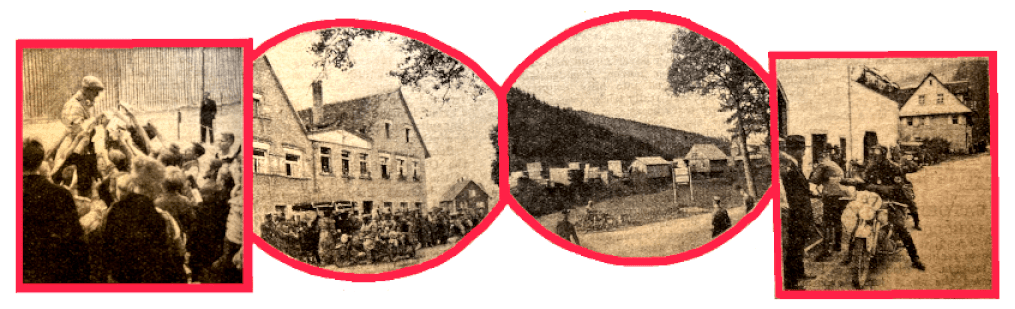
TUESDAY—SIXTH DAY. On the Tuesday morning the British competitors were more than excited. It certainly looked as if the Trophy was ours, and we also had a good chance of winning the Vase, for both our teams were intact and ready to fight it out with the Dutch ‘A’ team and the Austrian Puchs. Down at the start Alan Jefferies, with his right hand practically useless, managed to replace his foot-gear change, damaged in his spill on the previous day. Then Fred Povey, hearing there would be extra time available on account of short-circuiting the route due to a landslide on the first part, succeeded in fitting a new inlet valve spring. Henne, on the other hand, boldly attempted to fit a new piston to his BMW, and succeeded in doing so, but with a loss of 15 marks on time. There was a last-minute scare when was learnt that Waycott, of the Trophy Team, had taken the wrong turning out of Garmisch-Partenkirchen—it was dark, and the starting order was such that he went off first. Peter Bradley, the team manager, went rushing off to the first check 2km out, and found Waycott’s name was not on the card. More panic. At last it was disclosed that the check was late in being established, and actually Waycott, who had quickly realised his mistake, had regained the course and gone through the check before the officials had arrived. Even though it was the last day the going was exceptionally difficult, particularly the grassy section to Petersthal. It was just before this spot that Miss Marjorie Cottle (348cc BSA) had to retire with big-end trouble—poor consolation after a week’s really brilliant riding without loss of marks. Other unfortunates to retire on the last day were Police Officer P Lehner (493cc Zündapp) and F Vanderschrick (596cc FN). The hill-climb was held up the Oberjoch—also climbed last year. This hill, with its many bends and beautifully radiused corners, caused 14 riders to lose marks. Shortly before 11am the first men arrived at Füssen for the last test and the end of the trial—the speed test over the fiat, triangular road circuit at Höhenschwangau. At midday the sidecar men, excepting those riding in either the Trophy or Vase teams, were despatched. Immediately HM Persoon, with his 987cc ohv Harley-Davidson, leapt to the front, and was soon round again well ahead of a horde of BMWs, Zündapps and NSUs. Discretion was obviously the watchword of the majority of the British sidecar men; they just maintained their schedule without any sparks. A team of 730cc BMW sidecars, in the hands of Wolff, Fritsch and Reinhardt, maintained close formation throughout. Persoon’s
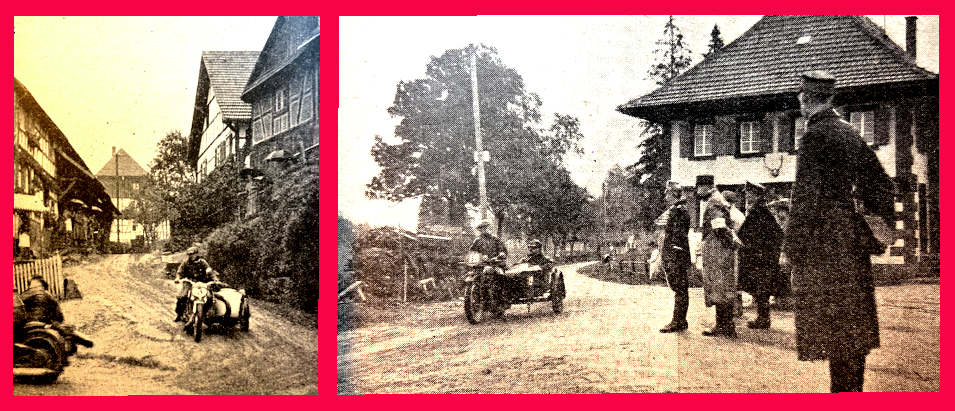
Harley-Davidson drew in near the start with a flat sidecar tyre, which the driver duly repaired in time to qualify for a gold medal. The second group away included the 250s and a few 500s. Frau Thourot (174cc DKW) had exceptionally bad luck when her throttle wire broke as the flag dropped. By the time she got going she had lost 15 marks and was right out of the running. In the next group Maurice Greenwood (346cc Royal Enfield) put up the best time in his class. Karl Pugh (497cc Ariel) was going very steadily, but comfortably within his schedule. His was one of the many plucky efforts. For two days he had been riding with large lumps torn out of the spoke flange of the front wheel—more than nine spokes were useless. As a result he had not dared to use his front brake, and yet he had managed to keep to schedule. Late in the afternoon—shortly before 5pm—the riders in the Trophy and Vase Team contests were taken round the course and then stopped on the line. In the circumstances, Great Britain could afford to lose 16 marks and yet still win the Trophy from Germany. As it was, our men and machines were as fit as could be. In the case of the Vase contest it was slightly different. Our ‘A’ and ‘B’ teams were going to fight it out in company with the Dutch ‘A’ and Austrian ‘B’ teams. In fact, it was this contest that provided the high-light of a rather dull afternoon. The Scottish riders in our ‘B’ team were on 500cc Rudges, and consequently had to average a higher speed than that of the two 350s in our ‘A’ team. Holland, on the other hand, had one 350 and two 500s. The deciding factor was the biggest total gain over the required average speeds for each class. The Trophy teams got away well, but McL Leslie (Rudge) had a bad start when the Vase teams were despatched. However, he soon got going, and it was not long before he had overtaken his team-mate, Edward, and was sitting on MacGregor’s fail. Van Hamersveld (497cc Ariel) was going like the wind on a really fast Ariel. Len Heath was not slow either, while Williams and Jefferies were going very well indeed. Stelzer (494cc BMW) was lapping at over 76mph and adopting a curiously flat position with his toes resting on the tops of his rear wheel spring cases. Henne, on the other hand, was carefully nursing his sick motor—his object was obviously to finish. MacGregor and McL Leslie were lapping at over 70mph, and they needed to, for the British ‘A’ and Dutch teams, with their 350s, were by calculation dangerously near. Soon the hour was nearing its end. Our Trophy team was going round as steadily as ever, Vic Brittain following in George Rowley’s footsteps, while Waycott was really fast. Those in the know saw that it was going to be a close thing in the Vase contest, and when the flag was dropped signifying the end of the 18th International Six Days’ Trial the result of this competition was unknown. It looked, as if the Scots had won, but where were the British ‘A’ and Dutch teams? The Austrians had obviously been unable to make a sufficiently big increase on their schedule. Later it
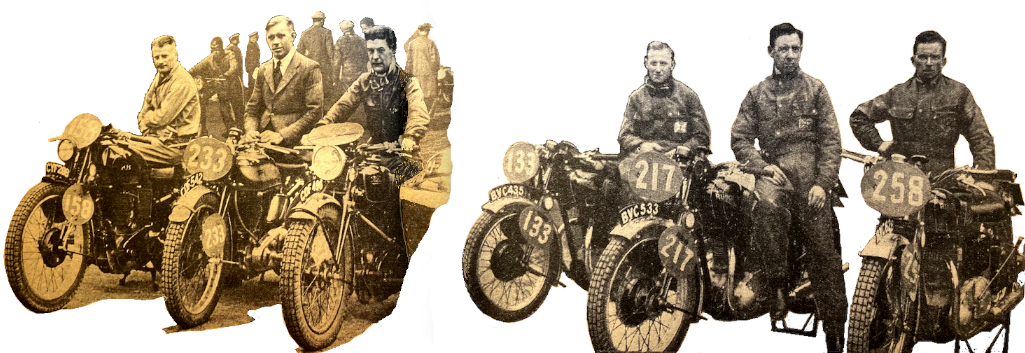
was learnt that the Scots had won by 2min 36⅘sec from the Hollanders, who in turn had pipped our ‘A’ Vase team by 1⅕sec—a grand finish to a wonderful trial.” NOTES. EE Thacker’s gold medal now. brings his score of premiers up to 16 for 16 consecutive Six Days’ Trials.••• Mr ‘Dunlop’ Bagley’s assuring air went a long way in calming anxious competitors using the new Dunlop tyres with sealing compound. Only two or three British riders experienced punctures—something of a record this.••• The team managers this year really did wonders with their men. Their invaluable presence at checks, coupled with their wide experience, played an enormous part in Britain’s victories.••• It was a great pity that such old hands as Billy Tiffen and Maurice Greenwood should have lost their ‘golds’ in the first two days’ hill. climbs. There seems be something in the private owner’s grudge against these ‘TT’ tests.••• Dr Woods, the Irish team’s doctor, did yeoman work for Alan Jefferies after his spill, which considerably bent both rider and machine.••• So that all riders should experience the same conditions, the starting order was changed each day for each group.••• A striking pin in the DKW gear selector mechanism put out both Winkler and Geiss of the German ‘A’ Vase team. Kluge, the other team member, got through by using his gears as little as possible.••• For once the riders found themselves with several minutes in hand at most of the checks, without having to ride unduly hard.••• KB Norris was riding during the last few days with the bottom T-head of his steering column fractured. Eventually the right-hand bottoms link fractured. He was able to substitute a ring spanner until he could get a short length of mild steel strip suitably drilled.••• For the purposes of the hill-climb on the Kesselberg all ordinary Sunday traffic was stopped for the best part of three hours.••• Once again all dangerous points on the course, no matter how remote, were guarded by Nazi Storm-troopers.••• It is regrettable that the striking success of the British team in the International Six Days’ Trial was not accorded the publicity it deserved in the daily Press. Although the BBC announced the bare result, a search of the daily and evening Press next day revealed an almost entire absence of reference to the trial and the notable success of the British team, save in The Daily Telegraph, whose correspondent had forwarded a long message from Garmisch-Partenkirchen, giving a resume of the trial and the result.” THE INTERNATIONAL TROPHY. Winners—Great Britain: VN Brittain (348cc Norton), GE Rowley (346cc AJS), WS Waycott (595cc Velocette sc); no marks lost. Runners-up—Germany: J Stelzer (494cc BMW), E Henne (494cc BMW), L Kraus (595cc BMW sc); 17 marks lost. Third—France: C Nancy (495cc Peugeot), R Pahin (495cc Peugeot), Bernard (723cc Gnome et Rhone sc); 531 marks lost. THE INTERNATIONAL SILVER VASE. Winners—Britain ‘B’ Team: R. MacGregor (499cc Rudge), JA McL Leslie (499cc Rudge), JC Edward (499cc Rudge). Runners-up—Holland ‘A’ Team: AP van Hamersveld (497cc Ariel), GA de Ridder (499cc Rudge), J Moejes (348cc Velocette). Third—Britain ‘A’ Team: J Williams (348cc Norton), A Jefferies (343cc Triumph), L Heath (497cc Ariel). CLUB TEAM PRIZE: Kraftfah-Lehr-und VersuchsAbtig Wünsdorf: G Maier (494cc BMW), J Forstner (494cc BMW), F Lihhardt (494cc BMW). FICM GOLD MEDALS (For Manufacturers’ Teams)—Triumph (FE Thacker, A Jefferies, GF Povey). Rudge (R MacGregor, JA McL Leslie, JC Edward). DKW (W Fähler, G Köhler, H Schrzer). Puch (F Stumfoll, G Stoltze, P Günther jnr).”
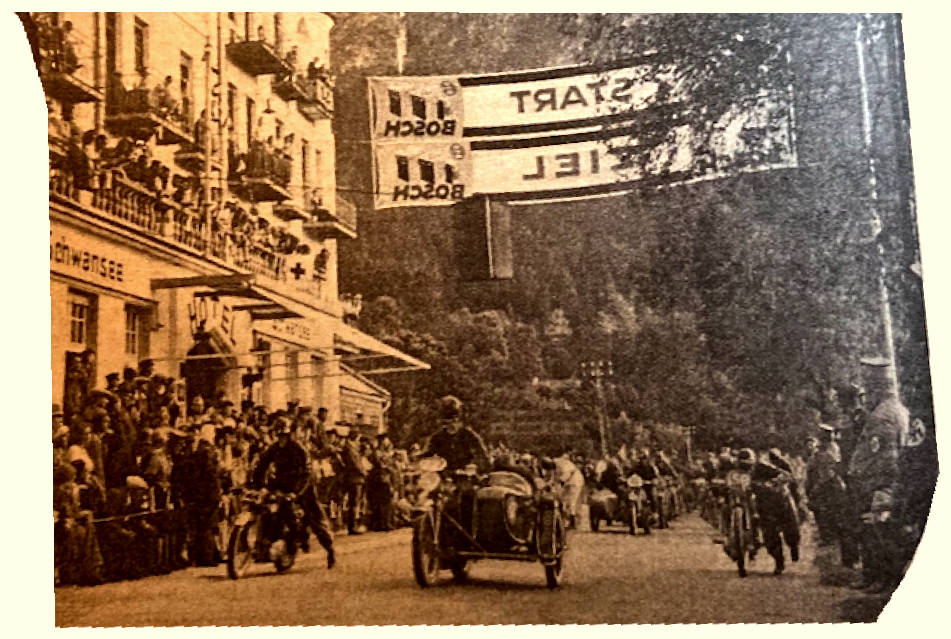
DUNLOP’s tyre sealant wasn’t the only ISDT innovation: the International oversuit from Barbour was issued to the victorious British Trophy team. It was claimed to be “absolutely and utterly stormproof even in blizzard weather”; advanced features included an instant ‘zipp’ fastener and draftproof belted cuffs at ankle and wrist.
“A PLEASING FEATURE to Britain is that the Dutch team the was second in the International Vase competition also used British motor cycles, the men and machines. Thus, of the only Trophy and Vase teams that finished without loss of marks, 12 of the 15 machines were of British manufacture. The club team prize went to a German Army team, with the Rudge (Scotland) team as the runners-up, while two of the four manufacturers’ team awards went to Rudge and Triumph. Of the 87 gold medals that were awarded 48 were won by Germany, who had a total of 138 entries. What of the trial itself ? Our own opinion is that of all the Internationals we have seen this was the best. On the whole, the road conditions were more severe than those of last year, but the speed schedules were easier to maintain and there was a fair amount of main-road going. The time checks were close together—generally no more than 20 miles apart—but at the majority of them competitors were arriving with minutes in hand. Even at the most difficult checks, those following sections of really atrocious track, few competitors lost any marks, Very, very hard riding over poor going was the rule, and men and machines were hammered in a way and to a degree that almost defy description. As a test, an International Six Days Trial as run by Germany is magnificent. That the event in no way bordered on the impossible can be gathered from the fact that there were 87 gold medal winners (which means that none of these men lost a solitary mark) out of a total of 249 starters—in other words, just over a third of the entry got through without the loss of a mark, which, we suggest, is approximately as it should be; incidentally, this is a higher percentage of golds than was the case last year. These facts tend to answer the critics of the system of timed cross-country sections and hill-climbs, which were nothing short of miniature road races…a machine that does well in speed climbs over twisty going that varies from good to loosish and can also be thrashed over hundreds of miles of tracks without giving anything serious in the way of trouble must be an extremely good all-round motor cycle. A further test of importance that was included was that of easy starting. This was carried out by arranging a check a couple of kilometres away from each morning’s starting point…For the organisation no praise is too high. There is only one word for it, and that is ‘colossal’. It is difficult to see how any other country could organise the event in such a superb manner. Every bend and every corner had its Storm-trooper or NSKK man on guard, and whole sections at road were closed to the public for hours on end. Thus it was possible for competitors to use the whole width of the road with impunity. The route marking, with different enamelled, sheet-metal arrows, danger signs and ‘wrong road’ discs for each day’s run, was absolutely perfect No British trial, even a half-day affair, could conceivably be marked so well…It is impossible to imagine any trial organised in Great Britain in the manner of this amazing event staged by the ONS and DDAC. We have never seen organisation to approach that of this year’s event, and we cannot imagine any other nation rivalling its superb efficiency…There is no gainsaying it: the ACU, if it exerts its right to organise the event next year, cannot hope to provide an event on anything like the scale of last week’s trial, for it has not the facilities. Many consider that in view of the 30mph limit and the thickly populated nature of Great Britain, the ACU would be unwise to attempt the task. Certainly nothing on the same lines would be possible, either as to the conditions or the organisation—not, that is, unless the Government suddenly decided, like Herr Hitler and his advisers did some time ago, that there is nothing like motor cycling to develop skilled, efficient manhood, and therefore it, of all sports, is the one to be encouraged wholeheartedly. Can you imagine such an enlightened attitude in this country? We cannot, although we know Herr Hitler is right. This year even the German Army was taking part in the trial officially—yes, and one of the German Army teams won the club team prize Who will organise next year’s trial? Italy has been mentioned; it has also been suggested that two Continental nations collaborate. For ourselves we would like to see this country acting as hosts. Many Germans with whom we chatted at the end of the trial yearned to come to Britain. Would that we could organise an event to approach this year’s amazing trial. Unhappily, it seems that the honour must be passed on to some other nation.
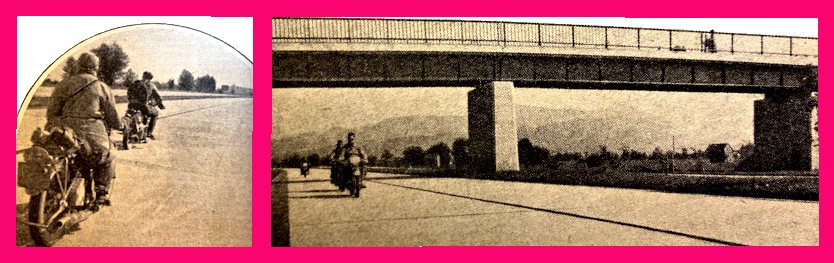
“GERMANY IS PRESSING AHEAD with her high-speed motor roads. Last week-end nine new sections, totalling roughly 250 miles, were opened to the public. Thus, 620 of the 4,300 miles planned have now been completed. As readers will have gathered from the description of the Six Days and other articles, these new highways are true speed roads—even 100mph can be maintained in safety, assuming the vehicles are capable of it. As a means of communication the roads are without equal. They open up Germany to the tourist and to the German they not only make distant towns and cities in the Fatherland accessible, but even enable him to visit neighbouring countries just for the week-end. For pleasure riding these Autobahns, in spite of the way they have been designed to alleviate boredom, are not to be recommended. They are business roads, designed for ‘going places’. However, we cannot help thinking that Great Britain would be better off were she to build similar lines of communication, though with our much greater number of vehicles motor roads of a like nature would probably have to be on a considerably larger scale. In opening one of the sections last week-end Herr Hitler stated that in 18 months Germany would no longer need to import petrol, and in four years the problem of making her independent of rubber supplies would be solved. There is nothing new in the claim of independence in the matter of fuel. Italy has made similar claims. It is open to nations not possessing oil fields to produce alcohol, coal petrol and benzole. Usually the one difficulty is that of cost. Nevertheless, the wise plan for every nation is to ensure independence. Britain is slowly but surely adopting this policy, which is. one we have urged for 20 years and more.” Russia, not to be caught napping, built 5,346 miles of road during the year. But on Sunday, 22 June 1941 they were—as was seen at the ISDT Nazi militarisation involved motor cycles in a big way.
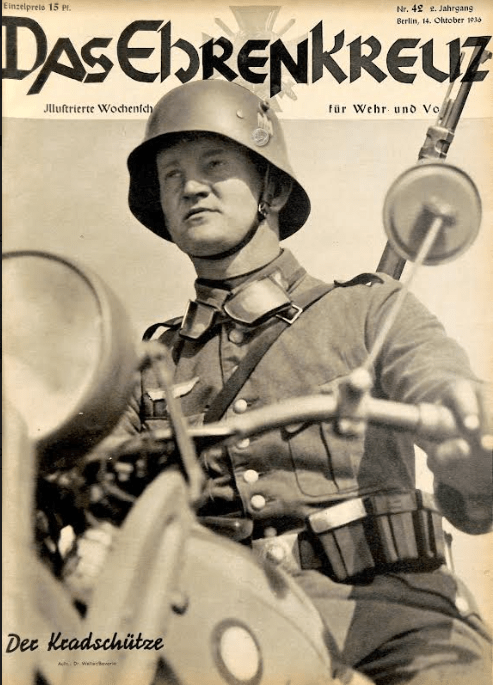
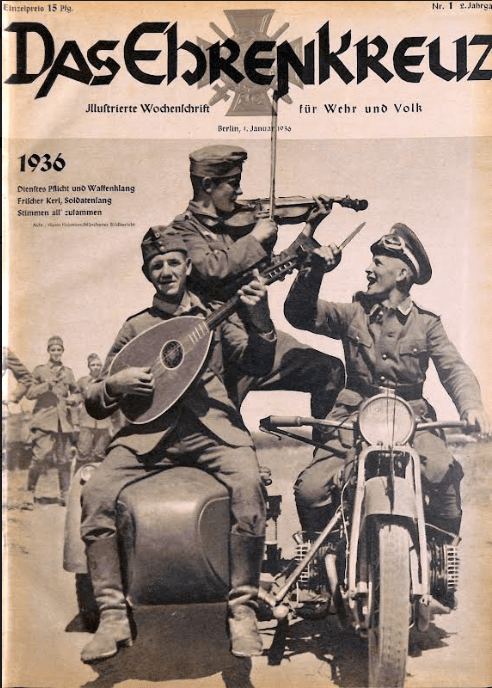
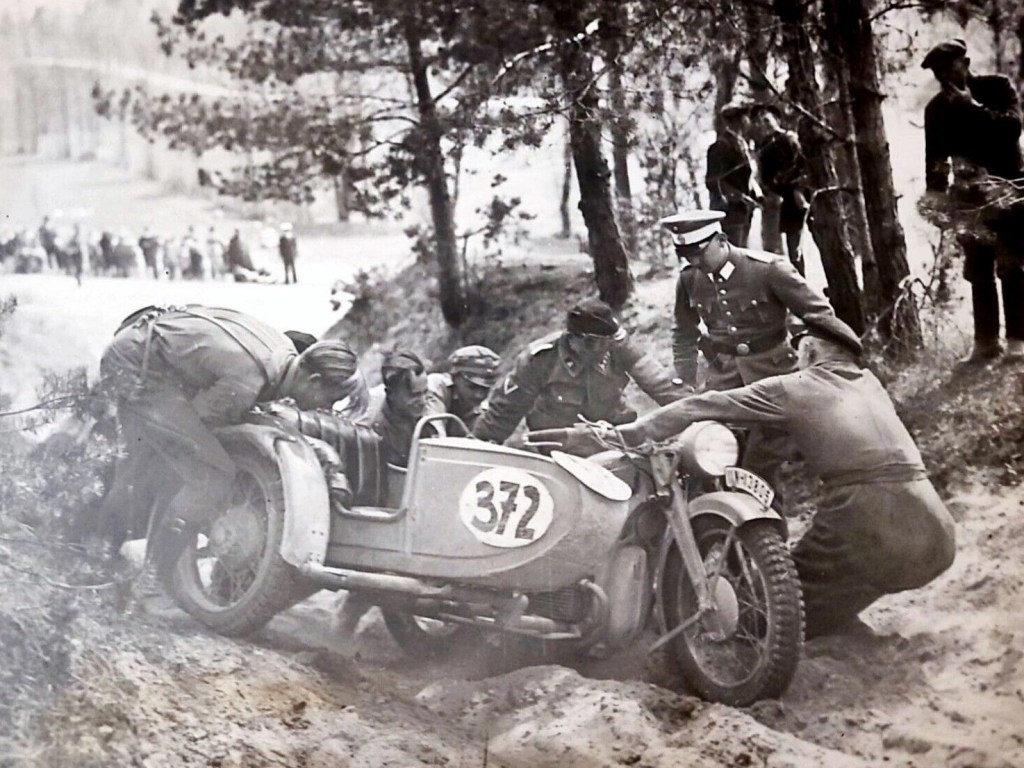
“I HEAR FROM ‘Ambleside’ and ‘Torrens’ that British roads seem like billiards tables when you arrive back on them after two to three thousand miles on the Continent. All the same, we have nothing to compare with the new German motor roads. Whoever was responsible for planning the Munich-Landesgrense Reichautobahn had his wits about him. This superb double-track road does not go like a ruler straight across the countryside, but in a series of very gentle curves and gentle ups and downs; thus there is not the boredom one would get with a road running dead straight for dozens of miles on end. Even so, I gather that neither of these two MC men would like to spend their motor cycling lives on autobahns. For ‘getting places’ the roads are uncanny, but why not go by train?”—Ixion
“UNLIKE MANY OF THOSE British riders who competed in the International, WS Waycott drove over on his machine. He thoroughly enjoyed himself, but not so much on that very wet return journey! He drove over to Germany with the idea of ‘running-in’ himself, though a Velocette, he says, can do with any amount of running-in, and with the object of making sure that everything was as near perfect as possible—there would be time to rectify any little points when he reached Freudenstadt,. Once there, he stripped the engine, decarbonised, and went over everything—incidentally, almost giving the team managers blue fits when they saw his lock-up littered with bits and pieces!”
“DOWN AT DOVER when the men who formed our victorious teams in the International Six Days Trial returned to England there was no official reception—precisely nothing except friendly cheerios from the Customs officials. In any other country there would have been flags out, crowds, cheers, an official welcome, and probably a banquet. Perhaps there will be a banquet later on. I hope so. All our men have received so far has been a few telegrams of congratulation, among them one from the Ulster MCC. The fact that our riders were really back in England was well brought home to those who travelled London-wards via Folkestone, Ashford, and Maidstone. On the drop down to Folkestone there was a Mobile stationed in a side road at a point where the 30mph limit begins. At this particular point the road looked safe enough for 50…”—Ixion


“SO ‘TORRENS’ WAS TAKING his new 1000cc Ariel over to the ‘International’, was he? Obviously, I required something good to keep up with him on our long trip across Europe to Bavaria. But that was not all, for I needed a machine which I could trust implicitly not only to get me round most of the course, but at a speed even higher than that of the competitors—at least, that is what invariably happens on this trial when you cover it as a Pressman. Well, what could have been better than a 499cc International Norton? Yes, a very 1937 Norton it was, with an IOM-type engine, a high frame giving a really healthy ground clearance, thin handlebar grips and a hundred and one odds and ends, not forgetting a couple of the new Dunlop ‘Universal’ tyres. It was—and still is—a grand machine. For my purposes it was absolutely ideal. After a preparatory run of some 200 miles, during which an inlet valve spring broke for some reason best known to itself, we were all set for Germany. I shall always remember those seemingly endless, dreary miles—hundreds of them—across the North of France—St Omer, Arras, Rheims, Vitry, Nancy, Strasbourg. Very fast for the most part, but, oh I those shocking bumps. Why they never shook the machine to pieces I shall never understand. At times the forks were working so fast that they seemed to be vibrating. However, they and the rubber-mounted handlebars enabled we to arrive at my destination with wrists that were as flexible as when we started. Nor were there any aches, though for this type of going the saddle springs were a trifle too hard, although they undoubtedly became more supple towards the end of our trip. For mile after mile, or rather kilometre after kilometre, we maintained a steady 60. Up the long slopes I made a point of changing down into third, because the French petrol simply did not agree with the Norton. Neither, for that matter, did the oil. Because the machine was fitted with electric lighting, the usual gallon tank had been replaced by one with an oil capacity of two quarts. The smaller size did not allow the oil bubbles, formed by the dry-sump system, sufficient time to dissipate, with the result that quantities of oil were lost through the vent pipe. However, in Germany the trouble disappeared. On our arriving at Freudenstadt before the start of the trial, the jet in the carburetter was immediately seized and changed for a larger one by a competitor whose machine appeared to have been fitted with a ‘dope’ jet. With this jet the Norton ran all the week on a very rich mixture at high altitudes and a trifle peculiarly in the valleys. However, this richness was possibly a good thing, for many were the occasions when the Norton had to be caned good and hard. I wonder how often it is realised that when a Pressman follows the route of the’ International’ he must, on account of the narrowness of the roads and tracks, average the same speeds as the competitors to avoid getting in their way. In consequence he has to go as hard as he can. Many is the time when, on finding himself closing up on a ‘racer’ the latter waves him on at a convenient spot. If the opportunity to pass is not taken, the ‘racer’ gets worried. And so the Pressman finds himself maintaining a higher schedule than is really wise, but which circumstances compel. And this is what the Norton accomplished for the greater part of the six days. Never shall I forget those fork-crashing water gullies, the deceptive descents with slithery rocks un expectedly encountered, which sent into the air all at angles when travelling at about 30mph. Only the superb steering of the Norton saved me from falling from grace on many occasions. Yes, crashing and banging around for a week, with miles of second gear work—how I blessed that gear, which, coupled with the slogging pull of the engine at low revs, made my work comparatively easy. All this the Norton had to contend with. And as if that was not enough, there were many miles of flat-out work over good roads necessitated by my Press schedule to catch the air mail. In Germany, high speeds are easily maintained, and on one occasion the Norton managed to get me back to Garmisch-Partenkirchen over twisty roads at an average of almost 50mph for a distance of 100 miles. Of course, the brakes played a big part, and I could not have wished for better. Whether the going was rough or smooth, wet or dry, I never for one moment had to hesitate to apply them. The steering I have already alluded to. ‘Torrens’ and I were the only British Pressmen who were given a special pass which allowed us up the hill-climbs while the tests were in progress and also along the Munich autobahn. Believe me, it requires a good steering model keep up with the ‘racers’ on the hill-climbs, while along the autobahn I was able to take photographs on one occasion with both hands off at a speed bordering on 70. Yes, my Norton was the grandest machine I could have had for the job. It had the speed, it had the riding position, it had the steering and it had the brakes. It could be flogged for mile after mile. With judicious use of the gears—all beautifully close—it could hold anything on acceleration. It succeeded in getting me through the ‘International’ without my having to use a single spanner. Those 3,000 gruelling miles took a little tread off the rear tyre, but in common with the majority of the ‘International’ competitors I never had a puncture, although the rear wheel rim has a nasty dent in it—a memento of those cruel gulleys that lurk in the Black Forest.”

“WITH ANY LUCK, by the time this article is published the speedometer on my 1,000 cc Ariel Square Four will show over 3,000 miles. I still do not know anything like all there is to be learned about the Four. For instance, as yet I have made no really careful check of petrol consumption—all I can do is to give approximate figures—nor can I state in terms of seconds and decimal points the time the machine takes to leap from 10 to 50mph. I do know, however, that I have never handled a power plant so fascinating as that of this latest Square Four. Its sweetness is amazing. It will be still more so when one alteration has been made to my machine. The fault is mine—or, rather, circumstances—because I said that, in view of the proximity of the International, I could not wait for two correct components, but must have the machine immediately with non-production ones. So far as this article is concerned we will forget this one point, and for the rest, as with all other articles of mine, please do not endeavour to read between the lines, because if you do you will be wrong. While in terms of time I have as yet no acceleration figures to offer, I know of no .machine that sends the speedometer needle sweeping round the dial so fast and with such silence and utter effortlessness. And the power is there to command. There is nothing frightening about it, for all the engine’s 1000cc and, I understand, 38bhp. The engine is supremely controllable. She opens up cleanly, except for one slight flat spot which is little more than noticeable and nothing like so extensive as that on the experimental model I tried last Christmas. No, here one has the nearest thing to perfection in power units I have ever sat across, and it is dead smooth throughout its range. The machine is a. top-gear mount. Up hill, down dale, through villages, you can stay in top gear. 1 have trickled the machine up a 1-in-7 hill in top gear at I2mph. on the speedometer without even a suspicion of snatch. The other end of the scale I cannot speak about. At 86mph on an up-grade on the Munich autobahn the machine was still accelerating, although I was sitting bolt upright. At 80mph the engine was running without effort—just a dynamo-like smoothness. Unless or until I can get a more TT-like riding position 86mph is about as fast as I am likely to go. The machine is designed for fast touring in silence and comfort rather than, I imagine, endeavouring to Guthrie. Where one scores so decisively is in the fact that the engine is always working well within its capabilities, in the thrilling, flashing acceleration, and in the way the machine gobbles up hills. Not only are there these assets, but there is real silence, and, therefore, one has performance which can be used. On a first-class road the steering up to the speeds I have used is really good. On roughish roads the back wheel tends to aviate a certain amount and throw one forward. This is not bad; there were quite a few stretches of French and German roads where ‘Ambleside’ and I kept up 65 to 70, and these roads, remember, were not so good as the average English main road. Cornering on the 1,000cc Ariel has surprised me. She rounds them like a first-class 500—there is nothing of the monster needing manhandling about this new production, and, moreover, the machine is far easier to handle on rough tracks than I expected. Incidentally, I am using a 4.00-18 (26×4.00in) studded Dunlop rear tyre and a 3.00- 21 (27×3.00in) Dunlop Racing Ribbed front tyre, the former at 15-16psi and the latter at 18-20. In spite of the small-section front tyre my wrists suffered not one atom from front-wheel hammer. As this is the first time, so far as I can recall, that I have not had tired wrists after long runs with a 3.00in section front tyre, the fact must be put down to the efficiency of the rubber mounting employed for the Ariel handlebars. Were the machine not so much a top-gear mount one might criticise the gear change. Care and time are required if one is to make a completely silent upward change. The clutch, which frees perfectly under all conditions, seems to keep on spinning, and therefore one is liable just to crash the change slightly. No harm can, of course, result, but care is needed if on upward changes the gears are to slide into mesh noiselessly. Oil consumption is minute. Probably it is in the region of 4,000mpg, so the only real cost is that of draining and refilling the oil tank. As regards fuel consumption, this, speed for speed, is much the same as with any other motor cycle. At an average of about 45mph on the straight-ahead French roads the machine was covering roughly 60mpg—more rather than less. What else can I say? Oh, yes! The brakes are good. As I like a finger-light front-brake control I shall probably fit a longer front-brake cam lever. The rear brake, assuming one uses the fulcrum screw adjustment is, to my idea, magnificent. Starting is effortless when the engine is warm, but the engine can become very stiff when cold. Consequently, when it is cold I always free the clutch and push the pedal halfway down, thus using the greater leverage of the latter part of the kick-starter stroke. Probably the engine will get freer as the miles tot up. The whole power unit, incidentally, has remained exceptionally clean. So far, I have not carried out a single adjustment to it except to remove a speck of solder from the pressure release valve, and once to tighten up the cap of the oil filter in the crank case and the bearing cap on the off side. These latter were the only parts that worked even a fraction loose during the 2,118-mile Continental trip. The sole troubles were failure of the dipping switch, broken dipping switch cable, the clock becoming soaked internally and ceasing to work, and my finding the main head lamp bulb would not work, but did so after I had removed its front and replaced it—this was following heavy rain. One other thing: the horn push, sodden after a thunderstorm, operated of its own accord. Over and above seeing to those of the foregoing items I could attend to, I greased up, adjusted the brakes, took up the initial stretch in the rear chain (which, so far, has kept in magnificent condition—just nicely lubricated from the primary chain case), and removed the soupçon of side-play that had developed in the forks. I set off to the International delighted with the machine. I arrived at Freudenstadt delighted, and now well, if such a thing is humanly possible, I am more than delighted.”
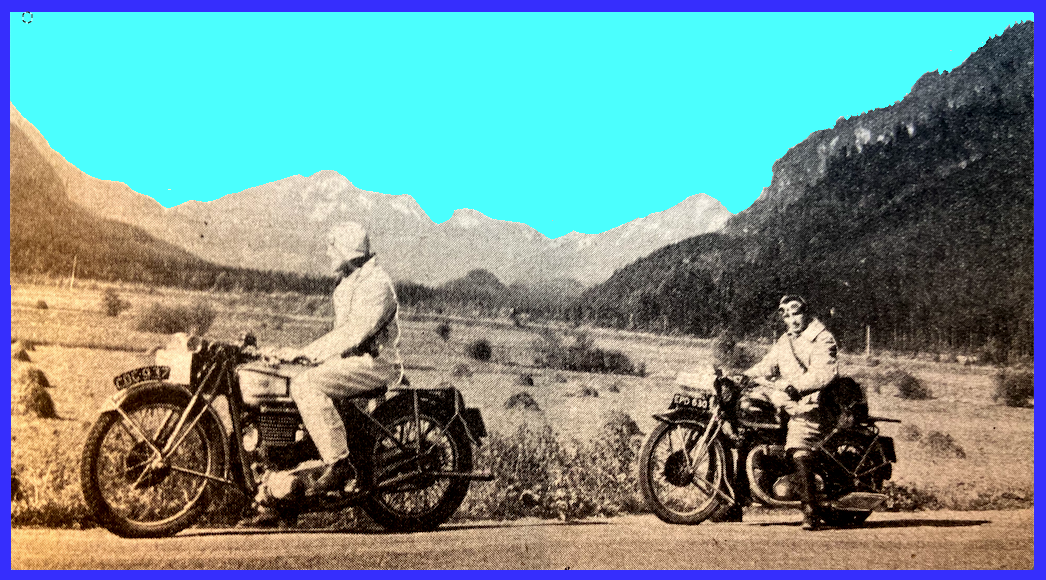
“IN THE SIX DAYS A German army team won the club team prize. There may not seem to be very much in this until one remembers the fact that the team in question beat the Scottish Rudge Club’s team, which, so far as its men and machines were concerned, was none other than our winning International Silver Vase team. Had the German Trophy team reached the speed test at Füssen with all their machines running perfectly and no marks lost, it is more than likely, according to those in the know, that there would be no question of the ACU organising the trial in 1937—the Germans would have won. The machines which Britain puts in the field must be able to take on all corners. This alone means that the question of men and machines should be tackled now, and not left even until the spring, since then certain makers will have their experimental departments working at full pressure on their TT machines.”
“MORE AND MORE interest is being shown in motor cycles with large engines. Registration figures prove this. Whereas the small-capacity motor cycle grew in importance a few years ago, now, with the increased buying power of the motor cycle public, thoughts automatically are directed towards the pleasure to be gained from larger and more luxurious types of machine. Used with intelligence, high power output is a safety factor. All know that rapid acceleration is sometimes as valuable as first-class brakes. This is not the main point, however. When a man has a machine with a comfortable reserve of power and an unusually good top-gear performance, there is less temptation to take risks. There is, for example, no possible reason to rush hills, and corners can be rounded slowly, since with a flick of the twist-grip—probably without even a change of gear—the machine will quickly be back at its ‘touring’ speed. The big, docile type of engine can be an even greater blessing than is generally realised. Also, it has the advantage that in all normal circumstances it is running well within its capabilities. We are glad, therefore, to see that manufacturers are once again making a real effort to develop the large-capacity motor cycle for solo work.”
“I HOPE THE FOLLOWING tip I picked up from Miss Marjorie Cottle is fresh to the majority. You know how difficult it sometimes is to strap things on your tank, and even fixing, say, waders on the carrier is not always too satisfactory, even with those webbing straps that have patent buckles which enable the straps to be tightened up in any position. Well, Miss Cottle’s scheme is to employ the stranded, braided rubber you find in chest expanders. The sketch shows the rubbers I mean. If two of these are pulled round the carrier and the waders, and the ends of each expander hooked together, the waders are held perfectly safely ; moreover, the braided rubber does not harm the enamel.”
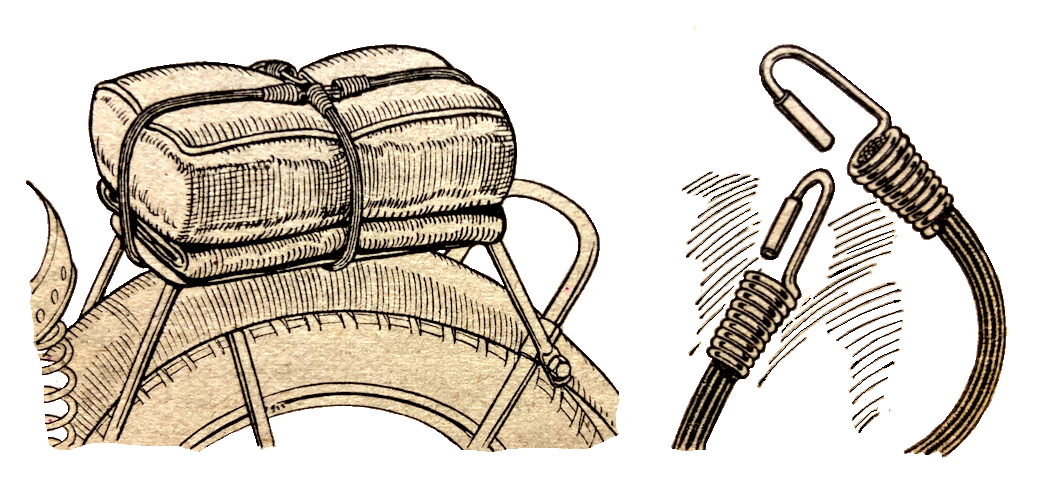
“WHAT EXACTLY CONSTITUTES the charm of ‘pleasure’ motoring? It is surely a compound sensation. First and foremost, there is the joy of ‘going to places and seeing things’, which no congestion destroys, although traffic congestion can impair it. Secondly, there is the entire change of mental occupation, which expels from the mind the worries, the distastes and the tedium often associated with daily employment. Thirdly, there is the sensation of power and freedom. On the road I am for the moment my own boss, and I control a potent engine. Fourthly, there are the physical sensations of motion. Borrow wrote of the wind on the heath*. We in our saddles savour swerve, acceleration, speed, balance, sun, wind, scenery, and sometimes the tests of manhood imposed by fog, slime, cold, rain, and the like. Fifthly, there are the trimmings; the people we go to see, the buildings or views or sporting events which we witness, the food and the drink which always taste different when we are away from our own roof, and for which motor cycling bestows such a mighty zest; the snaps we take with our pocket cameras; the yarns we pick up along the road; the little mechanical troubles we encounter; the reminiscences which we pile up. It seems to me that heavy traffic congestion and the comparative dullness of great arterial roads subtract from these composite joys, but can never wholly destroy them. My tame prophet thinks that motoring for the sake of motoring will gradually surrender to the mass-produced baby plane, and that our grandchildren will come to regard both cars and motor cycles as we view trains, taking their pleasure in miniature Flying Fleas. I wonder? It seems to me that the alleged pleasures of flying are almost exclusively technical; and that flying may intrinsically be defined as war was brilliantly defined in 1916 as ‘periods of acute boredom, punctuated by moments of extreme fear!'”
* George Borrow—“There’s the wind on the heath, brother; if I could only feel that, I would gladly live for ever.”
“THE PHOTOGRAPH SHOWS a 500cc AJS machine covered with a saloon body made of plywood and sheet metal. There is a full-size car-type door on each side and the driver (rider) is completely enclosed except for an open floor. The rear of the machine has a shelf across, and a large quantity of luggage was being carried. The photograph was taken at the entrance to the Menai Suspension Bridge.
Edward R Hall, Middlesbrough.”
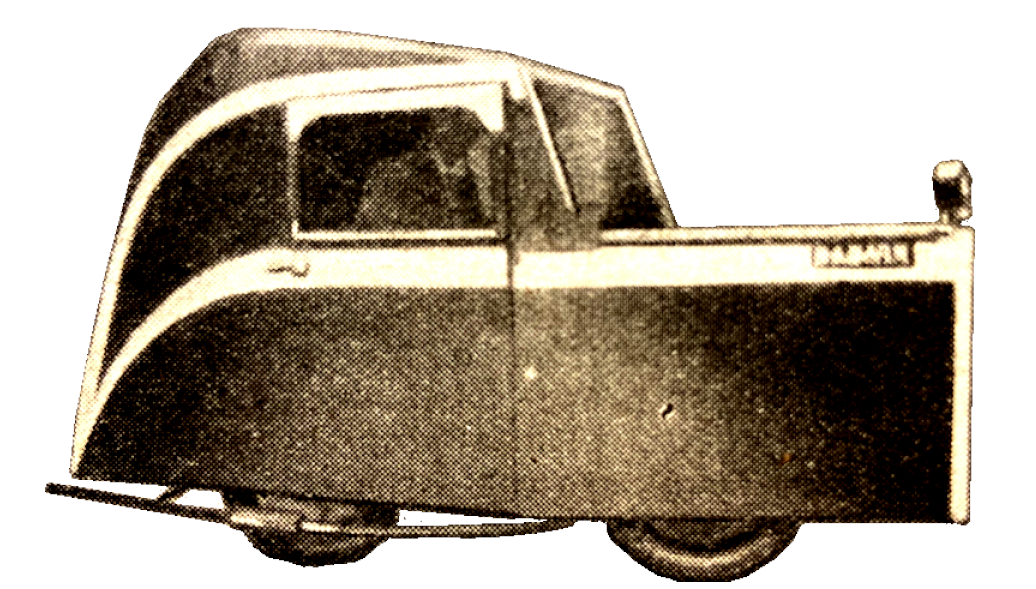
“I AM GLAD TO FIND that there are still a number of motor cyclists who think, as I do, that the real pleasure of the game lies in the amount of new ground one can cover, rather than in achieving unbelievable and unbelieved speeds over a five-mile stretch. Last October I rode from London via Dover, Calais, Rouen, Bordeaux, Biarritz, Burgos, Madrid, Seville to Algeciras and back, covering 3,300 miles in 12 days. The longest stretch non-stop was 688 miles in 36 hours. My mount was the outcome of years of race and trials ‘breeding’, and my experience was such that my next long-distance model will be the product of a firm who thinks that the TT is a temperance meeting and that all trials are held in the Old Bailey. Certainly fairly fast (say a sustained 40mph) touring seems to find out more weaknesses on the model than racing ever rectifies, for the obvious reason that touring is done with a production job and not on a tool-room turnout the sole resemblance of which to one’s own model is the tank transfer.
H Johnson, Hayes, Middlesex.”
“TWO FRIENDS AND I toured Spain this summer. The object two of of our tour was to make a climb of the Pic Veleta in the Sierra Nevada—the highest motor road in Europe, some 11,000ft. We climbed to 10,000ft before deep snow-drifts made further ascent impossible. The long climb round innumerable hairpin bends and at times in thick clouds was a new experience. The descent—we coasted some 23 miles—gives some idea of the difficulty of building such a road. The tour via San Sebastian, Madrid and Granada occupied 12 days, and the total mileage was 2,900, giving an average daily mileage of 290. The last day’s run—Cahors to Le Havre—was the longest, a distance of 430 miles. The machine, a Francis-Barnett fitted with—let it be whispered—a two-stroke engine, gave no trouble at all and was very comfortable to ride. Petrol. consumption averaged well over 100mpg and the oil used in the petroil system of lubrication proportionately low. I might say that the engine—my first experience of the Villiers—was a revelation, and that when dismantled for decoking was found to be in perfect condition except for a perfectly normal amount of carbon deposit. Usual disclaimer.
Barnetti, SE6.”
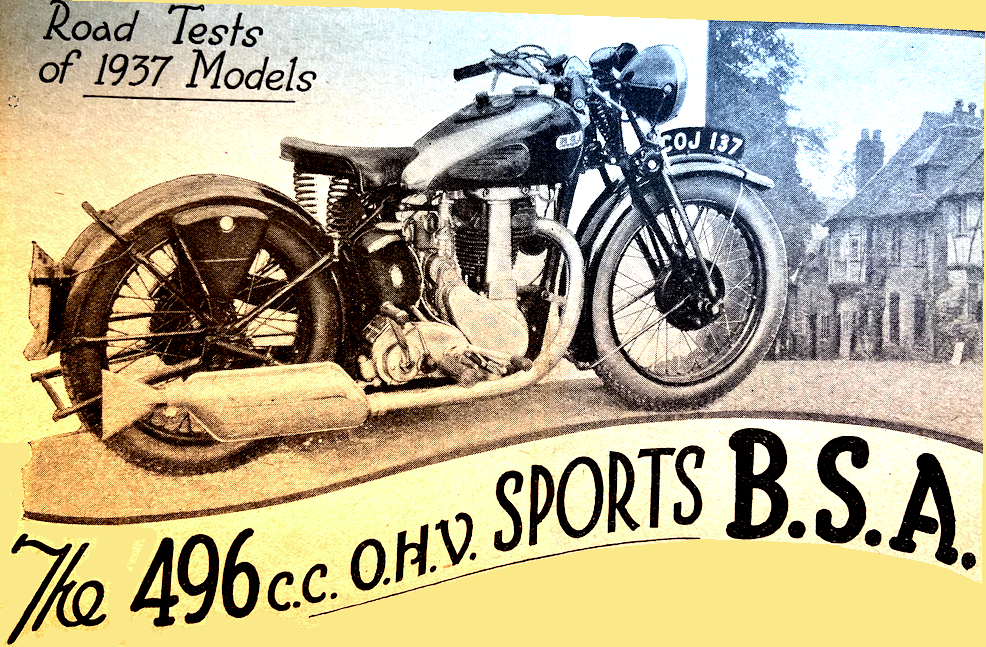
“WHILE THE DESIGN OF the 500cc ohv BSA has been little changed over a period of several years, for 1937 there are a number of interesting alterations, chief of which concerns the engine and the frame. In the case of the former the crank case sump has been replaced by an oil tank carried on the seat pillar tube. A single, tapering, flat aluminium tube replaces the twin push-rod covers of the past, while the valve gear is completely enclosed. The frame is entirely tubular in construction, and although similar in design to previous years, it now has single front down and seat pillar tubes. The model under review is known as the M22 496cc ohv Sports BSA. It has a wide, comfortable saddle that is well positioned in relation to the footrests and handlebars. The latter, when turned in their mounting, provide a variety of positions, varying from ‘racing’ to ‘upswept touring’. Both clutch and front brake levers can be adjusted to suit the best wrist angle. Likewise, both the brake and gear-change pedals can be set to suit the rider’s requirements. Starting from cold was not quite so good as it should have been. It took several kicks before the engine fired and settled down to a steady tick-over. This small trouble was in all probability due to a slack throttle cable, which made it difficult to find a throttle opening just off the pilot jet. Once warm, the engine ticked over with clocklike precision and with a surprising absence of mechanical clatter. In fact, throughout its range of revolutions the engine was extraordinarily quiet and smooth, with a marked freedom from vibration. Coupled with a really efficient silencer the new BSA power unit is a pleasure to use. The foot gear-change was light in operation and had a conveniently short travel. On occasions, however, the lower gears showed a tendency to engage only partially if care was not taken to use the maximum travel of the gear lever.
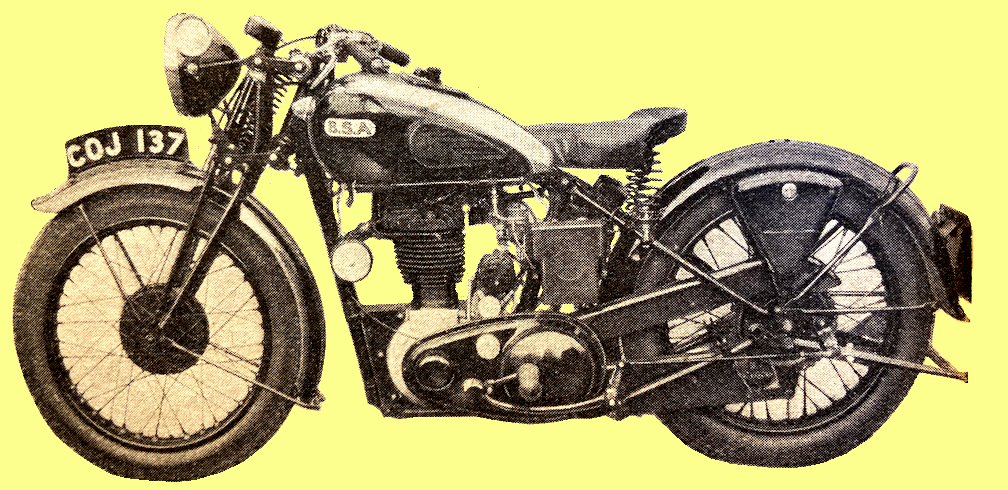
Particularly was this the case when selecting bottom gear with the machine stationary. The clutch was both light and smooth in operation, but seemed to take up the drive in a rather sudden manner, a fact which became less apparent as the test proceeded. On the road the new BSA had the most excellent manners. The machine could be driven hard without showing signs of tiring or fussiness, and, thanks to the mechanical and exhaust silence, without attracting undue attention. The engine is of the ‘slogging’ variety; it would pull a high gear up a steep hill without protesting, provided an ethylised fuel was used, Over difficult going it was possible to make the engine ‘plonk’ in a surprisingly slow manner, while the clutch could be ignored when picking a course round or over boulders. With the well-selected gear ratios the BSA showed surprisingly good acceleration. From a standing start, and going right through the gear box, a speed of 64mph was reached at the end of a quarter of a mile. In bottom gear (14.3 to 1) the maximum comfortable speed was 25mph. For traffic driving the second gear (9.9 to 1) was ideal; it enabled a restart to be made without having to slip the clutch unduly—no more than for bottom gear—and the machine could then be accelerated to a comfortable 45mph. In this ratio it was possible to accelerate from 15mph to 30mph in four seconds. Because of the flexible qualities of the engine the BSA would run very smoothly in top gear and accelerate evenly from speeds in the neighbourhood of 20 At the other end of the scale it could be driven up to 61mph in third gear (6.3 to 1) and 70mph in top (4.8 to 1). These speeds were attained and maintained over a level concrete surface with the rider partially lying down. There is no doubt that they could have been improved had a racing attitude been adopted. Steering at high speeds was excellent. ‘ In fact, both steering and road-holding were of the highest order. Corners could be taken in one’s stride regardless of the road surface. Another good feature of the BSA was the braking. Both rear and front brakes possessed that desirable spongy yet efficient action, coupled with lightness in operation. And they enabled the machine to be brought to a standstill from 30 mph. in 38ft. Throughout the test nothing was done to the machine other than setting the controls to the rider’s own requirements. An important feature was the engine’s freedom from oil seepage. At the end of an extended test them was no trace of oil at any of the crank case, timing case or valve gear joints. The Lucas Magdyno lighting set incorporated voltage control, which ensured that the accumulator was not overcharged. In conclusion, the new BSA can justly claim to be even better than previous models that have emanated from the famous Birmingham factory.”
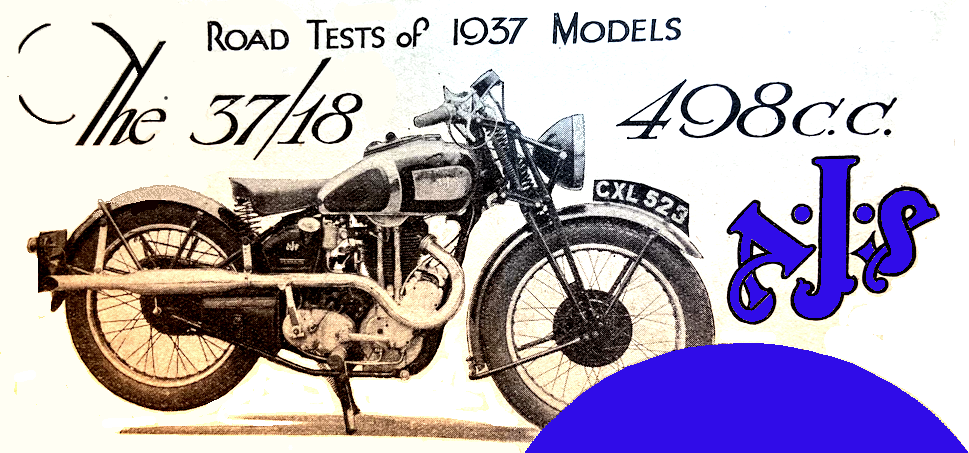
“AMONG THE MANY good characteristics possessed by the new 498cc AJS, there are two which stand head and shoulders above the rest. They are the steering and roadholding, which in this model are delightfully combined. The steering was at all times positive; at a walking pace there was no need to juggle with the handlebar to retain balance and when flat-out, even on bumpy surfaces, the steering remained perfectly steady. Cornering was absolutely effortless. There was never any feeling that a bend could not be taken, and the model was frequently laid over at alarming-looking angles with a complete sense of security and stability. The steering is undoubtedly assisted in this respect by the very good road-holding. The rear wheel of the AJS holds the ground like the proverbial leech. Under normal conditions there was a complete absence of rear wheel bounce and even on bad roads movement of the rear wheel never affected the steering. This characteristic was particularly appreciated on bumpy bends. The Model 37/18 is fitted with the tension springs that are used on the forks of the TT models. The forks are extremely smooth in action and have a very wide range. At no time during the test did they clash or bottom. With the new duplex fork damper they can be set to any desired ‘strength’. The engine of the Model 37/18 is well in keeping with the steering. It is of the dry-sump type and has totally-enclosed valve springs and valve gear. As a result, the engine is mechanically very quiet. The valves could not be heard at all when on the road and only a trace of piston slap was noticeable when the engine was cold. At normal speeds the exhaust note was unobtrusive but a rather healthy crackle could always be produced by rapid acceleration in the gears. Starting at all times was very easy. All that was necessary was to close the air lever fully, and, if cold, to flood the carburetter. When warm the engine would idle at a very low speed with the ignition retarded, and at no time was there any tendency for the engine to stall. Flexibility was another of the engine’s good points. In top gear (4.88 to 1) with the ignition retarded the machine would run without snatch at 13mph, and could be accelerated away from this speed without using the clutch. From low speeds acceleration was above average. Acceleration from 15 to 30mph in third gear (6.3 to 1) took less than five seconds, and in top gear only seven seconds. In bottom and second gears the time taken was the same—some three and a half seconds—for the engine was past its peak at 30 mph in first gear. Higher up the speed range the acceleration was equally good. Speed could be increased from 20 to 50mph in 9⅗sec in third gear and in 13sec in top gear. Going through the gears, 65mph could be reached in a quarter of a mile from a standing start. In any gear the engine could be throttled right down, and in bottom the machine would lose steering way before snatch set in. This feature was particularly useful when negotiating trials going, and it may be said that the machine has all the characteristics of a good trials mount. The speedometer fitted to the AJS proved on test to be approximately 12½% fast throughout its range, and the figures given, for the acceleration and maximum .speed tests are the corrected ones. On the speedometer the maximum figure reached in top gear was 83mph, which represented an actual speed of 71mph. Corrected maximums in the other gears were: third, 63mph; second, 45mph; bottom, 30mph. When these maximum speeds were taken the rider was heavily clothed in waders and poncho, and as there was no pillion seat on the machine, a crouching attitude was adopted and not a position lying along the tank. The engine was extremely smooth in all gears, and vibration only became apparent when the engine was peaking in the intermediate ratios. No vibration was noticeable at any speed in top gear. On hills the machine maintained its speed well, and on long main-road climbs the engine showed no signs of tiring. Always there was a reserve of power, and by changing to a lower gear the machine would have useful acceleration for overtaking slower traffic. Any high-performance machine such as the AJS should have powerful brakes, and the 37/18 shows up favourably in this respect. The front brake was extremely powerful and using this brake alone a crash-stop could be made from 30mph in a fraction over 40ft. Used together, the brakes would bring the machine to a standstill from 30mph in 31ft. Both brake controls are well placed, and the rear brake could be used without the rider removing his foot from the nearside footrest. No criticism can be made of the positioning of any of the controls on the AJS and all were light and smooth in action. The clutch did not drag when engaging gear from rest, and the foot gear-change was fast in use and always positive. For a tall rider the handlebars are set a little far back, with the result that there is a tendency to slip off the rear of the saddle. Otherwise the riding position is comfortable. Footrests and handlebars are adjustable, the latter through a very wide range, and the saddle has a fair amount of movement before it bottoms. During the test it was found that the rider’s right wader touched the exhaust pipe when in the normal position on the footrest. Throughout the test the power unit kept clean, and apart from a small seep of oil from the base of the push-rod tubes there were no oil leaks. The new valve enclosure helped considerably in this respect. Altogether it may be said that this new 500cc AJS has excellent steering and road-holding, first-class brakes and a silent and flexible engine.”
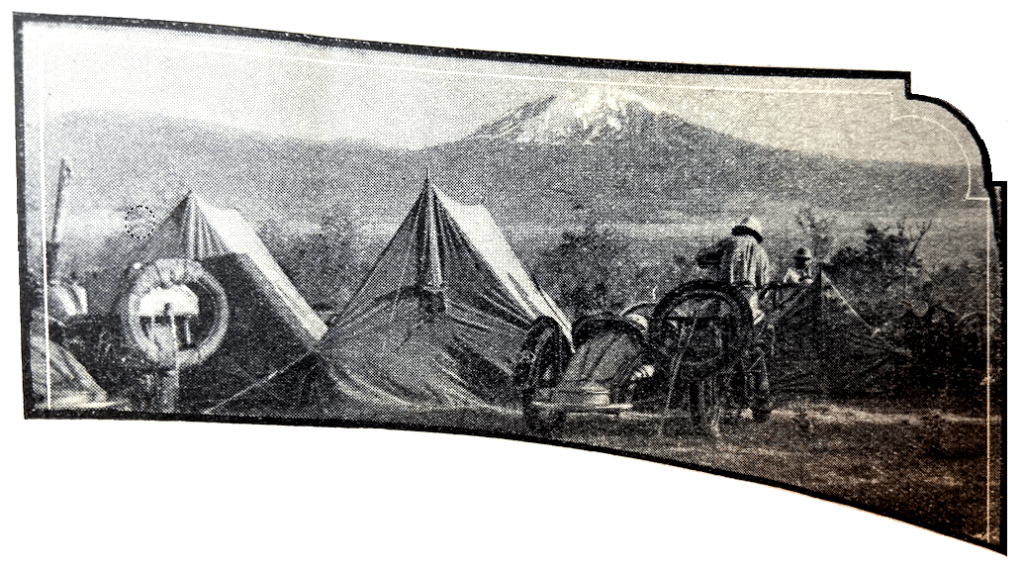
“SLOWLY, AND WITH INFINITE caution, the Dorsetshire edged into the side of the quay at Basra…Blithely we swung along the dusty road, our shirt-sleeves rolled up and topees at the slant. What did we care? Half a thousand of the Army were ashore for the afternoon after three weeks at sea, so to blazes with regimental smartness! At the RAF cantonment a swimming bath awaited us, and there we washed off three miles of road dust. We emerged fresh and invigorated, and looked farther afield. The Naval sloop there, could we look over it? We could, and the narrow gangway was packed tight as a multitude of khaki-clad figures tried to board at the same time. Preparing to join in the scramble, I was struck by a sudden idea and questioned an RAF policeman close by. He immediately became friendly, and, pointing to the canteen, replied, ‘You will find some in there.’ I went into the large store bungalow, and on a table at the far end, under a whirring fan, were two neat stacks of papers. One was the overseas edition of a famous London daily—but hang that! The other pile was made up of six familiar blue-covered weeklies. ‘Probably a year old,’ I thought sadly, but my luck was in. They dated consecutively up to the previous week. The sloop was forgotten; an ice-cold pint from the bar, the armchair drawn up under the fan, and once again I communed with friend ‘Ixion’ and devoured the test reports of the latest models. In imagination, I was again riding a motor cycle along the lovely English highways. The bugle sounded at last, but no matter, I had enjoyed my outing. A new land, a swim—and all the editions of The Motor Cycle one had missed What more could a man wish for? DLR.”
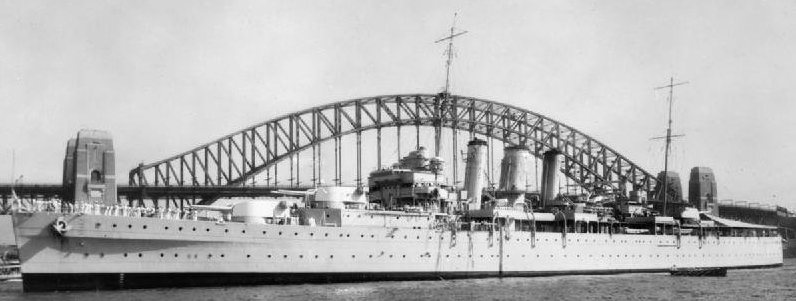
“RECENT REGISTRATION FIGURES reveal that there are 22,395 motor cycles in New Zealand.”
“HEAVIER PENALTIES FOR German motoring offenders are being considered by Herr Himmler, German police chief, who has ben given two years’ ‘free hand’ to deal with the road accident problem.”
“WILL THE DAY COME when every motor cycle on the market is equipped with full weather protection, ie, totally enclosed engine and gear box, legshields, and wide-valanced mudguards? The question is prompted by the fact that during the past few weeks we have received numerous letters from readers describing their often ingenious and certainly praiseworthy efforts at improving the ‘weatherproofing’ of their machines. For several years touring models have been available with full weather protection—and excellent machines they are too—and now some makers of sports models are fitting such items as gear box covers, while wide-valanced mudguards and completely enclosed valve gear are featured in most of the 1937 programmes. This tendency is all to the good, for, apart from the pleasure of arriving at one’s destination clean and dry in the worst of weather, the less a machine smacks of the race-track the greater are the rider’s chances of using its performance to the full without attracting the unfriendly attention of the police or of other road users.”

“IT SOUNDS FANTASTIC—169.14mph on a 500cc motor cycle. But there, on Monday afternoon, was the cable. Eight world’s records broken. Best speed 272.2kmh. Those in the know were delighted, but not amazed. Had not Henne and his extraordinary-looking BMW been seen on the Munich-Landengrenze autobahn on the previous Monday travelling faster than ever man had travelled on a motor cycle before? Yes, he was seen near Rosenheim at 6 o’clock in the morning with a completely streamlined 500cc transverse-twin. A week or more previously Herr Sleischer, the BMW team manager, had stated that they were finished with the 750cc model—the supercharged 500 was developing considerably more power than the old engine, although the latter was half as large again. Yes, BMWs were ready, and with a completely streamlined machine instead of the faired, semi-streamlined mount. The body, minus the lid, is very much after the style of a torpedo; the rider is completely enclosed and looks through a small wind-screen. Handlebars—everything except the bottom of the wheels—come within the body. What was to happen to the rider when he wished to stop? At each side a small wheel was fitted after the style of the Whitwood monocar. When the rider was reaching a standstill he must let down this retractable undercarriage—if he remembered to do so. For the 6am practice on the autobahn near Rosenheim the detachable lid was not fitted. In any case it was not possible to find out the ultimate speed of the machine, since, as was mentioned in our description of the International Six Days’, this particular autobahn consists of a series of slight curves introduced to obviate the monotony of a straight-line road. A 1½-mile straight was chosen. Un-official timing alleged that Henne was averaging the amazing speed of 202mph. What would he do on a dead straight road with the lid or roof in position and the machine wound right up to its maximum? Those in the know waited expectantly for the special little records meeting to be held on the Darmstadt-Frankfort autobahn which is, if possible, straighter than an arrow. EC Fernihough was there by invitation with his supercharged Brough Superior. He had intended to attempt records in Belgium, but was invited to join in at Frankfort. He set the ball rolling by breaking Henne’s standing-start kilometre record in the 1,000cc class, raising it from 94.195mph to 98.91mph. A strong wind was affecting matters. In one direction he achieved 113mph—from a standing start! Later on he was to attempt the world’s maximum speed record. Henne took a hand. Those who had watched him at Rosenheim anticipated something verging upon the meteoric. Never even during the practising at Rosenheim had any vehicle appeared to them to travel so fast. Apparently the unofficial timing was—well, ‘unofficial’ ; nevertheless, Herr Sleischer was secretly looking forward to a speed of approximately 180mph. The amazing streamlined projectile, only about 2ft 8in in maximum width, was to sweep past at a speed 20mph higher than that of the world’s maximum motor cycle speed record. Less than 500cc and the machine covered the flying kilometre at 180.197mph. Again, however, the wind entered into things. The mean speed was down to 169.14mph. Think of it, though, the world’s maximum speed record raised from 159.10mph to 169.14mph—smashed by a machine of only 500cc. And a one-way speed of over 180mph—an amazing, magnificent achievement of man and machine.”

“AMAZING! NOT ONLY WAS the weather for last Saturday’s West of England Trial dry, but the hills—the majority of them—were also dry. From this it might be assumed that the famous trial was easy. Not a bit of it. Mrs Anning, the organiser, had found some fresh hills, and not a single competitor got round the 70-mile course without losing marks. The best was Len Heath (497cc Ariel), who thus wins The Motor Cycle Trophy for the second year in succession. As usual, hill followed hill in rapid succession. The first, Broadway, was encountered only 3½ miles from Newton Abbot; the starting point. In all, there were no fewer than 13 observed hills, plus a couple of special tests, which were included in order to settle any ties.”
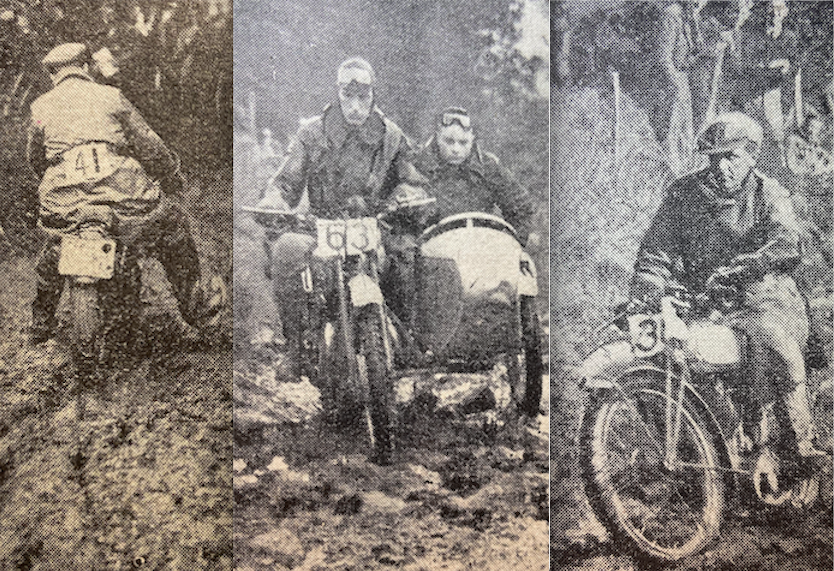
“THE SPECTATORS AT A GYMKHANA recently staged by the De Havilland Auto Club were amazed to see a motor cycle and sidecar careering round the field without driver. The outfit, it was alleged, was controlled by wireless, and sure enough there was a kind of receiving installation attached to the sidecar. Yes, dear readers, the thing was a gigantic hoax, for stretched at full length in the sidecar and covered with a canopy was a club member, Mr J Wakelin, and he was controlling the outfit by means of wires attached to the steering gear. And how did he see where he was going? Easy! A home-made and cunningly disguised periscope was fitted in the ‘roof ‘ of the sidecar. [Some 40 years later I was at a rally where a similar stunt was staged. In this case the outfit was ridden by an arena performing a few stunts; then the rider ‘fell off’ and the combo chased him round the field before heading straight for the crowd and swerving clear at the last moment. The hidden driver looked out through a grille in the front of the box sidecar, which was a bit simpler than rigging a periscope. But, 1936 or 1976, it was a good stunt.—Ed]
“LAST SATURDAY AFTERNOON the Chester MC began its most ambitious week-end—a veritable festival of speed for enthusiasts in the North-West. The first session was on the sands at Wallasey with 32 competitors, and the second phase was the ‘mountain grass track’ on the following day, at Crewood Hall, in the Delamere Forest, with 75 names in the entry list. Half a dozen riders were down for both events, for the first Delamere meeting had been so well liked and so well spoken of in Cheshire, that some of the star sand racers had decided to have a cut at this grassy mountaineering business: Two factors make for success with the Chester club; they have some enthusiastic workers (not the least Mr Speed Secretary Bill Smith!), and once a meeting starts there is no messing about—all races start promptly. THE SAND RACES A five-lap handicap produced a very mixed field, ranging from an ancient side-valve 680cc twin Zenith outfit, via a ‘George Dance’ sprint ‘Beam, a new and shiny Triumph Tiger, various AJS and Norton push-rod ‘specials’, to the pukka racers. Moore laughed aside his handicap and won easily from scratch, so for the 10-lap race the handicapper put him a full three minutes behind the field. But things like that don’t bother sand-racer Moore. Riding superbly, rounding the bends steadily and accelerating out of them like a projectile, he was leading after seven laps and finished with a margin that made the handicapper think! This was a strenuous race and the leathers of J Dunne and E Lambert both seemed to have come unput in the middle of the back—and for such a cold day body belts were certainly indicated! THE GRASS TRACK EVENTS. After a hectic clearing-up on the Wallasey sea-shore, not to mention one car abandoned to darkness and the rising tide, or the desperate scaling of the 45° sea wall by Colin Edge’s Austin 7 lest the car be completely lost in the quicksands, the ropes and flags were duly transported to the Mountain grass track in the Delamere Forest. The club stalwarts were at work with the dawn, the morning was glorious, and if the meeting was a few minutes late in starting that was because competitors found 12 noon too early in the morning! The grass was dry, so the steep descents and tricky bends and switchbacks concealed no treachery, and even though the sun went in at the first sound of open exhausts, there was nothing in the weather to grumble about. With a dozen events (some with lots of heats) and so many competitors it was necessary to run up to nine men in a heat, and in spite of such bunches there were no serious difficulties. Spills there were, although the worst of them were in events that were not too densely packed…The final was thrilling. First Jackson (349cc Rudge), then Wilkinson (249cc OK Supreme), then Jackson. Wichman (494cc Douglas) dropped out and Moore (498cc Excelsior) crept up. The leaders were swerving the curves in hair-raising fashion, almost wheel to wheel, and leaving the ground over the bumps like kangaroos in a hurry. And, once again Wilkinson’s final spurt was just too late, and for the second time he failed to win by a fraction of an inch. The sidecar race was not blessed by many starters, in spite of some optimistic entries, and it was chiefly remarkable for RL Graham’s (499cc Rudge sc) challenge to W Bibby (588cc Norton sc) and the weird alignment that A. Melville’s Rudge outfit assumed when cornering.”
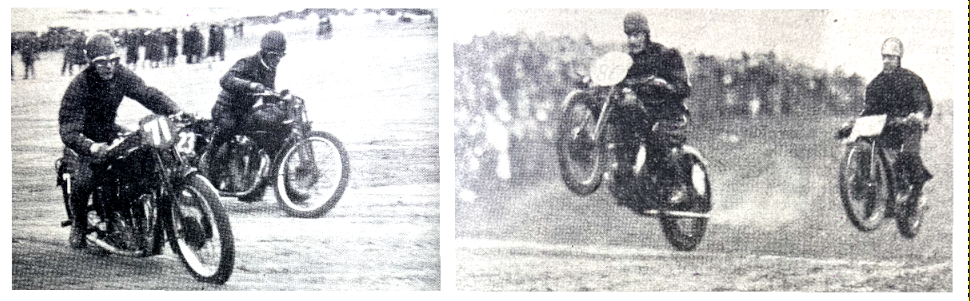
“OCTOBER 1OTH WAS ‘Hutchinson Hundred’ Day at Brooklands; it was also the last meeting of the 1936 calendar of the BMCRC. Small wonder, then, that there were huge entries…[during the four handicap races] there had been many comings and goings from the pits just past Chronograph Villa, for 24 of the competitors in the Hutchinson Hundred had signified their intention of making a stop to refuel during the race, and had been allowed one minute on handicap for this purpose. Shortly before 4pm the big field pushed out to the line. There were so many of them that they had to make four lines at the side of the track, leaving enough room for the limit men to ran through. One by one the riders got away. Some people were using the huge petrol tanks that are an annual feature of the ‘Hutchinson’, but the majority were using standard size tanks. At last the fourth-line men pushed up to the starting line, and after some of the limit men had completed several laps, PR McIver (499cc Vincent-HRD), CD Allen (490cc Norton), and JW Forbes (490cc Norton) prepared for the word ‘Go’. Their’s seemed a forlorn hope, but when they had settled down they began to put in some fast laps. Among the smaller machines SH Goddard’s 246cc OK Supreme-JAP seemed to be more than holding its own, while R Harris (490cc Norton) and DC Minett (499cc Rudge) were obviously not losing time anywhere. As the race progressed the field rapidly thinned out and retirements were frequent. J Clementson (346cc AJS) was unlucky enough to pick up two nails in his rear tyre on the 18th lap, and H Grinstead (246cc Royal Enfield), after being overjoyed when his motor found extra speed after some slow laps, toured in with a tightness in the ‘works’ department. On his 33rd lap

Goddard had a useful lead. He was lapping consistently around the 85mph mark and, provided his oil supply held out, looked a comfortable winner. At this stage his nearest rivals were on their 32nd laps. They were R Harris (490cc Norton); who was lapping at only a little less than 100mph, and DC Minett (499cc Rudge), who was only fractionally slower. H Laird (1,096cc Morgan), JB Moss. (348cc Norton), and CD Allen (490cc Norton) were also fast pulling back the start they had given Goddard, and Laird put in one lap at 100.61mph to gain a Gold Star. But with only four more laps to cover Goddard’s lead proved too much and he crossed the finishing line almost a minute ahead of Harris, having covered the 100 miles at the excellent speed of 85.87mph. Harris was followed in quick succession by DC Minett (499cc Hodge), JB Moss (348cc Norton), CD Allen (490cc Norton), and CK Mortimer (348cc Norton). After 100 gruelling miles only 30 seconds separated these five riders! Now all that remained was for the rest of the runners to finish. K Bills (490cc Norton) completed the course with his silencer scraping the ground, and poor Henry Laird, after so many good laps, limped home with an engine that sounded decidedly flat. Only 10 riders completed the 100 miles, and the last men were flagged off as dusk was falling. Another successful Hutchinson Hundred was over. THE FINISHERS: 1, SH Goddard (246cc OK-Supreme-JAP), 85.87mph; 2, R Harris (490cc Norton), 98.04mph; 3, DC Minett (499cc Rudge), 97.85mph; 4, JB Moss (348cc Norton), 93.09mph; 5, CD Allen (490cc Norton), 100.31mph; 6, CK Mortimer (348cc Norton), 94.50mph; 7, NB Pope (348cc Norton), 94.59mph; 8, H Laird (1,096cc Morgan); 9, MA Clement-Smith (246cc New Imperial); 10, R Board (246cc Excelsior). Bacon Award (fastest competitor irrespective of the winner), 0D Allen (490cc Norton), speed, 100.31mph.”

“FACTS AND FIGURES revealed by an analysis of the Motor Cycles and Three-wheelers on the British Market. Capacity: 150cc, 8.4%; 250cc 26.5%; 350cc, 19.3%; 500cc, 28.1%; 600cc, 4.6%; 1,000cc, 9.5%; over 1,000cc, 3.6%. Engine type: single-cylinders, 83.7%; twins, 13.4%; three-cylinders, 0.3%; four-cylinders, 2.6%. Valve gear: side-by-side, 17.0%; overhead, 58.7%; ov+erhead-camshaft, 6.3%; two-strokes, 17.7%; other types, 0.3%. Gear operation: hand, 27.5%; foot, 64.2%; hand and foot, 0.3%; optional, 8.0%. Number of gears: single-speed, 1.2%; two-speed, 0.3%; three-speed, 21.3%; four-speed, 72.7%; optional, 4.3%. Primary drives: oil-baths, 63.0%; unit construction, 9.5%; fully enclosed, 16.4%; partly enclosed, 9.8%; gear, 1.3%. Ignition: magneto, 67.2%; coil, 17.4%; flywheel magneto, 13.8%; magneto or coil optional, 1.6%. Average price: 150cc, £26; 250cc, £41; 350cc, £49; 500cc, £64; 1,000cc, £95; Over 1,000cc, £109. *Including three-wheelers.
“HAVE YOU EVER WANTED to try your hand at riding round the vertical wall? Frequently, when I go to a local fair and come across one of these exciting shows I find a feeling of nausea coming over me at the thought of it. But last week I heard of four bold lads of the Chester Club who visited a local fair where there was a vertical wall riding act. I gather that those lads tried their hands at ‘wall riding’ on an ancient 250 Raleigh and gave the locals something to talk about for a few weeks. They had only one or two minor spills and received a terrific ovation from the huge crowd that had gathered to see the fun. Messrs C Edge, R Ross, Woods and McLellan were the heroes, and I take off my hat to them.”
“OFFICIAL FIGURES SHOW that every year hundreds of thousands of pounds are paid by motorists in fines for technical and other offences. But these figures do not by any means represent the full extent to which motorists are mulcted of their hard-earned cash. In a very large number of motoring cases the police, on obtaining a conviction, are granted costs against the defendant, who in effect has to pay a double fine. This is bad enough, but an even greater injustice is the very prevalent practice of dismissing a case, yet still awarding costs against the successful (?) defendant. There can be no possible argument about it—a defendant must be either guilty or not guilty. If he is found guilty, then he cannot grumble if he has to pay a fine and (perhaps) reasonable costs. On the other hand, if the case against him is dismissed, he is entitled to leave the court without a stain on his character and—equally important—without his pocket being lightened by the payment of what is termed ‘costs’, but what is nothing more or less than a mitigated penalty.”
“THE AVERAGE RIDER’S OBJECTION to handlebar muffs is that the sensation resembles putting on a sock. Your hands feel rather ‘trapped’ when inside the muff, and if you are riding with one hand off, it is too much of a job to insert the hand back in an emergency. The aluminium shields with which some of us experimented a few years ago were extremely convenient, efficient in keeping off cold wind and penetrating rain, but bent or broke beyond repair if the model was dropped. Probably the ideal is a leather shield for each grip, L-shaped in cross-section, and mounted on a bendable metal frame. You can remove or replace your hands without the tiniest difficulty; the vertical part of the shield keeps off wind; the horizontal part keeps off rain; and if the model drops you can bend the contraption straight again in no time. I wonder that no accessory dealer pushes something of the kind. So far, I have only encountered it as a home-made gadget.”—Ixion
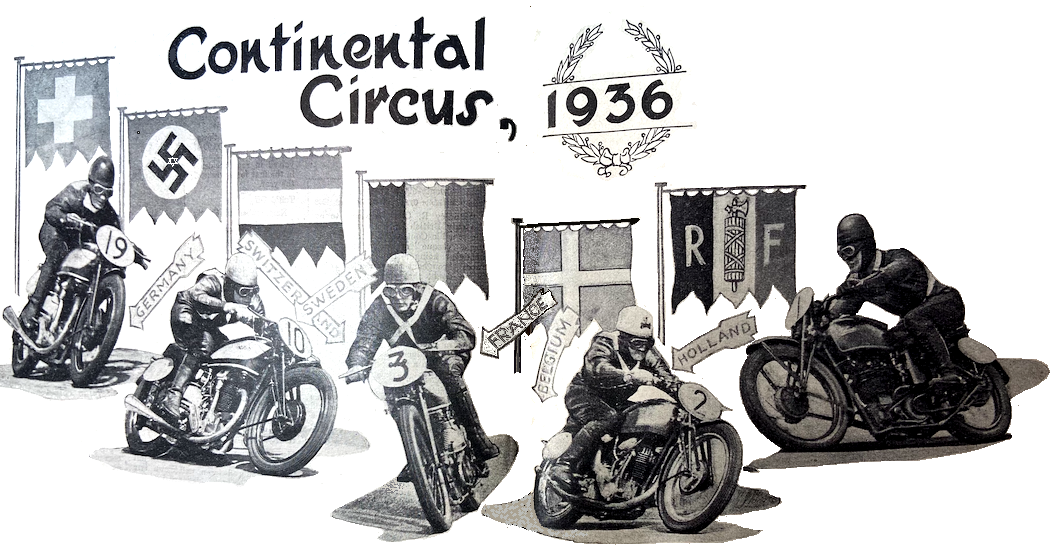
“THIS SUMMER, AS WAS the case last year, I have been fortunate enough to see more motor cycle road races than any other individual of the British Technical Press. For two racing seasons it has been my privilege to watch a small—and decreasing—band of British riders compete against the crack riders of the European nations. In most instances we win, but sometimes the glory is not ours. I often wonder how many people outside the racing game realise precisely what the few patriotic firms and the men who ride for them have had to face this year in the leading Continental road races. Probably, like a friend of mine, you think that British machines and riders win because they have no real opposition and that it is only bad luck when they do not win. While that probably could be called the state of affairs a few years back, it is all very different now. You see, in such countries as Germany and Italy every incentive is offered to racing firms and riders to do their utmost to win, almost, I might add, regardless of cost. The Governments of those countries are far seeing enough to realise the benefit to trade that such victories bring. We, on the other hand, have been so used to winning that we fail to appreciate the value of our victories. When a Continental rider wins he becomes a national hero. What a different state of affairs exists here! Little or no encouragement is given. Our riders return unheralded and unsung, while those of their Continental rivals who win are given the freedom of their respective towns, and their victories are emblazoned throughout the countryside. The net result is that very few British manufacturers find it worth their while embarking on a racing programme. Only in a few Continental countries is it possible to sell British machines, on account of quotas and monetary difficulties. Why then should the British race on the European road circuits? The pessimists will immediately say that there is no reason. But I see two very good reasons why British manufacturers should race abroad next year. In the first place I am convinced that difficulties connected with sales—at the moment in a glorious tangle—will very soon automatically clear themselves up; therefore it is essential that we as a nation should retain our prestige. My second reason is simply that the Continent is being made what I would cal ‘road-race conscious’. Therefore, it automatically follows that the machines with the best road-race records are the ones that are going to sell. I have seen the enormous crowds which flock to these Continental races. Sometimes I am told that 200,000 people have paid to see the races; at other times it is a mere 150,000. The interest in these races is becoming colossal. Foreign firms, quick to realise the benefits that come of racing before such crowds, strive their utmost to beat the few British riders—all that are left of a starry firmament. And for two years they have been getting very near to doing it. But in nearly every case either the machine was too much for the rider or vice versa. But with the quality that is bred by racing the foreign menace is rapidly getting serious. Likewise, the skill of the riders is improving in an amazing fashion. Strange as it may seem, this year, out of all our British manufacturers, only four saw fit to reach out for the plums of the Continental road racing season. Those four—Excelsior, New Imperial, Norton and Velocette— deserve every bit of praise that can be showered upon them for upholding British prestige in the face of most adverse circumstances. Large sums of money had to be spent with scant chance of an immediate return. These firms went out and did their bit for Britain, unsubsidised and unassisted; and their riders were able to show that they are still supreme. Their just reward will come, and I am positive that it will not be long in doing so. Now let us consider the men and the machines that this year have done so much to keep the Union Jack flying, and records of the National Anthem playing overtime.
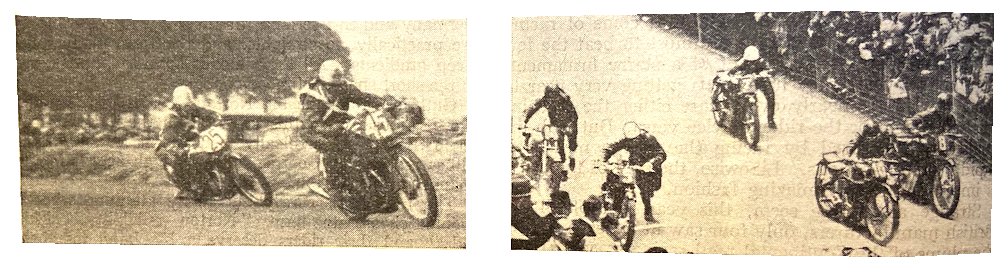
First the Norton men. Here we have a team of brilliant riders with superb machines who set out to win 10 Continental races this year and—amazing as it may seem—were the victors in nine. The riders? Why, Jimmie Guthrie, Freddy Frith and ‘Crasher’ White. And the man behind them? Joe Craig, who sees that the machines accomplish what is required of them. It is this little team which sets out for foreign parts and with only a few days of practising finds the gear ratios and jets suitable to the course of the moment—no easy matter this with a machine designed in a sense for the Isle of Man course. Continental circuits have an awkward habit of being quite unlike the Island. In Sweden and Holland the triangular circuits are virtually dead flat with long straights and few corners. In Germany and Switzerland the reverse is the case—there are practically no straights, and there are many quite steep gradients. All these details have to he mastered in the short space of time available. Guthrie, riding the big Norton, has had to face the most serious rivalry this year. Both the BMW and the DKW are terrifically fast, but it is doubtful if either machine can corner at really high speeds in the manner of the Norton. The BMW is slowly but surely attaining what I would choose to term ‘Norton reliability’. This ‘fabrik’ and their riders deserve a big hand for their dogged determination. Compared with many of the British riders the BMW men are newcomers, and in view of this their riding has been brilliant. On the other hand, the racing DKW goes faster than the wind, but for the present it seems to tail off on the last few laps of each race. Even the little 250 DKW has a tendency in this direction. With regard to the two younger Norton men, Freddy Frith and ‘Crasher’ White, I have little to say. They have both performed brilliantly this year. The former has specialised on the 350, while the latter has on one or two occasions had to play second string to Jimmy G. In the 350cc class this year England has had no real challengers. In fact, the only real struggle occurs between British machines. Somehow it rather reminds me of a couple of cats fighting in a garden, and, when missiles have been thrown at them, carrying on with their fight in the next garden. Only in this case Norton and Velocettes fight in the Isle of Man and then carry on with their private battle in the Continental races. Mind you, it is not really a battle. It is hardly even rivalry, it is so friendly. Velocettes have tried very hard this year to break up the Norton ‘monopoly’ of the Continental races. With Stanley Woods, EA Mellors, and that grand humorist ER Thomas, they have seriously challenged the Norton camp. But the luck of the game has not come their way in several of the races. This year Mellors has done best for them with wins in the Belgian and French Grands Prix as well as a place in the Swedish. Unexpected troubles have prevented both Woods and Thomas being seen in their true light. One private entry came into the limelight this year on a Velocette, and that was HE Newman, who took third place from Thomas in the 350cc class of the Dutch TT. The Excelsior people have performed with outstanding success with models that are, comparatively speaking, barely out of the teething stage. Their 350s have not yet quite got the speed of winning machines. However, HG Tyrell Smith has nearly always been among the first six or seven to finish in the 350cc class; in the 350cc Swedish Grand Prix he finished fourth. In the 250cc class both Tyrell Smith and Charlie Manders have done really well; Tyrell actually beat the DKWs and the fleet 0 Tenni (Guzzi) in Germany and came home the winner of the FICM Grand Prix. True, the Guzzi and the DKWs could not maintain the sizzling pace they set in the early stages of the race—but then that is the luck of racing. While the New Imperial racing stable has had things more or less its own way at home, this has not been quite the case on the Continent. In the first place they have not seriously tried their hand at the racing game abroad this year. ‘Ginger’ Wood and the Hollander, Timmer, have been rather in the nature of lone hands. In the first race this year, the Swiss Grand Prix, Wood finished sixth to Tenni (Guzzi). Timmer came home fourth in the Dutch TT. The best New Imperial show I saw on the Continent this year was put up by ‘Ginger’ Wood in the 250cc class of the Swedish Grand Prix. He finished second to Winkler (DKW), and I feel certain that if the race had been another two laps longer our ‘Ginger’ would have pipped the grand little German rider. It is a long time since I have seen the DKW so hard pressed. After seeing the phenomenal acceleration and speed of the DKWs one somehow begins to think that we have nothing with which to dispute their leadership of the 250cc races. Then the New Imperial comes along, and it is very nearly a different story. I sincerely hope it will be next year. So far I have confined my remarks to factory riders. But I must emphasise that the British ‘Circus’ on the Continent is never complete without those heroes, the private entrants. Men like Eric Fernihough, Fergus Anderson, Pope, Leach, and many others stand little chance in these days of subsidised racing, but in spite of this they go abroad and do battle against terrific odds. I admire them intensely, and I am sure the Continental people like them all the more for their sportsmanship in tackling the almost impossible. What of 1937? Well, this year has shown that we are still supreme in both the 500 and 350 classes, although our leadership in the former has undoubtedly been challenged. It is not quite the same story in the 250 class—in fact, the reverse. But I believe that if we see the Excelsior and New Imperial men out again next year the tale will be different. In conclusion I would like to express my sincerest appreciation of those British manufacturers, with their riders and the private entrants, who have put Great Britain where it is by their fine efforts and sportsmanship. Theirs has been a grand racing season this year. May they have even greater success during 1937.” Ambleside

“WHEN COMPETITORS, AS THEY hand in numbers at the finish, are heard saying ‘Thank you!’ and others remark that they wish there were more of this type of event—well, there was only one conclusion to be drawn, and that was that the trial in question, the MCC Team Trial, had proved a huge success. For the second year running the award for the best performance in the trial, The Motor Cycle Trophy, was won by the Sunbeam MCC. Considering the difficulties that had cropped up over the event between the MCC and the ACU, and the consequent postponement of the trial, the entry must be looked upon as extremely satisfactory. For this, the 29th annual championship of the clubs, there were 10 clubs, each with its team of six solos. Once again the Army authorities had kindly allowed the use of War Department ground. For last Saturday’s team event the area for which permission was granted was Bagshot Heath, better known in years gone by as the home of the Camberley Scrambles. It is a certainty that no land could be more suitable for a solos-only trial, since it abounds in hills and tracks and some of the hills have a gradient as steep as 1 in 3. Since the area in question is small, the trial was of the short but snappy variety. Two laps, each with eight observed hills, had to be covered [and it proved to be] one of the most enjoyable trials of the whole year. On the results being worked out it was found that the Sunbeam Club had repeated its last year’s success with a loss of only 35 marks, Carshalton being second with a loss of 45. In view of the fact that no one had managed Hill 4 on the first lap the stewards decided to award souvenirs to all competitors who finished with only one hill failure; even so, only 11 competitors, it was found, came within this category, so stiff had the course proved. PROVISIONAL RESULTS. The Motor Cycle Challenge Cup (for best performance)—Sunbeam MCC: L Heath (497cc Ariel), EJ Heath (497cc Ariel), NJ Wolsey (497cc Ariel), J White (497cc Ariel), AJ Grover (497cc Ariel), R Davis (249cc Triumph), 35 marks lost. Runners-up —Carshalton MCC: GE Rowley (495cc Matchless), M Riley (348cc BSA), JJ St John (348cc BSA), RH Snelling (346cc Royal Enfield), GE Eighteen (248cc Royal Enfield), AA Smith (493cc Calthorpe), 45 marks lost. Third—Whitley &DMC: HC Wake (347cc Sunbeam), RG May, AJ Whistler, EG Wilmot (248cc AJS), RJH Gillingham (348cc Norton), AJ Gaymer (249cc Triumph), 67 marks lost. Other.teams to finish complete: Coventry and Warwickshire MC and Streatham &DMCC, tied with 78 marks lost; Motor Cycling Club, 91; Birmingham MCC, 134; Stamford Bridge Speedway, 149. Souvenir Awards (for completing course with loss of only five marks; special awards for members of teams placed first, second and third): HC Wake (347cc Sunbeam), M Riley (348cc BSA), RH Snelling (346cc Royal Enfield), GE Eighteen’ (248cc Royal Enfield), EJ Ford (493cc Triumph), L Heath (497cc Ariel), EJ Heath (497cc Ariel), NJ Wolsey (497cc Ariel), J White (497cc Ariel), R Davis (249cc Triumph), D Reeves (249cc Triumph).
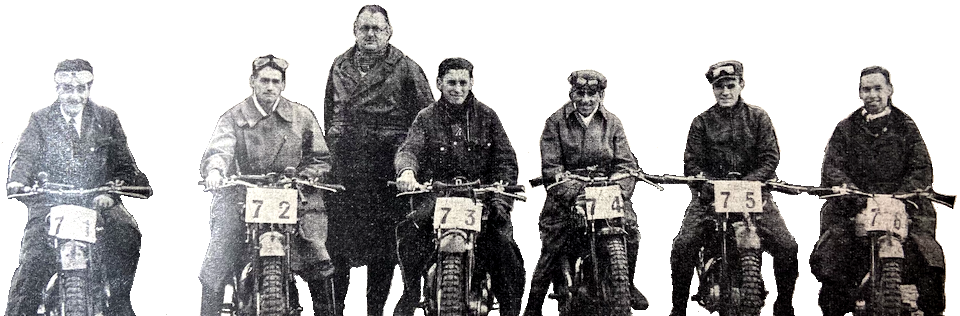
“LAST SATURDAY THE South-Eastern Centre won the ACU Inter-Centre Challenge Trophy. It was a fine victory for a team made up both of acknowledged expert trade riders and of more ordinary motor cyclists, and it got home with three marks advantage over the much-fancied Midland Centre team. Yorkshire and Cheshire tied for the third position. This year the scene of the trial was in North Derbyshire; the event centred on Baslow and covered. much the same ground as was used two years ago. The Northern riders were quite cheerful about the venue and were still more bucked by the bright sunshine and the high wind of Saturday-morning. ‘This will mean next to no mud and plenty of hard rock,’ they thought, ‘and those Midland and Southern chaps don’t like rocks; this will be our day!’ But it did not work out quite in that fashion.”

“WITHOUT TOUT. Solicitors who use ‘touts’ to get in touch with road accident victims will have their activities restricted by Law Society regulations which have just come into force.”
“WITH ITS LATEST PLANT in operation, Low Temperature Carbonisation, Ltd can produce 12,000,000 gallons of petrol and oil a year—about 1% of the national requirements.”
“‘NO DOMESTIC ACHIEVEMENT would win greater gratitude or bring greater relief to the community than the freeing of our roads from those who so far abuse their convenience as to neglect the rights and weaknesses of others who have to use them.’ Mr Hore-Belisha.”
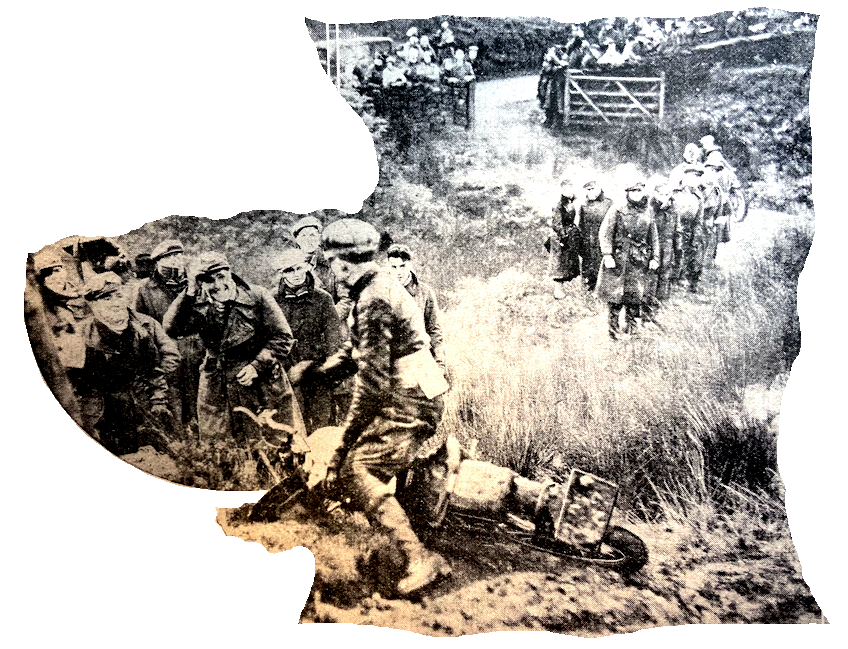
“IN A RECENT ISSUE OF The Motor Cycle Torrens described his experiences with a handlebar windscreen, and as I have used one for a period of two years I can endorse all he said in its favour. In addition to the screen, however, I fitted legshields, supplied by the makers of my machine. The screen I used also had an apron, and this was allowed to overlap the front of the legshields by about nine inches, and was secured by means of a couple of elastic bands. The higher the speed the closer the joint, and thus the windscreen and the legshields formed a complete guard, without affecting the steering in any way. The top of the windscreen is just below eye-level, but owing to the angle at which it is fixed the wind and rain are deflected over the rider’s head. A few years ago I should have been inclined to ridicule such an arrangement, but the advantages are so numerous that I will always have my motor cycles equipped in this way. It is unnecessary to wear goggles under any conditions, and to anyone like myself who usually wears glasses, this is a great advantage, especially at night when it is raining. One’s vision is perfect, because, of course, one looks ever the screen, and not through it. Waders are never necessary and even after the longest run a rider arrives at his destination free from dust and grime. The maximum speed (solo) of my machine is reduced by 7mph, but this is of no consequence, because my maximum comfortable cruising speed is increased.
G Bowker, Manchester.”
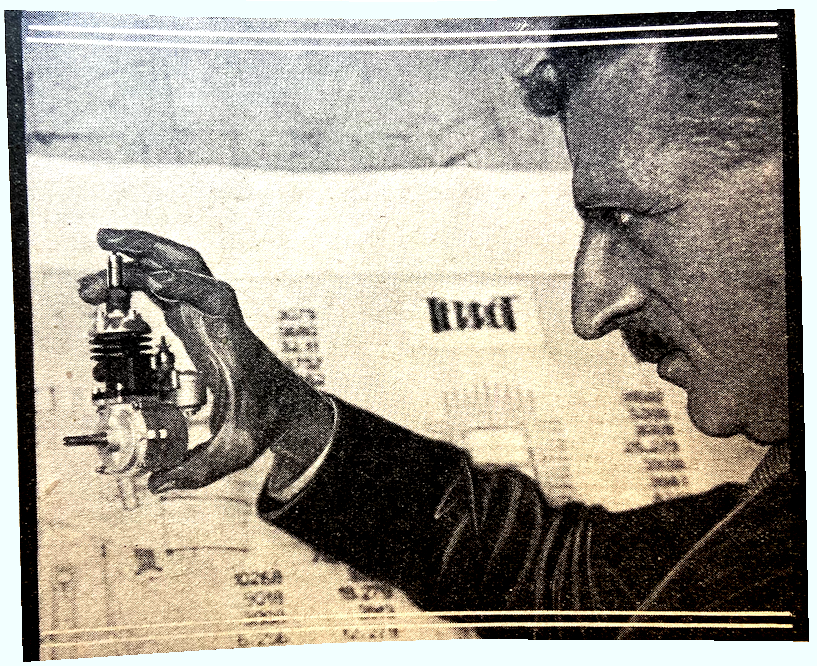
“A FEW YEARS AGO autumn was regarded as the best time for record-breaking attempts. Intense excitement would prevail as day by day news would come through of fresh records being broken. Of recent years, however, the attempts have become fewer and fewer. There are over 160 records for motor cycles, side-cars and three-wheelers that have been standing for five years or more—indeed, some were last broken 10 years ago! But now, in 1936, interest is being awakened. During the past three weeks many important records have been broken and moreover, British riders and machines are once again to the fore. Last week, at Gyon, near Budapest, Hungary, Eric Fernihough added to his already big list of records by covering a mile from a standing start at 174.20kph, or 108.24mph. This is additional to his standing-start kilometre record of 98.91mph achieved recently on the Frankfurt-Darmstadt autobahn. The new record was achieved on Fernihough’s supercharged and partly streamlined 996cc Brough Superior. The previous record was made by E Henne (736cc BMW) at Ingolstadt in September, 1930. Then at Montlhéry the French rider, Monneret, recently struck a shrewd blow at four 350cc class records on a special Jonghi. The hour record in this class was previously held by, A Denly (AJS) since 1930 at 104.52mph. Monneret’s new records were as follows: 50 miles, 105.13mph (previous record 104.20mph); 100 miles, 105.69mph (104.52mph); 1 hour, 105.70mph (104.53mph). The successful Jonghi has a 350cc (71x88mm) engine built in unit with a four-speed gear. Each valve has its own separate over-head camshaft, driven by a chain of gears, while the cylinder head is of aluminium-bronze. A special feature is an external device which enables the valve timing to be set without disturbing the crank case. France already was the holder of the hour record in the 250cc solo class and the 350cc sidecar class in addition to the 24 hours record, which was obtained with a 350cc side-valve Jonghi at 72.57mph. But the new records were not allowed to stand for long, for they were broken again last Saturday by Jimmy Guthrie with a 349cc Norton—one of the 1936 TT machines which had been adapted for the oval circuit at Montlhery. A 5½gal fuel tank was fitted and the compression ratio had been increased to suit the alcohol fuel used. The new records are as follows: 50 miles, 107.67mph; 100 miles, 107.45; 1 hour, 107.43.”

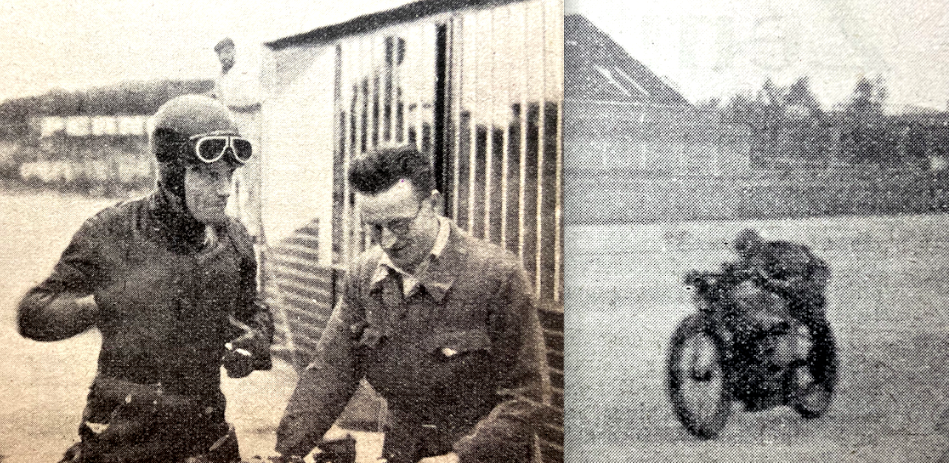
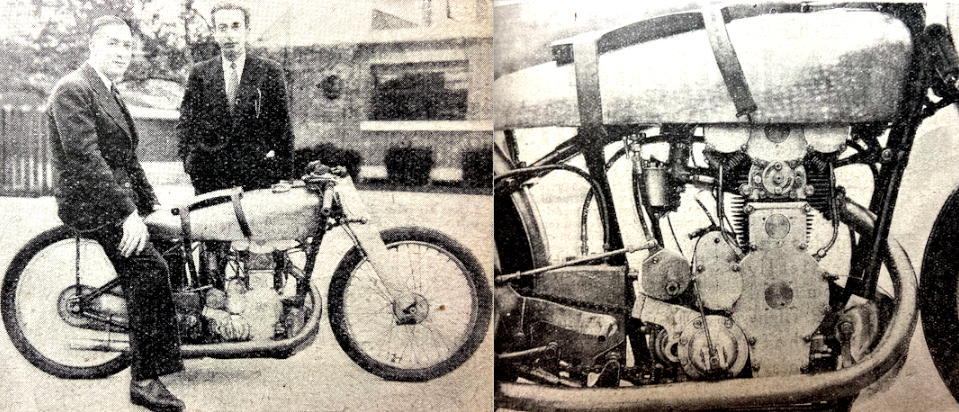
“THE FIRST CANADIAN motor cycle road race, run by the Quinte MCC, was held through the streets of Belleville, Ontario. The course, which was 1.8 miles long, was roughly rectangular in shape and the race was over 120 laps, making a total distance of over 200 miles. There were 34 entrants, 26 of whom were mounted on British machines. It is estimated that over 20,000 spectators turned out to watch the event. Starting in relays of four, the field got away at 1.30pm. George Pepper (Norton), who started in the second line, gradually worked his way through the field, and on the third lap he took the lead, which he held to the end. At the end of the fourth lap Pepper lost the mudguard pad from his machine but he continued, riding half on the saddle and half on the bare mudguard. Half -way through the race Pepper lapped the entire field three times. At this point C Carroll was second and Sparks third, but later Carroll dropped out and T Miller ( Norton) ousted Sparks from second place, with B Tancrede (Harley-Davidson) fourth. Then Tancrede [Babe Tancrede, let it be noted, was the 1935 US motor cycling champion—the Canadian 200-miler attracted the cream of riders from south of the border.] passed Sparks and for many laps scrapped hard with Miller for second place, eventually passing him near the finish. After the first six men had finished the other runners were flagged in. Pepper by his win becomes the first Canadian road-racing champion. RESULT: 1, GT Pepper (Norton), 3hr 51min 18⅘sec: 1, Babe Tancrede (Harley-Davidson); 3, Tony Miller (Norton); 4, Mat Sales (BSA); 5, J Ferguson (Rudge); 6, O Pazzi (Indian).”
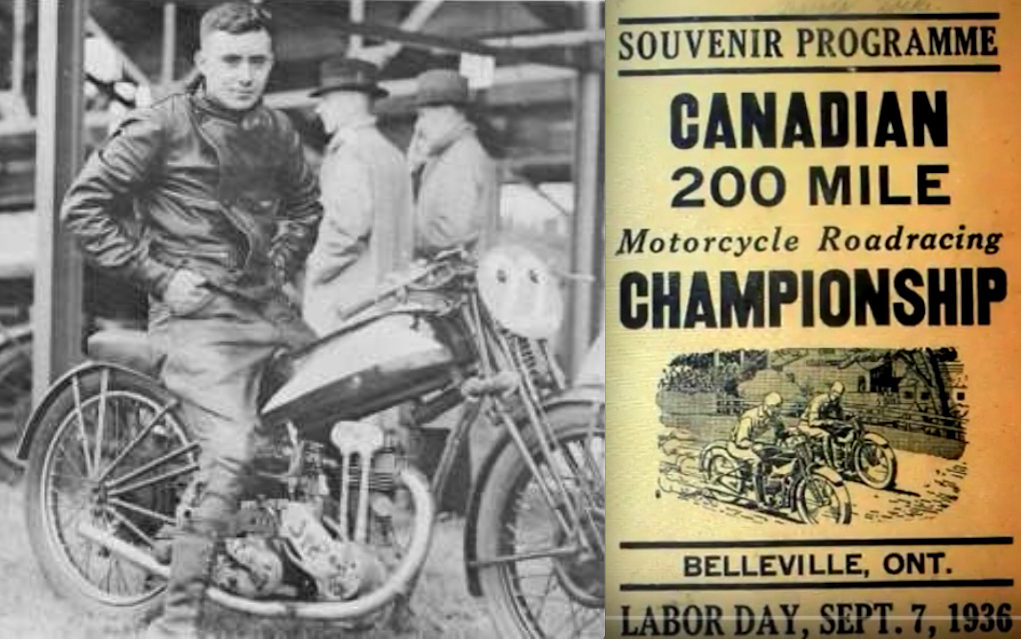
“THE 21ST MOTOR CYCLE and Cycle Show, and the last one of the series to be held in Olympia, was officially opened at 12 o’clock on Monday by Lord Nuffield. In introducing Lord Nuffield, Mr Oubridge, President of the Manufacturers’ Union, referred to the growing prosperity of the motor cycle and allied industries, and to the fact that we have increased our exports of motor cycles from some 17,000 to 19,000 machines in the past year. ‘How much greater success might we have had,’ he said, ‘had the Government encouraged exports as was done in Germany where (he believed) manufacturers had a subsidy of about £10 for every motor cycle exported.’ Lord Nuffield reviewed the development of the two-wheeler and said that he himself exhibited two motor cycles at the Show of 1903. To-day, he said, Britain owed much of her prestige abroad to the superlative workmanship and the quality of British motor cycles and to their performances on road and race track, not the least inmportant of these successes being the winning of the International Trial this year. Concerning the growing use of road vehicles, Lord Nuffield said that he was convinced that the best drivers were always those who had made a beginning on two wheels. Before thanking Lord Nuffield, Sir Harold Bowden read a message of good will from the Minister of Transport, Mr Hore-Belisha, who said that he particularly appreciated the continued excellence of relationship between his department and the Manufacturers’ Union in further-ing the interests of road safety.”
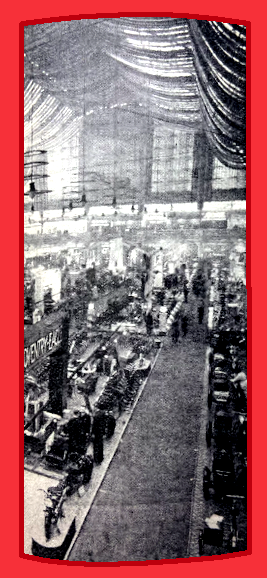
“A MOTOR-ASSISTED bicycle from sixteen guineas, fully fledged motor cycles from £2I 10s to £140: there are motor cycles at this week’s Olympia Show to suit all pockets and all needs. No matter whether the prospective purchaser is interested in a runabout, a motor cycle for utility riding, a means of seeing the countryside inexpensively and without any effort on his or her part, or a machine that will provide the key to the greatest sport of all, competitive motor cycling, there is a suitable mount at Olympia. The keynote of the exhibition is sound, sane design. A search of the Grand Hall from one end to another will reveal nothing freakish; all the motor cycles are of tried, proved design, with a greater degree of inbred reliability than ever before.”
“WHAT THE SHOW REVEALS: A standard of excellence in design and manufacture unequalled the world over ; motor cycles to suit all types of rider and all pockets, from sixteen-guinea motorised bicycles to luxury big-twins and 1,000cc four-cylinders; several completely new ranges of motor cycles; old favourites with important improvements incorporated to ensure still greater reliability and ‘ride-ability’; widespread tendency to enclose all moving parts; almost universal enclosure of valves and valve gear; new side-valve engines with the valve springs remote from the valve ports to ensure prolonged service; big effort to make machines look really smart without being flashy; standardisation of automatic battery charging; advent of automatic ignition control; widespread adoption of rubber handlebar mountings designed to insulate riders’ arms from road shock and vibration; many machines with small-section front tyres and large rear ones with the object of ensuring good steering and cornering allied with a high degree of comfort; four-speed gear boxes with foot control almost universal; several new big-twins designed to appeal to all who enjoy effortless power, either solo or with sidecar; employment on many machines of absorption-type silencers developed to ensure a high degree of silence without serious power loss; increased number of quickly-detachable rear wheels and prop stands; new self-compensating pistons, designed to eliminate piston slap, adopted in several engines of large cylinder bore; saloon-type sidecars growing in popularity; advances in design to delight the hearts of all experienced riders, and machines to tug at the purse strings of thousands who have yet to taste of the delights of the powered two-wheeler—that modern magic carpet.”
“AN EXCEPTIONALLY BUSINESSLIKE lightweight motor cycle is a feature of the Carlton stand. This machine has a very complete specification, which even includes legshields. The power unit is the popular 125cc Villiers engine-gear unit, and it is housed in a straightforward frame that provides an unusually low riding position. The fuel tank, with a black and gold finish, is made of welded steel. Other features are Villiers flywheel-magneto lighting, a central spring-up stand, and 4in diameter brakes. This sturdy little machine, with its almost de luxe equipment, sells for a modest £21 10s.”
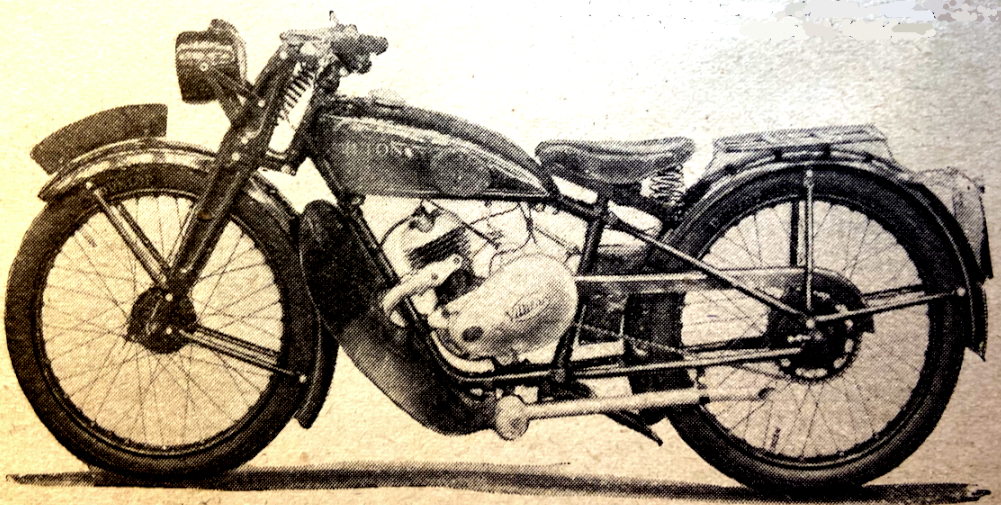
“FOR THE FIRST TIME since its introduction in 1934 the Cyc-Auto can be examined at Olympia. Four types of this motor-assisted bicycle are shown, two with electric lighting and two without. The basis of the machine is a suitably strengthened cycle frame, and the 98cc engine is mounted transversely below the front down tube. The engine unit is entirely self-contained, and the drive is transmitted through a worm gear to a chain driving the rear wheel. Pedalling gear is fitted and is used to start the engine. Should the engine fail, the machine can be used as an ordinary cycle. A flywheel magneto provides the current in the case of the models fitted with electric lighting. The units are shown fitted in frames suitable for both ladies and gentlemen.”

“ALTHOUGH THEY HAVE BEEN in production for a comparatively short time Triumph Tiger models have already earned for themselves widespread popularity. For next year they have to a certain extent been redesigned. The valve gear is fully enclosed and positively lubricated, and care has been taken to avoid oil leakage at all points. The valve clearance adjustment is at the lower end of the push-rods, telescopic push-rod enclosing tubes giving access to this point. Quieter and smoother running should result from the modifications that have been made, and certainly, externally, the power units are much cleaner than before. A new gear box has constant-mesh gears, while wider gear wheels are used. Also, a new form of enclosed foot-change has been designed. The clutch adjustment is enclosed within the box, but is readily accessible through a cap which closes what is also the oil-filling orifice. Rubber-mounted handlebars, a new frame, an improved tank with a handsome silver-and blue finish are other items in machines which really form a dazzling display.”
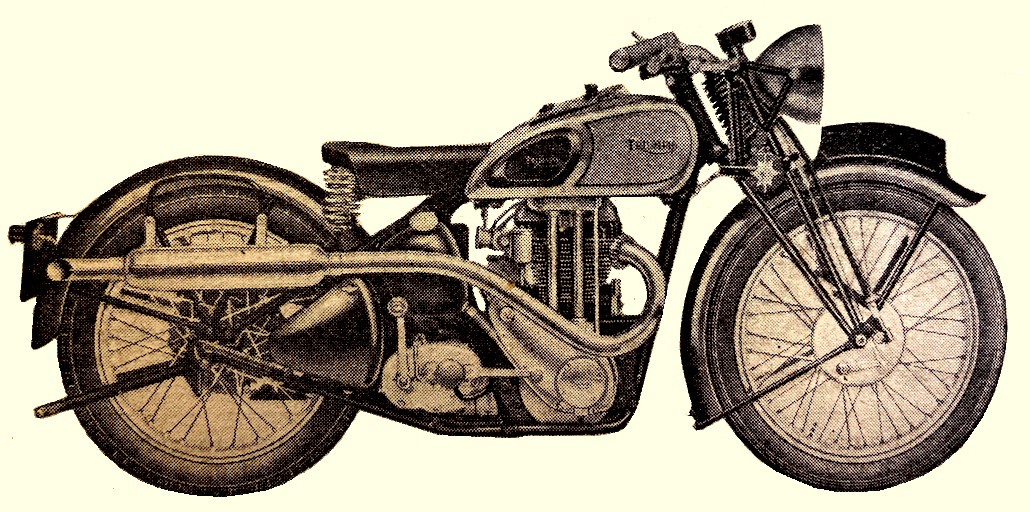
“THREE LIGHTWEIGHTS—ONE a Continental velomoteur—and a sporting ohv 250cc model are the attractions on the Prior stand. The velomoteur is a type that is very popular in Germany. It has a 98cc Sachs two-stroke engine with a neat gear-driven flywheel magneto. A tubular frame is used, but the forks are of pressed steel. It has a two-speed gear and the final drive is by chain. Pedalling gear is fitted, and the machine has internal expanding brakes front and rear. Of the two remaining lightweights, one has a Sachs engine and the other the 125cc Villiers engine-gear unit. This interesting sports machine from Germany is worthy of close inspection, for although many British components are used, the style is Continental. The 250cc JAP engine has coil ignition, but current is supplied by a Bosch dynamo.”
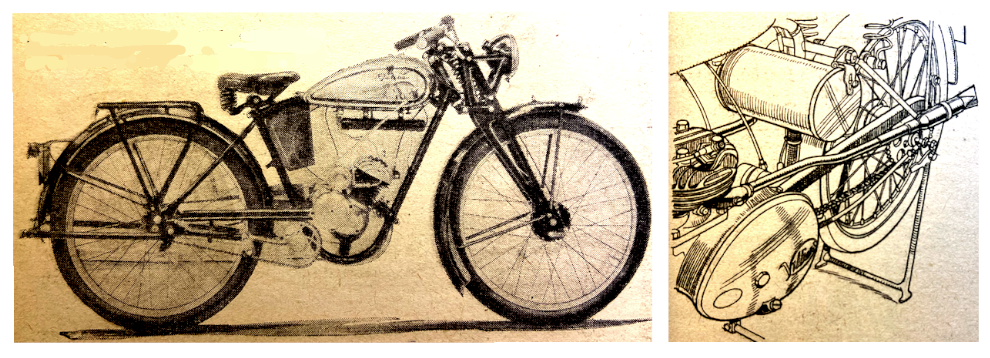
“TWINS OF OVER 1,000cc are not common in this country, but the newly designed Royal Enfield with its self-contained oil reservoir and four mechanical oil pumps is a remarkably handsome job. The big engine is neatly housed in a cradle frame. The machine has detachable and interchangeable wheels and an oil-bath chain case. Without interchangeable wheels and the de luxe specification it costs £70. One of these big twins fitted with an olive-green full two-seater sidecar forms a striking exhibit.”
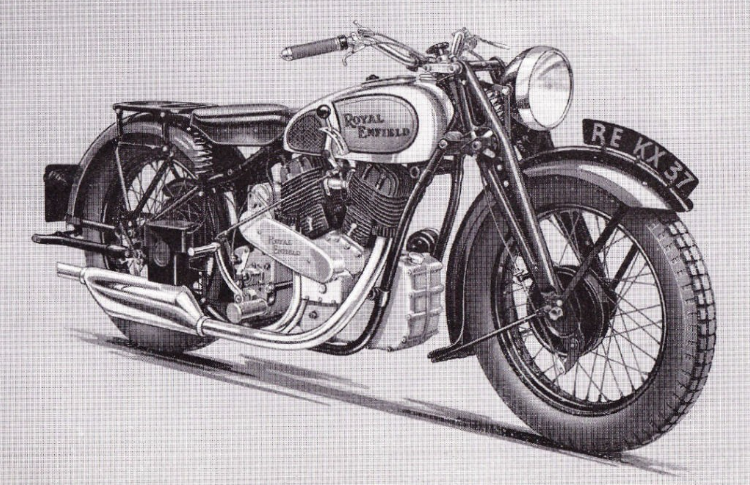
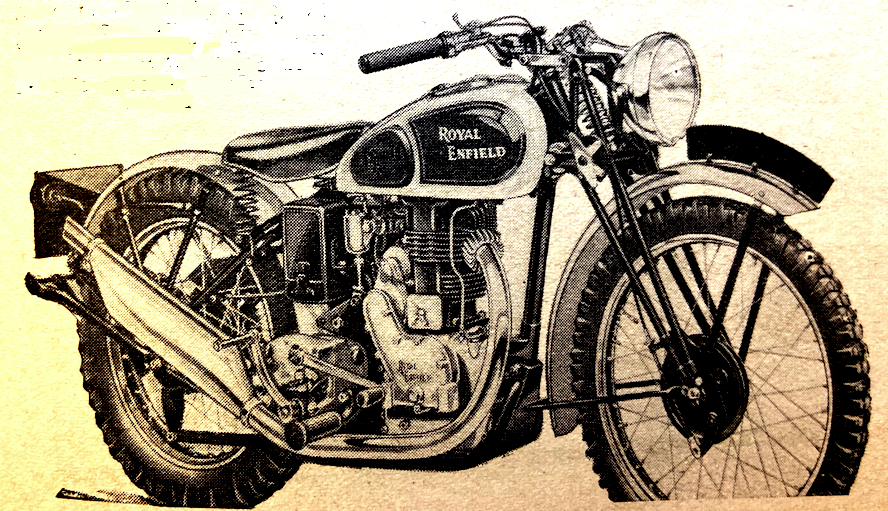

“AS IN 1936, THE MAKERS of AJW motor cycles are concentrating on the two ‘Fox’ models, the Red Fox and the Flying Fox, for 1937. Both machines have been improved and modified in several respects. In each case a 490cc two-port JAP engine is fitted, and this now has oil fed direct to the bearings through a drilled crankshaft. The exhaust pipes are attached to the cylinder head by means of neat finned clips, which not only enhance the appearance, but also assist in cooling the exhaust ports. These modifications are common, to both models, and in addition the Red Fox has larger and more comfortable knee-grips. This model, which has a three-speed gear box with hand change, Lucas magneto, Miller 6-volt lighting equipment, and 3.25-19in tyres, costs £49 10s, fully equipped. The Flying Fox is a de luxe and sports edition of the Red Fox. The JAP engine is mounted in a very strong semi-cradle-type frame, which has a re designed gear box housing of box section. The gear box is a four-speed heavyweight Albion with positive-stop foot change. Solo ratios are 4.4, 5.8, 8 and 12.3 to 1. The four-plate clutch is operated by an improved thrust mechanism which is totally enclosed and constantly lubricated.”
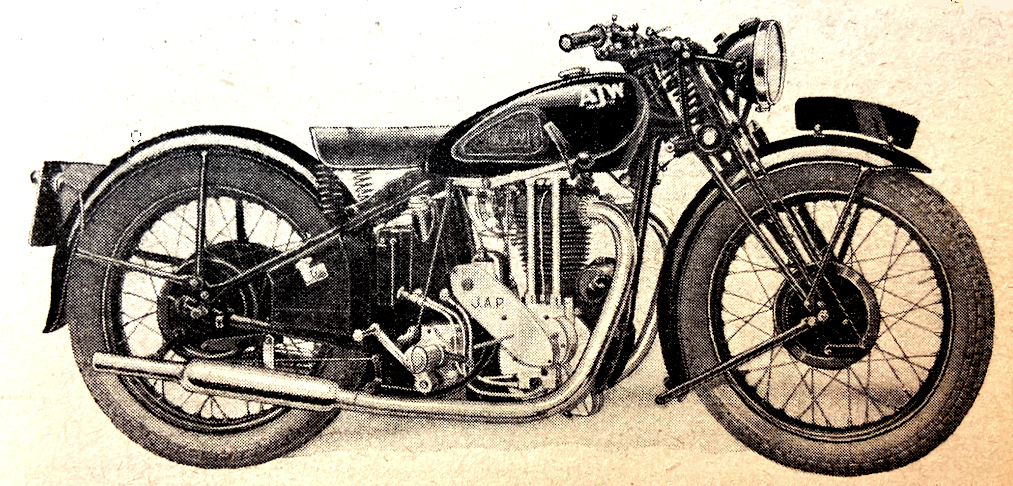
“IN THESE DAYS OF 30mph limits speedometers are no longer in the luxury accessory class, but have become an essential part of motor cycle equipment. S Smith and Sous have a full display of their various types of instrument. The chronometric speedometer that is so very popular is shown with a 5in dial calibrated to 100mph, as well as in the normal sizes, calibrated to 80 or 120mph. These instruments have a yellow line opposite the 30mph mark to enable this figure to be read more easily. Revolution counters to match the speedometers are shown. There are two patterns—the governor type and the chronometric. All these instruments can be obtained with brackets for handlebar or fork mounting, and the neat dual bracket for mounting two instruments is worth noting. On this stand is also a display of 8-day clocks with both handle-bar and bracket fixings.”
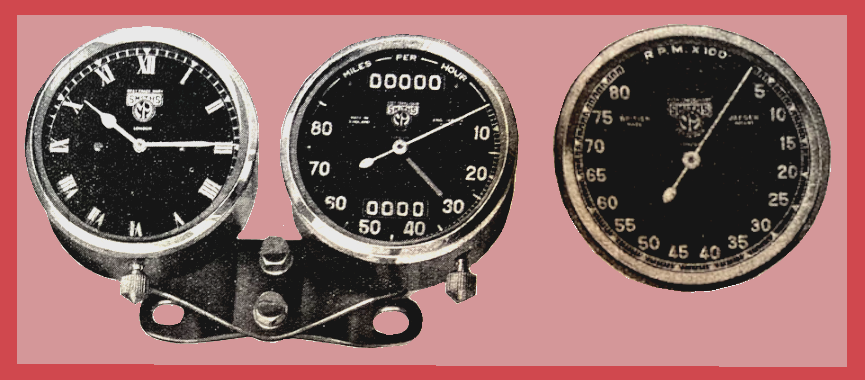
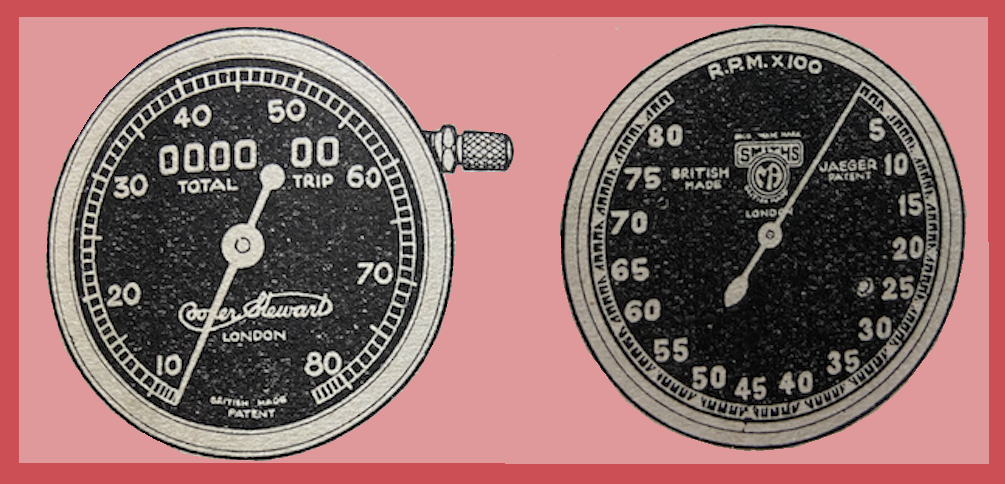
“AROUND OLYMPIA WITH IXION: ‘I always feel a trifle embarrassed when coping with a Show which furnishes hardly any novelty. One has a sneaking feeling that the man in the street regards details as trivial, and suspects Press enthusiasm of being unduly great. So let us open the ball with a range which at a casual glance betrays nothing to hit the eye, and the models in which might even pass as 1936 jobs to a careless spectator—I mean the 1937 Triumphs. They have in actual fact been redesigned from stem to stern by one of the most brilliant engineers in the indutry, who took over the job of managing director during 1936. He has tried to retain the typical Triumph style while incorporating his own special notions of what’s what. Externally and ostensibly the Tigers do not look terribly different from other sports models of similar power and price. But get down to dots on any one of them, and you find a whole lot of rather intriguing features. For example, ‘performance without pinking’, ie, knots developed without resort to an objectionably high compression ratio. A valve gear inspired by the high ideal that no valve clearances should need to be adjusted in a normal season’s work (fluid-cushioned by oil under pressure). A lightning clutch adjustment, running in oil and therefore safeguarded against rust and grit. Front wheels in which the braking stresses are taken by all the spokes, instead of by only the spokes on one side of the wheel. Twenty-five pounds pared off the 350cc model (others in proportion), and a lot of it off the front end of the bus, which, of course, makes for better road-holding. This, I submit, far better deserves the proud title of Progress with a capital P than staging a stunt machine (say, a blown line-ahead 8-cyl), which has never run, even on the bench; gets headlines in all the dailies; and disappears unwept, unhonoured and unsung next season. A similar tale might he told of many of the 1937 machines which closely resemble their 1936 sisters, although not many of them have undergone quite such concentrated attention. Take the Velocettes, for instance, of which for some years past battalions of enthusiasts have averred that every detail is dead right; yet the staff, informed by racing, have added a little more speed, improved the adhesiveness, stiffened up this and that to stand extra revs, and so forth. Nothing to show, outside; for a good bus is even better than before. Or take the Ariel Square Four, for which the demand at no less than £90 a time has startled even its pro-ducers. Four of us fell to talking over lunch about a select list of super motor bikes of all time which deserve to rank as ‘Great’; we disputed the claims of some
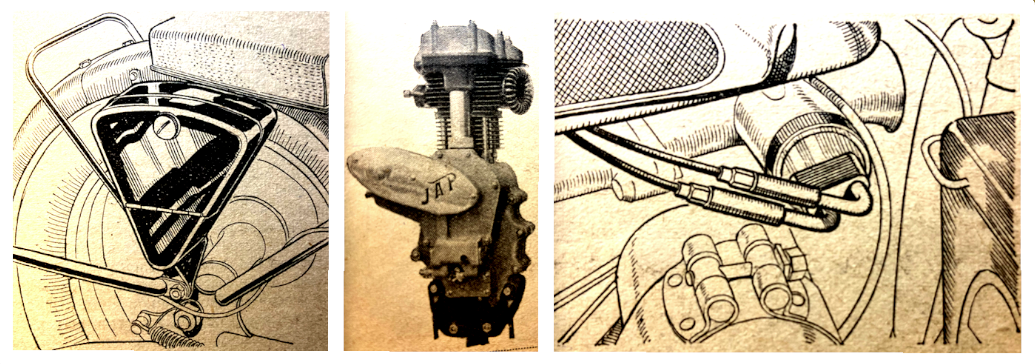
famous machines, but the Squariel passed into Valhalla without a single dissentient voice. I cannot tacke all the exhibits at such length as the Triumph, so here goes for some briefer comments. The Coventry Eagle seems to have made a lot of friends in 1936, its spring frame being beloved where roads are vile; and the firm gets full marks for the extreme neatness of its spring-up stand. The little fellows like the Cyc-Auto, the Wolves, the two-stroke Excelsior and the other small-capacity machines are all gaining ground very fast indeed, and will gain it faster when and if the Government relieves them of tax and insurance. The 98cc and the 125cc machines seem to be outselling the 150s, and people like Villiers who make engines for this class are going to be very hard pressed to provide the output which 1937 will require. One or two new big twins were on view. The HRD Rapide sure has a well-stocked engine-room, as you’d expect when it weighs no more than 4051b, does over 100mph and, I gather, brews 45bhp. The sidecar which went with it housed a Philco radio set; but this option naturally just about doubles the cost of the sidecar. Then there is the new 1,140cc Enfield. I can remember when the original tough Enfield twin was the world’s best seller to keen buyers who lived in agricultural areas devoid of any public transport, and this fine, powerful outfit should be in great demand. It is built for wear. There are four separate pumps in its oiling system, and the timing case is always half-full of oil; yet there is no litter of external pipes with the usual screwed joints. I marvel much that more cycle agents do not push the Enfield three-wheel 3-cwt carrier. It is the small retailer’s dream. Won’t do more than 30mph, so you can trust an errand boy with it. George Brough was as full of chat and notions as ever. It takes a real brain to improve the Brufsup. But for 1937 he has got the sweetest-action roll-on stand ever devised; a delightfully simple gadget for insuring carburetters never get out of balance (throttle levers coupled to a single spindle, operated by a single wire); and the most comfortable sidecar ever staged. On the Excelsior stand I especially admired the wee fellow—125cc; 120lb; 140mpg; and £21 10s. It has legshields, double silencers (important, this!) and three-speeds. The Manxman model reminded me of an incident at another stand, where a private owner berated the designer for adopting the dry-sump method of lubrication.
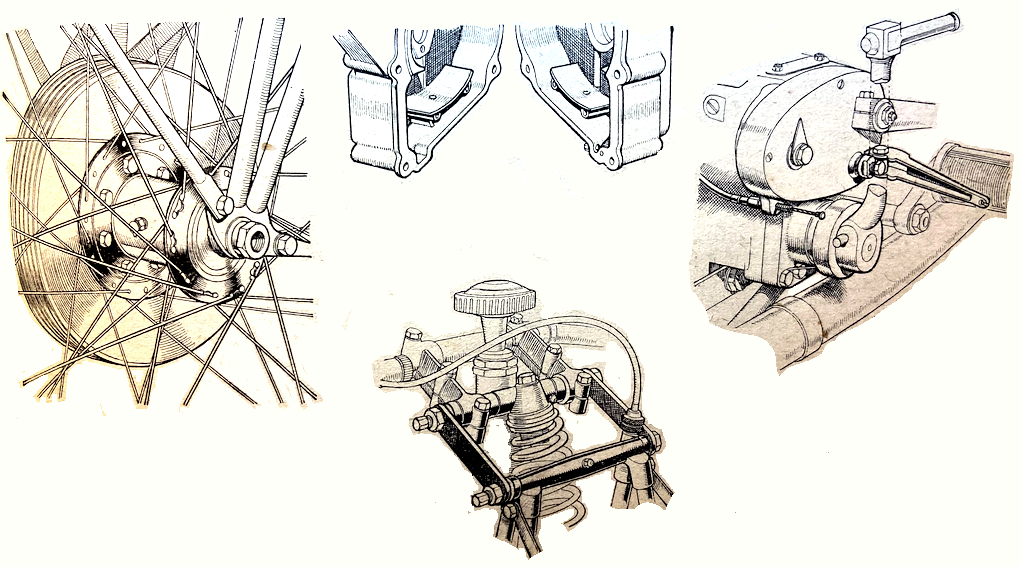
This owner, like the Levis people, prefers direct oiling—using cool, clean oil, and replenishing the continuous losses; he told the designer he would not buy their 1937 model with the dry sump. But the Manxman engineer sidesteps this owner’s criticisms with his ‘pocketed’ sump. The oil which is in reserve drains into the pocket, where it escapes being churned up by the flywheels, and where the pump can cope with oil instead of with froth. The Matchless range has undergone considerable detail alteration, largely inspired by the very laudable ideal of producing mounts which an intelligent private owner can maintain without blood or tears. Take, for example, the extended clamp-bolt of the gear box adjustment, and the raising of the valve clearance adjustment on the ohv models, which, incidentally, is claimed to eliminate oil leakages. Their very sympathetic designer believes not merely in simplifying adjustment, but also in rendering it unnecessary wherever ponsible. He thinks his fork nuts will stay tight for ever and ever—not without justification. AJS machines are also modified. Henceforward the camshaft win be a race replica pure and simpler, and the push-rod machine is the trials job. The side-valve engines of this marque have undergone intensive development. There are grease nipples on the valve guides and on the magneto chain case—oil getting in the mag is a commoner cause of trouble than some users guess. The Rudge people are very proud this year and had the victorious Silver Vase trio of machines in the place of honour on their stand. ‘Proved Performance Improved’ is the 1937 slogan of this factory, and the models look as if they mean to live up to it. New Imperial 1937 models are ultra-modern, with unit gear boxes as standard, spring frames as options, separate oiling to engine and gear box, etc. They do not say so, but it always seems to me that on a large and heavy bus it should be possible to keep a separate gear box in alignment, but that on a light frame this aim can only be achieved by wasting weight. A unit gear box on a light machine must be right every time. The Levis machines look as hand-made as ever, and I note with interest that they guarantee both a ‘maximum’ and a ‘cruising’ speed. They adopt the aviation definition of ‘cruising’ speed, viz, the rate which the engine can stand indefinitely; and on their models it is very high—much higher than home roads will permit. Comprehensive is the only possible adjective for the lovely models which graced the BSA stand, of which the M23 Empire Star is the queen. Nobody in the industry caters quite so lavishly for us as this factory—why, they even standardise three separate types of legshields to make sure of suiting all our fads! Low cost, high performance, exquisite workmanship: highly organised service and every conceivably useful gadget compose their policy. I confess to liking gadgets, especially two-way petrol taps, as I am woefully careless about my fuel level. This range could worthily represent Britain anywhere. The Norton stand always makes me feel a fool. It plumbs the depths of my ignorance. Externally, it is mainly distinguished from its rivals by the exhibition of silverware and the shields recording such victories as four successive Senior
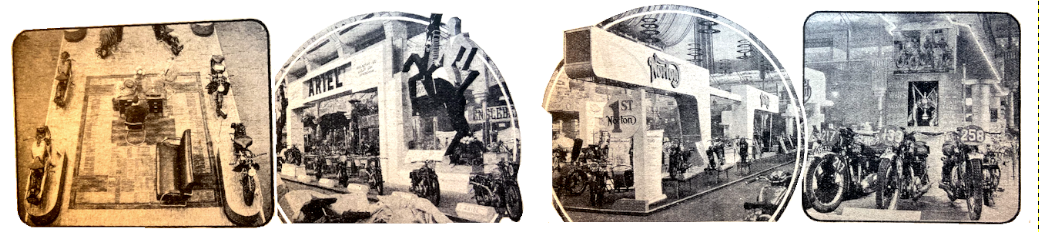
TTs and six successive Juniors. But when you give yourself on eyeful of Norton, and next an eyeful of some other 500cc or 350cc. camshaft, you can spot nothing to suggest that these machines are the despair of rival engineers; float in all manufacturing countries designers lie awake at night scheming how to beat Norton, and fail almost year after year to get near them, while other designers frankly eschew racing because they despair of equalling Norton knots and Norton read-holding. Externally, there is little new to chronicle about this marque, but when you see—or meet—them in-action during 1937 you will find that they are just a little better than ever in all the details which make for supreme speed and supreme safety. On the Francis-Barnett stand I thought the G41 Plover quite the beau ideal of a lightweight if you don’t mind paying a trifle over bottom price to get such luxuries as 6-volt dynamo lighting. The Cruiser, with the flat-top Villiers engine, has been still further improved, and probably ranks as the easiest motor bicycle in the world to clean, and as the one which keeps you cleaner than any other. I spent quite a while on the Watsonian stand—not that I am a chair merchant—but I was intrigued by the multitude of types which they make and sell. One model was eloquent of domestic grief—it was fitted to a he-man’s machine and designed to take twins. I hold that if a woman is cruel enough to saddle her husband with twins, the least she can do is to sidecar one of them on her own bike. I’m afraid I am not so gallant and chivalrous as I should be. I always resent the type of sidecar which is built like the cockpit of an aeroplane, with a hinged lid. If a man works to earn money to buy a bus, and tackles ail the labour of driving, and the weather goes sour on him, I think his woman should share the cold and the wet, and beguile his labour with her prattle instead of retiring into a warm cockpit and leaving him to brave the elements in solitude. But they seem to sell a lot of these super-saloon sidecars nowadays. Did you notice that the ‘clean’ handlebars of two or three years ago are dead as doornails? When all the works were inside, a heavy toss often meant that the bus couldn’t be ridden home; but with a clip-on control you can always put things back after a fall and proceed. I saw few items at the Show which are likely to perish for similar reasons. I gather from all accounts that the next Show (at Earl’s Court, one presumes) is likely to produce a lot of new buses. Trade is good, and the firms feel justified in launching out a little. Well, it is pretty certain that they cannot do much to improve the standardised types.'”
THE SIX-DAY Olympia show attracted a record breaking 76,653 enthusiasts, including 31,611 on the Saturday. Not everyone could afford stand space so Pride & Clarke’s Hammersmith showroom, right next to Olympia, showcased the AJW, Calthorpe, Cotton and Douglas line-ups; the Panthers were exhibited at George Clarke’s South London depot; and the Scotts yowled at the company’s London depot on Tottenham Court Road.
SHOW HIGHLIGHTS: “Two sizes of Square Four Ariel and a de luxe side-valve finished in olive green. ••• James models with a new finish—black and gold tanks with red-lined wheels. ••• Spring-frame New Imperials and real racing modals—all with unit construction. ••• Royal Enfield competition models as worn by the ‘stars’. Also a redesigned big twin. ••• The gracefully arched Velocette stand with a KTS and MSS inclined upwards in the middle. Don’t miss the automatic ignition device. ••• A Swallow Launch Aero Coupé sidecar finished in blue metallic sheene ••• The big range of Watsonian sidecars. In particular the red and black De Luxe Coupé ••• The two competition Tiger Triumphs and sectioned models of the new engines and gear box ••• A camshaft racing machine and the unusually neat 250cc high camshaft JAP engine on the OK stand ••• The three Rudge machines which won the ‘International’ Vase in Germany this year in their full war paint ••• Handsome BSA Empire Stars, and the special competition model. ••• Excelsiors in great variety, including an all-chromium 125cc model and the new 500cc Manxman with a bronze head. ••• All-enclosed transmission on several of the Sunbeams. ••• The Matchless big-twin which is planned for solo as well as sidecar work and looks as if it should be delightful for both. ••• Front brake cable adjuster on top of the fork girders, with the control passing down the tube, on Matchless Clubman models. ••• Single cable control for the twin carburetters on the SS 100 Brough Superior. ••• ‘Cleanable’ and clean enclosure of all mechanical parts of the Francis-Barnett Cruiser. Note the improved guard over the rear chain and sprocket. ••• A competition-equipped Levis that will appeal to the trials rider. ••• Practical, short handlebars on the sports Sunbeams. ••• Ultra-simplicity of control in The unit-construction Wolf. ••• Neat protectors fitted over the sparking plugs of the side-valve Morgans. ••• The new 1,000cc twin Vincent-HRD and the sidecar outfit fitted with a Philco radio set. ••• The ‘big’ little motor cycle on the Carlton stand—one of the lowest-priced machines in the Show. ••• The supercharged 494cc twin BMW which won the Swedish Gland Prix. ••• Overhead-valve engines in tubular frames on the Coventry Eagle stand. Also the neat and ingenious method of enclosing the rear stand spring on these machines. ••• German Steb sidecars with all-steel bodies, pivot front mounting and rear coil-spring suspension. ••• ‘Motif’ shaping of the top panels of one sports model Noxal sidecar, and the extremely smart steel-blue finish. ••• Cyc – Auto motorised bicycles with electric lighting, shown for the first time at Olympia. Total weight 871b! ••• The magnificent Hitler Trophy won by Jimmy Guthrie in the Grand Prix of Europe, among the vast army of silverware on the Norton stand ••• A Continental velomoteur fitted with a 98cc Sachs engine and pedalling gear on the Prior stand. Also a JAP- engined German 250.”
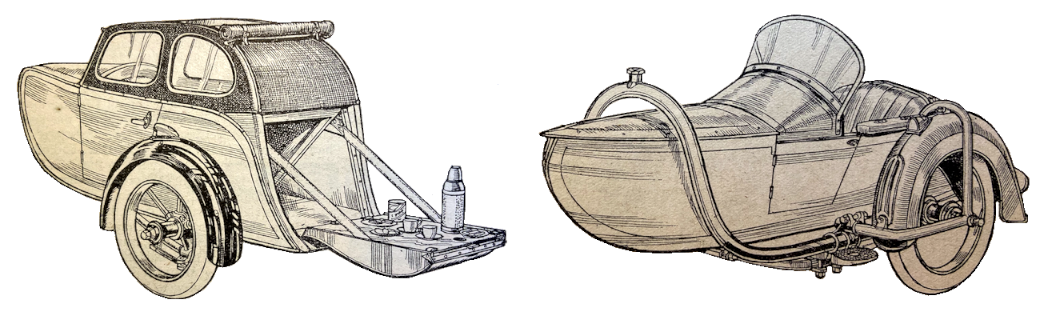
TECHNICAL EDITOR ‘UBIQUE’ took a close look at some of the best engines at Olympia: “There are lots of new engines—whole ranges of them—and very nice they are, too, but they are not freaks, and they follow the logical development of present-day singles and have been carried a few stages farther. I dare not suggest that they have now reached the limit of evolution, but one cannot help wondering when some other well-tried type of engine will be chosen as a basis for refinement and progress. Perhaps we are nearer to a radical change than we suspect. Actually, there is a redesigned 600cc Four—redesigned, that is, to line up with a larger model which appeared last year. There are two brand new big-twins, and although a certain twin of interesting design has disappeared temporarily, it may be taken for granted that it will reappear in a new form in the near future. There is also a new high-camshaft engine with chain distribution gear and all-enclosed mechanism which will interest a lot of visitors. I am not writing this in a carping spirit, for I believe that the modern single-cylinder engine has now reached a pitch of perfection which is little short of miraculous, and I wish merely to remind manufacturers (not designers—they know it !) that there are other types which offer considerable scope for refinement and comfort. There are quite a lot of detail modifications to both overhead- and side-valve models which are interesting, and there has been a very marked effort to decrease piston clearances without the loss of performance. This I look upon as most important, for in the past there have been many ‘hot-stuff’ models on which the amount of piston slap was appalling at speeds below 30-35mph in top gear. If the clearances were reduced, the performance fell to a marked degree, and incipient seizure became common. This failing is, I hope and believe, a thing of the past. In one case (a side-valve) there has been a return to the one-piece cylinder and head. Although I am aware that not everyone will agree with me, I look upon this as a return to correct practice, more especially in ohv engines. Machining may be more difficult, but heat conductivity is greatly improved just where it is most needed. Someone will turn and rend me on the score of accessibility, but I shall not give in without a fight. Full marks, by the way, to automatic ignition control, the one real novelty. The device may or may not provide a perfect ignition timing curve, but I am prepared to wager that it is more accurate than the settings achieved by 99 out of 100 riders. Also, it removes one straw from the stack of haberdashery (forgive the metaphor) that spoils the engineering appearance of so many motor cycles. I am, and every motor cyclist should be, forever grateful to Mr Bowden for wire control, but surely it is time that some of the cables were rendered less obvious on production machines. Even Show models are apt to be untidy in this respect. As you see, I have rather wandered from the subject of engines, but there is not much more to be said except about individual details.”

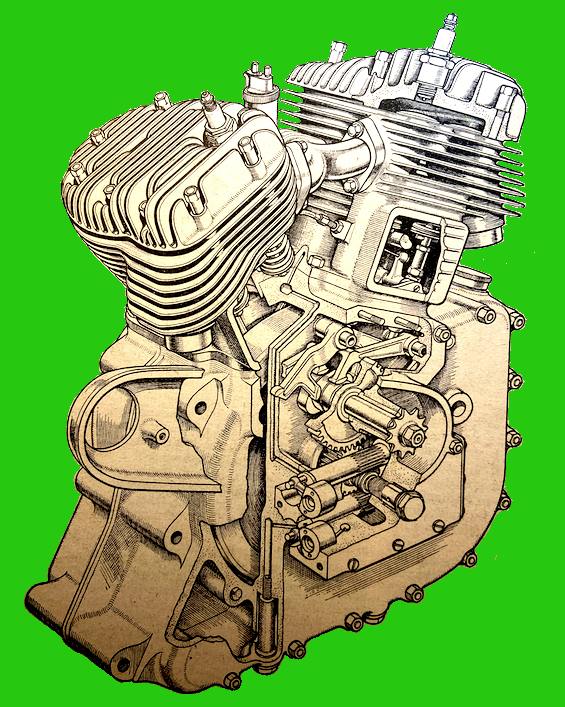
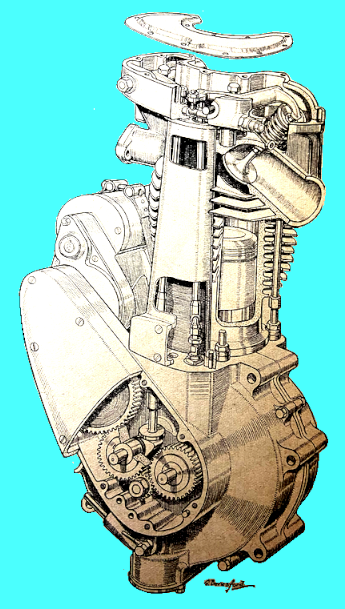
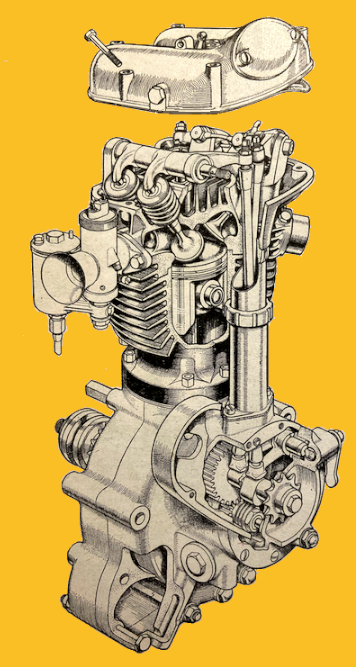
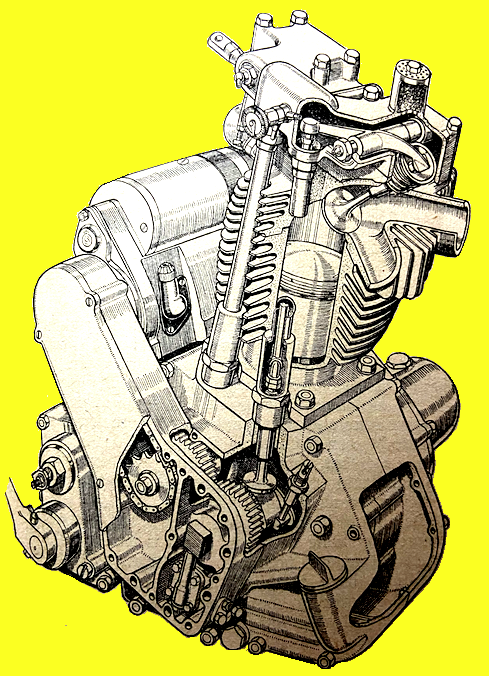
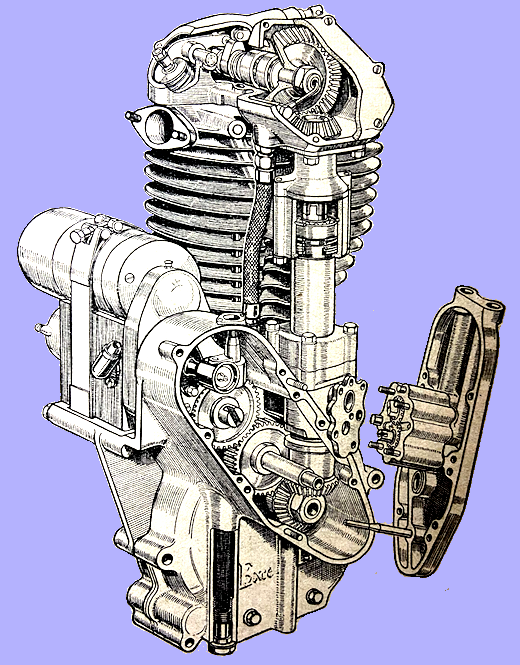
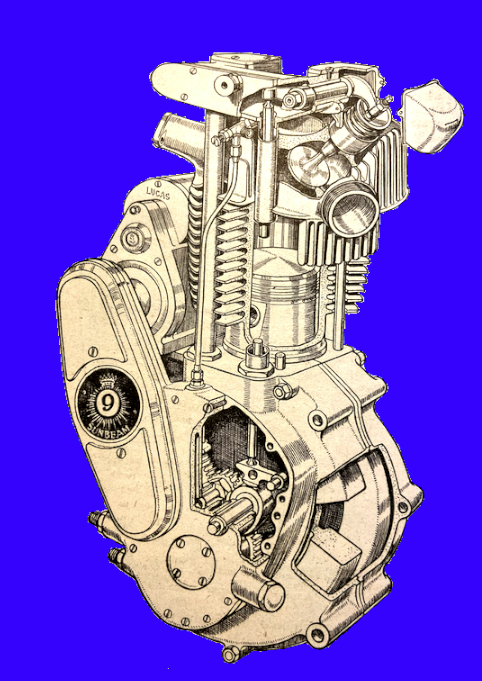
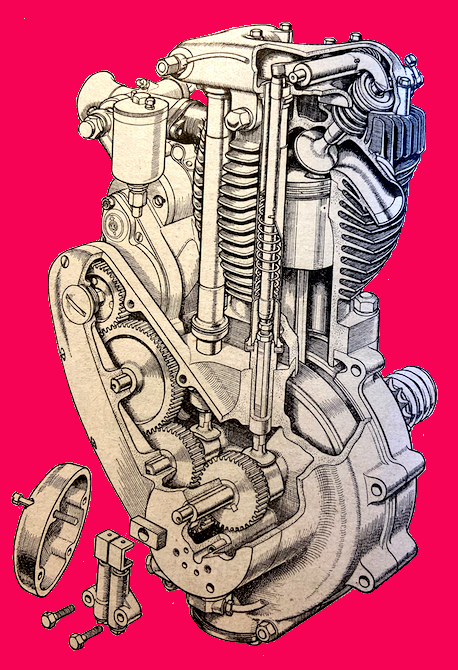
“N0W THAT THE MCC Team Trial has been held I hope the ACU and MCC will get together without waste of time. The trial is much too important and far too enjoyable for any troubles to be allowed to mar it in the future. Except for the War period and in 1905, when differences between the MCC and ACU (or ACC, as it then was) caused its cancellation, the event has been held continuously ever since 1904. At the present time it is one of the most enjoyable events on the whole calendar, and sport—inter-club team sport—at its best. The regulations should be drawn up and agreed upon NOW, and the date of next year’s event fixed at the Date Fixing Conference that takes place at Olympia this week and held inviolate.”
“IN VIEW OF THE recent correspondence on the enclosure of motor cycles, I am forwarding a sketch of a model I am now constructing. Enclosure does not detract from the sporting appearance of a motor cycle. My experience has proved to me that ‘Mr Citizen’ prefers the cleaner lines of a machine of this nature and appreciates the protection which legshields, heavily valenced mudguards and windscreens afford in all weathers.
JA Chappell, London, SW17.”
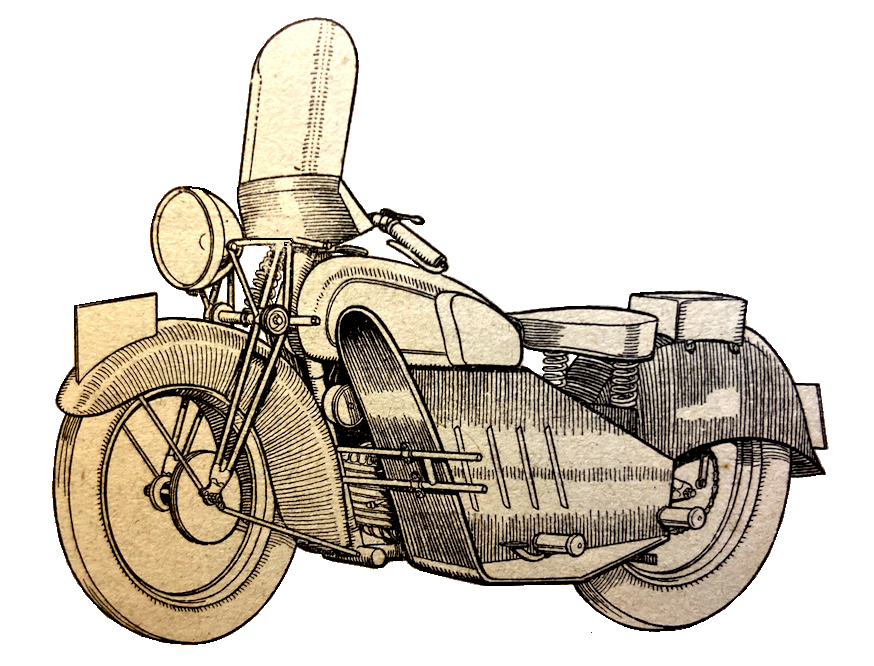
“AFTER A FLYING VISIT to the Olympia Show, Eric Fernihough returned last week to Budapest (where he recently raised the standing mile record to 108.24mph). This record—as in the case of the standing kilometre record which Fernihough holds at 98.91mph—was obtained with the semi-streamlined supercharged 996cc Brough Superior-JAP. Owing to the difficulty of testing his machine properly before taking it on the Continent, Fernihough found that certain unexpected problems, which only became apparent at high speeds, prevented further record-breaking runs for the time being. However, in the intervening period he overcame those troubles, and last Saturday took his Brough Superior over to Gyon, Hungary. There, over the flying mile, he averaged a mean speed of 163.82mph, thus beating by over a mile an hour Henne’s speed of 162.7mph, which was made on the fully-streamlined 500cc BMW at Frankfurt. Fernihough then proceeded to attack the standing mile sidecar record, which he did successfully at 80.49mph.”
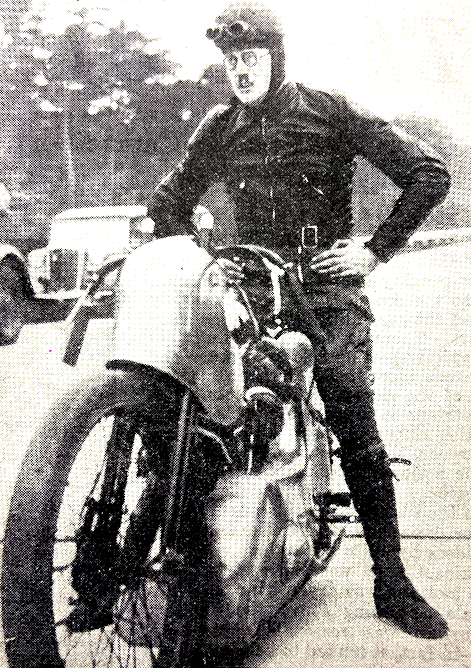
“IT WILL COME AS A shock to many to learn that, assuming his record for the flying mile remained unbroken for 28 days, EC Fernihough stood to gain in actual bonus the sum of £25—just that and no more. No doubt, in view of his having covered over100 miles at speeds varying from 150-175mph he has ensured that he receives retaining fees from various concerns for 1937. But what incentive is there for a man to make attempts when each trip to the Continent is certain to cost about £100 and the direct return for a world’s record at over 160mph is merely £25? Were there numerous wealthy amateurs with .the knowledge, time and ability, this might not matter very much—the honour of such an achievement would be sufficient in itself. But with the majority of potential record breakers it is essential that there is an adequate return for their time and energy. They must live partly, if not entirely, by their record-breaking. It seems that the pendulum, in swinging from the days when a man automatically received about £8 for a gold medal in the London-Exeter run, has swung to the opposite and absurd extreme. It is not surprising that Britain shows up poorly in the world’s record list.”
“‘THE DAY WAS FINE and cooler than usual, the maximum shade temperature being about 87° Fahrenheit …’ So runs a letter which I received during Show week. Cool at 87F! My correspondent was writing of the eighth annual Endurance Trial organised by the Automobile Association of Bengal, held on October 22nd. The start was from the Government House, Calcutta, and the 30O-mile route led to Ranchi, via Burdwa, Asanol and Hazaribagh. The first man left the start at 4.30am—half an hour before dawn. The flat plain of Bengal was left behind at Asanol and the route wandered through undulating country to the Bengal-Behar boundary, where the road climbed up to 1,000 feet above sea level. Later, in the foothills of Hazaribagh, 2,000 feet was reached, and here the schedule was reduced from 30mph to 20mph. Although the roads were for the most part excellent, stray cattle caused a great deal of trouble. JW Willis (499c Rudge sc) had a stroke of bad luck when his sidecar tyre punctured (owing to a cast bullock shoe) 10 miles from the finish. He carried on and reached the last check just as the wheel was about to disintegrate. Result: Dunlop Cup, HW Irwin (570cc Royal Enfield); bronze plaque, JW Willis (499cc Rudge sc); finishers AF Taylor (246cc AJS), DK Roy (493cc Triumph), PC Lenka (348cc BSA).”
“The new Trunk Roads Bill, which will probably become law before Christmas, makes the Ministry of Transport the highway authority for some 4,500 miles of roads of major importance. These roads constitute approximately 17% of the mileage of Class I roads in this country. The Ministry, in effect, will have a free hand to improve these trunk roads; and greater uniformity in widths, surfaces and lay-out of the roads in question is the aim. The map shows the routes concerned.”
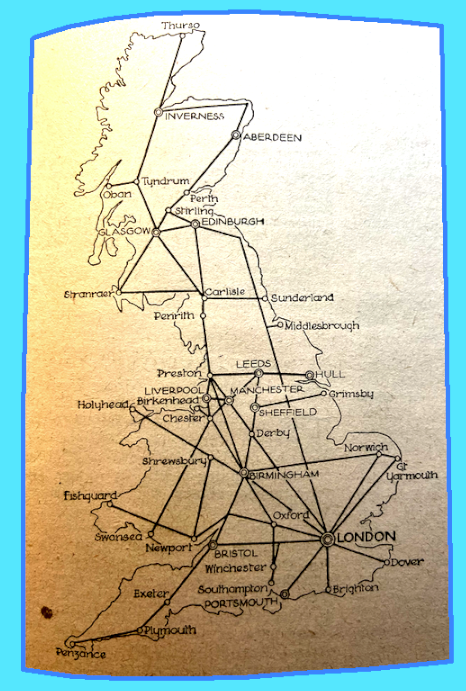
“YEAR BY YEAR I HOPE some No 8 hat will invest motor cycles with some novel gadget which will compel the toughest and gummiest motor to start up, hot or cold, at the first kick, even when that kick is unskilled and the motor has got out of tune. But the novel gadget never comes along. We must not exaggerate the starting bother, which after all is normally trivial enough. But a stoutish fellow of 30 summers doesn’t want to give more than one kick, especially when he is wearing his polar kit on a hot day. In all my years I have only owned about three machines which were genuine tickle-starters, hot or cold, in tune or out of tune. One was a Douglas fiat twin; another was a Matchless Silver Arrow; the third was an Ariel Square Four. Looks almost as if we shall some day be driven to admit that nothing but a low-compression twin or four can be relied upon to tickle-start.—Ixion
“THE VISITOR TO THE office did not know the Editor very well. That was obvious. As I passed by I heard the man in the competition coat say: ‘You don’t ride a motor cycle?’ It was one of those questions people put when they are quite sure that the answer is ‘No!’ . I scuttled along to my office for fear of exploding in public. Little did the man in the competition coat realise he was speaking to one who that very cold and foggy morning had travelled to the office on two wheels—one who in spite of his lack of free time generally averages his 15,000 miles a year.”
“SEVEN MILES OF main roads and 15 miles of residential roads in Newcastle-upon-Tyne are now provided with the latest GEC road lighting equipment.”
“THE GERMAN MOTOR cycle champions for 1936 have been adjudged as follows: 250cc, Kluge (DKW); 350cc, Fleischmann (NSU); 500cc, HP Muller (DKW).”
“A NEWSPAPER CORRESPONDENT pleads for ‘a coloured light at the front of each car so that the application of the brake would signal simultaneously to the front and to the rear the driver’s intention.'”
“IS AMERICA DUE FOR a motor-scooter boom? Two new models have just been introduced, one known as the Moto-scoot, the other as the Motor Glide.”
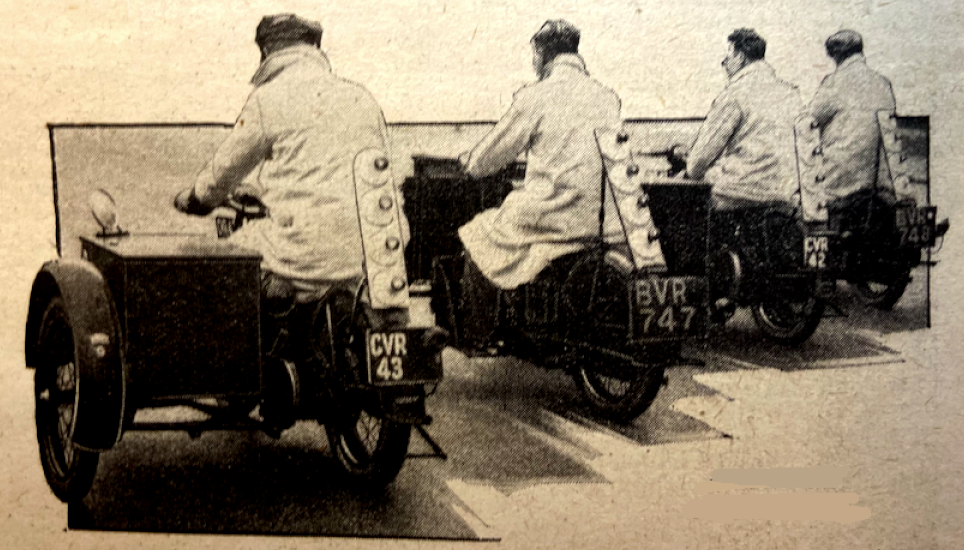
“YOU MAY NOT KNOW that the outstanding activity of the AA in the very early days was warning its members of police traps. Even in my era I have seen in AA handbooks the advice to members that if a patrol does not salute them they should stop and ask the reason why! The RAC, I learn, has reintroduced the scheme in 1936. It is up in arms, and very rightly so, at the employment of so-called ‘silent speed controls’ in the County of Warwickshire. Plain-clothes police follow you in 30 limits and do not trouble to stop you if you are exceeding the limit, and the first you hear of it is when a week or 10 days later you receive notice of intended prosecution; by that time in all probability you have forgotten all the circumstances and have not a hope in making your defence. What the RAC is doing is this: it has taken two the areas in which this form of trap appears to be operated most frequently and has stationed an RAC guide at the entrance to each. The guide signals members to stop and when they do so, naively draws attention to the fact that the section of road which lies ahead is subject to a speed limit and that the road is a dangerous one; finally he explains that it is part of the duty of an RAC guide to see that members of the club comply with the law!!! The shriek marks at the end of the sentence are mine.”
“ONCE AGAIN THE SOUTH and Midlands swept the board at the North Manchester MC’s open cross-country race on Holcombe Moor, near Bury. And at the same time, Yorkshire continued its habit of beating Lancashire in that subsidiary ‘Battle of the Roses’ that has always been a feature of the Lancashire Grand National. The morning was enough to deter the stoutest, for the rain teemed dozen and the prospect on that high and soaking moorland was anything but good. Then a fierce wind blew the rain away and opened the clouds for a few bursts of sunshine as starting time drew near. That, at any rate, was good for the riders, even if the chill blast was uncomfortable for others. When the 50 riders roared off en masse across the moor, it soon became obvious that it was to be a ding-dong struggle. WA West, Vic Brittain and Jack Williams were quickly at the head of
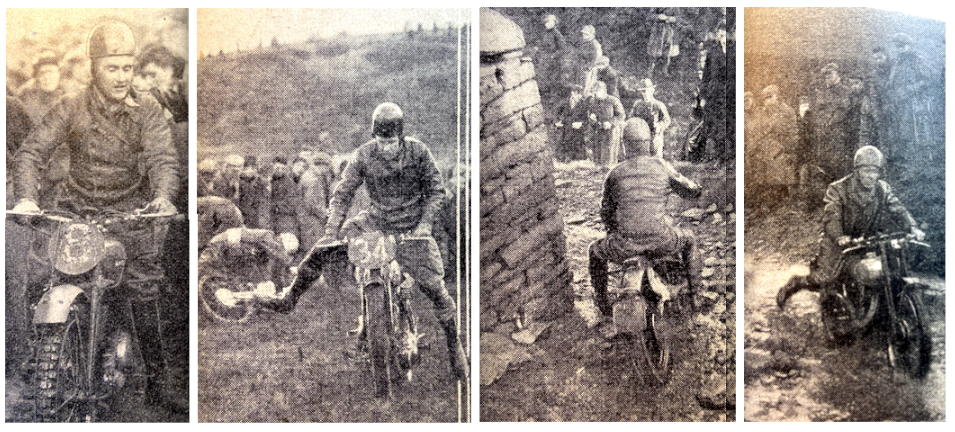
affairs, and West finished every one of the 10 laps in first place, although betweenwhiles both Brittain and Williams took the lead for short spells, first one and then the other. Northern hopes of victory in the South vs North contest were soon dashed (if ever they existed!) with such a formidable trio setting the pace, and it mattered little that the South soon lost two of its selected six and that all six Northern men kept going—the best three were the, only ones that counted. In the early laps, before some of the slower men had given up the struggle, the dense bunches of men and machines plunging into the dreaded Gully was a sight to thrill the calmest of spectators. And thousands of people flocked across the moor to see the fun. It seemed, too, that thousands helped the plunging and struggling competitors to sort themselves out. Flying mud covered all and sundry, and riders and machines rapidly became almost unrecognisable. This was a real Grand ‘National! And 31 survived those 10 gruelling circuits, even though 28 of them never had a hope of catching that extraordinary trio who topped. the list.”


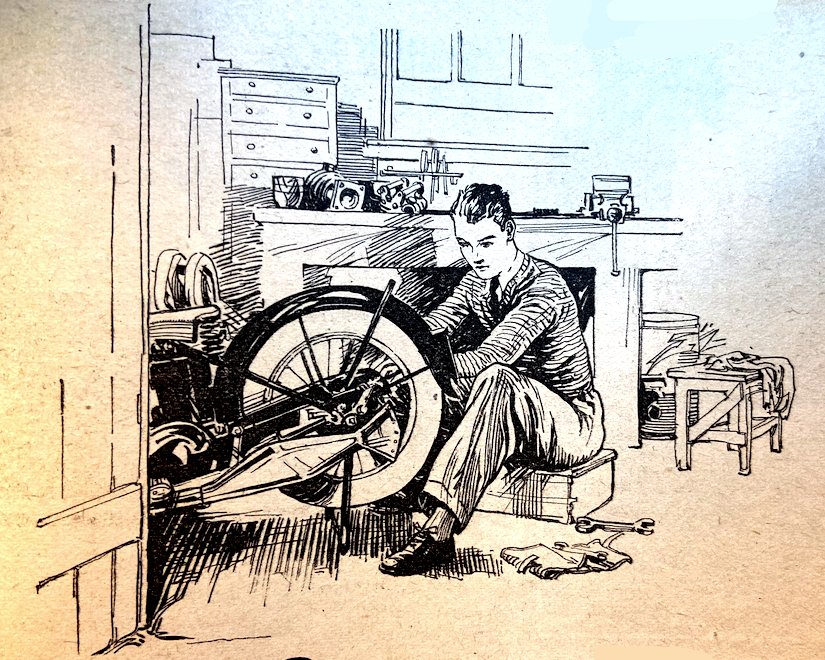
“IT MAY INTEREST READERS with machines fitted with coil ignition to know that two of the twin-cell type cycle-lamp dry batteries coupled in series will provide enough current to get one home should the accumulator run out owing to dynamo trouble. The batteries can be carried in the tool box or mounted on the frame adjacent to the accumulator carrier.—AH“
“AFTER CONSIDERABLE USE grindstones and emery wheels tend to become ridged and uneven, making good work impossible. I succeeded in making a satisfactory truing tool from a short length of mild steel and a small hardened pinion taken from an old Sturmey Archer bicycle three-speed gear. The pinion is attached to the handle by means of a ³⁄₁₆in bolt and two nuts. To use, turn the wheel at a moderate speed and apply the tool, moving it slowly backwards and forwards across the face of the wheel.—IDD“
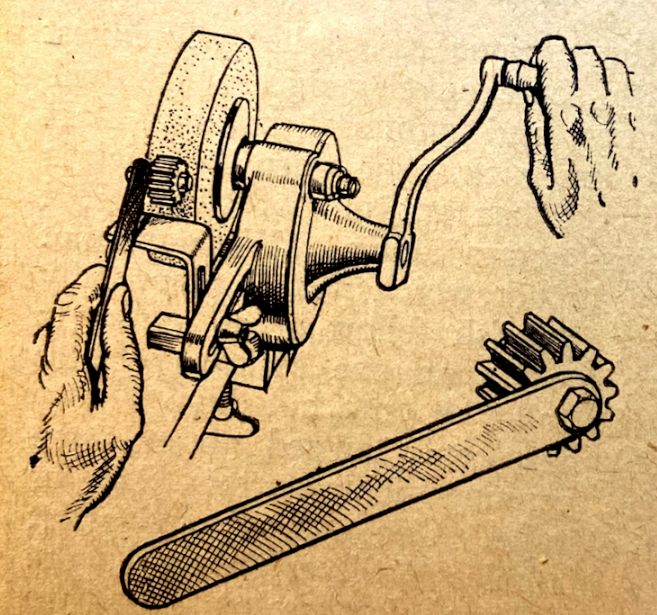
“IF YOU RUN OUT of matches while camping or at picnic times, a ‘torch’ can be made from a short length of wire and a small ‘wad’ of rag. The ‘wad’ should be dipped in the petrol tank and placed in the position shown in the sketch. One kick on the kick-starter and it is alight; this ‘torch’ will burn in a strong wind for several minutes. Care should be taken, of course, to see that the torch is kept well away from the carburetter or other ‘dangerous’ points.—WA“
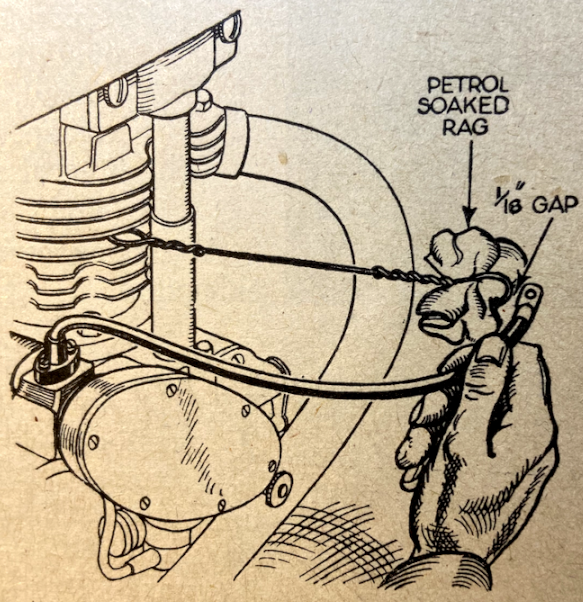
“THE FOLLOWING IS HOW I made a cheap and effective locking device for my machine, for use when parking for long periods. I purchased approximately 3ft of ¼in round steel rod and, having a friend who is a welder, got him to weld both ends together to form a circle. I then bent this as shown in the sketch. The device is threaded through the front fork blades and wheel and is secured with a suitable padlock. The length of rod depends, of course, upon the width of the forks.—CED“
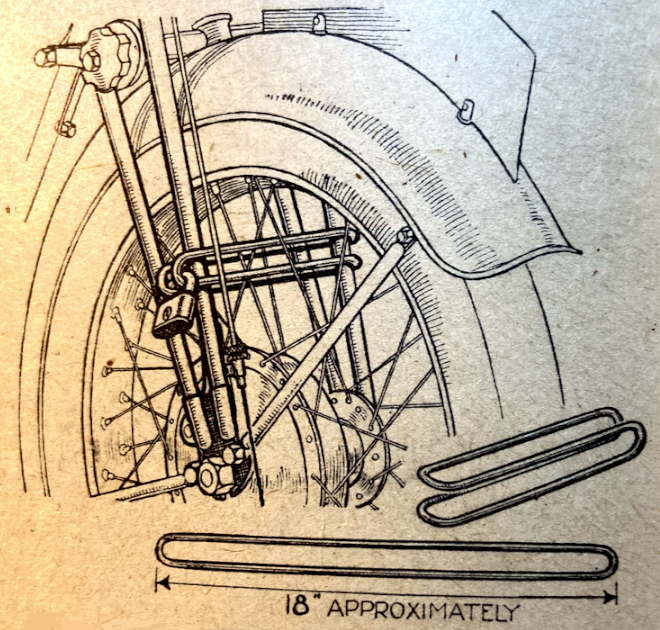
“THOSE who have ridden pillion for long distances will appreciate the devastating effects of braking and steep descents on the passenger; the tendency to slide forward on such occasions can only be corrected by clamping the knees against the corners of the saddle. A device which effectually overcomes this tendency can be made out of a strip of mild steel and a pair of ‘Constrictor’ cycle handlebar grips. The strip—I used ⅝x⅛in—is cut, drilled, cold-twisted and bent as shown in the sketch. Then, After a ‘fit on’ to allow of final adjustment to suit the passenger, it is moderately tempered. Once the strip is in position—the saddle bolts of my Red Hunter Ariel formed the fixing in my case—the semi-circular portions are swathed. in insulating tape and the handlebar grips fitted on top.—HGW“
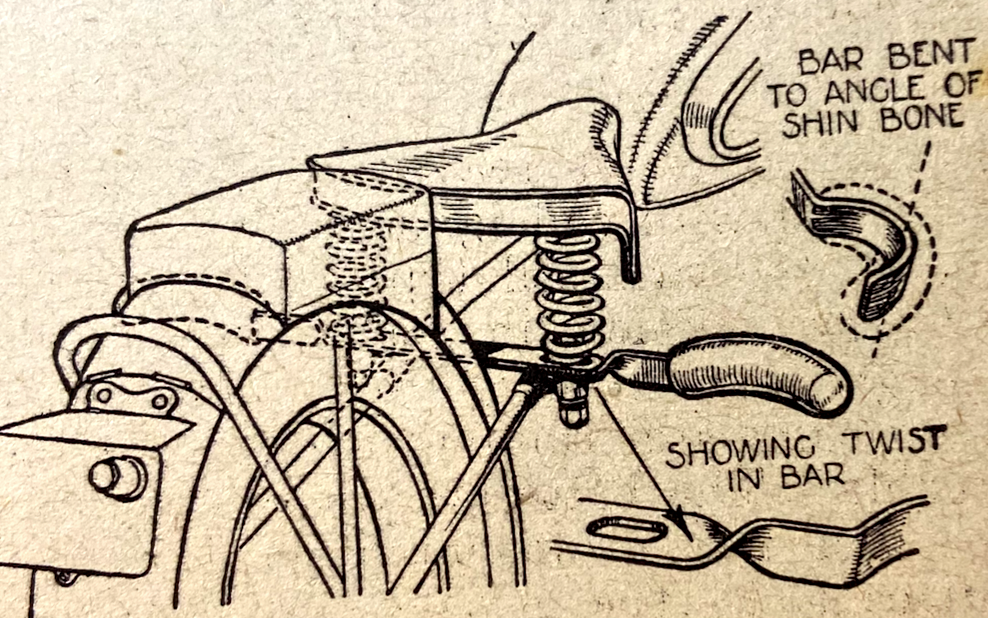
“ALTHOUGH THE ELECTRICAL systems of many new models are wired in a manner which should defy the ravages of weather and wear, older models are apt to rely on rather flimsy insulation. To avoid trouble it is an excellent plan periodically to overhaul the whole lighting system, taking particular care to provide ample protection for the cables under the tank, at the steering head and forks, and under the saddle. 1 have found that a length of ordinary garden hose, purchased at 2d per foot, is very effective as a means of protection. The cables are threaded through the hose, which is provided with suitable holes for the dynamo and battery leads.—GP“
“HERE IS A HINT for the easy removal of back-stand springs, which may be of interest to your readers. First get as many short, flat strips of metal (about ¹⁄₁₆-⅛in thick) as there are coils in the spring. Then depress the stand and hold the spring open. By placing a strip of metal between each coil, the spring is held open and can be removed with ease.—JAD“
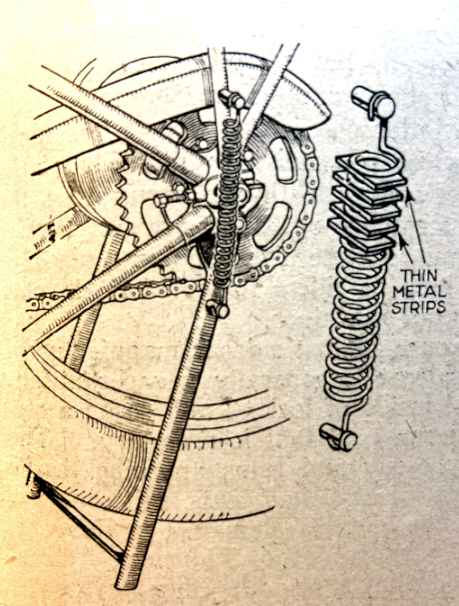
“THE REPLACEMENT OF broken spokes without removing the tyre is simplified if the following points are observed: Cut or file the new spoke a trifle shorter than ‘full length’, and file the first two or three threads to a taper to ensure that the spoke engages readily with the nipple. Make certain that the nipple screws easily on to the spoke, and ease if necessary before fitting. Also bow the spoke slightly, as it will then engage with the rim hole. The spoke can be straightened when in position, and becomes taut on tightening to the correct tension, ie, when ‘plucked’ it emits the same note as the other spokes. The most difficult job is inserting the nipple in the hole and starting it on the thread, at the same time holding clear a stiff cover, the inner tube and rim tape. If, however, another spoke (the broken one will do, of course) is screwed a short distance into the head of the nipple, it can easily be inserted and screwed on to the new spoke while the tyre, etc, is held clear with a tyre lever.—VDV“
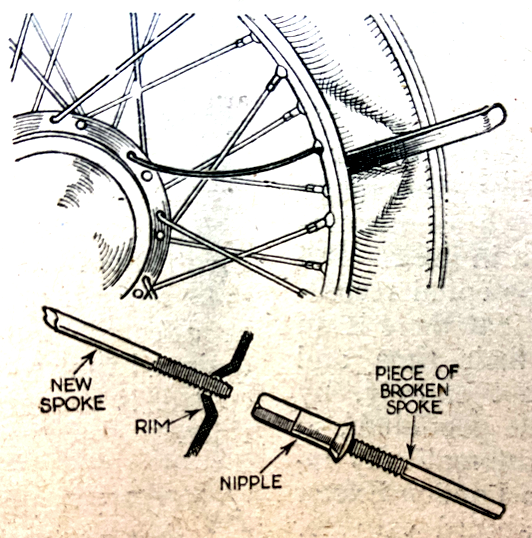
“IN RAINY WEATHER, the most vulnerable part of a motor cyclist’s clothing is the division made by the front tails of the coat as they separate round the petrol tank. If, however, one side of a piece of waterproof material approximately 3ft wide by 2ft long is strapped round the front end of the petrol tank and the opposite side fastened near the centre by clips to the waist belt of the coat, a cape is formed of sufficient width to overlap and protect the rider’s knees and thighs. Water tending to lodge in the cape is dispersed by the wind. It is advisable to use press-studs to attach the cape to the body, since there is an obvious danger in being too securely connected to the machine. When the bike is parked, the cape shelters the petrol tank, saddle, oil tank and carburetter from rain. In fine weather, the sheet, without being un- strapped, can be neatly folded on the tank.—PE“
“ALTHOUGH THE USUAL type of engine shaft shock absorber seldom gives trouble, it is essential on machines not fitted with an oil-bath primary drive that the splines on which the cam works should receive a periodical ‘dose’ of thin oil. Few machines provide for such attention, and while enthusiasts may choose to remove the primary chain case, etc, this takes a considerable time. To overcome this difficulty, it is a good plan to drill the chain case immediately over the absorber, and screw or sweat in an ordinary grease-gun nipple, so that thin oil may be regularly forced through. Regular attention to this point will ensure that the shock absorber functions correctly, with resultant improvement in transmission and longer life to the chains.—GP“
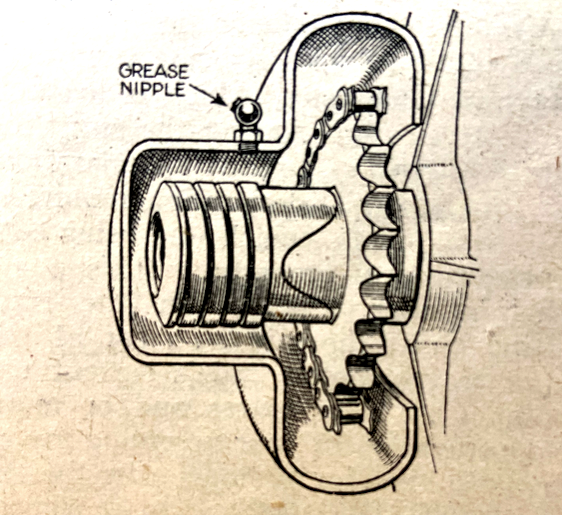
“THE CARRYING OF LUGGAGE on a carrier- less solo machine sometimes presents a bit of a problem, particularly if a pillion passenger is to be carried. The way I overcame the difficulty in the case of my Douglas machine was to construct a simple luggage grid from ½x⅛in mild steel, as shown in the sketch. The device is bolted to the rear wheel lugs and supported by stays from the lifting handle. The idea is no doubt adaptable to many other makes of machine.—TR“
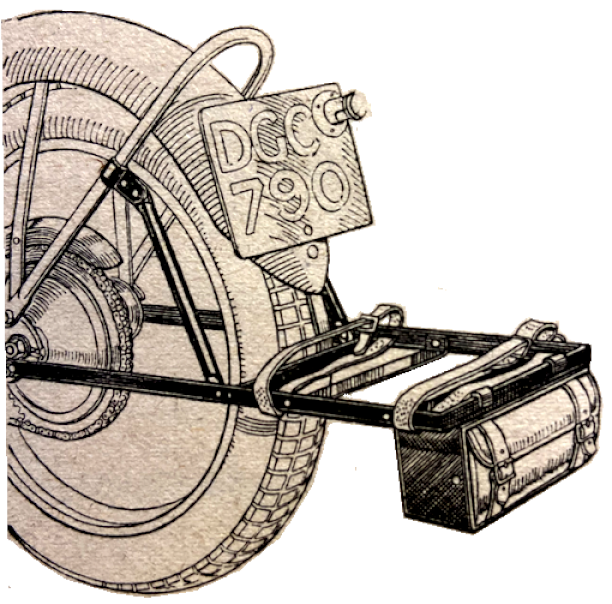
“A CONNECTING-ROD from a small car engine makes an excellent bracket for a fog lamp, its advantages being lightness combined with strength. The big end can be clamped round the front down tube of the machine, while the lamp is secured by a bolt which passes through the little end. An old connecting-rod can be obtained at the breaker’s yard for a very small sum.—TCF“
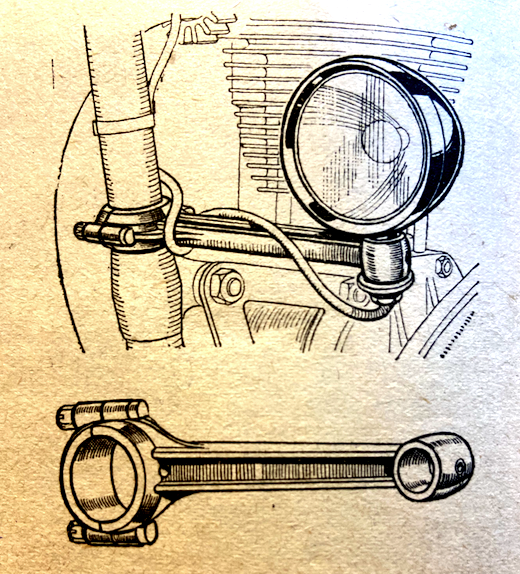
“A SIMPLE AND effective anti-theft device consists of a ‘false’ contact-breaker cover. This cover has a small piece of spring, eg, a piece of cycle trouser clip, soldered to it so as to hear on the central stud when the cover is fitted. The piece of spring acts as an earthing switch—in similar fashion to a cut-out—and the machine cannot, of course, be started while the cover is in position.—DAD“
“AFTER A DAY in the garage getting one’s hands clean again presents something of a problem. A good scheme is to work a semi-dry lather of soap into the hands and nails before starting any dirty work. Then, when the work is finished, washing the hands in warm water will bring out much of the grime with the old soap.—JAB“
“T0 AVOID WASTE of oil or grease when filling the gear box it is an excellent plan to use a filler, which may be constructed at no cost from odds and ends. The body may be made from a large-size metal polish tin, the bottom of which has been carefully removed, together, of course, with the small perforated disc in the nozzle portion. A circle of hardwood, or even a large cotton reel, will serve to form the plunger body, while a suitable metal handle fixed by two nuts will act as handle and also serve to fix the thick leather washer. The attached sketch explains the construction.—RS“
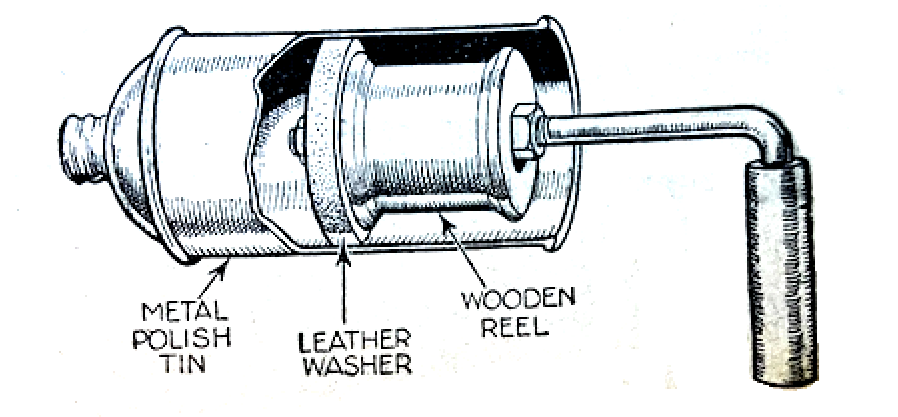
“IF A SOFT-METAL ‘DRIFT’ is not available, a lead cap from a tooth.paste or large rubber solution tube slipped on one end of a steel rod will act as an efficient and convenient substitute.—EFA“
“ON SOME MACHINES the magneto is fitted low down in front of the engine, where it is exposed to mud and water. In such cases either a metal shield should be rigged up or the magneto should be enclosed in an oiled silk sponge-bag. If the latter scheme is adopted, arrange the mouth of the bag at the rear of the magneto, or in such a position that the bag can be left partly open without fear of water finding its way inside. Should the bag be completely sealed and there is no air vent, internal condensation will occur, to the detriment of the magneto.—LG“
“HERE IS A COLD-weather hint which may be of interest to your readers. An ordinary pullover, worn in the opposite way, with one’s legs thrust through the arm-holes of the garment, keeps the lower abdomen and thighs warm. I find it is most effective, even in the extreme instance when one’s coat-tails are flying in the air.—RWD“
“THE SKETCH BELOW, which is self-explanatory, shows how I adapted the hand gear-change of my 1930 498cc ohv Raleigh to the foot-operated type. It will be observed that the motion is positive and that there are no small parts to wear or break.—PH“
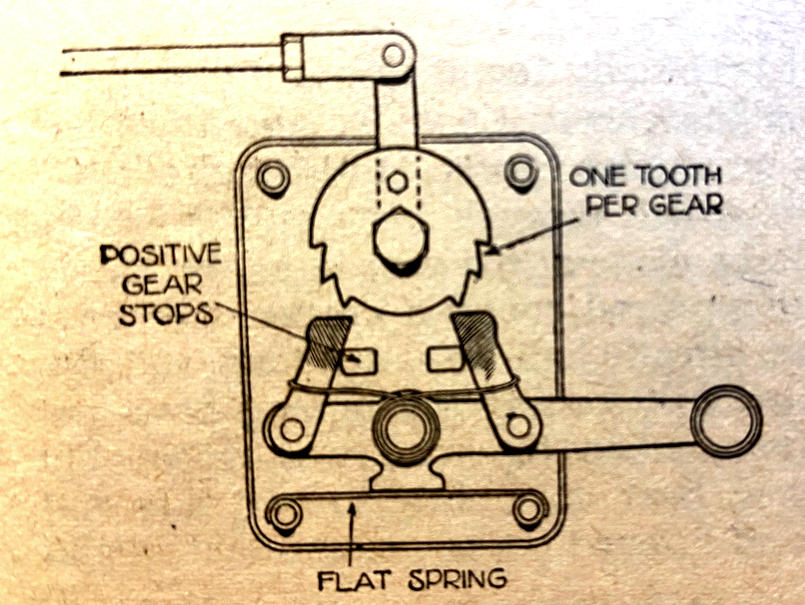

“ONE OF THE MOST popular victories ever achieved in the British Experts’ Trial was when Vic Brittain (Norton) won the Skefko Gold Cup for the best solo performance in last Saturday’s event. This rider has been the most consistent performer throughout the series, having been the runner-up on no fewer than four occasions. His win, therefore, was long overdue and the announcement of his success was greeted with enthusiasm on all sides. The Palmer Challenge Trophy for the best sidecar performance went, once again, to HJ Flook (BSA sc). This is the fifth time in succession this rider has won the Trophy, and Flook is at once the despair and admiration of his fellow competitors. His masterly display was a joy to watch and, like Vic Brittain, he thoroughly deserved his victory. Apart from the winner, the outstanding solo riders were George Holdsworth (Royal Enfield) and Alan Jefferies (Triumph), who finished second and third respectively, the former being only one mark behind Brittain and the latter one behind Holdsworth. In the sidecar class, DK Mansell (Norton sc) made a great effort and got within nine marks of Flook, while WE Hayward (Baughan sc) was a further eight marks behind. The trial was a very difficult one, especially for the sidecar men. These poor people were sent up hills which only a short time ago would not have been considered, but in the ‘Experts’ anything goes, and whether (to the onlooker) it appears absurd or not there are no grumblers. Over a great part of the country fog had been the order for more than a week and on the Friday evening it was-still present. Moreover, a sharp frost covered sone of the roads with ice, and things looked anything but promising—unless you happened to be an organiser!—for the following day. However, the morning of the event dawned bright and I, for one, saw the sky for the first time in many days. It was heartening to say the least, and although mist still hung in the hollows it was the last feeble effort of the great black-out. Among my chief impressions of the trial a certain game of darts on Friday at the Bear at Rodborough

stands out rather prominently. Jack White, Gordon Wolsey and Jack Williams were chiefly concerned and, for the moment, the trials of the day to come were completely forgotten. Curiously enough, no terrible stories of the hills—designed to frighten other competitors—were being told by those who had been practising. Actually, very few people took a preliminary look at the hills, but those who did came back in a rather . subdued frame of mind—especially in regard to Woodleigh. This, undoubtedly, was the most difficult hill in the trial both for solos and sidecars; Hillslie, too, was none too easy, but Breakheart, Hodgecombe, and most of the others were not on bad as they have been, although our old friend BB, especially at the stop-and-go test, was in a pretty wicked mood. I went first of all to take a peep at More Folly, which is a short section consisting of a right-angle left turn, and a very sharp and narrow right hairpin followed by grass and another left turn. When I got there, two small boys were industriously fetching buckets of water and dressing the track with it, a process which was allowed to go on until the first competitor arrived. This man, CW Pembury (Triumph) took the section very gently and mastered it well. He was followed by George Rowley (AJS), who also was on his best behaviour, but Miss RB Slade on a brand new Norton had not the faintest idea where she was required to go and made rather a hash of it. Then Jack White (Ariel), who, I fancy, had demoralised himself during practice, just went wrong and was compelled to put a foot down. In contrast, Bert Perrigo (BSA) showed a refreshing degree of confidence and gave a polished display, a remark which applies with equal force to Charlie Manders (Triumph), who had come over from Ireland to compete. One of the most remarkable displays of ‘stationary motoring’ I have ever seen was given by N Wolsey (Ariel), who simply hovered, poised on the rests, and then went on to complete a perfect effort. Ralph Dee (Royal Enfield), on a side-valve model once owned by Holdsworth, made the job look easy, but Bob MacGregor (Rudge) came properly unstuck and was diverted up the wrong path. Wheelspin nearly proved the undoing of. Chris Stagg (Baughan), who had to use his feet hard, but Len Heath (Ariel) took the same path without difficulty. Having been advised by ‘route-finder’ Baughan that Woodleigh would be the best place to see, I now made for this spot. When I arrived I found Albert Milner in charge of the hill ; he was up to his knees in mud and marshalling his assistants, one of whom was a most enthusiastic young man who had ridden up that morning from Wincanton in Somerset. At the bottom of Woodleigh was this deep mud, while higher up the most uneven track was very slimy, with protruding tree roots and leaf-mould, and quite a steep gradient. The chief difficulty, however, was a tree which jutted out into the fairway (courtesy title only!) for if riders failed to avoid a rut on the right, they were, for the most part, knocked off their machines by this tree. In the mud were some stones, and George Rowley hit one of these and fell flat in the mire. So did FE Thacker (Triumph). After this both riders made roaring climbs that became a little wild towards the end. Charlie Manders was again excellent, but Vic Brittain was one of those who hit the tree and was knocked sideways. This, too, was the fate of Len Heath (Ariel), while EG Wilmot (AJS) just lay down for little apparent reason. A good effort by WA West (Ariel) was spoiled by the tree, which stopped him, and the same obstacle dealt George Holdsworth a crack and sent him to the ground. In the case of AJ Grover (Ariel), the tree seemed to lean over and knock the rider into the mud. AG Ellis (BSA) rode in the hedge for a long way, but missed the tree higher up. AH Foster (New Imperial) performed in exactly the same way as Heath had done, while Jack Amot (BSA) struck a new note by falling in a place of his own. Taking the hill very slowly and carefully, Billy Tiffen (Velocette) was as good as any, and Jack Williams (Norton), blipping his throttle as usual, was a model of carefulness and craft. Out for the first time on a Sunbeam, RC Cotterell was good, putting out just a cautionary foot; SR Wise (AJS) found a new course at the bottom and, altogether, made a good climb; G Wolsey (Ariel) stopped in the mud and again higher up; and BB Norris (Red Panther) stayed with the machine throughout a hectic display. I have rarely seen a better climb of any hill than that made by Miss Marjorie Cottle (BSA) on the most difficult part of this difficult hill. She chose exactly the right track, rode at exactly the right track, rode at exactly the right speed, and put most of the others to shame. Her effort was surpassed only by
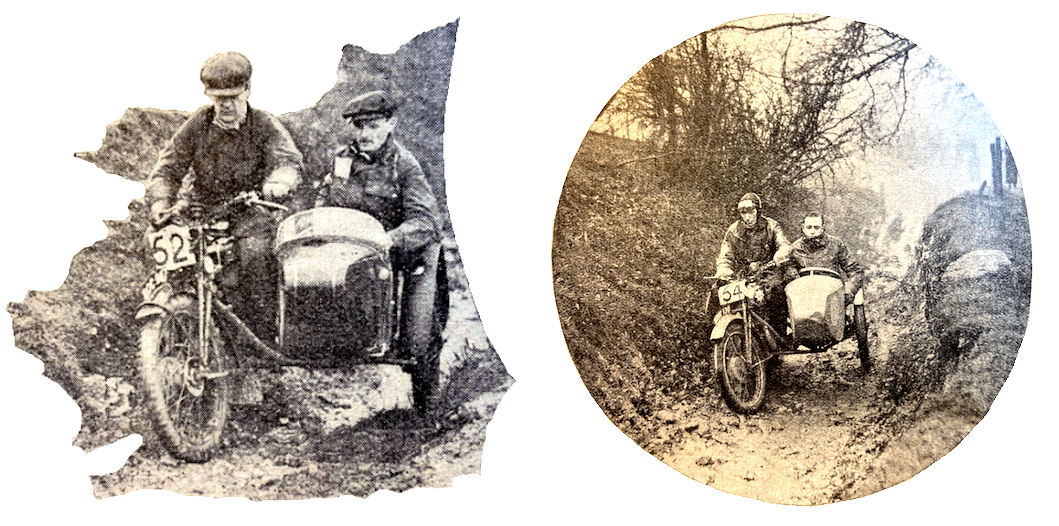
that of Fred Povey (AJS), who took it in his stride at a high speed and completely without effort. Another of the good ones was Jack Booker (Royal Enfield), but TC Whitton (Velocette) went out of his way to hit a tree nobody else had thought about. It looked ridiculous for a sidecar to attempt to miss the tree, the deep rut being placed so as to guide the wheels of the machine straight for it. FH Whittle (Panther sc) found the rut, charged the tree, stopped, ejaculated the word ‘impossible’, and was lifted to safety. Bumping lustily, GS Hadfield (Royal Enfield sc) slid down into the rut and was similarly assisted, but WE Hayward (Baughan sc), after an unfortunate failure in the mud, drove superbly; scorning the rut and the tree, and refusing to use his feet, he completed a wonderful climb—and thus justified the inclusion of the hill for sidecars. HJ Flook (BSA sc), who hit the tree and stopped, was astonished to learn that Hayward had done it cleanly, but definitely registered relief when he was told of his rival’s earlier failure. After stopping in the mud, WS Waycott (Velocette sc) got just beyond the tree before he failed again; Harold Tozer (Ariel sc) did the same as Flook, and later tipped the outfit right over, while DK Mansell (Norton sc) and FR Philpot (Ariel sc) both met their Waterloo at this point. It was clear that there had been some delay, and Hazel was the hill that had been responsible. It was difficult for sidecars, but someone did every section clean, Hadfield and Whittle were pushed up; Waycott was good up to the second section, where he stuck, but made a good climb thereafter; Hayward did as Waycott had done; Flook failed a little earlier than the others, but did the top clean; Tozer footed in the second section and failed at the top; and Mansell was clean after footing in the first and second sections. Hillslie was a ‘solos only’ hill, and found out such people as Perrigo, MacGregor, Dee, L Heath, G Wolsey, Colin Edge (Matchless), and R Davis (Matchless). Ashmeads and Weighbridge were as easy as they ever have been, so were Whiteway and Hodgecombe, but the latter managed to fail six people. Stanley is an approach to BB and troubled the sidecars a little. Tozer failed at the start of this hill, and all the others failed in the second section with the exception of Hayward, who footed. The stop-and-go test on BB on the first lap having proved a trifle easy it was moved for the second lap and took place on some very slippery and firmly embedded rocks at the top of the hill. Here Jack Williams and Fred Povey were particularly good…Practically all the sidecars made a hopeless mess of it but Mansell and Flook, head and shoulders above the rest, made astonishingly good climbs, Mansell beating Flook for best time. So the trial came to an end just as more fog descended and frost began to cover the roads again. Back at the Bear an eager throng awaited the results, but it was a foregone conclusion that Brittain would be the winner. The announcement was made, there were drinks all round, more darts were played, next year’s ‘International’ and the proposed stock machine TT race were discussed, the crowd dwindled slowly—and so to bed. PROVISIONAL RESULTS. Skefco Gold Cup (best solo): VN Brittain (Norton); marks lost, 7. Palmer Challenge Trophy (best sidecar): H0 Flook (BSA sc); marks lost, 8.”
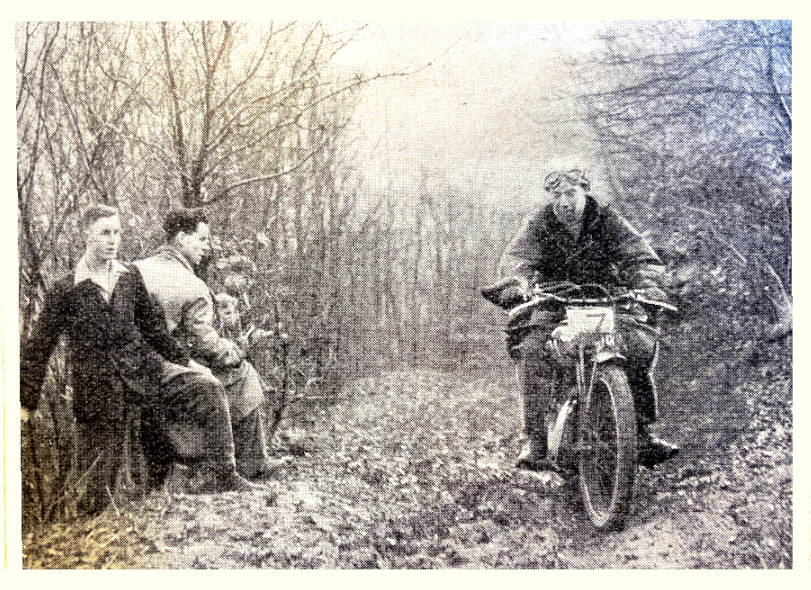
“FOOT GEAR-CHANGE mechanism is fast becoming universal, and there can be no doubt that this method of gear control possesses many advantages over the hand lever and gate. There is, however, one snag which few seem to have attempted to eliminate. I refer to the damage that the pedal does to normal footwear. The toe cap of the appropriate shoe rapidly becomes crumpled through using the foot gear change. What I should like to see would be a pedal in which a soft rubber pad took the place of the present hard rubber casing. Another little point relates to clutch control levers that protrude from gear boxes. On some machines these are rubber covered, but on others they exhibit their sharp corners unashamedly. In the latter case, they very often come in close proximity to the side of the rider’s foot, with the result that the shoe becomes badly scratched or waders are cut. Please, designers—all of you—enclose this knobbly piece of mechanism and so help us riders to look less slovenly when we are not on our machines. Here is a little grouse against sidecar manufacturers. The exterior of a sidecar is generally very beautifully finished, but for the inside of lockers and so on a coat of cheap black is deemed all that is necessary. This black rubs off very easily and ruins anything that is carried in the lockers. I have had coats, suit cases and other articles very considerably damaged in this way, and instead of having, at the end of a journey, a decent hat and coat to replace my riding kit these have sometimes been quite impossible to wear until after they have paid a visit to the cleaners.”
“I AM AN EXPERT MOTORIST (he said, modestly) as attested by mileage, freedom from accident, and the favour of my insurance company. But I am beginning to wonder whether I am a jay walker, for during the last three months I have had half a dozen hairbreadth escapes of being run down while afoot. Please note details thereof : Not by motor cycles (which generally give plenty of warning of their approach). Not by motor cars (which usually make some noise, and anyhow are so large you can’t miss seeing ’em). But by push bikes (which are so silent you can’t hear ’em; so small you can easily miss seeing ’em; and if straddled by errand boys, so recklessly ridden that you have to jump smartish like). I feel better now. I’ve been wanting for a long while to have one back at cyclists for all the nasty things they’ve said of me, and all the anxiety they cause me on the road.”—Ixion
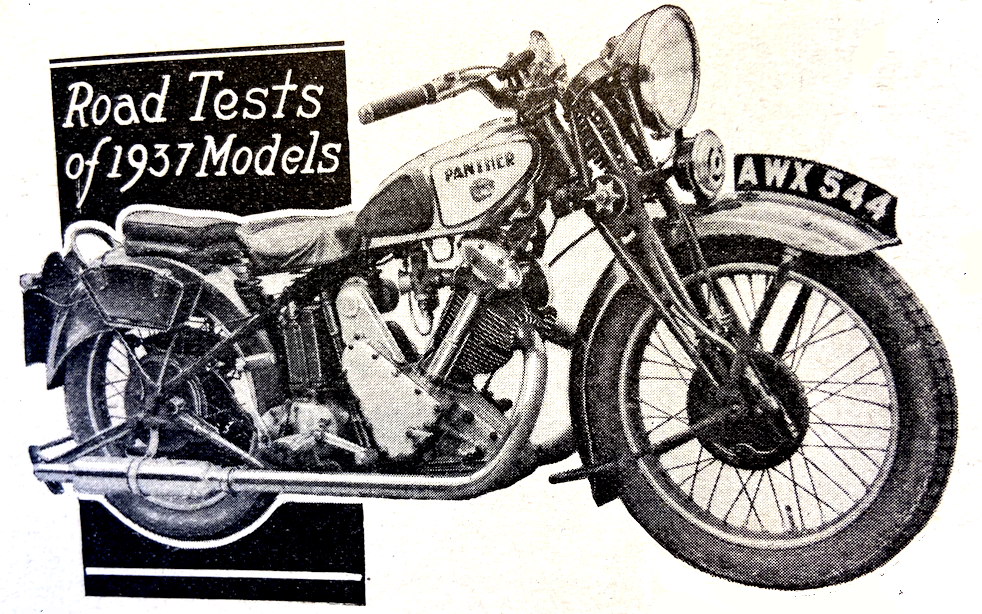
“WHILE OTHER MANUFACTURERS have experimented with different designs, the makers of Panther motor cycles have rigidly adhered to the fundamental principles of the design with which they began. Naturally, improvements and alterations have been made over the years, and as a result the modern Panther is an eminently sound machine. That this policy has been a success is more than proved by the road test of a 1937 model. The machine tested, the 598cc Redwing, is the largest model in the range. When handed over it had covered nearly 3,000 miles. In appearance the machine is striking and the new colour scheme is very attractive. Starting was effortless when the engine was warm, but the engine proved rather heavy to turn over when cold. A decompressor is incorporated in the valve operating gear and with this in use it was found that a long swinging kick would usually start the engine, provided a generous throttle opening and plenty of ignition advance were employed. Once warm the engine would idle at extremely low revolutions and the only mechanical noise that could be heard was a slight tap from the piston The valve gear is totally enclosed, and as a result valve clatter is almost entirely absent. Praise must be accorded to the silencing system fitted to the Panther. The two pipes lead into tubular Burgess silencers and at all speeds the exhaust note is agreeably subdued. At high speeds a low and pleasant burble can be heard, while at low speeds and in traffic the exhaust noise is so slight as to pass almost unnoticed. Combined with this silence is a very good performance, which makes the Panther a pleasure to ride in congested areas. Acceleration can be used to the full in the intermediate gears without attracting attention, or the model can be ridden almost as a top-gear mount, according to the rider’s fancy. Actually, the minimum non-snatch speed in top gear (4.3 to 1) was 18mph, but this does not give a true idea of the machine’s capacity for pulling at low speeds. With this high top-gear the model could be ridden up almost any normal main road hill without changing down. Pebblecombe Hill, near Dorking, in Surrey, which has a maximum gradient of one in 5½, was climbed easily in top, although, of course, the ignition had to be retarded to breast the hill. When riding in town it was found advisable to retard the ignition a little. At the other end of the scale the machine was just as outstanding. The mean timed speed over a quarter of a mile in top gear was just over 78mph, this with the rider in full kit, but ‘lying down to it’ and sifting on the pillion seat. Sitting normally, the best speed attained on the level was 73mph. Maximum speeds attained in other gears were: third (5.8 to 1), 71mph; second (7.3 to 1), 57mph; and bottom (11.5 to 1), 35mph. The Panther also showed up extremely well as regards acceleration. In second gear less than four seconds were required to accelerate from 15mph to 30mph, while in third gear only a second longer was required. The acceleration is consistent throughout the range —when accelerating from 20 to 50mph the figures obtained were equally good. So much for the performance of Panther.
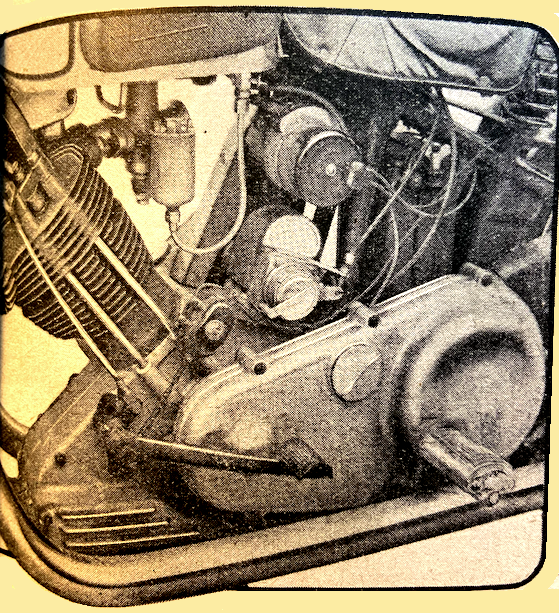
From the figures quoted it will be appreciated that the engine combines a surprising number of desirable characteristics. For a tall rider the riding position is not ideal and the components cannot be adjusted sufficiently to improve matters. This criticism only really applies to the footrests, for if these were fully adjustable the fault would he almost non-existent. The controls are well placed, and all, including the twist-grip, are adjustable. Both the brake and gear pedals are also adjustable for position. The gear lever is very well placed in relation to the position of the right footrest. All the controls were light and pleasant to use. This applies particularly to the clutch, which is light, smooth and positive, and, owing to the oil-excluder in the primary oil-bath never showed the slightest tendency to drag. Thus, clean and rapid gear changes could always be made. The brakes on the Panther are coupled, the pedal operating both brakes through cables. Used alone, the front brake was powerful and smooth, and, when used in conjunction with the rear brake, would bring the machine to rest very quickly. Using both brakes to the full, the machine could be stopped from 30mph in 34 feet. Many miles of greasy tramlines and wood blocks were covered during the test, yet never once was a braking skid experienced, although on occasions the brakes were applied heavily. These greasy roads provided a good test of the road-holding qualities of the Panther. The machine is a heavy one, and therefore care was used when negotiating tram-lines. Other than this no precautions were taken in wet weather, but the Panther always behaved perfectly. On dry roads the steering was such that liberties in the way of cornering could be taken with absolute safety. On bumpy roads the rear wheel tended to aviate a little, but in all other respects the steering, road-holding and cornering of the Panther were of a very high order. When testing for maximum speeds the steering damper was tightened a little merely as a precaution; actually this was quite unnecessary, for the model was rock steady at all speeds. Throughout the test the mudguards were well up to their job. On occasions when the model was ridden on wet roads it was noticed that very little water was thrown on to the rider’s legs and feet. At the conclusion of the test no oil leaks of any kind could be seen on the power unit. As a result, after several hundred miles of hard use under all kinds of weather conditions, the Panther looked almost as smart as when it was delivered. Finally, the Panther scores very heavily in the matter of economy. Although the engine is a ‘600’ the oil consumption was negligible, being well over 2,000mpg, while at a maintained speed of 40mph the petrol consumption worked out at 92mpg.”

“A START WAS TO BE made to-day on the proposed Crystal Palace road-racing circuit. How much or how little the great fire last Monday night will affect matters remains to be seen.”
“A MERE CIVIL WAR does not apparently deter Spanish enthusiasts from holding a road race! Recently 27 members of the militia took part in a race on the well-known Montjuich circuit. Although most of them were mounted on 500s, the winner, J. Gili, was riding a 348cc Norton. He averaged 56.9 56mph. Three other Norton machines took part and secured 4th, 5th and 6th places.”
MOTOR CYCLE CLUB LIFE was booming. The Blue ‘Un devoted three pages a week to club news. The 3 December issue carried seven news stories, 41 one-paragraph reports and, in the ‘Club Events for the Week’, no fewer than 125 listings for the next six days. Here’s a taster: “At this time of year, when annual dinners and annual general meetings are rife, every clubman has an opportunity of stating his grouses or his ideas. How often one hears groups of clubmen discussing minor grouses about some part of club life and suggesting how they could be remedied. And yet when the annual general meeting comes along how silent these men are! I am thinking in particular of one subject that I have heard dozens of club-men discussing—the subject of awards. Those people who ride regularly and are fairly consistent will know the position very well. Take the case of a man who rides in, say, a dozen open-to-Centre or big group trials in a year. If he is good he may win ten or a dozen first-class awards. At the end of the year he will probably receive ten or a dozen tankards or similar awards. The choice of first-class awards in the majority of club events is necessarily small because there is not much money available, and so there is a tendency towards standardisation•••Another social ‘do’ that everyone ought to attend is the Annual Combined Motor Clubs Charity Ball. Apart from the fact that many good causes benefit from the Ball, the evening is always a really good one. Two good bands are always engaged, the cabaret is always well worth seeing, and the fancy-dress parade usually provides enough laughs and general good humour to last the evening. This year there should be no crowding, for the venue is Olympia. Now then clubmen, it is up to you to roll up in your thousands on January 6th! By the way, there will be six hours of entertainment, for the Ball starts at 9pm and goes on until 3am. Tickets cost 3s 6d each and they can be obtained from Mr AE Cooke, 91, College Road, London, NW•••I have always been a keen supporter of the game of motor cycle football. Having played in a team regularly some years ago I feel that it is a game which has yet to be appreciated by the majority. Thus I am more than glad to say that a meeting has been called for December 10th at the ACU Offices, 83, Pall Mall, London, SW1, to discuss plans for the formation of a motor cycle football league for 1937. Naturally the clubs that have played football regularly for some years are the most interested, but any club who can field a team or is interested in the sport at all is invited to send two delegates to this meeting. Full particulars of the proposals can be obtained beforehand froth Mr FE Hawken, 341, Green Lane, Seven Kings, Essex•••The other event is the BSA Trophy Trial to be organised by the Shepton Mallet Club on December 20th. It is open to the Wessex Centre and awards will be given for the best performance by a member of every club sending four or more entries. The start will be at Cannards Grove at 11am. Entries should be sent to the secretary not later than December 16th•••In Yorkshire the social spirit is very strong and in those parts when they have an evening out they tend ‘to make a meal of it’. The South Yorkshire Group affair held at the Mikado Café recently was just dinner, prize distribution and entertainment in the heartiest of good spirits. A large party had stormed the Pennines from the west (the East Cheshire Group) and were brought into the fold and further cemented the good feeling that has flowed to and fro across the hills. Altogether a jolly evening with enthusiasts from 20 clubs getting together•••Grangewood MC&LCC: A dance will be held on December 19th at the Baths Hall, Barking, and all members are requested to attend•••Itchen MCC&LCC: The Club’s first closed trial was a great success. A sporting course was used, and only three competitors finished. Result: 1, S Kemp; 2, H Corbett; 3, L Higgins…Hinckley Bats MC&LCC: The annual dinner end dance will be held on January 28th at the Masonic Hall, Hinckley, On January 7th the AGM will be held at The White Hart Hotel•••London Ladies MC: The 10th birthday run was held on November 1st, and was well supported. Members were entertained be the chairman to tea and afterwards held a social evening•••Moseley &DMCC: 120 members and friends, including members of the Midland Social MCC spent an enjoyable evening at the Club’s second winter dance, held at the Billesley Hotel•••Lion (Glasgow) MCC: The 4th annual whist drive and presentation of awards was held on the anniversary pf the club’s formation. Over 70 members and friends attended, and the evening was most successful. The AGM will be held on December 9th at the clubroom starting at 8pm•••Cheshunt &DMC: The combined run with the Harringay Club took the form of a pontoon and foraging run. Both clubs lunched at Buntingford and spent a social evening at Cook’s Ferry Inn•••Rookery MCC: 50 people attended the annual dinner. Others attended afterwards to dance and to watch a competition which was won by Mr Felper. Six clubs have accepted the invitation to the treasure hunt on December 13th. W Lees and E Kennard were the winners of the hill-climb•••British Two-stroke Club: To-night is the opening night of the new northern club-room at the Clarence Café, Booth Street, Manchester, where the HQ of the Northern Section will be in future. J Garner won the foraging run of the Southern Section and Miss B Hayes the ladies’ prize. On December 13th the Dickson Sporting Trial will be held•••Midland Social MCC: 38 entries were received for the main road trial. A feature of the event was the riding of A Hubbard and J Sedgeley, and at the finish only one mark separated their total scores. Results: Best performance, A Hubbard; Best sidecar, J Sedgeley; novice award, A Doran•••Ilford Amateur: Week-end run to Worthing, meet, Daytona Café, 3 and 10pm•••Lea Bridge: Dance, The Heathcote•••Nottingham Tourist: Run to Ireton Club, Chilwell•••Streathem: Club night, HQ•••West Ealing: Annual dinner, The Park Hotel, Hanwell. Sunday, December 6th•••Ace (Coventry): Elliot Trophy Trial•••Ace (Mitcham): Impromptu run, meet, Watermeads, 10am••• Albatross: Bright Trophy novelty event•••Amateur: Captain’s finale, meet 9.30am•••Bachelors: Penalty run•••Bayswater: Run to see Group Trial•••Bermondsey: Run to see Group Trial, meet, Cory’s 9am•••British Two-stroke: Northern run to Castleton, meet Beauchief Hotel, 2pm; North London: Surprise run, meet, Manor House, 11am••• Bromley: Run to see Group Trial•••Cheshunt: Football match vs Lea Valley MCC, meet, CFS, 11.30am•••Chester: Paper chase, meet Rose’s Garage, Parkgate Road, 2pm•••Clapham: Intelligence trial, start, HQ•••Croydon: Treasure hunt, meet HQ, 2pm•••Darwen: Foraging run•••Farnborough: Skating competition•••Nottingham: Cave exploration run•••Stockport: Tour of hills•••Ravensbury: Hiking run•••Yeadon-Guiseley: Dispatch riders’ trial•••Manchester Eagle: Table Tennis handicap.”
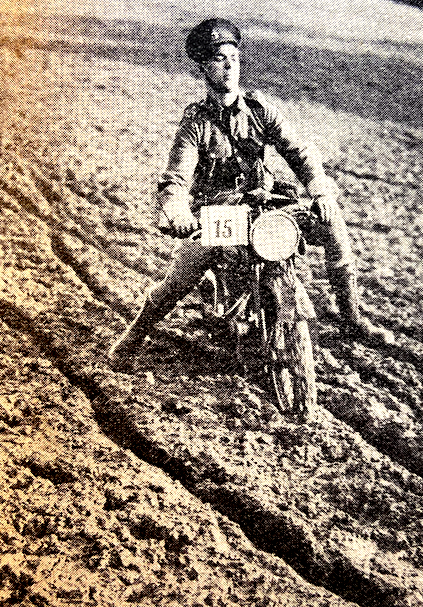
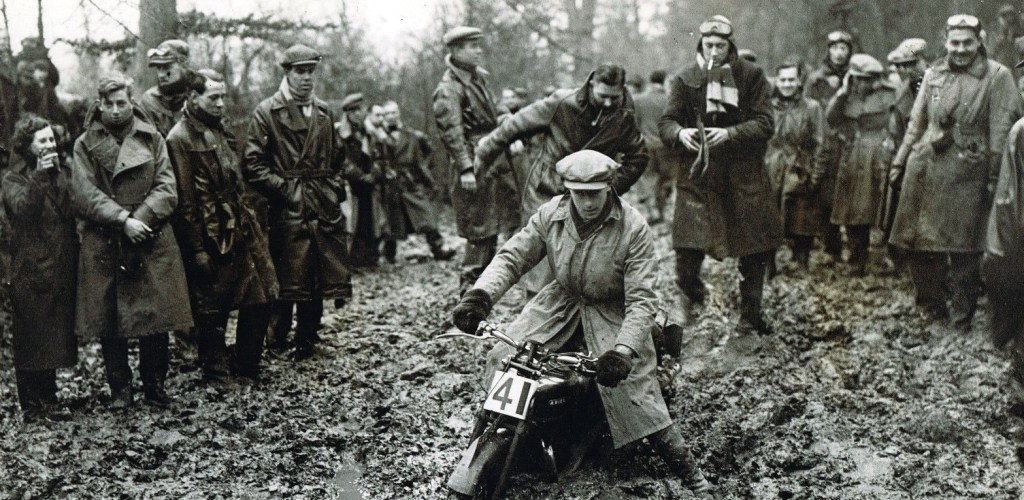
“MANY PEOPLE SEEM WORRIED regarding the various new regulations that came into force last October or are operative from January 1st. The former regulations concern lighting. No longer may one keep one’s main or dipped beam on when one’s machine is stationary; in these circumstances the maximum power of the light or lights shown to the front is 7 watts each. In addition all lamp bulbs most have their wattage stamped on them. The anti-dazzle regulations only affect machines registered for the first time—they do not come into force as regards existing vehicles until October next year. The above is briefly the position as it affects motor cyclists. There is, however, a regulation about safety glass that is operative from January 1st. On and after that date the windscreens of sidecars and three-wheelers must no longer be of ordinary glass. Safety glass or celluloid, as the case may be, most be the rule.”
‘BLUE ‘UN’ STAFFER ‘CENTAUR’ was surprised to be sent out in a four-wheeler, particularly a car that was in use as a funfair ride. He wasn’t impressed by the news that it was powered by a Villiers 250cc two-stroke lump. However, he squeezed himself and a passenger into the Scoota-car and “in a very few miles I felt perfectly at home, and buzzed in and out of the London traffic in a way that could only have been equalled by a solo or a narrow, very nippy sidecar outfit. This liveliness vas, indeed, one of my outstanding impressions of the machine. Another was the perfect steering under all conditions of road surface—a flick of the wrist would bring the steering from one lock to the other; but if the steering wheel was released the front wheels would always straighten out of their own accord. Over the cobbled streets of the South London suburbs we had a good chance of testing the comfort of our baby car. In these circumstances there was a certain amount of ‘dancing’—probably due to the absence of front-wheel springing—but the big little 16x4in. tyres effectively damped out anything in the nature of shocks. Our objective was a certain wide by-pass, where we hoped yo prove the manufacturers’ claim that the Scoota-car was capable of 45mph. An our journey was in the nature of a
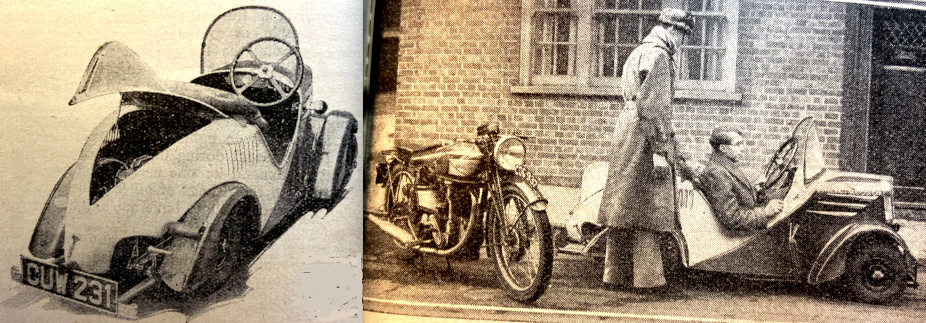
triumphant progress. Public interest in the little vehicle was intense—a mixture of admiration and amusement. By the time we reached the by-pass my passenger, who had confessed to certain qualms at the beginning of the journey, was singing lustily, thus showing his complete faith in the Scoota-car—or its driver! Then he echoed my own thought, with the remark, ‘It’s a funny thing, but I feel as though 1 am in a pukka sports car.’ And that just about explains the confidence the little Scoota-car gives one after a very short acquaintance. It is definitely not a toy, and anyone can buy one for a matter of £80. Soon the houses and traffic were left behind, and I gradually opened the throttle. The speedometer needle rapidly climbed round its dial, and the gentle purr of the two-stroke engine changed to a high-pitched snarl: 35, 40, 45—still the throttle was not fully open! However, as the engine was nearly new, I let it go at that…On the journey home I made a detour to include a long main-road hill with a maximum gradient of about 1 in 6. To give the little car every chance I dropped my passenger, and then rushed the gradient in second gear. The speedometer needle showed a steady 23mph all the way up, and even began to rise as the gradient eased. There was no doubt in my mind that the car would climb practically any main-road hill with ease, two up. As a final test I tried fast cornering and braking—on wet roads…there was never any tendency to ‘lift’ on bends, or to skid if the brakes were violently applied…When eventually I returned the Scoota-car to its owners I was left with the guilty thought of how badly I had misjudged a splendid and thoroughly practical little vehicle.”
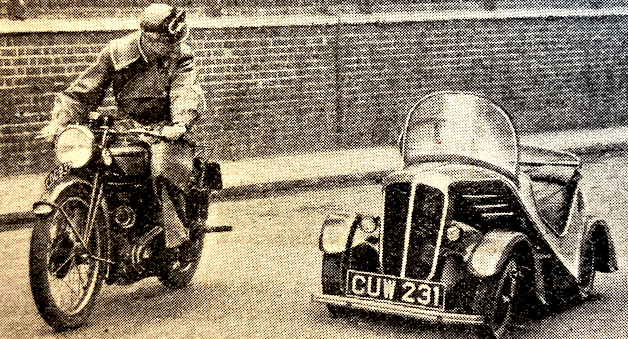
“ENTHUSIASTS AND FOLLOWERS of the trials game had ample opportunity to study and learn the various methods employed by the star riders during the course of the recent Southern Experts’ Trial. It was an ideal event to follow, for the course was sufficiently varied and difficult to cause the riders to resort to a variety of tactics, sometimes in one section alone. As the name of the trial suggests, it was an event open only to the ‘experts’ (ie, riders with certain specified trials qualifications) residing in the South, or more particularly in the areas covered by the Southern, South-Eastern, South Midland and South-Western Centres of the ACU. This year’s event, the sixth of the series, was organised by the Sunbeam Club in co-operation with the Ringwood MC&LCC. As a matter of fact, the scene of activities was laid, metaphorically speaking, on the latter’s own doorstep. A more suitable area would be hard to find, lying as it does on the fringe of the New Forest. The start of the trial was from the ‘As You Like It’ Café, which lies midway between Ringwood and Fordingbridge. A short course, well under 50 miles in length, was used, and this included some 20 observed sections. Most of the sections were on private property—a fact that suggests landowners in this part of the country are as enthusiastic about the trials game as those intimately connected with it. For the duration of the trial the weather was ideal. Rain for several days previous to the event had brought the condition of most of the observed sections to just the right pitch. The first section, known as Midgeham Farm, was unusual in that
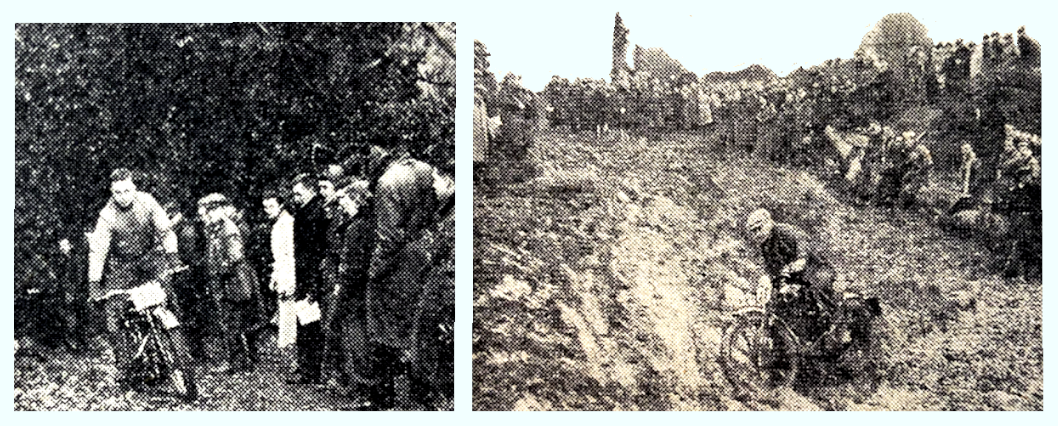
the riders were required to descend singly the right-hand side of a steep track, turn round a sharp artificial hairpin bend at the foot, and ascend the other side of the track. A surface of deep-leaf-mould and mud added to the fun. Of the early numbers, NJ and GA Wolsey, both on Ariels, and HC Wake (346cc Sunbeam) tackled the bend at the foot in similar style, poised on the footrests and using every inch of the available space. HR Taylor (490cc Norton sc) negotiated the bend with comparative ease and got away up the hill without fuss or bother. Similarly, EJ English (499cc Royal Enfield sc) made an effortless show, although at times his outfit tended to crab sideways. GM Bryant (498cc BSA sc) was not so fortunate. and stopped halfway up. DJ Nash (497cc Ariel) was excellent both on the descent and round the bend at the foot, but near the summit his gear jumped out—and that was that! Most of the solo men showed extreme caution on the descent, but the methods of tackling the bend at the foot were extraordinarily varied. Some stood up, others remained seated, while many inadvisedly attempted to cut the hairpin, only to finish on the bank at the side. The real pièce de résistance of the trial, however, was undoubtedly the section known as Holywell ‘A’. Here, all types of going were encountered. First the riders had to tackle a muddy lane through a farm. Then came an ascent up a mud-covered chalk bank into a field, where rutted mud caused many marks to be lost. The field itself lies on the side of quite a steep hill, and the competitors bad to ride up the muddy slope to the top, make a sharp right turn, and then descend the chalky bank which they had just climbed. HR Taylor (490cc Norton sc) made a brilliant ascent of the chalk bank, but the climb up the field brought him to a standstill. Jack White (298cc Ariel) was his usual brilliant self here, while the Wolsey brothers were both excellent. EG Wilmot (246cc AJS) carefully blipped his throttle as he tackled the chalk bank and then proceeded to open up for the ensuing climb up the field. But he was a trifle too cautious and had to foot at the summit. EJ English (499cc Royal Royal Enfield sc) kept his throttle open too long on the ascent of the chalk bank, and wheelspin caused the outfit to crab and stop in a rut. Careful use of the
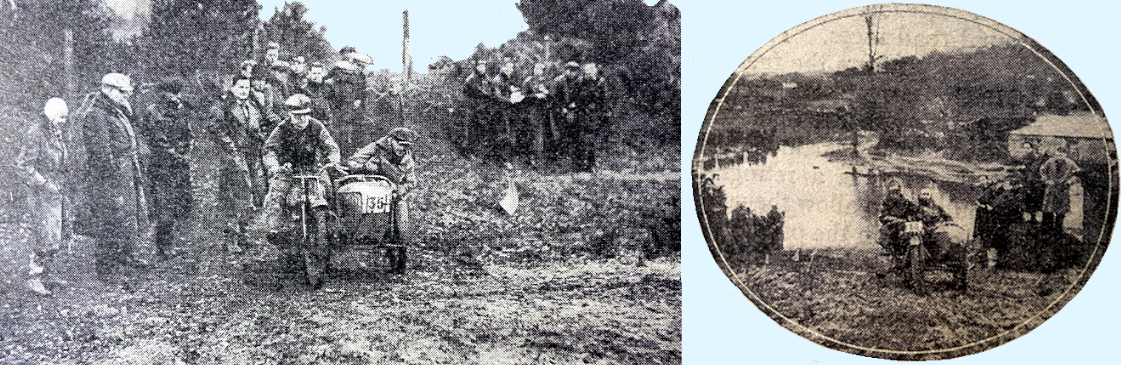
throttle enabled JFS Polden (493cc Triumph) to climb the bank without footing. He was also good on the ascent of the field, but on the descent he came unstuck. CN Rogers (346cc Royal Enfield), on the other hand, roared up the bank at speed, only to spin right round at the top. But for this lapse he made an excellent show. WA West (497cc Ariel) encountered trouble early on by running into a hay-stack, but made amends by a fine feet-up performance in the other sub-sections. Both A Cole (497cc Ariel sc) and S Appleby (493cc Norton sc) stopped many times, but the former made a fine climb up the field. The next man, AJ Grover (348cc Ariel) started by falling flat in the mud, but later went on to make a careful and clever climb. Another good climb was made by AA Smith (348cc Calthorpe), who made sure of things by footing occasionally. RG Tomson (349cc BSA) drew the applause of the spectators for his dogged determination to avoid footing at all costs—and a very good job he made of it, too. Then came those two past masters of the art of sidecarring—HJ Flook (499cc BSA sc) and WS Waycott (348cc Velocette sc). It is not often that one has the pleasure of seeing these two tackle a section one after the other. Flook approached the bank cautiously and then opened up hard. Keeping his motor flat-out he got up the bank in style, but as he tackled the hill into the field his outfit slowed for some unaccountable reason. It was a case of touch and go for a few minutes. Eventually—it seemed ages to the anxious spectators—he breasted the summit, and was heartily applauded for his effort. Waycott adopted different tactics. Rushing the bank at the foot (in spite of the left bend on the approach) he opened up, and whenever wheelspin threatened to become a danger he throttled back. Without losing speed he chose a path up the field that was well to the left of previous attempts and swept up in style, his motor producing an almost incredible number of revolutions. Well did he earn the applause of the spectators. GE Rowley (495cc AJS) was the next to make a really brilliant show. Squaring up his approach to the chalk bank, he rushed it as fast as he could, blipping the throttle the while. He carefully picked his way over the ruts at the foot of the climb to the field, and then opened up to reach the top feet-up. But on the descent his front wheel slipped—and George had to foot. Next came Len Heath and Joe Heath, on Ariels. Both made truly brilliant climbs and descents. The former, more cautious than usual, had a spot of bother at the top, but Joe managed to keep his feet up all the way—a seemingly impossible feat at this stage of the proceedings. After Holywell ‘A’ came another section known as Holywell ‘B’ but this, as with the other remaining sections, caused very little trouble. The last hill, Vennars, would have caused unlimited difficulty on account of a steep grass bank, but after the first few attempts the upper section was abandoned. And so the trial ended with only one clean sheet remaining—that of WS Waycott (348cc Velocette sc). One rather fitting point about the results is that three different Centres are represented in the first three places of the solo group. RESULTS. Southern Experts’ Solo Cup: EJ Heath (497cc Ariel). Southern Experts’ Sidecar Cup: WS Waycott (348cc Velocette sc). Next 10 solos, in order: GE Hale (348cc BSA), CN Rogers (346cc Royal Enfield) and NJ Wolsey (497cc Ariel), HC Wake (346cc Sunbeam), GA Wolsey (497cc Ariel), AG Ellis (348cc BSA), RH Snelling (346cc Royal Enfield), (GE Rowley (495cc AJS), FR Simon (248cc TrIumph) and R Davis (347cc Matchless). Next four sidecars, in order: HR. Taylor (490cc Norton sc), HJ Flook (499cc BSA sc), EJ English (499cc Royal Enfield sc) and WJ Stocker (497cc Ariel sc).”
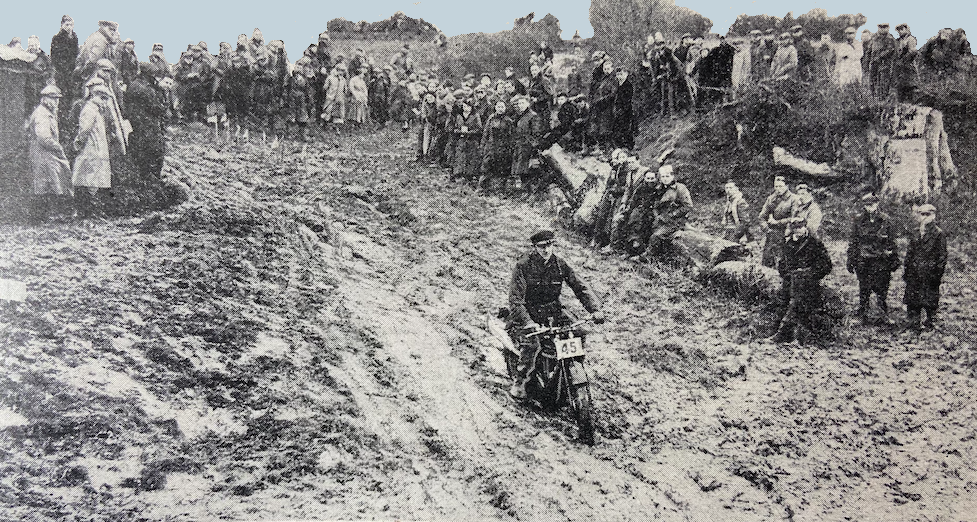
“1936 HAS BEEN A YEAR of almost unparalleled achievement for British motor cyclists and the British motor cycle industry. On the sporting side Britain has very nearly swept the board, while in exports she has cemented her position as the greatest motor cycle exporter in the world. With one exception every big international road race, both 500 and 350cc, has been won by Britain. This, in truth, is achievement. In the International Six Days Trial, held in Southern Germany, Britain wrested both the International Trophy and the International Silver Vase from Germany and gained two of the only four manufacturers’ team prizes to be awarded. In addition, each member of her three official teams and the reserve—10 men in all—covered the 1,390 miles without loss of a single mark, while of all the national teams to finish without loss of marks no fewer than 12 of the 15 machines were of British manufacture. The one-mile record has been regained from Germany with a speed of 163.82mph, but Germany on the very eve of the British attempt raised the flying kilometre record from 159 to 160mph. Therefore, the world’s maximum speed record remains uncaptured. That other classic record, the 500cc hour record, continues in British hands and has, indeed, been raised still higher. On the export side there has been a big increase in the number and value of motor cycles and three-wheelers. Compared with 1934 the exports for the first 10 months of this year are up by no less than 22%, and the probability is that the total value for the year of the machines, parts and accessories exported by Great Britain will amount to the huge total of £1,100,000 [about £65m today]. The figures covering the number of machines exported are telling: in 1934 the number was 13,614 for the 10 months; last year, 14,879; and this year, 16,399 [multiply that number by the average price of a new bike in 2023 and the figures nigh on £200m].”
“YOU CAN GAUGE SUPREMACY by two main tests. One is speed, the other is commercial dominance. So far as commercial predominance is concerned, with few exceptions foreign models are based mainly of British notions, and in many instances are copies of ours, and not too intelligent copies at that. Our products sell in all competing countries, in spite of tariff walls. I can name only about three or four foreign-built machines which would enjoy any market here if tariff and exchange permitted them to compete in price; and even these would sell only in small numbers. Our own range offers infinite variety and equal quality. In the matter of speed we are still invincible. with three exceptions. The BMW has accomplished more than our machines in world’s land-speed records; but this is a sentimental affair rather than an honest-to-goodness defeat, for we have no roads where such feats can he done; and Fernihough has proved that, given reasonable facilities, we can flutter the great Ernst Henne. The DKW two-strokes are faster on flat circuits than any of our 250s; but they are unreliable on hilly courses. The supercharged BMW is faster than any of our 500s. We shall have to make up our minds in 1937 whether we are going to race with ‘blown’ engines, and if so, whether we are going to solve the problems of blowing singles, or take up twins and fours for racing. There! I have tried to be quite fair, and think that the above states the facts with tolerable accuracy. It is obvious that in the field of speed we shall lose our advantage gradually unless we go in for ‘blowers’ and develop our 250s with more energy. But we are bluntly and undeniably on top with the ‘unblown’ four-stroke single in all its grades. And that engine has hitherto ranked as the most generally useful model for commercial purposes. Seems to me that a docile, medium-weight multi is the crying need of the world’s motor cycle industry for ordinary roadster purposes…My mind perpetually runs back to old small flat twins. To-day we could make those bikes as reliable and durable as they were—in their better moods—charming to sit and handle. But a four-cylinder of the same capacity would be better still. Trade is booming, and our sorely tried factories see a prospect of funds becoming available for experiment. I hope some of them will visualise a docile and well-built small multi as the first step in cementing supremacy.”—Ixion
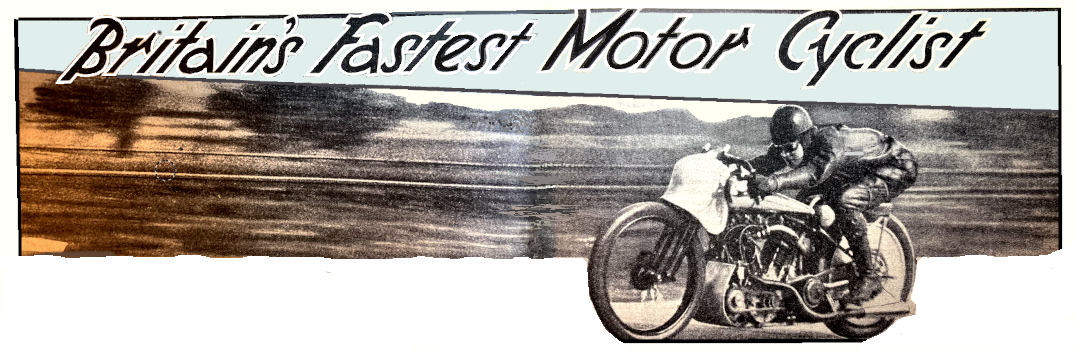
“‘I AM BEING BLOWN BACKWARDS off the machine; will the handlebars stand the strain?’ So ran the thoughts of EC Fernihough. He was slowing down from somewhere about 170mph and had been caught napping through sitting up too early. The bars stand up, but the lesson is one that Britain’s fastest motor cyclist will never forget .This experience of his gives some idea of the colossal air pressure. So does the fact that on his first trial run at Frankfort he was nearly blinded by his goggles. The wind pressure was so great that the lenses of his Meyrowitz goggles were pressed hard upon his eyeballs. Thereafter he took care to set his goggles on his cheek-bones. In addition, he cocked up the special cowl that you see around the steering head of his Brough Superior so that it broke the windstream and tended to divert the air blast over his head. In my chat with. Eric Fernihough I naturally asked him what it feels like to travel at speeds of 160 and 170mph. To my surprise he replied that, except on the occasion when his goggles were pressed on his eyeballs there was no blurring of the landscape—at least, none that he noticed. On the contrary, he was surprised how clearly he could see things when flat out. A good example of this is his experience at Gyon, where he broke the one-mile 1,000cc record at a mean speed of 163.82mph. He had a reminder of Henne, the man who, when Fernihough had everything taped for regaining the world’s maximum speed record for Britain, bumped the record up from 159mph to 169mph. Fernihough, on leaving these shores for the Continent, had only 159mph to beat, and as soon as he got to the other side another 10mph had been added to the figure! He needed no additional reminder of Herr Henne, but he got one at Gyon—in the form of a hen and its family. Mother and chicks nearly gave him a heart attack. They proceeded to cross the road just as he was coming along with the Brough whanged up to its maximum. What would happen if he hit mother or a member of her family he had no idea—he could only guess that with his speed the effect might be that of being struck by a small shell. So clear was his vision, even at 165mph, that he was actually able to count the chickens as well as work out the probabilities of hitting one of them. The relative velocity of chicken was just high enough; he missed the lot, escaping with one of the biggest frights he has ever had in his life. That gives an idea of the clarity with which the rider can see things ahead. Fernihough’s biggest impression was connected with the effect of air pressure. He rode as he rides at Brooklands—that is, he lay with his body close down and arms straight and merely, every now and then, tilted his head and looked over the steering-head cowl. Whenever he looked up he found there was a stifling effect, and at the end of each run he was out of breath, partly because of this and in part as a result of the effort. One might think that lapping a saucer-like Brooklands requires more effort on the part of the rider than hurtling down a straight section of road. In Fernihough’s experience this is not so. It is the record attempts that take more out of the rider. Because of what might happen—not what does happen—the rider has to hold on like death, pulling on the bars with all his strength. At the track, he says, it is merely a matter of using one’s strength in holding the machine after it has hit a bump. On the record attempts, on the other hand, it is a case of being all tensed up from start to finish—there is no room for mistakes. A point that has always interested me is how it is that Fernihough, who made a habit of appearing on small machines, notably 175s, suddenly went to the opposite extreme and raced 1,000cc twins. The primary reason is probably that while he loves racing motor cycles, and riding and tuning them to a degree that is almost fanatical, he has to look at the matter from a business angle. If you ask him what feat he is most proud of he will probably tell you that it is breaking the 175cc Brooklands lap record at 86.92mph. When his thoughts turned to 1,000cc engines and the possibility of breaking the world’s maximum speed record, that there would be any special difficulty on the riding side never entered his head. What he was thinking about was getting the urge. Actually he has two 1,000cc racing engines. Both are JAPs, of course. He has been using JAP engines ever since 1923, and every speed win he has had, and all of the 80-odd world’s records he has broken, have been on engines of this make. He is not likely to change, for the JAP folk take a real interest. The engines he is using now are built up of parts of a variety of designs. The cylinder heads are of the dirt-track type. I saw one of them just as it had been removed from the machine. There was not a sign of heat in spite of the forced induction.
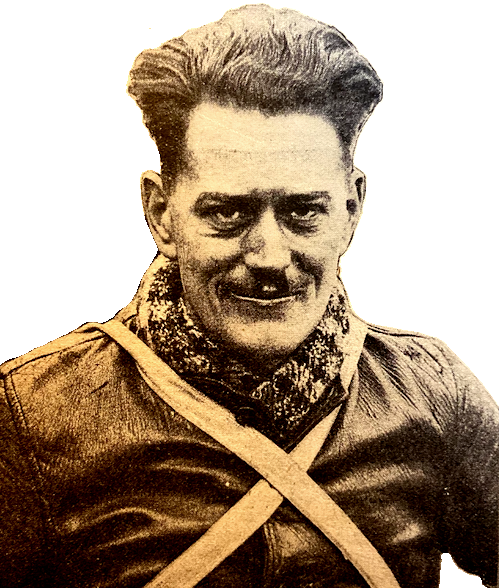
He has, he said, had no trouble at all in this direction. Indeed, his difficulty has been that he has been oiling-up sparking plugs even when flat out. Of course, he first used the engines without a super-charger. Finally, he got them to such a pitch that one did 136mph over the half-mile at Brooklands and the other 141mph. Even higher speeds would have been obtained, of course, with a pukka flying start. Anyhow, he knew that with ‘blowing’ the speeds should be adequate to beat the then existing maximum speed record. This seemed a certainty when he took out a machine in its ‘blown’ form just before going abroad this year. The second quarter-mile at the Track was covered at 150mph with the machine still accelerating. Incidentally, this try-out was just after the Brighton Speed Trials. But it was the step from his 150mph at the Track to 165mph on the Continent that seemed so colossal. He began to realise how fantastic wind pressure must be in the case of Sir Malcolm Campbell’s 300mph car. As all know, the pressure goes up approximately as the square of the speed, and Fernihough found that there was a very noticeable difference in the way he had to hang on to the machine. The blessing was that never once did the big Brough Superior give him a fright; its handling, he says, is simply superb. Fernihough’s methods are interesting. He does not use a rev counter; he is one of those people who do all their riding by feel. He changes to a higher gear when he feels that the correct instant has come. He could not do this, however, when out for the real high-speed stuff at Gyon. There, the idea of slipping into top gear at something over 100mph had to be ruled out, for the standing starts necessary for the standing-start records had done the far-from-new racing gear box, one never designed for 1936 ‘blown’ power, no good at all. Consequently he had to get into top at low speeds and, once in direct drive, whang the throttle open. Right down to it, endeavouring to reduce windage to the absolute minimum, he would hurtle along to the measured section with its electric timing. At the other end he could have shut off suddenly—the machine handles so well—but for safety’s sake the throttle was always closed gradually. In view of his experience early on he was very, very careful not to start sitting up until the machine had slowed down appreciably. Braking, however, proved a big problem. After a while he did experiment with his body as a wind brake. He tried the result with cat-like cautiousness. Given cunning, the effect of his body as a brake was almost uncanny in its efficiency. What will surprise many is the fact that never in his riding experience, which includes goodness knows how many road races, has Fernihough given his brakes so much work to do. Brakes are really important in attempts on short-distance records—unless, of course, the course is pretty well unlimited as to length. Adventures are supposed always to go in threes. In his efforts this year, which have involved 5,000 miles of travelling and crossing three dozen frontiers, Fernihough has had his trio all right. Two of the most exciting I have mentioned already. The third was on the return run when he broke the standing kilometre record at an average of 98.91mph. He was kept waiting rather a long time before making his return trip. Unfortunately he overlooked the fact that his oil drip for the front chain was causing a pool of oil on the road. His cavortings as he got off the mark rivalled just about anything a spectator can see on a really slimy hill in a trial! They had their effect upon the speed, for whereas his average for the outer run was 103.56mph, his mean speed was down to 98.91. On his trip to Frankfort Fernihough, of course, saw Henne and his ‘submarine-on-two-wheels’. His admiration for Henne and Henne’s grit is unlimited. Finally, a few words about this Englishman who is Britain’s fastest motor cyclist, and who the tuner and rider of the fastest, more or less orthodox motor cycle in the world. You may or may not that this tall, rather thin man with glasses was winning races for Cambridge in inter-Varsity events in about 1924. He is a Master of Arts, married, and runs a garage and tuning station that backs on to Brooklands. As a tuner he has few equals. He beat works men in the days when he was little more than a stripling, and all through his own efforts. I have said that he is an Englishman, but he was brought up in Northern Ireland. His age is almost exactly 34, and after his record-breaking on the thousand he received congratulations from a manufacturer, accompanied by the statement: ‘It is a considerable risk for a man of your years to take!’ His successes are the result of taking pains. The details of every experiment are jotted down in a carefully guarded notebook. In addition, he believes in training; he has been in training ever since he started riding big twins. At the moment he is disconsolate—there is an extraordinary lack of financial interest in the worlds maximum speed record, which is a bar to farther attempts.”
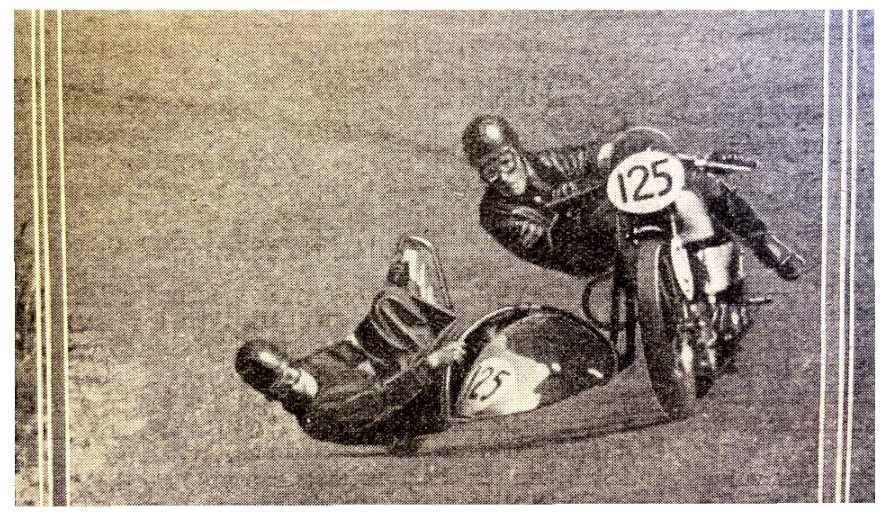
“WITNESS AT TOTTENHAM: ‘The occupants of the police car were arguing with another motorist. The police were easily getting the best of he argument owing to their having a loud-speaker on the roof.'”
“THOUSANDS OF MOTOR cyclists rode to the Crystal Palace and to the various ‘high-spots’ around London to see the great fire last week.”
“‘ALL THE NEW MODELS now look just like the 61 OHV. Yes, sir, and yes, ma’am, that’s what I said. Ain’t that sump’n? Does that news kinda make you dizzy?’—1937 American motor cycle catalogue.”
“REPLYING TO A QUESTION in the House of Lords, Lord Erne stated that the Government still considers there is no justification for building a Channel Tunnel between England and France.”
“REGISTRATIONS OF NEW motor cycles during October last showed an increase of nearly 13% compared with the corresponding month a year ago. The total number registered was 3,419. All classes of motor cycle (with the exception of three-wheelers) showed increases. During the first 10 months of 1936, 49,820 new motor cycles were put into use, an increase of over 17% compared with the same period in 1935.”
“IN REGARD TO THE PROPOSED formation of a ‘Motor Cycle Football League’, I should like to place our experience before you. We have been playing since 1923, having played most of the best teams in the game. Nowhere has the game been better played and staged than at Cheltenham, but from a splendid start the support dropped away until the game was finally given p. During the last two years our own games have hem chiefly at shows, country fêtes, etc. In 1935 we used to play with the ordinary ball for the first part of the game and the big Moto-Ball (as used in France) for the second half. The opinions repeatedly passed to us show that while the small-ball game held the spectators interested for five or ten minutes, the.much faster game with the Moto-Ball held their interest until the final whistle. Last year we confined ourselves to playing Moto-Ball. Contrast the position of the game in France to-day with ours—over there, nearly 100 teams known to be playing, 50 or more of these entered for the National Knock-out Competition. We have met the champions of France on five occasions, being well beaten every time, I am sorry to say. On their visit to England in 1934, besides beating us three goals to nil, they met a team from Coventry Ace Club, the result being 6-1 in the visitors’ favour. They could not get public support with the small ball, so they settled on the size they now use, and their average ‘gate’ is better than most Third Division football clubs. Quite a number of clubs over there own their motor coaches, which take their team, supporters, and machines from one end of France to the other. Now, here is a challenge. We are willing to play any team in England, at home or away, on free return basis, playing one half with each ball as a test of which the public likes the better.
Jack Smith, Chairman and Captain, Chester Motor Cycle Display Team, (A section of the Chester MC), Chester.”
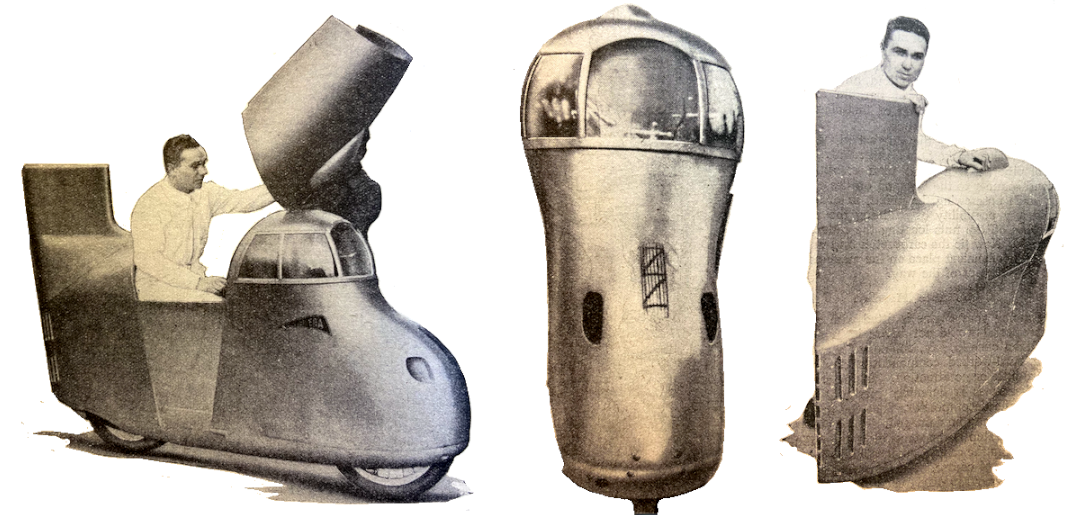
“LET ME ADMIT IT: When I wrote the article ‘All-enclosed Machines Must Come!’ I had not seen the photograph above! I said I did not postulate the car-on-two-wheels type of vehicle, though even this would probably be universal one day. For attempts on the maximum speed record it seems to have ‘come’ with a vengeance. Even by the time you read this, Taruffi with his supercharged four-cylinder Gilera may have attempted to beat Henne’s submarine-on-wheels. He is to have a shot on the Florence-Lucca road. Details of the machine are sparse at the moment, but the basis, it appears, is the Rondine. It seems that Britain will have to go in for similar totally enclosed record breakers if she is to regain the record.” Taruffi and the transverse-4 Rondine—now competing under the Gilera banner—set world records in the 500 and 750 classes but wasn’t quite fast enough to snatch the 1,000cc record from Pope and the Brough Superior.
“SOME EXTREMELY INTERESTING experiments in regard to skidding have recently been carried out by the Department of Scientific Research in conjunction with the Ministry of Transport. The vehicle used for the purpose, strangely enough, is the one that is least prone to skidding of all motor vehicles, namely, a sidecar outfit, but it is not a sidecar outfit in the trim in which we, as motor cyclists, employ it. The machine which has been used of late is an OEC, with a 1,000cc side-valve JAP engine, a duplex frame, a channel-steel sidecar chassis, springing of all three wheels, and a sidecar wheel which can be set at any angle in relation to the wheelbase of the machine. The important factor is this last—the angle at which the sidecar wheel is placed relative to the wheelbase of the motor cycle. While a small amount of ‘toeing-in’ is known to be desirable from the point of view of good steering, it is obvious that when the wheel is at a big angle to the wheels of the machine there will be a large force tending to cause the wheel to take up the appropriate trailing angle relative to the wheels of the machine. How great this force is depends upon the adhesion of the sidecar tyre relative to the road surface; in other words, here we have a measure of the grip of the tyre sideways, or, put another way, the anti-skid properties of the road surface. What the Research people do is to drive the sidecar outfit at varying speeds over sections of road surfaces and determine how great the force is on this strangely positioned sidecar wheel. Thus they can measure the anti-skid properties of various road surfaces under various conditions. Some of the results could be enumerated by any motor cyclist of experience. For instance, in the report just published it is mentioned that ‘probably the most slippery conditions are during a “silver thaw”,’ that ‘wood paving in towns shows some low values of the co-efficients’ and roads generally are ‘more slippery when wet in summer than in winter’. Such comments are apt to make the motor cyclist tired, because these are known, obvious facts, and ‘authority’, the report would seem to suggest, is just waking up to them. It is perhaps easy for those who ride upon two wheels to be cynical. No one knows better than we do whether a road surface is safe or not. ‘Authority’ estimates the cost of a sidecar outfit for the use of surveyors to determine whether their roads are safe or not at approximately £475; I could provide them with information at very much less if they would stop all other traffic!
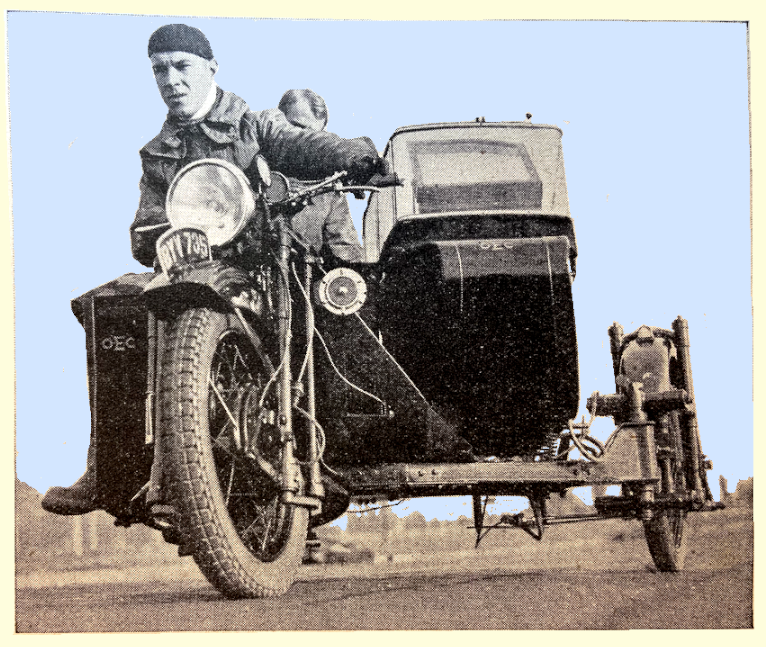
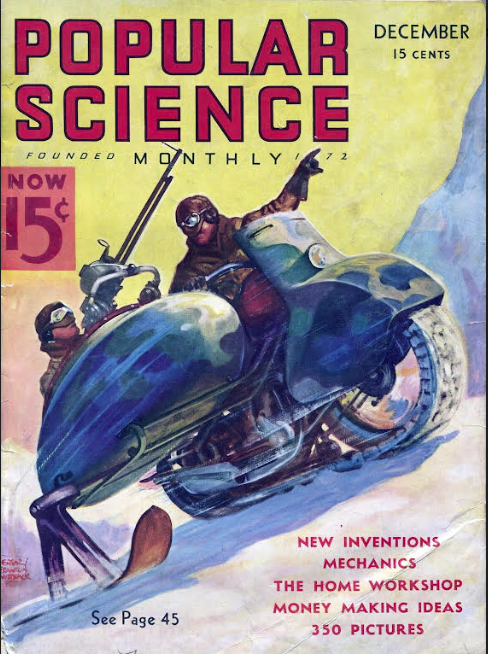
“WE HAVE READ WITH much interest Nitor’s remarks dealing with all-enclosed machines. In referring to the question of accessibility, Nitor mentions the Francis-Barnett Cruiser. We wonder whether it is generally recognised that total enclosure need not detract in any way from ease of accessibility, but may actually improve this owing to the layout which can be arranged beneath the shielding. The absence of elaborate chain guarding, example, results in simple and quick adjustment, and such an item alone can more than compensate for the short time required to remove and refit side-shields. The following is an extract from a Road Test report published in The Motor Cycle of May 4th, 1933, dealing with the Cruiser: ‘General maintenance is probably simpler, if anything, than on a more normal machine, for removal of the bonnets is the work of two minutes, and once these have been removed everything is laid bare, there being no additional chain guards. The kick-starter crank is immediately detachable, and, apart from that, two knurled nuts and four wing bolts complete the bonnet attachments. Beneath the bonnets the layout is soundly normal, but the primary chain adjustment is greatly simplified by the use of a cam lever. The removal of the rear guard and carrier was carried out in half a minute, for it is held by only four wing bolts.’ We submit the above comments feeling that the subject of enclosure is becoming of considerable importance. After four years’ experience with production of machines featuring total closure of all working parts, we are convinced that the type is certain to become increasingly popular.
Eric A Barnett, Director, Francis and Barnett, Ltd.”
“I HAVE RIDDEN motor cycles for many years and always doubted the desirability of joining a club. However, last June I was persuaded to ride as a visitor in the North Derbyshire MC’s Night Trial, and that one example of a club event caused me to apply immediately for membership. I was accepted, and since then have taken an active part in club life. I can say quite definitely that I have never enjoyed Sundays awheel so much as during the past five months. The chief point I wish to make is this: once you become a member (sporting or non-sporting) of a club and take an active part in club life, it ‘gets’ you as motor cycling alone or in pairs never will. The camaraderie is amazing. Also club events take one into interesting and new country and to places and events which would not normally be visited. The evenings and weekly club nights are spent socially with singsongs, dances, games, visits to local works and social visits to other clubs in the neighbourhood. Experiences. troubles, and hints and tips are exchanged and discussed. and help is volunteered for difficult jobs which could not be tackled alone.
Bryan D Horan, Chesterfield.”
“I READ SOME TIME AGO of ammonia being used to drive an internal combustion engine. The article gave no technical details, other than that the running costs would be more than halved, and I wonder if any of your readers were better in formed on this interesting topic. The adoption of such an unorthodox fuel would presumably be attended with many snags, a few of which are easy to foresee. In the first place, the storing of the ammonia and redistribution. Secondly, the effect of the products of combustion (oxides of nitrogen) on any iron components, lubricating oil, etc, not to mention the sensitive organs of pedestrians. They could, of course, be easily absorbed chemically in the silencers (the products of combustion, that is, not the pedestrians), but the pro cess would be messy. The mixture of ammonia and air is definitely explosive, as I proved for myself. I mixed some strong ammonia and hydrogen peroxide in a tin ‘bottle’ with a glass tube attached, warmed slightly, and applied a match, expecting just a flame, but the explosion blew the bung out and smashed the glass to fragments. The text-books do not appear to know much about combustion of ammonia in air, so one is left to guess the theory of the thing. A discharge from an induction coil decomposes ammonia into its constituents, nitrogen and hydrogen, which would then presumably form oxides of nitrogen and water vapour respectively, with the oxygen from the air. One big advantage would be the absence of the need to decarbonise, there being no carbon present in the reaction. I await my fate at the hands of such of your many readers who sport an outsize in headgear. All the best to your splendid magazine.
NH3, Leeds, 5.”
D St J HEALD regaled readers of the Blue ‘Un with tales of ‘The Thrills of Winter Riding in a Land Where Men Are Men and Motor Cycles Are (Often) Sleighs’—”…Only once has the cold bothered me. I had been to visit friends some miles away, and found it unusually difficult to start the bus in the evening. I glanced at a thermometer hanging nearby, and found that it was 47° below zero. While following a bush trail on the way home, my rear chain came off. I got out the tools, and sitting on a snowbank, set to work to replace and adjust the chain. Finding gloves too clumsy, I took them off and worked bare-handed. Luckily my hands were bone dry, or the tools would have frozen to them. However, it was bright moonlight and the job didn’t take long, but by the time I had finished I hadn’t much feeling in my fingers. The last two miles were in the teeth of a breeze from the North Pole, and when I finally arrived home and had time to take stock I found that I had frozen three fingers and my cheeks and nose! If any of you are thinking of coming to Canada, don’t be afraid to bring your bus with you. Although the side roads are hardly roads in the English sense of the word, and are impassable in wet weather, there are quite good highways connecting the larger towns, even in the West. But wherever you live, take my word for it, fellows, although summer riding is the greatest sport in the world, there is a thrill in winter riding, a joy in skimming over the icy roads, in the feel of the biting, bracing wind that must be experienced to be appreciated.”
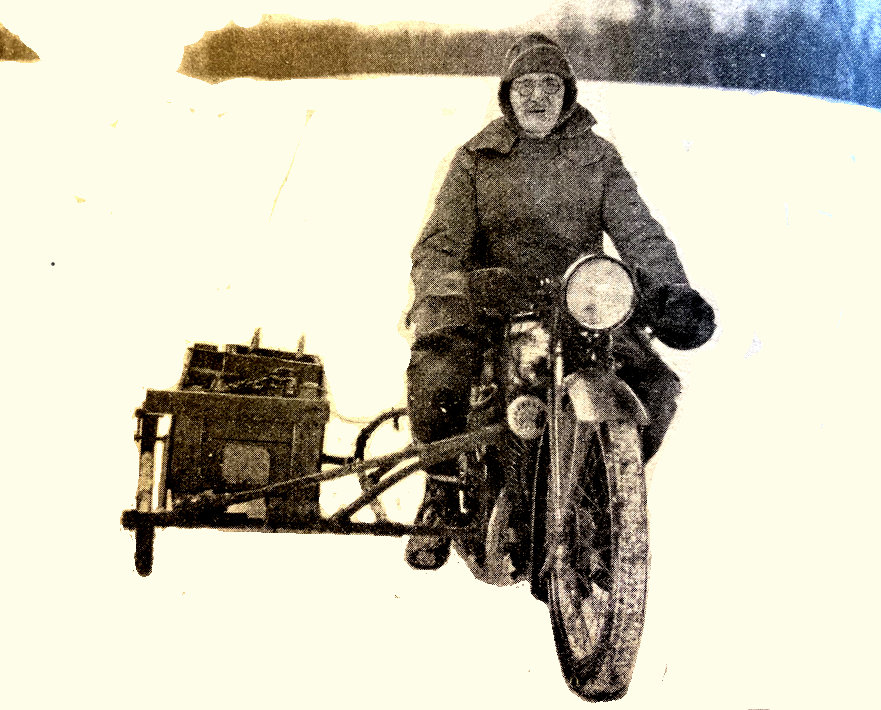
ADDING-INSULT-TO-INJURY DEPT: “An Italian motor cycle club is to be formed in Addis Ababa, capital of Abyssinia.” The Motor Cycle ran this story under the heading ‘Settling Down”. PS: “£600,000 is to be spent by the Italian government in building hotels and tourist centres in Abyssinia.”
“
THE 1936 MOTOR CYCLE champions of Italy have beed announced as follows: 500cc Serafini (Bianchi); 350cc Millani (Bianchi); 250cc Cavacciniti (Benelli).”
“KING GHAZI OF IRAQ is the enthusiastic rider of a solo Triumph—now his government has ordered a large batch of Triumphs for official use.”
“A GREAT-GREAT-GRANDSON0f Macadam, the great road engineer, made a plea for rubber-paved roads in towns at a Macadam centenary dinner in London.”
“WORTHING PROPOSES TO form a squad of motor cyclists for use in the event of air raids.”
“LAST WEEK I WAS up in the Midlands. The factories have full steam up, with their works’ managers sitting on the safety valves! So it seems at any rate. A sales manager has shown me his order book in confidence. It is more an allocation book than an order book! One thing I can tell you without any breach of confidence is that if you want a machine this make by next spring you had better make up your mind soon, and this applies to quite a number of makes. Excuse my harping on this matter, but I want to ram the point well and truly home.”
“A NEW SIGN HAS recently made its appearance at merry-go-rounds. Instead of the sign merely pointing in the direction of the road concerned and, in the case of a complicated gyratory system, perhaps causing you unwittingly to go the wrong way and contravene the ‘one-way’ rules, the tail of the arrow has a loop in it, thus indicating the route that must be taken. This is an excellent scheme. At one complicated junction near my house I have seen dozens of people go wrong as a result of the misleading sign-posting ; if any have been had up for this it has been most unfair.”
“THE BMCA, I see, believes in hard hitting. Last week Mr SA Davis, the organising secretary, made full use of his visit to Swindon, which has become almost as notorious for its police activity as Meriden, in Warwickshire. At the North Wilts Club’s dinner he smote the police hip and thigh for their methods and said that his experience over the last few years is that when a perfectly respectable citizen goes out and buys a motor car or motor cycle he immediately becomes suspect in the eyes of the police. Comparing Wiltshire with Worcestershire, which has a slightly greater population, Mr. Davis pointed out that in 1935 Wiltshire had over double the number of motoring convictions recorded. Of the 8,388 no fewer than 1,422 convictions were secured on driving licence offences and 2,969 in respect of lighting offences. For myself I wonder how many of these offences could very reasonably have been the subject of a caution instead of a summons.”
“HOW WOULD YOU LIKE to be a works’ tester? Possibly the idea appeals to you, as it did to me when the Editor suggested that I spent a day with the men who test the motor cycles of a big and popular factory. I thought it would be a grand idea. So it was, but I do not want to be a works’ tester any more…It was a raw and cold morning that found me riding through the suburbs of a big city. Eventually, I found myself outside a vast building that was (literally) humming with activity (as it has been, so I afterwards learnt, night and day for weeks past). This was to be my headquarters for one day. As I arrived, two well-wrapped-up riders on glisten-ing new models with trade plates came out of the entrance, skilfully weaving their way feet-up round an unloading lorry. Yes, they were two of the testers starting their day’s work—or at least so I thought at the time. Upstairs, on the assembly floor, the manager roughly outlined my day’s routine. And then I got my first shock. The two lads I had seen leaving on a test run had been at work since 7am! Normally, this early-starting business is not necessary, but two other testers were down with the ‘flu, and this being a rush period it was essential to start early if the production average was to be maintained. When these two lads, Coomber and Graham, had arrived at the works, their first job was to finish off the previous day’s work. One or two models required re-testing after adjustments had been made by a staff specially employed for this purpose. Having carried out the tests and carefully checked their own report sheets to see that the work necessary had been carried out, they set the carburetters for slow running, and the models were passed for delivery. The testers were then ready for a fresh day’s work and to help me in my new job. All this time the track assembly line had been inexorably creeping on, carrying with it motor cycles in various stages of assembly—just a bare frame at one end, and the finished article, complete with electric lighting, at the other. All down the line were highly skilled men working at top pressure, each doing his particular job, while the track slowly carried the growing machines towards completion. As the machines came off the assembly line they were handed over to a checker whose business it is to see that the specified equipment is fitted; anything missing is noted on a report sheet. Then. the new models were ‘run up’ on their stands, and finally handed over to the testers. So it was that I eventually found myself following in the wheel-tracks of the cheery Coomber and the quiet Graham, all of us on similar
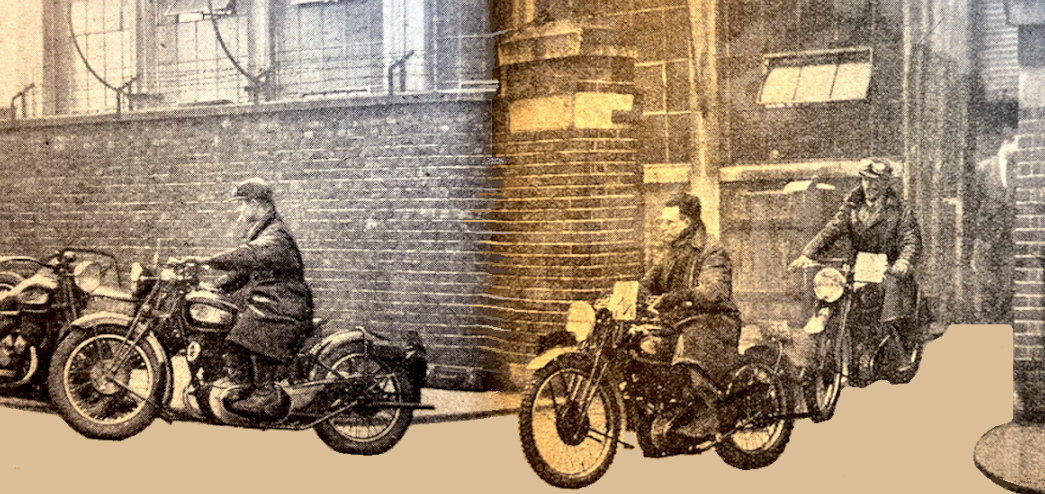
sports 500s. The first mile or so led through back streets, where frequent use had to be made of the gear box. Suddenly my two friends disappeared round a corner. When I followed I saw them already half-way up a long, steepish hill; they were obviously testing the pulling power of their mounts. Then, when the road was reasonably clear of traffic, they bent down first to one side and then to the other and listened for any sound that should not be there. My model took the hill in grand style without a sign of complaint. Cross-roads at the top of the hill called for brakes, and then we ran down gently to an unrestricted road. On the latter road all three of us opened up, using each gear in turn, but not staying flat-out in any gear for more than a few seconds. I watched the speedometer hand creeping, or, rather, swinging, straight up to 65, and then 70. But the speed was held only just long enough to show that the machines were up to standard. In front of me Coomber and Graham slowed into the side of the road. After a short stop to adjust the front brake cable of one of the models we made our way back to the works. Once again the speedometer showed 70. Down the hill climbed on the outward journey the brakes were tested, and a mental note made of anything requiring attention. Arrived at the works we made notes on the report sheet. The timing gear of one engine seemed to have undue backlash. Another had too much clearance on a tappet, while in the third case the ignition was a trifle retarded. Brakes and chains also required adjustment (I suspect that purposeful slamming up the hill in a high gear had produced the necessary initial slack). However, the work of the testers did not finish with the report of the test run. These two men have spent years with the works as fitters, so with their practised eyes they set about noting all sorts of points which you and I would have missed. A piece of rubber tubing designed to protect the lower end of the front brake cable was missing. A seat lug bolt was showing too much thread; contrariwise, an engine bolt was appearing only half-way through its nut. Crank and timing cases were examined for oil leakages, while the steering heads and hub bearings were checked for play. All these points were duly noted on the report sheet of each machine. In the meantime another batch of machines had arrived downstairs. So while the models that had been tested went upstairs to be readjusted according to the reports, we went off on new mounts for another circuit of the test course, which I now began to appreciate was carefully chosen to find out any faults in the shortest possible distance. When we returned from this second trip we were told that there
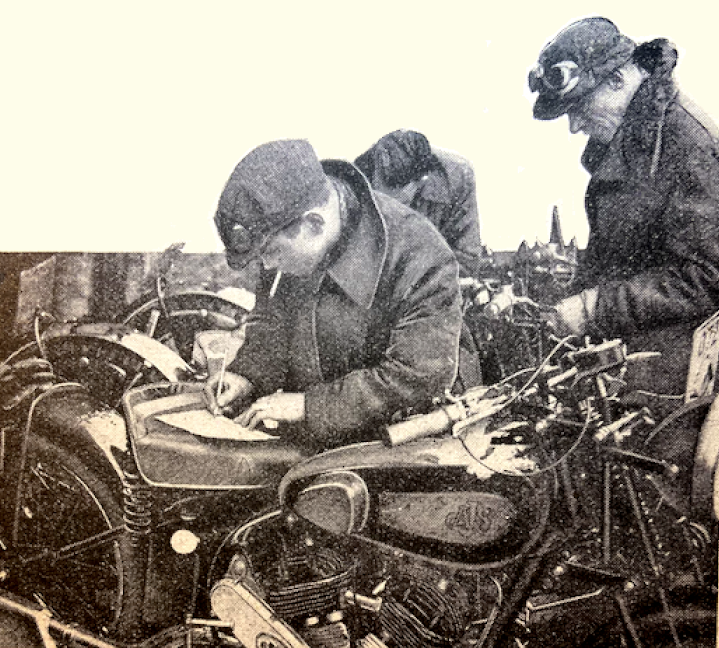
would be a brief interval while the production was changed over to twin-cylinder machines. Naturally, I thought that this was where we took it easy. But not a bit of it. Coomber and Graham went upstairs to give a hand on the assembly of the twins. Half an hour later the buzzers in each department indicated lunch. After lunch the first of the twins arrived, and off we went once more. How tired those men must be of riding round and round, day after day, winter and summer. Why even I towards the close of only one day was getting a trifle sick of it! Yet both those lads seemed cheerful and happy—and to take a really keen interest in their jobs. They often offer ideas for an improvement here and there which are frequently accepted. After all, they of all people should know what is required. At last it was five-thirty and nearing the end of a long day. Although the actual production was slowing up and no more machines were being assembled, the testers’ work was by no means finished. One model remained to be re-tested, while there were several machines upstairs that had to be OK-ed. Hats off to the motor cycle testers! These men do not work according to the factory hands’ schedule. They get little chance of rest and rarely do they have time for a cigarette except between tests. Their’s is a responsible task, calling for exceptional inside knowledge of assembly coupled with an ability to locate instantly any trouble or fault that might exist. After all, it would seriously hold up production if a certain noise was located in the rocker box, when in actual fact it lay in the timing gear. Fortunately for me the machines I rode and tested did not call for any decision of this kind, and I know that the future owners of the machines whose test sheets bear my signature will be more than proud of their new models—as proud. I hope, as I was to test them.”


“HOW WOULD YOU LIKE to start on a world tour by motor cycle with hardly a penny in your pocket? It sounds fantastic, yet quite a number of enthusiasts have performed this apparently impossible feat. In 1929, two American students, Andrew Juvinall and Newton Nesmith, were globe-trotting on a Harley-Davidson outfit. They paid their way by selling post-cards and newspaper articles and giving lectures. When they visited The Motor Cycle offices they had travelled in 13 countries, and yet they had started out practically penniless! One of the latest of these ‘pay-your-way-as-you-go’ world trips has been made on an Ariel by Lieut ISK Soboleff, an ex-officer of the Russian White Army, who had some amazing adventures. But in between and before these two world tours many other enthusiasts have attempted and brought off the same kind of trip. They have been adventure trips pure and simple. Rather different have been those journeys undertaken in a scientific spirit of exploration or to demonstrate the go-anywhere qualities of the British motor cycle. One of the most remarkable journeys of exploration ever achieved by motor cycle was AW Grady’s trip right round Australia on a 348cc Douglas in 1924. It was a lone trip and a grim one, through trackless, snake-infested deserts. This was the kind of ‘route-marking’ he had to rely upon: ‘Follow cattle pads heading due east to Wallamunga Lagoon and cross river between second water-hole and some bogged cattle farther down; then follow creek for one mile and pick up pads and follow for 10 miles due east. Cross creek and make for the right of a big hill where a faint cattle pad can be seen, which leads to Inverary, and make for a green tree on the plain.’ One night he found he was completely ‘bushed’—ie, lost. He wrote: ‘Supper with a jam-tin of water and a piece of sun-baked bread so hard that I had to soak it in my precious water before I could bite it, a mouthful of sickly warm water, then darkness and silence. Everything was hushed and awfully still. I would reflect a tittle faint-heartedly on my journey, solitary and melancholy, in that vast rugged interior. Mile after mile of dreadful riding—it seemed to be maddening, and as I thought of the road behind, its sands, its cracks, its deep and treacherous gorges, a lonesomeness would fall on me like the falling dusk on the land. I would gaze absently at the silent and boundless plain, down the winding rows of scrub and rocks, while Nature hushed the world to sleep, when suddenly the howl of a dingo split the stillness and roused me out of my reverie.’ How well we can imagine, from that description, the utter loneliness of the Great Plain! Grady picks up the route again and pushes on with his gallant little Douglas through 600 miles of sand—low-gear work nearly all the way. After five and a half months he is back in his native Fremantle. He writes modestly: ‘The great journey is finished, and I am quietly satisfied with the honour of being the first to do it. To the Douglas machine…I cannot give too much honour. Not one spare part was used on the machine, which never failed me, and the tyres never once punctured.’ About the same time Lieut-Commander
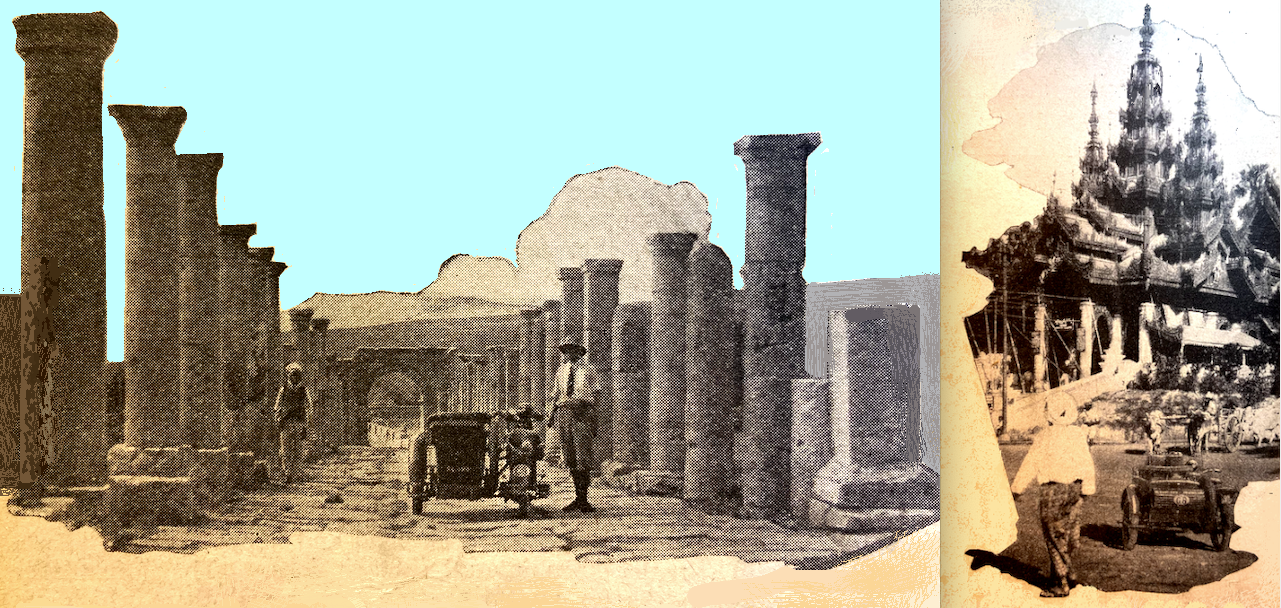
Oswald Frewen, RN, and his sister, Mrs Clare Sheridan, author and sculptress, were making their adventurous journey across Europe to Russia. Their companion was the faithful Satanella a 799cc twin-cylinder AJS and sidecar. Frewen tackled all his journeys with an infectious spirit of exuberance. If anything on the outfit broke miles from anywhere he just calmly got on with the job of getting it right; if frontier officials proved obstreperous he quietly argued them out of their bad mood! They travelled across Holland, Germany, and Czechoslovakia, and then bumped their way along the appalling roads of Poland and endured its primitive hotels. His good spirits were irrepressible: ‘In Germany the hotels give you no soap, in Western Poland no towels, in Eastern Poland no bedclothes—or if they do so by request you cannot use them. I suppose in Russia there will be no beds. God bless my happy home!’ Frewen and his sister had been warned many times before their entry into Russia of the grim fate that would await them. there. Yet they were undaunted, and on July 31st, 1924, they reached the Polish-Russian border. ‘Finally the barrier was unlocked and raised with as much ceremony as opening the gates of a fortress, and the Robin Hood of the Red Army guarding the Russian pole likewise raised theirs. Satanella shot across the five yards of, cigarette-strewn no-man’s-land, and we halted just inside the last frontier between us and the Pacific Ocean, the first British touring machine to enter Soviet Russia.’ Once in the Soviet they had a sinister impression of being shadowed and ‘herded’. The Moscow newspapers reported that Lord Churchill, British War Minister, and his sister were passing through Russia on a trip round the world. Actually they meant Mr Churchill, who is Commander Frewen’s cousin, but Frewen never convinced the Russians that he was not Churchill. Steadily they pushed on across Russia. They travelled for two days by steamer down the River Dnieder, then drove across the dusty, level steppes, crossed the picturesque Crimean Mountains, and finally reached the Black Sea. From Sevastopol they went by steamer to Trieste, and then they travelled up through Italy and made a last-moment crossing of the snow-bound Stelvio Pass in October—an adventure in itself. So they reached home again. It was the first of many momentous Satanella trips. Next year Commander Frewen took his much-travelled outfit to Scandinavia and into the Arctic Region. Then later Satanella visited the Saracens and actually carried a sheik on the pillion! In August, 1926, started one of the most spectacular round-the-world hips ever undertaken. It was a tour made by BH Cathrick and JP Castley (who was on The Motor Cycle staff) on two BSA sidecar outfits. When they returned in March, 1928, they had covered 20,500 miles, and the dust of South Africa obscured the many autographs written on the machines in the 25 countries traversed. The two riders had worn out five saddles during their trip! They accomplished the first London-Suez overland trip in history, passing through Spain, Portugal, Southern France, Italy, Czechoslovakia, Austria, Hungary,
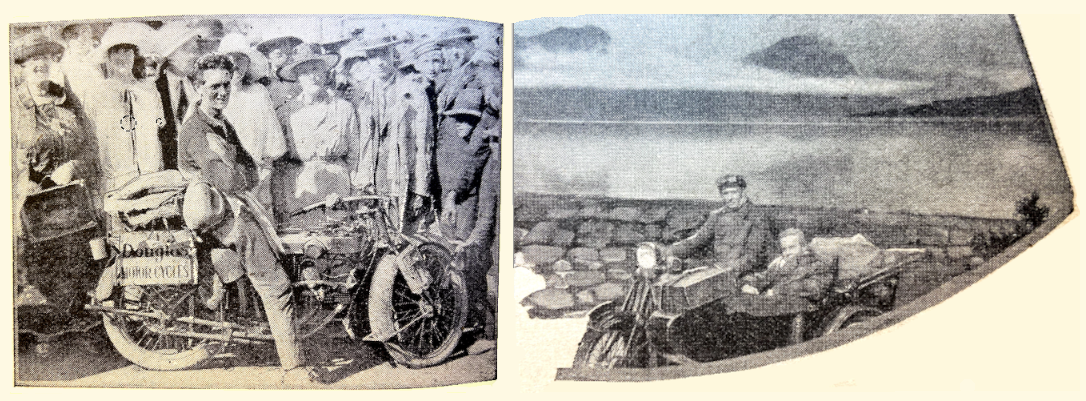
Jugoslavia, the Balkan States, across the Bosphorus to Asia Minor, Central Anatolia, Syria, Palestine, Jerusalem, and so to Suez via the Sinai Desert. In the Balkans they were arrested as suspected spies and detained, but largely through the efforts of the Belgrade Motor Club they were released after some hours. The BSA outfits stood up magnificently to the battering they received over rough unmade tracks in Egypt, India, Malaya, Java, Australia—and finally Southern France, Italy, Czechoslovakia, Austria, Hungary, Jugoslavia, the Balkan States, across the Bosphorus to Asia Minor, Central Anatolia, Syria, Palestine, Jerusalem, and so to Suez via the Sinai Desert. In the Balkans they were arrested as suspected spies and detained, but largely through the efforts of the Belgrade Motor Club they were released after some hours. The BSA outfits stood up magnificently to the battering they received over rough unmade tracks in Egypt, India, Malaya, Java, Australia and, finally, South Africa. The journey across Australia was an epic in itself. Almost a year later, ST Glanfield and Flight-Sergt SW Sparkes, RAF, set off from London on two almost standard Rudge sidecar outfits. They drove together through France, Germany, Austria and Irak to India, and then parted company. Flight-Sergt Sparkes had to complete the tour within his leave and so he travelled through India to Ceylon, sailed to Australia, and completed the trip via Sydney, San Francisco and New York. Glanfield took the longer route across India, the Malay Straits, Java and Australia. He made the first sidecar crossing of the trackless Australian bush—a wonderful lone effort. After crossing the
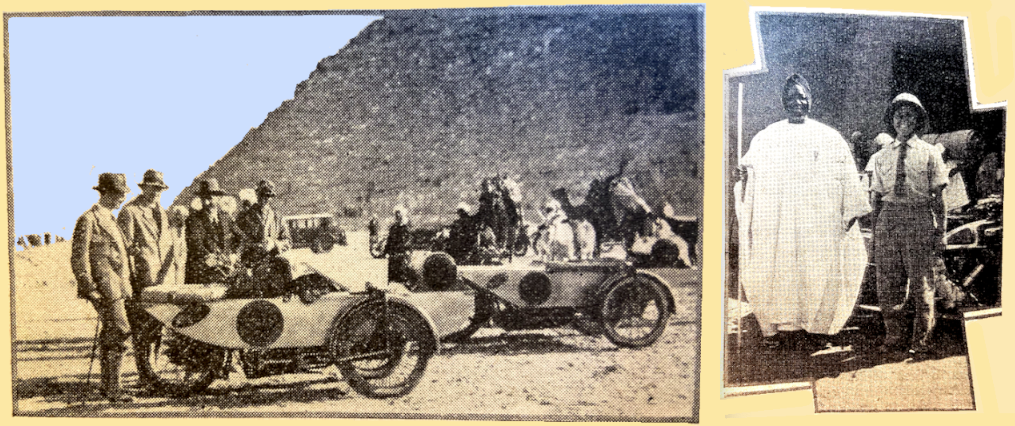
United States, via the Arizona Desert, Glanfield sailed from New York back to England. He had completed 17,000 strenuous miles. Soon after the BSA expedition started, Captain Geoffrey Malins, 0BE, FRGS, and Captain Oliver, MSM, OBE, left on their famous world tour. Captain Malins was one of the official cinematographers during the war, and one of the main objects of the trip was to establish an Empire organisation for the handling of the production and distribution of Empire films. Big-twin OEC-Temple outfits were used, the side-cars being so designed as to form small punts or floats for the ferrying of streams and rivers. During an adventure-packed trip, Captain Malins wrote his well- known Jottings of a Globe Trotter for The Motor Cycle. About a year after they started, the two travellers returned to London bronzed and fit. Capt Malins described the machines as admirable for their work despite the appalling conditions overseas. The most amazing motor cycle saga in recent years was completed when, on a typical sultry African afternoon, a travel-stained sidecar outfit throbbed down Cape Town’s main street and stopped outside the Town Hall. From the outfit alighted two women, Miss Blenkiron and Miss Wallach, who, nearly eight months before, had left London on their Panther sidecar and trailer. They had endured 14,000 miles of mountains, swamps and jungle trails, trackless wastes, hub-deep sand and scorching heat. Any world traveller will tell you that sand is his worst enemy. So it was that the Sahara Desert—2,000 of sand, think of it!—was Miss Blenkiron’s and Miss Wallach’s chief obstacle. Mile after mile called for continuous flat-out bottom gear work and almost incessant heaving and pushing. But with the globe-trotter’s usual indomitable courage and resource finally the two women won through to their objective—Cape Town. Later Miss Blenkiron completed an epic double trip by returning through Africa to London.* Just reflect—it is the modern motor cycle that has made possible all these colourful journeys into foreign and sometimes uncharted lands. Each trip has held adventures as strange as any in a medieval traveller’s tale. Well might the famous Army recruiting poster be modified to ‘Buy a motor cycle and see the world!’.”
*The story of their adventures, The Rugged Road, is a ripping yarn; well worth tracking down.—Ed
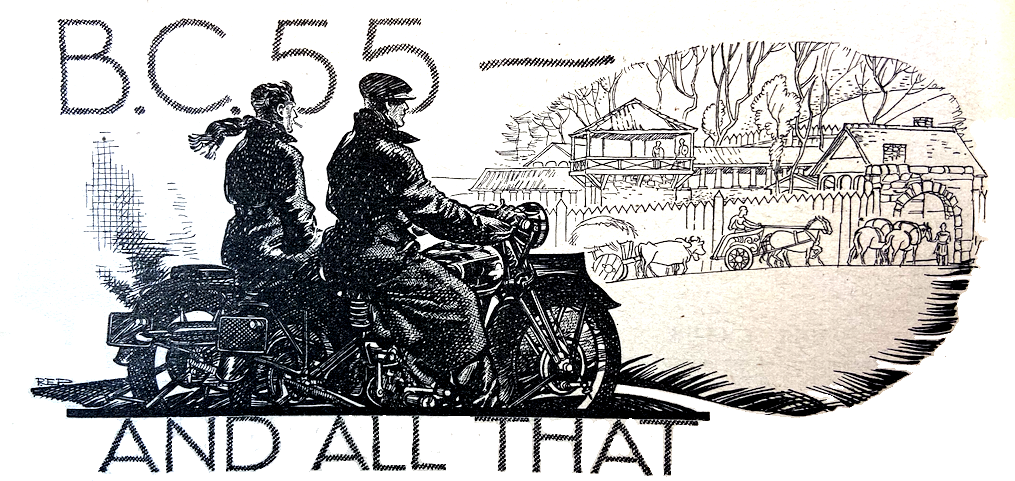
“BILL WAS PORING over the map on the table, and now and then making little crosses at various points. At last he stopped, and deigned to give me an explanation. ‘The crosses are the sites of discovered Roman villas,’ he said, ‘and they lie in a very rough circle round Cirencester and Akeman Street—the Roman road. There’s the famous one at Chedworth, and others at Withington, Combend and Dryhill, to the north of Ermine Street, while Painswick, Witcombe, Bisley, Daglinworth and a place called Brown’s Hill, which I can’t find, lie to the south of it. I vote we go next Sunday and have a look round. The old Romans knew a thing or two, you know, and their villas usually lie on the loveliest and wildest sites. And this district isn’t any exception. The villas are all in the highest and most inaccessible parts of the Cotswolds. And can’t you see those lovely villas, as they once were, with their urbane patrician owners, and their columns and their courts—all lying in little jewels of English scenery?…Bill’s description sounded so good that despite a thick mist I got out the Triumph the following Sunday and started off, with Bill on his Squariel, over the Chilterns, and through Wendover and Thame to Oxford, on a journey that was somehow an enchanted one. For the mist was thin enough for us to bat along at a good speed—far faster than the cars—but sufficiently thick to give a softening, veiled beauty to things. The view from the Chilterns to the great plain just before Wendover, for instance, was covered in a thin white gauze…A village shone indistinctly here and there, and a green meadow stood out in a clearer patch like a jewel. Forgetting about the new by-pass, we paid the toll on the Oxford-Witney road, and after Northleach we turned left along Ermine Street to Cirencester. And soon we saw a road to the right—to Daglinworth. ‘That’s one of the Roman villa villages,’ shouted Bill, and turned down the lane, the wet surface of which was as yellow as a saffron cake, so that our models soon began to resemble canaries. Of course, we lost the way in the mist, and we stopped an old man, who talked, not about Roman villas but—hunting. ‘Ay, sir,’ he said, pointing to Bill’s Squariel, ‘I don’t know much about them things, but there’s not much you can tell me about foxes. I’ve almost lived with them, and out of season I wouldn’t harm a hair of their heads. I used to be a huntsman before my eye went (a fine eye you’ve got to have for that), and I know where every fox is in the district. It’s funny—most people think they make their own earths, but they don’t often do that—they use a badger earth, or some such hole. Ay, I’ve seen some queer ‘uns in people, too. I’ve known the parson take a service with his surplice over his hunting kit. And I remember a Master—not in this country—who threatened to order the hounds home it a captured, or bag, fox was used. At the next kill we found that the brush had been tied up with blue ribbon…’ And so we rode to Daglinworth, where the yellow-grey stone houses are of the usual Cotswold loveliness—a beauty which, in any other district, would be unique. But our requests to be shown the Roman villa were met with blank looks. ‘There’s no Roman villa here,’ they said, and then, brightening, ‘Perhaps you mean the circular dovecote of the nunnery…’ Bill produced a tattered guidebook to prove his words, but as they still looked at us in a vague sort of way we decided to make for Cirencester an d a very late lunch. After lunch we rode again through the misty countryside, turning right at Chalford for Bisley, another of our Roman hopes. Soon we reached signposts that warned us, in red letters, that the road was ‘unfit for motors’, and we rode upwards amid Alpine-looking scenery, often changing into second, and looking down wooded precipices into faery, mist-veiled valleys. And then, on our right, we saw a tiny mountain pool in a grassy valley…I find it impossible to convey the feeling of utter loneliness and seclusion that it gave us, but it is a memory I shall never forget. When we reached Bisley the sun greeted us. ‘Roman villa? N-no. They did find some remains of one about a mile from here, but nothing much. There’s the Seven Springs in the village though, just down the street…’ Just afterwards we suddenly came across a spring ‘alcove’ in the hillside, where we saw seven springs falling into seven basins. We rode on over Birdlip Hill, with the vast view to the left still shrouded in mist, and then turned right along that edge-of-the-hills road, below which the clouds rolled away for a moment to show Cheltenham with its misty spires beneath us. Soon we turned right again. We found that the Withington villa was apparently the one near by at Chedworth, so we rode through the farmyard of a huge but decayed old manor house, many windows of which were bricked up, and then along a yellow ‘trials’ road into a wild and beautiful valley. There were horses munching hay in the mist, and later the road ran between dark forests, where myriads of rabbits scuttered across our front wheels. Wild and wilder the scenery became and rougher and rougher the road, till it ended in a round, green amphitheatre, and a dwelling house amid the trees. We got off the models, paid our money in the house-porch, and then walked up to where, amid the broken columns, the remains of the Roman villa lay, forming three sides of a square. We entered a hut the floor of which was a great mosaic depicting the seasons. We looked out of the window down into the green valley, and wondered how often the Roman family must have eaten there, and seen this self-same view, nearly 2,000 years ago. And then we wandered along to the next hut and saw the ‘turkish baths’ where the Roman patricians would loll and forget the bitter British winter. There was the first hot room, and then a still hotter one, with a broken floor that showed the thin stone ‘straddles’ on which it stood, and which allowed the hot air to circulate freely beneath. Finally, we walked to the deep plunge bath, the lead drainpipe and plug of which were still in place. Masquerading under a long Roman name at the back was the spring which had once filled that bath, and down on the right wing we discovered the laundry, where the clothes-boiling coppers looked practically the same as the models which the modern housewife uses. ‘It’s almost unbelievable when you come to think about it,’ said Bill. ‘A lot of Italians here in this lonely valley.’ And so we got into our saddles and rode along the misty lanes, past the Fosse Bridge Hotel, to Northleach. At Oxford we got lost in the mist, but later the fog cleared somewhat, and we reached home quite early after our interesting quest.”

“I WAS RETURNING HOME late one stormy night over some of the wildest and loneliest stretches of the Yorkshire Moors when to my disgust the sidecar tyre burst. I inserted a spare tube and was soon ready to continue. Suddenly I heard a noise that made me feel creepy; I do not suffer with nerves, but out there on the moors it was uncanny. There was not a house within miles, yet I heard it again—a pitiful whine followed by a rattle of a chain. The whines suddenly became more frequent and sounded nearer. Switching on the headlight I searched the road ahead, and there I saw a young collie dog, dripping wet, with one hind leg caught in a steel trap that was attached to a length of heavy chain. It did not take long to release the dog and wrap him up comfortably in the sidecar. I then made for home as fast as I could go. That night I took the collie to the local vet. and had the broken leg attended to. The dog soon got better and is now my faithful pal. Advertising and enquiries failed to find the owner, and now with permission of the police, ‘Three and a Bit’, as I call him, is my own, and a more perfect passenger for the ‘chair’ would be hard to find. He is always game for a good blind on the open road, or a romp over the moors. RI“
“TWELVE MONTHS WITH NO PUNCTURES, mighty little trouble, and rather over than under my usual 15,000 miles. Yes, it has been a good but not very varied year. There have been few thrilling newcomers to try. Of course, the 1,000cc Ariel was new, but I had covered several hundred miles on a pre-production sidecar outfit at the back end of last year. Even the thrilling few miles on the TT Norton did not form an entirely new experience, because I have ridden a whole covey of TT Norton in the past. The 500cc BMW, too, is more a development than an entirely fresh conception in design. As usual, my article covering the year that has passed will not discuss each and every machine I have ridden. Were I to deal with them all it would be impossible to give an adequate impression of each. Instead I will concentrate upon a few and endeavour to give an insight into their characteristics. In miles covered on a single machine the 1,000cc Square Four Ariel tops the bill, but there is little to add to what I have written recently. The machine provides a new thrill. I know of no motor cycle with the same surge of power. The makers claim 10 to 100mph in top gear. If the maximum of my machine is not one hundred miles an hour, it is as near it as no matter, and on many occasions I have dropped down to little more than 10mph in top. The engine is sweetness itself, the power controllable, and the acceleration, if one uses it to the full, is little short of breath-taking. During the cold spell three weeks ago I had a real job starting the engine. My machine was delivered before the new kick-starter gearing and longer kick-starter crank became available. These have now been fitted, and I am using a lighter-grade oil. The result is that I no longer have any difficulty in starting up, in spite of the light-alloy connecting rods and the many plain bearings in the engine. As readers know, I believe in having rear-wheel springing, and consider every motor cycle for road work should be so fitted. Had the 1,000cc Four a spring frame it would be monarch of the road. Even as it is, it is sheer joy. Having discussed a star British machine, I think my next subject should be the ace of German productions, the 500cc ohv BMW. In many ways, this and the Ariel are comparable.

Both are notable for the exceptional neatness of their power units and both are outstanding as regards their smooth torque. The BMW, of course, employs unit-construction and shaft drive, while the Ariel has a short primary chain in an oil-bath case. The feature that struck me most about the BMW was the marked improvement in its steering and road holding as compared with its predecessors. I defy anyone in normal running to detect that the engine is mounted transversely in the frame. There is not an atom of funny business on bends, and the only time one can tell that the engine is of the transverse variety is when it is ticking over. I am not, of course, writing of TT. speeds, but only of bends taken at 65 and 70mph. The engine was lively and the steering on the straight steady to a degree that is exceptional. An interesting point was the very English riding position that has been adopted on this new model. About the only criticism I have was that the foot gear change was rather of the clash-bang variety and not too positive. The saddle, incidentally, is one worthy of close examination. In combination with the riding position, it gave something of a spring-frame, effect. This particular machine was not in my hands for test, but in order that I might learn something about the best that Germany has to offer. It is a very good best. Needless to state, I covered many more miles on my own Vincent-HRD Comet. Except at a traffic crawl, the Vincent proved as good a steering machine as I have ever handled. It steered to the proverbial hair, and the brakes were equal to the best TT brakes Some may look upon the fitting of twin brakes per wheel as unnecessary, but none, I am sure, can say that he has found brakes that are smoother and more powerful in action. As with many spring-frame jobs, the riding position of the Vincent was not such that I could poise comfortably on the footrests. Consequently, I felt I never had the full benefit of the springing. Other spring-frame machines have given me greater comfort and happier riding. However, because of the spring frame, the machine proved unusually quick at totting up the miles on main-road runs. And the engine, while not especially snappy on acceleration, proved so smooth that one usually felt like keeping up a good speed on the open road. Starting in the case of my particular machine was never up to the standard I had come to associate with Vincents, and the machine required working up to really high speeds. However, I found that automatically I was tucking more miles into each hour than on the general run of good 500s, and the machine always struck me as being as safe a two-wheeler as can be bought, no doubt because of its spring frame, its road-holding and steering and its superlative brakes. Two spring-frame New Imperials have passed through my hands, one a 350 and the other a 500. Both pleased me enormously. This make seems to me to be one of the most improved of all. The latest engines are lively and smooth, and the spring frame works in the way a good spring frame should. All know, I suppose, that the New Imperial has unit construction with a gear-type primary drive, and that the spring frame is available on all models, except the 150, for merely an additional sixty shillings. My sole criticisms of the two very good machines I have tried are that the riding positions were open to improvement, the engines were up to average in mechanical silence and not above it, and the foot gear changes had too long a movement. Over the years, I have driven many small-capacity sidecar outfits, including 250cc. two-strokes and 293cc four-strokes. The smallest I have handled recently has been the 350cc Panther outfit. My trip with this machine was over the course used for the old Surbiton Club’s inter-club team trials with a couple of steeper hills thrown in. The reason for the choice of route was the fact that in one of the trials in question I was using a 1,000cc Blackburne-engined outfit, making, incidentally, my first appearance in a trial. The question was how the modem ohv 350 would compare with the old-time and much heavier 1,000 c.c. side-valve outfit. The facts are that the modern machine was quicker up the hills and just about as quick on the level. Of course, the top gear was much lower, but were I faced with the task of sidecarring as economically as possible and yet wanted to roam the whole country, there is no question about it: my choice would be a 350cc sidecar outfit. Not nearly enough has been made of the capabilities of such a machine, which is one I am certain would suit many thousands. Naturally, if the frame and forks of a 350 are designed for solo work and one uses the machine sidecar, one should not go berserk on bends and corners. Really, a fair amount of lateral bearing surface is desirable in the front forks of a machine used with a sidecar, but there is probably no modern 350 that will not give first-class service in sidecar
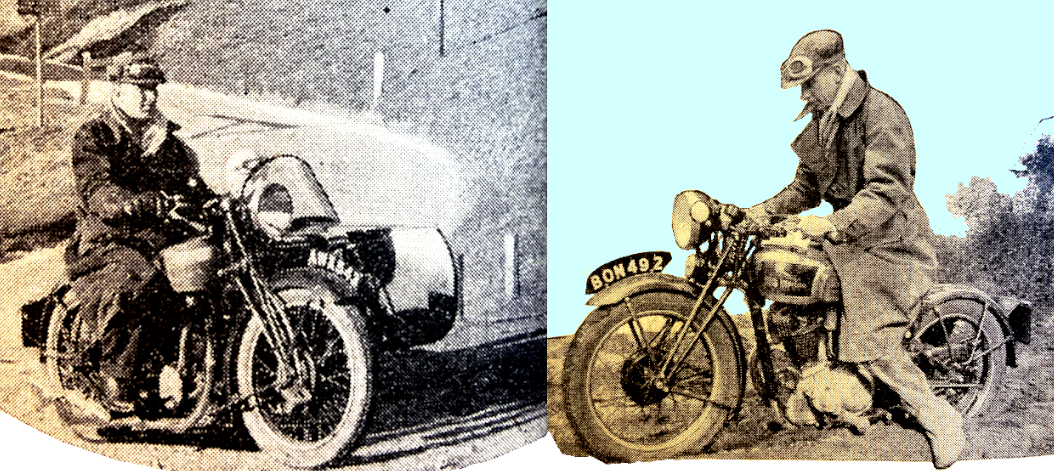
form, assuming reasonable handling. The Panther formed a ‘star’ little outfit. Once again I have driven a vertical-twin Triumph and sidecar This type is off the market at the moment, although I feel sure we shall hear more of it because it is much too good a proposition to be discarded. The machine itself was a bit hefty, and in heavy sidecar form required a certain amount of manhandling, but the way it pobbled along was a delight. Here one had flexibility and easy starting coupled with a really useful performance. The engine balance could have been improved—the machine was rather ‘pins-and-needley’. Finally, a few words about still another spring-frame machine—the TT Norton. The distance I covered was only sufficient to give me the ‘feel’ of the machine and to try the brakes, acceleration, riding position, and, to a lesser degree, the steering and road-holding. From what I learnt of the handling I would just about stake my reputation on the fact that in this respect the spring-frame racing Norton is equal to anything on two wheels. In the saddle or, rather, on the mudguard pad, one had a feeling of complete mastery. At my speeds there was no hopping and leaping—merely the feeling of cleaving one’s path through the air. The spring frame has made a world of difference. Of course the brakes were superb, and so was the gear change. The riding position naturally was designed for mudguard-pad riding, not for riding poised over the saddle. When over the pad I found the position magnificent, every control coming exactly where one wanted it, and the whole effect being that the rider felt at one with the machine. If only all manufacturers managed to get their ordinary riding positions half as good there would be little to grumble about in this connection. And remember: that single riding position suits all the Norton racing men in spite of their varying stature. The straight-through exhaust pipe had its megaphone at the end. Consequently, I was able to sample the way additional horses suddenly sweep into action as the engine revs reach a certain number. The machine all of a sudden leaps forward. This to the average man forms a completely new experience; it is almost uncanny. Two other points impressed me: first, the 1936 racing Norton are really tractable; secondly, the engines are exceptionally well balanced. And so I will end.”
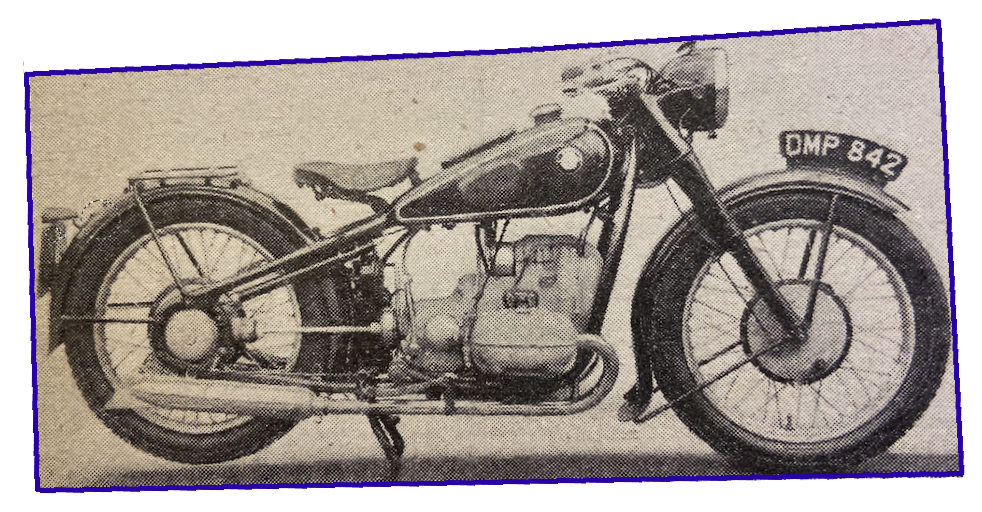
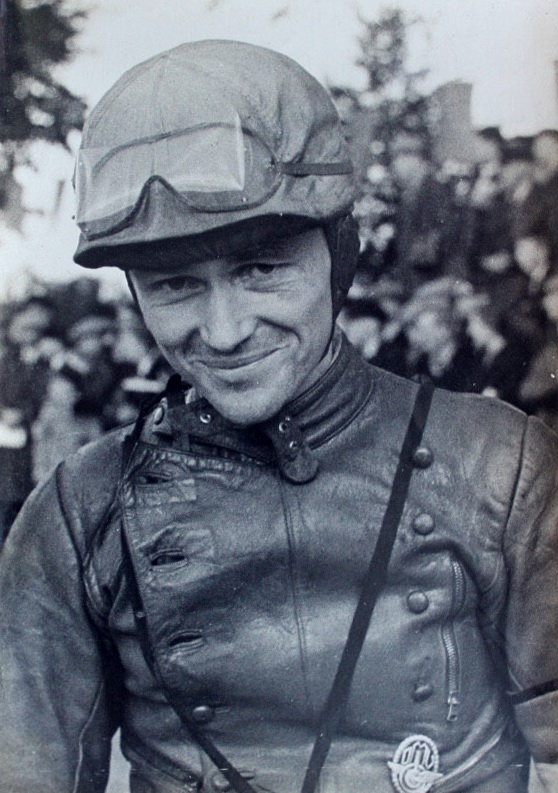
“I READ Ambleside’s article on ice-riding in a reminiscent mood. I’m lucky nowadays to live in an area where none of the proverbial winter terrors (fog, snow, ice and floods) is at all common, or, indeed, ever prolonged. But for two patches of my chequered career I have had to wrestle long and mightily with all four, even on local jaunts. Four words in Ambleside’s article might well have been printed in capitals—’grit by the roadside’. On one famous occasion during a spot of war leave I foolishly elected to ride from Birmingham to Falmouth in mid-winter over quite deep snow—a risky proceeding with only seven days at my disposal. Sillier still, when I got to Pyecombe Hill I selected the hilly route over Dartmoor via Moreton Hampstead. I did not mind pushing the machine bodily over or through sundry deep drifts, but I had awful trouble to climb some of the one-in-fives on rather a dud bus with a smooth rear tyre, especially where morning sun had thawed the southern slopes, which had subsequently frozen hard. After numerous spills and wheelspins I discovered the trick of riding in the gutter, and for the rest of the trip experienced no serious trouble except with the deeper drifts. The tip is valuable on the level where the road has not been modernised and concreted or tarmac-ed to the very kerb; but on hills it is often essential in order to get up at all. “—Ixion
“VARIOUS READERS ARE CHIPPING my colleague Torrens for being a sort of petrol Don Juan in that he loses his heart to a machine, but nevertheless changes to another make. That is the inevitable duty of every motoring journalist. Many of us would often have been faithful to one make or even to one machine for years at a time; but how, then, could we amass that comprehensive experience which is a fundamental element in knowledge? Personally, I never regard such enforced changes as a genuine hardship, for if one often hates parting with the old bus, loss is tempered by the excitement of making acquaintance with the new one. Oddly enough—I don’t know whether Torrens will agree— my main heartaches have centred over selling good two-strokes. A first-class two-stroke, when well run in, develops a silky passion for hard work which is very precious to its owner; I especially recall one Scott which never gave me a mite of anxiety, and was running better when I sold it after 20,000 miles than it had ever run before. I recall one baby two-stroke which ripened in the same miraculous fashion; but shameful to relate, I cannot now recall its make!”—Ixion
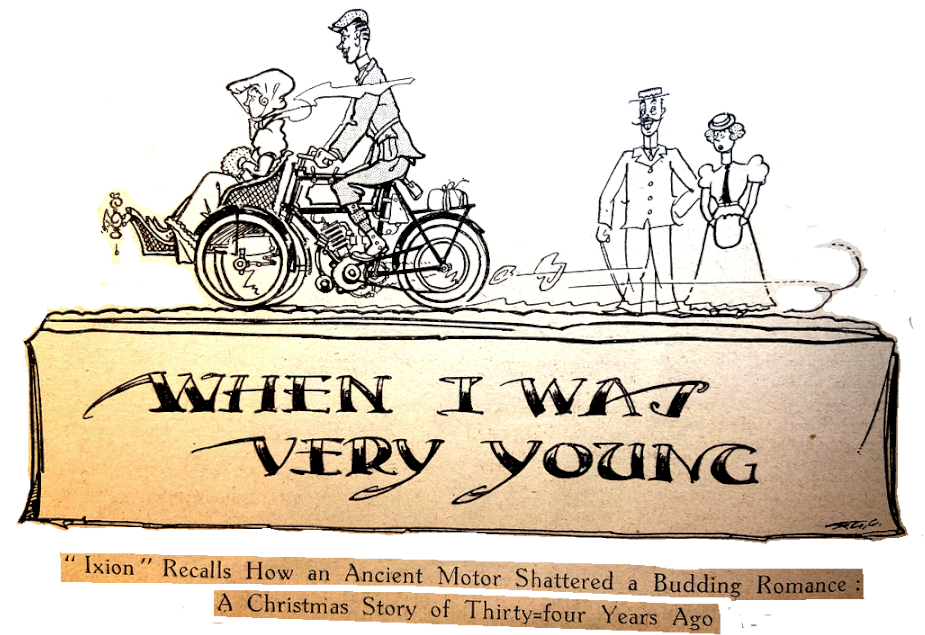
“THIRTY-FOUR YEARS AGO found me impecunious, amorous, overworked for most of the year, resident in the far West, and passionately enamoured of motor cycling, although a little disgruntled by all the machines which I had hitherto owned or driven. My local roads were exceptionally hilly, and variable gears had not yet been invented. I served my apprenticeship on motor cycles ranging from the 1⅓hp Clement-Garrard to such leviathan monsters as the 2hp Werner, 2¾hp Ormonde, and various machines with Belgian engines. On dry roads they were fine, and as they weighed next to nothing and were equipped with pedalling gear, you could coax them up really formidable inclines. The procedure had become a routine. You waited until the road was clear; made a furious rush at the hill on full throttle; pedalled like mad as soon as the engine revs dropped; hopped off and ran alongside when the engine showed signs of dying on you; and eventually pushed the last bit, unless some side lane furnished a chance of a second power rush. The main snags were seized free-wheel clutches, which caused the pedals to revolve in a blur resembling a circular saw, so that you hastily removed your shins from potential amputation by perching your feet on the fork crown; and, of course, broken and slipping belts. Wet roads were quite a different proposition. Motor cyclists of to-day have no conception what roads were like thirty-four years ago. A good road after rain presented a central strip, well gritted to provide adhesion for
horse hooves, and patchily stained green and brown with horse dung. The sides were rutted and pot-holed, with the pot-holes full of water, drying into very slippery grease. The consistency of the grease varied with the local geology, but in certain parts of the country oolite and limestone made it genuinely difficult to keep vertical on a top-heavy, ill-balanced machine, especially on corners, and doubly so on uphill corners, for it was essential to tackle any uphill corner all out, otherwise the engine promptly conked; but if you speeded on a greasy corner, over you went. And if you went over you bent the pedal on the toss side; and if you bent the pedal you could not climb any more hills until you had effected repairs. Of course, you carried a huge wrench for straightening the pedal crank, plus a paraffin squirt for unseizing the free-wheel; but even then a heavy fall usually snapped off the end of the pedal spindle. So during 1901 and 1902 I experimented with tricycles of the Ariel and De Dion type—with two wheels astern and the engine under the saddle. These experiments were not a success. The trike weighed so much that it was a bad hill climber. One couldn’t hop off and run along-side up a hill when the engine flagged, for the back wheels occupied the patch of road on which you wanted to trot. The sole assets of these tricycles were that they did not skid, and that their gear drive (unlike the twisted raw-hide belts on the solos) gave no trouble, although it made a shocking noise. Thus in the late autumn my face broadened into one gigantic beam when I came across the first convertible tri-car. It was a 2¾hp (nominal) Excelsior with an MMC engine, primarily designed as a bicycle. However, by removing the front wheel and inserting a hub spindle coupled to the Ackerman steering of the detachable forecar, and bolting a single fist-like clip to the base of the bicycle frame, you converted it into a tri-car for two. Note its attractions: You could take a fairy, and you could talk to
your fairy, for her ear was handy to your lips if you stooped forward, whereas if the fairy was in a trailer astern she got all the dust, all the smell, could not talk to you, and occasionally disappeared completely if the trailer rod snapped. This tri-car weighed very little more than a motor cycle, and if the engine faded on a hilly you could hop off and run alongside. I decided that the Excelsior forecar was the goods, and I invested in one. The conversion took about half an hour. You put a box under the engine and dropped out the front wheel. You then coupled up the forecar steering and the single frame clip, and there you were! Pride received two very heavy falls in my first week with it. Dolled up in a new dove-grey suiting with a refined pin stripe, I rode it nonchalantly along the local boulevard, and caused a sensation. The Saturday evening crowd was stunned into silent adoration, for there was not another motor cycle within 50 miles. Enjoying this, I turned back and did it all over again. This time the crowd began to shout. I thought they were cheering until a very bad smell reached my nostrils and my chin suddenly became very hot. Peering down to diagnose the trouble, I found that the dottle out of my pipe had dropped into my breast pocket, and fanned by the wind, my jacket was in flames! The next Saturday I repeated the demonstration, but minus pipe. As I descended the slight hill at the end of the promenade the Excelsior suddenly took charge and became unsteerable. I fought it desperately, but in vain. We charged on to the pavement as the crowd scattered, and fetched up with an awful wop against some ornamental iron palings. On investigation, I found that the single fist-like joint attaching the forecar to the bicycle frame had twisted round on the frame tube, so assumed an angle of about 45° to the machine! This defect of design was remedied by making a new clip, which encircled not only the front down tube, but also the saddle tube. The forecar could no longer twist; it might have broken the frame, but, mercifully, it never did. The machine having now been tuned up and run in, I
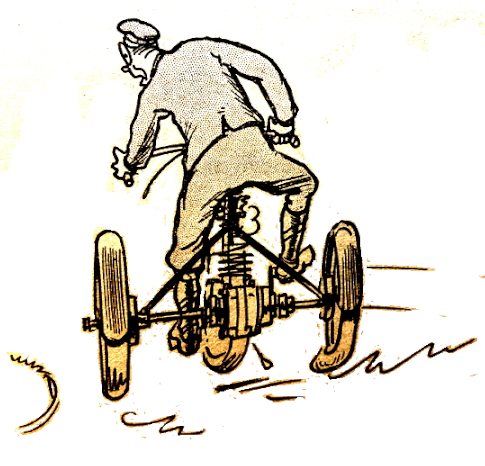
decided to take it down to South Devon to spend the Christmas of 1902 with my fiancée, a damsel named Hilda. She promptly became the envy of all the South Devon maidens, as her airs and graces aboard the Excelsior were positively insufferable to other girls, although most gratifying to me, as I ascribed them to pride over my selection of her from other possible shes (or should I rather say ‘hers?). The South Devon hills were very trying for the Excelsior, but we soon developed a special technique. With Hilda aboard we rushed the hill, and got as far as possible. ‘I did not pedal hard on this preliminary attempt, as I had seen one or two of my pals engaged in 1pa (light pedal assistance), and no man looks his best when sweat is streaming from every pore, his locks are lank and damp his complexion is purpled, his eyes are starting from his head, and his language, if breathless, is sulphuric. Never an Adonis, I had no desire to appear worse in Hilda’s eyes than was necessary. When the Excelsior died on us Hilda dismounted and trotted gracefully upwards, while I turned round, descended, and made a fresh attack. Relieved of Hilda’s weight, the Excelsior would go up much farther this time, and, except when close to Hilda, I pedalled like fury. The upper stretches saw me, as per 1902 routine, running alongside, and eventually pushing hard. The hills climbable by these methods were legion, but, of course, we avoided the real terrors such as Porlock. Hilda was sweet during the first day or two of my Christmas holiday, and the machine gave no trouble at all. Fool that I was, I thought I had struck the perfect holiday. Snag No 1 arose through the mudguards being of the 2in cycle variety. After two or three wet days the sun shone, and we motored up to a little inn at Hatherleigh for tea. We had a gorgeous tea—I can still taste mine hostess’s quince jam with lashings of clotted cream. After tea we repaired to a gigantic armchair, and Hilda swooned on my knee. She was wearing a new Saxe-blue silk dress, and when she arose to resume the journey she patted her frock—and screamed! For some 70 miles the drowned Devon roads had been busy depositing mud and filth on my shoes and Stockings. The new blue skirt had draped itself over these miniature cabbage gardens during our love-making, and the dress was wrecked. I lost my temper when neither apologies nor caresses had any effect on Hilda, and all the way home we never spoke. When I called early next morning at her parent’s home the maid said that Miss Hilda was in bed with a headache, and all my dreams of a tender reconciliation were shattered. I spent a couple of lonely days among strangers, tinkering with the engine, while the rain teemed pitilessly down. However, Hilda reappeared on the third day in a melting mood, and, like the fools we men are, I capitulated, and promptly forgot and forgave. This third day was fine for a change. Mentally resolving not to embrace Hilda en route, at least not until I had scraped down my understandings with a hoe, we took the road again. It came on to rain in the later afternoon, and we struck the great grandfather of all hills—I have forgotten where. In spasm No 1 I took Hilda up as far as the engine would chug, and according to routine she got out to walk up the rest, while I descended for spasm No 2. Anon I repassed her, pedalling my soul out, and it augured ill that she did not give me the usual beaming smile and cheery wave as I passed. I did my normal hop-off, run alongside, conk-out, and push. While

pushing I spotted a side road which ran off at a tangent almost dead level; so I pushed along it, turned the bus round, and waited for Hilda. When at last she trudged up to the lane end I hailed her. She came up in dead silence with her lips pursed into a tight, sulky line, climbed silently aboard, and we had a fresh charge at the hill. When again we conked out, she she dismounted without a word and set off wanly up the hilt which still twisted and climbed through the wet mist. Down I went again to repeat spasm No 2. This time the engine would not start. After several ineffectual efforts I crazily decided to start it by gravity. I went right down to the bottom of the hill, about a mile and a half, without extracting one pop from the engine. Reaching the bottom, I laboured mightily in the rain, but all in vain. I got hotter and wetter and crosser as I concentrated on my technical problem, and completely forgot all about poor Hilda, presumably sitting on a wet bank about two miles ahead, in the very queen of all feminine sulks. When I gave up the engine as past praying for Hilda, returned to my mind and, man-like, I reflected that she was a selfish little pig not to have come down to see if I was still alive. Hilda, of course, was fuming over a mental picture of me as a selfish brute for not imagining that she had been kidnapped. Eventually, and the local postman came along in his trap, and I asked him to tell Hilda that the Excelsior was sunk at the foot of the hill, and would she please walk down. About an hour later Hilda appeared, sodden to her very marrowbones, and shivering with cold. I chartered a trap, and we drove home, getting more sodden and frozen with every yard. Next morning her father’s gardener left at my digs a small square parcel containing my ring. Nothing more—not a word. From that day to this I have neither seen nor heard of her. If you read this, Hilda, accept my congratulations. If you had stuck to me you would suffered many far worse days with pre-historic motors than our Excelsior ever inflicted. PS—The exhaust valve had broken.”
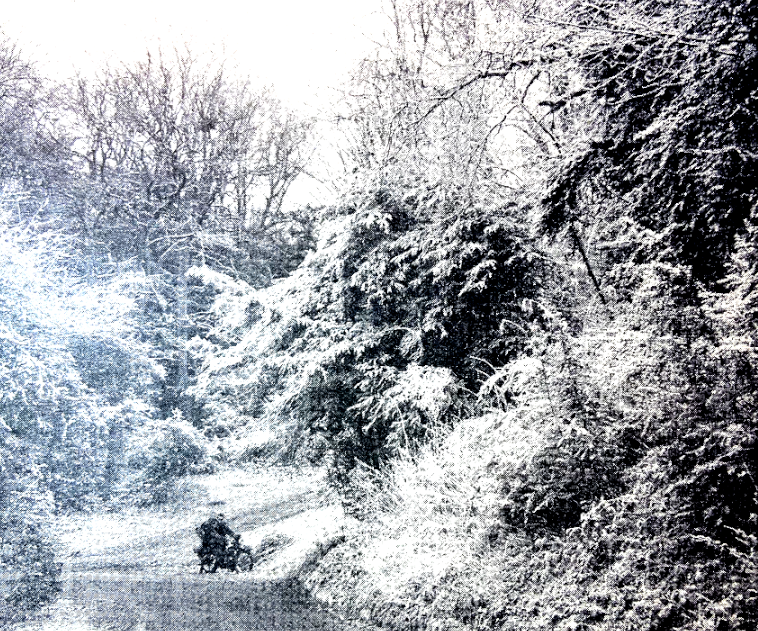
“A VERY HAPPY NEW YEAR to all our readers. Especially to those who, as yet, are motor cyclists only in their dreams, still waiting for Pa to relent, Aunt Sarah to open her purse-strings (we can’t, of course, wish the poor old dear dead), a rise in salary or other financial advance. For those who already own and ride, good weather, no trouble, a fat allowance on the old bus in the next swop, immunity from cops and crashes, the right fairy for the perch, leave for the TT, and everything else that can contribute to a really memorable year!”—Ixion
And now, some contemporary ads.
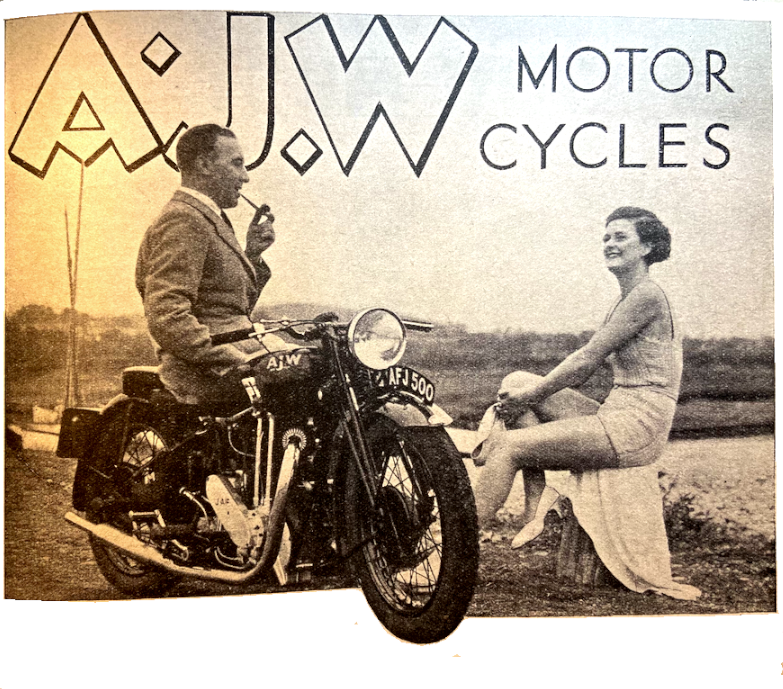


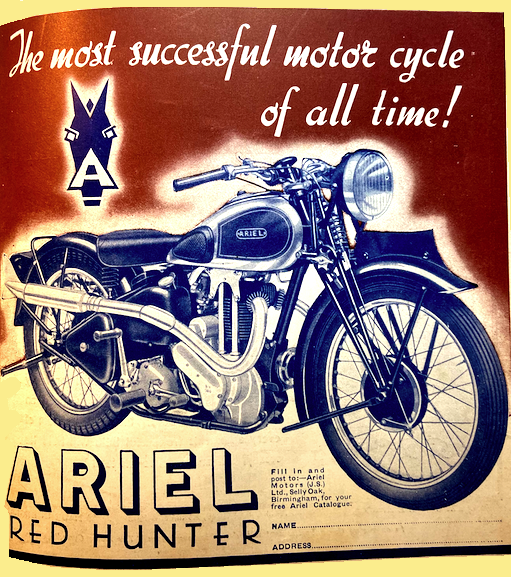
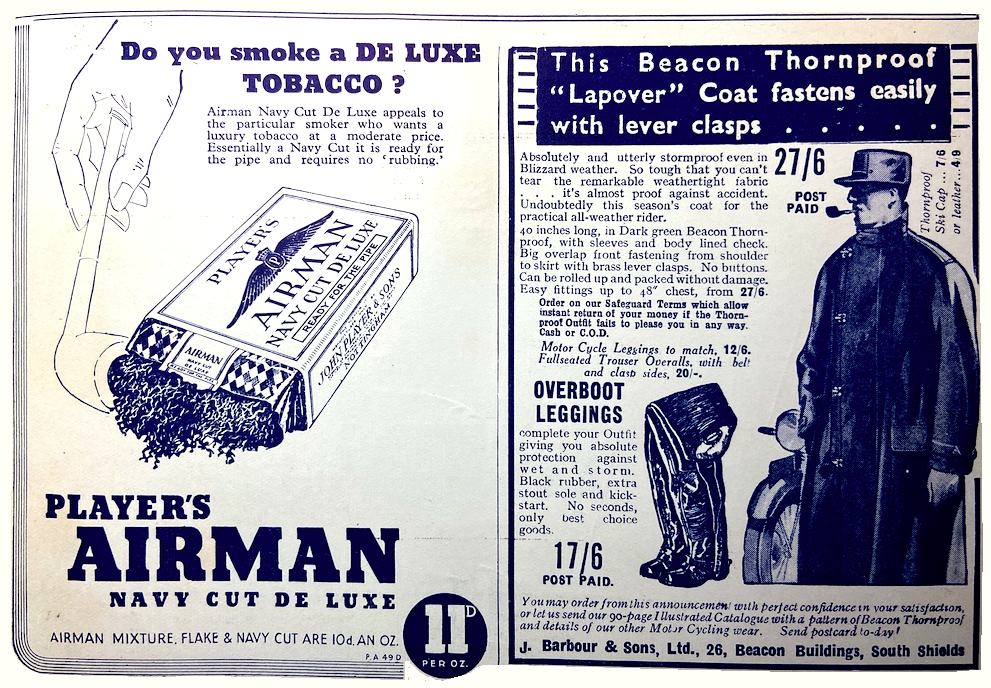
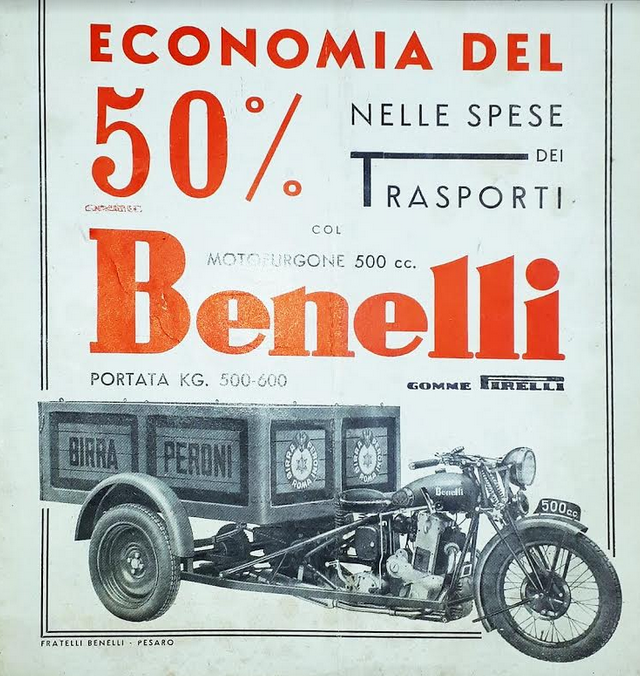
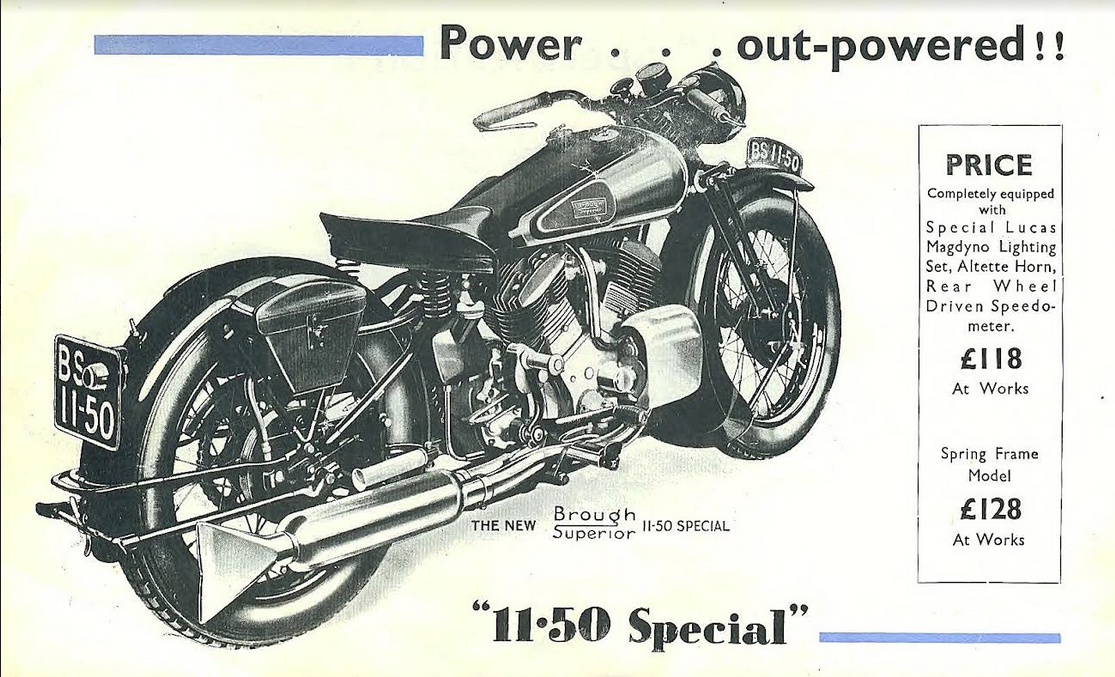
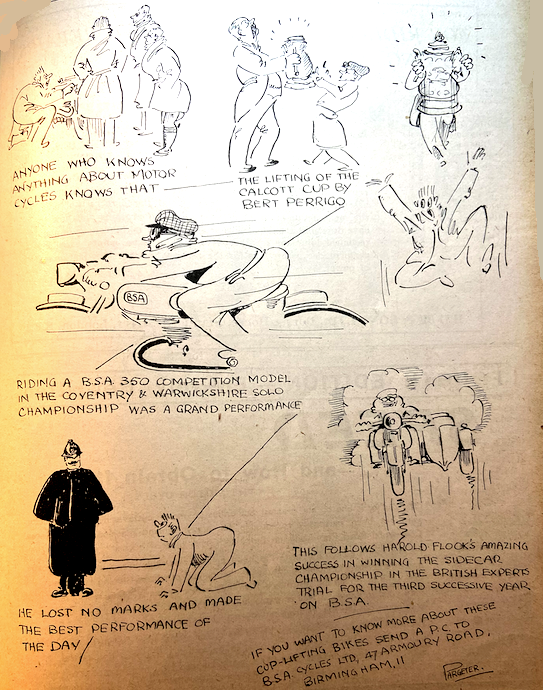
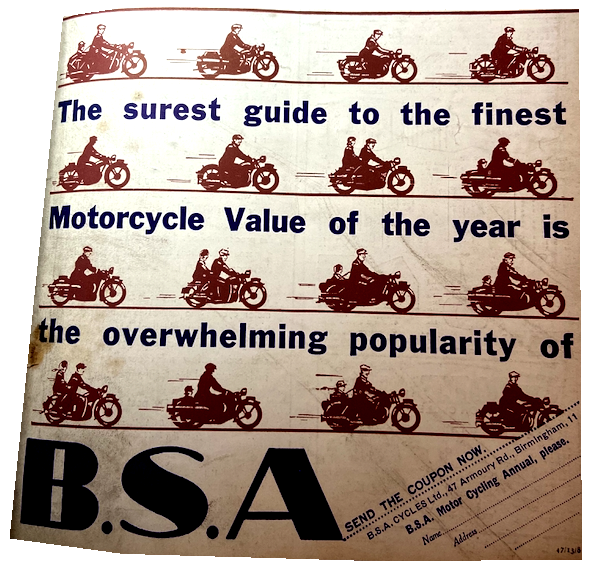

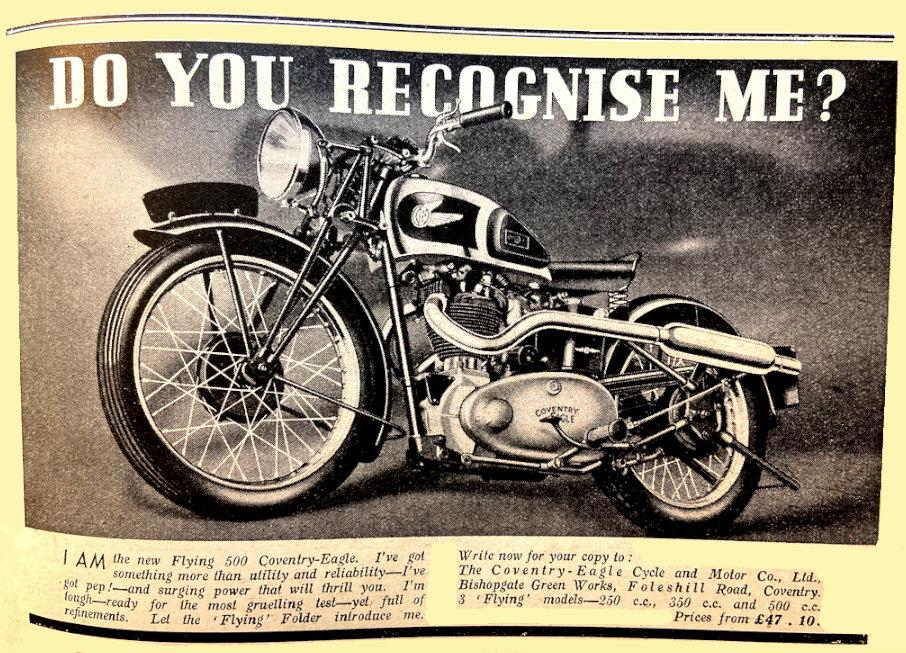
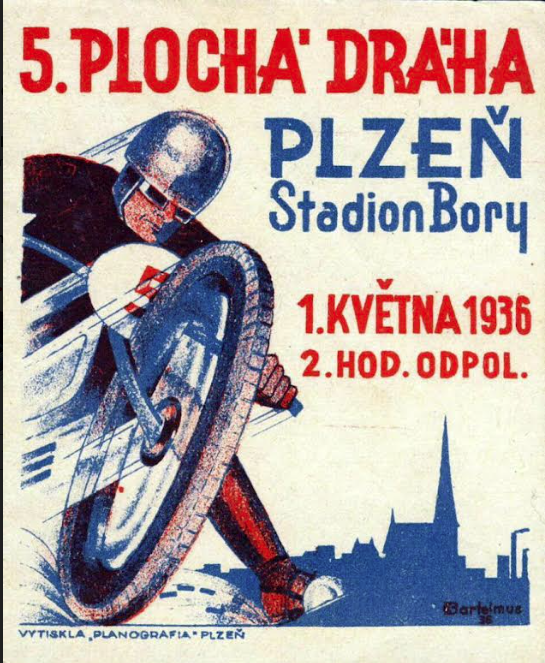
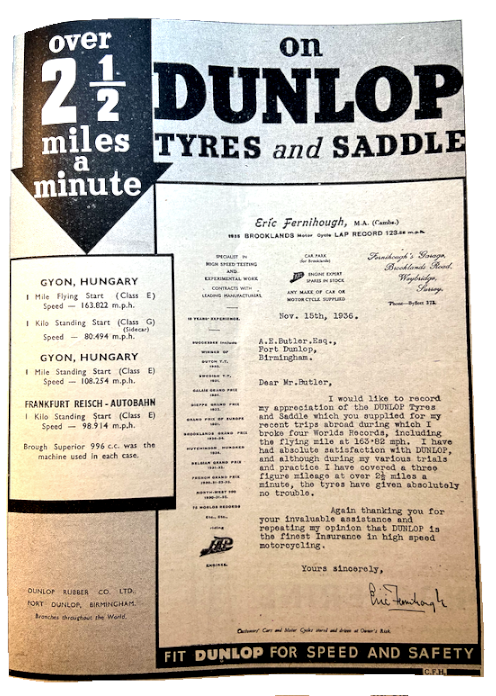

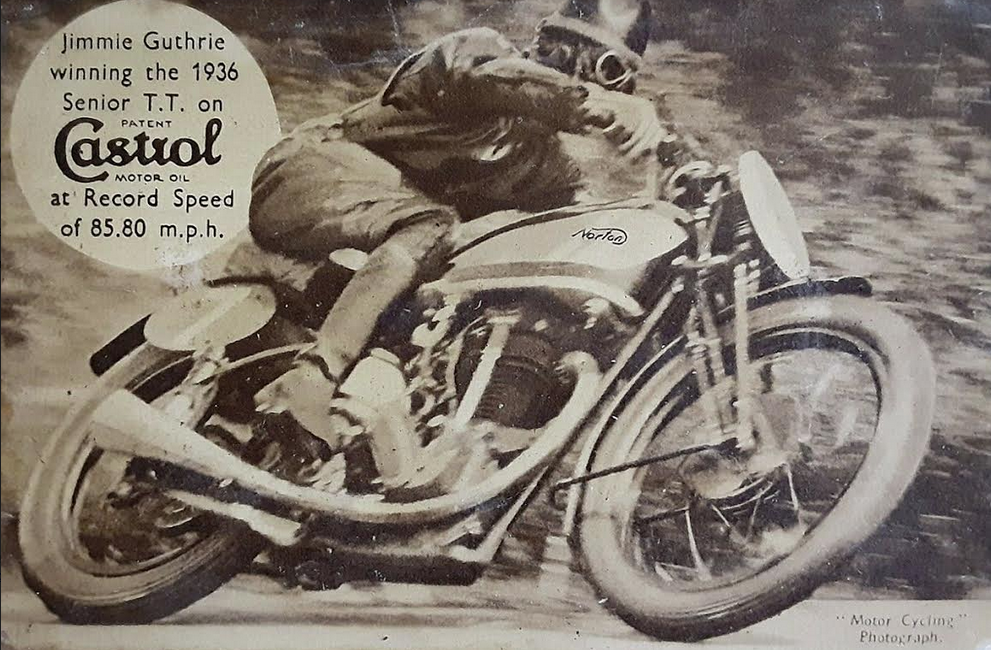
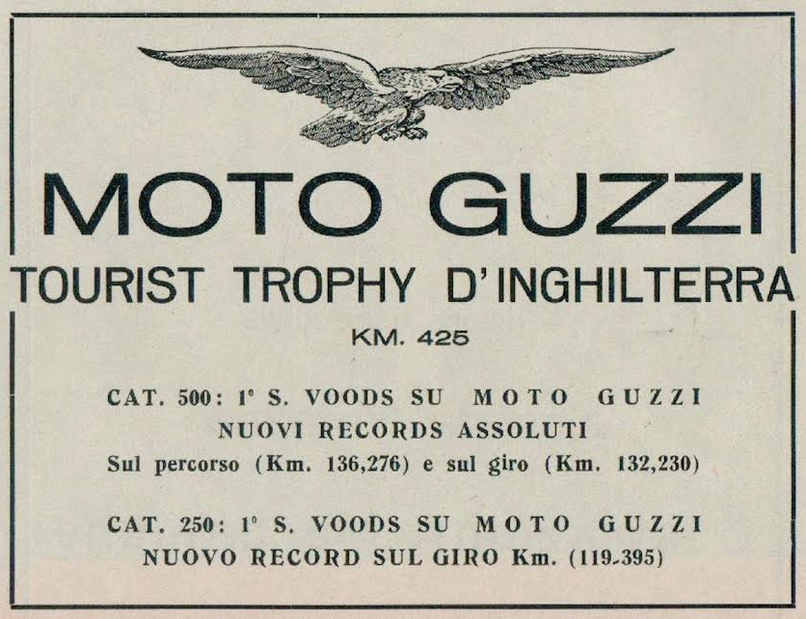
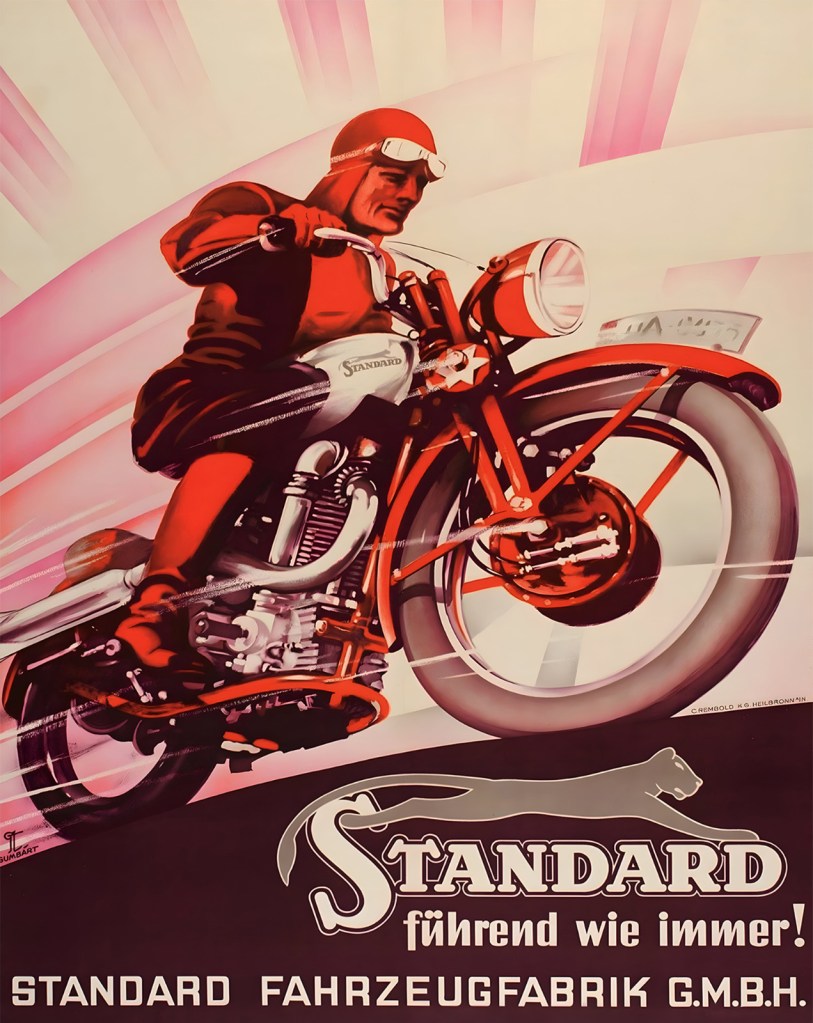
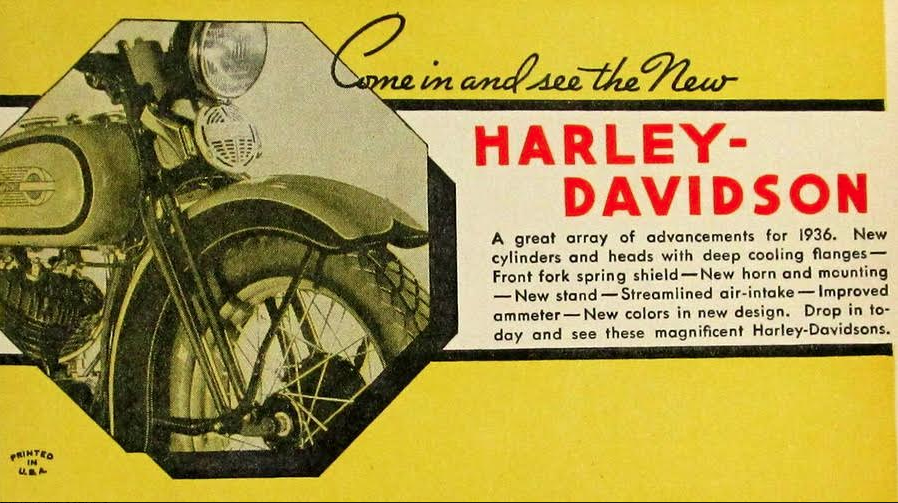
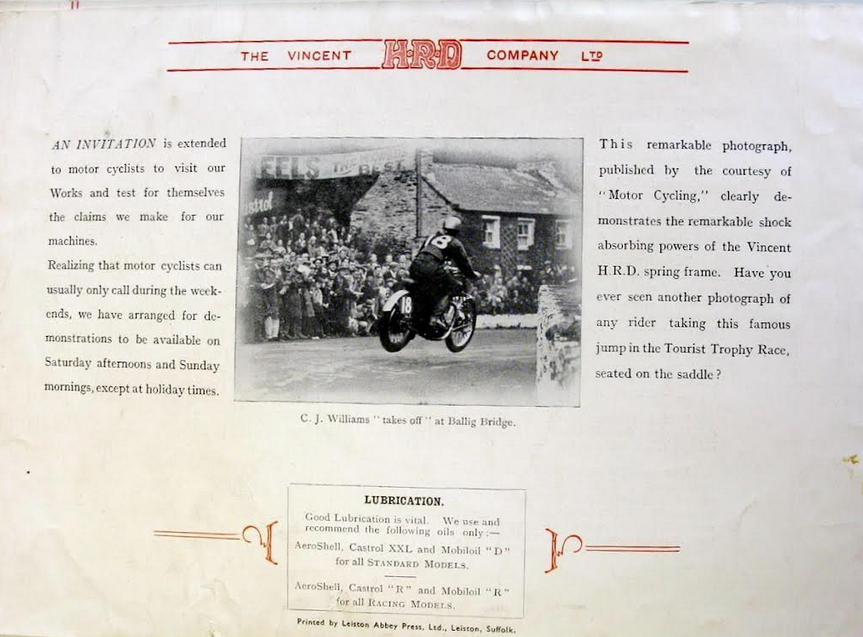

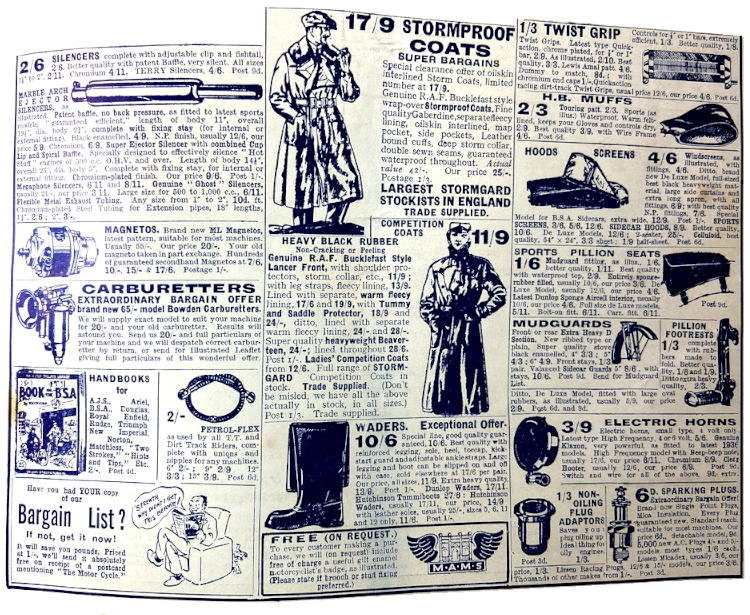
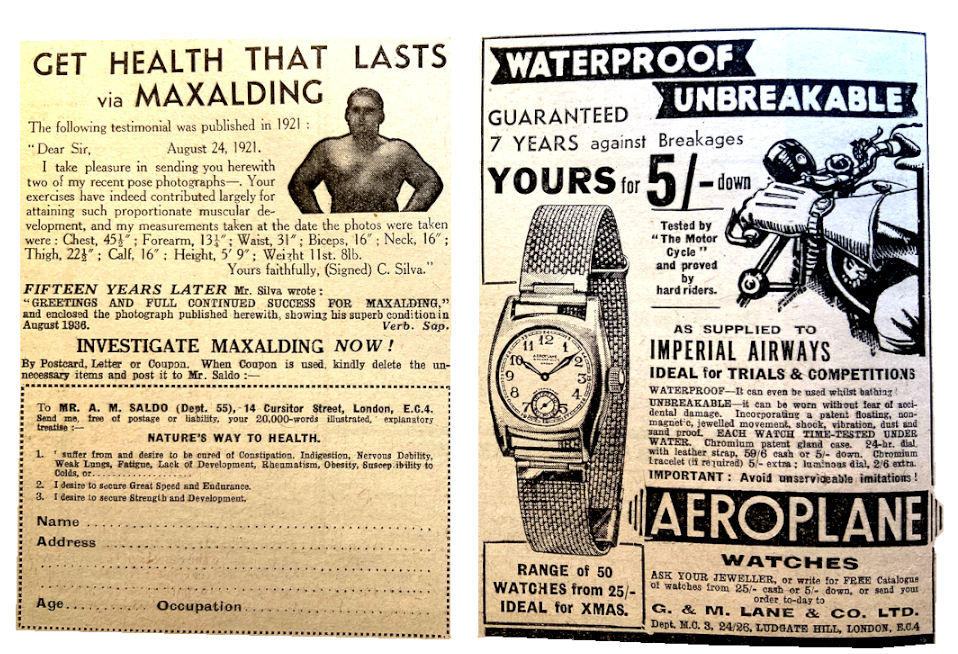
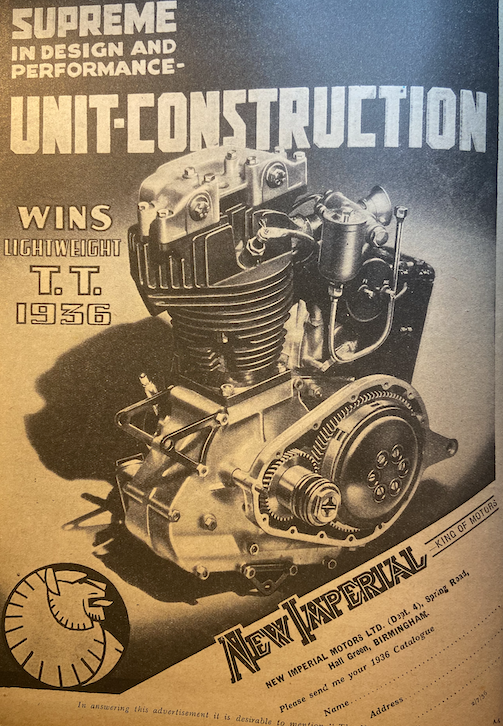

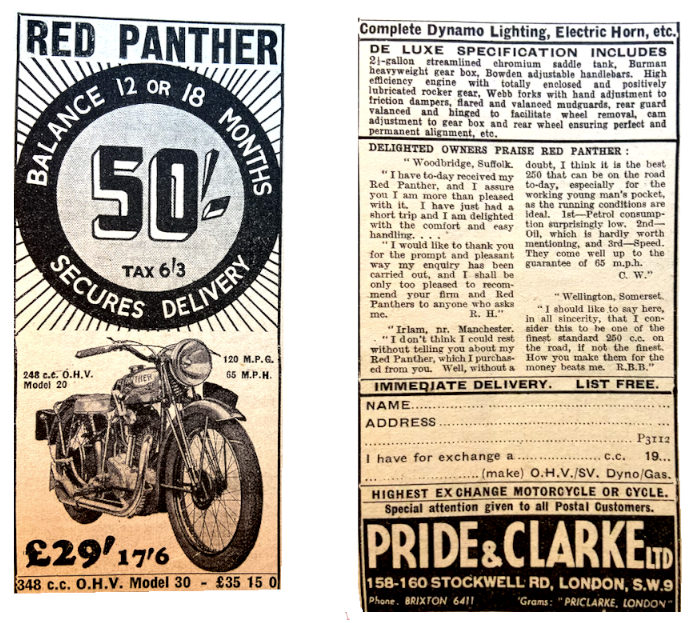
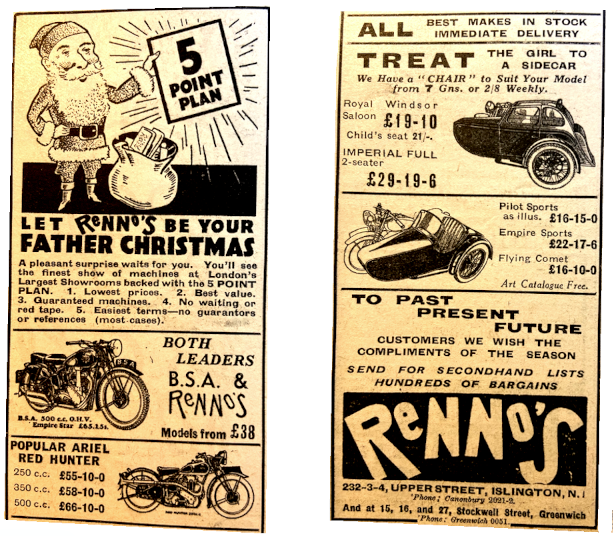
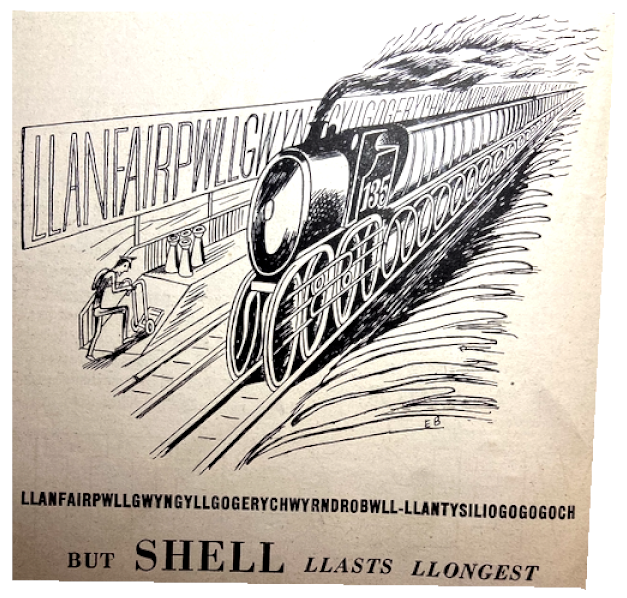
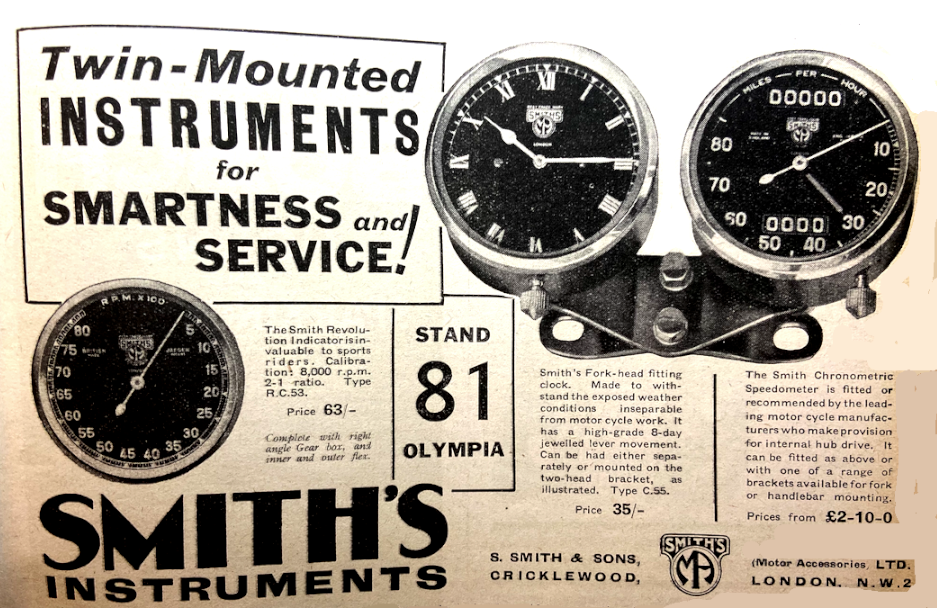

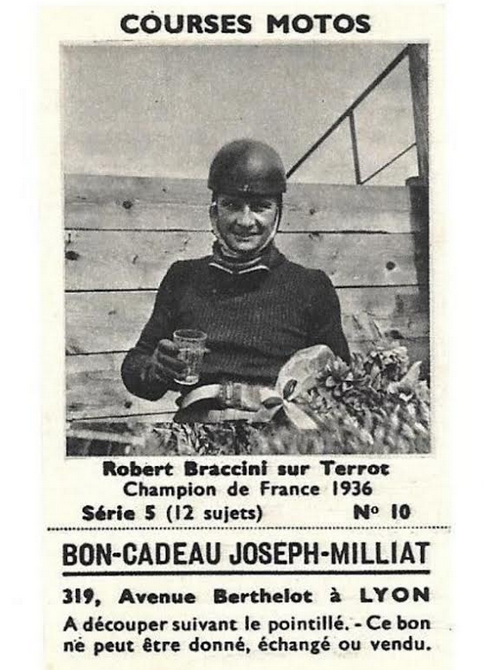
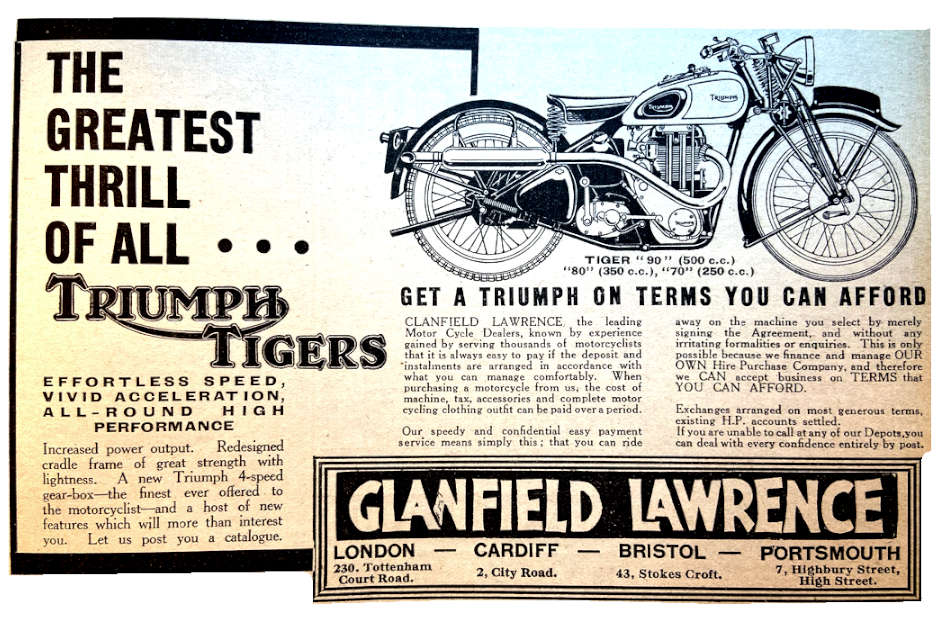
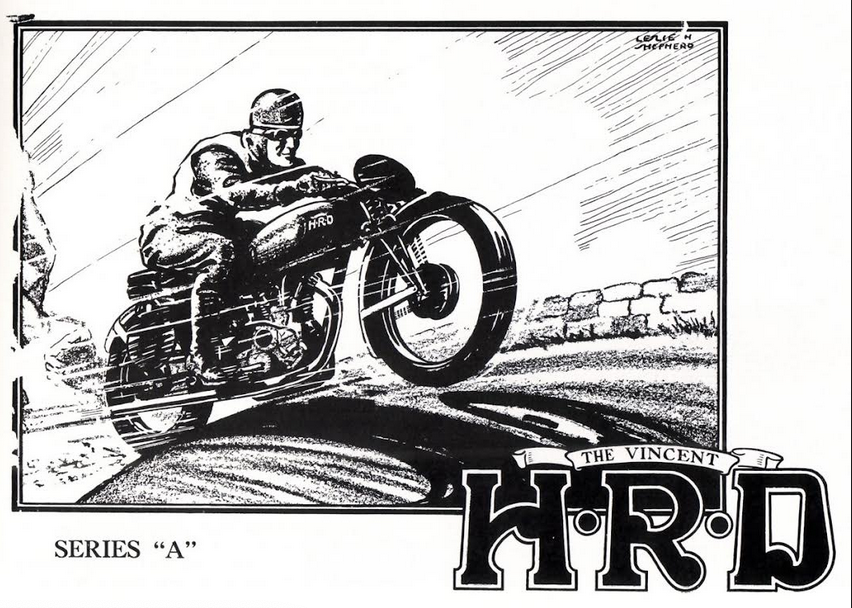
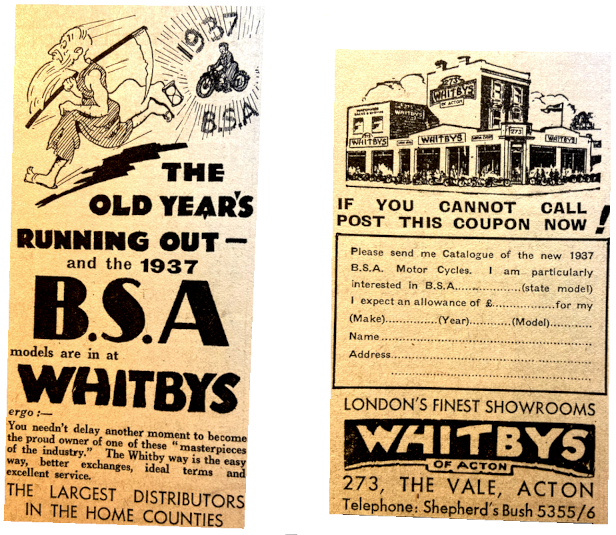


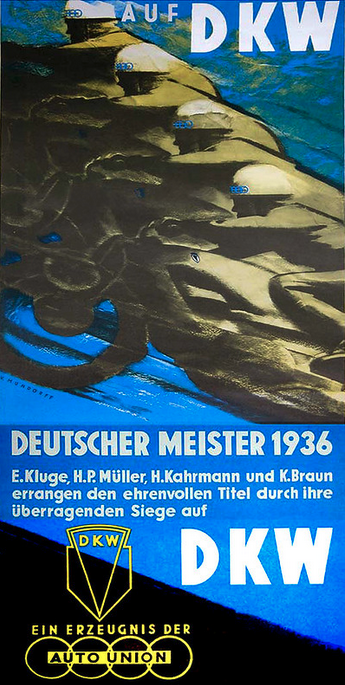
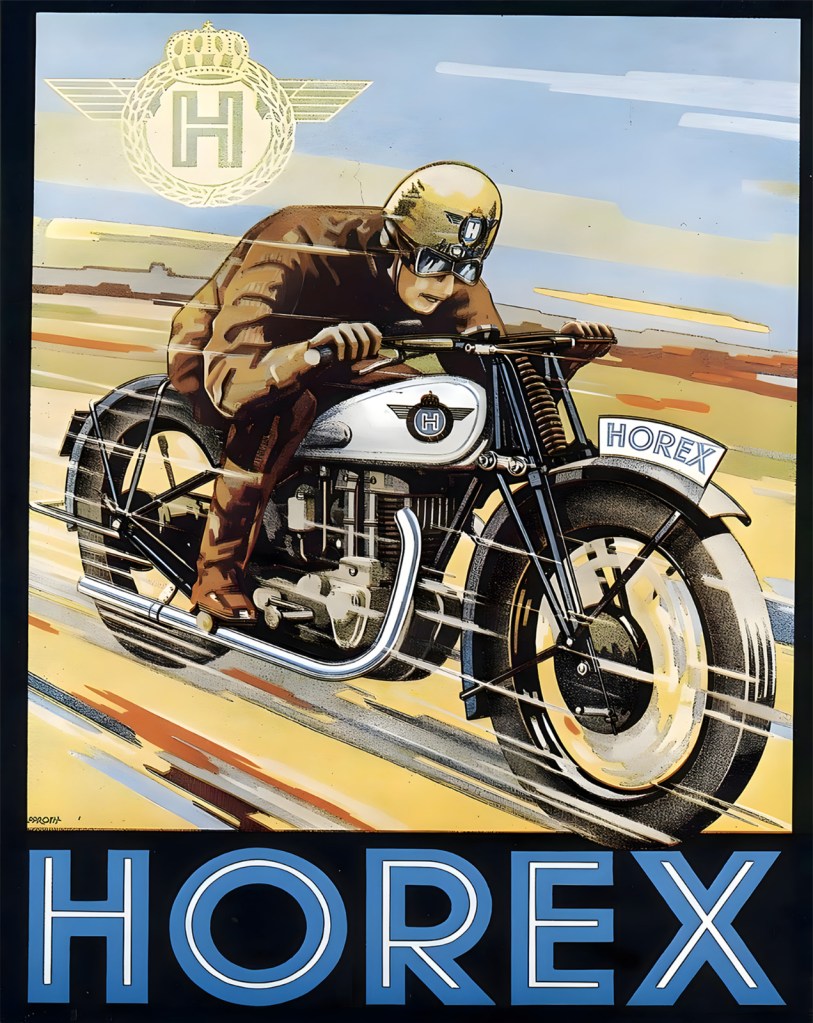


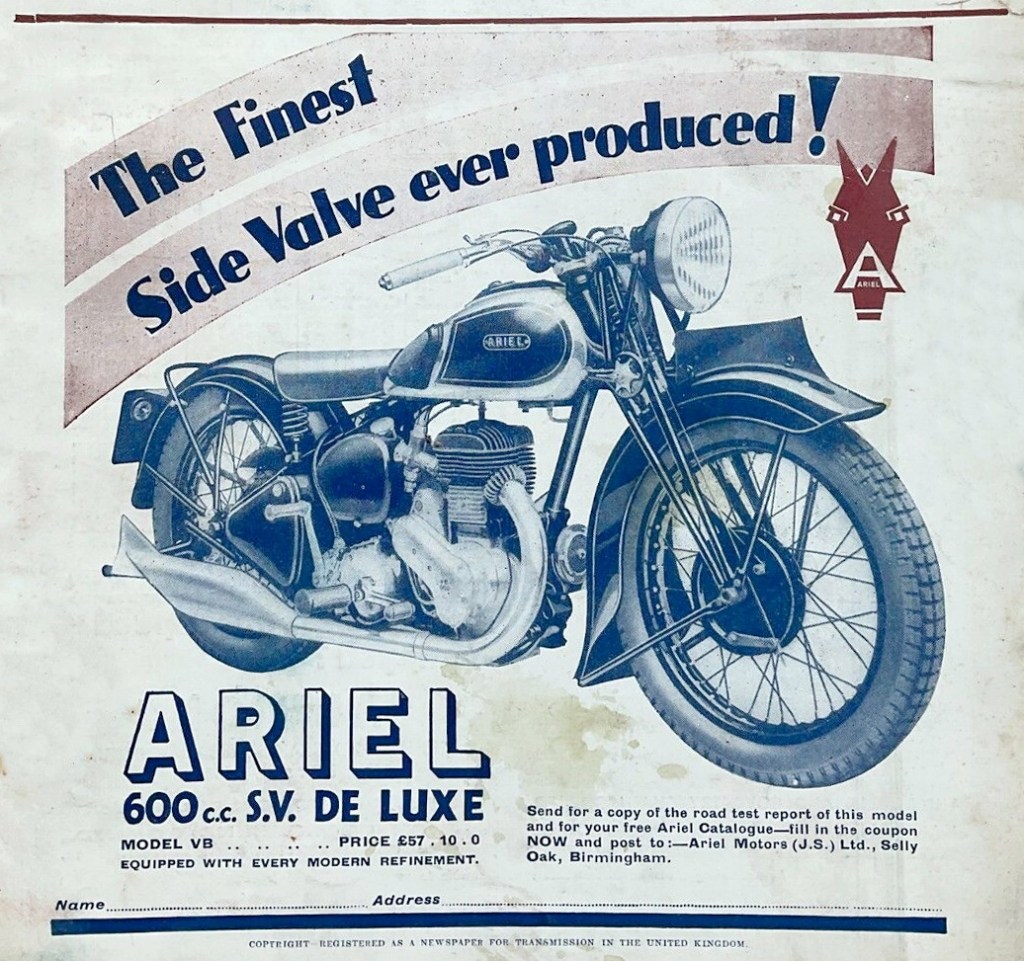



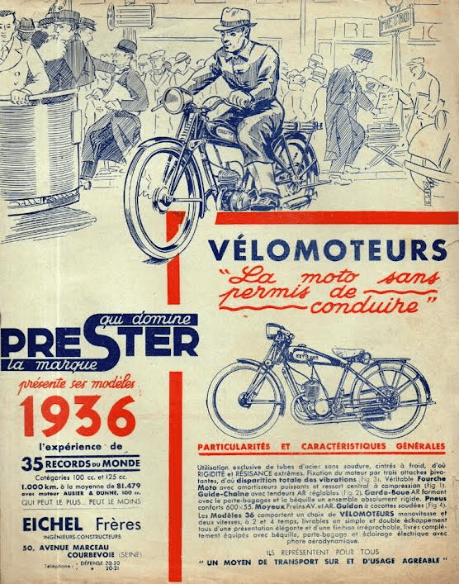



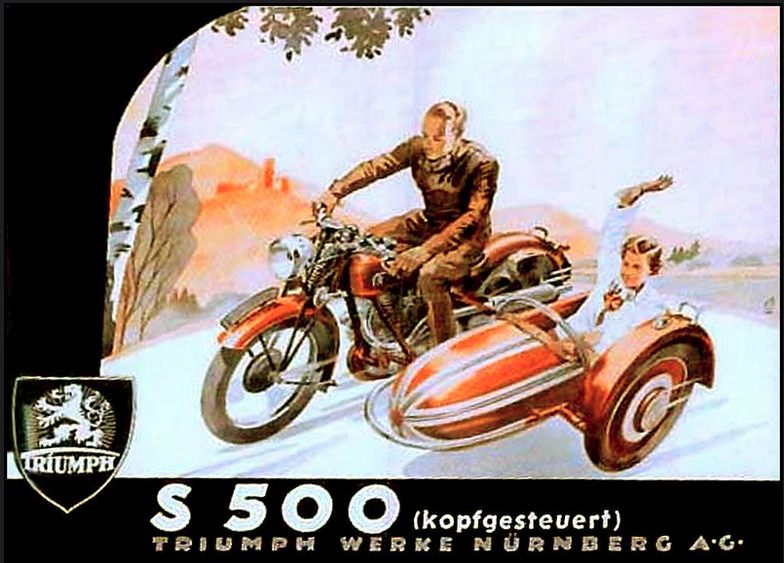


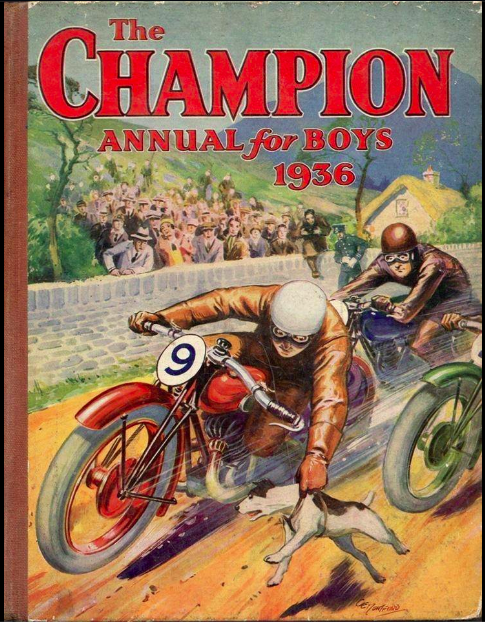
 Motorcycle Timeline